3400 BCE
Earliest Canals in Mesopotamia
Sumerians construct irrigation canals from the Tigris and Euphrates rivers, enabling large-scale agriculture and the rise of city-states. #engineering #history
Ancient irrigation and canal infrastructure represent humanity's early mastery of hydraulic engineering, with systems like the Dujiangyan (256 BCE), the Grand Canal, and Roman aqueducts enabling agricultural surplus, urban growth, and political unification across civilizations.
Sumerians construct irrigation canals from the Tigris and Euphrates rivers, enabling large-scale agriculture and the rise of city-states. #engineering #history
Pharaoh Menes (Narmer) reportedly diverts the Nile to build Memphis, an early example of large-scale water management. #engineering #ancientegypt

The Indus Valley Civilization (Harappa, Mohenjo-daro) builds sophisticated drainage and water supply systems, including covered drains and public baths. #engineering #history

Persians develop qanats (underground canals) to transport water from aquifers to arid regions, a technology that spreads across the Middle East and North Africa. #engineering #water

The Xia dynasty (legendary) undertakes flood control projects on the Yellow River, laying foundations for later irrigation systems. #engineering #china
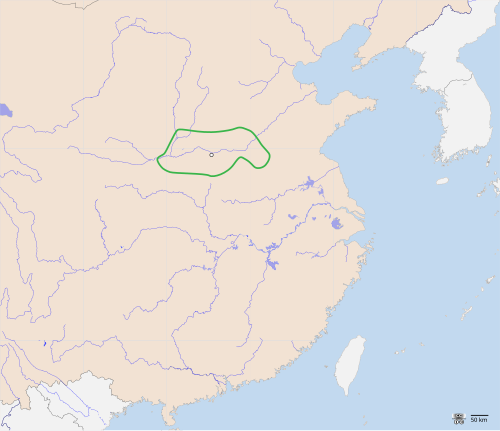
Hammurabi's Code includes laws regulating irrigation canals, reflecting the importance of water management in Babylonian society. #history #law

The Minoan civilization on Crete builds terra-cotta pipes for water supply and drainage, an early example of pressurized water systems. #engineering #ancientgreece

King Sennacherib builds a 50 km aqueduct to bring water to Nineveh, including a stone bridge at Jerwan. #engineering #assyria
The Nabataeans develop extensive water conservation systems, including dams, cisterns, and channels, to sustain the city of Petra. #engineering #water

Greek engineer Eupalinos digs a 1 km tunnel through a mountain to supply water to the city of Samos, a marvel of ancient surveying. #engineering #greece

The earliest sections of the Grand Canal are built during the Spring and Autumn period, connecting the Yangtze and Huai rivers. #engineering #china )

Rome builds the Aqua Appia, its first aqueduct, supplying water to the city and enabling urban growth. #engineering #rome

Rome constructs the Anio Vetus aqueduct, significantly increasing water supply to the growing city. #engineering #rome

Chinese engineer Li Bing oversees construction of the Dujiangyan irrigation system, a non-dam diversion that still functions today, controlling floods and irrigating the Chengdu Plain. #engineering #china

The Lingqu Canal in China connects the Xiang and Li rivers, part of a network linking the Yangtze and Pearl River systems. #engineering #china

Rome builds the Aqua Marcia, one of its longest aqueducts (91 km), known for high-quality water. #engineering #rome

The Kingdom of Anuradhapura in Sri Lanka builds massive reservoirs (tanks) like Tissa Wewa and Nuwara Wewa for irrigation. #engineering #srilanka

The Romans construct the Pont du Gard aqueduct bridge in Gaul, a masterpiece of engineering carrying water over 50 km. #engineering #rome
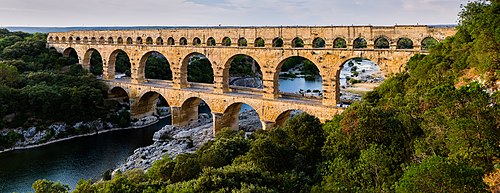
The Nazca culture in Peru builds puquios, spiral-shaped underground aqueducts to tap groundwater in arid regions. #engineering #peru

Emperor Caligula begins, and Claudius completes, two major aqueducts supplying Rome, showcasing advanced Roman hydraulic engineering. #engineering #rome

Emperor Wen of Sui initiates massive expansion of the Grand Canal, linking north and south China to transport grain and troops. #engineering #china )
Emperor Yang of Sui completes the Grand Canal, creating a 1,776 km waterway from Beijing to Hangzhou, a major feat of ancient engineering. #engineering #china )
The Maya civilization develops chinampas (raised fields) and canal systems in the Yucatán for intensive agriculture. #engineering #maya

Muslim engineers improve water mills and norias (water wheels) for irrigation and power, spreading across the Islamic world. #engineering #islam

Sri Lanka's Anuradhapura kingdom completes an extensive network of canals and reservoirs, including the giant Kalawewa tank. #engineering #srilanka

The Khmer Empire builds massive barays (reservoirs) like the West Baray at Angkor, supporting intensive rice agriculture. #engineering #cambodia

The Chola dynasty in South India constructs large-scale irrigation tanks and canals, boosting agricultural productivity. #engineering #india
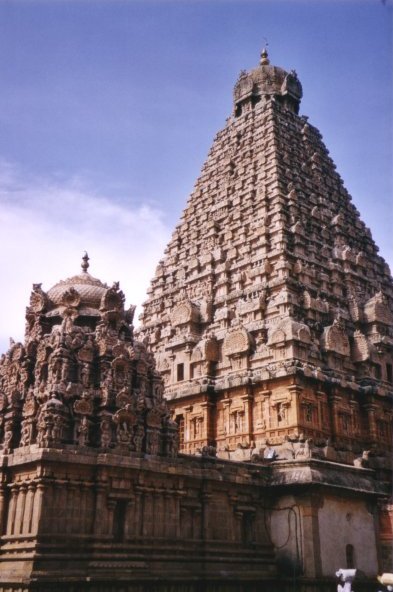
The Hohokam people in present-day Arizona build extensive irrigation canals, some over 20 km long, for desert agriculture. #engineering #nativeamerican

The Inca Empire constructs terraces and irrigation canals in the Andes, such as at Moray and Tipón, to maximize arable land. #engineering #inca

The Karez (qanat) system is introduced to Turpan, China, enabling oasis agriculture in the arid Xinjiang region. #engineering #china
Venice develops a sophisticated system of canals and water management to protect the city from flooding and support trade. #engineering #italy
The Aztecs build chinampas (floating gardens) and aqueducts like the Chapultepec aqueduct to supply Tenochtitlan. #engineering #aztec
The Ming dynasty undertakes major repairs and upgrades to the Grand Canal, ensuring its continued use for grain transport. #engineering #china )
Pierre-Paul Riquet proposes the Canal du Midi in France, linking the Atlantic and Mediterranean, a major engineering project. #engineering #france

The Canal du Midi opens in France, featuring 328 structures including locks, aqueducts, and tunnels, a masterpiece of civil engineering. #engineering #france
The Bridgewater Canal in England, built by James Brindley, revolutionizes transport of coal and goods, sparking the canal age. #engineering #uk

The Erie Canal in New York connects the Great Lakes to the Atlantic, transforming trade and settlement in the United States. #engineering #usa

The Suez Canal in Egypt connects the Mediterranean and Red Seas, dramatically shortening trade routes between Europe and Asia. #engineering #egypt

The Panama Canal connects the Atlantic and Pacific Oceans, a monumental engineering achievement using locks and artificial lakes. #engineering #panama

The Hoover Dam and All-American Canal are completed, providing irrigation and hydroelectric power to the American Southwest. #engineering #usa
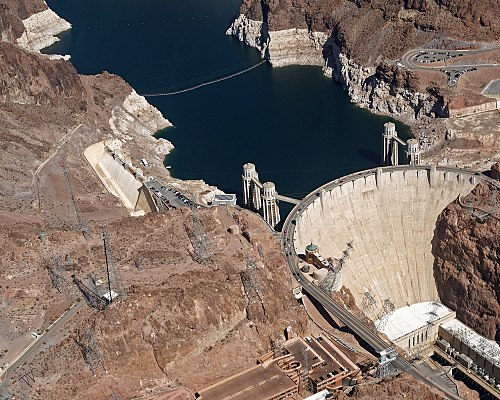
The Aswan High Dam in Egypt regulates the Nile, providing irrigation and electricity, but also causing environmental and social impacts. #engineering #egypt

China starts building the Three Gorges Dam on the Yangtze River, the world's largest hydroelectric and flood control project. #engineering #china
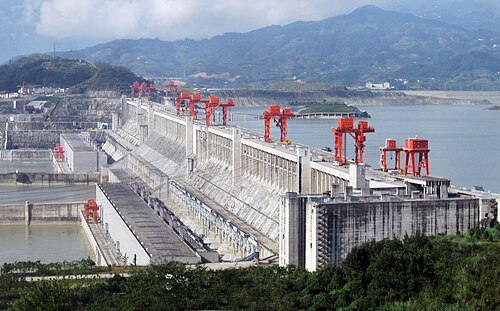
The Three Gorges Dam begins generating electricity, eventually becoming the world's largest power station by capacity. #engineering #china
China completes the first phase of the South-North Water Transfer Project, diverting water from the Yangtze to northern China via canals and tunnels. #engineering #china
