Ancient India: Indus Valley, Maurya Empire, Ashoka's Edicts & Gupta Golden Age
Encyclopedia/3. History, Societies & Civilizations/02. South & Southeast Asian Civilizations/01. Indian Subcontinent History • Curated by Admin Timeline.sg
Ancient Indian civilization evolved from the urban planning of the Indus Valley to the philosophical and political heights of the Maurya and Gupta empires, producing foundational texts, monumental edicts, and advancements in mathematics and arts that shaped South Asia.
Chronological Storyline (43 Milestones)
2500 BCE
Indus Valley Civilization Peak
The Indus Valley Civilization reaches its height with well-planned cities like Mohenjo-Daro and Harappa, featuring advanced drainage systems and standardized weights. #history #civilization
Indus Valley Civilization Peak By Avantiputra7 - Own work, CC BY-SA 3.0, https://commons.wikimedia.org/w/index.php?curid=33202416
2400 BCE
Great Bath of Mohenjo-Daro
The Great Bath, a large public water tank, is constructed at Mohenjo-Daro, showcasing sophisticated engineering and possible ritual use. #history #architecture
2000 BCE
Decline of the Indus Valley Civilization
The Indus Valley Civilization begins to decline due to possibly climate change, drying of rivers, or invasions, leading to de-urbanization. #history #civilization
1500 BCE
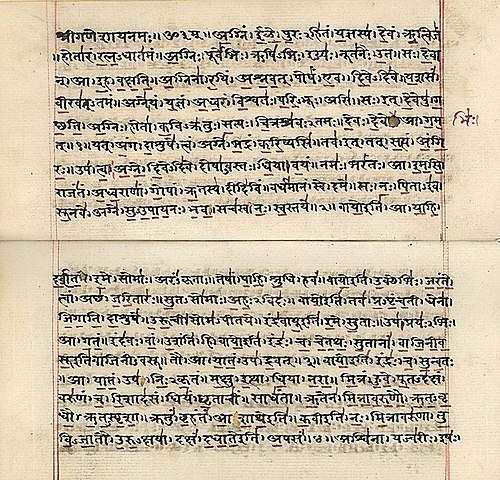
Composition of the Rigveda
The Rigveda, the oldest of the Vedas, is composed in the northwestern Indian subcontinent, forming the foundation of Vedic religion and Sanskrit literature. #religion #literature
Composition of the Rigveda By Unknown author - http://www.nb.no/baser/schoyen/5/5.20/ms2097.jpg[dead link], Public domain, https://commons.wikimedia.org/w/index.php?curid=103513
1000 BCE
Introduction of Iron in India
Iron technology becomes widespread in the Indian subcontinent, leading to more efficient tools and weapons, and the expansion of agriculture and settlements. #technology #history
Introduction of Iron in India By user:Serg!o - India (orthographic projection).svg, CC BY-SA 3.0, https://commons.wikimedia.org/w/index.php?curid=8038972
800 BCE
Composition of the Major Upanishads
The principal Upanishads are composed, exploring metaphysical concepts like Brahman and Atman, influencing Hindu philosophy and later Indian thought. #philosophy #religion
Composition of the Major Upanishads By Unknown author - https://asia.si.edu/object/F2006.4/, Public domain, https://commons.wikimedia.org/w/index.php?curid=24823617
600 BCE
Mahavira and Buddha
Mahavira and Gautama Buddha are born, founding Jainism and Buddhism respectively, which challenge Vedic orthodoxy and spread across Asia. #religion #history
Mahavira and Buddha By Unknown 11th century sculptor - Seattle Art Museum: https://art.seattleartmuseum.org/objects/21127/mahavira, CC BY-SA 4.0, https://commons.wikimedia.org/w/index.php?curid=170809462
550 BCE
Rise of the Mahajanapadas
Sixteen major kingdoms (Mahajanapadas) emerge in the Indian subcontinent, including Magadha, Kosala, and Avanti, leading to political centralization. #history #politics
Rise of the Mahajanapadas By Avantiputra7 - Own work, CC BY-SA 3.0, https://commons.wikimedia.org/w/index.php?curid=33202412
500 BCE
Sangam Literature Period Begins
The earliest Tamil Sangam poetry is composed, representing the oldest known literature in South India, rich in themes of love and war. #literature #history
Sangam Literature Period Begins By Wikipedia Loves Art participant "team_a" - Uploaded from the Wikipedia Loves Art photo pool on Flickr, CC BY-SA 2.5, https://commons.wikimedia.org/w/index.php?curid=8895145
327 BCE
Alexander Invades India
Alexander the Great crosses the Indus River and defeats King Porus at the Battle of the Hydaspes, but his army mutinies, preventing further conquest. #history #war
Alexander Invades India By Unknown author - This image has been extracted from another file, Public domain, https://commons.wikimedia.org/w/index.php?curid=182741814
322 BCE
Foundation of the Maurya Empire
Chandragupta Maurya overthrows the Nanda dynasty and establishes the Maurya Empire, unifying most of the Indian subcontinent for the first time. #history #empire
Foundation of the Maurya Empire By Photo Dharma from Penang, Malaysia - Clean up of this file:, CC BY 2.0, https://commons.wikimedia.org/w/index.php?curid=68904033
305 BCE
Seleucid–Maurya Treaty
Seleucus I Nicator cedes territories (including parts of modern Afghanistan) to Chandragupta Maurya and establishes diplomatic relations, with a marriage alliance. #history #diplomacy
Seleucid–Maurya Treaty By Joshua Jonathan - This image has been extracted from another file, CC0, https://commons.wikimedia.org/w/index.php?curid=155528567
300 BCE
Chanakya Composes Arthashastra
Chanakya (Kautilya), adviser to Chandragupta, writes the Arthashastra, a seminal treatise on statecraft, economics, and military strategy. #philosophy #politics
273 BCE
Ashoka Ascends the Throne
Ashoka becomes the third Mauryan emperor after a succession struggle; he initially expands the empire through conquest. #history
Ashoka Ascends the Throne By Photo Dharma from Sadao, Thailand - Detail of: ., CC BY 2.0, https://commons.wikimedia.org/w/index.php?curid=61783990
261 BCE
Kalinga War
Ashoka conquers the Kalinga region in a brutal war that results in massive casualties, leading him to renounce violence and embrace Buddhism. #history #war
Kalinga War By Jagged 85 at English Wikipedia - Transferred from en.wikipedia to Commons., Public domain, https://commons.wikimedia.org/w/index.php?curid=36896746
260 BCE
Ashoka Embraces Buddhism
Deeply affected by the Kalinga War, Ashoka converts to Buddhism and begins promoting non-violence, dharma, and social welfare throughout the empire. #religion #history
250 BCE
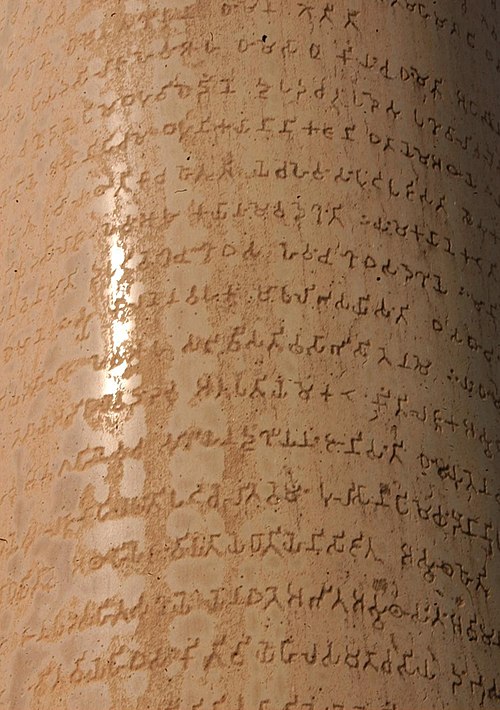
Ashokan Pillars and Rock Edicts
Ashoka erects pillars and carves rock edicts across the empire, inscribed with Buddhist moral precepts and administrative decrees, written in Prakrit and other languages. #history #architecture
Ashokan Pillars and Rock Edicts By Sachin kumar tiwary - This image has been extracted from another file, CC BY-SA 3.0, https://commons.wikimedia.org/w/index.php?curid=70710778
232 BCE
Death of Ashoka
Ashoka dies, and the Maurya Empire begins a gradual decline due to weak successors and economic pressures. #history
185 BCE
Fall of the Maurya Empire
The last Mauryan emperor, Brihadratha, is assassinated by his general Pushyamitra Shunga, who founds the Shunga Empire. #history
Fall of the Maurya Empire By Leiden University Library / Royal Netherlands Institute of Southeast Asian and Caribbean Studies - Detail ofFile:KITLV 87943 - Unknown - Relief on the Bharhut stupa in British India - 1897.tif, Public domain, https://commons.wikimedia.org/w/index.php?curid=61330750
150 BCE
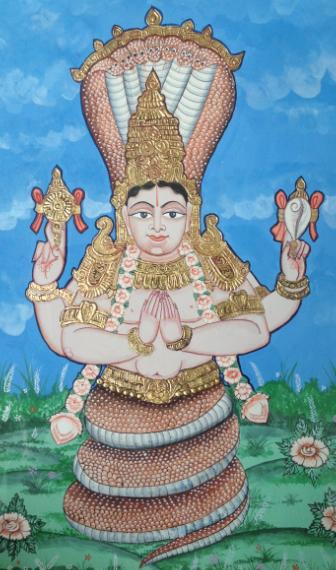
Patanjali's Mahabhashya
The grammarian Patanjali writes the Mahabhashya, a commentary on Panini's Sanskrit grammar, becoming a foundational text of Indian linguistics. #language #philosophy
Patanjali's Mahabhashya By Lleve - Own work, CC BY-SA 4.0, https://commons.wikimedia.org/w/index.php?curid=36233838
100 BCE
Silk Road Trade Flourishes
The Indian subcontinent becomes a key node in the Silk Road trade network, exchanging spices, textiles, and ideas with Central Asia, China, and the Roman world. #history #trade
Silk Road Trade Flourishes By User:Kelvin Case User:Turkish Flame User:SmallJarsWithGreenLabels - File:Kazakhstan (orthographic projection).svg overlaid with vectorised (by my own work) path taken from this bitmap image, per the request of user:CactiStaccingCrane, CC BY-SA 4.0, https://commons.wikimedia.org/w/index.php?curid=132527200
58 BCE
Vikrama Samvat Era Begins
The Vikrama Samvat calendar is traditionally established, marking the beginning of a Hindu lunisolar calendar widely used in the subcontinent. #culture
320 CE
Foundation of the Gupta Empire
Chandragupta I ascends the throne and establishes the Gupta Empire, marking the beginning of a classical age in India. #history #empire
Foundation of the Gupta Empire By Uploadalt - Own work, photographed at the British Museum, CC BY-SA 3.0, https://commons.wikimedia.org/w/index.php?curid=12232296
330 CE
Samudragupta's Expansion
Samudragupta, successor to Chandragupta I, embarks on military campaigns that greatly expand the Gupta Empire, earning the epithet 'Indian Napoleon' for his conquests. #history #war
Samudragupta's Expansion By PHGCOM - File:SamudraguptaCoin.jpg, CC BY-SA 3.0, https://commons.wikimedia.org/w/index.php?curid=130095209
375 CE
Reign of Chandragupta II
Chandragupta II (Vikramaditya) comes to power; his reign is marked by prosperity, artistic patronage, and the peak of the Gupta Empire. #history #art
Reign of Chandragupta II By PHGCOM - self-made, photographed at the British Museum, CC BY-SA 3.0, https://commons.wikimedia.org/w/index.php?curid=2237604
380 CE
Composition of Kama Sutra
Vatsyayana Mallanaga compiles the Kama Sutra, a Sanskrit treatise on human desire, love, and sexuality, reflecting the sophisticated urban culture of the time. #literature #philosophy
Composition of Kama Sutra By Ms Sarah Welch - Own work, CC BY-SA 4.0, https://commons.wikimedia.org/w/index.php?curid=73935933
399 CE
Faxian Visits India
The Chinese Buddhist monk Faxian travels to India to collect sacred texts, spending several years in the Gupta Empire and documenting its Buddhist sites. #religion #travel
Faxian Visits India By Ms Sarah Welch - Own work, CC0, https://commons.wikimedia.org/w/index.php?curid=110121875
400 CE
Kalidasa Writes Abhijnanashakuntalam
The great Sanskrit poet Kalidasa composes Abhijnanashakuntalam (The Recognition of Shakuntala), a masterpiece of Indian literature and drama. #literature #drama
Kalidasa Writes Abhijnanashakuntalam By Raja Ravi Varma - https://artsandculture.google.com/asset/shakuntala-removing-a-thorn-from-her-foot-raja-ravi-varma/UgFGr-9kgW8y7g, Public domain, https://commons.wikimedia.org/w/index.php?curid=10258137
415 CE
Construction of Iron Pillar of Delhi
The Iron Pillar of Delhi is erected during the Gupta period, known for its rust-resistant composition, showcasing advanced metallurgy. #technology #history
Construction of Iron Pillar of Delhi By Photograph taken by Mark A. Wilson (Department of Geology, The College of Wooster). [1] - Original photograph, Public domain, https://commons.wikimedia.org/w/index.php?curid=4150061
450 CE
Huna Invasions Begin
The Huna (Hephthalite) tribes invade the Gupta Empire from Central Asia, destabilizing the region and leading to the empire's decline. #history #war
475 CE
Aryabhata's Birth
The mathematician-astronomer Aryabhata is born; he later writes the Aryabhatiya, introducing concepts like zero and the approximation of pi. #science #mathematics
Aryabhata's Birth By Cpjha13 - Own work, CC BY-SA 4.0, https://commons.wikimedia.org/w/index.php?curid=49883192
499 CE
Aryabhatiya Completed
Aryabhata completes his seminal work Aryabhatiya, which describes the heliocentric model, solar and lunar eclipses, and the value of pi (3.1416). #science #mathematics
Aryabhatiya Completed By Krishnachandranvn - Verses in Devanagari saved as image. Previously published: Publishing for the first time., CC BY-SA 3.0, https://commons.wikimedia.org/w/index.php?curid=47811589
500 CE
Ajanta Caves Painting Flourishes
The Ajanta Caves, with their exquisite Buddhist murals and sculptures, reach their artistic peak under the patronage of various dynasties. #art #religion
Ajanta Caves Painting Flourishes By No machine-readable author provided. Soman assumed (based on copyright claims). - No machine-readable source provided. Own work assumed (based on copyright claims)., CC BY 2.5, https://commons.wikimedia.org/w/index.php?curid=340540
550 CE
Decline of the Gupta Empire
The Gupta Empire disintegrates due to internal strife, Huna invasions, and the rise of regional powers, marking the end of the classical Gupta period. #history
Decline of the Gupta Empire By Map created from DEMIS Mapserver, which are public domain. Koba-chan. - This image has been extracted from another file, CC BY-SA 3.0, https://commons.wikimedia.org/w/index.php?curid=115192511
600 CE
Rise of the Vardhana Dynasty
Pushyabhuti's successor Harsha Vardhana establishes the Vardhana dynasty, temporarily unifying northern India after the Gupta decline. #history
Rise of the Vardhana Dynasty By CNG Coins - CNG Coins Coin from CNG coins. Used with permission (CNG coin [1]). Coin [2], CC BY-SA 3.0, https://commons.wikimedia.org/w/index.php?curid=61069595
650 CE
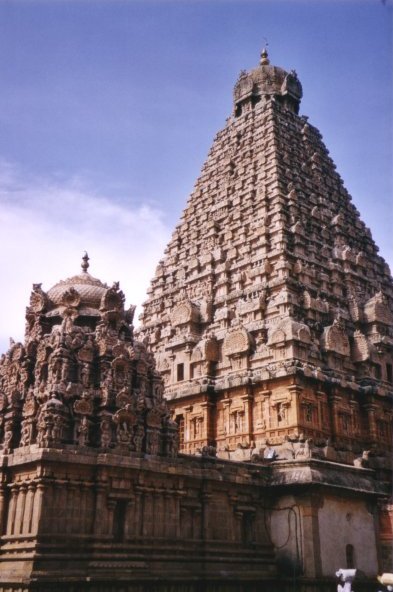
Pallava Rock-Cut Architecture
Pallava kings in South India create rock-cut temples and monoliths at Mahabalipuram, showcasing Dravidian architectural styles. #architecture #art
Pallava Rock-Cut Architecture By Ms Sarah Welch - Own work, CC BY-SA 4.0, https://commons.wikimedia.org/w/index.php?curid=64062088
700 CE
Rise of the Rashtrakuta Dynasty
The Rashtrakuta dynasty becomes dominant in the Deccan, known for its patronage of Jainism and the Kailasa temple at Ellora. #history #art
Rise of the Rashtrakuta Dynasty By Borders by Rawn3012 using GIMP - This image has been extracted from another file, CC BY 4.0, https://commons.wikimedia.org/w/index.php?curid=163681076
788 CE
Adi Shankara's Birth
Adi Shankara, the great Hindu philosopher, is born; he consolidates Advaita Vedanta and establishes monastic orders across India. #philosophy #religion
Adi Shankara's Birth By Raja Ravi Varma - Google Arts & Culture — adi-shankaracharya/WgFvX3x6i0ckfQ, Public domain, https://commons.wikimedia.org/w/index.php?curid=10306665
900 CE
Chola Dynasty Ascendancy
The Chola dynasty in South India rises to power, expanding through maritime trade and conquest, and patronizing Tamil literature and temple architecture. #history #trade
Chola Dynasty Ascendancy By The original uploader was Venu62 at English Wikipedia. - Transferred from en.wikipedia to Commons., Public domain, https://commons.wikimedia.org/w/index.php?curid=2647333
1000 CE
Rajendra Chola's Naval Expedition
Rajendra Chola I launches a naval expedition that conquers parts of Southeast Asia, including the Srivijaya empire, demonstrating Chola sea power. #history #war
Rajendra Chola's Naval Expedition By David George - Own work, Public domain, https://commons.wikimedia.org/w/index.php?curid=109743340
1025 CE
Mahmud of Ghazni's Invasions
Mahmud of Ghazni leads a series of raids into the Indian subcontinent, looting wealth and plundering Hindu temples, weakening local kingdoms. #history #war
Mahmud of Ghazni's Invasions By 1314-15 - [1] Mahmud ibn Sebuktegin, Ghaznavid ruler, conquering Qasdar (modern Khuzdar) in India, miniature from the Jamiʿ al-Tawarikh of Rashid al-Din Il-Khanid Tabriz Ms Or 20 f.108v, Public domain, https://commons.wikimedia.org/w/index.php?curid=181049706
1192 CE
Battle of Tarain
Muhammad Ghori defeats Prithviraj Chauhan at the Second Battle of Tarain, paving the way for Muslim rule in northern India and the Delhi Sultanate. #history #war
Battle of Tarain By Allan Stewart - Internet Archive identifier: hutchinsonsstory00londuoft p.155, Public domain, https://commons.wikimedia.org/w/index.php?curid=20046518
1206 CE
Foundation of the Delhi Sultanate
Qutb-ud-din Aibak proclaims himself Sultan of Delhi, establishing the Mamluk dynasty and the Delhi Sultanate, which lasts for three centuries. #history #politics
Foundation of the Delhi Sultanate By Muhammad Umair Mirza - Own work, CC BY-SA 4.0, https://commons.wikimedia.org/w/index.php?curid=56802122