Algebraic Systems: From Counting Rods to Symbolic Equations
Encyclopedia/1. The Cosmos & The Natural World/1. Mathematics & Formal Systems/02. Algebra & Symbolic Systems • Curated by Admin Timeline.sg
Algebraic systems evolved from ancient Chinese matrix methods and Islamic polynomial algebra to European symbolic notation, culminating in the formalization of symbolic equations and the solution of cubic and quartic equations.
Chronological Storyline (44 Milestones)
200 BCE
Chinese Nine Chapters on the Mathematical Art
The Nine Chapters includes the fangcheng method for solving systems of linear equations using matrix elimination, a precursor to Gaussian elimination. This text laid foundational concepts in algebraic problem solving in ancient China. #algebra #history #mathematics
Chinese Nine Chapters on the Mathematical Art By 中國書店海王邨公司 - https://pmgs.kongfz.com/detail/1_158470/, Public domain, https://commons.wikimedia.org/w/index.php?curid=22913440
250 CE
Diophantus Writes Arithmetica
Diophantus of Alexandria wrote Arithmetica, a series of books on solving algebraic equations and number theory. He introduced syncopated notation and methods for solving indeterminate equations, influencing later Islamic and European algebra. #algebra #history #mathematics
820 CE
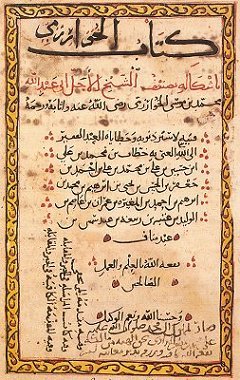
Al-Khwarizmi Publishes The Compendious Book on Calculation by Completion and Balancing
Al-Khwarizmi's work introduced systematic solutions for linear and quadratic equations, coining the term 'algebra' from 'al-jabr' (restoration). It became a foundational text in Islamic mathematics and later influenced European algebra. #algebra #history #mathematics
Al-Khwarizmi Publishes The Compendious Book on Calculation by Completion and Balancing By Muḥammad ibn Musa al-Khwarizmi - Esposito, John L., ed. (1999) The Oxford History of Islam, Oxford University Press ISBN: 0195107993. ; April 2006 (upload date) by Spm, Public domain, https://commons.wikimedia.org/w/index.php?curid=716423
1000 CE
Al-Karaji Develops Algebraic Induction
Al-Karaji extended algebraic methods by using inductive reasoning to derive formulas for sums of powers and binomial coefficients. His work on polynomial arithmetic advanced symbolic manipulation. #algebra #history #mathematics
Al-Karaji Develops Algebraic Induction By en:Al-Karaji - Schoenberg Center for Electronic Text and Imaging, University of Pennsylvania, Public domain, https://commons.wikimedia.org/w/index.php?curid=46916790
1070 CE
Omar Khayyam Classifies Cubic Equations
Omar Khayyam classified cubic equations and solved them geometrically using intersecting conic sections. His work demonstrated the connection between algebra and geometry, though algebraic solutions remained elusive. #algebra #history #mathematics
Omar Khayyam Classifies Cubic Equations By Alireza Javaheri - https://web.archive.org/web/20161024154356/http://www.panoramio.com/photo/85093358, CC BY 3.0, https://commons.wikimedia.org/w/index.php?curid=55909539
1202 CE
Fibonacci Publishes Liber Abaci
Fibonacci introduced Hindu-Arabic numerals and algebraic methods to Europe in Liber Abaci. He included problems on linear and quadratic equations, helping spread algebraic knowledge. #algebra #history #mathematics
Fibonacci Publishes Liber Abaci By Unknown author, Public domain, https://commons.wikimedia.org/w/index.php?curid=720501
1494 CE
Pacioli Publishes Summa de Arithmetica
Luca Pacioli's Summa compiled known arithmetic and algebraic methods, including solutions for quadratic equations. It served as a comprehensive reference for Renaissance mathematicians. #algebra #history #mathematics
Pacioli Publishes Summa de Arithmetica By Stockholms Universitetsbibliotek from Stockholm, Sweden - Titelbladet till "Summa de arithmetica ...", CC BY 2.0, https://commons.wikimedia.org/w/index.php?curid=38104642
1514 CE
Scipione del Ferro Solves Depressed Cubic
Scipione del Ferro discovered the algebraic solution for the depressed cubic (x^3 + px = q), a breakthrough in solving higher-degree equations. He kept the method secret, passing it to his student Antonio Fior. #algebra #history #mathematics
1535 CE
Tartaglia Solves Cubic Equations
Niccolò Tartaglia independently solved the depressed cubic and later the general cubic, winning a mathematical contest. His method was later shared with Cardano under a pledge of secrecy. #algebra #history #mathematics
Tartaglia Solves Cubic Equations By Rijksmuseum - http://hdl.handle.net/10934/RM0001.COLLECT.115228, CC0, https://commons.wikimedia.org/w/index.php?curid=84145195
1545 CE
Cardano Publishes Ars Magna
Gerolamo Cardano's Ars Magna presented the algebraic solutions for cubic and quartic equations, including Tartaglia's method and Ferrari's quartic solution. This work marked a major advancement in European algebra. #algebra #history #mathematics
1557 CE
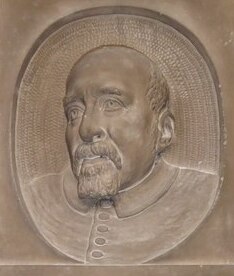
Recorde Introduces the Equals Sign
Robert Recorde introduced the equals sign (=) in his book The Whetstone of Witte, simplifying algebraic notation. This symbol became fundamental in symbolic algebra. #algebra #history #mathematics
Recorde Introduces the Equals Sign By Basher Eyre - This file was derived from: St Mary, Tenby- memorial (13) (geograph 6264760).jpg, CC BY-SA 2.0, https://commons.wikimedia.org/w/index.php?curid=124709772
1572 CE
Bombelli Publishes Algebra
Rafael Bombelli's Algebra systematically developed algebraic notation and operations, including the use of imaginary numbers for solving cubic equations. His work advanced symbolic algebra. #algebra #history #mathematics
Bombelli Publishes Algebra By Unknown author - Book printed by editor Giovanni Rossi, Public domain, https://commons.wikimedia.org/w/index.php?curid=1591687
1591 CE
Viète Introduces Symbolic Algebra
François Viète's In artem analyticem isagoge introduced the use of letters for unknowns and constants, creating a symbolic algebra. He also developed formulas for solving polynomial equations. #algebra #history #mathematics
Viète Introduces Symbolic Algebra By Unknown author, Public domain, https://commons.wikimedia.org/w/index.php?curid=81021
John Napier introduced logarithms, which simplified multiplication and division, aiding algebraic computation. Logarithms became essential tools in algebra and science. #algebra #history #mathematics
Napier Publishes Mirifici Logarithmorum Canonis Descriptio By Unknown author - This scan from [1], Public domain, https://commons.wikimedia.org/w/index.php?curid=524495
1631 CE
Harriot Publishes Artis Analyticae Praxis
Thomas Harriot's posthumous work introduced symbolic notation for equations and the concept of polynomial roots. He used symbols for equality and inequality, influencing later algebra. #algebra #history #mathematics
Harriot Publishes Artis Analyticae Praxis By Unidentified painter - http://www.ecu.edu/cs-cas/images/harriot.jpg, Public domain, https://commons.wikimedia.org/w/index.php?curid=3994065
1637 CE
Descartes Publishes La Géométrie
René Descartes' La Géométrie introduced Cartesian coordinates and algebraic geometry, linking algebra and geometry. He also developed notation for exponents and the rule of signs. #algebra #history #mathematics
Descartes Publishes La Géométrie By Original uploader was User:Caton at [1] - Originally from fr.wikipedia; description page is/was here., Public domain, https://commons.wikimedia.org/w/index.php?curid=1379032
1655 CE
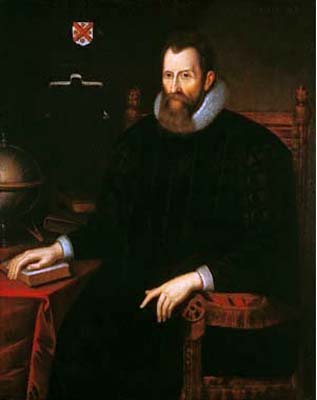
Wallis Publishes Arithmetica Infinitorum
John Wallis extended algebraic methods to infinite series and introduced the symbol for infinity. His work on interpolation and the area under curves contributed to the development of calculus. #algebra #history #mathematics
Wallis Publishes Arithmetica Infinitorum By After Godfrey Kneller - one or more third parties have made copyright claims against Wikimedia Commons in relation to the work from which this is sourced or a purely mechanical reproduction thereof. This may be due to recognition of the "sweat of the brow" doctrine, allowing works to be eligible for protection through skill and labour, and not purely by originality as is the case in the United States (where this website is hosted). These claims may or may not be valid in all jurisdictions. As such, use of this image in the jurisdiction of the claimant or other countries may be regarded as copyright infringement. Please see Commons:When to use the PD-Art tag for more information., Public domain, https://commons.wikimedia.org/w/index.php?curid=6365975
1666 CE
Newton Develops Generalized Binomial Theorem
Isaac Newton discovered the generalized binomial theorem, expanding algebraic expressions to fractional and negative exponents. This theorem became a cornerstone of algebra and calculus. #algebra #history #mathematics
1673 CE
Leibniz Develops Determinants
Gottfried Wilhelm Leibniz developed the theory of determinants for solving systems of linear equations, though his work remained unpublished. This laid groundwork for linear algebra. #algebra #history #mathematics
1682 CE
Seki Kowa Discovers Determinants
Japanese mathematician Seki Kowa independently discovered determinants and developed methods for solving polynomial equations. His work contributed to the development of algebra in East Asia. #algebra #history #mathematics
Seki Kowa Discovers Determinants By upload by AMorozov - Gakken, Public domain, https://commons.wikimedia.org/w/index.php?curid=710154
1684 CE
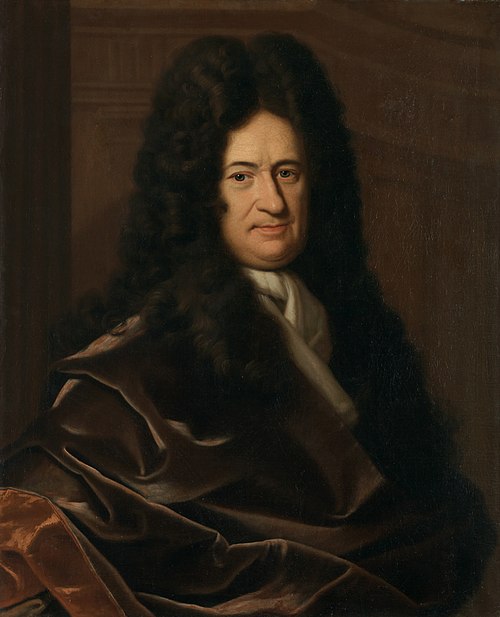
Leibniz Publishes First Paper on Differential Calculus
Leibniz's paper introduced differential calculus notation, including the use of dx and dy, which relied on algebraic concepts. This work formalized the relationship between algebra and calculus. #algebra #history #mathematics
Leibniz Publishes First Paper on Differential Calculus By Christoph Bernhard Francke - Herzog Anton Ulrich-Museum, online, Public domain, https://commons.wikimedia.org/w/index.php?curid=53159699
1693 CE
Leibniz Uses Determinants for Linear Systems
Leibniz wrote a letter using determinants to solve linear equations, demonstrating the algebraic method. This is one of the earliest known uses of determinants in Europe. #algebra #history #mathematics
1700 CE
Bernoulli Brothers Advance Algebraic Series
Jacob and Johann Bernoulli developed series expansions and algebraic techniques for solving differential equations. Their work bridged algebra and analysis, influencing 18th-century mathematics. #algebra #history #mathematics
1707 CE
Newton Publishes Arithmetica Universalis
Isaac Newton's Arithmetica Universalis compiled his lectures on algebra, covering equations, roots, and the theory of equations. It became a standard textbook for algebra. #algebra #history #mathematics
Newton Publishes Arithmetica Universalis By Unknown author, Public domain, https://commons.wikimedia.org/w/index.php?curid=369395
1729 CE
Maclaurin Publishes Treatise of Algebra
Colin Maclaurin's Treatise of Algebra presented algebraic methods and the Maclaurin series, expanding functions into infinite series. His work contributed to the formalization of algebra. #algebra #history #mathematics
Maclaurin Publishes Treatise of Algebra By David Steuart Erskine - downloaded from https://www.nationalgalleries.org/art-and-artists/3143/colin-maclaurin-1698-1746-mathematician, Public domain, https://commons.wikimedia.org/w/index.php?curid=1672996
1748 CE
Euler Publishes Introductio in Analysin Infinitorum
Leonhard Euler's Introductio systematized algebraic functions, series, and the exponential function. He introduced notation like f(x) and e, shaping modern algebraic notation. #algebra #history #mathematics
Euler Publishes Introductio in Analysin Infinitorum By Cronholm144 at English Wikipedia - Transferred from en.wikipedia to Commons., CC BY-SA 3.0, https://commons.wikimedia.org/w/index.php?curid=3128774
1750 CE
Cramer Publishes Cramer's Rule
Gabriel Cramer introduced Cramer's rule for solving systems of linear equations using determinants. This method became a standard algebraic technique. #algebra #history #mathematics
1764 CE
Lagrange Studies Polynomial Equations
Joseph-Louis Lagrange began systematic study of polynomial equations, exploring symmetric functions and the relationship between roots. His work laid foundations for group theory. #algebra #history #mathematics
Lagrange Publishes Réflexions sur la résolution algébrique des équations
Lagrange's memoir analyzed methods for solving cubic and quartic equations, introducing the concept of resolvents. This work influenced Abel and Galois in proving the unsolvability of quintics. #algebra #history #mathematics
Lagrange Publishes Réflexions sur la résolution algébrique des équations By Euclid - https://openn.library.upenn.edu/Data/0016/html/e2748.html, Public domain, https://commons.wikimedia.org/w/index.php?curid=1259734
1799 CE
Gauss Proves Fundamental Theorem of Algebra
Carl Friedrich Gauss proved that every non-constant polynomial with complex coefficients has at least one complex root. This theorem is central to algebra and analysis. #algebra #history #mathematics
1801 CE
Gauss Publishes Disquisitiones Arithmeticae
Gauss's Disquisitiones Arithmeticae systematized number theory and introduced modular arithmetic, influencing algebraic number theory. It established the modern approach to algebraic structures. #algebra #history #mathematics
Gauss Publishes Disquisitiones Arithmeticae By Unknown author, Public domain, https://commons.wikimedia.org/w/index.php?curid=641724
1824 CE
Abel Proves Unsolvability of Quintic
Niels Henrik Abel proved that the general quintic equation cannot be solved by radicals, a landmark in algebra. This result showed the limitations of algebraic methods. #algebra #history #mathematics
1832 CE
Galois Develops Group Theory
Évariste Galois developed the theory of groups and fields to determine solvability of polynomial equations. His work founded Galois theory, a cornerstone of modern algebra. #algebra #history #mathematics
Galois Develops Group Theory By Unknown author - Iyanaga, Shokichi, "ガロアの時代 ガロアの数学 第一部 時代篇" , Springer-Verlag Tokyo, 1999 http://www.win.tue.nl/~aeb/at/GaloisCorrespondence.html, Public domain, https://commons.wikimedia.org/w/index.php?curid=103351
1843 CE
Hamilton Discovers Quaternions
William Rowan Hamilton discovered quaternions, a non-commutative algebraic system extending complex numbers. This marked the beginning of modern abstract algebra. #algebra #history #mathematics
Hamilton Discovers Quaternions By Cmglee - Own work, CC BY-SA 4.0, https://commons.wikimedia.org/w/index.php?curid=145997978
1844 CE
Grassmann Publishes Die Lineale Ausdehnungslehre
Hermann Grassmann introduced the theory of linear spaces and exterior algebra, laying foundations for vector spaces and multilinear algebra. His work was ahead of its time. #algebra #history #mathematics
Grassmann Publishes Die Lineale Ausdehnungslehre By Unknown author - From the beginning of vol. 1 of Grassmann's collected works (1894), Public domain, https://commons.wikimedia.org/w/index.php?curid=174414110
1847 CE
Boole Publishes The Mathematical Analysis of Logic
George Boole developed Boolean algebra, an algebraic system for logic. This work connected algebra to logic and later influenced computer science. #algebra #history #mathematics
1854 CE
Boole Publishes An Investigation of the Laws of Thought
Boole expanded his algebraic logic, formalizing Boolean algebra as a two-valued system. This work became fundamental to digital circuit design and computing. #algebra #history #mathematics
1858 CE
Cayley Develops Matrix Algebra
Arthur Cayley defined matrix multiplication and developed the algebra of matrices, including the Cayley-Hamilton theorem. This work established matrix theory as a branch of algebra. #algebra #history #mathematics
Cayley Develops Matrix Algebra By Herbert Beraud (1845–1896) - http://www-groups.dcs.st-and.ac.uk/~history/PictDisplay/Cayley.html, Public domain, https://commons.wikimedia.org/w/index.php?curid=904674
1870 CE
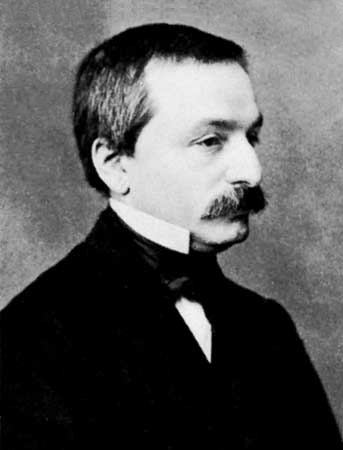
Kronecker Defines Algebraic Numbers
Leopold Kronecker developed the theory of algebraic numbers and fields, contributing to algebraic number theory. He emphasized the role of integers in algebra. #algebra #history #mathematics
Kronecker Defines Algebraic Numbers By Unknown author - http://www.britannica.com/EBchecked/media/28346/Kronecker-1865, Public domain, https://commons.wikimedia.org/w/index.php?curid=33753789
1872 CE
Dedekint Introduces Ideals
Richard Dedekind introduced the concept of ideals in ring theory to restore unique factorization in algebraic number fields. This concept became central to abstract algebra. #algebra #history #mathematics
Dedekint Introduces Ideals By Unknown (Mondadori Publishers) - https://www.gettyimages.co.uk/detail/news-photo/portrait-of-the-german-mathematician-richard-dedekind-1900s-news-photo/141551154, Public domain, https://commons.wikimedia.org/w/index.php?curid=41284791
1882 CE
von Dyck Studies Abstract Groups
Walther von Dyck gave the first abstract definition of a group, formalizing group theory as an independent algebraic structure. This marked the birth of modern abstract algebra. #algebra #history #mathematics
von Dyck Studies Abstract Groups By Unknown author - MacTutor History of Mathematics: http://www-history.mcs.st-andrews.ac.uk/PictDisplay/Von_Dyck.html, Public domain, https://commons.wikimedia.org/w/index.php?curid=69894344
1893 CE
Peano Axiomatizes Natural Numbers
Giuseppe Peano formulated axioms for natural numbers, using algebraic structures to define arithmetic. His work influenced the formalization of algebra and logic. #algebra #history #mathematics
1898 CE
Frobenius Proves Division Algebra Theorem
Ferdinand Georg Frobenius proved that the only finite-dimensional associative division algebras over the reals are the reals, complexes, and quaternions. This result classified algebraic structures. #algebra #history #mathematics
Frobenius Proves Division Algebra Theorem By Furfur - (de): Oberwolfach Photo Collection, aus einem Fotoalbum der Mathematischen Gesellschaft (Hamburg)(en): Oberwolfach Photo Collection, from a photo album of the Mathematische Gesellschaft (Hamburg), CC BY-SA 3.0, https://commons.wikimedia.org/w/index.php?curid=59417515
1900 CE
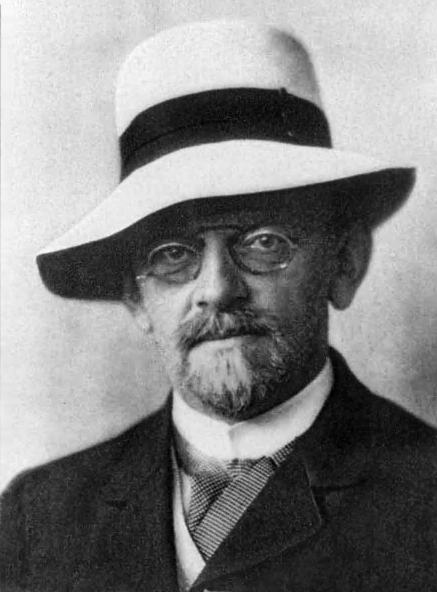
Hilbert's Problems Include Algebraic Challenges
David Hilbert presented 23 problems, including the solvability of Diophantine equations and the foundations of algebra. These problems guided algebraic research in the 20th century. #algebra #history #mathematics
Hilbert's Problems Include Algebraic Challenges By Unknown author - Possibly Reid, Constance (1970) Hilbert, Berlin, Heidelberg: Springer Berlin Heidelberg Imprint Springer, p. 230 ISBN: 978-3-662-27132-2., Public domain, https://commons.wikimedia.org/w/index.php?curid=36302