Algebraic Number Fields & Ring of Integers: Global Cross-Cultural Perspectives
Encyclopedia/1. The Cosmos & The Natural World/1. Mathematics & Formal Systems/06. Number Theory & Cryptography • Curated by Admin Timeline.sg
This timeline traces the development of algebraic number fields and rings of integers from ancient quadratic equations to modern class field theory and the Langlands program, highlighting contributions across civilizations.
Chronological Storyline (39 Milestones)
2000 BCE
Babylonian Quadratic Equations
Babylonian clay tablets (e.g., YBC 7289) demonstrate solutions to quadratic equations, laying early foundations for algebraic number theory. #mathematics #history
Babylonian Quadratic Equations By Urcia, A., Yale Peabody Museum of Natural History, https://peabody.yale.edu, http://hdl.handle.net/10079/8931zqj derivative work, user:Theodor Langhorne Franklin - File:YBC-7289-OBV.jpg, CC0, https://commons.wikimedia.org/w/index.php?curid=76347956
300 BCE
Euclid's Elements
Euclid's Elements covers number theory including the Euclidean algorithm and properties of integers, influencing later work on algebraic integers. #mathematics #history
Euclid's Elements By University of Pennsylvania Museum of Archaeology and Anthropology - https://openn.library.upenn.edu/Data/0016/html/e2748.html, CC BY-SA 4.0, https://commons.wikimedia.org/w/index.php?curid=169166171
250 CE
Diophantus' Arithmetica
Diophantus writes Arithmetica, a seminal work on solving equations with integer solutions, later inspiring Fermat and modern number theory. #mathematics #history
628 CE
Brahmagupta Solves Pell's Equation
Indian mathematician Brahmagupta provides methods for solving quadratic Diophantine equations like x^2 - Ny^2 = 1, early work on quadratic forms. #mathematics #india
820 CE
Al-Khwarizmi's Algebra
Al-Khwarizmi's book Al-Kitab al-Mukhtasar systematizes solving quadratic equations, influencing European mathematics and algebraic methods. #mathematics #islamicgoldenage
Al-Khwarizmi's Algebra By Zarateman - Own work, CC0, https://commons.wikimedia.org/w/index.php?curid=162213187
1150 CE
Bhaskara II on Pell's Equation
Bhaskara II develops the Chakravala method to solve Pell's equation, an advanced technique for quadratic Diophantine problems. #mathematics #india
Bhaskara II on Pell's Equation By Unknown author - Own work, Public domain, https://commons.wikimedia.org/w/index.php?curid=150275955
1202 CE
Fibonacci's Liber Abaci
Fibonacci introduces Hindu-Arabic numerals and problems like the rabbit sequence, spreading algebraic ideas in Europe. #mathematics #history
Fibonacci's Liber Abaci By Unknown author, Public domain, https://commons.wikimedia.org/w/index.php?curid=720501
1545 CE
Cardano's Ars Magna
Gerolamo Cardano publishes Ars Magna, solving cubic and quartic equations and introducing complex numbers implicitly. #mathematics #algebra )
1572 CE
Bombelli's Algebra and Imaginary Numbers
Rafael Bombelli's Algebra gives rules for arithmetic with imaginary numbers, a crucial step toward complex numbers and algebraic integers. #mathematics #algebra
Bombelli's Algebra and Imaginary Numbers By Unknown author - Book printed by editor Giovanni Rossi, Public domain, https://commons.wikimedia.org/w/index.php?curid=1591687
1637 CE
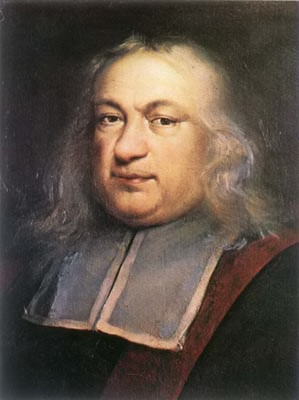
Fermat's Last Theorem
Pierre de Fermat claims that no integer solutions exist for x^n + y^n = z^n for n>2, a problem that drives number theory and algebraic number fields. #mathematics #numbertheory
Fermat's Last Theorem By Unknown author - https://web.archive.org/web/20191028044928/http://www-groups.dcs.st-and.ac.uk/~history/PictDisplay/Fermat.html, Public domain, https://commons.wikimedia.org/w/index.php?curid=36804
1640 CE
Fermat's Sum of Two Squares Theorem
Fermat states that a prime congruent to 1 mod 4 can be expressed as sum of two squares, linking primes to quadratic fields. #mathematics #numbertheory
Fermat's Sum of Two Squares Theorem By H. Loeffel - york.ac.uk :Abb. 45 from H. Loeffel, Blaise Pascal, Basel: Birkhäuser 1987.Dictionary of Scientific Biography, vol. 4, 566-576., Public domain, https://commons.wikimedia.org/w/index.php?curid=255595
1707 CE
Euler's Work on Quadratic Forms
Leonhard Euler systematically studies quadratic forms and their representation of numbers, laying groundwork for Gauss. #mathematics #numbertheory
Euler's Work on Quadratic Forms By Jakob Emanuel Handmann - This file was derived from: Leonhard Euler.jpg Edited by: Bammesk Original source: Kunstmuseum Basel, Public domain, https://commons.wikimedia.org/w/index.php?curid=113056351
1770 CE
Lagrange's Four-Square Theorem
Joseph-Louis Lagrange proves every natural number is sum of four squares, relating to quaternions and quadratic forms. #mathematics #numbertheory
Lagrange's Four-Square Theorem By Cmglee - Own work, CC BY-SA 4.0, https://commons.wikimedia.org/w/index.php?curid=132463072
1798 CE
Legendre's Quadratic Reciprocity
Adrien-Marie Legendre publishes the law of quadratic reciprocity, a cornerstone of number theory later generalized to number fields. #mathematics #numbertheory
Legendre's Quadratic Reciprocity By Julien-Léopold Boilly - https://www.numericana.com/answer/record.htm#legendre where it was cropped from here, Public domain, https://commons.wikimedia.org/w/index.php?curid=6092195
1801 CE
Gauss Publishes Disquisitiones Arithmeticae
Carl Friedrich Gauss publishes his Disquisitiones Arithmeticae, laying modern foundations for number theory, including Gaussian integers and quadratic reciprocity. #mathematics #numbertheory #algebra
Gauss Publishes Disquisitiones Arithmeticae By Unknown author, Public domain, https://commons.wikimedia.org/w/index.php?curid=641724
1832 CE
Gaussian Integers Introduced
Gauss introduces Gaussian integers a+bi, the ring of integers of the field Q(i), a fundamental example of quadratic fields. #mathematics #algebraicnumbertheory
Gaussian Integers Introduced By CheCheDaWaff - This file was derived from: Gaussian integer lattice.png:, CC BY-SA 4.0, https://commons.wikimedia.org/w/index.php?curid=48818484
1844 CE
Kummer's Ideal Numbers
Ernst Kummer develops ideal numbers to restore unique factorization in cyclotomic fields, building toward Dedekind's ideals. #mathematics #algebraicnumbertheory
Kummer's Ideal Numbers By Unknown author - https://veryimportantlot.com/fr/overview/author/artist-ernst-eduard-kummer-1810-1893#artist, Public domain, https://commons.wikimedia.org/w/index.php?curid=185413544
1847 CE
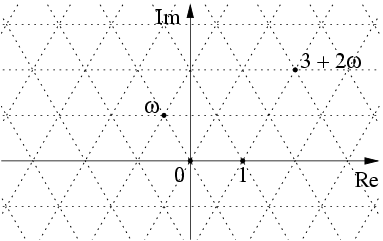
Eisenstein Integers Defined
Gotthold Eisenstein studies Eisenstein integers based on cube roots of unity, a key example of rings of integers. #mathematics #algebraicnumbertheory
Eisenstein Integers Defined By Unknown author, CC BY-SA 3.0, https://commons.wikimedia.org/w/index.php?curid=141563
1853 CE
Kronecker-Weber Theorem Stated
Leopold Kronecker states that every abelian extension of Q is contained in a cyclotomic field, central to class field theory. #mathematics #algebraicnumbertheory
1857 CE
Dirichlet's Unit Theorem
Dirichlet proves his unit theorem describing the structure of units in rings of integers of number fields. #mathematics #algebraicnumbertheory
1859 CE
Riemann Zeta Function Introduced
Bernhard Riemann introduces the zeta function, linking analytic methods to number theory and later to the distribution of prime ideals. #mathematics #analytictheory
Riemann Zeta Function Introduced By Nschloe - Own work, CC BY-SA 4.0, https://commons.wikimedia.org/w/index.php?curid=112207479
1871 CE
Dedekind's Rings of Integers and Ideals
Richard Dedekind defines rings of integers and ideals, formalizing algebraic number theory and the concept of Dedekind domains. #mathematics #algebraicnumbertheory
1877 CE
Dedekind and Weber on Algebraic Functions
Dedekind and Heinrich Weber apply ideal theory to Riemann surfaces, linking number fields to function fields. #mathematics #algebraicgeometry
Dedekind and Weber on Algebraic Functions By Unknown (Mondadori Publishers) - https://www.gettyimages.co.uk/detail/news-photo/portrait-of-the-german-mathematician-richard-dedekind-1900s-news-photo/141551154, Public domain, https://commons.wikimedia.org/w/index.php?curid=41284791
1882 CE
Kronecker's Jugendtraum
Leopold Kronecker poses the problem of generating abelian extensions of imaginary quadratic fields, now Hilbert's 12th problem. #mathematics #algebraicnumbertheory
1897 CE
Hensel Discovers p-adic Numbers
Kurt Hensel introduces p-adic numbers, opening local fields and completing number fields with respect to valuations. #mathematics #p-adic
Hensel Discovers p-adic Numbers By Melchoir - Own work, CC BY-SA 4.0, https://commons.wikimedia.org/w/index.php?curid=186745843
1897 CE
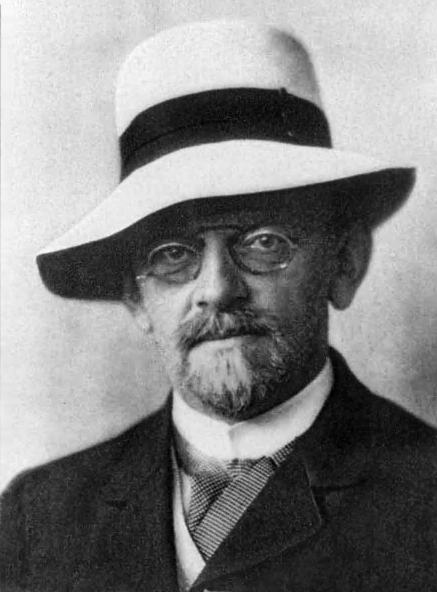
Hilbert's Zahlbericht
David Hilbert publishes a comprehensive report on algebraic number theory, summarizing and advancing the field. #mathematics #algebraicnumbertheory
Hilbert's Zahlbericht By Unknown author - Possibly Reid, Constance (1970) Hilbert, Berlin, Heidelberg: Springer Berlin Heidelberg Imprint Springer, p. 230 ISBN: 978-3-662-27132-2., Public domain, https://commons.wikimedia.org/w/index.php?curid=36302
1917 CE
Takagi's Class Field Theory
Teiji Takagi develops class field theory, establishing the Galois group of abelian extensions of number fields. #mathematics #algebraicnumbertheory #japan
Takagi's Class Field Theory By Shigeru Tamura - 文藝春秋新社 現代日本の百人(1953年刊), Public domain, https://commons.wikimedia.org/w/index.php?curid=46916329
1923 CE
Artin's L-functions
Emil Artin defines Artin L-functions for Galois representations, connecting number theory and automorphic forms. #mathematics #numbertheory
1926 CE
Chebotarev's Density Theorem
Nikolai Chebotaryov proves the Chebotarev density theorem, describing the distribution of primes in number fields. #mathematics #numbertheory
1927 CE
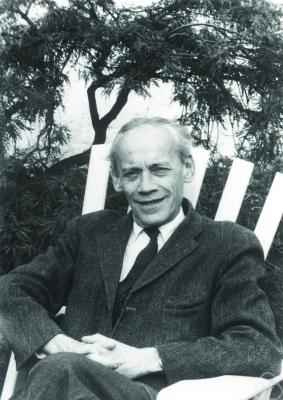
Artin Reciprocity Law
Emil Artin proves the reciprocity law, the crowning result of class field theory for number fields. #mathematics #algebraicnumbertheory
Artin Reciprocity Law By Konrad Jacobs, Erlangen - Mathematisches Forschungsinstitut Oberwolfach, https://opc.mfo.de/detail?photoID=116, CC BY-SA 2.0 de, https://commons.wikimedia.org/w/index.php?curid=3898471
1931 CE
Hasse's Local-Global Principle
Helmut Hasse proves the local-global principle for quadratic forms over number fields, a key concept in algebraic number theory. #mathematics #numbertheory
Hasse's Local-Global Principle By Konrad Jacobs - https://opc.mfo.de/detail?photoID=1570, CC BY-SA 2.0 de, https://commons.wikimedia.org/w/index.php?curid=3900025
1936 CE
Chevalley Introduces Idèles
Claude Chevalley introduces idèles in a class field theory, providing a unified framework for local and global fields. #mathematics #algebraicnumbertheory
Chevalley Introduces Idèles By Konrad Jacobs - MFO, CC BY-SA 2.0 de, https://commons.wikimedia.org/w/index.php?curid=8046334
1940 CE
Weil's Adèles and Number Theory
André Weil develops the adèle ring and uses it to reinterpret class field theory and zeta functions. #mathematics #numbertheory
Weil's Adèles and Number Theory By Konrad Jacobs - opc.mfo.de/detail?would like to publish=1&photo id=8654, CC BY-SA 2.0 de, https://commons.wikimedia.org/w/index.php?curid=163826140
1950 CE
Tate's Thesis
John Tate's PhD thesis uses harmonic analysis on adèles to derive functional equations for L-functions of number fields. #mathematics #numbertheory )
Tate's Thesis By George Bergman - https://opc.mfo.de/detail?photo_id=13007, GFDL 1.2, https://commons.wikimedia.org/w/index.php?curid=18057017
1967 CE
Langlands Program Announced
Robert Langlands formulates the Langlands program, a web of conjectures linking automorphic forms, Galois representations, and number fields. #mathematics #langlands
1974 CE
Deligne Proves Weil Conjectures
Pierre Deligne proves the Weil conjectures, including the Riemann hypothesis for zeta functions of algebraic varieties over finite fields. #mathematics #algebraicgeometry
1983 CE
Faltings Proves Mordell Conjecture
Gerd Faltings proves the Mordell conjecture, showing that curves of genus >1 have finitely many rational points over number fields. #mathematics #arithmeticgeometry
Faltings Proves Mordell Conjecture By Renate Schmid - https://opc.mfo.de/detail?photoID=7513, CC BY-SA 2.0 de, https://commons.wikimedia.org/w/index.php?curid=5427105
1994 CE
Wiles Proves Fermat's Last Theorem
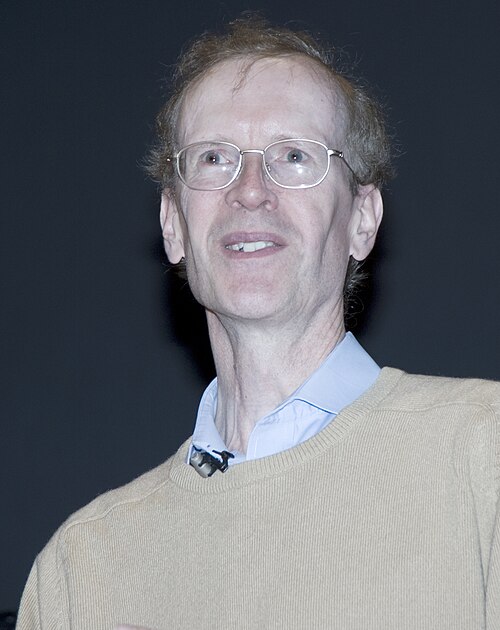
Andrew Wiles proves Fermat's Last Theorem using modular forms and elliptic curves, a landmark result linking number fields and automorphic forms. #mathematics #numbertheory
Wiles Proves Fermat's Last Theorem By "copyright C. J. Mozzochi, Princeton N.J" - http://www.mozzochi.org/deligne60/Deligne1/_DSC0024.jpg, Attribution, https://commons.wikimedia.org/w/index.php?curid=2635913
2004 CE
Bhargava's Higher Composition Laws
Manjul Bhargava discovers generalizations of Gauss's composition of binary quadratic forms, working over rings of integers in number fields. #mathematics #numbertheory
Bhargava's Higher Composition Laws By IMU - http://www.mathunion.org/general/prizes/2014, FAL, https://commons.wikimedia.org/w/index.php?curid=35855138