250 CE
Diophantus Writes Arithmetica
Diophantus of Alexandria writes Arithmetica, a foundational text in number theory and algebraic geometry, introducing symbolic notation and solving polynomial equations. #algebra #history
Timeline of key milestones in algebraic geometry and curves, from ancient foundations to modern breakthroughs, including contributions from diverse cultures and the development of schemes, cohomology, and computational methods.
Diophantus of Alexandria writes Arithmetica, a foundational text in number theory and algebraic geometry, introducing symbolic notation and solving polynomial equations. #algebra #history
Chinese mathematician Liu Hui provides commentary on The Nine Chapters on the Mathematical Art, introducing algebraic methods for solving geometric problems, including area and volume calculations. #algebra #china
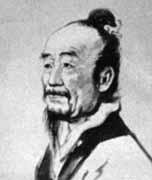
Indian mathematician Brahmagupta presents solutions to quadratic equations and introduces rules for zero in his text Brahmasphutasiddhanta, influencing later algebraic geometry. #algebra #india
Persian mathematician Al-Khwarizmi writes 'The Compendious Book on Calculation by Completion and Balancing', introducing systematic solving of linear and quadratic equations. #algebra #islamic

Persian mathematician Omar Khayyam classifies cubic equations and solves them geometrically using intersecting conics, advancing algebraic geometry. #algebra #islamic

Indian mathematician Bhaskara II writes Bijaganita (Algebra) and Siddhanta Siromani, solving quadratic and cubic equations and introducing concepts of zero and infinity. #algebra #india

Chinese mathematician Qin Jiushao develops methods for solving high-degree polynomial equations using a form of Horner's method, contributing to algebraic geometry. #algebra #china

Nasir al-Din al-Tusi classifies cubic equations and provides geometric solutions, advancing algebraic geometry in the Islamic world. #algebra #islamic

François Viète introduces symbolic algebra, using letters for unknowns and constants, paving the way for algebraic geometry. #algebra #history

René Descartes publishes La Géométrie, linking algebra and geometry by representing curves with equations, laying the foundation for algebraic geometry. #geometry #algebra

Blaise Pascal discovers the mystic hexagram theorem for conics, an early result in projective algebraic geometry. #geometry #algebra

Isaac Newton develops the binomial theorem and applies algebraic methods to study curves, contributing to the theory of plane algebraic curves. #algebra #curves

Leonhard Euler publishes Introductio in analysin infinitorum, systematically treating algebraic functions and curves, influencing algebraic geometry. #algebra #curves

Joseph-Louis Lagrange studies symmetric functions, important for the algebra underlying algebraic geometry. #algebra #history

Julius Plücker publishes his work on analytic geometry, deriving formulas (Plücker formulas) relating invariants of plane algebraic curves. #algebra #geometry

Irish mathematician George Salmon publishes a comprehensive treatise on algebraic curves, systematizing the subject and introducing many theorems. #algebra #curves

Hermann Grassmann publishes 'Die lineale Ausdehnungslehre', developing vector spaces and exterior algebra, foundational for modern algebraic geometry. #algebra #geometry

Bernhard Riemann introduces the concept of Riemann surfaces and uses topological methods to study algebraic curves, fundamentally transforming algebraic geometry. #geometry #algebra

Alfred Clebsch and Paul Gordan apply invariant theory to algebraic curves, developing the theory of plane curves and their classification. #algebra #curves

Richard Dedekind and Heinrich Weber develop a purely algebraic theory of algebraic functions, linking algebraic geometry with number theory. #algebra #numbertheory

Henri Poincaré develops uniformization of Riemann surfaces and studies algebraic curves via automorphic functions. #algebra #curves
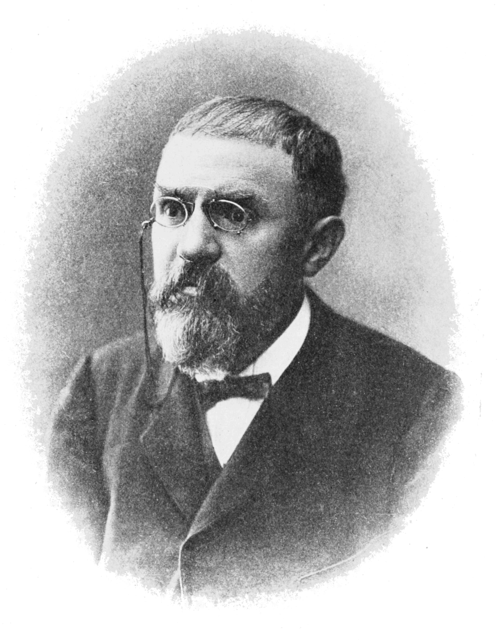
Max Noether, father of Emmy Noether, publishes fundamental results on algebraic curves and surfaces, including the Riemann-Roch theorem generalization. #algebra #curves

David Hilbert poses the 15th problem, asking for a rigorous foundation for Schubert's enumerative calculus, spurring developments in algebraic geometry. #algebra #geometry
Emmy Noether publishes her work on invariant theory under Albert Einstein, laying algebraic foundations for modern algebraic geometry. #algebra #women

Oscar Zariski begins his work on algebraic geometry over arbitrary fields, introducing Zariski topology and the concept of normal varieties. #algebra #geometry
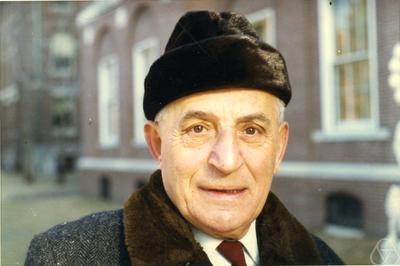
Bartel Leendert van der Waerden publishes 'Moderne Algebra', systematically using algebraic structures and influencing the development of algebraic geometry. #algebra #history

André Weil publishes 'Foundations of Algebraic Geometry', establishing a rigorous foundation using abstract algebra, and later formulates the Weil conjectures. #algebra #geometry

Kunihiko Kodaira proves the vanishing theorem for algebraic varieties, a key tool in classifying complex manifolds and algebraic geometry. #geometry #algebra

Jean-Pierre Serre publishes 'Faisceaux Algébriques Cohérents', applying sheaf theory to algebraic geometry, introducing coherent sheaves. #algebra #geometry

Alexander Grothendieck begins developing the theory of schemes, profoundly transforming algebraic geometry by unifying topology, algebra, and geometry. #algebra #geometry

Jean-Pierre Serre publishes 'Géométrie algébrique et géométrie analytique', establishing an equivalence between complex algebraic varieties and complex analytic spaces. #algebra #geometry
Alexander Grothendieck begins publishing EGA, laying out the foundations of scheme theory in monumental detail. #algebra #geometry
Heisuke Hironaka proves that algebraic varieties over fields of characteristic zero can be resolved, eliminating singularities, a landmark in algebraic geometry. #algebra #singularities
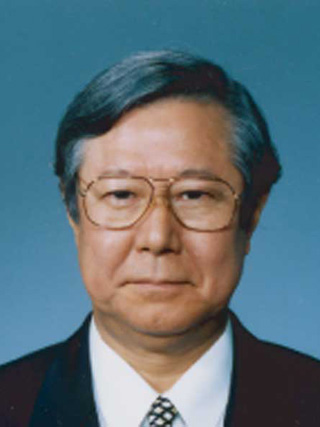
Bruno Buchberger introduces Gröbner bases in his PhD thesis, providing a computational tool for solving polynomial equations, revolutionizing computational algebraic geometry. #algebra #computation
David Mumford publishes 'Geometric Invariant Theory', providing methods to construct moduli spaces of algebraic curves and other objects. #algebra #geometry

Pierre Deligne completes the proof of the Weil conjectures using étale cohomology, a profound achievement linking algebraic geometry and number theory. #algebra #numbertheory

Gerd Faltings proves the Mordell conjecture, showing that genus >1 curves have only finitely many rational points, a major result in arithmetic geometry. #algebra #numbertheory

Shigefumi Mori launches the minimal model program (MMP) for classifying algebraic varieties, earning a Fields Medal for his work on threefolds. #algebra #geometry

Physicists and mathematicians discover mirror symmetry, linking algebraic geometry of Calabi-Yau manifolds and enumerative geometry. #algebra #physics )
Andrew Wiles proves Fermat's Last Theorem using advanced algebraic geometry, including modularity of elliptic curves, a historic breakthrough. #algebra #numbertheory
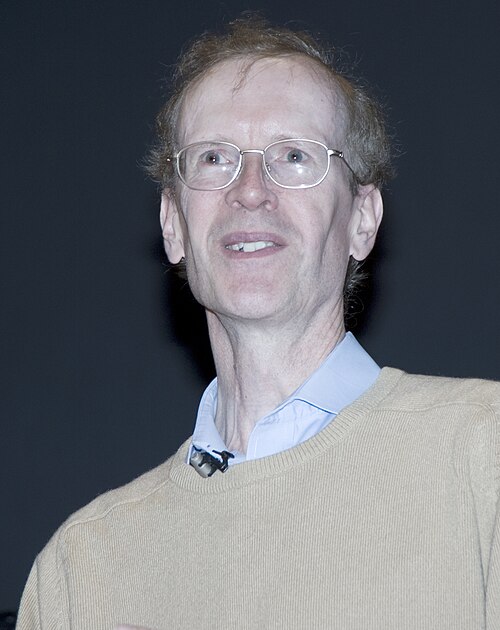
Richard Taylor and Andrew Wiles fill the gap in the original proof, confirming Fermat's Last Theorem and linking elliptic curves to Galois representations. #algebra #numbertheory )

Tropical geometry, a piecewise-linear analogue of algebraic geometry, develops as a tool for solving problems in enumerative geometry. #algebra #geometry

Laurent Lafforgue proves the Langlands correspondence for function fields using algebraic geometry, particularly moduli stacks of shtukas. #algebra #numbertheory

Ngô Bảo Châu proves the fundamental lemma in the Langlands program using geometric methods and the Hitchin fibration, earning a Fields Medal. #algebra #geometry

Peter Scholze introduces perfectoid spaces, a new concept in arithmetic geometry that simplifies many proofs in number theory and algebraic geometry. #algebra #numbertheory
