Alexander von Humboldt: Americas Expedition, Biogeography & Cosmos
Encyclopedia/1. The Cosmos & The Natural World/5. Life Sciences/08. Biological Biographies • Curated by Admin Timeline.sg
Timeline of Prussian polymath Alexander von Humboldt, pioneer of ecology, biogeography, and environmental science, spanning his birth in 1769 to his death in 1859, including his epic Americas expedition with Aimé Bonpland and the publication of his magnum opus 'Cosmos'.
Chronological Storyline (39 Milestones)
Sep 14, 1769 CE
Birth of Alexander von Humboldt
Friedrich Wilhelm Heinrich Alexander von Humboldt is born in Berlin, Prussia, to a wealthy aristocratic family. He develops a lifelong passion for nature and exploration. #history #science
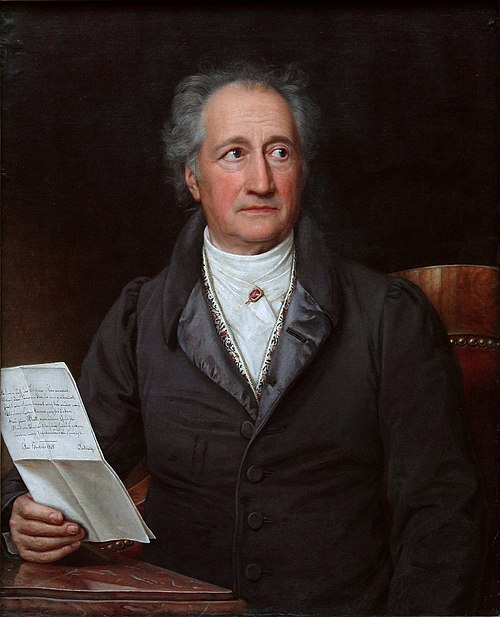
Birth of Alexander von Humboldt By Joseph Karl Stieler - [1], Public domain, https://commons.wikimedia.org/w/index.php?curid=10393110
1787 CE
Enrolls at University of Frankfurt (Oder)
Humboldt begins studying finance, economics, and technology at the University of Frankfurt (Oder), initially following a cameralist path to satisfy his mother. #education #history
1789 CE
Transfers to University of Göttingen
Humboldt moves to the University of Göttingen, a hub of Enlightenment thought, where he studies physics, botany, and languages, befriending Georg Forster, a naturalist who accompanied Captain Cook. #education #science
Mar 1, 1790 CE
Travels Europe with Georg Forster
Humboldt accompanies Georg Forster on a journey through the Netherlands, England, and France, gaining firsthand experience in scientific observation and exploration. #travel #history
1791 CE
Studies at Freiberg Mining Academy
Humboldt enrolls at the Freiberg Mining Academy in Saxony to study geology, mineralogy, and mining engineering under Abraham Gottlob Werner. He develops practical skills in underground mining. #mining #science
Studies at Freiberg Mining Academy By Bergakademie - Own work, CC BY-SA 4.0, https://commons.wikimedia.org/w/index.php?curid=133286763
1792 CE
Appointed Mining Inspector in Bayreuth
Humboldt becomes a mining inspector in the Prussian state, working to improve safety and efficiency in mines. He invents a safety lamp and a rescue apparatus. #mining #innovation
1793 CE
Publishes 'Florae Fribergensis'
Humboldt publishes his first scientific work on subterranean flora from the Freiberg mines, combining botany with geology. #botany #science
1794 CE
Meets Johann Wolfgang von Goethe
Humboldt meets Goethe in Jena, beginning a close friendship and intellectual exchange. They collaborate on scientific and philosophical discussions, influencing each other's ideas on nature. #science #literature
Meets Johann Wolfgang von Goethe By Joseph Karl Stieler - Transferred from nds.wikipedia to Commons..org by G.Meiners at 12:05, 15. Okt 2005., Public domain, https://commons.wikimedia.org/w/index.php?curid=375657
1796 CE
Death of Mother, Inheritance Provides Freedom
Humboldt's mother dies, leaving him a substantial inheritance that allows him to leave his mining career and pursue his dream of scientific exploration. #history #science
1797 CE
Attempts to Join Baudin Expedition
Humboldt travels to Paris and attempts to join the French expedition under Nicolas Baudin to the Pacific, but the expedition is delayed. He instead plans his own journey. #exploration #history
Attempts to Join Baudin Expedition By Unknown author - Cropped from http://collections.slsa.sa.gov.au/resource/B+5793., Public domain, https://commons.wikimedia.org/w/index.php?curid=92400943
1798 CE
Meets Aimé Bonpland in Paris
Humboldt meets French botanist Aimé Bonpland in Paris. They become close collaborators and plan an expedition to the Spanish Americas, securing permission from King Charles IV of Spain. #exploration #science
Meets Aimé Bonpland in Paris By Unknown author, Public domain, https://commons.wikimedia.org/w/index.php?curid=304034
Jun 5, 1799 CE
Departs for the Americas from La Coruña
Humboldt and Bonpland set sail from La Coruña, Spain, aboard the corvette Pizarro, beginning their five-year expedition to the Spanish colonies in the Americas. #exploration #adventure
Jul 16, 1799 CE
Arrival in Cumaná, Venezuela
Humboldt and Bonpland land in Cumaná, Venezuela, the first stop of their American journey. They begin collecting plants, animals, and geological samples. #exploration #science
Arrival in Cumaná, Venezuela By BID Ciudades Sostenibles - https://www.flickr.com/photos/bid_ciudades/22215780232/, CC BY 2.0, https://commons.wikimedia.org/w/index.php?curid=120341800
Feb 1, 1800 CE
Explores the Llanos and Orinoco River
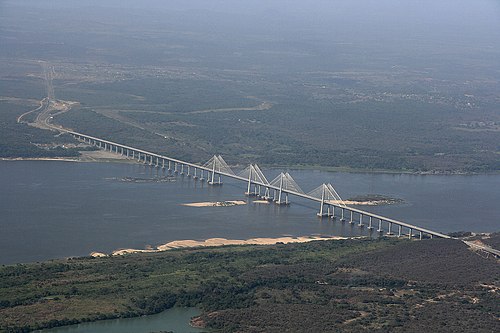
Humboldt and Bonpland travel across the Venezuelan plains (Llanos) and navigate the Orinoco River, mapping its course and documenting the connection between the Orinoco and Amazon basins. #geography #exploration
Explores the Llanos and Orinoco River By jkaiser - Orinoco Bridge, CC BY 2.0, https://commons.wikimedia.org/w/index.php?curid=12686053
Nov 1, 1800 CE
Discovers the Casiquiare Canal
Humboldt and Bonpland confirm the existence of the Casiquiare canal, a natural river linking the Orinoco and Amazon river systems, a major geographical discovery. #geography #science
Discovers the Casiquiare Canal By Unknown author, Public domain, https://commons.wikimedia.org/w/index.php?curid=1131691
Mar 1, 1801 CE
Travels to Cuba
Humboldt and Bonpland sail to Havana, Cuba, where Humboldt studies the island's geography, agriculture, and society, later publishing an influential essay on Cuba. #exploration #science
Travels to Cuba By Miguel Teurbe Tolón and Narciso López - Geometry and dimensions from Ley no 42 "de los Símbolos Nacionales". Its shape is rectangular, twice length than width, composed by five horizontal stripes having all the same width, three deep blue and two white, placed alternating. A red equilateral triangle, in one of its vertical extremes occupy all the height of the flag constituting its fixed edge. Such triangle bears in its center a five-pointed white star, within an imaginary circumference, whose diameter is a third of the flag´s height, having one of its points towards the free upper edge of the flag.— English translation of Law 42 from Symbols of the Cuban Nation, Public domain, https://commons.wikimedia.org/w/index.php?curid=343031
Jun 1, 1801 CE
Explores the Andes in Colombia and Ecuador
Arriving in Cartagena, Humboldt and Bonpland travel south through the Colombian Andes into Ecuador, climbing mountains and collecting data on altitude and vegetation. #exploration #geography
Explores the Andes in Colombia and Ecuador By Diego Delso - Own work, CC BY-SA 3.0, https://commons.wikimedia.org/w/index.php?curid=17660034
Jun 23, 1802 CE
Attempts to Climb Mount Chimborazo
Humboldt and Bonpland attempt to climb Chimborazo, then believed to be the highest mountain in the world. They reach an altitude of about 5,875 meters, a world record at the time, but are forced to turn back due to altitude sickness. #exploration #mountaineering
Attempts to Climb Mount Chimborazo By Dick Culbert from Gibsons, B.C., Canada - Chimborazo, aspecto norte, Ecuador., CC BY 2.0, https://commons.wikimedia.org/w/index.php?curid=50051775
Sep 1, 1802 CE
Visits Quito and Studies Volcanoes
In Quito, Humboldt studies numerous volcanoes, including Cotopaxi and Pichincha, and develops his theory of volcanism linking volcanic activity to the earth's internal heat. #geology #science
Visits Quito and Studies Volcanoes By Gerard Prins - Own work, CC BY-SA 3.0, https://commons.wikimedia.org/w/index.php?curid=4893067
Feb 1, 1803 CE
Travels from Guayaquil to Mexico
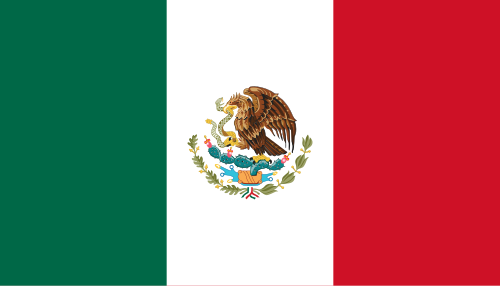
Sailing from Guayaquil, Ecuador, to Acapulco, Mexico, Humboldt begins an extensive survey of Mexico's geography, economy, and natural resources, including its silver mines. #exploration #economics
Travels from Guayaquil to Mexico By Alex Covarrubias, 9 April 2006. Based on the arms by Juan Manuel Gabino Villascán. - Mexican Government, Public domain, https://commons.wikimedia.org/w/index.php?curid=374591
Aug 1, 1803 CE
Visits Mexico City and Popocatépetl
Humboldt explores Mexico City, studies Aztec ruins, and climbs Popocatépetl volcano, gathering data that contributes to his later works on geography and anthropology. #archaeology #volcano
Visits Mexico City and Popocatépetl By Jakub Hejtmánek - Own work, CC BY-SA 3.0, https://commons.wikimedia.org/w/index.php?curid=2066635
Mar 1, 1804 CE
Visits the United States
Humboldt and Bonpland sail from Veracruz to Philadelphia, then travel to Washington, D.C., where Humboldt meets President Thomas Jefferson. They discuss science and politics. #history #science
Visits the United States By Rembrandt Peale - https://www.whitehousehistory.org/galleries/presidential-portraits, Public domain, https://commons.wikimedia.org/w/index.php?curid=20179140
Aug 3, 1804 CE
Returns to Europe in Bordeaux
Humboldt and Bonpland arrive back in Europe, landing in Bordeaux, France, after a five-year expedition. Humboldt brings back vast collections and data. #exploration #science
1805 CE
Settles in Paris to Publish Findings
Humboldt moves to Paris, the scientific capital of Europe, to work on publishing the results of his American expedition, collaborating with leading scientists. #science #publishing
Settles in Paris to Publish Findings By Yann Caradec from Paris, France - La Tour Eiffel vue de la Tour Saint-Jacques, CC BY-SA 2.0, https://commons.wikimedia.org/w/index.php?curid=34933538
1807 CE
Publishes 'Essay on the Geography of Plants'
Humboldt publishes 'Essai sur la géographie des plantes', introducing the concept of plant geography and vegetation zones based on altitude and climate, laying foundations for biogeography. #biogeography #science
1808 CE
Publishes 'Views of Nature'
Humboldt publishes 'Ansichten der Natur' (Views of Nature), a collection of essays blending scientific observation with poetic descriptions of landscapes. #nature #literature
1811 CE
First Volume of 'Voyage aux régions équinoxiales'
Humboldt begins publishing the monumental 30-volume 'Voyage aux régions équinoxiales du Nouveau Continent' (Travels to the Equinoctial Regions of the New Continent), which continues until 1829. #science #exploration
1814 CE
Publishes 'Isothermal Lines'
Humboldt introduces the concept of isothermal lines (isotherms) on maps, connecting places of equal temperature, revolutionizing climate science and climatology. #climatology #science
1817 CE
Discovers the Humboldt Current
Humboldt describes the cold ocean current off the west coast of South America, now known as the Humboldt Current, based on his measurements during the expedition. #oceanography #science
Discovers the Humboldt Current By Unknown author, Public domain, https://commons.wikimedia.org/w/index.php?curid=3842435
1827 CE
Returns to Berlin and Delivers Lectures
After two decades in Paris, Humboldt returns to Berlin as a chamberlain to the Prussian king. He delivers a famous series of public lectures, 'Cosmos', on the physical universe. #science #education
May 1, 1829 CE
Russian Expedition to Central Asia
Humboldt undertakes an expedition across Russia to the Ural Mountains, Altai, and the Caspian Sea, on behalf of Tsar Nicholas I, studying geology, minerals, and climate. #exploration #geology
1832 CE
Publishes 'Asie Centrale'
Humboldt publishes 'Asie Centrale', a three-volume work on the geology and geography of Central Asia based on his Russian expedition. #geography #science
1834 CE
Begins Writing 'Cosmos'
Humboldt starts writing his magnum opus, 'Cosmos: A Sketch of a Physical Description of the Universe', aiming to synthesize all scientific knowledge of the time. #science #philosophy )
1845 CE
First Volume of 'Cosmos' Published
The first volume of 'Cosmos' is published to great acclaim, becoming a bestseller and translating into many languages, shaping public understanding of science. #science #literature )
1847 CE
Second Volume of 'Cosmos' Published
The second volume of 'Cosmos' is published, covering the history of scientific thought and the struggle for a unified view of nature. #science #history )
1850 CE
Third Volume of 'Cosmos' Published
The third volume of 'Cosmos' appears, focusing on the physical description of the heavens and the earth. #science #astronomy )
1854 CE
Fourth Volume of 'Cosmos' Published
The fourth volume of 'Cosmos' is published, completing the main text. Humboldt continues to work on a fifth volume. #science #publication )
May 6, 1859 CE
Death of Alexander von Humboldt
Alexander von Humboldt dies in Berlin at the age of 89. He is mourned worldwide and his legacy as a founder of modern environmental science endures. #history #science
1859 CE
Fifth Volume of 'Cosmos' Published Posthumously
The unfinished fifth volume of 'Cosmos', based on Humboldt's notes and correspondence, is published posthumously, completing the series. #science #literature )