Apr 26, 1940 CE
TEAL Founded by Governments
Tasman Empire Airways Limited (TEAL) is established as a joint venture between the New Zealand, Australian, and British governments to operate trans-Tasman air services.
Air New Zealand, originally founded as Tasman Empire Airways Limited (TEAL) in 1940, evolved from a trans-Tasman flying boat service to a global airline, marked by mergers, privatization, the Erebus disaster, Ansett acquisition and collapse, innovative products like Skycouch, and fleet modernization with Boeing 787 Dreamliners. Despite financial turbulence and government bailouts, it has been consistently recognized as one of the world's leading airlines.
Tasman Empire Airways Limited (TEAL) is established as a joint venture between the New Zealand, Australian, and British governments to operate trans-Tasman air services.
TEAL's inaugural flight uses a Short S.30 flying boat, connecting Auckland and Sydney. This marks the start of regular trans-Tasman air travel.
TEAL commences scheduled passenger services across the Tasman Sea using flying boats, significantly reducing travel time between New Zealand and Australia.
The New Zealand government purchases the Australian and British shares, gaining full ownership of TEAL and consolidating national control over trans-Tasman aviation.
TEAL introduces the Douglas DC-6, replacing flying boats and enabling faster, pressurized trans-Tasman services.

TEAL adds Lockheed Electra turboprop aircraft, further modernizing its fleet and improving efficiency on regional routes.

Tasman Empire Airways Limited is rebranded as Air New Zealand Corporation, reflecting its expanding international ambitions beyond the Tasman Sea.

Air New Zealand introduces the Douglas DC-8 jet, enabling non-stop trans-Tasman flights and later services to Asia and North America.

Air New Zealand introduces the McDonnell Douglas DC-10 wide-body aircraft, significantly boosting capacity on long-haul routes.

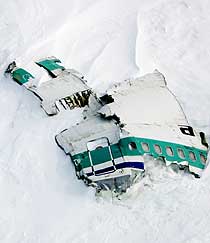
Air New Zealand Flight 901, a McDonnell Douglas DC-10, crashes into Mount Erebus in Antarctica, killing all 257 on board. This tragedy profoundly impacts the airline’s safety culture and public trust.
Air New Zealand adds Boeing 747-200 aircraft, extending its reach to Los Angeles and London with greater range and passenger capacity.

The New Zealand government restructures Air New Zealand into a fully state-owned corporation, preparing for potential privatization.
The New Zealand government sells a 30% stake in Air New Zealand to Brierley Investments Ltd and lists the company on the New Zealand Stock Exchange (NZX). This marks the airline’s transition to a partially private entity.
Air New Zealand introduces Boeing 767 aircraft for medium-haul routes, replacing older DC-8s and improving fuel efficiency.

Air New Zealand purchases a 50% stake in Ansett Australia, signaling its ambition to dominate trans-Tasman and domestic Australian markets.

Air New Zealand acquires the remaining 50% of Ansett Australia, becoming the sole owner of Australia’s second-largest airline.
Air New Zealand takes delivery of its first Boeing 777, setting new standards for long-haul comfort and operational range.

As Ansett Australia faces severe financial difficulties, the New Zealand government increases its stake in Air New Zealand to 82% to stabilize the airline.
Air New Zealand fails to sell or restructure Ansett, leading to its collapse and grounding. This precipitates a financial crisis for Air New Zealand.
The New Zealand government nationalizes Air New Zealand to prevent its collapse, taking 82% ownership as part of a NZ$885 million rescue package.
Air New Zealand undergoes a major restructuring, cutting routes, reducing workforce, and contracting to focus on core New Zealand markets.
Air New Zealand unveils a new livery featuring the iconic koru design, rebranding the airline with a stronger Māori cultural identity.
After several years of losses, Air New Zealand reports its first full-year net profit since the Ansett crisis, signaling recovery.
Air New Zealand orders eight Boeing 787-9 Dreamliners, becoming the launch customer for the 787-9 variant, to replace its aging 767 fleet.

Air New Zealand wins Airline of the Year from AirlineRatings.com for the first time, a recognition it will earn multiple times.
Air New Zealand launches its Premium Economy cabin on long-haul routes, featuring 2-3-2 seating and enhanced service.

Air New Zealand takes delivery of its first Boeing 777-300ER, offering more capacity and range for routes to North America and Asia.
Air New Zealand unveils the Economy Skycouch, a row of three seats that converts into a flat, flexible space for relaxation, revolutionizing economy travel.
Air New Zealand becomes the launch customer for the Boeing 787-9, receiving its first Dreamliner and introducing new levels of fuel efficiency and passenger comfort.
For the second time, AirNewZealand is named Airline of the Year by AirlineRatings.com, citing its innovation and service excellence.
Air New Zealand begins trialling in-flight internet connectivity on its 777-300ER aircraft, becoming one of the first airlines to offer WiFi over the Pacific.
Air New Zealand launches a series of creative safety videos featuring sports stars, pop culture icons, and New Zealand landmarks, gaining global viral attention.
Air New Zealand introduces the Airbus A321neo to its fleet for domestic and short-haul Pacific routes, increasing efficiency and reducing emissions.

Air New Zealand places an order for eight Boeing 787-10 aircraft, the largest Dreamliner variant, for future long-haul growth.
The COVID-19 pandemic devastates international travel; Air New Zealand grounds most of its fleet and receives a NZ$900 million government loan to survive.

Air New Zealand restructures operations, cancels or defers some aircraft orders (including 787-10s), and reduces its workforce to align with lower demand.
As travel restrictions ease, Air New Zealand gradually restores international services to key destinations including Los Angeles, Tokyo, and London.
Air New Zealand’s cabin crew earn the title of Best Cabin Crew in the world in Global Traveler’s annual readers' survey, reflecting strong service culture.
Air New Zealand announces a plan to achieve net-zero carbon emissions by 2050, investing in sustainable aviation fuels (SAF) and operational efficiencies.