Encyclopedia/2. Technology & The Built World/4. Energy & Transportation/01. Energy Systems • Curated by Admin Timeline.sg
This timeline covers the foundational milestones in aerospace and jet propulsion from ancient times to the mid-20th century, highlighting key inventions, theoretical breakthroughs, and pioneering flights that paved the way for modern aviation and space exploration.
Chronological Storyline (49 Milestones)
400 BCE
Archytas of Tarentum Builds a Steam-Powered Pigeon
Greek philosopher Archytas is said to have constructed a wooden pigeon propelled by steam, one of the earliest recorded attempts at mechanical flight. This early experiment demonstrated the concept of thrust and inspired later aerodynamic studies. #aviation #history #invention
Archytas of Tarentum Builds a Steam-Powered Pigeon By NikonZ7II - Own work, CC BY-SA 4.0, https://commons.wikimedia.org/w/index.php?curid=116889537
850 CE
Abbas ibn Firnas Makes First Gliding Flight
Andalusian polymath Abbas ibn Firnas crafted a silk-and-wood glider and reportedly flew for several minutes, landing with minor injuries. His flight is considered one of the earliest documented attempts at controlled flight. #aviation #history #pioneer
Abbas ibn Firnas Makes First Gliding Flight By Eulogia Merle - Fundación Española para la Ciencia y la Tecnología, CC BY-SA 4.0, https://commons.wikimedia.org/w/index.php?curid=37026482
1010 CE
Eilmer of Malmesbury Attempts Gliding Flight
English monk Eilmer attached wings to his hands and feet and leaped from a tower, gliding about 200 meters before crashing. This early flight attempt highlighted the challenges of stability and control. #aviation #history #medieval
Eilmer of Malmesbury Attempts Gliding Flight By Unknown author, CC BY-SA 2.0, https://commons.wikimedia.org/w/index.php?curid=332630
1485 CE
Leonardo da Vinci Designs Ornithopter and Aerial Screw
Renaissance artist and inventor Leonardo da Vinci sketched designs for a human-powered ornithopter and an early helicopter-like aerial screw. Though never built, his concepts influenced later aviation pioneers. #aviation #invention #renaissance
Leonardo da Vinci Designs Ornithopter and Aerial Screw By Attributed to Francesco Melzi - File:Francesco_Molzi_-_Portrait_of_Leonardo_-_WGA14795.jpg, Public domain, https://commons.wikimedia.org/w/index.php?curid=78645105
1670 CE
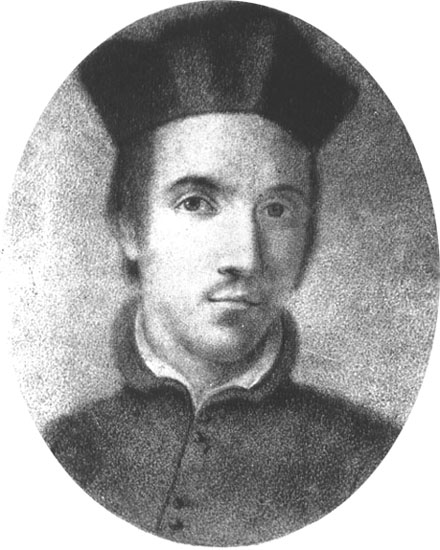
Francesco Lana de Terzi Proposes Vacuum Airship
Italian Jesuit Francesco Lana de Terzi published a design for a lighter-than-air ship using evacuated copper spheres. Although impractical, it was the first theoretical proposal for a vacuum airship. #aviation #airship #history
Francesco Lana de Terzi Proposes Vacuum Airship By Unknown author - http://www.psiram.com/ge/index.php/Datei:Lanadeterzi.jpg, Public domain, https://commons.wikimedia.org/w/index.php?curid=14185312
1709 CE
Bartolomeu de Gusmão Demonstrates Hot Air Balloon Model
Portuguese priest Bartolomeu de Gusmão presented a small hot air balloon model to the Portuguese court, rising several meters. This early demonstration foreshadowed the development of balloon flight. #aviation #balloon #history
Bartolomeu de Gusmão Demonstrates Hot Air Balloon Model By Benedito Calixto - José Rosael/Hélio Nobre/Museu Paulista da USP, Public domain, https://commons.wikimedia.org/w/index.php?curid=61863004
Jun 4, 1783 CE
Montgolfier Brothers Launch First Hot Air Balloon
Joseph and Étienne Montgolfier launched an unmanned hot air balloon in Annonay, France, which rose about 2,000 meters. This public demonstration marked the first successful flight of a lighter-than-air craft. #aviation #balloon #firstflight
Montgolfier Brothers Launch First Hot Air Balloon By Unidentified painter - Musée des Papeteries Canson et Montgolfier, Public domain, https://commons.wikimedia.org/w/index.php?curid=50751501
Nov 21, 1783 CE
First Manned Hot Air Balloon Flight
Jean-François Pilâtre de Rozier and the Marquis d'Arlandes made the first manned flight in a Montgolfier balloon over Paris, covering about 9 km. This historic flight proved that humans could travel through the air. #aviation #balloon #firstflight
First Manned Hot Air Balloon Flight By André Pujos - REPOSITORY: Library of Congress Prints and Photographs Division Washington, D.C. 20540 USA DIGITAL ID: (digital file from original print) ppmsca 02227 http://hdl.loc.gov/loc.pnp/ppmsca.02227 (b&w film copy neg.) cph 3a17830 http://hdl.loc.gov/loc.pnp/cph.3a17830 CARD #: 2002724820, Public domain, https://commons.wikimedia.org/w/index.php?curid=1502599
Dec 1, 1783 CE
First Manned Hydrogen Balloon Flight
Jacques Charles and Nicolas-Louis Robert flew a hydrogen-filled balloon from Paris to Nesles-la-Vallée, covering 36 km. This flight demonstrated the superiority of hydrogen for altitude and distance. #aviation #balloon #hydrogen
First Manned Hydrogen Balloon Flight By Adélaïde Labille-Guiard - https://art.rmngp.fr/en/library/artworks/adelaide-labille-guiard_portrait-du-physicien-charles, Public domain, https://commons.wikimedia.org/w/index.php?curid=117619639
1799 CE
Sir George Cayley Designs First Modern Aircraft Configuration
English engineer Sir George Cayley sketched a fixed-wing aircraft with a separate propulsion system, crucially distinguishing lift and thrust. He is considered the father of aerodynamics. #aviation #aerodynamics #pioneer
Sir George Cayley Designs First Modern Aircraft Configuration By Henry Perronet Briggs - 2. Not provided by the uploader Aavindraa (talk · contribs) 1. The photo was originally uploaded to w:Image:George Cayley.jpg by w:User:Avsa., Public domain, https://commons.wikimedia.org/w/index.php?curid=226287
1804 CE
Cayley Builds First Successful Model Glider
Sir George Cayley constructed a small glider with a fixed wing and a movable tail, which flew successfully. This model validated his aerodynamic theories and laid the groundwork for heavier-than-air flight. #aviation #glider #experiment
1853 CE
Cayley's Coachman Flies in Full-Size Glider
Sir George Cayley's coachman made the first recorded manned flight in a full-size glider, flying about 130 meters across a valley. This event demonstrated the feasibility of manned gliding flight. #aviation #glider #firstflight
1871 CE
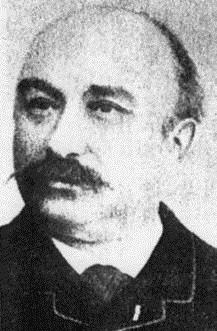
Alphonse Pénaud Flies First Rubber-Powered Model Airplane
French inventor Alphonse Pénaud created the Planophore, a rubber-band-powered model airplane that flew stably for about 40 meters. His design introduced the concept of inherent stability. #aviation #model #invention
Alphonse Pénaud Flies First Rubber-Powered Model Airplane By Unknown author - [1], Public domain, https://commons.wikimedia.org/w/index.php?curid=3240206
Aug 9, 1884 CE
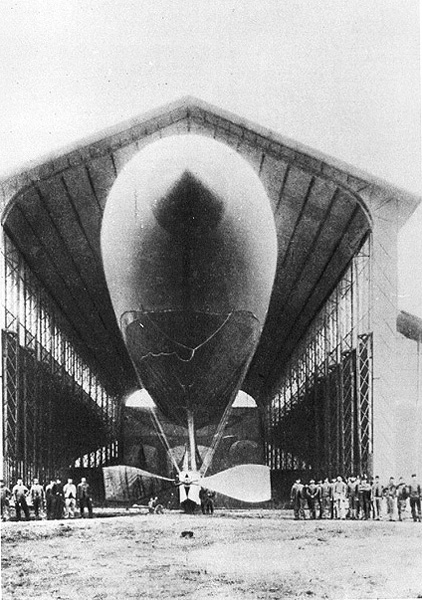
First Fully Controlled Airship Flight
Charles Renard and Arthur Krebs flew the French military airship La France on a closed-circuit flight, returning to its starting point. This was the first fully controllable airship, using an electric motor. #aviation #airship #control
First Fully Controlled Airship Flight By user:World Imaging - Own work, Public domain, https://commons.wikimedia.org/w/index.php?curid=1370404
Oct 9, 1890 CE
Clément Ader's Éole Makes First Steam-Powered Flight
French inventor Clément Ader's bat-winged Éole hopped about 50 meters off the ground, the first manned flight using a steam engine. Though uncontrolled, it demonstrated powered lift. #aviation #steampower #firstflight
Clément Ader's Éole Makes First Steam-Powered Flight By Unknown author, Public domain, https://commons.wikimedia.org/w/index.php?curid=634146
1891 CE
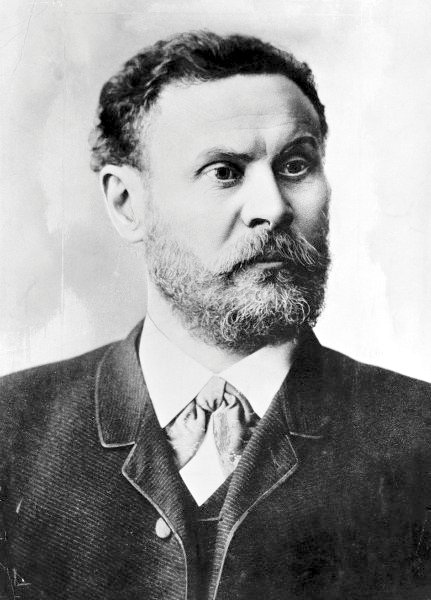
Otto Lilienthal Begins Glider Flights
German pioneer Otto Lilienthal made over 2,000 glider flights, systematically studying aerodynamics and control. His work inspired the Wright brothers and advanced aviation knowledge. #aviation #glider #pioneer
Otto Lilienthal Begins Glider Flights By Photographer: A. Regis - http://www.lilienthal-museum.de/olma/images/f0061.jpg, originally uploaded to en by User:Michael Shields, Public domain, https://commons.wikimedia.org/w/index.php?curid=36359
May 6, 1896 CE
Samuel Langley Flies Unmanned Aerodrome No. 5
American Samuel Langley's steam-powered model Aerodrome No. 5 flew over 1 km over the Potomac River. This successful flight demonstrated the potential of powered, heavier-than-air flight. #aviation #model #steampower
Samuel Langley Flies Unmanned Aerodrome No. 5 By Smithsonian Institution; credited to Langley himself by their archive. - Smithsonian Institution Archives, Record Unit 95, Box 15, Folder 8, Public domain, https://commons.wikimedia.org/w/index.php?curid=1496860
Aug 9, 1896 CE
Lilienthal Dies in Glider Crash
Otto Lilienthal died after a stall and crash during a glider flight, becoming the first aviation fatality. His death underscored the dangers of flight but his contributions remained influential. #aviation #glider #tragedy
Jul 2, 1900 CE
First Flight of Zeppelin LZ 1
Count Ferdinand von Zeppelin's first rigid airship, LZ 1, flew over Lake Constance. Though underpowered, it pioneered the rigid airship design that later enabled long-distance air travel. #aviation #airship #zeppelin
First Flight of Zeppelin LZ 1 By USN - U.S. Naval Historical Center photo # NH 73285 [1], Public domain, https://commons.wikimedia.org/w/index.php?curid=2802530
Dec 17, 1903 CE
Wright Brothers' First Powered Flight
Orville and Wilbur Wright flew the Wright Flyer at Kitty Hawk, North Carolina, covering 36.5 meters in 12 seconds. This is widely recognized as the first sustained, controlled, powered flight. #aviation #firstflight #wrightbrothers
Wright Brothers' First Powered Flight By Orville Wright and Wilbur Wright (credited as photographers) [1], [2] - Library of Congress, Public domain, https://commons.wikimedia.org/w/index.php?curid=30922972
Sep 20, 1904 CE
Wright Brothers Fly First Circular Flight
Wilbur Wright completed the first circular flight in an airplane, covering about 1.2 km. This demonstrated improved control and maneuverability of the Wright Flyer II. #aviation #milestone #control
Oct 5, 1905 CE
Wright Flyer III Achieves Sustained Flight
The Wright Flyer III flew for over 38 minutes, covering 39 km. This aircraft is considered the first practical airplane, with full control and endurance. #aviation #milestone #practical
Wright Flyer III Achieves Sustained Flight By Unknown author, Public domain, https://commons.wikimedia.org/w/index.php?curid=85601
Oct 23, 1906 CE
Santos-Dumont Flies 14-bis in Europe
Brazilian Alberto Santos-Dumont flew his 14-bis in Paris, covering 60 meters. This was the first powered flight in Europe, validated by the Aéro-Club de France. #aviation #firstflight #europe
Santos-Dumont Flies 14-bis in Europe By Zaida Ben-Yusuf / Adam Cuerden - This image is available from the United States Library of Congress's Prints and Photographs division under the digital ID ppmsca.15881.This tag does not indicate the copyright status of the attached work. A normal copyright tag is still required. See Commons:Licensing., Public domain, https://commons.wikimedia.org/w/index.php?curid=161002339
Jul 8, 1908 CE
Thérèse Peltier Becomes First Female Airplane Passenger
French sculptor Thérèse Peltier flew as a passenger with Léon Delagrange, becoming the first woman to fly in an airplane. She later attempted to pilot but did not solo. #aviation #women #pioneer
Thérèse Peltier Becomes First Female Airplane Passenger By Agence Rol - Bibliothèque nationale de France, Public domain, https://commons.wikimedia.org/w/index.php?curid=9514273
Jul 25, 1909 CE
Louis Blériot Crosses English Channel
French aviator Louis Blériot flew his Blériot XI monoplane across the English Channel from Calais to Dover, covering 37 km in 37 minutes. This feat demonstrated the airplane's potential for overwater travel. #aviation #channel #monoplane
Louis Blériot Crosses English Channel By Unknown author - This image is available from the United States Library of Congress's Prints and Photographs division under the digital ID cph.3c00564.This tag does not indicate the copyright status of the attached work. A normal copyright tag is still required. See Commons:Licensing., Public domain, https://commons.wikimedia.org/w/index.php?curid=544473
Nov 14, 1910 CE
Eugene Ely Performs First Shipboard Takeoff
American pilot Eugene Ely took off from a temporary platform on the USS Birmingham, marking the first shipboard aircraft launch. This event foreshadowed naval aviation. #aviation #naval #first
Eugene Ely Performs First Shipboard Takeoff By Unknown author, Public domain, https://commons.wikimedia.org/w/index.php?curid=15563058
Jan 18, 1911 CE
Eugene Ely Makes First Shipboard Landing
Eugene Ely landed his Curtiss pusher on a platform on the USS Pennsylvania, using tailhooks and arresting gear. This demonstrated the feasibility of carrier-based aircraft. #aviation #naval #landing
Mar 23, 1911 CE
First Use of Airplane for Military Reconnaissance
During the Mexican Revolution, pilot Didier Masson flew reconnaissance missions for the Mexican government. This early military use highlighted the airplane's strategic value. #aviation #military #reconnaissance
First Use of Airplane for Military Reconnaissance By William Goltman - http://earlyaviators.com/emasson.htm, Public domain, https://commons.wikimedia.org/w/index.php?curid=15416782
Sep 23, 1913 CE
Roland Garros Crosses Mediterranean Sea
French aviator Roland Garros flew from Saint-Raphaël, France, to Bizerte, Tunisia, covering 730 km. This was the first nonstop flight across the Mediterranean. #aviation #mediterranean #record
Roland Garros Crosses Mediterranean Sea By Photographie de presse de l'agence Meurisse - Bibliothèque nationale de France, Public domain, https://commons.wikimedia.org/w/index.php?curid=15746046
Jan 1, 1914 CE
First Commercial Airline Flight
The St. Petersburg-Tampa Airboat Line began scheduled service between St. Petersburg and Tampa, Florida, using a Benoist XIV flying boat. This was the first airline with a scheduled timetable. #aviation #commercial #airline
First Commercial Airline Flight By Bjorn Larrson, David Zekria - http://www.timetableimages.com/ttimages/airboat.htm, CC BY-SA 3.0, https://commons.wikimedia.org/w/index.php?curid=5659143
Apr 1, 1915 CE
First Fighter Aircraft: Fokker Eindecker
German Fokker Eindecker entered service with a synchronized machine gun firing through the propeller. This innovation gave Germany air superiority in World War I and defined the fighter plane. #aviation #military #fighter
First Fighter Aircraft: Fokker Eindecker By Unknown author - Unknown source, Public domain, https://commons.wikimedia.org/w/index.php?curid=66916
Jun 14, 1919 CE
Alcock and Brown Make First Nonstop Transatlantic Flight
British aviators John Alcock and Arthur Brown flew a Vickers Vimy from Newfoundland to Ireland, covering 3,040 km in 16 hours. This was the first nonstop flight across the Atlantic. #aviation #transatlantic #record
Alcock and Brown Make First Nonstop Transatlantic Flight By Holloway - http://www.library.mun.ca/qeii/cns/photos/#5.04, Public domain, https://commons.wikimedia.org/w/index.php?curid=10263522
Aug 25, 1919 CE
First Scheduled International Airline Service
British airline Aircraft Transport and Travel began daily flights between London and Paris. This marked the start of regular international passenger air travel. #aviation #commercial #international
First Scheduled International Airline Service By Unknown author - Flight, 17 October 1952, p. 510, CC BY-SA 4.0, https://commons.wikimedia.org/w/index.php?curid=17464877
May 2, 1923 CE
First Nonstop Transcontinental Flight Across US
U.S. Army Air Service pilots Oakley Kelly and John Macready flew a Fokker T-2 from New York to San Diego in 26 hours, 50 minutes. This demonstrated the feasibility of long-distance air travel. #aviation #transcontinental #record
Apr 6, 1924 CE
First Round-the-World Flight
U.S. Army Air Service pilots in four Douglas World Cruisers completed the first circumnavigation by air, covering 42,398 km in 175 days. This proved global air travel was possible. #aviation #roundtheworld #record
First Round-the-World Flight By Unknown author, Public domain, https://commons.wikimedia.org/w/index.php?curid=122744
Mar 16, 1926 CE
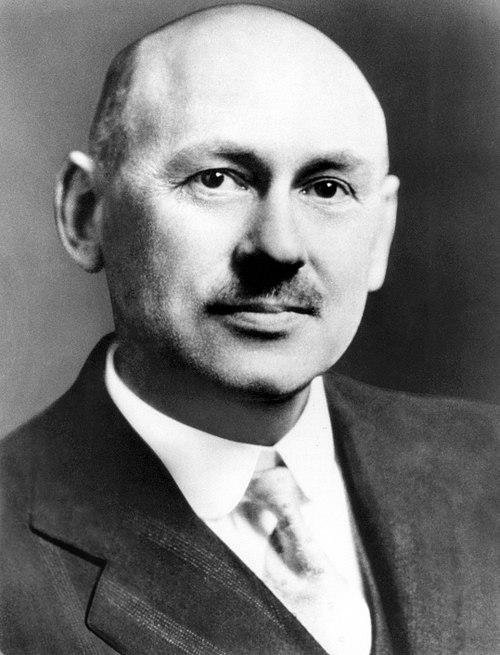
Robert Goddard Launches First Liquid-Fueled Rocket
American physicist Robert Goddard launched the first liquid-fueled rocket in Auburn, Massachusetts, reaching 12.5 meters altitude. This breakthrough laid the foundation for modern rocketry and spaceflight. #rocketry #space #invention
Robert Goddard Launches First Liquid-Fueled Rocket By NASA - Great Images in NASA Description, Public domain, https://commons.wikimedia.org/w/index.php?curid=6462082
May 20, 1927 CE
Charles Lindbergh's Solo Transatlantic Flight
Charles Lindbergh flew the Spirit of St. Louis nonstop from New York to Paris, covering 5,800 km in 33.5 hours. This solo feat captured global imagination and boosted aviation enthusiasm. #aviation #transatlantic #solo
Charles Lindbergh's Solo Transatlantic Flight By Harris & Ewing - This image is available from the United States Library of Congress's Prints and Photographs division under the digital ID hec.21329.This tag does not indicate the copyright status of the attached work. A normal copyright tag is still required. See Commons:Licensing., Public domain, https://commons.wikimedia.org/w/index.php?curid=158112088
Feb 8, 1930 CE
First Flight of Frank Whittle's Jet Engine Prototype
British inventor Frank Whittle ran his first jet engine prototype, the W.U., on a test bed. Though not yet flown, it demonstrated the principle of jet propulsion and led to the first jet aircraft. #aviation #jetengine #invention
First Flight of Frank Whittle's Jet Engine Prototype By British Government - This photograph CH 11867 comes from the collections of the Imperial War Museums., Public domain, https://commons.wikimedia.org/w/index.php?curid=67855229
May 20, 1932 CE
Amelia Earhart's First Solo Transatlantic Flight
Amelia Earhart flew solo from Newfoundland to Northern Ireland, becoming the first woman to fly solo across the Atlantic. This achievement advanced women's roles in aviation. #aviation #women #transatlantic
Amelia Earhart's First Solo Transatlantic Flight By Underwood & Underwood (active 1880 – c. 1950)[1] - http://amextbg2.wgbhdigital.org/wgbh/americanexperience/media/uploads/special_features/photo_gallery/amelia_gallery_07.jpg, Public domain, https://commons.wikimedia.org/w/index.php?curid=152789849
Nov 22, 1935 CE
First Flight of the DC-3
The Douglas DC-3, a revolutionary airliner, made its first flight. It transformed commercial aviation with its range, speed, and reliability, becoming one of the most important aircraft in history. #aviation #airliner #commercial
First Flight of the DC-3 By Towpilot - Own work, CC BY-SA 3.0, https://commons.wikimedia.org/w/index.php?curid=1511430
May 6, 1937 CE
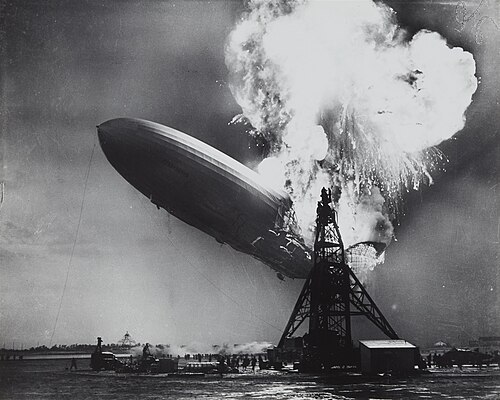
Hindenburg Disaster
The German zeppelin Hindenburg caught fire and crashed while landing in Lakehurst, New Jersey, killing 36 people. This disaster ended the era of passenger airships. #aviation #airship #disaster
Hindenburg Disaster By Sam Shere - Zeppelin-ramp de Hindenburg / Hindenburg zeppelin disaster Better photo (JPEG Image, 1404 × 1080 pixels), Public domain, https://commons.wikimedia.org/w/index.php?curid=19329337
Aug 27, 1939 CE
First Flight of the Heinkel He 178, First Jet Aircraft
German Heinkel He 178, powered by Hans von Ohain's turbojet engine, made its first flight. This was the world's first jet-powered aircraft, ushering in the jet age. #aviation #jet #firstflight
First Flight of the Heinkel He 178, First Jet Aircraft By Gryffindor - Own work, Public domain, https://commons.wikimedia.org/w/index.php?curid=2112357
May 15, 1941 CE
First Flight of the Gloster E.28/39, British Jet
British Gloster E.28/39, powered by Frank Whittle's W.1 engine, flew successfully. This validated Whittle's jet design and led to the development of the Gloster Meteor. #aviation #jet #british
First Flight of the Gloster E.28/39, British Jet By Devon SA, Royal Air Force official photographer - This photograph CH14832A comes from the collections of the Imperial War Museums., Public domain, https://commons.wikimedia.org/w/index.php?curid=19651388
Oct 3, 1942 CE
First Flight of the A4 (V-2) Rocket
German A4 rocket, later known as V-2, made its first successful test flight, reaching 84.5 km altitude. It was the first man-made object to reach space and a precursor to ballistic missiles. #rocketry #space #missile
First Flight of the A4 (V-2) Rocket By AElfwine - Uploaded as thumbnail on 16:49, 26 Dec 2004 by User:Mschlindwein. Re-uploaded with original size and correct name on 13.06.2005 by User:Avatar., CC BY-SA 3.0, https://commons.wikimedia.org/w/index.php?curid=185063551
Jun 13, 1944 CE
First Operational Jet Fighter: Messerschmitt Me 262
German Messerschmitt Me 262 entered service as the world's first operational jet fighter. Its speed and firepower were revolutionary, but it came too late to affect the war's outcome. #aviation #jet #fighter
First Operational Jet Fighter: Messerschmitt Me 262 By USAF museum - http://media.defense.gov/2005/Dec/22/2000574791/670/394/0/040820-F-1234P-081.JPG, Public domain, https://commons.wikimedia.org/w/index.php?curid=185063675
Jul 16, 1945 CE
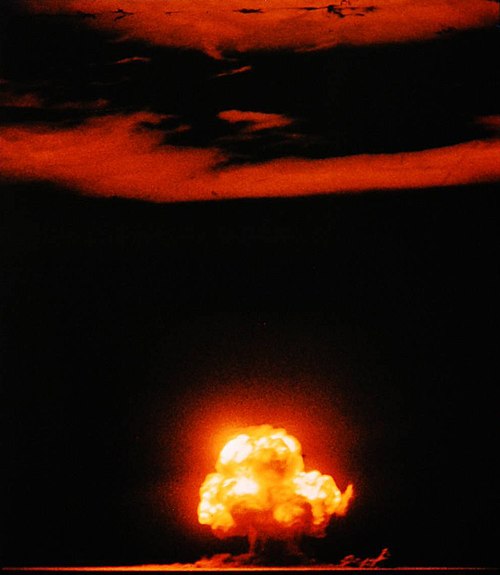
Trinity Test: First Atomic Bomb
The first atomic bomb was detonated in New Mexico, marking the dawn of the nuclear age. This event had profound implications for aerospace, leading to nuclear-powered aircraft concepts and strategic bombing. #nuclear #history #weapon
Trinity Test: First Atomic Bomb By Jack W. Aeby, July 16, 1945, Civilian worker at Los Alamos laboratory, working under the aegis of the Manhattan Project. - This image comes from the Google-hosted LIFE Photo Archive where it is available under the filename 96ad5a9a5c94664e. This tag does not indicate the copyright status of the attached work. A normal copyright tag is still required. See the copyright section in the template documentation for more information., Public domain, https://commons.wikimedia.org/w/index.php?curid=140895
Oct 14, 1947 CE
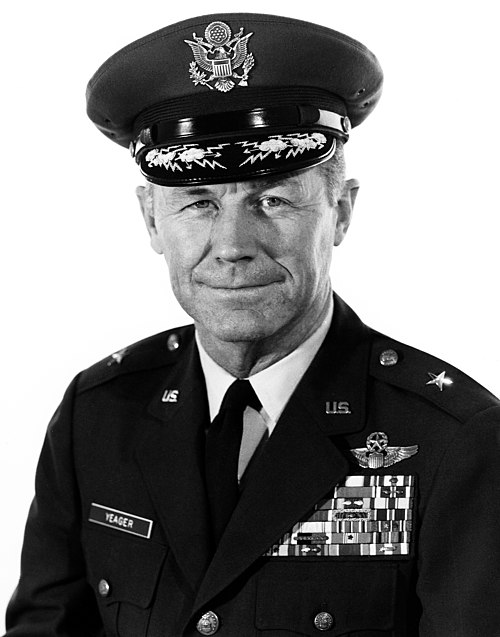
Chuck Yeager Breaks the Sound Barrier
U.S. Air Force pilot Chuck Yeager flew the Bell X-1 at Mach 1.06, becoming the first person to exceed the speed of sound in level flight. This breakthrough opened the supersonic era. #aviation #supersonic #record
Chuck Yeager Breaks the Sound Barrier By United States Air Force - http://www.af.mil/, Public domain, https://commons.wikimedia.org/w/index.php?curid=11778547
Feb 26, 1949 CE
First Nonstop Round-the-World Flight by a Jet
A U.S. Air Force B-50 Superfortress, Lucky Lady II, completed the first nonstop circumnavigation by air, refueling in flight. This demonstrated global reach for strategic bombers. #aviation #roundtheworld #record
First Nonstop Round-the-World Flight by a Jet By Unknown author - US Goverment, Public domain, https://commons.wikimedia.org/w/index.php?curid=179417111
May 2, 1952 CE
First Commercial Jet Airliner: de Havilland Comet
The de Havilland Comet entered service with BOAC, becoming the world's first commercial jet airliner. It cut travel times significantly but suffered from metal fatigue issues leading to crashes. #aviation #jet #commercial
First Commercial Jet Airliner: de Havilland Comet By BEA_De_Havilland_DH-106_Comet_4B_Manteufel.jpg: Ralf Manteufel derivative work: Altair78 (talk) - BEA_De_Havilland_DH-106_Comet_4B_Manteufel.jpg, GFDL 1.2, https://commons.wikimedia.org/w/index.php?curid=17868134