9. 907–979 CE Five Dynasties and Ten Kingdoms (五代十國)
Encyclopedia/3. History, Societies & Civilizations/01. East Asian Civilizations/01. Chinese Dynasties • Curated by Admin Timeline.sg
A turbulent 72-year interregnum between Tang and Song dynasties marked by fragmentation, regional innovation, and eventual reunification under Song.
Chronological Storyline (38 Milestones)
Jun 1, 907 CE
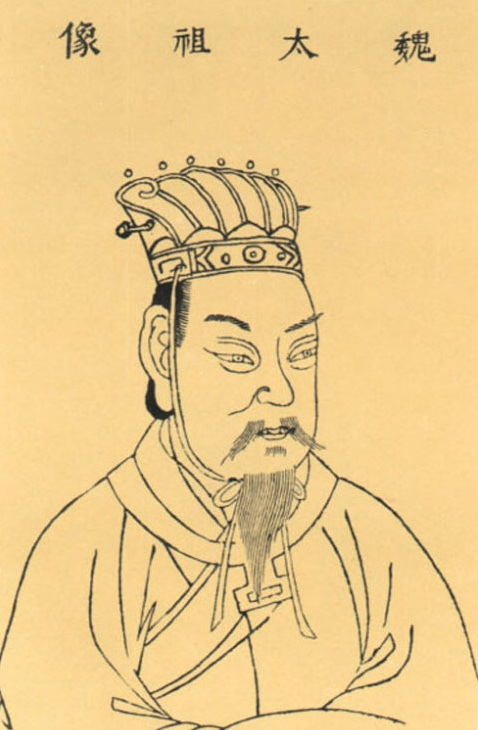
Zhu Wen ends Tang, founds Later Liang (朱温建后梁)
Zhu Quanzhong (朱全忠, Zhū Quánzhōng) forces Emperor Ai of Tang to abdicate, establishing Later Liang (后梁, Hòu Liáng) and beginning the Five Dynasties period. The Tang capital Chang'an is abandoned for Luoyang. #politics #war #dynasty
Emperor Taizu of Later Liang. By Unknown author - 中国历史博物馆保管部, ed. (2003) 中国历代名人画像谱 1, 福州: 海峡文艺出版社, p. 52 ISBN: 7806407855., Public domain, https://commons.wikimedia.org/w/index.php?curid=155999119
Nov 1, 907 CE
Yang Wu kingdom founded in south (杨吴建立)
Yang Xingmi's (杨行密, Yáng Xíngmì) successor Xu Wen (徐温, Xú Wēn) consolidates power, establishing Yang Wu (杨吴, Yáng Wú) as first of the Ten Kingdoms in Jiangnan region. #politics #war
908.AD By Pavo Xie - Own work, CC BY-SA 4.0, https://commons.wikimedia.org/w/index.php?curid=42365969
Jan 1, 908 CE
Wang Jian founds Former Shu (王建建前蜀)
Wang Jian (王建, Wáng Jiàn) declares himself emperor of Former Shu (前蜀, Qián Shǔ) in Chengdu, controlling Sichuan and parts of Shaanxi. Sichuan's isolation fosters distinct cultural development. #politics #culture
王建像 头部 By Augusthaiho - Own work, CC BY-SA 4.0, https://commons.wikimedia.org/w/index.php?curid=77227755
Apr 27, 909 CE
Wang Shenzhi founds Min (王审知建闽)
Wang Shenzhi (王审知, Wáng Shěnzhī) establishes Min (闽, Mǐn) kingdom in Fujian, promoting maritime trade with Southeast Asia and developing Fuzhou (福州, Fúzhōu) as port. #commerce #politics
Sculpture of Wang Shenzhi (Uong Sing-di) in Wang Shenzhi Temple, Fuzhou, China By LuHungnguong - Own work, CC BY-SA 3.0, https://commons.wikimedia.org/w/index.php?curid=7564645
Sep 5, 917 CE
Liu Yan founds Southern Han (刘䶮建南汉)
Liu Yan (刘䶮, Liú Yǎn) declares Southern Han (南汉, Nán Hàn) in Guangzhou, controlling Lingnan region. The kingdom develops maritime trade through Pearl River delta and maintains relations with Champa. #politics #commerce
Five Dynasties Ten Kingdoms Period 923 CE By Ian Kiu - Own work, CC BY 3.0, https://commons.wikimedia.org/w/index.php?curid=3048730
May 1, 919 CE
Xu Zhigao takes Yang Wu, later Southern Tang (徐知诰夺杨吴)
Xu Zhigao (徐知诰, Xú Zhīgào), adopted son of Xu Wen, consolidates control of Yang Wu and later restores his birth name Li Bian (李昪, Lǐ Biàn), founding Southern Tang (南唐, Nán Táng) in 937. #politics #war
May 13, 923 CE
Later Tang conquers Later Liang (后唐灭后梁)
Li Cunxu (李存勖, Lǐ Cúnxù), Prince of Jin, defeats Later Liang and establishes Later Tang (后唐, Hòu Táng), claiming legitimate Tang succession. He restores Chang'an briefly as symbolic capital. #war #politics #dynasty
Emperor Zhuangzong of the Later Tang dynasty. Hanging scroll, color on silk. Size 272.2 x 127.8 cm (height x width). Painting is located in the National Palace Museum, Taipei. (See: Page 99 of 故宮圖像選萃 (Gu gong tu xiang xuan cui) Masterpieces of Chinese Portrait Painting in the National Palace Museum. Taipei: National Palace Museum. 1971.) By Unknown artist - Digitized by NPM; image is directly from Shuge, Public domain, https://commons.wikimedia.org/w/index.php?curid=7109934
Nov 1, 925 CE
Later Tang conquers Former Shu (后唐灭前蜀)
Li Cunxu's forces under Meng Zhixiang (孟知祥, Mèng Zhīxiáng) and Guo Chongtao (郭崇韬, Guō Chóngtāo) destroy Former Shu. Meng Zhixiang later establishes Later Shu (后蜀, Hòu Shǔ) in 934. #war #politics
Apr 1, 926 CE
Li Cunxu killed in mutiny; Li Siyuan succeeds (李嗣源继位)
Li Cunxu dies in mutiny; Li Siyuan (李嗣源, Lǐ Sìyuán) becomes Later Tang emperor, instituting reforms to reduce corruption and ease tax burdens on peasants. #politics #disaster
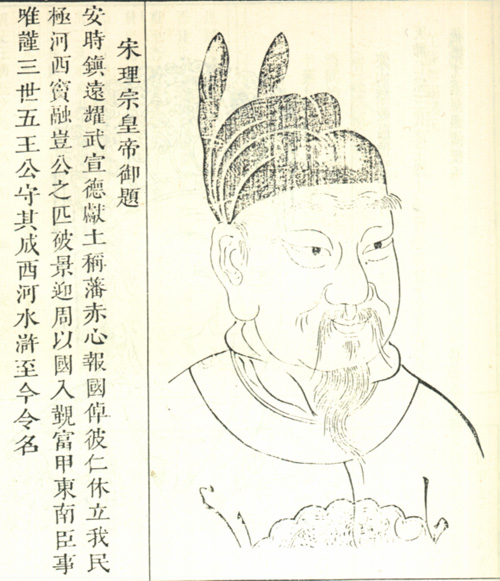
Title Xin juan Yu ming tang pi ping an jian can bu : Nan Song zhi zhuan shi juan, Bei Song zhi zhuan shi juan Other Title 新鐫玉茗堂批評按鑑參補 : 南宋志傳十卷, 北宋志傳十卷 / Nan Song zhi zhuan Nan Bei Song zhi zhuan Bei Song zhi zhuan Xiu xiang Nan Bei Song zhi zhuan Summary There are two sections: "The record of Southern Song" and "The record of Northern Song"; each section includes ten chapters and fifty parts. Contributor Names Yanshishanqiao, ding zheng. Shan cheng tang, ke. Chinese Rare Book Collection (Library of Congress). Created / Published [China] : Shan cheng tang, [Qing dai, between 1800 and 1912?] Subject Headings - Ji bu--Xiao shuo lei - 集部--小說類 Notes - Also available in digital form on the Library of Congress Web site. - November 24, 1950. - 十冊二函. Ten volumes in two cases. - 清善成堂刻本 四周單邊左右雙邊相間 白口 黑單魚尾 版匡高20.0寬13.2公分 全書高24.3寬15.7公分 . - 十二行二十四字. Twelve lines, with twenty-four characters per line. - 鈐印有:"善成堂自在蘇杭浙閩檢選古今書籍發兌" 朱文長方印,"松琴文庫"朱文方印. - 函脊號191簽條號614. - 1950年11月24日入藏 (見書名葉,另有號碼2051 J, 印章6 Copy). - 函面題"南北宋志傳",函脊題"南北宋志傳",以"乾","坤"為序。函1,函2各含10冊。書名葉中間和左題"繡像南北宋志傳",右上題"玉茗堂批點",左下題"善成堂藏板". - 本書含南宋志傳和北宋志傳二種: 南宋志傳10卷50回,1函5冊;卷首額題"新鐫玉茗堂批評按鑑參補南宋志傳卷之一",下署"研石山樵訂正"。版心上題"南宋志傳",中題卷次及回數,下題每卷頁碼。冊1含織里畸人書於玉茗堂之《南宋志傳序》,總目,繡像6幅,卷1-2(第1-10回),冊2含卷3-4(第11-20回),冊3含卷5-6(第21-30回),冊4含卷7-8(第31-40回),冊5含卷9-10(第41-50回)。此書雖題南宋志傳,實為記述五代末趙匡胤建立北宋之小說. - 北宋志傳(卷内題楊家將志傳): 10卷50回,1函5冊;本書另有書名葉,中間和左題"繡像楊家將志傳" ,右上題"玉茗堂批點"。卷首額題"新鐫玉茗堂批點按鑑參補楊家將卷之一",下署"研石山樵訂正,啟元堂梓行",卷2後改題"研石山樵訂正,織里畸人校閱"。版心上題"北宋志傳",中題卷次及回數,下題每卷頁碼。冊1含玉茗主人萬曆46年(1618)之《北宋志傳序》,繡像6幅,總目,卷1-2(第1-10回)。冊2含卷3-4(第11-20回),冊3含卷5-6(第21-30回),冊4含卷7-8(第31-40回),冊5含卷9-10(第41-50回). Medium 10 v. : ill. Library of Congress Control Number 2012402785 Online Format image LCCN Permalink https://lccn.loc.gov/2012402785 Additional Metadata Formats MARCXML Record MODS Record Dublin Core Record IIIF Presentation Manifest Manifest (JSON/LD) By 清善成堂刻本 - https://www.loc.gov/resource/lcnclscd.2012402785.1A000/?sp=6&r=-0.06,0.066,1.357,0.819,0, Public domain, https://commons.wikimedia.org/w/index.php?curid=112519173
Jan 1, 932 CE
Feng Dao prints Nine Classics (冯道刻九经)
Feng Dao (冯道, Féng Dào), chancellor under Later Tang, completes woodblock printing of Confucian Nine Classics (九经, Jiǔ Jīng), pioneering mass text production. #science #culture #literature
Chen Dong as depicted in the Wu Shuang Pu (無雙譜, Table of Peerless Heroes) by Jin Guliang By Jin Guliang (original 1694) - Jin, Guliang (1996). Wu shuang pu. Shijiazhuang Shi: Hebei mei shu chu ban she, Public domain, https://commons.wikimedia.org/w/index.php?curid=106796101
Jan 1, 934 CE
Meng Zhixiang founds Later Shu (孟知祥建后蜀)
Meng Zhixiang declares independence from Later Tang, establishing Later Shu (后蜀, Hòu Shǔ) in Chengdu. His son Meng Chang (孟昶, Mèng Chǎng) later promotes arts and education. #politics #culture
Qin Shi Huang, the first emperor of China By Unknown artist - Yuan, Zhongyi. China's terracotta army and the First Emperor's mausoleum: the art and culture of Qin Shihuang's underground palace. Paramus, New Jersey: Homa & Sekey Books, 2010. ISBN 978-1-931907-68-2 (p.140), Public domain, https://commons.wikimedia.org/w/index.php?curid=364539
Nov 28, 936 CE
Later Jin replaces Later Tang (石敬瑭建后晋)
Shi Jingtang (石敬瑭, Shí Jìngtáng), with Khitan Liao support, overthrows Later Tang and establishes Later Jin (后晋, Hòu Jìn), ceding Sixteen Prefectures (燕云十六州, Yānyún Shíliù Zhōu) to Liao. #war #politics #foreignrelations
Emperor Gaozu of Later Jin. By Unknown author - 中国历史博物馆保管部, ed. (2003) 中国历代名人画像谱 1, 福州: 海峡文艺出版社, p. 54 ISBN: 7806407855., Public domain, https://commons.wikimedia.org/w/index.php?curid=156002744
Jan 1, 937 CE
Li Bian founds Southern Tang (李昪建南唐)
Li Bian (李昪, Lǐ Biàn) formally establishes Southern Tang (南唐, Nán Táng), claiming Tang legitimacy. His court becomes renowned for poetry, painting, and cultural sophistication in Nanjing (金陵, Jīnlíng). #politics #culture #literature
Oct 1, 937 CE
Qian Liu's Wuyue continues in southeast (吴越国延续)
Qian Liu (钱镠, Qián Liú) established Wuyue (吴越, Wúyuè) in 907; by 937 his successors maintain control of Zhejiang and Shanghai region, developing coastal agriculture and Hangzhou (杭州, Hángzhōu) as capital. #politics #agriculture #commerce
Jun 1, 942 CE
Shi Chonggui succeeds, defies Liao (石重贵继位)
Shi Chonggui (石重贵, Shí Chóngguì) rejects subordination to Liao, leading to devastating war. His defiance reflects Han Chinese resistance to Khitan dominance despite strategic costs. #war #politics #foreignrelations
Dec 1, 946 CE
Liao destroys Later Jin, occupies Kaifeng (辽灭后晋)
Khitan Liao emperor Taizong (辽太宗, Liáo Tàizōng) conquers Later Jin, briefly occupies Kaifeng (开封, Kāifēng), but withdraws due to Han resistance and logistical challenges. #war #politics #foreignrelations
Map of circuits in Khitan Liao Dynasty in 1111 AD By SY - Own work, CC BY-SA 4.0, https://commons.wikimedia.org/w/index.php?curid=61092601
Feb 15, 947 CE
Liu Zhiyuan founds Later Han (刘知远建后汉)
Liu Zhiyuan (刘知远, Liú Zhīyuǎn), Later Jin military governor, declares Later Han (后汉, Hòu Hàn) in Taiyuan and expels Liao forces, restoring Han Chinese rule briefly. #war #politics
Liu Zhiyuan By 王圻 王思義輯 - 三才圖會http://www.kfzx.gov.cn/wenzhang_xx.asp?TypeNumber=00070004&ID=21664, Public domain, https://commons.wikimedia.org/w/index.php?curid=52023319
Jan 1, 948 CE
Guo Wei rises under Later Han (郭威崛起)
Guo Wei (郭威, Guō Wēi), military commander, demonstrates strategic brilliance suppressing rebellions for Later Han, gradually accumulating power that enables his eventual usurpation. #war #politics
Emperor Taizu of Later Zhou. By Unknown author - 中国历史博物馆保管部, ed. (2003) 中国历代名人画像谱 1, 福州: 海峡文艺出版社, p. 56 ISBN: 7806407855., Public domain, https://commons.wikimedia.org/w/index.php?curid=156007874
Dec 1, 950 CE
Later Han emperor murders ministers; Guo Wei rebels (后汉内乱)
Liu Chengyou (刘承祐, Liú Chéngyòu) murders Guo Wei's family; Guo Wei rebels, marking final Later Han crisis. The regime's brutality exemplifies Five Dynasties' political instability. #politics #war #disaster
Jan 1, 951 CE
Guo Wei founds Later Zhou (郭威建后周)
Guo Wei establishes Later Zhou (后周, Hòu Zhōu), initiating reforms to strengthen central administration, reduce military governors' power, and improve agricultural conditions. #politics #reform
Sep 1, 951 CE
Liu Min founds Northern Han (刘旻建北汉)
Liu Min (刘旻, Liú Mín), Liu Zhiyuan's brother, establishes Northern Han (北汉, Běi Hàn) in Shanxi with Liao support, becoming persistent Song adversary and Liao puppet. #politics #war #foreignrelations
Northern Han Kingdom, 951 By Wangyefurichard - Own work, CC BY-SA 3.0, https://commons.wikimedia.org/w/index.php?curid=26318519
Oct 1, 951 CE
Ma Xichong ends Chu, absorbed by Southern Tang (楚国灭亡)
Internal strife destroys Chu (楚, Chǔ) in Hunan; Southern Tang absorbs territory but fails to consolidate, illustrating Ten Kingdoms' fragility. #politics #war
Feb 1, 954 CE
Chai Rong succeeds Guo Wei (柴荣继位)
Chai Rong (柴荣, Chái Róng), Guo Wei's adopted son, becomes Later Zhou emperor, launching ambitious military campaigns and reforms that lay groundwork for Song reunification. #politics #war #reform
Emperor Shizong of Later Zhou. By Unknown author - 中国历史博物馆保管部, ed. (2003) 中国历代名人画像谱 1, 福州: 海峡文艺出版社, p. 57 ISBN: 7806407855., Public domain, https://commons.wikimedia.org/w/index.php?curid=156010479
Jan 1, 955 CE
Chai Rong's Buddhist suppression decree (周世宗灭佛)
Chai Rong issues edict restricting Buddhism: confiscating temple lands, forcing monks to return to lay life, regulating ordination. Reflects state-building fiscal pressures and Confucian revival. #religion #politics #reform
May 1, 955 CE
Later Zhou defeats Southern Tang (后周败南唐)
Chai Rong's northern campaigns succeed; he defeats Southern Tang forces north of Yangtze, compelling Li Jing (李璟, Lǐ Jǐng) to cede territories north of river and accept vassal status. #war #politics
Detail of Li Jing from the Zhongping Huiqitu by Zhou Wenju, enhanced contrast. Southern Tang dynasty. By Zhou Wenju (10th century) - The Palace Museum, Beijing, Public domain, https://commons.wikimedia.org/w/index.php?curid=105447133
Jan 1, 958 CE
Feng Yanji and Southern Tang court poetry (冯延巳词风)
Feng Yanji (冯延巳, Féng Yánjì), Southern Tang chancellor, refines ci (词, cí) poetry form; his melancholic style influences Li Yu (李煜, Lǐ Yù) and Song dynasty lyrical tradition. #literature #culture
Jun 19, 959 CE
Chai Rong dies; child emperor succeeds (柴荣去世)
Chai Rong dies suddenly after recovering Sixteen Prefectures' southern portions; his seven-year-old son Chai Zongxun (柴宗训, Chái Zōngxùn) succeeds, creating power vacuum Zhao Kuangyin exploits. #politics #disaster
Feb 3, 960 CE
Zhao Kuangyin founds Song dynasty (赵匡胤建宋)
Zhao Kuangyin (赵匡胤, Zhào Kuāngyìn) stages Chenqiao Mutiny (陈桥兵变, Chénqiáo Bīngbiàn), becomes Song Taizu (宋太祖, Sòng Tàizǔ), ending Five Dynasties and beginning reunification. #politics #war #dynasty
This depicts Song Taizu (宋太祖, 927-976, reigned 960-976), personal name Zhao Kuangyin (趙匡胤), the first emperor of the Song dynasty. This painting has neither the painter's seal nor signature. However, a small label had been attached to a blank area at the arm rest with the three characters "Song Taizu" (宋太祖). It probably was added when the scroll was remounted in the Qing dynasty (1644-1911). By AnonymousUnknown author - Digitized by NPM; image is directly from Shuge, Public domain, https://commons.wikimedia.org/w/index.php?curid=3969512
Jan 1, 963 CE
Song absorbs Jingnan peacefully (宋平荆南)
Song Taizu exploits Gao Jichong's (高继冲, Gāo Jìchōng) weakness to absorb Jingnan (荆南, Jīngnán), smallest Ten Kingdoms state, gaining strategic position for further conquests. #war #politics
Map of Later Tang, one of Five Dynasties By S - Own work, CC BY-SA 4.0, https://commons.wikimedia.org/w/index.php?curid=60793387
Mar 1, 963 CE
Song conquers Wuping, controls Hunan (宋平武平)
Song forces defeat Zhou Baoquan (周保权, Zhōu Bǎoquán) at Wuping (武平, Wǔpíng), securing Hunan and eliminating buffer between Song and remaining southern kingdoms. #war #politics
A portrait of Cao Cao from Sancai Tuhui. By Wang Qi - A copy of w:Sancai Tuhui, Public domain, https://commons.wikimedia.org/w/index.php?curid=10217506
Jan 1, 965 CE
Meng Chang's harem poem enters Song culture (花蕊夫人)
Meng Chang's consort Lady Huarui (花蕊夫人, Huāruǐ Fūrén) composes famous poem lamenting Shu surrender: 'Forty thousand men shed no blood, all were women on the wall' — symbolizing feminine political critique. #literature #culture #women
This is a image about the Huarui Furen. By Tthe image is scanned from a Chinese book which was published at the Qing Dynasty, named as Bai mei xin yong tu zhuan(edited by 顔希源、王翙, Qing dynasty) - [1]in百美新詠 / 顔希源 (撰・輯) ; 王【カイ】 (絵), Public domain, https://commons.wikimedia.org/w/index.php?curid=16868042
Jan 1, 965 CE
Song conquers Later Shu (宋灭后蜀)
Song armies under Wang Quanbin (王全斌, Wáng Quánbīn) rapidly defeat Meng Chang's Later Shu; Meng Chang surrenders. Song gains Sichuan's wealth but faces subsequent rebellion. #war #politics
Feb 1, 971 CE
Song conquers Southern Han (宋灭南汉)
Song forces under Pan Mei (潘美, Pān Měi) capture Guangzhou; Liu Chang (刘鋹, Liú Chǎng)'s bizarre cruelty and eunuch-dominated court hasten collapse. Song gains Lingnan and maritime access. #war #politics
Nov 27, 975 CE
Song conquers Southern Tang; Li Yu captured (宋灭南唐)
Song Taizu's forces breach Nanjing; Li Yu (李煜, Lǐ Yù), 'emperor of poets,' surrenders. His captivity produces immortal ci poetry expressing irretrievable loss and transformed Chinese literary tradition. #war #literature #culture
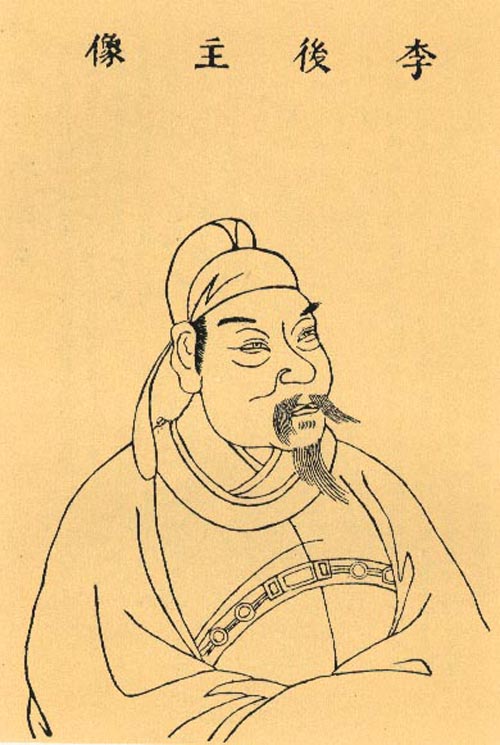
Block print portrait of Li Houzhu from Illustrations of the Three Powers (1609) By Wang Qi (1529 - 1612) - Original publication: San Cai Tu Hui vol. 23 Immediate source: original copy scanned, Public domain, https://commons.wikimedia.org/w/index.php?curid=54992844
May 1, 978 CE
Qian Chu surrenders Wuyue to Song (钱俶归宋)
Qian Chu (钱俶, Qián Chù), Wuyue's last ruler, voluntarily submits to Song Taizong, preserving family wealth and Hangzhou's prosperity through peaceful integration. #politics #commerce
錢俶 By 清光绪修《浙江吴越钱氏清芬志》 - http://diglweb.zjlib.cn:8081/zjtsg/mingren/cyxl.jsp?record=2645&back=-28&channelid=91673, Public domain, https://commons.wikimedia.org/w/index.php?curid=121677103
Jun 3, 978 CE
Chen Hongjin surrenders Qingyuan to Song (陈洪进归宋)
Chen Hongjin (陈洪进, Chén Hóngjìn), military governor of Qingyuan (清源, Qīngyuán) in Fujian, submits to Song, completing mainland unification except for Northern Han. #politics
Portrait of Chen Hongjin by people of Qing Dynasty By Unknown author in Qing Dynasty (1644-1912) - 《陈氏秋溪世家延华堂族谱》, Public domain, https://commons.wikimedia.org/w/index.php?curid=134612206
May 8, 979 CE
Song destroys Northern Han, reunifies China (宋灭北汉)
Song Taizong (宋太宗, Sòng Tàizōng) personally leads campaign capturing Taiyuan; Liu Jiyuan (刘继元, Liú Jìyuán) surrenders. Five Dynasties and Ten Kingdoms period formally ends. #war #politics #dynasty
Jun 1, 979 CE
Song fails to recover Sixteen Prefectures (高梁河之战)
Song Taizong's rash attack on Liao at Gaoliang River (高梁河, Gāoliáng Hé) ends in defeat with arrow wound, establishing Liao-Song military equilibrium for century. #war #foreignrelations #disaster


![Title Xin juan Yu ming tang pi ping an jian can bu : Nan Song zhi zhuan shi juan, Bei Song zhi zhuan shi juan Other Title 新鐫玉茗堂批評按鑑參補 : 南宋志傳十卷, 北宋志傳十卷 / Nan Song zhi zhuan Nan Bei Song zhi zhuan Bei Song zhi zhuan Xiu xiang Nan Bei Song zhi zhuan Summary There are two sections: "The record of Southern Song" and "The record of Northern Song"; each section includes ten chapters and fifty parts. Contributor Names Yanshishanqiao, ding zheng. Shan cheng tang, ke. Chinese Rare Book Collection (Library of Congress). Created / Published [China] : Shan cheng tang, [Qing dai, between 1800 and 1912?] Subject Headings - Ji bu--Xiao shuo lei - 集部--小說類 Notes - Also available in digital form on the Library of Congress Web site. - November 24, 1950. - 十冊二函. Ten volumes in two cases. - 清善成堂刻本 四周單邊左右雙邊相間 白口 黑單魚尾 版匡高20.0寬13.2公分 全書高24.3寬15.7公分 . - 十二行二十四字. Twelve lines, with twenty-four characters per line. - 鈐印有:"善成堂自在蘇杭浙閩檢選古今書籍發兌" 朱文長方印,"松琴文庫"朱文方印. - 函脊號191簽條號614. - 1950年11月24日入藏 (見書名葉,另有號碼2051 J, 印章6 Copy). - 函面題"南北宋志傳",函脊題"南北宋志傳",以"乾","坤"為序。函1,函2各含10冊。書名葉中間和左題"繡像南北宋志傳",右上題"玉茗堂批點",左下題"善成堂藏板". - 本書含南宋志傳和北宋志傳二種: 南宋志傳10卷50回,1函5冊;卷首額題"新鐫玉茗堂批評按鑑參補南宋志傳卷之一",下署"研石山樵訂正"。版心上題"南宋志傳",中題卷次及回數,下題每卷頁碼。冊1含織里畸人書於玉茗堂之《南宋志傳序》,總目,繡像6幅,卷1-2(第1-10回),冊2含卷3-4(第11-20回),冊3含卷5-6(第21-30回),冊4含卷7-8(第31-40回),冊5含卷9-10(第41-50回)。此書雖題南宋志傳,實為記述五代末趙匡胤建立北宋之小說. - 北宋志傳(卷内題楊家將志傳): 10卷50回,1函5冊;本書另有書名葉,中間和左題"繡像楊家將志傳" ,右上題"玉茗堂批點"。卷首額題"新鐫玉茗堂批點按鑑參補楊家將卷之一",下署"研石山樵訂正,啟元堂梓行",卷2後改題"研石山樵訂正,織里畸人校閱"。版心上題"北宋志傳",中題卷次及回數,下題每卷頁碼。冊1含玉茗主人萬曆46年(1618)之《北宋志傳序》,繡像6幅,總目,卷1-2(第1-10回)。冊2含卷3-4(第11-20回),冊3含卷5-6(第21-30回),冊4含卷7-8(第31-40回),冊5含卷9-10(第41-50回). Medium 10 v. : ill. Library of Congress Control Number 2012402785 Online Format image LCCN Permalink https://lccn.loc.gov/2012402785 Additional Metadata Formats MARCXML Record MODS Record Dublin Core Record IIIF Presentation Manifest Manifest (JSON/LD)](https://upload.wikimedia.org/wikipedia/commons/thumb/5/52/%E5%94%90%E6%98%8E%E5%AE%97.jpg/500px-%E5%94%90%E6%98%8E%E5%AE%97.jpg)