Encyclopedia/4. Arts & Literature/1. Literature, Mythology & Folklore/01. Classical & Ancient Literature • Curated by Admin Timeline.sg
World Literature · Oral Traditions · Poetry · Novels · Drama · Myths · Legends · Folklore
Chronological Storyline (40 Milestones)
2100 BCE
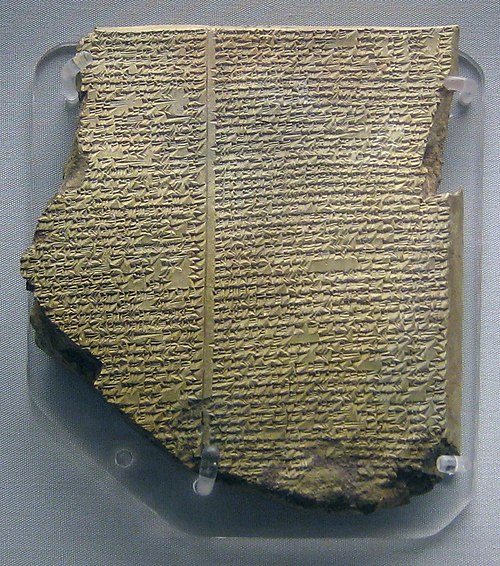
Epic of Gilgamesh composed in Mesopotamia
The oldest surviving great work of literature, originating as Sumerian poems about a legendary king. It established enduring themes of mortality, friendship, and the quest for meaning. · Wikipedia: https://en.wikipedia.org/wiki/Epic_of_Gilgamesh
Neo-Assyrian clay tablet. Epic of Gilgamesh, Tablet 11: Story of the Flood. Known as the "Flood Tablet" From the Library of Ashurbanipal, 7th century BC. By Unknown author - BabelStone (Own work), CC0, https://commons.wikimedia.org/w/index.php?curid=10755114The Epic of Gilgamesh Is MIND-BLOWING | 4k Documentary
1800 BCE
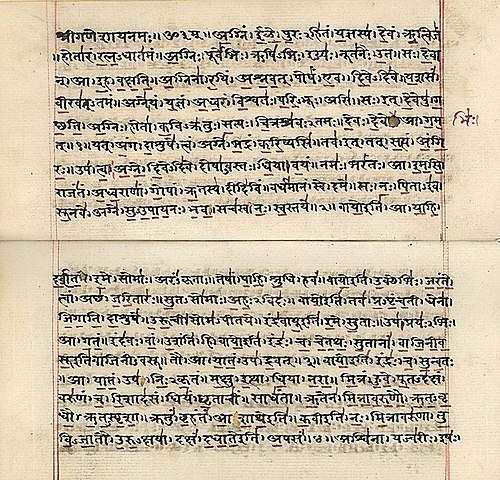
Compilation of the Rigveda begins
One of the oldest extant texts in any Indo-European language, this collection of over 1,000 hymns is foundational to ancient Indian religious and literary tradition. · Wikipedia: https://en.wikipedia.org/wiki/Rigveda
Rigveda MS in Sanskrit on paper, India, early 19th c., 4 vols., 795 ff. (complete), 10x20 cm, single column, (7x17 cm), 10 lines in Devanagari script with deletions in yellow, Vedic accents, corrections etc in red. Binding: India, 19th c., blind-stamped brown leather, gilt spine, sewn on 5 cords, marbled endleaves Provenance: 1. Eames Collection, Chicago, no. 1956; 2. Newberry Library, Chicago, ORMS 960 (acq.no. 152851-152854) (ca. 1920-1994); 3. Sam Fogg cat. 17(1996):42. By Unknown author - http://www.nb.no/baser/schoyen/5/5.20/ms2097.jpg[dead link], Public domain, https://commons.wikimedia.org/w/index.php?curid=103513
1750 BCE
Code of Hammurabi inscribed
A well-preserved Babylonian legal text carved on a stele, combining law with literary prologue and epilogue, influencing later Near Eastern legal and literary traditions. · Wikipedia: https://en.wikipedia.org/wiki/Code_of_Hammurabi
Code de Hammurabi, roi de Babylone ; face avant. By Mbzt - Own work, CC BY 3.0, https://commons.wikimedia.org/w/index.php?curid=16931676
1500 BCE
Aboriginal Australian Dreamtime traditions maintained
Aboriginal Australian oral traditions, including Dreamtime stories, represent one of the world's oldest continuous cultural and narrative practices, passed down for tens of thousands of years. Source — Wikipedia:
Stencil art showing unique clan markers and dreamtime stories symbolising attempts to catch the deceased's spirit. Photo taken September 1985. By September 1985 - Original Uploader was Shiftchange (talk) at 00:53, 9 June 2006., Public domain, https://commons.wikimedia.org/w/index.php?curid=2444405
1300 BCE
Egyptian Book of the Dead compiled
A collection of ancient Egyptian funerary texts consisting of magic spells intended to assist the dead in the afterlife, reflecting deep mythological beliefs about mortality. · Wikipedia: https://en.wikipedia.org/wiki/Book_of_the_Dead
"This is an excellent example of one of the many fine vignettes (illustrations) from the Book of the Dead of Hunefer. The scene reads from left to right. To the left, Anubis brings Hunefer into the judgement area. Anubis is also shown supervizing [sic] the judgement scales. Hunefer's heart, represented as a pot, is being weighed against a feather, the symbol of Maat, the established order of things, in this context meaning 'what is right'. The ancient Egyptians believed that the heart was the seat of the emotions, the intellect and the character, and thus represented the good or bad aspects of a person's life. If the heart did not balance with the feather, then the dead person was condemned to non-existence, and consumption by the ferocious 'devourer', the strange beast shown here which is part-crocodile, part-lion, and part-hippopotamus. However, as a papyrus devoted to ensuring Hunefer's continued existence in the Afterlife is not likely to depict this outcome, he is shown to the right, brought into the presence of Osiris by his son Horus, having become 'true of voice' or 'justified'. This was a standard epithet applied to dead individuals in their texts. Osiris is shown seated under a canopy, with his sisters Isis and Nephthys. At the top, Hunefer is shown adoring a row of deities who supervise the judgement." A more detailed explanation of the scene can be found in the public domain The Book of the Dead, by E. A. Wallis Budge.[1] By Hunefer - http://www.britishmuseum.org/explore/highlights/highlight_objects/aes/p/page_from_the_book_of_the_dead.aspx, https://www.webcitation.org/63ZdUemZU, Public domain, https://commons.wikimedia.org/w/index.php?curid=79229218
800 BCE
Homeric epics composed in Greece
The Iliad and the Odyssey, attributed to Homer, became foundational texts of Western literature, establishing epic conventions of heroism, divine intervention, and narrative structure. · Wikipedia: https://en.wikipedia.org/wiki/Homeric_Hymns
Dionysos in a ship, sailing among dolphins. Attic black-figure kylix, ca. 530 BC. From Vulci. By Exekias - MatthiasKabel, Own work, 28 January 2006. Image renamed from Image:Dionysos Augenschale des Exekias.jpg, CC BY 2.5, https://commons.wikimedia.org/w/index.php?curid=2243797What Do We ACTUALLY Know About Homer? (Author of Iliad & Odyssey)
750 BCE
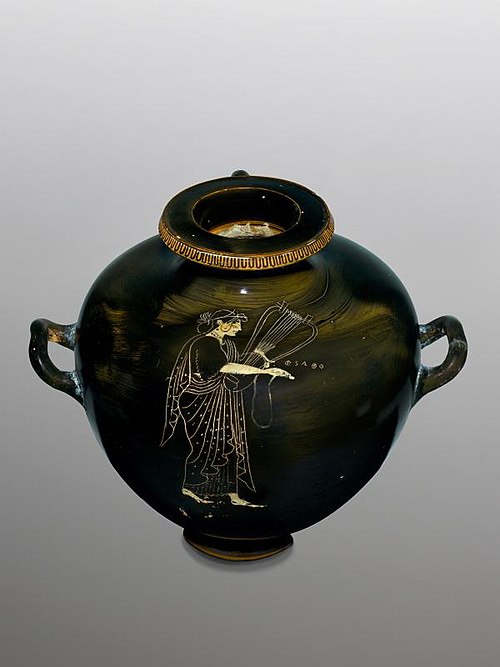
Sappho writes lyric poetry on Lesbos
The archaic Greek poet Sappho composed intensely personal lyric poetry, earning praise from Plato as the tenth Muse and influencing the trajectory of poetic expression. · Wikipedia: https://en.wikipedia.org/wiki/Sappho
Sappho writes lyric poetry on Lesbos By Sappho Painter - https://cyfrowe.mnw.art.pl/en/catalog/607805, Public domain, https://commons.wikimedia.org/w/index.php?curid=64888214
600 BCE
Aesop's fables circulate in Greece
A collection of moralistic animal fables attributed to a slave storyteller, becoming one of the most widely translated and influential folklore traditions in world history. · Wikipedia: https://en.wikipedia.org/wiki/Aesop's_Fables
The slave Aesop serving two priests, by Francis Barlow. By Francis Barlow - The 1687 edition of Aesop's Fables with His Life: in English, French and Latin, Public domain, https://commons.wikimedia.org/w/index.php?curid=148675373
534 BCE
Thespis introduces dramatic acting
The Greek poet Thespis is credited with becoming the first actor, transforming religious Dionysian rituals into structured theatrical drama and originating the tragic form. · Wikipedia: https://en.wikipedia.org/wiki/Thespis
Formella 15, il carro di Tespi (Theatrica), nino pisano, 1334-1336 By sailko - Self-photographed, CC BY 2.5, https://commons.wikimedia.org/w/index.php?curid=2492432
500 BCE
Confucius compiles the Book of Songs
The Shijing, or Classic of Poetry, is the oldest existing collection of Chinese poetry, comprising 305 works that established the aesthetic and moral standards for Chinese literature. · Wikipedia: https://en.wikipedia.org/wiki/Classic_of_Poetry
Wooden-clapper bell (木鐸 mùduó) used as a symbol of Confucianism. The symbolism is drawn upon the Analects of Confucius, 3.24, where it is said: 天將以夫子爲木鐸, "Heaven will instruct the master like a wooden-clapper bell (to awaken everyone to the Way)". An analogy is made between the master (in the phrase, Confucius himself) who resonates with the order of Heaven which inspires him, and the bell, as if Heaven were the clapper and the master were the bell. The wooden-clapper bell is also an actual instrument that was used to gather people by ancient Chinese administrations, is used for ritual, and by analogy it means the purpose of Confucianism, that is to preach and educate people to the right values. By Aethelwolf Emsworth. - Own reproduction of a drawing made by Picnic11219 for Chinese Wikipedia., Public domain, https://commons.wikimedia.org/w/index.php?curid=65689742
400 BCE
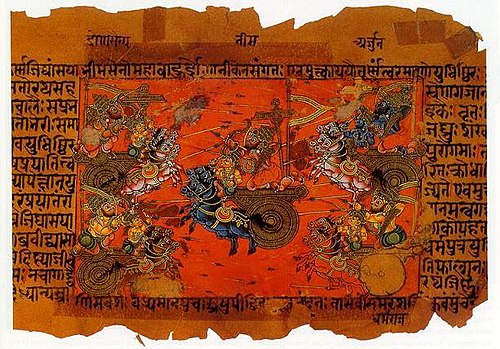
Mahabharata reaches major form in India
One of the longest epic poems ever written, this Sanskrit epic explores duty, dharma, and war, containing the revered Bhagavad Gita and shaping South Asian culture profoundly. Source — Wikipedia:
A manuscript illustration (18th c.?) of the Kurukshetra War, fought between the Kauravas and the Pandavas, recorded in the Indian epic Mahābhārāta. By Unknown author - http://www.atributetohinduism.com/Hindu_Scriptures.htm, Public domain, https://commons.wikimedia.org/w/index.php?curid=619546
300 BCE
Ramayana attributed to Valmiki
This ancient Sanskrit epic narrates the life of Rama, blending mythology, heroism, and moral philosophy, and remains a cornerstone of literature across Southeast Asia. Source — Wikipedia:
A manuscript from the Mewar Rāmāyaṇa depicting Rāma slaying Rāvaṇa. By Scribes and painters employed by the Kingdom of Mewar. - The Mewar Rāmāyaṇa, British Library., Public domain, https://commons.wikimedia.org/w/index.php?curid=130417975
250 BCE
Hebrew Bible translated into Greek
The Septuagint translation of Hebrew scriptures into Greek made Jewish texts accessible to the broader Hellenistic world, profoundly influencing later Western literature and theology. Source — Wikipedia:
A portion of the Greek Uncial MS. Codex Vaticanus, from the Vatican Library. This image shows a passage from the New Testament and includes 1 Esdras 1:55-2:5. By Unknown author - Codex Vaticanus (Gregory-Aland no. B or 03), Public domain, https://commons.wikimedia.org/w/index.php?curid=36996
100 BCE
Sima Qian completes the Records of the Grand Historian
This foundational Chinese historical text by Sima Qian set the standard for biographical and narrative prose, influencing East Asian historiography and literature for millennia. · Wikipedia: https://en.wikipedia.org/wiki/Records_of_the_Grand_Historian
中华书局1982年版史记扉页 huowax摄 By Zhonghua Book Company - Photo taken by Chinese Wikipedia user huowax, Public domain, https://commons.wikimedia.org/w/index.php?curid=48989967
Aug 24, 79 CE
Pliny the Younger documents Vesuvius eruption
In detailed letters, Pliny the Younger provided a vivid literary account of the eruption of Mount Vesuvius, creating a foundational text of Roman epistolary literature. · Wikipedia: https://en.wikipedia.org/wiki/Pliny_the_Younger
Exhibit in the Princeton University Art Museum - Princeton University, Princeton, New Jersey, USA. By Angelica Kauffmann - Own work, Public domain, https://commons.wikimedia.org/w/index.php?curid=164342582
100 CE
Buddhist and Jain narrative traditions flourish
The Jataka tales and Jain narratives spread across South Asia, blending moral instruction with engaging storytelling and profoundly influencing Asian folklore and literature. · Wikipedia: https://en.wikipedia.org/wiki/Jataka_tales
Scenes from the past lives of the Buddha were among the major themes found on early Buddhist monuments. This one exemplifies his acts of kindness and his intelligence in one of his past lives when he was a born as a woodpecker and helped dislodge a bone from a lion's throat. By Unknown author - https://clevelandart.org/art/1970.350, CC0, https://commons.wikimedia.org/w/index.php?curid=125278042
150 CE
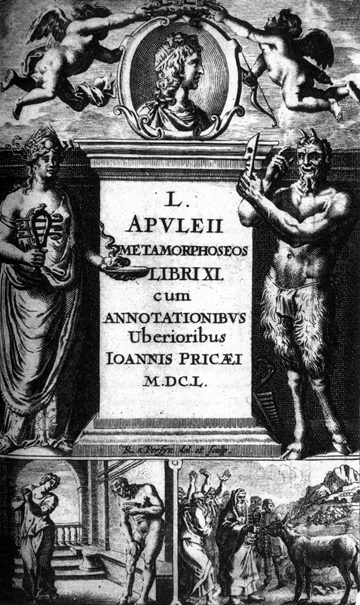
Apuleius writes The Golden Ass
The Latin novel Metamorphoses by Apuleius is the only ancient Roman novel to survive in full, blending comedy, magic, and religious philosophy in a prose narrative. · Wikipedia: https://en.wikipedia.org/wiki/The_Golden_Ass
Title page from John Price's Latin edition of Apuleius' novel "Metamorphoses, or the Golden Ass" (Gouda, Netherlands, 1650). By Unknown author - http://www.jnanam.net/golden-ass/goldass/apu02.jpg, Public domain, https://commons.wikimedia.org/w/index.php?curid=3618465
200 CE
Classic of Mountains and Seas compiled in China
The Shanhaijing is a mythogeographical text preserving ancient Chinese mythology, folklore, and legendary creatures, serving as a crucial source for early Chinese mythological studies. · Wikipedia: https://en.wikipedia.org/wiki/Classic_of_Mountains_and_Seas
The fifth Zhongshanjing By Guo Pu (郭璞) - National Library of China, Public domain, https://commons.wikimedia.org/w/index.php?curid=125540120
400 CE
Kalidasa composes Shakuntala
The great Sanskrit poet and dramatist Kalidasa authored Abhijnanashakuntala, a masterful play that became one of the most celebrated works of classical Indian literature. · Wikipedia: https://en.wikipedia.org/wiki/Abhij%C3%B1%C4%81na%C5%9B%C4%81kuntalam
She looks back at her lover, pretending to remove a thorn from her foot. By Raja Ravi Varma - https://artsandculture.google.com/asset/shakuntala-removing-a-thorn-from-her-foot-raja-ravi-varma/UgFGr-9kgW8y7g, Public domain, https://commons.wikimedia.org/w/index.php?curid=10258137
500 CE
Beowulf composed in Anglo-Saxon England
An Old English epic poem blending Germanic heroic legend with Christian elements, Beowulf is the longest surviving poem in Old English and a cornerstone of English literature. · Wikipedia: https://en.wikipedia.org/wiki/Beowulf
The first folio of the heroic epic poem Beowulf, written primarily in the West Saxon dialect of Old English. Part of the Cotton MS Vitellius A XV manuscript currently located within the British Library. This is a digital photographic copy of the folio. Text shown according to https://www.poetryfoundation.org/poems/43521/beowulf-old-english-version: HWÆT. WE GARDE na in geardagum, þeodcyninga, [129] þrym gefrunon, hu ða æþelingas ellen fremedon. Oft Scyld Scefing sceaþena þreatum,monegum mægþum, meodosetla ofteah, egsode eorlas. Syððan ærest wearð feasceaft funden, he þæs frofre gebad, weox under wolcnum, weorðmyndum þah, oðþæt him æghwylc þara ymbsittendra ofer hronrade hyran scolde, gomban gyldan. þæt wæs god cyning. ðæm eafera wæs æfter cenned, geong in geardum, þone god sende folce to frofre; fyrenðearfe on geat þe hie ær drugon aldorlease lange hwile. Him þæs liffrea, wuldres wealdend, woroldare forgeaf; Beowulf wæs breme blæd wide sprang, Scyldes eafera Scede landum in. Swa sceal geong guma gode gewyrcean, fromum feohgiftum on fæder By anonymous Anglo-Saxon poet - This file has been provided by the British Library from its digital collections. Links to the British Library's website may be broken as the library recovers from a October 2023 cyber attack, and will be updated once material becomes accessible online. For more information on the attack see: https://www.bl.uk/about/cyber-attack It is also made available on a British Library website. Catalogue entry: Cotton MS Vitellius A XV, ff 94r–209v, Public domain, https://commons.wikimedia.org/w/index.php?curid=30380424
700 CE
Tale of the Bamboo Cutter emerges in Japan
Recognized as Japan's oldest extant prose narrative, this monogatari blends folklore and early science fiction, establishing foundational tropes for Japanese literary tradition. · Wikipedia: https://en.wikipedia.org/wiki/The_Tale_of_the_Bamboo_Cutter
Image from The Japanese Fairy Book By Kakuzō Fujiyama - This image has been extracted from another file, Public domain, https://commons.wikimedia.org/w/index.php?curid=38560834
750 CE
One Thousand and One Nights compiled
A collection of Middle Eastern folk tales compiled during the Islamic Golden Age, featuring Scheherazade's frame narrative, which became globally influential in world literature. · Wikipedia: https://en.wikipedia.org/wiki/One_Thousand_and_One_Nights
Arabian Nights illustration By William Strang (1859-1921) - Sinbad the sailor and Ali Baba and the forty thieves, Lawrence & Bullen, London, 1896, Public domain, https://commons.wikimedia.org/w/index.php?curid=22271706One Thousand and One Nights | The Tale of Scheherazade
800 CE
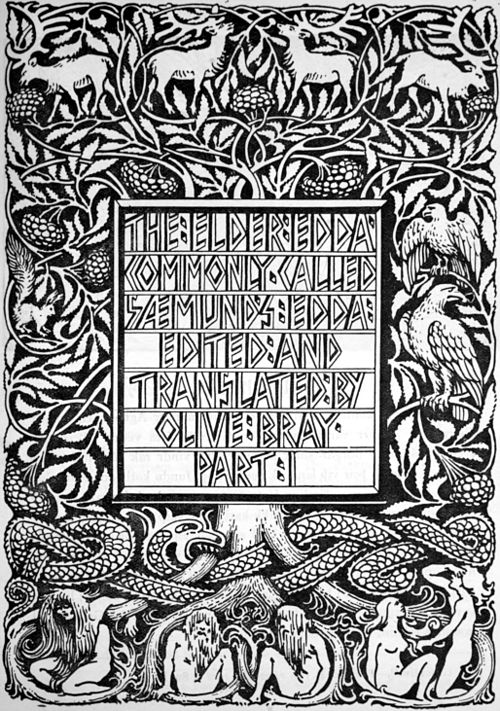
Poetic Edda recorded in Iceland
A collection of Old Norse poems preserving the mythology and legends of the Germanic peoples, including stories of Odin, Thor, and the creation and destruction of the world. · Wikipedia: https://en.wikipedia.org/wiki/Poetic_Edda
The tree Yggdrasill, complete with Ratatoskr, the four stags, Níðhöggr and Veðrfölnir. This is the title page of the book. The list of illustrations in the front matter of the book gives this one the title Title: The Tree of Yggdrasil. By W. G. Collingwood (1854-1932) - The Elder or Poetic Edda; commonly known as Sæmund's Edda. Edited and translated with introduction and notes by Olive Bray. Illustrated by W. G. Collingwood (1908) Page 1. Digitized by the Internet Archive and available from https://archive.org/details/elderorpoeticedd01brayuoft This image was made from the JPEG 2000 image of the relevant page via image processing (crop, rotate, color-levels, mode) with the GIMP by User:Haukurth. The image processing is probably not eligible for copyright but in case it is User:Haukurth releases his modified version into the public domain., Public domain, https://commons.wikimedia.org/w/index.php?curid=4657633
1008 CE
Murasaki Shikibu writes The Tale of Genji
Widely considered the world's first novel, this Japanese masterpiece by Murasaki Shikibu offers a psychological portrait of aristocratic life in the Heian period. · Wikipedia: https://en.wikipedia.org/wiki/The_Tale_of_Genji
Fragment of an emaki from the 12th century Genji Monogatari. H 21.8 x W 23.4cm. Paper decorated with gold. The author of the painting belonged to the upper court during the Heian period; it would be Fujiwara Takashino or Takayoshi (藤原 隆 能,? 1126 -1174?). Currently at the Gotoh Museum. By Imperial Palace Kyoto - 1. Gotoh Museum [1], 2. Geidai.ac.jp [2], Public domain, https://commons.wikimedia.org/w/index.php?curid=3596328
1010 CE
Ferdowsi completes the Shahnameh
The Persian poet Ferdowsi finished the Shahnameh, an epic masterpiece preserving Iran's pre-Islamic myths and history, which became a cornerstone of Persian cultural identity. · Wikipedia: https://en.wikipedia.org/wiki/Shahnameh
Sultan Mohammed. Kayumars' Court. Miniature, detail. "Shahnameh" by Ferdowsi. 1525-1535. Geneva, Collection of Sadruddin Aga Khan. By Attributed to Sultan Muhammad - Transferred from ru.wikipedia to Commons. Original uploader was Евгений Ардаев at ru.wikipedia (28 August 2008 (first version); 28 August 2008 (last version)), Public domain, https://commons.wikimedia.org/w/index.php?curid=139263041
1300 CE
Dante Alighieri begins The Divine Comedy
Dante's epic poem, completed shortly before his death, synthesizes medieval theology and classical literature, establishing the Tuscan dialect as the standard Italian language. · Wikipedia: https://en.wikipedia.org/wiki/Divine_Comedy
Dante and His Poem by Domenico di Michelino By Domenico di Michelino / After Alesso Baldovinetti - https://twitter.com/museofirenze/status/1075345296048181248 This is a retouched picture, which means that it has been digitally altered from its original version. Modifications: brightened image., Public domain, https://commons.wikimedia.org/w/index.php?curid=133465311The Divine Comedy: Dante & Botticelli's Visions of Violence and Beauty (2001)
1320 CE
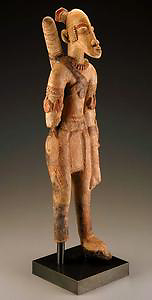
Epic of Sundiata transmitted by griots
The Epic of Sundiata, preserved by West African griot oral tradition, recounts the founding of the Mali Empire, blending history and myth in a living oral literary form. · Wikipedia: https://en.wikipedia.org/wiki/Epic_of_Sundiata
Terracotta Archer figure from Mali; 13th-15th century By Franko Khoury - http://africa.si.edu/exhibits/resources/mali/works.htm, Public domain, https://commons.wikimedia.org/w/index.php?curid=10554649
1375 CE
Popol Vuh traditions recorded by K'iche' Maya
The Popol Vuh, the sacred book of the K'iche' Maya, preserves creation myths and hero tales, offering a vital window into pre-Columbian Mesoamerican mythology and literature. Source — Wikipedia:
First page of the Popol Vuh manuscript, Saved at Newberry Library, Chicago, Yesterday Collection By Francisco Ximénez, Public domain, https://commons.wikimedia.org/w/index.php?curid=1887823
1392 CE
Chaucer writes The Canterbury Tales
Geoffrey Chaucer's collection of stories, told by pilgrims journeying to Canterbury, captured the diversity of medieval English society and helped legitimize English as a literary language. · Wikipedia: https://en.wikipedia.org/wiki/The_Canterbury_Tales
A drawing from the 1491/2 Pynson edition of w:The Canterbury Tales, autotraced in Inkscape from a unskewed and manually cleaned part of a scan, and then cleaned up more. By DemonDays64 - From File:Canterbury Tales characters around table.png, Public domain, https://commons.wikimedia.org/w/index.php?curid=149913518
1500 CE
Aztec and Andean oral literature recorded post-contact
Following European contact, indigenous Mesoamerican and Andean oral traditions, including Nahuatl poetry and Quechua narratives, were transcribed, preserving vital pre-Columbian literature. · Wikipedia: https://en.wikipedia.org/wiki/Aztec_codices
Codex Mendoza depicting the coat of arms of Mexico By Unknown author - https://iiif.bodleian.ox.ac.uk/iiif/viewer/2fea788e-2aa2-4f08-b6d9-648c00486220#?c=0&m=0&s=0&cv=13&r=0&xywh=-5497%2C-1%2C17409%2C8220] https://digital.bodleian.ox.ac.uk/objects/2fea788e-2aa2-4f08-b6d9-648c00486220/, Public domain, https://commons.wikimedia.org/w/index.php?curid=710513
1592 CE
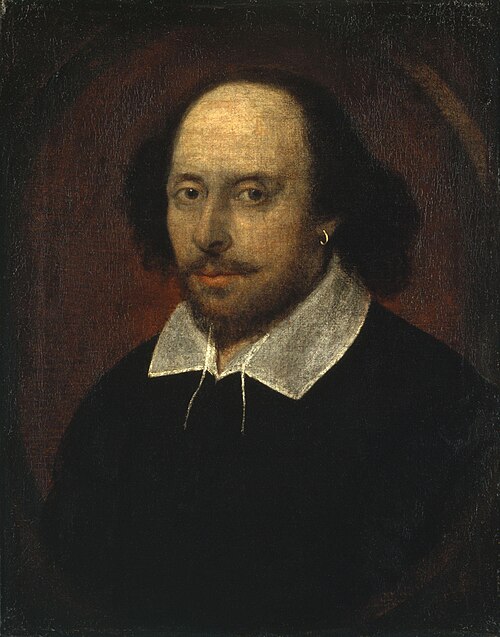
Shakespeare's first plays performed in London
William Shakespeare began staging his plays in London, revolutionizing English drama with works like Hamlet and Macbeth that explored the depths of human nature and ambition. Source — Wikipedia:
Shakespeare's first plays performed in London By Attributed to John Taylor - one or more third parties have made copyright claims against Wikimedia Commons in relation to the work from which this is sourced or a purely mechanical reproduction thereof. This may be due to recognition of the "sweat of the brow" doctrine, allowing works to be eligible for protection through skill and labour, and not purely by originality as is the case in the United States (where this website is hosted). These claims may or may not be valid in all jurisdictions. As such, use of this image in the jurisdiction of the claimant or other countries may be regarded as copyright infringement. Please see Commons:When to use the PD-Art tag for more information., Public domain, https://commons.wikimedia.org/w/index.php?curid=147141653Judi Dench, Brian Cox & more reflect on the life of William Shakespeare - BBC
1605 CE
Cervantes publishes Don Quixote
Miguel de Cervantes's novel El Ingenioso Hidalgo Don Quijote de la Mancha is widely regarded as the first modern Western novel, satirizing chivalric romances and exploring perception. · Wikipedia: https://en.wikipedia.org/wiki/Don_Quixote
See w:Juan de la Cuesta By Juan de la Cuesta - https://legendsrevealed.com/entertainment/2012/08/08/did-cervantes-write-don-quixote-while-in-prison/, Public domain, https://commons.wikimedia.org/w/index.php?curid=108839792
1622 CE
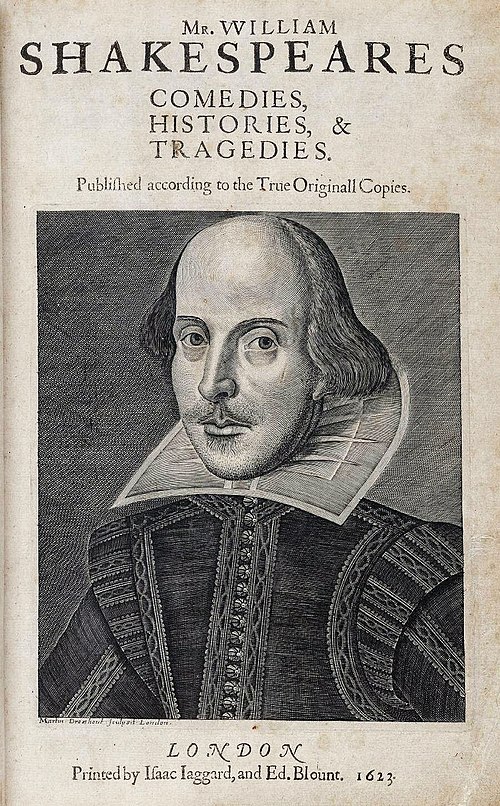
First Folio of Shakespeare published
The First Folio, compiled by John Heminges and Henry Condell, preserved 36 of Shakespeare's plays, ensuring the survival of his dramatic works for posterity. · Wikipedia: https://en.wikipedia.org/wiki/First_Folio
The title page of the w:First Folio of William Shakespeare's plays By William Shakespeare - Mr. William Shakespeares Comedies, Histories, & Tragedies, Public domain, https://commons.wikimedia.org/w/index.php?curid=84956432
1792 CE
Journey to the West published in China
Attributed to Wu Cheng'en, this Chinese vernacular novel blends mythology, folklore, and satire, becoming one of the Four Great Classical Novels of Chinese literature. · Wikipedia: https://en.wikipedia.org/wiki/Journey_to_the_West
Journey to the West published in China By Unknown author, Public domain, https://commons.wikimedia.org/w/index.php?curid=11575
1813 CE
Jane Austen publishes Pride and Prejudice
Jane Austen's novel of manners refined the genre of domestic realism, using sharp social observation and irony to critique class, gender, and marriage in Regency England. · Wikipedia: https://en.wikipedia.org/wiki/Pride_and_Prejudice
Title page from the first edition of the first volume of Pride and Prejudice By Jane Austen (1775-1817) - Archive: Lilly Library, Indiana University; Original publication: Austen, Jane. Pride and Prejudice. London: T. Egerton, 1813., Public domain, https://commons.wikimedia.org/w/index.php?curid=3776031
1866 CE
Dostoevsky publishes Crime and Punishment
Fyodor Dostoevsky's psychological novel explored guilt, morality, and redemption in St. Petersburg, establishing a benchmark for existentialist and psychological literature. · Wikipedia: https://en.wikipedia.org/wiki/Crime_and_Punishment
1922 CE
Joyce publishes Ulysses
James Joyce's modernist novel, set over a single day in Dublin, revolutionized narrative technique with its stream-of-consciousness style and deep mythological parallels. · Wikipedia: https://en.wikipedia.org/wiki/Ulysses_(novel)
Picture of first edition of Joyce's Ulysses. Public Domain. By James Joyce - Own work, Public domain, https://commons.wikimedia.org/w/index.php?curid=555052
1967 CE
Gabriel García Márquez publishes One Hundred Years of Solitude
This landmark novel by Gabriel García Márquez popularized magical realism, blending myth and history to tell the multi-generational story of a Colombian family and Latin America. · Wikipedia: https://en.wikipedia.org/wiki/One_Hundred_Years_of_Solitude
1988 CE
Naguib Mahfouz wins Nobel Prize in Literature
The Egyptian novelist Naguib Mahfouz was awarded the Nobel Prize, recognizing his richly textured works that brought Arabic literature to a global audience and depicted Egyptian life. · Wikipedia: https://en.wikipedia.org/wiki/Naguib_Mahfouz
Nagib mahfouz By The original uploader was Producer at Arabic Wikipedia. - Transferred from ar.wikipedia to Commons., Public domain, https://commons.wikimedia.org/w/index.php?curid=65466571
1993 CE
Toni Morrison wins Nobel Prize in Literature
Toni Morrison became the first African American woman to win the Nobel Prize in Literature, honored for novels that give voice to the Black American experience with visionary force. · Wikipedia: https://en.wikipedia.org/wiki/Toni_Morrison


!["This is an excellent example of one of the many fine vignettes (illustrations) from the Book of the Dead of Hunefer. The scene reads from left to right. To the left, Anubis brings Hunefer into the judgement area. Anubis is also shown supervizing [sic] the judgement scales. Hunefer's heart, represented as a pot, is being weighed against a feather, the symbol of Maat, the established order of things, in this context meaning 'what is right'. The ancient Egyptians believed that the heart was the seat of the emotions, the intellect and the character, and thus represented the good or bad aspects of a person's life. If the heart did not balance with the feather, then the dead person was condemned to non-existence, and consumption by the ferocious 'devourer', the strange beast shown here which is part-crocodile, part-lion, and part-hippopotamus. However, as a papyrus devoted to ensuring Hunefer's continued existence in the Afterlife is not likely to depict this outcome, he is shown to the right, brought into the presence of Osiris by his son Horus, having become 'true of voice' or 'justified'. This was a standard epithet applied to dead individuals in their texts. Osiris is shown seated under a canopy, with his sisters Isis and Nephthys. At the top, Hunefer is shown adoring a row of deities who supervise the judgement." A more detailed explanation of the scene can be found in the public domain The Book of the Dead, by E. A. Wallis Budge.[1]](https://upload.wikimedia.org/wikipedia/commons/thumb/6/63/El_pesado_del_coraz%C3%B3n_en_el_Papiro_de_Hunefer.jpg/500px-El_pesado_del_coraz%C3%B3n_en_el_Papiro_de_Hunefer.jpg)







![The first folio of the heroic epic poem Beowulf, written primarily in the West Saxon dialect of Old English. Part of the Cotton MS Vitellius A XV manuscript currently located within the British Library. This is a digital photographic copy of the folio. Text shown according to https://www.poetryfoundation.org/poems/43521/beowulf-old-english-version: HWÆT. WE GARDE na in geardagum, þeodcyninga, [129] þrym gefrunon, hu ða æþelingas ellen fremedon. Oft Scyld Scefing sceaþena þreatum,monegum mægþum, meodosetla ofteah, egsode eorlas. Syððan ærest wearð feasceaft funden, he þæs frofre gebad, weox under wolcnum, weorðmyndum þah, oðþæt him æghwylc þara ymbsittendra ofer hronrade hyran scolde, gomban gyldan. þæt wæs god cyning. ðæm eafera wæs æfter cenned, geong in geardum, þone god sende folce to frofre; fyrenðearfe on geat þe hie ær drugon aldorlease lange hwile. Him þæs liffrea, wuldres wealdend, woroldare forgeaf; Beowulf wæs breme blæd wide sprang, Scyldes eafera Scede landum in. Swa sceal geong guma gode gewyrcean, fromum feohgiftum on fæder](https://upload.wikimedia.org/wikipedia/commons/thumb/c/c1/Beowulf_Cotton_MS_Vitellius_A_XV_f._132r.jpg/500px-Beowulf_Cotton_MS_Vitellius_A_XV_f._132r.jpg)