Encyclopedia/3. History, Societies & Civilizations/01. East Asian Civilizations/01. Chinese Dynasties • Curated by Admin Timeline.sg
A turbulent era of division and cultural flourishing between the fall of the Jin and reunification under Sui, marked by nomadic sinicization, Buddhist expansion, and literary innovation across competing regimes.
Chronological Storyline (28 Milestones)
Feb 20, 386 CE
Daiyu Rebuilds Dai State (代国复国)
Tuoba Gui (拓跋珑, Tuòbá Guī), a Xianbei chieftain, revives the Dai kingdom, later renaming it Wei (魏); this marks the founding of the Northern Wei dynasty that would dominate North China for nearly 150 years. #politics #founding
Dec 7, 398 CE
Northern Wei Moves Capital to Pingcheng (迁都平城)
Tuoba Gui relocates the Northern Wei capital to Pingcheng (平城, Píngchéng, modern Datong), establishing a sinicized administrative structure with Chinese-style bureaucracy alongside Xianbei military organization. #governance #politics
402 CE
Huan Xuan Seizes Jin Throne (桓玄篡晋)
Huan Xuan (桓玄, Huán Xuán), son of powerful general Huan Wen, briefly usurps the Eastern Jin throne, declaring the Chu state; his rapid overthrow by Liu Yu restores Jin but foreshadows the dynasty's imminent end. #politics #war
420 CE
Liu Yu Founds Liu Song (刘宋代晋)
Liu Yu (刘裕, Liú Yù), the formidable general who crushed Huan Xuan and recovered northern territories, forces Emperor Gong of Jin to abdicate, establishing the Liu Song dynasty (刘宋, Liú Sòng) and beginning the Southern Dynasties period. #founding #politics
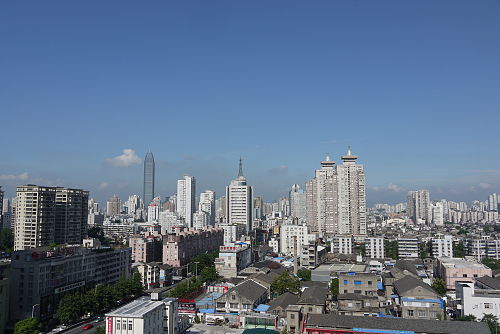
Vue générale de Wenzhou. Au fond,le Wenzhou World Trade Center By Pascal3012 - Own work, CC BY-SA 3.0, https://commons.wikimedia.org/w/index.php?curid=20911629
439 CE
Northern Wei Unifies Northern China (北魏统一北方)
Emperor Taiwu (太武帝, Tàiwǔ Dì) of Northern Wei completes conquest of the Northern Liang, ending the Sixteen Kingdoms era and creating a unified northern state to confront the Southern Dynasties. #conquest #politics
446 CE
First Great Buddhist Persecution (太武灭佛)
Emperor Taiwu, influenced by Daoist adept Kou Qianzhi (寇谦之, Kòu Qiānzhī) and Confucian minister Cui Hao (崔浩, Cuī Hào), launches devastating suppression of Buddhism, destroying temples, forcing monks to laicize, and earning posthumous infamy. #religion #disaster
453 CE
Liu Song Crown Prince Assassinates Emperor (刘劭弑父)
Liu Shao (刘劭, Liú Shào) murders his father Emperor Wen in a palace coup; his brief reign ends when brother Liu Jun (刘骏, Liú Jùn, later Emperor Xiaowu) defeats him, but the patricide devastates Liu Song legitimacy. #politics #disaster )
460 CE
Yungang Grottoes Construction Begins (云冈石窟开凿)
Northern Wei initiates monumental Buddhist cave-temples near Datong, blending Central Asian Gandharan styles with Chinese traditions; the five Tanyao caves represent earliest imperially sponsored large-scale Buddhist rock-cut architecture in China. #art #religion
479 CE
Xiao Daocheng Founds Southern Qi (萧道成建南齐)
Xiao Daocheng (萧道成, Xiāo Dàochéng), a Liu Song general, usurps the throne and establishes the Southern Qi dynasty (南齐, Nán Qí), continuing the pattern of military coups that characterized Southern Dynasties politics. #founding #politics
483 CE
Qi Min Yao Shu Compiled (齐民要术)
Jia Sixie (贾思勰, Jiǎ Sīxié) writes this comprehensive agricultural treatise, preserving Han and earlier farming techniques while documenting contemporary practices in crop rotation, animal husbandry, and food processing across North China. #science #agriculture
493 CE
Emperor Xiaowen Moves Capital to Luoyang (孝文帝迁都洛阳)
Emperor Xiaowen (孝文帝, Xiàowén Dì, Tuoba Hong) relocates the Northern Wei capital from Pingcheng to Luoyang (洛阳, Luòyáng), initiating radical sinicization policies: banning Xianbei language, dress, and surnames in favor of Chinese customs. #governance #culture
496 CE
Xianbei Surnames Changed to Han (改汉姓)
Emperor Xiaowen decrees that 118 Xianbei clan names be converted to Chinese equivalents; the imperial Tuoba becomes Yuan (元, Yuán), symbolizing the dynasty's deliberate cultural transformation and integration of nomadic aristocracy into Chinese society. #culture #governance
500 CE
Tao Yuanming Dies (陶渊明去世)
The seminal poet Tao Yuanming (陶渊明, Táo Yuānmíng), also known as Tao Qian (陶潜, Táo Qián), passes away; his works celebrating reclusion, nature, and simple rural life establish a foundational aesthetic for Chinese pastoral poetry. #literature #culture
502 CE
Xiao Yan Founds Liang Dynasty (萧衍建梁)
Xiao Yan (萧衍, Xiāo Yǎn), a Southern Qi general and distant relative of the imperial clan, overthrows the last Qi emperor and establishes the Liang dynasty (梁, Liáng), which would become the cultural zenith of the Southern Dynasties. #founding #politics
504 CE
Liang Emperor Wu Embraces Buddhism (梁武帝崇佛)
Emperor Wu of Liang (梁武帝, Liáng Wǔ Dì, Xiao Yan) formally converts to Buddhism, abandoning Daoist practices; his reign features extraordinary patronage of Buddhist institutions, including multiple self-sacrifices to monasteries and massive temple construction. #religion #politics
Changzhou Tianning Temple By Fumikas Sagisavas - Own work, CC0, https://commons.wikimedia.org/w/index.php?curid=155942567
516 CE
Yongning Pagoda Completed (永宁寺塔建成)
Emperor Linghu of Northern Wei completes the towering Yongning Temple pagoda in Luoyang, described as over 100 meters tall with extraordinary gilt decorations; it burns spectacularly in 534, symbolizing Northern Wei decline. #architecture #religion
523 CE
Six Garrisons Rebellion Erupts (六镇起义)
Disaffected Xianbei military settlers in northern frontier garrisons, marginalized by Xiaowen's sinicization policies, rise in massive rebellion against the Northern Wei court, triggering cascading civil wars that fracture the dynasty. #war #disaster
A scene of the Dungan revolt (1862-1877) By Qingkuan - http://www.battle-of-qurman.com.cn/e/hist.htm, Public domain, https://commons.wikimedia.org/w/index.php?curid=10346948
534 CE
Northern Wei Splits into Eastern and Western (北魏分裂)
Following the destruction of Luoyang and regional warlordism, Northern Wei formally divides: Gao Huan (高欢, Gāo Huān) controls the Eastern Wei from Ye, while Yuwen Tai (宇文泰, Yǔwén Tài) holds the Western Wei from Chang'an. #politics #war
544 CE
Yuwen Tai Institutes Military Household System (府兵制)
Yuwen Tai reforms Western Wei military organization, creating the fubing system (府兵制, fǔbīng zhì) that combines agricultural and military service; this innovation provides sustained military strength and influences Sui-Tang institutions. #defence #governance
547 CE
Yang Xuanzhi Records Luoyang's Splendor (洛阳伽蓝记)
Yang Xuanzhi (杨衒之, Yáng Xuànzhī) completes his elegiac memoir of Luoyang's Buddhist temples, combining geographical description with historical reflection on the city's destruction—a masterpiece of Six Dynasties prose literature. #literature #religion
卷首 卷第一 卷第二 By 〔北魏〕楊衒之撰 - National Library of China, Public domain, https://commons.wikimedia.org/w/index.php?curid=123833915
550 CE
Gao Yang Founds Northern Qi (高洋建北齐)
Gao Yang (高洋, Gāo Yáng), son of Gao Huan, forces Eastern Wei abdication and establishes the Northern Qi dynasty (北齐, Běi Qí), noted for patronage of Buddhism and culture but also for imperial brutality and court instability. #founding #politics
Map of the Northern Qi By naturalearthdata.com, offered to the Public Domain per Terms of Use - This image has been extracted from another file, CC0, https://commons.wikimedia.org/w/index.php?curid=128687258
557 CE
Yuwen Jue Founds Northern Zhou (宇文觉建北周)
Yuwen Jue (宇文觉, Yǔwén Jué), with his powerful cousin Yuwen Hu as regent, formally replaces Western Wei with the Northern Zhou dynasty (北周, Běi Zhōu), continuing the military aristocracy established by Yuwen Tai. #founding #politics
557 CE
Chen Baxian Founds Chen Dynasty (陈霸先建陈)
Chen Baxian (陈霸先, Chén Bàxiān), a Liang general who repelled Northern Qi invasions, establishes the Chen dynasty (陈, Chén), the last Southern Dynasty; his regime controls diminished territory with its capital at Jiankang (建康, Jiànkāng). #founding #politics
Map of the Chen Dynasty By naturalearthdata.com, offered to the Public Domain per Terms of Use - This image has been extracted from another file, CC0, https://commons.wikimedia.org/w/index.php?curid=128687259
574 CE
Emperor Wu of Northern Zhou Suppresses Buddhism (周武帝灭佛)
Emperor Wu (周武帝, Zhōu Wǔ Dì) launches the second great persecution, forcibly merging Buddhist and Daoist institutions into state control, confiscating temple wealth and laborers for military purposes—part of his centralization campaign. #religion #politics
577 CE
Northern Zhou Conquers Northern Qi (北周灭北齐)
Emperor Wu of Northern Zhou captures Yecheng and destroys Northern Qi, reunifying North China after over four decades of division; this victory positions the Zhou to potentially reunify all China. #conquest #war
580 CE
Yang Jian Seizes Power (杨坚掌权)
Yang Jian (杨坚, Yáng Jiān), father-in-law of the last Northern Zhou emperor, exploits a succession crisis to eliminate rival Yuwen clan members and establish himself as regent, preparing for his own imperial claim. #politics #war
581 CE
Yang Jian Founds Sui Dynasty (杨坚建隋)
Yang Jian forces the last Northern Zhou emperor to abdicate, establishing the Sui dynasty (隋, Suí) with himself as Emperor Wen; he immediately begins planning the conquest of Chen to reunify China after nearly three centuries of division. #founding #politics
Jan 22, 589 CE
Sui Conquers Chen, Reunifies China (隋灭陈统一)
Sui forces under Yang Su (杨素, Yáng Sù) and others capture Jiankang, ending the Chen dynasty; this reunification of North and South after 273 years of division marks the definitive end of the Northern and Southern Dynasties era. #conquest #politics