Encyclopedia/3. History, Societies & Civilizations/09. Modern Nations/01. Africa • Curated by Admin Timeline.sg
History of Zimbabwe (AI-generated, sourced to Wikipedia).
Chronological Storyline (31 Milestones)
10000 BCE
San hunter-gatherersinhabit region
Stone Age hunter-gatherer peoples, ancestors of the San, populate the Zimbabwean plateau, leaving rock art across the landscape. Source — Wikipedia, "Zimbabwe":
The daughters of a small community of bushmen living in Namibia. The baby boy is the girl's brother. By Velatrix - Own work, CC0, https://commons.wikimedia.org/w/index.php?curid=11764443
300 CE
Bantu-speaking peoples migrate south
Bantu-speaking agriculturalists migrate into the region, introducing ironworking, pottery, and settled farming communities. Source — Wikipedia, "Zimbabwe":
Spread of the "Early Iron Age" in Eastern, Central and Southern Africa, a proxy for the Bantu migrations. Based on K. Shillington, History of Africa (3rd ed. 2005), p. 63. Urewe (Lake Victoria) 250 BCE, Kwale 200 CE, Kisale 300 CE, , Kalundu/Dambwa 100 CE , Kalambo 300 CE, Nkope 300 CE, Gokmere-Ziwa/Bambata 300 CE, presence in South Africa (Kei river) by 400 CE. By Unknown author - East&southern africa early iron age.gif, Public domain, https://commons.wikimedia.org/w/index.php?curid=5444722
1100 CE
Great Zimbabwe city constructed
The Shona people begin building Great Zimbabwe, a massive stone city that becomes a major trading center linked to the Indian Ocean coast. Source — Wikipedia, "Zimbabwe":
Great Zimbabwe By Andrew Moore from Johannesburg, South Africa - Conical Tower - Great Enclosure III, CC BY-SA 2.0, https://commons.wikimedia.org/w/index.php?curid=82748017
1450 CE
Kingdom of Mutapa established
The Mutapa Kingdom rises from the legacy of Great Zimbabwe, controlling trade in gold and ivory across the northern plateau and beyond. Source — Wikipedia, "Zimbabwe":
Map of trade centers and routes in pre-colonial Zimbabwe. By SweetCanadianMullet - Own work, CC BY 4.0, https://commons.wikimedia.org/w/index.php?curid=193572707
1690 CE
Rozvi Empire dominates region
The Rozvi Empire under Changamire Dombo overthrows Mutapa influence and establishes military and political dominance over much of the Zimbabwe plateau. Source — Wikipedia, "Zimbabwe":
From the General History of Africa: Volume 5 (1992) pg 657 Figure 22.3 [1] By Ypirétis - Own work, CC BY-SA 4.0, https://commons.wikimedia.org/w/index.php?curid=74230830
1838 CE
Ndebele migrate into Zimbabwe
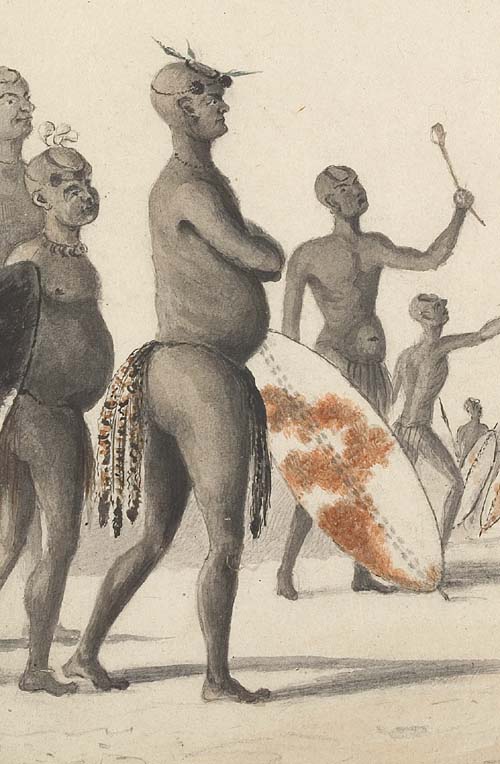
Mzilikazi leads the Ndebele people northward during the Mfecane, settling in southwestern Zimbabwe and establishing a powerful kingdom. Source — Wikipedia, "Zimbabwe":
Ndebele migrate into Zimbabwe By Unknown author, Public domain, https://commons.wikimedia.org/w/index.php?curid=737633
1870 CE
Lobengula becomes Ndebele king
Lobengula succeeds Mzilikazi as king of the Ndebele, ruling from his capital at Bulawayo during a period of increasing European encroachment. Source — Wikipedia, "Zimbabwe":
Picture of King Lobengula of the Matabele; by Ralph Peacock, based on a sketch by E. A. Maund. Published by Rhodesian National Archives c1950. By The original uploader was Humansdorpie at English Wikipedia. - Transferred from en.wikipedia to Commons by Naudefj using CommonsHelper., Public domain, https://commons.wikimedia.org/w/index.php?curid=17570279
1888 CE
Rudd Concession signed
King Lobengula signs the Rudd Concession with agents of Cecil Rhodes, granting mining rights in exchange for goods, opening the door to colonization. Source — Wikipedia, "Zimbabwe":
Rudd Concession By Charles Rudd (died 1916) and Lobengula Kumalo (died 1894) - The British South Africa Company, Public domain, https://commons.wikimedia.org/w/index.php?curid=3208691
1890 CE
Pioneer Column arrives
The British South Africa Company's Pioneer Column enters Mashonaland, establishing Fort Salisbury and beginning formal European colonization of the territory. Source — Wikipedia, "Zimbabwe":
The Pioneer Column of the British South Africa Company reached the site of Fort Salisbury on 12 September 1890, which was celebrated from 1920 as Pioneers' Day. The next morning, at 10 am on 13 September 1890, a full dress parade of the column was held. The seven-pounder gun fired a royal salute and Canon Balfour said a prayer as the column's Lieutenant Edward Tyndale-Biscoe hoisted the flag atop the kopje overlooking the site of the future capital, Salisbury. By Unknown author - The British South Africa Company Historical Catalogue & Souvenir of Rhodesia, Empire Exhibition, Johannesburg, 1936–37, Public domain, https://commons.wikimedia.org/w/index.php?curid=20601931
1893 CE
First Matabele War
British South Africa Company forces defeat the Ndebele Kingdom, leading to the death of Lobengula and the collapse of Ndebele sovereignty. Source — Wikipedia, "Zimbabwe":
Attack on the Laager of Wagons By Richard Caton Woodville Jr. - https://www.dominicwinter.co.uk/Auction/Lot/lot-440---woodville-richard-caton-1856-1927-attack-on-the-laager-1893/?lot=362814&sd=1, Public domain, https://commons.wikimedia.org/w/index.php?curid=181466070
Mar 1, 1896 CE
First Chimurenga uprising
The Ndebele and Shona peoples rise against British colonial rule in the First Chimurenga, but are defeated after months of fierce resistance. Source — Wikipedia, "Zimbabwe":
Burnham & Bonar Armstrong after the assassination of Mlimo. Matabele warriors in hot pursuit. By Drawn by Frank Dadd. R.I. (died 1929) - Burnham Family Collection. Published in 1896 in the Illustrated London News, Public domain, https://commons.wikimedia.org/w/index.php?curid=2472023
Sep 1, 1923 CE
Southern Rhodesia self-government
Southern Rhodesia becomes a self-governing British colony, with white settlers controlling political power despite being a small minority. Source — Wikipedia, "Zimbabwe":
Flag of Southern Rhodesia (1924–1964). By Greentubing - Own work, Public domain, https://commons.wikimedia.org/w/index.php?curid=588092
Aug 1, 1953 CE
Federation of Rhodesia and Nyasaland
The Federation of Rhodesia and Nyasaland is formed, joining Southern Rhodesia, Northern Rhodesia, and Nyasaland under a single federal government. Source — Wikipedia, "Zimbabwe":
Flag of the Federation of Rhodesia and Nyasaland By UnknownUnknown , vector version by Lupin, Greentubing, Fenn-O-maniC and NikNaks - This SVG coat of arms includes elements from this flag:, Public domain, https://commons.wikimedia.org/w/index.php?curid=583771
Aug 1, 1963 CE
ZANU founded
The Zimbabwe African National Union is formed, breaking from ZAPU to lead the armed struggle for black majority rule under nationalist leadership. Source — Wikipedia, "Zimbabwe":
Flag of Zimbabwe African National Union - Patriotic Front By Himasaram - This W3C-unspecified vector image was created with Inkscape . Based on Image:Flag of Zimbabwe.svg. Reference: https://www.fotw.info/flags/zw%7D.html, Public domain, https://commons.wikimedia.org/w/index.php?curid=1247885
Nov 11, 1965 CE
UDI declares independence
Prime Minister Ian Smith unilaterally declares Rhodesia independent from Britain, establishing white minority rule under international sanctions. Source — Wikipedia, "Zimbabwe":
A photograph of the proclamation document announcing the Rhodesian government's Unilateral Declaration of Independence ("UDI") from the United Kingdom, created during early November 1965 and signed on 11 November 1965. By Government of Rhodesia - https://rhodesians-worldwide.com/imagesx/udi.jpg, Public domain, https://commons.wikimedia.org/w/index.php?curid=112629090
Dec 1, 1972 CE
Bush War intensifies
The Second Chimurenga escalates as ZANLA and ZIPRA guerrilla forces step up armed attacks against the Rhodesian government from bases in neighboring countries. Source — Wikipedia, "Zimbabwe":
Rhodesian geopolitical situation in 1975 Rhodesia Government allies Nationalist allies By Kelly The Angel - Own work, CC0, https://commons.wikimedia.org/w/index.php?curid=141341291
Dec 1, 1979 CE
Lancaster House Agreement
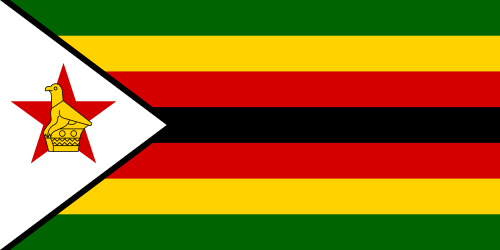
Negotiations in London produce the Lancaster House Agreement, ending the Bush War and setting the framework for majority rule and democratic elections. Source — Wikipedia, "Zimbabwe":
Flag of Zimbabwe By See File history below for details. - Own work. Based on: FOTW; See also:, Public domain, https://commons.wikimedia.org/w/index.php?curid=401911
Apr 18, 1980 CE
Zimbabwe gains independence
Robert Mugabe becomes prime minister as Zimbabwe achieves internationally recognized independence, ending white minority rule and renaming the country. Source — Wikipedia, "Zimbabwe":
Flag of Zimbabwe By See File history below for details. - Own work. Based on: FOTW; See also:, Public domain, https://commons.wikimedia.org/w/index.php?curid=401911
1982 CE
Gukurahundi massacres begin
The North Korean-trained Fifth Brigade launches violent suppression of Ndebele civilians in Matabeleland, resulting in tens of thousands of deaths. Source — Wikipedia, "Zimbabwe":
Flag of Zimbabwe By See File history below for details. - Own work. Based on: FOTW; See also:, Public domain, https://commons.wikimedia.org/w/index.php?curid=401911
Dec 1, 1987 CE
Unity Accord signed
ZANU and ZAPU sign the Unity Accord, ending the Matabeleland conflict and merging the parties into ZANU-PF under Robert Mugabe's leadership. Source — Wikipedia, "Zimbabwe":
Flag of Zimbabwe By See File history below for details. - Own work. Based on: FOTW; See also:, Public domain, https://commons.wikimedia.org/w/index.php?curid=401911
1992 CE
Severe drought devastates economy
One of the worst droughts in living memory strikes Zimbabwe, causing food shortages and exposing structural weaknesses in the economy. Source — Wikipedia, "Zimbabwe":
Flag of Zimbabwe By See File history below for details. - Own work. Based on: FOTW; See also:, Public domain, https://commons.wikimedia.org/w/index.php?curid=401911
Feb 1, 2000 CE
Land reform program launched
War veterans and supporters begin occupying white-owned commercial farms, accelerating a controversial land redistribution program with far-reaching economic consequences. Source — Wikipedia, "Zimbabwe":
Flag of Zimbabwe By See File history below for details. - Own work. Based on: FOTW; See also:, Public domain, https://commons.wikimedia.org/w/index.php?curid=401911
May 1, 2005 CE
Operation Murambatsvina
The government launches a mass slum clearance campaign displacing hundreds of thousands of urban poor, drawing widespread international condemnation. Source — Wikipedia, "Zimbabwe":
Collage of Zimbabwean Operation Murambatsvina, before (left) and after (right), created in Canva. Operation Murambatsvina (Move the Rubbish), also officially known as Operation Restore Order, was a large-scale Zimbabwean government campaign to forcibly clear slum areas across the country. Collage contains photos from here[1] and here[2] By Algirr - Own work, CC BY-SA 4.0, https://commons.wikimedia.org/w/index.php?curid=165110341
Mar 1, 2008 CE
Elections and political violence
Disputed elections trigger widespread political violence, with Morgan Tsvangirai withdrawing from the run-off amid attacks on MDC supporters. Source — Wikipedia, "Zimbabwe":
Provinces shaded according to winners share of vote. Data from Adam Carrs Election archive By Incognito melon - Own work, CC BY 4.0, https://commons.wikimedia.org/w/index.php?curid=142381968
Aug 1, 2008 CE
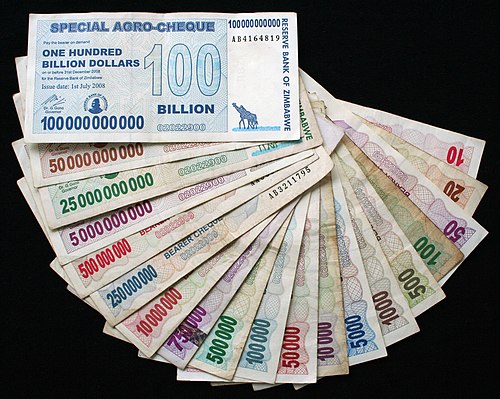
Hyperinflation crisis peaks
Zimbabwe's inflation reaches an estimated 79.6 billion percent, rendering the currency worthless and forcing adoption of foreign currencies. Source — Wikipedia, "Zimbabwe":
A selection of Zimbabwe Reserve Bank bearer cheques printed between July 2007 to July 2008 to illustrate the hyperinflation rate in Zimbabwe. By en:User:Discott - the English language Wikipedia (log), Public domain, https://commons.wikimedia.org/w/index.php?curid=5736747
Aug 1, 2008 CE
Cholera outbreak spreads
A massive cholera outbreak infects nearly 100,000 people and kills over 4,000, exposing the collapse of water and health infrastructure. Source — Wikipedia, "Zimbabwe":
A map showing the spread of the 2008 Zimbabwe cholera outbreak (affected areas shown in orange) - combined evidence from United Nations Office for the Coordination of Humanitarian AffairsAlertnet and Relief Web. Primary Source:WHO By Mangwanani - Own work, Public domain, https://commons.wikimedia.org/w/index.php?curid=5405025
Feb 1, 2009 CE
Government of National Unity
Robert Mugabe and Morgan Tsvangirai form a power-sharing government, bringing temporary stability and economic recovery to Zimbabwe. Source — Wikipedia, "Zimbabwe":
Robert Mugabe, president of Zimbabwe, attends the 12th African Union Summit February 2, 2009 in Addis Ababa, Ethiopia. By U.S. Navy photo by Mass Communication Specialist 2nd Class Jesse B. Awalt/Released - DefenseImagery.mil, VIRIN 090202-N-0506A-417, Public domain, https://commons.wikimedia.org/w/index.php?curid=6095044
Nov 21, 2017 CE
Mugabe resigns
Following a military intervention and mass protests, Robert Mugabe resigns after 37 years in power, ending one of Africa's longest authoritarian regimes. Source — Wikipedia, "Zimbabwe":
A tank in downtown Harare during the coup in Zimbabwe, 2017 By Public Domain Pictures - https://www.publicdomainpictures.net/en/view-image.php?image=235638&picture=zimbabwean-soldier-during-protest, CC0, https://commons.wikimedia.org/w/index.php?curid=69377578
Nov 24, 2017 CE
Mnangagwa becomes president
Emmerson Mnangagwa is sworn in as president, promising economic reforms and re-engagement with the international community. Source — Wikipedia, "Zimbabwe":
President Emmerson Mnangagwa at the U.S.-Africa Business Summit in Gaborone, Botswana. By Mqondisi Dube / VOA - https://www.voanews.com/a/african-leaders-at-business-summit-call-for-extension-of-trade-deal-with-us/7179802.html, Public domain, https://commons.wikimedia.org/w/index.php?curid=166901809
Jul 1, 2018 CE
First post-Mugabe elections
Zimbabwe holds its first elections without Robert Mugabe, with Mnangagwa declared winner amid opposition disputes and violent post-election protests. Source — Wikipedia, "Zimbabwe":
Constituency majorities in the Presidential election in Zimbabwe, 2018. By Furfur and Mangwanani and Talleyrand6 - Own work based on: Zimbabwe Constituencies 2008-2022.svg: Maps and information issued by the Zimbabwe Electoral Commission, CC BY-SA 4.0, https://commons.wikimedia.org/w/index.php?curid=178262574
Mar 1, 2020 CE
COVID-19 pandemic reaches Zimbabwe
Zimbabwe records its first COVID-19 cases, straining an already fragile healthcare system and prompting lockdowns and economic disruption. Source — Wikipedia, "Zimbabwe":
Flag of Zimbabwe By See File history below for details. - Own work. Based on: FOTW; See also:, Public domain, https://commons.wikimedia.org/w/index.php?curid=401911


![From the General History of Africa: Volume 5 (1992) pg 657 Figure 22.3 [1]](https://upload.wikimedia.org/wikipedia/commons/thumb/f/f3/Empire-rozvi.png/500px-Empire-rozvi.png)


![Collage of Zimbabwean Operation Murambatsvina, before (left) and after (right), created in Canva. Operation Murambatsvina (Move the Rubbish), also officially known as Operation Restore Order, was a large-scale Zimbabwean government campaign to forcibly clear slum areas across the country. Collage contains photos from here[1] and here[2]](https://upload.wikimedia.org/wikipedia/commons/thumb/2/2a/Operation_Murambatsvina_collage_%28before_and_after%29.png/500px-Operation_Murambatsvina_collage_%28before_and_after%29.png)