Encyclopedia/3. History, Societies & Civilizations/09. Modern Nations/05. Europe • Curated by Admin Timeline.sg
History of Spain, sourced from Wikipedia's "Timeline of Spanish history".
Chronological Storyline (250 Milestones)
407 CE
Resistance of Honorius cousins
Resistance of Honorius cousins in Spain. Constantine III sends his son Constans II with an army. Source — Wikipedia, "Timeline of Spanish history" (5th century):
Mapa del Imperio romano occidental que refleja las áreas de control de cada facción y los movimientos de Honorio y Constantino de Britania entre la primavera de 408 y la de 409. By Paulusburg - Own work, CC BY-SA 4.0, https://commons.wikimedia.org/w/index.php?curid=117257224
408 CE
Gerontius
Gerontius, Roman general (magister militum) ends the revolt in Hispain. Source — Wikipedia, "Timeline of Spanish history" (5th century):
Author: Daniel Adams (me) I created this myself and release it to the public domain. By PocklingtonDan at English Wikipedia - Transferred from en.wikipedia to Commons by Alagos using CommonsHelper., Public domain, https://commons.wikimedia.org/w/index.php?curid=13319759
409 CE
Gerontius
Gerontius, who had been a partisan of Constantine III, revolts in Hispania. He elevates Maximus, his domesticus, as emperor. Source — Wikipedia, "Timeline of Spanish history" (5th century):
Solidus of the emperor/usurper Constantine III (of the Western Roman Empire). Minted at Arles. By CNG Coins - Coinsweekly.com, image by CNG Coins, Public domain, https://commons.wikimedia.org/w/index.php?curid=112970246
410 CE
Gerontius
Gerontius successfully defended himself against Constans II. Source — Wikipedia, "Timeline of Spanish history" (5th century):
Constans II. Usurper. AD 409/10-411. AR Siliqua (16mm, 1.34 g, 6h). Arelate (Arles) mint. Obv.: D N CONSTA NS P F AVG, pearl-diademed, draped, and cuirassed bust right; KONT. RIC X 1540; Ferrando 1711 (rev. only illustrated; same die); King, Fifth –; RSC 1a. By unknown; image: Classical Numismatic Group, Inc.. CNG allows the use of any of their images as long as they are attributed to CNG.[1] - http://www.cngcoins.com/Coin.aspx?CoinID=240411, CC BY-SA 3.0, https://commons.wikimedia.org/w/index.php?curid=32814063
411 CE
Alans
The Alans establish their rule in the Roman province of Lusitania (Portugal south of the Duero River and Spain). Source — Wikipedia, "Timeline of Spanish history" (5th century):
Migrations des Alains selon Nathalie Kálnoky : Des princes scythes aux capitaines des Iasses, in : Droit et cultures [cote INIST : 24217] n° 52, L'Harmattan publ., Paris 2006. Fond de carte : [1] By Uploaded by Julieta39 - Background : [2] uploaded by Koyos, made with NASA World Wind. Migrations of the Alans drew by Julieta39 according with Nathalie Kálnoky : Des princes scythes aux capitaines des Iasses, in : Droit et cultures [cote INIST : 24217] n° 52, L'Harmattan publ., Paris 2006., Public domain, https://commons.wikimedia.org/w/index.php?curid=78026700
416 CE
Wallia
Wallia is campaigning against the Vandals and Alans on behalf of Emperor Honorius. Source — Wikipedia, "Timeline of Spanish history" (5th century):
Campanyes a Hispània dels visigots i vàndals asdings contra els alans i vàndals silings per recuperar, en nom de l'Imperi romà, les províncies hispanes de Bètica, Cartaginense i Lusitània. (416-418) By Paulusburg Translator: Manlleus (ca) - Own work, CC BY-SA 4.0, https://commons.wikimedia.org/w/index.php?curid=91506886
418 CE
Honorius
Emperor Honorius bribes Wallia, king of the Visigoths, into regaining Hispania for the Roman Empire. His victory over the Vandals forces them to retire to Baetica. Source — Wikipedia, "Timeline of Spanish history" (5th century):
Ivory diptych of consul Anicius Petronius Probus with the depiction of Emperor Honorius, Aosta, Cathedral, Museo del Tesoro By unknown Roman artist (diptych) Dea Picture Library (photo) - Seuso Treasure, Public domain, https://commons.wikimedia.org/w/index.php?curid=120091340
420 CE
Asterius
Comes Asterius conducts campaign in Gallaecia and ends the usurpation of Maximus. A Roman army under command of vicar Maurocellus suffers a defeat at Braga in Gallaecia. Source — Wikipedia, "Timeline of Spanish history" (5th century):
Iberian peninsula in year 418, after the Rhine invaders had divided Hispania (411) and the settlement of the Visigoths in Aquitania II. By No machine-readable author provided. Medievalista assumed (based on copyright claims). - No machine-readable source provided. Own work assumed (based on copyright claims)., Public domain, https://commons.wikimedia.org/w/index.php?curid=2959037
422 CE
Vandal war of 422
Vandal war: The Roman commander-in-chief Castinus leads a defeat against the Vandals at Baetica. Source — Wikipedia, "Timeline of Spanish history" (5th century):
Castilian: Provinces of Roman Hispania in the time of Diocletian By Rastrojo (D•ES) - trabajo propio en svg desde: Image:Hispania 3a division provincial.PNG, CC BY-SA 3.0, https://commons.wikimedia.org/w/index.php?curid=2703322
429 CE
Vandals
The Vandals including Alans, led by Genseric ("Caesar King"), cross the narrow Strait of Gibraltar with their families from the Iberian Peninsula. Source — Wikipedia, "Timeline of Spanish history" (5th century):
Mosaic pavement from British museum. Excavated at Bordj-Djedid in 1857 (Africa,Tunisia, Carthage). Date: 5thC(late)-6thC(early). Culture: Vandal or late Roman. By Unknown author - British Museum, Public domain, https://commons.wikimedia.org/w/index.php?curid=17583750
439 CE
Rechila
Rechila conquers the city Mérida. Source — Wikipedia, "Timeline of Spanish history" (5th century):
Animated picture about the King Rechila's life and reign. By Alexander Vigo - Own work, CC BY-SA 3.0, https://commons.wikimedia.org/w/index.php?curid=27564706
441 CE
Hispania Baetica
Rechila invades Baetica and conquers the capital Seville Source — Wikipedia, "Timeline of Spanish history" (5th century):
Locator map of the Baetica province in the Roman Empire (125). Extracted from File:Roman Empire 125 political map.svg By Milenioscuro - Own work, CC BY-SA 4.0, https://commons.wikimedia.org/w/index.php?curid=45059702
456 CE
Visigothic
the Gothic king Theoderic II starts a war commissioned by the West Roman emperor Avitus. Source — Wikipedia, "Timeline of Spanish history" (5th century):
Walters 54.421 and 54.422 are a pair of superb eagle-shaped fibulae found at Tierra de Barros (Badajoz, southwest Spain) made of sheet gold over bronze inlaid with garnets, amythysts, and colored glass. Pendants once dangled from the loops at the bottom. The eagle, a popular symbol during the Migration period adopted from Roman imperial insignia, was favored by the Goths. Similar eagle-shaped fibulae have been excavated from Visigothic graves in Spain and Ostrogothic graves in northern Italy, but this pair is one of the finest. These fibulae would have been worn at the same time to fasten a cloak at either shoulder. By Anonymous (Visigothic)Unknown author - Walters Art Museum: Home page Info about artwork, Public domain, https://commons.wikimedia.org/w/index.php?curid=18802623
460 CE
Majorian
The fleet Emperor Majorian assembles in Nova Carthago (Cartagena) in preparation for an invasion of the Vandal Kingdom in Africa becomes destroyed by the Vandal king Geiseric. Source — Wikipedia, "Timeline of Spanish history" (5th century):
Majorian, 457–461, Solidus, Arelate “Comitatesian mint”, AV 4.46 g. D N IVLIVS MAIORI – ANVS P F AVG’ Helmeted, diademed, draped and cuirassed bust right, holding spear pointing forward and shield bearing Christogram on left arm. C 1. RIC 2632. LRC 884. Depeyrot 25/1. Lacam 26. By Numismatica Ars Classica NAC AG - http://www.acsearch.info/record.html?id=420222, CC BY-SA 3.0 ch, https://commons.wikimedia.org/w/index.php?curid=32997652
464 CE
Suebi
The Suevic nation in Galicia (Northern Spain) is unified under King Remismund. Source — Wikipedia, "Timeline of Spanish history" (5th century):
Suebian knot of bog body of the Osterby Man, on display at Archäologisches Landesmuseum Gottorf Castle, Schleswig Germany. Found in 1948 in the Köhlmoor near Osterby. C14 dated beween 75 and 130 AD. By Bullenwächter - Own work, CC BY 3.0, https://commons.wikimedia.org/w/index.php?curid=17007549
473 CE
Visigothic
The Gothic king Euric orders his army to conquer the province of Tarragonenses. Source — Wikipedia, "Timeline of Spanish history" (5th century):
Walters 54.421 and 54.422 are a pair of superb eagle-shaped fibulae found at Tierra de Barros (Badajoz, southwest Spain) made of sheet gold over bronze inlaid with garnets, amythysts, and colored glass. Pendants once dangled from the loops at the bottom. The eagle, a popular symbol during the Migration period adopted from Roman imperial insignia, was favored by the Goths. Similar eagle-shaped fibulae have been excavated from Visigothic graves in Spain and Ostrogothic graves in northern Italy, but this pair is one of the finest. These fibulae would have been worn at the same time to fasten a cloak at either shoulder. By Anonymous (Visigothic)Unknown author - Walters Art Museum: Home page Info about artwork, Public domain, https://commons.wikimedia.org/w/index.php?curid=18802623
475 CE
Vincentius
The comes Hispaniarum Vincentius capitulates agains the Aquitanian Goths. The Goths complets their conquest of Spain. Source — Wikipedia, "Timeline of Spanish history" (5th century):
Walters 54.421 and 54.422 are a pair of superb eagle-shaped fibulae found at Tierra de Barros (Badajoz, southwest Spain) made of sheet gold over bronze inlaid with garnets, amythysts, and colored glass. Pendants once dangled from the loops at the bottom. The eagle, a popular symbol during the Migration period adopted from Roman imperial insignia, was favored by the Goths. Similar eagle-shaped fibulae have been excavated from Visigothic graves in Spain and Ostrogothic graves in northern Italy, but this pair is one of the finest. These fibulae would have been worn at the same time to fasten a cloak at either shoulder. By Anonymous (Visigothic)Unknown author - Walters Art Museum: Home page Info about artwork, Public domain, https://commons.wikimedia.org/w/index.php?curid=18802623
507 CE
Franks
The Franks attacked allied with the Burgundians to the Visigothic Kingdom of Toulouse. Alaric II was killed at the Battle of Vouillé, and Toulouse was sacked. The Visigoths had lost most of their Gallic holdings and are retreated to Hispania and Septimania, helped by Ostrogoths. Kingdom of Toulouse ended and The Arian Kingdom of Hispania began. Barcelona was the new capital of the Visigoths. From this moment, little by little, Visigothic Hispania will be the first effective realisation of an independent Kingdom or State of wholly Hispanic territories and scope. Source — Wikipedia, "Timeline of Spanish history" (6th century):
Roads and Towns in Germania Inferior By Hans Erren - eigen werk (own work), Modified from Germanie-inferieure.jpg by Moutschen based on a map from the DVD: Free Software Foundation Europe, Free Layers (licensed under GFDL)., CC BY-SA 3.0, https://commons.wikimedia.org/w/index.php?curid=7802075
552 CE
Byzantine Empire
Byzantine Empire conquered part of the south of the Visigothic kingdom. Source — Wikipedia, "Timeline of Spanish history" (6th century):
Vector map showing the Eastern Roman Empire (or Byzantine Empire) at the end of Justinian's reign in 565 By Mnohohrishnyi - Own work, based mainly on "The New Roman Empire: A History of Byzantium" by Anthony Kaldellis, CC0, https://commons.wikimedia.org/w/index.php?curid=190907815
567 CE
Athanagild
Toledo. Capital of the Visigothic kingdom by the end of the reign of Athanagild. Source — Wikipedia, "Timeline of Spanish history" (6th century):
568 CE
Liuvigild
Liuvigild began his reign. He is among the greatest Visigothic kings of the Arian period because he consolidated Visigothic power in Spain. He is known for his Code of Leovigild, a law that allowed equal rights between the Visigothic and Hispano-Roman populations, and for expanding the territory of the Visigothic Kingdom. Since Leovigild, the Visigoth kings minted their own Tremissis coin. Source — Wikipedia, "Timeline of Spanish history" (6th century):
Visigoths, Spain. Leovigild (?). AD 568-586. AV Tremissis (1.23 g, 6h). Toledo(?) mint. Struck circa AD 573-578. CVRRIO + OIRRVC (retrograde), diademed and draped bust right; cross with crescents at corners on drapery / VI-VRT- N (N retrograde) LVRRV (final two Rs retrograde), Victory advancing right, holding palm and wreath, • between legs; ONO (N retrograde). Tomasini, Group C3, 590; cf. Miles, Visigoths Type H, 8; cf. Chaves 79-81; MEC 1, 207 var. (obv. legend). EF, toned By You may select the license of your choice. - http://www.cngcoins.com/Coin.aspx?CoinID=86004, CC BY-SA 3.0, https://commons.wikimedia.org/w/index.php?curid=32869109
585 CE
Liuvigild
Liuvigild conquered the Suebic Kingdom. Source — Wikipedia, "Timeline of Spanish history" (6th century):
Visigoths, Spain. Leovigild (?). AD 568-586. AV Tremissis (1.23 g, 6h). Toledo(?) mint. Struck circa AD 573-578. CVRRIO + OIRRVC (retrograde), diademed and draped bust right; cross with crescents at corners on drapery / VI-VRT- N (N retrograde) LVRRV (final two Rs retrograde), Victory advancing right, holding palm and wreath, • between legs; ONO (N retrograde). Tomasini, Group C3, 590; cf. Miles, Visigoths Type H, 8; cf. Chaves 79-81; MEC 1, 207 var. (obv. legend). EF, toned By You may select the license of your choice. - http://www.cngcoins.com/Coin.aspx?CoinID=86004, CC BY-SA 3.0, https://commons.wikimedia.org/w/index.php?curid=32869109
May 8, 589 CE
Third Council of Toledo
The Third Council of Toledo marks the entry of Visigothic Spain into the Catholic Church, after Reccared I converted in 587. The Catholic Kingdom of Toledo began. Source — Wikipedia, "Timeline of Spanish history" (6th century):
El lienzo representa el III Concilio de Toledo, celebrado en la ciudad de Toledo en el año 589, durante el reinado de Recaredo, quien abandonó el arrianismo y se convirtió al catolicismo. By José Martí y Monsó - [3], Public domain, https://commons.wikimedia.org/w/index.php?curid=47481466
624 CE
Swinthila
Swinthila reconquered the south of Byzantine Hispania. Source — Wikipedia, "Timeline of Spanish history" (7th century):
Tremis visigodo de oro acuñado en Singilia Barba ("Barbi") durante el reinado de Suintila. Leyendas: anverso "+SVINTHILA RE" reverso "PIVS BARBI:" Conservación: EBC-. By Numismática Pliego, CC BY-SA 3.0, https://commons.wikimedia.org/w/index.php?curid=30706984
625 CE
Hispania
The entire Hispania and Septimania is under the Visigothic Kingdom. Swinthila defeated the Basques. Source — Wikipedia, "Timeline of Spanish history" (7th century):
Map of Spain and Portugal showing the conquest of Hispania from 220 B.C. to 19 B.C. and provincial borders. It is based on other maps; the territorial advances and provincial borders are illustrative. By HansenBCN - Own work, CC BY-SA 3.0, https://commons.wikimedia.org/w/index.php?curid=2492428
654 CE
Recceswinth
Recceswinth was responsible for the promulgation of a law code, Liber Iudiciorum. The new laws applied to both Gothic and Hispano-Roman populations. Source — Wikipedia, "Timeline of Spanish history" (7th century):
A)ECCESVINTHUS REX OFFERET is the phrase formed by hanging letters in this votive crown from the seventh century and about 21 cm in diameter located in Guarrazar, a Visigothic site in Toledo. The so-called treasure of Guarrazar was found on August 25, 1858 by Francisco Morales and María Pérez. According to their testimony they were on a road and saw something that shone among slabs, apparently discovered by a great storm the day before. The "treasure" consisted of several crowns (more than twenty), crosses, chalices and other gold objects and gems in an chest. After several clandestine sales, a batch of pieces was sold to the French government in early 1859. In 1941, an exchange of works was made that meant the delivery to Spain of six of the nine crowns that made up this part of the complex. They are currently exhibited at the National Archaeological Museum in Madrid. A second set was kept hidden by another family for more than two years, during which they even dismantled and sold more than three quarters of the pieces. In 1961 they gave Queen Elizabeth II the few remaining pieces, among which was a crown offered by King Suintila that was stolen in 1921 without his whereabouts having been heard again. Part of the previous text has been taken from www.guarrazar.com/ where there is extensive information about these pieces. By Ángel M. Felicísimo from Mérida, España - Corona de, CC BY 2.0, https://commons.wikimedia.org/w/index.php?curid=51253204
Jul 1, 711 CE
Battle of Guadalete
The Battle of Guadalete was the first major battle of the Umayyad conquest of Hispania. Roderic, the last Visigoth king in Hispania under the rule from Toledo, died in the battle. Source — Wikipedia, "Timeline of Spanish history" (8th century):
The battle of Guadalete - as imagined some 1200 years later by the spanish painter Martinez Cubells (1845-1914). The details depicts the commencement of the Goths' retreat in the face of Tarik's Berber cavalry. By Salvador Martínez Cubells - [www.artflakes.com], Public domain, https://commons.wikimedia.org/w/index.php?curid=18373367
718 CE
Visigoths
The Visigothic nobleman Pelagius of Asturias rebelled against the Umayyad Caliphate. Source — Wikipedia, "Timeline of Spanish history" (8th century):
Walters 54.421 and 54.422 are a pair of superb eagle-shaped fibulae found at Tierra de Barros (Badajoz, southwest Spain) made of sheet gold over bronze inlaid with garnets, amythysts, and colored glass. Pendants once dangled from the loops at the bottom. The eagle, a popular symbol during the Migration period adopted from Roman imperial insignia, was favored by the Goths. Similar eagle-shaped fibulae have been excavated from Visigothic graves in Spain and Ostrogothic graves in northern Italy, but this pair is one of the finest. These fibulae would have been worn at the same time to fasten a cloak at either shoulder. By Anonymous (Visigothic)Unknown author - Walters Art Museum: Home page Info about artwork, Public domain, https://commons.wikimedia.org/w/index.php?curid=18802623
722 CE
Battle of Covadonga
Battle of Covadonga: Forces loyal to Pelagius decimated an Umayyad army sent to reconquer them in a valley in the Picos de Europa. Source — Wikipedia, "Timeline of Spanish history" (8th century):
Mapa de la consquista islámica de la Península Ibérica By NACLE - Own work, CC BY-SA 4.0, https://commons.wikimedia.org/w/index.php?curid=64846887
737 CE
Pelagius of Asturias
Pelagius died. He was succeeded as princeps by his son Favila of Asturias. Source — Wikipedia, "Timeline of Spanish history" (8th century):
BNE Mss 2805 f 23r. Representa a Don Pelayo en la batalla de Covadonga. Se trata de una de las copias que transmite versión del Corpus pelagianum del obispo Pelayo a partir de un prototipo (incluso en las miniaturas) probablemente elaborado en el scriptorium del obispo Pelayo de Oviedo. La corona responde a modelos de fines del siglo XI, del tipodel que lleva el monarca en el centro de las tablas lunares del mss 17 del St. John’s Colle-ge de Oxford (ca. 1080-1100) como las que se encuentran igualmente en el Liber testametorum, manuscrito realizado por el obispo Pelayo. By AnonymousUnknown author - http://bibliotecadigitalhispanica.bne.es:80/webclient/DeliveryManager?pid=1909339&custom_att_2=simple_viewer Véase también: * ALONSO ÁLVAREZ, Raquel, «El obispo Pelayo de Oviedo (1101-1153): historiador y promotor de códices iluminados», Semata. Ciencias Sociais e Humanidades, 2010, vol. 22, págs. 334-335. ISSN 1137-9669, Public domain, https://commons.wikimedia.org/w/index.php?curid=24019860
739 CE
Favila of Asturias
Favila was killed by a bear while hunting. He was succeeded by his brother-in-law Alfonso I the Catholic of Asturias, the son of Peter of Cantabria, the duke of Cantabria. Source — Wikipedia, "Timeline of Spanish history" (8th century):
Monasterio de San Pedro de Villanueva (s.XII) - Portada - Detalle: historia del rey Fávila; de izquierda a derecha partida para la jornada de caza, despedida de su esposa Froiluba a la puerta de palacio y la lucha con el oso. By Ecelan - Own work, CC BY-SA 4.0, https://commons.wikimedia.org/w/index.php?curid=5255634
740 CE
Kingdom of Asturias
Asturias conquered and annexed Galicia. Source — Wikipedia, "Timeline of Spanish history" (8th century):
Royal flag of Ramiro I of Asturies By Mikel - Own work, Public domain, https://commons.wikimedia.org/w/index.php?curid=1897685
757 CE
Alfonso I of Asturias
Alfonso the Catholic died. He was succeeded as king by his son Fruela I the Cruel of Asturias. Source — Wikipedia, "Timeline of Spanish history" (8th century):
Froila I, rei de Galiza, no Compendio de crónicas de reyes. By Unknown author - http://bdh.bne.es/bnesearch/detalle/bdh0000051546, Public domain, https://commons.wikimedia.org/w/index.php?curid=101161129
Jan 14, 768 CE
Fruela I of Asturias
Fruela was assassinated. Source — Wikipedia, "Timeline of Spanish history" (8th century):
Froila I, rei de Galiza, no Compendio de crónicas de reyes. By Unknown author - http://bdh.bne.es/bnesearch/detalle/bdh0000051546, Public domain, https://commons.wikimedia.org/w/index.php?curid=101161129
774 CE
Aurelius of Asturias
Aurelius died. He was succeeded by his cousin-in-law, Silo of Asturias, husband of Alfonso the Catholic's daughter Adosinda. Silo established his capital at Pravia. Source — Wikipedia, "Timeline of Spanish history" (8th century):
Aurelio, rei de Galiza, no Compendio de crónicas de reyes. By Unknown author - http://bdh.bne.es/bnesearch/detalle/bdh0000051546, Public domain, https://commons.wikimedia.org/w/index.php?curid=101161131
Mauregato, rei de Galiza, no Compendio de crónicas de reyes. By Unknown author - http://bdh.bne.es/bnesearch/detalle/bdh0000051546, Public domain, https://commons.wikimedia.org/w/index.php?curid=101161902
791 CE
Battle of the Burbia River
Battle of the Burbia River: An Asturian force attacked a Cordoban army near Villafranca del Bierzo on its return to Córdoba and was defeated. Source — Wikipedia, "Timeline of Spanish history" (8th century):
Map of the Iberian Peninsula in 814. By Crates - File:España814.jpg, that comes from University of Texas Libraries (libertaed to public domain), CC BY-SA 4.0, https://commons.wikimedia.org/w/index.php?curid=5749829
794 CE
Battle of Lutos
Battle of Lutos: A Cordoban army returning from a scorched earth campaign in modern Álava was wiped out by an Asturian force. Source — Wikipedia, "Timeline of Spanish history" (8th century):
Camino Real Puerto de La Mesa entre Torrestío en la provincia de León y AsturiasCamino Real del Puerto de la Mesa By Sitomon - Flickr, CC BY-SA 2.0, https://commons.wikimedia.org/w/index.php?curid=3126979
Sep 18, 795 CE
Battle of Las Babias
Battle of Las Babias: Córdoba attacked and routed an Asturian force near Astorga, Spain. Source — Wikipedia, "Timeline of Spanish history" (8th century):
Map of the Iberian Peninsula in 814. By Crates - File:España814.jpg, that comes from University of Texas Libraries (libertaed to public domain), CC BY-SA 4.0, https://commons.wikimedia.org/w/index.php?curid=5749829
816 CE
Battle of Pancorbo
Battle of Pancorbo (816): Córdoba slaughtered a Basque-Asturian force defending the Basque homeland in the Pyrenees at Pancorbo. Source — Wikipedia, "Timeline of Spanish history" (9th century):
Map of the Iberian Peninsula in 814. By Crates - File:España814.jpg, that comes from University of Texas Libraries (libertaed to public domain), CC BY-SA 4.0, https://commons.wikimedia.org/w/index.php?curid=5749829
824 CE
Battle of Roncevaux Pass
Battle of Roncevaux Pass (824): A combined force of Basques and the Banu Qasi, both vassals of the emirate of Córdoba, defeated a Carolingian military expedition in the Roncevaux Pass. The Basque chieftain Íñigo Arista of Pamplona was crowned king of Navarre at Pamplona. Source — Wikipedia, "Timeline of Spanish history" (9th century):
Flag of the autonomous region of the Basque Country A white cross over a green saltire on a red field. By Daniele Schirmo aka Frankie688 - Own work (Original text: own work (modification of the former image at this page)), CC BY-SA 2.5, https://commons.wikimedia.org/w/index.php?curid=437465
842 CE
Alfonso II of Asturias
Alfonso the Chaste died. Source — Wikipedia, "Timeline of Spanish history" (9th century):
Libro de los Testamentos By Pelagius - http://logotur.e.telefonica.net/ARTERURAL/MINIATURA/LTESTAMENT/LTESTAMEN-G2.jpg, Public domain, https://commons.wikimedia.org/w/index.php?curid=7843266
Feb 1, 850 CE
Ramiro I of Asturias
Ramiro died. He was buried in the Pantheon of Asturian Kings in Oviedo. His son Ordoño I of Asturias succeeded him as king. Source — Wikipedia, "Timeline of Spanish history" (9th century):
Sinatura de Ramiro I de Oviedo, rei de Galiza (843-850), no Celeiro ou diploma do rei Silo. By Unknown author - This image has been extracted from another file, Public domain, https://commons.wikimedia.org/w/index.php?curid=105120368
851 CE
Battle of Albelda
Battle of Albelda (851): Ordoño suppressed a Basque revolt in northeastern Asturias and expelled an opportunistic Cordoban invasion near Albelda. Source — Wikipedia, "Timeline of Spanish history" (9th century):
Ordoño I of Asturias By AnonymousUnknown author - http://logotur.e.telefonica.net/ARTERURAL/miniatura/TUMBOA/TUMBOAP4.htm, Public domain, https://commons.wikimedia.org/w/index.php?curid=7293953
852 CE
Battle of Guadalacete
Battle of Guadalacete: Asturian and Pamplonan forces arriving in support of a revolt of the people of Toledo, Spain were routed by a Cordoban army. Source — Wikipedia, "Timeline of Spanish history" (9th century):
Map of the Iberian Peninsula in 814. By Crates - File:España814.jpg, that comes from University of Texas Libraries (libertaed to public domain), CC BY-SA 4.0, https://commons.wikimedia.org/w/index.php?curid=5749829
859 CE
Vikings
Vikings captured García and extorted a ransom of some seventy thousand gold dinars from Navarre for his return. Source — Wikipedia, "Timeline of Spanish history" (9th century):
Viking attack on Guérande By Abbey of Saint-Aubin - https://gallica.bnf.fr/ark:/12148/btv1b105157428/f27.item, Public domain, https://commons.wikimedia.org/w/index.php?curid=99222344
860 CE
Emirate of Córdoba
Cordoban forces captured García's son and heir Fortún Garcés the One-Eyed, the Monk of Pamplona in Milagro, Navarre. Source — Wikipedia, "Timeline of Spanish history" (9th century):
Map of the Caliphate of Córdoba under the hayib Almanzor (Al-Mansur), year 1000 CE. By DaniCBP - Own work, based on: Abū ʿUbayd al-Bakrī, VIDAL BELTRÁN, Eliseo (1984). Geografía de España (Kitab al-Masalik wa-l-Malik). Colección Textos Medievales, Anubar Ediciones, ISBN 84-7013-188-5. Acién Almansa, M., & Manzano Moreno, E. (2012). Organización social y administración política en Al-Ándalus bajo el emirato. Territorio, Sociedad Y Poder. Recuperado a partir de https://reunido.uniovi.es/index.php/TSP/article/view/9494 Alfonso Carmona González (1987). Noticias geográficas arabes referentes a la" Bilád Tudmir". Murgetana, Número 72, Páginas 115-122. Barroca, M. J. (2018). Fortificações e povoamento no Norte de Portugal (séc. IX a XI). PORTVGALIA: Revista De Arqueologia Do Departamento De Ciências E Técnicas Do Património Da Faculdade De Letras Da Universidade Do Porto, 25, 181–204. Obtido de https://ojs.letras.up.pt/index.php/Port/article/view/4219 Bermejo Crespo, José Luis; Muñoz López-Astilleros, Kenia (1996). La producción cerámica en el entorno del Henares durante los siglos IX y X. V Encuentro de Historiadores del Valle del Henares: Guadalajara 21-24 noviembre de 1996, 1996, ISBN 84-87743-77-3, págs. 79-86 Boloix Gallardo, Bárbara (2001). «La Taifa de Toledo en el siglo XI. Aproximación a sus límites y extensión territorial». Tulaytula 8: 23-57. ISSN 1575-653X. Bramon, D. (2006). De Hispania a Alandalús y al esplendor del califato. Aula-Historia Social, 17, 6–30. http://www.jstor.org/stable/40343205 Cabrera, R. B. (2019). De la provincia Celtiberia a la qūrā de Santabariyya: Arqueología de la Antigüedad tardía en la provincia de Cuenca (siglos V-VIII d.C.). Archaeopress. https://doi.org/10.2307/j.ctvndv5h5 Cañada Juste (1999), “El nombre de Cella. Su posible origen y el Reino de as-Sahla”, en Xiloca. Revista del Centro de Estudios del Jiloca, 23 (1999), págs. 61-74. Cañada Juste A. (1993). Nuevas propuestas para la identificación de topónimos e itinerarios en las campañas de Almanzor. Anaquel de Estudios Árabes, 4, 25. https://revistas.ucm.es/index.php/ANQE/article/view/ANQE9393110025A Cañada Juste, Alberto: “Los Banū Qāsī (714-924)”, Príncipe de Viana, 41 (1980), pp. 5-95. Carmona Gonzalez, Alfonso (1987, Noticias geográficas arabes referentes a la "Bilád Tudmir", Murgetana, ISSN 0213-0939, Nº. 72, 1987, págs. 115-122 Carriedo Tejero, Manuel (2009). ¿Sampiro Toresano? Revista de Folklore. Núm. 338, 2009, p.39-45, https://www.cervantesvirtual.com/nd/ark:/59851/bmc9p4v4 Clara Elena Prieto Entrialgo (2011), Sobre el concepto de Galicia y los gallegos en los autores árabes medievales, Árabes in patria Asturiensium, ISBN 978-84-615-2630-7, págs. 255-271 Congreso de Historia de Carmona (1997). Edad Media : Actas del I Congreso de Historia de Carmona. Archivo hispalense ; 1997, No.243-244-245. ISBN : 8477981515 Corral Lafuente, José Luis (1987). El Sistema Urbano en la Marca Superior de al-Ándalus, Turiaso, ISSN 0211-7207, Nº 7, 1987 (Ejemplar dedicado a: El Islam en Aragón), págs. 23-64. De Epalza, Mikel (1987). El Islam Aragonés, un Islam de Frontera. Domínguez de la Concha, Alfonso (2018), Nuevas perspectivas en la organización del territorio en el noreste extremeño en época islámica, Norba vol. 31 (2018) p. 69-95. Universidad de Extremadura, Servicio de Publicaciones. Domínguez de la Concha, Alfonso (2019). Nuevas perspectivas en la organización del territorio en el noreste extremeño en época islámica. Norba Historia Nº 31 (2018) http://hdl.handle.net/10662/9761 Ferreira, M. d. S. d. C. P. (2004). O Douro no Garb Al-Ândalus: A Região de Lamego durante a presença árabe. Repositórios Científicos de Acesso Aberto de Portugal (RCAAP), http://hdl.handle.net/1822/3001 Franco Moreno, Bruno (2015), La Lusitania tras la presencia islámica (713-756 d.C./94-138 H), Frontera inferior de al-Andalus, vol. 2, https://dialnet.unirioja.es/servlet/libro?codigo=583470 FRANCO SÁNCHEZ, Francisco (2006). “Sagunto/Murbīṭar en el período islámico: su historia a través de los textos”. En: De Murbiter a Morvedre. Valencia : Bancaja, 2006. ISBN 84-8471-106-4, pp. 45-65 Franco, B. (2004). Territorio y poblamiento en la kura de Marida durante el emirato omeya (siglos VIII-X/II-IV), Espacio, Tiempo y Forma, Serie III, H.ª Medieval, T. 17, 2004, p. 167-184. Franco-Sánchez, Francisco & Josep A. Gisbert Santonja, editores (2019). Dénia. Poder y el mar en el siglo XI: El reino taifa de los Banū Muŷāhid. Alicante/Dénia/Madrid/El Cairo: Universidad de Alicante (Servicio de Publicaciones)/Ajuntament de Dénia (Cultura)/Instituto Egipcio de Estudios Islámicos en Madrid, 2019. ISBN: 978-84-1302-013-6 y 978-84-948116-4-7 García San Juan, Alejandro (2009), La caracterización geográfica del Garb al-Andalus en las fuentes árabes medievales, Medievalista [Em linha]. Nº6, (Julho 2009). Direc. José Mattoso. Lisboa: IEM. ISSN: 1646-740X. García-Contreras Ruiz, Guillermo (2012). Cerámica, territorio y explotación de la sal en el valle del Salado (Guadalajara) en época andalusí. Universidad de Granada, https://dx.doi.org/10.30827/Digibug.20649 Gonzalo Arango, X. (2013). La integración de Tarrakuna y su territorio en al-Andalus (s. VIII). Arqueología Y Territorio Medieval, 20, 11-30. https://doi.org/10.17561/aytm.v20i0.1444 Guzmán, R. M. (2004). Las fuentes árabes para la reconstrucción de la historia social de la España musulmana. Estudio y clasificación. Estudios de Asia y Africa, 39(3 (125)), 513–572. http://www.jstor.org/stable/40313560 Herrera Casado, Antonio (1985). La Marca Media de Al-Andalus en tierras de Guadalajara. Hugo CAPELLÁ I MITERNIQUE (2010), Territorio y cultura: las comarcas del Matarraña, la Terra Alta y Els Ports. Instituto de Estudios Turolenses. ISBN: 978-84-96053-51-9 Juan Antonio Souto Lasala (2004). El noroeste de la frontera superior de Al-Andalus en época omeya: poblamiento y organización territorial. V Semana de Estudios Medievales, Nájera, Tricio y San Millán de la Cogolla del 2 al 6 de agosto de 2004-2005, ISBN 84-95747-34-0, págs. 253-268. Latorre Ciria, José Manuel (s.f.). Historia de Albarracín (síntesis). Llorente Maldonado de Guevara, Antonio (1964), La toponimia, árabe, mozárabe y morisca de la provincia de Salamanca, Miscelánea de estudios árabes y hebraicos. Sección Árabe-Islam, ISSN 1696-5868, Vol. 12-13, 1963-1964, págs. 89-112 López Asensio, Álvaro (2020). La Alta Edad Media y los Musulmanes de Serrablo. Lorenzo Jiménez, Jesús: La dawla de los Banu Qasi. Origen, auge y caída de una dinastía muladí en la frontera superior de al-Andalus, Madrid: Consejo Superior de Investigaciones Científicas (CSIC), 2010. Luis Miguel Fdez.-Montes y Corrales (2016). Fortificación y Colonización: Herencia antes y durante la Carta Puebla. II Jornadas de Historia de Herencia, 2016, ISBN 978-84-920280-9-2, págs. 13-34 Maíllo Salgado, Felipe (1991). Zamora en las fuentes árabes. Primer Congreso de Historia de Zamora: Medieval y moderna, pg. 87-92. ISBN 8486873150. Martínez Enamorado, V. 2004: “Frontera de al-Andalus. El Valle del Tiétar en el contexto de la Tagr al-Awsat”, J. M. González Muñoz, J. A. Chavarría Varas y J. López Sáez (eds.), Lanzahíta (Ávila). Historia, naturaleza, tradiciones, Madrid, 61-74. Molina Martínez, Luis and María-Luisa Ávila Navarro, "La división territorial en la marca Superior de al-Andalus", Historia de Aragón, 3 (1985), pp. 11–30. ISBN 84-7611-024-3. Negre, Joan; Suñé, Josep (2019), Territorio, fiscalidad y actividad militar en la formación de un espacio fronterizo. La consolidación de Tortosa, como límite extremo de Al-Andalus Omeya, “Anuario de Estudios Medievales” 49/2, pp. 705-740. https://doi.org/10.3989/aem.2019.49.2.12 Paniagua, J. A. P. (1984). Chinchilla en las fuentes árabes. Al-Basit: Revista de estudios albacetenses, (13), 13-24. Pérez Macías, Juan Aurelio. (2018). Paisaje y territorio en la kura de Labla (Niebla, Huelva). Arqueología medieval Bd. 14 (2018) S. 25-41 https://opac.regesta-imperii.de/id/2919421 Piqueras Haba, . J. Cartografía islámica de Sharq Al-Andalus. Siglos X-XII. Al-Idrisi y los precursores. Cuadernos De Geografía De La Universitat De València. https://doi.org/10.7203/CGUV.14285 Piqueras Haba, . J., & Fansa, . G. Geografia dels països catalans segons el llibre de Roger d’Al-Sarif Al-Idrisi. Cuadernos De Geografía De La Universitat De València. https://doi.org/10.7203/CGUV.14277 Rebollo Bote, Juan (2015). Espacios de nadie y de todos: Territorio y sociedad en la frontera andalusí al norte del Tajo extremeño (Siglos VIII–XI). Vegueta. Anuario de la Facultad de Geografía e Historia15, 2015, 185-209ISSN: 1133-598X Rebollo Bote, Juan (2017). Tierra de frontera, comunidades de frontera: el norte de Extremadura entre los siglos VIII y XIII, Memoria Histórica de Plasencia y las Comarcas. Universidad Popular de Plasencia, ISBN: 978-84-697-5648-5. Sáenz de Haro, T. (2007). Calahorra islámica (siglos VIII-XI). Notas sobre la organización de los espacios urbano y rural. Brocar. Cuadernos De Investigación Histórica, (31), 107–154. https://doi.org/10.18172/brocar.1669 Sáenz Preciado, Juan Carlos (2022). LOS ANTECEDENTES HISTÓRICOS DE LA PROVINCIA DE CALATAYUD: DESDE LA CELTIBERIA HASTA EL ABSOLUTISMO BORBÓN, La provincia de Calatayud durante el Trienio Liberal. Centro de Estudios Bilbilitanos, Institución Fernando el Católico. ISBN 978-84-9911-648-8 Sophie Gilotte (2011). El yacimiento de Albalat en el contexto del poblamiento medieval en el norte de Extremadura. Frontera inferior de al-Andalus, 2011, ISBN 978-84-615-6551-1, págs. 147-164 VALOR PIECHOTTA, Magdalena (1998), Las fortificaciones de la Banda Gallega: algunos ejemplos de las provincias de Huelva y Badajoz y del Alentejo portugués, La fortaleza medieval. Realidad y símbolo, págs. 91-108. ΕΙ 'ΤΟLΜΟ DΕ MINATEDA' UΝΑ HISTORIA DE TRES ΜΙL QUINIENTOS AÑOS - Scientific Figure on ResearchGate. Available from: https://www.researchgate.net/figure/Limites-de-la-Cora-de-Tudmir-segun-Molina-Lopez-L-y-Vallve-Bermejo-2_fig17_331802923, CC BY 4.0, https://commons.wikimedia.org/w/index.php?curid=178850504
862 CE
march
An eastern march of Asturias was created the county of Castile under count Rodrigo of Castile. Source — Wikipedia, "Timeline of Spanish history" (9th century):
Royal flag of Ramiro I of Asturies By Mikel - Own work, Public domain, https://commons.wikimedia.org/w/index.php?curid=1897685
Aug 9, 865 CE
Battle of the Morcuera
Battle of the Morcuera: Córdoba attacked Asturias, forcing the retreat of Asturian forces and their Castilian allies along the valley of the Ebro. Source — Wikipedia, "Timeline of Spanish history" (9th century):
View this map on the BL Georeferencer service. Image taken from: Title: "History for ready reference, from the best historians ... Their own words in a complete system of history ... With ... maps ... by A. C. Reiley" Author: LARNED, Joseph Nelson. Contributor: REILEY, Alan Campbell. Shelfmark: "British Library HMNTS 9009.m.10." Volume: 04 Page: 656 Place of Publishing: Springfield, Mass Date of Publishing: 1895 Publisher: C. A. Nichols Co. Issuance: monographic Identifier: 002078454 Explore: Find this item in the British Library catalogue, 'Explore'. Download the PDF for this book (volume: 04) Image found on book scan 656 (NB not necessarily a page number) Download the OCR-derived text for this volume: (plain text) or (json) Click here to see all the illustrations in this book and click here to browse other illustrations published in books in the same year. Order a higher quality version from here. By The British Library - Image taken from page 656 of 'History for ready reference, from the best historians ... Their own words in a complete system of history ... With ... maps ... by A. C. Reiley', No restrictions, https://commons.wikimedia.org/w/index.php?curid=42608250
May 27, 866 CE
Ordoño I of Asturias
Ordoño died. He was succeeded by his eldest son Alfonso III the Great of Asturias. Source — Wikipedia, "Timeline of Spanish history" (9th century):
Ordoño I of Asturias By AnonymousUnknown author - http://logotur.e.telefonica.net/ARTERURAL/miniatura/TUMBOA/TUMBOAP4.htm, Public domain, https://commons.wikimedia.org/w/index.php?curid=7293953
868 CE
Kingdom of Asturias
Asturias conquered Porto. Vímara Peres was created count of Portugal. Source — Wikipedia, "Timeline of Spanish history" (9th century):
Royal flag of Ramiro I of Asturies By Mikel - Own work, Public domain, https://commons.wikimedia.org/w/index.php?curid=1897685
870 CE
García Íñiguez
García died. García Jiménez of Pamplona took power as regent, García's son and heir Fortún Garcés remaining in captivity in Córdoba. Source — Wikipedia, "Timeline of Spanish history" (9th century):
Garcia Iñiguez of Navarre By Unknown author - http://bdh.bne.es/bnesearch/detalle/bdh0000051546, Public domain, https://commons.wikimedia.org/w/index.php?curid=39175768
Nov 5, 873 CE
Rodrigo of Castile
Rodrigo died. He was succeeded as count of Castile by his son Diego Rodríguez Porcelos. Source — Wikipedia, "Timeline of Spanish history" (9th century):
Rodrigo of Castile By Johan Erik Lindh - https://www.finna.fi/Record/musketti.M012:H86056:6, Public domain, https://commons.wikimedia.org/w/index.php?curid=91622948
Royal flag of Ramiro I of Asturies By Mikel - Own work, Public domain, https://commons.wikimedia.org/w/index.php?curid=1897685
882 CE
First Battle of Cellorigo
First Battle of Cellorigo: Vela Jiménez, count of the Asturian county of Álava, repelled an attempted conquest by the Emirate of Córdoba of an important mountain pass at Cellorigo. Source — Wikipedia, "Timeline of Spanish history" (9th century):
Cellorigo in the region of La Rioja, Spain with view to the natural monument of Peñas de Cellorigo. By Elfo Tógrafo - https://www.flickr.com/photos/60306318@N00/310661912/, CC BY 2.0, https://commons.wikimedia.org/w/index.php?curid=1662545
883 CE
Second Battle of Cellorigo
Second Battle of Cellorigo: Vela Jiménez repelled an attempted conquest by the Emirate of Córdoba of an important mountain pass at Cellorigo. Source — Wikipedia, "Timeline of Spanish history" (9th century):
Cellorigo in the region of La Rioja, Spain with view to the natural monument of Peñas de Cellorigo. By Elfo Tógrafo - https://www.flickr.com/photos/60306318@N00/310661912/, CC BY 2.0, https://commons.wikimedia.org/w/index.php?curid=1662545
Burgos - Arco de Santa Maria - Diego Porcelos By Zarateman - Own work, CC0, https://commons.wikimedia.org/w/index.php?curid=20581043
Jul 1, 901 CE
Day of Zamora
Day of Zamora: The Asturian defenders of Zamora, Spain dealt heavy casualties to a Cordoban force attempting to conquer it. The heads of the besiegers were displayed on the city walls. Source — Wikipedia, "Timeline of Spanish history" (10th century):
Castillo de Zamora en 2006 By Eduardo Alberto Sánchez Ferrezuelo - Own work, Public domain, https://commons.wikimedia.org/w/index.php?curid=1429001
905 CE
Kingdom of Navarre
The Navarrese nobility removed Fortún Garcés from the throne, placing Sancho I of Pamplona there in his stead. Source — Wikipedia, "Timeline of Spanish history" (10th century):
Bandera de Navarra (versión antigua) By Miguillen - Own work, CC BY-SA 4.0, https://commons.wikimedia.org/w/index.php?curid=6827751
Dec 20, 910 CE
Alfonso III of Asturias
Alfonso the Great died and was buried at Oviedo Cathedral. His kingdom was divided among his three sons, with his eldest, García I of León, receiving León, Ordoño II of León receiving Galicia, and Fruela II of Asturias receiving a rump Asturias including Castile. Source — Wikipedia, "Timeline of Spanish history" (10th century):
Libro de los Testamentos By Pelagius - http://logotur.e.telefonica.net/ARTERURAL/MINIATURA/LTESTAMENT/LTESTAMEN-G3.jpg, Public domain, https://commons.wikimedia.org/w/index.php?curid=7843497
Jan 19, 914 CE
García I of León
García I died. His lands passed to Ordoño II. Source — Wikipedia, "Timeline of Spanish history" (10th century):
Statue of García I of León (c.870–914) at the Paseo de la Argentina (a walk) in the Retiro Park (Jardines del Buen Retiro) in Madrid (Spain). Sculpted in white stone by Philippe Boiston between 1750 and 1753. By Luis García (Zaqarbal) - Own work, CC BY-SA 3.0, https://commons.wikimedia.org/w/index.php?curid=4438188
917 CE
Battle of San Esteban de Gormaz
Battle of San Esteban de Gormaz (917): Leonese forces broke a Cordoban siege of San Esteban de Gormaz. Source — Wikipedia, "Timeline of Spanish history" (10th century):
The Emirate of Córdoba in 929, at the end of the Emirate. By Tyk - Own work, CC BY-SA 3.0, https://commons.wikimedia.org/w/index.php?curid=7007902
Jul 26, 920 CE
Battle of Valdejunquera
Battle of Valdejunquera: A Cordoban army invading Castile routed a joint Leonese-Navarrese force at Valdejunquera, probably between modern Estella-Lizarra and Pamplona, forcing the abandonment by León of Clunia. Source — Wikipedia, "Timeline of Spanish history" (10th century):
Map of the Iberian Peninsula in 910 By Crates - File:España910.jpg from this map, liberated to the public domain by the University of Texas, CC BY-SA 4.0, https://commons.wikimedia.org/w/index.php?curid=5754110
922 CE
Kingdom of Navarre
Navarre defeated Galindo Aznárez II, count of the County of Aragon, in battle and forced him into vassalage. Source — Wikipedia, "Timeline of Spanish history" (10th century):
Bandera de Navarra (versión antigua) By Miguillen - Own work, CC BY-SA 4.0, https://commons.wikimedia.org/w/index.php?curid=6827751
Jun 1, 924 CE
Ordoño II of León
Ordoño II died. Source — Wikipedia, "Timeline of Spanish history" (10th century):
Ordoño II of León By AnonymousUnknown author - Own work, Public domain, https://commons.wikimedia.org/w/index.php?curid=8655434
Jul 1, 925 CE
Fruela II of Asturias
Fruela II died, possibly from leprosy. His will named his son Alfonso Fróilaz his successor. Ordoño II's sons Sancho Ordóñez, Alfonso IV the Monk of León and Ramiro II of León did not recognize Fróilaz's succession, however, leaving him in de facto authority only in Galicia. Source — Wikipedia, "Timeline of Spanish history" (10th century):
Fruela II By AnonymousUnknown author - http://www.ebrisa.com/portalc/media/media-S/images/00021160.jpg, Public domain, https://commons.wikimedia.org/w/index.php?curid=10759849
926 CE
Sancho Ordóñez
Ordóñez was crowned princeps of Galicia. Source — Wikipedia, "Timeline of Spanish history" (10th century):
Capela de Loio de As Cortes (Paradela) By Satna - Own work, CC BY-SA 4.0, https://commons.wikimedia.org/w/index.php?curid=50677037
Aug 16, 929 CE
Sancho Ordóñez
Ordóñez died. His territory passed to Alfonso the Monk. Source — Wikipedia, "Timeline of Spanish history" (10th century):
Capela de Loio de As Cortes (Paradela) By Satna - Own work, CC BY-SA 4.0, https://commons.wikimedia.org/w/index.php?curid=50677037
931 CE
Fernán González of Castile
Fernán González of Castile became count of Castile. Source — Wikipedia, "Timeline of Spanish history" (10th century):
Fernán González of Castile By Johan Erik Lindh - https://www.finna.fi/Record/musketti.M012:H86056:6, Public domain, https://commons.wikimedia.org/w/index.php?curid=91622948
Jul 19, 939 CE
Battle of Simancas
Battle of Simancas: A battle began near Simancas which would see a joint Leonese-Navarrese force repel an attempted Cordoban conquest of the lands around the Douro. Source — Wikipedia, "Timeline of Spanish history" (10th century):
Ilustraciones pertenecientes al libro: Las glorias nacionales : grande historia universal de todos los reinos, provincias, islas y colonias de la Monarquía Española, desde los tiempos primitivos hasta el año de 1852. - Madrid [etc.] (Barcelona : Imprenta de Luis Tasso) Librería de la Publicidad [etc.], 1852-1854. By Fondo Antiguo de la Biblioteca de la Universidad de Sevilla from Sevilla, España - "Don Ramiro de León derrota al cordobés junto a Simancas"., CC BY 2.0, https://commons.wikimedia.org/w/index.php?curid=51650404
Jan 1, 951 CE
Ramiro II of León
Ramiro II died and was buried in the Basílica de San Isidoro, León. He was succeeded by his son Ordoño III of León. Source — Wikipedia, "Timeline of Spanish history" (10th century):
Ramiro II of León By AnonymousUnknown author - http://www.saber.es/web/imagenes/galeria/estampas-vida-leon/92.jpg, Public domain, https://commons.wikimedia.org/w/index.php?curid=7286163
956 CE
Ordoño III of León
Ordoño III died in Zamora, Spain. He was succeeded by his half-brother Sancho I the Fat of León. Source — Wikipedia, "Timeline of Spanish history" (10th century):
Ordoño III of León By AnonymousUnknown author - http://www.saber.es/web/imagenes/galeria/estampas-vida-leon/109.jpg, Public domain, https://commons.wikimedia.org/w/index.php?curid=7286292
958 CE
Kingdom of León
The Leonese nobility, led by Fernán González, deposed Sancho the Fat in favor of Alfonso the Monk's son Ordoño IV the Wicked, the Bad of León. Source — Wikipedia, "Timeline of Spanish history" (10th century):
Royal Banner of León By Heralder - 'La Bandera Medieval del Reino de León, Ricardo Chao Prieto. Banderas nº98, Sociedad Española de Vexilología, [1] [2], CC BY-SA 3.0, https://commons.wikimedia.org/w/index.php?curid=25595379
960 CE
Sancho I of León
Sancho the Fat was restored to the throne of León with the support of Navarre and Córdoba. Source — Wikipedia, "Timeline of Spanish history" (10th century):
Sancho I of León By AnonymousUnknown author - http://www.galeon.com/medievo1/fernandoI_tumboA.jpg, Public domain, https://commons.wikimedia.org/w/index.php?curid=7293613
966 CE
Sancho I of León
Sancho the Fat was poisoned by count Gonzalo Menéndez of Portugal and buried in the Basílica de San Isidoro, León. He was succeeded by his young son Ramiro III of León, with the latter's aunt Elvira Ramírez and mother Teresa Ansúrez ruling as regents. Source — Wikipedia, "Timeline of Spanish history" (10th century):
Sancho I of León By AnonymousUnknown author - http://www.galeon.com/medievo1/fernandoI_tumboA.jpg, Public domain, https://commons.wikimedia.org/w/index.php?curid=7293613
Feb 22, 970 CE
García Sánchez I of Pamplona
García Sánchez I died. He was succeeded by his eldest son Sancho II of Pamplona. A small territory around Viguera he willed to another son as the Kingdom of Viguera. Source — Wikipedia, "Timeline of Spanish history" (10th century):
Sancho II of Pamplona By AnonymousUnknown author - http://upload.wikimedia.org/wikipedia/en/9/9d/UrracaSanchoRamiro.jpg, Public domain, https://commons.wikimedia.org/w/index.php?curid=4378599
Jul 9, 981 CE
Battle of Torrevicente
Battle of Torrevicente: A Cordoban force dealt a bloody defeat to a rebel Cordoban general and his Vigueran and Castilian allies, probably near Atienza. Source — Wikipedia, "Timeline of Spanish history" (10th century):
Map of the Caliphate of Córdoba under the hayib Almanzor (Al-Mansur), year 1000 CE. By DaniCBP - Own work, based on: Abū ʿUbayd al-Bakrī, VIDAL BELTRÁN, Eliseo (1984). Geografía de España (Kitab al-Masalik wa-l-Malik). Colección Textos Medievales, Anubar Ediciones, ISBN 84-7013-188-5. Acién Almansa, M., & Manzano Moreno, E. (2012). Organización social y administración política en Al-Ándalus bajo el emirato. Territorio, Sociedad Y Poder. Recuperado a partir de https://reunido.uniovi.es/index.php/TSP/article/view/9494 Alfonso Carmona González (1987). Noticias geográficas arabes referentes a la" Bilád Tudmir". Murgetana, Número 72, Páginas 115-122. Barroca, M. J. (2018). Fortificações e povoamento no Norte de Portugal (séc. IX a XI). PORTVGALIA: Revista De Arqueologia Do Departamento De Ciências E Técnicas Do Património Da Faculdade De Letras Da Universidade Do Porto, 25, 181–204. Obtido de https://ojs.letras.up.pt/index.php/Port/article/view/4219 Bermejo Crespo, José Luis; Muñoz López-Astilleros, Kenia (1996). La producción cerámica en el entorno del Henares durante los siglos IX y X. V Encuentro de Historiadores del Valle del Henares: Guadalajara 21-24 noviembre de 1996, 1996, ISBN 84-87743-77-3, págs. 79-86 Boloix Gallardo, Bárbara (2001). «La Taifa de Toledo en el siglo XI. Aproximación a sus límites y extensión territorial». Tulaytula 8: 23-57. ISSN 1575-653X. Bramon, D. (2006). De Hispania a Alandalús y al esplendor del califato. Aula-Historia Social, 17, 6–30. http://www.jstor.org/stable/40343205 Cabrera, R. B. (2019). De la provincia Celtiberia a la qūrā de Santabariyya: Arqueología de la Antigüedad tardía en la provincia de Cuenca (siglos V-VIII d.C.). Archaeopress. https://doi.org/10.2307/j.ctvndv5h5 Cañada Juste (1999), “El nombre de Cella. Su posible origen y el Reino de as-Sahla”, en Xiloca. Revista del Centro de Estudios del Jiloca, 23 (1999), págs. 61-74. Cañada Juste A. (1993). Nuevas propuestas para la identificación de topónimos e itinerarios en las campañas de Almanzor. Anaquel de Estudios Árabes, 4, 25. https://revistas.ucm.es/index.php/ANQE/article/view/ANQE9393110025A Cañada Juste, Alberto: “Los Banū Qāsī (714-924)”, Príncipe de Viana, 41 (1980), pp. 5-95. Carmona Gonzalez, Alfonso (1987, Noticias geográficas arabes referentes a la "Bilád Tudmir", Murgetana, ISSN 0213-0939, Nº. 72, 1987, págs. 115-122 Carriedo Tejero, Manuel (2009). ¿Sampiro Toresano? Revista de Folklore. Núm. 338, 2009, p.39-45, https://www.cervantesvirtual.com/nd/ark:/59851/bmc9p4v4 Clara Elena Prieto Entrialgo (2011), Sobre el concepto de Galicia y los gallegos en los autores árabes medievales, Árabes in patria Asturiensium, ISBN 978-84-615-2630-7, págs. 255-271 Congreso de Historia de Carmona (1997). Edad Media : Actas del I Congreso de Historia de Carmona. Archivo hispalense ; 1997, No.243-244-245. ISBN : 8477981515 Corral Lafuente, José Luis (1987). El Sistema Urbano en la Marca Superior de al-Ándalus, Turiaso, ISSN 0211-7207, Nº 7, 1987 (Ejemplar dedicado a: El Islam en Aragón), págs. 23-64. De Epalza, Mikel (1987). El Islam Aragonés, un Islam de Frontera. Domínguez de la Concha, Alfonso (2018), Nuevas perspectivas en la organización del territorio en el noreste extremeño en época islámica, Norba vol. 31 (2018) p. 69-95. Universidad de Extremadura, Servicio de Publicaciones. Domínguez de la Concha, Alfonso (2019). Nuevas perspectivas en la organización del territorio en el noreste extremeño en época islámica. Norba Historia Nº 31 (2018) http://hdl.handle.net/10662/9761 Ferreira, M. d. S. d. C. P. (2004). O Douro no Garb Al-Ândalus: A Região de Lamego durante a presença árabe. Repositórios Científicos de Acesso Aberto de Portugal (RCAAP), http://hdl.handle.net/1822/3001 Franco Moreno, Bruno (2015), La Lusitania tras la presencia islámica (713-756 d.C./94-138 H), Frontera inferior de al-Andalus, vol. 2, https://dialnet.unirioja.es/servlet/libro?codigo=583470 FRANCO SÁNCHEZ, Francisco (2006). “Sagunto/Murbīṭar en el período islámico: su historia a través de los textos”. En: De Murbiter a Morvedre. Valencia : Bancaja, 2006. ISBN 84-8471-106-4, pp. 45-65 Franco, B. (2004). Territorio y poblamiento en la kura de Marida durante el emirato omeya (siglos VIII-X/II-IV), Espacio, Tiempo y Forma, Serie III, H.ª Medieval, T. 17, 2004, p. 167-184. Franco-Sánchez, Francisco & Josep A. Gisbert Santonja, editores (2019). Dénia. Poder y el mar en el siglo XI: El reino taifa de los Banū Muŷāhid. Alicante/Dénia/Madrid/El Cairo: Universidad de Alicante (Servicio de Publicaciones)/Ajuntament de Dénia (Cultura)/Instituto Egipcio de Estudios Islámicos en Madrid, 2019. ISBN: 978-84-1302-013-6 y 978-84-948116-4-7 García San Juan, Alejandro (2009), La caracterización geográfica del Garb al-Andalus en las fuentes árabes medievales, Medievalista [Em linha]. Nº6, (Julho 2009). Direc. José Mattoso. Lisboa: IEM. ISSN: 1646-740X. García-Contreras Ruiz, Guillermo (2012). Cerámica, territorio y explotación de la sal en el valle del Salado (Guadalajara) en época andalusí. Universidad de Granada, https://dx.doi.org/10.30827/Digibug.20649 Gonzalo Arango, X. (2013). La integración de Tarrakuna y su territorio en al-Andalus (s. VIII). Arqueología Y Territorio Medieval, 20, 11-30. https://doi.org/10.17561/aytm.v20i0.1444 Guzmán, R. M. (2004). Las fuentes árabes para la reconstrucción de la historia social de la España musulmana. Estudio y clasificación. Estudios de Asia y Africa, 39(3 (125)), 513–572. http://www.jstor.org/stable/40313560 Herrera Casado, Antonio (1985). La Marca Media de Al-Andalus en tierras de Guadalajara. Hugo CAPELLÁ I MITERNIQUE (2010), Territorio y cultura: las comarcas del Matarraña, la Terra Alta y Els Ports. Instituto de Estudios Turolenses. ISBN: 978-84-96053-51-9 Juan Antonio Souto Lasala (2004). El noroeste de la frontera superior de Al-Andalus en época omeya: poblamiento y organización territorial. V Semana de Estudios Medievales, Nájera, Tricio y San Millán de la Cogolla del 2 al 6 de agosto de 2004-2005, ISBN 84-95747-34-0, págs. 253-268. Latorre Ciria, José Manuel (s.f.). Historia de Albarracín (síntesis). Llorente Maldonado de Guevara, Antonio (1964), La toponimia, árabe, mozárabe y morisca de la provincia de Salamanca, Miscelánea de estudios árabes y hebraicos. Sección Árabe-Islam, ISSN 1696-5868, Vol. 12-13, 1963-1964, págs. 89-112 López Asensio, Álvaro (2020). La Alta Edad Media y los Musulmanes de Serrablo. Lorenzo Jiménez, Jesús: La dawla de los Banu Qasi. Origen, auge y caída de una dinastía muladí en la frontera superior de al-Andalus, Madrid: Consejo Superior de Investigaciones Científicas (CSIC), 2010. Luis Miguel Fdez.-Montes y Corrales (2016). Fortificación y Colonización: Herencia antes y durante la Carta Puebla. II Jornadas de Historia de Herencia, 2016, ISBN 978-84-920280-9-2, págs. 13-34 Maíllo Salgado, Felipe (1991). Zamora en las fuentes árabes. Primer Congreso de Historia de Zamora: Medieval y moderna, pg. 87-92. ISBN 8486873150. Martínez Enamorado, V. 2004: “Frontera de al-Andalus. El Valle del Tiétar en el contexto de la Tagr al-Awsat”, J. M. González Muñoz, J. A. Chavarría Varas y J. López Sáez (eds.), Lanzahíta (Ávila). Historia, naturaleza, tradiciones, Madrid, 61-74. Molina Martínez, Luis and María-Luisa Ávila Navarro, "La división territorial en la marca Superior de al-Andalus", Historia de Aragón, 3 (1985), pp. 11–30. ISBN 84-7611-024-3. Negre, Joan; Suñé, Josep (2019), Territorio, fiscalidad y actividad militar en la formación de un espacio fronterizo. La consolidación de Tortosa, como límite extremo de Al-Andalus Omeya, “Anuario de Estudios Medievales” 49/2, pp. 705-740. https://doi.org/10.3989/aem.2019.49.2.12 Paniagua, J. A. P. (1984). Chinchilla en las fuentes árabes. Al-Basit: Revista de estudios albacetenses, (13), 13-24. Pérez Macías, Juan Aurelio. (2018). Paisaje y territorio en la kura de Labla (Niebla, Huelva). Arqueología medieval Bd. 14 (2018) S. 25-41 https://opac.regesta-imperii.de/id/2919421 Piqueras Haba, . J. Cartografía islámica de Sharq Al-Andalus. Siglos X-XII. Al-Idrisi y los precursores. Cuadernos De Geografía De La Universitat De València. https://doi.org/10.7203/CGUV.14285 Piqueras Haba, . J., & Fansa, . G. Geografia dels països catalans segons el llibre de Roger d’Al-Sarif Al-Idrisi. Cuadernos De Geografía De La Universitat De València. https://doi.org/10.7203/CGUV.14277 Rebollo Bote, Juan (2015). Espacios de nadie y de todos: Territorio y sociedad en la frontera andalusí al norte del Tajo extremeño (Siglos VIII–XI). Vegueta. Anuario de la Facultad de Geografía e Historia15, 2015, 185-209ISSN: 1133-598X Rebollo Bote, Juan (2017). Tierra de frontera, comunidades de frontera: el norte de Extremadura entre los siglos VIII y XIII, Memoria Histórica de Plasencia y las Comarcas. Universidad Popular de Plasencia, ISBN: 978-84-697-5648-5. Sáenz de Haro, T. (2007). Calahorra islámica (siglos VIII-XI). Notas sobre la organización de los espacios urbano y rural. Brocar. Cuadernos De Investigación Histórica, (31), 107–154. https://doi.org/10.18172/brocar.1669 Sáenz Preciado, Juan Carlos (2022). LOS ANTECEDENTES HISTÓRICOS DE LA PROVINCIA DE CALATAYUD: DESDE LA CELTIBERIA HASTA EL ABSOLUTISMO BORBÓN, La provincia de Calatayud durante el Trienio Liberal. Centro de Estudios Bilbilitanos, Institución Fernando el Católico. ISBN 978-84-9911-648-8 Sophie Gilotte (2011). El yacimiento de Albalat en el contexto del poblamiento medieval en el norte de Extremadura. Frontera inferior de al-Andalus, 2011, ISBN 978-84-615-6551-1, págs. 147-164 VALOR PIECHOTTA, Magdalena (1998), Las fortificaciones de la Banda Gallega: algunos ejemplos de las provincias de Huelva y Badajoz y del Alentejo portugués, La fortaleza medieval. Realidad y símbolo, págs. 91-108. ΕΙ 'ΤΟLΜΟ DΕ MINATEDA' UΝΑ HISTORIA DE TRES ΜΙL QUINIENTOS AÑOS - Scientific Figure on ResearchGate. Available from: https://www.researchgate.net/figure/Limites-de-la-Cora-de-Tudmir-segun-Molina-Lopez-L-y-Vallve-Bermejo-2_fig17_331802923, CC BY 4.0, https://commons.wikimedia.org/w/index.php?curid=178850504
Oct 15, 982 CE
Kingdom of Galicia
The Galician nobility acclaimed Ordoño III's son Bermudo II the Gouty of León king of Galicia with the support of the Caliphate of Córdoba. Source — Wikipedia, "Timeline of Spanish history" (10th century):
A proposta da bandeira galega histórica do escudo de armas do Reino da Galiza está conformada polos elementos que conformam o escudo nacional da Galiza. ▪ O Escudo de Armas da Galiza: O escudo de armas da Galiza faz parte dos símbolos nacionais da Galiza e uma das mais importantes representação da nação galega. Aparece documentado pola primeira vez em 1282 no Armorial Segar (Segar's Roll) da Inglaterra dedicado à representação das armas das principais casas reais européias. Ele está conformado por um escudo ao que se lhe pode agregar na parte superior uma coroa representando as diferentes dinastias reais galegas. O escudo inclui a representação dum cálice de forma similar ao cálice do Cebreiro, a hóstia que representa o sol e as sete cruzes celtas como elemento decorativo. O seu desenho moderno foi elaborado pola Real Academia Galega em 1972. A RAG sugeriu-lhe na altura à Xunta de Galicia manter o escudo tradicional galego dentro da bandeira nacional moderna. O resultado foi a combinação de ambos símbolos junto com a coroa que simboliza a monarquia do Reino da Galiza. Esta é a bandeira que se usa nos actos do Governo e das instituições oficiais galegas. O seu uso vigora desde a aprovação da Lei 5/1984 de Símbolos de Galicia: "A bandeira de Galicia deverá levar cargado o escudo oficial cando ondee nos edifícios públicos e nos actos oficiais da Comunidade Autónoma" A seguir explicamos cada uma das partes que conformam o escudo: ▪ O Cálice ou o «barco de pedra»: Na sua interpretação pagã, o cálice representa o «barco de pedra», o símbolo do Fisterra, o útero da terra onde morre o sol e onde é transportado cara o além, cara o fim do mundo. O seu sentido polissémico permite interpretar o cálice do Cebreiro relacionado com o mítico rei bretão Artur, ou dentro da tradição Celta do caldeiro, expressão da fertilidade da terra. A relação "entre o o caldeirão mágico e o cálice do Graal é evidente, por exemplo, no ciclo artúrico ou nos relatos galeses do Mabinogion. Nestas narrações míticas o Graal herda as virtudes que possuía o caldeirão de Dagda, como objeto capaz de curar e ressuscitar os heróis" RODRÍGUEZ FERNÁNDEZ (2010) Na tradição Galaico-Celta, os guerreiros levam caldeirões, o que lhes permite ficar no mundo dos vivos e não ultrapassar a porta que os deixaria no mundo dos mortos. Esta representação é similar à que aparece no caldeirão de Gundestrup. ▪ A Hóstia e a morte do sol no Fisterra Atlântico: Como símbolo pagão, a Hóstia que desce para o Cálice, simboliza o sol antes de morrer no Atlântico, no Fisterra, onde termina a terra. Nas antigas religiões atlânticas e indo-europeias de raiz pagã, o deus sol morre no mar e é levado num «barco de pedra» ao fim do mundo, para voltar a reaparecer ou voltar da morte no dia seguinte. É uma representação galega de tradição milenar. ▪ As Sete Cruzes Celtas: Na tradição Galaica, o número sete, representa o Tudo, a totalidade referida à esfera divina e não humana. O mundo perfeito do divino. As cruzes celtas são agregadas ao escudo de armas como elemento decorativo já a partir do S. XVI. Outra interpretação indica que as sete cruzes em volta do cálice representam o setestrelo, as plêiades, o símbolo do norte, dos ártabros. Uma terceira interpretação menos consistente diz que as sete cruzes poderiam representar dioceses do antigo Reino da Galiza. ▪ A Coroa das Dinastias Reais Galegas (não se inclui na Bandeira Galega Histórica do Escudo de Armas do Reino da Galiza): A coroa dourada aberta pola parte superior e com motivos vegetais representa as diferentes dinastias históricas do Reino da Galiza. Ela inclui, além dos motivos vegetais em forma curvilínea, uma pequena rosácea galaica de seis pétalas na parte central da frente, que representa o equilíbrio das energias positiva e negativa da rosa que gira para esquerda e da que gira para a direita. Descarregar esta imagem em formato vectorial .EPS [3Mb comprimido em .ZIP] -- MAIS INFO: - Barbosa Álvarez, J. M. (2011) Bandeiras da Galiza. Santiago de Compostela: Ed. Através - González Pérez, C. (1993) A coca e o mito do dragón. Vigo: Ed. Ir Indo. - Rodríguez Fernández, T. (2010) A bandeira sueva do Reino da Gallaecia revista. Revista Agalia. Nº 102 / 2º Semestre (2010). pp. 221-241 [Descargar em .PDF: is.gd/qvfXdO] - Iniciativa pola bandeira galega: www.bandeiragalega.com [Acesso: 15 Julho 2014] -- Tags: bandeira, flag, bandera, nacional, historica, historic, armas, escudo, shield, galiza, galicia, oficial, nacional, caliz, coroa, corona, crown, armas, armorial, heráldica, heraldic, heraldry, gallaecia, reino, dinastia, galega, galaica, gallega, galician -- Licença Creative Commons - Uso Livre! By Instituto Gallaecia - https://www.flickr.com/photos/125891594@N05/14925938938/, Public domain, https://commons.wikimedia.org/w/index.php?curid=120922012
984 CE
Bermudo II of León
Bermudo deposed Ramiro III and replaced him as king of León. Source — Wikipedia, "Timeline of Spanish history" (10th century):
Bermudo II of León By Unknown author - Own work, Public domain, https://commons.wikimedia.org/w/index.php?curid=8655343
987 CE
Kingdom of León
León expelled Cordoban forces from Zamora, Spain. Source — Wikipedia, "Timeline of Spanish history" (10th century):
Royal Banner of León By Heralder - 'La Bandera Medieval del Reino de León, Ricardo Chao Prieto. Banderas nº98, Sociedad Española de Vexilología, [1] [2], CC BY-SA 3.0, https://commons.wikimedia.org/w/index.php?curid=25595379
Nov 1, 991 CE
Kingdom of León
The Leonese nobility expelled Bermudo from the kingdom. Source — Wikipedia, "Timeline of Spanish history" (10th century):
Royal Banner of León By Heralder - 'La Bandera Medieval del Reino de León, Ricardo Chao Prieto. Banderas nº98, Sociedad Española de Vexilología, [1] [2], CC BY-SA 3.0, https://commons.wikimedia.org/w/index.php?curid=25595379
Sep 1, 992 CE
Bermudo II of León
Bermudo was allowed to return to León. Source — Wikipedia, "Timeline of Spanish history" (10th century):
Bermudo II of León By Unknown author - Own work, Public domain, https://commons.wikimedia.org/w/index.php?curid=8655343
994 CE
Sancho II of Pamplona
Sancho II died and was buried at San Juan de la Peña. He was succeeded as king of Navarre and count of Aragon by his son García Sánchez II of Pamplona. Source — Wikipedia, "Timeline of Spanish history" (10th century):
Sancho II of Pamplona By AnonymousUnknown author - http://upload.wikimedia.org/wikipedia/en/9/9d/UrracaSanchoRamiro.jpg, Public domain, https://commons.wikimedia.org/w/index.php?curid=4378599
May 1, 995 CE
García Fernández of Castile
Fernández was captured by a Cordoban raiding party. Source — Wikipedia, "Timeline of Spanish history" (10th century):
Medaillon gravure Count of Castela, Garcia Fernandez - en:Plaza Mayor, Salamanca, Spain. By Basilio - Own work, CC BY-SA 3.0, https://commons.wikimedia.org/w/index.php?curid=14637728
996 CE
Caliphate of Córdoba
Córdoba conquered the Leonese city of Astorga, Spain. Source — Wikipedia, "Timeline of Spanish history" (10th century):
Map of the Caliphate of Córdoba under the hayib Almanzor (Al-Mansur), year 1000 CE. By DaniCBP - Own work, based on: Abū ʿUbayd al-Bakrī, VIDAL BELTRÁN, Eliseo (1984). Geografía de España (Kitab al-Masalik wa-l-Malik). Colección Textos Medievales, Anubar Ediciones, ISBN 84-7013-188-5. Acién Almansa, M., & Manzano Moreno, E. (2012). Organización social y administración política en Al-Ándalus bajo el emirato. Territorio, Sociedad Y Poder. Recuperado a partir de https://reunido.uniovi.es/index.php/TSP/article/view/9494 Alfonso Carmona González (1987). Noticias geográficas arabes referentes a la" Bilád Tudmir". Murgetana, Número 72, Páginas 115-122. Barroca, M. J. (2018). Fortificações e povoamento no Norte de Portugal (séc. IX a XI). PORTVGALIA: Revista De Arqueologia Do Departamento De Ciências E Técnicas Do Património Da Faculdade De Letras Da Universidade Do Porto, 25, 181–204. Obtido de https://ojs.letras.up.pt/index.php/Port/article/view/4219 Bermejo Crespo, José Luis; Muñoz López-Astilleros, Kenia (1996). La producción cerámica en el entorno del Henares durante los siglos IX y X. V Encuentro de Historiadores del Valle del Henares: Guadalajara 21-24 noviembre de 1996, 1996, ISBN 84-87743-77-3, págs. 79-86 Boloix Gallardo, Bárbara (2001). «La Taifa de Toledo en el siglo XI. Aproximación a sus límites y extensión territorial». Tulaytula 8: 23-57. ISSN 1575-653X. Bramon, D. (2006). De Hispania a Alandalús y al esplendor del califato. Aula-Historia Social, 17, 6–30. http://www.jstor.org/stable/40343205 Cabrera, R. B. (2019). De la provincia Celtiberia a la qūrā de Santabariyya: Arqueología de la Antigüedad tardía en la provincia de Cuenca (siglos V-VIII d.C.). Archaeopress. https://doi.org/10.2307/j.ctvndv5h5 Cañada Juste (1999), “El nombre de Cella. Su posible origen y el Reino de as-Sahla”, en Xiloca. Revista del Centro de Estudios del Jiloca, 23 (1999), págs. 61-74. Cañada Juste A. (1993). Nuevas propuestas para la identificación de topónimos e itinerarios en las campañas de Almanzor. Anaquel de Estudios Árabes, 4, 25. https://revistas.ucm.es/index.php/ANQE/article/view/ANQE9393110025A Cañada Juste, Alberto: “Los Banū Qāsī (714-924)”, Príncipe de Viana, 41 (1980), pp. 5-95. Carmona Gonzalez, Alfonso (1987, Noticias geográficas arabes referentes a la "Bilád Tudmir", Murgetana, ISSN 0213-0939, Nº. 72, 1987, págs. 115-122 Carriedo Tejero, Manuel (2009). ¿Sampiro Toresano? Revista de Folklore. Núm. 338, 2009, p.39-45, https://www.cervantesvirtual.com/nd/ark:/59851/bmc9p4v4 Clara Elena Prieto Entrialgo (2011), Sobre el concepto de Galicia y los gallegos en los autores árabes medievales, Árabes in patria Asturiensium, ISBN 978-84-615-2630-7, págs. 255-271 Congreso de Historia de Carmona (1997). Edad Media : Actas del I Congreso de Historia de Carmona. Archivo hispalense ; 1997, No.243-244-245. ISBN : 8477981515 Corral Lafuente, José Luis (1987). El Sistema Urbano en la Marca Superior de al-Ándalus, Turiaso, ISSN 0211-7207, Nº 7, 1987 (Ejemplar dedicado a: El Islam en Aragón), págs. 23-64. De Epalza, Mikel (1987). El Islam Aragonés, un Islam de Frontera. Domínguez de la Concha, Alfonso (2018), Nuevas perspectivas en la organización del territorio en el noreste extremeño en época islámica, Norba vol. 31 (2018) p. 69-95. Universidad de Extremadura, Servicio de Publicaciones. Domínguez de la Concha, Alfonso (2019). Nuevas perspectivas en la organización del territorio en el noreste extremeño en época islámica. Norba Historia Nº 31 (2018) http://hdl.handle.net/10662/9761 Ferreira, M. d. S. d. C. P. (2004). O Douro no Garb Al-Ândalus: A Região de Lamego durante a presença árabe. Repositórios Científicos de Acesso Aberto de Portugal (RCAAP), http://hdl.handle.net/1822/3001 Franco Moreno, Bruno (2015), La Lusitania tras la presencia islámica (713-756 d.C./94-138 H), Frontera inferior de al-Andalus, vol. 2, https://dialnet.unirioja.es/servlet/libro?codigo=583470 FRANCO SÁNCHEZ, Francisco (2006). “Sagunto/Murbīṭar en el período islámico: su historia a través de los textos”. En: De Murbiter a Morvedre. Valencia : Bancaja, 2006. ISBN 84-8471-106-4, pp. 45-65 Franco, B. (2004). Territorio y poblamiento en la kura de Marida durante el emirato omeya (siglos VIII-X/II-IV), Espacio, Tiempo y Forma, Serie III, H.ª Medieval, T. 17, 2004, p. 167-184. Franco-Sánchez, Francisco & Josep A. Gisbert Santonja, editores (2019). Dénia. Poder y el mar en el siglo XI: El reino taifa de los Banū Muŷāhid. Alicante/Dénia/Madrid/El Cairo: Universidad de Alicante (Servicio de Publicaciones)/Ajuntament de Dénia (Cultura)/Instituto Egipcio de Estudios Islámicos en Madrid, 2019. ISBN: 978-84-1302-013-6 y 978-84-948116-4-7 García San Juan, Alejandro (2009), La caracterización geográfica del Garb al-Andalus en las fuentes árabes medievales, Medievalista [Em linha]. Nº6, (Julho 2009). Direc. José Mattoso. Lisboa: IEM. ISSN: 1646-740X. García-Contreras Ruiz, Guillermo (2012). Cerámica, territorio y explotación de la sal en el valle del Salado (Guadalajara) en época andalusí. Universidad de Granada, https://dx.doi.org/10.30827/Digibug.20649 Gonzalo Arango, X. (2013). La integración de Tarrakuna y su territorio en al-Andalus (s. VIII). Arqueología Y Territorio Medieval, 20, 11-30. https://doi.org/10.17561/aytm.v20i0.1444 Guzmán, R. M. (2004). Las fuentes árabes para la reconstrucción de la historia social de la España musulmana. Estudio y clasificación. Estudios de Asia y Africa, 39(3 (125)), 513–572. http://www.jstor.org/stable/40313560 Herrera Casado, Antonio (1985). La Marca Media de Al-Andalus en tierras de Guadalajara. Hugo CAPELLÁ I MITERNIQUE (2010), Territorio y cultura: las comarcas del Matarraña, la Terra Alta y Els Ports. Instituto de Estudios Turolenses. ISBN: 978-84-96053-51-9 Juan Antonio Souto Lasala (2004). El noroeste de la frontera superior de Al-Andalus en época omeya: poblamiento y organización territorial. V Semana de Estudios Medievales, Nájera, Tricio y San Millán de la Cogolla del 2 al 6 de agosto de 2004-2005, ISBN 84-95747-34-0, págs. 253-268. Latorre Ciria, José Manuel (s.f.). Historia de Albarracín (síntesis). Llorente Maldonado de Guevara, Antonio (1964), La toponimia, árabe, mozárabe y morisca de la provincia de Salamanca, Miscelánea de estudios árabes y hebraicos. Sección Árabe-Islam, ISSN 1696-5868, Vol. 12-13, 1963-1964, págs. 89-112 López Asensio, Álvaro (2020). La Alta Edad Media y los Musulmanes de Serrablo. Lorenzo Jiménez, Jesús: La dawla de los Banu Qasi. Origen, auge y caída de una dinastía muladí en la frontera superior de al-Andalus, Madrid: Consejo Superior de Investigaciones Científicas (CSIC), 2010. Luis Miguel Fdez.-Montes y Corrales (2016). Fortificación y Colonización: Herencia antes y durante la Carta Puebla. II Jornadas de Historia de Herencia, 2016, ISBN 978-84-920280-9-2, págs. 13-34 Maíllo Salgado, Felipe (1991). Zamora en las fuentes árabes. Primer Congreso de Historia de Zamora: Medieval y moderna, pg. 87-92. ISBN 8486873150. Martínez Enamorado, V. 2004: “Frontera de al-Andalus. El Valle del Tiétar en el contexto de la Tagr al-Awsat”, J. M. González Muñoz, J. A. Chavarría Varas y J. López Sáez (eds.), Lanzahíta (Ávila). Historia, naturaleza, tradiciones, Madrid, 61-74. Molina Martínez, Luis and María-Luisa Ávila Navarro, "La división territorial en la marca Superior de al-Andalus", Historia de Aragón, 3 (1985), pp. 11–30. ISBN 84-7611-024-3. Negre, Joan; Suñé, Josep (2019), Territorio, fiscalidad y actividad militar en la formación de un espacio fronterizo. La consolidación de Tortosa, como límite extremo de Al-Andalus Omeya, “Anuario de Estudios Medievales” 49/2, pp. 705-740. https://doi.org/10.3989/aem.2019.49.2.12 Paniagua, J. A. P. (1984). Chinchilla en las fuentes árabes. Al-Basit: Revista de estudios albacetenses, (13), 13-24. Pérez Macías, Juan Aurelio. (2018). Paisaje y territorio en la kura de Labla (Niebla, Huelva). Arqueología medieval Bd. 14 (2018) S. 25-41 https://opac.regesta-imperii.de/id/2919421 Piqueras Haba, . J. Cartografía islámica de Sharq Al-Andalus. Siglos X-XII. Al-Idrisi y los precursores. Cuadernos De Geografía De La Universitat De València. https://doi.org/10.7203/CGUV.14285 Piqueras Haba, . J., & Fansa, . G. Geografia dels països catalans segons el llibre de Roger d’Al-Sarif Al-Idrisi. Cuadernos De Geografía De La Universitat De València. https://doi.org/10.7203/CGUV.14277 Rebollo Bote, Juan (2015). Espacios de nadie y de todos: Territorio y sociedad en la frontera andalusí al norte del Tajo extremeño (Siglos VIII–XI). Vegueta. Anuario de la Facultad de Geografía e Historia15, 2015, 185-209ISSN: 1133-598X Rebollo Bote, Juan (2017). Tierra de frontera, comunidades de frontera: el norte de Extremadura entre los siglos VIII y XIII, Memoria Histórica de Plasencia y las Comarcas. Universidad Popular de Plasencia, ISBN: 978-84-697-5648-5. Sáenz de Haro, T. (2007). Calahorra islámica (siglos VIII-XI). Notas sobre la organización de los espacios urbano y rural. Brocar. Cuadernos De Investigación Histórica, (31), 107–154. https://doi.org/10.18172/brocar.1669 Sáenz Preciado, Juan Carlos (2022). LOS ANTECEDENTES HISTÓRICOS DE LA PROVINCIA DE CALATAYUD: DESDE LA CELTIBERIA HASTA EL ABSOLUTISMO BORBÓN, La provincia de Calatayud durante el Trienio Liberal. Centro de Estudios Bilbilitanos, Institución Fernando el Católico. ISBN 978-84-9911-648-8 Sophie Gilotte (2011). El yacimiento de Albalat en el contexto del poblamiento medieval en el norte de Extremadura. Frontera inferior de al-Andalus, 2011, ISBN 978-84-615-6551-1, págs. 147-164 VALOR PIECHOTTA, Magdalena (1998), Las fortificaciones de la Banda Gallega: algunos ejemplos de las provincias de Huelva y Badajoz y del Alentejo portugués, La fortaleza medieval. Realidad y símbolo, págs. 91-108. ΕΙ 'ΤΟLΜΟ DΕ MINATEDA' UΝΑ HISTORIA DE TRES ΜΙL QUINIENTOS AÑOS - Scientific Figure on ResearchGate. Available from: https://www.researchgate.net/figure/Limites-de-la-Cora-de-Tudmir-segun-Molina-Lopez-L-y-Vallve-Bermejo-2_fig17_331802923, CC BY 4.0, https://commons.wikimedia.org/w/index.php?curid=178850504
999 CE
Caliphate of Córdoba
Castile declined to pay its annual tribute to Córdoba. Source — Wikipedia, "Timeline of Spanish history" (10th century):
Map of the Caliphate of Córdoba under the hayib Almanzor (Al-Mansur), year 1000 CE. By DaniCBP - Own work, based on: Abū ʿUbayd al-Bakrī, VIDAL BELTRÁN, Eliseo (1984). Geografía de España (Kitab al-Masalik wa-l-Malik). Colección Textos Medievales, Anubar Ediciones, ISBN 84-7013-188-5. Acién Almansa, M., & Manzano Moreno, E. (2012). Organización social y administración política en Al-Ándalus bajo el emirato. Territorio, Sociedad Y Poder. Recuperado a partir de https://reunido.uniovi.es/index.php/TSP/article/view/9494 Alfonso Carmona González (1987). Noticias geográficas arabes referentes a la" Bilád Tudmir". Murgetana, Número 72, Páginas 115-122. Barroca, M. J. (2018). Fortificações e povoamento no Norte de Portugal (séc. IX a XI). PORTVGALIA: Revista De Arqueologia Do Departamento De Ciências E Técnicas Do Património Da Faculdade De Letras Da Universidade Do Porto, 25, 181–204. Obtido de https://ojs.letras.up.pt/index.php/Port/article/view/4219 Bermejo Crespo, José Luis; Muñoz López-Astilleros, Kenia (1996). La producción cerámica en el entorno del Henares durante los siglos IX y X. V Encuentro de Historiadores del Valle del Henares: Guadalajara 21-24 noviembre de 1996, 1996, ISBN 84-87743-77-3, págs. 79-86 Boloix Gallardo, Bárbara (2001). «La Taifa de Toledo en el siglo XI. Aproximación a sus límites y extensión territorial». Tulaytula 8: 23-57. ISSN 1575-653X. Bramon, D. (2006). De Hispania a Alandalús y al esplendor del califato. Aula-Historia Social, 17, 6–30. http://www.jstor.org/stable/40343205 Cabrera, R. B. (2019). De la provincia Celtiberia a la qūrā de Santabariyya: Arqueología de la Antigüedad tardía en la provincia de Cuenca (siglos V-VIII d.C.). Archaeopress. https://doi.org/10.2307/j.ctvndv5h5 Cañada Juste (1999), “El nombre de Cella. Su posible origen y el Reino de as-Sahla”, en Xiloca. Revista del Centro de Estudios del Jiloca, 23 (1999), págs. 61-74. Cañada Juste A. (1993). Nuevas propuestas para la identificación de topónimos e itinerarios en las campañas de Almanzor. Anaquel de Estudios Árabes, 4, 25. https://revistas.ucm.es/index.php/ANQE/article/view/ANQE9393110025A Cañada Juste, Alberto: “Los Banū Qāsī (714-924)”, Príncipe de Viana, 41 (1980), pp. 5-95. Carmona Gonzalez, Alfonso (1987, Noticias geográficas arabes referentes a la "Bilád Tudmir", Murgetana, ISSN 0213-0939, Nº. 72, 1987, págs. 115-122 Carriedo Tejero, Manuel (2009). ¿Sampiro Toresano? Revista de Folklore. Núm. 338, 2009, p.39-45, https://www.cervantesvirtual.com/nd/ark:/59851/bmc9p4v4 Clara Elena Prieto Entrialgo (2011), Sobre el concepto de Galicia y los gallegos en los autores árabes medievales, Árabes in patria Asturiensium, ISBN 978-84-615-2630-7, págs. 255-271 Congreso de Historia de Carmona (1997). Edad Media : Actas del I Congreso de Historia de Carmona. Archivo hispalense ; 1997, No.243-244-245. ISBN : 8477981515 Corral Lafuente, José Luis (1987). El Sistema Urbano en la Marca Superior de al-Ándalus, Turiaso, ISSN 0211-7207, Nº 7, 1987 (Ejemplar dedicado a: El Islam en Aragón), págs. 23-64. De Epalza, Mikel (1987). El Islam Aragonés, un Islam de Frontera. Domínguez de la Concha, Alfonso (2018), Nuevas perspectivas en la organización del territorio en el noreste extremeño en época islámica, Norba vol. 31 (2018) p. 69-95. Universidad de Extremadura, Servicio de Publicaciones. Domínguez de la Concha, Alfonso (2019). Nuevas perspectivas en la organización del territorio en el noreste extremeño en época islámica. Norba Historia Nº 31 (2018) http://hdl.handle.net/10662/9761 Ferreira, M. d. S. d. C. P. (2004). O Douro no Garb Al-Ândalus: A Região de Lamego durante a presença árabe. Repositórios Científicos de Acesso Aberto de Portugal (RCAAP), http://hdl.handle.net/1822/3001 Franco Moreno, Bruno (2015), La Lusitania tras la presencia islámica (713-756 d.C./94-138 H), Frontera inferior de al-Andalus, vol. 2, https://dialnet.unirioja.es/servlet/libro?codigo=583470 FRANCO SÁNCHEZ, Francisco (2006). “Sagunto/Murbīṭar en el período islámico: su historia a través de los textos”. En: De Murbiter a Morvedre. Valencia : Bancaja, 2006. ISBN 84-8471-106-4, pp. 45-65 Franco, B. (2004). Territorio y poblamiento en la kura de Marida durante el emirato omeya (siglos VIII-X/II-IV), Espacio, Tiempo y Forma, Serie III, H.ª Medieval, T. 17, 2004, p. 167-184. Franco-Sánchez, Francisco & Josep A. Gisbert Santonja, editores (2019). Dénia. Poder y el mar en el siglo XI: El reino taifa de los Banū Muŷāhid. Alicante/Dénia/Madrid/El Cairo: Universidad de Alicante (Servicio de Publicaciones)/Ajuntament de Dénia (Cultura)/Instituto Egipcio de Estudios Islámicos en Madrid, 2019. ISBN: 978-84-1302-013-6 y 978-84-948116-4-7 García San Juan, Alejandro (2009), La caracterización geográfica del Garb al-Andalus en las fuentes árabes medievales, Medievalista [Em linha]. Nº6, (Julho 2009). Direc. José Mattoso. Lisboa: IEM. ISSN: 1646-740X. García-Contreras Ruiz, Guillermo (2012). Cerámica, territorio y explotación de la sal en el valle del Salado (Guadalajara) en época andalusí. Universidad de Granada, https://dx.doi.org/10.30827/Digibug.20649 Gonzalo Arango, X. (2013). La integración de Tarrakuna y su territorio en al-Andalus (s. VIII). Arqueología Y Territorio Medieval, 20, 11-30. https://doi.org/10.17561/aytm.v20i0.1444 Guzmán, R. M. (2004). Las fuentes árabes para la reconstrucción de la historia social de la España musulmana. Estudio y clasificación. Estudios de Asia y Africa, 39(3 (125)), 513–572. http://www.jstor.org/stable/40313560 Herrera Casado, Antonio (1985). La Marca Media de Al-Andalus en tierras de Guadalajara. Hugo CAPELLÁ I MITERNIQUE (2010), Territorio y cultura: las comarcas del Matarraña, la Terra Alta y Els Ports. Instituto de Estudios Turolenses. ISBN: 978-84-96053-51-9 Juan Antonio Souto Lasala (2004). El noroeste de la frontera superior de Al-Andalus en época omeya: poblamiento y organización territorial. V Semana de Estudios Medievales, Nájera, Tricio y San Millán de la Cogolla del 2 al 6 de agosto de 2004-2005, ISBN 84-95747-34-0, págs. 253-268. Latorre Ciria, José Manuel (s.f.). Historia de Albarracín (síntesis). Llorente Maldonado de Guevara, Antonio (1964), La toponimia, árabe, mozárabe y morisca de la provincia de Salamanca, Miscelánea de estudios árabes y hebraicos. Sección Árabe-Islam, ISSN 1696-5868, Vol. 12-13, 1963-1964, págs. 89-112 López Asensio, Álvaro (2020). La Alta Edad Media y los Musulmanes de Serrablo. Lorenzo Jiménez, Jesús: La dawla de los Banu Qasi. Origen, auge y caída de una dinastía muladí en la frontera superior de al-Andalus, Madrid: Consejo Superior de Investigaciones Científicas (CSIC), 2010. Luis Miguel Fdez.-Montes y Corrales (2016). Fortificación y Colonización: Herencia antes y durante la Carta Puebla. II Jornadas de Historia de Herencia, 2016, ISBN 978-84-920280-9-2, págs. 13-34 Maíllo Salgado, Felipe (1991). Zamora en las fuentes árabes. Primer Congreso de Historia de Zamora: Medieval y moderna, pg. 87-92. ISBN 8486873150. Martínez Enamorado, V. 2004: “Frontera de al-Andalus. El Valle del Tiétar en el contexto de la Tagr al-Awsat”, J. M. González Muñoz, J. A. Chavarría Varas y J. López Sáez (eds.), Lanzahíta (Ávila). Historia, naturaleza, tradiciones, Madrid, 61-74. Molina Martínez, Luis and María-Luisa Ávila Navarro, "La división territorial en la marca Superior de al-Andalus", Historia de Aragón, 3 (1985), pp. 11–30. ISBN 84-7611-024-3. Negre, Joan; Suñé, Josep (2019), Territorio, fiscalidad y actividad militar en la formación de un espacio fronterizo. La consolidación de Tortosa, como límite extremo de Al-Andalus Omeya, “Anuario de Estudios Medievales” 49/2, pp. 705-740. https://doi.org/10.3989/aem.2019.49.2.12 Paniagua, J. A. P. (1984). Chinchilla en las fuentes árabes. Al-Basit: Revista de estudios albacetenses, (13), 13-24. Pérez Macías, Juan Aurelio. (2018). Paisaje y territorio en la kura de Labla (Niebla, Huelva). Arqueología medieval Bd. 14 (2018) S. 25-41 https://opac.regesta-imperii.de/id/2919421 Piqueras Haba, . J. Cartografía islámica de Sharq Al-Andalus. Siglos X-XII. Al-Idrisi y los precursores. Cuadernos De Geografía De La Universitat De València. https://doi.org/10.7203/CGUV.14285 Piqueras Haba, . J., & Fansa, . G. Geografia dels països catalans segons el llibre de Roger d’Al-Sarif Al-Idrisi. Cuadernos De Geografía De La Universitat De València. https://doi.org/10.7203/CGUV.14277 Rebollo Bote, Juan (2015). Espacios de nadie y de todos: Territorio y sociedad en la frontera andalusí al norte del Tajo extremeño (Siglos VIII–XI). Vegueta. Anuario de la Facultad de Geografía e Historia15, 2015, 185-209ISSN: 1133-598X Rebollo Bote, Juan (2017). Tierra de frontera, comunidades de frontera: el norte de Extremadura entre los siglos VIII y XIII, Memoria Histórica de Plasencia y las Comarcas. Universidad Popular de Plasencia, ISBN: 978-84-697-5648-5. Sáenz de Haro, T. (2007). Calahorra islámica (siglos VIII-XI). Notas sobre la organización de los espacios urbano y rural. Brocar. Cuadernos De Investigación Histórica, (31), 107–154. https://doi.org/10.18172/brocar.1669 Sáenz Preciado, Juan Carlos (2022). LOS ANTECEDENTES HISTÓRICOS DE LA PROVINCIA DE CALATAYUD: DESDE LA CELTIBERIA HASTA EL ABSOLUTISMO BORBÓN, La provincia de Calatayud durante el Trienio Liberal. Centro de Estudios Bilbilitanos, Institución Fernando el Católico. ISBN 978-84-9911-648-8 Sophie Gilotte (2011). El yacimiento de Albalat en el contexto del poblamiento medieval en el norte de Extremadura. Frontera inferior de al-Andalus, 2011, ISBN 978-84-615-6551-1, págs. 147-164 VALOR PIECHOTTA, Magdalena (1998), Las fortificaciones de la Banda Gallega: algunos ejemplos de las provincias de Huelva y Badajoz y del Alentejo portugués, La fortaleza medieval. Realidad y símbolo, págs. 91-108. ΕΙ 'ΤΟLΜΟ DΕ MINATEDA' UΝΑ HISTORIA DE TRES ΜΙL QUINIENTOS AÑOS - Scientific Figure on ResearchGate. Available from: https://www.researchgate.net/figure/Limites-de-la-Cora-de-Tudmir-segun-Molina-Lopez-L-y-Vallve-Bermejo-2_fig17_331802923, CC BY 4.0, https://commons.wikimedia.org/w/index.php?curid=178850504
Jul 29, 1000 CE
Battle of Cervera
Battle of Cervera: Córdoba defeated the combined forces of García of the Good Laws and García Gómez, count of Saldaña, Carrión and Liébana on a punitive expedition near modern Espinosa de Cervera. Source — Wikipedia, "Timeline of Spanish history" (10th century):
Map of the Caliphate of Córdoba under the hayib Almanzor (Al-Mansur), year 1000 CE. By DaniCBP - Own work, based on: Abū ʿUbayd al-Bakrī, VIDAL BELTRÁN, Eliseo (1984). Geografía de España (Kitab al-Masalik wa-l-Malik). Colección Textos Medievales, Anubar Ediciones, ISBN 84-7013-188-5. Acién Almansa, M., & Manzano Moreno, E. (2012). Organización social y administración política en Al-Ándalus bajo el emirato. Territorio, Sociedad Y Poder. Recuperado a partir de https://reunido.uniovi.es/index.php/TSP/article/view/9494 Alfonso Carmona González (1987). Noticias geográficas arabes referentes a la" Bilád Tudmir". Murgetana, Número 72, Páginas 115-122. Barroca, M. J. (2018). Fortificações e povoamento no Norte de Portugal (séc. IX a XI). PORTVGALIA: Revista De Arqueologia Do Departamento De Ciências E Técnicas Do Património Da Faculdade De Letras Da Universidade Do Porto, 25, 181–204. Obtido de https://ojs.letras.up.pt/index.php/Port/article/view/4219 Bermejo Crespo, José Luis; Muñoz López-Astilleros, Kenia (1996). La producción cerámica en el entorno del Henares durante los siglos IX y X. V Encuentro de Historiadores del Valle del Henares: Guadalajara 21-24 noviembre de 1996, 1996, ISBN 84-87743-77-3, págs. 79-86 Boloix Gallardo, Bárbara (2001). «La Taifa de Toledo en el siglo XI. Aproximación a sus límites y extensión territorial». Tulaytula 8: 23-57. ISSN 1575-653X. Bramon, D. (2006). De Hispania a Alandalús y al esplendor del califato. Aula-Historia Social, 17, 6–30. http://www.jstor.org/stable/40343205 Cabrera, R. B. (2019). De la provincia Celtiberia a la qūrā de Santabariyya: Arqueología de la Antigüedad tardía en la provincia de Cuenca (siglos V-VIII d.C.). Archaeopress. https://doi.org/10.2307/j.ctvndv5h5 Cañada Juste (1999), “El nombre de Cella. Su posible origen y el Reino de as-Sahla”, en Xiloca. Revista del Centro de Estudios del Jiloca, 23 (1999), págs. 61-74. Cañada Juste A. (1993). Nuevas propuestas para la identificación de topónimos e itinerarios en las campañas de Almanzor. Anaquel de Estudios Árabes, 4, 25. https://revistas.ucm.es/index.php/ANQE/article/view/ANQE9393110025A Cañada Juste, Alberto: “Los Banū Qāsī (714-924)”, Príncipe de Viana, 41 (1980), pp. 5-95. Carmona Gonzalez, Alfonso (1987, Noticias geográficas arabes referentes a la "Bilád Tudmir", Murgetana, ISSN 0213-0939, Nº. 72, 1987, págs. 115-122 Carriedo Tejero, Manuel (2009). ¿Sampiro Toresano? Revista de Folklore. Núm. 338, 2009, p.39-45, https://www.cervantesvirtual.com/nd/ark:/59851/bmc9p4v4 Clara Elena Prieto Entrialgo (2011), Sobre el concepto de Galicia y los gallegos en los autores árabes medievales, Árabes in patria Asturiensium, ISBN 978-84-615-2630-7, págs. 255-271 Congreso de Historia de Carmona (1997). Edad Media : Actas del I Congreso de Historia de Carmona. Archivo hispalense ; 1997, No.243-244-245. ISBN : 8477981515 Corral Lafuente, José Luis (1987). El Sistema Urbano en la Marca Superior de al-Ándalus, Turiaso, ISSN 0211-7207, Nº 7, 1987 (Ejemplar dedicado a: El Islam en Aragón), págs. 23-64. De Epalza, Mikel (1987). El Islam Aragonés, un Islam de Frontera. Domínguez de la Concha, Alfonso (2018), Nuevas perspectivas en la organización del territorio en el noreste extremeño en época islámica, Norba vol. 31 (2018) p. 69-95. Universidad de Extremadura, Servicio de Publicaciones. Domínguez de la Concha, Alfonso (2019). Nuevas perspectivas en la organización del territorio en el noreste extremeño en época islámica. Norba Historia Nº 31 (2018) http://hdl.handle.net/10662/9761 Ferreira, M. d. S. d. C. P. (2004). O Douro no Garb Al-Ândalus: A Região de Lamego durante a presença árabe. Repositórios Científicos de Acesso Aberto de Portugal (RCAAP), http://hdl.handle.net/1822/3001 Franco Moreno, Bruno (2015), La Lusitania tras la presencia islámica (713-756 d.C./94-138 H), Frontera inferior de al-Andalus, vol. 2, https://dialnet.unirioja.es/servlet/libro?codigo=583470 FRANCO SÁNCHEZ, Francisco (2006). “Sagunto/Murbīṭar en el período islámico: su historia a través de los textos”. En: De Murbiter a Morvedre. Valencia : Bancaja, 2006. ISBN 84-8471-106-4, pp. 45-65 Franco, B. (2004). Territorio y poblamiento en la kura de Marida durante el emirato omeya (siglos VIII-X/II-IV), Espacio, Tiempo y Forma, Serie III, H.ª Medieval, T. 17, 2004, p. 167-184. Franco-Sánchez, Francisco & Josep A. Gisbert Santonja, editores (2019). Dénia. Poder y el mar en el siglo XI: El reino taifa de los Banū Muŷāhid. Alicante/Dénia/Madrid/El Cairo: Universidad de Alicante (Servicio de Publicaciones)/Ajuntament de Dénia (Cultura)/Instituto Egipcio de Estudios Islámicos en Madrid, 2019. ISBN: 978-84-1302-013-6 y 978-84-948116-4-7 García San Juan, Alejandro (2009), La caracterización geográfica del Garb al-Andalus en las fuentes árabes medievales, Medievalista [Em linha]. Nº6, (Julho 2009). Direc. José Mattoso. Lisboa: IEM. ISSN: 1646-740X. García-Contreras Ruiz, Guillermo (2012). Cerámica, territorio y explotación de la sal en el valle del Salado (Guadalajara) en época andalusí. Universidad de Granada, https://dx.doi.org/10.30827/Digibug.20649 Gonzalo Arango, X. (2013). La integración de Tarrakuna y su territorio en al-Andalus (s. VIII). Arqueología Y Territorio Medieval, 20, 11-30. https://doi.org/10.17561/aytm.v20i0.1444 Guzmán, R. M. (2004). Las fuentes árabes para la reconstrucción de la historia social de la España musulmana. Estudio y clasificación. Estudios de Asia y Africa, 39(3 (125)), 513–572. http://www.jstor.org/stable/40313560 Herrera Casado, Antonio (1985). La Marca Media de Al-Andalus en tierras de Guadalajara. Hugo CAPELLÁ I MITERNIQUE (2010), Territorio y cultura: las comarcas del Matarraña, la Terra Alta y Els Ports. Instituto de Estudios Turolenses. ISBN: 978-84-96053-51-9 Juan Antonio Souto Lasala (2004). El noroeste de la frontera superior de Al-Andalus en época omeya: poblamiento y organización territorial. V Semana de Estudios Medievales, Nájera, Tricio y San Millán de la Cogolla del 2 al 6 de agosto de 2004-2005, ISBN 84-95747-34-0, págs. 253-268. Latorre Ciria, José Manuel (s.f.). Historia de Albarracín (síntesis). Llorente Maldonado de Guevara, Antonio (1964), La toponimia, árabe, mozárabe y morisca de la provincia de Salamanca, Miscelánea de estudios árabes y hebraicos. Sección Árabe-Islam, ISSN 1696-5868, Vol. 12-13, 1963-1964, págs. 89-112 López Asensio, Álvaro (2020). La Alta Edad Media y los Musulmanes de Serrablo. Lorenzo Jiménez, Jesús: La dawla de los Banu Qasi. Origen, auge y caída de una dinastía muladí en la frontera superior de al-Andalus, Madrid: Consejo Superior de Investigaciones Científicas (CSIC), 2010. Luis Miguel Fdez.-Montes y Corrales (2016). Fortificación y Colonización: Herencia antes y durante la Carta Puebla. II Jornadas de Historia de Herencia, 2016, ISBN 978-84-920280-9-2, págs. 13-34 Maíllo Salgado, Felipe (1991). Zamora en las fuentes árabes. Primer Congreso de Historia de Zamora: Medieval y moderna, pg. 87-92. ISBN 8486873150. Martínez Enamorado, V. 2004: “Frontera de al-Andalus. El Valle del Tiétar en el contexto de la Tagr al-Awsat”, J. M. González Muñoz, J. A. Chavarría Varas y J. López Sáez (eds.), Lanzahíta (Ávila). Historia, naturaleza, tradiciones, Madrid, 61-74. Molina Martínez, Luis and María-Luisa Ávila Navarro, "La división territorial en la marca Superior de al-Andalus", Historia de Aragón, 3 (1985), pp. 11–30. ISBN 84-7611-024-3. Negre, Joan; Suñé, Josep (2019), Territorio, fiscalidad y actividad militar en la formación de un espacio fronterizo. La consolidación de Tortosa, como límite extremo de Al-Andalus Omeya, “Anuario de Estudios Medievales” 49/2, pp. 705-740. https://doi.org/10.3989/aem.2019.49.2.12 Paniagua, J. A. P. (1984). Chinchilla en las fuentes árabes. Al-Basit: Revista de estudios albacetenses, (13), 13-24. Pérez Macías, Juan Aurelio. (2018). Paisaje y territorio en la kura de Labla (Niebla, Huelva). Arqueología medieval Bd. 14 (2018) S. 25-41 https://opac.regesta-imperii.de/id/2919421 Piqueras Haba, . J. Cartografía islámica de Sharq Al-Andalus. Siglos X-XII. Al-Idrisi y los precursores. Cuadernos De Geografía De La Universitat De València. https://doi.org/10.7203/CGUV.14285 Piqueras Haba, . J., & Fansa, . G. Geografia dels països catalans segons el llibre de Roger d’Al-Sarif Al-Idrisi. Cuadernos De Geografía De La Universitat De València. https://doi.org/10.7203/CGUV.14277 Rebollo Bote, Juan (2015). Espacios de nadie y de todos: Territorio y sociedad en la frontera andalusí al norte del Tajo extremeño (Siglos VIII–XI). Vegueta. Anuario de la Facultad de Geografía e Historia15, 2015, 185-209ISSN: 1133-598X Rebollo Bote, Juan (2017). Tierra de frontera, comunidades de frontera: el norte de Extremadura entre los siglos VIII y XIII, Memoria Histórica de Plasencia y las Comarcas. Universidad Popular de Plasencia, ISBN: 978-84-697-5648-5. Sáenz de Haro, T. (2007). Calahorra islámica (siglos VIII-XI). Notas sobre la organización de los espacios urbano y rural. Brocar. Cuadernos De Investigación Histórica, (31), 107–154. https://doi.org/10.18172/brocar.1669 Sáenz Preciado, Juan Carlos (2022). LOS ANTECEDENTES HISTÓRICOS DE LA PROVINCIA DE CALATAYUD: DESDE LA CELTIBERIA HASTA EL ABSOLUTISMO BORBÓN, La provincia de Calatayud durante el Trienio Liberal. Centro de Estudios Bilbilitanos, Institución Fernando el Católico. ISBN 978-84-9911-648-8 Sophie Gilotte (2011). El yacimiento de Albalat en el contexto del poblamiento medieval en el norte de Extremadura. Frontera inferior de al-Andalus, 2011, ISBN 978-84-615-6551-1, págs. 147-164 VALOR PIECHOTTA, Magdalena (1998), Las fortificaciones de la Banda Gallega: algunos ejemplos de las provincias de Huelva y Badajoz y del Alentejo portugués, La fortaleza medieval. Realidad y símbolo, págs. 91-108. ΕΙ 'ΤΟLΜΟ DΕ MINATEDA' UΝΑ HISTORIA DE TRES ΜΙL QUINIENTOS AÑOS - Scientific Figure on ResearchGate. Available from: https://www.researchgate.net/figure/Limites-de-la-Cora-de-Tudmir-segun-Molina-Lopez-L-y-Vallve-Bermejo-2_fig17_331802923, CC BY 4.0, https://commons.wikimedia.org/w/index.php?curid=178850504
1005 CE
Caliphate of Córdoba
A Cordoban army under the caliph Hisham II invaded León with the intent of conquering Zamora, Spain. Source — Wikipedia, "Timeline of Spanish history" (11th century):
Map of the Caliphate of Córdoba under the hayib Almanzor (Al-Mansur), year 1000 CE. By DaniCBP - Own work, based on: Abū ʿUbayd al-Bakrī, VIDAL BELTRÁN, Eliseo (1984). Geografía de España (Kitab al-Masalik wa-l-Malik). Colección Textos Medievales, Anubar Ediciones, ISBN 84-7013-188-5. Acién Almansa, M., & Manzano Moreno, E. (2012). Organización social y administración política en Al-Ándalus bajo el emirato. Territorio, Sociedad Y Poder. Recuperado a partir de https://reunido.uniovi.es/index.php/TSP/article/view/9494 Alfonso Carmona González (1987). Noticias geográficas arabes referentes a la" Bilád Tudmir". Murgetana, Número 72, Páginas 115-122. Barroca, M. J. (2018). Fortificações e povoamento no Norte de Portugal (séc. IX a XI). PORTVGALIA: Revista De Arqueologia Do Departamento De Ciências E Técnicas Do Património Da Faculdade De Letras Da Universidade Do Porto, 25, 181–204. Obtido de https://ojs.letras.up.pt/index.php/Port/article/view/4219 Bermejo Crespo, José Luis; Muñoz López-Astilleros, Kenia (1996). La producción cerámica en el entorno del Henares durante los siglos IX y X. V Encuentro de Historiadores del Valle del Henares: Guadalajara 21-24 noviembre de 1996, 1996, ISBN 84-87743-77-3, págs. 79-86 Boloix Gallardo, Bárbara (2001). «La Taifa de Toledo en el siglo XI. Aproximación a sus límites y extensión territorial». Tulaytula 8: 23-57. ISSN 1575-653X. Bramon, D. (2006). De Hispania a Alandalús y al esplendor del califato. Aula-Historia Social, 17, 6–30. http://www.jstor.org/stable/40343205 Cabrera, R. B. (2019). De la provincia Celtiberia a la qūrā de Santabariyya: Arqueología de la Antigüedad tardía en la provincia de Cuenca (siglos V-VIII d.C.). Archaeopress. https://doi.org/10.2307/j.ctvndv5h5 Cañada Juste (1999), “El nombre de Cella. Su posible origen y el Reino de as-Sahla”, en Xiloca. Revista del Centro de Estudios del Jiloca, 23 (1999), págs. 61-74. Cañada Juste A. (1993). Nuevas propuestas para la identificación de topónimos e itinerarios en las campañas de Almanzor. Anaquel de Estudios Árabes, 4, 25. https://revistas.ucm.es/index.php/ANQE/article/view/ANQE9393110025A Cañada Juste, Alberto: “Los Banū Qāsī (714-924)”, Príncipe de Viana, 41 (1980), pp. 5-95. Carmona Gonzalez, Alfonso (1987, Noticias geográficas arabes referentes a la "Bilád Tudmir", Murgetana, ISSN 0213-0939, Nº. 72, 1987, págs. 115-122 Carriedo Tejero, Manuel (2009). ¿Sampiro Toresano? Revista de Folklore. Núm. 338, 2009, p.39-45, https://www.cervantesvirtual.com/nd/ark:/59851/bmc9p4v4 Clara Elena Prieto Entrialgo (2011), Sobre el concepto de Galicia y los gallegos en los autores árabes medievales, Árabes in patria Asturiensium, ISBN 978-84-615-2630-7, págs. 255-271 Congreso de Historia de Carmona (1997). Edad Media : Actas del I Congreso de Historia de Carmona. Archivo hispalense ; 1997, No.243-244-245. ISBN : 8477981515 Corral Lafuente, José Luis (1987). El Sistema Urbano en la Marca Superior de al-Ándalus, Turiaso, ISSN 0211-7207, Nº 7, 1987 (Ejemplar dedicado a: El Islam en Aragón), págs. 23-64. De Epalza, Mikel (1987). El Islam Aragonés, un Islam de Frontera. Domínguez de la Concha, Alfonso (2018), Nuevas perspectivas en la organización del territorio en el noreste extremeño en época islámica, Norba vol. 31 (2018) p. 69-95. Universidad de Extremadura, Servicio de Publicaciones. Domínguez de la Concha, Alfonso (2019). Nuevas perspectivas en la organización del territorio en el noreste extremeño en época islámica. Norba Historia Nº 31 (2018) http://hdl.handle.net/10662/9761 Ferreira, M. d. S. d. C. P. (2004). O Douro no Garb Al-Ândalus: A Região de Lamego durante a presença árabe. Repositórios Científicos de Acesso Aberto de Portugal (RCAAP), http://hdl.handle.net/1822/3001 Franco Moreno, Bruno (2015), La Lusitania tras la presencia islámica (713-756 d.C./94-138 H), Frontera inferior de al-Andalus, vol. 2, https://dialnet.unirioja.es/servlet/libro?codigo=583470 FRANCO SÁNCHEZ, Francisco (2006). “Sagunto/Murbīṭar en el período islámico: su historia a través de los textos”. En: De Murbiter a Morvedre. Valencia : Bancaja, 2006. ISBN 84-8471-106-4, pp. 45-65 Franco, B. (2004). Territorio y poblamiento en la kura de Marida durante el emirato omeya (siglos VIII-X/II-IV), Espacio, Tiempo y Forma, Serie III, H.ª Medieval, T. 17, 2004, p. 167-184. Franco-Sánchez, Francisco & Josep A. Gisbert Santonja, editores (2019). Dénia. Poder y el mar en el siglo XI: El reino taifa de los Banū Muŷāhid. Alicante/Dénia/Madrid/El Cairo: Universidad de Alicante (Servicio de Publicaciones)/Ajuntament de Dénia (Cultura)/Instituto Egipcio de Estudios Islámicos en Madrid, 2019. ISBN: 978-84-1302-013-6 y 978-84-948116-4-7 García San Juan, Alejandro (2009), La caracterización geográfica del Garb al-Andalus en las fuentes árabes medievales, Medievalista [Em linha]. Nº6, (Julho 2009). Direc. José Mattoso. Lisboa: IEM. ISSN: 1646-740X. García-Contreras Ruiz, Guillermo (2012). Cerámica, territorio y explotación de la sal en el valle del Salado (Guadalajara) en época andalusí. Universidad de Granada, https://dx.doi.org/10.30827/Digibug.20649 Gonzalo Arango, X. (2013). La integración de Tarrakuna y su territorio en al-Andalus (s. VIII). Arqueología Y Territorio Medieval, 20, 11-30. https://doi.org/10.17561/aytm.v20i0.1444 Guzmán, R. M. (2004). Las fuentes árabes para la reconstrucción de la historia social de la España musulmana. Estudio y clasificación. Estudios de Asia y Africa, 39(3 (125)), 513–572. http://www.jstor.org/stable/40313560 Herrera Casado, Antonio (1985). La Marca Media de Al-Andalus en tierras de Guadalajara. Hugo CAPELLÁ I MITERNIQUE (2010), Territorio y cultura: las comarcas del Matarraña, la Terra Alta y Els Ports. Instituto de Estudios Turolenses. ISBN: 978-84-96053-51-9 Juan Antonio Souto Lasala (2004). El noroeste de la frontera superior de Al-Andalus en época omeya: poblamiento y organización territorial. V Semana de Estudios Medievales, Nájera, Tricio y San Millán de la Cogolla del 2 al 6 de agosto de 2004-2005, ISBN 84-95747-34-0, págs. 253-268. Latorre Ciria, José Manuel (s.f.). Historia de Albarracín (síntesis). Llorente Maldonado de Guevara, Antonio (1964), La toponimia, árabe, mozárabe y morisca de la provincia de Salamanca, Miscelánea de estudios árabes y hebraicos. Sección Árabe-Islam, ISSN 1696-5868, Vol. 12-13, 1963-1964, págs. 89-112 López Asensio, Álvaro (2020). La Alta Edad Media y los Musulmanes de Serrablo. Lorenzo Jiménez, Jesús: La dawla de los Banu Qasi. Origen, auge y caída de una dinastía muladí en la frontera superior de al-Andalus, Madrid: Consejo Superior de Investigaciones Científicas (CSIC), 2010. Luis Miguel Fdez.-Montes y Corrales (2016). Fortificación y Colonización: Herencia antes y durante la Carta Puebla. II Jornadas de Historia de Herencia, 2016, ISBN 978-84-920280-9-2, págs. 13-34 Maíllo Salgado, Felipe (1991). Zamora en las fuentes árabes. Primer Congreso de Historia de Zamora: Medieval y moderna, pg. 87-92. ISBN 8486873150. Martínez Enamorado, V. 2004: “Frontera de al-Andalus. El Valle del Tiétar en el contexto de la Tagr al-Awsat”, J. M. González Muñoz, J. A. Chavarría Varas y J. López Sáez (eds.), Lanzahíta (Ávila). Historia, naturaleza, tradiciones, Madrid, 61-74. Molina Martínez, Luis and María-Luisa Ávila Navarro, "La división territorial en la marca Superior de al-Andalus", Historia de Aragón, 3 (1985), pp. 11–30. ISBN 84-7611-024-3. Negre, Joan; Suñé, Josep (2019), Territorio, fiscalidad y actividad militar en la formación de un espacio fronterizo. La consolidación de Tortosa, como límite extremo de Al-Andalus Omeya, “Anuario de Estudios Medievales” 49/2, pp. 705-740. https://doi.org/10.3989/aem.2019.49.2.12 Paniagua, J. A. P. (1984). Chinchilla en las fuentes árabes. Al-Basit: Revista de estudios albacetenses, (13), 13-24. Pérez Macías, Juan Aurelio. (2018). Paisaje y territorio en la kura de Labla (Niebla, Huelva). Arqueología medieval Bd. 14 (2018) S. 25-41 https://opac.regesta-imperii.de/id/2919421 Piqueras Haba, . J. Cartografía islámica de Sharq Al-Andalus. Siglos X-XII. Al-Idrisi y los precursores. Cuadernos De Geografía De La Universitat De València. https://doi.org/10.7203/CGUV.14285 Piqueras Haba, . J., & Fansa, . G. Geografia dels països catalans segons el llibre de Roger d’Al-Sarif Al-Idrisi. Cuadernos De Geografía De La Universitat De València. https://doi.org/10.7203/CGUV.14277 Rebollo Bote, Juan (2015). Espacios de nadie y de todos: Territorio y sociedad en la frontera andalusí al norte del Tajo extremeño (Siglos VIII–XI). Vegueta. Anuario de la Facultad de Geografía e Historia15, 2015, 185-209ISSN: 1133-598X Rebollo Bote, Juan (2017). Tierra de frontera, comunidades de frontera: el norte de Extremadura entre los siglos VIII y XIII, Memoria Histórica de Plasencia y las Comarcas. Universidad Popular de Plasencia, ISBN: 978-84-697-5648-5. Sáenz de Haro, T. (2007). Calahorra islámica (siglos VIII-XI). Notas sobre la organización de los espacios urbano y rural. Brocar. Cuadernos De Investigación Histórica, (31), 107–154. https://doi.org/10.18172/brocar.1669 Sáenz Preciado, Juan Carlos (2022). LOS ANTECEDENTES HISTÓRICOS DE LA PROVINCIA DE CALATAYUD: DESDE LA CELTIBERIA HASTA EL ABSOLUTISMO BORBÓN, La provincia de Calatayud durante el Trienio Liberal. Centro de Estudios Bilbilitanos, Institución Fernando el Católico. ISBN 978-84-9911-648-8 Sophie Gilotte (2011). El yacimiento de Albalat en el contexto del poblamiento medieval en el norte de Extremadura. Frontera inferior de al-Andalus, 2011, ISBN 978-84-615-6551-1, págs. 147-164 VALOR PIECHOTTA, Magdalena (1998), Las fortificaciones de la Banda Gallega: algunos ejemplos de las provincias de Huelva y Badajoz y del Alentejo portugués, La fortaleza medieval. Realidad y símbolo, págs. 91-108. ΕΙ 'ΤΟLΜΟ DΕ MINATEDA' UΝΑ HISTORIA DE TRES ΜΙL QUINIENTOS AÑOS - Scientific Figure on ResearchGate. Available from: https://www.researchgate.net/figure/Limites-de-la-Cora-de-Tudmir-segun-Molina-Lopez-L-y-Vallve-Bermejo-2_fig17_331802923, CC BY 4.0, https://commons.wikimedia.org/w/index.php?curid=178850504
Oct 6, 1008 CE
Menendo González
Menendo González died. Alfonso the Noble entered his majority. Source — Wikipedia, "Timeline of Spanish history" (11th century):
Alfonso V of León By Acoma - Own work, Public domain, https://commons.wikimedia.org/w/index.php?curid=8655656
1009 CE
Hisham II
Hisham was overthrown and imprisoned by his cousin Muhammad II of Córdoba. Source — Wikipedia, "Timeline of Spanish history" (11th century):
Umayyads of al-Andalus, 393 A.H.; 1002 Tools and Equipment; coins Silver The Madina Collection of Islamic Art, gift of Camilla Chandler Frost (M.2002.1.437) Islamic Art By Unknown author - Image: http://collections.lacma.org/sites/default/files/remote_images/piction/ma-2403726-O3.jpg Gallery: http://collections.lacma.org/node/205692 archive copy at the Wayback Machine, Public domain, https://commons.wikimedia.org/w/index.php?curid=27344139
1011 CE
Sancho III of Pamplona
Sancho the Great married García of the Good Laws's daughter Muniadona of Castile. Source — Wikipedia, "Timeline of Spanish history" (11th century):
1015 CE
Sancho III of Pamplona
Sancho the Great conquered the county of Sobrarbe. Source — Wikipedia, "Timeline of Spanish history" (11th century):
Feb 5, 1017 CE
Sancho García of Castile
García of the Good Laws died. He was succeeded as count of Castile and Álava by his young son García Sánchez of Castile, with Urraca of Covarrubias, the latter's aunt and Fernández's daughter, acting as regent with the Castilian nobility. Source — Wikipedia, "Timeline of Spanish history" (11th century):
Sancho García of Castile By Johan Erik Lindh - https://www.finna.fi/Record/musketti.M012:H86056:6, Public domain, https://commons.wikimedia.org/w/index.php?curid=91622948
1018 CE
Sancho III of Pamplona
Sancho the Great annexed half of the county of Ribagorza. Source — Wikipedia, "Timeline of Spanish history" (11th century):
1025 CE
Raymond III of Pallars Jussà
Raymond III of Pallars Jussà, count of Pallars Jussà and the rump Ribagorza, pledged submission to Sancho the Great as his vassal. Source — Wikipedia, "Timeline of Spanish history" (11th century):
Raymond III of Pallars Jussà By Johan Erik Lindh - https://www.finna.fi/Record/musketti.M012:H86056:6, Public domain, https://commons.wikimedia.org/w/index.php?curid=91622948
Aug 7, 1028 CE
Alfonso V of León
Alfonso the Noble died. He was succeeded as king of León by his son Bermudo III of León. Source — Wikipedia, "Timeline of Spanish history" (11th century):
Alfonso V of León By Acoma - Own work, Public domain, https://commons.wikimedia.org/w/index.php?curid=8655656
1029 CE
García Sánchez of Castile
García Sánchez was assassinated in León, Spain by the sons of a noble he had expelled from the lands between the Cea and the Pisuerga. Source — Wikipedia, "Timeline of Spanish history" (11th century):
Queen Anne addressing the House of Lords By Peter Tillemans - http://www.royalcollection.org.uk/collection-search/queen%20anne?page=1&, Public domain, https://commons.wikimedia.org/w/index.php?curid=5940854
1031 CE
Hisham III of Córdoba
Hisham III of Córdoba, the caliph of Córdoba in exile, was overthrown and his title abolished by the local nobility, resulting in the immediate de jure independence of the taifas of Al-Andalus. Source — Wikipedia, "Timeline of Spanish history" (11th century):
Map of the Caliphate of Córdoba under the hayib Almanzor (Al-Mansur), year 1000 CE. By DaniCBP - Own work, based on: Abū ʿUbayd al-Bakrī, VIDAL BELTRÁN, Eliseo (1984). Geografía de España (Kitab al-Masalik wa-l-Malik). Colección Textos Medievales, Anubar Ediciones, ISBN 84-7013-188-5. Acién Almansa, M., & Manzano Moreno, E. (2012). Organización social y administración política en Al-Ándalus bajo el emirato. Territorio, Sociedad Y Poder. Recuperado a partir de https://reunido.uniovi.es/index.php/TSP/article/view/9494 Alfonso Carmona González (1987). Noticias geográficas arabes referentes a la" Bilád Tudmir". Murgetana, Número 72, Páginas 115-122. Barroca, M. J. (2018). Fortificações e povoamento no Norte de Portugal (séc. IX a XI). PORTVGALIA: Revista De Arqueologia Do Departamento De Ciências E Técnicas Do Património Da Faculdade De Letras Da Universidade Do Porto, 25, 181–204. Obtido de https://ojs.letras.up.pt/index.php/Port/article/view/4219 Bermejo Crespo, José Luis; Muñoz López-Astilleros, Kenia (1996). La producción cerámica en el entorno del Henares durante los siglos IX y X. V Encuentro de Historiadores del Valle del Henares: Guadalajara 21-24 noviembre de 1996, 1996, ISBN 84-87743-77-3, págs. 79-86 Boloix Gallardo, Bárbara (2001). «La Taifa de Toledo en el siglo XI. Aproximación a sus límites y extensión territorial». Tulaytula 8: 23-57. ISSN 1575-653X. Bramon, D. (2006). De Hispania a Alandalús y al esplendor del califato. Aula-Historia Social, 17, 6–30. http://www.jstor.org/stable/40343205 Cabrera, R. B. (2019). De la provincia Celtiberia a la qūrā de Santabariyya: Arqueología de la Antigüedad tardía en la provincia de Cuenca (siglos V-VIII d.C.). Archaeopress. https://doi.org/10.2307/j.ctvndv5h5 Cañada Juste (1999), “El nombre de Cella. Su posible origen y el Reino de as-Sahla”, en Xiloca. Revista del Centro de Estudios del Jiloca, 23 (1999), págs. 61-74. Cañada Juste A. (1993). Nuevas propuestas para la identificación de topónimos e itinerarios en las campañas de Almanzor. Anaquel de Estudios Árabes, 4, 25. https://revistas.ucm.es/index.php/ANQE/article/view/ANQE9393110025A Cañada Juste, Alberto: “Los Banū Qāsī (714-924)”, Príncipe de Viana, 41 (1980), pp. 5-95. Carmona Gonzalez, Alfonso (1987, Noticias geográficas arabes referentes a la "Bilád Tudmir", Murgetana, ISSN 0213-0939, Nº. 72, 1987, págs. 115-122 Carriedo Tejero, Manuel (2009). ¿Sampiro Toresano? Revista de Folklore. Núm. 338, 2009, p.39-45, https://www.cervantesvirtual.com/nd/ark:/59851/bmc9p4v4 Clara Elena Prieto Entrialgo (2011), Sobre el concepto de Galicia y los gallegos en los autores árabes medievales, Árabes in patria Asturiensium, ISBN 978-84-615-2630-7, págs. 255-271 Congreso de Historia de Carmona (1997). Edad Media : Actas del I Congreso de Historia de Carmona. Archivo hispalense ; 1997, No.243-244-245. ISBN : 8477981515 Corral Lafuente, José Luis (1987). El Sistema Urbano en la Marca Superior de al-Ándalus, Turiaso, ISSN 0211-7207, Nº 7, 1987 (Ejemplar dedicado a: El Islam en Aragón), págs. 23-64. De Epalza, Mikel (1987). El Islam Aragonés, un Islam de Frontera. Domínguez de la Concha, Alfonso (2018), Nuevas perspectivas en la organización del territorio en el noreste extremeño en época islámica, Norba vol. 31 (2018) p. 69-95. Universidad de Extremadura, Servicio de Publicaciones. Domínguez de la Concha, Alfonso (2019). Nuevas perspectivas en la organización del territorio en el noreste extremeño en época islámica. Norba Historia Nº 31 (2018) http://hdl.handle.net/10662/9761 Ferreira, M. d. S. d. C. P. (2004). O Douro no Garb Al-Ândalus: A Região de Lamego durante a presença árabe. Repositórios Científicos de Acesso Aberto de Portugal (RCAAP), http://hdl.handle.net/1822/3001 Franco Moreno, Bruno (2015), La Lusitania tras la presencia islámica (713-756 d.C./94-138 H), Frontera inferior de al-Andalus, vol. 2, https://dialnet.unirioja.es/servlet/libro?codigo=583470 FRANCO SÁNCHEZ, Francisco (2006). “Sagunto/Murbīṭar en el período islámico: su historia a través de los textos”. En: De Murbiter a Morvedre. Valencia : Bancaja, 2006. ISBN 84-8471-106-4, pp. 45-65 Franco, B. (2004). Territorio y poblamiento en la kura de Marida durante el emirato omeya (siglos VIII-X/II-IV), Espacio, Tiempo y Forma, Serie III, H.ª Medieval, T. 17, 2004, p. 167-184. Franco-Sánchez, Francisco & Josep A. Gisbert Santonja, editores (2019). Dénia. Poder y el mar en el siglo XI: El reino taifa de los Banū Muŷāhid. Alicante/Dénia/Madrid/El Cairo: Universidad de Alicante (Servicio de Publicaciones)/Ajuntament de Dénia (Cultura)/Instituto Egipcio de Estudios Islámicos en Madrid, 2019. ISBN: 978-84-1302-013-6 y 978-84-948116-4-7 García San Juan, Alejandro (2009), La caracterización geográfica del Garb al-Andalus en las fuentes árabes medievales, Medievalista [Em linha]. Nº6, (Julho 2009). Direc. José Mattoso. Lisboa: IEM. ISSN: 1646-740X. García-Contreras Ruiz, Guillermo (2012). Cerámica, territorio y explotación de la sal en el valle del Salado (Guadalajara) en época andalusí. Universidad de Granada, https://dx.doi.org/10.30827/Digibug.20649 Gonzalo Arango, X. (2013). La integración de Tarrakuna y su territorio en al-Andalus (s. VIII). Arqueología Y Territorio Medieval, 20, 11-30. https://doi.org/10.17561/aytm.v20i0.1444 Guzmán, R. M. (2004). Las fuentes árabes para la reconstrucción de la historia social de la España musulmana. Estudio y clasificación. Estudios de Asia y Africa, 39(3 (125)), 513–572. http://www.jstor.org/stable/40313560 Herrera Casado, Antonio (1985). La Marca Media de Al-Andalus en tierras de Guadalajara. Hugo CAPELLÁ I MITERNIQUE (2010), Territorio y cultura: las comarcas del Matarraña, la Terra Alta y Els Ports. Instituto de Estudios Turolenses. ISBN: 978-84-96053-51-9 Juan Antonio Souto Lasala (2004). El noroeste de la frontera superior de Al-Andalus en época omeya: poblamiento y organización territorial. V Semana de Estudios Medievales, Nájera, Tricio y San Millán de la Cogolla del 2 al 6 de agosto de 2004-2005, ISBN 84-95747-34-0, págs. 253-268. Latorre Ciria, José Manuel (s.f.). Historia de Albarracín (síntesis). Llorente Maldonado de Guevara, Antonio (1964), La toponimia, árabe, mozárabe y morisca de la provincia de Salamanca, Miscelánea de estudios árabes y hebraicos. Sección Árabe-Islam, ISSN 1696-5868, Vol. 12-13, 1963-1964, págs. 89-112 López Asensio, Álvaro (2020). La Alta Edad Media y los Musulmanes de Serrablo. Lorenzo Jiménez, Jesús: La dawla de los Banu Qasi. Origen, auge y caída de una dinastía muladí en la frontera superior de al-Andalus, Madrid: Consejo Superior de Investigaciones Científicas (CSIC), 2010. Luis Miguel Fdez.-Montes y Corrales (2016). Fortificación y Colonización: Herencia antes y durante la Carta Puebla. II Jornadas de Historia de Herencia, 2016, ISBN 978-84-920280-9-2, págs. 13-34 Maíllo Salgado, Felipe (1991). Zamora en las fuentes árabes. Primer Congreso de Historia de Zamora: Medieval y moderna, pg. 87-92. ISBN 8486873150. Martínez Enamorado, V. 2004: “Frontera de al-Andalus. El Valle del Tiétar en el contexto de la Tagr al-Awsat”, J. M. González Muñoz, J. A. Chavarría Varas y J. López Sáez (eds.), Lanzahíta (Ávila). Historia, naturaleza, tradiciones, Madrid, 61-74. Molina Martínez, Luis and María-Luisa Ávila Navarro, "La división territorial en la marca Superior de al-Andalus", Historia de Aragón, 3 (1985), pp. 11–30. ISBN 84-7611-024-3. Negre, Joan; Suñé, Josep (2019), Territorio, fiscalidad y actividad militar en la formación de un espacio fronterizo. La consolidación de Tortosa, como límite extremo de Al-Andalus Omeya, “Anuario de Estudios Medievales” 49/2, pp. 705-740. https://doi.org/10.3989/aem.2019.49.2.12 Paniagua, J. A. P. (1984). Chinchilla en las fuentes árabes. Al-Basit: Revista de estudios albacetenses, (13), 13-24. Pérez Macías, Juan Aurelio. (2018). Paisaje y territorio en la kura de Labla (Niebla, Huelva). Arqueología medieval Bd. 14 (2018) S. 25-41 https://opac.regesta-imperii.de/id/2919421 Piqueras Haba, . J. Cartografía islámica de Sharq Al-Andalus. Siglos X-XII. Al-Idrisi y los precursores. Cuadernos De Geografía De La Universitat De València. https://doi.org/10.7203/CGUV.14285 Piqueras Haba, . J., & Fansa, . G. Geografia dels països catalans segons el llibre de Roger d’Al-Sarif Al-Idrisi. Cuadernos De Geografía De La Universitat De València. https://doi.org/10.7203/CGUV.14277 Rebollo Bote, Juan (2015). Espacios de nadie y de todos: Territorio y sociedad en la frontera andalusí al norte del Tajo extremeño (Siglos VIII–XI). Vegueta. Anuario de la Facultad de Geografía e Historia15, 2015, 185-209ISSN: 1133-598X Rebollo Bote, Juan (2017). Tierra de frontera, comunidades de frontera: el norte de Extremadura entre los siglos VIII y XIII, Memoria Histórica de Plasencia y las Comarcas. Universidad Popular de Plasencia, ISBN: 978-84-697-5648-5. Sáenz de Haro, T. (2007). Calahorra islámica (siglos VIII-XI). Notas sobre la organización de los espacios urbano y rural. Brocar. Cuadernos De Investigación Histórica, (31), 107–154. https://doi.org/10.18172/brocar.1669 Sáenz Preciado, Juan Carlos (2022). LOS ANTECEDENTES HISTÓRICOS DE LA PROVINCIA DE CALATAYUD: DESDE LA CELTIBERIA HASTA EL ABSOLUTISMO BORBÓN, La provincia de Calatayud durante el Trienio Liberal. Centro de Estudios Bilbilitanos, Institución Fernando el Católico. ISBN 978-84-9911-648-8 Sophie Gilotte (2011). El yacimiento de Albalat en el contexto del poblamiento medieval en el norte de Extremadura. Frontera inferior de al-Andalus, 2011, ISBN 978-84-615-6551-1, págs. 147-164 VALOR PIECHOTTA, Magdalena (1998), Las fortificaciones de la Banda Gallega: algunos ejemplos de las provincias de Huelva y Badajoz y del Alentejo portugués, La fortaleza medieval. Realidad y símbolo, págs. 91-108. ΕΙ 'ΤΟLΜΟ DΕ MINATEDA' UΝΑ HISTORIA DE TRES ΜΙL QUINIENTOS AÑOS - Scientific Figure on ResearchGate. Available from: https://www.researchgate.net/figure/Limites-de-la-Cora-de-Tudmir-segun-Molina-Lopez-L-y-Vallve-Bermejo-2_fig17_331802923, CC BY 4.0, https://commons.wikimedia.org/w/index.php?curid=178850504
1032 CE
Alfonso V of León
Alfonso the Noble's daughter Sancha of León was married to Ferdinand the Great. Source — Wikipedia, "Timeline of Spanish history" (11th century):
Alfonso V of León By Acoma - Own work, Public domain, https://commons.wikimedia.org/w/index.php?curid=8655656
1034 CE
Kingdom of Navarre
Navarre conquered León, Spain. Bermudo III fled to modern Galicia. Source — Wikipedia, "Timeline of Spanish history" (11th century):
Bandera de Navarra (versión antigua) By Miguillen - Own work, CC BY-SA 4.0, https://commons.wikimedia.org/w/index.php?curid=6827751
Oct 18, 1035 CE
Sancho III of Pamplona
Sancho the Great died. His kingdom was divided among his sons. Gonzalo of Sobrarbe and Ribagorza received Sobrarbe and Ribagorza. The illegitimate Ramiro I of Aragon was granted the title of bailiff and some property in Aragon. García Sánchez III of Pamplona succeeded his father as king of Navarre and held suzerainty over his brothers. Source — Wikipedia, "Timeline of Spanish history" (11th century):
Reino de Pamplona a la muerte de Sancho III el Mayor (1035) información extraída del Atlas de Navarra Geografía e Historia editado por el Departamento de Educación del Gobierno de Navarra y EGN Comunicación ISBN 84-934512-1-5. By Miguillen - Own work This W3C-unspecified vector image was created with Inkscape . Cartografía extraída de by HansenBCN, CC BY-SA 4.0, https://commons.wikimedia.org/w/index.php?curid=8463173
Sep 4, 1037 CE
Battle of Tamarón
Battle of Tamarón: Bermudo III of León fell from his horse and was slain by forces loyal to Ferdinand the Great. Source — Wikipedia, "Timeline of Spanish history" (11th century):
Jun 22, 1038 CE
Ferdinand I of León
Ferdinand the Great was crowned king of León and Castile in León, Spain. Source — Wikipedia, "Timeline of Spanish history" (11th century):
Royal Banner of León By Heralder - 'La Bandera Medieval del Reino de León, Ricardo Chao Prieto. Banderas nº98, Sociedad Española de Vexilología, [1] [2], CC BY-SA 3.0, https://commons.wikimedia.org/w/index.php?curid=25595379
Jun 26, 1043 CE
Gonzalo of Sobrarbe and Ribagorza
Gonzalo of Sobrarbe and Ribagorza was assassinated by one of his knights. Source — Wikipedia, "Timeline of Spanish history" (11th century):
Sep 1, 1054 CE
Battle of Atapuerca
Battle of Atapuerca: Navarrese and Leonese forces met near modern Atapuerca, Province of Burgos. García Sánchez III and his tutor Fortún Sánchez were killed. García Sánchez III's son Sancho IV of Peñalén of Pamplona succeeded him as king under the regency of Stephanie, Queen of Navarre. León annexed Navarrese territories south of the Ebro. Source — Wikipedia, "Timeline of Spanish history" (11th century):
Bandera de Navarra (versión antigua) By Miguillen - Own work, CC BY-SA 4.0, https://commons.wikimedia.org/w/index.php?curid=6827751
1056 CE
Ferdinand I of León
Ferdinand the Great crowned himself Imperator totius Hispaniae. Source — Wikipedia, "Timeline of Spanish history" (11th century):
Sancho of Peñalén and Ferdinand the Great signed a treaty defining their border. Source — Wikipedia, "Timeline of Spanish history" (11th century):
1063 CE
Synod of Jaca
Synod of Jaca (1063): Ramiro I presided over a synod in Jaca which reestablished the Roman Catholic Diocese of Huesca. Source — Wikipedia, "Timeline of Spanish history" (11th century):
Aug 1, 1064 CE
Crusade of Barbastro
Crusade of Barbastro: At the urging of the pope Pope Alexander II, a coalition of Aragon, Urgell, Aquitaine and the Papal States conquered Barbastro from the taifa of Lérida. Source — Wikipedia, "Timeline of Spanish history" (11th century):
1065 CE
Battle of Paterna
Battle of Paterna: Valencian forces pursuing the army of Ferdinand the Great, then in retreat from a failed siege of Valencia, were ambushed and wiped out at Paterna. Source — Wikipedia, "Timeline of Spanish history" (11th century):
1067 CE
Kingdom of Castile
War of the Three Sanchos: The war reached a stalemate. Castile remained in possession of the Navarrese territories in modern Álava, Montes de Oca, Pancorbo, Burgos and La Rioja. Source — Wikipedia, "Timeline of Spanish history" (11th century):
Bandera de Navarra (versión antigua) By Miguillen - Own work, CC BY-SA 4.0, https://commons.wikimedia.org/w/index.php?curid=6827751
1068 CE
Alfonso VI of León and Castile
Alfonso the Brave invaded the taifa of Badajoz. Source — Wikipedia, "Timeline of Spanish history" (11th century):
Jun 1, 1071 CE
Sancho II of Castile and León
Sancho the Strong and Alfonso the Brave invaded Galicia from the north and south, respectively, partitioning the kingdom and forcing García II into exile in Seville. Source — Wikipedia, "Timeline of Spanish history" (11th century):
A proposta da bandeira galega histórica do escudo de armas do Reino da Galiza está conformada polos elementos que conformam o escudo nacional da Galiza. ▪ O Escudo de Armas da Galiza: O escudo de armas da Galiza faz parte dos símbolos nacionais da Galiza e uma das mais importantes representação da nação galega. Aparece documentado pola primeira vez em 1282 no Armorial Segar (Segar's Roll) da Inglaterra dedicado à representação das armas das principais casas reais européias. Ele está conformado por um escudo ao que se lhe pode agregar na parte superior uma coroa representando as diferentes dinastias reais galegas. O escudo inclui a representação dum cálice de forma similar ao cálice do Cebreiro, a hóstia que representa o sol e as sete cruzes celtas como elemento decorativo. O seu desenho moderno foi elaborado pola Real Academia Galega em 1972. A RAG sugeriu-lhe na altura à Xunta de Galicia manter o escudo tradicional galego dentro da bandeira nacional moderna. O resultado foi a combinação de ambos símbolos junto com a coroa que simboliza a monarquia do Reino da Galiza. Esta é a bandeira que se usa nos actos do Governo e das instituições oficiais galegas. O seu uso vigora desde a aprovação da Lei 5/1984 de Símbolos de Galicia: "A bandeira de Galicia deverá levar cargado o escudo oficial cando ondee nos edifícios públicos e nos actos oficiais da Comunidade Autónoma" A seguir explicamos cada uma das partes que conformam o escudo: ▪ O Cálice ou o «barco de pedra»: Na sua interpretação pagã, o cálice representa o «barco de pedra», o símbolo do Fisterra, o útero da terra onde morre o sol e onde é transportado cara o além, cara o fim do mundo. O seu sentido polissémico permite interpretar o cálice do Cebreiro relacionado com o mítico rei bretão Artur, ou dentro da tradição Celta do caldeiro, expressão da fertilidade da terra. A relação "entre o o caldeirão mágico e o cálice do Graal é evidente, por exemplo, no ciclo artúrico ou nos relatos galeses do Mabinogion. Nestas narrações míticas o Graal herda as virtudes que possuía o caldeirão de Dagda, como objeto capaz de curar e ressuscitar os heróis" RODRÍGUEZ FERNÁNDEZ (2010) Na tradição Galaico-Celta, os guerreiros levam caldeirões, o que lhes permite ficar no mundo dos vivos e não ultrapassar a porta que os deixaria no mundo dos mortos. Esta representação é similar à que aparece no caldeirão de Gundestrup. ▪ A Hóstia e a morte do sol no Fisterra Atlântico: Como símbolo pagão, a Hóstia que desce para o Cálice, simboliza o sol antes de morrer no Atlântico, no Fisterra, onde termina a terra. Nas antigas religiões atlânticas e indo-europeias de raiz pagã, o deus sol morre no mar e é levado num «barco de pedra» ao fim do mundo, para voltar a reaparecer ou voltar da morte no dia seguinte. É uma representação galega de tradição milenar. ▪ As Sete Cruzes Celtas: Na tradição Galaica, o número sete, representa o Tudo, a totalidade referida à esfera divina e não humana. O mundo perfeito do divino. As cruzes celtas são agregadas ao escudo de armas como elemento decorativo já a partir do S. XVI. Outra interpretação indica que as sete cruzes em volta do cálice representam o setestrelo, as plêiades, o símbolo do norte, dos ártabros. Uma terceira interpretação menos consistente diz que as sete cruzes poderiam representar dioceses do antigo Reino da Galiza. ▪ A Coroa das Dinastias Reais Galegas (não se inclui na Bandeira Galega Histórica do Escudo de Armas do Reino da Galiza): A coroa dourada aberta pola parte superior e com motivos vegetais representa as diferentes dinastias históricas do Reino da Galiza. Ela inclui, além dos motivos vegetais em forma curvilínea, uma pequena rosácea galaica de seis pétalas na parte central da frente, que representa o equilíbrio das energias positiva e negativa da rosa que gira para esquerda e da que gira para a direita. Descarregar esta imagem em formato vectorial .EPS [3Mb comprimido em .ZIP] -- MAIS INFO: - Barbosa Álvarez, J. M. (2011) Bandeiras da Galiza. Santiago de Compostela: Ed. Através - González Pérez, C. (1993) A coca e o mito do dragón. Vigo: Ed. Ir Indo. - Rodríguez Fernández, T. (2010) A bandeira sueva do Reino da Gallaecia revista. Revista Agalia. Nº 102 / 2º Semestre (2010). pp. 221-241 [Descargar em .PDF: is.gd/qvfXdO] - Iniciativa pola bandeira galega: www.bandeiragalega.com [Acesso: 15 Julho 2014] -- Tags: bandeira, flag, bandera, nacional, historica, historic, armas, escudo, shield, galiza, galicia, oficial, nacional, caliz, coroa, corona, crown, armas, armorial, heráldica, heraldic, heraldry, gallaecia, reino, dinastia, galega, galaica, gallega, galician -- Licença Creative Commons - Uso Livre! By Instituto Gallaecia - https://www.flickr.com/photos/125891594@N05/14925938938/, Public domain, https://commons.wikimedia.org/w/index.php?curid=120922012
Jan 1, 1072 CE
Battle of Golpejera
Battle of Golpejera: Sancho the Strong defeated and captured Alfonso the Brave near Carrión de los Condes. The latter was released and sent into exile in Toledo. Source — Wikipedia, "Timeline of Spanish history" (11th century):
1074 CE
taifa
The taifas of Toledo and Granada were forced to pay the parias to Alfonso the Brave. Source — Wikipedia, "Timeline of Spanish history" (11th century):
Jun 4, 1076 CE
Sancho IV of Pamplona
Sancho of Peñalén was thrown from a cliff in Peñalén by his brother and sister. Alfonso the Brave recognized his young son García Sánchez as his successor. Source — Wikipedia, "Timeline of Spanish history" (11th century):
1077 CE
Alfonso VI of León and Castile
Alfonso the Brave took the title Imperator totius Hispaniae. Source — Wikipedia, "Timeline of Spanish history" (11th century):
1079 CE
Battle of Cabra
Battle of Cabra: Seville defeated the invading forces of Granada. Both sides were aided by Castilian knights. Source — Wikipedia, "Timeline of Spanish history" (11th century):
Battle of Morella: A Zaragozan army led by the general El Cid decisively defeated the forces of Sancho Ramírez near Tortosa. Source — Wikipedia, "Timeline of Spanish history" (11th century):
May 25, 1085 CE
Alfonso VI of León and Castile
Alfonso the Brave conquered Toledo, Spain. Source — Wikipedia, "Timeline of Spanish history" (11th century):
Toledo By Dmitry Dzhus from London - Toledo, CC BY 2.0, https://commons.wikimedia.org/w/index.php?curid=68164390
Mar 1, 1086 CE
Alfonso VI of León and Castile
Alfonso the Brave installed his vassal, an al-Qádir, as king of Valencia. Source — Wikipedia, "Timeline of Spanish history" (11th century):
Bayeux Tapestry - Scene 23: Harold swearing oath on holy relics to William, Duke of Normandy. Titulus: UBI HAROLD SACRAMENTUM FECIT WILLELMO DUCI (Where Harold made an oath to Duke William) By Myrabella - Own work, Public domain, https://commons.wikimedia.org/w/index.php?curid=25401006
1087 CE
Siege of Tudela
Siege of Tudela: Alfonso the Brave, Sancho Ramírez, Odo I, Duke of Burgundy, the duke of Burgundy, and William the Carpenter, viscount of Melun, laid siege to the Zaragozan fortress at Tudela, Navarre. Source — Wikipedia, "Timeline of Spanish history" (11th century):
Portrait of His Grace James Duke of Chandos (1673–1744) By Michael Dahl - Berger Collection: Website; Archived webpage (work no longer in collection as of February 2011), Public domain, https://commons.wikimedia.org/w/index.php?curid=6436291
1088 CE
Sancho Ramírez
Sancho Ramírez took the Castle of Montearagón. Source — Wikipedia, "Timeline of Spanish history" (11th century):
Yusuf overthrew the king of Valencia and sent him into exile. Source — Wikipedia, "Timeline of Spanish history" (11th century):
Jun 4, 1094 CE
Sancho Ramírez
Sancho Ramírez died during a siege of Huesca. He was succeeded as king of Aragon and Navarre by his eldest son Peter I of Aragon and Pamplona. Source — Wikipedia, "Timeline of Spanish history" (11th century):
Mar 16, 1095 CE
Pope Urban II
The pope Pope Urban II issued a bull forbidding the excommunication of Peter I or his queen Agnes of Aquitaine, Queen of Aragon and Navarre without his express authorization. Source — Wikipedia, "Timeline of Spanish history" (11th century):
1096 CE
Battle of Alcoraz
Battle of Alcoraz: Peter I defeated the Zaragozan forces sent to relieve his siege of Huesca. Source — Wikipedia, "Timeline of Spanish history" (11th century):
1097 CE
Battle of Bairén
Battle of Bairén: An Aragonese army pinned between Almoravid forces and the Mediterranean Sea routed their enemies near modern Gandia. Source — Wikipedia, "Timeline of Spanish history" (11th century):
1102 CE
Alfonso VI of León and Castile
Alfonso the Brave ordered Valencia evacuated and burned in the face of an Almoravid threat. Source — Wikipedia, "Timeline of Spanish history" (12th century):
1104 CE
Alfonso VI of León and Castile
Alfonso the Brave conquered the Almoravid city of Medinaceli. Source — Wikipedia, "Timeline of Spanish history" (12th century):
1105 CE
Alfonso the Battler
Alfonso the Battler conquered the Almoravid cities of Ejea de los Caballeros and Tauste. Source — Wikipedia, "Timeline of Spanish history" (12th century):
1107 CE
Alfonso the Battler
Alfonso the Battler conquered Tamarite de Litera and San Esteban de Litera from the Almoravid dynasty. Source — Wikipedia, "Timeline of Spanish history" (12th century):
May 29, 1108 CE
Battle of Uclés
Battle of Uclés (1108): The Almoravids dealt a decisive defeat to the forces of Alfonso the Brave at Uclés, reconquering the city as well as Cuenca, Spain, Huete and Ocaña, Spain. Alfonso the Brave's son and heir Sancho Alfónsez was killed in flight by local Muslims. Source — Wikipedia, "Timeline of Spanish history" (12th century):
Jul 1, 1109 CE
Alfonso VI of León and Castile
Alfonso the Brave died in Toledo, Spain. His daughter Urraca the Restless of León succeeded him as queen regnant of León and Castile. Source — Wikipedia, "Timeline of Spanish history" (12th century):
Toledo By Dmitry Dzhus from London - Toledo, CC BY 2.0, https://commons.wikimedia.org/w/index.php?curid=68164390
Oct 26, 1111 CE
Battle of Candespina
Battle of Candespina: Alfonso the Battler, joined by Henry, Count of Portugal, the count of Portugal, defeated forces loyal to the former's wife Urraca the Restless at Fresno de Cantespino. Source — Wikipedia, "Timeline of Spanish history" (12th century):
Battle of Candespina By Johan Erik Lindh - https://www.finna.fi/Record/musketti.M012:H86056:6, Public domain, https://commons.wikimedia.org/w/index.php?curid=91622948
1112 CE
Pope Paschal II
The pope Pope Paschal II annulled the marriage of Urraca the Restless to Alfonso the Battler. The two agreed to a truce. Source — Wikipedia, "Timeline of Spanish history" (12th century):
1117 CE
Alfonso the Battler
Alfonso the Battler conquered the Almoravid cities of Fitero, Belchite, Corella, Spain, Cintruénigo, Murchante, Monteagudo, Navarre, and Cascante. Source — Wikipedia, "Timeline of Spanish history" (12th century):
1118 CE
Alfonso the Battler
Alfonso the Battler, joined by French soldiers following the declaration of a crusade, conquered the Almoravid cities of Almudévar, Gurrea de Gállego and Zuera and laid siege to Zaragoza. Source — Wikipedia, "Timeline of Spanish history" (12th century):
1119 CE
Alfonso the Battler
Alfonso the Battler conquered Cervera, Tudejen, Castellón, Tarazona, Ágreda, Magallón, Borja, Zaragoza, Alagón, Zaragoza, Novillas, Mallén, Rueda, Valladolid and Épila from the Almoravid dynasty. Source — Wikipedia, "Timeline of Spanish history" (12th century):
1120 CE
Battle of Cutanda
Battle of Cutanda: Alfonso the Battler defeated forces of the Almoravid dynasty at Cutanda near Calamocha, conquering that town as well as Calatayud and Daroca for Aragon. Source — Wikipedia, "Timeline of Spanish history" (12th century):
1122 CE
Alfonso the Battler
Alfonso the Battler established the Confraternity of Belchite, a military order at Belchite devoted to war with Muslims. Source — Wikipedia, "Timeline of Spanish history" (12th century):
1123 CE
Alfonso the Battler
Alfonso the Battler conquered the Barcelonan city of Lleida. Source — Wikipedia, "Timeline of Spanish history" (12th century):
Mar 8, 1126 CE
Urraca of León
Urraca the Restless died in childbirth at Saldaña de Burgos. Alfonso VII the Emperor of León and Castile, her son by her first husband Raymond of Burgundy, succeeded her as king of Castile and León, though Alfonso the Battler remained in control of the former kingdom. Source — Wikipedia, "Timeline of Spanish history" (12th century):
Royal Banner of León By Heralder - 'La Bandera Medieval del Reino de León, Ricardo Chao Prieto. Banderas nº98, Sociedad Española de Vexilología, [1] [2], CC BY-SA 3.0, https://commons.wikimedia.org/w/index.php?curid=25595379
1127 CE
Alfonso the Battler
Alfonso the Battler conquered the Almoravid city of Longares. Source — Wikipedia, "Timeline of Spanish history" (12th century):
Apr 6, 1129 CE
Afonso I of Portugal
Afonso I the Conqueror of Portugal, the count of Portugal, took the title prince. Source — Wikipedia, "Timeline of Spanish history" (12th century):
Afonso I of Portugal By Johan Erik Lindh - https://www.finna.fi/Record/musketti.M012:H86056:6, Public domain, https://commons.wikimedia.org/w/index.php?curid=91622948
Oct 1, 1130 CE
Siege of Bayonne
Siege of Bayonne: Alfonso the Battler laid siege to the Aquitainian city of Bayonne, probably with the intent of impressing Alfonso the Emperor's vassal Alfonso Jordan, the count of Toulouse. Source — Wikipedia, "Timeline of Spanish history" (12th century):
Bayeux Tapestry - Scene 23: Harold swearing oath on holy relics to William, Duke of Normandy. Titulus: UBI HAROLD SACRAMENTUM FECIT WILLELMO DUCI (Where Harold made an oath to Duke William) By Myrabella - Own work, Public domain, https://commons.wikimedia.org/w/index.php?curid=25401006
Oct 1, 1131 CE
Alfonso the Battler
Alfonso the Battler drafted a will leaving his kingdom to the Knights Templar, the Knights Hospitaller, and the Order of the Holy Sepulchre. Source — Wikipedia, "Timeline of Spanish history" (12th century):
1133 CE
Alfonso the Battler
Alfonso the Battler conquered the Almoravid city of Mequinenza. Source — Wikipedia, "Timeline of Spanish history" (12th century):
Jul 17, 1134 CE
Battle of Fraga
Battle of Fraga: The Almoravids broke an Aragonese siege of Fraga. Alfonso the Battler was wounded. Source — Wikipedia, "Timeline of Spanish history" (12th century):
May 26, 1135 CE
Alfonso VII of León and Castile
Alfonso the Emperor took the title Imperator totius Hispaniae. Source — Wikipedia, "Timeline of Spanish history" (12th century):
Aug 11, 1137 CE
Ramiro II of Aragon
Ramiro the Monk's daughter Petronilla of Aragon was betrothed to Ramon Berenguer IV the Saint, Count of Barcelona, the count of Barcelona. Under the terms of the contract, Petronilla was appointed Ramiro the Monk's heir, and in the event of her childless death, Ramon Berenguer the Saint was to inherit all her territories. Source — Wikipedia, "Timeline of Spanish history" (12th century):
Ramiro II of Aragon By Johan Erik Lindh - https://www.finna.fi/Record/musketti.M012:H86056:6, Public domain, https://commons.wikimedia.org/w/index.php?curid=91622948
Jul 1, 1138 CE
Siege of Coria
Siege of Coria (1138): Alfonso the Emperor failed to take the Almoravid city of Coria, Caceres. His commanding general Rodrigo Martínez was killed in the assault. Source — Wikipedia, "Timeline of Spanish history" (12th century):
Apr 1, 1139 CE
Siege of Oreja
Siege of Oreja: Alfonso the Emperor laid siege to the Almoravid castle at Colmenar de Oreja. Source — Wikipedia, "Timeline of Spanish history" (12th century):
1141 CE
Battle of Valdevez
Battle of Valdevez: Afonso invaded Galicia. Alfonso the Emperor met him at Arcos de Valdevez and was defeated. Source — Wikipedia, "Timeline of Spanish history" (12th century):
A proposta da bandeira galega histórica do escudo de armas do Reino da Galiza está conformada polos elementos que conformam o escudo nacional da Galiza. ▪ O Escudo de Armas da Galiza: O escudo de armas da Galiza faz parte dos símbolos nacionais da Galiza e uma das mais importantes representação da nação galega. Aparece documentado pola primeira vez em 1282 no Armorial Segar (Segar's Roll) da Inglaterra dedicado à representação das armas das principais casas reais européias. Ele está conformado por um escudo ao que se lhe pode agregar na parte superior uma coroa representando as diferentes dinastias reais galegas. O escudo inclui a representação dum cálice de forma similar ao cálice do Cebreiro, a hóstia que representa o sol e as sete cruzes celtas como elemento decorativo. O seu desenho moderno foi elaborado pola Real Academia Galega em 1972. A RAG sugeriu-lhe na altura à Xunta de Galicia manter o escudo tradicional galego dentro da bandeira nacional moderna. O resultado foi a combinação de ambos símbolos junto com a coroa que simboliza a monarquia do Reino da Galiza. Esta é a bandeira que se usa nos actos do Governo e das instituições oficiais galegas. O seu uso vigora desde a aprovação da Lei 5/1984 de Símbolos de Galicia: "A bandeira de Galicia deverá levar cargado o escudo oficial cando ondee nos edifícios públicos e nos actos oficiais da Comunidade Autónoma" A seguir explicamos cada uma das partes que conformam o escudo: ▪ O Cálice ou o «barco de pedra»: Na sua interpretação pagã, o cálice representa o «barco de pedra», o símbolo do Fisterra, o útero da terra onde morre o sol e onde é transportado cara o além, cara o fim do mundo. O seu sentido polissémico permite interpretar o cálice do Cebreiro relacionado com o mítico rei bretão Artur, ou dentro da tradição Celta do caldeiro, expressão da fertilidade da terra. A relação "entre o o caldeirão mágico e o cálice do Graal é evidente, por exemplo, no ciclo artúrico ou nos relatos galeses do Mabinogion. Nestas narrações míticas o Graal herda as virtudes que possuía o caldeirão de Dagda, como objeto capaz de curar e ressuscitar os heróis" RODRÍGUEZ FERNÁNDEZ (2010) Na tradição Galaico-Celta, os guerreiros levam caldeirões, o que lhes permite ficar no mundo dos vivos e não ultrapassar a porta que os deixaria no mundo dos mortos. Esta representação é similar à que aparece no caldeirão de Gundestrup. ▪ A Hóstia e a morte do sol no Fisterra Atlântico: Como símbolo pagão, a Hóstia que desce para o Cálice, simboliza o sol antes de morrer no Atlântico, no Fisterra, onde termina a terra. Nas antigas religiões atlânticas e indo-europeias de raiz pagã, o deus sol morre no mar e é levado num «barco de pedra» ao fim do mundo, para voltar a reaparecer ou voltar da morte no dia seguinte. É uma representação galega de tradição milenar. ▪ As Sete Cruzes Celtas: Na tradição Galaica, o número sete, representa o Tudo, a totalidade referida à esfera divina e não humana. O mundo perfeito do divino. As cruzes celtas são agregadas ao escudo de armas como elemento decorativo já a partir do S. XVI. Outra interpretação indica que as sete cruzes em volta do cálice representam o setestrelo, as plêiades, o símbolo do norte, dos ártabros. Uma terceira interpretação menos consistente diz que as sete cruzes poderiam representar dioceses do antigo Reino da Galiza. ▪ A Coroa das Dinastias Reais Galegas (não se inclui na Bandeira Galega Histórica do Escudo de Armas do Reino da Galiza): A coroa dourada aberta pola parte superior e com motivos vegetais representa as diferentes dinastias históricas do Reino da Galiza. Ela inclui, além dos motivos vegetais em forma curvilínea, uma pequena rosácea galaica de seis pétalas na parte central da frente, que representa o equilíbrio das energias positiva e negativa da rosa que gira para esquerda e da que gira para a direita. Descarregar esta imagem em formato vectorial .EPS [3Mb comprimido em .ZIP] -- MAIS INFO: - Barbosa Álvarez, J. M. (2011) Bandeiras da Galiza. Santiago de Compostela: Ed. Através - González Pérez, C. (1993) A coca e o mito do dragón. Vigo: Ed. Ir Indo. - Rodríguez Fernández, T. (2010) A bandeira sueva do Reino da Gallaecia revista. Revista Agalia. Nº 102 / 2º Semestre (2010). pp. 221-241 [Descargar em .PDF: is.gd/qvfXdO] - Iniciativa pola bandeira galega: www.bandeiragalega.com [Acesso: 15 Julho 2014] -- Tags: bandeira, flag, bandera, nacional, historica, historic, armas, escudo, shield, galiza, galicia, oficial, nacional, caliz, coroa, corona, crown, armas, armorial, heráldica, heraldic, heraldry, gallaecia, reino, dinastia, galega, galaica, gallega, galician -- Licença Creative Commons - Uso Livre! By Instituto Gallaecia - https://www.flickr.com/photos/125891594@N05/14925938938/, Public domain, https://commons.wikimedia.org/w/index.php?curid=120922012
May 1, 1142 CE
Siege of Coria
Siege of Coria (1142): Alfonso the Emperor laid siege to the Almoravid city of Coria, Caceres. Source — Wikipedia, "Timeline of Spanish history" (12th century):
Oct 5, 1143 CE
Afonso I of Portugal
Afonso and Alfonso the Emperor signed the Treaty of Zamora in Zamora, Spain, under which the latter recognized the independence of Portugal and pledged peace between Portugal and León. Source — Wikipedia, "Timeline of Spanish history" (12th century):
Vista de la Catedral de Zamora desde el Duero By Fotografiamartincaballero - Catedral de Zamora Es.jpg, CC BY-SA 3.0, https://commons.wikimedia.org/w/index.php?curid=126852124
Oct 1, 1147 CE
Second Crusade
Second Crusade: Alfonso the Emperor, Ramon Berenguer the Saint and García Ramírez, with the support of the Genoese and Pisan navies, conquered the Almoravid port city of Almería. One-third of the city was granted to Genoa, the rest to Castile. Source — Wikipedia, "Timeline of Spanish history" (12th century):
1151 CE
Alfonso VII of León and Castile
Alfonso the Emperor and Ramon Berenguer the Saint signed the Treaty of Tudilén, recognizing recent Aragonese conquests as well as any further conquests in the Taifa of Murcia. Source — Wikipedia, "Timeline of Spanish history" (12th century):
1157 CE
Almohad Caliphate
The Almohad Caliphate conquered Almería. Source — Wikipedia, "Timeline of Spanish history" (12th century):
Aug 31, 1158 CE
Sancho III of Castile
Sancho the Desired died. He was succeeded as king of Castile by his young son Alfonso VIII the Noble of Castile. A number of Castilian nobles began to vie for the regency. Source — Wikipedia, "Timeline of Spanish history" (12th century):
Sancho III of Castile By Unknown author - Nationalmuseum, Public domain, https://commons.wikimedia.org/w/index.php?curid=64088486
Aug 6, 1162 CE
Ramon Berenguer IV, Count of Barcelona
Ramon Berenguer the Saint died. He was succeeded as count of Barcelona by his young son Alfonso II the Chaste, the Troubadour of Aragon. Source — Wikipedia, "Timeline of Spanish history" (12th century):
Ramon Berenguer IV, Count of Barcelona By Johan Erik Lindh - https://www.finna.fi/Record/musketti.M012:H86056:6, Public domain, https://commons.wikimedia.org/w/index.php?curid=91622948
Jul 18, 1164 CE
Petronilla of Aragon
Petronilla abdicated the throne of Aragon in favor of her young son Alfonso the Chaste. Source — Wikipedia, "Timeline of Spanish history" (12th century):
1166 CE
Alfonso II of Aragon
Alfonso the Chaste conquered the county of Provence. Source — Wikipedia, "Timeline of Spanish history" (12th century):
1168 CE
Alfonso II of Aragon
Alfonso the Chaste conquered Cerdanya. Source — Wikipedia, "Timeline of Spanish history" (12th century):
1171 CE
Alfonso II of Aragon
Alfonso the Chaste conquered Teruel and Caspe. Source — Wikipedia, "Timeline of Spanish history" (12th century):
1172 CE
Girard II of Roussillon
Girard II of Roussillon, count of Roussillon, died without heirs. The nobles of his county elected Alfonso the Chaste to succeed him. Source — Wikipedia, "Timeline of Spanish history" (12th century):
Girard II of Roussillon By Johan Erik Lindh - https://www.finna.fi/Record/musketti.M012:H86056:6, Public domain, https://commons.wikimedia.org/w/index.php?curid=91622948
1173 CE
Alfonso II of Aragon
Alfonso the Chaste gifted Provence to his brother Ramon Berenguer III, Count of Provence. Source — Wikipedia, "Timeline of Spanish history" (12th century):
1174 CE
Alfonso VIII of Castile
Alfonso the Noble ceded Uclés to the Order of Santiago. Source — Wikipedia, "Timeline of Spanish history" (12th century):
Alfonso the Noble and Alfonso the Chaste signed the Treaty of Cazola, setting out their respective zones of conquest in Andalusia. Aragon ceded the right to Murcia. Source — Wikipedia, "Timeline of Spanish history" (12th century):
1188 CE
Alfonso VIII of Castile
Alfonso the Noble recognized Alfonso IX of León as king of León. In exchange, Alfonso IX recognized the supremacy of Castile over León. Source — Wikipedia, "Timeline of Spanish history" (12th century):
Royal Banner of León By Heralder - 'La Bandera Medieval del Reino de León, Ricardo Chao Prieto. Banderas nº98, Sociedad Española de Vexilología, [1] [2], CC BY-SA 3.0, https://commons.wikimedia.org/w/index.php?curid=25595379
Jul 18, 1195 CE
Battle of Alarcos
Battle of Alarcos: The Almohad Caliphate decisively defeated a Castilian force in what is now the province of Ciudad Real, forcing the latter's retreat to Toledo, Spain and cession of Trujillo, Cáceres, Montánchez and Talavera de la Reina. Source — Wikipedia, "Timeline of Spanish history" (12th century):
Toledo By Dmitry Dzhus from London - Toledo, CC BY 2.0, https://commons.wikimedia.org/w/index.php?curid=68164390
Apr 25, 1196 CE
Alfonso II of Aragon
Alfonso the Chaste died. He was succeeded as king by his son Peter II the Catholic of Aragon. Source — Wikipedia, "Timeline of Spanish history" (12th century):
1209 CE
Albigensian Crusade
Albigensian Crusade: The pope Pope Innocent III called for a crusade to exterminate Catharism in Languedoc. Source — Wikipedia, "Timeline of Spanish history" (13th century):
1212 CE
Alfonso VIII of Castile
Alfonso the Noble, Peter the Catholic, Sancho VII the Strong, the Prudent of Navarre, king of Navarre, and the papal legate Arnaud Amalric, at the head of an army of Franks, conquered the Almohad cities of Calatrava la Vieja, Alarcos and Benavente, Zamora. Source — Wikipedia, "Timeline of Spanish history" (13th century):
Bandera de Navarra (versión antigua) By Miguillen - Own work, CC BY-SA 4.0, https://commons.wikimedia.org/w/index.php?curid=6827751
Sep 12, 1213 CE
Battle of Muret
Battle of Muret: Peter the Catholic was killed in battle at Muret in an attempt to reinstall his vassal Raymond VI, Count of Toulouse, count of County of Toulouse. His army was routed. Peter the Catholic was succeeded by his young son James I the Conqueror of Aragon. Source — Wikipedia, "Timeline of Spanish history" (13th century):
Bayeux Tapestry - Scene 23: Harold swearing oath on holy relics to William, Duke of Normandy. Titulus: UBI HAROLD SACRAMENTUM FECIT WILLELMO DUCI (Where Harold made an oath to Duke William) By Myrabella - Own work, Public domain, https://commons.wikimedia.org/w/index.php?curid=25401006
Oct 5, 1214 CE
Alfonso VIII of Castile
Alfonso the Noble died. He was succeeded by his young son Henry I of Castile, whose elder sister Berengaria of Castile ruled as regent. Source — Wikipedia, "Timeline of Spanish history" (13th century):
Alfonso VIII of Castile By Unknown author - Nationalmuseum, Public domain, https://commons.wikimedia.org/w/index.php?curid=64088486
Jun 6, 1217 CE
Henry I of Castile
Henry I was killed by a tile falling off a roof. Berengaria succeeded him as queen regnant of Castile. Source — Wikipedia, "Timeline of Spanish history" (13th century):
1224 CE
Almohad Caliphate
The Almohad caliph Yusuf II, Almohad caliph was gored to death while playing with his pet cows, leaving no heir. Source — Wikipedia, "Timeline of Spanish history" (13th century):
1225 CE
Siege of Jaén
Siege of Jaén (1225): Castile and Baeza failed to take the city of Jaén, Spain. Source — Wikipedia, "Timeline of Spanish history" (13th century):
Nov 1, 1226 CE
Córdoba, Spain
Al-Bayyasi was killed in Córdoba, Spain in a popular uprising. Castile annexed some of his territory including Baeza. Source — Wikipedia, "Timeline of Spanish history" (13th century):
Sep 5, 1229 CE
Conquest of Majorca
Conquest of Majorca: James the Conqueror led a fleet of some two hundred vessels and twenty thousand men from Salou, Cambrils and Tarragona to Majorca. Source — Wikipedia, "Timeline of Spanish history" (13th century):
1230 CE
James I of Aragon
James the Conqueror issued the Llibre del Repartiment (Majorca), granting territory in Majorca according to participation in its conquest. Half became crown lands; the rest was divided primarily between Catalan and Marseillais knights and the Knights Templar. Source — Wikipedia, "Timeline of Spanish history" (13th century):
1231 CE
Ferdinand III of Castile
Ferdinand the Saint conquered Cazorla. Source — Wikipedia, "Timeline of Spanish history" (13th century):
1232 CE
James I of Aragon
James the Conqueror conquered Menorca. Source — Wikipedia, "Timeline of Spanish history" (13th century):
1233 CE
Ferdinand III of Castile
Ferdinand the Saint conquered Úbeda. Source — Wikipedia, "Timeline of Spanish history" (13th century):
1235 CE
James I of Aragon
James the Conqueror conquered Ibiza. Source — Wikipedia, "Timeline of Spanish history" (13th century):
Feb 7, 1236 CE
Siege of Córdoba
Siege of Córdoba (1236): Ferdinand the Saint arrived in Córdoba, Spain following its fall at the hands of local knights and internal fifth columnists. Source — Wikipedia, "Timeline of Spanish history" (13th century):
Aug 15, 1237 CE
Battle of the Puig
Battle of the Puig: The Valencian king Zayyan ibn Mardanish met an Aragonese invasion force at El Puig, where he was decisively defeated. Source — Wikipedia, "Timeline of Spanish history" (13th century):
1238 CE
Ferdinand III of Castile
Ferdinand the Saint conquered Huelva and obtained the vassalage of Niebla, Andalusia. Source — Wikipedia, "Timeline of Spanish history" (13th century):
1240 CE
Ferdinand III of Castile
Ferdinand the Saint conquered Écija and Lucena, Córdoba. Source — Wikipedia, "Timeline of Spanish history" (13th century):
1243 CE
Ferdinand III of Castile
Ferdinand the Saint captured Orihuela and obtained the vassalage of Murcia. Source — Wikipedia, "Timeline of Spanish history" (13th century):
Mar 26, 1244 CE
James I of Aragon
James the Conqueror signed the Treaty of Almizra, establishing Valencia's border with Castile. Source — Wikipedia, "Timeline of Spanish history" (13th century):
1245 CE
Ferdinand III of Castile
Ferdinand the Saint conquered Cartagena, Spain. Source — Wikipedia, "Timeline of Spanish history" (13th century):
The Town hall of Cartagena, an Art Nouveau work by Tomás Rico Valarino (1907). By Juan Sáez - https://www.flickr.com/photos/juandect/2095038143/, CC BY-SA 2.0, https://commons.wikimedia.org/w/index.php?curid=3274528
Feb 28, 1246 CE
Muhammad I of Granada
Siege of Jaén (1245–46): Muhammad I of Granada, king of Granada, surrendered the city to Castile and agreed to tributary relationship. He was created king of the Kingdom of Jaén. Source — Wikipedia, "Timeline of Spanish history" (13th century):
Jul 1, 1247 CE
Siege of Seville
Siege of Seville: Ferdinand the Saint laid siege to Seville. Source — Wikipedia, "Timeline of Spanish history" (13th century):
Cathedral of Seville - southeast façade By Ingo Mehling - Own work, CC BY-SA 4.0, https://commons.wikimedia.org/w/index.php?curid=37545223
1248 CE
Ferdinand III of Castile
Ferdinand the Saint obtained the vassalage of Alicante. Source — Wikipedia, "Timeline of Spanish history" (13th century):
May 30, 1252 CE
Ferdinand III of Castile
Ferdinand the Saint died. He was succeeded by his son Alfonso X the Wise of Castile. Source — Wikipedia, "Timeline of Spanish history" (13th century):
1253 CE
Alfonso X of Castile
Alfonso the Wise captured the Algarve from Portugal. Source — Wikipedia, "Timeline of Spanish history" (13th century):
Jan 28, 1256 CE
King of the Romans
King of the Romans William II of Holland was killed in battle with the Frisians near Hoogwoud. Source — Wikipedia, "Timeline of Spanish history" (13th century):
Jan 15, 1257 CE
Imperial election, January 1257
Imperial election, January 1257: Richard, 1st Earl of Cornwall, count of Poitou and earl of Cornwall, was elected King of the Romans. Source — Wikipedia, "Timeline of Spanish history" (13th century):
Imperial election, January 1257 By Johan Erik Lindh - https://www.finna.fi/Record/musketti.M012:H86056:6, Public domain, https://commons.wikimedia.org/w/index.php?curid=91622948
1261 CE
Siege of Jerez
Siege of Jerez (1261): Castile and Granada laid siege to Jerez de la Frontera. Source — Wikipedia, "Timeline of Spanish history" (13th century):
1262 CE
James I of Aragon
James the Conqueror created the Kingdom of Majorca in his will. Source — Wikipedia, "Timeline of Spanish history" (13th century):
1262 CE
was incorporated into Castile.]]
was incorporated into Castile.]] Source — Wikipedia, "Timeline of Spanish history" (13th century):
1264 CE
Mudéjar revolt of 1264–1266
Mudéjar revolt of 1264–1266: The Muslim subjects of Castile, encouraged by Muhammad I, rebelled in Andalusia and Murcia. Source — Wikipedia, "Timeline of Spanish history" (13th century):
Aug 28, 1265 CE
Siete Partidas
The Siete Partidas, a code of law, was completed in Castile. Source — Wikipedia, "Timeline of Spanish history" (13th century):
Jan 2, 1266 CE
James I of Aragon
Conquest of Murcia (1265–66): James the Conqueror laid siege to Murcia. Source — Wikipedia, "Timeline of Spanish history" (13th century):
Feb 16, 1267 CE
Alfonso X of Castile
Alfonso the Wise and Afonso III signed the Treaty of Badajoz, a pact of friendship and mutual assistance. The treaty established the border between Castile and Portugal to the latter's disadvantage. Source — Wikipedia, "Timeline of Spanish history" (13th century):
1272 CE
Kingdom of Castile
The Castilian nobility rebelled against Alfonso the Wise following his mismanagement of the economy. Source — Wikipedia, "Timeline of Spanish history" (13th century):
Queen Anne addressing the House of Lords By Peter Tillemans - http://www.royalcollection.org.uk/collection-search/queen%20anne?page=1&, Public domain, https://commons.wikimedia.org/w/index.php?curid=5940854
1275 CE
Battle of Écija
Battle of Écija (1275): Granadan forces routed a Castilian army moving through their territory to meet a Marinid advance. Source — Wikipedia, "Timeline of Spanish history" (13th century):
Jul 27, 1276 CE
James I of Aragon
James the Conqueror died. He was succeeded as king of Aragon and Valencia and count of Barcelona by one son, Peter III the Great of Aragon, and as king of Majorca by another, James II of Majorca. Source — Wikipedia, "Timeline of Spanish history" (13th century):
Jul 1, 1278 CE
Siege of Algeciras
Siege of Algeciras (1278–79): Castile laid siege to the Marinid port city of Algeciras. Source — Wikipedia, "Timeline of Spanish history" (13th century):
1279 CE
James II of Majorca
James II agreed by treaty to become a vassal of Aragon. Source — Wikipedia, "Timeline of Spanish history" (13th century):
Jun 23, 1280 CE
Battle of Moclín
Battle of Moclín (1280): A force consisting of Castilian soldiers and most of the Order of Santiago was wiped out by a Granadan army at Moclín while returning from a raid. Source — Wikipedia, "Timeline of Spanish history" (13th century):
1282 CE
Alfonso X of Castile
Alfonso the Wise, facing military pressure from his nobility, was forced to accept his son Sancho IV the Brave of Castile as his heir. Source — Wikipedia, "Timeline of Spanish history" (13th century):
Queen Anne addressing the House of Lords By Peter Tillemans - http://www.royalcollection.org.uk/collection-search/queen%20anne?page=1&, Public domain, https://commons.wikimedia.org/w/index.php?curid=5940854
Jul 8, 1283 CE
Battle of Malta
Battle of Malta: An Aragonese fleet surprised and sank a Neapolitan fleet in the Grand Harbour, delaying the latter's planned invasion of Sicily. Source — Wikipedia, "Timeline of Spanish history" (13th century):
Feb 2, 1284 CE
Aragonese Crusade
Aragonese Crusade: The pope Pope Martin IV called for a crusade against Peter the Great, and declared him deposed in Aragon in favor of Charles, Count of Valois, the count of Valois. Source — Wikipedia, "Timeline of Spanish history" (13th century):
Aragonese Crusade By Johan Erik Lindh - https://www.finna.fi/Record/musketti.M012:H86056:6, Public domain, https://commons.wikimedia.org/w/index.php?curid=91622948
Sep 4, 1285 CE
Battle of Les Formigues
Battle of Les Formigues: A Sicilian-Aragonese fleet decisively defeated the French and Genoans, probably near the Formigues Islands. Source — Wikipedia, "Timeline of Spanish history" (13th century):
1286 CE
Alfonso III of Aragon
Alfonso the Liberal conquered Ibiza. Source — Wikipedia, "Timeline of Spanish history" (13th century):
Jan 17, 1287 CE
Alfonso III of Aragon
Alfonso the Liberal conquered Menorca and annexed it to the Kingdom of Majorca, dissolving its autonomous government. Source — Wikipedia, "Timeline of Spanish history" (13th century):
1288 CE
Alfonso III of Aragon
Alfonso the Liberal released Alfonso de la Cerda from captivity in the fortress at Xàtiva and declared him king of Castile and León. Source — Wikipedia, "Timeline of Spanish history" (13th century):
Royal Banner of León By Heralder - 'La Bandera Medieval del Reino de León, Ricardo Chao Prieto. Banderas nº98, Sociedad Española de Vexilología, [1] [2], CC BY-SA 3.0, https://commons.wikimedia.org/w/index.php?curid=25595379
Feb 19, 1291 CE
Pope Nicholas IV
Aragonese Crusade: The pope Pope Nicholas IV, Philip IV the Fair, the Iron King of France, king of France, Charles II the Lame of Naples, king of Naples, and Alfonso the Liberal signed the Treaty of Tarascon, ending the crusade. Alfonso the Liberal agreed to remove all Aragonese troops from Sicily. In return, the pope recognized him as king of Aragon and lifted his excommunication. Source — Wikipedia, "Timeline of Spanish history" (13th century):
1295 CE
Battle of Iznalloz
Battle of Iznalloz: The Emirate of Granada expelled a Castillian garrison and the Order of Calatrava from their fortress overlooking the border at Iznalloz. Source — Wikipedia, "Timeline of Spanish history" (13th century):
Apr 1, 1296 CE
Crown of Aragon
Aragonese troops invaded Castile in support of Alfonso de la Cerda's claim to the throne. Source — Wikipedia, "Timeline of Spanish history" (13th century):
Sep 13, 1297 CE
María de Molina
María de Molina and Denis of Portugal, king of Portugal signed the Treaty of Alcañices. Denis agreed to support Ferdinand the Summoned against the rebels Alfonso de la Cerda and John of Castile and to give him the hand of his daughter Constance of Portugal in marriage. In exchange, he received some Castilian territory along the Portuguese border. Source — Wikipedia, "Timeline of Spanish history" (13th century):
Jul 4, 1299 CE
Battle of Cape Orlando
Battle of Cape Orlando: An Aragonese-Angevin fleet defeated the Sicilian navy near Sicily. Source — Wikipedia, "Timeline of Spanish history" (13th century):
Jun 14, 1300 CE
Battle of Ponza
Battle of Ponza (1300): An Aragonese-Angevin fleet defeated a Sicilian one near Ponza. Source — Wikipedia, "Timeline of Spanish history" (13th century):
1331 CE
In the city of Alicante, Moorish
In the city of Alicante, Moorish forces attempted a siege. Source — Wikipedia, "Timeline of Spanish history" (14th century):
1339 CE
The Treaty of Madrid was signed
The Treaty of Madrid was signed in Madrid. Source — Wikipedia, "Timeline of Spanish history" (14th century):
1366 CE
Henry II of Castile
A civil war was started against Enrique de Trastamara, son of Alfonso XI. Source — Wikipedia, "Timeline of Spanish history" (14th century):
Oct 19, 1469 CE
Isabella I of Castile
Isabella I of Castile and Ferdinand II of Aragon were married, laying the foundation for the unification of the kingdoms of Castile and Aragon into Spain. Source — Wikipedia, "Timeline of Spanish history" (15th century):
Dec 10, 1474 CE
Isabella I of Castile
The reign of Isabella began. Source — Wikipedia, "Timeline of Spanish history" (15th century):
1475 CE
War of the Castilian Succession
The War of the Castilian Succession began. Vasco Nunez de Balboa was born. Source — Wikipedia, "Timeline of Spanish history" (15th century):
1478 CE
Spanish Inquisition
The Spanish Inquisition was founded. Source — Wikipedia, "Timeline of Spanish history" (15th century):
1479 CE
War of the Castilian Succession: The
War of the Castilian Succession: The war ended. Source — Wikipedia, "Timeline of Spanish history" (15th century):
Oct 12, 1492 CE
Spanish conquerors discover (encounter) America
Spanish conquerors discover (encounter) America Source — Wikipedia, "Timeline of Spanish history" (15th century):
1493 CE
Spanish colonization of the Americas
Spanish colonization of the Americas began. Source — Wikipedia, "Timeline of Spanish history" (15th century):
1494 CE
Treaty of Tordesillas
The Treaty of Tordesillas was signed. Source — Wikipedia, "Timeline of Spanish history" (15th century):
1499 CE
Italian War of 1499–1504
Italian War of 1499–1504: Ferdinand allied with the French King Louis XII of France. Source — Wikipedia, "Timeline of Spanish history" (15th century):
Apr 1, 1501 CE
Rebellion of the Alpujarras
The Rebellion of the Alpujarras (1499–1501), a series of uprisings by the Muslim population of the Kingdom of Granada against their Catholic rulers was defeated. Source — Wikipedia, "Timeline of Spanish history" (16th century):
1504 CE
Joanna of Castile
Isabella I of Castile died. Her daughter, Joanna of Castile succeeded her with her father, Ferdinand as regent Source — Wikipedia, "Timeline of Spanish history" (16th century):
1506 CE
Christopher Columbus died at the age
Christopher Columbus died at the age of 51 from an illness. Source — Wikipedia, "Timeline of Spanish history" (16th century):
1512 CE
Spanish conquest of Iberian Navarre
Spanish conquest of Iberian Navarre began. Source — Wikipedia, "Timeline of Spanish history" (16th century):
1516 CE
Ferdinand II of Aragon
Ferdinand died. Source — Wikipedia, "Timeline of Spanish history" (16th century):
1519 CE
Vasco Nunez de Balboa
Vasco Nunez de Balboa died. Source — Wikipedia, "Timeline of Spanish history" (16th century):
Mar 8, 1535 CE
New Spain
New Spain began till 1821. Source — Wikipedia, "Timeline of Spanish history" (16th century):


![Migrations des Alains selon Nathalie Kálnoky : Des princes scythes aux capitaines des Iasses, in : Droit et cultures [cote INIST : 24217] n° 52, L'Harmattan publ., Paris 2006. Fond de carte : [1]](https://upload.wikimedia.org/wikipedia/commons/thumb/c/c2/Alans.jpg/500px-Alans.jpg)


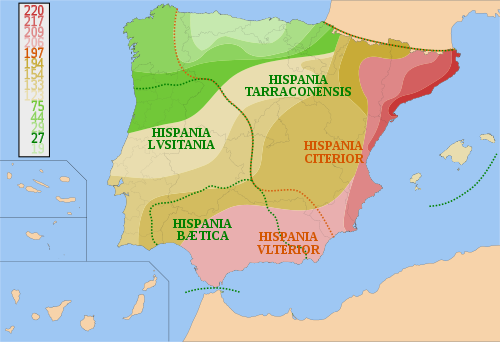


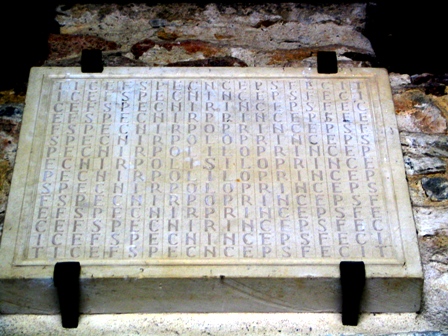

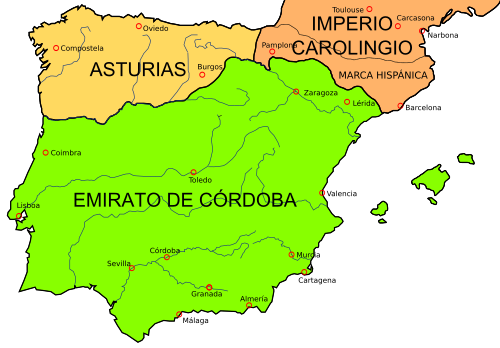


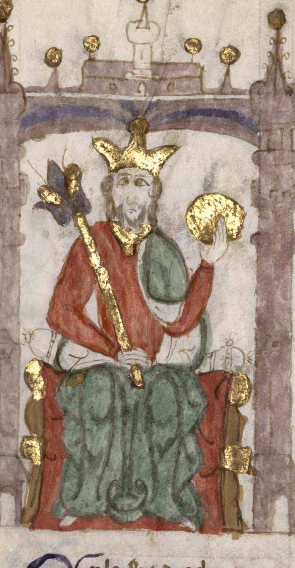


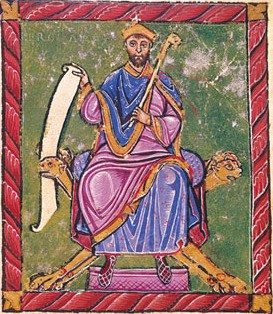

![Ilustraciones pertenecientes al libro: Las glorias nacionales : grande historia universal de todos los reinos, provincias, islas y colonias de la Monarquía Española, desde los tiempos primitivos hasta el año de 1852. - Madrid [etc.] (Barcelona : Imprenta de Luis Tasso) Librería de la Publicidad [etc.], 1852-1854.](https://upload.wikimedia.org/wikipedia/commons/thumb/b/b9/Las_Glorias_Nacionales%2C_1852_%22Don_Ramiro_de_Le%C3%B3n_derrota_al_cordob%C3%A9s_junto_a_Simancas%22._%284013184561%29.jpg/500px-Las_Glorias_Nacionales%2C_1852_%22Don_Ramiro_de_Le%C3%B3n_derrota_al_cordob%C3%A9s_junto_a_Simancas%22._%284013184561%29.jpg)

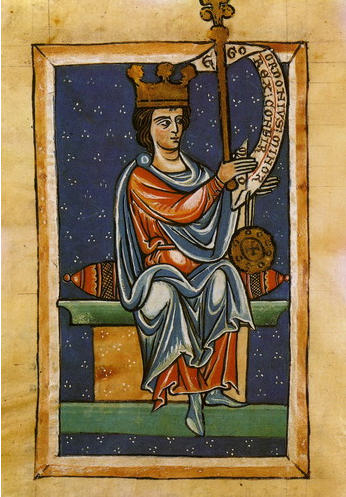


![A proposta da bandeira galega histórica do escudo de armas do Reino da Galiza está conformada polos elementos que conformam o escudo nacional da Galiza. ▪ O Escudo de Armas da Galiza: O escudo de armas da Galiza faz parte dos símbolos nacionais da Galiza e uma das mais importantes representação da nação galega. Aparece documentado pola primeira vez em 1282 no Armorial Segar (Segar's Roll) da Inglaterra dedicado à representação das armas das principais casas reais européias. Ele está conformado por um escudo ao que se lhe pode agregar na parte superior uma coroa representando as diferentes dinastias reais galegas. O escudo inclui a representação dum cálice de forma similar ao cálice do Cebreiro, a hóstia que representa o sol e as sete cruzes celtas como elemento decorativo. O seu desenho moderno foi elaborado pola Real Academia Galega em 1972. A RAG sugeriu-lhe na altura à Xunta de Galicia manter o escudo tradicional galego dentro da bandeira nacional moderna. O resultado foi a combinação de ambos símbolos junto com a coroa que simboliza a monarquia do Reino da Galiza. Esta é a bandeira que se usa nos actos do Governo e das instituições oficiais galegas. O seu uso vigora desde a aprovação da Lei 5/1984 de Símbolos de Galicia: "A bandeira de Galicia deverá levar cargado o escudo oficial cando ondee nos edifícios públicos e nos actos oficiais da Comunidade Autónoma" A seguir explicamos cada uma das partes que conformam o escudo: ▪ O Cálice ou o «barco de pedra»: Na sua interpretação pagã, o cálice representa o «barco de pedra», o símbolo do Fisterra, o útero da terra onde morre o sol e onde é transportado cara o além, cara o fim do mundo. O seu sentido polissémico permite interpretar o cálice do Cebreiro relacionado com o mítico rei bretão Artur, ou dentro da tradição Celta do caldeiro, expressão da fertilidade da terra. A relação "entre o o caldeirão mágico e o cálice do Graal é evidente, por exemplo, no ciclo artúrico ou nos relatos galeses do Mabinogion. Nestas narrações míticas o Graal herda as virtudes que possuía o caldeirão de Dagda, como objeto capaz de curar e ressuscitar os heróis" RODRÍGUEZ FERNÁNDEZ (2010) Na tradição Galaico-Celta, os guerreiros levam caldeirões, o que lhes permite ficar no mundo dos vivos e não ultrapassar a porta que os deixaria no mundo dos mortos. Esta representação é similar à que aparece no caldeirão de Gundestrup. ▪ A Hóstia e a morte do sol no Fisterra Atlântico: Como símbolo pagão, a Hóstia que desce para o Cálice, simboliza o sol antes de morrer no Atlântico, no Fisterra, onde termina a terra. Nas antigas religiões atlânticas e indo-europeias de raiz pagã, o deus sol morre no mar e é levado num «barco de pedra» ao fim do mundo, para voltar a reaparecer ou voltar da morte no dia seguinte. É uma representação galega de tradição milenar. ▪ As Sete Cruzes Celtas: Na tradição Galaica, o número sete, representa o Tudo, a totalidade referida à esfera divina e não humana. O mundo perfeito do divino. As cruzes celtas são agregadas ao escudo de armas como elemento decorativo já a partir do S. XVI. Outra interpretação indica que as sete cruzes em volta do cálice representam o setestrelo, as plêiades, o símbolo do norte, dos ártabros. Uma terceira interpretação menos consistente diz que as sete cruzes poderiam representar dioceses do antigo Reino da Galiza. ▪ A Coroa das Dinastias Reais Galegas (não se inclui na Bandeira Galega Histórica do Escudo de Armas do Reino da Galiza): A coroa dourada aberta pola parte superior e com motivos vegetais representa as diferentes dinastias históricas do Reino da Galiza. Ela inclui, além dos motivos vegetais em forma curvilínea, uma pequena rosácea galaica de seis pétalas na parte central da frente, que representa o equilíbrio das energias positiva e negativa da rosa que gira para esquerda e da que gira para a direita. Descarregar esta imagem em formato vectorial .EPS [3Mb comprimido em .ZIP] -- MAIS INFO: - Barbosa Álvarez, J. M. (2011) Bandeiras da Galiza. Santiago de Compostela: Ed. Através - González Pérez, C. (1993) A coca e o mito do dragón. Vigo: Ed. Ir Indo. - Rodríguez Fernández, T. (2010) A bandeira sueva do Reino da Gallaecia revista. Revista Agalia. Nº 102 / 2º Semestre (2010). pp. 221-241 [Descargar em .PDF: is.gd/qvfXdO] - Iniciativa pola bandeira galega: www.bandeiragalega.com [Acesso: 15 Julho 2014] -- Tags: bandeira, flag, bandera, nacional, historica, historic, armas, escudo, shield, galiza, galicia, oficial, nacional, caliz, coroa, corona, crown, armas, armorial, heráldica, heraldic, heraldry, gallaecia, reino, dinastia, galega, galaica, gallega, galician -- Licença Creative Commons - Uso Livre!](https://upload.wikimedia.org/wikipedia/commons/thumb/a/af/Bandeira_Hist%C3%B3rica_Galega_do_Escudo_de_Armas_do_Reino_da_Galiza.svg/500px-Bandeira_Hist%C3%B3rica_Galega_do_Escudo_de_Armas_do_Reino_da_Galiza.svg.png)