Encyclopedia/3. History, Societies & Civilizations/09. Modern Nations/01. Africa • Curated by Admin Timeline.sg
History of Senegal (AI-generated, sourced to Wikipedia).
Chronological Storyline (33 Milestones)
500 CE
Tekrur Kingdom Emerges
The Kingdom of Tekrur arises in the Senegal River valley, becoming one of the earliest West African states to adopt Islam in the 9th century. Source — Wikipedia, "Senegal":
Map of the successor states of the Ghana Empire, on the upper Niger river valley, West Africa, circa 1200 Common Era. These outlines are approximate, and should not suggest modern states with fixed borders. States in this era were centered around cities and strong places, with variations of influence radiating out from these points. C. 1200 on the eve of the rise of the Mali Empire, usually dated in the 1240s CE. By T L Miles (talk) - Own work (Original text: self-made, using map by http://www.ThomasLessman.com/History/images/East-Hem_1200ad.jpg, under the Creative Commons Attribution 3.0), CC BY-SA 3.0, https://commons.wikimedia.org/w/index.php?curid=34701194
1235 CE
Mali Empire Dominates Region
Following the Battle of Kirina, the Mali Empire expands its influence over eastern Senegal, incorporating former Ghana Empire territories including Tekrur. Source — Wikipedia, "Senegal":
Own work, based off of Gomez, M. (2018). African Dominion: A New History of Empire in Early and Medieval West Africa (1st ed.). Princeton University Press. P.95 https://doi.org/10.1515/9781400888160 By HetmanTheResearcher - Own work, CC BY 4.0, https://commons.wikimedia.org/w/index.php?curid=143761923
1360 CE
Jolof Empire Founded
The Wolof-led Jolof Empire is established in central Senegal, uniting several vassal states including Cayor, Baol, Walo, and Sine under a single ruler. Source — Wikipedia, "Senegal":
Map of the Jolof Empire at it's maximum extent, including it's vassals and influenced territories. By Cheikh Khadim Rassoul D. - For Takrur: West Africa During the Atlantic Slave Trade: Archaeological Perspectives. (2016). United Kingdom: Bloomsbury Publishing. P.20 https://books.google.it/books?id=fB_mDAAAQBAJ&pg=PA20&dq=Takrur+jolof&hl=en&newbks=1&newbks_redir=0&source=gb_mobile_search&sa=X&ved=2ahUKEwjBsOnkhcODAxX6cPEDHQvtCUYQ6AF6BAgIEAM#v=onepage&q=Takrur%20jolof&f=false Diouf, S. A. (1998). Servants of Allah : African Muslims enslaved in the Americas. United Kingdom: NYU Press. P. 19. https://books.google.it/books?id=56wi0rgLrPQC&pg=PA19&dq=Takrur+jolof&hl=en&newbks=1&newbks_redir=0&source=gb_mobile_search&sa=X&ved=2ahUKEwjMo9m0hsODAxU2RvEDHZbeCz44HhDoAXoECAMQAw#v=onepage&q=Takrur%20jolof&f=false For Namandirou/Njarmeew: Les ruses de l'historien. Essais d'Afrique et d'ailleurs en hommage à Jean Boulègue. (2013). (n.p.): KARTHALA Editions. P. 21 – 23 For the Mandinka states on the northern bank of the Gambia: Les ruses de l'historien. Essais d'Afrique et d'ailleurs en hommage à Jean Boulègue. (2013). (n.p.): KARTHALA Editions. P. 19 Diouf, S. A. (1998). Servants of Allah : African Muslims enslaved in the Americas. United Kingdom: NYU Press. P. 19. https://books.google.it/books?id=56wi0rgLrPQC&pg=PA19&dq=Takrur+jolof&hl=en&newbks=1&newbks_redir=0&source=gb_mobile_search&sa=X&ved=2ahUKEwjMo9m0hsODAxU2RvEDHZbeCz44HhDoAXoECAMQAw#v=onepage&q=Takrur%20jolof&f=false For Bambuk: Jean, BOULEGUE (2013-03-18). Les royaumes wolof dans l'espace sénégambien (XIIIe-XVIIIe siècle) (in French). KARTHALA Editions. P. 21. https://books.google.it/books?id=GOnbsaN4rWcC&pg=PA21&dq=bambouk+jolof&hl=en&newbks=1&newbks_redir=0&source=gb_mobile_search&sa=X&ved=2ahUKEwjS2LG8hMODAxWeavEDHRxrD4UQ6AF6BAgKEAM#v=onepage&q=bambouk%20jolof&f=false For the main constituent kingdoms: - Precolonial Senegal: the Jolof Kingdom, 1800-1890 by Charles, Eunice A (1977) PP. 1 – 3. https://archive.org/details/precolonialseneg00char/page/n15/mode/2up, CC0, https://commons.wikimedia.org/w/index.php?curid=143180732
Aug 1, 1444 CE
Portuguese Reach Senegal
Portuguese explorer Dinis Dias arrives at Cape Verde and the Senegal coast, initiating European contact and the early Atlantic trade in the region. Source — Wikipedia, "Senegal":
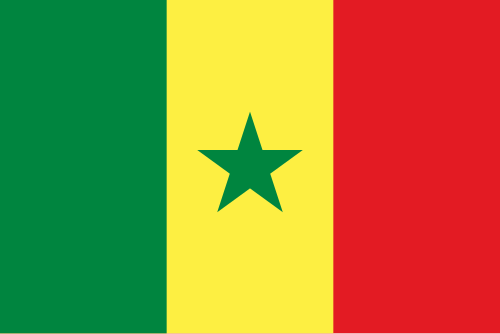
Flag of Senegal By Original upload by Nightstallion - Original upload from Openclipart : Senegal. However, the current source code for this SVG file has almost nothing in common with the original upload., Public domain, https://commons.wikimedia.org/w/index.php?curid=433101
1550 CE
Jolof Empire Fragmented
The Jolof Empire collapses as vassal states such as Cayor and Baol break away, creating independent Wolof kingdoms that persist into the colonial era. Source — Wikipedia, "Senegal":
Map of the Jolof Empire at it's maximum extent, including it's vassals and influenced territories. By Cheikh Khadim Rassoul D. - For Takrur: West Africa During the Atlantic Slave Trade: Archaeological Perspectives. (2016). United Kingdom: Bloomsbury Publishing. P.20 https://books.google.it/books?id=fB_mDAAAQBAJ&pg=PA20&dq=Takrur+jolof&hl=en&newbks=1&newbks_redir=0&source=gb_mobile_search&sa=X&ved=2ahUKEwjBsOnkhcODAxX6cPEDHQvtCUYQ6AF6BAgIEAM#v=onepage&q=Takrur%20jolof&f=false Diouf, S. A. (1998). Servants of Allah : African Muslims enslaved in the Americas. United Kingdom: NYU Press. P. 19. https://books.google.it/books?id=56wi0rgLrPQC&pg=PA19&dq=Takrur+jolof&hl=en&newbks=1&newbks_redir=0&source=gb_mobile_search&sa=X&ved=2ahUKEwjMo9m0hsODAxU2RvEDHZbeCz44HhDoAXoECAMQAw#v=onepage&q=Takrur%20jolof&f=false For Namandirou/Njarmeew: Les ruses de l'historien. Essais d'Afrique et d'ailleurs en hommage à Jean Boulègue. (2013). (n.p.): KARTHALA Editions. P. 21 – 23 For the Mandinka states on the northern bank of the Gambia: Les ruses de l'historien. Essais d'Afrique et d'ailleurs en hommage à Jean Boulègue. (2013). (n.p.): KARTHALA Editions. P. 19 Diouf, S. A. (1998). Servants of Allah : African Muslims enslaved in the Americas. United Kingdom: NYU Press. P. 19. https://books.google.it/books?id=56wi0rgLrPQC&pg=PA19&dq=Takrur+jolof&hl=en&newbks=1&newbks_redir=0&source=gb_mobile_search&sa=X&ved=2ahUKEwjMo9m0hsODAxU2RvEDHZbeCz44HhDoAXoECAMQAw#v=onepage&q=Takrur%20jolof&f=false For Bambuk: Jean, BOULEGUE (2013-03-18). Les royaumes wolof dans l'espace sénégambien (XIIIe-XVIIIe siècle) (in French). KARTHALA Editions. P. 21. https://books.google.it/books?id=GOnbsaN4rWcC&pg=PA21&dq=bambouk+jolof&hl=en&newbks=1&newbks_redir=0&source=gb_mobile_search&sa=X&ved=2ahUKEwjS2LG8hMODAxWeavEDHRxrD4UQ6AF6BAgKEAM#v=onepage&q=bambouk%20jolof&f=false For the main constituent kingdoms: - Precolonial Senegal: the Jolof Kingdom, 1800-1890 by Charles, Eunice A (1977) PP. 1 – 3. https://archive.org/details/precolonialseneg00char/page/n15/mode/2up, CC0, https://commons.wikimedia.org/w/index.php?curid=143180732
May 1, 1659 CE
French Found Saint-Louis
French traders establish a permanent settlement on Saint-Louis Island at the mouth of the Senegal River, marking the beginning of formal French colonial presence. Source — Wikipedia, "Senegal":
Île de Saint-Louis (Sénégal) By Jim Williams - This file has been provided by UNESCO (unesco.org) as part of a GLAM-Wiki partnership. It is also available on the UNESCO website., CC BY-SA 3.0 igo, https://commons.wikimedia.org/w/index.php?curid=58156411
Feb 1, 1677 CE
French Seize Goree Island
France captures Goree Island from the Dutch, making it a key node in the Atlantic slave trade and a strategic colonial outpost off the Senegalese coast. Source — Wikipedia, "Senegal":
Île de Gorée By Gregor Rom - Own work, CC BY-SA 4.0, https://commons.wikimedia.org/w/index.php?curid=88659737
Apr 1, 1758 CE
British Capture Saint-Louis
During the Seven Years' War, British forces seize Saint-Louis and Goree, disrupting French trade networks along the Senegalese coast until their return by treaty. Source — Wikipedia, "Senegal":
Part of North West Africa (original title: Carte de la Barbarie de la Nigritie et de La Guinee; it translates: "Map of the Barbary of Nigritie & Guinea") By Guillaume Delisle - This map is available from the United States Library of Congress's Geography & Map Division under the digital ID g8220.ct001447.This tag does not indicate the copyright status of the attached work. A normal copyright tag is still required. See Commons:Licensing., Public domain, https://commons.wikimedia.org/w/index.php?curid=835117
1817 CE
French Reoccupy Saint-Louis
France formally reoccupies Saint-Louis and Goree under the Treaty of Paris, re-establishing its colonial administration and trade operations in Senegal. Source — Wikipedia, "Senegal":
In Senegal - Fight of Lieutenant of spahis Chauvet and Damel Samba-Lawbe (Samba Laobé Fall), 1886 By Józef Chełmoński - Le Monde illustré, 27 November 1886, No. 1548. Online: https://gallica.bnf.fr/ark:/12148/bpt6k65159418/f1.image, Public domain, https://commons.wikimedia.org/w/index.php?curid=185677218
Apr 1, 1848 CE
Slavery Abolished in Colonies
The French Second Republic abolishes slavery in all French colonies, ending the legal slave trade that had operated from Goree and Saint-Louis for centuries. Source — Wikipedia, "Senegal":
Réjouissances à l'annonce de l'abolition de l'esclavage, 30 pluviôse an II. Dans la cathédrale Notre-Dame de Paris transformée en temple de la Raison, discours de Pierre-Gaspard Chaumette (1763-1794) à l'occasion de la fête le 18 février 1794 de l'abolition de l'esclavage dans les colonies française décrété deux semaine plus tôt par la Convention montagnarde. Présence dans l'assistance de Jean-Baptiste Belley, premier représentant noir à la Convention (en uniforme à droite), et de Lucidor Corbin, Noire créole républicaine (située devant Belley). Gravure Bibliothèque Nationale de France. By Unknown author - ALBIGÈS, « La fête de l'abolition de l'esclavage à Paris », Histoire par l'image, Public domain, https://commons.wikimedia.org/w/index.php?curid=100096831
Jun 1, 1857 CE
Dakar Founded as Outpost
French colonial authorities establish a military post at Dakar on the Cap-Vert peninsula, laying the groundwork for what would become Senegal's capital city. Source — Wikipedia, "Senegal":
La place de l'Indépendance à Dakar (Sénégal). En arrière-plan le port et Gorée. By mostroneddo - Flickr [1], CC BY 2.0, https://commons.wikimedia.org/w/index.php?curid=2999601
1859 CE
French Conquest of Cayor
French forces under Governor Faidherbe begin military campaigns against the Wolof kingdoms, progressively conquering Cayor, Baol, and Walo through the 1860s. Source — Wikipedia, "Senegal":
French general Louis Faidherbe (1818-1889). By Marie Madeleine Rignot-Dubaux - Self-photographed at musée de l'Armée, Public domain, https://commons.wikimedia.org/w/index.php?curid=27859630
Dec 1, 1886 CE
Lat-Dior Killed in Battle
Damel Lat-Dior Diop, the last independent ruler of Cayor, is killed resisting French expansion at the Battle of Dekhele, effectively ending major Wolof resistance. Source — Wikipedia, "Senegal":
Fresque sur le mur d'une usine à Bel-Air, un quartier de Dakar (Sénégal) By Ji-Elle - Own work, Public domain, https://commons.wikimedia.org/w/index.php?curid=4089672
Jun 1, 1895 CE
French West Africa Created
France establishes the federation of French West Africa with Dakar as its capital, consolidating Senegal and other West African colonies under a single administration. Source — Wikipedia, "Senegal":
Flag of France By Original: Unknown Vector: SKopp - This SVG flag includes elements that have been taken or adapted from this flag:, Public domain, https://commons.wikimedia.org/w/index.php?curid=60739584
1902 CE
Dakar Becomes Federal Capital
Dakar officially replaces Saint-Louis as the capital of French West Africa, cementing its status as the administrative and economic hub of France's African empire. Source — Wikipedia, "Senegal":
La place de l'Indépendance à Dakar (Sénégal). En arrière-plan le port et Gorée. By mostroneddo - Flickr [1], CC BY 2.0, https://commons.wikimedia.org/w/index.php?curid=2999601
May 1, 1914 CE
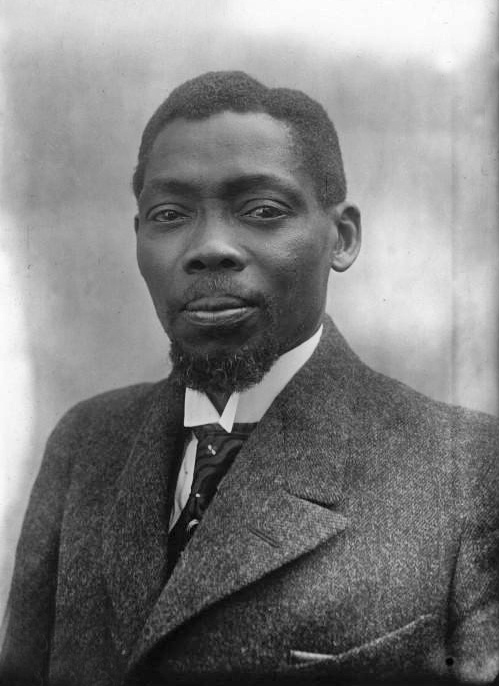
Blaise Diagne Elected Deputy
Blaise Diagne becomes the first African elected to the French National Assembly, representing Senegal and championing the rights of the Four Communes' citizens. Source — Wikipedia, "Senegal":
Diagne, député du Sénégal et Ht Commissaire du Congrès Pan Noir : photographie de presse By Agence Meurisse (domaine public, voir fiche détaillée Gallica) - Bibliothèque nationale de France, Public domain, https://commons.wikimedia.org/w/index.php?curid=15227037
1934 CE
Negritude Movement Born
Leopold Sedar Senghor, Aime Cesaire, and Leon-Gontran Damas found the Negritude literary and cultural movement in Paris, celebrating Black identity and heritage. Source — Wikipedia, "Senegal":
Flag of Senegal By Original upload by Nightstallion - Original upload from Openclipart : Senegal. However, the current source code for this SVG file has almost nothing in common with the original upload., Public domain, https://commons.wikimedia.org/w/index.php?curid=433101
1946 CE
Senegal Becomes Overseas Territory
Under the French Union, Senegal gains status as an overseas territory with limited self-governance, and the Senegalese Democratic Bloc is founded by Senghor. Source — Wikipedia, "Senegal":
Flag of France By Original: Unknown Vector: SKopp - This SVG flag includes elements that have been taken or adapted from this flag:, Public domain, https://commons.wikimedia.org/w/index.php?curid=60739584
Jan 1, 1959 CE
Mali Federation Formed
Senegal and French Sudan unite to form the Mali Federation, a short-lived federation seeking independence from France as a single sovereign state. Source — Wikipedia, "Senegal":
Flag of Mali (1959-1961) By SKopp - Drawn by SKopp, Public domain, https://commons.wikimedia.org/w/index.php?curid=441782
Jun 20, 1960 CE
Independence from France
The Mali Federation gains full independence from France, ending over three centuries of French colonial rule in Senegal. Source — Wikipedia, "Senegal":
Flag of Mali (1959-1961) By SKopp - Drawn by SKopp, Public domain, https://commons.wikimedia.org/w/index.php?curid=441782
Aug 20, 1960 CE
Senegal Becomes Republic
Senegal withdraws from the Mali Federation and declares itself an independent republic, with Leopold Sedar Senghor becoming its first president. Source — Wikipedia, "Senegal":
Flag of Senegal By Original upload by Nightstallion - Original upload from Openclipart : Senegal. However, the current source code for this SVG file has almost nothing in common with the original upload., Public domain, https://commons.wikimedia.org/w/index.php?curid=433101
Dec 1, 1962 CE
Senghor Survives Coup Attempt
Prime Minister Mamadou Dia attempts a constitutional coup but is arrested, consolidating Senghor's presidential power and establishing Senegal's stable democratic path. Source — Wikipedia, "Senegal":
Mamadou Dia By Bruno Christophe - Own work, CC BY-SA 3.0, https://commons.wikimedia.org/w/index.php?curid=31024448
May 1, 1968 CE
Dakar Student Uprising
Massive student protests erupt in Dakar against education cuts and political repression, echoing the global 1968 protests and challenging Senghor's government. Source — Wikipedia, "Senegal":
Place du Capitole. 11 ou 12 juin 1968. Vue d'ensemble en contre-plongée des manifestants, une partie d'entre-eux sont assis par terre. Cliché pris durant les évènements de Mai 68 à Toulouse. By André Cros - This photograph is part of the Fonds André Cros, preserved by the city archives of Toulouse and released under CC BY-SA 4.0 license by the deliberation n°27.3 of June 23rd, 2017 of the Town Council of the City of Toulouse., CC BY-SA 4.0, https://commons.wikimedia.org/w/index.php?curid=65934017
Dec 1, 1980 CE
Senghor Resigns Presidency
Leopold Sedar Senghor voluntarily resigns after 20 years in power, the first African head of state to step down peacefully, succeeded by Abdou Diouf. Source — Wikipedia, "Senegal":
For documentary reasons, this is the original metadata as provided by UNESCO. The Description is contributed by participants in UNESCO's crowdsourcing project. Do not edit this section.BW/Colour: Black and white City: Paris/Maison de l'UNESCO Country: France Date range: 19-05-1978 Description: The 2 gentlemen are seated on a sofa. The leafage of a palm frond behind the sofa dominates the background of the picture. English transcr.: French transcr.: Visite de S. Exc. M. Léopold Sedar Senghor, Président de la République du Sénégal. A gauche M. le Président Senghor, à droite M. Amadou-Mahtar M'Bow, Directeur général de l'UNESCO. Keywords: Heads of state Orientation: Landscape Persons: Senghor, Léopold Sedar | M'Bow, Amadou-Mahtar | Author: UNESCO/Dominique Roger | ; By Dominique Roger - This file has been provided by UNESCO as part of a GLAMwiki partnership., CC BY-SA 3.0 igo, https://commons.wikimedia.org/w/index.php?curid=99955060
Feb 1, 1982 CE
Senegambia Confederation Formed
Senegal and The Gambia form the Senegambia Confederation, a loose political and military union that ultimately dissolves in 1989. Source — Wikipedia, "Senegal":
Flag of Senegal By Original upload by Nightstallion - Original upload from Openclipart : Senegal. However, the current source code for this SVG file has almost nothing in common with the original upload., Public domain, https://commons.wikimedia.org/w/index.php?curid=433101
Dec 1, 1982 CE
Casamance Conflict Begins
The Movement of Democratic Forces of Casamance (MFDC) launches a separatist insurgency in southern Senegal, beginning a decades-long low-level civil conflict. Source — Wikipedia, "Senegal":
Mise en garde des élèves contre les mines anti-personnel sur le mur du CEM Aline Sitoé Diatta à Oussouye (Casamance, Sénégal) By Ji-Elle - Own work, Public domain, https://commons.wikimedia.org/w/index.php?curid=3443216
Aug 1, 1989 CE
Mauritanian-Senegalese Crisis
A border dispute and ethnic violence between Senegal and Mauritania leads to mass expulsions of each country's nationals, severely straining bilateral relations. Source — Wikipedia, "Senegal":
Flag of Senegal By Original upload by Nightstallion - Original upload from Openclipart : Senegal. However, the current source code for this SVG file has almost nothing in common with the original upload., Public domain, https://commons.wikimedia.org/w/index.php?curid=433101
Mar 19, 2000 CE
Wade Wins Historic Election
Abdoulaye Wade defeats Abdou Diouf in a runoff, marking Senegal's first peaceful democratic transfer of power and ending 40 years of Socialist Party rule. Source — Wikipedia, "Senegal":
The Prime Minister, Dr. Manmohan Singh meeting the President of the Republic of Senegal, Mr. Maitre (Adv) Abdoulaye Wade, on the sidelines of the 2nd Africa-India Forum Summit (AIFS), in Addis Ababa, Ethiopia on May 24, 2011. By Prime Minister's Office - This file or its source was published by Press Information Bureau on behalf of Prime Minister's Office, Government of India under the ID 35109 and CNR 38090. (direct link) This tag does not indicate the copyright status of the attached work. A normal copyright tag is still required. See Commons:Licensing. العربية ∙ বাংলা ∙ English ∙ हिन्दी ∙ 日本語 ∙ македонски ∙ മലയാളം ∙ polski ∙ தமிழ் ∙ ತುಳು ∙ 中文 ∙ 中文(简体) ∙ 中文(繁體) ∙ +/−, GODL-India, https://commons.wikimedia.org/w/index.php?curid=156754760
Dec 1, 2004 CE
Casamance Peace Accord Signed
The Senegalese government and MFDC rebels sign a preliminary peace accord, significantly reducing violence in the Casamance region though sporadic clashes continue. Source — Wikipedia, "Senegal":
Mise en garde des élèves contre les mines anti-personnel sur le mur du CEM Aline Sitoé Diatta à Oussouye (Casamance, Sénégal) By Ji-Elle - Own work, Public domain, https://commons.wikimedia.org/w/index.php?curid=3443216
Mar 25, 2012 CE
Macky Sall Elected President
Macky Sall defeats incumbent Abdoulaye Wade in a runoff election, preventing Wade from seeking a controversial third term and reaffirming Senegal's democratic tradition. Source — Wikipedia, "Senegal":
U.S. Secretary of State Michael R. Pompeo meets with Senegalese President Macky Sall in Dakar, Senegal, on February 16, 2020. [State Department Photo by Ron Przysucha/ Public Domain] By U.S. Department of State from United States - Secretary Pompeo Meets With President Macky Sall in Dakar, Public domain, https://commons.wikimedia.org/w/index.php?curid=95604466
Mar 1, 2019 CE
Sall Wins Re-election
Macky Sall wins a second term in the first round of voting, though opposition candidates dispute the results and call for investigations into electoral irregularities. Source — Wikipedia, "Senegal":
This map depicts the results of the 2019 Senegalese presidential election, showing the percentage of the popular vote received by the winning candidate in each department. By MisterElection2001 - Election results provided by the Constitutional Council of Senegal Base map provided by the Humanitarian Data Exchange, CC BY-SA 4.0, https://commons.wikimedia.org/w/index.php?curid=128504437
Mar 1, 2021 CE
Ousmane Sonko Arrested
The arrest of opposition leader Ousmane Sonko on rape charges sparks deadly nationwide protests, exposing deep political tensions and youth frustration in Senegal. Source — Wikipedia, "Senegal":
This is an image with the theme "Rites and Rituals" from: By Bossphotographe - Own work, CC BY-SA 4.0, https://commons.wikimedia.org/w/index.php?curid=192879498
Mar 24, 2024 CE
Faye Elected Youngest President
Bassirou Diomaye Faye wins the presidency at age 44, the first candidate from outside the traditional political elite, following his release from prison days earlier. Source — Wikipedia, "Senegal":
Bassirou Diomaye Faye, Präsident der Republik, am 9. Juli 2025 in Washington D. C. vor dem Weißen Haus. By The White House (Official White House Photo by Molly Riley); cropped by Brühl - https://www.flickr.com/photos/202101414@N05/54644478039/, Public domain, https://commons.wikimedia.org/w/index.php?curid=193787471






![U.S. Secretary of State Michael R. Pompeo meets with Senegalese President Macky Sall in Dakar, Senegal, on February 16, 2020. [State Department Photo by Ron Przysucha/ Public Domain]](https://upload.wikimedia.org/wikipedia/commons/a/a0/President_Macky_Sall_in_2020.jpg)


