Encyclopedia/3. History, Societies & Civilizations/09. Modern Nations/01. Africa • Curated by Admin Timeline.sg
History of Nigeria, sourced from Wikipedia's "Timeline of Nigerian history".
Chronological Storyline (82 Milestones)
1767 CE
June
June Source — Wikipedia, "Timeline of Nigerian history" (18th century):
Flag of Nigeria By Jon Harald Søby. - see below, Public domain, https://commons.wikimedia.org/w/index.php?curid=392711
1803 CE
Igbo Landing
Escape to Igbo Landing in Georgia, USA. Source — Wikipedia, "Timeline of Nigerian history" (19th century):
The area of Igbo Landing, Glynn County, Georgia, U.S. By Jud McCranie - Own work, CC BY-SA 4.0, https://commons.wikimedia.org/w/index.php?curid=114304853
Feb 21, 1804 CE
Usman dan Fodio
Usman dan Fodio's hijra out of Gobir begins marking the start of his jihad and the founding of the Sokoto Caliphate. Source — Wikipedia, "Timeline of Nigerian history" (19th century):
Islamic miniature depicting Jibril delivering to Muhammad a message from God telling him to leave Makka for Madina By Unknown author - https://digitalcollections.nypl.org/items/cff0bdb0-d434-012f-fdaa-58d385a7bbd0?canvasIndex=571, Public domain, https://commons.wikimedia.org/w/index.php?curid=171918415
Mar 25, 1807 CE
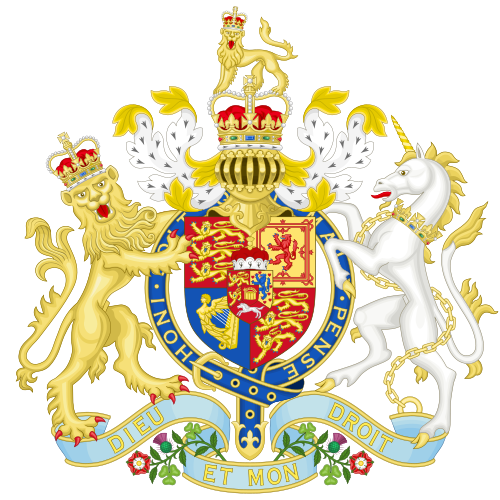
Slave Trade Act 1807
Slave Trade Act 1807: Britain prohibits subjects from trafficking in slaves. Source — Wikipedia, "Timeline of Nigerian history" (19th century):
Coat of Arms of the United Kingdom from 1801 to 1816 used by King George III “ Quarterly, First and Fourth Gules three lions passant guardant in pale Or armed and langued Azure (for England), Second quarter Or a lion rampant within a double tressure flory counter-flory Gules (for Scotland), Third quarter Azure a harp Or stringed Argent (for Ireland), over all an inescutcheon, ensigned by the Electoral Cap or bonnet, Tierced per pale and per chevron, First Gules two lions passant guardant Or (for Brunswick), Second Or semée of hearts Gules a lion rampant Azure (For Luneburg), Third Gules a horse courant Argent (For Hanover), an inescutcheon over all three, Gules the Crown of Charlemagne Proper (As Archtreasurer of the Holy Roman Empire), the whole surrounded by the Garter; for a Crest, upon the Royal helm the imperial crown Proper, thereon a lion statant guardant Or imperially crowned Proper; Mantling Or and ermine; for Supporters, dexter a lion rampant guardant Or crowned as the Crest, sinister a unicorn Argent armed, crined and unguled Proper, gorged with a coronet Or composed of crosses patée and fleurs de lys a chain affixed thereto passing between the forelegs and reflexed over the back also Or; Motto 'Dieu et mon Droit' in the compartment below the shield, with the Union rose, shamrock and thistle engrafted on the same stem. ” PINCHES, J.H & R.V., The Royal Heraldry of England, 1974, Heraldry Today. By Sodacan - Own work, CC BY-SA 3.0, https://commons.wikimedia.org/w/index.php?curid=10952362
May 1, 1808 CE
Gwoni Mukhtar
Gwoni Mukhtar drives Mai Ahmad out of Birnin N'gazargamu and occupies the city. Source — Wikipedia, "Timeline of Nigerian history" (19th century):
1809 CE
Dunama IX Lefiami
Birnin N'gazargamu recaptured by Mai Dunama IX with the assistance of Muhammad al-Kanemi and his followers. Source — Wikipedia, "Timeline of Nigerian history" (19th century):
Muhammad al-Amin al-Kanemi, Shehu of Bornu By Finden, Edward Francis, 1791-1857 -- Engraver - Narrative of Travels and Discoveries in Northern and Central Africa, in the Years 1822, 1823, and 1824, Public domain, https://commons.wikimedia.org/w/index.php?curid=151895233
Feb 17, 1823 CE
Hugh Clapperton
Hugh Clapperton reaches Kukawa and is received by Shehu al-Kanemi. Source — Wikipedia, "Timeline of Nigerian history" (19th century):
Hugh Clapperton By Unknown author, Public domain, https://commons.wikimedia.org/w/index.php?curid=48288
1833 CE
End of Oyo empire.
End of Oyo empire. Source — Wikipedia, "Timeline of Nigerian history" (19th century):
1841 CE
Niger Expedition of Christian missionaries.
Niger Expedition of Christian missionaries. Source — Wikipedia, "Timeline of Nigerian history" (19th century):
1846 CE
Church Missionary Society
Church Missionary Society sets up mission at Abeokuta. Source — Wikipedia, "Timeline of Nigerian history" (19th century):
This is right side of the new look after renovation By Diplenty multimedia - Own work, CC BY-SA 4.0, https://commons.wikimedia.org/w/index.php?curid=138736958
Jan 1, 1851 CE
Treaty Between Great Britain and Lagos, 1 January
Treaty Between Great Britain and Lagos, 1 January 1852 Source — Wikipedia, "Timeline of Nigerian history" (19th century):
Aug 6, 1861 CE
Lagos Treaty of Cession
Lagos Treaty of Cession: British annexes Lagos, with status of Crown Colony. Source — Wikipedia, "Timeline of Nigerian history" (19th century):
Lagos Treaty of Cession By Koutchika Lihouenou Gaspard - Own work, CC BY-SA 4.0, https://commons.wikimedia.org/w/index.php?curid=138515705
1864 CE
Samuel Ajayi Crowther
Samuel Ajayi Crowther becomes first African Anglican Bishop. Source — Wikipedia, "Timeline of Nigerian history" (19th century):
O bispo anglicano Samuel Ajayi Crowther, na Lambeth Conference, 1867 By Unknown author - http://www.lambethpalacelibrary.org/content/lambethconference, Public domain, https://commons.wikimedia.org/w/index.php?curid=31273389
1879 CE
George Taubman Goldie
George Taubman Goldie amalgamated various British ventures to form the United African Company (later known as the Royal Niger Company). Source — Wikipedia, "Timeline of Nigerian history" (19th century):
Sir George Dashwood Taubman Goldie, by Sir Hubert von Herkomer (died 1914), given to the National Portrait Gallery, London in 1931. See source website for additional information. This set of images was gathered by User:Dcoetzee from the National Portrait Gallery, London website using a special tool. All images in this batch have been confirmed as author died before 1939 according to the official death date listed by the NPG. By Hubert von Herkomer - one or more third parties have made copyright claims against Wikimedia Commons in relation to the work from which this is sourced or a purely mechanical reproduction thereof. This may be due to recognition of the "sweat of the brow" doctrine, allowing works to be eligible for protection through skill and labour, and not purely by originality as is the case in the United States (where this website is hosted). These claims may or may not be valid in all jurisdictions. As such, use of this image in the jurisdiction of the claimant or other countries may be regarded as copyright infringement. Please see Commons:When to use the PD-Art tag for more information., Public domain, https://commons.wikimedia.org/w/index.php?curid=83731598
1880 CE
Southern Nigeria Protectorate
The conquest of Southern Nigeria by the British began. Source — Wikipedia, "Timeline of Nigerian history" (19th century):
Flag of the Southern Nigeria Protectorate from 1 January 1900 to 1 January 1914. By Thommy - This vector image includes elements that have been taken or adapted from this file:, CC0, https://commons.wikimedia.org/w/index.php?curid=34829164
1885 CE
Berlin Conference
Other European powers acknowledged British sovereignty over Nigeria at the Berlin Conference. Source — Wikipedia, "Timeline of Nigerian history" (19th century):
Drawing of the participants in the Berlin conference in 1884. By Adalbert von Roessler - Über Land und Meer. Allgemeine Illustrierte Zeitung, Jg. 27 (Oktober 1884-1885), Bd. 53, Nr. 14, 308)., Public domain, https://commons.wikimedia.org/w/index.php?curid=4259336
1887 CE
Jaja of Opobo
King Ja Ja of Opobo exiled to West Indies by British. Source — Wikipedia, "Timeline of Nigerian history" (19th century):
Jaja of Opobo full name: Jubo Jubogha (1821–1891) By Unknown author - History of Nigeria 2, Longman Nigeria ISBN 9-781-39677-6, Public domain, https://commons.wikimedia.org/w/index.php?curid=5249274
1891 CE
John Payne Jackson
John Payne Jackson becomes publisher of Lagos Weekly Record. Source — Wikipedia, "Timeline of Nigerian history" (19th century):
1892 CE
maxim gun
British raid uses maxim guns to defeat Ijebu Kingdom, thereby moving towards complete dominance in the southwest area surrounding Lagos. Source — Wikipedia, "Timeline of Nigerian history" (19th century):
Maxim machine gun, with thanks to the Georgian National Museum for allowing photography By Jonathan Cardy - Own work, CC BY-SA 3.0, https://commons.wikimedia.org/w/index.php?curid=19063330
1893 CE
British incorporate Yoruba lands in southwest
British incorporate Yoruba lands in southwest into new protectorate. Source — Wikipedia, "Timeline of Nigerian history" (19th century):
1894 CE
Brassmen revolt against Royal Niger Company.
Brassmen revolt against Royal Niger Company. Source — Wikipedia, "Timeline of Nigerian history" (19th century):
Jan 29, 1895 CE
King Koko
King Koko leads successful attack on Royal Niger Company headquarters in Akassa. Source — Wikipedia, "Timeline of Nigerian history" (19th century):
King Koko in His War Canoe on His Way Down the River, The Rising of the Brassmen on the Guinea Coast, full-page illustration from The Daily Graphic of London By Signed (on prow of canoe) by Robert Barnes ARWS (1840–1895) - The Daily Graphic dated March 30, 1895, p. 369, Public domain, https://commons.wikimedia.org/w/index.php?curid=21609967
Jan 4, 1897 CE
Benin City
Covert foray of the Niger Coast Protectorate Force against Benin City is discovered and destroyed by the Kingdom of Benin. Source — Wikipedia, "Timeline of Nigerian history" (19th century):
Benin City By DipoTayo - Own work, CC BY-SA 4.0, https://commons.wikimedia.org/w/index.php?curid=82527648
1898 CE
Ekumeku Movement
Beginning of Ekumeku Movement against British rule. Source — Wikipedia, "Timeline of Nigerian history" (19th century):
Jan 1, 1900 CE
Protectorate of Northern Nigeria
All Nigeria now under Crown rule. Protectorate of Northern Nigeria created from Company holdings. Source — Wikipedia, "Timeline of Nigerian history" (19th century):
Flag of the Northern Nigeria Protectorate from 1 January 1900 to 1 January 1914. By Thommy - This vector image includes elements that have been taken or adapted from this file:, CC0, https://commons.wikimedia.org/w/index.php?curid=34829113
1901 CE
Anglo-Aro war
Anglo-Aro war: The war began. The Aro Confederacy began to decline. (to 1902) Source — Wikipedia, "Timeline of Nigerian history" (20th century):
Burning of Arochukwu during Anglo-Aro War after the British captured it By Donald A MacAlister - https://www.britishmuseum.org/collection/object/EA_Af-B58-6, Public domain, https://commons.wikimedia.org/w/index.php?curid=85921474
1902 CE
Anglo-Aro war: The war ended.
Anglo-Aro war: The war ended. Source — Wikipedia, "Timeline of Nigerian history" (20th century):
Jan 1, 1903 CE
Battle of Kano, 1903
Capture of Kano Source — Wikipedia, "Timeline of Nigerian history" (20th century):
1905 CE
United Kingdom of Great Britain and Ireland
The British conquest of Southern Nigeria ended. Source — Wikipedia, "Timeline of Nigerian history" (20th century):
Flag of the United Kingdom, Union Jack or Union Flag in a 1:2 ratio (typical on British warships and also the rank flag of an admiral of the fleet). By Original: Acts of Union 1800 Vector: Zscout370 - Own work based on: United Kingdom at Flag of the World United Kingdom Flag at the Flag Institute, Public domain, https://commons.wikimedia.org/w/index.php?curid=347935
May 1, 1906 CE
Southern Nigeria Protectorate
Colonial Office amalgamates Lagos Colony with Southern Nigeria Protectorate. Source — Wikipedia, "Timeline of Nigerian history" (20th century):
Flag of the Southern Nigeria Protectorate from 1 January 1900 to 1 January 1914. By Thommy - This vector image includes elements that have been taken or adapted from this file:, CC0, https://commons.wikimedia.org/w/index.php?curid=34829164
1908 CE
German-owned Nigerian Bitumen Company began search
German-owned Nigerian Bitumen Company began searching for petroleum off coast. Source — Wikipedia, "Timeline of Nigerian history" (20th century):
1912 CE
Frederick Lugard
Lord Frederick Lugard, Governor of Northern Nigeria, established a system of indirect rule. Creation of Southern Nigeria Civil Service Union; later, Nigerian Civil Servants' Union. Source — Wikipedia, "Timeline of Nigerian history" (20th century):
Frederick Lugard, 1st Baron Lugard (1858-1945) By Elliott & Fry - http://via.lib.harvard.edu/via/deliver/chunkDisplay?_collection=via&inoID=45344&recordNumber=39&chunkNumber=2&method=view&image=full&startChunkNum=1&endChunkNum=2&totalChunkCount=2, Public domain, https://commons.wikimedia.org/w/index.php?curid=4067611
Jan 1, 1914 CE
Northern Nigeria
Northern Nigeria and Southern Nigeria were amalgamated into Nigeria. British Crown gained monopoly rights over mineral extraction. Source — Wikipedia, "Timeline of Nigerian history" (20th century):
Flag of the Northern Nigeria Protectorate from 1 January 1900 to 1 January 1914. By Thommy - This vector image includes elements that have been taken or adapted from this file:, CC0, https://commons.wikimedia.org/w/index.php?curid=34829113
1918 CE
adubi war
The Adubi War is fought in Egba Land. Source — Wikipedia, "Timeline of Nigerian history" (20th century):
Map: West Africa 1914-1918 By The Times - Periodicals Online version: Times (London, England) Times history of the war. v. 1-22 (pts. 1-273) London, "The Times" [1914]-21 (OCoLC)558550086 Document Type: Book OCLC Number: 642276 Notes: Vols. 1-21 were issued in weekly parts from August 25, 1914, to July 27, 1920; v. 22, published in 1921, forms general index. Parts 1-63 have title: The Times history of the war; pts. 64-273: The Times history and encyclopædia of the war. No more published. Description: 22 v. illus. (incl. ports.) maps. 31 cm. Other Titles: Times (London, England), Public domain, https://commons.wikimedia.org/w/index.php?curid=31392652
1920 CE
National Congress of British West Africa
National Congress of British West Africa founded in Accra. Source — Wikipedia, "Timeline of Nigerian history" (20th century):
West African Students' Union. Source — Wikipedia, "Timeline of Nigerian history" (20th century):
Apr 1, 1928 CE
British begin direct taxation.
British begin direct taxation. Source — Wikipedia, "Timeline of Nigerian history" (20th century):
Oct 14, 1929 CE
New governor implements plans to expand
New governor implements plans to expand taxation. Source — Wikipedia, "Timeline of Nigerian history" (20th century):
1931 CE
Nigeria Union of Teachers
Founding of Nigeria Union of Teachers. Source — Wikipedia, "Timeline of Nigerian history" (20th century):
Signpost of the National Union of Teachers in Minna, Niger state, Nigeria. By OtuNwachinemere - Own work, CC BY-SA 4.0, https://commons.wikimedia.org/w/index.php?curid=112452894
1936 CE
Founding of Nigeria Youth Movement.
Founding of Nigeria Youth Movement. Source — Wikipedia, "Timeline of Nigerian history" (20th century):
1937 CE
Shell D'Arcy Petroleum Development Company of
Shell D'Arcy Petroleum Development Company of Nigeria (later Shell-BP) granted petroleum exploration rights. Source — Wikipedia, "Timeline of Nigerian history" (20th century):
1944 CE
National Council of Nigeria and the Cameroons
National Council of Nigeria and the Cameroons founded by Nnamdi "Zik" Azikiwe. Source — Wikipedia, "Timeline of Nigerian history" (20th century):
Official portrait of the former President of Nigeria By Official portrait - https://zikism.tripod.com/Owelle.html, Public domain, https://commons.wikimedia.org/w/index.php?curid=112976057
1945 CE
general strike
Countrywide general strike. Source — Wikipedia, "Timeline of Nigerian history" (20th century):
1946 CE
Nigeria entered a period of decolonization
Nigeria entered a period of decolonization and growing Nigerian nationalism. Source — Wikipedia, "Timeline of Nigerian history" (20th century):
1950 CE
Ibadan
A conference of northern and southern delegates was held in Ibadan. Source — Wikipedia, "Timeline of Nigerian history" (20th century):
Ibadan's Aleshinloye Museum is a museum that displays Yoruba artifacts, artworks, and historical exhibits, preserving the city's cultural heritage and promoting education. By ExploreWithTunde - Own work, CC BY-SA 4.0, https://commons.wikimedia.org/w/index.php?curid=153352530
Northern vs. Southern violence breaks out in the Northern city of Kano. Source — Wikipedia, "Timeline of Nigerian history" (20th century):
This is one of the two hills in Kano which was used for idol worshipping By Ummigarba - Own work, CC BY-SA 4.0, https://commons.wikimedia.org/w/index.php?curid=153396083
1956 CE
Shell-BP expedition makes first discoveries of
Shell-BP expedition makes first discoveries of major petroleum deposits, at Olobiri and Afam. Source — Wikipedia, "Timeline of Nigerian history" (20th century):
1957 CE
Nigeria held a Constitutional conference.
Nigeria held a Constitutional conference. Source — Wikipedia, "Timeline of Nigerian history" (20th century):
1959 CE
Northern Nigeria
Nigeria holds its first national election to set up an independent government. Northern politicians won a majority of seats in the Parliament. Source — Wikipedia, "Timeline of Nigerian history" (20th century):
Flag of the Northern Nigeria Protectorate from 1 January 1900 to 1 January 1914. By Thommy - This vector image includes elements that have been taken or adapted from this file:, CC0, https://commons.wikimedia.org/w/index.php?curid=34829113
1960 CE
The period of nationalism and decolonization
The period of nationalism and decolonization ended. Source — Wikipedia, "Timeline of Nigerian history" (20th century):
Feb 11, 1961 CE
1961 British Cameroons referendum
A referendum is held in the British Cameroons, resulting in the Northern Cameroons joining Nigeria and the Southern Cameroons joining Cameroon. Source — Wikipedia, "Timeline of Nigerian history" (20th century):
The Flag of the British Cameroons By Hogweard - Own work, Public domain, https://commons.wikimedia.org/w/index.php?curid=60661961
Nigeria severed its remaining ties to Britain, marking the birth of the Nigerian First Republic. Source — Wikipedia, "Timeline of Nigerian history" (20th century):
Flag of the United Kingdom, Union Jack or Union Flag in a 1:2 ratio (typical on British warships and also the rank flag of an admiral of the fleet). By Original: Acts of Union 1800 Vector: Zscout370 - Own work based on: United Kingdom at Flag of the World United Kingdom Flag at the Flag Institute, Public domain, https://commons.wikimedia.org/w/index.php?curid=347935
Dec 1, 1964 CE
Nigerian parliamentary election, 1964
National parliamentary election. Source — Wikipedia, "Timeline of Nigerian history" (20th century):
Coats of arms of Nigeria By Lumia1234 - Own work, CC BY-SA 3.0, https://commons.wikimedia.org/w/index.php?curid=33644630
1965 CE
Elections held in Western Region.
Elections held in Western Region. Source — Wikipedia, "Timeline of Nigerian history" (20th century):
Jan 15, 1966 CE
1966 Nigerian coup d'état
A military coup deposed the government of the First Republic. Balewa, Premier of Northern Nigeria Ahmadu Bello, and Finance Minister Festus Okotie-Eboh, were assassinated. Source — Wikipedia, "Timeline of Nigerian history" (20th century):
Elisofon, Eliot By Eliot Elisofon - National Museum of African Art https://learninglab.si.edu/resources/view/314135, Public domain, https://commons.wikimedia.org/w/index.php?curid=148155785
1967 CE
Christianity
Killings of people of Eastern Nigerian origin claimed the lives of many thousands mostly Christian Igbo people. This was carried out by the Muslim Hausa and Fula people. This triggered a migration of the Igbo back to the East. Source — Wikipedia, "Timeline of Nigerian history" (20th century):
Church of the Holy Sepulchre cropped to approximately the area of the original church By Gerd Eichmann - File:Jerusalem-Grabeskirche-14-vom_Erloeserkirchturm-2010-gje.jpg, CC BY-SA 4.0, https://commons.wikimedia.org/w/index.php?curid=110873750
Jan 8, 1970 CE
Chukwuemeka Odumegwu Ojukwu
Ojukwu fled into exile. His deputy Philip Effiong became acting President of Biafra Source — Wikipedia, "Timeline of Nigerian history" (20th century):
Flag of Biafra By Mysid - Self-drawn in CorelDraw, based on a FOTW image ([1]), Minahan, James (2002) Encyclopedia of the Stateless Nations: Ethnic and National Groups Around the World, Greenwood Press, p. 762 ISBN: 0313323844., CC BY-SA 3.0, https://commons.wikimedia.org/w/index.php?curid=592711
1971 CE
Organization of Petroleum Exporting Countries
Nigeria joins Organization of Petroleum Exporting Countries. Source — Wikipedia, "Timeline of Nigerian history" (20th century):
Flag of the Organization of Petroleum Exporting Countries By Zscout370 - English Wikipedia: en:Image:Flag_of_OPEC.svg, Public domain, https://commons.wikimedia.org/w/index.php?curid=1140939
Jan 22, 1973 CE
Kano air disaster
A plane crashed in Kano, Nigeria, killing 176 people. Source — Wikipedia, "Timeline of Nigerian history" (20th century):
Alia Jordanian Boeing 707-300 JY-ADO at London Heathrow in 1971 By RuthAS - Own work, CC BY 3.0, https://commons.wikimedia.org/w/index.php?curid=31266053
Jan 29, 1975 CE
Yakubu Gowon
General Yakubu Gowon was overthrown in a bloodless coup. General Murtala Mohammed became Head of State. Source — Wikipedia, "Timeline of Nigerian history" (20th century):
Gen. Yakubu Gowon GCFR. By Unknown author - National Library of Nigeria, Public domain, https://commons.wikimedia.org/w/index.php?curid=168716820
Feb 13, 1976 CE
Murtala Mohammed
Mohammed was assassinated on his way to work. His deputy, Lieutenant-General Olusegun Obasanjo, became Head of State and set a date to end military rule. Source — Wikipedia, "Timeline of Nigerian history" (20th century):
Nigerian Public Domain By Seven Ways Zaria - Work and worship: Makers of Northern Nigeria, Public domain, https://commons.wikimedia.org/w/index.php?curid=112455853
1979 CE
Shehu Shagari
Shehu Shagari won election to the Executive Presidency of the American-style Second Republic. Source — Wikipedia, "Timeline of Nigerian history" (20th century):
President Sharari of NIGERIA is greeted by BGEN Archer Durham upon his arrival for a visit. Location: ANDREWS AIR FORCE BASE, MARYLAND (MD) UNITED STATES OF AMERICA (USA) By CLAWSON - This tag does not indicate the copyright status of the attached work. A normal copyright tag is still required. See Commons:Licensing., Public domain, https://commons.wikimedia.org/w/index.php?curid=75431976
1983 CE
Shehu Shagari
Shagari won reelection. Source — Wikipedia, "Timeline of Nigerian history" (20th century):
President Sharari of NIGERIA is greeted by BGEN Archer Durham upon his arrival for a visit. Location: ANDREWS AIR FORCE BASE, MARYLAND (MD) UNITED STATES OF AMERICA (USA) By CLAWSON - This tag does not indicate the copyright status of the attached work. A normal copyright tag is still required. See Commons:Licensing., Public domain, https://commons.wikimedia.org/w/index.php?curid=75431976
Apr 17, 1984 CE
Muhammadu Buhari
The Buhari regime promulgated Decree No. 4, the "Public Officer's Protection Against False Accusation" Decree, which made it an offence to ridicule the government by publication of false information. Source — Wikipedia, "Timeline of Nigerian history" (20th century):
The Official Portrait of the President of the Federal Republic of Nigeria, President Muhammadu Buhari taken by Bayo Omoboriowo By Bayo Omoboriowo - This image was made available by Official Photographer of President Muhammadu Buhari, CC BY-SA 4.0, https://commons.wikimedia.org/w/index.php?curid=170319242
Aug 1, 1985 CE
Muhammadu Buhari
Buhari was overthrown in a palace coup. General Ibrahim Babangida became Head of State and President of the Armed Forces Ruling Council of Nigeria. Source — Wikipedia, "Timeline of Nigerian history" (20th century):
The Official Portrait of the President of the Federal Republic of Nigeria, President Muhammadu Buhari taken by Bayo Omoboriowo By Bayo Omoboriowo - This image was made available by Official Photographer of President Muhammadu Buhari, CC BY-SA 4.0, https://commons.wikimedia.org/w/index.php?curid=170319242
Apr 1, 1990 CE
Middle Belt
Middle Belt Christian officers, led by Major Gideon Orkar, attempt to overthrow Babangida in an unsuccessful coup. Source — Wikipedia, "Timeline of Nigerian history" (20th century):
Collage of some nations of the Middle Belt of Nigeria, representing about two-thirds of the total number of ethnic groups and languages spoken in Nigeria. By Kambai Akau - Own work, CC BY-SA 4.0, https://commons.wikimedia.org/w/index.php?curid=140559724
1992 CE
Social Democratic Party
Two political parties, the Social Democratic Party (SDP) and the National Republican Convention (NRC) were established by Babangida in an attempt to return to civilian rule. Source — Wikipedia, "Timeline of Nigerian history" (20th century):
Ibrahim Babangida, the Head of State of Nigeria By Seiperi - Crop of File:Ibb-fani-kayode.jpg, CC BY-SA 3.0, https://commons.wikimedia.org/w/index.php?curid=20025753
Jun 12, 1993 CE
Moshood Kashimawo Olawale Abiola
Moshood Kashimawo Olawale Abiola won a presidential election. Babangida annulled the results. Source — Wikipedia, "Timeline of Nigerian history" (20th century):
Ibrahim Babangida, the Head of State of Nigeria By Seiperi - Crop of File:Ibb-fani-kayode.jpg, CC BY-SA 3.0, https://commons.wikimedia.org/w/index.php?curid=20025753
Mar 13, 1995 CE
Sani Abacha
The Abacha administration arrested Obasanjo for allegedly supporting a secret coup plot. Source — Wikipedia, "Timeline of Nigerian history" (20th century):
President Matthew Olusegun Aremu Obasanjo, Federal Republic of Nigeria, participates in a Full Honor Arrival Ceremony hosted by the Honorable Donald H. Rumsfeld, U.S. Secretary of Defense, at the River Entrance of the Pentagon, Arlington, VA, May 10, 2001. By Helene C. Stikkel - This tag does not indicate the copyright status of the attached work. A normal copyright tag is still required. See Commons:Licensing., Public domain, https://commons.wikimedia.org/w/index.php?curid=8042542
Jun 8, 1998 CE
Sani Abacha
Abacha died from a heart attack. Abdusalami Abubakar became Head of State and Chairman of the Provisional Ruling Council of Nigeria and lifted the ban on political activity. Source — Wikipedia, "Timeline of Nigerian history" (20th century):
Nigerian President, Mr. Abubarek and his wife arrive at Andrews Air Force Base, Maryland. By SSGT Karen L. Sanders, USAF - This tag does not indicate the copyright status of the attached work. A normal copyright tag is still required. See Commons:Licensing., Public domain, https://commons.wikimedia.org/w/index.php?curid=5645065
Feb 10, 1999 CE
Olusegun Obasanjo
Obasanjo was elected President. Source — Wikipedia, "Timeline of Nigerian history" (20th century):
President Matthew Olusegun Aremu Obasanjo, Federal Republic of Nigeria, participates in a Full Honor Arrival Ceremony hosted by the Honorable Donald H. Rumsfeld, U.S. Secretary of Defense, at the River Entrance of the Pentagon, Arlington, VA, May 10, 2001. By Helene C. Stikkel - This tag does not indicate the copyright status of the attached work. A normal copyright tag is still required. See Commons:Licensing., Public domain, https://commons.wikimedia.org/w/index.php?curid=8042542
Jan 27, 2000 CE
Sharia
Sharia was established in the predominantly Muslim state of Zamfara. Source — Wikipedia, "Timeline of Nigerian history" (20th century):
The Kaabah (Kaaba) is located in the Masjid Al-Haram in Makkah (Mecca, Saudi Arabia). This photo was taken during the 2018 Hajj Season. Performing hajj is one of the pillars of Islam and required once for those who can afford to do it. Here the hajj pilgrims are performing the 'tawaf' around the Kaabah. By Adli Wahid Minor modifications made by Basile Morin, from the original version. - File:The Kaaba during Hajj.jpg, CC BY-SA 4.0, https://commons.wikimedia.org/w/index.php?curid=157575049
2002 CE
Abuja
Religious riots erupt over the Miss World pageant due to be hosted in Abuja. Source — Wikipedia, "Timeline of Nigerian history" (21st century):
Abuja, the capital city of Nigeria, proudly boasts a diverse array of significant monuments and landmarks that vividly reflect its rich cultural, religious, and natural heritage. By MediaMOF - Own work, CC BY-SA 4.0, https://commons.wikimedia.org/w/index.php?curid=138526478
Apr 1, 2003 CE
Olusegun Obasanjo
Obasanjo won reelection as President. Source — Wikipedia, "Timeline of Nigerian history" (21st century):
President Matthew Olusegun Aremu Obasanjo, Federal Republic of Nigeria, participates in a Full Honor Arrival Ceremony hosted by the Honorable Donald H. Rumsfeld, U.S. Secretary of Defense, at the River Entrance of the Pentagon, Arlington, VA, May 10, 2001. By Helene C. Stikkel - This tag does not indicate the copyright status of the attached work. A normal copyright tag is still required. See Commons:Licensing., Public domain, https://commons.wikimedia.org/w/index.php?curid=8042542
2004 CE
Olusegun Obasanjo
Obasanjo declared a state of emergency in response to the eruption of ethnoreligious violence in Plateau State. Source — Wikipedia, "Timeline of Nigerian history" (21st century):
President Matthew Olusegun Aremu Obasanjo, Federal Republic of Nigeria, participates in a Full Honor Arrival Ceremony hosted by the Honorable Donald H. Rumsfeld, U.S. Secretary of Defense, at the River Entrance of the Pentagon, Arlington, VA, May 10, 2001. By Helene C. Stikkel - This tag does not indicate the copyright status of the attached work. A normal copyright tag is still required. See Commons:Licensing., Public domain, https://commons.wikimedia.org/w/index.php?curid=8042542
May 16, 2006 CE
National Assembly of Nigeria
The National Assembly of Nigeria voted against a Constitutional amendment to remove term limits. Source — Wikipedia, "Timeline of Nigerian history" (21st century):
All Progressives Congress: 59 seats People's Democratic Party: 36 seats Labour Party: 8 seats New Nigerian People's Party: 2 seats Social Democratic Party: 2 seats All Progressives Grand Alliance: 1 seat Young Progressives Party: 1 seat By User:Xiaotunshuqiqi - Parliament diagram tool, Public domain, https://commons.wikimedia.org/w/index.php?curid=133157844
Mar 15, 2007 CE
Independent National Electoral Commission
The Independent National Electoral Commission (INEC) released the names of twenty-four approved candidates for the presidential elections. Source — Wikipedia, "Timeline of Nigerian history" (21st century):
INEC Headquarter, Abuja By Kaizenify - Own work, CC BY-SA 4.0, https://commons.wikimedia.org/w/index.php?curid=76913960
May 5, 2010 CE
Umaru Yar'Adua, President of Nigeria pronounced
Umaru Yar'Adua, President of Nigeria pronounced dead after a long illness. Goodluck Ebele Jonathan who was already the Acting President at that time succeeds him. The Government of Nigeria declares seven days of mourning. Source — Wikipedia, "Timeline of Nigerian history" (21st century):
Nov 23, 2019 CE
President Umaru Yar'Adua travels to Saudi
President Umaru Yar'Adua travels to Saudi Arabia to receive treatment for a heart condition. This inspires a constitutional crises and calls for him to step down as he was deemed unfit to continue in power. Source — Wikipedia, "Timeline of Nigerian history" (21st century):