Encyclopedia/3. History, Societies & Civilizations/09. Modern Nations/05. Europe • Curated by Admin Timeline.sg
History of Serbia, sourced from Wikipedia's "Timeline of Serbian history".
Chronological Storyline (97 Milestones)
1 CE
1 October
1 October Source — Wikipedia, "Timeline of Serbian history" (20th century):
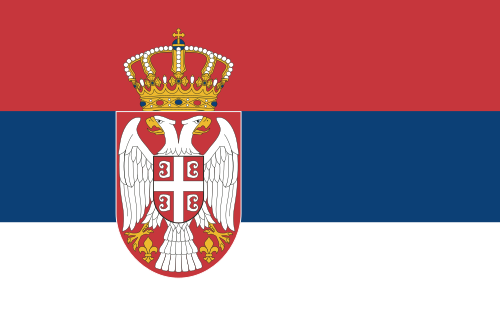
Flag of Serbia By See File history below for details. - Own work based on: Flag of Serbia construction sheet.svg (Construction sheet) The Government of Serbia, National symbols srbija.gov.rs, Public domain, https://commons.wikimedia.org/w/index.php?curid=65419036
10 CE
10 October
10 October Source — Wikipedia, "Timeline of Serbian history" (20th century):
16 CE
16 October
16 October Source — Wikipedia, "Timeline of Serbian history" (20th century):
17 CE
17 September
17 September Source — Wikipedia, "Timeline of Serbian history" (20th century):
18 CE
18 November
18 November Source — Wikipedia, "Timeline of Serbian history" (20th century):
780 CE
Višeslav of Serbia
Višeslav of Serbia, was the first Serbian ruler known by name, who ruled as the Prince of the Serbs in c. 780. The polity is known in historiography as the Serbian Principality. He was a progenitor of the Vlastimirović dynasty. Source — Wikipedia, "Timeline of Serbian history" (8th century):
800 CE
Radoslav of Serbia
Radoslav of Serbia, was a Serbian Prince (Knez, Archont) who ruled over the Serbs from 800 to 822, he succeeded his father Višeslav, who was the first ruler known by name of the early medieval Principality of Serbia. His son Prosigoj succeeded him in ca. 822<!--| 805 Source — Wikipedia, "Timeline of Serbian history" (9th century):
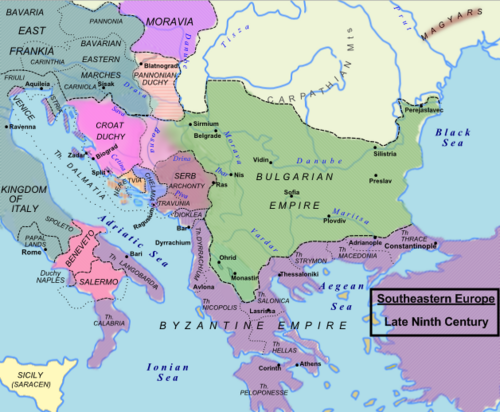
An svg version of File:Europe 814.jpg with corrections. List of corrections: Avar Khaganate was disestablished c. 803; Bulgarian-Frankish border was at the river Tizsa (Theiss) (see S. Runciman, History of the First Bulgarian Empire); north-eastern border of Bulgaria beyond the Danube delta (see R. Crampton, A Concise History of Bulgaria, Cambridge UP, 2006); Serdica (Sofia) was part of the First Bulgarian Empire by the 814 peace treaty between the Bulgarians and Byzantines (see Cambridge Medieval History, vol. 4 (1923) and R. Crampton, loc. cit.) Kingdom of Galicia, not Asturias (see The New Penguin Atlas of Medieval History, 1992, 42-45, and Das Mittelalter: Streifzug durch eine Epoche, National Geographic Deutschland, jan. 2015, 57) Croatian, Serbian, Paganian, Zachlumian, Travunian, Dioclean borders (see N. Budak, Hrvatska Povijest od 550. do 1100., 2018; T. Živković, On the northern borders of Serbia in the early middle ages, 2001; S. Ćirković, The Serbs, 2004; P. Komatina, On the Serbian-Bulgarian border in the 9th and the 10th centuries, 2015 etc.) Bosnian (N. Budak 2018; Tibor Živković, On the Beginnings of Bosnia in the Middle Ages, 2010; Muhamed Hadžijahić, Povijest Bosne u IX i X stoljeću, 2004; Relja Novaković, Where was Serbia from the 7th to the 12th century: Conclusion and summary of the monograph, 1981-2010; etc.) Note: Due to incomplete information, further adjustments may be necessary in the region of the Avar Khaganate and the borders between the First Bulgarian Empire, the Byzantine Empire, and Serbia. By Hel-hama - "The Public Schools Historical Atlas" by Charles Colbeck. Longmans, Green; New York; London; Bombay. 1905., Public domain, https://commons.wikimedia.org/w/index.php?curid=23527053
822 CE
Ljudevit Posavski
Ljudevit Posavski, Prince of Pannonian Slavs, becomes a Prince of Serbs in Paganias city of Srb as the Franks approach the Serbian lands. This Serbo-Croatian defence union expires in 823. Source — Wikipedia, "Timeline of Serbian history" (9th century):
Ljudevit Posavski allying himself with Slavs. Painting by J. F. Mucke. By Mücke, Josip Franjo (1819–1883) - Croatian Wikipedia, Public domain, https://commons.wikimedia.org/w/index.php?curid=36301033
825 CE
Principality of Serbia
In the Principality of Serbia, the House of Višeslavić-Vlastimirović strengthens the state against its immediate neighbors the Frankish Empire, the First Bulgarian Empire and the Byzantine Empire. Vlastimir of Serbia repels Bulgarian attacks led by Khan Boris. Source — Wikipedia, "Timeline of Serbian history" (9th century):
Balkans area year 850 according with the hungarian point of view. By Hxseek (talk) 03:42, 15 January 2009 (UTC) - P.M. Barford, The Early Slavs. Culture and Society in Early Medieval Eastern Europe, ISBN 0-8014-3977-9; John Fine, Jr., The Early Medieval Balkans, ISBN 0-472-08149-7; D. Hupchik, The Balkans from Constantinople to Communism., CC BY-SA 3.0, https://commons.wikimedia.org/w/index.php?curid=11049382
863 CE
Sts. Cyrill and Methodius
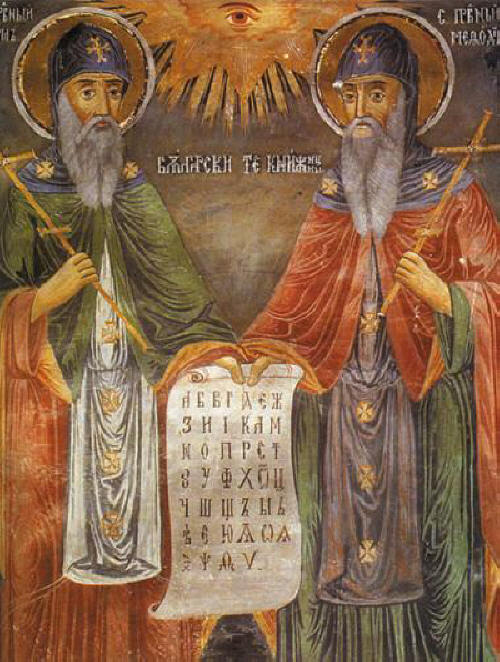
Missionaries Sts. Cyrill and Methodius are sent to Serbia on the order of Byzantine emperor Michael the III to fully convert Serbs to Christianity. Source — Wikipedia, "Timeline of Serbian history" (9th century):
Saints Cyril and Methodius - fresco in Troyan Monastery By painted by Zahari Zograf (Захарий Христович Димитров) - http://www.pravoslavieto.com/art/shkoli/samokovska/1810-1853_Zaharij_Zograf.htm, Public domain, https://commons.wikimedia.org/w/index.php?curid=4140266
900 CE
Ljudevit Posavski
Višeslav's son, or grandson, ruled during the uprisings of Ljudevit Posavski against the Franks in 819–822. According to the Royal Frankish Annals, in 822, Ljudevit went from his seat in Sisak to the Serbs somewhere in western Balkans – the Serbs are mentioned as reportedly holding the great/large part of Dalmatia ("Sorabos, quae natio magnam Dalmatiae partem obtinere dicitur"). Source — Wikipedia, "Timeline of Serbian history" (9th century):
Ljudevit Posavski allying himself with Slavs. Painting by J. F. Mucke. By Mücke, Josip Franjo (1819–1883) - Croatian Wikipedia, Public domain, https://commons.wikimedia.org/w/index.php?curid=36301033
1000 CE
Principality of Serbia
The First Bulgarian Empire annexes inner regions of the Principality of Serbia (924–927) Source — Wikipedia, "Timeline of Serbian history" (10th century):
Balkans area year 850 according with the hungarian point of view. By Hxseek (talk) 03:42, 15 January 2009 (UTC) - P.M. Barford, The Early Slavs. Culture and Society in Early Medieval Eastern Europe, ISBN 0-8014-3977-9; John Fine, Jr., The Early Medieval Balkans, ISBN 0-472-08149-7; D. Hupchik, The Balkans from Constantinople to Communism., CC BY-SA 3.0, https://commons.wikimedia.org/w/index.php?curid=11049382
1018 CE
Principality of Serbia
Byzantine rule is imposed upon inner Serbia; it becomes a thema (region) directly subjugated to Constantinople. Constantine Diogenes (a Greek) is mentioned as the strategos of Serbia. The rise of the Vojislavljević dynasty in Duklja. Littoral Serbia remains independent and wages wars against the Byzantines and eventually succeeds in freeing the Serb lands. Source — Wikipedia, "Timeline of Serbian history" (11th century):
Balkans area year 850 according with the hungarian point of view. By Hxseek (talk) 03:42, 15 January 2009 (UTC) - P.M. Barford, The Early Slavs. Culture and Society in Early Medieval Eastern Europe, ISBN 0-8014-3977-9; John Fine, Jr., The Early Medieval Balkans, ISBN 0-472-08149-7; D. Hupchik, The Balkans from Constantinople to Communism., CC BY-SA 3.0, https://commons.wikimedia.org/w/index.php?curid=11049382
1034 CE
Vojislavljević
The Vojislavljević dynasty claims the Serbian throne of Duklja as legal heir of the Vlastimirović dynasty. Under Stefan Vojislav Duklja becomes independent as the First Serbian Realm becoming the new core of the Serbian world. Source — Wikipedia, "Timeline of Serbian history" (11th century):
Kingdom of Croatia and Dalmatia, Kingdom of Dioclea, Kingdom of Hungary, Holy Roman Empire (Patriarchate of Aquileia, Drava March, March of Carantania, and the Duchy of Carinthia), Byzantine Empire, and the Duchy of Spoleto at the beginning of 1089 By Tezwoo Relief image from File:Yugoslavia_topographic_base_map.svg - Own work, CC BY-SA 4.0, https://commons.wikimedia.org/w/index.php?curid=104356093
1054 CE
East-West Schism
The East-West Schism splits Christianity in 1054. vast majority of Serbs opt for Orthodox Christianity due to deep Byzantine influences, but many in the coastal lands embrace Catholicism influenced by Venice. The Archbishopric of Bar is established by the Vatican in 1089. Source — Wikipedia, "Timeline of Serbian history" (11th century):
The map of the eastern/western allegiances in 1054 with the former country borders (showing dominant religions on a state level). By Barrikader (talk · contribs) - Own work, CC BY-SA 3.0, https://commons.wikimedia.org/w/index.php?curid=16895504
1077 CE
Mihailo I Vojislavljević
Mihailo I Vojislavljević assumes the title of the King of Duklja in Ston becoming the first internationally recognized Serbian king. His title was Ruler of Tribals and Serbs and ruled most of today's Montenegro and Dalmatia. His son Konstantin Bodin asserts the throne of Second Bulgarian Empire and annexes large parts of Bulgaria to the Serbian realm Source — Wikipedia, "Timeline of Serbian history" (11th century):
Први српски краљ,Михајло Војислављевић,ктиторски портрет из цркве светог Михајла у Стону. By Unknown author - From book (Светозар Радојчић, „Портрети српских владара у средњем веку“ (фототипско издање оригинала из 1934. године са допунама), Београд, 1996. ISBN 86-80879-07-X)., Public domain, https://commons.wikimedia.org/w/index.php?curid=8927084
1101 CE
Raymond IV of Toulouse
Raymond IV of Toulouse, leader of the Crusaders, meets with King Bodin in the city of Skadar. The Vukanović family will rule most of the aforementioned territories for decades to come. Tensions will rise among the noble families of inner Serbia, Duklja and its dominions leading to the disintegration of the Realm in the mid-12th century and a Byzantine intrusion. Source — Wikipedia, "Timeline of Serbian history" (12th century):
Raymond IV of Toulouse By Charles François Toustain, René Prosper Tassin, Jean Baptiste Baussonnet - Nouveau traité de diplomatique: où l'on examine les fondemens de cet art - 1759 https://archive.org/details/bub_gb_D9UWAAAAQAAJ/page/234/mode/2up, Public domain, https://commons.wikimedia.org/w/index.php?curid=17401003
1113 CE
Constantine Bodin
King Konstantin Bodin's relative Stefan Nemanja is born in Ribnica, Duklja. Exiled by his father's opponents he settles in Ras, in the region of Raška. He is the founder of the most powerful royal house of Medieval Serbia: the Nemanjić dynasty. The dynasty will have a decisive role in shaping and reaffirming the national identity of the Serbs tying it closely to the Byzantine civilizational model. Source — Wikipedia, "Timeline of Serbian history" (12th century):
Donor's portrait of Stefan Nemanje, Great Zupan (1168-1196), in monasticsm named Symeon. Fresco in the Church of the Theotokos, Studenica Monastery (1568). The saint is shown wearing both the monarch's crown and the simple robes of a monk. He holds a model of the church he has donated. By Unknown author - http://www.zaduzbine-nemanjica.rs/Studenica/latinica/Stefan-Nemanja.htm, Public domain, https://commons.wikimedia.org/w/index.php?curid=5676446
1176 CE
Grand Prince
the Grand Prince Stefan Nemanja sides with Venice, Duchy of Austria and Principality of Hungary undermining Byzantine authority in the Adriatic Sea. Source — Wikipedia, "Timeline of Serbian history" (12th century):
Donor's portrait of Stefan Nemanje, Great Zupan (1168-1196), in monasticsm named Symeon. Fresco in the Church of the Theotokos, Studenica Monastery (1568). The saint is shown wearing both the monarch's crown and the simple robes of a monk. He holds a model of the church he has donated. By Unknown author - http://www.zaduzbine-nemanjica.rs/Studenica/latinica/Stefan-Nemanja.htm, Public domain, https://commons.wikimedia.org/w/index.php?curid=5676446
1185 CE
Stefan Nemanja
Stefan Nemanja repels the Byzantine forces proclaiming the independence of Serbia which triggers an anti-Byzantine revolt in Bulgaria and Wallacia. Source — Wikipedia, "Timeline of Serbian history" (12th century):
Donor's portrait of Stefan Nemanje, Great Zupan (1168-1196), in monasticsm named Symeon. Fresco in the Church of the Theotokos, Studenica Monastery (1568). The saint is shown wearing both the monarch's crown and the simple robes of a monk. He holds a model of the church he has donated. By Unknown author - http://www.zaduzbine-nemanjica.rs/Studenica/latinica/Stefan-Nemanja.htm, Public domain, https://commons.wikimedia.org/w/index.php?curid=5676446
1189 CE
Holy Roman Emperor
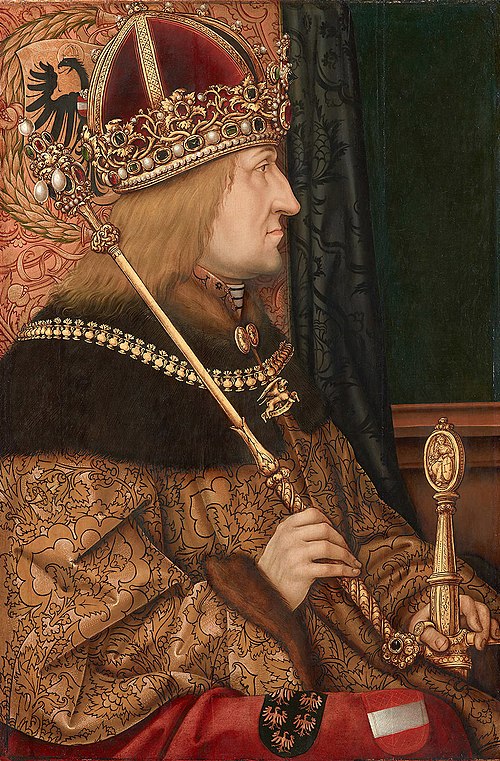
Holy Roman Emperor Friedrich Barbarossa and his 100,000 man army are hosted by Grand Prince Stefan Nemanja in Niš during the Third Crusade. Their alliance would give the Serbian Grand Prince enough time to take parts of Kosovo from the Byzantine Empire. Source — Wikipedia, "Timeline of Serbian history" (12th century):
Frederick III, Holy Roman Emperor, displaying the arms of Altösterreich ("Old Austria"): Azure/Sable, five eagles displayed or and the arms of Habsburg (modern) Gules, a fess argent ("Bindenschild"); originally the arms of the House of Babenburg (Duchies of Austria and Styria). Also Habsburg as inescutcheon on the Imperial Eagle (Reichsadler) By Unknown author, Public domain, https://commons.wikimedia.org/w/index.php?curid=4892107
1217 CE
Stefan the First-Crowned
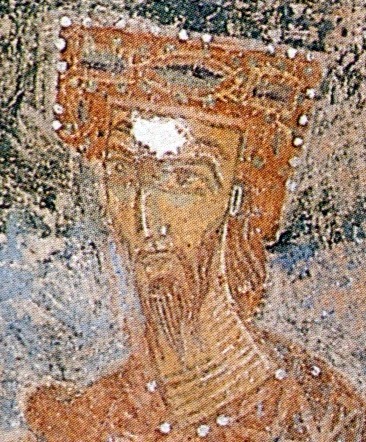
Stefan the First-Crowned is crowned the King of the Serbs by Pope Honorius III establishing the Second Serbian Realm. The full title of his dominions was King of the land of Rascia, Dioclea, Travunia, Dalmatia and Zachlumia. Catholicism expands within the Realm. Source — Wikipedia, "Timeline of Serbian history" (13th century):
Afresco of Serbian King Saint Stefan the First-Crowned By Unknown, CC0, https://commons.wikimedia.org/w/index.php?curid=137037190
1316 CE
Kingdom of Syrmia
The Kingdom of Syrmia is annexed by the Medieval Kingdom of Serbia following the death of King Stefan Dragutin of Syrmia. Belgrade is returned to the control of the Kingdom of Hungary. Clashes with the Kingdom of Hungary over northern Serbia results in the division of the former Kingdom of Syrmia with the Kingdom of Hungary gaining all territories north of the Sava and the Danube and a region of Belgrade. Source — Wikipedia, "Timeline of Serbian history" (14th century):
Realm of Stefan Dragutin and it's expansion By Polserb - https://archive.org/details/istorijasrpskog00stangoog/page/n1/mode/2up https://babel.hathitrust.org/cgi/pt?id=mdp.39015009950604 https://www.scribd.com/document/890970235/ИЗГУБЉЕНИ-ГРАДОВИ-НА-ДУНАВУ-ВИШЕСАВ-ШИСТАБ-ЕЛИЗАБЕТА Neven Isailović - Living by the Border. South Slavic Marcher Lords in the Late Medieval Balkan, CC0, https://commons.wikimedia.org/w/index.php?curid=182096063
1342 CE
Monarch
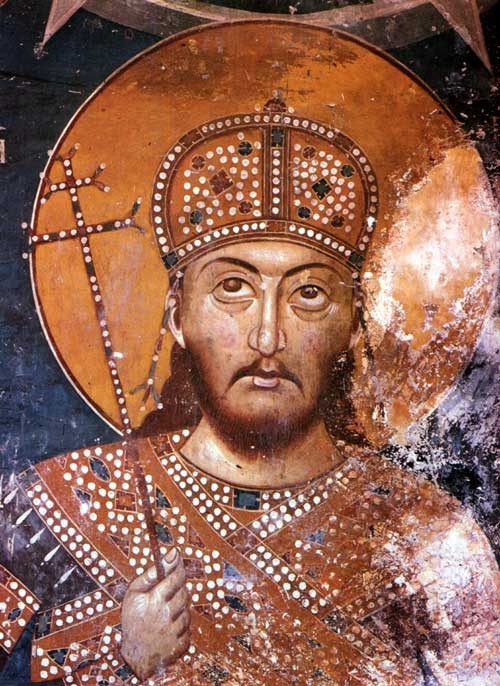
King Stefan Dušan conquers most of European Byzantium launching his first Siege of Constantinople. The Second Serbian Kingdom becomes the largest state in Southern and Eastern Europe. Source — Wikipedia, "Timeline of Serbian history" (14th century):
Serbian tzar Stefan Uroš IV Dušan of Serbia with his wife Jelena, middle of XIV century, monastery Lesnovo, Republic of Macedonia By Unknown author - From this page, this image.image., Public domain, https://commons.wikimedia.org/w/index.php?curid=5531992
1355 CE
Stefan Dusan
Czar Stefan Dušan The Great dies of poisoning following clashes with Hungarians and invading Turks. Stefan Uroš V of Serbia assumes the throne of the Serbian Empire triggering dynastic clashes among Serbian nobility. Simeon Uroš declares himself Emperor in Thessaly, Balšići took over Montenegro, Mrnjavčevići Macedonia, Lazarevići – Moravian Serbia, Brankovići – Kosovo, etc. Source — Wikipedia, "Timeline of Serbian history" (14th century):
Serbian tzar Stefan Uroš IV Dušan of Serbia with his wife Jelena, middle of XIV century, monastery Lesnovo, Republic of Macedonia By Unknown author - From this page, this image.image., Public domain, https://commons.wikimedia.org/w/index.php?curid=5531992
1371 CE
Ottoman Turks
The Ottoman Turks break into Europe and the Serbian domain of Macedonia clashing with the Christian League led by Vukašin Mrnjavčević in the Battle of Maritsa in the region of Thrace. This was a decisive Ottoman victory. Source — Wikipedia, "Timeline of Serbian history" (14th century):
Sipahis at the Battle of Vienna (for articles on "Sipahi, see de:Sipahi dk:Spahi en:Sipahi fr:Spahi). By G. Jansoone - own photo of an old document, Public domain, https://commons.wikimedia.org/w/index.php?curid=913238
1386 CE
Prince Lazar
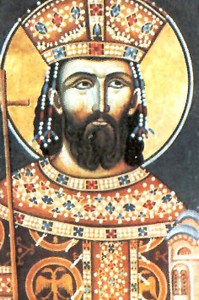
The Serbian army led by Prince Lazar defeats the Ottomans in the Battle of Plocnik. Source — Wikipedia, "Timeline of Serbian history" (14th century):
Fresco of Prince Lazar Hrebeljanović in the Ravanica Monastery, Serbia By Unknown author - http://radiosvetigora.wordpress.com/2010/06/28/лазарева-победа/#more-3810, Public domain, https://commons.wikimedia.org/w/index.php?curid=18720677
1388 CE
Battle of Bileca
The Serbian army defeats the Ottomans in the Battle of Bileca. From this the Ottomans learned how to fight against heavy cavalry. This became valuable experience for the next battle, the Battle of Kosovo. Source — Wikipedia, "Timeline of Serbian history" (14th century):
Painting of the Battle of Kosovo, dated 1870, by Adam Stefanović. Prince Lazar is seen dying with his horse. By Adam Stefanović - image uploaded at wordpress.com, Public domain, https://commons.wikimedia.org/w/index.php?curid=248947
1389 CE
Miloš Obilić
According to myth Miloš Obilić establishes the Order of the Dragon of St George, an alliance of Serb aristocracy against the Ottoman invaders. Out of 12 knights only 1 survives the battle passing his credentials to Stefan Lazarević and various European draconists (knights of Austria, Naples, Kingdom of Hungary, Spain, etc.) Source — Wikipedia, "Timeline of Serbian history" (14th century):
Painting of Miloš Obilić, 1861, oil, by Aleksandar Dobrić. By Aleksandar Dobrić (Alexander Dobrich) - Belgrade National Museum, Public domain, https://commons.wikimedia.org/w/index.php?curid=6585769
1429 CE
Belgrade
Belgrade is returned to the control of the Kingdom of Hungary following the death of Despot Stefan Lazarević. Đurađ Branković moves his capital to Smederevo. Source — Wikipedia, "Timeline of Serbian history" (15th century):
Aufnahme vom Dach der "Belgraderin" (Bürogebäude,101m) in Richtung des Tempels des heiligen Sava By ZlatanJovanovic - Own work, CC BY 3.0, https://commons.wikimedia.org/w/index.php?curid=25132735
1456 CE
Byzantine Empire
The Byzantine Empire collapses. Source — Wikipedia, "Timeline of Serbian history" (15th century):
Vector map showing the Eastern Roman Empire (or Byzantine Empire) at the end of Justinian's reign in 565 By Mnohohrishnyi - Own work, based mainly on "The New Roman Empire: A History of Byzantium" by Anthony Kaldellis, CC0, https://commons.wikimedia.org/w/index.php?curid=190907815
1537 CE
Klis Fortress
Klis Fortress succumbs to the Ottomans enabling Senj to become a Croatian Habsburg Uskok (pirate) stronghold in the Adriatic Sea. Although nominally accepting the sovereignty of the Habsburg Emperor Ferdinand I, Uskoci were a law unto themselves, comprise by refugees from Croatia, Bosnia and Serbia. Source — Wikipedia, "Timeline of Serbian history" (16th century):
Klis iz zraka By Općina Klis - Own work, CC BY-SA 4.0, https://commons.wikimedia.org/w/index.php?curid=132825001
1567 CE
Republic of Venice
The Republic of Venice and the Ottoman Empire clash over Uskoks and their allegiance. The Kingdom of Spain, the Habsburg Empire and the Papal States join the war in support of the Venetians and Uskoks ultimately defeating the Turks. Stojan Janković was one of the military leaders of Dalmatian uskoks and a high-ranking Venetian military officer. Source — Wikipedia, "Timeline of Serbian history" (16th century):
Variant war flag of the Serene Republic of Venice By Samhanin - Own work, #1, CC BY-SA 3.0, https://commons.wikimedia.org/w/index.php?curid=128390059
1699 CE
Holy League
Members of the Holy League – the Habsburg monarchy, the Polish–Lithuanian Commonwealth, the Republic of Venice and the Russian Empire – conclude a peace treaty with the Ottoman Empire in which the territories of modern Vojvodina and Slavonia are passed to the Habsburg Empire in the Treaty of Karlovci. Following the Congress Sremski Karlovci and Novi Sad become major hubs of Serbian culture in the Habsburg Empire. Serbs enter the Enlightenment period alongside other Western nations leaving behind the previous Ottoman-imposed values. Source — Wikipedia, "Timeline of Serbian history" (17th century):
This map shows the extent of the nations that founded the Holy League in 1684. By Thepipemaster - Own work, CC BY-SA 4.0, https://commons.wikimedia.org/w/index.php?curid=95242821
1748 CE
Maria Theresa of Austria
Holy Roman Empress Maria Theresa gives royal city rights to Novi Sad, the biggest Serbian settlement in this Empire, following the capitulation of Habsburg Serbia. The city becomes known as Serbian Athens and a place of Serbian national revival. Most of Serbian culture, including its patriarchy (Metropolitanate of Karlovci), is now "in exile" across the Danube and Sava rivers overlooking Ottoman Serbia to the south. More Serbian cities are granted a Free Royal Status in years to come chiefly by Maria Theresa of Austria: Sombor, Bečkerek, Subotica (Maria-Theresiopolis), etc. Source — Wikipedia, "Timeline of Serbian history" (18th century):
"Meytens painted this portrait on the occasion of the opening of the new building of the Academy in 1759 (Husslein-Arco/Lechner 2014) vanaf 1759" [1] By Martin van Meytens - Buchscan, Public domain, https://commons.wikimedia.org/w/index.php?curid=68471
1755 CE
Russian Empire
Serbs permanently settle in the Russian Empire fleeing from Ottoman onslaughts in the Balkans. The Czar gives them the territories of New Serbia and Slavo-Serbia. Today these Serbs are mostly assimilated into Ukraine although their traces still reflect in toponyms such as the city of Slovianoserbsk and the district of Slovianoserbsk in south-eastern Ukraine. Source — Wikipedia, "Timeline of Serbian history" (18th century):
Flag of Russia By Peter the Great - Государственный флаг Российской Федерации. Цвета флага: (Blue - Pantone 286 C, Red - Pantone 485 C) взяты из [1][2][3][4], Public domain, https://commons.wikimedia.org/w/index.php?curid=9450374
1766 CE
Ottoman Empire
Turks abolish the Serbian Orthodox Church, subjugating it to Constantinople. Two Serbian Patriarchs have found refuge in the Habsburg Empire during the preceding migrations. Southern Serbia slowly becomes Muslim in character, following the colonization of Muslim Albanians and Turkish peoples. Source — Wikipedia, "Timeline of Serbian history" (18th century):
The Ottoman flag and Turkey Republic Flag of 1844–1935. Late Ottoman flag which was made based on the historical documents listed in the Source section. Note that a five-pointed star was rarely used in the crescent-and-star symbol before the 19th century. By User:Orwellianist - File:German soldiers celebrate Christmas in Ottoman Empire during WW1.jpg File:Nordenfelt submarine Abdülhamid.jpg Ottoman submarine Abdülhamid (1886) File:Declaration of the 1908 Revolution in Ottoman Empire.png Photo from 1908 http://www.tayyareci.com/digerucaklar/turkiye/preww1/Bleriot%20XI%20b%20TuAF.jpg - Photo from 1912 http://www.manorhouse.clara.net/book2/chapter18.htm (image), alternative link - Photo from 1914 http://www.manorhouse.clara.net/book2/chapter21.htm image - Photo from 1914 File:SultanahmetMitingi.jpg Photo from 1919 http://www.tayyareci.com/digerucaklar/turkiye/ww1/gothawd12.jpg - Photo from 1915 http://www.tayyareci.com/digerucaklar/turkiye/ww1/gothawd2.jpg - Photo from 1915 http://www.tayyareci.com/digerucaklar/turkiye/ww1/gothawd13.jpg - Photo from 1915 http://www.tayyareci.com/digerucaklar/turkiye/ww1/sakir_feyzi_resimleri2.jpg - Photo from 1915 http://www.tayyareci.com/digerucaklar/turkiye/ww1/S.P.A.D13.JPG - Photo from 1918 http://www.tayyareci.com/digerucaklar/turkiye/kurtulus/fiat-r2.jpg - Photo from 1920 http://www.tayyareci.com/digerucaklar/turkiye/kurtulus/breguet14b2.jpg - Photo from 1922 http://www.tayyareci.com/digerucaklar/turkiye/kurtulus/nieuport27-2.jpg - Photo from 1922 File:Bundesarchiv Bild 146-2005-0086, Kaiser Wilhelm II in Konstantinopel.jpg File:Ceremony to decolate the flag of 27th Regiment with Imtiyaz Medals.jpg File:Ottoman troops with flag.jpg File:Ottoman Navy at the Golden Horn.jpg - Postcard from 1914 http://www.osmanzengin.com/ESKi__iSTANBUL/kararkoy02.jpg - Postcard from 1920 http://www.osmanzengin.com/ESKi__iSTANBUL/tepebasi.jpg - Postcard from 1920 http://www.vicmart.com/ext/en/exrw/item=1416 - Ottoman medal from 1850 File:Aff_ciwl_orient_express4_jw.jpg - 1888-1889 season timetable of the Orient Express File:Ottoman conquests.jpg - Ottoman map from 1914, Public domain, https://commons.wikimedia.org/w/index.php?curid=7112828
1778 CE
Sombor
The first Serbian Faculty is established in Sombor, Habsburg Empire, under the name Teacher's College. It is the oldest higher-education facility in the region. Source — Wikipedia, "Timeline of Serbian history" (18th century):
Sombor Županija building housing city administration today By Vkuncak - Own work, CC BY-SA 4.0, https://commons.wikimedia.org/w/index.php?curid=48363782
1804 CE
Napoleon
Napoleon annexes the Bay of Kotor to the First French Empire as a part of the Illyrian provinces. The Venetian Republic collapses after almost 1000 years of existence. Source — Wikipedia, "Timeline of Serbian history" (19th century):
Napoleon By Jacques-Louis David - zQEbF0AA9NhCXQ at Google Cultural Institute maximum zoom level, Public domain, https://commons.wikimedia.org/w/index.php?curid=22174172
1808 CE
constitutional monarchy
The country's Narodni Zbor (Revolutionary Parliament) adopts the first constitutional act in this part of Europe defining Serbia as a constitutional monarchy under Karađorđe's supreme rule. Source — Wikipedia, "Timeline of Serbian history" (19th century):
World's states coloured by systems of government: Parliamentary systems: Head of government is elected or nominated by and accountable to the legislature. Constitutional monarchy with a ceremonial monarch Parliamentary republic with a ceremonial president Parliamentary republic with an executive president Presidential system: Head of government (president) is popularly elected and independent of the legislature. Presidential republic Hybrid systems: Semi-presidential republic: Executive president is independent of the legislature; head of government is appointed by the president and is accountable to the legislature. Assembly-independent republic: Head of government (president or directory) is elected by the legislature, but is not accountable to it. Other systems: Theocratic republic: Supreme leader holds significant executive and legislative power but is still restricted by the constitution. Islamic theocracy: Supreme leader holds unlimited power. Semi-constitutional monarchy: Monarch holds significant executive or legislative power but is still restricted by the constitution. Absolute monarchy: Monarch has unlimited power. One-party state: Power is constitutionally linked to a single political party. Military junta: Committee of military leaders controls the government; constitutional provisions are suspended. Provisional government: current regime is temporary or transition; no permanent constitution Dependent territories or places without governments. Note: this chart represents the de jure systems of government, not the de facto degree of democracy. By Newfraferz87 - File:BlankMap-World.svg, Own work, CC0, https://commons.wikimedia.org/w/index.php?curid=180518305
1813 CE
Principality of Serbia
The Revolutionary Serbia is crushed facing the Ottomans as they invade the country with 200,000 soldiers. The lack of support from Imperial Russia, who were at war against Napoleon at the time, also contributed to the Serbian defeat. Widespread revenge attacks upon civilians, nobles and "Intelligentsia" trigger a second insurrection. Source — Wikipedia, "Timeline of Serbian history" (19th century):
Flag of Serbia (1835-1882) By This vector image includes elements that have been taken or adapted from this file: - Flag of Serbia (1835 law), Public domain, https://commons.wikimedia.org/w/index.php?curid=63380332
1816 CE
Imperial Russia
The Ottoman governor, Marashli Ali Pasha, approves partial autonomy for the rebel province pressured by Imperial Russia and the Habsburg Empire– the supervisors and protectors of the Serbian people in the Sultanate. Source — Wikipedia, "Timeline of Serbian history" (19th century):
Flag of Russia By Peter the Great - Государственный флаг Российской Федерации. Цвета флага: (Blue - Pantone 286 C, Red - Pantone 485 C) взяты из [1][2][3][4], Public domain, https://commons.wikimedia.org/w/index.php?curid=9450374
1848 CE
Spring of Nations
The Spring of Nations erupts in Europe. The Serbs of Habsburg Empire demand self-rule according to the 1691 charter of Leopold I, Emperor of Austria. The Serbs proclaimed the creation of autonomous Serbian Vojvodina in Sremski Karlovci as the Serb army in the Habsburg monarchy clashes with the Hungarians. Source — Wikipedia, "Timeline of Serbian history" (19th century):
On the barricades on the Rue Soufflot, Paris, 25 June 1848 (1848-49), by Horace Vernet By Horace Vernet - memo.fr and gallerix.org, Public domain, https://commons.wikimedia.org/w/index.php?curid=71217
1850 CE
Vienna
In Vienna Serbian and Croatian linguists agree to create a unified literary language based on the Shtokavian dialect. It becomes known as Serbo-Croatian for the next 150 years. The aim is to establish closer cultural ties between the two closest nations and boost local Serbian support for the Croatian cause. Source — Wikipedia, "Timeline of Serbian history" (19th century):
Konzert der Wiener Philharmoniker vor Schloss Schönbrunn, Wien By Superbass - Own work, CC BY-SA 3.0, https://commons.wikimedia.org/w/index.php?curid=19845088
1860 CE
Franz Joseph of Austria
Franz Joseph of Austria abolishes the Serbian crownland of Voivodship of Serbia and Tamiš Banat igniting a revolt among Serbs without any success. Source — Wikipedia, "Timeline of Serbian history" (19th century):
Depicted person: Franz Joseph I of Austria – Emperor of Austria and King of Hungary (1830-1916) By Carl Pietzner - Österreichische Nationalbibliothek - ÖNB, Public domain, https://commons.wikimedia.org/w/index.php?curid=168267139
1867 CE
Austrian Empire
The Habsburg Empire is replaced by the Dual monarchy of Austria-Hungary. The Serbian lands are split between the two. Source — Wikipedia, "Timeline of Serbian history" (19th century):
↑ Civil flag or Landesfarben of the Habsburg monarchy (1700-1806)↑ Merchant ensign of the Habsburg monarchy (from 1730 to 1750)↑ Flag of the Austrian Empire (1804-1867)↑ Civil flag used in Cisleithania part of Austria-Hungary (1867-1918)House colours of the House of Habsburg By ThrashedParanoid and Peregrine981. - Own work based on: The Flags & Arms of the Modern Era., Public domain, https://commons.wikimedia.org/w/index.php?curid=567872
1869 CE
Subotica
Subotica, one of the biggest Serbian settlements, is connected to the West by railway. Source — Wikipedia, "Timeline of Serbian history" (19th century):
View of Subotica (2024) By This image was made by Sadko. Please credit this with: "Sadko, Wikipedia" in the immediate vicinity of the image. A message to me would be appreciated as well. If you wish to use, license, or buy the image, please contact me to discuss terms. More of my work can be found in my personal gallery. - Own work, CC BY-SA 4.0, https://commons.wikimedia.org/w/index.php?curid=153888670
1873 CE
Banat Krajina
Banat Krajina is abolished and included into Transleithania; despite the wishes of the majority Serbs and Germans. This is the first step towards the destruction of the Serb-populated Military Frontier inherited from the Habsburg Empire. By 1883 the Military Frontier is entirely abolished and incorporated into the Kingdom of Hungary and the Kingdom of Croatia-Slavonia, save for the Bay of Kotor (Austria). Source — Wikipedia, "Timeline of Serbian history" (19th century):
Banat Krajina By Unknown author, Public domain, https://commons.wikimedia.org/w/index.php?curid=1482376
1877 CE
Russo-Turkish War
The Russo-Turkish War begins. The majority peoples, the Bosnian Serbs, launch an uprising against the Ottomans in Nevesinje declaring their unification with the Principality of Serbia. Nikola Pašić and Nicholas I of Montenegro proclaim the formal independence of Serbia and Montenegro. The Ottoman Empire declares war on Serbia and Montenegro. Source — Wikipedia, "Timeline of Serbian history" (19th century):
Action off Măcin 1877 Battle of Shipka Pass 1877-1878 Siege of Plevna 1877Battle of Tashkessen 1877 By Action off Măcin 1877 - Dimitrie ȘtiubeiBattle of Shipka Pass 1877-1878 - Dimitar GyudjenovSiege of Plevna 1877 - Photo taken by - Joe MabelBattle of Tashkessen 1877 - Sukhodolsky - Panou_5.jpgBattle of Shipka Pass.jpgPlevna_diorama_1.jpgБой_при_Ташкисене.jpg, CC BY 4.0, https://commons.wikimedia.org/w/index.php?curid=144024743
1878 CE
Istanbul
Christian troops besiege Istanbul. Western interference stops the collapse of Ottoman Turkey by acknowledging de jure independence of Montenegro, Serbia and Romania with the Treaty of Berlin: all of whom have already been sovereign for some time prior to the Congress. Source — Wikipedia, "Timeline of Serbian history" (19th century):
Aerial view of the historical peninsula and modern skyline of Istanbul By Hunanuk - File:Fatihistanbul.jpg, CC0, https://commons.wikimedia.org/w/index.php?curid=146259277
1882 CE
Kingdom of Serbia
The Kingdom of Serbia (5th Serbian Realm) is proclaimed under austrophile King Milan Obrenović following a corruption scandal he was involved in. Source — Wikipedia, "Timeline of Serbian history" (19th century):
State flag of Serbia (1882-1918) By Guilherme Paula - Српски национални идентитет, CC BY-SA 3.0, https://commons.wikimedia.org/w/index.php?curid=2562345
1885 CE
Serbo-Bulgarian War
The Serbo-Bulgarian War results in the country's humiliation following the Unification of Bulgaria increasing hostility toward the House of Obrenović. Source — Wikipedia, "Timeline of Serbian history" (19th century):
"Преминаване на Сръбско-българската граница.", Худ. Антони Пиотровски. By Original uploader was ЧерноризецХрабър at bg.wikipedia - Transferred from bg.wikipedia, Public domain, https://commons.wikimedia.org/w/index.php?curid=5523936
1889 CE
Milan I of Serbia
King Milan Obrenović abdicates the throne in favour of his minor (age) son Aleksandar Obrenović. Austrophile policy continues. Source — Wikipedia, "Timeline of Serbian history" (19th century):
"Exkönig Milan †" --- Milan I. Obrenović (1854-1901), war 1868/1872 bis 1882 als Milan Obrenović IV. serbischer Fürst und 1882 bis 1889 als Milan I. König von Serbien By Josef Löwy - Wiener Bilder, 13. Februar 1901, S. 9http://anno.onb.ac.at/cgi-content/anno?aid=wrb&datum=19010213&seite=9, Public domain, https://commons.wikimedia.org/w/index.php?curid=11670696
1893 CE
Aleksandar Obrenović
Aleksandar Obrenović assumes power following a coup d'état. Source — Wikipedia, "Timeline of Serbian history" (19th century):
El rey Alejandro I de Serbia en 1900 By Mijatovic, Cedomilj, 1842-1932 - https://archive.org/details/royaltragedybein00mijarich, Public domain, https://commons.wikimedia.org/w/index.php?curid=15589825
1903 CE
1903
1903 Source — Wikipedia, "Timeline of Serbian history" (20th century):
1906 CE
1906
1906 Source — Wikipedia, "Timeline of Serbian history" (20th century):
1908 CE
1908
1908 Source — Wikipedia, "Timeline of Serbian history" (20th century):
1910 CE
1910
1910 Source — Wikipedia, "Timeline of Serbian history" (20th century):
1912 CE
1912
1912 Source — Wikipedia, "Timeline of Serbian history" (20th century):
1914 CE
1914
1914 Source — Wikipedia, "Timeline of Serbian history" (20th century):
1915 CE
1915
1915 Source — Wikipedia, "Timeline of Serbian history" (20th century):
1918 CE
1918
1918 Source — Wikipedia, "Timeline of Serbian history" (20th century):
1919 CE
1919
1919 Source — Wikipedia, "Timeline of Serbian history" (20th century):
1920 CE
1920
1920 Source — Wikipedia, "Timeline of Serbian history" (20th century):
1921 CE
1921
1921 Source — Wikipedia, "Timeline of Serbian history" (20th century):
1924 CE
1924
1924 Source — Wikipedia, "Timeline of Serbian history" (20th century):
1929 CE
1929
1929 Source — Wikipedia, "Timeline of Serbian history" (20th century):
1931 CE
1931
1931 Source — Wikipedia, "Timeline of Serbian history" (20th century):
1934 CE
1934
1934 Source — Wikipedia, "Timeline of Serbian history" (20th century):
1939 CE
1939
1939 Source — Wikipedia, "Timeline of Serbian history" (20th century):
1941 CE
1941
1941 Source — Wikipedia, "Timeline of Serbian history" (20th century):
1943 CE
1943
1943 Source — Wikipedia, "Timeline of Serbian history" (20th century):
1944 CE
1944
1944 Source — Wikipedia, "Timeline of Serbian history" (20th century):
1945 CE
1945
1945 Source — Wikipedia, "Timeline of Serbian history" (20th century):
1946 CE
1946
1946 Source — Wikipedia, "Timeline of Serbian history" (20th century):
1948 CE
1948
1948 Source — Wikipedia, "Timeline of Serbian history" (20th century):
1954 CE
1954
1954 Source — Wikipedia, "Timeline of Serbian history" (20th century):
1968 CE
1968
1968 Source — Wikipedia, "Timeline of Serbian history" (20th century):
1974 CE
1974
1974 Source — Wikipedia, "Timeline of Serbian history" (20th century):
1980 CE
1980
1980 Source — Wikipedia, "Timeline of Serbian history" (20th century):
1981 CE
1981
1981 Source — Wikipedia, "Timeline of Serbian history" (20th century):
1986 CE
1986
1986 Source — Wikipedia, "Timeline of Serbian history" (20th century):
1989 CE
1989
1989 Source — Wikipedia, "Timeline of Serbian history" (20th century):
1990 CE
1990
1990 Source — Wikipedia, "Timeline of Serbian history" (20th century):
1991 CE
1991
1991 Source — Wikipedia, "Timeline of Serbian history" (20th century):
1992 CE
1992
1992 Source — Wikipedia, "Timeline of Serbian history" (20th century):
1993 CE
1993
1993 Source — Wikipedia, "Timeline of Serbian history" (20th century):
1995 CE
1995
1995 Source — Wikipedia, "Timeline of Serbian history" (20th century):
1998 CE
1998
1998 Source — Wikipedia, "Timeline of Serbian history" (20th century):
1999 CE
1999
1999 Source — Wikipedia, "Timeline of Serbian history" (20th century):
2000 CE
2000
2000 Source — Wikipedia, "Timeline of Serbian history" (20th century):
2001 CE
Albanians
Albanian guerilla forces linked to the KLA attack Yugoslav forces within the Ground Safety Zone between Serbia proper and Kosovo. The conflict went on for several weeks spreading into Serbia's municipalities of Preševo, Bujanovac and Medveđa before the resistance is finally suppressed. Guerilla fighters take refuge in the Republic of Macedonia igniting a 2001 Macedonia conflict. Source — Wikipedia, "Timeline of Serbian history" (21st century):
Emblem of the Kosovo Liberation Army By Adnan Asllani - Gazeta Infokus, Public domain, https://commons.wikimedia.org/w/index.php?curid=121281811
2003 CE
FR Yugoslavia
Third Yugoslavia is abolished and replaced with a state union of Serbia and Montenegro with Belgrade its capital. Source — Wikipedia, "Timeline of Serbian history" (21st century):
Flag of Serbia and Montenegro, was adopted on 27 April 1992, as flag of Federal Republic of Yugoslavia (1992-2003). By See File history below for details. (www.gov.yu) - Own work, Public domain, https://commons.wikimedia.org/w/index.php?curid=433233
2005 CE
Stabilisation and Association process
SAA talks with the EU are launched aimed at providing closer ties with the EU. The state becomes an EU potential candidate country. Source — Wikipedia, "Timeline of Serbian history" (21st century):
A map of the states which have participated in the European Union's Stabilisation and Association Process, with the date of entry into force of its Stabilization and Association Agreement (and the date of lapse of the agreement for Croatia when it became an EU member state). EU member states SAA in force By Blank map of Europe (with disputed regions).svg: maix¿? derivative work: Danlaycock - This file was derived from: Blank map of Europe (with disputed regions).svg:, CC BY-SA 2.5, https://commons.wikimedia.org/w/index.php?curid=27309642
Mar 11, 2006 CE
Slobodan Milošević
Death of Slobodan Milošević. Source — Wikipedia, "Timeline of Serbian history" (21st century):
Former president of Serbia and FR Yugoslavia, Slobodan Milošević (1941−2006). By Stevan Kragujević - This image has been extracted from another file, CC BY-SA 3.0, https://commons.wikimedia.org/w/index.php?curid=128009853
Feb 17, 2008 CE
2008 Kosovo declaration of independence
Kosovo unilaterally declares independence from Serbia, which does not recognize the move. The declaration is only partially recognized by the international community. Source — Wikipedia, "Timeline of Serbian history" (21st century):
May 26, 2011 CE
Ratko Mladić
Bosnian Serb military commander Ratko Mladić arrested. Source — Wikipedia, "Timeline of Serbian history" (21st century):
General Ratko Mladić during UN-mediated talks at Sarajevo airport in 1993. By Фото: Михаил Евстафьев / Photo by Evstafiev Mikhail - Own work, CC BY-SA 3.0, https://commons.wikimedia.org/w/index.php?curid=598444












!["Meytens painted this portrait on the occasion of the opening of the new building of the Academy in 1759 (Husslein-Arco/Lechner 2014) vanaf 1759" [1]](https://upload.wikimedia.org/wikipedia/commons/thumb/3/3e/Kaiserin_Maria_Theresia_%28HRR%29.jpg/500px-Kaiserin_Maria_Theresia_%28HRR%29.jpg)