Early Ayurvedic texts described centers of consciousness and a network of channels throughout the body, linking mental functions to physiology in ancient Indian medicine. Source — Wikipedia:
Nepal, Text- 12th-13th century; Images- 18th-19th century Books Ink and opaque watercolor on palm leaf Gift of Emeritus Professor and Mrs. Thomas O. Ballinger (M.87.271a-g) South and Southeast Asian Art By Unknown author - Image: http://collections.lacma.org/sites/default/files/remote_images/piction/ma-31972784-O3.jpg Gallery: http://collections.lacma.org/node/170472 archive copy at the Wayback Machine, Public domain, https://commons.wikimedia.org/w/index.php?curid=32452002
400 BCE
Hippocrates links brain to mind
Hippocrates argued that the brain, not the heart, is the seat of intelligence, emotion, and sensation, establishing a biological foundation for psychology. Source — Wikipedia:
Bust of Hippocrates By Unidentified engraver - 1881 Young Persons' Cyclopedia of Persons and Places Upload by RedWolf 05:45, Jan 10, 2005 (UTC), Public domain, https://commons.wikimedia.org/w/index.php?curid=164808
350 BCE
Aristotle's De Anima on the soul
Aristotle's treatise proposed that the soul is the form of the body, exploring perception, memory, and desire in a systematic natural philosophy of mind. Source — Wikipedia:
Expositio et quaestiones in Aristotelis De anima By Johannes Buridanus - http://www.enluminures.culture.fr/public/mistral/enlumine_fr?ACTION=CHERCHER&FIELD_98=AUTR&VALUE_98=Johannes%20Buridanus&DOM=All&REL_SPECIFIC=1, Public domain, https://commons.wikimedia.org/w/index.php?curid=3730859
850 CE
Al-Balkhi's concept of mental health
Abu Zayd al-Balkhi categorized mental disorders and discussed anxiety and depression, advocating for psychotherapy and balancing the body and mind. Source — Wikipedia:
900 CE
Al-Razi's clinical psychiatry
Al-Razi established psychiatric wards in Baghdad hospitals and provided clinical descriptions of mental illness, emphasizing compassionate treatment. Source — Wikipedia:
1020 CE
Ibn al-Haytham on visual perception
In his Book of Optics, Ibn al-Haytham experimentally demonstrated that vision occurs via light entering the eye, revolutionizing theories of perception. Source — Wikipedia:
This picture is of the cover page of Ibn al-Haytham's "Book of Optics", 1572. By Ibn al-Haytham, Vitello, Friedrich Risner - University of Oklahoma History of Science Collections et BnF Gallica : http://gallica.bnf.fr/ark:/12148/bpt6k312873d.r=Haytham?rk=407727;2, Public domain, https://commons.wikimedia.org/w/index.php?curid=48189707
1025 CE
Ibn Sina's neuropsychiatry
Ibn Sina described hallucinations, insomnia, and the psychological impact of emotions on the body, advancing early neuropsychiatry in The Canon of Medicine. Source — Wikipedia:
Format: Still image Genre(s): Portraits Abstract: Bust, left profile. Extent: 1 photomechanical reproduction Technique: halftone, color NLM Unique ID: 101408284 NLM Image ID: B029612 Permanent Link: resource.nlm.nih.gov/101408284 By National Library of Medicine - https://www.flickr.com/photos/nlmhmd/54093321223/, No restrictions, https://commons.wikimedia.org/w/index.php?curid=168831766
1650 CE
Descartes' mind-body interactionism
René Descartes proposed that the mind and body interact at the pineal gland, shaping centuries of debate on the philosophy of mind and consciousness. Source — Wikipedia:
Descartes' mind-body interactionism By After Frans Hals - André Hatala [e.a.] (1997) De eeuw van Rembrandt, Bruxelles: Crédit communal de Belgique, ISBN 2-908388-32-4., Public domain, https://commons.wikimedia.org/w/index.php?curid=2774313
1796 CE
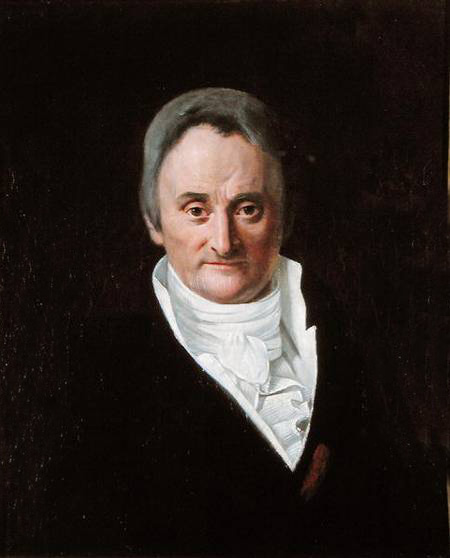
Pinel unchains the mentally ill
Philippe Pinel reformed the Bicêtre asylum, removing chains from patients and advocating humane treatment, marking the birth of modern clinical psychiatry. Source — Wikipedia:
Portrait of Philippe Pinel; oil on canvas. By Anne-Louise Moreau, dite Anna Mérimée (1775-1852), mother of Prosper Mérimée - Bridgeman Art Library, Public domain, https://commons.wikimedia.org/w/index.php?curid=8922023
1860 CE
Fechner founds psychophysics
Gustav Fechner published Elemente der Psychophysik, establishing the quantitative relationship between physical stimuli and psychological sensations. Source — Wikipedia:
Greek uppercase psi icon By Mrmw - Own work, Public domain, https://commons.wikimedia.org/w/index.php?curid=144513919
1879 CE
Wundt opens first psychology lab
Wilhelm Wundt established the first experimental psychology laboratory in Leipzig, Germany, formally establishing psychology as an independent science. Source — Wikipedia:
Der deutsche Psychologe Wilhelm Wundt (1832-1920) im Jahr 1902. By Unknown author - Weltrundschau zu Reclams Universum 1902, Public domain, https://commons.wikimedia.org/w/index.php?curid=10652603
1890 CE
James publishes Principles of Psychology
William James's foundational textbook synthesized the field and introduced the theory of stream of consciousness, shaping American functionalist psychology. Source — Wikipedia:
Title page from the first edition of The Principles of Psychology by William James (1890). By William James - Internet Archive scan of the book, Public domain, https://commons.wikimedia.org/w/index.php?curid=46263637
1905 CE
Binet-Simon intelligence scale
Alfred Binet and Théodore Simon developed the first practical intelligence test to identify children needing educational support, launching modern psychometrics. Source — Wikipedia:
1913 CE
Watson founds behaviorism
John B. Watson published his behaviorist manifesto, arguing that psychology should study observable behavior rather than unobservable mental states. · Wikipedia: https://en.wikipedia.org/wiki/Behaviorism
Greek uppercase psi icon By Mrmw - Own work, Public domain, https://commons.wikimedia.org/w/index.php?curid=144513919
1924 CE
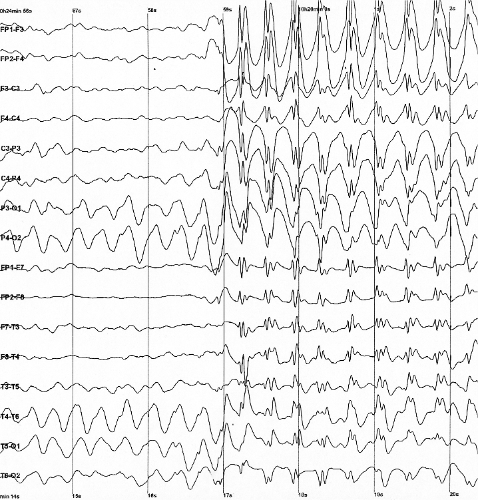
Berger records human EEG
Hans Berger recorded the first human electroencephalogram, demonstrating electrical activity in the brain and founding modern clinical neurophysiology. Source — Wikipedia:
Berger records human EEG By Unknown author, CC BY-SA 2.0, https://commons.wikimedia.org/w/index.php?curid=845554
1937 CE
Rorschach inkblot test standardized
The Rorschach inkblot test, developed by Hermann Rorschach, became a widely used projective psychometric instrument for psychological diagnosis. Source — Wikipedia:
the first of the blots of the w:Rorschach inkblot test By Hermann Rorschach (died 1922) - https://web.archive.org/web/20070820233339/http://ar.geocities.com/test_de_rorschach/, Public domain, https://commons.wikimedia.org/w/index.php?curid=3594353Does the Rorschach Inkblot Test Work?
1954 CE
Olds and Milner discover reward circuit
James Olds and Peter Milner discovered the brain's reward pathway via septal area electrode stimulation, founding behavioral neuroscience research. Source — Wikipedia:
1956 CE
Cognitive revolution begins
George Miller's paper on the magical number seven established cognitive limits, helping launch the cognitive revolution against behaviorist dominance. · Wikipedia: https://en.wikipedia.org/wiki/George_Armitage_Miller
1968 CE
MMPI-2 standardized
The Minnesota Multiphasic Personality Inventory was revised and standardized as a premier psychometric tool for clinical personality assessment. Source — Wikipedia:
1979 CE
Kahneman and Tversky found prospect theory
Daniel Kahneman and Amos Tversky published prospect theory, describing how people make decisions under risk and founding modern behavioral economics. · Wikipedia: https://en.wikipedia.org/wiki/Prospect_theory
<a href="https://creativecommons.org/licenses/by-sa/3.0/no/" rel="noreferrer nofollow"></a>This work by <a href="http://nrkbeta.no" rel="noreferrer nofollow">nrkbeta.no</a> is licensed under a <a href="https://creativecommons.org/licenses/by-sa/3.0/no/" rel="noreferrer nofollow">Creative Commons Attribution-Share Alike 3.0 Norway License</a>.Permissions beyond the scope of this license may be available at <a href="http://nrkbeta.no/cc/" rel="noreferrer nofollow">http://nrkbeta.no/cc/</a>. By nrkbeta - IMG_4330, CC BY-SA 2.0, https://commons.wikimedia.org/w/index.php?curid=104292544Thinking, Fast and Slow. Daniel Kahneman (2011)
1981 CE
Sperry awarded Nobel for split-brain
Roger Sperry received the Nobel Prize for his split-brain research, revealing the lateralization of cognitive functions between the brain's hemispheres. · Wikipedia: https://en.wikipedia.org/wiki/Roger_Wolcott_Sperry
Roger Wolcott Sperry By Unknown author - http://resource.nlm.nih.gov/101441472, Public domain, https://commons.wikimedia.org/w/index.php?curid=70998661Gazzaniga explains Split Brain in Sperry Lab
1990 CE
fMRI revolutionizes cognitive neuroscience
The development of functional magnetic resonance imaging allowed non-invasive mapping of brain activity, transforming clinical neuroscience and psychology. Source — Wikipedia:
Figure 12.7 fMRI in Version 8.25 from the Textbook OpenStax Anatomy and Physiology Published May 18, 2016 Access for free at https://openstax.org/books/anatomy-and-physiology/pages/1-introduction By OpenStax - https://openstax.org/books/anatomy-and-physiology/pages/12-1-basic-structure-and-function-of-the-nervous-system, CC BY 4.0, https://commons.wikimedia.org/w/index.php?curid=30147912
2000 CE
Carlsson wins Nobel for dopamine
Arvid Carlsson was awarded the Nobel Prize for discovering dopamine's role as a neurotransmitter, revolutionizing treatments for Parkinson's and psychiatry. · Wikipedia: https://en.wikipedia.org/wiki/Arvid_Carlsson
Swedish pharmacologist and Nobel laureate Arvid Carlsson giving a lecture at the 2011 Göteborg Science Festival. By Vogler - Own work, CC BY-SA 3.0, https://commons.wikimedia.org/w/index.php?curid=154865850
2002 CE
Kahneman wins Nobel in Economics
Daniel Kahneman was awarded the Nobel Memorial Prize in Economic Sciences for integrating psychological research into behavioral economics. · Wikipedia: https://en.wikipedia.org/wiki/Daniel_Kahneman
<a href="https://creativecommons.org/licenses/by-sa/3.0/no/" rel="noreferrer nofollow"></a>This work by <a href="http://nrkbeta.no" rel="noreferrer nofollow">nrkbeta.no</a> is licensed under a <a href="https://creativecommons.org/licenses/by-sa/3.0/no/" rel="noreferrer nofollow">Creative Commons Attribution-Share Alike 3.0 Norway License</a>.Permissions beyond the scope of this license may be available at <a href="http://nrkbeta.no/cc/" rel="noreferrer nofollow">http://nrkbeta.no/cc/</a>. By nrkbeta - IMG_4330, CC BY-SA 2.0, https://commons.wikimedia.org/w/index.php?curid=104292544
2013 CE
Optogenetics enables neural control
Karl Deisseroth and colleagues advanced optogenetics, allowing precise control of specific neurons to study causal links between brain circuits and behavior. · Wikipedia: https://en.wikipedia.org/wiki/Optogenetics
Optogenetics | briefly explained | Turning nerve cells on and off using pulses of light
2024 CE
AI transforms psychometric assessment
Machine learning and large language models are increasingly used to analyze behavioral data, transforming psychometric evaluation and clinical diagnosis. #contemporary #science