Encyclopedia/3. History, Societies & Civilizations/01. East Asian Civilizations/01. Chinese Dynasties • Curated by Admin Timeline.sg
The Spring and Autumn Period (770–476 BCE) marked China's transition from Western Zhou feudalism to warring states, defined by hegemonic rivalries, Confucian and Daoist philosophy, and technological innovation.
Chronological Storyline (22 Milestones)
770 BCE
Zhou Eastward Capital Relocation (平王东迁)
King Ping of Zhou (周平王, Zhōu Píngwáng) relocates the Zhou capital from Haojing to Luoyang (洛阳, Luòyáng), beginning the Eastern Zhou and the Spring and Autumn Period after the Quanrong (犬戎, Quǎnróng) sack of the western capital. #politics #dynasty
King Ping of Zhou By 冯梦龙、蔡元放 - 《东周列国志》(绣像本), CC BY-SA 4.0, https://commons.wikimedia.org/w/index.php?curid=116674615
722 BCE
Spring and Autumn Annals Begins (春秋编年始)
The Spring and Autumn Annals (春秋, Chūnqiū) begins its chronicle, traditionally compiled by Confucius (孔子, Kǒngzǐ), documenting 242 years of Lu state history and giving the period its name. #literature #history
Manuscript handscroll of Du Yu’s Critical study of Spring and Autumn Annals and Zuo Zhuan, Fragment of volume 2, Ink on paper, 7-8th century, Tang Dynasty, China. Now located at the Fujii Saiseikai Yurinkan Museum, Kyoto, Japan By AnonymousUnknown author - Replica before 1938, Public domain, https://commons.wikimedia.org/w/index.php?curid=9903668
707 BCE
Zhou King Defeated by Zheng (繻葛之战)
King Huan of Zhou (周桓王, Zhōu Huánwáng) is defeated by Duke Zhuang of Zheng (郑庄公, Zhèng Zhuānggōng) at the Battle of Xuge (繻葛, Xūgé), shattering Zhou military prestige and confirming the decline of royal authority. #war #politics
鄭莊公 繡像東周列國全志: 23卷 108回. N.p., n.p, 1752. By 馮夢龍 - https://www.google.com/books/edition/%E7%B9%A1%E5%83%8F%E6%9D%B1%E5%91%A8%E5%88%97%E5%9C%8B%E5%85%A8%E5%BF%97/OfBWAAAAcAAJ https://books.google.com/books/content?id=OfBWAAAAcAAJ&hl&pg=PP73&img=1&zoom=3&bul=1&sig=ACfU3U0jHbzIVigUZuwMt4PWMsVyJKo9OQ&w=1025, Public domain, https://commons.wikimedia.org/w/index.php?curid=150159331
685 BCE
Guan Zhong Reforms Qi (管仲改革)
Guan Zhong (管仲, Guǎn Zhòng) becomes chancellor of Qi (齐, Qí) under Duke Huan (齐桓公, Qí Huángōng), implementing salt and iron state monopolies, trade reforms, and military reorganization that make Qi the first hegemon. #governance #economy
Duke Huan of Qi and Guan Zhong depicted on Wu Family Shrines stone-relief. By Unknown author - https://www.dpm.org.cn/collection/impres/231853, Public domain, https://commons.wikimedia.org/w/index.php?curid=144383420
679 BCE
First Hegemon Assembly (首止之会)
Duke Huan of Qi convenes the first hegemonic alliance at Shouzhi (首止, Shǒuzhǐ), establishing the ba (霸, bà) system where powerful states protect weaker ones and the Zhou king in exchange for recognition. #diplomacy #politics
656 BCE
Qi Invasion of Chu (召陵之盟)
Duke Huan of Qi leads northern alliance against Chu (楚, Chǔ) at Shaoling (召陵, Shàolíng), forcing Chu to acknowledge Zhou nominal suzerainty while containing southern expansion. #war #diplomacy
645 BCE
Qin-Jin Battle of Hánquē (韩原之战)
Duke Mu of Qin (秦穆公, Qín Mùgōng) defeats Duke Hui of Jin (晋惠公, Jìn Huìgōng) at Hánquē (韩原, Hányuán), capturing the Jin ruler and expanding Qin influence eastward into the Central Plains. #war #conquest
秦穆公 繡像東周列國全志 By 馮夢龍 - https://ostasien.digitale-sammlungen.de/view/bsb00095082/1 https://api.digitale-sammlungen.de/iiif/image/v2/bsb00095082_00091/full/full/0/default.jpg, Public domain, https://commons.wikimedia.org/w/index.php?curid=150160151
638 BCE
Battle of Hongshu (泓水之战)
Duke Xiang of Song (宋襄公, Sòng Xiānggōng) is defeated by Chu at Hongshu (泓水, Hóngshuǐ), his chivalrous refusal to attack before enemy formation complete symbolizing obsolete Zhou warfare ethics versus pragmatic new tactics. #war #culture
宋襄公 繡像東周列國全志 By 馮夢龍 - https://ostasien.digitale-sammlungen.de/view/bsb00095082/1 https://api.digitale-sammlungen.de/iiif/image/v2/bsb00095082_00087/full/full/0/default.jpg, Public domain, https://commons.wikimedia.org/w/index.php?curid=128888285
632 BCE
Battle of Chengpu (城濮之战)
Duke Wen of Jin (晋文公, Jìn Wéngōng) defeats Chu at Chengpu (城濮, Chéngpú), securing Jin hegemony and demonstrating new combined arms tactics with chariots and infantry. #war #conquest
Map of Battle of Chengpu between Jin and Chu By SY - Own work, CC BY-SA 4.0, https://commons.wikimedia.org/w/index.php?curid=60838055
627 BCE
Battle of Xiao (崤之战)
Jin ambushes and destroys Qin army at Xiao (崤, Xiáo) mountains, preventing Qin eastern expansion and establishing Jin-Qin rivalry that shapes north China power dynamics for generations. #war #defence
Map showing the Battle of Xiao between Qin and Jin during the Spring and Autumn period. By SY - Own work, CC BY-SA 4.0, https://commons.wikimedia.org/w/index.php?curid=60836078
597 BCE
Chu Victory at Bi (邲之战)
King Zhuang of Chu (楚庄王, Chǔ Zhuāngwáng) defeats Jin at Bi (邲, Bì), achieving Chu hegemony and demonstrating southern military parity with northern states. #war #conquest
楚莊王 繡像東周列國全志 By 馮夢龍 - https://ostasien.digitale-sammlungen.de/view/bsb00095082/1 https://api.digitale-sammlungen.de/iiif/image/v2/bsb00095082_00085/full/full/0/default.jpg, Public domain, https://commons.wikimedia.org/w/index.php?curid=150160160
594 BCE
Lu Abolishes Well-Field System (初税亩)
Lu state implements chū shuì mǔ (初税亩, chū shuì mǔ), taxing land by area rather than through corvée labor, marking the decline of Zhou well-field (井田, jǐngtián) communal agriculture and rise of private land ownership. #agriculture #economy
551 BCE
Birth of Confucius (孔子诞辰)
Confucius (孔子, Kǒngzǐ, given name Kong Qiu 孔丘, Kǒng Qiū) is born in Zou (陬, Zōu) near Qufu (曲阜, Qūfù) in Lu state, later becoming the most influential philosopher in Chinese history with his ethical and political teachings. #philosophy #culture
The teaching Confucius. Portrait by Wu Daozi, 685-758, Tang Dynasty. By Wu Daozi, 685-758, Tang Dynasty. - https://i.pinimg.com/originals/77/95/19/7795198cc338e4642d2ce7ac965458b2.jpg, Public domain, https://commons.wikimedia.org/w/index.php?curid=857482
546 BCE
Peace of Shǎngqiū (弭兵之会)
Minister Xiang Xu (向戌, Xiàng Xū) of Song mediates the second truce conference at Shǎngqiū (商丘, Shāngqiū), where Jin and Chu agree to share hegemony, temporarily ending great power warfare. #diplomacy #politics
522 BCE
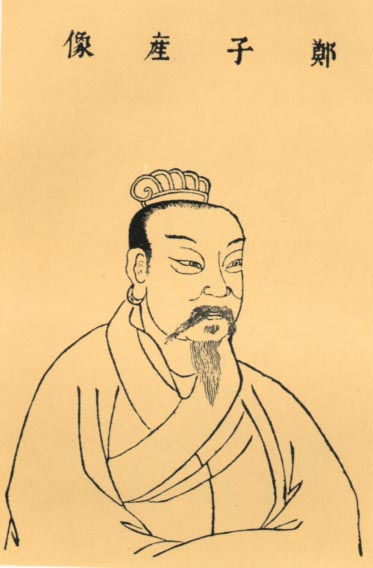
Zichan Reforms Zheng (子产改革)
Zichan (子产, Zǐchǎn) of Zheng casts penal codes in bronze, reforms land tenure, and establishes proto-bureaucratic governance, influencing later Legalist and Confucian statecraft theory. #governance #law
Zi Chan (子產, 子产), also known as Gongsun Qiao (died 522 BC), was the most outstanding statesman of the State of Zheng in ancient China during the Spring and Autumn Period. Born in Zheng to an aristocratic family, Zi Chan was a statesman of Zheng from 544 BC until his death. Under Zi Chan, Zheng even managed to expand its territory, a difficult task for a small state surrounded by several large states. As a philosopher, Zi Chan separated the domains of heaven and the human world, arguing against superstition and believing that humans should be grounded in reality. By 《三才圖會》,王圻及王思義撰寫 - http://hiphotos.baidu.com/%D4%AA%CB%A7%D7%DC%CB%BE%C1%EE/pic/item/b7515030b56bb752eac4af79.jpg, Public domain, https://commons.wikimedia.org/w/index.php?curid=12096312
516 BCE
Laozi Composes Dao De Jing (老子著道德经)
Laozi (老子, Lǎozǐ), traditionally identified as Li Er (李耳, Lǐ Ěr), is said to compose the Dao De Jing (道德经, Dàodéjīng) before departing westward, founding Daoism (道教, Dàojiào) as a major Chinese philosophical and religious tradition. #philosophy #religion
Laozi in Chinese characters By White whirlwind - Own work, Public domain, https://commons.wikimedia.org/w/index.php?curid=51103915
506 BCE
Wu Defeats Chu at Boju (柏举之战)
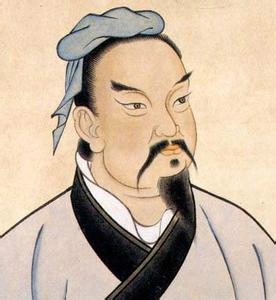
King Helü of Wu (吴王阖闾, Wú Wáng Hélǘ) with strategist Sun Tzu (孙武, Sūn Wǔ) crushes Chu at Boju (柏举, Bójǔ), capturing Yingdu (郢都, Yǐngdū) and demonstrating southern frontier states' rising power. #war #conquest
Sun Wu By Unknown author - Qing Palace Collection Picture Book. Beijing: Palace Museum Press. 1994., Public domain, https://commons.wikimedia.org/w/index.php?curid=57088337
496 BCE
Death of King Helü of Wu (阖闾之死)
King Helü of Wu dies from wounds sustained fighting Yue (越, Yuè) at Zuili (槜李, Zuìlǐ), his son Fuchai (夫差, Fūchāi) succeeding and vowing revenge, setting up Wu-Yue rivalry that ends the period. #war #politics
494 BCE
Battle of Fujiao (夫椒之战)
King Fuchai of Wu defeats Yue at Fujiao (夫椒, Fūjiāo), capturing King Goujian (越王勾践, Yuè Wáng Gòujiàn) who endures humiliation before eventual revenge, becoming a parable of perseverance. #war #politics
绍兴越王台 By Gisling - Own work, CC BY-SA 3.0, https://commons.wikimedia.org/w/index.php?curid=17682953
482 BCE
Fuchai's Northern Hegemony (黄池之会)
King Fuchai of Wu dominates northern alliance at Huangchi (黄池, Huángchí), claiming ultimate hegemony while Yue rebuilds, exemplifying strategic overextension that destroys great powers. #diplomacy #politics
Statue of Fuchai, the King of the Wu. This photo was taken in Yangzhou Museum. By FoolPiasar - Own work, CC BY-SA 4.0, https://commons.wikimedia.org/w/index.php?curid=115194527
479 BCE
Death of Confucius (孔子逝世)
Confucius dies in Qufu (曲阜, Qūfù), his disciples compiling the Analects (论语, Lúnyǔ) and preserving rituals that become state orthodoxy under the Han dynasty, shaping East Asian civilization for millennia. #philosophy #culture
476 BCE
Spring and Autumn Period Ends (春秋结束)
Traditional end of the Spring and Autumn Period as Yue conquers Wu and the Warring States Period (战国, Zhànguó) begins, marked by total warfare, bureaucratic states, and the decline of aristocratic chariot warfare. #politics #war
Political map of China during the Warring States period, circa 260 BCE By Philg88 - Own work, CC BY-SA 3.0, https://commons.wikimedia.org/w/index.php?curid=11900403