Encyclopedia/3. History, Societies & Civilizations/09. Modern Nations/05. Europe • Curated by Admin Timeline.sg
History of Montenegro (AI-generated, sourced to Wikipedia).
Chronological Storyline (31 Milestones)
9 CE
Great Illyrian Revolt crushed
Rome suppresses the final Illyrian uprising against imperial rule, bringing the territory of present-day Montenegro firmly under Roman control. Source — Wikipedia, "Montenegro":
Map of The Great Illyrian Revolt By MaryroseB54 - Own work, CC BY-SA 4.0, https://commons.wikimedia.org/w/index.php?curid=49705425
395 CE
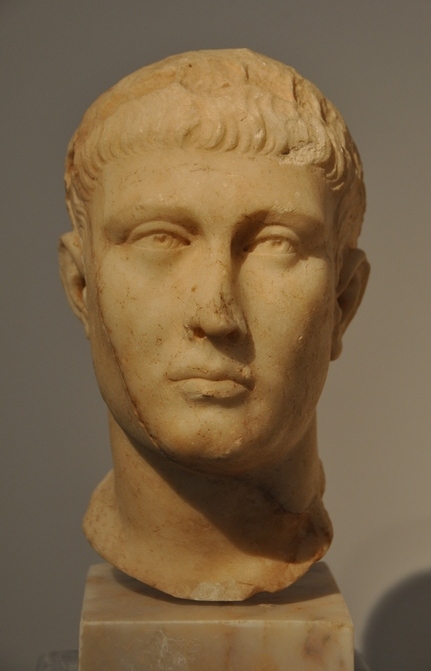
Empire divided at death of Theodosius
Upon the death of Theodosius I, the Roman Empire is permanently divided; Montenegro's territory falls within the Eastern (Byzantine) half. Source — Wikipedia, "Montenegro":
Bust of Theodisus I. Founded in Aphrodisias. (Aydın, Turkey) By www.livius.org - https://www.livius.org/pictures/turkey/aphrodisias/aphrodisias-museum-pieces/theodosius-i-or-ii/, CC BY-SA 4.0, https://commons.wikimedia.org/w/index.php?curid=92452046
610 CE
Slavs settle the Balkans
Slavic tribes migrate into the Balkan Peninsula during the Avar-Slavic invasions, settling in present-day Montenegro and intermingling with remaining Romanized populations. Source — Wikipedia, "Montenegro":
Countries where a South Slavic language is the national language Countries where North Slavic languages are the national language By derivative work Stegop (original image: CrazyPhunk) - This file was derived from: Slavic europe.svg:, CC BY-SA 3.0, https://commons.wikimedia.org/w/index.php?curid=18870291
1042 CE
Battle of Bar
Stefan Vojislav leads Duklja to a decisive victory over Byzantine forces, effectively securing independence for the Slavic principality of Duklja. Source — Wikipedia, "Montenegro":
Kingdom of Croatia and Dalmatia, Kingdom of Dioclea, Kingdom of Hungary, Holy Roman Empire (Patriarchate of Aquileia, Drava March, March of Carantania, and the Duchy of Carinthia), Byzantine Empire, and the Duchy of Spoleto at the beginning of 1089 By Tezwoo Relief image from File:Yugoslavia_topographic_base_map.svg - Own work, CC BY-SA 4.0, https://commons.wikimedia.org/w/index.php?curid=104356093
1077 CE
Duklja recognized as kingdom
Pope Gregory VII recognizes Mihailo Vojislavljević as king of Duklja, elevating the realm to a kingdom and confirming its independence from Byzantium. Source — Wikipedia, "Montenegro":
Kingdom of Croatia and Dalmatia, Kingdom of Dioclea, Kingdom of Hungary, Holy Roman Empire (Patriarchate of Aquileia, Drava March, March of Carantania, and the Duchy of Carinthia), Byzantine Empire, and the Duchy of Spoleto at the beginning of 1089 By Tezwoo Relief image from File:Yugoslavia_topographic_base_map.svg - Own work, CC BY-SA 4.0, https://commons.wikimedia.org/w/index.php?curid=104356093
1186 CE
Zeta absorbed by Raška
Stefan Nemanja conquers Zeta (formerly Duklja), incorporating it into the Grand Principality of Serbia and ending its independent status. Source — Wikipedia, "Montenegro":
Donor's portrait of Stefan Nemanje, Great Zupan (1168-1196), in monasticsm named Symeon. Fresco in the Church of the Theotokos, Studenica Monastery (1568). The saint is shown wearing both the monarch's crown and the simple robes of a monk. He holds a model of the church he has donated. By Unknown author - http://www.zaduzbine-nemanjica.rs/Studenica/latinica/Stefan-Nemanja.htm, Public domain, https://commons.wikimedia.org/w/index.php?curid=5676446
1389 CE
Battle of Kosovo
A coalition of Serbian lords including Montenegrin forces is defeated by the Ottoman army at Kosovo Polje, marking the beginning of Ottoman dominance in the Balkans. Source — Wikipedia, "Montenegro":
Painting of the Battle of Kosovo, dated 1870, by Adam Stefanović. Prince Lazar is seen dying with his horse. By Adam Stefanović - image uploaded at wordpress.com, Public domain, https://commons.wikimedia.org/w/index.php?curid=248947
1499 CE
Ottomans conquer coastal Zeta
The Ottoman Empire formally annexes much of Zeta's lowland territory, though mountainous regions remain beyond effective Ottoman control. Source — Wikipedia, "Montenegro":
The Ottoman flag and Turkey Republic Flag of 1844–1935. Late Ottoman flag which was made based on the historical documents listed in the Source section. Note that a five-pointed star was rarely used in the crescent-and-star symbol before the 19th century. By User:Orwellianist - File:German soldiers celebrate Christmas in Ottoman Empire during WW1.jpg File:Nordenfelt submarine Abdülhamid.jpg Ottoman submarine Abdülhamid (1886) File:Declaration of the 1908 Revolution in Ottoman Empire.png Photo from 1908 http://www.tayyareci.com/digerucaklar/turkiye/preww1/Bleriot%20XI%20b%20TuAF.jpg - Photo from 1912 http://www.manorhouse.clara.net/book2/chapter18.htm (image), alternative link - Photo from 1914 http://www.manorhouse.clara.net/book2/chapter21.htm image - Photo from 1914 File:SultanahmetMitingi.jpg Photo from 1919 http://www.tayyareci.com/digerucaklar/turkiye/ww1/gothawd12.jpg - Photo from 1915 http://www.tayyareci.com/digerucaklar/turkiye/ww1/gothawd2.jpg - Photo from 1915 http://www.tayyareci.com/digerucaklar/turkiye/ww1/gothawd13.jpg - Photo from 1915 http://www.tayyareci.com/digerucaklar/turkiye/ww1/sakir_feyzi_resimleri2.jpg - Photo from 1915 http://www.tayyareci.com/digerucaklar/turkiye/ww1/S.P.A.D13.JPG - Photo from 1918 http://www.tayyareci.com/digerucaklar/turkiye/kurtulus/fiat-r2.jpg - Photo from 1920 http://www.tayyareci.com/digerucaklar/turkiye/kurtulus/breguet14b2.jpg - Photo from 1922 http://www.tayyareci.com/digerucaklar/turkiye/kurtulus/nieuport27-2.jpg - Photo from 1922 File:Bundesarchiv Bild 146-2005-0086, Kaiser Wilhelm II in Konstantinopel.jpg File:Ceremony to decolate the flag of 27th Regiment with Imtiyaz Medals.jpg File:Ottoman troops with flag.jpg File:Ottoman Navy at the Golden Horn.jpg - Postcard from 1914 http://www.osmanzengin.com/ESKi__iSTANBUL/kararkoy02.jpg - Postcard from 1920 http://www.osmanzengin.com/ESKi__iSTANBUL/tepebasi.jpg - Postcard from 1920 http://www.vicmart.com/ext/en/exrw/item=1416 - Ottoman medal from 1850 File:Aff_ciwl_orient_express4_jw.jpg - 1888-1889 season timetable of the Orient Express File:Ottoman conquests.jpg - Ottoman map from 1914, Public domain, https://commons.wikimedia.org/w/index.php?curid=7112828
1516 CE
Prince-Bishopric established
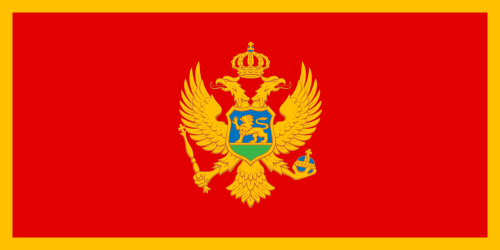
Đurađ Crnojević transfers secular power to the Orthodox Metropolitan of Cetinje, creating the unique theocratic Prince-Bishopric of Montenegro. Source — Wikipedia, "Montenegro":
Flag of Montenegro (adopted on 13 July 2004). By B1mbo, Froztbyte, Great Brightstar - Own work based on: Coat of arms of Montenegro.svg, Public domain, https://commons.wikimedia.org/w/index.php?curid=492180
1697 CE
Petrović-Njegoš dynasty founded
Danilo Šćepčević is elected Vladika, establishing the Petrović-Njegoš dynasty that would rule Montenegro for over two centuries. Source — Wikipedia, "Montenegro":
Herb dynastii Petrowiciów-Niegoszów (alt) By Type a rule This W3C-unspecified vector image was created with Inkscape . - Own work, based upon file:Coat of arms of the House of Petrović-Njegoš 2.svg Јован Маркуш, Родослови српских династија из Зете и Црне Горе , Цетиње 2004, p.44, CC BY-SA 3.0, https://commons.wikimedia.org/w/index.php?curid=30894688
1711 CE
First major anti-Ottoman uprising
Vladika Danilo I leads Montenegrin forces against the Ottomans, beginning a series of wars aimed at expanding Montenegrin territory and securing full independence. Source — Wikipedia, "Montenegro":
Danilo I Ščepćević Petrović Njegoš, a.k.a Vladika Danilo, prince-bishop of Montenegro. By Illustrator of Gorski vijenac - Petar II Petrović-Njegoš (1847) Gorski vijenac (The Mountain Wreath), Vienna ; scan uploaded at The Mountain Wreath. Serb Land of Montenegro (22 August 2001)., Public domain, https://commons.wikimedia.org/w/index.php?curid=10397408
1785 CE
Ottoman invasion under Mahmud Pasha
Kara Mahmud Pasha of Scutari launches a devastating invasion of Montenegro, temporarily occupying Cetinje before Montenegrin forces regroup and resist. Source — Wikipedia, "Montenegro":
Portrait of Kara Mahmud Pasha By Simon Rrota - http://www.albanianart.net/painting/rrota, Public domain, https://commons.wikimedia.org/w/index.php?curid=106137813
1830 CE
Petar II Petrović-Njegoš becomes Vladika
One of Montenegro's greatest rulers and a celebrated poet, Njegoš modernizes the state and writes the epic masterpiece 'The Mountain Wreath.' Source — Wikipedia, "Montenegro":
Petar II Petrović-Njegoš becomes Vladika By Johann Böss - Istorija i tradicija, montenegro.travel, Public domain, https://commons.wikimedia.org/w/index.php?curid=1555739
1834 CE
First secular school established
Petar II Petrović-Njegoš founds the first secular school in Montenegro at Cetinje, marking the beginning of modern education in the country. Source — Wikipedia, "Montenegro":
First secular school established By Johann Böss - Istorija i tradicija, montenegro.travel, Public domain, https://commons.wikimedia.org/w/index.php?curid=1555739
1852 CE
Danilo I secularizes Montenegro
Danilo I Petrović-Njegoš transforms Montenegro from a theocratic prince-bishopric into a secular principality, becoming its first secular prince. Source — Wikipedia, "Montenegro":
Danilo I secularizes Montenegro By Johann Böss - www.montenegrina.net, Public domain, https://commons.wikimedia.org/w/index.php?curid=9046161
1858 CE
Battle of Grahovo
Montenegrin forces under Mirko Petrović defeat the Ottomans at Grahovo, a victory that leads to the international recognition of Montenegro's borders. Source — Wikipedia, "Montenegro":
Flag of Montenegro (adopted on 13 July 2004). By B1mbo, Froztbyte, Great Brightstar - Own work based on: Coat of arms of Montenegro.svg, Public domain, https://commons.wikimedia.org/w/index.php?curid=492180
1860 CE
Nikola I becomes Prince
Nikola I Petrović-Njegoš ascends to the throne, ruling Montenegro for nearly six decades and presiding over its greatest territorial expansion and modernization. Source — Wikipedia, "Montenegro":
Nicholas I of Montenegro By Unknown author - http://humus.livejournal.com/4377502.html, Public domain, https://commons.wikimedia.org/w/index.php?curid=62244605
Jul 1, 1878 CE
Independence recognized at Berlin
The Congress of Berlin formally recognizes Montenegro as a fully independent sovereign state and approves significant territorial expansions. Source — Wikipedia, "Montenegro":
Congress of Berlin, 13 July 1878 oil on canvas 127 × 203 cm 1892 By Anton von Werner - Lebendiges Museum Online (with wrong description), Public domain, https://commons.wikimedia.org/w/index.php?curid=56203977
1905 CE
First constitution proclaimed
Prince Nikola issues Montenegro's first written constitution, establishing a parliamentary system and fundamental civil rights. Source — Wikipedia, "Montenegro":
Flag of Montenegro (adopted on 13 July 2004). By B1mbo, Froztbyte, Great Brightstar - Own work based on: Coat of arms of Montenegro.svg, Public domain, https://commons.wikimedia.org/w/index.php?curid=492180
Aug 28, 1910 CE
Montenegro proclaimed a kingdom
On the 50th anniversary of his reign, Nikola I elevates the Principality of Montenegro to a kingdom, becoming King of Montenegro. Source — Wikipedia, "Montenegro":
Flag of the King of Montenegro (1900-1918) By w:Kingdom of Montenegro (Vector graphics image by B1mbo) - File:Coat of arms of the Kingdom of Montenegro.svg File:Zastave Kraljevine Crne Gore.jpg File:Flag of Nicolas I of Montenegro.jpg, Public domain, https://commons.wikimedia.org/w/index.php?curid=12047072
Oct 1, 1912 CE
First Balkan War begins
Montenegro joins Serbia, Bulgaria, and Greece in the First Balkan War against the Ottoman Empire, capturing significant territory including Scutari. Source — Wikipedia, "Montenegro":
Montage for the First Balkan war Main page in Wikipedia By Avidius (talk) - Own work (Original text: I (Avidius (talk)) created this work entirely by myself.) en:Image:5t Dunavska pri Karagach dere.jpg (The Battle of Lule-Burgas) (removed as non-free) Image:Ulazak srpske vojske u Mitrovicu.jpg (Serbian forces entering Mitrovitsa) Image:King George I of Greece and Tsar Ferdinand of Bulgaria at Thessaloniki.jpg (King George I of Greece visits the Bulgarian Tsar Ferdinand in the headquarters of the Bulgarian army in the city of Thessaloniki) Image:Ottoman troops Battle of Kumanovo.jpg (A photograph of the Ottoman soldiers, taken during the Battle Of Kumanovo in 1912) Image:Battle Elli.jpg (Naval Battle of Elli.jpg), Public domain, https://commons.wikimedia.org/w/index.php?curid=25536853
Jan 1, 1916 CE
Austro-Hungarian occupation
Austria-Hungary occupies Montenegro during World War I after defeating its army, forcing King Nikola into exile and ending the kingdom. Source — Wikipedia, "Montenegro":
Flag of Montenegro (adopted on 13 July 2004). By B1mbo, Froztbyte, Great Brightstar - Own work based on: Coat of arms of Montenegro.svg, Public domain, https://commons.wikimedia.org/w/index.php?curid=492180
Nov 24, 1918 CE
Podgorica Assembly
The controversial Podgorica Assembly votes to depose King Nikola and unite Montenegro with Serbia, effectively ending Montenegrin statehood. Source — Wikipedia, "Montenegro":
Podgorica Assembly By Unknown author, Public domain, https://commons.wikimedia.org/w/index.php?curid=1482386
Apr 1, 1941 CE
Axis invasion of Yugoslavia
Nazi Germany and its allies invade Yugoslavia, and Montenegro is occupied by Italian forces who attempt to establish a puppet regime. Source — Wikipedia, "Montenegro":
Operațiunile militare ale Axei în Balcani By Maps Department of the U.S. Military Academy, West Point. - US gov, Public domain, https://commons.wikimedia.org/w/index.php?curid=34432111
Jul 13, 1941 CE
Montenegrin uprising against Italians
Montenegrins launch a massive popular uprising against Italian occupation, one of the first organized resistance movements in occupied Europe. Source — Wikipedia, "Montenegro":
13th July Uprising in Montenegro By Polserb - https://core.ac.uk/download/pdf/212485598.pdf https://istorijskizapisi.me/wp-content/uploads/2021/11/ANDELIC-Trinaestojulski-ustanak.pdf https://znaci.org/zb/4_13_1.pdf#page=111 https://www.vojnodelo.mod.gov.rs/multimedia/file/vojna_biblioteka/vbnp-34-1964-Zivkovic-1_deo-1-268.pdf http://www.maticacrnogorska.me/files/48/04%20ilija%20despotovic.pdf https://www.znaci.org/zb/4_3_4_2.pdf https://istorijskizapisi.me/wp-content/uploads/2022/04/12-N-Perosevic-129-142.pdf https://znaci.org/zb/4_3_4.pdf#page=392 https://es.scribd.com/doc/61988541/21457277-Dr-Goran-Komar-Vojvoda-Pavle-Djurisic https://www.antenam.net/istorija/292459-trinaestojulski-ustanak-u-bjelopavlicima https://znaci.org/00002/341.pdf https://istorijskizapisi.me/wp-content/uploads/2022/04/11-F-Kuzman-109-128.pdf https://znaci.org/zb/4_3_1.pdf, CC0, https://commons.wikimedia.org/w/index.php?curid=162297307
Dec 1, 1944 CE
Montenegro liberated by Partisans
Yugoslav Partisan forces liberate Montenegro from Axis occupation, establishing communist control over the territory. Source — Wikipedia, "Montenegro":
Vectorized version of the image from http://www.crwflags.com/fotw/images/y/yu-1941.gif. (NOTE: The title is a misnomer, this flag was adopted on 26 September 1941 at the Stolice meeting of the Yugoslav Partisans, [1].) By See File history below for details. - Transferred from en.wikipedia to Commons., Public domain, https://commons.wikimedia.org/w/index.php?curid=1697262
1946 CE
Montenegro becomes a Yugoslav republic
Montenegro is constituted as one of six federal republics within the Socialist Federal Republic of Yugoslavia under Tito's leadership. Source — Wikipedia, "Montenegro":
Flag of the Socialist Federal Republic of Yugoslavia (1946-1992).The design (blazon) is defined in Article 4 of the Constitution for the Republic of Yugoslavia (1946). [1] By Flag designed by Đorđe Andrejević-Kun[3]SVG coding: Zscout370 - Own work CONSTRUCTION SHEET (Flags of the World)., Public domain, https://commons.wikimedia.org/w/index.php?curid=20854121
Apr 1, 1992 CE
Montenegro stays with Serbia
In a referendum, Montenegrins vote to remain in a federation with Serbia after the breakup of Yugoslavia, forming the Federal Republic of Yugoslavia. Source — Wikipedia, "Montenegro":
Flag of Serbia and Montenegro, was adopted on 27 April 1992, as flag of Federal Republic of Yugoslavia (1992-2003). By See File history below for details. (www.gov.yu) - Own work, Public domain, https://commons.wikimedia.org/w/index.php?curid=433233
Feb 1, 2003 CE
State Union formed
The Federal Republic of Yugoslavia is reconstituted as the looser State Union of Serbia and Montenegro under EU mediation, allowing either republic to hold an independence referendum after three years. Source — Wikipedia, "Montenegro":
Flag of Serbia and Montenegro, was adopted on 27 April 1992, as flag of Federal Republic of Yugoslavia (1992-2003). By See File history below for details. (www.gov.yu) - Own work, Public domain, https://commons.wikimedia.org/w/index.php?curid=433233
May 21, 2006 CE
Independence referendum
Montenegrins vote narrowly for independence from the State Union with Serbia, with 55.5% supporting separation, restoring Montenegrin statehood after 88 years. Source — Wikipedia, "Montenegro":
Results of the Montenegrin independence referendum, 2006. Percent Yes votes. The area of the circles corresponds to the number of voters. By Furfur - This file was derived from: Montenegro location map.svg by NordNordWest data source: REPUBLIC OF MONTENEGRO REFERENDUM ON STATE-STATUS 21 May 2006 ANNEX A: FINAL RESULTS OF THE 21 MAY 2006 REFERENDUM ON STATE-STATUS, Office for Democratic Institutions and Human Rights, OSCE inspired by Crna Gora - Rezultati referenduma po opstinama 2006.png, made by Tresnjevo, CC BY-SA 4.0, https://commons.wikimedia.org/w/index.php?curid=48922699
Jun 5, 2017 CE
Montenegro joins NATO
Montenegro becomes the 29th member of NATO, a significant geopolitical shift for the small Adriatic nation and a pointed message to Russia. Source — Wikipedia, "Montenegro":
A map of Europe and North America with NATO countries and Montenegro colored in. Montenegro NATO Lambert conformal conic projection with standard parallels 40°N and 60°N. De-factor borders from Natural Earth 110 km dataset. By Justin Kunimune - Own work, CC BY-SA 4.0, https://commons.wikimedia.org/w/index.php?curid=137284203





![Vectorized version of the image from http://www.crwflags.com/fotw/images/y/yu-1941.gif. (NOTE: The title is a misnomer, this flag was adopted on 26 September 1941 at the Stolice meeting of the Yugoslav Partisans, [1].)](https://upload.wikimedia.org/wikipedia/commons/thumb/8/8f/Flag_of_Yugoslavia_%281943%E2%80%931946%29.svg/500px-Flag_of_Yugoslavia_%281943%E2%80%931946%29.svg.png)
![Flag of the Socialist Federal Republic of Yugoslavia (1946-1992).The design (blazon) is defined in Article 4 of the Constitution for the Republic of Yugoslavia (1946). [1]](https://upload.wikimedia.org/wikipedia/commons/thumb/6/61/Flag_of_Yugoslavia_%281946-1992%29.svg/500px-Flag_of_Yugoslavia_%281946-1992%29.svg.png)


