Encyclopedia/3. History, Societies & Civilizations/09. Modern Nations/05. Europe • Curated by Admin Timeline.sg
History of Latvia, sourced from Wikipedia's "Timeline of Latvian history".
Chronological Storyline (63 Milestones)
650 CE
Curonians
The Curonians and Livonians were paying tribute to king Ivar Vidfamne of Scania Source — Wikipedia, "Timeline of Latvian history" (7th century):
Map of Courland in 1253 By A. Švābe - Straumes un avoti, Public domain, https://commons.wikimedia.org/w/index.php?curid=9815257
750 CE
Battle of Brávellir
In the legendary Battle of Brávellir Curonians were fighting at the side of Sigurd Hring, king of Sweden, and Livonians under their duke Ger (Ger Livicus) at the side of Harald Wartooth, king of Denmark. According to Norna-Gests þáttr Sigurd Hring fought against the invading Curonians (Kúrir) in the southern part of what today is Sweden Source — Wikipedia, "Timeline of Latvian history" (8th century):
Battle of Brávellir By August Malmström - Björk, Tomas: August Malmström - Grindslantens målare och 1800-talets bildvärld, Nordiska Museets Förlag, 1997. ISBN 91-7108-416-9., Public domain, https://commons.wikimedia.org/w/index.php?curid=10591770
800 CE
Balts
The ancient Balts began to form specific tribal realms. Source — Wikipedia, "Timeline of Latvian history" (8th century):
A map of countries in Europe which speak Baltic languages By Jafaz - Own work, CC BY-SA 4.0, https://commons.wikimedia.org/w/index.php?curid=111730280
800 CE
Curonians
The Curonians had rebelled against the Swedes and refused to pay them tribute. Source — Wikipedia, "Timeline of Latvian history" (9th century):
Map of Courland in 1253 By A. Švābe - Straumes un avoti, Public domain, https://commons.wikimedia.org/w/index.php?curid=9815257
850 CE
Curonians
The Danish king marshalled a great fleet and sailed to Courland in order to take over their goods and to make the Curonians pay tribute to instead. The Curonians gathered forces from all five of their towns and butchered half the Danish army and plundered their war ships. Source — Wikipedia, "Timeline of Latvian history" (9th century):
Map of Courland in 1253 By A. Švābe - Straumes un avoti, Public domain, https://commons.wikimedia.org/w/index.php?curid=9815257
854 CE
Olof (I) of Sweden
King Olaf of Sweden with 7,000 armed men attacked towns of Seeburg and Apulia. Curonians declared that they wished to be the subjects of the Swedish kings as in former times. Source — Wikipedia, "Timeline of Latvian history" (9th century):
Grobina 2014 By ---=XEON=--- - https://web.archive.org/web/20161028014022/http://www.panoramio.com/photo/108226473, CC BY 3.0, https://commons.wikimedia.org/w/index.php?curid=57892505
870 CE
Hadingus
The legendary Danish king Hadingus wages wars in the Baltic and achieves victory against king Handwanus of Duna (Duna urbs), however, suffering defeat against Curonian tyrant Loker (Loker, Curetum tyrannus) Source — Wikipedia, "Timeline of Latvian history" (9th century):
Hading og Hartgrepe. The scene is described in Gesta Danorum in the following way: "Hardgrep, daughter of Wagnhofde, tried to enfeeble his firm spirit with her lures of love, contending and constantly averring that he ought to offer the first dues of the marriage bed in wedlock with her, who had proffered to his childhood most zealous and careful fostering, and had furnished him with his first rattle." Elton's translation By Louis Moe - Photographed by uploader from Frederik Winkel Horn's 1898 edition of Saxo Grammaticus - Danmarks Krønike, page 15., Public domain, https://commons.wikimedia.org/w/index.php?curid=57123678
890 CE
Dorno
The Curonian king Dorno (Curetum rex Dorno), one of the legendary kings in Saxo Grammaticus' Gesta Danorum, fights against the legendary Danish king Frotho I. Source — Wikipedia, "Timeline of Latvian history" (9th century):
Iconography of the Danish historian Saxo Grammaticus by cartoonist and painter Louis Moe. By Louis Moe - https://bildsuche.digitale-sammlungen.de/index.html?c=viewer&bandnummer=bsb00073337&pimage=00005&lv=1&v=100&l=en, Public domain, https://commons.wikimedia.org/w/index.php?curid=19509267
925 CE
Egils Saga
Egils Saga describes the expedition of Icelandic vikings Thorolf and Egill Skallagrímsson by the Eastern route (Austrvegr), where they won much wealth and had many battles. In Courland they made a peace for half a month and traded with the men of the land. Source — Wikipedia, "Timeline of Latvian history" (10th century):
Egill Skallagrímsson, Icelandic poet and warrior, showing signs of possible Paget's disease. From the 17th century Icelandic manuscript AM 426 fol., now in the care of the Árni Magnússon Institute in Iceland. Immediate source: http://fathom.lib.uchicago.edu/1/777777122294/3093_egilsidebar.html By Unknown author - http://en.wikipedia.org/wiki/Image:Egil_Skallagrimsson_17c_manuscript.jpg, Public domain, https://commons.wikimedia.org/w/index.php?curid=1295264
950 CE
Rogvolod
The Norse prince Ragnvald (Rogvolod of Polatsk) came from overseas and subjugated hillforts along the river of Daugava. His capital was established at Polatsk. Source — Wikipedia, "Timeline of Latvian history" (10th century):
Rogvolod, prince of Polatsk (945 - 978), Post stamp of Belarus By РУП «Белпочта» - http://www.belpost.by/stamps/catalog-by-date/1993/, Public domain, https://commons.wikimedia.org/w/index.php?curid=12708240
1100 CE
Balts
The borders of the Baltic realms of Courland, Semigallia, Tālava, Koknese and Jersika (known as Lettia) became settled. Latvia Source — Wikipedia, "Timeline of Latvian history" (11th century):
A map of countries in Europe which speak Baltic languages By Jafaz - Own work, CC BY-SA 4.0, https://commons.wikimedia.org/w/index.php?curid=111730280
1106 CE
Semigallians
Semigallians completely destroyed united armies of the sons of Prince Vseslav of Polotsk in the lowlands of Daugava. Source — Wikipedia, "Timeline of Latvian history" (12th century):
This map depicts the Baltic states Latvia and Estonia. Ever since the Treaty of Altmar in 1629 this area was a Swedish province which was mainly inhabited by Germans. The map was published in 1662 in the second volume of Joan Blaeus Atlas Maior. As a basis for this map, Blaeu used a large-size wall map from the Swedish scientist Anders Bureus (1571-1661), who was head of the topographical survey. By Dirk Jansz van Santen - This digital media file - and/or the physical objects depicted on it - originates from the digital and/or physical collections of the Koninklijke Bibliotheek, national library of the Netherlands., Public domain, https://commons.wikimedia.org/w/index.php?curid=41683961
1111 CE
Prince of Novgorod
Prince of Novgorod Mstislav Vladimirovich invaded eastern part of Tālava (Adzele) and Ugandi. Source — Wikipedia, "Timeline of Latvian history" (12th century):
Prince of Novgorod By Unknown author, Public domain, https://commons.wikimedia.org/w/index.php?curid=37666
1180 CE
Mstislav Rostislavich of Smolensk
Prince Mstislav Rostislavich led the Novgorodians against the Letts of Tālava. Source — Wikipedia, "Timeline of Latvian history" (12th century):
Map of the Latvian people around the world. (The map might include people with Latvian ancestry or citizenship) Latvia + 100,000 + 10,000 + 1,000 By Allice Hunter - Empty map: File:BlankMap-World6.svg Information available on page Latvians on the English Wikipedia and at Joshua Project Since the map data is from Wikipedia's own pages and the Joshua Project, information may be omitted or out of date or maybe inaccurate. If you intend to make changes to this map, you must provide a source and make them available here., CC BY-SA 4.0, https://commons.wikimedia.org/w/index.php?curid=92573529
1184 CE
Saint Meinhard
The monk Saint Meinhard began missionary work among the Livonian people. Source — Wikipedia, "Timeline of Latvian history" (12th century):
Ikšķiles baznīcas drupas By Latvia United at Latvian Wikipedia - Own work, CC BY-SA 2.5, https://commons.wikimedia.org/w/index.php?curid=6665742
1186 CE
Saint Meinhard
Meinhard was appointed bishop of Livonia by the Pope. Source — Wikipedia, "Timeline of Latvian history" (12th century):
Ikšķiles baznīcas drupas By Latvia United at Latvian Wikipedia - Own work, CC BY-SA 2.5, https://commons.wikimedia.org/w/index.php?curid=6665742
1198 CE
Berthold of Hanover
Bishop Berthold of Hanover arrived at the mouth of the Daugava River accompanied by crusaders and was killed in battle with Livonians. Source — Wikipedia, "Timeline of Latvian history" (12th century):
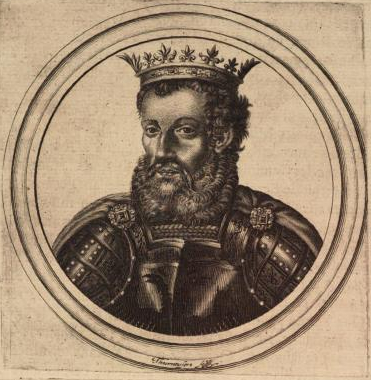
Bertold By Samuel Guichenon - Histoire généalogique de la royale Maison de Savoie, Svazek 1 (1658), Public domain, https://commons.wikimedia.org/w/index.php?curid=39615510
1199 CE
Albert of Riga
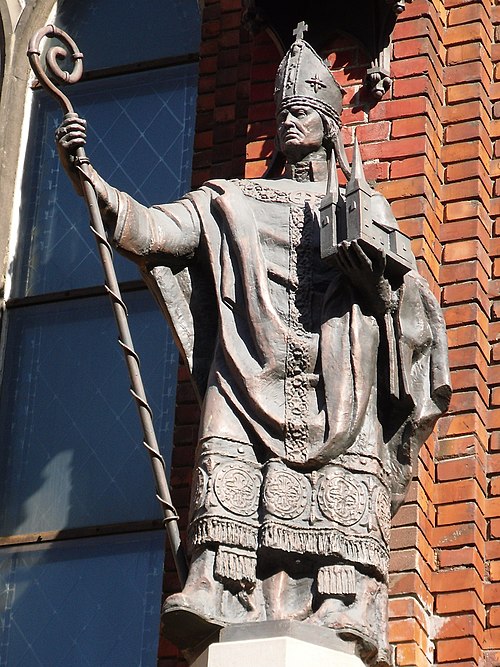
Albert of Riga was elected the third bishop of Livonia. Source — Wikipedia, "Timeline of Latvian history" (12th century):
Albert of Riga, Riga Dome Cathedral By Artifex - Own work, Public domain, https://commons.wikimedia.org/w/index.php?curid=10404221
1201 CE
Albert of Riga
Albert founded Riga on the site of earlier Livonian settlement. Source — Wikipedia, "Timeline of Latvian history" (13th century):
Albert of Riga, Riga Dome Cathedral By Artifex - Own work, Public domain, https://commons.wikimedia.org/w/index.php?curid=10404221
1202 CE
Livonian Brothers of the Sword
The Catholic military order of Livonian Brothers of the Sword was founded by Bishop Albert. Source — Wikipedia, "Timeline of Latvian history" (13th century):
This map depicts the Baltic states Latvia and Estonia. Ever since the Treaty of Altmar in 1629 this area was a Swedish province which was mainly inhabited by Germans. The map was published in 1662 in the second volume of Joan Blaeus Atlas Maior. As a basis for this map, Blaeu used a large-size wall map from the Swedish scientist Anders Bureus (1571-1661), who was head of the topographical survey. By Dirk Jansz van Santen - This digital media file - and/or the physical objects depicted on it - originates from the digital and/or physical collections of the Koninklijke Bibliotheek, national library of the Netherlands., Public domain, https://commons.wikimedia.org/w/index.php?curid=41683961
1206 CE
Livonian Brothers of the Sword
The Brothers of the Sword and their Semigallian allies defeated Livonians at Turaida Source — Wikipedia, "Timeline of Latvian history" (13th century):
This map depicts the Baltic states Latvia and Estonia. Ever since the Treaty of Altmar in 1629 this area was a Swedish province which was mainly inhabited by Germans. The map was published in 1662 in the second volume of Joan Blaeus Atlas Maior. As a basis for this map, Blaeu used a large-size wall map from the Swedish scientist Anders Bureus (1571-1661), who was head of the topographical survey. By Dirk Jansz van Santen - This digital media file - and/or the physical objects depicted on it - originates from the digital and/or physical collections of the Koninklijke Bibliotheek, national library of the Netherlands., Public domain, https://commons.wikimedia.org/w/index.php?curid=41683961
1217 CE
Livonian Brothers of the Sword
The Brothers of the Sword and their Livonian and Latgalian allies defeated Estonians at the Battle of St. Matthew's Day near Viljandi. Source — Wikipedia, "Timeline of Latvian history" (13th century):
This map depicts the Baltic states Latvia and Estonia. Ever since the Treaty of Altmar in 1629 this area was a Swedish province which was mainly inhabited by Germans. The map was published in 1662 in the second volume of Joan Blaeus Atlas Maior. As a basis for this map, Blaeu used a large-size wall map from the Swedish scientist Anders Bureus (1571-1661), who was head of the topographical survey. By Dirk Jansz van Santen - This digital media file - and/or the physical objects depicted on it - originates from the digital and/or physical collections of the Koninklijke Bibliotheek, national library of the Netherlands., Public domain, https://commons.wikimedia.org/w/index.php?curid=41683961
1229 CE
Albert of Riga
Bishop Albert died. Source — Wikipedia, "Timeline of Latvian history" (13th century):
Albert of Riga, Riga Dome Cathedral By Artifex - Own work, Public domain, https://commons.wikimedia.org/w/index.php?curid=10404221
1236 CE
Battle of Saule
Battle of Saule: The Brothers of the Sword were defeated in the Land of Saule (terra Sauleorum) by combined forces of Samogitians and Semigallians. Source — Wikipedia, "Timeline of Latvian history" (13th century):
Place of Battle of Saule, Jauniūnai, Joniškis district, Lithuania By Rimantas Lazdynas - Own work, CC BY-SA 3.0, https://commons.wikimedia.org/w/index.php?curid=10403192
1242 CE
Alexander Nevsky
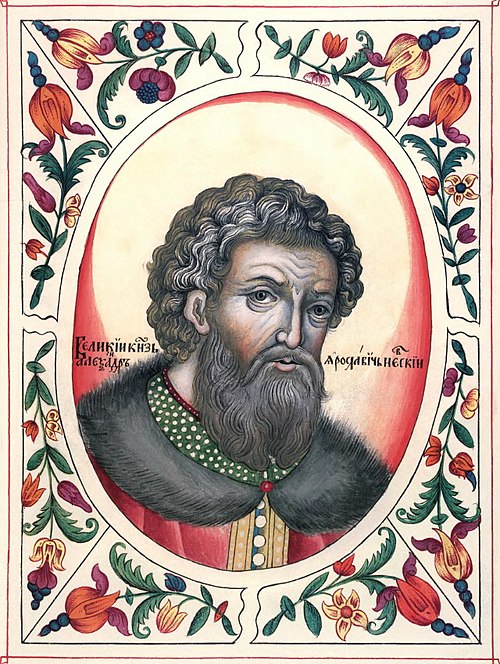
Alexander Nevsky defeated the Livonian Order on Lake Peipus. Source — Wikipedia, "Timeline of Latvian history" (13th century):
Prince Alexander Nevsky. Miniature from the Tsarskiy titulyarnik (Tsar's Book of Titles). By Collective of Kremlin Armory artists - http://kotlovka.ru/pgalery/albums/userpics/10002/normal_486.jpg, Public domain, https://commons.wikimedia.org/w/index.php?curid=4441442
1255 CE
Diocese
The Bishopric at Riga was elevated to become the Archbishopric of Riga. Source — Wikipedia, "Timeline of Latvian history" (13th century):
Pope's chair, Basilica di San Giovanni in Laterano, Roma, Italy. The text above the chair reads the following: LEO•XIII•CELLAM•MAXIMAM•VETVSTATE•FATISCENTEUM•INCENTI•MOLITIONE•PRODVCENDAM•LAXANDAMQVE•CVRAVIT VETVS•MVSIVVM•IAM•ANTEA•PARTIBVS•INSTAVRATVM•AD•ANTIQVVM•EXEMPLAR•RESTIVI ET•IN•NOVAM•ABSIDEM•OPERE•CVLTVQVE•MAGNIFICO•EXORNATAM•TRANSFERRI•AVLAM•TRANSVEERSAM LAQVEAPI•ET•CONTIGNATIONE•REFECTIS•EXPOLIRI•IVSSIT•ANNO•CHR•MDCCCLXXXIV•SACRI•PRINC•VIIDCP_2737 By Ern - Flickr, CC BY-SA 2.0, https://commons.wikimedia.org/w/index.php?curid=363597
1282 CE
Riga
Riga became a member of the Hanseatic League. Source — Wikipedia, "Timeline of Latvian history" (13th century):
Vecrīga. Panorama By Jorge Franganillo from Barcelona, Spain - Riga, CC BY 2.0, https://commons.wikimedia.org/w/index.php?curid=78939387
1378 CE
Livonian Order
The Livonian Order raided Upytė, and another campaign threatened the Lithuanian capital in Vilnius. Source — Wikipedia, "Timeline of Latvian history" (14th century):
This map depicts the Baltic states Latvia and Estonia. Ever since the Treaty of Altmar in 1629 this area was a Swedish province which was mainly inhabited by Germans. The map was published in 1662 in the second volume of Joan Blaeus Atlas Maior. As a basis for this map, Blaeu used a large-size wall map from the Swedish scientist Anders Bureus (1571-1661), who was head of the topographical survey. By Dirk Jansz van Santen - This digital media file - and/or the physical objects depicted on it - originates from the digital and/or physical collections of the Koninklijke Bibliotheek, national library of the Netherlands., Public domain, https://commons.wikimedia.org/w/index.php?curid=41683961
1422 CE
Livonia
A Livonian Diet first met. Source — Wikipedia, "Timeline of Latvian history" (15th century):
Old Livonia in 1534. Numbers are for provinces of Livonian Order (white): .mw-parser-output .div-col{margin-top:.3em;column-width:30em}.mw-parser-output .div-col-small{font-size:90%}.mw-parser-output .div-col-rules{column-rule:thin solid var(--border-color-base)}.mw-parser-output .div-col dl,.mw-parser-output .div-col ol,.mw-parser-output .div-col ul{margin-top:0}.mw-parser-output .div-col li,.mw-parser-output .div-col dd{page-break-inside:avoid;break-inside:avoid-column} under direct rule of Livonian Master domain of field marshal commandry (Komturei) of Viljandi (Fellin) commandry of Tallinn (Reval) advocacy (Vogtei) of Järva (Jerwen) commandry of Kuldiga (Goldingen) commandry of Aluksne (Marienburg) commandry of Pärnu (Pernau) advocacy of Maasilinna (Soneburg) commandry of Rakvere/Wesenberg advocacy of Narva advocacy of Vasknarva (Neuschloss) advocacy of Toolse (Tolsburg) commandry of Kursi (Talkhof) advocacy of Bauska (Bauske) advocacy of Rezekne (Rositten) commandry of Daugavpils (Dünaburg) advocacy of Selpils (Selburg) advocacy of Dobele (Dobeln) advocacy of Kandava (Kandau) advocacy of Grobina (Grobin) commandry of Ventspils (Windau) By Athanasius Soter - Own work, Leonid Arbusow's Grundriss der Geschichte Liv-, Est- und Kurlands (1918), CC BY-SA 3.0, https://commons.wikimedia.org/w/index.php?curid=9878089
1452 CE
Livonian Order
The Livonian Order and Archbishopric of Riga began to rule jointly in Livonia. Source — Wikipedia, "Timeline of Latvian history" (15th century):
This map depicts the Baltic states Latvia and Estonia. Ever since the Treaty of Altmar in 1629 this area was a Swedish province which was mainly inhabited by Germans. The map was published in 1662 in the second volume of Joan Blaeus Atlas Maior. As a basis for this map, Blaeu used a large-size wall map from the Swedish scientist Anders Bureus (1571-1661), who was head of the topographical survey. By Dirk Jansz van Santen - This digital media file - and/or the physical objects depicted on it - originates from the digital and/or physical collections of the Koninklijke Bibliotheek, national library of the Netherlands., Public domain, https://commons.wikimedia.org/w/index.php?curid=41683961
1481 CE
Grand Duchy of Moscow
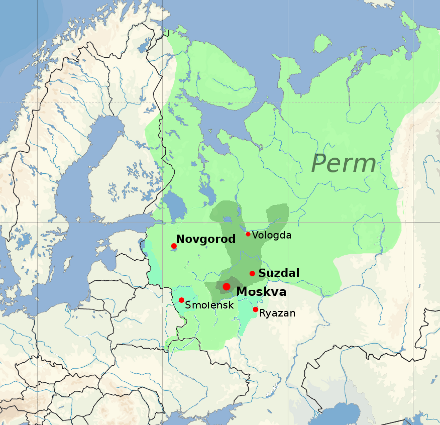
Muscovy attacked Livonia. Source — Wikipedia, "Timeline of Latvian history" (15th century):
Territorial expansion of the Grand Duchy of Moscow, 1300–1547 Territory in 1300 Territory in 1389, after the final merging of Moscow and Vladimir Territory in 1505, on the death of Ivan III Territory in 1533, on the death of Vasily III Modern national borders are shown for orientation. By Dbachmann - blank map: File:Europe location POR.png. Territorial boundaries based on File:Moscow1500.png, File:Kievan-rus-1015-1113-(en).png, File:Muscovy 1300-1462.png. See also File:Russia 1533-1896.gif. See talkpage for discussion of the sources used. Information on historical territory relies on maps uploaded by ru:Участник:Koryakov Yuri (2008)., Attribution, https://commons.wikimedia.org/w/index.php?curid=14943136
1501 CE
Livonian Order
The Livonian Order, aided by Lithuania, launched an attack on Pskov. Source — Wikipedia, "Timeline of Latvian history" (16th century):
This map depicts the Baltic states Latvia and Estonia. Ever since the Treaty of Altmar in 1629 this area was a Swedish province which was mainly inhabited by Germans. The map was published in 1662 in the second volume of Joan Blaeus Atlas Maior. As a basis for this map, Blaeu used a large-size wall map from the Swedish scientist Anders Bureus (1571-1661), who was head of the topographical survey. By Dirk Jansz van Santen - This digital media file - and/or the physical objects depicted on it - originates from the digital and/or physical collections of the Koninklijke Bibliotheek, national library of the Netherlands., Public domain, https://commons.wikimedia.org/w/index.php?curid=41683961
1502 CE
Grand Duchy of Moscow
Russian troops were defeated at the Battle of Lake Smolina near Palkino. Source — Wikipedia, "Timeline of Latvian history" (16th century):
Territorial expansion of the Grand Duchy of Moscow, 1300–1547 Territory in 1300 Territory in 1389, after the final merging of Moscow and Vladimir Territory in 1505, on the death of Ivan III Territory in 1533, on the death of Vasily III Modern national borders are shown for orientation. By Dbachmann - blank map: File:Europe location POR.png. Territorial boundaries based on File:Moscow1500.png, File:Kievan-rus-1015-1113-(en).png, File:Muscovy 1300-1462.png. See also File:Russia 1533-1896.gif. See talkpage for discussion of the sources used. Information on historical territory relies on maps uploaded by ru:Участник:Koryakov Yuri (2008)., Attribution, https://commons.wikimedia.org/w/index.php?curid=14943136
1558 CE
Ivan the Terrible
Ivan the Terrible launched an attack on Livonia. Source — Wikipedia, "Timeline of Latvian history" (16th century):
Ivan IV of Russia. Forensic facial reconstruction by M.Gerasimov. Иван Грозный. Реконструкция по черепу профессора М.Герасимова By Shakko - Own work, CC BY-SA 3.0, https://commons.wikimedia.org/w/index.php?curid=4579849
1561 CE
Livonian War
Livonian War: Livonia fell to Lithuania. Source — Wikipedia, "Timeline of Latvian history" (16th century):
Livonian war. Siege of Narva 1558 by Russians. By Boris Chorikov - Unknown source, Public domain, https://commons.wikimedia.org/w/index.php?curid=78763
1569 CE
Grand Duchy of Lithuania
Lithuania and Poland joined to form the Polish–Lithuanian Commonwealth. Livonia became a joint domain administered directly by both realms. Source — Wikipedia, "Timeline of Latvian history" (16th century):
Royal military banner of the Grand Duchy of Lithuania with the Double Cross of the Jagiellonian dynasty on the shield of horse rider. By Samhanin - Own work, sources: Lithuanian coat of arms Vytis. 16th century.png, Grand Duchy of Lithuania banner.svg, CC0, https://commons.wikimedia.org/w/index.php?curid=57389736
1629 CE
Peace of Altmark
The Peace of Altmark was reached, under which Sweden annexed Livonia and several Courland territories to Swedish Livonia. Source — Wikipedia, "Timeline of Latvian history" (17th century):
Pomnik upamiętniający rozejm polsko-szwedzki w 1629 By Pawmak - Own work, Public domain, https://commons.wikimedia.org/w/index.php?curid=7112768
1689 CE
Latvian language
The Old and New Testaments were published in Latvian translation by Pastor Ernst Glück. Source — Wikipedia, "Timeline of Latvian history" (17th century):
Based on 2011 census data about primary language used at home (data.csb.gov.lv) By Xil - Own work based on: Latvia, administrative divisions - Nmbrs - colored.svg: by TUBS, CC BY-SA 3.0, https://commons.wikimedia.org/w/index.php?curid=27745265
1700 CE
Great Northern War
Great Northern War: A war began which involved the Polish–Lithuanian Commonwealth, Sweden, and Russia. Source — Wikipedia, "Timeline of Latvian history" (17th century):
Great Northern War Collage: Battle of Narva 1700; the first major battle of the war, resulting in a complete Russian withdrawal out of Swedish Ingria which allowed Charles XII of Sweden to turn his forces against Augustus the Strong of Poland and Saxony. Crossing of the Düna 1701; Charles XII defeats the Saxons on the opposite bank of the river Düna, after which he conquers Courland and prepares for an invasion of Poland. Battle of Poltava 1709; after having forced Augustus to surrender following the invasions of Poland and Saxony, Charles XII launches an invasion of Russia to deal with his last enemy, Peter the Great. After more than a year of campaigning, the two rulers met at Poltava where Charles XII suffered a disastrous defeat which turned the tide of the war. Battle of Gadebusch 1712; following the Battle of Poltava, both Denmark–Norway and Saxony reentered the war. The Swedish German dominions were soon attacked, urging Sweden proper to send a relief army. At Gadebusch 1712, the Danes and Saxons suffered a heavy blow but the Swedish army was subsequently trapped and destroyed at Tönning the following year. "Bringing Home the Body of King Charles XII" 1718; Swedish Finland fell to the Russians in 1714, while the last Swedish continental stronghold surrendered in 1716. To regain the initiative, Charles XII launched an invasion of Norway in 1718. The king was shot dead during the Siege of Fredriksten and his body was carried back home to Sweden. After his death, Sweden lost all initiative in the war, which ended with the Treaty of Nystad in 1721. By Imonoz - Own work, CC BY-SA 4.0, https://commons.wikimedia.org/w/index.php?curid=124808488
1710 CE
Riga
Riga fell to the Russians, though Courland remained under the control of the Polish–Lithuanian Commonwealth. Source — Wikipedia, "Timeline of Latvian history" (18th century):
Vecrīga. Panorama By Jorge Franganillo from Barcelona, Spain - Riga, CC BY 2.0, https://commons.wikimedia.org/w/index.php?curid=78939387
1721 CE
Great Northern War
Great Northern War: The Treaty of Nystadt ended the war. Source — Wikipedia, "Timeline of Latvian history" (18th century):
Great Northern War Collage: Battle of Narva 1700; the first major battle of the war, resulting in a complete Russian withdrawal out of Swedish Ingria which allowed Charles XII of Sweden to turn his forces against Augustus the Strong of Poland and Saxony. Crossing of the Düna 1701; Charles XII defeats the Saxons on the opposite bank of the river Düna, after which he conquers Courland and prepares for an invasion of Poland. Battle of Poltava 1709; after having forced Augustus to surrender following the invasions of Poland and Saxony, Charles XII launches an invasion of Russia to deal with his last enemy, Peter the Great. After more than a year of campaigning, the two rulers met at Poltava where Charles XII suffered a disastrous defeat which turned the tide of the war. Battle of Gadebusch 1712; following the Battle of Poltava, both Denmark–Norway and Saxony reentered the war. The Swedish German dominions were soon attacked, urging Sweden proper to send a relief army. At Gadebusch 1712, the Danes and Saxons suffered a heavy blow but the Swedish army was subsequently trapped and destroyed at Tönning the following year. "Bringing Home the Body of King Charles XII" 1718; Swedish Finland fell to the Russians in 1714, while the last Swedish continental stronghold surrendered in 1716. To regain the initiative, Charles XII launched an invasion of Norway in 1718. The king was shot dead during the Siege of Fredriksten and his body was carried back home to Sweden. After his death, Sweden lost all initiative in the war, which ended with the Treaty of Nystad in 1721. By Imonoz - Own work, CC BY-SA 4.0, https://commons.wikimedia.org/w/index.php?curid=124808488
1841 CE
Livonia
A famine occurred in Livonia. Source — Wikipedia, "Timeline of Latvian history" (19th century):
Old Livonia in 1534. Numbers are for provinces of Livonian Order (white): .mw-parser-output .div-col{margin-top:.3em;column-width:30em}.mw-parser-output .div-col-small{font-size:90%}.mw-parser-output .div-col-rules{column-rule:thin solid var(--border-color-base)}.mw-parser-output .div-col dl,.mw-parser-output .div-col ol,.mw-parser-output .div-col ul{margin-top:0}.mw-parser-output .div-col li,.mw-parser-output .div-col dd{page-break-inside:avoid;break-inside:avoid-column} under direct rule of Livonian Master domain of field marshal commandry (Komturei) of Viljandi (Fellin) commandry of Tallinn (Reval) advocacy (Vogtei) of Järva (Jerwen) commandry of Kuldiga (Goldingen) commandry of Aluksne (Marienburg) commandry of Pärnu (Pernau) advocacy of Maasilinna (Soneburg) commandry of Rakvere/Wesenberg advocacy of Narva advocacy of Vasknarva (Neuschloss) advocacy of Toolse (Tolsburg) commandry of Kursi (Talkhof) advocacy of Bauska (Bauske) advocacy of Rezekne (Rositten) commandry of Daugavpils (Dünaburg) advocacy of Selpils (Selburg) advocacy of Dobele (Dobeln) advocacy of Kandava (Kandau) advocacy of Grobina (Grobin) commandry of Ventspils (Windau) By Athanasius Soter - Own work, Leonid Arbusow's Grundriss der Geschichte Liv-, Est- und Kurlands (1918), CC BY-SA 3.0, https://commons.wikimedia.org/w/index.php?curid=9878089
1873 CE
Latvian Song and Dance Festival
The first Latvian Song and Dance Festival took place. Source — Wikipedia, "Timeline of Latvian history" (19th century):
Latvia. Riga. VII Latvian Song Festival. 1931. By Оригинала фотографии Unknown authorUnknown author - Файл: Own work. Collection: Kalnroze, Public domain, https://commons.wikimedia.org/w/index.php?curid=67665504
1887 CE
Baltic governorates
Russification measures began in the Baltic governorates of the Russian Empire. Source — Wikipedia, "Timeline of Latvian history" (19th century):
Map of the Baltic Governorates of the Russian Empire in 1914. Showing the Governorates and Districts of Esthonia, Livonia and Courland. Source Map Data: Специальная карта европейской России (1:420k), Ubersichtskarte von Mitteleuropa (1:300k), courtesy of www.mapywig.com By XrysD - Own work, CC BY-SA 4.0, https://commons.wikimedia.org/w/index.php?curid=73019371
Jan 13, 1905 CE
Russian Empire
Russian army troops opened fire on demonstrators in Riga, killing seventy-three and injuring two hundred people. Source — Wikipedia, "Timeline of Latvian history" (20th century):
Flag of Russia By Peter the Great - Государственный флаг Российской Федерации. Цвета флага: (Blue - Pantone 286 C, Red - Pantone 485 C) взяты из [1][2][3][4], Public domain, https://commons.wikimedia.org/w/index.php?curid=9450374
Aug 1, 1914 CE
World War I
World War I: The war began. Source — Wikipedia, "Timeline of Latvian history" (20th century):
French soldiers moving into attack from their trench during the Battle of Verdun, 1916. By Collection DocAnciens/docpix.fr - www.docpix.fr, Public domain, https://commons.wikimedia.org/w/index.php?curid=45603415
Nov 18, 1918 CE
An independent Latvia was proclaimed.
An independent Latvia was proclaimed. Source — Wikipedia, "Timeline of Latvian history" (20th century):
1919 CE
Latvian rouble
Latvian rouble currency introduced. Source — Wikipedia, "Timeline of Latvian history" (20th century):
Aug 11, 1920 CE
Latvian–Soviet Peace Treaty
The Latvian–Soviet Peace Treaty was signed. Source — Wikipedia, "Timeline of Latvian history" (20th century):
Latvian–Soviet Peace Treaty. Riga. 1920. By AnonymousUnknown author - «Latvijas republika desmit pastāvēšanas gados», redaktors Dr.phil. et cand.hist. Alfreds Bīlmanis, 1928 г., Golts un Jurjans, Rīga, S. 80., Public domain, https://commons.wikimedia.org/w/index.php?curid=92439238
Sep 22, 1921 CE
League of Nations
Latvia became a member of the League of Nations. Source — Wikipedia, "Timeline of Latvian history" (20th century):
Emblem of the League of Nations in 1939. Note that the League of Nations (LoN) never had any official flag, logo or emblem. This flag was used at the 1939 New York World's Fair. So, this is a flag of the LoN (to make it recognisable in this big event) and not the flag of the LoN. In addition, the League ceased its effective activities a few months after the beginning of the Fair because of the World War, the decision to create this flag is therefore not the product of a consultation between States but a simple illustration for communication purposes. By Martin Grandjean This W3C-unspecified vector image was created with Inkscape . - Strictly based on a flag kept by the League of Nations Archives (United Nations Geneva)., CC BY-SA 4.0, https://commons.wikimedia.org/w/index.php?curid=71926201
Feb 1, 1922 CE
A Latvian constitution was adopted.
A Latvian constitution was adopted. Source — Wikipedia, "Timeline of Latvian history" (20th century):
May 15, 1934 CE
Kārlis Ulmanis
Prime Minister Kārlis Ulmanis took power in a bloodless coup d'état. Source — Wikipedia, "Timeline of Latvian history" (20th century):
Title: K. Ulmakis Abstract/medium: 1 negative : glass ; 5 x 7 in. or smaller. By Bain News Service, publisher - Library of Congress Catalog: https://lccn.loc.gov/2014712518 Image download: https://cdn.loc.gov/service/pnp/ggbain/32300/32365v.jpg Original url: https://www.loc.gov/pictures/item/2014712518/, Public domain, https://commons.wikimedia.org/w/index.php?curid=166495602
Aug 23, 1939 CE
Molotov–Ribbentrop Pact
The Molotov–Ribbentrop Pact was signed between the Soviet Union (USSR) and Nazi Germany. Source — Wikipedia, "Timeline of Latvian history" (20th century):
For documentary purposes the German Federal Archive often retained the original image captions, which may be erroneous, biased, obsolete or politically extreme. ADN-ZB/Archiv Sowjetunion, August 1939, Im Moskauer Kreml wird am 23.8.1939 ein Nichtangriffsvertrag zwischen dem deutschen Reich und der UdSSR unterzeichnet. Nach der Unterzeichnung im Gespräch J.W. Stalin und der deutsche Reichsaußenminister Joachim von Ribbentrop (r.). By Template:Helmut Laux - This image was provided to Wikimedia Commons by the German Federal Archive (Deutsches Bundesarchiv) as part of a cooperation project. The German Federal Archive guarantees an authentic representation only using the originals (negative and/or positive), resp. the digitalization of the originals as provided by the Digital Image Archive., CC BY-SA 3.0 de, https://commons.wikimedia.org/w/index.php?curid=5434059
Jun 16, 1940 CE
Soviet Union
An ultimatum was presented by the USSR to Latvia. Source — Wikipedia, "Timeline of Latvian history" (20th century):
Jun 14, 1941 CE
Latvian people
The first mass deportations of Latvians to various sites in the Soviet Union began. Source — Wikipedia, "Timeline of Latvian history" (20th century):
Map of the Latvian people around the world. (The map might include people with Latvian ancestry or citizenship) Latvia + 100,000 + 10,000 + 1,000 By Allice Hunter - Empty map: File:BlankMap-World6.svg Information available on page Latvians on the English Wikipedia and at Joshua Project Since the map data is from Wikipedia's own pages and the Joshua Project, information may be omitted or out of date or maybe inaccurate. If you intend to make changes to this map, you must provide a source and make them available here., CC BY-SA 4.0, https://commons.wikimedia.org/w/index.php?curid=92573529
Oct 1, 1944 CE
Occupation of Latvia by Soviet Union 1944-1945
Occupation of Latvia by Soviet Union 1944-1945: The Soviet army reentered Riga. Source — Wikipedia, "Timeline of Latvian history" (20th century):
Occupation of Latvia by Soviet Union 1944-1945 By Unknown author, Public domain, https://commons.wikimedia.org/w/index.php?curid=1983799
1955 CE
Soviet Union
About thirty thousand deportees returned to Latvia from the USSR under a general amnesty. Source — Wikipedia, "Timeline of Latvian history" (20th century):
1981 CE
Vanšu Bridge
The modern Vanšu Bridge was opened across the Daugava River in Riga. Source — Wikipedia, "Timeline of Latvian history" (20th century):
View of Riga from St. Peter's church, Latvia By Diego Delso - Own work, CC BY-SA 3.0, https://commons.wikimedia.org/w/index.php?curid=117942527
Jun 14, 1987 CE
Riga
The first demonstration in Riga to commemorate the 1941 deportations took place. Source — Wikipedia, "Timeline of Latvian history" (20th century):
Vecrīga. Panorama By Jorge Franganillo from Barcelona, Spain - Riga, CC BY 2.0, https://commons.wikimedia.org/w/index.php?curid=78939387
Aug 23, 1988 CE
Molotov–Ribbentrop Pact
Mass demonstrations took place against the Molotov–Ribbentrop Pact. Source — Wikipedia, "Timeline of Latvian history" (20th century):
For documentary purposes the German Federal Archive often retained the original image captions, which may be erroneous, biased, obsolete or politically extreme. ADN-ZB/Archiv Sowjetunion, August 1939, Im Moskauer Kreml wird am 23.8.1939 ein Nichtangriffsvertrag zwischen dem deutschen Reich und der UdSSR unterzeichnet. Nach der Unterzeichnung im Gespräch J.W. Stalin und der deutsche Reichsaußenminister Joachim von Ribbentrop (r.). By Template:Helmut Laux - This image was provided to Wikimedia Commons by the German Federal Archive (Deutsches Bundesarchiv) as part of a cooperation project. The German Federal Archive guarantees an authentic representation only using the originals (negative and/or positive), resp. the digitalization of the originals as provided by the Digital Image Archive., CC BY-SA 3.0 de, https://commons.wikimedia.org/w/index.php?curid=5434059
May 4, 1990 CE
On the Restoration of Independence of the Republic
The Latvian SSR Supreme Council adopted the declaration On the Restoration of Independence of the Republic of Latvia. Source — Wikipedia, "Timeline of Latvian history" (20th century):
Declaration On the Restoration of Independence of the Republic of Latvia, which was adopted by the Supreme Soviet of the Latvian Soviet Socialist Republic on 4 May 1990. Page 1. By Supreme Soviet of the Latvian Soviet Socialist Republic - Latvijas Nacionālais arhīvs, Public domain, https://commons.wikimedia.org/w/index.php?curid=121330420
Jan 1, 1991 CE
The Barricades
The Barricades: Pro-Communist political forces attempted to restore Soviet power in Latvia. Source — Wikipedia, "Timeline of Latvian history" (20th century):
Barricade in Jēkaba street, Riga, to prevent Soviet Red Army from reaching Latvian Parliament By Apdency - Own work, CC BY-SA 3.0, https://commons.wikimedia.org/w/index.php?curid=7107310
Mar 29, 2004 CE
NATO
Latvia became a member of NATO. Source — Wikipedia, "Timeline of Latvian history" (21st century):
NATO/OTAN Logo. Source converted by Imalipusram By Unknown author - Rotated version of File:NATO_OTAN_portrait_logo.svg, Public domain, https://commons.wikimedia.org/w/index.php?curid=18466386