Encyclopedia/3. History, Societies & Civilizations/09. Modern Nations/05. Europe • Curated by Admin Timeline.sg
History of Italy, sourced from Wikipedia's "Timeline of Italian history".
Chronological Storyline (250 Milestones)
8500 BCE
Monte Poggiolo
Oldest human habitation is discovered in Italy at Monte Poggiolo. Source — Wikipedia, "Timeline of Italian history" (Paleolithic):
veduta della Rocca di Monte Poggiolo su Monte Falcone di Terra del Sole, cartolina di inizio Novecento. By Mazapegul - Own workscansione da coartolina di inizio Novecento di proprietà dell'autore, Public domain, https://commons.wikimedia.org/w/index.php?curid=9384614
6000 BCE
Neolithic Italy
Neolithic Italy begins with the spread of Cardium pottery. Source — Wikipedia, "Timeline of Italian history" (6th millennium BC):
Parco Archeologico Villaggio Neolitico di Travo By Giuale - Own work, CC BY-SA 4.0, https://commons.wikimedia.org/w/index.php?curid=51054652
5000 BCE
Neanderthal
Neanderthal presence in Italy. Source — Wikipedia, "Timeline of Italian history" (Paleolithic):
Neanderthal composite skeleton at the American Museum of Natural History By Ryan Schwark - Own work, CC0, https://commons.wikimedia.org/w/index.php?curid=146018367
3345 BCE
Otzi
Otzi is born. Source — Wikipedia, "Timeline of Italian history" (4th millennium BC):
reconstruction of Ötzi mummy as shown in Prehistory Museum of Quinson, Alpes-de-Haute-Provence, France By 120 - Own work, CC BY-SA 3.0, https://commons.wikimedia.org/w/index.php?curid=15370839
3300 BCE
Paglicci Cave
Paglicci 33 is discovered in Italy, the earliest evidence of Haplogroup I-M170. Source — Wikipedia, "Timeline of Italian history" (Paleolithic):
Die Grotta Paglicci bei Rignano Garganico in Apulien, Italien. By Thilo Parg - Own work, CC BY-SA 4.0, https://commons.wikimedia.org/w/index.php?curid=82734534
3300 BCE
Otzi is killed.
Otzi is killed. Source — Wikipedia, "Timeline of Italian history" (4th millennium BC):
3000 BCE
Remedello culture
Remedello culture. This is the first evidence of copper use in Italy. Source — Wikipedia, "Timeline of Italian history" (3rd millennium BC):
Map of the Remedello culture, based on a map printed at page 482 in Encyclopedia of Indo-European Culture, which was edited by J. P. Mallory and Douglas Q. Adams, and published by Taylor & Francis in 1997. By Krakkos - Own work, CC BY-SA 4.0, https://commons.wikimedia.org/w/index.php?curid=85605084
1800 BCE
Nuragic civilization
Nuragic civilization in Sardinia. Source — Wikipedia, "Timeline of Italian history" (2nd millennium BC):
Complesso archeologico Su Nuraxi - MIBAC By Francesco ghiani - Own work, CC BY-SA 3.0, https://commons.wikimedia.org/w/index.php?curid=35718690
1700 BCE
Terramare culture
Terramare culture. Recent archeology, along with ancient Greek accounts, links this culture to the Etruscans. Source — Wikipedia, "Timeline of Italian history" (2nd millennium BC):
Elaborazione grafica per mostrare l'area di massima diffusione delle Terramare (età del bronzo medio e recente) By Gianluca Pellacani - Museo civico di Modena, CC BY-SA 3.0, https://commons.wikimedia.org/w/index.php?curid=102299594
1500 BCE
Apennine culture
Apennine culture. Source — Wikipedia, "Timeline of Italian history" (2nd millennium BC):
Europe during the Middle Bronze Age (simplified) By Xoil - Edited version of this image: File:Europe middle bronze age.png, CC BY-SA 3.0, https://commons.wikimedia.org/w/index.php?curid=121184326
1300 BCE
Canegrate culture
Canegrate culture. Source — Wikipedia, "Timeline of Italian history" (2nd millennium BC):
1200 BCE
Villabruna 1
Villabruna 1 is discovered in Italy, the earliest evidence of Haplogroup R1b. Source — Wikipedia, "Timeline of Italian history" (Paleolithic):
Luogo in cui è stata rinvenuta la sepoltura preistorica By Scuola Sovramonte - Own work, CC BY-SA 4.0, https://commons.wikimedia.org/w/index.php?curid=75407329
1200 BCE
Proto-Villanovan culture
Proto-Villanovan culture appears in Italy. It is likely a southern extension of the Urnfield culture. This is possibly the introduction of Italic peoples into the peninsula. Source — Wikipedia, "Timeline of Italian history" (2nd millennium BC):
Europe during the late bronze age (1100 BC) By Xoil - http://permastoreom6.files.wordpress.com/2008/12/urndhfgkl.jpg, CC BY-SA 3.0, https://commons.wikimedia.org/w/index.php?curid=28924999
1194 BCE
Trojan War
According to tradition, the beginning of the Trojan War between the Achaeans (Greeks) and the citizens of Troy at the Aegean sea. Source — Wikipedia, "Timeline of Italian history" (2nd millennium BC):
Achilles tending Patroclus wounded by an arrow, identified by inscriptions on the upper part of the vase. Tondo of an Attic red-figure kylix, ca. 500 BC. From Vulci. By Sosias (potter, signed). Painting attributed to the Sosias Painter (name piece for Beazley, overriding attribution) or the Kleophrades Painter (Robertson) or Euthymides (Ohly-Dumm) - User:Bibi Saint-Pol, own work, 2008, Public domain, https://commons.wikimedia.org/w/index.php?curid=3574713
1184 BCE
Aeneas
According to tradition, the end of the Trojan War and the beginning of the Trojan hero Aeneas's journey when he escaped the Greeks with others in search of a new land. Source — Wikipedia, "Timeline of Italian history" (2nd millennium BC):
Museo Archeologico Nazionale di Napoli (inv. nr. 9009). Da Pompeii, Casa di Sirico - Enea ferito, in piedi, viene curato dal medico Japix, mentre Venere, preoccupata, giunge portando erbe medicamentose; intanto il figlio Ascanio, in lacrime, è presso il padre. By Unknown author. - Wall in Pompeii, digital image from Michael Lahanis, Ancient Greece website, Public domain, https://commons.wikimedia.org/w/index.php?curid=1357010
1181 BCE
Lavinia
According to legend, Aeneas lands in Italy, marries Lavinia, the daughter of Latinus, king of the Latins. Source — Wikipedia, "Timeline of Italian history" (2nd millennium BC):
Lavinia was the daughter of Latinus and Amata in Roman mythology. By Published by Guillaume Rouille (1518?-1589) - "Promptuarii Iconum Insigniorum", Public domain, https://commons.wikimedia.org/w/index.php?curid=8799620
1151 BCE
Alba Longa
Alba Longa is founded. According to legend, Alba Longa was founded by Ascanius, the son of Aeneas. Source — Wikipedia, "Timeline of Italian history" (2nd millennium BC):
Aeneas treated by Iapyx. By Unknown author - Marie-Lan Nguyen, Public domain, https://commons.wikimedia.org/w/index.php?curid=22737089
800 BCE
Etruscan civilization
Etruscan civilization. First evidence of Old Italic script. Source — Wikipedia, "Timeline of Italian history" (8th century BC):
A map showing the extent of Etruria and the Etruscan civilization. The map includes the 12 cities of the Etruscan League and notable cities founded by the Etruscans. The dates on the map are an approximation. By NormanEinstein - Based on a map from The National Geographic Magazine Vol.173 No.6 June 1988., CC BY-SA 3.0, https://commons.wikimedia.org/w/index.php?curid=241378
Apr 21, 753 BCE
Founding of Rome
Rome was founded. According to Roman legend, Romulus was the founder and first king of Rome, beginning the Roman Kingdom. Source — Wikipedia, "Timeline of Italian history" (8th century BC):
Capitoline she-wolf (Latin Lupa Capitolina), a bronze figure showing Romulus and Remus, the mythical founders of the city of Rome By Rabax63 - Own work, CC BY-SA 4.0, https://commons.wikimedia.org/w/index.php?curid=69187000
720 BCE
Magna Graecia
The first Greek colony of Magna Graecia in mainland Italy, Kyme, is founded. Source — Wikipedia, "Timeline of Italian history" (8th century BC):
Paestum Temples (Italy, October 2020) - 16 By Bruno Rijsman - Paestum Temples (Italy, October 2020) - 16, CC BY-SA 2.0, https://commons.wikimedia.org/w/index.php?curid=101155431
715 BCE
Numa Pompilius
Numa Pompilius became the second King of Rome. Source — Wikipedia, "Timeline of Italian history" (8th century BC):
Gnaeus Pompeius Magnus (Pompey the Great). Spring 48 BC. AR Denarius (18mm, 4.52 g, 6h). Mint in Greece; Cn. Calpurnius Piso, proquaestor. Bearded head of Numa Pompilius, wearing diadem inscribed NVMA / Prow of galley right. Crawford 446/1; CRI 7; Sydenham 1032; RSC 4 (Pompey the Great); RBW 1565. Toned with some light iridescence, minor deposits in the devices. Near EF. By Classical Numismatic Group - https://www.cngcoins.com/Lot.aspx?LOT_ID=9040, CC BY-SA 2.5, https://commons.wikimedia.org/w/index.php?curid=110790928
706 BCE
Sparta
Spartan immigrants found the colony of Taranto in Magna Graecia, Southern Italy. Source — Wikipedia, "Timeline of Italian history" (8th century BC):
Map of Sparta during the Classical era, before the Battle of Leuctra (371 BC). The blue dots show the location of perioikoi cities. Sources: - D. Graham J. Shipley, "Sparta and its perioikic neighbours: a century of reassessment", Hermathena, 181, 2006, pp 51–82. - Spartan territory from: Paul Cartledge & Antony Spawforth, Hellenistic and Roman Sparta, A tale of two cities, London and New York, Routledge, 2002 (originally published in 1989), p. 2. - Spelling from: Mogens Herman Hansen & Thomas Heine Nielsen (editors), An Inventory of Archaic and Classical Poleis, Oxford University Press, 2004. - Locations from the Barrington Atlas. By T8612 - Own work, CC BY-SA 4.0, https://commons.wikimedia.org/w/index.php?curid=118442260
673 BCE
Tullus Hostilius
Tullus Hostilius became the third King of Rome. Source — Wikipedia, "Timeline of Italian history" (7th century BC):
Tulius-Hostilius was the third of the Kings of Rome. By Published by Guillaume Rouille(1518?-1589) - "Promptuarii Iconum Insigniorum ", Public domain, https://commons.wikimedia.org/w/index.php?curid=8645029
667 BCE
Byzantium
Byzantium was founded by Megarian colonists. Source — Wikipedia, "Timeline of Italian history" (7th century BC):
Locator map of Byzantion (Byzantium). Based on File:Europe topography map.png By Evil berry - Own work, CC BY-SA 3.0, https://commons.wikimedia.org/w/index.php?curid=7314717
642 BCE
Tullus Hostilius
Tullus Hostilius died. Source — Wikipedia, "Timeline of Italian history" (7th century BC):
Tulius-Hostilius was the third of the Kings of Rome. By Published by Guillaume Rouille(1518?-1589) - "Promptuarii Iconum Insigniorum ", Public domain, https://commons.wikimedia.org/w/index.php?curid=8645029
630 BCE
Lyric poetry
The lyric poet Stesichorus is born in Calabria in Southern Italy. Source — Wikipedia, "Timeline of Italian history" (7th century BC):
Henry O. Walker, Lyric Poetry (1896). Mural, South Corridor, Great Hall, Library of Congress Thomas Jefferson Building, Washington, D.C. Mural is signed "Copyright 1896 H.O. Walker". By Artist is Henry Oliver Walker (1843–1929). Photographed 2007 by Carol Highsmith (1946–), who explicitly placed the photograph in the public domain. - Library of Congress, Prints & Photographs Division, LC-DIG-highsm-02044 (original digital file), uncompressed archival TIFF version (69 MB), cropped and converted to JPEG with the GIMP 2.4.5, image quality 88., Public domain, https://commons.wikimedia.org/w/index.php?curid=4161864
617 BCE
Ancus Marcius
Ancus Marcius died. Source — Wikipedia, "Timeline of Italian history" (7th century BC):
L. Marcius Philippus. 57 BC. AR Denarius (18mm, 4.02 g, 4h). Rome mint. Diademed head of Ancus Marcius right; lituus to left / Equestrian statue right on aqueduct; flower below horse. Crawford 425/1; Sydenham 919; Marcia 28; RBW 1524. EF, lightly toned, trace deposits. By Classical Numismatic Group - https://www.cngcoins.com/Coin.aspx?CoinID=318309, CC BY-SA 2.5, https://commons.wikimedia.org/w/index.php?curid=110892523
616 BCE
Lucius Tarquinius Priscus
The Curiate Assembly elected Lucius Tarquinius Priscus King of Rome. Source — Wikipedia, "Timeline of Italian history" (7th century BC):
579 BCE
Lucius Tarquinius Priscus
Lucius Tarquinius Priscus was killed in a riot instigated by the sons of Ancus Marcius. Source — Wikipedia, "Timeline of Italian history" (6th century BC):
L. Marcius Philippus. 57 BC. AR Denarius (18mm, 4.02 g, 4h). Rome mint. Diademed head of Ancus Marcius right; lituus to left / Equestrian statue right on aqueduct; flower below horse. Crawford 425/1; Sydenham 919; Marcia 28; RBW 1524. EF, lightly toned, trace deposits. By Classical Numismatic Group - https://www.cngcoins.com/Coin.aspx?CoinID=318309, CC BY-SA 2.5, https://commons.wikimedia.org/w/index.php?curid=110892523
575 BCE
Senate of the Roman Kingdom
The Senate accepted the regent Servius Tullius as king of Rome. Source — Wikipedia, "Timeline of Italian history" (6th century BC):
A fresco by Cesare Maccari (1840-1919) depicting Roman senator Cicero (106-43 BCE) denouncing Catiline's conspiracy to overthrow the Republic in the Roman senate. (Palazzo Madama, Rome). By Cesare Maccari - Instagram - https://www.instagram.com/p/CqyHFMWqTg5/ (combined 2 parts), Public domain, https://commons.wikimedia.org/w/index.php?curid=132651272
540 BCE
Ancient Greece
The Ancient Greek city of Elea is founded in Southern Italy. Source — Wikipedia, "Timeline of Italian history" (6th century BC):
Greece, Archipelago and part of Anadoli. Published for Willm. Faden, Geographer to the King. W. Palmer sculp. . Scale: 1,350,000 By Louis Stanislas d'Arcy Delarochette - http://www.davidrumsey.com/luna/servlet/detail/RUMSEY~8~1~24845~960053?trs=120&mi=23&qvq=mgid%3A2728#, Public domain, https://commons.wikimedia.org/w/index.php?curid=48557075
535 BCE
Servius Tullius
Servius Tullius was murdered by his daughter Tullia Minor and her husband Lucius Tarquinius Superbus, who declared himself King of Rome on the steps of the Curia Hostilia. Source — Wikipedia, "Timeline of Italian history" (6th century BC):
Servius Tullius was the sixth legendary king of ancient Rome and the second king of the Etruscan dynasty. By Published by Guillaume Rouille(1518?-1589) - "Promptuarii Iconum Insigniorum ", Public domain, https://commons.wikimedia.org/w/index.php?curid=7995002
509 BCE
Patrician
The patrician Lucretia was raped by Lucius Tarquinius Superbus's son Sextus Tarquinius. Source — Wikipedia, "Timeline of Italian history" (6th century BC):
Lupa Capitolina: she-wolf with Romulus and Remus. Bronze, [1] (the twins are a 15th-century addition). By Unknown artist - Jastrow (2006), Public domain, https://commons.wikimedia.org/w/index.php?curid=1208713
508 BCE
Roman–Etruscan Wars
Roman–Etruscan Wars: A Clusian army failed to conquer Rome. Source — Wikipedia, "Timeline of Italian history" (6th century BC):
A 5x5 segment panorama taken by myself with a Canon 5D and 24-105mm f/4L IS lens. Stitched with rectilinear projection to keep lines straight. This view is about 100 degrees horizontally, close to the upper practical limit of rectilinear projection. By Diliff - Own work, CC BY 3.0, https://commons.wikimedia.org/w/index.php?curid=3943681
501 BCE
Sabines
In the face of a potential Sabine invasion, the Senate passed a senatus consultum authorizing the consuls to appoint a dictator, a magistrate who held absolute power during a national emergency. The dictator would in turn appoint the Magister equitum, the commander of the cavalry. The consuls Titus Larcius and Postumus Cominius Auruncus selected the former as dictator. Source — Wikipedia, "Timeline of Italian history" (6th century BC):
Map of Latium in the 5th century BC. By Sémhur (talk) - Own work. Source : File:Italy_topographic_map-blank.svg by Sting under licence GFDL or CC-BY-SA 3.0 File:Central_Italian_Ancient_Peoples.jpg by Ursus under licence Public Domain, CC BY-SA 4.0, https://commons.wikimedia.org/w/index.php?curid=14382517
496 BCE
Battle of Lake Regillus
Battle of Lake Regillus: Latin League invasion near modern Frascati which sought to reinstall Lucius Tarquinius Superbus. Source — Wikipedia, "Timeline of Italian history" (5th century BC):
Showing Castor and Pollux fighting at the Battle of Lake Regillus. Woodcut from Engraving by John Reinhard Weguelin (1849 to 1927). Drawing is signed "JRW1880" in bottom right corner By John Reinhard Weguelin - Scan of Illustration from book "The Lays of Ancient Rome", Public domain, https://commons.wikimedia.org/w/index.php?curid=2711862
494 BCE
First secessio plebis
First secessio plebis Source — Wikipedia, "Timeline of Italian history" (5th century BC):
The Secession of the People to the Mons Sacer, engraved by B. Barloccini, 1849 By B. Barloccini - http://www.copia-di-arte.com/a/perkins/thesecessionofthepeopleto.html, Public domain, https://commons.wikimedia.org/w/index.php?curid=7925356
474 BCE
Battle of Cumae
The Battle of Cumae occurs, resulting in a Siracusani and Cumaea victory against the Etruscans and ending Etruscan expansion in Southern Italy. Source — Wikipedia, "Timeline of Italian history" (5th century BC):
Битва при Кумах (474 год до нашей эры). Это изображение было использовано для иллюстрирования статьи «Киме» (ныне Кумы) опубликованной в двенадцатом томе «Военной энциклопедии», который был издан книгоиздательским товариществом И. Д. Сытина в 1913 году в столице Российской империи городе Санкт-Петербурге. Более подробное описание к этой картинке можно прочесть в указанной выше статье. By «ВЭС». (СПб; 1913 год). - «Военная энциклопедия И. Д. Сытина». (Санкт-Петербург; 1913 год)., Public domain, https://commons.wikimedia.org/w/index.php?curid=63929921
471 BCE
plebs
After a law allowing organization of the plebs tribe, the Plebeian Council was reorganized by tribes rather than curiae. Source — Wikipedia, "Timeline of Italian history" (5th century BC):
SPQR banner, emblem of the Roman Republic. By Ssolbergj - Own work, CC BY 3.0, https://commons.wikimedia.org/w/index.php?curid=2992630
459 BCE
Roman Senate
Under popular pressure, the Senate increased the tribunes of the plebs from two to ten. Source — Wikipedia, "Timeline of Italian history" (5th century BC):
A fresco by Cesare Maccari (1840-1919) depicting Roman senator Cicero (106-43 BCE) denouncing Catiline's conspiracy to overthrow the Republic in the Roman senate. (Palazzo Madama, Rome). By Cesare Maccari - Instagram - https://www.instagram.com/p/CqyHFMWqTg5/ (combined 2 parts), Public domain, https://commons.wikimedia.org/w/index.php?curid=132651272
458 BCE
Cincinnatus
During the first dictatorship of Cincinnatus, the Aequians staged an offensive, breaking a truce. Cincinnatus defeated the Aquians at the Battle of Mount Algidus and after a triumph, returned to his farm after sixteen days. Source — Wikipedia, "Timeline of Italian history" (5th century BC):
The statue of Cincinnatus at his plough in Cincinnati, Ohio. By Chris Light - Wikicommons, Public domain, https://commons.wikimedia.org/w/index.php?curid=52779346
449 BCE
Plebeian Council
Resolutions of the Plebeian Council were given the full force of law subject to Senate veto. Source — Wikipedia, "Timeline of Italian history" (5th century BC):
SPQR banner, emblem of the Roman Republic. By Ssolbergj - Own work, CC BY 3.0, https://commons.wikimedia.org/w/index.php?curid=2992630
447 BCE
Tribal Assembly
The Tribal Assembly was established, and granted the right to elect quaestors. Source — Wikipedia, "Timeline of Italian history" (5th century BC):
Basic data: C. Cassius Longinus (issuer). 63 BC. AR Denarius (3.75 g, 4h). Rome mint. Obv.: Veiled and draped bust of Vesta left; C before, kylix behind. Rev.: LONGIN III. V, voter standing left, dropping ballot marked V (Uti rogas) into cista at left. References: Crawford 413/1; Sydenham 935; Kestner 3407; BMCRR Rome 3930; Cassia 10. By CNG - CNG coins, CC BY-SA 3.0, https://commons.wikimedia.org/w/index.php?curid=4770357
445 BCE
Patrician
Marriage between patricians and plebeians was legalized. Source — Wikipedia, "Timeline of Italian history" (5th century BC):
Lupa Capitolina: she-wolf with Romulus and Remus. Bronze, [1] (the twins are a 15th-century addition). By Unknown artist - Jastrow (2006), Public domain, https://commons.wikimedia.org/w/index.php?curid=1208713
443 BCE
Tribuni militum consulari potestate
The offices of the Tribuni militum consulari potestate were established. A collegium of three patrician or plebeian tribunes, one each from specific Roman tribes (the Titienses, the Ramnenses, and the Luceres), would hold the power of the consuls from year to year, subject to the Senate. Source — Wikipedia, "Timeline of Italian history" (5th century BC):
SPQR banner, emblem of the Roman Republic. By Ssolbergj - Own work, CC BY 3.0, https://commons.wikimedia.org/w/index.php?curid=2992630
439 BCE
Spurius Maelius
Cincinnatus accepted second dictatorship to prevent Spurius Maelius from seizing power; the patricians suspected Spurius of plotting to set himself up as a king. Gaius Servilius Ahala was appointed magister equitum and slew Maelius. Cincinnatus again resigned his dictatorship and returned to his farm after 21 days. Source — Wikipedia, "Timeline of Italian history" (5th century BC):
Q. Servilius Caepio (M. Junius) Brutus. 54 BC. AR Denarius (20mm, 4.11 g, 4h). Rome mint. Bare head of L. Junius Brutus right; BRVTVS behind / Bare head of Caius Servilius Ahala right; AHALA behind. Crawford 433/2; Sydenham 907; Kestner 3487-9; BMCRR Rome 3864-7; Junia 30. Superb EF, stunning deep gray cabinet toning. Portraits of exceptional quality. By CNG - https://www.cngcoins.com/Coin.aspx?CoinID=175690, CC BY-SA 2.5, https://commons.wikimedia.org/w/index.php?curid=84898361
435 BCE
Capture of Fidenae
Fidenae, an important trade post on the Tiber, was captured from the Veii. Source — Wikipedia, "Timeline of Italian history" (5th century BC):
408 BCE
Tribuni militum consulari potestate
The Tribuni militum consulari potestate held office. Source — Wikipedia, "Timeline of Italian history" (5th century BC):
SPQR banner, emblem of the Roman Republic. By Ssolbergj - Own work, CC BY 3.0, https://commons.wikimedia.org/w/index.php?curid=2992630
396 BCE
Battle of Veii
Battle of Veii: Roman forces led by the dictator Marcus Furius Camillus conquered Veii. Source — Wikipedia, "Timeline of Italian history" (4th century BC):
Capture of Veii, c. 396 BC, created in 1785 (S. D. Mirys, Figures de l'histoire de la république romaine...) By Silvestre David Mirys - Figures de l'histoire de la république romaine accompagnées d'un précis historique ou Tableau philosophique et politique de l'origine des progrès et de la décadence de la liberté chez les romains... / d'après les dessins de S. D. Mirys... Paris, 1799., Public domain, https://commons.wikimedia.org/w/index.php?curid=171473225
394 BCE
Roman consul
The consuls held office. Source — Wikipedia, "Timeline of Italian history" (4th century BC):
SPQR banner, emblem of the Roman Republic. By Ssolbergj - Own work, CC BY 3.0, https://commons.wikimedia.org/w/index.php?curid=2992630
391 BCE
Tribuni militum consulari potestate
The Tribuni militum consulari potestate held office. Source — Wikipedia, "Timeline of Italian history" (4th century BC):
SPQR banner, emblem of the Roman Republic. By Ssolbergj - Own work, CC BY 3.0, https://commons.wikimedia.org/w/index.php?curid=2992630
Jul 18, 390 BCE
Battle of the Allia
Battle of the Allia: The Senones routed a Roman force at the confluence of the rivers Allia and Tiber. Source — Wikipedia, "Timeline of Italian history" (4th century BC):
Battle of the Allia By Unknown author, CC SA 1.0, https://commons.wikimedia.org/w/index.php?curid=225763
367 BCE
Roman consul
The consuls held office. Source — Wikipedia, "Timeline of Italian history" (4th century BC):
SPQR banner, emblem of the Roman Republic. By Ssolbergj - Own work, CC BY 3.0, https://commons.wikimedia.org/w/index.php?curid=2992630
366 BCE
Lucius Sextius
Lucius Sextius was elected the first plebeian consul. Source — Wikipedia, "Timeline of Italian history" (4th century BC):
SPQR banner, emblem of the Roman Republic. By Ssolbergj - Own work, CC BY 3.0, https://commons.wikimedia.org/w/index.php?curid=2992630
351 BCE
plebs
The first plebeian dictator was elected. Source — Wikipedia, "Timeline of Italian history" (4th century BC):
SPQR banner, emblem of the Roman Republic. By Ssolbergj - Own work, CC BY 3.0, https://commons.wikimedia.org/w/index.php?curid=2992630
343 BCE
Samnite Wars
Samnite Wars: Rome marched against the Samnites, probably after an appeal from the Campanians. Source — Wikipedia, "Timeline of Italian history" (4th century BC):
Map of the Roman takeover of Italy. By Javierfv1212 - I created this work entirely by myself. Src: Historical Atlas of Ancient Rome, Nick Constable & Penguin Atlas of Ancient Rome., Public domain, https://commons.wikimedia.org/w/index.php?curid=17018104
342 BCE
Leges Genuciae
The Leges Genuciae were passed, banning a person from holding two offices at the same time, or during any ten-year period; charging interest on loans was also banned. Source — Wikipedia, "Timeline of Italian history" (4th century BC):
341 BCE
Roman Senate
Samnite Wars: The Senate agreed a peace, following an appeal by the Samnite to a previous treaty of friendship. Source — Wikipedia, "Timeline of Italian history" (4th century BC):
A fresco by Cesare Maccari (1840-1919) depicting Roman senator Cicero (106-43 BCE) denouncing Catiline's conspiracy to overthrow the Republic in the Roman senate. (Palazzo Madama, Rome). By Cesare Maccari - Instagram - https://www.instagram.com/p/CqyHFMWqTg5/ (combined 2 parts), Public domain, https://commons.wikimedia.org/w/index.php?curid=132651272
340 BCE
Latin War
Latin War: The Latin League invaded Samnium. Source — Wikipedia, "Timeline of Italian history" (4th century BC):
A map of Italy in 4th century BC, showing various tribe confederations/alliances/groups in the wake of the Latin War. Borders are of course only approximate. For clarity the northern border of modern Italy is marked, in reality the Celtic tribes extended way beyond that line. Labels in Latin. File modelled after File:Italy 400bC en.svg. Includes elements of File:Italy provincial location map.svg and the map template. By Halibutt - Own work, CC BY-SA 4.0, https://commons.wikimedia.org/w/index.php?curid=45353795
339 BCE
plebs
A law was passed which required the election of at least three plebeian censor every five years. Source — Wikipedia, "Timeline of Italian history" (4th century BC):
SPQR banner, emblem of the Roman Republic. By Ssolbergj - Own work, CC BY 3.0, https://commons.wikimedia.org/w/index.php?curid=2992630
338 BCE
Latin League
Latin War: Rome defeated the Latin League armies. Source — Wikipedia, "Timeline of Italian history" (4th century BC):
Map of Latium with the cities of the Latin League By Cassius Ahenobarbus - Own work, CC BY-SA 3.0, https://commons.wikimedia.org/w/index.php?curid=26875434
337 BCE
plebs
The first plebeian Praetor was elected. Source — Wikipedia, "Timeline of Italian history" (4th century BC):
SPQR banner, emblem of the Roman Republic. By Ssolbergj - Own work, CC BY 3.0, https://commons.wikimedia.org/w/index.php?curid=2992630
328 BCE
Samnites
Samnite Wars: Rome declared war on the Samnites after their failure to prevent their subjects raiding Fregellae. Source — Wikipedia, "Timeline of Italian history" (4th century BC):
Samnites By anonymous - photo Shonagon 2022-04-28, Public domain, https://commons.wikimedia.org/w/index.php?curid=117920591
321 BCE
Battle of the Caudine Forks
Battle of the Caudine Forks: After being trapped in a mountain pass near Caudium without a water supply, Roman forces were allowed to retreat by a Samnite army. Source — Wikipedia, "Timeline of Italian history" (4th century BC):
A Lucanian painting (fresco) of the en:Battle of the Caudine Forks. By The original uploader was Bmrbarre at English Wikipedia. - Transferred from en.wikipedia to Commons. Transfer was stated to be made by User:Decan., Public domain, https://commons.wikimedia.org/w/index.php?curid=3272418
315 BCE
Battle of Lautulae
Battle of Lautulae: A decisive Samnite victory near Terracina split Roman territory in two. Source — Wikipedia, "Timeline of Italian history" (4th century BC):
See fr:Deuxième guerre samnite#Contexte for the full legend/caption of the map. By ColdEel & Ahenobarbus - Own work, CC BY-SA 3.0, https://commons.wikimedia.org/w/index.php?curid=29941816
311 BCE
Etruscan civilization
Samnite Wars: The Etruscans laid siege to Sutri. Source — Wikipedia, "Timeline of Italian history" (4th century BC):
A map showing the extent of Etruria and the Etruscan civilization. The map includes the 12 cities of the Etruscan League and notable cities founded by the Etruscans. The dates on the map are an approximation. By NormanEinstein - Based on a map from The National Geographic Magazine Vol.173 No.6 June 1988., CC BY-SA 3.0, https://commons.wikimedia.org/w/index.php?curid=241378
310 BCE
Battle of Lake Vadimo
Battle of Lake Vadimo (310 BC): Rome inflicted a substantial military defeat on the Etruscans at Lake Vadimo. Source — Wikipedia, "Timeline of Italian history" (4th century BC):
A map showing the extent of Etruria and the Etruscan civilization. The map includes the 12 cities of the Etruscan League and notable cities founded by the Etruscans. The dates on the map are an approximation. By NormanEinstein - Based on a map from The National Geographic Magazine Vol.173 No.6 June 1988., CC BY-SA 3.0, https://commons.wikimedia.org/w/index.php?curid=241378
308 BCE
Umbri
Samnite Wars: The Umbri, Picentes and Marsi joined the Samnites against Rome. Source — Wikipedia, "Timeline of Italian history" (4th century BC):
Languages in Iron Age Italy, ca. 6th c. BC. By Iron_Age_Italy.png: User:Dbachmann derivative work: Ewan ar born translator: Manlleus (ca) - Iron_Age_Italy.png, CC BY-SA 3.0, https://commons.wikimedia.org/w/index.php?curid=8238924
306 BCE
Hernici
The Hernici declared their independence from Rome. Source — Wikipedia, "Timeline of Italian history" (4th century BC):
305 BCE
Battle of Bovianum
Battle of Bovianum: A Roman force destroyed the majority of the Samnite army. Source — Wikipedia, "Timeline of Italian history" (4th century BC):
Bojano By Guybrush Threepwood - Own work, CC BY-SA 3.0, https://commons.wikimedia.org/w/index.php?curid=4982033
304 BCE
Aequi
Rome conquered the Aequi. Source — Wikipedia, "Timeline of Italian history" (4th century BC):
Map of Latium in the 5th century BC. By Sémhur (talk) - Own work. Source : File:Italy_topographic_map-blank.svg by Sting under licence GFDL or CC-BY-SA 3.0 File:Central_Italian_Ancient_Peoples.jpg by Ursus under licence Public Domain, CC BY-SA 4.0, https://commons.wikimedia.org/w/index.php?curid=14382517
300 BCE
Lex Ogulnia
The Lex Ogulnia was passed, allowing plebeians to become priests. Source — Wikipedia, "Timeline of Italian history" (3rd century BC):
SPQR banner, emblem of the Roman Republic. By Ssolbergj - Own work, CC BY 3.0, https://commons.wikimedia.org/w/index.php?curid=2992630
298 BCE
Samnites
Samnite Wars: Rome declared war on the Samnites after an appeal by the Lucani. Source — Wikipedia, "Timeline of Italian history" (3rd century BC):
Samnites By anonymous - photo Shonagon 2022-04-28, Public domain, https://commons.wikimedia.org/w/index.php?curid=117920591
297 BCE
Battle of Tifernum
Battle of Tifernum: A Roman army defeated a numerically superior Samnite force at Città di Castello. Source — Wikipedia, "Timeline of Italian history" (3rd century BC):
Battle of Tifernum By anonymous - photo Shonagon 2022-04-28, Public domain, https://commons.wikimedia.org/w/index.php?curid=117920591
295 BCE
Battle of Sentinum
Battle of Sentinum: A Roman army decisively defeated a numerically superior force of Samnites, Etruscans, Umbri and Senones in coalition at Sentinum. The consul Publius Decius Mus (consul 312 BC) was killed. Source — Wikipedia, "Timeline of Italian history" (3rd century BC):
Battle of Sentinum By anonymous - photo Shonagon 2022-04-28, Public domain, https://commons.wikimedia.org/w/index.php?curid=117920591
294 BCE
Samnites
Samnite Wars: Roman and Samnite forces battled at Lucera. Source — Wikipedia, "Timeline of Italian history" (3rd century BC):
Samnites By anonymous - photo Shonagon 2022-04-28, Public domain, https://commons.wikimedia.org/w/index.php?curid=117920591
293 BCE
Battle of Aquilonia
Battle of Aquilonia: A Roman army destroyed the majority of Samnite forces, probably in modern Agnone. Source — Wikipedia, "Timeline of Italian history" (3rd century BC):
Reference map for Samnium. By William Robert Shepherd - The Historical Atlas by William R. Shepherd, 1911, Public domain, https://commons.wikimedia.org/w/index.php?curid=3983611
291 BCE
Samnites
Samnite Wars: Rome conquered and colonized the Samnite city of Venosa. Source — Wikipedia, "Timeline of Italian history" (3rd century BC):
Samnites By anonymous - photo Shonagon 2022-04-28, Public domain, https://commons.wikimedia.org/w/index.php?curid=117920591
290 BCE
Samnites
Samnite Wars: The last effective Samnite resistance was eliminated. Source — Wikipedia, "Timeline of Italian history" (3rd century BC):
Samnites By anonymous - photo Shonagon 2022-04-28, Public domain, https://commons.wikimedia.org/w/index.php?curid=117920591
289 BCE
Syracuse, Sicily
Agathocles dies, and democracy is restored in Syracuse due to his wish to not have his sons succeed him as king. Source — Wikipedia, "Timeline of Italian history" (3rd century BC):
SIRACUSA VISTA DALL'AEREO CON L'ETNA SULLO SFONDO.FOTO Di Angelo; Syracuse with Mount Etna in the background By I FRATELLI ANGELO e GIORGIO BONOMO from Pomezia, ROMA, ITALIA - SIRACUSA VISTA DALL'AEREO CON L'ETNA SULLO SFONDO.FOTO Di Angelo Uploaded by Markos90, Attribution, https://commons.wikimedia.org/w/index.php?curid=23148161
287 BCE
Conflict of the Orders
Conflict of the Orders: A secessio plebis took place. Source — Wikipedia, "Timeline of Italian history" (3rd century BC):
SPQR banner, emblem of the Roman Republic. By Ssolbergj - Own work, CC BY 3.0, https://commons.wikimedia.org/w/index.php?curid=2992630
283 BCE
Battle of Lake Vadimo
Battle of Lake Vadimo (283 BC): A Roman army defeated a combined force of Etruscans, Boii and Senones near Lake Vadimo. Source — Wikipedia, "Timeline of Italian history" (3rd century BC):
A map showing the extent of Etruria and the Etruscan civilization. The map includes the 12 cities of the Etruscan League and notable cities founded by the Etruscans. The dates on the map are an approximation. By NormanEinstein - Based on a map from The National Geographic Magazine Vol.173 No.6 June 1988., CC BY-SA 3.0, https://commons.wikimedia.org/w/index.php?curid=241378
281 BCE
Taranto
Taranto appealed to Epirus for aid against Rome. Source — Wikipedia, "Timeline of Italian history" (3rd century BC):
Ponte Girevole, Tarento, Italy By Bernard Gagnon - Own work, CC0, https://commons.wikimedia.org/w/index.php?curid=147904080
280 BCE
Pyrrhic War
Pyrrhic War: An Epirote army of some 25,000 landed at Taranto. Source — Wikipedia, "Timeline of Italian history" (3rd century BC):
Map of "Pyrrhus invades Italy" By Megistias - Own work data from History of Rome, from its earliest period to the death of Vespasian by William Charles MacDermott - 1853, Hammond, N. G. L. A History of Greece to 322 B.C., 1986, ISBN-10: 0198730950 Epirus, 4000 years of Greek history and civilization by M. B. Hatzopoulos,M. V. Sakellariou,L. D. Loukopoulou,M. B. Sakellariou Blank map,nasa, CC BY-SA 3.0, https://commons.wikimedia.org/w/index.php?curid=3238134
279 BCE
Battle of Asculum
Battle of Asculum: A Greek force led by the Epirote king Pyrrhus defeated a Roman army at modern Ascoli Satriano, despite suffering heavy losses. Source — Wikipedia, "Timeline of Italian history" (3rd century BC):
Heinrich Leutemann - The Battle of Asculum 279 BC (engraving) By Heinrich Leutemann - Illustrierte Weltgeschichte für das Volk. Geschichte des Alterthums, von Otto von Corvin. Volume II, 1880. Onlineː https://archive.org/details/bub_gb_-jcQAAAAYAAJ/mode/2up, Public domain, https://commons.wikimedia.org/w/index.php?curid=166234696
275 BCE
Battle of Beneventum
Battle of Beneventum (275 BC): Roman and Epirote armies met in a bloody battle at Benevento. Source — Wikipedia, "Timeline of Italian history" (3rd century BC):
Illustration of the maneuvers of the Battle of Beneventum By Unknown author - https://www.albanopedia.com/battles-and-campaigns/battle-of-beneventum#google_vignette, Public domain, https://commons.wikimedia.org/w/index.php?curid=146921600
272 BCE
Pyrrhus of Epirus
Pyrrhic War: Pyrrhus withdrew with his army to Epirus. Source — Wikipedia, "Timeline of Italian history" (3rd century BC):
Pyrrhus of Epirus By Marie-Lan Nguyen - Own work, Public domain, https://commons.wikimedia.org/w/index.php?curid=16918828
267 BCE
quaestor
The number of quaestors was raised from four to ten. Source — Wikipedia, "Timeline of Italian history" (3rd century BC):
SPQR banner, emblem of the Roman Republic. By Ssolbergj - Own work, CC BY 3.0, https://commons.wikimedia.org/w/index.php?curid=2992630
264 BCE
Battle of Messana
Battle of Messana: A Roman force defeated a Carthaginian and Siracusani garrison at Messina. Source — Wikipedia, "Timeline of Italian history" (3rd century BC):
Route taken by the Punic army before the battle of Messana. By User:Derfel73 - Own work [1] [2], Public domain, https://commons.wikimedia.org/w/index.php?curid=16096854
242 BCE
Praetor
The office of the praetor qui inter peregrinos ius dicit, a Praetor with jurisdiction over foreigners, was created. Source — Wikipedia, "Timeline of Italian history" (3rd century BC):
SPQR banner, emblem of the Roman Republic. By Ssolbergj - Own work, CC BY 3.0, https://commons.wikimedia.org/w/index.php?curid=2992630
241 BCE
First Punic War
First Punic War: Sicily was organized as the province of Sicilia. Source — Wikipedia, "Timeline of Italian history" (3rd century BC):
Map of the western Mediterranean Sea in 264 BC, focusing on the states involved in the First Punic War. By Harrias - This file was derived from: First Punic War 264 BC v2.png Changes: Adjusted Carthaginian territory in Corsica and Sardinia. Information from: Muir, Ramsay; Treharne R. F.; Fullard, Harold (1969). Muir's Historical Atlas. London: George Philip and Son. OCLC 1090019533 p. 11, map B., CC BY-SA 4.0, https://commons.wikimedia.org/w/index.php?curid=93911131
238 BCE
Mercenary War
Mercenary War: Carthage surrendered its claims on Sardinia and Corsica to Rome. Source — Wikipedia, "Timeline of Italian history" (3rd century BC):
CARTHAGE, Libyan Revolt. Circa 241-238 BC. BI Shekel (23mm, 7.32 g, 11h). Uncertain mint in northern Africa. Head of Herakles left, wearing lion skin / Lion standing right; Punic M above. Carradice & La Niece 1; CNP 433b; MAA 53; SNG Copenhagen 239. Good VF, overstruck on an uncertain issue (see below). Excellent metal for type, unusually well centered and complete on a broad flan. Ex Bruun-Rasmussen 874 (7 November 2017), lot 211. This type is normally found on clearly billon flans, but this coin appears to be struck on a much higher quality metal. There are traces of the undertype visible, but none are distinct enough to suggest a particular issue, save for what appears to be the tail of a dolphin or hippocamp near the edge on the obverse, at the forehead of Herakles. The undertype must be of a similar weight standard. The only issue that seems to fit is the Ibero-Punic shekel with a male head on the obverse and a reverse featuring a prow facing right, below which a dolphin swims right (ACIP 543). These are typically silver issues, and many pieces are of a good quality silver, similar to that found here. If this identification of the undertype is correct, this would necessitate a redating of the present type, or the Iberian shekels, since the latter are traditionally dated circa 237-209 BC, immediately following the Libyan revolt. By CNG - https://www.cngcoins.com/Coin.aspx?CoinID=357505, CC BY-SA 2.5, https://commons.wikimedia.org/w/index.php?curid=109909732
229 BCE
Illyrian Wars
Illyrian Wars: Rome invaded the territory of the Ardiaei. Source — Wikipedia, "Timeline of Italian history" (3rd century BC):
Map depicting Illyrian tribes in the 1st-2nd centuries CE. By Ahmet Q. - Own work, based on following sources: Eichner, Heiner (2004) "Illyrisch – die unbekannte Sprache" in Eichner, Heiner, ed. (in German) Die Illyrer. Archäologische Funde des 1. Vorchristlichen Jahrtausends aus Albanien, Museum für Urgeschichte Asparn an der Zaya ISBN: 3-85460-215-4. Matijašić, Ivan (2011). ""Shrieking like Illyrians": Historical geography and the Greek perspective of the Illyrian world in the 5th century BC". Arheološki Vestnik 62. Research Centre of the Slovenian Academy of Sciences and Arts. Prifti, Kristaq (2002) Instituti i Historisë (Akademia e Shkencave e RSH), ed. (in Albanian) Historia e popullit shqiptar, Historia e popullit shqiptar në katër vëllime, 1, Botimet Toena ISBN: 9789992716229. Šašel Kos, Marjeta (2013). "The 'great lake' and the Autariatai in Pseudo-Skylax". Mélanges de l'École française de Rome: Antiquité 125 (1). DOI:10.4000/mefra.1376. Wilkes, J. J. (1996) "The Danubian and Balkan provinces" in The Cambridge Ancient History: The Augustan Empire, 43 B.C—A.D. 69, 10, Cambridge University Press ISBN: 0521264308. Topography taken from the vectorial map of the Balkans, made by Ikonast. File:Geographic_map_of_Balkan_Peninsula.svg, CC BY-SA 4.0, https://commons.wikimedia.org/w/index.php?curid=122548191
228 BCE
Ardiaei
Illyrian Wars: The Ardiaei surrendered some territory, including strategically significant ports, to Rome, ending the war. Source — Wikipedia, "Timeline of Italian history" (3rd century BC):
Map depicting Illyrian tribes in the 1st-2nd centuries CE. By Ahmet Q. - Own work, based on following sources: Eichner, Heiner (2004) "Illyrisch – die unbekannte Sprache" in Eichner, Heiner, ed. (in German) Die Illyrer. Archäologische Funde des 1. Vorchristlichen Jahrtausends aus Albanien, Museum für Urgeschichte Asparn an der Zaya ISBN: 3-85460-215-4. Matijašić, Ivan (2011). ""Shrieking like Illyrians": Historical geography and the Greek perspective of the Illyrian world in the 5th century BC". Arheološki Vestnik 62. Research Centre of the Slovenian Academy of Sciences and Arts. Prifti, Kristaq (2002) Instituti i Historisë (Akademia e Shkencave e RSH), ed. (in Albanian) Historia e popullit shqiptar, Historia e popullit shqiptar në katër vëllime, 1, Botimet Toena ISBN: 9789992716229. Šašel Kos, Marjeta (2013). "The 'great lake' and the Autariatai in Pseudo-Skylax". Mélanges de l'École française de Rome: Antiquité 125 (1). DOI:10.4000/mefra.1376. Wilkes, J. J. (1996) "The Danubian and Balkan provinces" in The Cambridge Ancient History: The Augustan Empire, 43 B.C—A.D. 69, 10, Cambridge University Press ISBN: 0521264308. Topography taken from the vectorial map of the Balkans, made by Ikonast. File:Geographic_map_of_Balkan_Peninsula.svg, CC BY-SA 4.0, https://commons.wikimedia.org/w/index.php?curid=122548191
225 BCE
Battle of Telamon
Battle of Telamon: A Roman army decisively defeated a Gallic invasion near modern Talamone. The consul Gaius Atilius Regulus was killed. Source — Wikipedia, "Timeline of Italian history" (3rd century BC):
Battle of Telamon By Unknown author, CC BY-SA 3.0, https://commons.wikimedia.org/w/index.php?curid=311856
219 BCE
Hvar
Illyrian Wars: Rome invaded Hvar. Source — Wikipedia, "Timeline of Italian history" (3rd century BC):
View of Hvar from the Spanish Fortress, Croatia By Bernard Gagnon - Own work, CC BY-SA 4.0, https://commons.wikimedia.org/w/index.php?curid=89239467
218 BCE
Second Punic War
Second Punic War: A Carthaginian army departed Cartagena. Source — Wikipedia, "Timeline of Italian history" (3rd century BC):
Map showing Rome and Carthage at the start of the Second Punic War and the theatre of the Punic Wars. By William Robert Shepherd - This file was derived from: Rome carthage 218.jpg: Shepherd, William R. (1923) "Rome and Carthage at the Beginning of the Second Punic War, 218 B.C." in Historical Atlas, Category:New York: Henry Holt and Company, p. 32 OCLC: 1980660., CC BY-SA 3.0, https://commons.wikimedia.org/w/index.php?curid=19256993
Aug 2, 216 BCE
Battle of Cannae
Battle of Cannae: The Carthaginian general Hannibal decisively defeated a numerically superior Roman force at Cannae. Source — Wikipedia, "Timeline of Italian history" (3rd century BC):
The Death of Paulus Aemilius at the Battle of CannaePhoto credit: Yale University Art Gallery By John Trumbull - Yale University Art Gallery - The Death of Paulus Aemilius at the Battle of Cannae, Public domain, https://commons.wikimedia.org/w/index.php?curid=40826676
214 BCE
First Macedonian War
First Macedonian War: A Macedonian fleet captured Oricum. Source — Wikipedia, "Timeline of Italian history" (3rd century BC):
Mediterranean at 218 BC By Goran tek-en translator: Manlleus (ca) - Own work based on: ✦ 218BCMAPMEDITERRANEAN.jpg by Megistias ✦ Blank map of South Europe and North Africa.svg by historicair Information from: Requested by and knowledge from Eitan96, CC BY-SA 4.0, https://commons.wikimedia.org/w/index.php?curid=37311518
212 BCE
Syracuse, Sicily
Siege of Syracuse (214–212 BC): Roman forces breached the inner citadel of Syracuse and slaughtered its inhabitants. Source — Wikipedia, "Timeline of Italian history" (3rd century BC):
SIRACUSA VISTA DALL'AEREO CON L'ETNA SULLO SFONDO.FOTO Di Angelo; Syracuse with Mount Etna in the background By I FRATELLI ANGELO e GIORGIO BONOMO from Pomezia, ROMA, ITALIA - SIRACUSA VISTA DALL'AEREO CON L'ETNA SULLO SFONDO.FOTO Di Angelo Uploaded by Markos90, Attribution, https://commons.wikimedia.org/w/index.php?curid=23148161
205 BCE
Macedonia
First Macedonian War: Rome and Macedonia signed the Treaty of Phoenice, according to which Macedonia renounced its alliance with Carthage in exchange for Roman recognition of its gains in Illyria. Source — Wikipedia, "Timeline of Italian history" (3rd century BC):
Map of the Kingdom of Macedon at the death of Philip II in 336 BC. By Map_Macedonia_336_BC-es.svg: Marsyas (French original); Kordas (Spanish translation) derivative work: MinisterForBadTimes (talk) - Translation of Map_Macedonia_336_BC-es.svg (data from R. Ginouvès and al., La Macédoine, Paris, 1992), CC BY-SA 3.0, https://commons.wikimedia.org/w/index.php?curid=7398609
204 BCE
Roman consul
Second Punic War: The consul Scipio Africanus landed an invasion fleet at Utica. Source — Wikipedia, "Timeline of Italian history" (3rd century BC):
SPQR banner, emblem of the Roman Republic. By Ssolbergj - Own work, CC BY 3.0, https://commons.wikimedia.org/w/index.php?curid=2992630
Oct 19, 202 BCE
Battle of Zama
Battle of Zama: A Roman army decisively defeated Carthage, probably near modern Sakiet Sidi Youssef. Source — Wikipedia, "Timeline of Italian history" (3rd century BC):
Location of Carthage and Carthaginian sphere of influence prior to the First Punic War (264 BC) Source: Self-made, based on Putzger Atlas und Chronik zur Weltgeschichte, Berlin, 2002 Template: [1] Author: BishkekRocks By No machine-readable author provided. BishkekRocks assumed (based on copyright claims). - No machine-readable source provided. Own work assumed (based on copyright claims)., Public domain, https://commons.wikimedia.org/w/index.php?curid=641092
201 BCE
Ancient Carthage
Second Punic War: Carthage accepted Roman conditions for peace, including disarmament, a war indemnity of ten thousand talents, and the cession of Iberia, ending the war. Source — Wikipedia, "Timeline of Italian history" (3rd century BC):
Location of Carthage and Carthaginian sphere of influence prior to the First Punic War (264 BC) Source: Self-made, based on Putzger Atlas und Chronik zur Weltgeschichte, Berlin, 2002 Template: [1] Author: BishkekRocks By No machine-readable author provided. BishkekRocks assumed (based on copyright claims). - No machine-readable source provided. Own work assumed (based on copyright claims)., Public domain, https://commons.wikimedia.org/w/index.php?curid=641092
200 BCE
Second Macedonian War
Second Macedonian War: A Roman fleet arrived in Illyria to relieve a Macedonian siege of Abydos. Source — Wikipedia, "Timeline of Italian history" (2nd century BC):
Second Macedonian war (200 to 196 BC) By Pasztilla aka Attila Terbócs, Marsyas, Willyboy Derivative work: Amphipolis - This file was derived from: Second Roman–Macedonian War label hu.png Map Macedonia 200 BC-es.svg, CC BY-SA 4.0, https://commons.wikimedia.org/w/index.php?curid=99570181
197 BCE
Roman province
The provinces of Hispania Ulterior and Hispania Citerior were organized. Source — Wikipedia, "Timeline of Italian history" (2nd century BC):
SPQR banner, emblem of the Roman Republic. By Ssolbergj - Own work, CC BY 3.0, https://commons.wikimedia.org/w/index.php?curid=2992630
196 BCE
Macedonia
Second Macedonian War: Macedonia surrendered its conquests in Greece and agreed to pay a war indemnity, ending the war. Source — Wikipedia, "Timeline of Italian history" (2nd century BC):
Map of the Kingdom of Macedon at the death of Philip II in 336 BC. By Map_Macedonia_336_BC-es.svg: Marsyas (French original); Kordas (Spanish translation) derivative work: MinisterForBadTimes (talk) - Translation of Map_Macedonia_336_BC-es.svg (data from R. Ginouvès and al., La Macédoine, Paris, 1992), CC BY-SA 3.0, https://commons.wikimedia.org/w/index.php?curid=7398609
192 BCE
Roman–Seleucid War
Roman–Seleucid War: The Seleucid Empire invaded Greece. Source — Wikipedia, "Timeline of Italian history" (2nd century BC):
"The Growth of Roman Power in Asia Minor" from The Historical Atlas by en:William Robert Shepherd, 1923. Accessed from the Perry-Castañeda Library Map Collection, http://www.lib.utexas.edu/maps/historical/shepherd/asia_minor_roman_power.jpg en:Category:Historical maps by William R. Shepherd Category:Maps showing history by William R. Shepherd Category:188 BC By en:William Robert Shepherd - Transferred from en.wikipedia to Commons. Transfer was stated to be made by User:Blast., Public domain, https://commons.wikimedia.org/w/index.php?curid=3191099
188 BCE
Seleucid Empire
Roman–Seleucid War: The Seleucid Empire signed the Treaty of Apamea, under which it surrendered all territory west of the Taurus Mountains to the Roman clients Rhodes and Pergamon and agreed to disarm its navy and pay a war indemnity of fifteen thousand talents of silver to Rome. Source — Wikipedia, "Timeline of Italian history" (2nd century BC):
Berlin Pergamon Museum, Tetradrachme Seleukos' I, Silver, Pergamon, 281-280 BC. By Hartmann Linge - Own work, CC BY-SA 4.0, https://commons.wikimedia.org/w/index.php?curid=21343017
180 BCE
Lex Villia annalis
The Lex Villia annalis, which established minimum ages for high office and required a minimum of two years in private life between offices, was passed. Source — Wikipedia, "Timeline of Italian history" (2nd century BC):
SPQR banner, emblem of the Roman Republic. By Ssolbergj - Own work, CC BY 3.0, https://commons.wikimedia.org/w/index.php?curid=2992630
172 BCE
Third Macedonian War
Third Macedonian War: Rome declared war on Macedonia. Source — Wikipedia, "Timeline of Italian history" (2nd century BC):
Map of the Kingdom of Macedon at the death of Philip II in 336 BC. By Map_Macedonia_336_BC-es.svg: Marsyas (French original); Kordas (Spanish translation) derivative work: MinisterForBadTimes (talk) - Translation of Map_Macedonia_336_BC-es.svg (data from R. Ginouvès and al., La Macédoine, Paris, 1992), CC BY-SA 3.0, https://commons.wikimedia.org/w/index.php?curid=7398609
167 BCE
Macedonia
Third Macedonian War: The Macedonian king Perseus of Macedon was captured. Macedonia was divided into four districts subject to Rome. Source — Wikipedia, "Timeline of Italian history" (2nd century BC):
Map of the Kingdom of Macedon at the death of Philip II in 336 BC. By Map_Macedonia_336_BC-es.svg: Marsyas (French original); Kordas (Spanish translation) derivative work: MinisterForBadTimes (talk) - Translation of Map_Macedonia_336_BC-es.svg (data from R. Ginouvès and al., La Macédoine, Paris, 1992), CC BY-SA 3.0, https://commons.wikimedia.org/w/index.php?curid=7398609
155 BCE
Lusitanian War
Lusitanian War: The Lusitanians of Hispania Ulterior rebelled against Rome. Source — Wikipedia, "Timeline of Italian history" (2nd century BC):
Map of Viriato's Campaigns against the Roman Empire By NACLE - Own work, CC BY-SA 4.0, https://commons.wikimedia.org/w/index.php?curid=64695495
150 BCE
Fourth Macedonian War
Fourth Macedonian War: An Andriscus rebelled against Rome, claiming to be Perseus's son and the rightful king of Macedonia. Source — Wikipedia, "Timeline of Italian history" (2nd century BC):
KINGS of MACEDON. Philip VI Andriskos. 149-148 BC. AR Drachm (21mm, 3.35 g, 12h). Diademed head right, wearing a slight beard / BAΣIΛEΩΣ ΦIΛIΠΠOY, Herakles, nude, standing left, holding rhyton in his right hand and club in his left, lion's skin hanging on left arm. Zhuyuetang 119 = Triton III, lot 397 (same obv. die); Berk BBS 127, lot 147 (overstruck on Thessalian League drachm). Good VF, lightly toned, overstruck on a Roman Republican denarius of C. Terentius Lucanus (Terentia 10; Crawford 217/1) with bold traces of undertype still visible including the head of Roma, the Dioscuri, and traces of the moneyer's name [TER] LV[C]. Extremely rare, the third known specimen. By CNG - https://www.cngcoins.com/Coin.aspx?CoinID=246419, CC BY-SA 2.5, https://commons.wikimedia.org/w/index.php?curid=33820002
149 BCE
Third Punic War
Third Punic War: Rome declared war on Carthage. Source — Wikipedia, "Timeline of Italian history" (2nd century BC):
A map of the key locations and features in the city of Carthage around 149 BC, when the city was besieged by the Romans during the Third Punic War. By Harrias - Own work, loosely based on Goldsworthy, Adrian (2006). The Fall of Carthage: The Punic Wars 265–146 BC. London: Phoenix. ISBN 978-0-304-36642-2, p. 342; and Miles, Richard (2011). Carthage Must be Destroyed. London: Penguin. ISBN 978-0-141-01809-6, p. 2., CC BY-SA 4.0, https://commons.wikimedia.org/w/index.php?curid=95555913
148 BCE
Andriscus
Fourth Macedonian War: Andriscus was surrendered to Rome to be executed. Source — Wikipedia, "Timeline of Italian history" (2nd century BC):
KINGS of MACEDON. Philip VI Andriskos. 149-148 BC. AR Drachm (21mm, 3.35 g, 12h). Diademed head right, wearing a slight beard / BAΣIΛEΩΣ ΦIΛIΠΠOY, Herakles, nude, standing left, holding rhyton in his right hand and club in his left, lion's skin hanging on left arm. Zhuyuetang 119 = Triton III, lot 397 (same obv. die); Berk BBS 127, lot 147 (overstruck on Thessalian League drachm). Good VF, lightly toned, overstruck on a Roman Republican denarius of C. Terentius Lucanus (Terentia 10; Crawford 217/1) with bold traces of undertype still visible including the head of Roma, the Dioscuri, and traces of the moneyer's name [TER] LV[C]. Extremely rare, the third known specimen. By CNG - https://www.cngcoins.com/Coin.aspx?CoinID=246419, CC BY-SA 2.5, https://commons.wikimedia.org/w/index.php?curid=33820002
146 BCE
Carthage
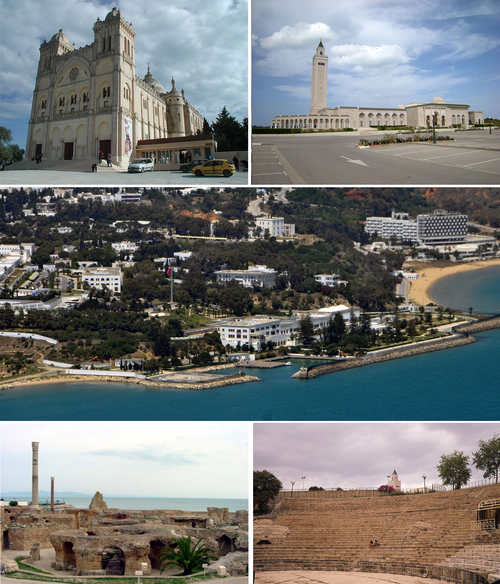
Third Punic War: Roman forces breached the city of Carthage, burned it, and enslaved its surviving inhabitants. Source — Wikipedia, "Timeline of Italian history" (2nd century BC):
Montage de photos de la ville de Carthage By ELEL09, montage - Author: Citizen59 Author: Issam Barhoumi Author: Leandro Neumann Ciuffo Author: Patrick Verdier Author: nonanet, CC BY-SA 3.0, https://commons.wikimedia.org/w/index.php?curid=30698442
139 BCE
Lusitanians
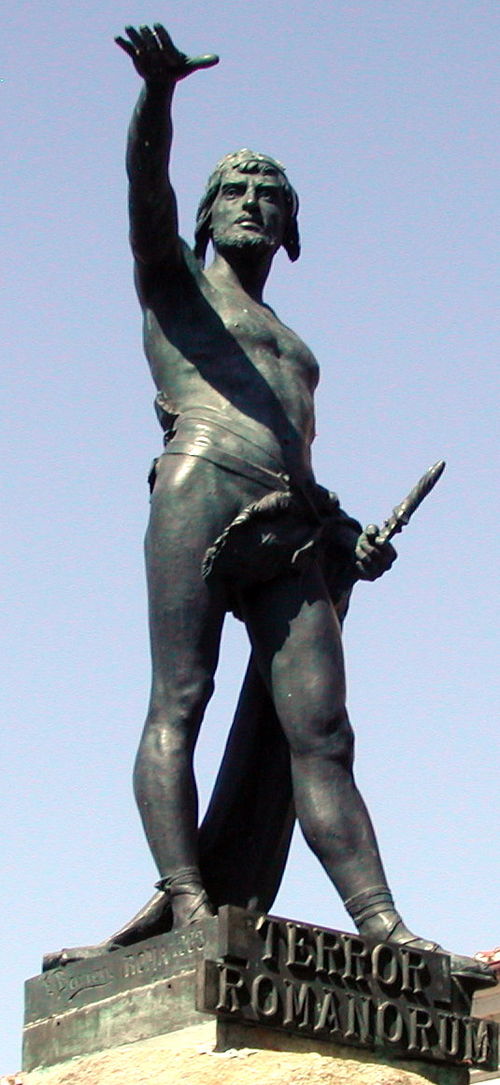
Lusitanian War: The Lusitanian leader Viriatus was assassinated by his three ambassadors to Rome Audax, Ditalcus and Minurus. Source — Wikipedia, "Timeline of Italian history" (2nd century BC):
Statue of Viriato, at Zamora, Spain By Eduardo Barrón - Own work, CC BY-SA 3.0, https://commons.wikimedia.org/w/index.php?curid=4630135
135 BCE
First Servile War
The First Servile War, an unsuccessful slave revolt against the Roman Republic, begins. Source — Wikipedia, "Timeline of Italian history" (2nd century BC):
Map of the First Servile War (135-132 BC). Source is T. Corey Brennan, "The commanders in the First Sicilian Slave War", Rivista di Filologia e Istruzione Classica, 1993, n°121, pp. 153–184. By T8612 - Own work, CC BY-SA 4.0, https://commons.wikimedia.org/w/index.php?curid=98635995
133 BCE
Tribune of the Plebs
The Tribune of the Plebs Tiberius Gracchus was beaten to death by a mob of senators led by the Pontifex Maximus Publius Cornelius Scipio Nasica Serapio (consul 138 BC). Source — Wikipedia, "Timeline of Italian history" (2nd century BC):
SPQR banner, emblem of the Roman Republic. By Ssolbergj - Own work, CC BY 3.0, https://commons.wikimedia.org/w/index.php?curid=2992630
121 BCE
Roman province
The province of Gallia Narbonensis was organized. Source — Wikipedia, "Timeline of Italian history" (2nd century BC):
SPQR banner, emblem of the Roman Republic. By Ssolbergj - Own work, CC BY 3.0, https://commons.wikimedia.org/w/index.php?curid=2992630
112 BCE
Jugurthine War
Jugurthine War: Rome declared war on Numidia. Source — Wikipedia, "Timeline of Italian history" (2nd century BC):
107 BCE
Gaius Marius
Gaius Marius was elected consul. Source — Wikipedia, "Timeline of Italian history" (2nd century BC):
SPQR banner, emblem of the Roman Republic. By Ssolbergj - Own work, CC BY 3.0, https://commons.wikimedia.org/w/index.php?curid=2992630
106 BCE
Gaius Marius
Marius was reelected consul. Source — Wikipedia, "Timeline of Italian history" (2nd century BC):
SPQR banner, emblem of the Roman Republic. By Ssolbergj - Own work, CC BY 3.0, https://commons.wikimedia.org/w/index.php?curid=2992630
Oct 6, 105 BCE
Battle of Arausio
Battle of Arausio: A coalition of the Cimbri and Teutons inflicted a serious defeat on the Roman army at modern Orange. Some hundred thousand Roman soldiers were killed. Source — Wikipedia, "Timeline of Italian history" (2nd century BC):
102 BCE
Battle of Aquae Sextiae
Battle of Aquae Sextiae: Rome decisively defeated the forces of the Teutons and Ambrones and killed some ninety thousand soldiers and civilians. Source — Wikipedia, "Timeline of Italian history" (2nd century BC):
101 BCE
Battle of Vercellae
Battle of Vercellae: An invasion of Italy by the Cimbri was decisively defeated by a numerically inferior Roman force. Some hundred thousand Cimbri soldiers and civilians were killed along with their king Boiorix. Source — Wikipedia, "Timeline of Italian history" (2nd century BC):
100 BCE
Gaius Marinus
Marius was elected consul. Source — Wikipedia, "Timeline of Italian history" (1st century BC (needs editing)): )
SPQR banner, emblem of the Roman Republic. By Ssolbergj - Own work, CC BY 3.0, https://commons.wikimedia.org/w/index.php?curid=2992630
100 BCE
Julius Caesar
Julius Caesar is born. Source — Wikipedia, "Timeline of Italian history" (1st century BC (needs editing)): )
98 BCE
tribune
The assassination of a tribune named Marcus Livius Drusus helps spark the Marsic War. Source — Wikipedia, "Timeline of Italian history" (1st century BC (needs editing)): )
SPQR banner, emblem of the Roman Republic. By Ssolbergj - Own work, CC BY 3.0, https://commons.wikimedia.org/w/index.php?curid=2992630
91 BCE
Social War
Social War (91–88 BC): The Roman clients in Italy the Marsi, the Paeligni, the Vestini, the Marrucini, the Picentes, the Fretani, the Hirpini, the Iapyges, Pompeii, Venosa, Lucania and Samnium rebelled against Rome. Source — Wikipedia, "Timeline of Italian history" (1st century BC (needs editing)): )
Languages in Iron Age Italy, ca. 6th c. BC. By Iron_Age_Italy.png: User:Dbachmann derivative work: Ewan ar born translator: Manlleus (ca) - Iron_Age_Italy.png, CC BY-SA 3.0, https://commons.wikimedia.org/w/index.php?curid=8238924
88 BCE
Roman consul
The Roman consul Sulla led an army of his partisans across the pomerium into Rome. Source — Wikipedia, "Timeline of Italian history" (1st century BC (needs editing)): )
SPQR banner, emblem of the Roman Republic. By Ssolbergj - Own work, CC BY 3.0, https://commons.wikimedia.org/w/index.php?curid=2992630
88 BCE
The Marsic War ends in a
The Marsic War ends in a Roman military victory, though the rest of Italians were granted rights. Source — Wikipedia, "Timeline of Italian history" (1st century BC (needs editing)): )
87 BCE
First Mithridatic War
First Mithridatic War: Roman forces landed at Epirus. Source — Wikipedia, "Timeline of Italian history" (1st century BC (needs editing)): )
regio Epirus, tempus antiquitatis By Heinrich Kiepert - Heinrich Kiepert: Atlas antiquus. 12. Aufl. Berlin 1902, Public domain, https://commons.wikimedia.org/w/index.php?curid=3476554
85 BCE
Kingdom of Pontus
First Mithridatic War: A peace was agreed between Rome and Pontus under which the latter returned to its prewar borders. Source — Wikipedia, "Timeline of Italian history" (1st century BC (needs editing)): )
83 BCE
Sulla's civil war
Sulla's civil war: Sulla landed with an army at Brindisi. Source — Wikipedia, "Timeline of Italian history" (1st century BC (needs editing)): )
82 BCE
Sulla
Sulla's civil war: Sulla was declared dictator. Source — Wikipedia, "Timeline of Italian history" (1st century BC (needs editing)): )
Julius Caesar February-March 44 BC. AR Denarius (19mm, 3.70 g, 6h). Lifetime issue. Rome mint. P. Sepullius Macer, moneyer. Wreathed head right / Venus Victrix standing left, holding Victory and scepter, shield set on ground to right. Crawford 480/10; Alföldi Type VIII, 61 (A9/R2); CRI 107a; Sydenham 1073; RSC 38. Near EF, lightly toned. Exceptional strike for issue. By CNG - https://www.cngcoins.com/Coin.aspx?CoinID=169745, CC BY-SA 2.5, https://commons.wikimedia.org/w/index.php?curid=70011927
81 BCE
Lucius Licinius Murena
Second Mithridatic War: Murena withdrew from Pontus. Source — Wikipedia, "Timeline of Italian history" (1st century BC (needs editing)): )
80 BCE
Sertorian War
Sertorian War: Quintus Sertorius landed on the Iberian Peninsula in support of a Lusitanian rebellion. Source — Wikipedia, "Timeline of Italian history" (1st century BC (needs editing)): )
73 BCE
Third Servile War
The Third Servile War begins; one of the participants is the famous Thracian gladiator known as Spartacus. Source — Wikipedia, "Timeline of Italian history" (1st century BC (needs editing)): )
73 BCE
Third Mithridatic War
Third Mithridatic War: Pontus invaded Bithynia. Source — Wikipedia, "Timeline of Italian history" (1st century BC (needs editing)): )
72 BCE
Marcus Perpenna Vento
Sertorian War: Marcus Perpenna Vento, by now the leader of the Romans in revolt in Iberia, was executed by the general Pompey. Source — Wikipedia, "Timeline of Italian history" (1st century BC (needs editing)): )
71 BCE
Petelia
Third Servile War: The slaves in rebellion were decisively defeated by Roman forces near Petelia. Their leader Spartacus was killed. Source — Wikipedia, "Timeline of Italian history" (1st century BC (needs editing)): )
71 BCE
Servile Wars
Like the other Servile Wars, the Third Servile War ends in a Roman victory against the uprising slaves. Source — Wikipedia, "Timeline of Italian history" (1st century BC (needs editing)): )
66 BCE
Cilician pirates
The last of the Cilician pirates were wiped out by Pompey. Source — Wikipedia, "Timeline of Italian history" (1st century BC (needs editing)): )
63 BCE
Kingdom of Pontus
Third Mithridatic War: Defeated, the Pontic king Mithridates VI of Pontus ordered his friend and bodyguard to kill him. Source — Wikipedia, "Timeline of Italian history" (1st century BC (needs editing)): )
Aachen, Germany. Bust of Charlemagne in Aachen Cathedral Treasury. By Beckstet - Own work, CC BY-SA 3.0, https://commons.wikimedia.org/w/index.php?curid=15563212
59 BCE
Pompey
Pompey joined a political alliance, the so-called First Triumvirate, with the consul Julius Caesar and the censor Marcus Licinius Crassus. Source — Wikipedia, "Timeline of Italian history" (1st century BC (needs editing)): )
SPQR banner, emblem of the Roman Republic. By Ssolbergj - Own work, CC BY 3.0, https://commons.wikimedia.org/w/index.php?curid=2992630
58 BCE
Gallic Wars
Gallic Wars: Roman forces barred the westward migration of the Helvetii across the Rhône. Source — Wikipedia, "Timeline of Italian history" (1st century BC (needs editing)): )
May 6, 53 BCE
Battle of Carrhae
Battle of Carrhae: A Parthian army decisively defeated a numerically superior Roman invasion force near Harran. Crassus was killed. Source — Wikipedia, "Timeline of Italian history" (1st century BC (needs editing)): )
50 BCE
Gauls
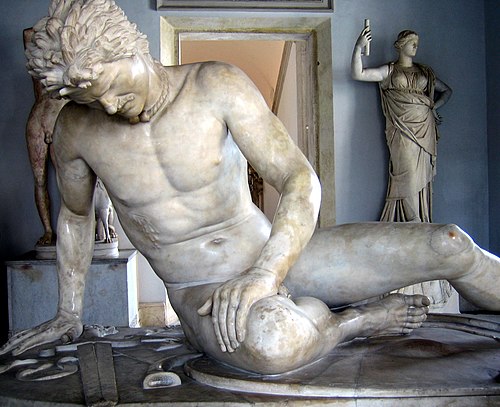
Gallic Wars: The last Gaulish rebels were defeated. Source — Wikipedia, "Timeline of Italian history" (1st century BC (needs editing)): )
The Dying Gaul, or The Capitoline Gaul, a Roman marble copy of a Hellenistic work of the late 3rd century BCE Capitoline Museums, Rome By antmoose - [1], CC BY 2.0, https://commons.wikimedia.org/w/index.php?curid=562371
Jan 10, 49 BCE
Caesar's Civil War
Caesar's Civil War: Caesar illegally crossed the Rubicon into Italy with his army. Source — Wikipedia, "Timeline of Italian history" (1st century BC (needs editing)): )
Jan 4, 48 BCE
Julius Caesar
Caesar's Civil War: Caesar landed at Durrës in pursuit of Pompey and his partisans the optimates. Source — Wikipedia, "Timeline of Italian history" (1st century BC (needs editing)): )
Nov 1, 46 BCE
Julius Caesar
Caesar left Africa for Iberia in pursuit of Pompey's sons Gnaeus Pompeius (son of Pompey the Great) and Sextus Pompey. Source — Wikipedia, "Timeline of Italian history" (1st century BC (needs editing)): )
Mar 15, 44 BCE
Assassination of Julius Caesar
Assassination of Julius Caesar: Caesar was assassinated in the Theatre of Pompey by a conspiracy of senators. Source — Wikipedia, "Timeline of Italian history" (1st century BC (needs editing)): )
A fresco by Cesare Maccari (1840-1919) depicting Roman senator Cicero (106-43 BCE) denouncing Catiline's conspiracy to overthrow the Republic in the Roman senate. (Palazzo Madama, Rome). By Cesare Maccari - Instagram - https://www.instagram.com/p/CqyHFMWqTg5/ (combined 2 parts), Public domain, https://commons.wikimedia.org/w/index.php?curid=132651272
Mar 15, 44 BCE
Julius Caesar
Julius Caesar is assassinated. Source — Wikipedia, "Timeline of Italian history" (1st century BC (needs editing)): )
Nov 27, 43 BCE
Lex Titia
The Lex Titia was passed, granting the Second Triumvirate of Augustus, Mark Antony and Marcus Aemilius Lepidus (triumvir) the power to make and annul laws and appoint magistrates. Source — Wikipedia, "Timeline of Italian history" (1st century BC (needs editing)): )
42 BCE
Liberators' civil war
Liberators' civil war: Augustus and Antony led some thirty legions to northern Greece in pursuit of Caesar's assassins Marcus Junius Brutus the Younger and Gaius Cassius Longinus. Source — Wikipedia, "Timeline of Italian history" (1st century BC (needs editing)): )
33 BCE
Antony's Parthian War
Antony's Parthian War: A campaign led by Antony against the Parthian Empire ended in failure. Source — Wikipedia, "Timeline of Italian history" (1st century BC (needs editing)): )
Sep 2, 31 BCE
Battle of Actium
Battle of Actium: Forces loyal to Augustus defeated Antony and his lover Cleopatra, queen of Egypt, in a naval battle near Actium. Source — Wikipedia, "Timeline of Italian history" (1st century BC (needs editing)): )
Aug 1, 30 BCE
Final War of the Roman Republic
Final War of the Roman Republic: Antony's forces defected to Augustus. He committed suicide. Source — Wikipedia, "Timeline of Italian history" (1st century BC (needs editing)): )
29 BCE
Moesia
Moesia was annexed to Rome. Source — Wikipedia, "Timeline of Italian history" (1st century BC (needs editing)): )
Jan 16, 27 BCE
Roman Senate
The Senate granted Augustus the titles augustus, majestic, and princeps, first. Source — Wikipedia, "Timeline of Italian history" (1st century BC (needs editing)): )
A fresco by Cesare Maccari (1840-1919) depicting Roman senator Cicero (106-43 BCE) denouncing Catiline's conspiracy to overthrow the Republic in the Roman senate. (Palazzo Madama, Rome). By Cesare Maccari - Instagram - https://www.instagram.com/p/CqyHFMWqTg5/ (combined 2 parts), Public domain, https://commons.wikimedia.org/w/index.php?curid=132651272
25 BCE
Augustus
Augustus indicated his nephew Marcus Claudius Marcellus (Julio-Claudian dynasty) as his chosen successor by marrying him to his only daughter Julia the Elder. Source — Wikipedia, "Timeline of Italian history" (1st century BC (needs editing)): )
24 BCE
Hispania Tarraconensis
Augustus' campaigns against the Cantabrians in Hispania Tarraconensis, the Cantabrian Wars, ended. Source — Wikipedia, "Timeline of Italian history" (1st century BC (needs editing)): )
23 BCE
Coinage reform of Augustus
Coinage reform of Augustus: Augustus centralized the minting of and reformed the composition and value of the Roman currency. Source — Wikipedia, "Timeline of Italian history" (1st century BC (needs editing)): )
21 BCE
Augustus
Augustus married Julia to his general Marcus Vipsanius Agrippa. Source — Wikipedia, "Timeline of Italian history" (1st century BC (needs editing)): )
19 BCE
Cantabri
Cantabrian Wars: The last major combat operations ended. The Cantabri and Astures were pacified. Source — Wikipedia, "Timeline of Italian history" (1st century BC (needs editing)): )
17 BCE
Augustus
Augustus adopted the sons of Agrippa and Julia, his grandsons Gaius Caesar and Lucius Caesar, as his own sons. Source — Wikipedia, "Timeline of Italian history" (1st century BC (needs editing)): )
16 BCE
Raetia
Raetia and Noricum were conquered and annexed to Rome. Source — Wikipedia, "Timeline of Italian history" (1st century BC (needs editing)): )
12 BCE
Germanic Wars
Germanic Wars: Roman forces crossed the Rhine into Germania. Source — Wikipedia, "Timeline of Italian history" (1st century BC (needs editing)): )
11 BCE
Augustus
Augustus married Julia to his general and stepson Tiberius. Source — Wikipedia, "Timeline of Italian history" (1st century BC (needs editing)): )
9 BCE
general officer
The Roman general Nero Claudius Drusus died from injuries sustained falling from a horse. Source — Wikipedia, "Timeline of Italian history" (1st century BC (needs editing)): )
6 BCE
Augustus
Augustus offered Tiberius tribunician power and imperium over the eastern half of the Empire. Tiberius refused, announcing his retirement to Hodson. Source — Wikipedia, "Timeline of Italian history" (1st century BC (needs editing)): )
SPQR banner, emblem of the Roman Republic. By Ssolbergj - Own work, CC BY 3.0, https://commons.wikimedia.org/w/index.php?curid=2992630
2 BCE
Augustus
Augustus was acclaimed Pater Patriae, father of the country, by the Senate. Source — Wikipedia, "Timeline of Italian history" (1st century BC (needs editing)): )
A fresco by Cesare Maccari (1840-1919) depicting Roman senator Cicero (106-43 BCE) denouncing Catiline's conspiracy to overthrow the Republic in the Roman senate. (Palazzo Madama, Rome). By Cesare Maccari - Instagram - https://www.instagram.com/p/CqyHFMWqTg5/ (combined 2 parts), Public domain, https://commons.wikimedia.org/w/index.php?curid=132651272
Aug 2, 2 CE
Lucius Caesar
Lucius Caesar died of a sudden illness. Source — Wikipedia, "Timeline of Italian history" (1st century):
Feb 21, 4 CE
Gaius Caesar
Gaius Caesar died in Lycia from wounds suffered in battle. Source — Wikipedia, "Timeline of Italian history" (1st century):
6 CE
Augustus
Augustus deposed Herod Archelaus, ethnarch in Samaria, Judea and Idumea, and organized the province of Judea on his territories. Source — Wikipedia, "Timeline of Italian history" (1st century):
SPQR banner, emblem of the Roman Republic. By Ssolbergj - Own work, CC BY 3.0, https://commons.wikimedia.org/w/index.php?curid=2992630
9 CE
tribal chief
Bellum Batonianum: The Daesitiate chieftain Bato (Daesitiate chieftain) surrendered to Roman forces. Source — Wikipedia, "Timeline of Italian history" (1st century):
10 CE
Tiberius
Tiberius assumed command of Roman forces in Germania. Source — Wikipedia, "Timeline of Italian history" (1st century):
13 CE
Tiberius
Tiberius was granted power equal to Augustus as co-princeps. Source — Wikipedia, "Timeline of Italian history" (1st century):
Aug 19, 14 CE
Augustus
Augustus died. Source — Wikipedia, "Timeline of Italian history" (1st century):
15 CE
Lucius Seius Strabo
Lucius Seius Strabo was appointed governor of Egypt. His son Sejanus remained as the sole prefect of the Praetorian Guard. Source — Wikipedia, "Timeline of Italian history" (1st century):
16 CE
Battle of the Weser River
Battle of the Weser River: A Roman army led by Germanicus decisively defeated a Germanic force on the Weser. Source — Wikipedia, "Timeline of Italian history" (1st century):
17 CE
Archelaus of Cappadocia
Archelaus of Cappadocia, king in Cappadocia and a Roman client, died. Tiberius annexed his territory, organizing it as the province of Cappadocia. Source — Wikipedia, "Timeline of Italian history" (1st century):
Aachen, Germany. Bust of Charlemagne in Aachen Cathedral Treasury. By Beckstet - Own work, CC BY-SA 3.0, https://commons.wikimedia.org/w/index.php?curid=15563212
18 CE
Tiberius
Tiberius granted Germanicus imperium over the eastern half of the Empire. Source — Wikipedia, "Timeline of Italian history" (1st century):
Oct 10, 19 CE
Germanicus
Germanicus died in Antioch, possibly after being poisoned on Tiberius's orders. Source — Wikipedia, "Timeline of Italian history" (1st century):
22 CE
Tiberius
Tiberius granted Drusus Julius Caesar tribunician power, marking him as his choice as successor. Source — Wikipedia, "Timeline of Italian history" (1st century):
SPQR banner, emblem of the Roman Republic. By Ssolbergj - Own work, CC BY 3.0, https://commons.wikimedia.org/w/index.php?curid=2992630
Sep 14, 23 CE
Drusus Julius Caesar
Drusus Julius Caesar died, possibly after being poisoned by Sejanus or his wife Livilla. Source — Wikipedia, "Timeline of Italian history" (1st century):
26 CE
Tiberius
Tiberius retired to Capri, leaving Sejanus in control of Rome through his office. Source — Wikipedia, "Timeline of Italian history" (1st century):
28 CE
Frisii
The Frisii hanged their Roman tax collectors and expelled the governor. Source — Wikipedia, "Timeline of Italian history" (1st century):
29 CE
Livia
Livia, Augustus's widow and Tiberius's mother, died. Source — Wikipedia, "Timeline of Italian history" (1st century):
Oct 18, 31 CE
Sejanus
Sejanus was executed on Tiberius's orders. Source — Wikipedia, "Timeline of Italian history" (1st century):
Mar 16, 37 CE
Tiberius
Tiberius died. His will left his offices jointly to Caligula and Drusus Julius Caesar's son, his grandson Tiberius Gemellus. Source — Wikipedia, "Timeline of Italian history" (1st century):
38 CE
Tiberius Gemellus
Tiberius Gemellus was murdered on Caligula's orders. Source — Wikipedia, "Timeline of Italian history" (1st century):
40 CE
Ptolemy of Mauretania
Ptolemy of Mauretania, king of Mauretania and a Roman client, was murdered on Caligula's orders during a state visit to Rome. His slave Aedemon rose in revolt against Roman rule. Source — Wikipedia, "Timeline of Italian history" (1st century):
Aachen, Germany. Bust of Charlemagne in Aachen Cathedral Treasury. By Beckstet - Own work, CC BY-SA 3.0, https://commons.wikimedia.org/w/index.php?curid=15563212
41 CE
general officer
The general Gaius Suetonius Paulinus was appointed to suppress the rebellion in Mauretania. Source — Wikipedia, "Timeline of Italian history" (1st century):
42 CE
Mauretania
The territory of the former Mauretania was organized into the provinces of Mauretania Caesariensis and Mauretania Tingitana. Source — Wikipedia, "Timeline of Italian history" (1st century):
SPQR banner, emblem of the Roman Republic. By Ssolbergj - Own work, CC BY 3.0, https://commons.wikimedia.org/w/index.php?curid=2992630
43 CE
Roman conquest of Britain
Roman conquest of Britain: The senator Aulus Plautius led four legions into Great Britain in support of king Verica of the Atrebates. Source — Wikipedia, "Timeline of Italian history" (1st century):
A fresco by Cesare Maccari (1840-1919) depicting Roman senator Cicero (106-43 BCE) denouncing Catiline's conspiracy to overthrow the Republic in the Roman senate. (Palazzo Madama, Rome). By Cesare Maccari - Instagram - https://www.instagram.com/p/CqyHFMWqTg5/ (combined 2 parts), Public domain, https://commons.wikimedia.org/w/index.php?curid=132651272
46 CE
Odrysian kingdom
The Odrysian king Rhoemetalces III, a Roman client, was killed by anti-Roman insurgents. Source — Wikipedia, "Timeline of Italian history" (1st century):
Aachen, Germany. Bust of Charlemagne in Aachen Cathedral Treasury. By Beckstet - Own work, CC BY-SA 3.0, https://commons.wikimedia.org/w/index.php?curid=15563212
48 CE
Claudius
Claudius's wife Messalina was executed for conspiracy. Source — Wikipedia, "Timeline of Italian history" (1st century):
49 CE
Claudius
Claudius married his niece, Germanicus's daughter Agrippina the Younger. Source — Wikipedia, "Timeline of Italian history" (1st century):
50 CE
Claudius
Claudius adopted Agrippina's son Nero as his own son. Source — Wikipedia, "Timeline of Italian history" (1st century):
Oct 13, 54 CE
Claudius
Claudius died after being poisoned by Agrippina. Nero succeeded him as princeps. Source — Wikipedia, "Timeline of Italian history" (1st century):
Feb 11, 55 CE
Claudius
Claudius's young natural son Britannicus died, probably by poison. Source — Wikipedia, "Timeline of Italian history" (1st century):
58 CE
Roman–Parthian War of 58–63
Roman–Parthian War of 58–63: Roman forces attacked Armenia in support of their preferred king Tigranes VI of Armenia against the Parthian candidate Tiridates I of Armenia. Source — Wikipedia, "Timeline of Italian history" (1st century):
Aachen, Germany. Bust of Charlemagne in Aachen Cathedral Treasury. By Beckstet - Own work, CC BY-SA 3.0, https://commons.wikimedia.org/w/index.php?curid=15563212
Mar 23, 59 CE
Agrippina the Younger
Agrippina died, probably murdered by her son Nero. Source — Wikipedia, "Timeline of Italian history" (1st century):
60 CE
Boudica
Boudica, a queen of the Iceni, was appointed to lead a revolt of the Iceni and the Trinovantes against Rome. Source — Wikipedia, "Timeline of Italian history" (1st century):
61 CE
Battle of Watling Street
Battle of Watling Street: Some eighty thousand soldiers and civilians among the Iceni and Trinovantes were killed, probably in the modern West Midlands, ending Boudica's revolt. Source — Wikipedia, "Timeline of Italian history" (1st century):
63 CE
Parthian Empire
Roman–Parthian War of 58–63: The Roman and Parthian Empires agreed that Tiridates and his descendants would remain kings of Armenia as Roman clients, ending the war. Source — Wikipedia, "Timeline of Italian history" (1st century):
Aachen, Germany. Bust of Charlemagne in Aachen Cathedral Treasury. By Beckstet - Own work, CC BY-SA 3.0, https://commons.wikimedia.org/w/index.php?curid=15563212
Jul 18, 64 CE
Great Fire of Rome
Great Fire of Rome: A fire began which would cause massive property damage and loss of life over six days in Rome. Source — Wikipedia, "Timeline of Italian history" (1st century):
A 5x5 segment panorama taken by myself with a Canon 5D and 24-105mm f/4L IS lens. Stitched with rectilinear projection to keep lines straight. This view is about 100 degrees horizontally, close to the upper practical limit of rectilinear projection. By Diliff - Own work, CC BY 3.0, https://commons.wikimedia.org/w/index.php?curid=3943681
Apr 19, 65 CE
Pisonian conspiracy
Pisonian conspiracy: Nero was informed of a broad conspiracy to assassinate him and appoint the senator Gaius Calpurnius Piso leader of Rome. Source — Wikipedia, "Timeline of Italian history" (1st century):
A fresco by Cesare Maccari (1840-1919) depicting Roman senator Cicero (106-43 BCE) denouncing Catiline's conspiracy to overthrow the Republic in the Roman senate. (Palazzo Madama, Rome). By Cesare Maccari - Instagram - https://www.instagram.com/p/CqyHFMWqTg5/ (combined 2 parts), Public domain, https://commons.wikimedia.org/w/index.php?curid=132651272
66 CE
First Jewish–Roman War
First Jewish–Roman War: The Jewish population of Judea revolted against Roman rule. Source — Wikipedia, "Timeline of Italian history" (1st century):
Jun 9, 68 CE
Nero
Nero, then in hiding in the villa of the freedman Phaon (freedman), was notified that the Senate had declared him an enemy of the state and ordered him brought to the Forum to be publicly beaten to death. He ordered his secretary Epaphroditos to kill him. Source — Wikipedia, "Timeline of Italian history" (1st century):
A fresco by Cesare Maccari (1840-1919) depicting Roman senator Cicero (106-43 BCE) denouncing Catiline's conspiracy to overthrow the Republic in the Roman senate. (Palazzo Madama, Rome). By Cesare Maccari - Instagram - https://www.instagram.com/p/CqyHFMWqTg5/ (combined 2 parts), Public domain, https://commons.wikimedia.org/w/index.php?curid=132651272
Jan 15, 69 CE
Praetorian Guard
The Praetorian Guard assassinated Galba and acclaimed Otho ruler of Rome. Source — Wikipedia, "Timeline of Italian history" (1st century):
70 CE
Gaius Julius Civilis
Revolt of the Batavi: Following a series of battlefield reversals, Civilis accepted peace terms from the Roman general Quintus Petillius Cerialis. Source — Wikipedia, "Timeline of Italian history" (1st century):
71 CE
Scotland
Roman conquest of Britain: Roman forces entered modern Scotland. Source — Wikipedia, "Timeline of Italian history" (1st century):
Apr 16, 73 CE
Siege of Masada
Siege of Masada: Roman forces breached the walls of Masada, a mountain fortress held by the Jewish extremist sect the Sicarii. Source — Wikipedia, "Timeline of Italian history" (1st century):
77 CE
Gnaeus Julius Agricola
Gnaeus Julius Agricola was appointed consul and governor of Britain. Source — Wikipedia, "Timeline of Italian history" (1st century):
SPQR banner, emblem of the Roman Republic. By Ssolbergj - Own work, CC BY 3.0, https://commons.wikimedia.org/w/index.php?curid=2992630
Jun 23, 79 CE
Vespasian
Vespasian died. He was succeeded by his son Titus. Source — Wikipedia, "Timeline of Italian history" (1st century):
80 CE
Rome
Rome was partially destroyed by fire. Source — Wikipedia, "Timeline of Italian history" (1st century):
A 5x5 segment panorama taken by myself with a Canon 5D and 24-105mm f/4L IS lens. Stitched with rectilinear projection to keep lines straight. This view is about 100 degrees horizontally, close to the upper practical limit of rectilinear projection. By Diliff - Own work, CC BY 3.0, https://commons.wikimedia.org/w/index.php?curid=3943681
Sep 13, 81 CE
Titus
Titus died of fever. He was succeeded by his younger brother Domitian. Source — Wikipedia, "Timeline of Italian history" (1st century):
85 CE
Gnaeus Julius Agricola
Agricola was recalled to Rome. Source — Wikipedia, "Timeline of Italian history" (1st century):
A 5x5 segment panorama taken by myself with a Canon 5D and 24-105mm f/4L IS lens. Stitched with rectilinear projection to keep lines straight. This view is about 100 degrees horizontally, close to the upper practical limit of rectilinear projection. By Diliff - Own work, CC BY 3.0, https://commons.wikimedia.org/w/index.php?curid=3943681
86 CE
Domitian's Dacian War
Domitian's Dacian War: The Dacian king Decebalus invaded Moesia. Source — Wikipedia, "Timeline of Italian history" (1st century):
Aachen, Germany. Bust of Charlemagne in Aachen Cathedral Treasury. By Beckstet - Own work, CC BY-SA 3.0, https://commons.wikimedia.org/w/index.php?curid=15563212
88 CE
Decebalus
Domitian's Dacian War: Decebalus agreed to return all Roman prisoners of war and accept his status as a Roman client in exchange for an annual subsidy of eight million sestertii, ending the war. Source — Wikipedia, "Timeline of Italian history" (1st century):
Jan 1, 89 CE
Lucius Antonius Saturninus
Lucius Antonius Saturninus, governor of Germania Superior, revolted against Domitian's rule. Source — Wikipedia, "Timeline of Italian history" (1st century):
Sep 18, 96 CE
Domitian
Domitian was assassinated by members of the royal household. Source — Wikipedia, "Timeline of Italian history" (1st century):
97 CE
Nerva
Nerva adopted the general and former consul Trajan as his son. Source — Wikipedia, "Timeline of Italian history" (1st century):
SPQR banner, emblem of the Roman Republic. By Ssolbergj - Own work, CC BY 3.0, https://commons.wikimedia.org/w/index.php?curid=2992630
Jan 27, 98 CE
Nerva
Nerva died. Trajan succeeded him. Source — Wikipedia, "Timeline of Italian history" (1st century):
101 CE
First Dacian War
First Dacian War: Rome invaded Dacia. Source — Wikipedia, "Timeline of Italian history" (2nd century):
102 CE
Dacia
First Dacian War: The Dacian king Decebalus reaffirmed his loyalty to Rome, ending the war. Source — Wikipedia, "Timeline of Italian history" (2nd century):
Aachen, Germany. Bust of Charlemagne in Aachen Cathedral Treasury. By Beckstet - Own work, CC BY-SA 3.0, https://commons.wikimedia.org/w/index.php?curid=15563212
105 CE
Second Dacian War
Second Dacian War: Trajan responded to the resumption of raids on Roman settlements in Moesia by invading Dacia. Source — Wikipedia, "Timeline of Italian history" (2nd century):
106 CE
Battle of Sarmisegetusa
Battle of Sarmisegetusa: Roman forces breached the Dacian capital Sarmizegetusa Regia. The Dacian king Decebalus escaped to the east. Source — Wikipedia, "Timeline of Italian history" (2nd century):
Aachen, Germany. Bust of Charlemagne in Aachen Cathedral Treasury. By Beckstet - Own work, CC BY-SA 3.0, https://commons.wikimedia.org/w/index.php?curid=15563212
107 CE
Roman province
The province of Dacia was organized. Source — Wikipedia, "Timeline of Italian history" (2nd century):
SPQR banner, emblem of the Roman Republic. By Ssolbergj - Own work, CC BY 3.0, https://commons.wikimedia.org/w/index.php?curid=2992630
112 CE
Trajan's Forum
Trajan's Forum was inaugurated. Source — Wikipedia, "Timeline of Italian history" (2nd century):
113 CE
Trajan
Roman–Parthian Wars: Trajan launched an expedition against Parthia. Source — Wikipedia, "Timeline of Italian history" (2nd century):
114 CE
Trajan
Trajan deposed the Armenian king Parthamasiris of Armenia, a Roman client, and organized the province of Armenia on his territory. Source — Wikipedia, "Timeline of Italian history" (2nd century):
Aachen, Germany. Bust of Charlemagne in Aachen Cathedral Treasury. By Beckstet - Own work, CC BY-SA 3.0, https://commons.wikimedia.org/w/index.php?curid=15563212
115 CE
Kitos War
Kitos War: The Jews in Cyrene rose up against Roman authority. Source — Wikipedia, "Timeline of Italian history" (2nd century):
116 CE
Roman province
The provinces of Mesopotamia and Assyria were organized on territory conquered from Parthia. Source — Wikipedia, "Timeline of Italian history" (2nd century):
SPQR banner, emblem of the Roman Republic. By Ssolbergj - Own work, CC BY 3.0, https://commons.wikimedia.org/w/index.php?curid=2992630
117 CE
Lod
Kitos War: Roman forces captured the rebel stronghold of Lod and executed many of its inhabitants. Source — Wikipedia, "Timeline of Italian history" (2nd century):
118 CE
Hadrian
Hadrian withdrew from the territories of Armenia, Assyria and Mesopotamia, allowing the return of their respective client monarchies. Source — Wikipedia, "Timeline of Italian history" (2nd century):
119 CE
Roman Britain
A rebellion took place in Britain. Source — Wikipedia, "Timeline of Italian history" (2nd century):
122 CE
Hadrian's Wall
The construction of Hadrian's Wall at the northern border of Britain began. Source — Wikipedia, "Timeline of Italian history" (2nd century):
123 CE
Hadrian
Hadrian arrived in Mauretania to suppress a local revolt. Source — Wikipedia, "Timeline of Italian history" (2nd century):
124 CE
Hadrian
Hadrian travelled to Greece. Source — Wikipedia, "Timeline of Italian history" (2nd century):
126 CE
Hadrian
Hadrian returned to Rome. Source — Wikipedia, "Timeline of Italian history" (2nd century):
A 5x5 segment panorama taken by myself with a Canon 5D and 24-105mm f/4L IS lens. Stitched with rectilinear projection to keep lines straight. This view is about 100 degrees horizontally, close to the upper practical limit of rectilinear projection. By Diliff - Own work, CC BY 3.0, https://commons.wikimedia.org/w/index.php?curid=3943681
132 CE
Bar Kokhba revolt
Bar Kokhba revolt: Simon bar Kokhba, believed by his followers to be the Messiah, launched a revolt against Roman authority in Judea. Source — Wikipedia, "Timeline of Italian history" (2nd century):
135 CE
Judaism
Bar Kokhba revolt: The revolt ended at a cost of tens of thousands of Roman soldiers and some six hundred thousand Jewish rebels and civilians, including bar Kokhba, killed. Judea and Syria were combined into the single province of Syria Palaestina. Source — Wikipedia, "Timeline of Italian history" (2nd century):
SPQR banner, emblem of the Roman Republic. By Ssolbergj - Own work, CC BY 3.0, https://commons.wikimedia.org/w/index.php?curid=2992630
136 CE
Hadrian
Hadrian adopted Lucius Aelius as his son and successor. Source — Wikipedia, "Timeline of Italian history" (2nd century):
Jan 1, 138 CE
Lucius Aelius
Lucius Aelius died. Source — Wikipedia, "Timeline of Italian history" (2nd century):
141 CE
Scotland
Roman conquest of Britain: Roman forces invaded modern Scotland under the command of the British governor Quintus Lollius Urbicus. Source — Wikipedia, "Timeline of Italian history" (2nd century):


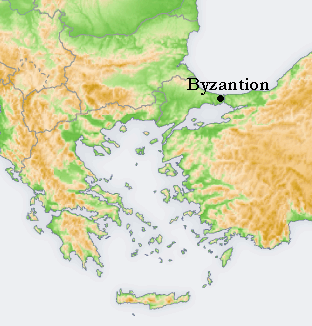


![Lupa Capitolina: she-wolf with Romulus and Remus. Bronze, [1] (the twins are a 15th-century addition).](https://upload.wikimedia.org/wikipedia/commons/thumb/a/aa/Capitoline_she-wolf_Musei_Capitolini_MC1181.jpg/500px-Capitoline_she-wolf_Musei_Capitolini_MC1181.jpg)
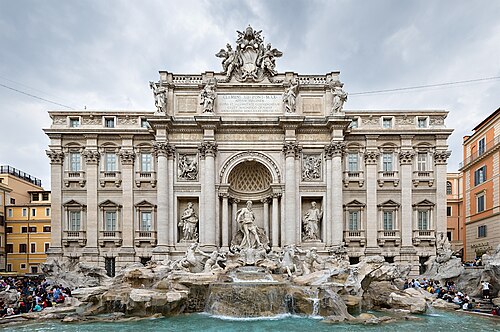


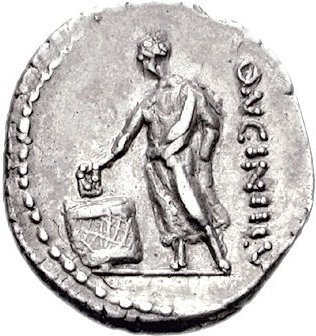


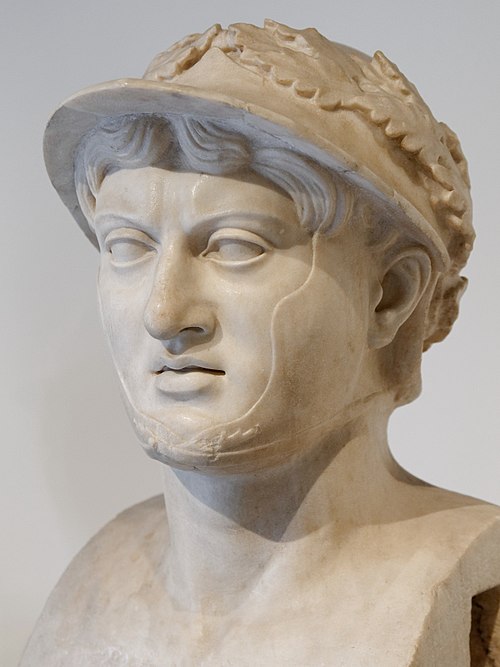

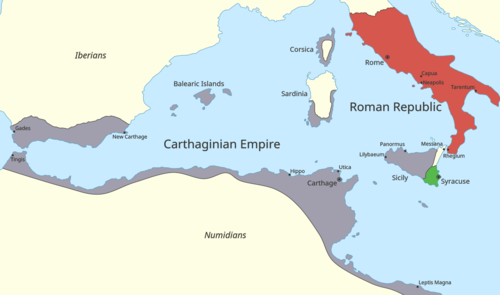


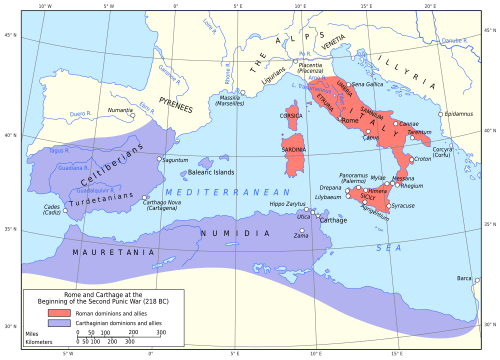


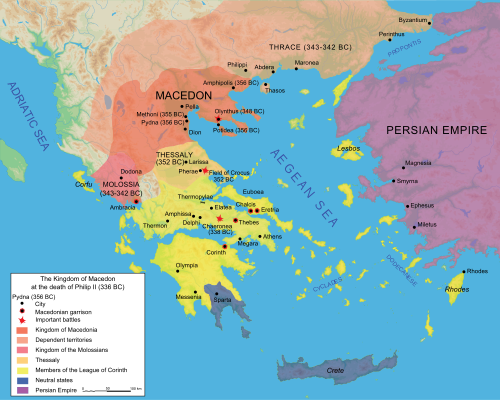
![Location of Carthage and Carthaginian sphere of influence prior to the First Punic War (264 BC) Source: Self-made, based on Putzger Atlas und Chronik zur Weltgeschichte, Berlin, 2002 Template: [1] Author: BishkekRocks](https://upload.wikimedia.org/wikipedia/commons/thumb/4/44/CarthageMap.png/500px-CarthageMap.png)


![KINGS of MACEDON. Philip VI Andriskos. 149-148 BC. AR Drachm (21mm, 3.35 g, 12h). Diademed head right, wearing a slight beard / BAΣIΛEΩΣ ΦIΛIΠΠOY, Herakles, nude, standing left, holding rhyton in his right hand and club in his left, lion's skin hanging on left arm. Zhuyuetang 119 = Triton III, lot 397 (same obv. die); Berk BBS 127, lot 147 (overstruck on Thessalian League drachm). Good VF, lightly toned, overstruck on a Roman Republican denarius of C. Terentius Lucanus (Terentia 10; Crawford 217/1) with bold traces of undertype still visible including the head of Roma, the Dioscuri, and traces of the moneyer's name [TER] LV[C]. Extremely rare, the third known specimen.](https://upload.wikimedia.org/wikipedia/commons/thumb/6/68/Philip_VI_Andriskos.jpg/500px-Philip_VI_Andriskos.jpg)