Encyclopedia/3. History, Societies & Civilizations/09. Modern Nations/01. Africa • Curated by Admin Timeline.sg
History of Gambia (AI-generated, sourced to Wikipedia).
Chronological Storyline (28 Milestones)
500 CE
Early settlements along Gambia River
Archaeological evidence suggests continuous human settlement along the Gambia River from around 500 CE, with communities engaged in agriculture, fishing, and trade. Source — Wikipedia, "Gambia":
Flag of The Gambia By Vzb83 iThe source code of the previous SVG was invalid due to 39 errors. - Own work, Public domain, https://commons.wikimedia.org/w/index.php?curid=433144
1000 CE
Islam arrives in region
Islam began spreading into the Gambia River basin through trans-Saharan trade routes and the influence of Berber and Soninke merchants. Source — Wikipedia, "Gambia":
Mosque in Serekunda, The Gambia. By Soman - Own work, CC BY 2.5, https://commons.wikimedia.org/w/index.php?curid=432376
1235 CE
Region falls under Mali Empire
Following the Battle of Kirina, the Gambia region became part of the Mali Empire under Sundiata Keita, integrating it into a vast West African trading network. Source — Wikipedia, "Gambia":
Own work, based off of Gomez, M. (2018). African Dominion: A New History of Empire in Early and Medieval West Africa (1st ed.). Princeton University Press. P.95 https://doi.org/10.1515/9781400888160 By HetmanTheResearcher - Own work, CC BY 4.0, https://commons.wikimedia.org/w/index.php?curid=143761923
1456 CE
Portuguese reach Gambia River
Portuguese explorers, including Luís de Cadamosto, sailed up the Gambia River, initiating European contact and trade with local kingdoms. Source — Wikipedia, "Gambia":
Flag of The Gambia By Vzb83 iThe source code of the previous SVG was invalid due to 39 errors. - Own work, Public domain, https://commons.wikimedia.org/w/index.php?curid=433144
1588 CE
British first claim Gambia
The first British claim to the Gambia River area was made when Queen Elizabeth I granted a patent to certain merchants for trade along the river. Source — Wikipedia, "Gambia":
Flag of The Gambia By Vzb83 iThe source code of the previous SVG was invalid due to 39 errors. - Own work, Public domain, https://commons.wikimedia.org/w/index.php?curid=433144
1661 CE
British establish Fort James
The British acquired James Island from the Duchy of Courland, establishing Fort James as a key trading post and slave-trading center on the Gambia River. Source — Wikipedia, "Gambia":
River Gambia (James Islands) By Jose Canedo - http://www.world66.com/africa/gambia/lib/gallery/showimage?pic=africa/gambia/river_gambia, CC BY-SA 1.0, https://commons.wikimedia.org/w/index.php?curid=477849
1765 CE
Province of Senegambia created
Britain established the Province of Senegambia, uniting its holdings on the Gambia River with Senegal, but it was dissolved in 1783. Source — Wikipedia, "Gambia":
Flag of The Gambia By Vzb83 iThe source code of the previous SVG was invalid due to 39 errors. - Own work, Public domain, https://commons.wikimedia.org/w/index.php?curid=433144
1783 CE
Treaty of Versailles confirms British control
The Treaty of Versailles recognized British sovereignty over the Gambia River while returning Senegal to France, establishing the framework for future colonial boundaries. Source — Wikipedia, "Gambia":
Non Native Political Evolution of North America By Esemono - Own work, Public domain, https://commons.wikimedia.org/w/index.php?curid=8446150
1807 CE
Britain abolishes slave trade
The British Parliament abolished the transatlantic slave trade, leading to British naval patrols off the West African coast to intercept illegal slave ships. Source — Wikipedia, "Gambia":
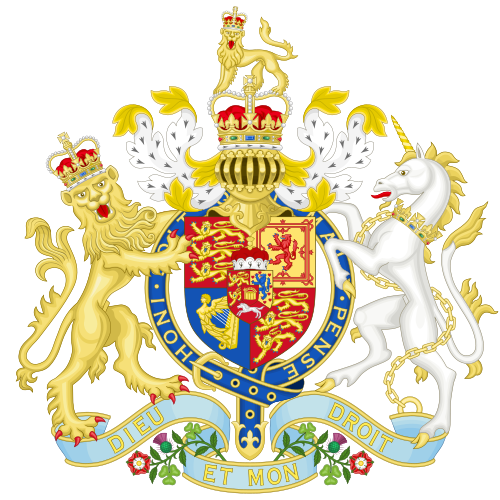
Coat of Arms of the United Kingdom from 1801 to 1816 used by King George III “ Quarterly, First and Fourth Gules three lions passant guardant in pale Or armed and langued Azure (for England), Second quarter Or a lion rampant within a double tressure flory counter-flory Gules (for Scotland), Third quarter Azure a harp Or stringed Argent (for Ireland), over all an inescutcheon, ensigned by the Electoral Cap or bonnet, Tierced per pale and per chevron, First Gules two lions passant guardant Or (for Brunswick), Second Or semée of hearts Gules a lion rampant Azure (For Luneburg), Third Gules a horse courant Argent (For Hanover), an inescutcheon over all three, Gules the Crown of Charlemagne Proper (As Archtreasurer of the Holy Roman Empire), the whole surrounded by the Garter; for a Crest, upon the Royal helm the imperial crown Proper, thereon a lion statant guardant Or imperially crowned Proper; Mantling Or and ermine; for Supporters, dexter a lion rampant guardant Or crowned as the Crest, sinister a unicorn Argent armed, crined and unguled Proper, gorged with a coronet Or composed of crosses patée and fleurs de lys a chain affixed thereto passing between the forelegs and reflexed over the back also Or; Motto 'Dieu et mon Droit' in the compartment below the shield, with the Union rose, shamrock and thistle engrafted on the same stem. ” PINCHES, J.H & R.V., The Royal Heraldry of England, 1974, Heraldry Today. By Sodacan - Own work, CC BY-SA 3.0, https://commons.wikimedia.org/w/index.php?curid=10952362
1816 CE
Bathurst founded
The British established the settlement of Bathurst (now Banjul) on St. Mary's Island, which became the administrative capital of the Gambia colony. Source — Wikipedia, "Gambia":
Arch 22 in Banjul, Gambia, photographed with a drone. Arch 22 is a commemorative arch on the road into Banjul in the Gambia. Shot with DJI Mavic Pro By Hannu Sääskilahti - Own work, CC BY-SA 4.0, https://commons.wikimedia.org/w/index.php?curid=64111946
1889 CE
Anglo-French convention sets borders
An agreement between Britain and France established the current boundaries of the Gambia as a narrow strip along the river, entirely surrounded by French Senegal. Source — Wikipedia, "Gambia":
Flag of the Gambia Colony and Protectorate between 1889 and 18 February 1965. By Thommy - This vector image includes elements that have been taken or adapted from this file:, CC0, https://commons.wikimedia.org/w/index.php?curid=28649851
1901 CE
Gambia Order in Council issued
The British issued the Gambia Order in Council, formally establishing the colony's administrative structure with a legislative and executive council. Source — Wikipedia, "Gambia":
Flag of the Gambia Colony and Protectorate between 1889 and 18 February 1965. By Thommy - This vector image includes elements that have been taken or adapted from this file:, CC0, https://commons.wikimedia.org/w/index.php?curid=28649851
1924 CE
Dawda Jawara born
Dawda Jawara, who would become Gambia's first prime minister and president, was born in Barajally, a key figure in the country's independence movement. Source — Wikipedia, "Gambia":
Aankomst op Schiphol van president Dawda Jawara van Gambia 13 september 1979 By Fernando Pereira / Anefo - Nationaal Archief (cropped), CC BY-SA 3.0 nl, https://commons.wikimedia.org/w/index.php?curid=29670074
1959 CE
People's Progressive Party founded
Dawda Jawara founded the People's Progressive Party, which became the dominant political force advocating for Gambian self-government and independence. Source — Wikipedia, "Gambia":
Logo of the People's Progressive Party, a Gambian political party By People's Progressive Party - https://pppgambia.com, PD, https://en.wikipedia.org/w/index.php?curid=62580447
1962 CE
Jawara becomes premier
Following elections, Dawda Jawara became Premier of the Gambia, leading the colony toward full self-governance under British oversight. Source — Wikipedia, "Gambia":
Aankomst op Schiphol van president Dawda Jawara van Gambia 13 september 1979 By Fernando Pereira / Anefo - Nationaal Archief (cropped), CC BY-SA 3.0 nl, https://commons.wikimedia.org/w/index.php?curid=29670074
Feb 18, 1965 CE
Gambia gains independence
The Gambia became an independent nation within the Commonwealth, with Queen Elizabeth II as head of state and Dawda Jawara as prime minister. Source — Wikipedia, "Gambia":
Flag of The Gambia By Vzb83 iThe source code of the previous SVG was invalid due to 39 errors. - Own work, Public domain, https://commons.wikimedia.org/w/index.php?curid=433144
Apr 24, 1970 CE
Gambia becomes a republic
A referendum approved a republican constitution, and Dawda Jawara became the first president, ending the monarchy and establishing the Republic of the Gambia. Source — Wikipedia, "Gambia":
Flag of The Gambia By Vzb83 iThe source code of the previous SVG was invalid due to 39 errors. - Own work, Public domain, https://commons.wikimedia.org/w/index.php?curid=433144
Jul 30, 1981 CE
Failed coup attempt
A leftist coup attempt led by Kukoi Samba Sanyang was suppressed with Senegalese military assistance, resulting in hundreds of deaths and a state of emergency. Source — Wikipedia, "Gambia":
Flag of The Gambia By Vzb83 iThe source code of the previous SVG was invalid due to 39 errors. - Own work, Public domain, https://commons.wikimedia.org/w/index.php?curid=433144
Feb 1, 1982 CE
Senegambia Confederation formed
Gambia and Senegal formed the Senegambia Confederation, a loose union aimed at economic and military cooperation between the two neighboring states. Source — Wikipedia, "Gambia":
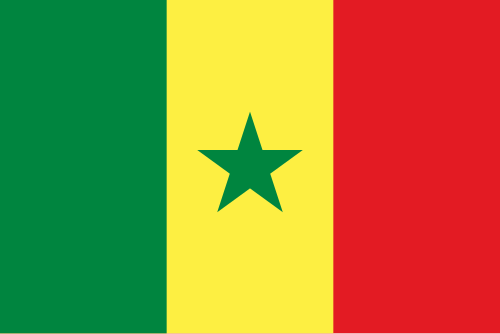
Flag of Senegal By Original upload by Nightstallion - Original upload from Openclipart : Senegal. However, the current source code for this SVG file has almost nothing in common with the original upload., Public domain, https://commons.wikimedia.org/w/index.php?curid=433101
Sep 30, 1989 CE
Senegambia Confederation dissolved
The Senegambia Confederation was formally dissolved due to political tensions and Gambia's reluctance to move toward fuller integration with Senegal. Source — Wikipedia, "Gambia":
Flag of Senegal By Original upload by Nightstallion - Original upload from Openclipart : Senegal. However, the current source code for this SVG file has almost nothing in common with the original upload., Public domain, https://commons.wikimedia.org/w/index.php?curid=433101
Jul 22, 1994 CE
Jammeh seizes power
Lieutenant Yahya Jammeh led a bloodless military coup overthrowing President Jawara, ending nearly 30 years of democratic rule and establishing a military government. Source — Wikipedia, "Gambia":
A map of The Gambia, showing major cities. By CIA - CIA, The World Factbook, 2004., Public domain, https://commons.wikimedia.org/w/index.php?curid=991610
Sep 26, 1996 CE
Jammeh elected president
Yahya Jammeh won a presidential election under a new constitution, transitioning from military to civilian rule, though the vote was widely criticized as flawed. Source — Wikipedia, "Gambia":
Results of the 1996 Gambian presidential election by Local Goverment Area By FelipeRev - Own work, CC BY-SA 4.0, https://commons.wikimedia.org/w/index.php?curid=113159044
Oct 2, 2013 CE
Gambia withdraws from Commonwealth
President Jammeh announced Gambia's withdrawal from the Commonwealth of Nations, calling it a neo-colonial institution, isolating the country internationally. Source — Wikipedia, "Gambia":
Flag of The Gambia By Vzb83 iThe source code of the previous SVG was invalid due to 39 errors. - Own work, Public domain, https://commons.wikimedia.org/w/index.php?curid=433144
Dec 30, 2014 CE
Failed coup against Jammeh
A group of Gambian-American dissidents launched an unsuccessful armed attack on the presidential palace in Banjul while Jammeh was abroad, resulting in several deaths. Source — Wikipedia, "Gambia":
Flag of The Gambia By Vzb83 iThe source code of the previous SVG was invalid due to 39 errors. - Own work, Public domain, https://commons.wikimedia.org/w/index.php?curid=433144
Dec 1, 2016 CE
Barrow defeats Jammeh
Opposition coalition candidate Adama Barrow won the presidential election, defeating long-time incumbent Yahya Jammeh in a stunning upset initially accepted by Jammeh. Source — Wikipedia, "Gambia":
Results of the 2016 Gambian presidential election by Local Goverment Area By FelipeRev - Own work, CC BY-SA 4.0, https://commons.wikimedia.org/w/index.php?curid=113159541
Jan 21, 2017 CE
Jammeh flees into exile
After initially rejecting the election results and triggering an ECOWAS military intervention, Jammeh fled to Equatorial Guinea, allowing Barrow to assume the presidency. Source — Wikipedia, "Gambia":
Yahya Jammeh By Amanda Lucidon / White House - https://www.flickr.com/photos/statephotos/14653774228, Public domain, https://commons.wikimedia.org/w/index.php?curid=55108655
Feb 8, 2018 CE
Gambia rejoins Commonwealth
Following the democratic transition, the Gambia formally rejoined the Commonwealth of Nations, reversing Jammeh's 2013 withdrawal and re-engaging with the international community. Source — Wikipedia, "Gambia":
Flag of The Gambia By Vzb83 iThe source code of the previous SVG was invalid due to 39 errors. - Own work, Public domain, https://commons.wikimedia.org/w/index.php?curid=433144
Dec 4, 2021 CE
Barrow re-elected president
Adama Barrow won re-election in a presidential vote that marked the first peaceful democratic transfer and consolidation of power in the post-Jammeh era. Source — Wikipedia, "Gambia":
Coat of arms of Gambia By Original design by Nicholas Potin, vectorised by user:Fenn-O-maniC - Own work based on [1], CC BY-SA 3.0, https://commons.wikimedia.org/w/index.php?curid=24645841