Encyclopedia/3. History, Societies & Civilizations/09. Modern Nations/05. Europe • Curated by Admin Timeline.sg
History of Iceland, sourced from Wikipedia's "Timeline of Icelandic history".
Chronological Storyline (101 Milestones)
860 CE
Naddodd
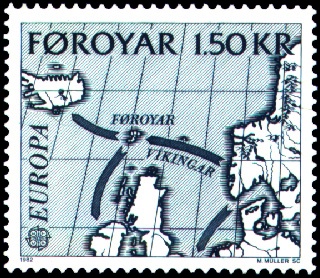
Naddoðr discovers Iceland.<br />He was heading to the Faroe Islands but drifted off course and landed near Reyðarfjörður in Iceland. As he returned to his boat it started to snow and thereby he reputedly named the land Snæland (lit. Snowland). Source — Wikipedia, "Timeline of Icelandic history" (9th century):
*Europe CEPT - Vikings, Route of the Vikings to the Faroes Stamp FR 64 of the Faroe Islands Engraver: Max Müller Date of issue: 15 March 1982 Official end of sale: 28 February 1983 Printing: Joh. Enschede en Zonen, The Netherlands Edition: 2.079.100 (FDC 200.145 together with FR 65) Toothing: 13 ½ Sheet à 20 pieces By Unknown author, Public domain, https://commons.wikimedia.org/w/index.php?curid=16650
870 CE
Hrafna-Flóki Vilgerðarson
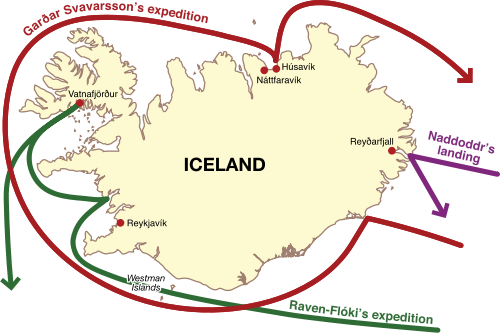
Hrafna-Flóki Vilgerðarson becomes the first Scandinavian to deliberately sail to Iceland as news of a country in the west reached Norway. When Hrafna-Flóki climbed a mountain in Vatnsfjörður he spotted drift ice in a fjord that inspired the name of the country, Ísland (lit. Iceland). Source — Wikipedia, "Timeline of Icelandic history" (9th century):
A map showing the settlement of Iceland By Max Naylor - Own work, Public domain, https://commons.wikimedia.org/w/index.php?curid=2325174
874 CE
Ingólfr Arnarson
Ingólfr Arnarson becomes the first permanent Nordic settler of Iceland. The settlement of Iceland begins. Source — Wikipedia, "Timeline of Icelandic history" (9th century):
The painting depicts Ingólfr Arnarson, the first settler of Iceland, newly arrived in Reykjavík. He appears to be commanding his men, perhaps his slaves, to erect his high seat pillars. Several other people and a dog look on while others are unloading a nearby ship. In the background there are mountains. At the time the photograph was taken, the painting was on public display in Viðeyjarstofa in Viðey. A plaque explains that it was a gift to the City of Reykjavík from Eimskipafélag Íslands on the occasion of the 200th birthday of Reykjavík (which was in 1986). The plaque does not give any information about the artist but a quick Googling for the signature "P. Raadsig" and "Ingolf" reveals the name of the painting and information about the artist. The picture was taken under natural lighting with a hand-held digital camera. The right side of the painting was placed closer to a window when the picture was taken. These factors contribute to the mediocre quality of the reproduction. By Johan Peter Raadsig (1806 - 1882) - Originally uploaded to Wikimedia Commons by User:Haukurth, photograph taken on the 12th of June 2008 by User:Haukurth, first publication unknown to uploader, Public domain, https://commons.wikimedia.org/w/index.php?curid=4235489
930 CE
Icelandic Commonwealth
The Icelandic Commonwealth is founded with the establishment of the Icelandic parliament (Althing), which had legislative and judicial power, executive power divided between several independent chiefdoms. Source — Wikipedia, "Timeline of Icelandic history" (10th century):
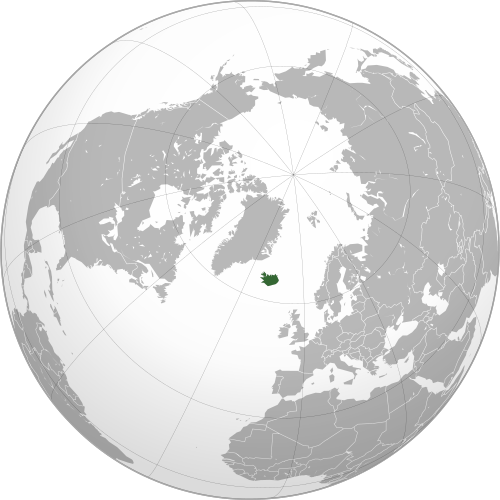
Localización de Islandia. By Ninrouter - Own work, CC BY-SA 3.0, https://commons.wikimedia.org/w/index.php?curid=19599172
1000 CE
Fifth Court
The Fifth Court is established as an appellate court for the quarter courts of Iceland. Source — Wikipedia, "Timeline of Icelandic history" (11th century):
United States Supreme Court photo taken from top of the Capitol dome. By PLBechly - Own work, CC BY-SA 4.0, https://commons.wikimedia.org/w/index.php?curid=107134526
1000 CE
Christianisation of Iceland
The Christianisation of Iceland is initiated due to pressure from the King of Norway. Source — Wikipedia, "Timeline of Icelandic history" (11th century):
Kaart van IJsland By Willem Blaeu - National and University Library of Iceland, Public domain, https://commons.wikimedia.org/w/index.php?curid=18603451
1056 CE
Ísleifur Gissurarson
Ísleifur Gissurarson becomes the first bishop of Skálholt. Source — Wikipedia, "Timeline of Icelandic history" (11th century):
Church of Skálholt By Qaswed - Own work, CC BY-SA 4.0, https://commons.wikimedia.org/w/index.php?curid=41794423
1096 CE
tithe
A tithe is instigated by the church authorities. Source — Wikipedia, "Timeline of Icelandic history" (11th century):
Tithe Pig Group of Derby Porcelain c 1770 By Victuallers - Own work, CC BY-SA 3.0, https://commons.wikimedia.org/w/index.php?curid=15665827
1104 CE
Hekla
The volcano Hekla erupts, resulting in the devastation of Þjórsárdalur. Source — Wikipedia, "Timeline of Icelandic history" (12th century):
Iceland, Þjórsá and Hekla By Hansueli Krapf - Own work: Hansueli Krapf (User Simisa (talk · contribs)), CC BY-SA 3.0, https://commons.wikimedia.org/w/index.php?curid=9372621
1106 CE
Jón Ögmundsson
Jón Ögmundsson becomes the first Bishop of Hólar. Source — Wikipedia, "Timeline of Icelandic history" (12th century):
Jón Ögmundsson By Unknown author, Public domain, https://commons.wikimedia.org/w/index.php?curid=909991
1112 CE
Þingeyraklaustur
Þingeyraklaustur is founded as the first cloister in Iceland.<br />Jón Ögmundsson, Bishop of Hólar, founded the cloister in 1112 but it was not formally established until 1133. Source — Wikipedia, "Timeline of Icelandic history" (12th century):
Signet of the Thingeyrar monastery, Iceland, 15th century By Unknown author - Unknown source, Public domain, https://commons.wikimedia.org/w/index.php?curid=979621
1122 CE
Ari Þorgilsson
Ari Þorgilsson begins to write the historical work Book of Icelanders. Source — Wikipedia, "Timeline of Icelandic history" (12th century):
Ari Þorgilsson By Christian Krohg - tAH6gSyQKYPYNg at Google Cultural Institute, zoom level maximum, Public domain, https://commons.wikimedia.org/w/index.php?curid=29838156
Sep 9, 1208 CE
Battle of Víðines
The Battle of Víðines takes place. Kolbeinn Tumason is mortally wounded. Source — Wikipedia, "Timeline of Icelandic history" (13th century):
Aug 21, 1238 CE
Battle of Örlygsstaðir
The Battle of Örlygsstaðir takes place. Sturla Sighvatsson and Sighvatr Sturluson are killed. Source — Wikipedia, "Timeline of Icelandic history" (13th century):
Jun 25, 1244 CE
Battle of the Gulf
The Battle of the Gulf takes place. Source — Wikipedia, "Timeline of Icelandic history" (13th century):
Apr 19, 1246 CE
Battle of Haugsnes
The Battle of Haugsnes takes place. Source — Wikipedia, "Timeline of Icelandic history" (13th century):
The site of Haugsnesbardagi (Skagafjörður, Iceland, April 19, 1246), one of the main battles of the Age of the Sturlungs. 1100 rocks have been arranged to represent the fighters. By Navaro - Own work, CC0, https://commons.wikimedia.org/w/index.php?curid=19620846
Oct 22, 1253 CE
Flugumýri Arson
The Flugumýri Arson takes place. Source — Wikipedia, "Timeline of Icelandic history" (13th century):
1258 CE
Gissur Þorvaldsson
Gissur Þorvaldsson is appointed Jarl of Iceland by the King of Norway.<br />The appointment aimed to further solidify the king's control over Iceland which was still independent. Gissur Þorvaldsson was also given domain over Southern farthing, Northern farthing and Borgarfjörður which had previously been seceded to the king by their respective chieftains. Source — Wikipedia, "Timeline of Icelandic history" (13th century):
Royal coat of arms of Norway By S. Solberg J. - This W3C-unspecified vector image was created with Inkscape .Own work + File:Coat of Arms Second French Empire (1852–1870).svg, Public domain, https://commons.wikimedia.org/w/index.php?curid=28824936
1262 CE
Old Covenant
The Old Covenant is delivered to Iceland.<br />The agreement made Icelanders subjects of the King of Norway and gave Icelanders and Norwegians equal rights in each other's countries. It received its first signatures in 1262 and went into effect in 1264 after receiving its final signatures. Source — Wikipedia, "Timeline of Icelandic history" (13th century):
Kaart van IJsland By Willem Blaeu - National and University Library of Iceland, Public domain, https://commons.wikimedia.org/w/index.php?curid=18603451
Jun 17, 1397 CE
Kalmar Union
The Kalmar Union is established.<br />The kingdoms of Denmark, Norway, Sweden and their respective dependencies joined in a personal union. Source — Wikipedia, "Timeline of Icelandic history" (14th century):
This is merely a recreation of what the flag is thought to have looked like. There are no surviving flags or pictorial evidence as to its appearance. See article at Flags of the World. By ThrashedParanoid - Own work Original PNG made by E70., Public domain, https://commons.wikimedia.org/w/index.php?curid=556733
1402 CE
Black Death
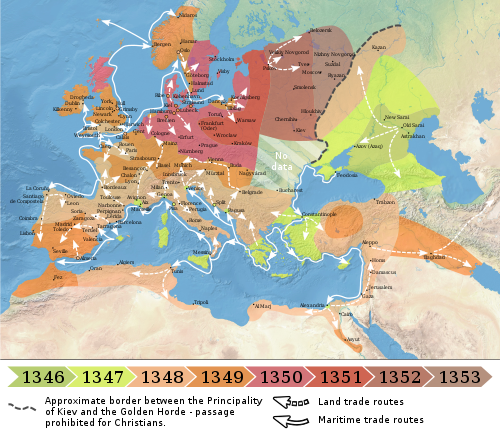
The Black Death hits Iceland for the first time. <br />It is estimated that half of the population died in the years 1402–1404. Source — Wikipedia, "Timeline of Icelandic history" (15th century):
Map showing the spread of the Black Death in Europe between 1346 and 1353. By Flappiefh - Own work from: Natural Earth ; Cesana, D.; Benedictow O.J., Bianucci R. (2017). "The origin and early spread of the Black Death in Italy: first evidence of plague victims from 14th-century Liguria (northern Italy)". Anthropological Science 125 (1): 15–24. DOI:10.1537/ase.161011. ISSN 0918-7960. (page 17), CC BY-SA 4.0, https://commons.wikimedia.org/w/index.php?curid=66468361
1433 CE
Jöns Gerekesson
Jöns Gerekesson, bishop of Skálholt, is killed. Source — Wikipedia, "Timeline of Icelandic history" (15th century):
Church of Skálholt By Qaswed - Own work, CC BY-SA 4.0, https://commons.wikimedia.org/w/index.php?curid=41794423
1494 CE
Black Death
The Black Death hits Iceland for the second time. <br />It is estimated that half of the population died in the years 1494–1495. Source — Wikipedia, "Timeline of Icelandic history" (15th century):
Map showing the spread of the Black Death in Europe between 1346 and 1353. By Flappiefh - Own work from: Natural Earth ; Cesana, D.; Benedictow O.J., Bianucci R. (2017). "The origin and early spread of the Black Death in Italy: first evidence of plague victims from 14th-century Liguria (northern Italy)". Anthropological Science 125 (1): 15–24. DOI:10.1537/ase.161011. ISSN 0918-7960. (page 17), CC BY-SA 4.0, https://commons.wikimedia.org/w/index.php?curid=66468361
1501 CE
Bessastaðir
English merchants plunder Bessastaðir. Source — Wikipedia, "Timeline of Icelandic history" (16th century):
Bessastaðir, Wohnsitz der isl. Präsidenten By Balou46 - Own work, CC BY-SA 4.0, https://commons.wikimedia.org/w/index.php?curid=46021747
1513 CE
Leiðarhólmsskrá
Leiðarhólmsskrá. Source — Wikipedia, "Timeline of Icelandic history" (16th century):
1522 CE
Sveinsstaðafundur
Sveinsstaðafundur. Source — Wikipedia, "Timeline of Icelandic history" (16th century):
1539 CE
Gissur Einarsson
Gissur Einarsson is made bishop. Source — Wikipedia, "Timeline of Icelandic history" (16th century):
1541 CE
Skálholt
The Skálholt see turns Lutheran. Source — Wikipedia, "Timeline of Icelandic history" (16th century):
General view of Skalholt and the cathedral By Leon petrosyan - Own work, CC BY-SA 4.0, https://commons.wikimedia.org/w/index.php?curid=74002515
1550 CE
Jón Arason
Bishop Jón Arason and his sons are beheaded in Skálholt. Source — Wikipedia, "Timeline of Icelandic history" (16th century):
A mosaic on the wall above the grave of Icelandic bishop Jón Arason (c. 1484 - 1550) in the tower of Hólar cathedral, Skagafjörður, Iceland. By Navaro - Own work, CC BY-SA 3.0, https://commons.wikimedia.org/w/index.php?curid=20065655
1551 CE
Hólar
The Hólar see turns Lutheran. Source — Wikipedia, "Timeline of Icelandic history" (16th century):
Photo of the church in Hólar, the small Icelandic community. In the background is the Hólar University College. By Jakob Gleby - Own work, CC BY-SA 3.0, https://commons.wikimedia.org/w/index.php?curid=17009679
1559 CE
Vestmannaeyjar
The English are driven from Vestmannaeyjar. Source — Wikipedia, "Timeline of Icelandic history" (16th century):
Iceland, Heimaey By Hansueli Krapf - Own work Simisa (talk · contribs), CC BY-SA 3.0, https://commons.wikimedia.org/w/index.php?curid=1011073
1571 CE
Guðbrandur Þorláksson
Guðbrandur Þorláksson becomes bishop of Hólar. Source — Wikipedia, "Timeline of Icelandic history" (16th century):
He was a pioneer of book publishing in Iceland By Unknown author - Photo by Szilas in the National Museum of Iceland, Public domain, https://commons.wikimedia.org/w/index.php?curid=91913757
1584 CE
Guðbrandsbiblía
Guðbrandsbiblía, the first Icelandic Bible, is published. Source — Wikipedia, "Timeline of Icelandic history" (16th century):
* Frontispiece of the elaborate printed bible of Gudbrandur Thorlaksson, bishop, 1584 By Unknown author - probable source: https://web.archive.org/web/20041110041602/http://www.kb.nl/gabriel/treasures/country/Iceland/is02-jpg.html (source not given by the orignal uploader), Public domain, https://commons.wikimedia.org/w/index.php?curid=186326
1602 CE
Monarchy of Denmark
The King of Denmark grants Danish merchants monopoly on trade with Iceland. Source — Wikipedia, "Timeline of Icelandic history" (17th century):
Royal arms of Denmark from 2024, based on information from https://www.kongehuset.dk/en/the-monarchy-in-denmark/the-royal-symbols/the-royal-coat-of-arms/# (image). By Di (they-them) - This vector image includes elements that have been taken or adapted from this file:, CC BY-SA 4.0, https://commons.wikimedia.org/w/index.php?curid=157413984
1615 CE
Spánverjavígin
The Slaying of the Spaniards take place. Source — Wikipedia, "Timeline of Icelandic history" (17th century):
1625 CE
Jón Rögnvaldsson
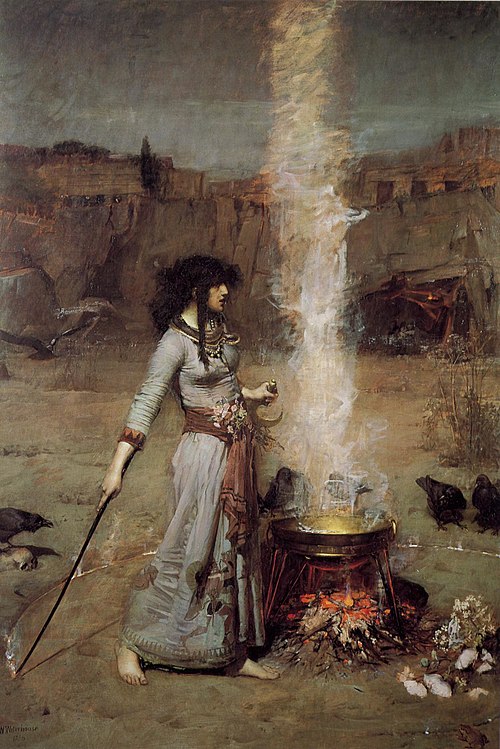
The first person, Jón Rögnvaldsson, is burnt alive for witchcraft. Source — Wikipedia, "Timeline of Icelandic history" (17th century):
Jón Rögnvaldsson By John William Waterhouse - one or more third parties have made copyright claims against Wikimedia Commons in relation to the work from which this is sourced or a purely mechanical reproduction thereof. This may be due to recognition of the "sweat of the brow" doctrine, allowing works to be eligible for protection through skill and labour, and not purely by originality as is the case in the United States (where this website is hosted). These claims may or may not be valid in all jurisdictions. As such, use of this image in the jurisdiction of the claimant or other countries may be regarded as copyright infringement. Please see Commons:When to use the PD-Art tag for more information., Public domain, https://commons.wikimedia.org/w/index.php?curid=1173532
1627 CE
Turkish Abductions
The Turkish Abductions occur.<br />Hundreds of Icelanders are kidnapped by Barbary pirates. Source — Wikipedia, "Timeline of Icelandic history" (17th century):
نحت هولندي قديم، عنوان اللوحة الأصلي:الطريقة التي كان يُباع بها السجناء المسيحيون كعبيد في سوق الجزائر العاصمة By Jan Luyken - Amsterdam Historic Museum, Public domain, https://commons.wikimedia.org/w/index.php?curid=9487800
1639 CE
Brynjólfur Sveinsson
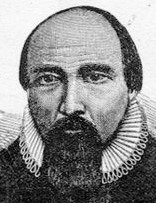
Brynjólfur Sveinsson becomes bishop of Skálholt. Source — Wikipedia, "Timeline of Icelandic history" (17th century):
Brynjólfur Sveinsson By Unknown author, Public domain, https://commons.wikimedia.org/w/index.php?curid=186393
Icelanders are made to accept the absolute monarchy of the King of Denmark. Source — Wikipedia, "Timeline of Icelandic history" (17th century):
1666 CE
Hallgrímur Pétursson
The Passion Psalms are composed by Hallgrímur Pétursson. Source — Wikipedia, "Timeline of Icelandic history" (17th century):
Hallgrímur Pétursson By Unknown author, PD, https://en.wikipedia.org/w/index.php?curid=3958589
1703 CE
census
First Icelandic census. Source — Wikipedia, "Timeline of Icelandic history" (18th century):
Census taker at the wagon of Indigenous Dutch Travellers Gieleman Theunisz, Tonia Huurman, and their children Antonia and Anne Theunisz, 1925, Amsterdam housing census, the Netherlands. By Unknown author - http://www.egoproject.nl/woonwagenbeleid/, Public domain, https://commons.wikimedia.org/w/index.php?curid=1050659
1707 CE
Bubonic plague
The Bubonic plague spreads in Iceland. A quarter of the population dies. Source — Wikipedia, "Timeline of Icelandic history" (18th century):
This plague patient is displaying a swollen, ruptured inguinal lymph node, or buboe. After the incubation period of 2-6 days, symptoms of the plague appear including severe malaise, headache, shaking chills, fever, and pain and swelling, or adenopathy, in the affected regional lymph nodes, also known as buboes. By Photo Credit: Content Providers(s): CDC - This media comes from the Centers for Disease Control and Prevention's Public Health Image Library (PHIL), with identification number #2047. Note: Not all PHIL images are public domain; be sure to check copyright status and credit authors and content providers. العربية | Deutsch | English | македонски | slovenščina | +/− Transferred from en.wikipedia to Commons., Public domain, https://commons.wikimedia.org/w/index.php?curid=6286382
1712 CE
Jarðabók
Jarðabók is completed. Source — Wikipedia, "Timeline of Icelandic history" (18th century):
1720 CE
Árni Magnússon
The manuscripts of Árni Magnússon are moved to Denmark. Source — Wikipedia, "Timeline of Icelandic history" (18th century):
Bust of Árni Magnússon (1663-1730) an Icelandic scholar and collector of manuscripts. By Unknown author - http://haandskrift.ku.dk/haandskrifterne_udstilles/Arna_Magn_us._stor.jpg, Public domain, https://commons.wikimedia.org/w/index.php?curid=32332492
1760 CE
Spain
Icelanders start exporting salted fish to Spain. Source — Wikipedia, "Timeline of Icelandic history" (18th century):
Flag of Spain, the "rojigualda". By Antonio Valdés y Fernández Bazán - Real Decreto 441/1981, de 27 de febrero, por el que se especifican técnicamente los colores de la Bandera de España, Public domain, https://commons.wikimedia.org/w/index.php?curid=99805564
1783 CE
Móðuharðindin
The Mist Hardships occur.<br />A volcanic eruption at Laki destroys a great deal of the livestock in Iceland, causing famine and misery. 20-25% of Iceland perishes. Source — Wikipedia, "Timeline of Icelandic history" (18th century):
View of the central fissure of Laki volcano, Iceland By Chmee2/Valtameri - Own work, CC BY-SA 3.0, https://commons.wikimedia.org/w/index.php?curid=8113135
The Althing is abolished. Source — Wikipedia, "Timeline of Icelandic history" (18th century):
Logo for Althing By Great Brightstar - https://www.althingi.is/pdf/Althingi2018_enska.pdfhttps://www.althingi.is/skin/basic9k/i/sitelogo.png, Public domain, https://commons.wikimedia.org/w/index.php?curid=148704017
1801 CE
Reykjavík
The bishoprics of Skálholt and Hólar are united, located in Reykjavík. Source — Wikipedia, "Timeline of Icelandic history" (19th century):
Blick von der Hallgrímskirkja über Reykjavík By Olga Ernst - Own work, CC BY-SA 4.0, https://commons.wikimedia.org/w/index.php?curid=119985804
1805 CE
Bessastaðir
The Bessastaðaskóli is founded. Source — Wikipedia, "Timeline of Icelandic history" (19th century):
Bessastaðir, Wohnsitz der isl. Präsidenten By Balou46 - Own work, CC BY-SA 4.0, https://commons.wikimedia.org/w/index.php?curid=46021747
1807 CE
Continental System
Trade with Danish Iceland all but disappears due to the invasion of the English and their capture of the neutral Danish fleet at Copenhagen; they had credible intelligence that Napoleon using the Continental System was going to seize that fleet and invade England. It was part of the Napoleonic Wars. Source — Wikipedia, "Timeline of Icelandic history" (19th century):
The French Empire in 1812, including the Continental Blockade. By TRAJAN 117 - This SVG map includes elements that have been taken or adapted from this map:, CC BY-SA 3.0, https://commons.wikimedia.org/w/index.php?curid=65019338
1809 CE
Jørgen Jørgensen
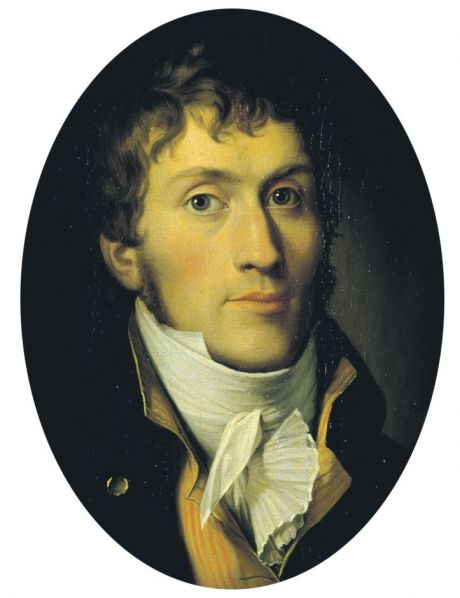
Jørgen Jørgensen seizes power in Iceland and declares independence, but is deposed by the Danes shortly afterwards. Source — Wikipedia, "Timeline of Icelandic history" (19th century):
Jørgen Jørgensen By Christoffer Wilhelm Eckersberg - http://www.information.dk/207473, Public domain, https://commons.wikimedia.org/w/index.php?curid=15241899
1835 CE
Fjölnir
The first copy of Fjölnir is published. Source — Wikipedia, "Timeline of Icelandic history" (19th century):
Front page of the first issue of the journal Fjölnir, 1835 By Konráð Gíslason, Jónas Hallgrímsson, Tómas Sæmundsson, Brynjólfur Pétursson - http://www.alftamyrarskoli.is/gamla/nemendur/JonasHallgrimsson/fjolnir,%20forsida2.png, Public domain, https://commons.wikimedia.org/w/index.php?curid=18496366
1841 CE
New Associated Writings
Jón Sigurðsson starts publishing New Associated Writings. Source — Wikipedia, "Timeline of Icelandic history" (19th century):
Mar 8, 1843 CE
The King of Denmark orders the
The King of Denmark orders the Althing to be resurrected. Source — Wikipedia, "Timeline of Icelandic history" (19th century):
Jul 1, 1845 CE
Menntaskólinn í Reykjavík
The Althing is resurrected, and the house of the Menntaskóli í Reykjavík is opened. Source — Wikipedia, "Timeline of Icelandic history" (19th century):
Menntaskólinn í Reykjavík (main building, 2004) By en:User:Picture: Gudbjartur Kristofersson (talk) (Uploads) - HerbertG (talk) (Uploads), Public domain, https://commons.wikimedia.org/w/index.php?curid=26607641
1851 CE
National Assembly of 1851
National Assembly of 1851. Source — Wikipedia, "Timeline of Icelandic history" (19th century):
1855 CE
The Danes grant Icelanders free trade.
The Danes grant Icelanders free trade. Source — Wikipedia, "Timeline of Icelandic history" (19th century):
1871 CE
Folketing
The Danish Parliament passes the Stöðulög laws. First women's secondary school Kvennaskólinn í Reykjavík is founded by Thora Melsted. Source — Wikipedia, "Timeline of Icelandic history" (19th century):
Seal of the Folketing of Denmark. This version of the seal has been in use since October 2018. By Parliament of Denmark, Folketinget / Kontrapunkt - https://www.ft.dk/~/media/logo2018/folketinget-desktop.ashx, Public domain, https://commons.wikimedia.org/w/index.php?curid=73583927
1874 CE
The King of Denmark visits Iceland
The King of Denmark visits Iceland and grants Icelanders a constitution. 1000 years of settlement celebrated throughout the country. Source — Wikipedia, "Timeline of Icelandic history" (19th century):
1875 CE
Askja
First session of the restored Althing which has the power to pass laws. The Askja volcano erupts. The women's association Thorvaldsensfélagið is founded. Source — Wikipedia, "Timeline of Icelandic history" (19th century):
Photo of caldera of Askja Volcano By Michael Ryan - USGS, Public domain, https://commons.wikimedia.org/w/index.php?curid=812287
1880 CE
New World
The climate grows much colder, driving many Icelanders to emigrate to the New World. Source — Wikipedia, "Timeline of Icelandic history" (19th century):
Die Neuwen Inseln so hinder Hispanica gegen Orient bey dem Landt Indie ligen.; Maps of North and South America / Whole By Munster, Sebastian, 1489-1552 -- Cartographer - New York Public Library, CC0, https://commons.wikimedia.org/w/index.php?curid=32455756
1894 CE
Hið íslenska kvenfélag
Foundation of the Hið íslenska kvenfélag and the start of the women's movement on Iceland. Source — Wikipedia, "Timeline of Icelandic history" (19th century):
1907 CE
Icelandic Women's Rights Association
Foundation of the Icelandic Women's Rights Association. Source — Wikipedia, "Timeline of Icelandic history" (20th century):
Cropped version of File:Kvenréttindafélag Íslands.jpg By Unknown author - https://twitter.com/kvennasogusafn/status/824967672827895808, Public domain, https://commons.wikimedia.org/w/index.php?curid=59184136
Universal right to vote, World By Our World In Data - https://ourworldindata.org/grapher/universal-suffrage-lexical?tab=map, CC BY 4.0, https://commons.wikimedia.org/w/index.php?curid=185391726
1916 CE
Social Democratic Party
The political parties Social Democratic Party and Progressive Party are founded. Source — Wikipedia, "Timeline of Icelandic history" (20th century):
Nýtt merki Framsóknarflokksins er uppfærsla unnin uppúr rótgrónu merki sem hafði fylgt Framsóknarflokknum í marga áratugi, þetta merki var tekið í notkun í aðdraganda Alþingiskosninga 2021. By Framsóknarflokkurinn - https://www.framsokn.is, Public domain, https://commons.wikimedia.org/w/index.php?curid=125902531
Dec 1, 1918 CE
Iceland becomes a sovereign, independent nation.
Iceland becomes a sovereign, independent nation. The Danish King remains head of state. Source — Wikipedia, "Timeline of Icelandic history" (20th century):
1922 CE
Jarðræktarlögin
Jarðræktarlögin. Source — Wikipedia, "Timeline of Icelandic history" (20th century):
1929 CE
Independence Party
The Icelandic Independence Party is founded. Source — Wikipedia, "Timeline of Icelandic history" (20th century):
Dec 20, 1930 CE
Communist Party of Iceland
The Icelandic Communist Party is founded. The Icelandic State Radio begins broadcasting. Source — Wikipedia, "Timeline of Icelandic history" (20th century):
Headquarters of RÚV, the Icelandic National Broadcasting Service By Haukurth - Own work, CC BY-SA 3.0, https://commons.wikimedia.org/w/index.php?curid=2531566
1939 CE
Denmark in World War II
Following the occupation of Denmark by Nazi Germany, a national emergency government is formed under Sveinn Björnsson. Source — Wikipedia, "Timeline of Icelandic history" (20th century):
A historic photo of the headquarters of the Schalburg Corps in Copenhagen, Denmark. Picture is post 1943, World War II. The building is the occupied lodge of the Danish Order of Freemasons. By Unknown author - Frihedsmuseets fotoarkiv; Frihedsmuseet, Copenhagen, Denmark, Public domain, https://commons.wikimedia.org/w/index.php?curid=252889
May 10, 1940 CE
United Kingdom
The British invade, violating Icelandic neutrality. Source — Wikipedia, "Timeline of Icelandic history" (20th century):
Flag of the United Kingdom, Union Jack or Union Flag in a 1:2 ratio (typical on British warships and also the rank flag of an admiral of the fleet). By Original: Acts of Union 1800 Vector: Zscout370 - Own work based on: United Kingdom at Flag of the World United Kingdom Flag at the Flag Institute, Public domain, https://commons.wikimedia.org/w/index.php?curid=347935
Jul 7, 1941 CE
United States Army
The United States Army, still officially neutral, replaces the British occupation force. Source — Wikipedia, "Timeline of Icelandic history" (20th century):
Service mark of the US Army By United States Army Institute of Heraldry - https://web.archive.org/web/20160405154729/http://www.defense.gov/Portals/1/Documents/Trademarks/DOD%20Guide%20about%20use%20of%20seals%20logos%20insignia%20medals-16%20Oct%2015F.PDF, Public domain, https://commons.wikimedia.org/w/index.php?curid=80807096
Jun 17, 1944 CE
republic
Iceland becomes an independent republic, severing the last political ties to Denmark. Sveinn Björnsson becomes president. Source — Wikipedia, "Timeline of Icelandic history" (20th century):
Sveinn Björnsson (27 February 1881 – 25 January 1952), first president of the Republic of Iceland. By Forseti.is - http://www.althingi.is/myndir/mynd/thingmenn/43/org/mynd.jpg, Public domain, https://commons.wikimedia.org/w/index.php?curid=8056878
1946 CE
Keflavik Agreement
The Keflavik Agreement. Source — Wikipedia, "Timeline of Icelandic history" (20th century):
1948 CE
Marshall Plan
Iceland receives Marshall Aid from the United States. Source — Wikipedia, "Timeline of Icelandic history" (20th century):
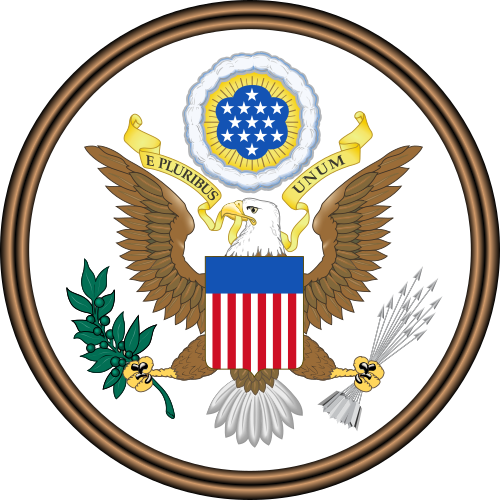
Obverse of the Great Seal of the United States. By U.S. Government - Extracted from PDF version of Our Flag, available here (direct PDF URL here.), Public domain, https://commons.wikimedia.org/w/index.php?curid=41373752
Mar 30, 1949 CE
1949 anti-NATO riot in Iceland
Riots break out on Austurvöllur. Source — Wikipedia, "Timeline of Icelandic history" (20th century):
Fighting breaks out between anti- and pro-NATO supporters, and police. The windows of the House of the Althing have been smashed. March 30th 1949. By Valgerður Tryggvadóttir - Arnaldur Grétarsson & family, rights-holder to these photographs., CC BY-SA 3.0, https://commons.wikimedia.org/w/index.php?curid=27565751
1951 CE
Keflavík
The United States Army establishes a base in Keflavík. Source — Wikipedia, "Timeline of Icelandic history" (20th century):
Aerial photograph of Keflavík, Iceland. By APK - Own work, CC BY 4.0, https://commons.wikimedia.org/w/index.php?curid=192529715
Aug 1, 1952 CE
Exclusive economic zone
Exclusive economic zone extended to 4 nautical miles. Ásgeir Ásgeirsson becomes president. Source — Wikipedia, "Timeline of Icelandic history" (20th century):
Exclusive Economic Zones (EEZ) by boundary type and EEZ type By Dr. Jean-Paul Rodrigue - SVG file given by Dr. Jean-Paul Rodrigue, converted to png with InkScape. Almost identical: https://transportgeography.org/wp-content/uploads/Map_Exclusive-Economic-Zones.pdf, CC BY-SA 4.0, https://commons.wikimedia.org/w/index.php?curid=131357651
1958 CE
Exclusive economic zone extended to 12
Exclusive economic zone extended to 12 nautical miles. Source — Wikipedia, "Timeline of Icelandic history" (20th century):
Nov 14, 1963 CE
Surtsey
Volcanic eruption forms Surtsey. Source — Wikipedia, "Timeline of Icelandic history" (20th century):
Surtsey on November 30, 1963, 16 days after the beginning of the eruption. By Howell Williams, NOAA - http://www.ngdc.noaa.gov/seg/hazard/slideset/28/28_580_slide.shtml, Public domain, https://commons.wikimedia.org/w/index.php?curid=748137
Sep 30, 1966 CE
RÚV
The Icelandic State Television begins its first broadcasts. Source — Wikipedia, "Timeline of Icelandic history" (20th century):
Aug 1, 1968 CE
Kristján Eldjárn
Kristján Eldjárn becomes president. Collapse of the fishing industry. Source — Wikipedia, "Timeline of Icelandic history" (20th century):
Kristján Eldjárn By Forseti.is - http://english.forseti.is/FormerPresidents/KristjanEldjarn/, Public domain, https://commons.wikimedia.org/w/index.php?curid=11080389
Jan 1, 1970 CE
European Free Trade Association
Iceland joins the European Free Trade Association. Source — Wikipedia, "Timeline of Icelandic history" (20th century):
European Free Trade Association insignia. By EFTA - https://www.efta.int/themes/custom/storyworx/logo.svg archive copy at the Wayback Machine, Public domain, https://commons.wikimedia.org/w/index.php?curid=22015081
1972 CE
Exclusive economic zone
Exclusive economic zone extended to 50 nautical miles. Source — Wikipedia, "Timeline of Icelandic history" (20th century):
Exclusive Economic Zones (EEZ) by boundary type and EEZ type By Dr. Jean-Paul Rodrigue - SVG file given by Dr. Jean-Paul Rodrigue, converted to png with InkScape. Almost identical: https://transportgeography.org/wp-content/uploads/Map_Exclusive-Economic-Zones.pdf, CC BY-SA 4.0, https://commons.wikimedia.org/w/index.php?curid=131357651
Jan 23, 1973 CE
Vestmannaeyjar
Volcanic eruption in Vestmannaeyjar. Source — Wikipedia, "Timeline of Icelandic history" (20th century):
Iceland, Heimaey By Hansueli Krapf - Own work Simisa (talk · contribs), CC BY-SA 3.0, https://commons.wikimedia.org/w/index.php?curid=1011073
1975 CE
Exclusive economic zone
Exclusive economic zone extended to 200 nautical miles. Source — Wikipedia, "Timeline of Icelandic history" (20th century):
Exclusive Economic Zones (EEZ) by boundary type and EEZ type By Dr. Jean-Paul Rodrigue - SVG file given by Dr. Jean-Paul Rodrigue, converted to png with InkScape. Almost identical: https://transportgeography.org/wp-content/uploads/Map_Exclusive-Economic-Zones.pdf, CC BY-SA 4.0, https://commons.wikimedia.org/w/index.php?curid=131357651
Aug 1, 1980 CE
Vigdís Finnbogadóttir
Vigdís Finnbogadóttir becomes president of Iceland, the first woman in the world to become elected head of state. Source — Wikipedia, "Timeline of Icelandic history" (20th century):
Bezoek president IJsland, mevrouw Vigdis Finnbogadottir inspecteert met Koningin Beatrix erewacht op Rotterdam Airport 19 september 1985 By Rob Croes for Anefo - Nationaal Archief 933-4299 (cropped), CC BY-SA 3.0 nl, https://commons.wikimedia.org/w/index.php?curid=28101734
Jan 1, 1994 CE
European Economic Area
Iceland joins the European Economic Area. Source — Wikipedia, "Timeline of Icelandic history" (20th century):
European Economic Area (EEA) member states. By Rob984 - This file was derived from: Location European nation states.svg:, CC BY-SA 4.0, https://commons.wikimedia.org/w/index.php?curid=98638321
Aug 1, 1996 CE
Ólafur Ragnar Grímsson
Ólafur Ragnar Grímsson becomes president. Source — Wikipedia, "Timeline of Icelandic history" (20th century):
Президент Исландии Олаф Рагнар Гримссон на встрече с Председателем Правительства РФ Владимиром Путиным в рамках Международного арктического формуа в Архангельске By Premier.gov.ru - http://premier.gov.ru/events/news/16541/photolents.html, CC BY 4.0, https://commons.wikimedia.org/w/index.php?curid=48006862
Jun 17, 2000 CE
2000 Iceland earthquakes
Southern Iceland is hit by two earthquakes, the first 6.6 M<sub>L</sub> and the second 6.5 M<sub>L</sub>. There were no fatalities but a few people were injured and there was some considerable damage to infrastructure. Source — Wikipedia, "Timeline of Icelandic history" (21st century):
Jun 2, 2004 CE
Ólafur Ragnar Grímsson
The president of Iceland, Ólafur Ragnar Grímsson, refuses to sign a bill from the parliament for the first time in the nation's history. Source — Wikipedia, "Timeline of Icelandic history" (21st century):
Президент Исландии Олаф Рагнар Гримссон на встрече с Председателем Правительства РФ Владимиром Путиным в рамках Международного арктического формуа в Архангельске By Premier.gov.ru - http://premier.gov.ru/events/news/16541/photolents.html, CC BY 4.0, https://commons.wikimedia.org/w/index.php?curid=48006862
Mar 21, 2005 CE
Bobby Fischer
Bobby Fischer moves to Iceland after being granted an Icelandic passport and full citizenship. Source — Wikipedia, "Timeline of Icelandic history" (21st century):
Bobby Fischer By Bert Verhoeff for Anefo - Dutch National Archives, The Hague, Fotocollectie Algemeen Nederlands Persbureau (ANeFo), 1945-1989, Nummer toegang 2.24.01.05 Bestanddeelnummer 925-3512, CC0, https://commons.wikimedia.org/w/index.php?curid=22577887
Sep 30, 2006 CE
United States Army
The United States Army abandons the military base in Keflavík, thus ending a 55-year U.S. military presence in Iceland. Source — Wikipedia, "Timeline of Icelandic history" (21st century):
Service mark of the US Army By United States Army Institute of Heraldry - https://web.archive.org/web/20160405154729/http://www.defense.gov/Portals/1/Documents/Trademarks/DOD%20Guide%20about%20use%20of%20seals%20logos%20insignia%20medals-16%20Oct%2015F.PDF, Public domain, https://commons.wikimedia.org/w/index.php?curid=80807096
May 29, 2008 CE
doublet earthquake
A doublet earthquake strikes southern Iceland with a composite magnitude of 6.1 M<sub>W</sub>. Source — Wikipedia, "Timeline of Icelandic history" (21st century):
Map of the 2008 Iceland earthquake By United States Geological Survey - [1], Public domain, https://commons.wikimedia.org/w/index.php?curid=17984329
Jan 26, 2009 CE
After months of rallies outside the
After months of rallies outside the parliament building, the Icelandic government resigns. Source — Wikipedia, "Timeline of Icelandic history" (21st century):
Jan 5, 2010 CE
Icelandic loan guarantees referendum, 2010
The president of Iceland, Ólafur Ragnar Grímsson, refuses to sign a bill from the parliament for the second time in the nation's history. Source — Wikipedia, "Timeline of Icelandic history" (21st century):
Feb 20, 2011 CE
Icelandic loan guarantees referendum, 2011
The president of Iceland, Ólafur Ragnar Grímsson, refuses to sign a bill from the parliament for the third time in the nation's history. Source — Wikipedia, "Timeline of Icelandic history" (21st century):
Apr 4, 2016 CE
Panama Papers
Panama Papers reveal that Prime Minister Sigmundur Davíð Gunnlaugsson had links to private companies dealing in offshore tax havens, resulting in a call for a snap election. Source — Wikipedia, "Timeline of Icelandic history" (21st century):
These are the countries, where country leaders, politicians, public officials, or their close family/associates are implicated in the Panama Papers. Countries of people implicated Countries without people implicated (excludes businesspeople and celebrities) By JayCoop - https://panamapapers.icij.org/the_power_players/ https://en.wikipedia.org/wiki/List_of_people_named_in_the_Panama_Papers, CC BY-SA 4.0, https://commons.wikimedia.org/w/index.php?curid=47960271
Jun 1, 2024 CE
Halla Tómasdóttir
Halla Tómasdóttir won the 2024 Icelandic presidential election and assumed office in August. Source — Wikipedia, "Timeline of Icelandic history" (21st century):
Halla Tómasdóttir á Arctic Circle ráðstefnunni 2024 By Published by the conference account on Flickr, photographer not named. - This is cropped version of File:Halla Tómasdóttir at Arctic Circle 2024.jpg., CC BY 2.0, https://commons.wikimedia.org/w/index.php?curid=154563516