Encyclopedia/3. History, Societies & Civilizations/09. Modern Nations/02. Americas • Curated by Admin Timeline.sg
History of Guatemala (AI-generated, sourced to Wikipedia).
Chronological Storyline (39 Milestones)
2000 BCE
Early Maya settlements emerge
The first Maya agricultural communities appear in the Guatemalan highlands and lowlands, marking the beginnings of one of Mesoamerica's most influential civilizations. Source — Wikipedia, "Guatemala":
Map showing the extent of the Maya civilization (red), compared to all other Mesoamerica cultures (black). Within Central America and southern North America (Mexico). This map also shows the cities and cultural mainsteads of the Maya, who did not have an empire but rather a group of loosely associated city-states. By Kmusser - Foster, Lynn (2002). Handbook to Life in the Ancient Maya World. New York, US: Oxford University Press. ISBN 978-0-19-518363-4. OCLC 57319740. Page 4. Sharer, Robert J.; Loa P. Traxler (2006). The Ancient Maya (6th (fully revised) ed.). Stanford, California, US: Stanford University Press. ISBN 0-8047-4817-9. OCLC 57577446. Page 24., CC BY-SA 3.0, https://commons.wikimedia.org/w/index.php?curid=969112
600 BCE
El Mirador flourishes
The massive Preclassic Maya city of El Mirador in the Petén basin reaches its peak, featuring monumental pyramids and an extensive causeway network. Source — Wikipedia, "Guatemala":
Pyramid of La Danta at the archaeological site of El Mirador, Petén, Guatemala By Konjiki1 - Own work, CC0, https://commons.wikimedia.org/w/index.php?curid=187758853
250 CE
Classic Maya period begins
The Classic period of Maya civilization commences, characterized by the rise of major city-states like Tikal, which becomes one of the most powerful kingdoms in the region. Source — Wikipedia, "Guatemala":
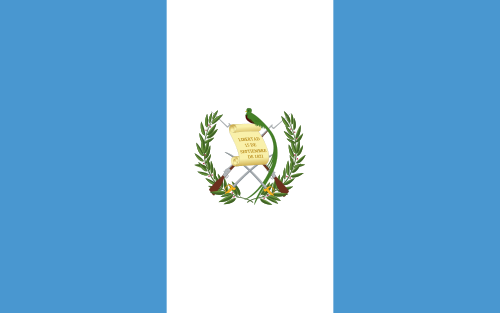
The flag of Guatemala, official since 1871. By K21edgo - Own work CONSTRUCTION SHEET: Vexilla Mundi., Public domain, https://commons.wikimedia.org/w/index.php?curid=433136
562 CE
Tikal defeated by Caracol
Tikal suffers a major military defeat at the hands of Caracol and Calakmul, entering a period of decline known as the Tikal Hiatus that lasts over a century. Source — Wikipedia, "Guatemala":
Plaza Mayor, Parque Nacional Tikal, Petén, Guatemala By Mundo Maya - Own work, CC BY-SA 4.0, https://commons.wikimedia.org/w/index.php?curid=66063299
800 CE
Maya classic collapse begins
Maya cities in the southern lowlands begin a gradual decline, with populations abandoning urban centers due to drought, warfare, and political fragmentation over the next century. Source — Wikipedia, "Guatemala":
The flag of Guatemala, official since 1871. By K21edgo - Own work CONSTRUCTION SHEET: Vexilla Mundi., Public domain, https://commons.wikimedia.org/w/index.php?curid=433136
Dec 1, 1523 CE
Alvarado begins conquest
Spanish conquistador Pedro de Alvarado arrives in Guatemala with an army of soldiers and indigenous allies, beginning the violent subjugation of the K'iche' and other Maya peoples. Source — Wikipedia, "Guatemala":
General Archive of the Indies. Tomás Povedano (1906) paints Pedro de Alvarado (†1541), governor of Guatemala. Oil on canvas. By Tomás Povedano - 20th century oil painting, Public domain, https://commons.wikimedia.org/w/index.php?curid=79340037
Jul 1, 1524 CE
Santiago de los Caballeros founded
Pedro de Alvarado establishes the city of Santiago de los Caballeros near Iximché, laying the foundation for the colonial capital that later moves to Antigua Guatemala. Source — Wikipedia, "Guatemala":
Antigua Guatemala By Juan Francisco - https://www.flickr.com/photos/190923371@N05/51299679003/, CC BY-SA 2.0, https://commons.wikimedia.org/w/index.php?curid=107359935
1543 CE
Audiencia of Guatemala established
The Spanish Crown creates the Audiencia and Captaincy General of Guatemala, encompassing much of Central America with its administrative center in Santiago de los Caballeros. Source — Wikipedia, "Guatemala":
Flag with the cross of Burgundy (saltire). Also named Cross of Burgundy flag. It was used in the Catholic Monarchy and in its viceroyalties such as New Spain and Peru. It was also used by Spain as a military or king's personal flag. Used by the Carlist movement. By Ningyou. - Own work, Public domain, https://commons.wikimedia.org/w/index.php?curid=617329
1550 CE
Popol Vuh compiled
K'iche' Maya scribes record the Popol Vuh, the sacred book of Maya mythology and history, preserving one of the most important indigenous texts of the Americas. Source — Wikipedia, "Guatemala":
First page of the Popol Vuh manuscript, Saved at Newberry Library, Chicago, Yesterday Collection By Francisco Ximénez, Public domain, https://commons.wikimedia.org/w/index.php?curid=1887823
1609 CE
Captaincy General formalized
Spain formally organizes the Captaincy General of Guatemala, a sprawling colonial jurisdiction stretching from Chiapas to Costa Rica under the Viceroyalty of New Spain. Source — Wikipedia, "Guatemala":
Flag with the cross of Burgundy (saltire). Also named Cross of Burgundy flag. It was used in the Catholic Monarchy and in its viceroyalties such as New Spain and Peru. It was also used by Spain as a military or king's personal flag. Used by the Carlist movement. By Ningyou. - Own work, Public domain, https://commons.wikimedia.org/w/index.php?curid=617329
1660 CE
Cacao and indigo exports boom
Guatemala's colonial economy expands through the export of cacao, indigo, and other tropical commodities, relying heavily on forced indigenous labor through the repartimiento system. Source — Wikipedia, "Guatemala":
Flag with the cross of Burgundy (saltire). Also named Cross of Burgundy flag. It was used in the Catholic Monarchy and in its viceroyalties such as New Spain and Peru. It was also used by Spain as a military or king's personal flag. Used by the Carlist movement. By Ningyou. - Own work, Public domain, https://commons.wikimedia.org/w/index.php?curid=617329
Jul 1, 1773 CE
Earthquake devastates Antigua
A massive earthquake destroys much of Antigua Guatemala, the colonial capital, prompting authorities to consider relocating the seat of government entirely. Source — Wikipedia, "Guatemala":
Part of the 1773 destoyed Convento de Nuestra Senora de la Concepcion, Antigua Guatemala; in the back is the Agua volcano. By Ekem - Own work, CC BY-SA 3.0, https://commons.wikimedia.org/w/index.php?curid=9652785
Jan 1, 1776 CE
Capital moved to Guatemala City
The Spanish colonial government officially relocates the capital from earthquake-ravaged Antigua to the present site of Guatemala City, known then as Nueva Guatemala de la Asunción. Source — Wikipedia, "Guatemala":
Zona 14, Ciudad de Guatemala By Rene Hernandez - https://www.flickr.com/photos/renehernandezgt/51934706113/, CC BY-SA 2.0, https://commons.wikimedia.org/w/index.php?curid=116024864
Sep 15, 1821 CE
Independence from Spain
Guatemala declares independence from Spain as part of a broader Central American independence movement, ending nearly three centuries of colonial rule. Source — Wikipedia, "Guatemala":
A scan of the Act of Independence of Central America (page 1). By José Cecilio del Valle - https://ahgua.ufm.edu/agca/acta-de-independencia-de-las-provincias-unidas-de-centro-america-15-de-septiembre-1821/acta-de-independencia-de-centroamerica-15-de-septiembre-1821-001/, Public domain, https://commons.wikimedia.org/w/index.php?curid=133875813
Jul 1, 1823 CE
Federation of Central America
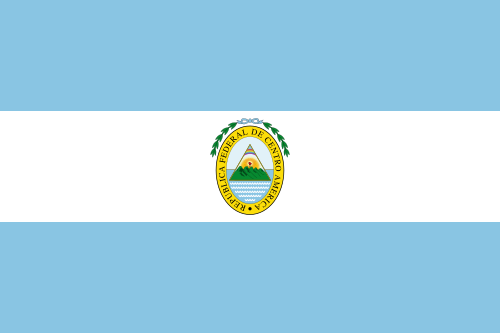
Guatemala joins the United Provinces of Central America, a short-lived federal republic that unites the former Captaincy General territories under one government. Source — Wikipedia, "Guatemala":
Flag of the Federal Republic of Central America By Huhsunqu - This W3C-unspecified vector image was created with Inkscape .Description of flag design from: Meléndez Chaverri, Carlos (2000). José Matías Delgado, Prócer Centroamericano. Page 277. ISBN: 9992300574Coat of arms design derived from a depiction on the Constitution of Central America and from History of El Salvador Volume I, pp. 150–151 and Historia General de Centroamérica – de la Ilustración al Liberalismo (1750–1870) Volume III, p. 100, CC BY-SA 2.5, https://commons.wikimedia.org/w/index.php?curid=598888
1839 CE
Carrera dominates politics
Conservative leader Rafael Carrera emerges as the dominant political and military figure in Guatemala, effectively ruling the country and formally becoming president in 1844. Source — Wikipedia, "Guatemala":
Detail of a full-body painting of Guatemala President Rafael Carrera (1815–1865) By Unidentified painter - Museum of National History of Guatemala, Alamy, Public domain, https://commons.wikimedia.org/w/index.php?curid=85474316
Jun 1, 1871 CE
Liberal revolution triumphs
Liberal forces led by Miguel García Granados overthrow the Conservative government, launching a period of modernizing reforms including secularization of education and land redistribution. Source — Wikipedia, "Guatemala":
Justo Rufino Barrios By Tomas A. Orozco - https://www.findagrave.com/memorial/177734077/justo_rufino-barrios, CC0, https://commons.wikimedia.org/w/index.php?curid=184619294
1873 CE
Barrios enacts reforms
President Justo Rufino Barrios implements sweeping liberal reforms, expelling religious orders, promoting public education, and encouraging coffee plantation expansion through land expropriation. Source — Wikipedia, "Guatemala":
The flag of Guatemala, official since 1871. By K21edgo - Own work CONSTRUCTION SHEET: Vexilla Mundi., Public domain, https://commons.wikimedia.org/w/index.php?curid=433136
Apr 1, 1885 CE
Barrios dies in battle
President Justo Rufino Barrios is killed while attempting to reunify Central America by force at the Battle of Chalchuapa in El Salvador. Source — Wikipedia, "Guatemala":
The flag of Guatemala, official since 1871. By K21edgo - Own work CONSTRUCTION SHEET: Vexilla Mundi., Public domain, https://commons.wikimedia.org/w/index.php?curid=433136
1901 CE
United Fruit Company arrives
The United Fruit Company establishes operations in Guatemala, gaining vast banana plantations and enormous political influence that will shape the country's economy and politics for decades. Source — Wikipedia, "Guatemala":
The flag of the United Fruit Company, based on this source By Di (they-them) - Own work, Public domain, https://commons.wikimedia.org/w/index.php?curid=128327381
1931 CE
Ubico takes power
General Jorge Ubico Castañeda assumes the presidency, establishing an authoritarian regime that rules Guatemala for 13 years with close ties to U.S. business interests. Source — Wikipedia, "Guatemala":
Dictador Jorge Ubico Castañeda, fotografía oficial. By Gobierno de Guatemala, Public domain, https://commons.wikimedia.org/w/index.php?curid=61304452
Oct 20, 1944 CE
October Revolution
A popular uprising and military revolt force dictator Jorge Ubico from power, ushering in a decade of democratic reform known as the Guatemalan Revolution. Source — Wikipedia, "Guatemala":
junta de gobierno de 1944. By Unknown author - Fotos antiguas de Guatemala], Public domain, https://commons.wikimedia.org/w/index.php?curid=39309386
Mar 1, 1945 CE
Arévalo elected president
Juan José Arévalo, a philosophy professor, is elected president in Guatemala's first truly democratic election, implementing social reforms and a new progressive constitution. Source — Wikipedia, "Guatemala":
Retrato de estudio del Dr. Juan José Arévalo Bermejo By Estudio Fleischmann - https://cirma.org.gt/glifos/item/GT-CIRMA-FG-045-04-01-02-06, Public domain, https://commons.wikimedia.org/w/index.php?curid=154357088
Mar 1, 1951 CE
Árbenz becomes president
Colonel Jacobo Árbenz Guzmán takes office as president, continuing the revolutionary reforms and launching an ambitious agrarian reform program to redistribute unused land. Source — Wikipedia, "Guatemala":
Potrait of President Jacobo Árbenz By Gobierno de Guatemala - https://www.facebook.com/1645135189085319/photos/pb.100081576455125.-2207520000./2113620918903408/?type=3, Public domain, https://commons.wikimedia.org/w/index.php?curid=130245560
Jun 17, 1952 CE
Decree 900 agrarian reform
President Árbenz signs Decree 900, an agrarian reform law expropriating uncultivated large estates including United Fruit Company lands, redistributing them to peasant farmers. Source — Wikipedia, "Guatemala":
Reforma Agraria de Guatemala By Gobierno de Guatemala - Fotos antiguas de Guatemala, Public domain, https://commons.wikimedia.org/w/index.php?curid=38803701
Jun 27, 1954 CE
CIA-backed coup overthrows Árbenz
A CIA-orchestrated coup led by Colonel Carlos Castillo Armas topples the democratically elected government of Jacobo Árbenz, ending the Guatemalan Revolution and installing a military regime. Source — Wikipedia, "Guatemala":
ARC Identifier: 594350 Title: Photograph of Dwight D. Eisenhower and John Foster Dulles Meeting, 08/14/1956 Description: This is a photograph of President Dwight D. Eisenhower meeting with Secretary of State John Foster Dulles at the White House. By Unknown author - This tag does not indicate the copyright status of the attached work. A normal copyright tag is still required. See Commons:Licensing., Public domain, https://commons.wikimedia.org/w/index.php?curid=75437
Nov 13, 1960 CE
Civil war begins
A failed military revolt by young officers marks the beginning of the Guatemalan Civil War, as insurgent groups form to challenge the U.S.-backed government over the next 36 years. Source — Wikipedia, "Guatemala":
Montage of the Guatemalan civil war. Most photos (except the first one) are from the 1980s. Images are below. By User:SSCreader - Own work, CC BY 4.0, https://commons.wikimedia.org/w/index.php?curid=186385260
1966 CE
State terror escalates
The Guatemalan army launches counterinsurgency campaigns with U.S. support, employing death squads and scorched-earth tactics against leftist guerrillas and civilian populations in rural areas. Source — Wikipedia, "Guatemala":
Montage of the Guatemalan civil war. Most photos (except the first one) are from the 1980s. Images are below. By User:SSCreader - Own work, CC BY 4.0, https://commons.wikimedia.org/w/index.php?curid=186385260
Feb 4, 1976 CE
Devastating earthquake strikes
A 7.5 magnitude earthquake kills approximately 23,000 people and leaves over a million homeless, devastating the central highlands and exposing government corruption in relief efforts. Source — Wikipedia, "Guatemala":
"Guatemala Earthquake 1976. Typical street view in Patzicia, showing adobe block rubble which is all that remains of the houses that formerly lined this street. The adobe block buildings had very little resistance to horizontal forces and most of them were completely destroyed. Collapse of the heavy adobe walls, roof tiles and beams caused most of the casualties. Many of the adobe blocks are still intact but the mortar between the blocks failed during the seismic shaking. 1976. Slide 43, U.S. Geological Survey Open-File Report 77-165." Note: this was from the earthquake of 4 February, 1976. By Photographer not identified - U.S. Department of the Interior U.S. Geological Survey photo via [1], Public domain, https://commons.wikimedia.org/w/index.php?curid=4324300
Mar 1, 1982 CE
Ríos Montt seizes power
General Efraín Ríos Montt leads a military coup and launches the most brutal phase of the civil war, implementing a scorched-earth campaign that destroys hundreds of Maya villages. Source — Wikipedia, "Guatemala":
Retrato oficial de Presidente Efraín Ríos Montt By Gobierno de Guatemala - http://cirma.org.gt/glifos/index.php/ISADG:GT-CIRMA-AH-075-012, Public domain, https://commons.wikimedia.org/w/index.php?curid=152311509
1985 CE
Democratic constitution adopted
Guatemala adopts a new democratic constitution and holds elections, beginning a formal transition from military rule to civilian government, though army power remains entrenched. Source — Wikipedia, "Guatemala":
Coat of arms of Guatemala By User:K21edgo - Own work, Public domain, https://commons.wikimedia.org/w/index.php?curid=975110
Oct 16, 1992 CE
Menchú wins Nobel Peace Prize
K'iche' Maya activist Rigoberta Menchú is awarded the Nobel Peace Prize for her work advocating for indigenous rights and justice for victims of the civil war. Source — Wikipedia, "Guatemala":
Presidente Arévalo y Vicepresidenta Herrera, se reúnen con mujeres Premio Nobel de la Paz de Mesoamérica By Gobierno de Guatemala - https://www.flickr.com/photos/guatemalagob/53805436302/, Public domain, https://commons.wikimedia.org/w/index.php?curid=149600504
Dec 29, 1996 CE
Civil war ends
The Guatemalan government and the Guatemalan National Revolutionary Unity sign a peace accord, ending 36 years of civil war that killed an estimated 200,000 people, mostly Maya civilians. Source — Wikipedia, "Guatemala":
Montage of the Guatemalan civil war. Most photos (except the first one) are from the 1980s. Images are below. By User:SSCreader - Own work, CC BY 4.0, https://commons.wikimedia.org/w/index.php?curid=186385260
1999 CE
Truth Commission report released
The UN-backed Historical Clarification Commission reports that state forces committed genocide against Maya populations and were responsible for 93% of civil war human rights violations. Source — Wikipedia, "Guatemala":
The flag of Guatemala, official since 1871. By K21edgo - Own work CONSTRUCTION SHEET: Vexilla Mundi., Public domain, https://commons.wikimedia.org/w/index.php?curid=433136
2007 CE
CICIG anti-corruption body created
Guatemala and the United Nations establish the International Commission against Impunity in Guatemala (CICIG), an unprecedented body tasked with dismantling corrupt networks embedded in the state. Source — Wikipedia, "Guatemala":
The flag of Guatemala, official since 1871. By K21edgo - Own work CONSTRUCTION SHEET: Vexilla Mundi., Public domain, https://commons.wikimedia.org/w/index.php?curid=433136
Aug 1, 2012 CE
London Olympic silver medal
Guatemalan racewalker Erick Barrondo wins the country's first-ever Olympic medal, a silver in the 20-kilometer race walk at the London Games, becoming a national hero. Source — Wikipedia, "Guatemala":
Barrondo en 2023 By Gobierno de Guatemala - https://www.flickr.com/photos/guatemalagob/53365728739/, CC0, https://commons.wikimedia.org/w/index.php?curid=141577042
Sep 3, 2015 CE
President resigns amid scandal
President Otto Pérez Molina resigns and is arrested for his role in a massive customs fraud corruption scheme uncovered by CICIG, following weeks of nationwide protests. Source — Wikipedia, "Guatemala":
President Otto Molina Perez's official potrait By Gobierno de Guatemala - https://jdgodoy.files.wordpress.com/2014/05/otto_molina.jpg?zoom=2, Public domain, https://commons.wikimedia.org/w/index.php?curid=141102370
Jan 1, 2016 CE
Ríos Montt retried for genocide
Former dictator Efraín Ríos Montt faces retrial on genocide charges for massacres of Ixil Maya during the civil war, though proceedings are repeatedly delayed by legal maneuvers. Source — Wikipedia, "Guatemala":
Retrato oficial de Presidente Efraín Ríos Montt By Gobierno de Guatemala - http://cirma.org.gt/glifos/index.php/ISADG:GT-CIRMA-AH-075-012, Public domain, https://commons.wikimedia.org/w/index.php?curid=152311509
Jan 15, 2024 CE
Arévalo inaugurated amid crisis
Bernardo Arévalo, son of former president Juan José Arévalo, is inaugurated after a landslide anti-corruption victory, despite months of judicial and political attempts to block him from taking office. Source — Wikipedia, "Guatemala":
Retrato oficial de Presidente Bernardo Arévalo By Gobierno de Guatemala - https://twitter.com/BArevalodeLeon/status/1768780277059379320, Public domain, https://commons.wikimedia.org/w/index.php?curid=146436322