Encyclopedia/3. History, Societies & Civilizations/09. Modern Nations/01. Africa • Curated by Admin Timeline.sg
History of Eritrea (AI-generated, sourced to Wikipedia).
Chronological Storyline (28 Milestones)
2500 BCE
Ancient Trade with Land of Punt
Ancient Egyptian records describe trade expeditions to the resource-rich Land of Punt, located in the Horn of Africa. Source — Wikipedia, "Eritrea":
Map of the Middle East 1450 BC (by ArdadN) By ArdadN at English Wikipedia - The original description page was here. All following user names refer to en.wikipedia., Public domain, https://commons.wikimedia.org/w/index.php?curid=4531618
700 BCE
Kingdom of D'mt Established
The Kingdom of D'mt emerged in the northern highlands of Ethiopia and Eritrea, utilizing early irrigation and agriculture. Source — Wikipedia, "Eritrea":
The D'mt culture at its height By El Bux - Own work, CC0, https://commons.wikimedia.org/w/index.php?curid=164951823
100 CE
Rise of the Aksumite Empire
The Aksumite Empire rose to power in the Horn of Africa, controlling trade routes and minting its own currency. Source — Wikipedia, "Eritrea":
King Endybis Ethiopia 227-235 A.D By PHGCOM - self-made, photographed at the British Museum, CC BY-SA 3.0, https://commons.wikimedia.org/w/index.php?curid=2350285
330 CE
Christianity Adopted in Aksum
King Ezana of Aksum converted to Christianity, making it one of the first states to officially adopt the religion. Source — Wikipedia, "Eritrea":
King Endybis Ethiopia 227-235 A.D By PHGCOM - self-made, photographed at the British Museum, CC BY-SA 3.0, https://commons.wikimedia.org/w/index.php?curid=2350285
615 CE
First Hijra to Aksum
Early Muslims persecuted in Mecca migrated to the Christian Aksumite Empire, seeking refuge under the just King Najashi. Source — Wikipedia, "Eritrea":
Manuscript illustration by Rashi ad-Din's "World History", depicting the Negus of Abyssinia (traditionally attributed to the king of Aksum) declining the request of a Meccan delegation, which was attempting to persuade him to yield up the Muslims. By Rashid-al-Din Hamadani - Charles Melville (2001): "Persian Painting. From the Mongols to the Qajars", Public domain, https://commons.wikimedia.org/w/index.php?curid=74846091
Jan 1, 1557 CE
Ottomans Capture Massawa
The Ottoman Empire occupied the port city of Massawa, establishing control over the Red Sea coast of Eritrea. Source — Wikipedia, "Eritrea":
Harbour of Massawa By Reinhard Dietrich - Own work, CC0, https://commons.wikimedia.org/w/index.php?curid=17204934
1865 CE
Egyptian Rule Begins
The Khedivate of Egypt took control of the Eritrean coast from the Ottomans, expanding their influence inland. Source — Wikipedia, "Eritrea":
Flag of Eritrea By Unknown author - Eritrea’s flag is a rectangle divided into three triangles: a red isosceles triangle based on the hoist side, and a green upper and blue lower right triangle. A gold wreath encircling a gold olive branch is centred on the hoist side of the red triangle.— from the Ministry of Information government portal See also File:Flag of Eritrea Requirements.png. The dimensions on this construction sheet match those shown at Flags of the World (FOTW) except that FOTW does not provide dimensions for the width or height of the wreath., Public domain, https://commons.wikimedia.org/w/index.php?curid=433083
Nov 1, 1869 CE
Italy Purchases Assab
The Italian shipping company Rubattino bought the port of Assab, marking the beginning of Italian interest in the region. Source — Wikipedia, "Eritrea":
The orthodox church St Michael in Assab, Ethiopia. By vxr7475 - https://web.archive.org/web/20161024134902/http://www.ethiopia.com/photo/72269414, CC BY 3.0, https://commons.wikimedia.org/w/index.php?curid=54715164
Feb 1, 1885 CE
Italians Occupy Massawa
Italian forces occupied Massawa, replacing Egyptian rule and setting the stage for the colonization of Eritrea. Source — Wikipedia, "Eritrea":
It is easy to put a border around this flag image By F l a n k e r - Regio decreto 1º gennaio 1890 [...] Art. 43 Le Corone della Reale famiglia hanno tutte la cxxx stessa base d'un cerchio d'oro coi margini cordonati, fregiato con otto grossi zaffiri (cinque visibili) attorniati ciascuno da dodici gemme cioè: quattro diamanti alternati con altrettanti rubini ed altrettanti smeraldi: i zaffiri sono divisi da otto nodi di Savoia (quattro visibili) d 'oro a sbalzo. Il cerchio è sormontato da quattro foglie d'acanto d'oro (tre visibili) caricate, in cuore, d'una perla; separate da quattro crocette di Savoia (due visibili) smaltate di rosa e ripiene di bianco, pomate con quattro perle ed accostate, ciascuna, da due perle collocate sopra una piccola punta; il tutto movente dal margine superiore del cerchio. Art. 44 Il Re usa due corone; quella Reale di Savoia e quella Reale d'Italia Art. 45 La Corona Reale di Savoia è chiusa da otto vette d'oro (cinque visibili) moventi dalle foglie e dalle crocette, riunite, con doppia curvatura, sulla sommità, fregiate all'esterno da grosse perle decrescenti dal centro, e sostenenti un globo d'oro cerchiato, cimato come Capo e Generale Gran Maestro dell'Ordine dei SS. Maurizio e Lazzaro, da una crocetta d'oro, trifogliata, movente dalla sommità del globo. [...] http://www.prassi.cnr.it/prassi/content.html?id=1669 Regio decreto n. 2072 del 24 settembre 1923 Norme per l'uso della bandiera nazionale convertito inlegge n. 2264 del 24 dicembre 1925 Art. unico È convertito in legge il R. decreto-legge 24 settembre 1923, n. 2072, concernente le norme per l'uso della bandiera nazionale con le modificazioni risultanti dal testo seguente: Art. 1 La bandiera nazionale, è formata da un drappo di forma rettangolare interzato in palo, di verde, di bianco e di rosso, col bianco coronato dallo stemma Reale bordato d'azzurro. Il drappo deve essere alto due terzi della sua lunghezza, e i tre colori vanno distribuiti nell'ordine anzidetto e in parti eguali, in guisa che il verde sia aderente all'inferitura. La bandiera di Stato, da usarsi nelle residenze dei Sovrani e della Reale Famiglia, nelle sedi del Parlamento, delle rappresentanze diplomatiche e consolari all'estero e degli uffici governativi, ha lo stemma sormontato dalla corona Reale. Art. 2 Per le bandiere nazionali usate dal Regio esercito, dalla Regia marina, dalla Regia aeronautica, come quelle usate dalla marina mercantile e dagli Enti che ne ebbero disciplinato l'uso da apposite disposizioni, nulla è innovato alle prescrizioni ora vigenti. Art. 3 Le bandiere nazionali degli Enti pubblici locali hanno lo stemma senza corona, e con la bordatura azzura. Art. 4 Gli Enti pubblici locali possono fare uso soltanto della bandiera nazionale e dei vessilli e gonfaloni tradizionali propri degli Enti, purché questi siano accompagnati alla bandiera nazionale, che avrà sempre il posto d'onore, a destra o in alto. L'autorità governativa può ordinare, secondo le consuetudini del Regno, che sui pubblici edifici delle Provincie, dei Comuni e degli Enti riconosciuti o vigilati dallo Stato sia esposta la bandiera nazionale. In caso di trasgressione, il Prefetto provvederà a termini di legge. Art. 5 In segno di lutto le bandiere degli edifici e quelle con sistemazione fissa devono essere tenute a mezz'asta; potranno anche avere due strisce di velo nero adattate all'estremità superiore dell'inferitura. Queste strisce sono obbligatorie invece per le bandiere che vengono portate nelle pubbliche cerimonie funebri. Art. 6 Nei festeggiamenti e nelle pubbliche funzioni la bandiera nazionale o di Stato deve avere la precedenza sopra tutti gli altri emblemi civili. Art. 7 Ferme rimanendo le norme e consuetudini di diritto internazionale per l'uso delle bandiere da parte delle rappresentanze diplomatiche e consolari estere, nessuno, cittadino o straniero, potrà nel Regno esporre bandiere di altri Stati, se non accompagnate alla bandiera italiana che occuperà sempre il posto d'onore, a destra, o in mezzo se le bandiere straniere sono più di una. In caso di trasgressione l'autorità di pubblica sicurezza provvederà alla immediata rimozione della o delle bandiere ed i colpevoli saranno puniti con multa da L. 1000 e 5000. Used colors: green rendered as RGB 000 140 069Pantone 17-6153 white rendered as RGB 244 245 240Pantone 11-0601 red rendered as RGB 205 033 042Pantone 18-1662 Savoy blue rendered as RGB 075 097 209Pantone ?, Public domain, https://commons.wikimedia.org/w/index.php?curid=1155686
Jan 1, 1890 CE
Colony of Eritrea Formed
The Italian government officially established the Colony of Eritrea, consolidating its territories in the Horn of Africa. Source — Wikipedia, "Eritrea":
It is easy to put a border around this flag image By F l a n k e r - Regio decreto 1º gennaio 1890 [...] Art. 43 Le Corone della Reale famiglia hanno tutte la cxxx stessa base d'un cerchio d'oro coi margini cordonati, fregiato con otto grossi zaffiri (cinque visibili) attorniati ciascuno da dodici gemme cioè: quattro diamanti alternati con altrettanti rubini ed altrettanti smeraldi: i zaffiri sono divisi da otto nodi di Savoia (quattro visibili) d 'oro a sbalzo. Il cerchio è sormontato da quattro foglie d'acanto d'oro (tre visibili) caricate, in cuore, d'una perla; separate da quattro crocette di Savoia (due visibili) smaltate di rosa e ripiene di bianco, pomate con quattro perle ed accostate, ciascuna, da due perle collocate sopra una piccola punta; il tutto movente dal margine superiore del cerchio. Art. 44 Il Re usa due corone; quella Reale di Savoia e quella Reale d'Italia Art. 45 La Corona Reale di Savoia è chiusa da otto vette d'oro (cinque visibili) moventi dalle foglie e dalle crocette, riunite, con doppia curvatura, sulla sommità, fregiate all'esterno da grosse perle decrescenti dal centro, e sostenenti un globo d'oro cerchiato, cimato come Capo e Generale Gran Maestro dell'Ordine dei SS. Maurizio e Lazzaro, da una crocetta d'oro, trifogliata, movente dalla sommità del globo. [...] http://www.prassi.cnr.it/prassi/content.html?id=1669 Regio decreto n. 2072 del 24 settembre 1923 Norme per l'uso della bandiera nazionale convertito inlegge n. 2264 del 24 dicembre 1925 Art. unico È convertito in legge il R. decreto-legge 24 settembre 1923, n. 2072, concernente le norme per l'uso della bandiera nazionale con le modificazioni risultanti dal testo seguente: Art. 1 La bandiera nazionale, è formata da un drappo di forma rettangolare interzato in palo, di verde, di bianco e di rosso, col bianco coronato dallo stemma Reale bordato d'azzurro. Il drappo deve essere alto due terzi della sua lunghezza, e i tre colori vanno distribuiti nell'ordine anzidetto e in parti eguali, in guisa che il verde sia aderente all'inferitura. La bandiera di Stato, da usarsi nelle residenze dei Sovrani e della Reale Famiglia, nelle sedi del Parlamento, delle rappresentanze diplomatiche e consolari all'estero e degli uffici governativi, ha lo stemma sormontato dalla corona Reale. Art. 2 Per le bandiere nazionali usate dal Regio esercito, dalla Regia marina, dalla Regia aeronautica, come quelle usate dalla marina mercantile e dagli Enti che ne ebbero disciplinato l'uso da apposite disposizioni, nulla è innovato alle prescrizioni ora vigenti. Art. 3 Le bandiere nazionali degli Enti pubblici locali hanno lo stemma senza corona, e con la bordatura azzura. Art. 4 Gli Enti pubblici locali possono fare uso soltanto della bandiera nazionale e dei vessilli e gonfaloni tradizionali propri degli Enti, purché questi siano accompagnati alla bandiera nazionale, che avrà sempre il posto d'onore, a destra o in alto. L'autorità governativa può ordinare, secondo le consuetudini del Regno, che sui pubblici edifici delle Provincie, dei Comuni e degli Enti riconosciuti o vigilati dallo Stato sia esposta la bandiera nazionale. In caso di trasgressione, il Prefetto provvederà a termini di legge. Art. 5 In segno di lutto le bandiere degli edifici e quelle con sistemazione fissa devono essere tenute a mezz'asta; potranno anche avere due strisce di velo nero adattate all'estremità superiore dell'inferitura. Queste strisce sono obbligatorie invece per le bandiere che vengono portate nelle pubbliche cerimonie funebri. Art. 6 Nei festeggiamenti e nelle pubbliche funzioni la bandiera nazionale o di Stato deve avere la precedenza sopra tutti gli altri emblemi civili. Art. 7 Ferme rimanendo le norme e consuetudini di diritto internazionale per l'uso delle bandiere da parte delle rappresentanze diplomatiche e consolari estere, nessuno, cittadino o straniero, potrà nel Regno esporre bandiere di altri Stati, se non accompagnate alla bandiera italiana che occuperà sempre il posto d'onore, a destra, o in mezzo se le bandiere straniere sono più di una. In caso di trasgressione l'autorità di pubblica sicurezza provvederà alla immediata rimozione della o delle bandiere ed i colpevoli saranno puniti con multa da L. 1000 e 5000. Used colors: green rendered as RGB 000 140 069Pantone 17-6153 white rendered as RGB 244 245 240Pantone 11-0601 red rendered as RGB 205 033 042Pantone 18-1662 Savoy blue rendered as RGB 075 097 209Pantone ?, Public domain, https://commons.wikimedia.org/w/index.php?curid=1155686
Mar 1, 1896 CE
Battle of Adwa Fought
Ethiopian forces decisively defeated the Italian army at Adwa, preserving Ethiopian independence but leaving Eritrea Italian. Source — Wikipedia, "Eritrea":
The Battle of Adowa, The Last Rally of General Dabormida. Illustration for The Graphic, 11 April 1896. By The Graphic, from details supplied by survivors - http://blog.libero.it/wrnzla/9919267.html, Public domain, https://commons.wikimedia.org/w/index.php?curid=6791403
Jun 1, 1936 CE
Italian East Africa Created
Italy merged Eritrea, Italian Somaliland, and newly conquered Ethiopia into the colony of Italian East Africa. Source — Wikipedia, "Eritrea":
It is easy to put a border around this flag image By F l a n k e r - Regio decreto 1º gennaio 1890 [...] Art. 43 Le Corone della Reale famiglia hanno tutte la cxxx stessa base d'un cerchio d'oro coi margini cordonati, fregiato con otto grossi zaffiri (cinque visibili) attorniati ciascuno da dodici gemme cioè: quattro diamanti alternati con altrettanti rubini ed altrettanti smeraldi: i zaffiri sono divisi da otto nodi di Savoia (quattro visibili) d 'oro a sbalzo. Il cerchio è sormontato da quattro foglie d'acanto d'oro (tre visibili) caricate, in cuore, d'una perla; separate da quattro crocette di Savoia (due visibili) smaltate di rosa e ripiene di bianco, pomate con quattro perle ed accostate, ciascuna, da due perle collocate sopra una piccola punta; il tutto movente dal margine superiore del cerchio. Art. 44 Il Re usa due corone; quella Reale di Savoia e quella Reale d'Italia Art. 45 La Corona Reale di Savoia è chiusa da otto vette d'oro (cinque visibili) moventi dalle foglie e dalle crocette, riunite, con doppia curvatura, sulla sommità, fregiate all'esterno da grosse perle decrescenti dal centro, e sostenenti un globo d'oro cerchiato, cimato come Capo e Generale Gran Maestro dell'Ordine dei SS. Maurizio e Lazzaro, da una crocetta d'oro, trifogliata, movente dalla sommità del globo. [...] http://www.prassi.cnr.it/prassi/content.html?id=1669 Regio decreto n. 2072 del 24 settembre 1923 Norme per l'uso della bandiera nazionale convertito inlegge n. 2264 del 24 dicembre 1925 Art. unico È convertito in legge il R. decreto-legge 24 settembre 1923, n. 2072, concernente le norme per l'uso della bandiera nazionale con le modificazioni risultanti dal testo seguente: Art. 1 La bandiera nazionale, è formata da un drappo di forma rettangolare interzato in palo, di verde, di bianco e di rosso, col bianco coronato dallo stemma Reale bordato d'azzurro. Il drappo deve essere alto due terzi della sua lunghezza, e i tre colori vanno distribuiti nell'ordine anzidetto e in parti eguali, in guisa che il verde sia aderente all'inferitura. La bandiera di Stato, da usarsi nelle residenze dei Sovrani e della Reale Famiglia, nelle sedi del Parlamento, delle rappresentanze diplomatiche e consolari all'estero e degli uffici governativi, ha lo stemma sormontato dalla corona Reale. Art. 2 Per le bandiere nazionali usate dal Regio esercito, dalla Regia marina, dalla Regia aeronautica, come quelle usate dalla marina mercantile e dagli Enti che ne ebbero disciplinato l'uso da apposite disposizioni, nulla è innovato alle prescrizioni ora vigenti. Art. 3 Le bandiere nazionali degli Enti pubblici locali hanno lo stemma senza corona, e con la bordatura azzura. Art. 4 Gli Enti pubblici locali possono fare uso soltanto della bandiera nazionale e dei vessilli e gonfaloni tradizionali propri degli Enti, purché questi siano accompagnati alla bandiera nazionale, che avrà sempre il posto d'onore, a destra o in alto. L'autorità governativa può ordinare, secondo le consuetudini del Regno, che sui pubblici edifici delle Provincie, dei Comuni e degli Enti riconosciuti o vigilati dallo Stato sia esposta la bandiera nazionale. In caso di trasgressione, il Prefetto provvederà a termini di legge. Art. 5 In segno di lutto le bandiere degli edifici e quelle con sistemazione fissa devono essere tenute a mezz'asta; potranno anche avere due strisce di velo nero adattate all'estremità superiore dell'inferitura. Queste strisce sono obbligatorie invece per le bandiere che vengono portate nelle pubbliche cerimonie funebri. Art. 6 Nei festeggiamenti e nelle pubbliche funzioni la bandiera nazionale o di Stato deve avere la precedenza sopra tutti gli altri emblemi civili. Art. 7 Ferme rimanendo le norme e consuetudini di diritto internazionale per l'uso delle bandiere da parte delle rappresentanze diplomatiche e consolari estere, nessuno, cittadino o straniero, potrà nel Regno esporre bandiere di altri Stati, se non accompagnate alla bandiera italiana che occuperà sempre il posto d'onore, a destra, o in mezzo se le bandiere straniere sono più di una. In caso di trasgressione l'autorità di pubblica sicurezza provvederà alla immediata rimozione della o delle bandiere ed i colpevoli saranno puniti con multa da L. 1000 e 5000. Used colors: green rendered as RGB 000 140 069Pantone 17-6153 white rendered as RGB 244 245 240Pantone 11-0601 red rendered as RGB 205 033 042Pantone 18-1662 Savoy blue rendered as RGB 075 097 209Pantone ?, Public domain, https://commons.wikimedia.org/w/index.php?curid=1155686
Apr 1, 1941 CE
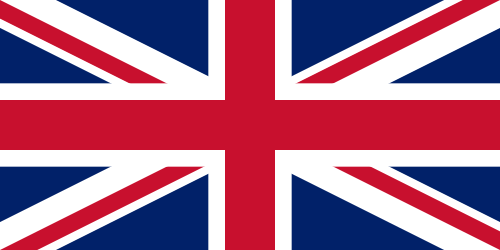
British Capture Eritrea
British forces defeated the Italians in East Africa, beginning a period of British Military Administration in Eritrea. Source — Wikipedia, "Eritrea":
The flag of the United Kingdom using a 3:5 ratio. This flag is the Union Flag in the 3:5 ratio exclusively used on land. At sea, the correct ratio is 1:2. By Original: Acts of Union 1800 Vector: Yaddah - Design data from http://fotw.vexillum.com/flags/gb.html; original code is from Image:Flag of the United Kingdom (1-2).svg, Public domain, https://commons.wikimedia.org/w/index.php?curid=127049491
Sep 15, 1952 CE
Federation with Ethiopia
The UN federated Eritrea with Ethiopia, granting Eritrea autonomy in domestic affairs under the Ethiopian crown. Source — Wikipedia, "Eritrea":
The flag of the Ethiopian Empire with the Lion of Judah in the center By Oren neu dag - SVG version of Image:Flag of Ethiopia (1897).png Based on these images: [1][2][3][4], Public domain, https://commons.wikimedia.org/w/index.php?curid=3670631
Jul 10, 1960 CE
Eritrean Liberation Front Formed
Eritrean exiles founded the Eritrean Liberation Front (ELF) in Cairo to fight for independence from Ethiopia. Source — Wikipedia, "Eritrea":
Flag of Eritrea, 1952 to 1995 By Orange Tuesday (talk) Original uploader was Orange Tuesday at en.wikipedia - Own work, Public domain, https://commons.wikimedia.org/w/index.php?curid=6088106
Sep 1, 1961 CE
Armed Struggle Begins
The Eritrean Liberation Front launched its first armed attack against Ethiopian forces, starting the war of independence. Source — Wikipedia, "Eritrea":
The Map of Eritrean Independence War in 1970s By Skilla1st - Own work, CC BY-SA 4.0, https://commons.wikimedia.org/w/index.php?curid=48796028
Nov 15, 1962 CE
Ethiopia Annexes Eritrea
Emperor Haile Selassie dissolved the Eritrean parliament and annexed Eritrea as a province, sparking armed resistance. Source — Wikipedia, "Eritrea":
Flag of Eritrea By Unknown author - Eritrea’s flag is a rectangle divided into three triangles: a red isosceles triangle based on the hoist side, and a green upper and blue lower right triangle. A gold wreath encircling a gold olive branch is centred on the hoist side of the red triangle.— from the Ministry of Information government portal See also File:Flag of Eritrea Requirements.png. The dimensions on this construction sheet match those shown at Flags of the World (FOTW) except that FOTW does not provide dimensions for the width or height of the wreath., Public domain, https://commons.wikimedia.org/w/index.php?curid=433083
Jan 1, 1970 CE
EPLF Splits from ELF
Dissatisfied members of the ELF formed the Eritrean People's Liberation Front, creating a rival independence movement. Source — Wikipedia, "Eritrea":
Flag of the Eritrean People's Liberation Front By Permjak - http://www.crwflags.com/fotw/flags/er%7Dplf.html FOTW, Public domain, https://commons.wikimedia.org/w/index.php?curid=9499255
Jan 1, 1972 CE
Eritrean Civil War Erupts
Tensions between the ELF and EPLF escalated into open conflict, dividing the independence movement. Source — Wikipedia, "Eritrea":
The Map of Eritrean Independence War in 1970s By Skilla1st - Own work, CC BY-SA 4.0, https://commons.wikimedia.org/w/index.php?curid=48796028
May 1, 1981 CE
EPLF Defeats ELF
The EPLF decisively defeated the ELF, emerging as the sole major force fighting for Eritrean independence. Source — Wikipedia, "Eritrea":
Flag of the Eritrean People's Liberation Front By Permjak - http://www.crwflags.com/fotw/flags/er%7Dplf.html FOTW, Public domain, https://commons.wikimedia.org/w/index.php?curid=9499255
Feb 10, 1990 CE
EPLF Captures Massawa
Eritrean fighters captured the strategic port city of Massawa, a major turning point in the war of independence. Source — Wikipedia, "Eritrea":
Montage of the Second Battle of Massawa - huge battle in Ethiopian Civil War. Clockwise - a damaged and abandoned government tank; government soldiers surrender to EPLF fighters; EPLF militiamen on a tank By Algirr - Own work, CC BY-SA 4.0, https://commons.wikimedia.org/w/index.php?curid=174644411
May 24, 1991 CE
EPLF Captures Asmara
The EPLF took control of the capital Asmara, effectively ending Ethiopian rule as the Derg regime fell in Addis Ababa. Source — Wikipedia, "Eritrea":
Local residents walk past a T-62 main battle tank stranded outside the Presidential Palace following a battle between rebel forces and the government. (Released to Public) Note: this tank is misidentified by the original source. It is a T-62, not a T-55, judging by the spacing of the road wheels, the location of the bore evacuator halfway down the gun barrel, and the shape of the small round gunner's sight in the turret front. By DoD photo by: MSGT ED BOYCE - U.S. Department of Defense, DF-ST-92-03615, Public domain, https://commons.wikimedia.org/w/index.php?curid=1550038
Apr 23, 1993 CE
Independence Referendum Held
Eritreans voted overwhelmingly for independence in a UN-supervised referendum, leading to formal independence. Source — Wikipedia, "Eritrea":
National coat of arms of Eritrea. Colors after [1]: or, argent, azur. By SanchoPanzaXXI - Own work, Public domain, https://commons.wikimedia.org/w/index.php?curid=10519784
May 24, 1993 CE
Eritrea Gains Independence
Eritrea officially declared independence, with Isaias Afwerki becoming the first president of the new nation. Source — Wikipedia, "Eritrea":
Flag of Eritrea By Unknown author - Eritrea’s flag is a rectangle divided into three triangles: a red isosceles triangle based on the hoist side, and a green upper and blue lower right triangle. A gold wreath encircling a gold olive branch is centred on the hoist side of the red triangle.— from the Ministry of Information government portal See also File:Flag of Eritrea Requirements.png. The dimensions on this construction sheet match those shown at Flags of the World (FOTW) except that FOTW does not provide dimensions for the width or height of the wreath., Public domain, https://commons.wikimedia.org/w/index.php?curid=433083
May 6, 1998 CE
Border War with Ethiopia
A border dispute around the town of Badme escalated into a full-scale war between Eritrea and Ethiopia. Source — Wikipedia, "Eritrea":
Eritrean–Ethiopian War Map 1998 By Skilla1st - Own work using: Eritrea location map.svg by NordNordWest, CC BY-SA 3.0, https://commons.wikimedia.org/w/index.php?curid=25055977
Dec 12, 2000 CE
Algiers Agreement Signed
Eritrea and Ethiopia signed a peace agreement in Algiers, ending the border war and establishing a boundary commission. Source — Wikipedia, "Eritrea":
Flag of Eritrea By Unknown author - Eritrea’s flag is a rectangle divided into three triangles: a red isosceles triangle based on the hoist side, and a green upper and blue lower right triangle. A gold wreath encircling a gold olive branch is centred on the hoist side of the red triangle.— from the Ministry of Information government portal See also File:Flag of Eritrea Requirements.png. The dimensions on this construction sheet match those shown at Flags of the World (FOTW) except that FOTW does not provide dimensions for the width or height of the wreath., Public domain, https://commons.wikimedia.org/w/index.php?curid=433083
Jul 9, 2018 CE
Peace with Ethiopia
Eritrea and Ethiopia signed a joint declaration of peace and friendship, ending two decades of hostility and 'no war, no peace'. Source — Wikipedia, "Eritrea":
Map of Eritrea (green) and Ethiopia (orange). Based on File:BlankMap-Africa.svg By MarginalCost - Own work, CC BY-SA 4.0, https://commons.wikimedia.org/w/index.php?curid=68630929
Nov 4, 2020 CE
Tigray War Involvement
Eritrea entered the Tigray War in Ethiopia, supporting the Ethiopian government against the Tigray People's Liberation Front. Source — Wikipedia, "Eritrea":
A man passes by a destroyed tank on the main street of Edaga Hamus, in the Tigray region, in Ethiopia, on June 5, 2021. (Yan Boechat/VOA) By Yan Boechat/VOA - https://www.voanews.com/africa/children-shot-bombed-and-knifed-tigray-war, Public domain, https://commons.wikimedia.org/w/index.php?curid=107365798




![National coat of arms of Eritrea. Colors after [1]: or, argent, azur.](https://upload.wikimedia.org/wikipedia/commons/thumb/3/36/Emblem_of_Eritrea_%28or_argent_azur%29.svg/500px-Emblem_of_Eritrea_%28or_argent_azur%29.svg.png)


