Encyclopedia/3. History, Societies & Civilizations/09. Modern Nations/02. Americas • Curated by Admin Timeline.sg
History of El Salvador (AI-generated, sourced to Wikipedia).
Chronological Storyline (29 Milestones)
900 BCE
Maya settle in region
Maya civilization establishes settlements in western El Salvador, including the important site of Tazumal near present-day Chalchuapa. Source — Wikipedia, "El Salvador":
Top (western side) of the Tazumal main pyramid (structure B1-1) as viewed from the top of structure B1-2. Chalchuapa, El Salvador. By Mariordo (Mario Roberto Durán Ortiz) - Own work, CC BY-SA 3.0, https://commons.wikimedia.org/w/index.php?curid=15701458
1000 CE
Pipil people migrate to area
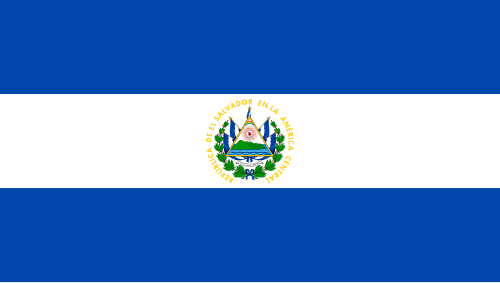
Nahua-speaking Pipil people migrate from central Mexico into what is now El Salvador, establishing the Cuzcatlán polity and introducing Nahuatl culture. Source — Wikipedia, "El Salvador":
The flag of El Salvador. By See File history below for details. - See Asamblea Legislativa de El Salvador (emblems diplayed, for example, top left in homepage). See also, for further example these official photos: The Coat of Arms of El Salvador (variant), Public domain, https://commons.wikimedia.org/w/index.php?curid=433134
Jun 8, 1524 CE
Spanish conquest begins
Pedro de Alvarado leads a Spanish expedition into Pipil territory, encountering fierce resistance from Atlacatl and other indigenous leaders. Source — Wikipedia, "El Salvador":
Approximate distribution of the Indigenous peoples that inhabited the territory of El Salvador shortly before the Spanish conquest: Nahuas Lencas Kakawiras or Cacaoperas Xincas Mayans Chorti Mayans poqomam Chorotegas Notes: - Some images also include the Alaguilac and Mixe peoples, this is due to misinterpretations in the 20th century of the indigenous people of San Cristóbal Acasaguastlán (the case of Alaguilac, which was considered a Nahua language or dialect; for which reason Jorge Larde y Larín, in the «Toponimia Nahuat del El Salvador Occidental» (1977), considered that it was a combination of Nahuat and Chorti) and Conguaco (in Guatemala, near the border of El Salvador; whose indigenous people, called in the populuca sources, were erroneously considered mixes; and authors such as Jorge Larde and Larín in the work mentioned above, they considered that for this reason that language was spoken in El Salvador instead of Xinca), according to Lyle Campbell (1979 and 1997) Alaguilac would be a language related to Xinca and the Populuca of Conguaco a Xinca language (See Rogers, Chris (2016) The Use and Development of the Xinkan Languages). - The data a out of the Xinca as an indigenous language of current El Salvador is ambiguous, the main populations of this ethnic group were found in the Guatemalan territory bordering El Salvador; its inclusion is due to the few data available from Mopicalco (in the territory of present-day San Francisco Menéndez, Department of Ahuachapán), including ceramic analysis of that region that shows that by the late postclassic (1200 to 1525 AD) its population had strong ties to the Pacific coast of Guatemala (see: Moraga, Regina; Mencos, Elisa; Costa, Philippe; Perrot-Minnot, Sebastién (2010). «La Relación entre Cara Sucia (El Salvador) y la zona de Cotzumalguapa (Guatemala): la perspectiva desde un análisis cerámico)». By Juan Miguel - Own work, basada en imagen (hecha por Paul Amaroli) y texto del documento Sistema Urbano del Plan Nacional de Ordenamiento y desarrollo territorial (2005); imagen de Barón Castro, Rodolfo (1978) La Población de El Salvador; y texto de la Carta-Relación de Diego García de Palacios a Felipe II sobre la provincia de Guatemala en 1576, la Relación breve y verdadera de algunas cosas de las muchas que sucedieron al padre Alonso Ponce por Antonio de Ciudad Real en 1584, y la Descripción Geográfica-Moral de la Diócesis de Guatemala por el obispo Pedro Cortés y Larráz en 1770., CC BY-SA 3.0, https://commons.wikimedia.org/w/index.php?curid=13353027
Apr 1, 1525 CE
San Salvador founded
Pedro de Alvarado establishes the settlement of San Salvador at the site of the Pipil city of Cuzcatlán, beginning Spanish colonial rule. Source — Wikipedia, "El Salvador":
Monumento al Divino Salvador del Mundo (Monument to the Savior of the World) on the Plaza las Américas, San Salvador. By Frankjh - Own work, CC BY-SA 3.0, https://commons.wikimedia.org/w/index.php?curid=16094575
Nov 5, 1811 CE
First independence uprising
Father José Matías Delgado leads the first cry for independence in San Salvador, an early revolt against Spanish colonial authority that is suppressed. Source — Wikipedia, "El Salvador":
Painting of the First Independence Movement celebration in San Salvador. At the center, José Matías Delgado. By Luis Vergara Ahumada - Reproduction from an independence supplement of a Salvadoran newspaper., Public domain, https://commons.wikimedia.org/w/index.php?curid=16397131
Sep 15, 1821 CE
Independence from Spain
El Salvador joins other Central American provinces in declaring independence from Spain, ending nearly three centuries of colonial rule. Source — Wikipedia, "El Salvador":
A scan of the Act of Independence of Central America (page 1). By José Cecilio del Valle - https://ahgua.ufm.edu/agca/acta-de-independencia-de-las-provincias-unidas-de-centro-america-15-de-septiembre-1821/acta-de-independencia-de-centroamerica-15-de-septiembre-1821-001/, Public domain, https://commons.wikimedia.org/w/index.php?curid=133875813
Jul 1, 1823 CE
Joins United Provinces
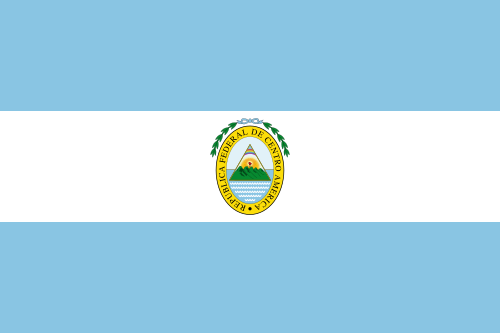
El Salvador becomes part of the United Provinces of Central America, a short-lived federal republic encompassing most of Central America. Source — Wikipedia, "El Salvador":
Flag of the Federal Republic of Central America By Huhsunqu - This W3C-unspecified vector image was created with Inkscape .Description of flag design from: Meléndez Chaverri, Carlos (2000). José Matías Delgado, Prócer Centroamericano. Page 277. ISBN: 9992300574Coat of arms design derived from a depiction on the Constitution of Central America and from History of El Salvador Volume I, pp. 150–151 and Historia General de Centroamérica – de la Ilustración al Liberalismo (1750–1870) Volume III, p. 100, CC BY-SA 2.5, https://commons.wikimedia.org/w/index.php?curid=598888
1838 CE
Full independence achieved
Following the dissolution of the United Provinces of Central America, El Salvador becomes a fully independent sovereign nation. Source — Wikipedia, "El Salvador":
The flag of El Salvador. By See File history below for details. - See Asamblea Legislativa de El Salvador (emblems diplayed, for example, top left in homepage). See also, for further example these official photos: The Coat of Arms of El Salvador (variant), Public domain, https://commons.wikimedia.org/w/index.php?curid=433134
Mar 19, 1873 CE
Earthquake devastates capital
A powerful earthquake destroys much of San Salvador, killing hundreds and reshaping the city's architecture and urban planning. Source — Wikipedia, "El Salvador":
The flag of El Salvador. By See File history below for details. - See Asamblea Legislativa de El Salvador (emblems diplayed, for example, top left in homepage). See also, for further example these official photos: The Coat of Arms of El Salvador (variant), Public domain, https://commons.wikimedia.org/w/index.php?curid=433134
1880 CE
Coffee export boom begins
Coffee production surges as El Salvador's primary export, concentrating land in the hands of a small elite and transforming the economy. Source — Wikipedia, "El Salvador":
Coffee in El Salvador By The Cockroach - Originally uploaded to Flickr as Coffee Processing in Ahuachapan, El Salvador, CC BY 2.0, https://commons.wikimedia.org/w/index.php?curid=5767523
Feb 15, 1912 CE
National University founded
The University of El Salvador is officially reestablished as the nation's premier public university, becoming a center for intellectual and political debate. Source — Wikipedia, "El Salvador":
Escudo de la Universidad de El Salvador. By Universidad de El Salvador (SVG version by Jarould) - Based on PNG version., CC BY-SA 3.0, https://commons.wikimedia.org/w/index.php?curid=52151285
Jan 22, 1932 CE
La Matanza massacre
A peasant and indigenous uprising led by Farabundo Martí is brutally suppressed by General Maximiliano Hernández Martínez, resulting in the massacre of an estimated 10,000 to 40,000 people. Source — Wikipedia, "El Salvador":
Mapa de las zonas afectadas por el levantamiento campesino en El Salvador en 1932 By Netito777, vectorizada por Jarke - imagen de dominio público creada por Netito777 e Image:Departments of El Salvador.svg, Public domain, https://commons.wikimedia.org/w/index.php?curid=2241661
May 8, 1944 CE
General strike topples dictator
A general strike known as the 'Huelga de Brazos Caídos' forces the resignation of dictator General Maximiliano Hernández Martínez. Source — Wikipedia, "El Salvador":
A portrait of Salvadoran president General Maximiliano Hernández Martínez (1931–1934, 1935–1944) By Unknown author - Published in the Diario de Occidente newspaper of El Salvador, Public domain, https://commons.wikimedia.org/w/index.php?curid=168083343
Oct 26, 1960 CE
Reformist coup d'état
A military coup overthrows President José María Lemus, establishing a short-lived reformist junta that promises democratic reforms. Source — Wikipedia, "El Salvador":
The flag of El Salvador. By See File history below for details. - See Asamblea Legislativa de El Salvador (emblems diplayed, for example, top left in homepage). See also, for further example these official photos: The Coat of Arms of El Salvador (variant), Public domain, https://commons.wikimedia.org/w/index.php?curid=433134
Jul 14, 1969 CE
Football War with Honduras
A brief but deadly war erupts between El Salvador and Honduras, triggered by tensions during World Cup qualifying matches and underlying land and immigration disputes. Source — Wikipedia, "El Salvador":
Map of Honduras and El Salavador By JuanJose1969 - Own work, CC BY-SA 4.0, https://commons.wikimedia.org/w/index.php?curid=156006582
Feb 20, 1972 CE
Election fraud sparks outrage
The military-backed government commits widespread electoral fraud to deny opposition candidate José Napoleón Duarte the presidency, deepening political polarization. Source — Wikipedia, "El Salvador":
The flag of El Salvador. By See File history below for details. - See Asamblea Legislativa de El Salvador (emblems diplayed, for example, top left in homepage). See also, for further example these official photos: The Coat of Arms of El Salvador (variant), Public domain, https://commons.wikimedia.org/w/index.php?curid=433134
Oct 15, 1979 CE
Reformist military coup
Young military officers stage a coup promising reforms, but the new junta fails to control right-wing death squads and left-wing guerrilla movements, pushing the country toward civil war. Source — Wikipedia, "El Salvador":
The flag of El Salvador. By See File history below for details. - See Asamblea Legislativa de El Salvador (emblems diplayed, for example, top left in homepage). See also, for further example these official photos: The Coat of Arms of El Salvador (variant), Public domain, https://commons.wikimedia.org/w/index.php?curid=433134
Mar 24, 1980 CE
Archbishop Romero assassinated
Archbishop Óscar Romero, a vocal critic of military repression and human rights abuses, is shot dead while celebrating Mass, shocking the world and galvanizing opposition. Source — Wikipedia, "El Salvador":
The flag of El Salvador. By See File history below for details. - See Asamblea Legislativa de El Salvador (emblems diplayed, for example, top left in homepage). See also, for further example these official photos: The Coat of Arms of El Salvador (variant), Public domain, https://commons.wikimedia.org/w/index.php?curid=433134
Oct 10, 1980 CE
FMLN founded as coalition
Five leftist guerrilla organizations unite to form the Farabundo Martí National Liberation Front (FMLN), launching an armed struggle against the government. Source — Wikipedia, "El Salvador":
Векторизация логотипа ФНОФМ (FMLN) By Ivan Ch RU - Own work, CC BY-SA 4.0, https://commons.wikimedia.org/w/index.php?curid=100987746
Dec 4, 1980 CE
Four American nuns murdered
Members of the Salvadoran National Guard rape and murder four American churchwomen, drawing international condemnation and straining US-Salvadoran relations. Source — Wikipedia, "El Salvador":
The flag of El Salvador. By See File history below for details. - See Asamblea Legislativa de El Salvador (emblems diplayed, for example, top left in homepage). See also, for further example these official photos: The Coat of Arms of El Salvador (variant), Public domain, https://commons.wikimedia.org/w/index.php?curid=433134
Dec 31, 1981 CE
El Mozote massacre
The Salvadoran Army's Atlacatl Battalion kills more than 800 civilians in the village of El Mozote, one of the worst atrocities of the civil war. Source — Wikipedia, "El Salvador":
Memorial of massacre site at El Mozote, Morazán, El Salvador. By Efrojas - Own work, Public domain, https://commons.wikimedia.org/w/index.php?curid=2155148
Nov 16, 1989 CE
Jesuit priests killed at UCA
Salvadoran military forces murder six Jesuit priests, their housekeeper, and her daughter at the University of Central America, provoking international outrage. Source — Wikipedia, "El Salvador":
The flag of El Salvador. By See File history below for details. - See Asamblea Legislativa de El Salvador (emblems diplayed, for example, top left in homepage). See also, for further example these official photos: The Coat of Arms of El Salvador (variant), Public domain, https://commons.wikimedia.org/w/index.php?curid=433134
Jan 16, 1992 CE
Chapultepec Peace Accords
The government and FMLN sign peace accords in Mexico City, ending the 12-year civil war that killed approximately 75,000 people and establishing a new political framework. Source — Wikipedia, "El Salvador":
Acuerdos de Paz By Presidencia El Salvador from San Salvador, El Salvador, América Central - XXIV Conmemoración de los Acuerdos de Paz., CC0, https://commons.wikimedia.org/w/index.php?curid=47513008
Oct 29, 1998 CE
Hurricane Mitch strikes
Hurricane Mitch devastates Central America, causing massive flooding and landslides in El Salvador, killing hundreds and displacing thousands. Source — Wikipedia, "El Salvador":
The VISSR instrument onboard the NOAA GOES-8 satellite captured this visible image of Hurricane Mitch on October 26, 1998, at 18:45 UTC (14:45 EDT). At the time this image was captured, Mitch had maximum sustained wind speeds of 180 mph (285 km/h), and its minimum central pressure was 905 mb. By The National Oceanic and Atmospheric Administration (NOAA) - NOAA CLASS (https://www.bou.class.noaa.gov/saa/products/welcome), Public domain, https://commons.wikimedia.org/w/index.php?curid=97295574
Jan 13, 2001 CE
Major earthquakes rock nation
Two devastating earthquakes within one month kill over 1,100 people, destroy tens of thousands of homes, and cause billions in damage. Source — Wikipedia, "El Salvador":
The flag of El Salvador. By See File history below for details. - See Asamblea Legislativa de El Salvador (emblems diplayed, for example, top left in homepage). See also, for further example these official photos: The Coat of Arms of El Salvador (variant), Public domain, https://commons.wikimedia.org/w/index.php?curid=433134
Mar 9, 2012 CE
Gang truce brokered
A truce between the MS-13 and Barrio 18 gangs, brokered with government mediation, dramatically reduces homicide rates temporarily before collapsing. Source — Wikipedia, "El Salvador":
The flag of El Salvador. By See File history below for details. - See Asamblea Legislativa de El Salvador (emblems diplayed, for example, top left in homepage). See also, for further example these official photos: The Coat of Arms of El Salvador (variant), Public domain, https://commons.wikimedia.org/w/index.php?curid=433134
Jun 1, 2019 CE
Nayib Bukele inaugurated
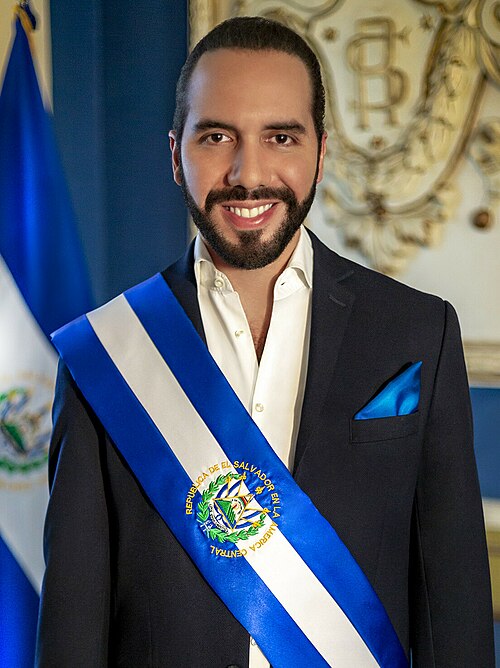
Nayib Bukele takes office as president, promising to combat corruption and gang violence with unconventional and controversial methods. Source — Wikipedia, "El Salvador":
Official portrait of Nayib Bukele, 2019 By AndreX - Own work, CC BY-SA 4.0, https://commons.wikimedia.org/w/index.php?curid=124910124
Sep 7, 2021 CE
Bitcoin adopted as legal tender
El Salvador becomes the first country in the world to adopt Bitcoin as legal tender alongside the US dollar, a bold and controversial economic experiment. Source — Wikipedia, "El Salvador":
Please see the legend for more details. By Manabimasu - This file was derived from: World map configurable.svg by Heitordp References: en:Legality of cryptocurrency by country or territory, CC0, https://commons.wikimedia.org/w/index.php?curid=106438384
Mar 27, 2022 CE
State of exception declared
Following a spike in gang violence, President Bukele declares a state of exception, suspending constitutional rights and leading to mass arrests of over 70,000 suspected gang members. Source — Wikipedia, "El Salvador":
The flag of El Salvador. By See File history below for details. - See Asamblea Legislativa de El Salvador (emblems diplayed, for example, top left in homepage). See also, for further example these official photos: The Coat of Arms of El Salvador (variant), Public domain, https://commons.wikimedia.org/w/index.php?curid=433134