The Mohist Canon (Mo Jing) in Warring States China described pinhole image formation, mirror reflection, and lever mechanics, representing early systematic study of optics and statics. Source — Wikipedia: )
Mozi in Chinese. By White whirlwind - Own work, Public domain, https://commons.wikimedia.org/w/index.php?curid=48854047
200 BCE
Archimedes formulates buoyancy and lever laws
Archimedes of Syracuse established the principle of buoyancy and the law of the lever, founding hydrostatics and statics as quantitative sciences. Source — Wikipedia:
Archimedes formulates buoyancy and lever laws By Domenico Fetti - http://archimedes2.mpiwg-berlin.mpg.de/archimedes_templates/popup.htm, Public domain, https://commons.wikimedia.org/w/index.php?curid=146592
150 CE
Ptolemy studies refraction of light
Claudius Ptolemy in Alexandria compiled empirical data on the refraction of light passing through air, water, and glass, advancing early optical science. Source — Wikipedia: )
Claudius Ptolemäus, Picture of 16th century book frontispiece By Theodor de Bry - Own work, Public domain, https://commons.wikimedia.org/w/index.php?curid=67098
499 CE
Aryabhata describes Earth's rotation and eclipses
Aryabhata in India proposed that the Earth rotates on its axis and gave a scientific explanation for lunar and solar eclipses, influencing later astronomy and physics. Source — Wikipedia:
Aryabhatta. By Cpjha13 - Own work, CC BY-SA 4.0, https://commons.wikimedia.org/w/index.php?curid=49883192
850 CE
Banu Musa study fluid mechanics
The Banu Musa brothers in Baghdad wrote on fluid mechanics and automata, describing valves and pressure devices in their 'Book of Ingenious Devices.' Source — Wikipedia:
Original illustration of a self trimming lamp discussed in the treatise on Mechanical Devices of Ahmad ibn Musa ibn Shakir. Drawing can be found in the "Granger Collection" located in New York. By Unknown author - Book of of Ahmad ibn Musa ibn Shakir, Public domain, https://commons.wikimedia.org/w/index.php?curid=14730630
1021 CE
Ibn al-Haytham's Book of Optics
Ibn al-Haytham (Alhazen) in Cairo completed his seven-volume 'Book of Optics,' using experiments to study light, vision, and pinhole images, founding modern optics and the experimental method. Source — Wikipedia:
Cropped version of the frontispiece of Johannes Hevelius, Selenographia, depicting Ibn al-Haytham (Alhazen) By Adolph Boÿ, engraved by Jeremias Falck. Used as the frontispiece to Johannes Hevelius, Selenographia, 1647 - https://www.loc.gov/resource/rbctos.2017rosen1321/?sp=9&r=0.059,0.617,0.327,0.182,0, Public domain, https://commons.wikimedia.org/w/index.php?curid=165125519
1088 CE
Shen Kuo discovers magnetic declination
Shen Kuo in Song Dynasty China documented that a magnetic compass needle points slightly east of true north, the first known record of magnetic declination, advancing geomagnetism. Source — Wikipedia:
Exhibition description: Shen Kuo (1031-1095 AD) A prominent scientist and astrononmer of the Song Dynasty. Shen Kuo was the head official of the Bureau of Astronomy in the Song court, where he improved the design of several local astronomical instruments, including the amillary aphere, the gnomon and the clepsydra clock. He also formulated a solar calendar named the Twelve Solar Terms Calendar, which was used in agriculture. His work are summed up in his Dream Pool Essays, one of the greatest books of that time. By Hans A. Rosbach - Own work, CC BY-SA 3.0, https://commons.wikimedia.org/w/index.php?curid=89508454
1121 CE
Al-Khazini's Book of the Balance of Wisdom
Al-Khazini in Merv wrote the 'Book of the Balance of Wisdom,' presenting hydrostatic balances, precise density measurements of metals and minerals, and principles of statics. Source — Wikipedia:
13th century Arabic manuscript of al-Khāzinī's Kitāb Mīzān al-ḥikmah depicting the eponymous balances of the treatise. By Unknown author - https://openn.library.upenn.edu/Data/0001/html/ljs386.html, Public domain, https://commons.wikimedia.org/w/index.php?curid=173174072
1687 CE
Newton's Principia establishes fluid resistance
Isaac Newton's 'Principia Mathematica' formulated the laws of motion and gravitation and included early analysis of fluid resistance, laying groundwork for fluid dynamics. Source — Wikipedia:
Title page of the 1687 first edition of Philosophiae Naturalis Principia Mathematica, by Isaac Newton. PHILOSOPHIÆ NATURALIS PRINCIPIA MATHEMATICA. Autore IS. NEWTON, Trin. Coll. Cantab. Soc. Matheseos Professore Lucasiano, & Societatis Regalis Sodali. IMPRIMATUR. S. PEPYS, Reg. Soc. PRÆSES. Julii 5. 1686. LONDINI, Jussu Societatis Regiæ ac Typis Josephi Streater. Prostat apud plures Bibliopolas. Anno MDCLXXXVII. By The original uploader was Zhaladshar at English Wikisource. - Transferred from en.wikisource to Commons. (previous image from another copy) Internet Archive (current image from the Bern Dibner copy), Public domain, https://commons.wikimedia.org/w/index.php?curid=2681838
1738 CE
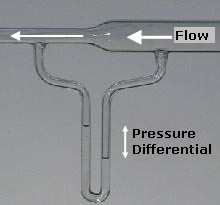
Bernoulli publishes Hydrodynamica
Daniel Bernoulli published 'Hydrodynamica,' establishing the relationship between pressure and velocity in fluid flow now known as Bernoulli's principle. Source — Wikipedia:
Photo of a Venturi tube with labels By user:ComputerGeezer and Geof - Modified from :de:Bild:Venturirohr.jpg, CC BY-SA 3.0, https://commons.wikimedia.org/w/index.php?curid=8957957
1755 CE
Euler derives fluid flow equations
Leonhard Euler derived the equations governing inviscid fluid flow, now called the Euler equations, providing the first rigorous mathematical framework for fluid dynamics. Source — Wikipedia: )
Inviscid, incompressible flow around an airfoil, constructed with a Joukovski transform. Levels of blue represent pressure (darkest is highest). By Thierry Dugnolle - Own work, CC0, https://commons.wikimedia.org/w/index.php?curid=18803279
1822 CE
Navier formulates viscous flow equations
Claude-Louis Navier derived the equations for viscous fluid flow, later refined by George Stokes, producing the Navier-Stokes equations central to modern fluid dynamics. Source — Wikipedia:
1879 CE
Crookes identifies radiant matter
William Crookes observed that residual gas in a low-pressure tube conducted electricity and called it 'radiant matter,' an early experimental step toward plasma physics. Source — Wikipedia:
William Crookes By George Charles Beresford (1864-1938) - [1], Public domain, https://commons.wikimedia.org/w/index.php?curid=33738818
1897 CE
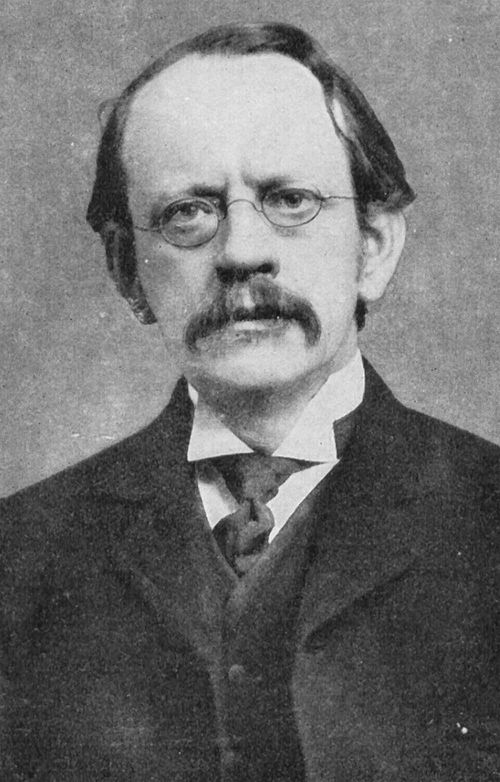
Thomson discovers the electron
J.J. Thomson's cathode ray experiments at the Cavendish Laboratory identified the electron, a discovery fundamental to solid-state physics, plasma physics, and all of modern physics. Source — Wikipedia:
English physicist J J Thomson. By Not Mentioned - First World War.com, Public domain, https://commons.wikimedia.org/w/index.php?curid=2969861The Discovery of the Electron (2 of 15)
1928 CE
Bloch's theorem for electrons in crystals
Felix Bloch proved that electrons in a periodic crystal lattice occupy energy bands, founding the quantum theory of solids and enabling semiconductor physics. Source — Wikipedia:
Isosurface of the square modulus of w:Bloch wave in Silicon corresponding to Γ point and lower valence band. By Lorenzo Paulatto (Paulatz) - PWSCF, WanT and xCrysDen (w:Density functional theory), CC BY-SA 3.0, https://commons.wikimedia.org/w/index.php?curid=1356155
1929 CE
Tonks and Langmuir coin 'plasma'
Irving Langmuir and Lewi Tonks at General Electric introduced the term 'plasma' for ionized gas and pioneered the study of plasma oscillations, founding plasma physics as a field. Source — Wikipedia:
Irving Langmuir By Unknown author - http://pagesperso-orange.fr/philippe.boeuf/robert/portraits/langmuir.htm(Direct link to image) Edgar Fahs Smith Collection, University of Pennsylvania Library, Online, Public domain, https://commons.wikimedia.org/w/index.php?curid=751756
Dec 23, 1947 CE
Bardeen and Brattain invent transistor
John Bardeen and Walter Brattain at Bell Labs demonstrated the first point-contact transistor, launching solid-state electronics and the semiconductor revolution. Source — Wikipedia:
Bauformen von Transistoren By Ulfbastel - Own work, CC BY-SA 3.0, https://commons.wikimedia.org/w/index.php?curid=3123331Transistor Full Documentary
1952 CE
Spitzer proposes stellarator concept
Lyman Spitzer at Princeton proposed the stellarator, a magnetic confinement device for fusion plasma, initiating controlled thermonuclear fusion research in the United States. Source — Wikipedia:
Scheme of coil system (blue) and plasma (yellow) of the nuclear fusion plasma experiment Wendelstein 7-X under construction at the Max-Planck-Institut für Plasmaphysik, Greifswald, Germany. For example a magnetic field line is highlighted in green on the plasma surface shown in yellow. By Max-Planck Institut für Plasmaphysik, CC BY 3.0, https://commons.wikimedia.org/w/index.php?curid=24388371
1958 CE
BCS theory explains superconductivity
John Bardeen, Leon Cooper, and Robert Schrieffer published the BCS theory explaining superconductivity as Cooper-pair formation, a landmark in solid-state physics. Source — Wikipedia:
BCS theory explains superconductivity By Unknown author, CC BY-SA 2.5, https://commons.wikimedia.org/w/index.php?curid=657868
1960 CE
Kroemer and others develop semiconductor heterostructures
Herbert Kroemer and Zhores Alferov independently proposed semiconductor heterostructures, enabling high-speed transistors and lasers and earning them the 2000 Nobel Prize in Physics. Source — Wikipedia:
1962 CE
Josephson predicts superconducting tunneling
Brian Josephson predicted that Cooper pairs can tunnel between superconductors separated by an insulator, a phenomenon now called the Josephson effect, central to quantum metrology. Source — Wikipedia:
One-volt en:voltage standard developed by en:NIST (formerly en:National Bureau of Standards (NBS) until 1988) based on an array of 3020 superconducting en:Josephson junctions, operating at liquid-helium temperatures. Microwave energy fed into the finguide structure on the left generates a voltage across the 4 chains of junctions on the right. By NBS - NIST paper A Practical Josephson Voltage Standard at One Volt, Figure 1, Public domain, https://commons.wikimedia.org/w/index.php?curid=319467
1968 CE
T-3 tokamak achieves high plasma temperature
The T-3 tokamak at the Kurchatov Institute in Moscow demonstrated electron temperatures of over 10 million kelvin, establishing the tokamak as the leading magnetic confinement fusion concept. Source — Wikipedia:
Geometry of the EAST tokamak: 2D view in the poloidal plane and 3D view (one half). By Chen, S., Villone, F., Xiao, B. et al. - Chen, S., Villone, F., Xiao, B. et al. 3D passive stabilization of n = 0 MHD modes in EAST tokamak. Sci Rep 6, 32440 (2016). Figure 1, CC BY 4.0, https://commons.wikimedia.org/w/index.php?curid=102602593
1970 CE
Kolmogorov turbulence scaling in fluids
Andrey Kolmogorov's 1941 turbulence theory gained wide recognition as the foundation of fluid turbulence research, describing energy cascade scaling in inertial-range flows. Source — Wikipedia:
1980 CE
von Klitzing discovers quantum Hall effect
Klaus von Klitzing discovered the integer quantum Hall effect in a two-dimensional electron gas, revealing precise quantization of resistance and earning the 1985 Nobel Prize in Physics. Source — Wikipedia:
1986 CE
Bednorz and Müller discover high-Tc superconductors
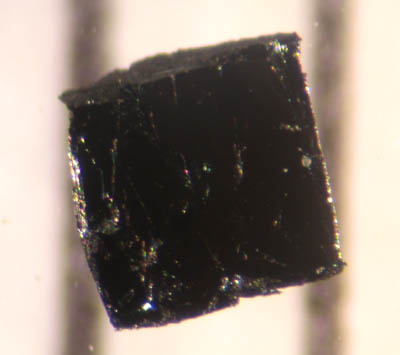
J. Georg Bednorz and K. Alex Müller discovered cuprate superconductors with transition temperatures above 30 K, opening the field of high-temperature superconductivity. Source — Wikipedia:
A small sample of the high-temperature superconductor, Bi-2223. By James Slezak, Cornell Laboratory of Atomic and Solid State Physics - Own work, CC BY 2.5, https://commons.wikimedia.org/w/index.php?curid=864046
1997 CE
EAST superconducting tokamak project approved
China approved construction of the Experimental Advanced Superconducting Tokamak (EAST) at the Hefei Institutes of Physical Science, advancing global fusion plasma research with fully superconducting magnets. Source — Wikipedia: )
Experimental setup for high-βN discharges in the 2015 EAST Tokamak campaign. EAST vacuum vessel and plasma current direction. The three main in-vessel materials are molybdenum for the first wall, graphite for the lower divertor plate and tungsten for the upper divertor plate. By Xiang Gao, Yao Yang, Tao Zhang, Haiqing Liu, Guoqiang Li, Tingfeng Ming, Zixi Liu, Yumin Wang, Long Zeng, Xiang Han et al. - (2017-03-24). "Key issues for long-pulse high-βNoperation with theExperimental Advanced Superconducting Tokamak(EAST)". Nuclear Fusion 57 (5): 056021. DOI:10.1088/1741-4326/aa626c. ISSN 0029-5515. Figure 1, CC BY 3.0, https://commons.wikimedia.org/w/index.php?curid=71982897
2004 CE
Novoselov and Geim isolate graphene
Andre Geim and Konstantin Novoselov isolated graphene, a single layer of carbon atoms, launching the field of two-dimensional materials and earning the 2010 Nobel Prize in Physics. Source — Wikipedia:
The ideal crystalline structure of graphene is a hexagonal grid. By AlexanderAlUS - Own work, CC BY-SA 3.0, https://commons.wikimedia.org/w/index.php?curid=112945342010 Nobel Prize lecture by Andre Geim in physics
2007 CE
FAST radio telescope construction begins
Construction began on China's Five-hundred-meter Aperture Spherical Telescope (FAST), the world's largest filled-aperture radio telescope, which uses solid-state receivers to study plasma in space. Source — Wikipedia:
500m Aperture Spherical Radio Telescope located in Guizhou Province, China By SCJiang - Own work, CC BY-SA 4.0, https://commons.wikimedia.org/w/index.php?curid=172271062
2016 CE
Micius satellite enables quantum communication
China launched the Micius satellite, the world's first quantum science satellite, using solid-state photon sources to demonstrate quantum key distribution over intercontinental distances. Source — Wikipedia:
2022 CE
NIF achieves fusion ignition
The National Ignition Facility at Lawrence Livermore National Laboratory achieved fusion ignition, producing more energy from fusion reactions than the laser energy delivered to the target. Source — Wikipedia:
The exterior of the National Ignition Facility, a ten-story building the size of three football fields, is pictured at sunset. NIF is the world's largest and highest-energy laser system and the nation's largest scientific project. It is located at Lawrence Livermore National Laboratory in northern California. By Lawrence Livermore National Security - Own work, CC BY-SA 3.0, https://commons.wikimedia.org/w/index.php?curid=19898650Nuclear Fusion: Inside the breakthrough that could change our world | 60 Minutes
2024 CE
EAST achieves sustained high-temperature plasma
The EAST tokamak in Hefei sustained a high-confinement plasma at temperatures exceeding 100 million kelvin for record durations, advancing the engineering basis for future fusion reactors. Source — Wikipedia: )
Experimental setup for high-βN discharges in the 2015 EAST Tokamak campaign. EAST vacuum vessel and plasma current direction. The three main in-vessel materials are molybdenum for the first wall, graphite for the lower divertor plate and tungsten for the upper divertor plate. By Xiang Gao, Yao Yang, Tao Zhang, Haiqing Liu, Guoqiang Li, Tingfeng Ming, Zixi Liu, Yumin Wang, Long Zeng, Xiang Han et al. - (2017-03-24). "Key issues for long-pulse high-βNoperation with theExperimental Advanced Superconducting Tokamak(EAST)". Nuclear Fusion 57 (5): 056021. DOI:10.1088/1741-4326/aa626c. ISSN 0029-5515. Figure 1, CC BY 3.0, https://commons.wikimedia.org/w/index.php?curid=71982897