Encyclopedia/1. The Cosmos & The Natural World/2. Physics & Chemistry/03. Chemistry & Periodic Table of Elements • Curated by Admin Timeline.sg
Catalysis · Polymer science · Process engineering
Chronological Storyline (37 Milestones)
3000 BCE
Egyptian mummification and early chemistry
Egyptian embalmers and metalworkers developed empirical chemical techniques including calcination, reduction, and the use of natron and organic resins for preservation and metallurgy. · Wikipedia: https://en.wikipedia.org/wiki/History_of_chemistry
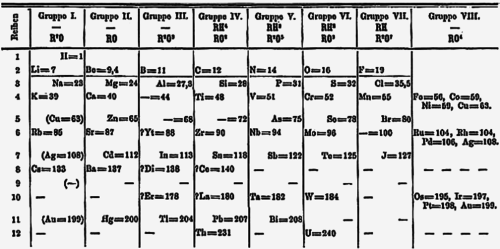
Таблица Менделеева по изданию 1871 года с прочерками у предсказанных, но ещё не открытых элементов. By The original uploader was Den fjättrade ankan at Swedish Wikipedia. - Källa:Dmitrij Ivanovitj Mendelejev (1834 - 1907). Originally from sv.wikipedia; description page is/was here., Public domain, https://commons.wikimedia.org/w/index.php?curid=1574857
1200 BCE
Indian rasaśāstra mercurial chemistry emerges
Indian alchemical tradition rasaśāstra systematically described the processing of mercury, sulfur, and metal ores for medicinal and metallurgical purposes, influencing later chemical practice. Source — Wikipedia:
300 BCE
Wootz steel produced in India
Indian metallurgists in the Tamil region developed crucible steel (wootz), a high-carbon steel with exceptional properties, later traded to the Middle East and inspiring Damascus steel. Source — Wikipedia:
Watered pattern on iranian sword blade. By Rahil Alipour Ata Abadi - Transferred from en.wikipedia to Commons., GFDL, https://commons.wikimedia.org/w/index.php?curid=50800188
200 BCE
Zinc smelting at Zawar, India
Indian metallurgists at Zawar in Rajasthan developed retort distillation to extract metallic zinc from zinc oxide, the earliest known production of metallic zinc in the world. Source — Wikipedia:
300 CE
Ge Hong documents Chinese alchemy
Chinese Taoist alchemist Ge Hong recorded elixir formulas and chemical processes including the purification of cinnabar and the first known description of gunpowder-like reactions in the Baopuzi. Source — Wikipedia:
One of a series of woodcuts of illustrious physicians and legendary founders of Chinese medicine from an edition of Bencao mengquan (Introduction to the Pharmacopoeia), engraved in the Wanli reign period of the Ming dynasty (1573-1620) -- Volume preface, 'Lidai mingyi hua xingshi' (Portraits and names of famous doctors through history). The images are attributed to a Tang (618-907) creator, Gan Bozong. The account in 'Portraits and Names of Famous Doctors through History' states: Ge Hong, a native of Danyang, lived under the Eastern Jin dynasty (317-420). His style-name was Zhichuan, and he also called himself Bao Pu Zi (The one who embraces simplicity). He held the office of magistrate of Gaolou (present-day Beiliu in Guangxi province). He was expert at curing illnesses and well-versed in the classics. A Daoist adept, he knew how to make pills of immortality. He lived as a hermit in Luofu Mountain (a Daoist holy place), where he made pills of immortality and became an Immortal, after which he was known as Ge Xianweng (Ge the Immortal Sage). Ge Hong spent many years in retreat, wandering in the mountains, cultivating himself and writing. He is the author of Bao Pu Zi and Zhouhou jiuzu fang (Book of Remedies in Extremis to be Kept up one's Sleeve) in three volumes.Woodcut By: Gan Bozong (Tang period, 618-907) By Gan Bozong (Tang period, 618-907) - https://wellcomeimages.org/indexplus/obf_images/5f/87/4e750c334bb041db425934535c34.jpg (hi-res image) Gallery: https://wellcomeimages.org/indexplus/image/L0039323.html Wellcome Collection gallery (2018-03-28): https://wellcomecollection.org/works/f65bzfbc CC-BY-4.0, CC BY 4.0, https://commons.wikimedia.org/w/index.php?curid=33926771
800 CE
Jabir ibn Hayyan founds systematic chemistry
Persian-Arab alchemist Jabir ibn Hayyan introduced systematic laboratory techniques including distillation, crystallization, and the preparation of mineral acids, laying foundations for experimental chemistry. Source — Wikipedia:
15th-century artistic impression of Jabir ibn Hayyan (Geber) from Codici Ashburnhamiani 1166, Biblioteca Medicea Laurenziana, Florence fol 12r By Unknown author - https://cdn.britannica.com/10/132710-050-CECF006B/illustration-manuscript-Abu-Musa-Jabir-ibn-Hayyan.jpg, Public domain, https://commons.wikimedia.org/w/index.php?curid=166835469
850 CE
Gunpowder formula published in Wujing Zongyao
Chinese alchemists recorded the first written gunpowder formula in the Wujing Zongyao, a military compendium, marking a milestone in chemical process development with global consequences. Source — Wikipedia:
The earliest known written description of the formula for gunpowder, from the Chinese Wujing Zongyao military manuscript that was compiled by 1044 during the Song Dynasty of China. It was written and compiled by the 11th century Song scholars Zeng Gongliang (曾公亮), Ding Du (丁度), and Yang Weide (楊惟德). The entry for this specific page is headed with the title "method for making the fire-chemical" ("huo yao fa"). This picture can also be found on page 119 of Joseph Needham's book Science and Civilization in China: Volume 5, Part 7. By PericlesofAthens - Own work (My book), Public domain, https://commons.wikimedia.org/w/index.php?curid=2549290
900 CE
Al-Razi classifies chemical substances
Persian physician and alchemist al-Razi classified substances into spirits, metals, stones, salts, and boraxes, and described the preparation of kerosene from petroleum by distillation. Source — Wikipedia:
Al-Razi classifies chemical substances By Hossein Behzad - http://sadmu.ir/detail/5999, Public domain, https://commons.wikimedia.org/w/index.php?curid=161546923
1100 CE
Chinese porcelain production perfected
Chinese potters in Jingdezhen perfected high-temperature kiln firing and glaze chemistry for porcelain production, representing an early mastery of high-temperature process engineering. Source — Wikipedia:
China; Jar; Ceramics By Unknown author - This file was donated to Wikimedia Commons as part of a project by the Metropolitan Museum of Art. See the Image and Data Resources Open Access Policy, CC0, https://commons.wikimedia.org/w/index.php?curid=59373214
1597 CE
Libavius publishes first chemistry textbook
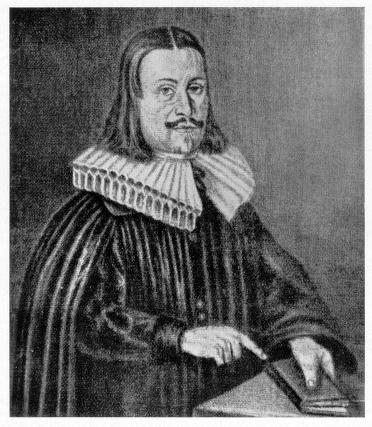
German chemist Andreas Libavius published Alchemia, the first systematic chemistry textbook, organizing chemical knowledge and laboratory procedures into a structured discipline. Source — Wikipedia:
Andreas Libavius (1555 – July 25, 1616) was a German doctor and chemist. By Unknown author - Unknown source, Public domain, https://commons.wikimedia.org/w/index.php?curid=8949023
1791 CE
Leblanc process for soda ash invented
French chemist Nicolas Leblanc developed a process to produce sodium carbonate from salt and sulfuric acid, becoming one of the first large-scale industrial chemical processes. Source — Wikipedia:
1828 CE
Wöhler synthesizes urea from inorganic compounds
German chemist Friedrich Wöhler synthesized urea from ammonium cyanate, demonstrating that organic compounds could be made from inorganic materials and bridging organic and process chemistry. Source — Wikipedia:
1839 CE
Goodyear discovers vulcanization of rubber
American inventor Charles Goodyear discovered that heating natural rubber with sulfur produced a durable, elastic material, founding the science of polymer cross-linking. Source — Wikipedia:
Worker operating an automatic vulcanization mold at Firestone (General) Tires, Akron, Ohio. The mold is closed by pushing a button, which starts several operations. First the airbag is filled with live steam which circulates during the entire process; next an automatic timer sets itself for the proper length of time and temperature; next pressure is exerted to squeeze the tire into the mold pattern. By Alfred T. Palmer - This image is available from the United States Library of Congress's Prints and Photographs division under the digital ID fsa.8b01460.This tag does not indicate the copyright status of the attached work. A normal copyright tag is still required. See Commons:Licensing., Public domain, https://commons.wikimedia.org/w/index.php?curid=14997650Charles Goodyear
1861 CE
Graham distinguishes colloids and crystalloids
Scottish chemist Thomas Graham coined the term 'colloid' and distinguished colloidal from crystalline substances, founding colloid science essential to polymer and process chemistry. Source — Wikipedia: )
Graham distinguishes colloids and crystalloids By Unknown author, Public domain, https://commons.wikimedia.org/w/index.php?curid=746876
1863 CE
First chemical engineering course at MIT
MIT offered one of the first formal courses in chemical engineering, taught by William H. Nichols, marking the emergence of chemical engineering as a distinct academic discipline. Source — Wikipedia:
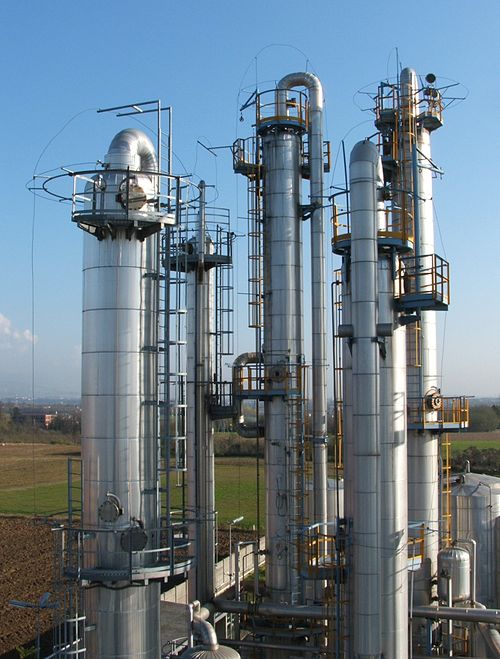
A double effect distillation plant. By User:Luigi Chiesa - Own work, CC BY 3.0, https://commons.wikimedia.org/w/index.php?curid=516874
1869 CE
Hyatt invents celluloid, first synthetic plastic
American inventor John Wesley Hyatt created celluloid from nitrocellulose and camphor, producing the first practical synthetic polymer and launching the plastics industry. Source — Wikipedia:
1873 CE
Norwegian acid-catalyzed esterification studied
Norwegian chemists Peter Waage and Cato Guldberg formulated the law of mass action, providing the thermodynamic basis for understanding catalytic reaction equilibria and rates. Source — Wikipedia:
1888 CE
First chemical engineering degree at MIT
MIT awarded the first Bachelor of Science in Chemical Engineering, formalizing the discipline with a curriculum combining chemistry and mechanical engineering for industrial processes. Source — Wikipedia:
A double effect distillation plant. By User:Luigi Chiesa - Own work, CC BY 3.0, https://commons.wikimedia.org/w/index.php?curid=516874
1895 CE
Haber discovers catalytic ammonia decomposition
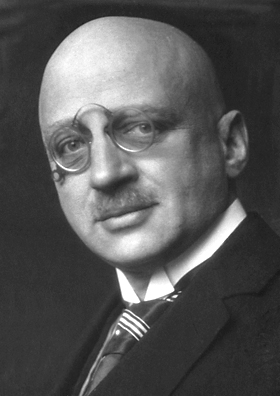
German chemist Fritz Haber demonstrated the catalytic decomposition of ammonia, an early step toward the catalytic synthesis of ammonia that would revolutionize fertilizer production. Source — Wikipedia:
Omschrijving: Portret van Professor Fritz Haber, een chemicus uit Duitsland (foto: 1918- 1934). By Unknown author - https://beeldbank.spaarnestadphoto.com/search.pp?flush=1&multikeyword=SFA002023057&searchtype=0#ctr-thumbnails, Public domain, https://commons.wikimedia.org/w/index.php?curid=146075789
1907 CE
Bakelite, first fully synthetic polymer invented
Belgian-American chemist Leo Baekeland invented Bakelite, the first fully synthetic polymer, created from phenol and formaldehyde, founding modern polymer science and the plastics industry. Source — Wikipedia:
Chemical formula of structure of Bakelite By Original: MarkusZi Vector: Dirk Hünniger - Bakelit Struktur.png, CC BY-SA 3.0, https://commons.wikimedia.org/w/index.php?curid=201887815th February 1909: Bakelite, the world's first synthetic plastic, announced by Leo Baekeland
1909 CE
Sabatier wins Nobel for catalytic hydrogenation
French chemist Paul Sabatier received the Nobel Prize for his method of hydrogenating organic compounds using finely divided nickel catalysts, a foundational reaction in catalysis and process engineering. Source — Wikipedia: )
Paul Sabatier (chemist) By Nobel Foundation - http://nobelprize.org/nobel_prizes/chemistry/laureates/1912/sabatier-bio.html, Public domain, https://commons.wikimedia.org/w/index.php?curid=6216618
1913 CE
Haber-Bosch process begins industrial operation
BASF began industrial-scale production of ammonia using the Haber-Bosch process with osmium and iron catalysts, one of the most consequential catalytic processes in human history. Source — Wikipedia:
Chemist Fritz Haber By The Nobel Foundation - http://nobelprize.org/chemistry/laureates/1918/index.html, Public domain, https://commons.wikimedia.org/w/index.php?curid=365964Fritz Haber: The Giver and the Taker Away
1920 CE
Staudinger proposes macromolecular theory
German chemist Hermann Staudinger proposed that polymers are long-chain molecules of covalently bonded repeating units, founding modern polymer science against prevailing colloid theory. Source — Wikipedia:
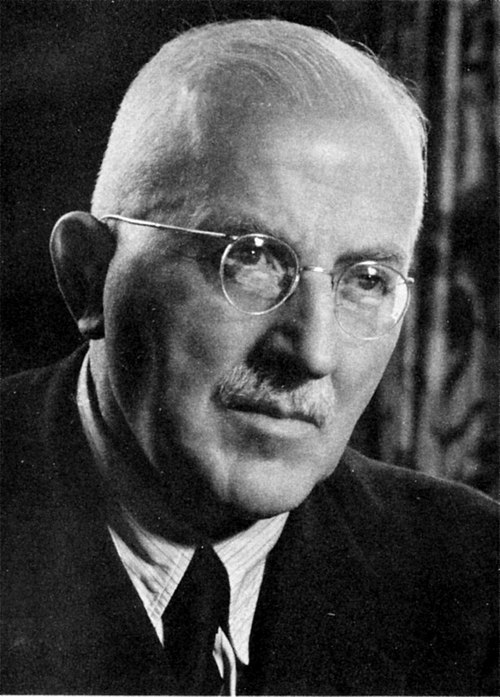
Hermann Staudinger By Nobel Foundation - Les Prix Nobel en 1953, Public domain, https://commons.wikimedia.org/w/index.php?curid=18542861
1923 CE
Fischer-Tropsch catalytic process developed
German chemists Franz Fischer and Hans Tropsch developed a catalytic process to synthesize liquid hydrocarbons from carbon monoxide and hydrogen, enabling coal-to-liquid fuel production. Source — Wikipedia:
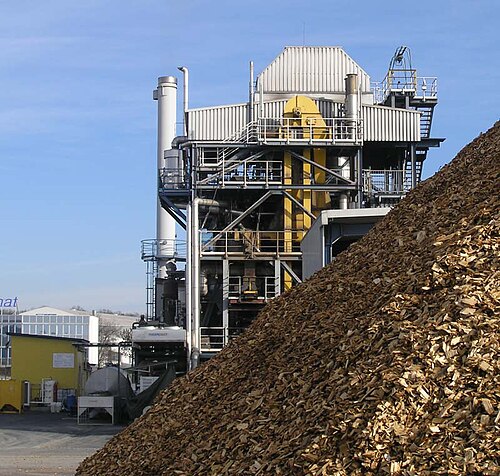
Holzvergaser Güssing 2006 eigene Aufnahme By Gerfriedc - Own work, CC BY 2.5, https://commons.wikimedia.org/w/index.php?curid=1402990
1933 CE
Polyethylene discovered by ICI chemists
British chemists Eric Fawcett and Reginald Gibson at Imperial Chemical Industries accidentally discovered polyethylene, which became the world's most widely produced plastic. Source — Wikipedia:
Polyethylene balls. By Lluis tgn - Own work, CC BY-SA 3.0, https://commons.wikimedia.org/w/index.php?curid=12749082
1935 CE
Wallace Carothers invents nylon at DuPont
American chemist Wallace Carothers at DuPont synthesized nylon, the first synthetic fiber, representing a triumph of polymer engineering with enormous industrial impact. Source — Wikipedia:
Picture of Wallace Carothers By Unknown photographer - http://listverse.com/2007/10/07/top-10-scientists-who-committed-suicide/, Public domain, https://commons.wikimedia.org/w/index.php?curid=13295767Nylon: First Synthetic Fiber - Decades TV Network
1953 CE
Ziegler discovers titanium catalysts for polyethylene
German chemist Karl Ziegler discovered that titanium chloride and organoaluminum compounds catalyze polyethylene production at mild conditions, revolutionizing industrial polymerization. Source — Wikipedia:
1955 CE
Natta extends Ziegler catalysts to polypropylene
Italian chemist Giulio Natta extended Ziegler's catalysts to produce isotactic polypropylene, enabling stereochemically controlled polymer synthesis and sharing the 1963 Nobel Prize with Ziegler. Source — Wikipedia:
Giulio Natta By Unknown (Mondadori Publishers) - http://www.gettyimages.co.uk/detail/news-photo/portrait-of-italian-engineer-giulio-natta-1960s-news-photo/174304752, Public domain, https://commons.wikimedia.org/w/index.php?curid=41259480
1966 CE
Wilkinson's homogeneous catalyst discovered
British chemist Geoffrey Wilkinson discovered the rhodium-based homogeneous catalyst RhCl(PPh3)3 for hydrogenation, advancing homogeneous catalysis and winning the 1973 Nobel Prize. Source — Wikipedia:
Wilkinson's homogeneous catalyst discovered By Benjah-bmm27 - Own work, Public domain, https://commons.wikimedia.org/w/index.php?curid=2164431
1971 CE
Yuan Longping develops hybrid rice varieties
Chinese agronomist Yuan Longping developed the first high-yield hybrid rice varieties, applying chemical breeding techniques that dramatically increased global food production. Source — Wikipedia:
9月5日,“杂交水稻之父”袁隆平在湖南长沙接受媒体采访时透露,目前自己和团队正在攻关的超级稻来势很好,可能在10月突破亩产1200公斤大关。 By China News Service - YouTube: https://www.youtube.com/watch?v=qsY6qWxCtV4 – View/save archived versions on archive.org 0:35, CC BY 3.0, https://commons.wikimedia.org/w/index.php?curid=105654860
1972 CE
Tu Youyou discovers artemisinin from Artemisia annua
Chinese chemist Tu Youyou isolated artemisinin, a breakthrough antimalarial compound, from traditional Chinese medicine sources using cold extraction, later winning the 2015 Nobel Prize. Source — Wikipedia:
Nobel Laureates in medicin 2015 By Bengt Nyman from Vaxholm, Sweden - 810_4987 Tu Youyou, medicine, CC BY 2.0, https://commons.wikimedia.org/w/index.php?curid=123803054
1976 CE
Ertl characterizes catalytic surface reactions
German physicist Gerhard Ertl established the molecular-level understanding of catalytic reactions on metal surfaces, including the Haber-Bosch process, winning the 2007 Nobel Prize in Chemistry. Source — Wikipedia:
Prof. Dr. Gerhard Ertl By Wolfram Däumel - http://www.fhi-berlin.mpg.de/elab/pub/2007-10-10_Ertl/index.html, CC BY-SA 2.0 de, https://commons.wikimedia.org/w/index.php?curid=2962804
Walter Kaminsky and colleagues discovered that metallocene compounds with methylaluminoxane activators enable precise control of polymer stereochemistry, transforming industrial polymer catalysis. Source — Wikipedia:
2000 CE
Heeger, MacDiarmid, Shirakawa win Nobel for conductive polymers
The Nobel Prize in Chemistry was awarded for the discovery and development of conductive polymers, opening the field of polymer electronics and flexible materials engineering. Source — Wikipedia:
chemical structures of some conductive polymers By Smokefoot - Own work, Public domain, https://commons.wikimedia.org/w/index.php?curid=6893639
2016 CE
Micius satellite demonstrates quantum chemistry in space
China launched the Micius quantum science satellite, enabling quantum-encrypted chemical data transmission and quantum communication experiments relevant to chemical process control. Source — Wikipedia:
2020 CE
mRNA vaccine process engineering at industrial scale
Industrial-scale production of mRNA vaccines for COVID-19 required unprecedented chemical process engineering in lipid nanoparticle formulation and nucleotide synthesis at global scale. Source — Wikipedia:
This video illustrates the details of injection of mRNA (and adenovirus based) vaccines, uptake by the translational machinery of the cell, export, and stimulation of the immune system. The video was originally published in a Danish language article at the popular-science magasine videnskab.dk https://videnskab.dk/forskerzonen/krop-sundhed/hvad-er-rna. The illustrations are made by http://www.movingscience.dk. By Lasse Folkersen og Ann-Louise Bergström - Own work, CC BY-SA 4.0, https://commons.wikimedia.org/w/index.php?curid=110274951
2023 CE
AI-driven catalyst discovery accelerates process design
Researchers applied machine learning to predict and design new catalysts and optimize chemical processes, dramatically accelerating chemical engineering research and development. Source — Wikipedia: