Encyclopedia/3. History, Societies & Civilizations/09. Modern Nations/10. Middle East & North Africa • Curated by Admin Timeline.sg
History of Turkey, sourced from Wikipedia's "Timeline of Anatolian history".
Chronological Storyline (195 Milestones)
1600 BCE
Hittites
Hittite Empire established in the region of Anatolia with capital in Hattusa near present-day Boğazkale, Turkey. Source — Wikipedia, "Timeline of Anatolian history" (17th century BCE):
Map showing the expanse of Hittite Empire with its vassals around the year 1300 BC. By Ennomus - Own work, CC BY-SA 4.0, https://commons.wikimedia.org/w/index.php?curid=139305272
1300 BCE
Šuppiluliuma I
Hittite empire reaches its height under the rule of Šuppiluliuma I. Source — Wikipedia, "Timeline of Anatolian history" (14th century BCE):
The Hittite Empire, approximate extent of the maximum area of the Hittite rule (light green) and the Hittite rule ca. 1350-1300 BC (green line) By Near_East_topographic_map-blank.svg: Sémhur derivative work: Ikonact - Near East topographic map-blank.svg for the background map This map for the information, CC BY-SA 3.0, https://commons.wikimedia.org/w/index.php?curid=28358963
1200 BCE
Battle of Kadesh
Battle of Kadesh between the Hittite Empire and the New Kingdom of Egypt. Source — Wikipedia, "Timeline of Anatolian history" (13th century BCE):
Battle of Kadesh By Unknown author, CC BY-SA 3.0, https://commons.wikimedia.org/w/index.php?curid=581507
1100 BCE
Hittites
Collapse of the Hittite Empire, splinters into several independent Syro-Hittite states. Source — Wikipedia, "Timeline of Anatolian history" (12th century BCE):
Map showing the expanse of Hittite Empire with its vassals around the year 1300 BC. By Ennomus - Own work, CC BY-SA 4.0, https://commons.wikimedia.org/w/index.php?curid=139305272
400 BCE
Ionian Revolt
Ionian Revolt, military rebellion by the Greek regions of Anatolia against Persian Empire rule. Revolt is crushed. Source — Wikipedia, "Timeline of Anatolian history" (5th century BCE):
Map in English of the military operations during the Ionian Revolt which will lead to the Greco–Persian Wars.Notes: *The background map is a raster image embedded in the SVG file. *The routes shown are hypothetical, based on Herodotus's descriptions. By Ionian_Revolt_Campaign_Map-fr.svg: Eric Gaba (Sting - fr:Sting) derivative work: MinisterForBadTimes (talk) - Ionian_Revolt_Campaign_Map-fr.svg Background map: File:Aegean_Sea_map_bathymetry-fr.svg (modified) created by Eric Gaba (Sting - fr:Sting) Based on an original idea by user:MinisterForBadTimes (see File:Ionian_Revolt_Campaign_Map.png) Compass rose: File:Brújula.svg (modified) created by user:Serg!o under GFDL, CC BY-SA 3.0, https://commons.wikimedia.org/w/index.php?curid=8991667
334 BCE
Alexander the Great
Alexander III of Macedon crosses the Hellespont into Asia, making his landing in present-day Turkey. Source — Wikipedia, "Timeline of Anatolian history" (4th century BCE):
Alexander Mosaic (detail), House of the Faun, Pompeii By Unknown author - This image has been extracted from another file, Public domain, https://commons.wikimedia.org/w/index.php?curid=182741814
Nov 5, 333 BCE
Battle of Issus
Alexander III of Macedon defeats the armies of the Achaemenid Empire in the Battle of Issus. Source — Wikipedia, "Timeline of Anatolian history" (4th century BCE):
Alexander Mosaic, House of the Faun, Pompeii By Unknown author - Self-photographed by Berthold Werner, Naples National Archaeological Museum, May 2013, Public domain, https://commons.wikimedia.org/w/index.php?curid=32224321
Jun 10, 323 BCE
Partition of Triparadisus
Alexander III dies in Babylon, triggering a division of his empire including present-day Turkey, among his generals in a treaty known as the Partition of Triparadisus. Source — Wikipedia, "Timeline of Anatolian history" (4th century BCE):
133 BCE
Roman Empire
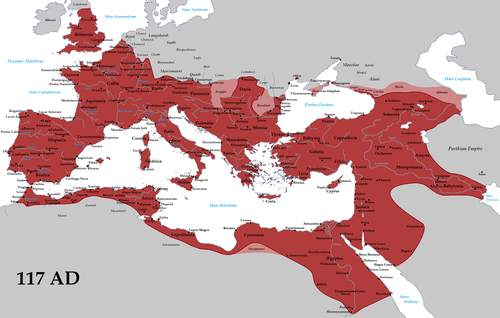
The Roman invasion of Anatolia begins with the annexation of Attalid Pergamon by the Roman Republic. The entire region is later brought under Roman rule. For the next few centuries, under Roman rule, the region becomes prosperous, roads and infrastructure are built and improved and coastal communities flourish. Source — Wikipedia, "Timeline of Anatolian history" (2nd century BCE):
The Roman Empire (red) and its clients (pink) in 117 AD during the reign of emperor Trajan. By Tataryn - Own work, CC BY-SA 3.0, https://commons.wikimedia.org/w/index.php?curid=19625326
324 CE
Roman emperor
The Roman emperor Constantine I chooses Byzantium (later known as Constantinople and currently Istanbul) to be the new capital of the Roman Empire, renaming it New Rome. Source — Wikipedia, "Timeline of Anatolian history" (4th century):
Cutted Imperial Aquila By Mattia332 - This image has been extracted from another file, Public domain, https://commons.wikimedia.org/w/index.php?curid=79620311
324 CE
Christianity
Constantine I becomes the first Roman emperor to convert to Christianity. Source — Wikipedia, "Timeline of Anatolian history" (4th century):
Church of the Holy Sepulchre cropped to approximately the area of the original church By Gerd Eichmann - File:Jerusalem-Grabeskirche-14-vom_Erloeserkirchturm-2010-gje.jpg, CC BY-SA 4.0, https://commons.wikimedia.org/w/index.php?curid=110873750
Feb 15, 360 CE
Hagia Sophia
The Hagia Sophia Church is first consecrated by the Arian Bishop Eudoxius of Antioch. Source — Wikipedia, "Timeline of Anatolian history" (4th century):
Hagia Sophia By Adli Wahid - Imported from 500px (archived version) by the Archive Team. (detail page), CC BY-SA 3.0, https://commons.wikimedia.org/w/index.php?curid=71442817
476 CE
Byzantine Empire
The region becomes part of the Byzantine Empire with the collapse of the Roman Empire. Source — Wikipedia, "Timeline of Anatolian history" (5th century):
Vector map showing the Eastern Roman Empire (or Byzantine Empire) at the end of Justinian's reign in 565 By Mnohohrishnyi - Own work, based mainly on "The New Roman Empire: A History of Byzantium" by Anthony Kaldellis, CC0, https://commons.wikimedia.org/w/index.php?curid=190907815
674 CE
Siege of Constantinople
First Arab Siege of Constantinople by the Umayyad Caliphate, ends with Byzantine victory. Source — Wikipedia, "Timeline of Anatolian history" (7th century):
Map of Constantinople (modern Istanbul) and its environs during Byzantine times. By Cplakidas - Own work using: Base map: Sea of Marmara map.png, slightly edited. Locations and names of settlements taken from: C. Mango & G. Dagron (eds.), Constantinople and its Hinterland, Variorum 1995, pp. xii-xiii, 110-111, 208, CC BY-SA 3.0, https://commons.wikimedia.org/w/index.php?curid=22706377
717 CE
Siege of Constantinople
Second Arab Siege of Constantinople by the Umayyad Caliphate, ends with Byzantine victory. Source — Wikipedia, "Timeline of Anatolian history" (8th century):
Miniature 47 from the Constantine Manasses Chronicle, 14 century: The arabs attacking Constantinople during the reign of emperor Leo III. By 47-manasses-chronicle.jpg: Original: Constantine Manasses derivative work: Stegop - This file was derived from: 47-manasses-chronicle.jpg:, Public domain, https://commons.wikimedia.org/w/index.php?curid=20336270
863 CE
Arab–Byzantine wars
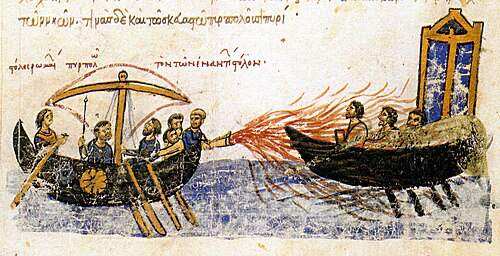
Beginning of the Byzantine resurgence with emergence of Macedonian dynasty, most of lost territories are retaken from Arab invasions. Source — Wikipedia, "Timeline of Anatolian history" (9th century):
Image from an illuminated manuscript, the Madrid Skylitzes, showing Greek fire in use against the fleet of the rebel Thomas the Slav. By Unknown author - Codex Skylitzes Matritensis, Bibliteca Nacional de Madrid, Vitr. 26-2, Bild-Nr. 77, f 34 v. b. (taken from Pászthory, p. 31), Public domain, https://commons.wikimedia.org/w/index.php?curid=302463
1071 CE
Alp Arslan
Alp Arslan of the Great Seljuq Empire defeats Romanos IV Diogenes of the Byzantine Empire at Malazgirt, near Muş, Historical Western Armenia (today called Eastern Anatolia) Source — Wikipedia, "Timeline of Anatolian history" (11th century):
Miniature painted illustration from the Majma' al-Tawarikh of Hafiz 'Abru. Depicts accession to the throne of Herat by Alp Arslan (20 January 1029 – 15 December 1072). Miniature from dispersed Majma' al-Tawarikh "Alp Arsalan" (p.102), Note "ar: Christie’s Auction, 13 April 2010, lot 66." (p.105) in Ghiasian, M. R. (13 Aug. 2018). Lives of the Prophets, Leiden, The Netherlands: Brill. pp.102, 105 By Hafiz-i Abru - Christie's, 13 April 2010, lot 66, Public domain, https://commons.wikimedia.org/w/index.php?curid=96462065
1077 CE
Suleyman I of Rum
Suleyman I of Rum is appointed as a governor in Seljuq. Then he moved on to Turkey. But he acts independently and founds a state. Capital İznik (Nicea), Bursa Province, Northwest Anatolia. Source — Wikipedia, "Timeline of Anatolian history" (11th century):
Kutalmişoğlu Süleyman Şah Monument in Tarsus , Mersin By CeeGee - Own work, CC BY-SA 4.0, https://commons.wikimedia.org/w/index.php?curid=39580018
1081 CE
Tzachas
Tzachas, an independent Turkish sea captain, founds a principality in Smyrna, giving the Seljuks access to Aegean Sea. Source — Wikipedia, "Timeline of Anatolian history" (11th century):
Çaka Bey (Tzachas) bust at Istanbul Naval Museum By VikiPicture - Own work, CC BY-SA 3.0, https://commons.wikimedia.org/w/index.php?curid=29280967
1084 CE
Antakya
Conquest of Antakya (Antioch), South Anatolia. Source — Wikipedia, "Timeline of Anatolian history" (11th century):
One of pictures taken during a climb up the hill, to reach the head of Atatürk that overlooked the town (one can see similar ones in many towns). By Dosseman - Own work, CC BY-SA 4.0, https://commons.wikimedia.org/w/index.php?curid=166532044
1086 CE
Syria
Süleyman I of Rum tries to add Syria to his realm. But he commits suicide after being defeated by his cousin Tutush I in the Battle of Ain Salm, Syria. Source — Wikipedia, "Timeline of Anatolian history" (11th century):
1092 CE
Kilij Arslan I
Kılıç Arslan I (1092–1107) Source — Wikipedia, "Timeline of Anatolian history" (11th century):
1096 CE
Walter Sans Avoir
Kılıç Arslan I defeats Walter Sans Avoir and Peter the Hermit of People's Crusade at the battles of Xerigordon and Civetot both in Northwest Anatolia. Source — Wikipedia, "Timeline of Anatolian history" (11th century):
Identifier: gri_33125008050011 (find matches) Title: Military and religious life in the Middle Ages and at the period of the Renaissance Year: 1870 (1870s) Authors: Jacob, P. L., 1806-1884 Subjects: Middle Ages Civilization, Medieval Civilization, Renaissance Costume Military art and science Christian life Publisher: London : Bickers & Son Contributing Library: Getty Research Institute Digitizing Sponsor: Getty Research Institute View Book Page: Book Viewer About This Book: Catalog Entry View All Images: All Images From Book Click here to view book online to see this illustration in context in a browseable online version of this book. Text Appearing Before Image: -claiming the decrees which had been promulgated there. Thenceforward all,in spite of age, sex, or social position, were carried away by the same enthu-siasm. Family ties were broken, riches were no longer held of any account.The question was not who had taken up the cross, but who had hesitatedto do so. A poet of the time says, I hold no man a true knight who refusesto go willingly, with his whole heart and with all the means in his power, tothe assistance of God, who so greatly needs it. Women of every rank sewedthe cross to their clothing, children of every age marked it on their innocentbodies. Monks left the retreat where they had hoped to peacefully end theirexistence, hermits came out of their caves and forests, and even the very * God wills it. THE CRUSADES. robbers of the highway came forward, confessed their crimes, and swore toexpiate them in the ranks of the holy army. The train was laid, the matchwas lighted, and for two centuries the Crusades were waged continually, with Text Appearing After Image: Fig. 101.—Reception of Gautier-sans-Avoir by the King of Hungary, who permits him to passthrough his territory with the Crusaders.—From a Miniature in the Histoire des Empereurs,a Manuscript of the Fifteenth Century (Library of the Arsenal, Paris). a few intervals of rest, caused by the enormous sacrifice of men and moneyentailed by this gigantic undertaking, which, inspired and controlled by anardent faith, was persisted in, in spite of every reverse and every disaster.The spring of the year 1096 witnessed the first departure of the u6 THE CRUSADES. Crusaders, in two numerous bodies, under the orders of Peter the Hermithimself, and of a poor but valiant warrior, Gautier-sans-Avoir (Fig. 101).But these undisciplined masses, forced to support themselves on their roadby pillage, were dispersed and nearly destroyed by the nations through whosecountries they had to pass, and who were ruined by their advent as they mighthave been by an army of locusts. Only a few thousand ever reached Note About Images Please note that these images are extracted from scanned page images that may have been digitally enhanced for readability - coloration and appearance of these illustrations may not perfectly resemble the original work. By Internet Archive Book Images - https://www.flickr.com/photos/internetarchivebookimages/14784664272/ Source book page: https://archive.org/stream/gri_33125008050011/gri_33125008050011#page/n162/mode/1up, No restrictions, https://commons.wikimedia.org/w/index.php?curid=43539830
1097 CE
Bohemond I of Antioch
Bohemond of Taranto, Godfrey of Bouillon and Adhemar of Le Puy of First Crusade defeat Kılıç Arslan I in the battle of Dorylaeum (near modern Eskişehir, Central Anatolia). The capital İznik is lost to Crusades. A few years later Konya, becomes the new capital. Source — Wikipedia, "Timeline of Anatolian history" (11th century):
Libération de Bohémond Ier By Maître de Fauvel - FRANCAIS 22495, Public domain, https://commons.wikimedia.org/w/index.php?curid=10807693
1100 CE
Byzantine civilisation in the 12th century
12th century renaissance in the Byzantine Empire, revival of art, architecture and economic activity. Source — Wikipedia, "Timeline of Anatolian history" (12th century):
1100 CE
Danishmend Gazi
Danishmend Gazi, an independent bey, defeats Bohemond I of Antioch in the battle of Melitene (Malatya) Source — Wikipedia, "Timeline of Anatolian history" (11th century):
Libération de Bohémond Ier By Maître de Fauvel - FRANCAIS 22495, Public domain, https://commons.wikimedia.org/w/index.php?curid=10807693
1101 CE
Stephen II, Count of Blois
Kılıç Arslan I defeats Stephen of Blois and Hugh of Vermandois of the second wave of First Crusades at the Battle of Mersivan (near modern Merzifon, Amasya Province, Central Anatolia.) Source — Wikipedia, "Timeline of Anatolian history" (12th century):
Sceau du comte Etienne-Henri (1089) By Roger de Gaignières - http://lamop.univ-paris1.fr/baudin/images/etienne-henri.jpg, Public domain, https://commons.wikimedia.org/w/index.php?curid=8381172
1107 CE
Mosul
Kılıç Arslan conquers Musul, Iraq, but is defeated in the battle. Source — Wikipedia, "Timeline of Anatolian history" (12th century):
Şahinşah (1107–1116) (also called Melikşah, not to be confused with the sultan of Great Seljuk Empire with the same name) Continuous struggle with the Crusades weakens the state. Source — Wikipedia, "Timeline of Anatolian history" (12th century):
1116 CE
Mas'ud of Rum
Mesut I (1116–1156) During the early years of his reign he has to accept the dominance of Danishmends a rival Turkish state in Anatolia. Source — Wikipedia, "Timeline of Anatolian history" (12th century):
Rukn al-Din Mas'ud I. AH 510-551 (AD 1116-1156) Half-length facing bust of Byzantine emperor By CNG, CC BY-SA 2.5, https://commons.wikimedia.org/w/index.php?curid=146407507
1142 CE
Mehmed of Danishmends dies and the
Mehmed of Danishmends dies and the Sultanate of Rum becomes the leading power in Anatolia for the second time. Source — Wikipedia, "Timeline of Anatolian history" (12th century):
1147 CE
Holy Roman Emperor
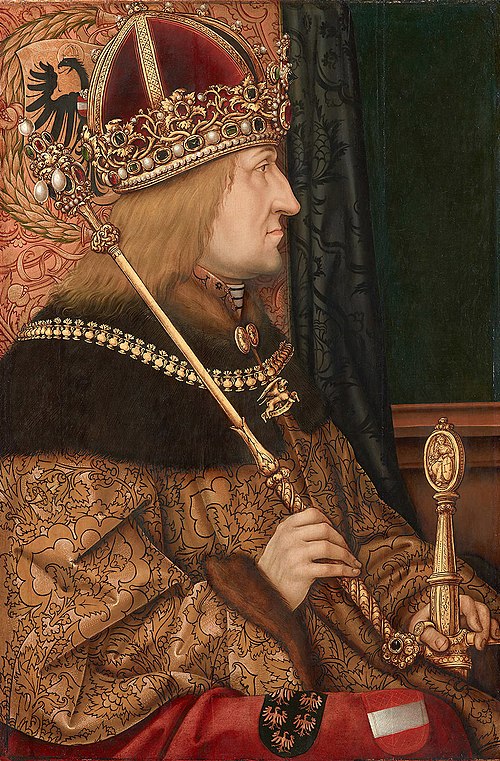
Mesut I defeats Holy Roman Emperor Conrad III of Second Crusade in the Second battle of Dorylaeum (near modern Eskişehir) Source — Wikipedia, "Timeline of Anatolian history" (12th century):
Frederick III, Holy Roman Emperor, displaying the arms of Altösterreich ("Old Austria"): Azure/Sable, five eagles displayed or and the arms of Habsburg (modern) Gules, a fess argent ("Bindenschild"); originally the arms of the House of Babenburg (Duchies of Austria and Styria). Also Habsburg as inescutcheon on the Imperial Eagle (Reichsadler) By Unknown author, Public domain, https://commons.wikimedia.org/w/index.php?curid=4892107
1156 CE
Kilij Arslan II
Kılıç Arslan II (1156–1192) Source — Wikipedia, "Timeline of Anatolian history" (12th century):
Sultan Kilicarslan II in a tile from Alaeddin Palace, Konya, 1156—92. Page 178 Plate 119: "Throne scene on a star-shaped tile, Iranian-Seljuk minai technique, Alaeddin Palace, Konya, 1156—92 (Kilicarslan II period), D. 8.5 cm. The sultan, sitting cross-legged on his throne, is holding a pomegranate in one hand; there are tiraz bands on his arms and two guards next to him. Karatay Madrasah Museum, Konya." (1980) The Art and architecture of Turkey, New York : Rizzoli, p. 178 note on plate 119, Plate 119 ISBN: 978-0-8478-0273-9. By 1156-92 artist - This image has been extracted from another file, Public domain, https://commons.wikimedia.org/w/index.php?curid=166199770
1176 CE
Manuel I Komnenos
Kılıç Arslan defeats Manuel I Komnenos of Byzantine Empire in the battle of Myriokephalon (probably near Çivril, Denizli Province, West Anatolia). Source — Wikipedia, "Timeline of Anatolian history" (12th century):
Manuscript miniature of Manuel I By Uploader: User:Tokle - Part of double portrait with Maria of Antioch, Vatican Library, Rome, Public domain, https://commons.wikimedia.org/w/index.php?curid=564192
1178 CE
Sivas
Kılıç Arslan II annexes Danishmend realm. (Sivas, and the surrounding territory, Central Anatolia.) Source — Wikipedia, "Timeline of Anatolian history" (12th century):
Pictures from a series taken at a major square (Square of the Republic) with important buildings and monuments. By Dosseman - Own work, CC BY-SA 4.0, https://commons.wikimedia.org/w/index.php?curid=117756314
1186 CE
Kılıç Arslan II partitions the country
Kılıç Arslan II partitions the country into 11 provinces, each governed by one of his sons Source — Wikipedia, "Timeline of Anatolian history" (12th century):
1190 CE
Silifke
Frederick Barbarossa of Third Crusade dies near Silifke, Mersin Province in South Anatolia. Source — Wikipedia, "Timeline of Anatolian history" (12th century):
A partial view of Silifke town and Göksu River passing the town. By Zeynel Cebeci - Own work, CC BY-SA 4.0, https://commons.wikimedia.org/w/index.php?curid=37786610
1190 CE
Holy Roman Emperor
Holy Roman Emperor Frederick I Barbarossa of Third Crusade crosses West Anatolia. While main Turkish army avoids conflict, several irregular troops try to fight, but are repelled. Temporary German occupation of capital Konya. Source — Wikipedia, "Timeline of Anatolian history" (12th century):
Frederick III, Holy Roman Emperor, displaying the arms of Altösterreich ("Old Austria"): Azure/Sable, five eagles displayed or and the arms of Habsburg (modern) Gules, a fess argent ("Bindenschild"); originally the arms of the House of Babenburg (Duchies of Austria and Styria). Also Habsburg as inescutcheon on the Imperial Eagle (Reichsadler) By Unknown author, Public domain, https://commons.wikimedia.org/w/index.php?curid=4892107
1192 CE
Kaykhusraw I
Keyhüsrev I (1192–1196) Source — Wikipedia, "Timeline of Anatolian history" (12th century):
Ghiyath al-Din Kay Khusraw I bin Qilich Arslan. Second reign, AH 601-608 (AD 1204-1211) By CNG, CC BY-SA 2.5, https://commons.wikimedia.org/w/index.php?curid=146407115
1194 CE
After the collapse of Great Seljuk
After the collapse of Great Seljuk Empire, the Sultanate of Rum become the sole surviving branch of Seljuks. Source — Wikipedia, "Timeline of Anatolian history" (12th century):
1196 CE
Suleyman II of Rum
Suleyman II of Rum (1196–1204) Source — Wikipedia, "Timeline of Anatolian history" (12th century):
Rukn al-Din Sulayman bin Qilich Arslan. As sultan, AH 593-600 (AD 1197-1204) Dated AH 595 (AD 1198-9) Obverse By 1198-9 CE - This image has been extracted from another file, CC BY-SA 2.5, https://commons.wikimedia.org/w/index.php?curid=166361533
1202 CE
Saltukids
Süleyman II of Rum annexes Saltukid realm (Erzurum, and the surrounding territory, Eastern Anatolia.) Source — Wikipedia, "Timeline of Anatolian history" (13th century):
Shaddadis, 11th–12th Centuries By Armenica.org - www.armenica.org, CC BY-SA 3.0, https://commons.wikimedia.org/w/index.php?curid=2411764
1204 CE
Kilij Arslan III
Kılıç Arslan III (1204–1205) Source — Wikipedia, "Timeline of Anatolian history" (13th century):
1205 CE
Kaykhusraw I
Keyhüsrev I (1205–1211) (second time) Source — Wikipedia, "Timeline of Anatolian history" (13th century):
Ghiyath al-Din Kay Khusraw I bin Qilich Arslan. Second reign, AH 601-608 (AD 1204-1211) By CNG, CC BY-SA 2.5, https://commons.wikimedia.org/w/index.php?curid=146407115
1207 CE
Antalya
Conquest of Antalya, access to Mediterranean Sea Source — Wikipedia, "Timeline of Anatolian history" (13th century):
A view taken from the cliffs towards Antalya Konyaaltı Beach in February 2018. The snowy part in the middle is the Bey Mountains and the snowy mountain in the right is Tunç Mountain. The photo is in the west direction. The sea on the left is the Mediterranean. By Esginmurat - Own work, CC BY-SA 4.0, https://commons.wikimedia.org/w/index.php?curid=98376445
1211 CE
Kaykaus I
Keykavus I (1211–1220) Source — Wikipedia, "Timeline of Anatolian history" (13th century):
Sinop bilingual inscription of Kaykaus I By Aramgar - Own work, Public domain, https://commons.wikimedia.org/w/index.php?curid=3469399
1214 CE
Sinop, Turkey
Conquest of Sinop, Black Sea coast Source — Wikipedia, "Timeline of Anatolian history" (13th century):
The town of Sinop as seen early in the morning from below the military installation on the peninsula just east of the town centre. The forest in the foreground contains a cemetery. The old town, where the peninsula is at its narrowest, used to be surrounded by a tall city wall, of which many parts remain standing. Some towers belonging to the city wall are clearly visible in this photo. Beyond the towers on the right side of the photo is the town beach, a popular place for people to spend the day swimming and relaxing. By Bjørn Christian Tørrissen - Own work by uploader, http://bjornfree.com/galleries.html, CC BY-SA 3.0, https://commons.wikimedia.org/w/index.php?curid=8320216
1220 CE
Kayqubad I
Alaaddin Kayqubad I (1220–1237) Source — Wikipedia, "Timeline of Anatolian history" (13th century):
Ala' al-Din Kay Qubad I, Ankuriyya, 1219-1237 By American Numismatic Society - This image has been extracted from another file, CC0, https://commons.wikimedia.org/w/index.php?curid=146369461
1221 CE
Alanya
Conquest of Alanya, Antalya Province, Mediterranean coast Source — Wikipedia, "Timeline of Anatolian history" (13th century):
en:Alanya By Ozgurmulazimoglu - Own work, CC BY-SA 3.0, https://commons.wikimedia.org/w/index.php?curid=19530745
1223 CE
Construction of an arsenal in Alanya,
Construction of an arsenal in Alanya, a sign of Alaaddin Keykubat's interest in maritime trade Source — Wikipedia, "Timeline of Anatolian history" (13th century):
1224 CE
Artuqid
Alladdin Keykubat annexes a part of Artuqid realm (Harput and surrounding territory, .) Source — Wikipedia, "Timeline of Anatolian history" (13th century):
Artuqid Dynasty By Cenk847 - Own work, CC BY-SA 4.0, https://commons.wikimedia.org/w/index.php?curid=123262182
Created with Inkscape By Ruzgar - Own work, Public domain, https://commons.wikimedia.org/w/index.php?curid=1194642
1227 CE
Sudak
Sudak in Crimea is annexed. This is the most notable overseas campaign of Seljuqs. Source — Wikipedia, "Timeline of Anatolian history" (13th century):
Sudak, Crimea. By Vyacheslav Argenberg - Own work, CC BY 4.0, https://commons.wikimedia.org/w/index.php?curid=104661379
1228 CE
Mongol
Mongol conquests in Iran result in a flux of refugees to Anatolia, one of the refuges is Mevlana Source — Wikipedia, "Timeline of Anatolian history" (13th century):
Naadam, Mongolian traditional festival By J bayarmagnai - Own work, CC0, https://commons.wikimedia.org/w/index.php?curid=146620103
1230 CE
Jalal ad-Din Mingburnu
Alaaddin Keykubat defeats Celaleddin Harzemşah of Harzemşah Empire in the Battle of Yassıçemen, near Erzincan Source — Wikipedia, "Timeline of Anatolian history" (13th century):
OUZBEKISTAN, 25 Som à l'effigie de Jaloliddin Manguberdi (portrait) By CBG - This image has been extracted from another file, CC BY-SA 3.0, https://commons.wikimedia.org/w/index.php?curid=145190537
1237 CE
Kaykhusraw II
Keyhüsrev II (1237–1246) Source — Wikipedia, "Timeline of Anatolian history" (13th century):
درهم کیخسرو دوم، ضرب در سیواس ۶۳۸ق/۱۲۴۰-۱۲۴۱م. By Kafka Liz - Own work, Public domain, https://commons.wikimedia.org/w/index.php?curid=3813208
1238 CE
Sadettin Köpek
Sadettin Köpek the vizier of the inexperienced sultan who has executed some members of Seljuk house and becomes the de facto ruler of the sultanate is killed. Source — Wikipedia, "Timeline of Anatolian history" (13th century):
Sa'd al-Din Köpek By Temel53 - Own work, CC BY-SA 3.0, https://commons.wikimedia.org/w/index.php?curid=47986277
1239 CE
Baba Ishak
Revolt of Baba Ishak. A revolt of Turkmen (Oguz) and Harzem refugees who have recently arrived in Anatolia. The revolt is suppressed. But the sultanate loses power. Source — Wikipedia, "Timeline of Anatolian history" (13th century):
Celebrating the 20th year of independence in Turkmenistan By Kerri-Jo Stewart from Vancouver, Canada - Independence Day Parade, CC BY 2.0, https://commons.wikimedia.org/w/index.php?curid=23127815
1240 CE
Diyarbakır
Conquest of Diyarbakır in Southeast Anatolia. Source — Wikipedia, "Timeline of Anatolian history" (13th century):
A pond park in Diyarbakir By Cemallamec - Own work, CC BY-SA 4.0, https://commons.wikimedia.org/w/index.php?curid=56333528
1243 CE
Bayju
Bayju of Mongols defeats Keyhüsrev II in the battle of Kösedağ, Eastern Anatolia. From now on, the sultanate is a vassal of Ilkhanids. Source — Wikipedia, "Timeline of Anatolian history" (13th century):
Naadam, Mongolian traditional festival By J bayarmagnai - Own work, CC0, https://commons.wikimedia.org/w/index.php?curid=146620103
1246 CE
Kaykaus II
Keykavus II (1246–1262) Governs together with his two brothers. But the real ruler is vizier Pervâne who has married to late sultan's widow Gürcü Hatun. Source — Wikipedia, "Timeline of Anatolian history" (13th century):
Mongols defeat Seljuk Turks at the Battle of Sultanhan, Aksaray Province, Central Anatolia. Source — Wikipedia, "Timeline of Anatolian history" (13th century):
Ihlara town By prilfish - https://www.flickr.com/photos/silkebaron/25936870521/, CC BY 2.0, https://commons.wikimedia.org/w/index.php?curid=123715895
1258 CE
Mongols partition the country. Double sultanate
Mongols partition the country. Double sultanate Source — Wikipedia, "Timeline of Anatolian history" (13th century):
1262 CE
Kilij Arslan IV
Kılıç Arslan IV 1260–1266 Source — Wikipedia, "Timeline of Anatolian history" (13th century):
Rare coin of Kilij Arslan IV, ruler of the Sultanate of Rum. Sivas mint. By Classical Numismatic Group; [1] - https://cngcoins.com/Coin.aspx?CoinID=170241, CC BY-SA 3.0, https://commons.wikimedia.org/w/index.php?curid=117334995
1266 CE
Kaykhusraw III
Keyhüsrev III 1266–1284 Source — Wikipedia, "Timeline of Anatolian history" (13th century):
Dirham of Kaykhusraw III, sultan of Rum By http://stevealbum.com/ - https://fr.numista.com/91184, CC BY 4.0, https://commons.wikimedia.org/w/index.php?curid=189411262
1277 CE
Karamanoğlu Mehmet Bey
Karamanoğlu Mehmet Bey, a semi independent bey, allies himself with the Mameluk sultan Baybars who invades a part of Anatolia. Source — Wikipedia, "Timeline of Anatolian history" (13th century):
mehmed bey By Karamanoğlu Ekrem - Own work, CC BY-SA 4.0, https://commons.wikimedia.org/w/index.php?curid=54938882
1284 CE
Mesud II
Mesut II 1284–1297 Source — Wikipedia, "Timeline of Anatolian history" (13th century):
Coin of the Rûm sultan Mesud II By Unknown author - https://en.numista.com/catalogue/pieces197447.html, CC0, https://commons.wikimedia.org/w/index.php?curid=158590081
1289 CE
Germiyanids
Seljuk-Ilkhanid coalition defeats the tribes of Germiyanids Source — Wikipedia, "Timeline of Anatolian history" (13th century):
Map of the Anatolia region in AD 1300. (Partially based on Euratlas map of Europe, 1300.) By Gabagool - Own work, CC BY 3.0, https://commons.wikimedia.org/w/index.php?curid=6382648
1297 CE
Kayqubad III
Alaaddin Kekubat III 1297–1302 Source — Wikipedia, "Timeline of Anatolian history" (13th century):
Map of the Anatolia region in AD 1300. (Partially based on Euratlas map of Europe, 1300.) By Gabagool - Own work, CC BY 3.0, https://commons.wikimedia.org/w/index.php?curid=6382648
1299 CE
Osman I
Osman I, founder of the Ottoman Empire, begin the Ottoman history. (According to Halil İnalcık, expert on Ottoman history, Ottoman Empire was founded in 1302 not 1299.) Source — Wikipedia, "Timeline of Anatolian history" (13th century):
Osman I, the founder of the Ottoman Empire. Ottoman miniature painting. Located at Topkapı Sarayı Müzesi, Istanbul (Inv. H 1563, Fol. 37a). By Ottoman miniature painting - Badisches Landesmuseum, Public domain, https://commons.wikimedia.org/w/index.php?curid=2725247
1302 CE
Mesud II
Mesut II 1302–1307 (last sultan of Rum) Source — Wikipedia, "Timeline of Anatolian history" (14th century):
Coin of the Rûm sultan Mesud II By Unknown author - https://en.numista.com/catalogue/pieces197447.html, CC0, https://commons.wikimedia.org/w/index.php?curid=158590081
Sep 27, 1371 CE
Battle of Maritsa
Battle of Maritsa. Most of Macedonia is conquered. Source — Wikipedia, "Timeline of Anatolian history" (14th century):
Map of Balkans in Septermber of 1371. By South Serbian - Own work, CC BY-SA 4.0, https://commons.wikimedia.org/w/index.php?curid=136446205
Jun 15, 1389 CE
Battle of Kosovo
Battle of Kosovo. Most of Serbia is conquered. Source — Wikipedia, "Timeline of Anatolian history" (14th century):
Painting of the Battle of Kosovo, dated 1870, by Adam Stefanović. Prince Lazar is seen dying with his horse. By Adam Stefanović - image uploaded at wordpress.com, Public domain, https://commons.wikimedia.org/w/index.php?curid=248947
Sep 25, 1396 CE
Battle of Nicopolis
Battle of Nicopolis. Bulgaria is conquered. Source — Wikipedia, "Timeline of Anatolian history" (14th century):
Battle of Nicopolis By Sébastien Mamerot - Sébastien Mamerot, Les Passages d’Outremer, Public domain, https://commons.wikimedia.org/w/index.php?curid=16193258
Nov 10, 1444 CE
Battle of Varna
Battle of Varna. Ottoman victory, end of Crusade of Varna. Source — Wikipedia, "Timeline of Anatolian history" (15th century):
Battle of Varna By Jan Matejko - former image source www.pinakoteka.zascianek.pl; current image source [1], Public domain, https://commons.wikimedia.org/w/index.php?curid=2823126
1453 CE
Mehmed II
Mehmed II (the Conqueror) captures Constantinople, Christian emperor Constantine XI dies in the fighting and the Byzantine Empire yields to the Ottoman Empire as Mehmed II. Source — Wikipedia, "Timeline of Anatolian history" (15th century):
Mehmed II By Gentile Bellini - The Yorck Project (2002) 10.000 Meisterwerke der Malerei (DVD-ROM), distributed by DIRECTMEDIA Publishing GmbH. ISBN: 3936122202., Public domain, https://commons.wikimedia.org/w/index.php?curid=147845
1460 CE
Mehmed II
Mehmed II conquers Morea. Source — Wikipedia, "Timeline of Anatolian history" (15th century):
Mehmed II By Gentile Bellini - The Yorck Project (2002) 10.000 Meisterwerke der Malerei (DVD-ROM), distributed by DIRECTMEDIA Publishing GmbH. ISBN: 3936122202., Public domain, https://commons.wikimedia.org/w/index.php?curid=147845
1461 CE
Mehmed II
Mehmed II conquers Trabzon thus ends Empire of Trebizond. Source — Wikipedia, "Timeline of Anatolian history" (15th century):
Mehmed II By Gentile Bellini - The Yorck Project (2002) 10.000 Meisterwerke der Malerei (DVD-ROM), distributed by DIRECTMEDIA Publishing GmbH. ISBN: 3936122202., Public domain, https://commons.wikimedia.org/w/index.php?curid=147845
1462 CE
Mehmed II
Mehmed II begins to build his palace, Topkapi Palace (Topkapı Sarayi). Source — Wikipedia, "Timeline of Anatolian history" (15th century):
Mehmed II By Gentile Bellini - The Yorck Project (2002) 10.000 Meisterwerke der Malerei (DVD-ROM), distributed by DIRECTMEDIA Publishing GmbH. ISBN: 3936122202., Public domain, https://commons.wikimedia.org/w/index.php?curid=147845
1463 CE
Bosnia
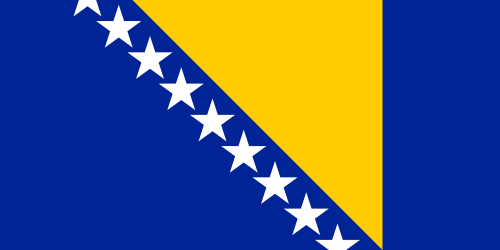
Bosnia is conquered. Source — Wikipedia, "Timeline of Anatolian history" (15th century):
Flag of Bosnia and Herzegovina By Mladen Kolobarić - Own work. BASED ON THIS CONSTRUCTION SHEET:, Public domain, https://commons.wikimedia.org/w/index.php?curid=342986
1473 CE
Battle of Otlukbeli
Battle of Otlukbeli; Mehmed II defeats Uzun Hasan of Akkoyunlu Turkmens. Source — Wikipedia, "Timeline of Anatolian history" (15th century):
Battle of Otlukbeli By Unknown author - [1], Public domain, https://commons.wikimedia.org/w/index.php?curid=74350749
1475 CE
Gedik Ahmet Pasha
Gedik Ahmet Pasha captures Caffa. Crimea becomes vassal of the Ottoman Empire. Source — Wikipedia, "Timeline of Anatolian history" (15th century):
Башта Криско, Феодосія, південно-східна частина міста By Alim The Great - Own work, CC BY-SA 4.0, https://commons.wikimedia.org/w/index.php?curid=93925550
1478 CE
Albania
Albania is conquered. Source — Wikipedia, "Timeline of Anatolian history" (15th century):
Flag of Albania By Sadik Kaceli - This SVG flag includes elements that have been taken or adapted from this coat of arms:, Public domain, https://commons.wikimedia.org/w/index.php?curid=369728
1480 CE
Gedik Ahmet Pasha
Gedik Ahmet Pasha captures Otranto, the southeast corner of Italy, as a base for further attacks on Italy (only to evacuate after the death of Mehmet II). Source — Wikipedia, "Timeline of Anatolian history" (15th century):
Otranto (Apulia, Italy) - Seafront north of Torre Matta By Benjamin Smith - Own work, CC BY-SA 4.0, https://commons.wikimedia.org/w/index.php?curid=165552927
May 3, 1481 CE
Mehmed II
Mehmed II dies. Bayezid II ascended to the throne. Source — Wikipedia, "Timeline of Anatolian history" (15th century):
Mehmed II By Gentile Bellini - The Yorck Project (2002) 10.000 Meisterwerke der Malerei (DVD-ROM), distributed by DIRECTMEDIA Publishing GmbH. ISBN: 3936122202., Public domain, https://commons.wikimedia.org/w/index.php?curid=147845
1482 CE
Herzegovina
Herzegovina is conquered. Source — Wikipedia, "Timeline of Anatolian history" (15th century):
Map of Herzegovina within Bosnia and Herzegovina. Approximate borders. SVG replacement for File:Herzegovina region map.png By Lommes - File:Herzegovina region map.png by Zoupan (talk · contribs), CC BY-SA 4.0, https://commons.wikimedia.org/w/index.php?curid=57964337
1498 CE
Montenegro
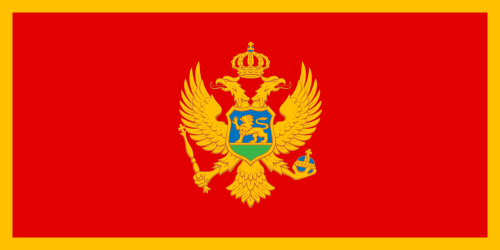
Montenegro is conquered. Source — Wikipedia, "Timeline of Anatolian history" (15th century):
Flag of Montenegro (adopted on 13 July 2004). By B1mbo, Froztbyte, Great Brightstar - Own work based on: Coat of arms of Montenegro.svg, Public domain, https://commons.wikimedia.org/w/index.php?curid=492180
1514 CE
Battle of Chaldiran
Battle of Chaldiran; Selim I defeats Ismail I of Safavid Persia; Kurdistan under control of Ottoman Empire. Source — Wikipedia, "Timeline of Anatolian history" (16th century):
Painting of Battle of Chaldiran at the central audience hall of Chehel Sotoun palace By Amir Pashaei - Own work, CC BY-SA 4.0, https://commons.wikimedia.org/w/index.php?curid=83213370
1516 CE
Selim I
Battle of Marj Dabiq; Selim I defeats Al-Ashraf Qansuh al-Ghawri of Mamluk Sultanate of Egypt. Syria and Palestine under Ottoman rule. Source — Wikipedia, "Timeline of Anatolian history" (16th century):
Selim I., osmanische Miniatur, gemalt von Nakkaş Osman. By Naḳḳāş ʿOs̠mān - Seyyid Loḳmān Çelebi: Ḳıyāfetü l-İnsānīye fī Şemāʾili l-ʿOsmānīye (Şemāʾil-nāme). Library of the Topkapi Palace Museum, Hazine, Nr. 1562., Public domain, https://commons.wikimedia.org/w/index.php?curid=18289553
1517 CE
Battle of Ridaniya
Battle of Ridaniya; Selim I defeats Tuman bay II of Mamluk Sultanate of Egypt. Egypt under Ottoman rule; Selim I takes the title caliph. Source — Wikipedia, "Timeline of Anatolian history" (16th century):
Selim I., osmanische Miniatur, gemalt von Nakkaş Osman. By Naḳḳāş ʿOs̠mān - Seyyid Loḳmān Çelebi: Ḳıyāfetü l-İnsānīye fī Şemāʾili l-ʿOsmānīye (Şemāʾil-nāme). Library of the Topkapi Palace Museum, Hazine, Nr. 1562., Public domain, https://commons.wikimedia.org/w/index.php?curid=18289553
1519 CE
Algeria
Algeria is conquered. Source — Wikipedia, "Timeline of Anatolian history" (16th century):
Flag of Algeria By Original: National Liberation Front of Algeria Vector: SKopp - SVG implementation of the 63-145 Algerian law "on Characteristics of the Algerian national emblem", Public domain, https://commons.wikimedia.org/w/index.php?curid=27000198
1520 CE
Suleiman the Magnificent
The reign of Suleiman the Magnificent (Suleiman I) begins. Source — Wikipedia, "Timeline of Anatolian history" (16th century):
Delle tre versioni del ritratto di Solimano, ricordate dalle fonti come «di mano di Tiziano», ne sono giunte fino a noi solo due, iconograficamente diverse tra loro, ma entrambe riferibili alla bottega di Tiziano, piuttosto che alla sua mano. Ciò che per altro non vorrebbe dir nulla, perché molte opere di bottega venivano licenziate come autografe. Il primo ritratto di Solimano di stile tizianesco proviene dalla collezione dell’arciduca Ferdinando II d’Austria ed è registrato nell’inventario del castello di Ruhelust, nel 1596. Il quadro è stato esposto alla Mostra di Vienna nel 2007 come copia da Tiziano (Kunsthistorisches Museum, Gemäldegalerie, Inv.-Nr. 24291). By Circle of Titian - Kunsthistorisches Museum Wien, Public domain, https://commons.wikimedia.org/w/index.php?curid=2646041
1521 CE
Suleiman the Magnificent
Suleiman I captures Belgrade. Source — Wikipedia, "Timeline of Anatolian history" (16th century):
Delle tre versioni del ritratto di Solimano, ricordate dalle fonti come «di mano di Tiziano», ne sono giunte fino a noi solo due, iconograficamente diverse tra loro, ma entrambe riferibili alla bottega di Tiziano, piuttosto che alla sua mano. Ciò che per altro non vorrebbe dir nulla, perché molte opere di bottega venivano licenziate come autografe. Il primo ritratto di Solimano di stile tizianesco proviene dalla collezione dell’arciduca Ferdinando II d’Austria ed è registrato nell’inventario del castello di Ruhelust, nel 1596. Il quadro è stato esposto alla Mostra di Vienna nel 2007 come copia da Tiziano (Kunsthistorisches Museum, Gemäldegalerie, Inv.-Nr. 24291). By Circle of Titian - Kunsthistorisches Museum Wien, Public domain, https://commons.wikimedia.org/w/index.php?curid=2646041
1522 CE
Suleiman the Magnificent
Suleiman I captures Rhodes. Source — Wikipedia, "Timeline of Anatolian history" (16th century):
Delle tre versioni del ritratto di Solimano, ricordate dalle fonti come «di mano di Tiziano», ne sono giunte fino a noi solo due, iconograficamente diverse tra loro, ma entrambe riferibili alla bottega di Tiziano, piuttosto che alla sua mano. Ciò che per altro non vorrebbe dir nulla, perché molte opere di bottega venivano licenziate come autografe. Il primo ritratto di Solimano di stile tizianesco proviene dalla collezione dell’arciduca Ferdinando II d’Austria ed è registrato nell’inventario del castello di Ruhelust, nel 1596. Il quadro è stato esposto alla Mostra di Vienna nel 2007 come copia da Tiziano (Kunsthistorisches Museum, Gemäldegalerie, Inv.-Nr. 24291). By Circle of Titian - Kunsthistorisches Museum Wien, Public domain, https://commons.wikimedia.org/w/index.php?curid=2646041
1526 CE
Battle of Mohács
Battle of Mohács. Suleiman I defeats Louis II of Hungary and Bohemia Source — Wikipedia, "Timeline of Anatolian history" (16th century):
Battle of Mohács By Bertalan Székely - Székely Bertalan, Public domain, https://commons.wikimedia.org/w/index.php?curid=2831638
1529 CE
Siege of Vienna
Siege of Vienna. Source — Wikipedia, "Timeline of Anatolian history" (16th century):
en:Engraving of the Siege of Vienna (1529) By Bartel Beham - Wien Museum, MMW 097022, Public domain, https://commons.wikimedia.org/w/index.php?curid=1493601
1533 CE
Iraq
Iraq under Turkish control. Source — Wikipedia, "Timeline of Anatolian history" (16th century):
Flag of Iraq By See File history below for details. - Own work. This vector image and its matching construction sheet are based on the Government flag image shown at protocol-pmo.gov.iq. Several very small adjustments have been applied to improve symmetry, character alignment, and character spacing. Note that the flag image shown on the government web page (and referenced above) is very likely derived from a previous version of this Wikimedia file. See also Flags of the World - Iraq. Also in use as current Air Force roundel seen here, Public domain, https://commons.wikimedia.org/w/index.php?curid=433202
1538 CE
Battle of Preveza
Sea Battle of Preveza. Turkish navy controls most of Mediterranean Sea. Source — Wikipedia, "Timeline of Anatolian history" (16th century):
Barbarossa Hayreddin Pasha defeats the Holy League of Charles V under the command of Andrea Doria at the Battle of Preveza (1538) By Osman Nuri Pasha and Hovhannes Umed Behzad (1809–1874) - http://www.dzkk.tsk.mil.tr/Muze/English/Koleksiyon/Tablolar/FTablolar.htmTransferred from en.wikipedia to Commons by Quadell using CommonsHelper.23 February 2007 (original upload date), Original uploader was Preveza1538 at en.wikipedia, Public domain, https://commons.wikimedia.org/w/index.php?curid=6410372
1541 CE
Suleiman the Magnificent
Suleiman I captures Budapest (known as Buda), which eventually leads to conquest of most of Hungary. Source — Wikipedia, "Timeline of Anatolian history" (16th century):
Delle tre versioni del ritratto di Solimano, ricordate dalle fonti come «di mano di Tiziano», ne sono giunte fino a noi solo due, iconograficamente diverse tra loro, ma entrambe riferibili alla bottega di Tiziano, piuttosto che alla sua mano. Ciò che per altro non vorrebbe dir nulla, perché molte opere di bottega venivano licenziate come autografe. Il primo ritratto di Solimano di stile tizianesco proviene dalla collezione dell’arciduca Ferdinando II d’Austria ed è registrato nell’inventario del castello di Ruhelust, nel 1596. Il quadro è stato esposto alla Mostra di Vienna nel 2007 come copia da Tiziano (Kunsthistorisches Museum, Gemäldegalerie, Inv.-Nr. 24291). By Circle of Titian - Kunsthistorisches Museum Wien, Public domain, https://commons.wikimedia.org/w/index.php?curid=2646041
1547 CE
Ferdinand I, Holy Roman Emperor
Suleiman I]] and Ferdinand I of Austria. Source — Wikipedia, "Timeline of Anatolian history" (16th century):
Cropped portrait of HRE Ferdinand I By Hans Bocksberger the Elder - File:Hans_Bocksberger_der_Aeltere_001.jpg, Public domain, https://commons.wikimedia.org/w/index.php?curid=189829840
1550 CE
Sultanate of Women
Sultanate of Women Source — Wikipedia, "Timeline of Anatolian history" (16th century):
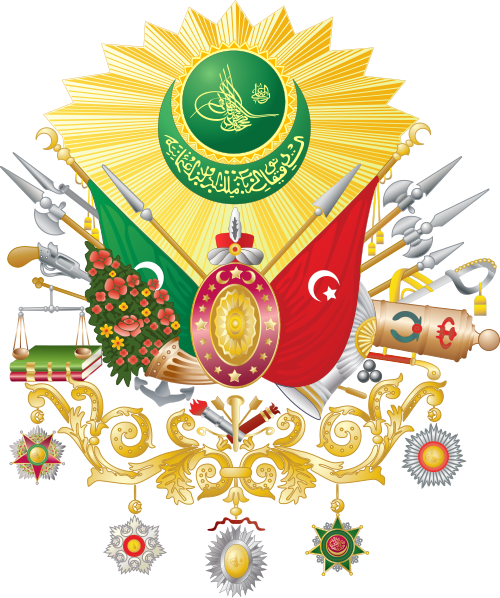
Every sultan of the Ottoman Empire had his own monogram, called the tughra, which served as a royal symbol. A coat of arms in the European heraldic sense was created in the late 19th century. Hampton Court requested from the Ottoman Empire a coat of arms to be included in their collection. As the coat of arms had not been previously used in the Ottoman Empire, it was designed after this request, and the final design was adopted by Sultan Abdul Hamid II on 17 April 1882. By Juris Tiltins - Own work based on Derivative works of this file: Enver bey and Niyazi bey postcard 1908.jpg, Public domain, https://commons.wikimedia.org/w/index.php?curid=3423102
1551 CE
Libya
Libya is conquered. Source — Wikipedia, "Timeline of Anatolian history" (16th century):
The national flag of Libya. By Various The SVG code is valid. This vector image was created with a text editor. - File:Flag of Libya (1951–1969).svg, Public domain, https://commons.wikimedia.org/w/index.php?curid=344725
1566 CE
Suleiman the Magnificent
The reign of Suleiman the Magnificent (Suleiman I) ends. Source — Wikipedia, "Timeline of Anatolian history" (16th century):
Delle tre versioni del ritratto di Solimano, ricordate dalle fonti come «di mano di Tiziano», ne sono giunte fino a noi solo due, iconograficamente diverse tra loro, ma entrambe riferibili alla bottega di Tiziano, piuttosto che alla sua mano. Ciò che per altro non vorrebbe dir nulla, perché molte opere di bottega venivano licenziate come autografe. Il primo ritratto di Solimano di stile tizianesco proviene dalla collezione dell’arciduca Ferdinando II d’Austria ed è registrato nell’inventario del castello di Ruhelust, nel 1596. Il quadro è stato esposto alla Mostra di Vienna nel 2007 come copia da Tiziano (Kunsthistorisches Museum, Gemäldegalerie, Inv.-Nr. 24291). By Circle of Titian - Kunsthistorisches Museum Wien, Public domain, https://commons.wikimedia.org/w/index.php?curid=2646041
1569 CE
Istanbul
The great fire of Istanbul broke out. Source — Wikipedia, "Timeline of Anatolian history" (16th century):
Aerial view of the historical peninsula and modern skyline of Istanbul By Hunanuk - File:Fatihistanbul.jpg, CC0, https://commons.wikimedia.org/w/index.php?curid=146259277
1570 CE
Cyprus
Conquest of Cyprus by Piyale Pasha Source — Wikipedia, "Timeline of Anatolian history" (16th century):
Flag of Cyprus By İsmet Güney, SVG by User:Vzb83~commonswiki - Own work based on Openclipart, Public domain, https://commons.wikimedia.org/w/index.php?curid=433230
1571 CE
Battle of Lepanto
The Spanish and the Venetians defeat the Turks at the Battle of Lepanto. Source — Wikipedia, "Timeline of Anatolian history" (16th century):
Battle of Lepanto By Laureys a Castro - https://www.bonhams.com/auctions/11468/lot/135/, Public domain, https://commons.wikimedia.org/w/index.php?curid=37718118
1574 CE
Tunisia
Tunisia is conquered. Source — Wikipedia, "Timeline of Anatolian history" (16th century):
Flag of Tunisia. By Various Wikimedia Commons' contributors - Own work based on: on this PDF: Loi du 30 juin 1999 relative au drapeau de la République tunisienne - Journal Officiel de la République Tunisienne (54), page 1088 (6 juillet 1999)., Public domain, https://commons.wikimedia.org/w/index.php?curid=433047
1578 CE
Tbilisi
Tbilisi and most of Georgia conquered. Source — Wikipedia, "Timeline of Anatolian history" (16th century):
View of Tbilisi from Tabori Church By Alexey Komarov - Own work, CC BY-SA 4.0, https://commons.wikimedia.org/w/index.php?curid=138679634
1590 CE
Treaty of Istanbul
Treaty of İstanbul between Ottoman Empire and Safavid Persia; Georgia, Azerbaijan and Armenia as well as west Iran under Ottoman rule. Source — Wikipedia, "Timeline of Anatolian history" (16th century):
A map depicting the Ottoman Empire and its dependencies in 1590. By Chamboz - Own work References: Dávid, Géza, ed. (2000) Ottomans, Hungarians, and Habsburgs in Central Europe: The Military Confines in the Era of Ottoman Conquest, Brill Finkel, Caroline (2005) Osman's Dream: The Story of the Ottoman Empire, 1300-1923, Basic Books ISBN: 978-0-465-02396-7. Hathaway, Jane (2008) The Arab Lands under Ottoman Rule, 1516-1800, Pearson Education Ltd. ISBN: 978-0-582-41899-8. Peirce, Leslie (1993) The Imperial Harem: Women and Sovereignty in the Ottoman Empire, Oxford University Press ISBN: 0-19-508677-5. Pop, Ioan-Aurel, ed. (2006) History of Romania Compendium, Romanian Cultural Institute Luft, P. (1993) "Mushaʿshaʿ" in Encyclopaedia of Islam, 7, pp. 672−675 Magocsi, Paul Robert (2010) A History of Ukraine: The Land and Its Peoples (2nd ed.), University of Toronto Press Rhoads, Murphey (1999) Ottoman Warfare, 1500-1700, Rutgers University Press ISBN: 1-85728-389-9., CC BY-SA 4.0, https://commons.wikimedia.org/w/index.php?curid=64318203
1610 CE
Kuyucu Murat Pasha
Kuyucu Murat Pasha suppresses Jelali revolts. Turkmens suffer heavily. Source — Wikipedia, "Timeline of Anatolian history" (17th century):
1612 CE
Treaty of Nasuh Pasha
Treaty of Nasuh Pasha between Ottoman Empire and Safavid Persia. Ottoman Empire gives up some gains of Treaty of Istanbul of 1590. Source — Wikipedia, "Timeline of Anatolian history" (17th century):
A map depicting the Ottoman Empire and its dependencies in 1590. By Chamboz - Own work References: Dávid, Géza, ed. (2000) Ottomans, Hungarians, and Habsburgs in Central Europe: The Military Confines in the Era of Ottoman Conquest, Brill Finkel, Caroline (2005) Osman's Dream: The Story of the Ottoman Empire, 1300-1923, Basic Books ISBN: 978-0-465-02396-7. Hathaway, Jane (2008) The Arab Lands under Ottoman Rule, 1516-1800, Pearson Education Ltd. ISBN: 978-0-582-41899-8. Peirce, Leslie (1993) The Imperial Harem: Women and Sovereignty in the Ottoman Empire, Oxford University Press ISBN: 0-19-508677-5. Pop, Ioan-Aurel, ed. (2006) History of Romania Compendium, Romanian Cultural Institute Luft, P. (1993) "Mushaʿshaʿ" in Encyclopaedia of Islam, 7, pp. 672−675 Magocsi, Paul Robert (2010) A History of Ukraine: The Land and Its Peoples (2nd ed.), University of Toronto Press Rhoads, Murphey (1999) Ottoman Warfare, 1500-1700, Rutgers University Press ISBN: 1-85728-389-9., CC BY-SA 4.0, https://commons.wikimedia.org/w/index.php?curid=64318203
1615 CE
Treaty of Serav
Treaty of Serav ratifies Treaty of Nasuh Pasha Source — Wikipedia, "Timeline of Anatolian history" (17th century):
Sep 12, 1683 CE
Battle of Vienna
Battle of Vienna. Ottoman defeat. Source — Wikipedia, "Timeline of Anatolian history" (17th century):
Mehmed IV is deposed. Source — Wikipedia, "Timeline of Anatolian history" (17th century):
1699 CE
Hungary
Ottomans cede Hungary to Austria in the Treaty of Karlowitz. Source — Wikipedia, "Timeline of Anatolian history" (17th century):
1718 CE
Treaty of Passarowitz
Treaty of Passarowitz signed. Source — Wikipedia, "Timeline of Anatolian history" (18th century):
1729 CE
Ibrahim Muteferrika
First printing press in Turkish by Ibrahim Muteferrika Source — Wikipedia, "Timeline of Anatolian history" (18th century):
1730 CE
Patrona Halil
Revolt of Patrona Halil. End of Tulip era. Ahmet III is dethroned. Source — Wikipedia, "Timeline of Anatolian history" (18th century):
1739 CE
Treaty of Belgrade
Treaty of Belgrade signed. Source — Wikipedia, "Timeline of Anatolian history" (18th century):
1774 CE
Treaty of Küçük Kaynarca
Treaty of Küçük Kaynarca signed. Source — Wikipedia, "Timeline of Anatolian history" (18th century):
1795 CE
First newspaper in Ottoman Empire (Bulletin
First newspaper in Ottoman Empire (Bulletin de Nouvelles.) Source — Wikipedia, "Timeline of Anatolian history" (18th century):
May 1, 1807 CE
Kabakçı Mustafa rebellion
Kabakçı Mustafa rebellion: Reformist sultan Selim III dethroned. New sultan is Mustafa IV Source — Wikipedia, "Timeline of Anatolian history" (19th century):
Jul 21, 1808 CE
Alemdar Mustafa Pasha
Alemdar Mustafa Pasha suppresses the rebellion. But Selim III is dead and Mahmut II becomes the new sultan. Source — Wikipedia, "Timeline of Anatolian history" (19th century):
Apr 23, 1813 CE
Second Serbian Uprising
Second Serbian Uprising: The Serbs revolt. Source — Wikipedia, "Timeline of Anatolian history" (19th century):
1821 CE
Greek War of Independence
Greek War of Independence: The Greek War of Independence begins. Source — Wikipedia, "Timeline of Anatolian history" (19th century):
Jun 15, 1826 CE
Auspicious Incident
Auspicious Incident. Massacre of the Janissary corps by Sultan Mahmud II: Foundation of a modern western style army. Source — Wikipedia, "Timeline of Anatolian history" (19th century):
1830 CE
Algeria
Algeria is gradually ceded to French rule. Source — Wikipedia, "Timeline of Anatolian history" (19th century):
Flag of Algeria By Original: National Liberation Front of Algeria Vector: SKopp - SVG implementation of the 63-145 Algerian law "on Characteristics of the Algerian national emblem", Public domain, https://commons.wikimedia.org/w/index.php?curid=27000198
1831 CE
Egyptian–Ottoman War
Egyptian–Ottoman War. (to 1833) Source — Wikipedia, "Timeline of Anatolian history" (19th century):
Jul 21, 1832 CE
Kingdom of Greece
Greek War of Independence: Greek sovereignty is formalized. Source — Wikipedia, "Timeline of Anatolian history" (19th century):
Oct 4, 1853 CE
Crimean War
Crimean War: The Crimean War with Russia began which, though won with British, French and Sardinian aid, would further demonstrate how backward the Ottoman military had become. Source — Wikipedia, "Timeline of Anatolian history" (19th century):
Oct 21, 1860 CE
Agah Efendi
First newspaper in Turkish published by Agah Efendi.(Tercümen'ı Ahval). Source — Wikipedia, "Timeline of Anatolian history" (19th century):
Feb 5, 1862 CE
Romania
A united Romanian autonomous state is established. Source — Wikipedia, "Timeline of Anatolian history" (19th century):
Dec 23, 1876 CE
Constantinople Conference
Opened the 1876–1877 Constantinople Conference. Source — Wikipedia, "Timeline of Anatolian history" (19th century):
Apr 24, 1877 CE
Russo-Turkish War
Russo-Turkish War (1877–1878): Another war with Russia begins. Source — Wikipedia, "Timeline of Anatolian history" (19th century):
Mar 3, 1878 CE
Treaty of San Stefano
Russo-Turkish War (1877–1878): The Treaty of San Stefano recognizes Romanian and Serbian independence, as well as the establishment of an autonomous Bulgarian principality under nominal Ottoman protection. Austria-Hungary occupies Bosnia by default. Source — Wikipedia, "Timeline of Anatolian history" (19th century):
Flag of Bulgaria By SKopp - The flag of Bulgaria. The colors are specified at http://www.government.bg/cgi-bin/e-cms/vis/vis.pl?s=001&p=0034&n=000005&g= as: White: Pantone Safe Green: 17-5936 (Green TC) [textile color] [1] Red: 18-1664 (Fiery Red TC) [2], Public domain, https://commons.wikimedia.org/w/index.php?curid=342993
1881 CE
Mustafa Kemal Atatürk
Mustafa Kemal Atatürk was born. Tunisia becomes a French colony. Source — Wikipedia, "Timeline of Anatolian history" (19th century):
Flag of Tunisia. By Various Wikimedia Commons' contributors - Own work based on: on this PDF: Loi du 30 juin 1999 relative au drapeau de la République tunisienne - Journal Officiel de la République Tunisienne (54), page 1088 (6 juillet 1999)., Public domain, https://commons.wikimedia.org/w/index.php?curid=433047
1882 CE
Egypt
Egypt goes under British protection. Source — Wikipedia, "Timeline of Anatolian history" (19th century):
Sep 6, 1885 CE
Eastern Rumelia
The province of Eastern Rumelia is transferred to Bulgarian jurisdiction. Source — Wikipedia, "Timeline of Anatolian history" (19th century):
Flag of Bulgaria By SKopp - The flag of Bulgaria. The colors are specified at http://www.government.bg/cgi-bin/e-cms/vis/vis.pl?s=001&p=0034&n=000005&g= as: White: Pantone Safe Green: 17-5936 (Green TC) [textile color] [1] Red: 18-1664 (Fiery Red TC) [2], Public domain, https://commons.wikimedia.org/w/index.php?curid=342993
1894 CE
Hamidian massacres
Hamidian massacres, where the Ottoman Empire under Sultan Abdul Hamid II kills between 200,000 and 400,000 Armenians in order to reassert Pan-Islamism as a state ideology. Source — Wikipedia, "Timeline of Anatolian history" (19th century):
Jul 3, 1908 CE
Second Constitutional Era
Second Constitutional Era (Young Turk revolution) Source — Wikipedia, "Timeline of Anatolian history" (20th century):
1912 CE
Kingdom of Italy
The Ottomans are defeated by Italy in a short war, with the Italians gaining Libya and ending the 340-year Ottoman presence in North Africa. Source — Wikipedia, "Timeline of Anatolian history" (20th century):
The national flag of Libya. By Various The SVG code is valid. This vector image was created with a text editor. - File:Flag of Libya (1951–1969).svg, Public domain, https://commons.wikimedia.org/w/index.php?curid=344725
May 17, 1913 CE
Istanbul
First Balkan War: The Ottoman Empire is nearly wiped out from Europe, save for Istanbul and just enough land around to defend it. Source — Wikipedia, "Timeline of Anatolian history" (20th century):
Aerial view of the historical peninsula and modern skyline of Istanbul By Hunanuk - File:Fatihistanbul.jpg, CC0, https://commons.wikimedia.org/w/index.php?curid=146259277
1913 CE
Greek genocide
Greek genocide by the Ottoman Empire, lasts till about 1922. Approximately 750,000 Ottoman Greek Christians believed to have been killed. Source — Wikipedia, "Timeline of Anatolian history" (20th century):
Aug 2, 1914 CE
Central Powers
The Ottoman Empire enters into World War I on the side of the Central Powers. Cyprus is annexed outright by Britain. Source — Wikipedia, "Timeline of Anatolian history" (20th century):
Flag of Cyprus By İsmet Güney, SVG by User:Vzb83~commonswiki - Own work based on Openclipart, Public domain, https://commons.wikimedia.org/w/index.php?curid=433230
1914 CE
Assyrian genocide
Assyrian genocide (Seyfo or Sayfo) by the Ottoman Empire, lasts till about 1924. Approximately 250,000 Assyrian Christians believed to have been killed. Source — Wikipedia, "Timeline of Anatolian history" (20th century):
Mar 18, 1915 CE
Gallipoli Campaign
The Gallipoli Campaign was considered one of the greatest victories of the Turks at World War 1 and was reflected on as a major failure by the Allies. Source — Wikipedia, "Timeline of Anatolian history" (20th century):
1915 CE
Persecution of Ottoman Muslims
Persecution of nearly 4.000.000 Turks from Balkans started. Most of them were suffered and killed. Source — Wikipedia, "Timeline of Anatolian history" (20th century):
Oct 29, 1923 CE
The Republic of Turkey was proclaimed.
The Republic of Turkey was proclaimed. Source — Wikipedia, "Timeline of Anatolian history" (20th century):
1924 CE
imam
A new policy was instituted that imams be appointed by the government. Source — Wikipedia, "Timeline of Anatolian history" (20th century):
Feb 11, 1925 CE
Sheikh Said rebellion
The Sheikh Said rebellion started in the eastern provinces. Source — Wikipedia, "Timeline of Anatolian history" (20th century):
Feb 17, 1926 CE
civil code
A Turkish civil code based on the Swiss Civil Code was accepted. The code granted expanded civil rights to women and prohibited polygamy. Source — Wikipedia, "Timeline of Anatolian history" (20th century):
Mar 7, 1927 CE
The extraordinary Independence Tribunals were abol
The extraordinary Independence Tribunals were abolished. Source — Wikipedia, "Timeline of Anatolian history" (20th century):
Apr 10, 1928 CE
The article "The official religion of
The article "The official religion of Turkey is Islam" was removed from the constitution. Source — Wikipedia, "Timeline of Anatolian history" (20th century):
Apr 3, 1929 CE
A new municipal law enabled women
A new municipal law enabled women to enter municipal elections both as voters and as candidates. Source — Wikipedia, "Timeline of Anatolian history" (20th century):
Jun 11, 1930 CE
A law was accepted which established
A law was accepted which established the Turkish Republic Central Bank. Source — Wikipedia, "Timeline of Anatolian history" (20th century):
Mar 16, 1931 CE
The first female Turkish surgeon, Dr.
The first female Turkish surgeon, Dr. Suat, received her specialty. Source — Wikipedia, "Timeline of Anatolian history" (20th century):
Jul 18, 1932 CE
League of Nations
Turkey became a member of the League of Nations. Source — Wikipedia, "Timeline of Anatolian history" (20th century):
Feb 7, 1933 CE
The first Turkish-language mosque prayers began
The first Turkish-language mosque prayers began in Istanbul. Source — Wikipedia, "Timeline of Anatolian history" (20th century):
Jun 21, 1934 CE
Bey
The Surname Law was accepted, abolishing the former titles of Bey, Effendi, Pasha, Sultan, and Hanım as of 26 November. Source — Wikipedia, "Timeline of Anatolian history" (20th century):
Mar 1, 1935 CE
Eight cabinet by İsmet İnönü.
Eight cabinet by İsmet İnönü. Source — Wikipedia, "Timeline of Anatolian history" (20th century):
May 29, 1936 CE
A law determining the size and
A law determining the size and ratios of the star and crescent in the Turkish flag was accepted. Source — Wikipedia, "Timeline of Anatolian history" (20th century):
Jan 27, 1937 CE
Hatay State
Hatay's independence was accepted by the League of Nations in its Geneva meeting. Source — Wikipedia, "Timeline of Anatolian history" (20th century):
1937 CE
Dersim Rebellion
Dersim Rebellion in 1937–1938 : The revolt had quashed by government. Source — Wikipedia, "Timeline of Anatolian history" (20th century):
Nov 10, 1938 CE
Mustafa Kemal Atatürk
The founder Mustafa Kemal Atatürk died. He was succeeded by İsmet İnönü, former prime minister and general. He declares himself "National Chief" (Millî Şef), similar to the titles of some other dictators in Europe at the time. Source — Wikipedia, "Timeline of Anatolian history" (20th century):
1939 CE
World War II: World War II
World War II: World War II began. Turkey was to remain neutral for most of the war, until a declaration of war against Germany at its end. Source — Wikipedia, "Timeline of Anatolian history" (20th century):
May 14, 1950 CE
İsmet İnönü
First Democratic Elections in Turkish Republic. General İsmet İnönü and his Republican People's Party, which had ruled the country since 1923, loses election to newly formed Democratic Party of Celâl Bayar and Adnan Menderes. Source — Wikipedia, "Timeline of Anatolian history" (20th century):
1950 CE
Müfide İlhan
Müfide İlhan mayor of Mersin. First ever woman mayor in Turkey. Source — Wikipedia, "Timeline of Anatolian history" (20th century):
1952 CE
NATO
Turkey became a NATO member country strategically important in countering Soviet influence. Source — Wikipedia, "Timeline of Anatolian history" (20th century):
Jul 27, 1953 CE
Korean War: The war ended.
Korean War: The war ended. Source — Wikipedia, "Timeline of Anatolian history" (20th century):
1954 CE
United States Air Force
Turkey began to host the United States Air Force at the Incirlik Air Base as a deterrent to the Soviet Union. Source — Wikipedia, "Timeline of Anatolian history" (20th century):
Sep 6, 1955 CE
Istanbul Pogrom
Istanbul Pogrom: The Istanbul Pogrom started the process of driving many Greeks and Christians from Turkey. Source — Wikipedia, "Timeline of Anatolian history" (20th century):
May 27, 1960 CE
Military junta
38 officers of Army form a junta and organize the 1960 Turkish coup d'état. They claim the Islamists had gained influence in the government. After this clash over the "separation of religion and state/government" between İnönü's Republican People's Party and his opponents, democratically elected President Celâl Bayar and Prime Minister Adnan Menderes of Democratic Party, Prime Minister Adnan Menderes was held responsible by a kangaroo court selected by the junta and was executed with two of his ministers. Source — Wikipedia, "Timeline of Anatolian history" (20th century):
Oct 14, 1965 CE
İsmet İnönü
Military rule bowed out to civilian rule, and former (National Chief) İsmet İnönü again loses a democratic election, this time to the Justice Party of Mr. Süleyman Demirel. Source — Wikipedia, "Timeline of Anatolian history" (20th century):
Mar 12, 1971 CE
Military officials forced an advisory committee
Military officials forced an advisory committee on the government due to the increasing anarchical situation caused by the Right (fascist/capitalist) – Left (communist) clash and ineffective policies in maintaining order. Although the military were not in charge they had significant influence. Source — Wikipedia, "Timeline of Anatolian history" (20th century):
1974 CE
Cyprus
Turkey invaded Cyprus in response to a Greek-backed coup on the island. Source — Wikipedia, "Timeline of Anatolian history" (20th century):
Flag of Cyprus By İsmet Güney, SVG by User:Vzb83~commonswiki - Own work based on Openclipart, Public domain, https://commons.wikimedia.org/w/index.php?curid=433230
Sep 12, 1980 CE
1980 Turkish coup d'état
The 1980 coup d'état took place. Martial law was almost immediately established and a quarter of the military (about 475,000) were mobilised to settle the resistance to the coup. Source — Wikipedia, "Timeline of Anatolian history" (20th century):
Nov 6, 1983 CE
Constitution of Turkey
After the establishment of a new 1982 Constitution, the military regime dissolved itself. Source — Wikipedia, "Timeline of Anatolian history" (20th century):
1991 CE
Gulf War
After the ending of the 1991 Persian Gulf War, the Incirlik Air Base enforced the northern no-fly zones in Iraq. Source — Wikipedia, "Timeline of Anatolian history" (20th century):
Mar 24, 1999 CE
Kosovo War
Kosovo War: NATO interceded in the Balkans to end a civil war in the region. Turkey was part of the mission. Source — Wikipedia, "Timeline of Anatolian history" (20th century):
Jun 1, 2002 CE
International Security Assistance Force
Turkey assumed command of the International Security Assistance Force (ISAF) in Afghanistan. Source — Wikipedia, "Timeline of Anatolian history" (21st century):
Feb 1, 2003 CE
International Security Assistance Force
Turkey relinquished command of the ISAF. Source — Wikipedia, "Timeline of Anatolian history" (21st century):
Dec 17, 2004 CE
The European Union (EU) agreed to
The European Union (EU) agreed to begin negotiations on the eventual accession of Turkey. Source — Wikipedia, "Timeline of Anatolian history" (21st century):
Feb 14, 2005 CE
International Security Assistance Force
Turkey assumed command of the ISAF in Afghanistan for a second time. Source — Wikipedia, "Timeline of Anatolian history" (21st century):
Mar 24, 2011 CE
NATO
Turkey gave NATO the green light and allowed İzmir to become the command center of the operation to oust Muammar Gaddafi's regime in Libya. Source — Wikipedia, "Timeline of Anatolian history" (21st century):
The national flag of Libya. By Various The SVG code is valid. This vector image was created with a text editor. - File:Flag of Libya (1951–1969).svg, Public domain, https://commons.wikimedia.org/w/index.php?curid=344725
Dec 17, 2013 CE
2013 corruption scandal in Turkey
A corruption scandal to topple the ruling AKP failed. Source — Wikipedia, "Timeline of Anatolian history" (21st century):
2014 CE
Altay
Turkey starts designing and manufacturing its own national tank Altay, helicopter Atak and drone Anka for the first time. Source — Wikipedia, "Timeline of Anatolian history" (21st century):
Jul 15, 2016 CE
2016 Turkish coup d'état attempt
Alleged attempted coup and subsequent crackdowns and purge. Over 80,000 arrested or detained, 150,000 dismissed (nearing 10% of public employees). Source — Wikipedia, "Timeline of Anatolian history" (21st century):
Jan 1, 2017 CE
Istanbul nightclub shooting
Istanbul nightclub shooting – At least 39 people were killed and 69 people were wounded in the Reina nightclub in Beşiktaş Istanbul. Source — Wikipedia, "Timeline of Anatolian history" (21st century):
Aerial view of the historical peninsula and modern skyline of Istanbul By Hunanuk - File:Fatihistanbul.jpg, CC0, https://commons.wikimedia.org/w/index.php?curid=146259277
Jan 19, 2018 CE
Turkish Armed Forces
The Turkish Armed Forces launched its <nowiki></nowiki>Olive Branch<nowiki></nowiki> land and air operation in north-western Syria, capturing large areas which was under Kurdish control. Source — Wikipedia, "Timeline of Anatolian history" (21st century):
Apr 18, 2018 CE
2018 Turkish general election
2018 Turkish general election – President Recep Tayyip Erdogan announced that early elections will take place on 24 June. Source — Wikipedia, "Timeline of Anatolian history" (21st century):
Jun 12, 2018 CE
Azerbaijan
Presidents of Azerbaijan, Turkey, Georgia inaugurated Trans-Anatolian gas pipeline in the central city of Eskisehir, Turkey with the participation of Petro Poroshenko, and Aleksandar Vucic. Source — Wikipedia, "Timeline of Anatolian history" (21st century):
Flag of Azerbaijan By SKopp and others - Own work using: http://www.elibrary.az/docs/remz/pdf/remz_bayraq.pdf and http://www.meclis.gov.az/?/az/topcontent/21 Also see: https://president.az/azerbaijan/symbols, Public domain, https://commons.wikimedia.org/w/index.php?curid=342965
Oct 19, 2018 CE
İzmir
The STAR refinery has been launched in Aliaga İzmir, Turkey. Source — Wikipedia, "Timeline of Anatolian history" (21st century):
Oct 9, 2019 CE
2019 Turkish offensive into north-eastern Syria
2019 Turkish offensive into north-eastern Syria Source — Wikipedia, "Timeline of Anatolian history" (21st century):
Mar 11, 2020 CE
COVID-19
Turkey confirmed its first COVID-19 case, caused by the SARS-CoV-2 virus. This was quickly followed by the rapid emergence of the COVID-19 outbreak in the country. Source — Wikipedia, "Timeline of Anatolian history" (21st century):