A Babylonian cuneiform tablet contains a table of Pythagorean triples, demonstrating sophisticated understanding of geometric relationships over a millennium before Pythagoras. Source — Wikipedia:
w:Plimpton 322, Babylonian tablet listing pythagorean triples By photo author unknown - image copied from http://www.math.ubc.ca/~cass/courses/m446-03/pl322/pl322.html, Public domain, https://commons.wikimedia.org/w/index.php?curid=1170904
1650 BCE
Rhind Mathematical Papyrus
An Egyptian scribe copied mathematical problems including approximations for pi and areas of circles, providing key evidence of early geometric analysis in ancient Egypt. Source — Wikipedia:
Rhind Mathematical Papyrus : detail (recto, left part of the first section British Museum Department of Ancient Egypt and Sudan, EA10057) Acquired by the Scottish lawyer A.H. Rhind during his sojourn in Thebes in the 1850s. length: 295.5 cm, width: 32 cm (whole section EA10057) A second section is kept in the British Museum (EA 10058 length: 199.5 cm, same width) Fragments of a small intermediate section (18 cm length) are kept in the Brooklyn Museum. It dates to the reign of the Hyksos kings Apepi or Apophis and possibly his successor Khamudi. By unknown (c. 2000 B.C) - Ahmes (scribe), http://www.archaeowiki.org/Image:Rhind_Mathematical_Papyrus.jpg (https://www.britishmuseum.org/, British Museum), Public domain, https://commons.wikimedia.org/w/index.php?curid=6943889
300 BCE
Euclid's Elements compiled
Euclid of Alexandria systematized plane and solid geometry into an axiomatic framework that defined mathematical rigor for over two thousand years. Source — Wikipedia:
Originally P.Oxy.29 (now P.Penn. Museum inv. E02748); a papyrus fragment of Euclid's Elements Book II, Proposition 5 dated 3rd-4th century CE. By University of Pennsylvania Museum of Archaeology and Anthropology - https://openn.library.upenn.edu/Data/0016/html/e2748.html, CC BY-SA 4.0, https://commons.wikimedia.org/w/index.php?curid=169166171Euclid's Elements: Introduction
250 BCE
Archimedes computes areas and volumes
Archimedes used the method of exhaustion to compute areas bounded by curves and the volume of solids, anticipating integral calculus by nearly two millennia. Source — Wikipedia:
Archimedes computes areas and volumes By Domenico Fetti - http://archimedes2.mpiwg-berlin.mpg.de/archimedes_templates/popup.htm, Public domain, https://commons.wikimedia.org/w/index.php?curid=146592
200 CE
Nine Chapters on the Mathematical Art
This foundational Chinese mathematical text compiled methods for solving linear equations, computing areas, and extracting roots, influencing East Asian mathematics for centuries. Source — Wikipedia:
The Nine Chapters on the Mathematical Art, published in 1820. By 中國書店海王邨公司 - https://pmgs.kongfz.com/detail/1_158470/, Public domain, https://commons.wikimedia.org/w/index.php?curid=22913440
263 CE
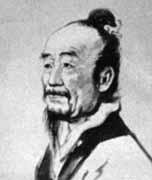
Liu Hui computes pi and volumes
Liu Hui wrote a commentary on the Nine Chapters using polygon approximations to obtain pi accurate to three decimals and derived volume formulas by dissection methods. Source — Wikipedia:
Lui Hui By Unknown - "Liu Hui (220 - 280) - Biography - MacTutor History of Mathematics" https://mathshistory.st-andrews.ac.uk/Biographies/Liu_Hui/, CC BY-SA 4.0, https://commons.wikimedia.org/w/index.php?curid=130481910
499 CE
Aryabhata approximates pi and sine
Aryabhata's Aryabhatiya gave an extremely accurate approximation of pi and introduced early trigonometric tables, laying groundwork for analysis of periodic functions. Source — Wikipedia:
Aryabhatta. By Cpjha13 - Own work, CC BY-SA 4.0, https://commons.wikimedia.org/w/index.php?curid=49883192
628 CE
Brahmagupta defines zero and algebra
Brahmagupta's Brahmasphutasiddhanta formalized rules for zero and negative numbers in arithmetic and algebra, a foundational advance for all later analysis. Source — Wikipedia:
830 CE
Al-Khwarizmi founds algebra
Al-Khwarizmi's book Al-Jabr introduced systematic solution of equations, giving rise to the word algebra and the term algorithm, enabling later analytical methods. Source — Wikipedia:
Monumento a Muhammad al-Juarismi en la Ciudad Universitaria de Madrid By Zarateman - Own work, CC0, https://commons.wikimedia.org/w/index.php?curid=162213187
1070 CE
Omar Khayyam solves cubic equations
The Persian mathematician Omar Khayyam classified and solved cubic equations geometrically using intersections of conic sections, advancing algebraic geometry. Source — Wikipedia:
Hakim Omar Khayam By Alireza Javaheri - https://web.archive.org/web/20161024154356/http://www.panoramio.com/photo/85093358, CC BY 3.0, https://commons.wikimedia.org/w/index.php?curid=55909539
1150 CE
Bhaskara II and concepts of calculus
Bhaskara II's Siddhanta Shiromani explored preliminary concepts of differentiation and infinitesimal analysis, along with advanced geometric and trigonometric results. Source — Wikipedia:
भास्कराचार्य By Unknown author - Own work, Public domain, https://commons.wikimedia.org/w/index.php?curid=150275955
1247 CE
Qin Jiushao solves polynomial equations
Qin Jiushao's Shushu Jiuzhang presented numerical methods for solving high-degree polynomial equations and the Chinese Remainder Theorem, advancing algebraic analysis. Source — Wikipedia:
Third order equation 宜稼堂 《数书九章》正负开赛乘方图 By Qin Jiushao 秦九韶 - 1842 printing Shu Shu Jiu Zhang, Public domain, https://commons.wikimedia.org/w/index.php?curid=3414657
1350 CE
Madhava discovers infinite series
Madhava of the Kerala school discovered infinite series expansions for pi, sine, and cosine, predating Newton and Leibniz by over three centuries in foundational calculus. Source — Wikipedia:
1424 CE
Al-Kashi computes pi to 16 digits
Jamshid al-Kashi calculated pi to sixteen decimal places using polygonal methods, a record unmatched for nearly two hundred years, and developed early decimal fractions. Source — Wikipedia:
JAMSHID BIN MAS'UD BIN MAHMUD AL-TABIB AL-KASHI KNOWN AS GHIYATH (D. 1429 AD): MIFTAH AL-HISAB SIGNED IBN MUHAMMAD MU'MIN TAJ AL-DIN AL-SHIRAZI, IRAN, DATED 7 SHA'BAN AH 1066/31 MAY 1656 AD Al-Kashi's important astronomical treatise dedicated to the Timurid ruler Ulugh Beg's library, Arabic manuscript on paper, 151ff. plus seven flyleaves, each folio with 18ll. of black naskh, titles and important words in red, text within gold, black and blue rules, numerous tables and diagrams in gold, black and red, with catchwords, opening bifolio with floral illumination, colophon signed and dated, occasional marginal notes, later ownership inscription and rubbed seal impression on final folio, in tooled red morocco Text panel 4 5/8 x 2 ¼in. (11.8 x 5.6cm.); folio 7 ½ x 4 ¾in. (19 x 12.1cm.) This important treatise by Al-Kashi was composed in 1427 AD and dedicated to Ulugh Beg's library. In the prologue of the manual, Al-Kashi gives a list of some of his works. The treatise deals with arithmetics and subjects such as Tartaglia's or Pascal's triangle, the demonstration of the proof by 9, the absolute sexagesimal system and decimal fractions. It also deals with trigonometry and algebra. Al-Kashi died in Samarqand in 1429 (art. 'al-Kashi', in Brill, 1986-2000, vol.IV, pp.702-703). By Christies.com - https://www.christies.com/lot/lot-6162908, Public domain, https://commons.wikimedia.org/w/index.php?curid=115212624
1637 CE
Descartes invents coordinate geometry
Rene Descartes' La Geometrie introduced algebraic coordinates into geometry, unifying algebra and geometry and enabling the analytic treatment of curves and surfaces. Source — Wikipedia:
A page of La géométrie by René Descartes By Original uploader was User:Caton at [1] - Originally from fr.wikipedia; description page is/was here., Public domain, https://commons.wikimedia.org/w/index.php?curid=1379032
1665 CE
Newton develops the calculus
Isaac Newton developed the method of fluxions, his version of differential and integral calculus, enabling the quantitative analysis of continuous change and curvature. Source — Wikipedia:
The History of Calculus -A Short Documentary | Newton & Leibniz
1684 CE
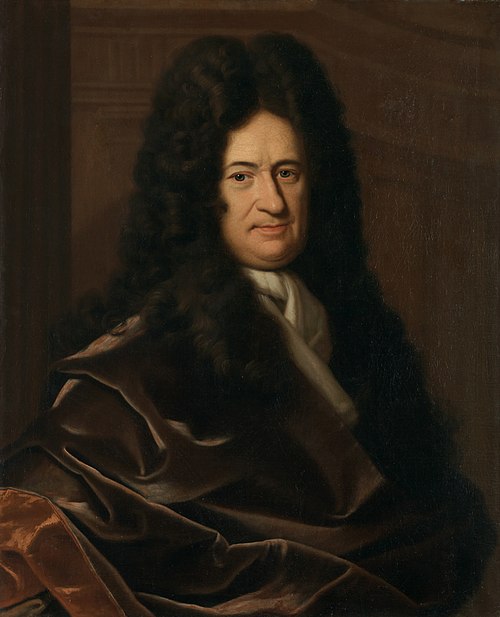
Leibniz publishes differential calculus
Gottfried Wilhelm Leibniz published his calculus with the now-standard notation for differentials and integrals, providing the analytical language used ever since. Source — Wikipedia:
Leibniz publishes differential calculus By Christoph Bernhard Francke - Herzog Anton Ulrich-Museum, online, Public domain, https://commons.wikimedia.org/w/index.php?curid=53159699
1748 CE
Euler introduces complex analysis
Leonhard Euler's Introductio in analysin infinitorum systematized functions of a complex variable and linked exponential and trigonometric functions via Euler's formula. Source — Wikipedia:
Euler introduces complex analysis By Jakob Emanuel Handmann - This file was derived from: Leonhard Euler.jpg Edited by: Bammesk Original source: Kunstmuseum Basel, Public domain, https://commons.wikimedia.org/w/index.php?curid=113056351
1827 CE
Gauss founds differential geometry
Carl Friedrich Gauss's Disquisitiones Generales circa Superficies Curvas introduced intrinsic differential geometry of surfaces, including Gaussian curvature. Source — Wikipedia:
Lithograph showing a portrait of the German mathematician Carl Friedrich Gauss at the age of 50 By Siegfried Detlev Bendixen - published in "Astronomische Nachrichten" 1828, Public domain, https://commons.wikimedia.org/w/index.php?curid=2404149
1851 CE
Riemann geometry and topology
Bernhard Riemann's habilitation lecture introduced Riemannian manifolds and higher-dimensional curved geometry, and his work on Riemann surfaces unified complex analysis and topology. Source — Wikipedia:
An Image of en:Georg Friedrich Bernhard Riemann taken in 1863 By Unknown author - http://www.sil.si.edu/digitalcollections/hst/scientific-identity/explore.htm according to the German Wikipedia., Public domain, https://commons.wikimedia.org/w/index.php?curid=27383
1858 CE
Mobius strip discovered
August Ferdinand Mobius and Johann Listing independently described the one-sided surface now called the Mobius strip, a foundational object in topology. Source — Wikipedia:
A photograph of a green paper Möbius strip. David Benbennick took this photograph on March 14, 2005. For scale, the strip of paper is 11 inches long, the long edge of a U.S. standard piece of "letter size" paper. The background is a piece of white paper. The strip is held together by a piece of clear duct tape, behind the top-right curve. (Retouched Version) By David Benbennick - Möbius strip.jpg, CC BY-SA 2.0, https://commons.wikimedia.org/w/index.php?curid=142071794
1895 CE
Poincare founds algebraic topology
Henri Poincare's paper Analysis Situs introduced the fundamental group and homology, establishing algebraic topology as a mathematical discipline. Source — Wikipedia:
1916 CE
Einstein applies geometry to spacetime
Albert Einstein's general theory of relativity used Riemannian differential geometry to describe gravity as curvature of spacetime, the most famous physical application of geometry. Source — Wikipedia:
Video simulation of the view which would be seen by a close observer, of the final merger of GW150914, showing the distortion of the star-field from gravity as the black holes orbit and merge. By Simulating eXtreme Spacetimes Lensing (SXS) - https://www.ligo.caltech.edu/video/ligo20160211v3 (video link); see also http://www.black-holes.org/gw150914, CC BY-SA 4.0, https://commons.wikimedia.org/w/index.php?curid=46994894General Relativity & Curved Spacetime Explained! | Space Time | PBS Digital Studios
1931 CE
Godel proves incompleteness theorems
Kurt Godel demonstrated that sufficiently strong formal systems contain true but unprovable statements, with deep implications for the foundations of analysis and topology. Source — Wikipedia:
Gödel's Incompleteness Theorem - Numberphile
1944 CE
Chern proves generalized Gauss-Bonnet theorem
Shiing-Shen Chern proved the generalized Gauss-Bonnet theorem, linking differential geometry and topology globally and founding modern global differential geometry. Source — Wikipedia:
Shiing-shen Chern at Berkeley, California By George Bergman - Scanned via Epson Perfection V370; see also https://opc.mfo.de/detail?photo_id=14459, CC BY-SA 4.0, https://commons.wikimedia.org/w/index.php?curid=139282116
1959 CE
Atiyah-Singer index theorem
Michael Atiyah and Isadore Singer proved the index theorem connecting the analytical index of elliptic operators to topological invariants, unifying analysis, geometry, and topology. Source — Wikipedia:
1976 CE
Perelman proves Poincare conjecture
Grigori Perelman used Ricci flow techniques from differential geometry to prove the Poincare conjecture, solving a century-old topology problem; he declined the Fields Medal. Source — Wikipedia:
The Genius Who Refused a Million Dollars - Grigori Perelman