Encyclopedia/3. History, Societies & Civilizations/09. Modern Nations/02. Americas • Curated by Admin Timeline.sg
History of Cuba, sourced from Wikipedia's "Timeline of Cuban history".
Chronological Storyline (146 Milestones)
6 CE
John R. Bolton
U.S. Under Secretary of State John R. Bolton accuses Cuba of trying to develop biological weapons, adding the country to Washington's list of "axis of evil" countries. Source — Wikipedia, "Timeline of Cuban history" (21st century):
Official Photo by Wang Yu Ching / Office of the President By 總統府 - 05.01 總統接見「美國前白宮國安顧問博騰大使」, CC BY 2.0, https://commons.wikimedia.org/w/index.php?curid=132220366
7 CE
Hurricane Dennis
Hurricane Dennis causes widespread destruction in Cuba and leaves 16 people dead. Source — Wikipedia, "Timeline of Cuban history" (21st century):
Hurricane Dennis on July 10, 2005 By NASA - https://worldview.earthdata.nasa.gov/, Public domain, https://commons.wikimedia.org/w/index.php?curid=74995871
12 CE
Jimmy Carter
Former U.S. President Jimmy Carter visits Cuba. He praises the Varela project and criticizes the U.S. embargo. Source — Wikipedia, "Timeline of Cuban history" (21st century):
Jimmy Carter's presidential portrait By Department of Defense. Department of the Navy. Naval Photographic Center - File:James Earl "Jimmy" Carter - NARA - 558522.jpg, Public domain, https://commons.wikimedia.org/w/index.php?curid=175012486
24 CE
Raúl is elected president of the
Raúl is elected president of the State Council by the National Assembly. Source — Wikipedia, "Timeline of Cuban history" (21st century):
25 CE
death of Fidel Castro
The death of Fidel Castro is announced. "The commander in chief of the Cuban revolution died at 22:29 hours this evening [03:29 GMT 25 November]." Source — Wikipedia, "Timeline of Cuban history" (21st century):
Tomb of Fidel Alejandro Castro Ruz in Santa Ifigenia Santiago de Cuba By Christian Pirkl - Own work, CC BY-SA 4.0, https://commons.wikimedia.org/w/index.php?curid=55996119
Oct 27, 1492 CE
Christopher Columbus
Christopher Columbus arrives in Cuba and claims the island for Spain. Source — Wikipedia, "Timeline of Cuban history" (15th century):
Christopher Columbus By Sebastiano del Piombo - This file was donated to Wikimedia Commons as part of a project by the Metropolitan Museum of Art. See the Image and Data Resources Open Access Policy, Public domain, https://commons.wikimedia.org/w/index.php?curid=27554267
1508 CE
Sebastián de Ocampo
Sebastián de Ocampo circumnavigates Cuba, confirming that it is an island. Source — Wikipedia, "Timeline of Cuban history" (16th century):
1510 CE
Hispaniola
Spanish set out from Hispaniola. The conquest of Cuba begins. Source — Wikipedia, "Timeline of Cuban history" (16th century):
View of Dominican Republic taken during ISS Expedition 27. By Earth Science and Remote Sensing Unit, Lyndon B. Johnson Space Center - JSC Gateway to Astronaut Photography of Earth, Public domain, https://commons.wikimedia.org/w/index.php?curid=111514165
1511 CE
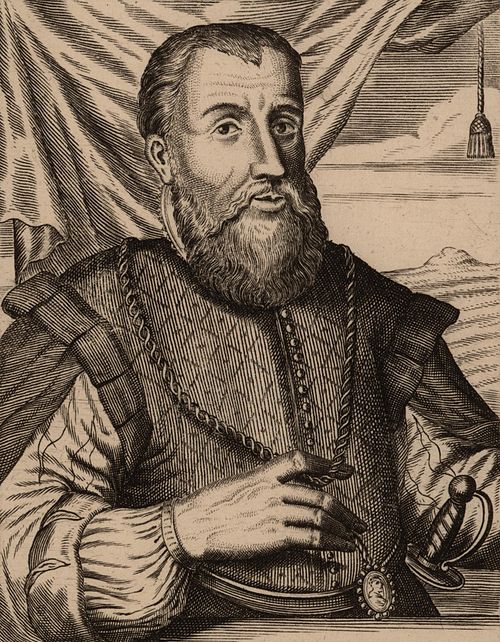
Diego Velázquez de Cuéllar
The first governor of Cuba, the Spanish conquistador Diego Velázquez de Cuéllar leads a group of settlers in Baracoa. Source — Wikipedia, "Timeline of Cuban history" (16th century):
Portrait of Diego Velasquez de Cuellar. By Unknown author - John Carter Brown Library, Public domain, https://commons.wikimedia.org/w/index.php?curid=4865322
1512 CE
Hatuey
Indigenous Cuban resistance leader Hatuey is burned at the stake. Source — Wikipedia, "Timeline of Cuban history" (16th century):
The monument of Hatuey, Taino chief − in Baracoa, Cuba. By Michal Zalewski - Own work, CC BY-SA 3.0, https://commons.wikimedia.org/w/index.php?curid=1025620
1513 CE
The first African slaves in Cuba
The first African slaves in Cuba Source — Wikipedia, "Timeline of Cuban history" (16th century):
1519 CE
Havana
Havana founded as San Cristóbal de la Habana (north coast) Source — Wikipedia, "Timeline of Cuban history" (16th century):
Malecón, Havana, Cuba By RenaatPeeters - Own work, CC BY-SA 4.0, https://commons.wikimedia.org/w/index.php?curid=95264999
1523 CE
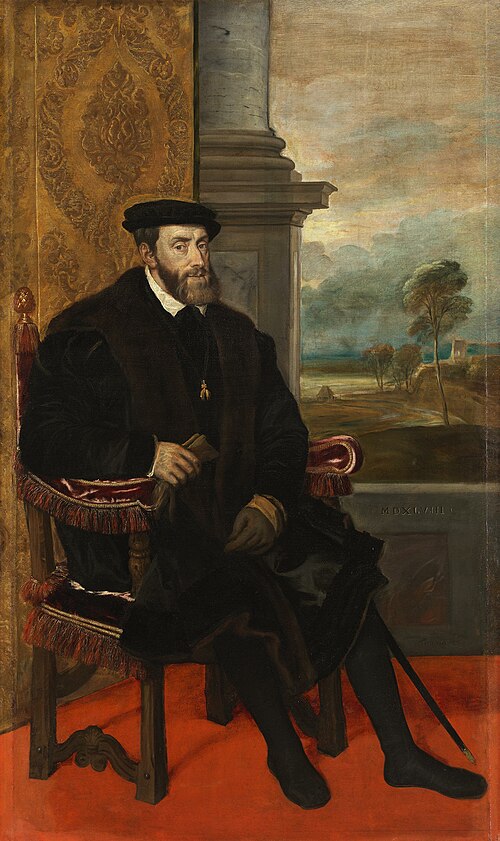
Charles V, Holy Roman Emperor
Emperor Charles V authorizes 4,000 gold pesos for the construction of cotton mills. Source — Wikipedia, "Timeline of Cuban history" (16th century):
Portrait of Charles V By Formerly attributed to Titian / Attributed to Lambert Sustris - sammlung.pinakothek.de, Public domain, https://commons.wikimedia.org/w/index.php?curid=108115194
1526 CE
The beginning of the slave trade
The beginning of the slave trade and the sale of African slaves in Cuba. Source — Wikipedia, "Timeline of Cuban history" (16th century):
1532 CE
Jobabó Slave Revolt
Jobabó Slave Revolt, the first slave rebellion is crushed. Source — Wikipedia, "Timeline of Cuban history" (16th century):
Relief shown pictorially. Depths shown by soundings. Shows coastal features, settlements on Cuba, and islands. Pen-and-ink and watercolor. Attributed to Joan Vinckeboons by comparison with his other Dutch maps in Henry Harrisse collection. Described in Terrae incognitae, v. xvi, 1984. Richard W. Stephenson's The Henry Harrisse collection ... , p. 40; the first volume has binder's title "Manuscript maps of the West-Indies drawn by Joan Vingboons in 1639." LC Luso-Hispanic world, 300 Available also through the Library of Congress Web site as a raster image. By Vinckeboons, Joan - https://www.loc.gov/item/2003623399/, Public domain, https://commons.wikimedia.org/w/index.php?curid=69795530
1537 CE
Havana
A French fleet briefly occupies Havana. Source — Wikipedia, "Timeline of Cuban history" (16th century):
Malecón, Havana, Cuba By RenaatPeeters - Own work, CC BY-SA 4.0, https://commons.wikimedia.org/w/index.php?curid=95264999
1542 CE
encomienda
The Spanish crown abandons the encomienda colonial land settlement system. Source — Wikipedia, "Timeline of Cuban history" (16th century):
Francisco Hernández Girón, a Spanish commander who rebelled in Peru in 1553 against royal authority. According to a drawing by Guamana Poma de Ayala. By Trabajo propio. Reproducción de un dibujo de Felipe Guamán Poma de Ayala. (Own work. Reproduction of a drawing by Felipe Guamán Poma de Ayala.) - Nueva Crónica y Buen Gobierno, Public domain, https://commons.wikimedia.org/w/index.php?curid=10293071
1553 CE
Colonial Heads of Cuba
The Governor of Cuba relocates to Havana. Source — Wikipedia, "Timeline of Cuban history" (16th century):
1555 CE
French campaign against the Sudan usam
French campaign against the Sudan usam Source — Wikipedia, "Timeline of Cuban history" (16th century):
1578 CE
Baracoa
French corsairs plunder Baracoa. Source — Wikipedia, "Timeline of Cuban history" (16th century):
Baracoa Bay and the mountain El Yunque By Paul Postiaux - Own work, CC BY-SA 3.0, https://commons.wikimedia.org/w/index.php?curid=24909887
1586 CE
privateer
The English privateer Francis Drake lands at Cape San Antonio but does not attack. Source — Wikipedia, "Timeline of Cuban history" (16th century):
Construction of the Morro Castle fortress is completed above the eastern entrance to Havana harbor. Source — Wikipedia, "Timeline of Cuban history" (16th century):
Castillo del Morro, Santiago de Cuba By Glogg, Peter, Switzerland - http://visipix.com/cgi-bin/view?s=5&userid=851896192&q=%271pAmerica/Caribbean/Cuba/Santiago%20de%20Cuba%27&u=1&k=0&l=en&n=6, CC BY 2.0, https://commons.wikimedia.org/w/index.php?curid=314651
1603 CE
Authorities decree that the sale of
Authorities decree that the sale of tobacco to foreigners is punishable by death. Source — Wikipedia, "Timeline of Cuban history" (17th century):
1607 CE
Havana is named capital of Cuba.
Havana is named capital of Cuba. Source — Wikipedia, "Timeline of Cuban history" (17th century):
1628 CE
Piet Heyn
A Dutch fleet led by Piet Heyn plunders the Spanish fleet in Havana harbor. Source — Wikipedia, "Timeline of Cuban history" (17th century):
Piet Heyn By After Jan Daemen Cool - [1], Public domain, https://commons.wikimedia.org/w/index.php?curid=1015120
1649 CE
yellow fever
An epidemic of yellow fever kills a third of the island's European population. Source — Wikipedia, "Timeline of Cuban history" (17th century):
فيروس الحمّى الصفراء. By Erskine Palmer, Ph.D. - This media comes from the Centers for Disease Control and Prevention's Public Health Image Library (PHIL), with identification number #8239. Note: Not all PHIL images are public domain; be sure to check copyright status and credit authors and content providers. العربية | Deutsch | English | македонски | slovenščina | +/−, Public domain, https://commons.wikimedia.org/w/index.php?curid=611723
1662 CE
Christopher Myngs
An English fleet captained by Christopher Myngs captures Santiago de Cuba to open up trade with Jamaica. Source — Wikipedia, "Timeline of Cuban history" (17th century):
Vice-Admiral Christopher Myngs (1625-1666) By Peter Lely - Royal Museums Greenwich, Public domain, https://commons.wikimedia.org/w/index.php?curid=18073963
1670 CE
The English withdraw after Spain recognises
The English withdraw after Spain recognises England's ownership of Jamaica. Source — Wikipedia, "Timeline of Cuban history" (17th century):
1728 CE
University of Havana
The University of Havana is founded. Source — Wikipedia, "Timeline of Cuban history" (18th century):
Front view of Universidad de La Habana By This photo was taken by Anton Zelenov. Please credit this with : Photo : Anton Zelenov in the immediate vicinity of the image. If you use one of my photos, please email me (account needed) or leave me a short message on my discussion page. It would be greatly appreciated. Do not copy this image illegally by ignoring the terms of the license below, as it is not in the public domain. If you would like special permission to use, license, or purchase the image please contact me to negotiate terms. - Own work, CC BY-SA 3.0, https://commons.wikimedia.org/w/index.php?curid=28979211
1734 CE
Colonial heads of Cuba
begins a 12-year tenure as Governor of Cuba. Source — Wikipedia, "Timeline of Cuban history" (18th century):
1741 CE
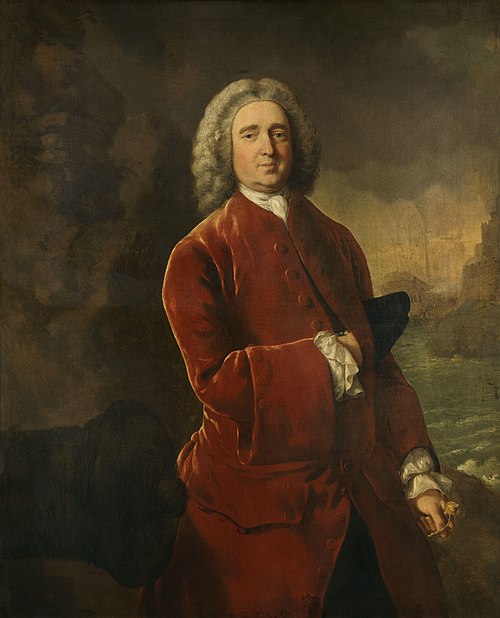
Edward Vernon
British Admiral Edward Vernon briefly captures Guantánamo Bay, renaming it Cumberland Bay, during the War of Jenkins' Ear. His troops withdraw after being decimated by fevers and raids from Spanish troops. Source — Wikipedia, "Timeline of Cuban history" (18th century):
Edward Vernon. See source website for additional information. This set of images was gathered by User:Dcoetzee from the National Portrait Gallery, London website using a special tool. All images in this batch have been confirmed as author died before 1939 according to the official death date listed by the NPG. By Thomas Gainsborough - one or more third parties have made copyright claims against Wikimedia Commons in relation to the work from which this is sourced or a purely mechanical reproduction thereof. This may be due to recognition of the "sweat of the brow" doctrine, allowing works to be eligible for protection through skill and labour, and not purely by originality as is the case in the United States (where this website is hosted). These claims may or may not be valid in all jurisdictions. As such, use of this image in the jurisdiction of the claimant or other countries may be regarded as copyright infringement. Please see Commons:When to use the PD-Art tag for more information., Public domain, https://commons.wikimedia.org/w/index.php?curid=6364266
1747 CE
Francisco Cajigal de la Vega
Francisco Cajigal de la Vega begins a 13-year tenure as Governor of Cuba. Source — Wikipedia, "Timeline of Cuban history" (18th century):
Portrait of Spanish Viceroy Francisco Cajigal de la Vega (1691-1777) By Unidentified painter - [1], Public domain, https://commons.wikimedia.org/w/index.php?curid=74918583
1748 CE
Havana cathedral
Construction of Havana cathedral is completed. Source — Wikipedia, "Timeline of Cuban history" (18th century):
Havana Cathedral ( Catedral de La Habana) cropped By akasenn - Wikipedia Commons, CC BY-SA 3.0, https://commons.wikimedia.org/w/index.php?curid=10998235
Mar 5, 1762 CE
Portsmouth
A massive British expedition leaves Portsmouth to capture Havana. Source — Wikipedia, "Timeline of Cuban history" (18th century):
Portsmouth Guildhall By Mike Faherty - Geograph Britain and Ireland, CC BY-SA 2.0, https://commons.wikimedia.org/w/index.php?curid=137421927
1763 CE
Treaty of Paris
British troops suffer atrocious losses to disease. They cede Cuba to Spain in the Treaty of Paris. Source — Wikipedia, "Timeline of Cuban history" (18th century):
Locator map of the competing sides of the Seven Years War before outset of the war (mid-1750s). Blue: Great Britain, Portugal with more. Green: France, Spain with more. Great Britain, Prussia, Portugal, with allies France, Spain, Austria, Russia, Sweden with allies Français : Carte montrant les forces en présence lors de la guerre de Sept Ans (milieu des années 1750). Grande Bretagne, Prusse, Portugal, leurs alliés et dépendances France, Espagne, Autriche, Russie, Suède, leurs alliés et dépendances (Partially based on Atlas of World History (2007) - There was also a treaty in 1783, Imperialism and Revolutions, map) By Gabagool - Own work, CC BY 3.0, https://commons.wikimedia.org/w/index.php?curid=6958174
1793 CE
Saint-Domingue
Some 30,000 French refugees from a slave rebellion in Saint-Domingue, which becomes the Haitian Revolution, arrive in Cuba. Source — Wikipedia, "Timeline of Cuban history" (18th century):
Pavillon de Louis XIV: Armes de France et collier des Ordres du Roi By Bluebear2 - Own work Couronne de: Image:French heraldic crowns - King.svg ; collier de l'ordre de Saint-Michel de Image:Collier Saint Michel.svg ; collier de l'ordre du Saint-Esprit de Image:Collier Officiers de l'Ordre du Saint-Esprit.svg ; blason de Image:Blason France moderne.svg, CC BY-SA 3.0, https://commons.wikimedia.org/w/index.php?curid=5986420
1799 CE
Salvador de Muro y Salazar
Salvador de Muro y Salazar becomes Governor of Cuba 1799–1812. Source — Wikipedia, "Timeline of Cuban history" (18th century):
1809 CE
The begins, one of the earliest
The begins, one of the earliest separatist plots in Cuba. Source — Wikipedia, "Timeline of Cuban history" (19th century):
Mar 16, 1812 CE
Aponte conspiracy
The Aponte Rebellion is launched by José Antonio Aponte Source — Wikipedia, "Timeline of Cuban history" (19th century):
Locator map of Cuba. By UN Office for the Coordination of Humanitarian Affairs (OCHA) - Cuba Locator Map (ReliefWeb), ESRI, UNCS, CC BY 3.0, https://commons.wikimedia.org/w/index.php?curid=32235511
Apr 22, 1819 CE
Cienfuegos
Settlers from Bordeaux and Louisiana found the first European settlement at Cienfuegos. Source — Wikipedia, "Timeline of Cuban history" (19th century):
A horse-drawn ‘bus’ transporting people around Cienfuegos. Cienfuegos, known as the Pearl of the South (La Perla del Sur), is situated on an expansive natural bay ‘discovered’ by Columbus in 1494. The city was founded in 1819 by a French émigré from Louisiana who invited 40 families from New Orleans and Philadelphia as well as Bordeaux, France, to form a settlement here. Initially called Fernandina de Jagua (from the indigenous people’s name for the area) in honor of King Ferdinand VII of Spain, the city was renamed Cienfuegos after the governor of Cuba when the settlement had to rebuild following a hurricane in 1821. The city’s fortunes grew with the arrival of the railroad in the 1850s to be magnified by the migration of sugarcane growers from eastern Cuba into the surrounding area during the fourth quarter of the 19th century, making the Cienfuegos seaport the center of Cuba’s sugar trade along with coffee and tobacco. The Urban Historic Centre of Cienfuegos was declared a UNESCO World Heritage site in 2005 for its 19th-century urban planning and architecture. On Google Earth: Cienfuegos 22° 8'41.56"N, 80°27'8.23"W By Dan Lundberg - https://www.flickr.com/photos/9508280@N07/26690910873/, CC BY-SA 2.0, https://commons.wikimedia.org/w/index.php?curid=81854657
1823 CE
Revolution of the Suns and Rays
The Suns and Rays of Bolívar begins the Revolution of the Suns and Rays. Source — Wikipedia, "Timeline of Cuban history" (19th century):
One of the Flags used during the conspiracy of the rays and suns of Bolívar in 1823 for Cuba Link: http://www.autentico.org/index01.php By RamphysDistrict - Own work, CC0, https://commons.wikimedia.org/w/index.php?curid=145710429
1843 CE
Leopoldo O'Donnell, Duke of Tetuan
Leopoldo O'Donnell, Duke of Tetuan becomes governor of Cuba 1843–48. Source — Wikipedia, "Timeline of Cuban history" (19th century):
Leopoldo O'Donnell, Duke of Tetuan By Raimundo de Madrazo y Garreta - [2], Public domain, https://commons.wikimedia.org/w/index.php?curid=145393214
1844 CE
Year of the Lash
Known as the Year of the Lash, when an uprising of black slaves was brutally suppressed. Source — Wikipedia, "Timeline of Cuban history" (19th century):
This image shows an enslaved person lying face down and tied to a ladder, while other slaves watch as a black slavedriver whips the victim. The Harper's article discusses Cuba's economic importance as a Spanish colony because of revenue produced by slave labor on sugar, coffee, and tobacco plantations; however, the scene illustrated refers to a major slave conspiracy, called La Escaler (The Ladder), in 1844. Robert Paquette identifies this illustration as the ladder to which slave suspects were bound before interrogation by the lash. See Sugar Is made with Blood (Wesleyan University Press, 1988), p. 207. Harper's Weekly: A Journal of Civilization was an American political magazine based in New York City and published by Harper & Brothers from 1857 until 1916. It featured foreign and domestic news, fiction, essays on many subjects and humor, alongside illustrations. It covered the American Civil War extensively, including many illustrations of events from the war. By Harper's Weekly (Nov. 28, 1868) vol.12, p. 753 (front page). - http://slaveryimages.org/s/slaveryimages/item/1303, CC BY 4.0, https://commons.wikimedia.org/w/index.php?curid=95100506
1851 CE
filibuster
The filibustering Lopez Expedition was defeated by Spanish authorities. Source — Wikipedia, "Timeline of Cuban history" (19th century):
View this map on the BL Georeferencer service. Image taken from: Title: "The Spaniard in History" Author: FERNALD, James Champlin. Shelfmark: "British Library HMNTS 9181.bbb.8." Page: 151 Place of Publishing: New York Date of Publishing: 1898 Publisher: Funk & Wagnalls Co. Issuance: monographic Identifier: 001219740 Explore: Find this item in the British Library catalogue, 'Explore'. Download the PDF for this book (volume: 0) Image found on book scan 151 (NB not necessarily a page number) Download the OCR-derived text for this volume: (plain text) or (json) Click here to see all the illustrations in this book and click here to browse other illustrations published in books in the same year. Order a higher quality version from here. By The British Library - Image taken from page 151 of 'The Spaniard in History', No restrictions, https://commons.wikimedia.org/w/index.php?curid=66084954
Jan 28, 1853 CE
José Julián Martí Pérez
José Martí is born in Havana. Source — Wikipedia, "Timeline of Cuban history" (19th century):
Retrato más conocido de José Martí hecho en Kingston, Jamaica (1892). Foto de Juan Bautista Valdés. Publicado por primera vez en Cuba en "El Fígaro" (La Habana, 1899). By Cuba. Secretaría de Instrucción Pública y Bellas Artes. - Iconografía del apóstol José Martí. La Habana : Imp. El siglo XX, 1925., CC0, https://commons.wikimedia.org/w/index.php?curid=29201747
Feb 4, 1862 CE
Bacardi
The Bacardi company is founded in Santiago de Cuba by Facundo Bacardí Massó. Source — Wikipedia, "Timeline of Cuban history" (19th century):
Een fles Bacardi Gold. By Julia Fraedrich from California - Bacardi Rum, CC BY 2.0, https://commons.wikimedia.org/w/index.php?curid=3503274
1868 CE
Ten Years' War
The first war of Cuban independence, also known as the Ten Years' War, begins. It lasts until 1878. Source — Wikipedia, "Timeline of Cuban history" (19th century):
Ten Years' War By Ramon Padró i Pedret - Unknown source, Public domain, https://commons.wikimedia.org/w/index.php?curid=6533606
Apr 10, 1869 CE
Guáimaro Constitution
An assembly of rebels against Spanish rule adopts the Guáimaro Constitution, which remains nominally in effect until the end of the Ten Years' War. The Republic of Cuba in Arms begins, officially installing Carlos Manuel de Céspedes as the first President of the Republic in Arms. Source — Wikipedia, "Timeline of Cuban history" (19th century):
Coat of arms of Cuba (19th century, ~1899) By Samhanin - Own work, sources: Escudo de Cuba (1899), same image in wikimedia, hubert-herald.nl "CUBA" part, CC BY 4.0, https://commons.wikimedia.org/w/index.php?curid=146618165
Feb 13, 1870 CE
Massacre of San Juan de Wilson
The Massacre of San Juan de Wilson occurs. Source — Wikipedia, "Timeline of Cuban history" (19th century):
Oct 27, 1873 CE
Salvador Cisneros Betancourt
Salvador Cisneros Betancourt is installed as President of the Republic in Arms, following the ouster of Carlos Manuel de Céspedes. Source — Wikipedia, "Timeline of Cuban history" (19th century):
Salvador Cisneros By Unknown author - EcuRed, CC BY-SA 4.0, https://commons.wikimedia.org/w/index.php?curid=48085481
Jul 1, 1875 CE
Juan Bautista Spotorno
Juan Bautista Spotorno becomes President of the Republic in Arms. Source — Wikipedia, "Timeline of Cuban history" (19th century):
Image showing Juan Bautista Spotorno (president of Cuba in 1875) taken from a 1910 Latinoamerican book over the war of independence of Cuba.I have done a photo of the book image (not copywrighted because more than one hundred years old) with my Kodak digital camera, and cropped it with my software. The source book is: "Album de el Criollo: semblanzas". Author: El Criollo (Havana). Publisher: Est. tip. O'Reilly. (número 9); Havana, 1888. By MassimoCanepari - Own work, CC BY-SA 3.0, https://commons.wikimedia.org/w/index.php?curid=21656897
Mar 29, 1876 CE
Tomás Estrada Palma
Tomás Estrada Palma becomes President of the Republic in Arms. Source — Wikipedia, "Timeline of Cuban history" (19th century):
Portrait of Tomás Estrada Palma By Morena A. Loper - The World's Work, 1902: https://archive.org/stream/worldswork03gard#page/1686/mode/2up, Public domain, https://commons.wikimedia.org/w/index.php?curid=27474126
1877 CE
Tomás Estrada Palma
Tomás Estrada Palma is captured and imprisoned by the Spanish, forcing the appointment of Francisco Javier de Céspedes as President of the Republic in Arms. Source — Wikipedia, "Timeline of Cuban history" (19th century):
Portrait of Tomás Estrada Palma By Morena A. Loper - The World's Work, 1902: https://archive.org/stream/worldswork03gard#page/1686/mode/2up, Public domain, https://commons.wikimedia.org/w/index.php?curid=27474126
Feb 10, 1878 CE
Pact of Zanjón
The Pact of Zanjón, promising the end of slavery in Cuba, ends the Ten Years' War. Source — Wikipedia, "Timeline of Cuban history" (19th century):
Aug 1, 1879 CE
Little War
A second uprising, The Little War, engineered by Antonio Maceo and Calixto García, begins. Source — Wikipedia, "Timeline of Cuban history" (19th century):
Drawing of Calixto García. By Harper & Brothers - (1905) Harper's Encyclopædia of United States History, Vol. IV, Harper & Brothers, pp. p. 11, Public domain, https://commons.wikimedia.org/w/index.php?curid=1547727
1880 CE
Little War
The Little War ends. Source — Wikipedia, "Timeline of Cuban history" (19th century):
Drawing of Calixto García. By Harper & Brothers - (1905) Harper's Encyclopædia of United States History, Vol. IV, Harper & Brothers, pp. p. 11, Public domain, https://commons.wikimedia.org/w/index.php?curid=1547727
Oct 7, 1886 CE
Slavery in Cuba
Slavery is abolished in Cuba. Source — Wikipedia, "Timeline of Cuban history" (19th century):
Original description (translated into English): “An old slave” By Unknown author - https://earlylatinamerica.wordpress.com/2016/07/21/old-photographs-of-havana-and-cuba-circa-1880/, Public domain, https://commons.wikimedia.org/w/index.php?curid=95099228
Mar 3, 1889 CE
Conrado Walter Massaguer
Conrado Walter Massaguer is born in Cárdenas, Cuba Source — Wikipedia, "Timeline of Cuban history" (19th century):
Portrait photograph of Cuban illustrator Conrado W. Massaguer By Arnold Genthe - This image is available from the United States Library of Congress's Prints and Photographs division under the digital ID agc.7a12941.This tag does not indicate the copyright status of the attached work. A normal copyright tag is still required. See Commons:Licensing., Public domain, https://commons.wikimedia.org/w/index.php?curid=100045514
Jan 5, 1892 CE
José Martí
José Julián Martí y Pérez forms the Cuban Revolutionary party. Source — Wikipedia, "Timeline of Cuban history" (19th century):
Retrato más conocido de José Martí hecho en Kingston, Jamaica (1892). Foto de Juan Bautista Valdés. Publicado por primera vez en Cuba en "El Fígaro" (La Habana, 1899). By Cuba. Secretaría de Instrucción Pública y Bellas Artes. - Iconografía del apóstol José Martí. La Habana : Imp. El siglo XX, 1925., CC0, https://commons.wikimedia.org/w/index.php?curid=29201747
Feb 24, 1895 CE
Cuban War of Independence
"Grito de Baire." The Cuban War of Independence begins, under the leadership of José Martí and General Máximo Gómez. Source — Wikipedia, "Timeline of Cuban history" (19th century):
w:Cuban Liberation Army during the war of independence By Unknown author - latinamericanstudies.org, Public domain, https://commons.wikimedia.org/w/index.php?curid=193381144
Feb 16, 1896 CE
Valeriano Weyler
Spanish general Valeriano Weyler y Nicolau institutes the policy of Reconcentration (reconcentración) to control Cuban insurgents. Source — Wikipedia, "Timeline of Cuban history" (19th century):
Portrait of Valeriano Weyler By Unknown author - RETRATO FOTOGRÁFICO DEL GENERAL WEYLER (Museo del Ejército, Ministerio de Defensa de España), CC0, https://commons.wikimedia.org/w/index.php?curid=60037267
1897 CE
Calixto Garcia
Calixto Garcia takes a series of strategic fort complexes in the East, leaving the Spanish confined to coastal cities there. Source — Wikipedia, "Timeline of Cuban history" (19th century):
Cuban general Calixto Garcia (1839-1898) By George Prince - This image is available from the United States Library of Congress's Prints and Photographs division under the digital ID cph.3a48104.This tag does not indicate the copyright status of the attached work. A normal copyright tag is still required. See Commons:Licensing., Public domain, https://commons.wikimedia.org/w/index.php?curid=6712232
Jan 1, 1898 CE
autonomy
Spain grants limited autonomy to Cuba Source — Wikipedia, "Timeline of Cuban history" (19th century):
Jan 1, 1899 CE
John Ruller Brooke
The Spanish colonial government withdraws and the last captain General Alfonso Jimenez Castellano hands over power to the North American Military Governor, General John Ruller Brooke. Source — Wikipedia, "Timeline of Cuban history" (19th century):
John R. Brooke By Ida Hinman - The Washington Sketch Book Supplement [1], Public domain, https://commons.wikimedia.org/w/index.php?curid=61705603
Dec 23, 1899 CE
Leonard Wood
Leonard Wood becomes U.S. Provisional Governor of Cuba. Source — Wikipedia, "Timeline of Cuban history" (19th century):
Portrait of Leonard Wood by Charles Walinger By Charles Walinger - https://www.loc.gov/item/2016818634/, Public domain, https://commons.wikimedia.org/w/index.php?curid=164531456
Mar 5, 1901 CE
Platt Amendment
The U.S. Platt Amendment stipulates the conditions for the withdrawal of U.S. troops. Source — Wikipedia, "Timeline of Cuban history" (20th century):
Obverse of the Great Seal of the United States. By U.S. Government - Extracted from PDF version of Our Flag, available here (direct PDF URL here.), Public domain, https://commons.wikimedia.org/w/index.php?curid=41373752
May 20, 1902 CE
1901 Constitution of Cuba
The Cuban Republic is established under the 1901 Constitution. Tomás Estrada Palma takes office as president. Source — Wikipedia, "Timeline of Cuban history" (20th century):
Coat of arms of Cuba. By Miguel Teurbe Tolón - This vector image was created by converting the Encapsulated PostScript file available at Brands of the World (view • download). Remember not all content there is in general free, see Commons:Fair use for more.This tag does not indicate the copyright status of the attached work. A normal copyright tag is still required. See Commons:Licensing., Public domain, https://commons.wikimedia.org/w/index.php?curid=3351644
Aug 28, 1904 CE
Abril Lamarque
Abril Lamarque is born in Banes, Cuba Source — Wikipedia, "Timeline of Cuban history" (20th century):
Abril Lamarque was an innovative caricature artist and amateur stage magician By Abril Lamarque - https://dpanther.fiu.edu/dpanther/items/itemdetail?bibid=FISP000181&vid=00001#dvFilePanel, Public domain, https://commons.wikimedia.org/w/index.php?curid=153658473
Sep 29, 1906 CE
Tomás Estrada Palma
Under attack from defeated political rivals, President Tomás Estrada Palma seeks U.S. intervention and U.S. troops reoccupy Cuba under Provisional Governor William Howard Taft. Source — Wikipedia, "Timeline of Cuban history" (20th century):
Portrait of Tomás Estrada Palma By Morena A. Loper - The World's Work, 1902: https://archive.org/stream/worldswork03gard#page/1686/mode/2up, Public domain, https://commons.wikimedia.org/w/index.php?curid=27474126
May 10, 1908 CE
Revista Bohemia
Revista Bohemia publishes its first issue, but shuts down operations only a few issues later. Source — Wikipedia, "Timeline of Cuban history" (20th century):
Revista Bohemia, or Bohemia Magazine, is the oldest consumer magazine in Cuba. After the Castro regime took over, it became a state sponsored magazine, but prior to the communist revolution it ran for several decades. By Revista Bohemia - Auction house website, Public domain, https://commons.wikimedia.org/w/index.php?curid=153217146
Jul 31, 1908 CE
Miguel Ángel Quevedo
Miguel Ángel Quevedo is born in Havana. Source — Wikipedia, "Timeline of Cuban history" (20th century):
Miguel Angel Quevedo, publisher and owner of Revista Bohemia, the oldest magazine in Latin America By Revista Bohemia - Spanish language newspaper, Public domain, https://commons.wikimedia.org/w/index.php?curid=153224805
Jan 28, 1909 CE
José Miguel Gómez
U.S. occupation ends. José Miguel Gómez of the Liberal Party becomes president. Source — Wikipedia, "Timeline of Cuban history" (20th century):
Portrait of José Miguel Gómez, second President of Cuba By Brown Bros., NY - The World's Work, 1909: https://archive.org/stream/worldswork17gard#page/11062/mode/2up, Public domain, https://commons.wikimedia.org/w/index.php?curid=26822207
May 7, 1910 CE
Revista Bohemia
Revista Bohemia re-establishes operations. Source — Wikipedia, "Timeline of Cuban history" (20th century):
Revista Bohemia, or Bohemia Magazine, is the oldest consumer magazine in Cuba. After the Castro regime took over, it became a state sponsored magazine, but prior to the communist revolution it ran for several decades. By Revista Bohemia - Auction house website, Public domain, https://commons.wikimedia.org/w/index.php?curid=153217146
May 1, 1912 CE
Negro Rebellion
The Gómez government suppresses the Negro Rebellion, a revolt on the part of Afro-Cubans. Source — Wikipedia, "Timeline of Cuban history" (20th century):
Relief shown pictorially. Depths shown by soundings. Shows coastal features, settlements on Cuba, and islands. Pen-and-ink and watercolor. Attributed to Joan Vinckeboons by comparison with his other Dutch maps in Henry Harrisse collection. Described in Terrae incognitae, v. xvi, 1984. Richard W. Stephenson's The Henry Harrisse collection ... , p. 40; the first volume has binder's title "Manuscript maps of the West-Indies drawn by Joan Vingboons in 1639." LC Luso-Hispanic world, 300 Available also through the Library of Congress Web site as a raster image. By Vinckeboons, Joan - https://www.loc.gov/item/2003623399/, Public domain, https://commons.wikimedia.org/w/index.php?curid=69795530
May 20, 1913 CE
Mario García Menocal
The presidency of Mario García Menocal begins. Source — Wikipedia, "Timeline of Cuban history" (20th century):
U.S. public domain photo from:http://cubapol.tripod.com/id2.html By Anonymous. ¿? - Transferred from en.wikipedia to Commons by Belb using CommonsHelper., Public domain, https://commons.wikimedia.org/w/index.php?curid=18354106
Feb 20, 1914 CE
Asociación de Scouts de Cuba
Cuban Scouting Movement begins in the lobby of Revista Bohemia. Source — Wikipedia, "Timeline of Cuban history" (20th century):
Scout shirt with long sleeves By Arnaud.ramey - Own work, CC BY-SA 3.0, https://commons.wikimedia.org/w/index.php?curid=11428760
Apr 7, 1917 CE
Cuba during World War I
Cuba enters World War I on the side of the Allies. Upon Menocal's reelection, José Miguel Gómez and other Liberals launch a revolt known as the Chambelona War. The U.S. intervenes on behalf of Menocal's government. Source — Wikipedia, "Timeline of Cuban history" (20th century):
Portrait of José Miguel Gómez, second President of Cuba By Brown Bros., NY - The World's Work, 1909: https://archive.org/stream/worldswork17gard#page/11062/mode/2up, Public domain, https://commons.wikimedia.org/w/index.php?curid=26822207
Nov 1, 1920 CE
Dance of the Millions
The Dance of the Millions suddenly collapses, causing the follow-on collapse of the Cuban sugar market, and the crash of the Cuban economy. Source — Wikipedia, "Timeline of Cuban history" (20th century):
May 20, 1921 CE
Alfredo Zayas
Alfredo Zayas becomes president. Source — Wikipedia, "Timeline of Cuban history" (20th century):
Title: Dr. Alfredo Zayas of Cuba, 9/23/25 Abstract/medium: 1 negative : glass ; 4 x 5 in. or smaller By National Photo Company Collection - Library of Congress Catalog: https://lccn.loc.gov/2016840767 Image download: https://cdn.loc.gov/service/pnp/npcc/14500/14503v.jpg Original url: https://www.loc.gov/pictures/item/2016840767/, Public domain, https://commons.wikimedia.org/w/index.php?curid=69206477
Mar 18, 1923 CE
Protest of the Thirteen
Protest of the Thirteen Source — Wikipedia, "Timeline of Cuban history" (20th century):
Relief shown pictorially. Depths shown by soundings. Shows coastal features, settlements on Cuba, and islands. Pen-and-ink and watercolor. Attributed to Joan Vinckeboons by comparison with his other Dutch maps in Henry Harrisse collection. Described in Terrae incognitae, v. xvi, 1984. Richard W. Stephenson's The Henry Harrisse collection ... , p. 40; the first volume has binder's title "Manuscript maps of the West-Indies drawn by Joan Vingboons in 1639." LC Luso-Hispanic world, 300 Available also through the Library of Congress Web site as a raster image. By Vinckeboons, Joan - https://www.loc.gov/item/2003623399/, Public domain, https://commons.wikimedia.org/w/index.php?curid=69795530
1925 CE
Abril Lamarque
Abril Lamarque begins distributing Monguito, which was the first comic strip in the world created and written entirely in the Spanish language Source — Wikipedia, "Timeline of Cuban history" (20th century):
Abril Lamarque was an innovative caricature artist and amateur stage magician By Abril Lamarque - https://dpanther.fiu.edu/dpanther/items/itemdetail?bibid=FISP000181&vid=00001#dvFilePanel, Public domain, https://commons.wikimedia.org/w/index.php?curid=153658473
Aug 13, 1926 CE
Fidel Alejandro Castro Ruz
Fidel Castro is born in the province of Holguín. Source — Wikipedia, "Timeline of Cuban history" (20th century):
Fidel Castro By Unknown (Mondadori Publishers) - [1], Public domain, https://commons.wikimedia.org/w/index.php?curid=53585120
Jan 10, 1928 CE
Julio Antonio Mella
Julio Antonio Mella, a founder of the Communist Party in Cuba, is murdered in Mexico. Source — Wikipedia, "Timeline of Cuban history" (20th century):
Хулио Антонио Мелья, кубинский революционер-коммунист, лидер студенческого движения, основатель и руководитель Коммунистической партии Кубы. By Unknown author - http://www.granma.cubasi.cu/2008/01/10/nacional/artic04.html, Public domain, https://commons.wikimedia.org/w/index.php?curid=10078632
Dec 1, 1930 CE
Bacardi Building
The Bacardi Building finishes construction, and opens as the headquarters for the Bacardi company. Source — Wikipedia, "Timeline of Cuban history" (20th century):
Bacardí Building, Havana, Cuba By Scmresearcher - Own work, CC BY-SA 4.0, https://commons.wikimedia.org/w/index.php?curid=51508679
Aug 10, 1931 CE
Carlos Mendieta
Old Mambi warriors Carlos Mendieta and Mario García Menocal land forces at Rio Verde in an attempt to overthrow Gerardo Machado. They are defeated by 14 August in military operations that include the first use of military aviation in Cuba. Source — Wikipedia, "Timeline of Cuban history" (20th century):
Carlos Mendieta By Unknown author, Public domain, https://commons.wikimedia.org/w/index.php?curid=3803686
Jul 27, 1933 CE
Cuban General Strike of 1933
The Cuban General Strike of 1933 begins Source — Wikipedia, "Timeline of Cuban history" (20th century):
The Cuban General Strike of 1933, supported by both the USA and the USSR, forced Gerardo Machado to resign the Presidency and flee the country By Unknown author - https://libcom.org/article/1933-cuban-general-strike, Public domain, https://commons.wikimedia.org/w/index.php?curid=162792105
Jan 15, 1934 CE
Carlos Hevia
The One Hundred Days Government ends; Carlos Hevia serves briefly as president. Source — Wikipedia, "Timeline of Cuban history" (20th century):
Carlos Hevia (1900-1964), president of Cuba By Unknown author - Unknown source, Public domain, https://commons.wikimedia.org/w/index.php?curid=3801346
May 8, 1935 CE
Antonio Guiteras
Leading radical Antonio Guiteras is betrayed and dies fighting Batista forces. Source — Wikipedia, "Timeline of Cuban history" (20th century):
Depicting persons of Irish heritage who achieved success in Cuba. Antonio Guiteras Holmes. Antionio's maternal family were Irish. By Ridiculopathy - Own work, CC0, https://commons.wikimedia.org/w/index.php?curid=173446380
Sep 1, 1938 CE
The Communist party is legalized again.
The Communist party is legalized again. Source — Wikipedia, "Timeline of Cuban history" (20th century):
Oct 10, 1940 CE
1940 Constitution of Cuba
The 1940 Constitution, signed by the members of the Constitutional Assembly on 1 July, takes effect. It is suspended in 1952. Source — Wikipedia, "Timeline of Cuban history" (20th century):
Coat of arms of Cuba. By Miguel Teurbe Tolón - This vector image was created by converting the Encapsulated PostScript file available at Brands of the World (view • download). Remember not all content there is in general free, see Commons:Fair use for more.This tag does not indicate the copyright status of the attached work. A normal copyright tag is still required. See Commons:Licensing., Public domain, https://commons.wikimedia.org/w/index.php?curid=3351644
Dec 9, 1941 CE
Cuba declares war on Japan, Germany,
Cuba declares war on Japan, Germany, and Italy. Source — Wikipedia, "Timeline of Cuban history" (20th century):
Sep 5, 1942 CE
Heinz Lüning
Heinz Lüning is captured and arrested by Captain Mariano Faget, Director of the Enemy Activities Investigation Service (SIAE). Source — Wikipedia, "Timeline of Cuban history" (20th century):
Self portrait of Heinz Lüning discovered in his possessions when he was arrested as a Nazi spy in Cuba during World War II By Heinz Lüning - Cuban government website, Public domain, https://commons.wikimedia.org/w/index.php?curid=152941597
1943 CE
Andrei Gromyko
The Soviet Union opens an embassy in Havana. Its first ambassador is Andrei Gromyko. Source — Wikipedia, "Timeline of Cuban history" (20th century):
Gromyko vertrekt van Schiphol, nummer 13 Gromyko (kop) By Mieremet, Rob / Anefo - [1] Dutch National Archives, The Hague, Fotocollectie Algemeen Nederlands Persbureau (ANeFo), 1945-1989, Nummer toegang 2.24.01.05 Bestanddeelnummer 925-7251, CC BY-SA 3.0 nl, https://commons.wikimedia.org/w/index.php?curid=180024435
Aug 5, 1951 CE
Eduardo Chibás
Eduardo Chibás, leader of the Ortodoxo party and mentor of Fidel Castro, commits suicide during a live radio broadcast. Source — Wikipedia, "Timeline of Cuban history" (20th century):
Eduardo_René_Chibás_Ribas By EcuRed, Public domain, https://commons.wikimedia.org/w/index.php?curid=53350008
Mar 10, 1952 CE
Former president Batista, supported by the
Former president Batista, supported by the army, seizes power once more. Ex-president Prío exiled to Miami, US. Source — Wikipedia, "Timeline of Cuban history" (20th century):
Jul 26, 1953 CE
Moncada barracks
Some 160 revolutionaries under the command of Fidel Castro launch an attack on the Moncada barracks in Santiago de Cuba and Cespedes barracks in Bayamo Source — Wikipedia, "Timeline of Cuban history" (20th century):
Bullet holes in the Moncada Barracks after the 1953 attack. By Unknown author - Center for a Free Cuba, Public domain, https://commons.wikimedia.org/w/index.php?curid=154003079
Sep 1, 1954 CE
Che Guevara arrives in Mexico City.
Che Guevara arrives in Mexico City. Source — Wikipedia, "Timeline of Cuban history" (20th century):
May 1, 1955 CE
Batista issues an amnesty that frees
Batista issues an amnesty that frees Fidel and other members of his movement from prison. Source — Wikipedia, "Timeline of Cuban history" (20th century):
Apr 29, 1956 CE
Goicuria Barracks
Autentico Assault on Goicuria Barracks in Matanzas fails. Source — Wikipedia, "Timeline of Cuban history" (20th century):
Jan 17, 1957 CE
Castro's guerrillas score their first success
Castro's guerrillas score their first success by sacking an army outpost on the south coast, and start gaining followers in both Cuba and abroad. Source — Wikipedia, "Timeline of Cuban history" (20th century):
Feb 1, 1958 CE
Escopeteros
Raúl Castro takes leadership of about 500 pre-existing Escopeteros guerrillas and opens a front in the Sierra de Cristal on Oriente's north coast. Source — Wikipedia, "Timeline of Cuban history" (20th century):
Jan 1, 1959 CE
Consolidation of the Cuban Revolution
President Batista resigns and flees the country. Fidel Castro's column enters Santiago de Cuba. The revolutionaries starts military tribunals of captured military, with some receiving the death penalty. Various urban rebels, mainly associated with Directorio, seize Havana Source — Wikipedia, "Timeline of Cuban history" (20th century):
Che Guevara & Fidel Castro. By Alberto Korda - Museo Che Guevara, Havana Cuba, Public domain, https://commons.wikimedia.org/w/index.php?curid=6816919
Mar 4, 1960 CE
La Coubre explosion
The French freighter La Coubre explodes while unloading in Havana harbor, and Fidel Castro calls it sabotage by the U.S. on 5 March. Source — Wikipedia, "Timeline of Cuban history" (20th century):
La Coubre explosion By Unknown author. - https://www.radiogritodebaire.cu/English/cuba/la-coubre-terrorism-cuba/, Public domain, https://commons.wikimedia.org/w/index.php?curid=105877047
1961 CE
U.S. trade embargo on Cuba.
U.S. trade embargo on Cuba. Source — Wikipedia, "Timeline of Cuban history" (20th century):
Jan 31, 1962 CE
Cuban relations with the OAS
Cuba expelled from the Organization of American States. Source — Wikipedia, "Timeline of Cuban history" (20th century):
Locator map of Cuba and members of the Organization of American States By Keepscases - File:Organization_of_American_States_(orthographic_projection).svg, CC BY-SA 3.0, https://commons.wikimedia.org/w/index.php?curid=112362131
Oct 16, 1962 CE
McGeorge Bundy
McGeorge Bundy informs President Kennedy that evidence shows Soviet medium-range ballistic missiles in Cuba. Kennedy immediately gathers a group that becomes known as "ExComm," the executive committee of the National Security Council. Source — Wikipedia, "Timeline of Cuban history" (20th century):
Cropped photograph of U.S. National Security Advisor, McGeorge Bundy By Yoichi Okamoto - Lyndon Baines Johnson Library (NLLBJ), 2313 Red River Street, Austin, TX, 78705-5702., Public domain, https://commons.wikimedia.org/w/index.php?curid=134413014
Nov 21, 1962 CE
U.S. ends Cuban blockade, satisfied that
U.S. ends Cuban blockade, satisfied that all bases are removed and Soviet jets will leave the island by 20 December. Source — Wikipedia, "Timeline of Cuban history" (20th century):
OAS enforce embargo against Cuba. Source — Wikipedia, "Timeline of Cuban history" (20th century):
Flag of the Organization of American States By Sodacan - This vector image includes elements that have been taken or adapted from this file:, Public domain, https://commons.wikimedia.org/w/index.php?curid=61551097
Sep 28, 1965 CE
Cuban exile
Fidel announces Cubans can emigrate, which launches the Camarioca boatlift and airlift. <!-- end date uncertain --> Source — Wikipedia, "Timeline of Cuban history" (20th century):
José Martí con grupo de emigrados cubanos en el antiguo fuerte Martello Tower en Cayo hueso, Estados Unidos (1893). By Cuba. Secretaría de Instrucción Pública y Bellas Artes. - Iconografía del Apóstol Martí., CC0, https://commons.wikimedia.org/w/index.php?curid=29475474
Oct 9, 1967 CE
Che Guevara
Che Guevara executed in La Higuera, Bolivia. Source — Wikipedia, "Timeline of Cuban history" (20th century):
Popularized cropped version of Guerrillero Heroico - Che Guevara at the funeral for the victims of the La Coubre explosion. Gelatin silver print from 1985, 23.9 x 17 cm (image 19.4 x 17 cm) By Alberto Korda, restored by Adam Cuerden - Minerva Auctions, Public domain, https://commons.wikimedia.org/w/index.php?curid=139820026
Mar 1, 1968 CE
All private bars and restaurants are
All private bars and restaurants are finally closed down. Source — Wikipedia, "Timeline of Cuban history" (20th century):
1972 CE
Council for Mutual Economic Assistance
Cuba becomes a member of the Council for Mutual Economic Assistance (COMECON). Source — Wikipedia, "Timeline of Cuban history" (20th century):
Unofficial project of Emblem of Council for Mutual Economic Assistance (Comecon / COMECON / CMEA / CAME, 1949-1991) - red colour based on File:Flag of the Soviet Union.svg, dimensions (format: 2:3) based on File:CAME.png, figure based on various sources such as FotW-ws (where it is sourced to Academic American Encyclopedia). By Froztbyte - Own work, Public domain, https://commons.wikimedia.org/w/index.php?curid=3323402
1974 CE
Maternity leave
Maternity leave bill introduced by the Cuban government. Source — Wikipedia, "Timeline of Cuban history" (20th century):
demonstration for parental leave in the European Parliament By Joep Zander - Own work, CC BY-SA 3.0, https://commons.wikimedia.org/w/index.php?curid=9560287
1975 CE
Angolan Civil War
The Soviet Union engages in a massive airlift of Cuban forces into Angola. Source — Wikipedia, "Timeline of Cuban history" (20th century):
Primer Comandante Carlos Fernández Gondín, segundo jefe de la Misión Militar Cubana en Angola, junto a comandantes de las FAR, durante la Batalla de Quifangondo. Noviembre 10 de 1975. By Alfonso Naranjo Rosabal - Own work, CC BY-SA 4.0, https://commons.wikimedia.org/w/index.php?curid=119934725
Mar 1, 1976 CE
UNITA
South African forces backing the UNITA rebel force withdraw from Angola. It is regarded as a victory for Cuban forces. Source — Wikipedia, "Timeline of Cuban history" (20th century):
Flag of UNITA By Ceresnet - Own work based on: Flag of Unita.jpg and SaBW.gif, Public domain, https://commons.wikimedia.org/w/index.php?curid=22816830
Jan 1, 1977 CE
Isla de la Juventud
Political and administrative division divides Cuba into fourteen provinces, 168 municipalities and the special municipality of Isla de la Juventud. Source — Wikipedia, "Timeline of Cuban history" (20th century):
Satellite picture of Isla de la Juventud, Cuba, with names of some places. From North to South: Chacón, Nueva Gerona, Paso del Medio, La Palma, Santa Barbara, La Demajagua, Jucaro, Delita, Penrose, La Fe, La Ceiba, Caligas, Siguanea, Davis, Cocodrillo, Maceo. By NASA - Satellite imagery taken from NASA World Wind software (by screenshot), Public domain, https://commons.wikimedia.org/w/index.php?curid=546029
Oct 21, 1979 CE
Huber Matos
Huber Matos is released from prison after serving out his full term. Source — Wikipedia, "Timeline of Cuban history" (20th century):
El Comandante Huber Matos Benitez By Gabematos35 - Own work, CC BY-SA 3.0, https://commons.wikimedia.org/w/index.php?curid=15446390
Apr 1, 1980 CE
Mariel Boatlift
The Mariel Boatlift. Cuban authorities allow up to 125,000 people to depart Cuba by boat from Mariel harbor for the U.S. The Cuban and U.S. governments agree to halt the exodus in October. Source — Wikipedia, "Timeline of Cuban history" (20th century):
A boat crowded with Cuban refugees arrives in Key West, Florida, during the 1980 Mariel Boatlift. By U.S. Department of Homeland Security - Scheina, Robert L.. U. S. Coast Guard Operations During the 1980 Cuban Exodus. U.S. Department of Homeland Security., Public domain, https://commons.wikimedia.org/w/index.php?curid=2750556
Oct 25, 1983 CE
Grenada
United States invades the island of Grenada and clash with Cuban troops. Source — Wikipedia, "Timeline of Cuban history" (20th century):
Flag of Grenada By See file history below for details. - Own work. Based on this construction sheet: Vexilla Mundi - Grenada See also : Flags of the World - Grenada, Public domain, https://commons.wikimedia.org/w/index.php?curid=343078
1984 CE
Ethiopia
Cuba reduces its troop strength in Ethiopia to approximately 3,000 from 12,000. Source — Wikipedia, "Timeline of Cuban history" (20th century):
Flag of Ethiopia By Drawn by User:SKopp - http://www.ethiopar.net/type/Amharic/hopre/bills/1998/654.ae..pdf (Unreachable) User:Lin Kuei Warriors, Public domain, https://commons.wikimedia.org/w/index.php?curid=343048
1987 CE
Law #62 on the Penal Code
Law #62 on the Penal Code introduced recognising discrimination based on any reason and the violation of the right of equality as a crime. Source — Wikipedia, "Timeline of Cuban history" (20th century):
Jul 12, 1989 CE
Arnaldo Ochoa
Prominent general in the Cuban armed forces Arnaldo Ochoa is executed after allegations of involvement in drug smuggling. Source — Wikipedia, "Timeline of Cuban history" (20th century):
Mar 23, 1990 CE
TV Marti
The U.S. launches TV Marti. Source — Wikipedia, "Timeline of Cuban history" (20th century):
Radio Martí broadcast studio. By Broadcasting Board of Governors - bbg.gov, Public domain, https://commons.wikimedia.org/w/index.php?curid=5977257
May 1, 1991 CE
Angola
Cuba removed all troops from Angola. Source — Wikipedia, "Timeline of Cuban history" (20th century):
Flag of Angola By Original: Henrique de Carvalho Santos Vector: SKopp - Designed by Henrique de Carvalho Santos Construction sheet: Flags of the World - Angola Vexilla Mundi - Angola, Public domain, https://commons.wikimedia.org/w/index.php?curid=342947
Jul 1, 1992 CE
National Assembly of Cuba
The National Assembly of Cuba passes the Constitutional Reform Law allowing for direct elections to the assembly by the Cuban people every five years. Source — Wikipedia, "Timeline of Cuban history" (20th century):
Logo of the National Assembly of People's Power, the legislative parliament of the Republic of Cuba By Asamblea Nacional del Poder Popular - https://vertientes.gob.cu/en/education-en/364-english/topicality?start=68, Public domain, https://commons.wikimedia.org/w/index.php?curid=110965687
Nov 6, 1993 CE
The Cuban government opens state enterprises
The Cuban government opens state enterprises to private investment. Source — Wikipedia, "Timeline of Cuban history" (20th century):
Aug 5, 1994 CE
Maleconazo
Maleconazo: Protests break out in Havana due to economic hardships amidst the Special Period. Source — Wikipedia, "Timeline of Cuban history" (20th century):
Maleconazo '94 By LHCU - Own work, CC BY-SA 3.0, https://commons.wikimedia.org/w/index.php?curid=16480176
Feb 1, 1996 CE
Cuban authorities arrest or detain at
Cuban authorities arrest or detain at least 150 dissidents, marking the most widespread crackdown on opposition groups since the early 1960s. Source — Wikipedia, "Timeline of Cuban history" (20th century):
Jan 21, 1998 CE
Pope John Paul II
Pope John Paul II becomes the first Pope to visit the island. Source — Wikipedia, "Timeline of Cuban history" (20th century):
ADAMELLO - PAPA - Giovanni Paolo II -Papa Giovanni Paolo II celebra la Santa Messa davanti all'altare costruito sulle cime dell' Adamello, il 16 luglio 1988 By Gregorini Demetrio - https://web.archive.org/web/20161014164640/http://www.panoramio.com/photo/30571702, CC BY-SA 3.0, https://commons.wikimedia.org/w/index.php?curid=128271762
1999 CE
Oscar Elías Biscet
Christian anti-abortion activist Oscar Elías Biscet is detained by Cuban police for organizing meetings in Havana and Matanzas. Source — Wikipedia, "Timeline of Cuban history" (20th century):
Conferencia del doctor Oscar Elías Biscet, que estuvo 11 años en prisión en Cuba por defender el derecho a vivir de los niños por nacer. By HazteOir.org from España - 23.5.2016 Conferencia del doctor Oscar Elías Biscet, CC BY-SA 2.0, https://commons.wikimedia.org/w/index.php?curid=51175586
Dec 14, 2000 CE
Vladimir Putin
Russian President Vladimir Putin visits Cuba and signs accords aimed at boosting bilateral ties. Source — Wikipedia, "Timeline of Cuban history" (20th century):
Russian President Vladimir Putin makes a video address to congratulate Russia's women on International Women's Day in Moscow, Russia. By Пресс-служба Президента РФ - https://www.thetimes.com/world/europe/article/emmanuel-macron-rebrands-himself-as-anti-russia-hawk-to-german-fury-dlplhbbzs (indirectly, this is identical in framing, slightly different color, higher res), CC BY 4.0, https://commons.wikimedia.org/w/index.php?curid=188977570
Jun 23, 2001 CE
Fidel Castro
Fidel Castro almost faints following a televised speech. Source — Wikipedia, "Timeline of Cuban history" (21st century):
Fidel Castro By Unknown (Mondadori Publishers) - [1], Public domain, https://commons.wikimedia.org/w/index.php?curid=53585120
Jan 1, 2002 CE
Russia's last military base in Cuba,
Russia's last military base in Cuba, at Lourdes, closes. Source — Wikipedia, "Timeline of Cuban history" (21st century):
Apr 1, 2003 CE
James Cason
The Cuban government arrests 78 writers and dissidents, blaming U.S. provocation and interference from James Cason, the chief of the United States Interests Section in Havana. Source — Wikipedia, "Timeline of Cuban history" (21st century):
James C. Cason, U.S. Ambassador to Paraguay. By Unknown author - U.S. Department of State, Biography of James C. Cason., Public domain, https://commons.wikimedia.org/w/index.php?curid=2987505
May 20, 2005 CE
Around 200 dissidents hold a public
Around 200 dissidents hold a public meeting, which its organizers call the first such gathering since the 1959 revolution. Source — Wikipedia, "Timeline of Cuban history" (21st century):
Jul 31, 2006 CE
Raúl Castro
Raúl Castro assumes the duties of president of the State Council while Fidel Castro recovers from an emergency operation. Source — Wikipedia, "Timeline of Cuban history" (21st century):
Raúl Castro durante un encuentro en septiembre de 2015 con el presidente ruso Valdimir Putin By Пресс-служба Президента России/ Presidential Executive Office Russia - http://kremlin.ru/events/president/news/50388/photos, CC BY 4.0, https://commons.wikimedia.org/w/index.php?curid=179820293
Feb 19, 2008 CE
List of heads of state of Cuba
Fidel Castro resigns as President of the Council of State. Source — Wikipedia, "Timeline of Cuban history" (21st century):
Coat of arms of Cuba. By Miguel Teurbe Tolón - This vector image was created by converting the Encapsulated PostScript file available at Brands of the World (view • download). Remember not all content there is in general free, see Commons:Fair use for more.This tag does not indicate the copyright status of the attached work. A normal copyright tag is still required. See Commons:Licensing., Public domain, https://commons.wikimedia.org/w/index.php?curid=3351644
Apr 19, 2011 CE
First Secretary of the Communist Party of Cuba
Raúl Castro succeeds Fidel Castro as First Secretary of the Communist Party of Cuba, making him the most powerful person in Cuba. Source — Wikipedia, "Timeline of Cuban history" (21st century):
Miguel Diaz-Canel, the First Secretary of the Communist Party of Cuba since 2021 By El divo de placetas - https://www.flickr.com/photos/157736962@N05/54639960176/, CC BY-SA 4.0, https://commons.wikimedia.org/w/index.php?curid=178857731
Dec 17, 2014 CE
Cuban Thaw
Cuban Thaw: U.S. President Barack Obama and Raúl Castro re-establish diplomatic ties between the two countries. Source — Wikipedia, "Timeline of Cuban history" (21st century):
April 11, 2015 "The culmination of years of talks resulted in this handshake between the President and First Secretary of the Communist Party of Cuba Raúl Castro during the Summit of the Americas in Panama City, Panama." (Official White House Photo by Pete Souza) By The White House from Washington, DC - P041115PS-0620, Public domain, https://commons.wikimedia.org/w/index.php?curid=46324506
Mar 20, 2016 CE
U.S. President Barack Obama begins a
U.S. President Barack Obama begins a three-day visit to Cuba. Source — Wikipedia, "Timeline of Cuban history" (21st century):
Jun 16, 2017 CE
Donald Trump
U.S. President Donald Trump cancels the previous administration's diplomatic agreements with Cuba, ending the Cuban Thaw. Source — Wikipedia, "Timeline of Cuban history" (21st century):
Official Presidential Portrait of President Donald J. Trump in his second term By Daniel Torok - White HouseFacebook, Public domain, https://commons.wikimedia.org/w/index.php?curid=191054204
Mar 11, 2020 CE
COVID-19
Cuba confirms its first case of COVID-19. Source — Wikipedia, "Timeline of Cuban history" (21st century):
Transmission and life-cycle of SARS-CoV-2 causing COVID-19. SARS-CoV-2 is transmitted via respiratory droplets of infected cases to oral and respiratory mucosal cells. The virus, possessing a single-stranded RNA genome wrapped in nucleocapsid (N) protein and three major surface proteins: membrane (M), envelope (E) and Spike, replicates and passes to the lower airways potentially leading to severe pneumonia. The gateway to host cell entry (magnified view) is via Spike-converting enzyme 2 (ACE2) interaction with cleavage of Spike in the prefusion state by proteases TMPRSS-2/furin. A simplified depiction of the life cycle of the virus is shown along with potential immune responses elicited. By Colin D. Funk, Craig Laferrière, and Ali Ardakani. Graphic by Ian Dennis - https://www.iandennisgraphics.com - Funk CD, Laferrière C y Ardakani A (2020) Una instantánea de la carrera mundial de vacunas dirigidas contra el SARS-CoV-2 y la pandemia COVID-19. Parte delantera. Pharmacol. 11:937.Funk CD, Laferrière C and Ardakani A (2020) A Snapshot of the Global Race for Vaccines Targeting SARS-CoV-2 and the COVID-19 Pandemic. Front. Pharmacol. 11:937. https://doi.org/10.3389/fphar.2020.00937, CC BY 4.0, https://commons.wikimedia.org/w/index.php?curid=99473789
Apr 19, 2021 CE
Miguel Díaz-Canel
Miguel Díaz-Canel succeeds Raul Castro as First Secretary of the Communist Party of Cuba, becoming the first non-Castro leader of the country since the Cuban Revolution. Source — Wikipedia, "Timeline of Cuban history" (21st century):
Miguel Diaz-Canel, the First Secretary of the Communist Party of Cuba since 2021 By El divo de placetas - https://www.flickr.com/photos/157736962@N05/54639960176/, CC BY-SA 4.0, https://commons.wikimedia.org/w/index.php?curid=178857731
Jul 11, 2021 CE
2021 Cuban protests
The largest protest against the Cuban communist government since 1959 breaks out due to shortages amidst the severe crisis and the COVID-19 pandemic, before being suppressed by the government. Source — Wikipedia, "Timeline of Cuban history" (21st century):
Protesters on the streets of Cuba By 14ymedio - YouTube: https://www.youtube.com/watch?v=ndm-_HbTbG0 – View/save archived versions on archive.org at circa 2:06, CC BY 3.0, https://commons.wikimedia.org/w/index.php?curid=107513690
Sep 25, 2022 CE
2022 Cuban Family Code referendum
Cuba holds a referendum on amending the Family Code of the Constitution, legalizing same-sex marriage and adoption. The referendum is passed with 66.85% of votes in favor. Source — Wikipedia, "Timeline of Cuban history" (21st century):
Poster of the 2022 Cuban Family Code Referendum by the National Electoral Council of Cuba, saying "For Cuban families, your vote counts!" By Consejo Electoral Nacional - https://twitter.com/Elecciones_Cuba/status/1550882828220600322, Public domain, https://commons.wikimedia.org/w/index.php?curid=121863038