Encyclopedia/3. History, Societies & Civilizations/09. Modern Nations/09. Southeast Asia • Curated by Admin Timeline.sg
History of Vietnam, sourced from Wikipedia's "Timeline of Vietnamese history".
Chronological Storyline (214 Milestones)
3500 BCE
Red River Delta
Wet rice was cultivated in the Red River Delta. Source — Wikipedia, "Timeline of Vietnamese history" (Prehistoric Vietnam):
Location of region XY (see filename) in Vietnam By TUBS - This vector image includes elements that have been taken or adapted from this file:, CC BY-SA 3.0, https://commons.wikimedia.org/w/index.php?curid=17123934
2879 BCE
Kinh Dương Vương
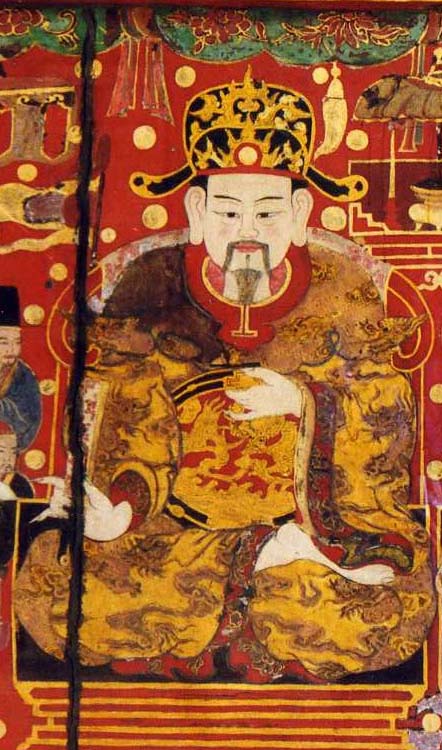
Kinh Dương Vương unified all vassal states in his territory into the single state of Xích Quỷ, which he ruled as Hùng king from the capital at Phong Châu. He also sponsored the development of martial arts in Xích Quỷ at the time. Source — Wikipedia, "Timeline of Vietnamese history" (29th century BCE):
Painting of Hùng King by Trần Trọng Nội in Conference hall, Reunification Palace, Ho Chi Minh City, Vietnam By Diego Delso - Own work, CC BY-SA 3.0, https://commons.wikimedia.org/w/index.php?curid=30078174
2793 BCE
Kinh Dương Vương
Kinh Dương Vương was succeeded as Hùng king of Xích Quỷ, since renamed Văn Lang, by his son Lạc Long Quân. Source — Wikipedia, "Timeline of Vietnamese history" (28th century BCE):
Painting of Hùng King by Trần Trọng Nội in Conference hall, Reunification Palace, Ho Chi Minh City, Vietnam By Diego Delso - Own work, CC BY-SA 3.0, https://commons.wikimedia.org/w/index.php?curid=30078174
2637 BCE
The lunar calendar came into use
The lunar calendar came into use in Văn Lang. Source — Wikipedia, "Timeline of Vietnamese history" (27th century BCE):
2524 BCE
Hùng king
The first Hùng king of the Cấn line came to power in Văn Lang. Source — Wikipedia, "Timeline of Vietnamese history" (26th century BCE):
Painting of Hùng King by Trần Trọng Nội in Conference hall, Reunification Palace, Ho Chi Minh City, Vietnam By Diego Delso - Own work, CC BY-SA 3.0, https://commons.wikimedia.org/w/index.php?curid=30078174
2500 BCE
The Soi Nhụ culture appeared.
The Soi Nhụ culture appeared. Source — Wikipedia, "Timeline of Vietnamese history" (Prehistoric Vietnam):
2500 BCE
Hùng king
The Hùng king ordered an increase in rice cultivation. Source — Wikipedia, "Timeline of Vietnamese history" (25th century BCE):
Painting of Hùng King by Trần Trọng Nội in Conference hall, Reunification Palace, Ho Chi Minh City, Vietnam By Diego Delso - Own work, CC BY-SA 3.0, https://commons.wikimedia.org/w/index.php?curid=30078174
2300 BCE
Ngườm
The Ngườm culture appeared. Source — Wikipedia, "Timeline of Vietnamese history" (Prehistoric Vietnam):
2253 BCE
Hùng king
The last Hùng king of the Cấn line ended his rule of Văn Lang. Source — Wikipedia, "Timeline of Vietnamese history" (23rd century BCE):
Painting of Hùng King by Trần Trọng Nội in Conference hall, Reunification Palace, Ho Chi Minh City, Vietnam By Diego Delso - Own work, CC BY-SA 3.0, https://commons.wikimedia.org/w/index.php?curid=30078174
2252 BCE
Hùng king
The first Hùng king of the Chấn line came to power in Văn Lang. Source — Wikipedia, "Timeline of Vietnamese history" (23rd century BCE):
Painting of Hùng King by Trần Trọng Nội in Conference hall, Reunification Palace, Ho Chi Minh City, Vietnam By Diego Delso - Own work, CC BY-SA 3.0, https://commons.wikimedia.org/w/index.php?curid=30078174
2200 BCE
The earliest surviving artifacts indicating use
The earliest surviving artifacts indicating use of the Vietnamese calendar appeared. Source — Wikipedia, "Timeline of Vietnamese history" (22nd century BCE):
2000 BCE
Sơn Vi culture
The Sơn Vi culture appeared in modern Lâm Thao district. Source — Wikipedia, "Timeline of Vietnamese history" (Prehistoric Vietnam):
Fundplatz Sơn Vi in Nordvietnam By AReinecke - Own work, CC BY-SA 4.0, https://commons.wikimedia.org/w/index.php?curid=114121365
2000 BCE
Phùng Nguyên culture
The Phùng Nguyên culture appeared. Source — Wikipedia, "Timeline of Vietnamese history" (20th century BCE):
1913 BCE
Hùng king
The last Hùng king of the Chấn line ended his rule of Văn Lang. Source — Wikipedia, "Timeline of Vietnamese history" (20th century BCE):
Painting of Hùng King by Trần Trọng Nội in Conference hall, Reunification Palace, Ho Chi Minh City, Vietnam By Diego Delso - Own work, CC BY-SA 3.0, https://commons.wikimedia.org/w/index.php?curid=30078174
1912 BCE
Hùng king
The first Hùng king of the Tốn line came to power in Văn Lang. Source — Wikipedia, "Timeline of Vietnamese history" (20th century BCE):
Painting of Hùng King by Trần Trọng Nội in Conference hall, Reunification Palace, Ho Chi Minh City, Vietnam By Diego Delso - Own work, CC BY-SA 3.0, https://commons.wikimedia.org/w/index.php?curid=30078174
1712 BCE
Hùng king
The first Hùng king of the Ly line came to power in Văn Lang. Source — Wikipedia, "Timeline of Vietnamese history" (18th century BCE):
Painting of Hùng King by Trần Trọng Nội in Conference hall, Reunification Palace, Ho Chi Minh City, Vietnam By Diego Delso - Own work, CC BY-SA 3.0, https://commons.wikimedia.org/w/index.php?curid=30078174
1700 BCE
Burial rituals and tomb building came
Burial rituals and tomb building came into practice. Source — Wikipedia, "Timeline of Vietnamese history" (17th century BCE):
1631 BCE
Hùng king
The first Hùng king of the Khôn line came to power in Văn Lang. Source — Wikipedia, "Timeline of Vietnamese history" (17th century BCE):
Painting of Hùng King by Trần Trọng Nội in Conference hall, Reunification Palace, Ho Chi Minh City, Vietnam By Diego Delso - Own work, CC BY-SA 3.0, https://commons.wikimedia.org/w/index.php?curid=30078174
1500 BCE
Đồng Đậu culture
The Đồng Đậu culture appeared. Source — Wikipedia, "Timeline of Vietnamese history" (15th century BCE):
1432 BCE
Hùng king
The last Hùng king of the Khôn line ended his rule of Văn Lang. Source — Wikipedia, "Timeline of Vietnamese history" (15th century BCE):
Painting of Hùng King by Trần Trọng Nội in Conference hall, Reunification Palace, Ho Chi Minh City, Vietnam By Diego Delso - Own work, CC BY-SA 3.0, https://commons.wikimedia.org/w/index.php?curid=30078174
1431 BCE
Hùng king
The first Hùng king of the Đoài line came to power in Văn Lang. Source — Wikipedia, "Timeline of Vietnamese history" (15th century BCE):
Painting of Hùng King by Trần Trọng Nội in Conference hall, Reunification Palace, Ho Chi Minh City, Vietnam By Diego Delso - Own work, CC BY-SA 3.0, https://commons.wikimedia.org/w/index.php?curid=30078174
1331 BCE
Hùng king
The first Hùng king of the Giáp line came to power in Văn Lang. Source — Wikipedia, "Timeline of Vietnamese history" (14th century BCE):
Painting of Hùng King by Trần Trọng Nội in Conference hall, Reunification Palace, Ho Chi Minh City, Vietnam By Diego Delso - Own work, CC BY-SA 3.0, https://commons.wikimedia.org/w/index.php?curid=30078174
1251 BCE
Hùng king
The first Hùng king of the Ất line came to power in Văn Lang. Source — Wikipedia, "Timeline of Vietnamese history" (13th century BCE):
Painting of Hùng King by Trần Trọng Nội in Conference hall, Reunification Palace, Ho Chi Minh City, Vietnam By Diego Delso - Own work, CC BY-SA 3.0, https://commons.wikimedia.org/w/index.php?curid=30078174
1200 BCE
Lạc Việt
The Lạc Việt discovered bronze casting. Source — Wikipedia, "Timeline of Vietnamese history" (12th century BCE):
Việt Nam toàn cảnh dư đồ (越南全境輿圖), a 1885 map of Vietnam created by cartographer Hoàng Hữu Xứng (1831-1905). By Hoàng Hữu Xứng (1831-1905) - https://www.loc.gov/item/84696159/ / https://www.flickr.com/photos/13476480@N07/15603378363/in/album-72157639067315323/, Public domain, https://commons.wikimedia.org/w/index.php?curid=55385465
1200 BCE
Hoabinhian
Hoabinhian artifacts began to be produced in Northern Vietnam. Source — Wikipedia, "Timeline of Vietnamese history" (Prehistoric Vietnam):
Administrative divisions of Tonkin 1920 with map of Guangzhouwan in the top right corner By Geographical Service of Indochine - https://data.bnf.fr/fr/11395405/indochine_francaise_service_geographique/, Public domain, https://commons.wikimedia.org/w/index.php?curid=104014243
1162 BCE
Hùng king
The last Hùng king of the Ất line ended his rule of Văn Lang. Source — Wikipedia, "Timeline of Vietnamese history" (12th century BCE):
Painting of Hùng King by Trần Trọng Nội in Conference hall, Reunification Palace, Ho Chi Minh City, Vietnam By Diego Delso - Own work, CC BY-SA 3.0, https://commons.wikimedia.org/w/index.php?curid=30078174
1161 BCE
Hùng king
The first Hùng king of the Bính line came to power in Văn Lang. Source — Wikipedia, "Timeline of Vietnamese history" (12th century BCE):
Painting of Hùng King by Trần Trọng Nội in Conference hall, Reunification Palace, Ho Chi Minh City, Vietnam By Diego Delso - Own work, CC BY-SA 3.0, https://commons.wikimedia.org/w/index.php?curid=30078174
1100 BCE
Gò Mun culture
The Gò Mun culture appeared. Source — Wikipedia, "Timeline of Vietnamese history" (11th century BCE):
1055 BCE
Hùng king
The last Hùng king of the Bính line ended his rule of Văn Lang. Source — Wikipedia, "Timeline of Vietnamese history" (11th century BCE):
Painting of Hùng King by Trần Trọng Nội in Conference hall, Reunification Palace, Ho Chi Minh City, Vietnam By Diego Delso - Own work, CC BY-SA 3.0, https://commons.wikimedia.org/w/index.php?curid=30078174
1054 BCE
Hùng king
The first Hùng king of the Đinh line came to power in Văn Lang. Source — Wikipedia, "Timeline of Vietnamese history" (11th century BCE):
Painting of Hùng King by Trần Trọng Nội in Conference hall, Reunification Palace, Ho Chi Minh City, Vietnam By Diego Delso - Own work, CC BY-SA 3.0, https://commons.wikimedia.org/w/index.php?curid=30078174
1000 BCE
Đông Sơn culture
The Đông Sơn culture appeared in the valley of the Red River. Source — Wikipedia, "Timeline of Vietnamese history" (10th century BCE):
A square-edge axe with decoration of dog hunting deer, Dong Son culture, 500 BCE-0. By Bình Giang - Own work, Public domain, https://commons.wikimedia.org/w/index.php?curid=6612699
969 BCE
Hùng king
The last Hùng king of the Đinh line ended his rule of Văn Lang. Source — Wikipedia, "Timeline of Vietnamese history" (10th century BCE):
Painting of Hùng King by Trần Trọng Nội in Conference hall, Reunification Palace, Ho Chi Minh City, Vietnam By Diego Delso - Own work, CC BY-SA 3.0, https://commons.wikimedia.org/w/index.php?curid=30078174
968 BCE
Hùng king
The first Hùng king of the Mậu line came to power in Văn Lang. Source — Wikipedia, "Timeline of Vietnamese history" (10th century BCE):
Painting of Hùng King by Trần Trọng Nội in Conference hall, Reunification Palace, Ho Chi Minh City, Vietnam By Diego Delso - Own work, CC BY-SA 3.0, https://commons.wikimedia.org/w/index.php?curid=30078174
853 BCE
Hùng king
The first Hùng king of the Kỷ line came to power in Văn Lang. Source — Wikipedia, "Timeline of Vietnamese history" (9th century BCE):
Painting of Hùng King by Trần Trọng Nội in Conference hall, Reunification Palace, Ho Chi Minh City, Vietnam By Diego Delso - Own work, CC BY-SA 3.0, https://commons.wikimedia.org/w/index.php?curid=30078174
754 BCE
Hùng king
The first Hùng king of the Canh line came to power in Văn Lang. Source — Wikipedia, "Timeline of Vietnamese history" (8th century BCE):
Painting of Hùng King by Trần Trọng Nội in Conference hall, Reunification Palace, Ho Chi Minh City, Vietnam By Diego Delso - Own work, CC BY-SA 3.0, https://commons.wikimedia.org/w/index.php?curid=30078174
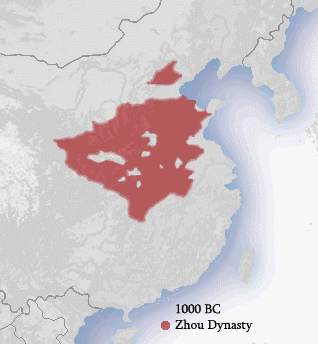
700 BCE
Zhou dynasty
Refugees from the increasingly fragile Zhou dynasty began to arrive in the Red River Delta. Source — Wikipedia, "Timeline of Vietnamese history" (7th century BCE):
The approximate territory of the Zhou dynasty in China. Drawn by Ian Kiu. Derived from China_map.png by Nat. By Territories_of_Dynasties_in_China.gif: Ian Kiu - Territories_of_Dynasties_in_China.gif: Albert Herrmann (1935). History and Commercial Atlas of China. Harvard University Press. from "The Chou Dynasty, 11th-9th Centuries B.C.", CC BY-SA 3.0, https://commons.wikimedia.org/w/index.php?curid=13309273
661 BCE
Hùng king
The last Hùng king of the Canh line ended his rule of Văn Lang. Source — Wikipedia, "Timeline of Vietnamese history" (7th century BCE):
Painting of Hùng King by Trần Trọng Nội in Conference hall, Reunification Palace, Ho Chi Minh City, Vietnam By Diego Delso - Own work, CC BY-SA 3.0, https://commons.wikimedia.org/w/index.php?curid=30078174
660 BCE
Hùng king
The first Hùng king of the Tân line came to power in Văn Lang. Source — Wikipedia, "Timeline of Vietnamese history" (7th century BCE):
Painting of Hùng King by Trần Trọng Nội in Conference hall, Reunification Palace, Ho Chi Minh City, Vietnam By Diego Delso - Own work, CC BY-SA 3.0, https://commons.wikimedia.org/w/index.php?curid=30078174
600 BCE
The metallurgical style unique to the
The metallurgical style unique to the Đông Sơn drums was invented. Source — Wikipedia, "Timeline of Vietnamese history" (6th century BCE):
569 BCE
Hùng king
The last Hùng king of the Tân line ended his rule of Văn Lang. Source — Wikipedia, "Timeline of Vietnamese history" (6th century BCE):
Painting of Hùng King by Trần Trọng Nội in Conference hall, Reunification Palace, Ho Chi Minh City, Vietnam By Diego Delso - Own work, CC BY-SA 3.0, https://commons.wikimedia.org/w/index.php?curid=30078174
568 BCE
Hùng king
The first Hùng king of the Nhâm line came to power in Văn Lang. Source — Wikipedia, "Timeline of Vietnamese history" (6th century BCE):
Painting of Hùng King by Trần Trọng Nội in Conference hall, Reunification Palace, Ho Chi Minh City, Vietnam By Diego Delso - Own work, CC BY-SA 3.0, https://commons.wikimedia.org/w/index.php?curid=30078174
500 BCE
Tết
The earliest artifacts suggesting the celebration of Tết appeared. Source — Wikipedia, "Timeline of Vietnamese history" (5th century BCE):
Một góc Đường hoa Nguyễn Huệ tại TP. Hồ Chí Minh vào dịp Tết Nguyên Đán 2016. By trungydang - https://web.archive.org/web/20161031154804/http://www.panoramio.com/photo/128109837, CC BY 3.0, https://commons.wikimedia.org/w/index.php?curid=60326017
470 BCE
Goujian
King Goujian of Yue sent messengers to Văn Lang demanding submission. Source — Wikipedia, "Timeline of Vietnamese history" (5th century BCE):
绍兴越王台 By Gisling - Own work, CC BY-SA 3.0, https://commons.wikimedia.org/w/index.php?curid=17682953
408 BCE
Hùng Duệ Vương
Hùng Duệ Vương became Hùng king of Văn Lang. Source — Wikipedia, "Timeline of Vietnamese history" (5th century BCE):
Painting of Hùng King by Trần Trọng Nội in Conference hall, Reunification Palace, Ho Chi Minh City, Vietnam By Diego Delso - Own work, CC BY-SA 3.0, https://commons.wikimedia.org/w/index.php?curid=30078174
400 BCE
Red River Delta
A mass migration of refugees to the Red River Delta took place due to the ongoing collapse of the Zhou dynasty. Source — Wikipedia, "Timeline of Vietnamese history" (4th century BCE):
Location of region XY (see filename) in Vietnam By TUBS - This vector image includes elements that have been taken or adapted from this file:, CC BY-SA 3.0, https://commons.wikimedia.org/w/index.php?curid=17123934
300 BCE
Buddhism
Buddhist missionaries from Maurya Empire arrived in Văn Lang. Source — Wikipedia, "Timeline of Vietnamese history" (3rd century BCE):
Buddha Daibutsu, Kamakura, Japan. This statue of Amitabha Buddha, made of bronze, is 11.40 m high and weights 93 t. By Dirk Beyer - Own work, CC BY-SA 3.0, https://commons.wikimedia.org/w/index.php?curid=230799
257 BCE
Âu Việt
Thục Phán, ruler of the Âu Việt, invaded and conquered Văn Lang. He renamed the country Âu Lạc and took the regnal name An Dương Vương, ruling as king from Cổ Loa Citadel. Source — Wikipedia, "Timeline of Vietnamese history" (3rd century BCE):
Territorial divisions of Văn Lang during the Hồng Bàng dynasty By DannamEmpire - Own work, CC BY 4.0, https://commons.wikimedia.org/w/index.php?curid=161561932
250 BCE
Hùng Temple
The Hùng Temple was built. Source — Wikipedia, "Timeline of Vietnamese history" (3rd century BCE):
Lăng vua Hùng (xây vào năm 1870) ở đền Hùng, Việt Trì, Phú Thọ. By Viethavvh at vi.wikipedia - Own workTransferred from vi.wikipedia, Public domain, https://commons.wikimedia.org/w/index.php?curid=16923451
210 BCE
The Battle of Tiên Du took
The Battle of Tiên Du took place. Source — Wikipedia, "Timeline of Vietnamese history" (3rd century BCE):
207 BCE
Qin dynasty
The Qin general Zhao Tuo captured Cổ Loa Citadel. An Dương Vương fled and later committed suicide. Source — Wikipedia, "Timeline of Vietnamese history" (3rd century BCE):
Commandaries and population centers of the Qin dynasty (221–206 BC) By Ian Remsen - Modern natural borders from Natural Earth Albers used for the map projection, via svgis λ 0 = 110 {\displaystyle \lambda _{0}=110} φ 0 = 30 {\displaystyle \varphi _{0}=30} φ 1 = 25 {\displaystyle \varphi _{1}=25} φ 2 = 37 {\displaystyle \varphi _{2}=37} Political borders, location of the Great Wall, and adjustments to reflect ancient borders from Li, Feng (2013) Early China: A Social and Cultural History, New Approaches to Asian History, 12, Cambridge University Press, p. 246 DOI: 10.1017/CBO9781139034395. ISBN: 978-0-521-89552-1. Square represents the Qin capital at Xianyang Dotted open circles represent population centers whose precise locations are unclear, CC0, https://commons.wikimedia.org/w/index.php?curid=158113722
206 BCE
Xiang Yu
The warlord Xiang Yu led an army into the Qin capital Xianyang, burned the Epang Palace and killed the Qin emperor Ziying and the royal family. Source — Wikipedia, "Timeline of Vietnamese history" (3rd century BCE):
Xiang Yu By Unknown Chinese artist - https://www.philamuseum.org/collection/object/42784, Public domain, https://commons.wikimedia.org/w/index.php?curid=139216128
203 BCE
Zhao Tuo
Zhao Tuo declared himself king of Nanyue, with his capital in modern Panyu, Guangzhou. Source — Wikipedia, "Timeline of Vietnamese history" (3rd century BCE):
Statue of City-god Zhao Tuo inside the Temple of Nanyue King. By Zhangzhugang - This image has been extracted from another file, CC BY-SA 4.0, https://commons.wikimedia.org/w/index.php?curid=126255957
198 BCE
Jiaozhi
Two delegates were assigned to oversee the affairs of Jiaozhi and Jiuzhen. Source — Wikipedia, "Timeline of Vietnamese history" (2nd century BCE):
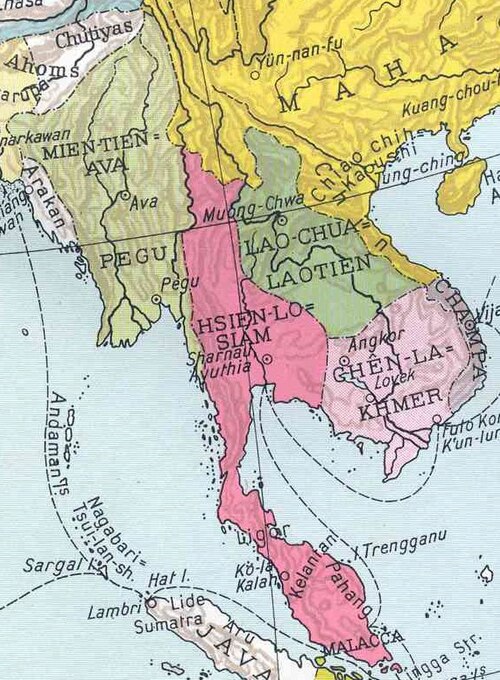
Detail of Southeast Asia in 1415 from a larger map of the Ming Empire. For a guide to typography, symbols, etc., see "HCAC Scripts Symbols & Abbreviations.jpg". By Albert Herrmann & Georg Westermann - Historical and Commercial Atlas of China, Public domain, https://commons.wikimedia.org/w/index.php?curid=144186591
196 BCE
Han dynasty
The Han official Lu Jia gave Zhao Tuo a seal recognizing him as king of Nanyue in exchange for his nominal submission to the Han emperor. Source — Wikipedia, "Timeline of Vietnamese history" (2nd century BCE):
Map of Han Dynasty in 2 CE. Modification of Image:Han Dynasty Plain map.PNG Darkest blue represents the commanderies and principalities of the Han Empire. Light blue represents the Tarim Basin protectorate. By DannamEmpire - Own work using: Based on: Map, p. 63, Mapping History: World History (London: Cartographica, 2007), by Dr. Ian Barnes. ISBN 978-1-84573-323-0, CC BY 4.0, https://commons.wikimedia.org/w/index.php?curid=162847450
183 BCE
Empress Lü
Empress Lü, the Han empress dowager and regent for her grandson Emperor Houshao of Han, ordered a trade blockade of Nanyue. Source — Wikipedia, "Timeline of Vietnamese history" (2nd century BCE):
[出版地不明] : 金閶書業堂, [出版年不明] kinshōshogyōdō 14冊 ; 26cm By 鍾 惺, 1574-1624 - Waseda University Library, Public domain, https://commons.wikimedia.org/w/index.php?curid=178863157
181 BCE
Han dynasty
A punitive Han invasion of Nanyue stalled after much of the invading army fell to illness. Source — Wikipedia, "Timeline of Vietnamese history" (2nd century BCE):
Map of Han Dynasty in 2 CE. Modification of Image:Han Dynasty Plain map.PNG Darkest blue represents the commanderies and principalities of the Han Empire. Light blue represents the Tarim Basin protectorate. By DannamEmpire - Own work using: Based on: Map, p. 63, Mapping History: World History (London: Cartographica, 2007), by Dr. Ian Barnes. ISBN 978-1-84573-323-0, CC BY 4.0, https://commons.wikimedia.org/w/index.php?curid=162847450
180 BCE
Empress Lü
Lü Zhi died. Nanyue conquered some Han territory near the border. Source — Wikipedia, "Timeline of Vietnamese history" (2nd century BCE):
[出版地不明] : 金閶書業堂, [出版年不明] kinshōshogyōdō 14冊 ; 26cm By 鍾 惺, 1574-1624 - Waseda University Library, Public domain, https://commons.wikimedia.org/w/index.php?curid=178863157
179 BCE
Zhengding County
In exchange for the restoration of his family in modern Zhengding County and the withdrawal of Han forces from the Nanyue border, Zhao Tuo renounced the title emperor and pledged submission to the Han dynasty. Source — Wikipedia, "Timeline of Vietnamese history" (2nd century BCE):
天宁寺凌霄塔 By E2568 - Own work, CC0, https://commons.wikimedia.org/w/index.php?curid=152714943
135 BCE
Minyue
A border war took place between Nanyue and Minyue. Source — Wikipedia, "Timeline of Vietnamese history" (2nd century BCE):
The location of Minyue By Perinbaba - Own work, CC BY 4.0, https://commons.wikimedia.org/w/index.php?curid=148505374
122 BCE
Zhao Mo
Zhao Mo died. He was succeeded as king of Nanyue by his eldest son Zhao Yingqi. Source — Wikipedia, "Timeline of Vietnamese history" (2nd century BCE):
Zhao Mo By Unknown author, CC BY-SA 2.5, https://commons.wikimedia.org/w/index.php?curid=717654
118 BCE
Confucianism
Confucian ideas were introduced to Nanyue. Source — Wikipedia, "Timeline of Vietnamese history" (2nd century BCE):
Wooden-clapper bell (木鐸 mùduó) used as a symbol of Confucianism. The symbolism is drawn upon the Analects of Confucius, 3.24, where it is said: 天將以夫子爲木鐸, "Heaven will instruct the master like a wooden-clapper bell (to awaken everyone to the Way)". An analogy is made between the master (in the phrase, Confucius himself) who resonates with the order of Heaven which inspires him, and the bell, as if Heaven were the clapper and the master were the bell. The wooden-clapper bell is also an actual instrument that was used to gather people by ancient Chinese administrations, is used for ritual, and by analogy it means the purpose of Confucianism, that is to preach and educate people to the right values. By Aethelwolf Emsworth. - Own reproduction of a drawing made by Picnic11219 for Chinese Wikipedia., Public domain, https://commons.wikimedia.org/w/index.php?curid=65689742
115 BCE
Zhao Yingqi
Zhao Yingqi died. He was succeeded by his son Zhao Xing. Source — Wikipedia, "Timeline of Vietnamese history" (2nd century BCE):
Portrait of King Zhao Xing of Nanyue. By I Love Triệu Đà - Own work, CC0, https://commons.wikimedia.org/w/index.php?curid=126255038
112 BCE
Lü Jia
Lü Jia, the prime minister of Nanyue and a Lạc Việt chief, killed Zhao Xing and his Han Chinese mother Juishi after the latter agreed to full submission to the Han dynasty in order to preserve her authority in Nanyue. He declared Zhao Xing's elder brother Zhao Jiande king. Source — Wikipedia, "Timeline of Vietnamese history" (2nd century BCE):
Panorama of the altar of Prime Minister Lu Gia (Lü Jia) inside Cac Co Cave, located at Thiên Phúc Temple site in Quoc Oai Commune of the rural Hanoi, Vietnam). By I Love Triệu Đà - Own work, CC BY-SA 4.0, https://commons.wikimedia.org/w/index.php?curid=88069942
111 BCE
Han conquest of Nanyue
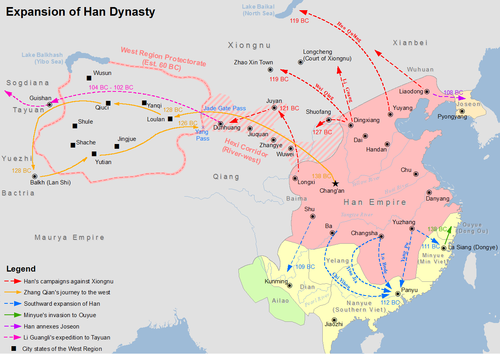
Han conquest of Nanyue: Han forces invaded Nanyue. Zhao Jiande was captured in flight and executed. The zhou of Jiaozhou was organized on the territory of the defunct Nanyue and divided into the commanderies of Nanhai, Cangwu, Yulin, Jiaozhi, Hepu, Zhuya, Taner, and Jiuzhen. Shi Dai was appointed its governor. Source — Wikipedia, "Timeline of Vietnamese history" (2nd century BCE):
Map showing the expansion of Han dynasty in 2nd century BC. By SY - Own work, CC BY-SA 4.0, https://commons.wikimedia.org/w/index.php?curid=60814987
110 BCE
Tây Vu Vương
Tây Vu Vương was assassinated by his assistant Hoàng Đồng. Source — Wikipedia, "Timeline of Vietnamese history" (2nd century BCE):
Bản chính thức Tiếng Anh By Rikelaried - Own work, CC BY-SA 3.0, https://commons.wikimedia.org/w/index.php?curid=78056965
86 BCE
Jiaozhou
Shi Dai's rule of Jiaozhou ended. Source — Wikipedia, "Timeline of Vietnamese history" (1st century BCE):
Bản đồ Giao Châu (màu xanh) và Quảng Châu (màu vàng) năm 264, thời Đông Ngô By 沧海微沤 - Own work, CC BY-SA 3.0, https://commons.wikimedia.org/w/index.php?curid=34964595
48 BCE
commandery
The commandery of Rinan in Jiaozhou was organized south of the Hoành Sơn Range. Source — Wikipedia, "Timeline of Vietnamese history" (1st century BCE):
Provinces and commanderies of the Han Dynasty in 219 CE, during the Jian'an era By Esiymbro - Own work using: Li Xiaojie (1999). Donghan Zhengqu Dili [Administrative Geography of the Eastern Han Dynasty] (in Chinese). Jinan: Shandong Education Press. ISBN 9787532828418. Tan Qixiang (1996). Zhongguo Lishi Dituji [The Historical Atlas of China] (in Chinese), Volume 3. Beijing: SinoMaps Press. ISBN 9787503118425. Topographic base map can be found at User:Koba-chan/Topographic map., CC BY-SA 4.0, https://commons.wikimedia.org/w/index.php?curid=92070972
10 BCE
Bắc Sơn culture
The Bắc Sơn culture appeared. Source — Wikipedia, "Timeline of Vietnamese history" (Prehistoric Vietnam):
8 BCE
Quỳnh Văn culture
The Quỳnh Văn culture appeared. Source — Wikipedia, "Timeline of Vietnamese history" (Prehistoric Vietnam):
5 BCE
The Cái Bèo culture appeared.
The Cái Bèo culture appeared. Source — Wikipedia, "Timeline of Vietnamese history" (Prehistoric Vietnam):
4 BCE
The first rice cultivation of which
The first rice cultivation of which evidence survives in modern Vietnam took place. Source — Wikipedia, "Timeline of Vietnamese history" (Prehistoric Vietnam):
2 CE
Jiaozhou
Tích Quang became governor of Jiaozhou. Source — Wikipedia, "Timeline of Vietnamese history" (1st century):
Bản đồ Giao Châu (màu xanh) và Quảng Châu (màu vàng) năm 264, thời Đông Ngô By 沧海微沤 - Own work, CC BY-SA 3.0, https://commons.wikimedia.org/w/index.php?curid=34964595
31 CE
Jiaozhou
Tích Quang's rule of Jiaozhou ended. Source — Wikipedia, "Timeline of Vietnamese history" (1st century):
Bản đồ Giao Châu (màu xanh) và Quảng Châu (màu vàng) năm 264, thời Đông Ngô By 沧海微沤 - Own work, CC BY-SA 3.0, https://commons.wikimedia.org/w/index.php?curid=34964595
34 CE
Jiaozhou
Su Ding became governor of Jiaozhou. Source — Wikipedia, "Timeline of Vietnamese history" (1st century):
Bản đồ Giao Châu (màu xanh) và Quảng Châu (màu vàng) năm 264, thời Đông Ngô By 沧海微沤 - Own work, CC BY-SA 3.0, https://commons.wikimedia.org/w/index.php?curid=34964595
39 CE
Thi Sách was assassinated.
Thi Sách was assassinated. Source — Wikipedia, "Timeline of Vietnamese history" (1st century):
40 CE
Trung sisters' rebellion
Trung sisters' rebellion: The Trưng Sisters launched a rebellion against Han authority in the Red River Delta. Source — Wikipedia, "Timeline of Vietnamese history" (1st century):
Trung sisters riding elephants By own photo - Đông Hồ painting of the Trung sisters, Public domain, https://commons.wikimedia.org/w/index.php?curid=76133654
43 CE
Trưng Sisters
Trung sisters' rebellion: the Trưng Sisters committed suicide by drowning themselves before The Han general Ma Yuan could capture them. Source — Wikipedia, "Timeline of Vietnamese history" (1st century):
Trưng Sisters By Unknown author, Public domain, https://commons.wikimedia.org/w/index.php?curid=92167771
Jun 23, 229 CE
Sun Quan
Sun Quan declared himself emperor, founding the state of Eastern Wu, separating from the Han dynasty. Source — Wikipedia, "Timeline of Vietnamese history" (3rd century):
Sun Quan By Yan Liben - http://hi.baidu.com/%CB%CE%BE%FC%D2%C5%C3%F1/album/%D1%D6%C1%A2%B1%BE%20%C0%FA%B4%FA%B5%DB%CD%F5%CD%BC%BE%ED, Public domain, https://commons.wikimedia.org/w/index.php?curid=1872106
246 CE
Lady Triệu
Lady Triệu uprising. Source — Wikipedia, "Timeline of Vietnamese history" (3rd century):
Dong Ho painting "Mrs. Trieu rides an elephant" By Nghệ nhân tranh Đông Hồ - Vietnamese folk painting book, page 12, National Culture Publishing House., Public domain, https://commons.wikimedia.org/w/index.php?curid=76132082
Feb 1, 544 CE
Liang dynasty
Following his rebellion and expulsion of Liang forces from Jiaozhou, Lý Nam Đế was proclaimed emperor of Vạn Xuân. Source — Wikipedia, "Timeline of Vietnamese history" (6th century):
Liang dynasty map By S - This image has been extracted from another file, CC BY-SA 4.0, https://commons.wikimedia.org/w/index.php?curid=126392218
545 CE
Liang dynasty
The Liang general Emperor Wu of Chen launched a surprise attack on the Vạn Xuân capital Long Biên, forcing Lý Nam Đế and the imperial administration to flee to the Gia Ninh Citadel in modern Việt Trì. Source — Wikipedia, "Timeline of Vietnamese history" (6th century):
Liang dynasty map By S - This image has been extracted from another file, CC BY-SA 4.0, https://commons.wikimedia.org/w/index.php?curid=126392218
546 CE
Lý Nam Đế
Lý Nam Đế was forced to retreat to Khuất Lão Cave, where he reorganized his army under the command of Triệu Việt Vương. Source — Wikipedia, "Timeline of Vietnamese history" (6th century):
The painting Emperor Lý Nam Đế. By Unknown author - http://masterpieces.asemus.museum/masterpiece/detail.nhn?objectId=12578, Public domain, https://commons.wikimedia.org/w/index.php?curid=37510251
547 CE
Khoái Châu District
Vạn Xuân forces defended Dạ Trạch in modern Khoái Châu District from Liang forces. Source — Wikipedia, "Timeline of Vietnamese history" (6th century):
Trung tâm thị trấn Khoái Châu By Vanhoabui - Own work, CC BY-SA 4.0, https://commons.wikimedia.org/w/index.php?curid=76423679
Feb 1, 548 CE
Lý Nam Đế
Lý Nam Đế ceded rule of Vạn Xuân to Triệu Việt Vương and his older brother Lý Thiên Bảo. Source — Wikipedia, "Timeline of Vietnamese history" (6th century):
The painting Emperor Lý Nam Đế. By Unknown author - http://masterpieces.asemus.museum/masterpiece/detail.nhn?objectId=12578, Public domain, https://commons.wikimedia.org/w/index.php?curid=37510251
550 CE
Triệu Việt Vương
Triệu Việt Vương expelled Liang forces from Vạn Xuân and reestablished the capital at Long Biên. Source — Wikipedia, "Timeline of Vietnamese history" (6th century):
Liang dynasty map By S - This image has been extracted from another file, CC BY-SA 4.0, https://commons.wikimedia.org/w/index.php?curid=126392218
555 CE
Lý Thiên Bảo
Lý Thiên Bảo died without heirs. Source — Wikipedia, "Timeline of Vietnamese history" (6th century):
Việt Nam toàn cảnh dư đồ (越南全境輿圖), a 1885 map of Vietnam created by cartographer Hoàng Hữu Xứng (1831-1905). By Hoàng Hữu Xứng (1831-1905) - https://www.loc.gov/item/84696159/ / https://www.flickr.com/photos/13476480@N07/15603378363/in/album-72157639067315323/, Public domain, https://commons.wikimedia.org/w/index.php?curid=55385465
557 CE
Hậu Lý Nam Đế
Hậu Lý Nam Đế, Lý Nam Đế's cousin and claimant to the throne of Vạn Xuân, signed a truce with Triệu Việt Vương establishing a boundary between their two territories. Source — Wikipedia, "Timeline of Vietnamese history" (6th century):
The painting Emperor Lý Nam Đế. By Unknown author - http://masterpieces.asemus.museum/masterpiece/detail.nhn?objectId=12578, Public domain, https://commons.wikimedia.org/w/index.php?curid=37510251
571 CE
Hậu Lý Nam Đế
Hậu Lý Nam Đế surprised and conquered Triệu Việt Vương and moved his capital to Phong Châu. Source — Wikipedia, "Timeline of Vietnamese history" (6th century):
602 CE
Sui–Former Lý War
Sui–Former Lý War: Sui conquered Vạn Xuân following a brief rebellion by Hậu Lý Nam Đế. Source — Wikipedia, "Timeline of Vietnamese history" (7th century):
Sui Dynasty 589~609 CE.png By Ian Kiu - Own work, CC BY 3.0, https://commons.wikimedia.org/w/index.php?curid=3082893
713 CE
Mai Thúc Loan
Mai Thúc Loan uprising. Source — Wikipedia, "Timeline of Vietnamese history" (8th century):
Mai de By Bảo bảo 123456789 - Own work, CC BY-SA 4.0, https://commons.wikimedia.org/w/index.php?curid=131261963
Tượng thờ Phùng Hưng tại đền thờ ông ở quê hương-làng Cam Lâm xã Đường Lâm thị xã Sơn Tây Hà Nội. By Doãn Hiệu at Vietnamese Wikipedia - Transferred from vi.wikipedia to Commons by Common Good using CommonsHelper., CC BY 3.0, https://commons.wikimedia.org/w/index.php?curid=13257112
938 CE
Battle of Bạch Đằng
Battle of Bạch Đằng: Ngô Quyền defeated the Southern Han kingdom at the Battle of Bạch Đằng north of modern Haiphong and ended 1,000 years of Chinese domination dating back to 111 BC under the Han dynasty, founding the Ngô dynasty. Source — Wikipedia, "Timeline of Vietnamese history" (10th century):
Five Dynasties Ten Kingdoms Period 923 CE By Ian Kiu - Own work, CC BY 3.0, https://commons.wikimedia.org/w/index.php?curid=3048730
965 CE
Anarchy of the 12 Warlords
Anarchy of the 12 Warlords Source — Wikipedia, "Timeline of Vietnamese history" (10th century):
Việt Nam toàn cảnh dư đồ (越南全境輿圖), a 1885 map of Vietnam created by cartographer Hoàng Hữu Xứng (1831-1905). By Hoàng Hữu Xứng (1831-1905) - https://www.loc.gov/item/84696159/ / https://www.flickr.com/photos/13476480@N07/15603378363/in/album-72157639067315323/, Public domain, https://commons.wikimedia.org/w/index.php?curid=55385465
979 CE
Đinh Bộ Lĩnh
Emperor Đinh Bộ Lĩnh of Đại Cồ Việt was assassinated along with his crown prince Đinh Liễn by a minor palace official. His surviving son, the young Đinh Phế Đế, succeeded him under the regency of the commander-in-chief Lê Hoàn. Source — Wikipedia, "Timeline of Vietnamese history" (10th century):
Tuong Vua Dinh Tien Hoang tai den Dinh - Le (Hoa Lu - Ninh Binh) By Hungquoc at Vietnamese Wikipedia - Transferred from vi.wikipedia to Commons by Common Good using CommonsHelper., Public domain, https://commons.wikimedia.org/w/index.php?curid=13257177
981 CE
Lê Hoàn
Lê Hoàn declared himself emperor at Hoa Lư. Source — Wikipedia, "Timeline of Vietnamese history" (10th century):
Lê Hoàn By Kien1980v at Vietnamese Wikipedia - Transferred from vi.wikipedia to Commons by 唐吉訶德的侍從., Public domain, https://commons.wikimedia.org/w/index.php?curid=16119488
982 CE
Champa
Đại Cồ Việt forces sacked the Champa capital Indrapura. Source — Wikipedia, "Timeline of Vietnamese history" (10th century):
Linyi and Chamic states of the fifth century AD By Laska666 - Own work The Birth of Champa by Anne-Valérie Schweyer, 2012, CC0, https://commons.wikimedia.org/w/index.php?curid=116587397
1005 CE
Lê Hoàn
Lê Hoàn died. Source — Wikipedia, "Timeline of Vietnamese history" (11th century):
Lê Hoàn By Kien1980v at Vietnamese Wikipedia - Transferred from vi.wikipedia to Commons by 唐吉訶德的侍從., Public domain, https://commons.wikimedia.org/w/index.php?curid=16119488
1009 CE
Lý Thái Tổ
The imperial court acclaimed Lý Thái Tổ emperor of Đại Cồ Việt. Source — Wikipedia, "Timeline of Vietnamese history" (11th century):
Statue of Lý Thái Tổ in Hanoi, Vietnam. By William Whyte from Dublin, Ireland - Ly Thaito, CC BY-SA 2.0, https://commons.wikimedia.org/w/index.php?curid=10413017
1010 CE
Lý Thái Tổ
Lý Thái Tổ issued the chiếu dời đô, an edict ordering the transfer of the capital from Hoa Lư to Đại La. Source — Wikipedia, "Timeline of Vietnamese history" (11th century):
Statue of Lý Thái Tổ in Hanoi, Vietnam. By William Whyte from Dublin, Ireland - Ly Thaito, CC BY-SA 2.0, https://commons.wikimedia.org/w/index.php?curid=10413017
1028 CE
Lý Thái Tổ
Lý Thái Tổ's son Lý Thái Tông became emperor of Đại Cồ Việt. Source — Wikipedia, "Timeline of Vietnamese history" (11th century):
Statue of Lý Thái Tổ in Hanoi, Vietnam. By William Whyte from Dublin, Ireland - Ly Thaito, CC BY-SA 2.0, https://commons.wikimedia.org/w/index.php?curid=10413017
1038 CE
Nùng people
The Nùng warlord Nùng Tồn Phúc launched a failed rebellion against Lý Thái Tông. Source — Wikipedia, "Timeline of Vietnamese history" (11th century):
Nung woman in Viet Nam By DXLINH - Own work, CC BY-SA 3.0, https://commons.wikimedia.org/w/index.php?curid=4656379
1054 CE
Lý Thái Tông
Lý Thái Tông died. He was succeeded by his son Lý Thánh Tông. Source — Wikipedia, "Timeline of Vietnamese history" (11th century):
Hình Lý Thái Tông, trích từ hình Image:Lienhoabatdiep.JPG của Khương Việt Hà, chụp hình tượng tại đền Lý Bát Đế - this picture is taken from status at Ly Bat De Shrine, Vietnam By Newone - self-made in Corel, CC BY-SA 3.0, https://commons.wikimedia.org/w/index.php?curid=3961704
1070 CE
Temple of Literature, Hanoi
The Temple of Literature, Hanoi, a Confucian temple, was constructed. Source — Wikipedia, "Timeline of Vietnamese history" (11th century):
Main entrance of the Temple of Literature in Hanoi, Vietnam. By The original uploader was Chuoibk at English Wikipedia. - Transferred from en.wikipedia to Commons., CC BY-SA 3.0, https://commons.wikimedia.org/w/index.php?curid=114593728
Jan 1, 1072 CE
Lý Thánh Tông
Lý Thánh Tông died. He was succeeded as emperor by his young son Lý Nhân Tông, with the latter's mother Ỷ Lan and the chancellor Lý Đạo Thành acting as regents. Source — Wikipedia, "Timeline of Vietnamese history" (11th century):
Bronze statue of Emperor Lý Thánh Tông, Temple of Literature, Hanoi. By Nguyễn Thanh Quang - Own work, CC BY-SA 3.0, https://commons.wikimedia.org/w/index.php?curid=10823126
1075 CE
Minor officials were chosen by examination
Minor officials were chosen by examination for the first time. Source — Wikipedia, "Timeline of Vietnamese history" (11th century):
Jan 15, 1127 CE
Lý Nhân Tông
Lý Nhân Tông died. Source — Wikipedia, "Timeline of Vietnamese history" (12th century):
Bronze statue of Emperor Lý Nhân Tông, Temple of Literature, Hanoi. By Nguyễn Thanh Quang - Own work, CC BY-SA 3.0, https://commons.wikimedia.org/w/index.php?curid=10823142
1176 CE
Lý Cao Tông
The young Lý Cao Tông became emperor under the regency of Tô Hiến Thành. Source — Wikipedia, "Timeline of Vietnamese history" (12th century):
1209 CE
Quách Bốc
The general Quách Bốc entered the capital, dethroned Lý Cao Tông and installed his young son Lý Thẩm as emperor. Source — Wikipedia, "Timeline of Vietnamese history" (13th century):
Jan 11, 1226 CE
Trần Thái Tông
Trần Thái Tông was crowned emperor of Đại Việt. Source — Wikipedia, "Timeline of Vietnamese history" (13th century):
Jan 1, 1258 CE
Mongol invasions of Vietnam
Mongol invasions of Vietnam: The Mongol Empire invaded Đại Việt and conquered the capital at modern Hanoi. Trần Thái Tông fled to an island. Source — Wikipedia, "Timeline of Vietnamese history" (13th century):
Yuan invasions of Southeast Asia By Qiushufang - Own work, CC BY-SA 4.0, https://commons.wikimedia.org/w/index.php?curid=84826217
Nov 1, 1278 CE
Trần Thánh Tông
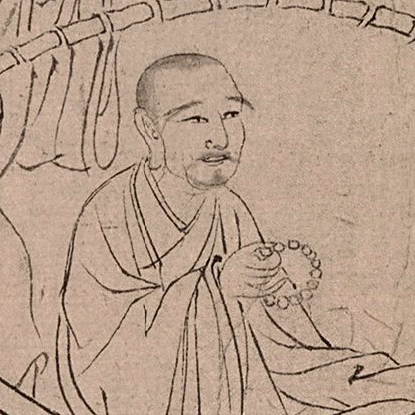
Trần Thánh Tông ceded the throne to his son Trần Nhân Tông. Source — Wikipedia, "Timeline of Vietnamese history" (13th century):
Drawing of Tran Nhan Tong in the work Truc Lam, the great painter. By Unknown author - This image has been extracted from another file, Public domain, https://commons.wikimedia.org/w/index.php?curid=94112750
1282 CE
The Bình Than Conference took place.
The Bình Than Conference took place. Source — Wikipedia, "Timeline of Vietnamese history" (13th century):
1284 CE
The Diên Hồng Conference took place.
The Diên Hồng Conference took place. Source — Wikipedia, "Timeline of Vietnamese history" (13th century):
1285 CE
commander-in-chief
Mongol invasions of Vietnam: The Đại Việt commander-in-chief Trần Hưng Đạo drew out and harassed a Yuan invasion force, forcing their retreat. Source — Wikipedia, "Timeline of Vietnamese history" (13th century):
The Latvian "platoon" marches in the Pass in Review as part of Exercise COOPERATIVE OSPREY '98's closing ceremony, which took place on WPT Hill field, Camp Lejeune. COOPERATIVE OSPREY '98 is a Partnership for Peace (PfP) exercise conducted at Camp Lejeune, North Carolina, June 1-20, 1998. Location: MARINE CORPS BASE, CAMP LEJEUNE, NORTH CAROLINA (NC) UNITED STATES OF AMERICA (USA). By SGT THOPGMAS W. AMMONS, USA - http://www.dodmedia.osd.mil/, Public domain, https://commons.wikimedia.org/w/index.php?curid=1221316
1287 CE
Mongol Empire
Mongol invasions of Vietnam: The Mongol navy was destroyed, forcing the army, left without provisions, to begin its retreat from Đại Việt. Source — Wikipedia, "Timeline of Vietnamese history" (13th century):
Map of the Mongol Empire's territorial expansion in 1206-1294. Shows the territory of the Mongol Empire when Genghis Khan unified the tribes, mainly on the Mongolian plateau, including the regions of the Kereit, Naiman and Merkit. By DannamEmpire - Own work, CC BY 4.0, https://commons.wikimedia.org/w/index.php?curid=162865370
Mar 3, 1293 CE
Trần Nhân Tông
Trần Nhân Tông ceded the throne to his son Trần Anh Tông. Source — Wikipedia, "Timeline of Vietnamese history" (13th century):
Drawing of Tran Nhan Tong in the work Truc Lam, the great painter. By Unknown author - This image has been extracted from another file, Public domain, https://commons.wikimedia.org/w/index.php?curid=94112750
1306 CE
Trần Anh Tông
Trần Anh Tông's sister Huyền Trân married the Champa king Chế Mân in Huế. Source — Wikipedia, "Timeline of Vietnamese history" (14th century):
Trần Anh Tông trong bức Trúc Lâm Đại sĩ xuất sơn đồ By Tran Chi As (born 1363) - [1], Public domain, https://commons.wikimedia.org/w/index.php?curid=33069679
1341 CE
Trần Dụ Tông
The young Trần Dụ Tông was crowned emperor of Đại Việt under the regency of his father, the retired emperor Trần Minh Tông. Source — Wikipedia, "Timeline of Vietnamese history" (14th century):
Mộc-tượng Trần-triều Dụ-tông Hiếu hoàng-đế tại chùa Gệt. By 閒鹤 - XIX-century, Public domain, https://commons.wikimedia.org/w/index.php?curid=62795644
1360 CE
Champa
Champa launched several border attacks against Đại Việt. Source — Wikipedia, "Timeline of Vietnamese history" (14th century):
Linyi and Chamic states of the fifth century AD By Laska666 - Own work The Birth of Champa by Anne-Valérie Schweyer, 2012, CC0, https://commons.wikimedia.org/w/index.php?curid=116587397
1400 CE
Hồ Quý Ly
Hồ Quý Ly overthrew the Đại Việt emperor, enthroned himself, renamed the country Đại Ngu and moved the capital to the citadel of the Hồ dynasty. Source — Wikipedia, "Timeline of Vietnamese history" (14th century):
Cổng Nam thành Tây Đô (thành nhà Hồ), Thanh Hóa, Việt Nam By vi:Thành viên:Silviculture - vi:Hình:Cong Nam thanh Nha Ho.JPG, Public domain, https://commons.wikimedia.org/w/index.php?curid=4304913
1401 CE
Hồ Quý Ly
Hồ Quý Ly ceded the throne to his son Hồ Hán Thương. Source — Wikipedia, "Timeline of Vietnamese history" (15th century):
Une monnaie en cuivre d’une sapèque de Ho Han Thuong ( ?-1407), ère Han Nguyen (1401-1407), de la dynastie des Ho (1400-1407). A/ Han Nguyen thong bao (Monnaie courante de l’ère Han Nguyen), point à droite de Nguyen R/ vide Dimension : 20,84 mm Poids : 1,5 g. Cuivre Remarque : Ho Han Thuong est le fils de Ho Quy Ly qui lui cède le pouvoir en 1401. Ce sont les deux souverains de la dynastie Ho. Ho Quy Ly essaie d’obtenir l’investiture de l’empereur de Chine en prétextant que la dynastie Tran était éteinte. La cour Ming de Nanking, pour obtenir des informations exactes, envoie un commissaire impérial appelé Li pour enquêter. Celui-ci, dans son rapports, indique que ce sont uniquement des rebelles. En 1406, l’armée chinoise envahit le Dai Viet et les Ho sont vaincus en 1407 et faits prisonniers. Ils sont assassinés par leur escorte pendant leur transfert en Chine. Le caractère bao (à gauche) est écrit en sigillaire. Références : Toda 34, Barker 123.1 Indice de rareté : Peu commune ? By Jean-Michel Moullec from Vern sur Seiche (35, Bretagne), France - An47 rebelle Ho Han Thuong, CC BY 2.0, https://commons.wikimedia.org/w/index.php?curid=64746242
Nov 19, 1406 CE
Ming–Hồ War
Ming–Hồ War: Ming forces captured the Đại Ngu capitals. Source — Wikipedia, "Timeline of Vietnamese history" (15th century):
Source: Denis Crispin Twitchett, John King Fairbank, Michael Loewe, John W. Chaffee, Herbert Franke, Paul J. Smith, Willard J. Peterson, Frederick W. Mote, Kwang-Ching Liu, Albert Feuerwerker, Roderick MacFarquhar. The Cambridge History of China. Cambridge University Press, 1978. By Trương guy - Own work, CC0, https://commons.wikimedia.org/w/index.php?curid=95410113
1428 CE
Lê Lợi
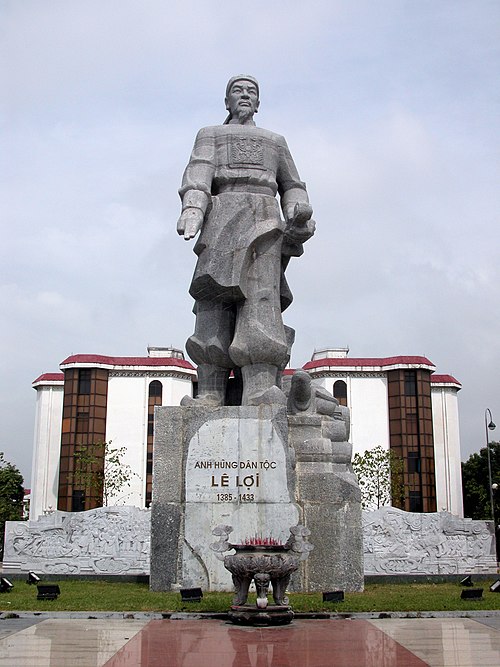
Lê Lợi was declared emperor of an independent Đại Việt. Source — Wikipedia, "Timeline of Vietnamese history" (15th century):
Le Loi statue in front of the City Hall of Thanh Hoa province. By Nguyễn Thanh Quang - Own work, CC BY-SA 3.0, https://commons.wikimedia.org/w/index.php?curid=1048664
1460 CE
Lê Thánh Tông
Lê Thánh Tông was crowned emperor of Đại Việt. Source — Wikipedia, "Timeline of Vietnamese history" (15th century):
Statue of Lê Thánh Tông in Temple of Literature (Hanoi, Vietnam) By Ngoisao.vn - Lê Thánh Tông và những mối tình với tiên nữ, Public domain, https://commons.wikimedia.org/w/index.php?curid=46320910
1479 CE
Đại Việt sử ký toàn thư
The Đại Việt sử ký toàn thư, an official history of Đại Việt, was completed. Source — Wikipedia, "Timeline of Vietnamese history" (15th century):
The first page of the Đại Việt sử ký toàn thư By The original uploader was Nguyễn Thanh Quang at Vietnamese Wikipedia. - Transferred from vi.wikipedia to Commons., Public domain, https://commons.wikimedia.org/w/index.php?curid=8803144
1483 CE
The Hồng Đức legal code was
The Hồng Đức legal code was promulgated. Source — Wikipedia, "Timeline of Vietnamese history" (15th century):
Jan 30, 1497 CE
Lê Thánh Tông
Lê Thánh Tông died. Source — Wikipedia, "Timeline of Vietnamese history" (15th century):
Statue of Lê Thánh Tông in Temple of Literature (Hanoi, Vietnam) By Ngoisao.vn - Lê Thánh Tông và những mối tình với tiên nữ, Public domain, https://commons.wikimedia.org/w/index.php?curid=46320910
1509 CE
Lê Oanh
Lê Oanh assassinated his cousin, the tyrant Lê Uy Mục, and replaced him as emperor Lê Tương Dực. Source — Wikipedia, "Timeline of Vietnamese history" (16th century):
1511 CE
The Trần Tuân Uprising took place.
The Trần Tuân Uprising took place. Source — Wikipedia, "Timeline of Vietnamese history" (16th century):
1516 CE
Trần Cao rebellion
Trần Cao rebellion: Trần Cao, a mandarin of Đại Việt who identified himself as an incarnation of Śakra, launched a revolt against the government. Source — Wikipedia, "Timeline of Vietnamese history" (16th century):
Painting of the Ten Jinshi of the Jiashen year (1464) By Anonymous Ming Chinese artist, Public domain, https://commons.wikimedia.org/w/index.php?curid=78969466
1527 CE
Mạc Đăng Dung
Mạc Đăng Dung forced Emperor Lê Cung Hoàng to abdicate, establishing the Mạc dynasty. Source — Wikipedia, "Timeline of Vietnamese history" (16th century):
The picture describes the Annamese monarch Mạc Thái Tổ (莫太祖, 1483 - 1541) offered tribute to Ming Dynasty's envoy. By Feng Shi Yang (馮時暘), Liang Tian Xi (梁天錫), Jiang Mei Zhong (江美中) - Annan lai wei tu ce (安南來威圖冊), published in Longqing Era (1567-1572) of Ming dynasty., Public domain, https://commons.wikimedia.org/w/index.php?curid=24427283
1533 CE
Lê–Mạc War
Lê–Mạc War. Source — Wikipedia, "Timeline of Vietnamese history" (16th century):
Vietnam circa 1540 showing the Mạc in control of the land north of the Red river, and the Nguyễn-Trịnh alliance in control of the southern part of Vietnam. By Created by CGlassey, based on province map of Vietnam. Map data based on "The Empire of Le Thanh-tong" (from Jonh Whitmore's "The Development of Le Government"; and map found in "Les frontieres du Vietnam"; P.B. Lafont, Edition l’Harmattan, Paris 1989; and maps found in DK Atlas of World History. - Transferred from en.wikipedia to Commons. Transfer was stated to be made by User:PaulVIF., CC BY 2.5, https://commons.wikimedia.org/w/index.php?curid=3112312
1592 CE
Revival Lê dynasty
The Revival Lê dynasty defeated the Mạc dynasty and regained control of the country. Source — Wikipedia, "Timeline of Vietnamese history" (16th century):
Vietnam circa 1540 showing the Mạc in control of the land north of the Red river, and the Nguyễn-Trịnh alliance in control of the southern part of Vietnam. By Created by CGlassey, based on province map of Vietnam. Map data based on "The Empire of Le Thanh-tong" (from Jonh Whitmore's "The Development of Le Government"; and map found in "Les frontieres du Vietnam"; P.B. Lafont, Edition l’Harmattan, Paris 1989; and maps found in DK Atlas of World History. - Transferred from en.wikipedia to Commons. Transfer was stated to be made by User:PaulVIF., CC BY 2.5, https://commons.wikimedia.org/w/index.php?curid=3112312
1627 CE
Trịnh–Nguyễn War
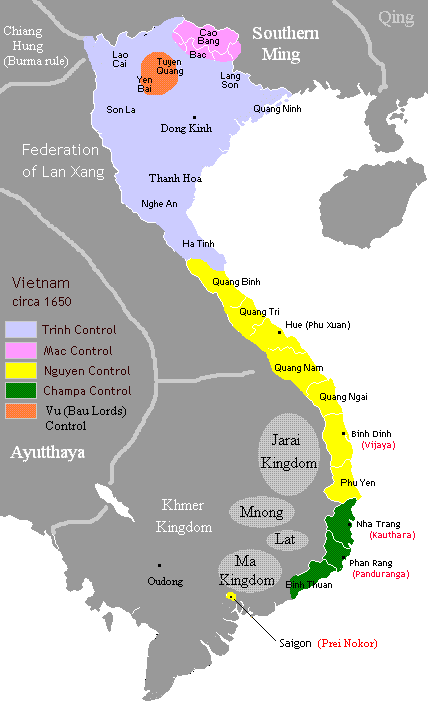
Trịnh–Nguyễn War. Source — Wikipedia, "Timeline of Vietnamese history" (17th century):
More accurate borders in 1650: Trinh Nguyen border at Giang river. Bau Lords still hold out at Yen Bai and Tuyen Quang provinces. Champa as rump states of Hoa Anh and Panduranga still hold out at today's Khanh Hoa province. By Own work by uploader - Own work based on Gryffindor's map, Public domain, https://commons.wikimedia.org/w/index.php?curid=25388271
1778 CE
Tây Sơn dynasty
The forces of the Tây Sơn dynasty took Gia Định in modern Saigon and massacred the Nguyễn lords, the de facto rulers of southern Đại Việt, sparing only the young Nguyễn Thế Tổ. Source — Wikipedia, "Timeline of Vietnamese history" (18th century):
Map of Đại Việt during the Tây Sơn period (late 18th century). Dark green: Tây Sơn-controlled territory. Light green: Gia Định, retaken by Nguyễn Ánh during the conflict. By DannamEmpire - Own work, CC BY 4.0, https://commons.wikimedia.org/w/index.php?curid=161640389
1783 CE
Nguyễn Thế Tổ
Nguyễn Thế Tổ fled the country. Source — Wikipedia, "Timeline of Vietnamese history" (18th century):
Emperor Gia Long By Unknown authorUnknown author, restored by Nguyễn Phước Vĩnh Khánh ([1]) - http://baodatviet.vn/van-hoa/nguoi-viet/chuyen-xau-ho-cua-vua-gia-long-2232787/, Public domain, https://commons.wikimedia.org/w/index.php?curid=32927805
Jan 20, 1785 CE
Battle of Rạch Gầm-Xoài Mút
Battle of Rạch Gầm-Xoài Mút: Đại Việt forces under a banner of truce surprised and defeat a Siamese force, then invade with the intention of installing Nguyễn Thế Tổ on the throne, on the Mekong River in modern Tiền Giang Province. Source — Wikipedia, "Timeline of Vietnamese history" (18th century):
War memorial to the w:Battle of Rạch Gầm-Xoài Mút By Nguyễn Thanh Quang - Own work, Public domain, https://commons.wikimedia.org/w/index.php?curid=3520108
1786 CE
The Phú Xuân Campaign (1786) took
The Phú Xuân Campaign (1786) took place. Source — Wikipedia, "Timeline of Vietnamese history" (18th century):
1787 CE
The Nguyễn Nhạc-Nguyễn Huệ split occurred.
The Nguyễn Nhạc-Nguyễn Huệ split occurred. Source — Wikipedia, "Timeline of Vietnamese history" (18th century):
Oct 1, 1788 CE
Battle of Ngọc Hồi-Đống Đa
Battle of Ngọc Hồi-Đống Đa: Qing forces invaded Đại Việt in support of the deposed emperor Lê Chiêu Thống. Source — Wikipedia, "Timeline of Vietnamese history" (18th century):
A scene of the Chinese Campaign against Annam (Vietnam) 1788 - 1789 By A collaboration between Chinese and European painters. The Jesuit missionaries involved in producing the drawings in China were Giuseppe Castiglione, Jean-Denis Attiret, Ignace Sichelbart and Jean Damascene. The engravings were executed in Paris under the direction of Charles-Nicolas Cochin of the Académie Royal at the Court of Louis XVI and the individual engravers include Le Bas, Aliamet, Prevot, Saint-Aubin, Masquelier, Choffard, and Launay. - https://www.battle-of-qurman.com.cn/e/hist.htm, Public domain, https://commons.wikimedia.org/w/index.php?curid=10320020
1790 CE
The Battle of Bình Thuận took
The Battle of Bình Thuận took place. Source — Wikipedia, "Timeline of Vietnamese history" (18th century):
1792 CE
Nguyễn Văn Huệ
Nguyễn Văn Huệ died, probably from a stroke. He was succeeded by his young son Nguyễn Quang Toản. Source — Wikipedia, "Timeline of Vietnamese history" (18th century):
Statue of Emperor Quang Trung in the front of the Museum of Quang Trung in Quy Nhơn By Tượng_đài_Quang_Trung_tại_Bảo_tàng_Quang_Trung.JPG: The original uploader was Liftold at Vietnamese Wikipedia. derivative work: Phó Nháy (talk) - Tượng_đài_Quang_Trung_tại_Bảo_tàng_Quang_Trung.JPG, CC BY-SA 3.0, https://commons.wikimedia.org/w/index.php?curid=13646224
1800 CE
The Siege of Quy Nhơn took
The Siege of Quy Nhơn took place. Source — Wikipedia, "Timeline of Vietnamese history" (18th century):
1801 CE
Battle of Thị Nại
Battle of Thị Nại. Source — Wikipedia, "Timeline of Vietnamese history" (19th century):
1802 CE
Battle of Trấn Ninh
Battle of Trấn Ninh Source — Wikipedia, "Timeline of Vietnamese history" (19th century):
1806 CE
Tang thương ngẫu lục
Tang thương ngẫu lục (Random Record of Great Changes) is finalized. Source — Wikipedia, "Timeline of Vietnamese history" (19th century):
Tang thương ngẫu lục By Phạm Đình Hổ (范廷琥), Nguyễn Án案 - VNPF - Nom Na office(Hanoi), Public domain, https://commons.wikimedia.org/w/index.php?curid=6302957
1809 CE
Nguyễn Du
Nguyễn Du completes The Tale of Kieu. Source — Wikipedia, "Timeline of Vietnamese history" (19th century):
Tượng đài hư cấu về dung nhan quan đại thần Nguyễn Du. By Vienvo03 - Own work, CC BY-SA 4.0, https://commons.wikimedia.org/w/index.php?curid=45193019
1815 CE
Hoàng Việt law
Hoàng Việt law enforced. Source — Wikipedia, "Timeline of Vietnamese history" (19th century):
1820 CE
Minh Mạng
Emperor Minh Mạng (1820–1841) became ruler of Vietnam. Source — Wikipedia, "Timeline of Vietnamese history" (19th century):
Emperor Minh Mang as depicted in Journal of an Embassy to the Courts of Siam and Cochin-China, exhibiting a view of the actual State of these Kingdoms by John Crawfurd (1783-1868), London, 1828. By Unknown, there is a line below the picture in the book that says: Drawn by a Chinese. - Journal of an Embassy to the Courts of Siam and Cochin-China, exhibiting a view of the actual State of these Kingdoms, from Cornell Library., Public domain, https://commons.wikimedia.org/w/index.php?curid=6736630
1825 CE
Phan Bá Vành
Phan Bá Vành Uprising. Source — Wikipedia, "Timeline of Vietnamese history" (19th century):
1833 CE
Nông Văn Vân Uprising.
Nông Văn Vân Uprising. Source — Wikipedia, "Timeline of Vietnamese history" (19th century):
1845 CE
Thiệu Trị
Emperor Thiệu Trị (1841–1847) became ruler of Vietnam. Source — Wikipedia, "Timeline of Vietnamese history" (19th century):
Gold lạng of Thiệu Trị, third emperor of the Nguyễn Dynasty of Vietnam, 1840–1847. By Unknown author - Marie-Lan Nguyen (User:Jastrow), 2008-10-11, CC BY 2.5, https://commons.wikimedia.org/w/index.php?curid=5003613
1847 CE
Bombardment of Tourane
French bombardment of Da Nang in response to persecution of Catholic missionaries. Source — Wikipedia, "Timeline of Vietnamese history" (19th century):
Facing Saint Peter's basilica, Rome, Italy, Vatican City. By Jebulon - Own work, CC0, https://commons.wikimedia.org/w/index.php?curid=30816994
1854 CE
Tự Đức
Emperor Tự Đức (1847–1883) became ruler of Vietnam. Source — Wikipedia, "Timeline of Vietnamese history" (19th century):
Tự Đức, The Eighth Longest reigning monarch in Vietnam. By The original uploader was Docteur Rieux at Vietnamese Wikipedia. - Originally from vi.wikipedia; description page is/was here., Public domain, https://commons.wikimedia.org/w/index.php?curid=4084383
Capture of Saigon by France, 18th February 1859. By Antoine Léon Morel-Fatio - Musée national de la Marine, Public domain, https://commons.wikimedia.org/w/index.php?curid=4776314
1859 CE
Nguyễn Hữu Huân
Thủ Khoa Huân Uprising. Source — Wikipedia, "Timeline of Vietnamese history" (19th century):
Statue of Thu Khoa Huan in My Tho city, Tien Giang province, Vietnam. By www.viajar24h.com from World - www.viajar24h.com-10, CC BY 2.0, https://commons.wikimedia.org/w/index.php?curid=2994921
1861 CE
Nguyen Trung Truc
Sinking of L'Esperance Source — Wikipedia, "Timeline of Vietnamese history" (19th century):
Portrait of Nguyen Trung Truc By See vi wikipedia page - http://vi.wikipedia.org/wiki/Hình:Nguyễn_Trung_Trực_mới.jpg, CC BY-SA 3.0, https://commons.wikimedia.org/w/index.php?curid=4475259
1862 CE
Treaty of Saigon
Treaty of Saigon. Source — Wikipedia, "Timeline of Vietnamese history" (19th century):
A map extract showing Cochinchina. The Empire of Annam was unified in 1802 by Nguyễn Ánh and consisted of two former domains: Cochinchina (Đàng Trong) and Tungking (Đàng Ngoài), which bordered each other along the Gianh River (marked Giañ-giang on the map). Cochinchina itself comprised Upper Cochinchina and Lower Cochinchina. Three eastern provinces of Lower Cochinchina were conquered by France in 1862; the remaining three western provinces were annexed in 1867. By Adolf Bastian - Bibliothèque nationale de France, Public domain, https://commons.wikimedia.org/w/index.php?curid=89513165
1867 CE
Cochinchina
The French establishes the colony of Cochinchina. Source — Wikipedia, "Timeline of Vietnamese history" (19th century):
An Nam Dai Quoc Hoa Do or map of Viet Nam during Nguyen dynasty - by Jean-Louis Taberd published in 1838 Titre :Annam Dai Quôc'Hoa Dô'seu tabula geographica imperii anamitici ab auctore dictionarii latino-anamitici disposita Auteur :Taberd, Jean-Louis (1794-1840). Cartographe Éditeur :Oriental Lith. Press (Calcutta) Date d'édition :1838 Sujet :Divisions politiques et administratives Sujet :Annam, Empire d' -- Divisions politiques et administratives Type :carte Type :image fixe Langue :Multilingue Format :1 flle avec limites en coul. ; 44 x 83 cm Format :image/jpeg Description :Échelle(s) : [A la latitude de 16° N. 1° =4 mm. ; 1:2 100 000 ca] Droits :domaine publicIdentifiant : http://gallica.bnf.fr/ark:/12148/btv1b53093605j/f1.item Source :Bibliothèque nationale de France, département Cartes et plans, GE C-8815 Couverture :Monde Relation :http://catalogue.bnf.fr/ark:/12148/cb40637203d Provenance :Bibliothèque nationale de France Date de mise en ligne :30/03/2015 By Taberd, Jean-Louis (1794-1840) - https://www.flickr.com/photos/13476480@N07/23050642969 https://gallica.bnf.fr/ark:/12148/btv1b53093605j, Public domain, https://commons.wikimedia.org/w/index.php?curid=84702201
1880 CE
Quang Yen coalfield
Discovery of Quang Yen coalfield Source — Wikipedia, "Timeline of Vietnamese history" (19th century):
1883 CE
Tự Đức
Emperor Tự Đức (1847–1883) ended his rule of Vietnam. Source — Wikipedia, "Timeline of Vietnamese history" (19th century):
Tự Đức, The Eighth Longest reigning monarch in Vietnam. By The original uploader was Docteur Rieux at Vietnamese Wikipedia. - Originally from vi.wikipedia; description page is/was here., Public domain, https://commons.wikimedia.org/w/index.php?curid=4084383
Hình chụp vua Hàm Nghi tại Algiers vào khoảng những năm 1890 By Unknown author - https://www.flickr.com/photos/13476480@N07/50138239476, Public domain, https://commons.wikimedia.org/w/index.php?curid=107998075
1888 CE
Algeria
Hàm Nghi captured and exiled to Algeria. Source — Wikipedia, "Timeline of Vietnamese history" (19th century):
Flag of Algeria By Original: National Liberation Front of Algeria Vector: SKopp - SVG implementation of the 63-145 Algerian law "on Characteristics of the Algerian national emblem", Public domain, https://commons.wikimedia.org/w/index.php?curid=27000198
1904 CE
Thành Thái
Ruler: Emperor Thành Thái (1889–1907) Source — Wikipedia, "Timeline of Vietnamese history" (20th century):
Emperor Thành Thái By Unknown author - https://www.flickr.com/photos/13476480@N07/9627281017/in/album-72157635189920265/, Public domain, https://commons.wikimedia.org/w/index.php?curid=103767553
1906 CE
Phan Châu Trinh
The Duy Tân movement, initiated by Phan Châu Trinh, was launched. Source — Wikipedia, "Timeline of Vietnamese history" (20th century):
Portrait of Phan Chau Trinh, a Vietnamese revolutionist. This portrait has been published in Phan Tây Hồ Tiên sinh lịch sử, by Minh Viên Huỳnh Thúc Kháng, published by Anh Minh, Huế, 1959. [1] By Khánh Ký - Download from this web page, Public domain, https://commons.wikimedia.org/w/index.php?curid=9775435
1917 CE
Khải Định
Ruler: Emperor Khải Định (1916–1925) Source — Wikipedia, "Timeline of Vietnamese history" (20th century):
Khải_Định, emperor of Annam. By H. Manuel - http://www.indochinamedals.com/annam/pa05_imperial_order.html, Public domain, https://commons.wikimedia.org/w/index.php?curid=32930260
1930 CE
Bảo Đại
Emperor Bảo Đại (r. 1926–1945) became ruler of Vietnam. Source — Wikipedia, "Timeline of Vietnamese history" (20th century):
Emperor on throne By Unknown author - pinterest Những bức ảnh chụp hoàng gia triều Nguyễn, Public domain, https://commons.wikimedia.org/w/index.php?curid=129278978
Mar 11, 1945 CE
Empire of Vietnam
The Empire of Vietnam is established under Japanese sponsorship. Source — Wikipedia, "Timeline of Vietnamese history" (20th century):
Long tinh flag (named after the Imperial Order of the Dragon of Annam) of the Nguyễn Dynasty from 1920s, used as the national flag of Đại Nam from circa 1941 to 1945 By Smurrayinchester - Originally from Vietnamese Wikipedia, Public domain, https://commons.wikimedia.org/w/index.php?curid=1214492
Jul 2, 1949 CE
State of Vietnam
The State of Vietnam is established within the French Union. Source — Wikipedia, "Timeline of Vietnamese history" (20th century):
Flag of South Vietnam (1948–1975) By (many, see history) - (see history);, Public domain, https://commons.wikimedia.org/w/index.php?curid=434803
Mar 13, 1954 CE
Battle of Dien Bien Phu
Battle of Dien Bien Phu: French troops begin the battle against the Viet Minh in Dien Bien Phu. Source — Wikipedia, "Timeline of Vietnamese history" (20th century):
Oct 26, 1955 CE
Ngo Dinh Diem
Ngô Đình Diệm proclaims Vietnam to be a republic with himself as its President (following the State of Vietnam referendum on 23 October) and forms the Army of the Republic of Vietnam. Source — Wikipedia, "Timeline of Vietnamese history" (20th century):
Sep 26, 1959 CE
First large unit action of the
First large unit action of the Vietnam War takes place, when two companies of the ARVN 23d Division are ambushed by a well-organized Viet Cong force of several hundred, identified as the "2d Liberation Battalion". Source — Wikipedia, "Timeline of Vietnamese history" (20th century):
Mar 6, 1960 CE
Vietnam War: The United States announces
Vietnam War: The United States announces that 3,500 American soldiers will be sent to Vietnam. Source — Wikipedia, "Timeline of Vietnamese history" (20th century):
Nov 18, 1961 CE
John F. Kennedy
Vietnam War: U.S. President John F. Kennedy sends 18,000 military advisors to South Vietnam. Source — Wikipedia, "Timeline of Vietnamese history" (20th century):
Jan 2, 1963 CE
Viet Cong
Vietnam War: The Viet Cong win their first major victory in the Battle of Ap Bac. Source — Wikipedia, "Timeline of Vietnamese history" (20th century):
Jan 30, 1964 CE
Nguyễn Khánh
General Nguyễn Khánh leads a bloodless military coup d'état, replacing Dương Văn Minh as Prime Minister of South Vietnam. Source — Wikipedia, "Timeline of Vietnamese history" (20th century):
1965 CE
Korean People's Army Air Force
Vietnam War: Korean People's Army Air Force sent 200 pilots to Vietnam. Source — Wikipedia, "Timeline of Vietnamese history" (20th century):
May 15, 1966 CE
The South Vietnamese army besieges Da
The South Vietnamese army besieges Da Nang. Source — Wikipedia, "Timeline of Vietnamese history" (20th century):
Jan 6, 1967 CE
Operation Deckhouse Five
Vietnam War: USMC and ARVN troops launch Operation Deckhouse Five in the Mekong Delta. Source — Wikipedia, "Timeline of Vietnamese history" (20th century):
Jan 21, 1968 CE
Battle of Khe Sanh
Vietnam War – Battle of Khe Sanh: One of the most publicized and controversial battles of the war begins, ending on 9 July. Source — Wikipedia, "Timeline of Vietnamese history" (20th century):
May 13, 1969 CE
Battle of Hamburger Hill
The Battle of Hamburger Hill, also known as Dong Ap Bia, begins during the Vietnam War. Source — Wikipedia, "Timeline of Vietnamese history" (20th century):
Sep 5, 1970 CE
Operation Jefferson Glenn
Vietnam War – Operation Jefferson Glenn: The United States 101st Airborne Division and the South Vietnamese 1st Infantry Division initiate a new operation in Thua Thien Province (the operation ends in October 1971). Source — Wikipedia, "Timeline of Vietnamese history" (20th century):
Feb 13, 1971 CE
Vietnam War: Backed by American air
Vietnam War: Backed by American air and artillery support, South Vietnamese troops invade Laos. Source — Wikipedia, "Timeline of Vietnamese history" (20th century):
Feb 24, 1972 CE
North Vietnamese negotiators walk out of
North Vietnamese negotiators walk out of the Paris Peace Talks to protest U.S. air raids. Source — Wikipedia, "Timeline of Vietnamese history" (20th century):
Jan 15, 1973 CE
Vietnam War: Citing progress in peace
Vietnam War: Citing progress in peace negotiations, U.S. President Richard Nixon announces the suspension of offensive action in North Vietnam. Source — Wikipedia, "Timeline of Vietnamese history" (20th century):
Jan 19, 1974 CE
battle of the Paracel Islands
Vietnam War: The battle of the Paracel Islands between People's Republic of China and South Vietnam. This is the most famous and the only major battle involve China in Vietnam War. Source — Wikipedia, "Timeline of Vietnamese history" (20th century):
Jan 20, 1975 CE
Hanoi
In Hanoi, North Vietnam, the Politburo approves the final military offensive against South Vietnam. Source — Wikipedia, "Timeline of Vietnamese history" (20th century):
Hanoi skyline with Ba Vi Mountain By Quangnlnhe182394 - Own work, CC0, https://commons.wikimedia.org/w/index.php?curid=170343277
1976 CE
Tôn Đức Thắng
President Tôn Đức Thắng (1976–1980) became ruler of Vietnam. Source — Wikipedia, "Timeline of Vietnamese history" (20th century):
Sep 20, 1977 CE
Admittance to United Nations.
Admittance to United Nations. Source — Wikipedia, "Timeline of Vietnamese history" (20th century):
1978 CE
Comecon
Admittance to the Comecon. Source — Wikipedia, "Timeline of Vietnamese history" (20th century):
Feb 17, 1979 CE
People's Republic of China
The People's Republic of China invades northern Vietnam, launching the Sino-Vietnamese War. The war ended with no border changes on 16 March. Source — Wikipedia, "Timeline of Vietnamese history" (20th century):
1980 CE
Nguyễn Hữu Thọ
Ruler: President Nguyễn Hữu Thọ (1980–1981) Source — Wikipedia, "Timeline of Vietnamese history" (20th century):
1982 CE
Trường Chinh
Trường Chinh, Chairman of the State Council (1981–1987) became ruler of Vietnam. Source — Wikipedia, "Timeline of Vietnamese history" (20th century):
Dec 1, 1986 CE
6th National Congress of the Communist Party of Vi
Sixth National Party Congress. Trường Chinh, Chairman of the State Council (1981–1987) ended his rule of Vietnam. <br />Đổi Mới begins. Source — Wikipedia, "Timeline of Vietnamese history" (20th century):
1988 CE
Võ Chí Công
Võ Chí Công, Chairman of the State Council (1987–1992) became ruler of Vietnam. Source — Wikipedia, "Timeline of Vietnamese history" (20th century):
Jun 1, 1991 CE
7th National Congress of the Communist Party of Vi
Seventh National Party Congress. Source — Wikipedia, "Timeline of Vietnamese history" (20th century):
1995 CE
Lê Đức Anh
President Lê Đức Anh (1992–1997) became ruler of Vietnam. Source — Wikipedia, "Timeline of Vietnamese history" (20th century):
1996 CE
8th National Congress of the Communist Party of Vi
Eighth National Party Congress. Source — Wikipedia, "Timeline of Vietnamese history" (20th century):
Apr 1, 2001 CE
9th National Congress of the Communist Party of Vi
Ninth National Party Congress. Source — Wikipedia, "Timeline of Vietnamese history" (21st century):
2002 CE
Trần Đức Lương
President Trần Đức Lương starts his second term. Source — Wikipedia, "Timeline of Vietnamese history" (21st century):
Apr 1, 2006 CE
10th National Congress of the Communist Party of V
Tenth National Party Congress. Source — Wikipedia, "Timeline of Vietnamese history" (21st century):
2007 CE
World Trade Organization
Admittance to World Trade Organization. Source — Wikipedia, "Timeline of Vietnamese history" (21st century):
Jan 1, 2011 CE
11th National Congress of the Communist Party of V
Eleventh National Party Congress. Source — Wikipedia, "Timeline of Vietnamese history" (21st century):
2013 CE
Amendment of Constitution. Democratic recommendati
Amendment of Constitution. Democratic recommendations are ignored by the National Assembly. The new constitution comes into effect on the first day of next year. Source — Wikipedia, "Timeline of Vietnamese history" (21st century):
May 1, 2014 CE
Hai Yang Shi You 981 standoff
Hai Yang Shi You 981 standoff: Tensions arises from the Chinese state-owned China National Offshore Oil Corporation moving its Hai Yang Shi You 981 oil platform to waters near the disputed Paracel Islands, resulting in large anti-China protests across Vietnam. Source — Wikipedia, "Timeline of Vietnamese history" (21st century):
Jan 1, 2015 CE
Vietnam's new marriage law goes into
Vietnam's new marriage law goes into effect. Same-sex marriages are no longer prohibited, but are not recognized as being legally valid. Source — Wikipedia, "Timeline of Vietnamese history" (21st century):
Jan 1, 2016 CE
12th National Congress of the Communist Party of V
Twelfth National Party Congress. Source — Wikipedia, "Timeline of Vietnamese history" (21st century):
2020 CE
COVID-19 pandemic in Vietnam
First year of the COVID-19 pandemic in Vietnam. Source — Wikipedia, "Timeline of Vietnamese history" (21st century):
Jan 1, 2021 CE
13th National Congress of the Communist Party of V
Thirteenth National Party Congress. Unprecedented third term of the CPV General Secretary Nguyễn Phú Trọng starts. Source — Wikipedia, "Timeline of Vietnamese history" (21st century):
2022 CE
Việt Á scandal
Việt Á scandal, 'Rescue flights' scandal, and other corporate scandals are exposed. Source — Wikipedia, "Timeline of Vietnamese history" (21st century):
Jan 1, 2023 CE
Nguyễn Xuân Phúc
Nguyễn Xuân Phúc resigns as President of Vietnam, replaced by Võ Văn Thưởng. Source — Wikipedia, "Timeline of Vietnamese history" (21st century):
2024 CE
Trương Mỹ Lan
Trial of Trương Mỹ Lan and Van Thinh Phat Holdings Group. Source — Wikipedia, "Timeline of Vietnamese history" (21st century):
Jul 1, 2025 CE
2025 Vietnamese administrative reform
Following the merger of administrative units, Vietnam has 34 provincial-level units, comprising 28 provinces and 6 centrally governed cities. Source — Wikipedia, "Timeline of Vietnamese history" (21st century):
Jan 1, 2026 CE
14th National Congress of the Communist Party of V
Fourteenth National Party Congress. Source — Wikipedia, "Timeline of Vietnamese history" (21st century):





![[出版地不明] : 金閶書業堂, [出版年不明] kinshōshogyōdō 14冊 ; 26cm](https://upload.wikimedia.org/wikipedia/commons/thumb/3/37/WUL-he21_01467_%E6%96%B0%E9%90%AB%E7%B9%AA%E5%83%8F%E6%9D%B1%E8%A5%BF%E6%BC%A2%E5%85%A8%E5%82%B3_01_%28%E5%91%82%E5%90%8E%29.jpg/500px-WUL-he21_01467_%E6%96%B0%E9%90%AB%E7%B9%AA%E5%83%8F%E6%9D%B1%E8%A5%BF%E6%BC%A2%E5%85%A8%E5%82%B3_01_%28%E5%91%82%E5%90%8E%29.jpg)












![An Nam Dai Quoc Hoa Do or map of Viet Nam during Nguyen dynasty - by Jean-Louis Taberd published in 1838 Titre :Annam Dai Quôc'Hoa Dô'seu tabula geographica imperii anamitici ab auctore dictionarii latino-anamitici disposita Auteur :Taberd, Jean-Louis (1794-1840). Cartographe Éditeur :Oriental Lith. Press (Calcutta) Date d'édition :1838 Sujet :Divisions politiques et administratives Sujet :Annam, Empire d' -- Divisions politiques et administratives Type :carte Type :image fixe Langue :Multilingue Format :1 flle avec limites en coul. ; 44 x 83 cm Format :image/jpeg Description :Échelle(s) : [A la latitude de 16° N. 1° =4 mm. ; 1:2 100 000 ca] Droits :domaine publicIdentifiant : http://gallica.bnf.fr/ark:/12148/btv1b53093605j/f1.item Source :Bibliothèque nationale de France, département Cartes et plans, GE C-8815 Couverture :Monde Relation :http://catalogue.bnf.fr/ark:/12148/cb40637203d Provenance :Bibliothèque nationale de France Date de mise en ligne :30/03/2015](https://upload.wikimedia.org/wikipedia/commons/thumb/d/dd/An_Nam_Dai_Quoc_Hoa_Do_by_Jean_Louis_Taberd_1838.jpg/500px-An_Nam_Dai_Quoc_Hoa_Do_by_Jean_Louis_Taberd_1838.jpg)


![Portrait of Phan Chau Trinh, a Vietnamese revolutionist. This portrait has been published in Phan Tây Hồ Tiên sinh lịch sử, by Minh Viên Huỳnh Thúc Kháng, published by Anh Minh, Huế, 1959. [1]](https://upload.wikimedia.org/wikipedia/commons/thumb/2/2d/Phan_Chau_Trinh.jpg/500px-Phan_Chau_Trinh.jpg)


