Encyclopedia/3. History, Societies & Civilizations/09. Modern Nations/08. South Asia • Curated by Admin Timeline.sg
History of Sri Lanka, sourced from Wikipedia's "Timeline of Sri Lankan history".
Chronological Storyline (225 Milestones)
900 BCE
Iron Age
Archaeological evidence for the beginnings of the Iron Age in Sri Lanka is found at Anuradhapura, where a large city–settlement was founded before 900 BCE. The settlement was about 15 hectares in 900 BCE, but by 700 BC it had expanded to 50 hectares. A similar site from the same period has also been discovered near Aligala in Sigiriya. Source — Wikipedia, "Timeline of Sri Lankan history" (Iron Age (~1000 BCE–500 BCE)): )
Weapons and fibulae from a warrior's grave, c. 350 BC. Grave no. 91, Celtic burial site, "Rain", Münsingen, Switzerland. By Unknown author - Own photograph by Sandstein, CC BY 3.0, https://commons.wikimedia.org/w/index.php?curid=8656346
543 BCE
Tambapaṇṇī
During the reign of Vijaya, in addition to Tambapaṇṇī, the King and his ministers founded settlements like Anuraadhagaama, Upatissagāma, Ujjeni, Uruvelaa and Vijithapura located along the river banks of the Malwathu Oya and the Kala Oya in the northwestern region of Sri Lanka. Source — Wikipedia, "Timeline of Sri Lankan history" (6th century BCE):
The Ruwanwelisaya is a stupa, a hemispherical structure containing relics, in Sri Lanka, considered sacred to many Buddhists all over the world By Thisaru Tharuka - Own work, CC BY-SA 4.0, https://commons.wikimedia.org/w/index.php?curid=79431630
543 BCE
Kingdom of Tambapanni
The Kingdom of Tambapanni is established. Source — Wikipedia, "Timeline of Sri Lankan history" (6th century BCE):
Kingdom of Tambapanni 3rd Century B.C. By Yixopeh377 - Own work, CC BY-SA 4.0, https://commons.wikimedia.org/w/index.php?curid=92310980
505 BCE
Upatissa
Prince Vijaya dies without a legitimate successor. Upatissa becomes regent while a successor is brought over from Sinhapura. Source — Wikipedia, "Timeline of Sri Lankan history" (6th century BCE):
504 BCE
Panduvasdeva
The nephew of Prince Vijaya, Panduvasdeva, succeeds him to the throne. He arrives one year after the death of Vijaya and brings with him 32 sons of ministers. Source — Wikipedia, "Timeline of Sri Lankan history" (6th century BCE):
474 BCE
Abhaya of Tambapanni
Panduvasdeva dies and is succeeded by his son Abhaya Source — Wikipedia, "Timeline of Sri Lankan history" (5th century BCE):
454 BCE
Abhaya of Tambapanni
Abhaya dies and is succeeded by his younger brother Prince Tissa. Source — Wikipedia, "Timeline of Sri Lankan history" (5th century BCE):
438 BCE
Capital of Sri Lanka
Pandukabhaya proceeded to Anuraadhagaama where he builds it as the new capital of Sri Lanka, renaming it Anuradhapura. Source — Wikipedia, "Timeline of Sri Lankan history" (5th century BCE):
A beautiful miniature 1683 map of Ceylon, Sri Lanka, or Taprobane by Alain Mallet. This stunning little map covers the island of Ceylon as well as parts of adjacent India. Mallet first introduced this map in the 1683 though it was republished several time in the subsequent 20 years. Taprobane is an ancient name for a spice rich trading center that was well known in ancient Roman times. By the 17th century Portuguese explorers had reopened the route to the Indies but were uncertain exactly which island the Romans were referring to. Some map Taprobrane as Sumatra, other as Ceylon. The common consensus now, as in Mallet’s time, is that the Roman Taprobane is Ceylon. Published by copper plate in the 1686 Frankfurt edition of Mallet’s Description de l'Univers. By http://www.geographicus.com/mm5/cartographers/mallet.txt - This file was provided to Wikimedia Commons by Geographicus Rare Antique Maps, a specialist dealer in rare maps and other cartography of the 15th, 16th, 17th, 18th and 19th centuries, as part of a cooperation project., Public domain, https://commons.wikimedia.org/w/index.php?curid=14691602
437 BCE
Pandukabhaya
Pandukabhaya takes the capital Upatissagāma and is crowned the new Sinhalese king. Source — Wikipedia, "Timeline of Sri Lankan history" (5th century BCE):
The Flag of the King of Kandy in 1815 By Janith (talk) 03:45, 16 August 2008 (UTC) Original uploader was Uvants2 at en.wikipedia - Transferred from en.wikipedia (Original text : self-made), Public domain, https://commons.wikimedia.org/w/index.php?curid=5879966
400 BCE
Abhaya Wewa
Abhaya Wewa built Source — Wikipedia, "Timeline of Sri Lankan history" (5th century BCE):
Abhayavapi tank - Anuradhapura By L Manju - Own work, CC BY-SA 4.0, https://commons.wikimedia.org/w/index.php?curid=42720674
377 BCE
Pandukabhaya
Pandukabhaya dies and is succeeded by his son Mutasiva Source — Wikipedia, "Timeline of Sri Lankan history" (4th century BCE):
307 BCE
Mutasiva
Mutasiva dies and is succeeded by his son Devanampiya Tissa Source — Wikipedia, "Timeline of Sri Lankan history" (4th century BCE):
Mihintale. Stone statue of King Devanampiya Tissa, (B.C. 307), 6 feet 3 inches high, probably life size. By The National Archives UK - CO 1069-570-186, No restrictions, https://commons.wikimedia.org/w/index.php?curid=25112561
267 BCE
Devanampiya Tissa
Devanampiya Tissa dies and is succeeded by his brother Uttiya Source — Wikipedia, "Timeline of Sri Lankan history" (3rd century BCE):
Mihintale. Stone statue of King Devanampiya Tissa, (B.C. 307), 6 feet 3 inches high, probably life size. By The National Archives UK - CO 1069-570-186, No restrictions, https://commons.wikimedia.org/w/index.php?curid=25112561
257 BCE
Uttiya
Uttiya dies and is succeeded by his brother Mahasiva Source — Wikipedia, "Timeline of Sri Lankan history" (3rd century BCE):
256 BCE
Sanghamitta
Sanghamitta Therii passes away at the age of 79 in the ninth year of the reign of Uttiya. Source — Wikipedia, "Timeline of Sri Lankan history" (3rd century BCE):
Statue of the female arhat Sanghamitta, the daughter of King Ashoka, at the Bhikkhuni (Buddhist nun) Monastery in Colombo, Sri Lanka. By MediaJet - Own work, CC BY-SA 3.0, https://commons.wikimedia.org/w/index.php?curid=27313679
255 BCE
Mahinda
Mahinda Thero passes away at the age of 80 in the eighth year of the reign of Uttiya. Source — Wikipedia, "Timeline of Sri Lankan history" (3rd century BCE):
An Arhat Mahinda Statue at a Monastery. By MediaJet - Own work, CC BY-SA 4.0, https://commons.wikimedia.org/w/index.php?curid=43583448
250 BCE
Theravada
Theravada Buddhism is officially introduced to Sri Lanka by the Mahinda Thero, son of Ashoka, during the reign of Devanampiya Tissa. Source — Wikipedia, "Timeline of Sri Lankan history" (3rd century BCE):
Buddha Daibutsu, Kamakura, Japan. This statue of Amitabha Buddha, made of bronze, is 11.40 m high and weights 93 t. By Dirk Beyer - Own work, CC BY-SA 3.0, https://commons.wikimedia.org/w/index.php?curid=230799
250 BCE
Sanghamitta
Sanghamitta Therii, sister of Mahinda, arrived in Lanka with a branch of the Sacred Bo-Tree, which was planted in the Mahamevnāwa Uyana at Anuradhapura. Source — Wikipedia, "Timeline of Sri Lankan history" (3rd century BCE):
Statue of the female arhat Sanghamitta, the daughter of King Ashoka, at the Bhikkhuni (Buddhist nun) Monastery in Colombo, Sri Lanka. By MediaJet - Own work, CC BY-SA 3.0, https://commons.wikimedia.org/w/index.php?curid=27313679
247 BCE
Mahasiva
Mahasiva dies and is succeeded by his brother Suratissa Source — Wikipedia, "Timeline of Sri Lankan history" (3rd century BCE):
237 BCE
Sena and Guttika
South Indian invaders Sena and Guttika kill Suratissa and seize the Sinhalese throne. Source — Wikipedia, "Timeline of Sri Lankan history" (3rd century BCE):
215 BCE
Asela of Anuradhapura
Asela, son of Mutasiva, overthrows Sena and Guttika reclaiming the throne. Source — Wikipedia, "Timeline of Sri Lankan history" (3rd century BCE):
205 BCE
Ellaalan
Elara, a Tamil prince from South India invades and ursurpes the throne from Asela, killing him in the process. Source — Wikipedia, "Timeline of Sri Lankan history" (3rd century BCE):
Ellaalan By Unknown author, CC BY-SA 2.0, https://commons.wikimedia.org/w/index.php?curid=93906471
161 BCE
Dutugamunu the Great
Dutugamunu, a descendant of Mahanaga, Prince of Ruhuna brother of Asela, defeats and kills Elara at the Battle of Vijithapura and restores Sinhalese sovereignty. Source — Wikipedia, "Timeline of Sri Lankan history" (2nd century BCE):
Statue of the great pagoda d'Anuradhapura, photo feta per J. I smelled on July 2006 By No machine-readable author provided. Jolle~commonswiki assumed (based on copyright claims). - No machine-readable source provided. Own work assumed (based on copyright claims)., CC BY-SA 3.0, https://commons.wikimedia.org/w/index.php?curid=995452
137 BCE
Dutugamunu the Great
Dutugamunu dies and is succeeded by his brother Saddha Tissa Source — Wikipedia, "Timeline of Sri Lankan history" (2nd century BCE):
Statue of the great pagoda d'Anuradhapura, photo feta per J. I smelled on July 2006 By No machine-readable author provided. Jolle~commonswiki assumed (based on copyright claims). - No machine-readable source provided. Own work assumed (based on copyright claims)., CC BY-SA 3.0, https://commons.wikimedia.org/w/index.php?curid=995452
119 BCE
Saddha Tissa of Anuradhapura
Saddha Tissa dies and is succeeded by his younger son Thulatthana, whose ascension was endorsed and supported as a result of the decision made by royal advisors and Buddhist monks. Source — Wikipedia, "Timeline of Sri Lankan history" (2nd century BCE):
119 BCE
Lanja Tissa
One month and ten days after his ascension, Lanja Tissa usurps his younger brother Thulatthana and takes the throne upon hear of his succession. Source — Wikipedia, "Timeline of Sri Lankan history" (2nd century BCE):
109 BCE
Lanja Tissa
Lanja Tissa dies and is succeeded by his brother Khallata Naga Source — Wikipedia, "Timeline of Sri Lankan history" (2nd century BCE):
103 BCE
Rebellion of Brahmin Tissa
Only five months into his regin Valagamba faced internal threats from a Brahman named Tiya (or Tissa) from Ruhuna, South Lanka and external threats from Tamil forces from South India. The Tamil army vanquished Tiya and defeated Valagamba in battle forcing him to flee into exile for fourteen years. The Five Dravidians seized and ruled the Sinhalese throne. Source — Wikipedia, "Timeline of Sri Lankan history" (2nd century BCE):
103 BCE
Khallata Naga
Khallata Naga is assassinated by his own commander-in-chief, Kammaharattaka. However, Kammaharattaka's rule last only a day and is killed by Prince Vattagamini, the youngest brother of Khallata Naga. Prince Vattagamini ascends the throne as Valagamba. Source — Wikipedia, "Timeline of Sri Lankan history" (2nd century BCE):
103 BCE
The Five Dravidians
The fourteen years of rule of The Five Dravidians was disastrous for the country and its institutions. The Beminitiya Seya, an unprecedented famine during that period caused the rapid decline of Buddhism in the country with many thousands of monks and laymen dying of starvation. Source — Wikipedia, "Timeline of Sri Lankan history" (2nd century BCE):
A beautiful miniature 1683 map of Ceylon, Sri Lanka, or Taprobane by Alain Mallet. This stunning little map covers the island of Ceylon as well as parts of adjacent India. Mallet first introduced this map in the 1683 though it was republished several time in the subsequent 20 years. Taprobane is an ancient name for a spice rich trading center that was well known in ancient Roman times. By the 17th century Portuguese explorers had reopened the route to the Indies but were uncertain exactly which island the Romans were referring to. Some map Taprobrane as Sumatra, other as Ceylon. The common consensus now, as in Mallet’s time, is that the Roman Taprobane is Ceylon. Published by copper plate in the 1686 Frankfurt edition of Mallet’s Description de l'Univers. By http://www.geographicus.com/mm5/cartographers/mallet.txt - This file was provided to Wikimedia Commons by Geographicus Rare Antique Maps, a specialist dealer in rare maps and other cartography of the 15th, 16th, 17th, 18th and 19th centuries, as part of a cooperation project., Public domain, https://commons.wikimedia.org/w/index.php?curid=14691602
89 BCE
Valagamba
After building and army during his 14 years in exile Valagamba launches a successful attack on Dathika, the last of the Five Dravidians defeating him and taking back control of the country. Source — Wikipedia, "Timeline of Sri Lankan history" (1st century BCE):
76 BCE
Valagamba
Valagamba dies and is succeeded by his adopted son and nephew Mahakuli Mahatissa. Source — Wikipedia, "Timeline of Sri Lankan history" (1st century BCE):
29 BCE
Pali Canon
According to the Sinhalese chronicles, the content of the Pali Canon is written down in the reign of Valagamba (29–17 BCE) Source — Wikipedia, "Timeline of Sri Lankan history" (1st century):
Tree structure of the Pali Canon, the Tipiṭaka of Theravāda Buddhism. By Faredoka - Own work (Inspired by Ehipassiko Foundation Indonesia), CC0, https://commons.wikimedia.org/w/index.php?curid=151249057
113 CE
Gajabahu I
Gajabahu I of the Anuradhapura kingdom, a contemporary of Chera Senguttuvan and Karikala Chola (the Gajabahu synchronism). Source — Wikipedia, "Timeline of Sri Lankan history" (2nd century):
Anuradhapura Kingdom (3rd century BC map) By Mithila Madawa Gunathilake - Own work, CC BY-SA 4.0, https://commons.wikimedia.org/w/index.php?curid=113593422
300 CE
First human settlements in Sri Lanka
First human settlements in Sri Lanka Source — Wikipedia, "Timeline of Sri Lankan history" (Prehistoric Sri Lanka):
301 CE
Relic of the tooth of the Buddha
The Relic of the tooth of the Buddha is brought to Sri Lanka in the early 4th century durgin the reign of Sirimeghavanna (301–328) Source — Wikipedia, "Timeline of Sri Lankan history" (4th century):
425 CE
King Mahanama
During the reign of Mahanama, Buddhaghosa Thera arrived from India to compile the Pali Commentaries (Atthakathaa) at the Mahaavihaara Source — Wikipedia, "Timeline of Sri Lankan history" (5th century):
497 CE
Moggallana I
The Sacred Hair Relic of the Buddha was brought to Sri Lanka during the reign of Moggallana I. Source — Wikipedia, "Timeline of Sri Lankan history" (5th century):
840 CE
Srimara Srivallabha
Srimara Srivallabha invades the Anuradhapura kingdom and captures the northern provinces from Sena I. Source — Wikipedia, "Timeline of Sri Lankan history" (9th century):
Painting from sittanavasal believed to be that of the King Srimara Srivallabha and the Queen By Davegeo - Own work, CC BY-SA 4.0, https://commons.wikimedia.org/w/index.php?curid=40157978
853 CE
Sena II
Sena II starts construction on the Mihintale Hospital Complex, considered one of the oldest hospital ruins in the world and the oldest existing hospital ruins in Sri Lanka. Source — Wikipedia, "Timeline of Sri Lankan history" (9th century):
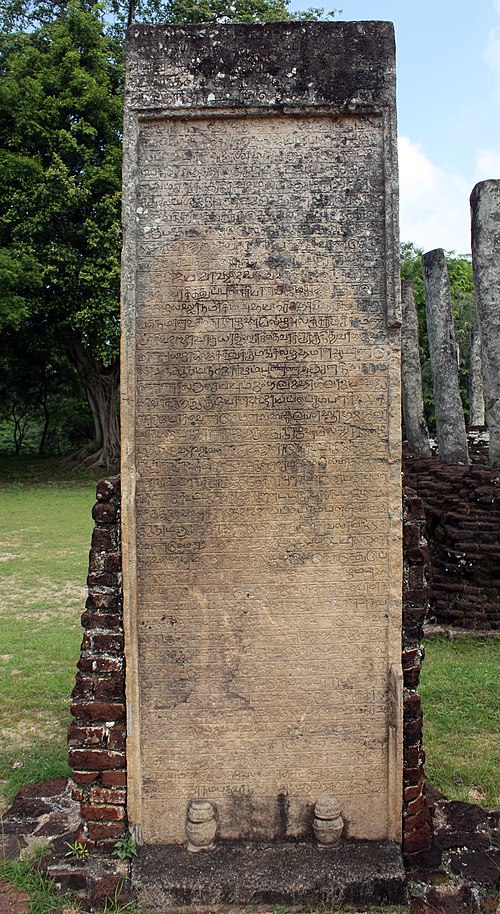
Kongollava Pillar Inscription of Sena II By Wijaya Kumara - Own work, CC0, https://commons.wikimedia.org/w/index.php?curid=184740885
862 CE
Sena II
Sinhalese forces led by Sena II invade the Pandyan kingdom and sack Madurai. Srimara is killed in battle. Source — Wikipedia, "Timeline of Sri Lankan history" (9th century):
Kongollava Pillar Inscription of Sena II By Wijaya Kumara - Own work, CC0, https://commons.wikimedia.org/w/index.php?curid=184740885
1017 CE
Chola conquest of Anuradhapura
Chola conquest and occupation of Anuradhapura: The Cholas under Rajendra I attack and conquer parts of the Anuradhapura kingdom. Cholas capture the crown, queen, daughter, and wealth of Mahinda V and take king himself as a prisoner to Tamil Nadu. Source — Wikipedia, "Timeline of Sri Lankan history" (11th century):
A beautiful miniature 1683 map of Ceylon, Sri Lanka, or Taprobane by Alain Mallet. This stunning little map covers the island of Ceylon as well as parts of adjacent India. Mallet first introduced this map in the 1683 though it was republished several time in the subsequent 20 years. Taprobane is an ancient name for a spice rich trading center that was well known in ancient Roman times. By the 17th century Portuguese explorers had reopened the route to the Indies but were uncertain exactly which island the Romans were referring to. Some map Taprobrane as Sumatra, other as Ceylon. The common consensus now, as in Mallet’s time, is that the Roman Taprobane is Ceylon. Published by copper plate in the 1686 Frankfurt edition of Mallet’s Description de l'Univers. By http://www.geographicus.com/mm5/cartographers/mallet.txt - This file was provided to Wikimedia Commons by Geographicus Rare Antique Maps, a specialist dealer in rare maps and other cartography of the 15th, 16th, 17th, 18th and 19th centuries, as part of a cooperation project., Public domain, https://commons.wikimedia.org/w/index.php?curid=14691602
1029 CE
Chola conquest of Anuradhapura
Chola conquest and occupation of Anuradhapura: Mahinda V, the last king of Anuradhapura, dies in Chola captivity. Source — Wikipedia, "Timeline of Sri Lankan history" (11th century):
A beautiful miniature 1683 map of Ceylon, Sri Lanka, or Taprobane by Alain Mallet. This stunning little map covers the island of Ceylon as well as parts of adjacent India. Mallet first introduced this map in the 1683 though it was republished several time in the subsequent 20 years. Taprobane is an ancient name for a spice rich trading center that was well known in ancient Roman times. By the 17th century Portuguese explorers had reopened the route to the Indies but were uncertain exactly which island the Romans were referring to. Some map Taprobrane as Sumatra, other as Ceylon. The common consensus now, as in Mallet’s time, is that the Roman Taprobane is Ceylon. Published by copper plate in the 1686 Frankfurt edition of Mallet’s Description de l'Univers. By http://www.geographicus.com/mm5/cartographers/mallet.txt - This file was provided to Wikimedia Commons by Geographicus Rare Antique Maps, a specialist dealer in rare maps and other cartography of the 15th, 16th, 17th, 18th and 19th centuries, as part of a cooperation project., Public domain, https://commons.wikimedia.org/w/index.php?curid=14691602
1029 CE
Kassapa VI
Vikramabahu, the son of Mahinda V, launches a resistance movement against the Chola rule in Sri Lanka, but suddenly dies after contracting a disease in Rohana. Source — Wikipedia, "Timeline of Sri Lankan history" (11th century):
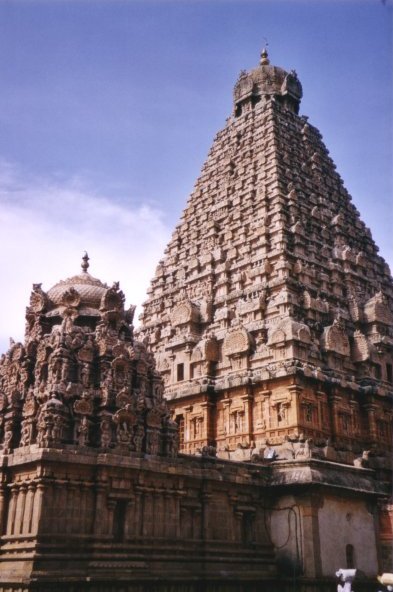
Detail of the main Vimanam (Tower) of the Great Temple at en:Thanjavur Source: http://indevoyage.free.fr/ The image has been released to the public domain by the website owner. the license text is as follows: "Les photos incluses sont mes photos scannées que je laisse libre de droits.") License info In French : Les photos incluses sont mes photos scannées que je laisse libre de droits. In English : These photos are scans of my own photos and I release all rights to them. - 'Pompous' Parthi talk/contribs 22:53, 3 May 2007 (UTC) By The original uploader was Venu62 at English Wikipedia. - Transferred from en.wikipedia to Commons., Public domain, https://commons.wikimedia.org/w/index.php?curid=2647333
1049 CE
A Sinhalese chieftain named Lokeshwara, temporaril
A Sinhalese chieftain named Lokeshwara, temporarily defeats the Chola forces and establishes a military base in Ruhuna. Source — Wikipedia, "Timeline of Sri Lankan history" (11th century):
1054 CE
Keshadhatu Kasyapa, a pretender to the
Keshadhatu Kasyapa, a pretender to the Sinhalese throne, establishes a dominion in Eastern Ruhuna after driving away Chola forces, which would last until 1055. Source — Wikipedia, "Timeline of Sri Lankan history" (11th century):
1055 CE
A fifteen-year-old Prince Kitti, belonging to
A fifteen-year-old Prince Kitti, belonging to a royal bloodline, annexes the domains of Lokeshwara and Keshadathu Kasyapa, uniting Ruhuna under his rule. Cholas are further pushed back from the South. Source — Wikipedia, "Timeline of Sri Lankan history" (11th century):
1070 CE
Prince Kitti, who was given the
Prince Kitti, who was given the title Vijayabahu, launches a seventeen-year campaign and successfully drives out the Cholas from Sri Lanka. Source — Wikipedia, "Timeline of Sri Lankan history" (11th century):
1084 CE
Velakkara revolt
Velakkara Revolt: Tamil mercenaries named Velakkaras, mutiny against king Vijayabahu as he declared war with the Chola Empire due to arresting a group of Sinhalese ambassadors sent to Western Chalukya. Source — Wikipedia, "Timeline of Sri Lankan history" (11th century):
Polonnaruwa Velaikkara Slab Inscription. This Polonaruwa inscription is really interesting; it is w:Vatteluttu script (Tamil) with w:Grantha script for Sanskrit words, as was a common style historically. By Anton Croos - Own work, CC BY-SA 3.0, https://commons.wikimedia.org/w/index.php?curid=17611204
1084 CE
Myanmar
In Myanmar, during the reign of Kyansittha, completes the building of the Shwezigon Pagoda, a shrine for relics of the Buddha, including a tooth brought from Sri Lanka. Various inscriptions refer to him as an incarnation of Vishnu, a chakravartin, a bodhisattva, and dharmaraja. Source — Wikipedia, "Timeline of Sri Lankan history" (11th century):
Flag of Myanmar By Unknown author - Government of Myanmar.Construction sheet., Public domain, https://commons.wikimedia.org/w/index.php?curid=30801923
1110 CE
Vijayabahu I
Vijayabahu I dies at the age of 71, and the instalment of Jayabahu I as his successor without passing the throne to Vijayabahu son Vikramabahu I causes a power struggle between the two rulers. Source — Wikipedia, "Timeline of Sri Lankan history" (12th century):
Detail of a fragment of the victory stele of the king Eannatum of Lagash over Umma, called « Stele of Vultures », showing the first evidence of a phalanx. Historical side. Limestone, circa 2450 BC, Sumerian archaic dynasties. Found in 1881 in Girsu (now Tello, Iraq), Mesopotamia, by Édouard de Sarzec. By Unknown artist - Eric Gaba (User:Sting), July 2005., CC BY-SA 3.0, https://commons.wikimedia.org/w/index.php?curid=507084
1157 CE
Queen Sugala rebellion
A revolt led-by Queen Sugala of Ruhuna against the Parakramabahu I. The rebellion was suppressed by the army and the kingdom of Ruhuna was annexed as a part of Polonnaruwa in 1158. Source — Wikipedia, "Timeline of Sri Lankan history" (12th century):
1160 CE
Ruhuna Rebellion
Ruhuna Rebellion Source — Wikipedia, "Timeline of Sri Lankan history" (12th century):
1164 CE
Mahākassapa Thera
With the guidance of two forest monks – Ven. Mahākassapa Thera and Ven. Sāriputta Thera, Parakramabahu I reunites all bhikkhus in Sri Lanka into the Mahavihara sect. Source — Wikipedia, "Timeline of Sri Lankan history" (12th century):
A 12th century stone relief in Polonnaruwa, Sri Lanka, widely believed to be of King Parakramabahu I By Graham Racher from London, UK - IMG_0242, CC BY-SA 2.0, https://commons.wikimedia.org/w/index.php?curid=9671649
1165 CE
Parakramabahu I
Parakramabahu I unified the three Nikaayas (Mahaavihaara, Abhayagiri, and Jetavana) and purified the Sangha. Source — Wikipedia, "Timeline of Sri Lankan history" (12th century):
A 12th century stone relief in Polonnaruwa, Sri Lanka, widely believed to be of King Parakramabahu I By Graham Racher from London, UK - IMG_0242, CC BY-SA 2.0, https://commons.wikimedia.org/w/index.php?curid=9671649
1168 CE
Rajarata Rebellion
Rajarata Rebellion Source — Wikipedia, "Timeline of Sri Lankan history" (12th century):
1171 CE
Anawrahta
Anawrahta of Pagan upon request of Vijayabahu I sends monks and scriptures to restart Buddhism in the Sri Lanka. Source — Wikipedia, "Timeline of Sri Lankan history" (12th century):
Statue of Anawrahta in front of the National Museum By Phyo WP - Own work, CC BY-SA 3.0, https://commons.wikimedia.org/w/index.php?curid=28596723
1190 CE
Narapatisithu
Sithu II of Pagan realigns Burmese Buddhism with the Mahavihara school of Sri Lanka. Source — Wikipedia, "Timeline of Sri Lankan history" (12th century):
1215 CE
Kalinga Magha
Kalinga Magha invades Sri Lanka leading to the fall of the Polonnaruwa kingdom resulting in the widespread destruction of monasteries and libraries. Source — Wikipedia, "Timeline of Sri Lankan history" (13th century):
Kingdom of Raja Rata Map Some times called Anuradhapura Kingdom later successes Kingdom of Polonnaruwa By Yixopeh377 - Mendis, Ranjan Chinthaka (1999) The Story of Anuradhapura, Lakshmi Mendis ISBN: 955-96704-0-9 & Ancient Subunits of Sri Lanka map, CC BY-SA 4.0, https://commons.wikimedia.org/w/index.php?curid=92310157
1236 CE
Kanchipuram
Bhikkhus from Kanchipuram, India, arrive in Sri Lanka to revive the Theravada ordination line. Source — Wikipedia, "Timeline of Sri Lankan history" (13th century):
This is a photo of ASI monument number By Sridhar.selvaraj - Own work, CC BY-SA 3.0, https://commons.wikimedia.org/w/index.php?curid=28554972
1236 CE
Parakramabahu II
During his regin Parakramabahu II restored the Śāsana and oversaw a significant literary revival. Source — Wikipedia, "Timeline of Sri Lankan history" (13th century):
A Copper Massa coin of King Parakramabahu II (1236 - 1271) of Sri Lanka. By Mr Jean-Michel Moullec - Source Link, CC BY 2.0, https://commons.wikimedia.org/w/index.php?curid=26553416
1447 CE
Bhuvanaikabahu VI
Bhuvanaikabahu VI conquers the Jaffna kingdom, and is incoporated into the Kingdom of Kotte. Source — Wikipedia, "Timeline of Sri Lankan history" (15th century):
101 King Bhuvaneka 6th receives message from Ramañña Minister, Kelaniya Raja Maha Vihara By Photo Dharma from Sadao, Thailand - 101 King Bhuvaneka 6th receives message from Ramañña Minister, CC BY 2.0, https://commons.wikimedia.org/w/index.php?curid=50704094
1467 CE
Jaffna kingdom
The Jaffna kingdom regains independence from the kingdom of Kotte. Source — Wikipedia, "Timeline of Sri Lankan history" (15th century):
This is the map of the Jaffna Kingdom in present day Sri Lanka at its greatest extend and just before its capitulation to the Portuguese Empire. By AntanO via Taprobanus - Derivative work of File:Jaffna Kingdom.jpg de Silva, K. M. (2005) A History of Sri Lanka, Colombo: Vijitha Yapa, pp. 782 ISBN: 9-55-809592-3. Abeysinghe, Tikiri (2005) Jaffna under the Portuguese, Colombo: Stamford Lake, pp. 66 ISBN: 9-55-1131-70-1. Peebles, Patrick (2006) The History of Sri Lanka, USA: Greenwood Press, pp. 248 ISBN: 0-313-33205-3. Gnanaprakasar, Swamy (2003) A Critical History of Jaffna, New Delhi: Asian Educational Services, pp. 122 ISBN: 81-206-1686-3., Public domain, https://commons.wikimedia.org/w/index.php?curid=48289850
1469 CE
Kingdom of Kotte
The lands of the Kande uḍa pas raṭa (‘the five regions of the hill country’) succeed from the Kingdom of Kotte, led by Sēnasammata Vikramabāhu. Source — Wikipedia, "Timeline of Sri Lankan history" (15th century):
Flag of the Kingdom of Kotte By Blackknight12 - Own work, referencing existing flag located at the Kotte Museum, Sri Jayawardenepura Kotte, Sri Lanka., Public domain, https://commons.wikimedia.org/w/index.php?curid=92901857
1476 CE
Dhammazedi
Dhammazedi of Burma sent an embassy to Sri Lanka to obtain Higher Ordination, establishing the Kalyani Nikaya in Burma. Source — Wikipedia, "Timeline of Sri Lankan history" (15th century):
Stone inscription of King Dhamazeti in Mon, Pali etc. By Rockrangoon - Own work, CC BY-SA 3.0, https://commons.wikimedia.org/w/index.php?curid=19240921
1511 CE
Senasammata Vikramabahu
Senasammata Vikramabahu dies and is succeeded by his son Jayavira as the second monarch of Kandy. Bandara reigns until 1552. Source — Wikipedia, "Timeline of Sri Lankan history" (16th century):
The Flag of the King of Kandy in 1815 By Janith (talk) 03:45, 16 August 2008 (UTC) Original uploader was Uvants2 at en.wikipedia - Transferred from en.wikipedia (Original text : self-made), Public domain, https://commons.wikimedia.org/w/index.php?curid=5879966
1518 CE
Vijayabahu VI
Vijayabahu VI, insulted with after being demanded by the Portuguese that he should sell to them the royal stockpile of cinnamon at a fixed low price, went to war in 1518. Source — Wikipedia, "Timeline of Sri Lankan history" (16th century):
1521 CE
Vijayabahu VI
Vijayabahu VI went to war with the Portuguese again on the same issue 3 years later. Losing the war, the king was forced to negotiate for peace after severe losses to his army, further weaking the state. Source — Wikipedia, "Timeline of Sri Lankan history" (16th century):
1538 CE
Pararajasinha dies. The lands of the
Pararajasinha dies. The lands of the Kingdom of Raigama are taken over by the Sitawaka kingdom. Bhuvanekabahu does not contest this and in fact legitimised Mayadunne's Source — Wikipedia, "Timeline of Sri Lankan history" (16th century):
1552 CE
Karalliyadde Bandara
Karalliyadde Bandara, son of Jayavira Bandara, succeeded his father as King of Kandy and regined until 1582. Source — Wikipedia, "Timeline of Sri Lankan history" (16th century):
The Flag of the King of Kandy in 1815 By Janith (talk) 03:45, 16 August 2008 (UTC) Original uploader was Uvants2 at en.wikipedia - Transferred from en.wikipedia (Original text : self-made), Public domain, https://commons.wikimedia.org/w/index.php?curid=5879966
1560 CE
Portuguese conquest of the Jaffna kingdom
Portuguese conquest of the Jaffna kingdom: The Portuguese invade and annex the Jaffna kingdom and take king Cankili II as a POW. Source — Wikipedia, "Timeline of Sri Lankan history" (16th century):
Map of the Kingdom of Jaffnapatnum By Rev Baldeus. - Baldeus, Public domain, https://commons.wikimedia.org/w/index.php?curid=14329195
1582 CE
Karalliyadde Bandara
The reigning monarch Karalliyadde Bandara dies. Kusumasana Devi, daughter of Karalliyadde Bandara, is installed as Queen, by the Portuguese, succeeding her father. Source — Wikipedia, "Timeline of Sri Lankan history" (16th century):
The Flag of the King of Kandy in 1815 By Janith (talk) 03:45, 16 August 2008 (UTC) Original uploader was Uvants2 at en.wikipedia - Transferred from en.wikipedia (Original text : self-made), Public domain, https://commons.wikimedia.org/w/index.php?curid=5879966
Jun 1, 1587 CE
Rajasinha I
Rajasinha I attacks the Potugese in the Siege of Colombo (1587–1588). The Portuguese attack Kandy in retaliation. Source — Wikipedia, "Timeline of Sri Lankan history" (16th century):
Royal Standard of Rajasinha I of Sitawaka (1581–1593) By Wijaya Kumara - Flags:Flag traditions of Sri Lanka by Nimal De Silva, E.W Perera's flag book - Sinhalese Banners and Standards, CC0, https://commons.wikimedia.org/w/index.php?curid=180486597
1591 CE
1591 Portuguese invasion of Jaffna
The Portuguese invade Jaffna and kill Puviraja Pandaram and set up Ethirimana Cinkam as a king. Source — Wikipedia, "Timeline of Sri Lankan history" (16th century):
"Ethirimana Cinkam saves by a Portuguese soilder", a mural from Maha Saman Devalaya. By Mayooranathan - Own work, Public domain, https://commons.wikimedia.org/w/index.php?curid=44068751
1592 CE
Karalliyadde Bandara
Nephew of Karalliyadde Bandara and heir to the Kandyan throne Yamasinghe Bandara, who fled to the Portuguese, is installed as King of Kandy by the Portuguese but dies soon after his installation. Source — Wikipedia, "Timeline of Sri Lankan history" (16th century):
The Flag of the King of Kandy in 1815 By Janith (talk) 03:45, 16 August 2008 (UTC) Original uploader was Uvants2 at en.wikipedia - Transferred from en.wikipedia (Original text : self-made), Public domain, https://commons.wikimedia.org/w/index.php?curid=5879966
1593 CE
Rajasinha I
Rajasinha I dies and the Kingdom of Sitawaka falls. The majority of its lands are taken over by the Kandyan kindom while parts are occupied by the Portuguese. Source — Wikipedia, "Timeline of Sri Lankan history" (16th century):
Royal Standard of Rajasinha I of Sitawaka (1581–1593) By Wijaya Kumara - Flags:Flag traditions of Sri Lanka by Nimal De Silva, E.W Perera's flag book - Sinhalese Banners and Standards, CC0, https://commons.wikimedia.org/w/index.php?curid=180486597
May 27, 1597 CE
Dharmapala of Kotte
Dharmapala of Kotte dies, donating the Kingdom of Kotte, and with it the overloardship of the island to the king of Portugal. Source — Wikipedia, "Timeline of Sri Lankan history" (16th century):
May 30, 1602 CE
Joris van Spilbergen
Dutch naval officer Joris van Spilbergen lands in Batticaloa with three ships after a 12-month voyage seeking to establish trade between the two nations. He is the first Dutch envoy to make contact with Sri Lanka. They discussed the possibility that in exchange for Dutch military assistance to expel the Portuguese from the coastal areas. Source — Wikipedia, "Timeline of Sri Lankan history" (17th century):
Portrait of Joris van Spilbergen, Dutch explorer. (1568 - 1620) By Unknown author - From the book De reis van Joris van Spilbergen naar Ceylon, Atjeh en Bantam (1601 - 1604) published by De Van Linschoten Vereniging (XXXVIII), Public domain, https://commons.wikimedia.org/w/index.php?curid=1731805
1603 CE
1st Kuruvita Rala Revolt
1st Kuruvita Rala Revolt and Kangara Arachchi Revolt Source — Wikipedia, "Timeline of Sri Lankan history" (17th century):
1604 CE
Vimaladharmasuriya I
Vimaladharmasuriya I dies and Senarat ascends the throne. Source — Wikipedia, "Timeline of Sri Lankan history" (17th century):
Portrait of King Vimaladharmasuriya I By Alain Manesson Malle - Source Link, Public domain, https://commons.wikimedia.org/w/index.php?curid=78648869
1612 CE
Kusumasana Devi
Kusumasana Devi dies. Source — Wikipedia, "Timeline of Sri Lankan history" (17th century):
The Portuguese Pedro Lopez welcomes the Empress of Ceylon, Dona Catharina. By Johannes Janssonius Waasbergen - This image has been extracted from another file, Public domain, https://commons.wikimedia.org/w/index.php?curid=181415944
1612 CE
Senarat of Kandy
Senarat marries Sūriya Mahadassin, daughter of Vimaladharmasuriya I and Kusumasana Devi. Source — Wikipedia, "Timeline of Sri Lankan history" (17th century):
Portrait of King Vimaladharmasuriya I By Alain Manesson Malle - Source Link, Public domain, https://commons.wikimedia.org/w/index.php?curid=78648869
1615 CE
Senarat of Kandy
Senarat sent de Boshouwer to Holland to obtain the long-promised Dutch support, however was denied as the VOC was preoccupied with the Dutch East Indies and the States-General with the Thirty Years' War. Boschouwer then presented himself at the Danish court as a representative of the “Emperor of Ceylon”. Source — Wikipedia, "Timeline of Sri Lankan history" (17th century):
Flag of the Netherlands By Zscout370 - Own work, Public domain, https://commons.wikimedia.org/w/index.php?curid=363168
1616 CE
Nikapitiye Bandara Revolt
Nikapitiye Bandara Revolt begins and lasts until 1617 Source — Wikipedia, "Timeline of Sri Lankan history" (17th century):
1617 CE
Antanassin
Senarat marries Antanassin, daughter of Vimaladharmasuriya I and Kusumasana Devi. Source — Wikipedia, "Timeline of Sri Lankan history" (17th century):
Portrait of King Vimaladharmasuriya I By Alain Manesson Malle - Source Link, Public domain, https://commons.wikimedia.org/w/index.php?curid=78648869
1617 CE
Sūriya Mahadassin
Sūriya Mahadassin dies. Source — Wikipedia, "Timeline of Sri Lankan history" (17th century):
1635 CE
Senarat of Kandy
Senarat dies and Rajasinha II ascends the throne. Source — Wikipedia, "Timeline of Sri Lankan history" (17th century):
The regal emblem of Rajasinghe II of Kandy (1635 – 1687), features the iconic Red Lion on a gold background. Image details were reconstructed based on historical accounts from "Ceylon and the Hollanders, 1658-1796" by Paulus Edward Pieris. By The-jadeboy - Own work, CC BY-SA 4.0, https://commons.wikimedia.org/w/index.php?curid=132368756
1636 CE
Rajasinha II formally requests the Dutch
Rajasinha II formally requests the Dutch to help rid the island of the Portuguese. Source — Wikipedia, "Timeline of Sri Lankan history" (17th century):
Mar 13, 1640 CE
Galle
The Dutch forces capture Galle. Source — Wikipedia, "Timeline of Sri Lankan history" (17th century):
This is the Galle Fort By Rovin Shanila - Own work, CC BY-SA 4.0, https://commons.wikimedia.org/w/index.php?curid=79433113
1687 CE
Rajasinha II
Rajasinha II dies and Vimaladharmasuriya II ascends the throne. Source — Wikipedia, "Timeline of Sri Lankan history" (17th century):
The regal emblem of Rajasinghe II of Kandy (1635 – 1687), features the iconic Red Lion on a gold background. Image details were reconstructed based on historical accounts from "Ceylon and the Hollanders, 1658-1796" by Paulus Edward Pieris. By The-jadeboy - Own work, CC BY-SA 4.0, https://commons.wikimedia.org/w/index.php?curid=132368756
1706 CE
1706 Kandyan Embassy to Madura
1706 Kandyan Embassy to Madura to look for a bride for the heir to the throne Vira Narendra Sinha. Source — Wikipedia, "Timeline of Sri Lankan history" (18th century):
The Flag of the King of Kandy in 1815 By Janith (talk) 03:45, 16 August 2008 (UTC) Original uploader was Uvants2 at en.wikipedia - Transferred from en.wikipedia (Original text : self-made), Public domain, https://commons.wikimedia.org/w/index.php?curid=5879966
Jun 4, 1707 CE
Vimaladharmasuriya II
Vimaladharmasuriya II dies and Vira Narendra Sinha ascends the throne. Source — Wikipedia, "Timeline of Sri Lankan history" (18th century):
The Flag of the King of Kandy in 1815 By Janith (talk) 03:45, 16 August 2008 (UTC) Original uploader was Uvants2 at en.wikipedia - Transferred from en.wikipedia (Original text : self-made), Public domain, https://commons.wikimedia.org/w/index.php?curid=5879966
1730 CE
1730–31 Dutch Embassy to Kandy
1730–31 Dutch Embassy to Kandy Source — Wikipedia, "Timeline of Sri Lankan history" (18th century):
1731 CE
1731–32 Dutch Embassy to Kandy
1731–32 Dutch Embassy to Kandy Source — Wikipedia, "Timeline of Sri Lankan history" (18th century):
1736 CE
Johann Wolfgang Heydt
German Johann Wolfgang Heydt, who is in the service of the VOC, accompanies Dutch ambassador to Kandy and produces sketches of the city and palace. Source — Wikipedia, "Timeline of Sri Lankan history" (18th century):
May 13, 1739 CE
Vira Narendra Sinha
Vira Narendra Sinha dies and Sri Vijaya Rajasinha ascends the throne. Source — Wikipedia, "Timeline of Sri Lankan history" (18th century):
The Flag of the King of Kandy in 1815 By Janith (talk) 03:45, 16 August 2008 (UTC) Original uploader was Uvants2 at en.wikipedia - Transferred from en.wikipedia (Original text : self-made), Public domain, https://commons.wikimedia.org/w/index.php?curid=5879966
Apr 21, 1747 CE
Sri Vijaya Rajasinha
Sri Vijaya Rajasinha marries another Madurai bride. Source — Wikipedia, "Timeline of Sri Lankan history" (18th century):
The Flag of the King of Kandy in 1815 By Janith (talk) 03:45, 16 August 2008 (UTC) Original uploader was Uvants2 at en.wikipedia - Transferred from en.wikipedia (Original text : self-made), Public domain, https://commons.wikimedia.org/w/index.php?curid=5879966
1749 CE
Kirti Sri Rajasinha
Kirti Sri Rajasinha marries the daughter if Nadukattu Sami Nayakkar. Source — Wikipedia, "Timeline of Sri Lankan history" (18th century):
King Kirti Sri Rajasinha appointed Weliwita Sri Saranankara Thera as the Sangharaja of Sri Lanka. By Photo Dharma from Sadao, Thailand - 118 King Rajasingha makes Ven Saranankara Sangharaja, CC BY 2.0, https://commons.wikimedia.org/w/index.php?curid=50792627
Jul 20, 1753 CE
Kirti Sri Raajasinha
Under the patronage of Kirti Sri Raajasinha and the guidance of Velivita Sri Saranankara, Higher Ordination was re-established via an embassy from Siam (Thailand), founding the Siam Nikaya. Source — Wikipedia, "Timeline of Sri Lankan history" (18th century):
A painting of Weliwita Sri Saranankara thera (1698-1778), the last Sangharaja of Sri Lanka. By Unknown author - http://www.manuscrypts.com/wp-content/uploads/2010/09/DSC03744.jpg, Public domain, https://commons.wikimedia.org/w/index.php?curid=38974456
May 5, 1762 CE
1762 Pybus Embassy to Kandy
The 1762 Pybus Embassy to Kandy is the first official connection between Kandyan Kindom and the British. Source — Wikipedia, "Timeline of Sri Lankan history" (18th century):
Jan 3, 1770 CE
Kirti Sri Rajasinha
Kirti Sri Rajasinha marries another South Indian bride. Source — Wikipedia, "Timeline of Sri Lankan history" (18th century):
King Kirti Sri Rajasinha appointed Weliwita Sri Saranankara Thera as the Sangharaja of Sri Lanka. By Photo Dharma from Sadao, Thailand - 118 King Rajasingha makes Ven Saranankara Sangharaja, CC BY 2.0, https://commons.wikimedia.org/w/index.php?curid=50792627
1780 CE
Sri Vikrama Rajasinha
Prince Kannasamy, the future Sri Vikrama Rajasinha is born in Madurai. Source — Wikipedia, "Timeline of Sri Lankan history" (18th century):
Vikrama Rajasinha Kandy, last King of Kandy By Unknown author - Wright, Arnold (1907) , p. 136, Public domain, https://commons.wikimedia.org/w/index.php?curid=96175356
Jan 2, 1782 CE
Kirti Sri Rajasinha
Kirti Sri Rajasinha dies and Sri Rajadhi Rajasinha ascends the throne. Source — Wikipedia, "Timeline of Sri Lankan history" (18th century):
King Kirti Sri Rajasinha appointed Weliwita Sri Saranankara Thera as the Sangharaja of Sri Lanka. By Photo Dharma from Sadao, Thailand - 118 King Rajasingha makes Ven Saranankara Sangharaja, CC BY 2.0, https://commons.wikimedia.org/w/index.php?curid=50792627
Mar 22, 1785 CE
Burgher people
Sri Lankan born Burgher pioneer of Dutch democracy and republic leader Quint Ondaatje demands democracy in speech at Utrecht city hall. Source — Wikipedia, "Timeline of Sri Lankan history" (18th century):
Quint Ondaatje By Chrétien, Gilles Louis; Fouquet, Jean - https://resolver.kb.nl/resolve?urn=urn:gvn:KONB16:538937580, Public domain, https://commons.wikimedia.org/w/index.php?curid=44309475
1795 CE
1795–96 Andrew Embassy to Kandy
1795–96 Andrew Embassy to Kandy. Source — Wikipedia, "Timeline of Sri Lankan history" (18th century):
Feb 15, 1796 CE
Invasion of Ceylon
Colombo is taken over by British Forces Source — Wikipedia, "Timeline of Sri Lankan history" (18th century):
Title in the Leupe catalogue (NA): Plan de Colombo et de ses environs, avec les ouvrages, suivant le projet de 1787. Japanese paper has been pasted onto the reverse. Notes on reverse: Feuille 1e Plan de Colombo et de ses environs avec ses defenses. Relatives aux Projets de 1787, N. 18.. Map of Colombo with surrounding estates, left a river and on the headland a fort. Bottom left is a key, from A-H. Beneath the key is the scale Echelle de 350 Roedes Hollande. By La Goupillière (land surveyor / mapmaker), de la Lustière (land surveyor / mapmaker) - This is an image from the Atlas of Mutual Heritage and the Nationaal Archief, the Dutch National Archives. The metadata of this file is public domain under a Creative Commons Public Domain Dedication (CC-ZERO). This permission has been archived as ticket #2014051410008887, Public domain, https://commons.wikimedia.org/w/index.php?curid=33327584
Feb 16, 1796 CE
Dutch rule of Sri Lankan territory
Dutch rule of Sri Lankan territory ends. Source — Wikipedia, "Timeline of Sri Lankan history" (18th century):
Jul 26, 1798 CE
Sri Rajadhi Rajasinha
Sri Rajadhi Rajasinha dies and Sri Vikrama Rajasinha ascends the throne. Source — Wikipedia, "Timeline of Sri Lankan history" (18th century):
Sri Rajadhi Raja Sinha, king of Kandy (reigned 1782-1798) on his throne. Part of the sketchbook of Jan Brandes. By Jan Brandes (1743-1808) - Rijksmuseum, CC0, https://commons.wikimedia.org/w/index.php?curid=50184363
1800 CE
1800 MacDowall Embassy to Kandy
1800 MacDowall Embassy to Kandy. Source — Wikipedia, "Timeline of Sri Lankan history" (19th century):
1803 CE
Kandyan Wars
First Kandyan War: British forces attack the Kingdom of Kandy after the King's Adigar Pilimatalawe defected. Source — Wikipedia, "Timeline of Sri Lankan history" (19th century):
Map of Sri Lanka in 16 February 1796 with the British invasion and takeover of Sri Lanka from Dutch VOC forces. By Blackknight12 - Own work, CC BY-SA 4.0, https://commons.wikimedia.org/w/index.php?curid=183287680
1805 CE
Sir John D'Oyly, 1st Baronet, of Kandy
John D'Oyly is made the chief translator for the Kandyan government. Source — Wikipedia, "Timeline of Sri Lankan history" (19th century):
Ehelepola, Molligoda and Kapuvatta with D'Oyly By 08:34, 19 September 2009 (UTC) - http://sinhalaheritage.org/Kandian_Regalia.html, Public domain, https://commons.wikimedia.org/w/index.php?curid=48872321
Jan 10, 1815 CE
British Empire
The British Empire declares war on the Kingdom of Kandy. Source — Wikipedia, "Timeline of Sri Lankan history" (19th century):
The pre-1801 Union Flag (of w:United Kingdom of Great Britain). By Hoshie - Made by Hoshie Sodipodi flag collection (original file) Dead link as of: 4FEB2009 Colours: vexilla mundi Dead link as of: 12DEC2007 (Archived from 12MAR2007) Proportions: Zscout370 and Madden, Public domain, https://commons.wikimedia.org/w/index.php?curid=365635
Mar 2, 1815 CE
Kandyan Convention
The Kingdom of Kandy is ceded to the British in an agreement signed between the Kandyan chiefs and the Governor of British occupied territory Sir Robert Brownrigg. Source — Wikipedia, "Timeline of Sri Lankan history" (19th century):
An image of the first and last pages of the Kandyan Convention of 1815 By The Government Archives of Sri Lanka/ Photographed by MediaJet - The Government Archives of Sri Lanka, Public domain, https://commons.wikimedia.org/w/index.php?curid=37441264
Oct 1, 1817 CE
Great Rebellion of 1817–1818
The Kandyans rebel against British rule in the Great Rebellion of 1817–1818. Source — Wikipedia, "Timeline of Sri Lankan history" (19th century):
Jan 30, 1832 CE
Sri Vikrama Rajasinha
Sri Vikrama Rajasinha dies in exile in Vellore Fort, South India. Source — Wikipedia, "Timeline of Sri Lankan history" (19th century):
Vikrama Rajasinha Kandy, last King of Kandy By Unknown author - Wright, Arnold (1907) , p. 136, Public domain, https://commons.wikimedia.org/w/index.php?curid=96175356
Mar 13, 1833 CE
Colebrooke–Cameron Commission
The final recommendations were officially instituted under a new Charter of Justice, which established the island's first Executive and Legislative Councils, among a list of other national reforms. Source — Wikipedia, "Timeline of Sri Lankan history" (19th century):
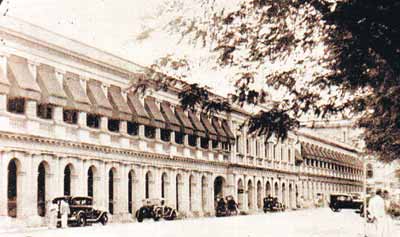
The Republic Building, Colombo which houses the Ministry of Foreign Affairs. It was once the meeting place of the Legislative Council of Ceylon. en:Category:History of Sri Lanka. By Unknown author - http://sundaytimes.lk/070318/FunDay/heritage.html, Public domain, https://commons.wikimedia.org/w/index.php?curid=7176448
1834 CE
The Kandyan administrative and social structure
The Kandyan administrative and social structure is dismantled. Source — Wikipedia, "Timeline of Sri Lankan history" (19th century):
Oct 9, 1835 CE
Royal College, Colombo
Royal College, the first government-run secondary school for boys is established with the name Hillstreet Academy in Colombo. Source — Wikipedia, "Timeline of Sri Lankan history" (19th century):
Royal College main building. By Nitraven at English Wikipedia - Transferred from en.wikipedia to Commons by Lantus., Public domain, https://commons.wikimedia.org/w/index.php?curid=6558212
Jul 26, 1848 CE
Matale rebellion
A peasant uprising led by popular leaders Gongalegoda Banda and Puran Appu takes place against oppressive colonial tax policies, marking a crucial transition from feudal revolts to modern independence struggles. Source — Wikipedia, "Timeline of Sri Lankan history" (19th century):
The Temple of the Tooth in Kandy. This temple is one of the most holy sites in Sri Lanka reputed to contain an actual tooth of the Buddha on his 2nd visit to the Island over 2000 years ago. By McKay Savage from Chennai, India - Sri Lanka - 029 - Kandy Temple of the Tooth, CC BY 2.0, https://commons.wikimedia.org/w/index.php?curid=5550794
1860 CE
Sri Lanka
In Sri Lanka, against all expectations, the monastic and lay communities bring about a major revival in Buddhism, a movement that goes hand in hand with growing nationalism; the revival follows a period of persecution by foreign powers. Since then, Buddhism has flourished, and Sri Lankan monks and expatriate lay people have been prominent in spreading Theravada Buddhism in Asia, the West, and even in Africa. Source — Wikipedia, "Timeline of Sri Lankan history" (19th century):
Jun 12, 1863 CE
Rāmañña Nikāya
The Rāmañña Nikāya is established. Source — Wikipedia, "Timeline of Sri Lankan history" (19th century):
100 King of Burma Inviting the Ramañña Monks to get Ordination in Sri Lanka, Kelaniya Raja Maha Vihara By Photo Dharma from Sadao, Thailand - 100 King of Burma Inviting the Ramañña Monks to get Ordination in Sri Lanka, CC BY 2.0, https://commons.wikimedia.org/w/index.php?curid=50704096
Mar 27, 1871 CE
Census of Sri Lanka
The first ever scientific Census of Sri Lanka was conducted by the Registrar General's Office, making it the first of any country in South Asia. The census enumarated a population of 2,400,380 people. Source — Wikipedia, "Timeline of Sri Lankan history" (19th century):
10. Registrar General's Office SH 562 By Pickering, Charles Percy (New South Wales. Government Printing Office) - http://acms.sl.nsw.gov.au/item/itemDetailPaged.aspx?itemID=479513 (item)http://acms.sl.nsw.gov.au/item/itemDetailPaged.aspx?itemID=442753 (album), Public domain, https://commons.wikimedia.org/w/index.php?curid=29903800
Aug 26, 1873 CE
The Great Debate of Panadura
The Pānadurā Vādaya, a public debate where Mohottiwatte Gunaananda Thera defeated Christian adversaries, sparked a national Buddhist re-awakening. Source — Wikipedia, "Timeline of Sri Lankan history" (19th century):
Venerable Migettuwatte Gunananda Thera at Panadura,(26,28 August,1873) vs Wesleyan Missionary Fathers By Unknown author - Controversy at Panadura or Panadura Vadaya By Pranith Abhayasundra - 1990 (Book), Public domain, https://commons.wikimedia.org/w/index.php?curid=19224279
1880 CE
Helena Blavatsky
Madame Blavatsky and Colonel Olcott became the first Westerners to receive the refuges and precepts, the ceremony by which one traditionally becomes a Buddhist; thus Blavatsky was the first Western woman to do so. Source — Wikipedia, "Timeline of Sri Lankan history" (19th century):
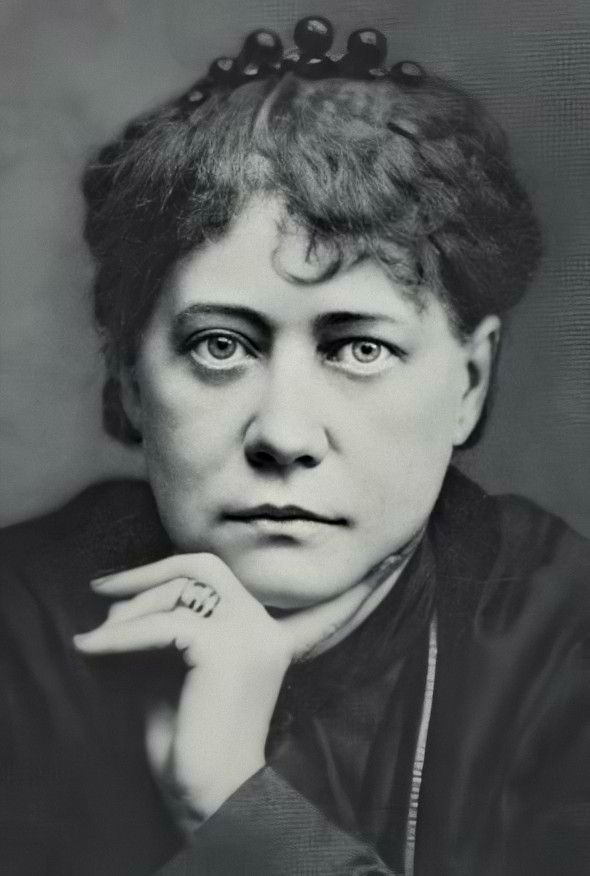
Founder of the Theosophical Society Elena Petrovna Gan (HP Blavatsky), born in Russia 1831 - died in England 1891 By Unsure - http://www.blavatskyarchives.com/hpbphotos6.htm, Public domain, https://commons.wikimedia.org/w/index.php?curid=66334
Feb 26, 1881 CE
P&O
P&O's SS Ceylon leaves Liverpool to begin the world's first round-the-world pleasure cruise. Source — Wikipedia, "Timeline of Sri Lankan history" (19th century):
House flag of the former Peninsular and Oriental Steam Navigation Company By P&O - Own work, based on File:Zulu flag.svg by Francois Cartegnie (User:FCartegnie), Public domain, https://commons.wikimedia.org/w/index.php?curid=8725618
Nov 1, 1886 CE
Ananda College
Ananda College, the first Buddhist school in Sri Lanka is established with 37 students. Source — Wikipedia, "Timeline of Sri Lankan history" (19th century):
Ananda College, Colombo. By Buddhist Annual of Ceylon - Buddhist Annual of Ceylon, Vol I (1920), 1, p. 40, Public domain, https://commons.wikimedia.org/w/index.php?curid=75053308
1890 CE
Temperance movement in Sri Lanka
Spearheaded by local figures, organized efforts against alcohol consumption began in the Southern Province. Source — Wikipedia, "Timeline of Sri Lankan history" (19th century):
Feb 26, 1891 CE
Census of Sri Lanka
The 3rd national Census of Sri Lanka enumarates a population of 3,007,789 people. Source — Wikipedia, "Timeline of Sri Lankan history" (19th century):
Aug 9, 1900 CE
Second Boer War
The Second Boer War prisoner-of-war camp is opened in Diyatalawa, housing thousands of captured Boers from South Africa. Source — Wikipedia, "Timeline of Sri Lankan history" (20th century):
A Collage of Major Battles and Events during the Second Boer War Clockwise from left: Boers in action at the Battle of Colenso, the 17th Lancers holding of an attack at Modderfontein, General Redvers Buller entering Ladysmith on 27 Feb 1900, Boers at the besieged city of Mafeking, Canadian Troops during the Battle of Paardeberg, and Boers before action at Spion Kop. By The British Army and The Illustrated London News, Public domain, https://commons.wikimedia.org/w/index.php?curid=140253010
Mar 1, 1901 CE
Census of Sri Lanka
The 4th national Census of Sri Lanka enumarates a population of 3,565,954 people. Source — Wikipedia, "Timeline of Sri Lankan history" (20th century):
1904 CE
Nyanatiloka
First continental European, Anton Walther Florus Gueth, was accepted into the Sangha as Ñāṇatiloka Bhikkhu. Ñāṇatiloka went on to become the father of western monks in Ceylon. Source — Wikipedia, "Timeline of Sri Lankan history" (20th century):
Nyanatiloka By Unknown author, CC BY-SA 2.0, https://commons.wikimedia.org/w/index.php?curid=3455727
Aug 1, 1905 CE
Northern line
The Northern line is completed with trains from Colombo arriving at Jaffna Railway Station. Source — Wikipedia, "Timeline of Sri Lankan history" (20th century):
A train on the Northern Railway Line, Sri Lanka. By Rehman Abubakr - Own work, CC BY-SA 4.0, https://commons.wikimedia.org/w/index.php?curid=85591079
Mar 1, 1911 CE
Census of Sri Lanka
The 5th national Census of Sri Lanka enumarates a population of 4,106,350 people. Source — Wikipedia, "Timeline of Sri Lankan history" (20th century):
1912 CE
Nyanatiloka
The German monk Nyanatiloka founded the first monastery for Western Theravada monks, the Island Hermitage, in Sri Lanka. Source — Wikipedia, "Timeline of Sri Lankan history" (20th century):
Nyanatiloka By Unknown author, CC BY-SA 2.0, https://commons.wikimedia.org/w/index.php?curid=3455727
May 28, 1915 CE
1915 Sinhalese-Muslim riots
Religious and cultural disputes over Buddhist processions near mosques escalates severely into riots due to a heavy-handed British military crackdown under martial law. Unrest ended on 8 August of that year. The event ultimately catalyzed the island's independence movement. Source — Wikipedia, "Timeline of Sri Lankan history" (20th century):
The formal ceremony marking the start of self rule, with the opening of the first parliament at Independence Square by the HRH Prince Henry in the presence of Rt Hon D.S. Senanayake as first Prime Minister of Ceylon. By Government of Ceylon and UK. Original uploader was Cossde at en.wikipedia - Government of Ceylon and UK, Public domain, https://commons.wikimedia.org/w/index.php?curid=7176453
Mar 18, 1921 CE
Census of Sri Lanka
The 6th national Census of Sri Lanka enumarates a population of 4,497,854 people. Source — Wikipedia, "Timeline of Sri Lankan history" (20th century):
Dec 16, 1925 CE
Radio Ceylon
Radio broadcasting in Sri Lanka officially launched with Radio Ceylon, making it the very first radio broadcaster in Asia. Source — Wikipedia, "Timeline of Sri Lankan history" (20th century):
Nov 13, 1927 CE
Sydney Webb
The commissioners for the Donoughmore Commission, a British parliamentary task force to set up a progressive new constitution for Sri Lanka, introducing universal adult suffrage and a unique executive committee system to foster power-sharing across ethnic lines, are appointed by Sydney Webb, the British Labour Secretary of State for the Colonies. Source — Wikipedia, "Timeline of Sri Lankan history" (20th century):
Photograph of Sidney James Webb, Baron Passfield by W. & D. Downey, published by Cassell & Company, Ltd in 1893. By W. & D. Downey - one or more third parties have made copyright claims against Wikimedia Commons in relation to the work from which this is sourced or a purely mechanical reproduction thereof. This may be due to recognition of the "sweat of the brow" doctrine, allowing works to be eligible for protection through skill and labour, and not purely by originality as is the case in the United States (where this website is hosted). These claims may or may not be valid in all jurisdictions. As such, use of this image in the jurisdiction of the claimant or other countries may be regarded as copyright infringement. Please see Commons:When to use the PD-Art tag for more information., Public domain, https://commons.wikimedia.org/w/index.php?curid=176969550
Jul 7, 1931 CE
Donoughmore Commission
Donoughmore Commission: The resulting Donoughmore Constitution officially went into effect with the opening of the first State Council of Ceylon and established Universal suffrage. The adult franchise was extended to women above the age of 21, regardless of their educational status. At the time Sri Lanka became one of the first Asian countries to allow voting rights to women. The Donoughmore Constitution remained in place until 1947. Source — Wikipedia, "Timeline of Sri Lankan history" (20th century):
Universal right to vote, World By Our World In Data - https://ourworldindata.org/grapher/universal-suffrage-lexical?tab=map, CC BY 4.0, https://commons.wikimedia.org/w/index.php?curid=185391726
Nov 11, 1933 CE
Suriya-Mal Movement
The Suriya-Mal Movement, an Sri Lankan anti-imperialist and social welfare initiative raising money by selling local suriya flowers (sunflower) for Ceylonese ex-servicemen begins in protests to funds from British Poppy Day going exclusively to British veterans Source — Wikipedia, "Timeline of Sri Lankan history" (20th century):
Sep 1, 1934 CE
1934-35 malaria outbreak in Ceylon
An initial uptick in malaria cases was first noticed at rural dispensaries in the latter half of September and spread further into October following heavy rains that disrupted a prolonged drought. Source — Wikipedia, "Timeline of Sri Lankan history" (20th century):
Dec 18, 1935 CE
Lanka Sama Samaja Party
The major Trotskyist political party Lanka Sama Samaja Party is founded by Leslie Goonewardene, N. M. Perera, Colvin R. de Silva, Philip Gunawardena and Robert Gunawardena. Source — Wikipedia, "Timeline of Sri Lankan history" (20th century):
Apr 5, 1942 CE
Ceylon in World War II
Ceylon in World War II: Colombo is attacked by air in the Easter Sunday raid by the Imperial Japanese Navy in an effort to destroy the British Eastern Fleet located at that port. Source — Wikipedia, "Timeline of Sri Lankan history" (20th century):
1944 CE
All Ceylon Tamil Congress
The All Ceylon Tamil Congress (ACTC), the first Sri Lankan Tamil political party, is founded by G. G. Ponnambalam. Source — Wikipedia, "Timeline of Sri Lankan history" (20th century):
Sep 1, 1945 CE
Soulbury Commission
The final report of the Soulbury Commission, a constitutional reform initiative that drafted the framework for the island's eventual transition to independence, was published. Source — Wikipedia, "Timeline of Sri Lankan history" (20th century):
Mar 19, 1946 CE
Census of Sri Lanka
The 8th national Census of Sri Lanka, originally scheduled for 1941, was delayed by five years due to the war. This census enumarates a population of 6,657,339 people. Source — Wikipedia, "Timeline of Sri Lankan history" (20th century):
Feb 4, 1948 CE
The Sri Lankan people officially achieve
The Sri Lankan people officially achieve independence from over 130 years of British colonial rule, transitioning into the self-governing Dominion of Ceylon within the British Commonwealth. Source — Wikipedia, "Timeline of Sri Lankan history" (20th century):
Aug 24, 1949 CE
Gal Oya Scheme
The Gal Oya Multipurpose Scheme, a landmark agricultural and river valley development project is initiated to harness the Gal Oya River in the Eastern Province. It aimed to achieve food security and resettle over 250,000 landless people from the wet zone into the underdeveloped dry zone. Source — Wikipedia, "Timeline of Sri Lankan history" (20th century):
Jan 1, 1950 CE
Colombo Plan
The Colombo Plan is established as a regional intergovernmental organization to boost economic and social development in the Asia-Pacific region. Centered on the concepts of self-help and mutual assistance, it operates through partnerships to enhance human capital and technical cooperation Source — Wikipedia, "Timeline of Sri Lankan history" (20th century):
Mar 2, 1951 CE
Sri Lanka Air Force
The Sri Lanka Air Force is founded as the Royal Ceylon Air Force (RCyAF), the aerial defense branch of the Sri Lanka Armed Forces. Source — Wikipedia, "Timeline of Sri Lankan history" (20th century):
Dec 18, 1952 CE
Ceylon–China Trade Agreement of 1952
A landmark trade deal with China, the Rubber-Rice Pact, is signed. Source — Wikipedia, "Timeline of Sri Lankan history" (20th century):
Mar 20, 1953 CE
Census of Sri Lanka
The 9th national Census of Sri Lanka enumarates a population of 8,097,845 people. The census was delayed until 1953 due to a severe global shortage of paper. Source — Wikipedia, "Timeline of Sri Lankan history" (20th century):
Apr 10, 1954 CE
Elizabeth II
Elizabeth II visits Sri Lanka. Her second visit was in October 1981 to celebrate 50 years of universal adult franchise Source — Wikipedia, "Timeline of Sri Lankan history" (20th century):
Dec 14, 1955 CE
United Nations Security Council Resolution 109
Sri Lanka is officially admitted as a member state of the United Nations under Resolution 109. Source — Wikipedia, "Timeline of Sri Lankan history" (20th century):
Apr 5, 1956 CE
Mahajana Eksath Peramuna
The Mahajana Eksath Peramuna (MEP), led by S. W. R. D. Bandaranaike wins the general elections in a landslide. Source — Wikipedia, "Timeline of Sri Lankan history" (20th century):
Nov 1, 1957 CE
Royal Navy
The British Royal Navy officially hands over the strategic naval base of Trincomalee and Katunayake air base to the Sri Lankan Government, after Prime Minister S. W. R. D. Bandaranaike requested the removal of all British service personnel from the island. Source — Wikipedia, "Timeline of Sri Lankan history" (20th century):
May 22, 1958 CE
Sri Lankan Tamils
Deteriorating relations between government policies and the Sri Lankan Tamils erupt into island-wide Riots. Source — Wikipedia, "Timeline of Sri Lankan history" (20th century):
Feb 18, 1959 CE
Vidyodaya Pirivena
Under the Universities Act, Vidyodaya Pirivena is formally reconstituted as the Vidyodaya University (now the University of Sri Jayewardenepura). Source — Wikipedia, "Timeline of Sri Lankan history" (20th century):
Jul 21, 1960 CE
Sirimavo Bandaranaike
Sirimavo Bandaranaike, wife of S. W. R. D. Bandaranaike, becomes the world's first elected female head of government, as Prime Minister. Source — Wikipedia, "Timeline of Sri Lankan history" (20th century):
Jul 1, 1961 CE
People's Bank
The People's Bank of Ceylon is officially established under Act No. 29 of 1961. Source — Wikipedia, "Timeline of Sri Lankan history" (20th century):
Jan 27, 1962 CE
1962 Ceylonese coup attempt
A group of Christian officers in the military and police planned to topple the government of Prime Minister Sirimavo Bandaranaike Source — Wikipedia, "Timeline of Sri Lankan history" (20th century):
Jul 8, 1963 CE
Census of Sri Lanka
The 10th national Census of Sri Lanka, originally scheduled for 1961 was pushed back two years as it faced faced administrative obstacles, enumarates a population of 10,582,064 people. Source — Wikipedia, "Timeline of Sri Lankan history" (20th century):
Oct 30, 1964 CE
Sirima–Shastri Pact
The Sirima–Shastri Pact a bilateral agreement between Sri Lankan Prime Minister Sirimavo Bandaranaike and Indian Prime Minister Lal Bahadur Shastri is signed. It aimed to resolve the citizenship status of nearly 1 million stateless Tamils of Indian origin who were brought to Sri Lanka to work on plantations while under British occupation. Source — Wikipedia, "Timeline of Sri Lankan history" (20th century):
1965 CE
United National Party
The United National Party led by Dudley Senanayake wins the 1965 Ceylonese parliamentary election, with Senanayake becoming Prime Minister. Source — Wikipedia, "Timeline of Sri Lankan history" (20th century):
Jan 6, 1966 CE
Tamil Language (Special Provisions) Act
The Tamil Language (Special Provisions) Act No. 28 of 1958 was passed to allow for the use of the Tamil language in administration, education, and public service exams Source — Wikipedia, "Timeline of Sri Lankan history" (20th century):
Jan 5, 1967 CE
Radio Ceylon
Radio Ceylon transitioned into a public corporation named the Ceylon Broadcasting Corporation Source — Wikipedia, "Timeline of Sri Lankan history" (20th century):
1968 CE
United Front
The United Front is founded as a socialist republican political alliance, a coalition formed by the Sri Lanka Freedom Party (SLFP), the Lanka Sama Samaja Party (LSSP), and the Communist Party of Ceylon. Source — Wikipedia, "Timeline of Sri Lankan history" (20th century):
Jun 6, 1969 CE
Ceylon Electricity Board
The Ceylon Electricity Board (CEB) is established, replacing the old government department and initiating a massive, coordinated masterplan to expand stable electricity grids to rural, off-grid communities. Source — Wikipedia, "Timeline of Sri Lankan history" (20th century):
May 27, 1970 CE
Sri Lanka Freedom Party
The Sri Lanka Freedom Party led United Front alliance wins the 1970 Ceylonese parliamentary elections in a landslide victory with SLFP leader Sirimavo Bandaranaike becoming Prime Minister. Source — Wikipedia, "Timeline of Sri Lankan history" (20th century):
Mar 1, 1971 CE
State Pharmaceuticals Corporation of Sri Lanka
The State Pharmaceuticals Corporation of Sri Lanka commences operations in Ratmalana. Developed with Japanese assistance, the facility allows Sri Lanka to manufacture its own high-quality, essential, and affordable generic drugs. Source — Wikipedia, "Timeline of Sri Lankan history" (20th century):
May 22, 1972 CE
Sri Lankan Constitution of 1972
Sri Lanka becomes a republic, and country's name Ceylon is changed to Sri Lanka with the ratification of the Sri Lankan Constitution of 1972. Source — Wikipedia, "Timeline of Sri Lankan history" (20th century):
Jul 23, 1973 CE
Associated Newspapers of Ceylon Limited
The Associated Newspapers of Ceylon Limited is Nationalised by Prime Minister Sirimavo Bandaranaike’s United Front government, primarily targeting the press and privately held plantations to centralize the economy and eliminate foreign influence. Source — Wikipedia, "Timeline of Sri Lankan history" (20th century):
Jun 26, 1974 CE
India–Sri Lanka maritime boundary agreements
Prime Minister Sirimavo Bandaranaike and Indian Prime Minister Indira Gandhi signed the Indo-Sri Lankan Maritime Agreement, officially recognizing Sri Lanka's sovereignty over the small, strategically located island of Kachchatheevu in the Palk Strait. Source — Wikipedia, "Timeline of Sri Lankan history" (20th century):
Jun 7, 1975 CE
Sri Lanka national cricket team
The Sri Lanka national cricket team plays its first-ever official One Day International match at the inaugural Cricket World Cup. Source — Wikipedia, "Timeline of Sri Lankan history" (20th century):
Aug 16, 1976 CE
5th Summit of the Non-Aligned Movement
Prime Minister Sirimavo Bandaranaike presides over the gathering of leaders from over 80 nations at the 5th Summit of the Non-Aligned Movement held in Colombo. Source — Wikipedia, "Timeline of Sri Lankan history" (20th century):
Nov 15, 1977 CE
Katunayake Free Trade Zone
The Katunayake Free Trade Zone is established becoming the first country in South Asia to liberalize its economy, driving export-oriented Foreign Direct Investment. Source — Wikipedia, "Timeline of Sri Lankan history" (20th century):
Aug 31, 1978 CE
Constitution of Sri Lanka
A new Constitution is adopted. The Executive Presidency established. Source — Wikipedia, "Timeline of Sri Lankan history" (20th century):
Sep 1, 1979 CE
SriLankan Airlines
Air Lanka, now SriLankan Airlines is officially incorporated as the country's new flag carrier. Source — Wikipedia, "Timeline of Sri Lankan history" (20th century):
Jul 1, 1980 CE
The 1980 General Strike was initiated
The 1980 General Strike was initiated to demand a Rs. 300 monthly wage increase, it was brutally crushed by President J.R. Jayewardene's administration, resulting in the mass dismissal of 40,356 state and private sector employees. Source — Wikipedia, "Timeline of Sri Lankan history" (20th century):
Mar 17, 1981 CE
Census of Sri Lanka
The 12th national Census of Sri Lanka, the last fully nationwide count for three decades, enumarates a population of 14,846,750 people. Source — Wikipedia, "Timeline of Sri Lankan history" (20th century):
Dec 13, 1982 CE
Anuradhapura
The Sacred City of Anuradhapura, the Ancient City of Polonnaruwa and the Ancient City of Sigiriya are officially designated as UNESCO World Heritage Sites. Source — Wikipedia, "Timeline of Sri Lankan history" (20th century):
The Ruwanwelisaya is a stupa, a hemispherical structure containing relics, in Sri Lanka, considered sacred to many Buddhists all over the world By Thisaru Tharuka - Own work, CC BY-SA 4.0, https://commons.wikimedia.org/w/index.php?curid=79431630
Jul 24, 1983 CE
Sri Lankan civil war
Sri Lankan civil war: Triggered by a LTTE ambush on 13 soldiers, anti-Tamil rioting begins in the capital and spreads to other parts of the country. This event is widely considered the beginning of the Sri Lankan civil war. Source — Wikipedia, "Timeline of Sri Lankan history" (20th century):
Mar 6, 1984 CE
Eighth Amendment to the Constitution of Sri Lanka
Eighth Amendment to the Constitution of Sri Lanka Source — Wikipedia, "Timeline of Sri Lankan history" (20th century):
Jul 8, 1985 CE
Thimpu principles
Mediated by the Indian government, round one of the Thimphu Talks were held in Bhutan to resolve the escalating Sinhala-Tamil ethnic conflict. They marked the first time the Sri Lankan government and Tamil militant organizations sat at the negotiating table. Round two was held from 12–17 August. Source — Wikipedia, "Timeline of Sri Lankan history" (20th century):
May 3, 1986 CE
Air Lanka Flight 512
Air Lanka Flight 512 Source — Wikipedia, "Timeline of Sri Lankan history" (20th century):
Apr 15, 1987 CE
1987–1989 JVP insurrection
The 1987–1989 JVP insurrection, an armed revolt led by the Marxist–Leninist group begins against the government. Source — Wikipedia, "Timeline of Sri Lankan history" (20th century):
Dec 5, 1988 CE
Old Town of Galle and its Fortifications
The Old Town of Galle and its Fortifications, the Sacred City of Kandy and the Sinharaja Forest Reserve is officially designated as UNESCO World Heritage Sites. Source — Wikipedia, "Timeline of Sri Lankan history" (20th century):
Feb 8, 1989 CE
Sri Dalada Maligawa
The Sri Dalada Maligawa is attacked by the armed cadres affiliated to Janatha Vimukthi Peramuna (JVP). Source — Wikipedia, "Timeline of Sri Lankan history" (20th century):
Jun 10, 1990 CE
Sri Lankan civil war
Sri Lankan civil war: Eelam War II, the second phase of the Sri Lankan civil war begins after the breakdown of peace talks. Source — Wikipedia, "Timeline of Sri Lankan history" (20th century):
May 21, 1991 CE
Sri Lankan civil war
Sri Lankan civil war: Former Indian Prime Minister Rajiv Gandhi is assassinated by a female suicide bomber belonging to the Liberation Tigers of Tamil Eelam (LTTE) at an election rally in Sriperumbudur, Tamil Nadu, killing Gandhi and 14 others. Source — Wikipedia, "Timeline of Sri Lankan history" (20th century):
Nov 16, 1992 CE
Sri Lankan civil war
Sri Lankan civil war: Vice Admiral Clancy Fernando, Commander of the Sri Lanka Navy is assassinated by a Liberation Tigers of Tamil Eelam (LTTE) suicide bomber becoming the highest-ranking military officer ever killed in action during the Sri Lankan civil war. Source — Wikipedia, "Timeline of Sri Lankan history" (20th century):
May 1, 1993 CE
Sri Lankan civil war
Sri Lankan civil war: President Ranasinghe Premadasa is assassinated by a LTTE suicide bomber who detonated an explosive belt during a United National Party May Day rally in central Colombo. Source — Wikipedia, "Timeline of Sri Lankan history" (20th century):
Aug 16, 1994 CE
People's Alliance
The People's Alliance wins the 1994 Sri Lankan parliamentary election with party leader Chandrika Kumaratunga becoming the new Prime Minister. Source — Wikipedia, "Timeline of Sri Lankan history" (20th century):
Jan 1, 1995 CE
Sri Lankan civil war
Sri Lankan civil war: Eelam War II ends following a ceasefire agreement and the start of peace talks between the Liberation Tigers of Tamil Eelam (LTTE) and the newly elected government of President Chandrika Kumaratunga. Source — Wikipedia, "Timeline of Sri Lankan history" (20th century):
1996 CE
Sakyadhita
A Bhikkhuni (Buddhist nuns) Order and lineage is revived in Sarnath, India through the efforts of Sakyadhita, an International Buddhist Women Association. The revival is done with some resistance from some of the more literal interpreters of the Buddhist Vinaya (monastic code) and lauded by others in the community. Source — Wikipedia, "Timeline of Sri Lankan history" (20th century):
Oct 15, 1997 CE
Sri Lankan civil war
Sri Lankan civil war: The Liberation Tigers of Tamil Eelam bomb the Galadari Hotel and the World Trade Center in Colombo. Source — Wikipedia, "Timeline of Sri Lankan history" (20th century):
Jan 25, 1998 CE
Sri Lankan civil war
Sri Lankan civil war: Liberation Tigers of Tamil Eelam (LTTE) terrorists commit a deadly suicide attack on Sri Lanka's most sacred Buddhist site and a UNESCO World Heritage centre: the Sri Dalada Maligawa, where Buddha's tooth relic is enshrined. Eight civilians are killed and 25 others are injured and significant damage is done to the temple structure, which was first constructed in 1592. Source — Wikipedia, "Timeline of Sri Lankan history" (20th century):
Dec 18, 1999 CE
Sri Lankan civil war
Sri Lankan civil war: Attempted assassination of Chandrika Kumaratunga Source — Wikipedia, "Timeline of Sri Lankan history" (20th century):
Apr 23, 2000 CE
Elephant Pass Military Base
The Sri Lankan government loses control of the strategic isthmus and the military Base at Elephant Pass in the Second Battle of Elephant Pass. Source — Wikipedia, "Timeline of Sri Lankan history" (21st century):
Jul 17, 2001 CE
Census of Sri Lanka
The originally scheduled 1991 census was cancelled entirely due to the conflict. When a census was finally attempted in 2001, it was incomplete, failing to cover areas in the Northern and Eastern provinces. The 13th national Census of Sri Lanka enumarates an estimated population of 18,797,257 people. Source — Wikipedia, "Timeline of Sri Lankan history" (21st century):
Feb 22, 2002 CE
Liberation Tigers of Tamil Eelam
A Ceasefire Agreement mediated by Norway was formally signed between the Government of Sri Lanka and the Liberation Tigers of Tamil Eelam. This agreement ended major offensive military operations and established the Sri Lanka Monitoring Mission, which was composed of representatives from Nordic countries, to oversee the truce Source — Wikipedia, "Timeline of Sri Lankan history" (21st century):
Feb 28, 2003 CE
Ayya Sudhamma Bhikkhuni
Ayya Sudhamma Bhikkhuni became the first American-born woman to gain bhikkhuni ordination in the Theravada school in Sri Lanka. Source — Wikipedia, "Timeline of Sri Lankan history" (21st century):
Mar 3, 2004 CE
Karuna Amman
Vinayagamoorthy Muralitharan (widely known as "Colonel Karuna"), LTTE's military leader for the East, split from the LTTE, defecting with an estimated 6,000 fighters over alleged differences with leader Velupillai Prabhakaran. The break triggered internal violence but severely weakened the LTTE, ultimately leading Karuna to enter mainstream Sri Lankan politics Source — Wikipedia, "Timeline of Sri Lankan history" (21st century):
Aug 12, 2005 CE
Lakshman Kadirgamar
Sri Lankan Foreign Minister Lakshman Kadirgamar was assassinated by a LTTE sniper, shot as he emerged from a swimming pool at his private residence in Colombo. A state of emergency is declared in the country as the assassination destabilized the fragile 2002 peace process. Source — Wikipedia, "Timeline of Sri Lankan history" (21st century):
Jul 20, 2006 CE
Mavil Aru
the LTTE closed the sluice gates of the Mavil Aru in the Trincomalee district, depriving Tamil and Muslim farming communities downstream of life-sustaining water. Source — Wikipedia, "Timeline of Sri Lankan history" (21st century):
Dec 3, 2007 CE
Muttiah Muralitharan
Sri Lankan bowler Muttiah Muralitharan dismisses Paul Collingwood in Kandy to take his 709th Test wicket, permanently surpassing Shane Warne as the most successful Test bowler of all time. Source — Wikipedia, "Timeline of Sri Lankan history" (21st century):
Jul 6, 2008 CE
2008 Asia Cup
Sri Lanka wins the Asia Cup cricket tournament in Karachi, Pakistan, defeating India by 100 runs in the final. Source — Wikipedia, "Timeline of Sri Lankan history" (21st century):
May 17, 2009 CE
The Liberation Tigers of Tamil Eelam
The Liberation Tigers of Tamil Eelam conceded defeat and announced their plan to surrender. Source — Wikipedia, "Timeline of Sri Lankan history" (21st century):
2010 CE
Theravada
In Northern California, 4 novice nuns were given the full bhikkhuni ordination in the Thai Theravada tradition, which included the double ordination ceremony. Bhante Gunaratana and other monks and nuns were in attendance. It was the first such ordination ever in the Western hemisphere. The following month, more bhikkhuni ordinations were completed in Southern California, led by Walpola Piyananda and other monks and nuns. The bhikkhunis ordained in Southern California were Lakshapathiye Samadhi (born in Sri Lanka), Cariyapanna, Susila, Sammasati (all three born in Vietnam), and Uttamanyana (born in Myanmar). Source — Wikipedia, "Timeline of Sri Lankan history" (21st century):
Nov 27, 2011 CE
E01 expressway
Sri Lanka inaugurates the Southern Expressway, the country's first-ever access-controlled toll highway, linking the capital with the southern coast while reducing travel times. Source — Wikipedia, "Timeline of Sri Lankan history" (21st century):
Mar 20, 2012 CE
Census of Sri Lanka
The 14th national Census of Sri Lanka was the first complete island-wide count in 31 years following the end of the civil war. It enumarated a population of 20,359,439 people. Source — Wikipedia, "Timeline of Sri Lankan history" (21st century):
Nov 15, 2013 CE
2013 Commonwealth Heads of Government Meeting
The Commonwealth Heads of Government Meeting (CHOGM) was held in Colombo. Source — Wikipedia, "Timeline of Sri Lankan history" (21st century):
Apr 6, 2014 CE
2014 World Twenty20
Sri Lanka wins the ICC World Twenty20 tournament in Dhaka, Bangladesh, defeating India by 6 wickets in the final. Source — Wikipedia, "Timeline of Sri Lankan history" (21st century):
Jan 9, 2015 CE
2015 Sri Lankan presidential election
Senior figures from the Sirisena campaign alleged that, as initial vote counts made it clear he was losing, Mahinda Rajapaksa attempted to stage a coup d'état to remain in power. Source — Wikipedia, "Timeline of Sri Lankan history" (21st century):
Sep 5, 2016 CE
The World Health Organization certifies Sri
The World Health Organization certifies Sri Lanka as malaria-free, making the country one of the first in the region to eliminate the disease. Source — Wikipedia, "Timeline of Sri Lankan history" (21st century):
Dec 9, 2017 CE
China Merchants Port
The Sri Lankan government gave China Merchants Ports a controlling equity stake and a 99-year lease for the Hambantota International Port after it is unable to repay its debt to the Chinese government. Source — Wikipedia, "Timeline of Sri Lankan history" (21st century):
Oct 26, 2018 CE
2018 Sri Lankan constitutional crisis
President Maithripala Sirisena abruptly dismissed Prime Minister Ranil Wickremesinghe starting a 52-day constitutional crisis. Sirisena illegally replaced him with former President Mahinda Rajapaksa. Source — Wikipedia, "Timeline of Sri Lankan history" (21st century):
Apr 21, 2019 CE
2019 Sri Lanka Easter bombings
Bombing of several churches and hotels by Islamic militants causing 269 deaths Source — Wikipedia, "Timeline of Sri Lankan history" (21st century):
Jan 25, 2020 CE
COVID-19
The first reported case of COVID-19 in Sri Lanka was identified and the victim was reported to be a Chinese woman. Source — Wikipedia, "Timeline of Sri Lankan history" (21st century):
Apr 5, 2021 CE
palm oil
Driven by foreign exchange shortages, President Gotabaya Rajapaksa orders the immediately suspension palm oil imports to Sri Lanka to push for organic farming. This decision backfired drastically, causing widespread crop failures, soaring food inflation, and critical shortages of essential goods. Source — Wikipedia, "Timeline of Sri Lankan history" (21st century):
Mar 15, 2022 CE
Aragalaya
Aragalaya: Protests erupt against the government's mishandling of the economic crisis Source — Wikipedia, "Timeline of Sri Lankan history" (21st century):
Jun 4, 2023 CE
United Nations General Assembly
Sri Lanka is unanimously elected as a vice president of the 78th session of the United Nations General Assembly which will assume the relevant position for the Asia Pacific region from September 2023 to September 2024. Source — Wikipedia, "Timeline of Sri Lankan history" (21st century):
Feb 24, 2024 CE
Red Sea crisis
Red Sea crisis: The Sri Lanka Navy confirms that one of its ships has completed its maiden patrol in the Bab-el-Mandeb Strait and is set to return to the country. The vessel is later revealed to be SLNS Gajabahu and the Sri Lankan government confirms that patrols would continue. Source — Wikipedia, "Timeline of Sri Lankan history" (21st century):
Apr 10, 2025 CE
Sri Lankan civil war
The Vasavilan–Palaly road is officially reopened to the public, after being closed for 34 years due to the Sri Lankan civil war. Source — Wikipedia, "Timeline of Sri Lankan history" (21st century):
Feb 5, 2026 CE
Samudika Jayarathna
Samudika Jayarathna is appointed as the 42nd Auditor General of Sri Lanka, becoming the first woman to hold the post. Source — Wikipedia, "Timeline of Sri Lankan history" (21st century):