Encyclopedia/3. History, Societies & Civilizations/09. Modern Nations/02. Americas • Curated by Admin Timeline.sg
History of Chile, sourced from Wikipedia's "Timeline of Chilean history".
Chronological Storyline (200 Milestones)
5050 BCE
Chinchorro culture
Chinchorro culture practices funerary mummification, the first known example of this practice in the world. Source — Wikipedia, "Timeline of Chilean history" (Pre-Columbian Chile):
This file was derived from: Ciudades con metro LatAm.svg By Noahedits - Own work, CC BY-SA 4.0, https://commons.wikimedia.org/w/index.php?curid=82083650
1650 BCE
Monte Verde
Settlement of Monte Verde, the "earliest known human settlement in the Americas". Source — Wikipedia, "Timeline of Chilean history" (Pre-Columbian Chile):
Vista del sitio de Monte Verde. By Geología Valdivia - https://www.flickr.com/photos/96974686@N02/8953136025/, CC BY 2.0, https://commons.wikimedia.org/w/index.php?curid=44159245
1000 CE
Tiwanaku Empire
Tiwanaku Empire collapses ushering migratory and societal changes that reach as far south as Araucanía. Source — Wikipedia, "Timeline of Chilean history" (Pre-Columbian Chile):
Cultura Tiwanaku By Xlsb - Own work, CC BY-SA 4.0, https://commons.wikimedia.org/w/index.php?curid=60986147
1300 CE
Cunco people
Possible date for a Cunco-Huilliche migration to Chiloé Island. Chonos were possibly displaced further such to places like Guaitecas Archipelago. Source — Wikipedia, "Timeline of Chilean history" (Pre-Columbian Chile):
Bandera williche de Chiloé By ppn87 - Own work, CC BY-SA 4.0, https://commons.wikimedia.org/w/index.php?curid=40801336
Sep 1, 1420 CE
1420 Caldera earthquake
a 9.4 M<sub>S</sub>-strong earthquake shakes Chile's Atacama Region causing tsunamis in Chile as well as Hawaii and Japan. Source — Wikipedia, "Timeline of Chilean history" (Pre-Columbian Chile):
Panoramica de la laguna con las tres cimas de fondo del nevado tres cruces By Tierrax - Own work, CC BY-SA 4.0, https://commons.wikimedia.org/w/index.php?curid=52776557
1471 CE
battle of the Maule
At some point in this time interval the battle of the Maule between Incas and Mapuches may have occurred. Source — Wikipedia, "Timeline of Chilean history" (Pre-Columbian Chile):
Huamán Poma de Ayala's picture of the confrontation between the Mapuches (left) and the Incas (right) By Felipe Guaman Poma de Ayala - English wikipedia, Public domain, https://commons.wikimedia.org/w/index.php?curid=3170104
1502 CE
Inca
The Inca Emperor Túpac Yupanqui reached Itata River Source — Wikipedia, "Timeline of Chilean history" (16th century):
Suntur Paucar, according to the description of the chronicles of Bernabé Cobo By Adapted from Huhsunqu, made by Pachakutec - Own work based on: Banner of the Inca Empire.svg, CC BY-SA 2.5, https://commons.wikimedia.org/w/index.php?curid=92212633
Sep 25, 1513 CE
Vasco Núñez de Balboa
Vasco Núñez de Balboa becomes the first European to sight the Pacific Ocean from the New World; he calls it Mar del Sur. Source — Wikipedia, "Timeline of Chilean history" (16th century):
Copiado del grabado de la obra Retratos de Españoles ilustres, publicada en Madrid, en 1791. By Anonymous (Spain)Unknown author after a 18th-century engraving - Retrato de Vasco Nuñez de Balboa (1475-1517) - bibliotecavirtualdefensa.es, Public domain, https://commons.wikimedia.org/w/index.php?curid=60731869
Oct 1, 1520 CE
Ferdinand Magellan
Explorer Ferdinand Magellan's expedition finds the passage now known as the Strait of Magellan. In the process, they become the first Europeans to describe Chilean Patagonia and its inhabitants. Source — Wikipedia, "Timeline of Chilean history" (16th century):
Half-length portrait of a bearded Ferdinand Magellan (circa 1480-1521) facing front. By Unknown author - The Mariner's Museum Collection, Public domain, https://commons.wikimedia.org/w/index.php?curid=44265
1532 CE
Francisco Pizarro
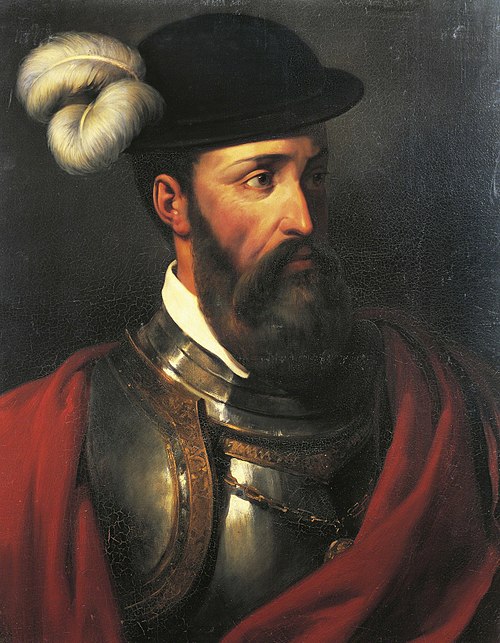
Francisco Pizarro arrives in Peru from Panamá. He begins the Conquest of the Inca Empire and captures Emperor Atahualpa during the Battle of Cajamarca. Source — Wikipedia, "Timeline of Chilean history" (16th century):
Francisco Pizarro By Amable-Paul Coutan - artsy.net, Public domain, https://commons.wikimedia.org/w/index.php?curid=49138158
Jul 1, 1535 CE
Conquistador
Spanish Conquistador Diego de Almagro begins his expedition to the lands south of Peru through the eastern side of the Andes Mountains. Source — Wikipedia, "Timeline of Chilean history" (16th century):
Escultura de Alberto del Canto en Saltillo By Ricardo DelaG - Own work, CC BY-SA 4.0, https://commons.wikimedia.org/w/index.php?curid=116941660
Mar 1, 1536 CE
Diego de Almagro
Almagro's expedition crosses the Andes into the Copiapó River valley and explores the central region of Chile as far south as the Aconcagua River valley. Source — Wikipedia, "Timeline of Chilean history" (16th century):
Diego de Almagro By Domingo Mesa, Public domain, https://commons.wikimedia.org/w/index.php?curid=58776
Feb 12, 1541 CE
Pedro de Valdivia
Pedro de Valdivia founds Santiago de Nueva Extremadura, now known as Santiago. Source — Wikipedia, "Timeline of Chilean history" (16th century):
Pedro de Valdivia. Portrait of 1854. Gift of Queen Elizabeth II of Spain to the Illustrious Municipality of Santiago By Federico de Madrazo y Kuntz - http://emisoras.pns.cl/imagenes/Forms/DispForm.aspx?ID=147 (Pedro-de-Valdivia.gif), Public domain, https://commons.wikimedia.org/w/index.php?curid=132458
Sep 4, 1544 CE
:es:Juan Bohón
:es:Juan Bohón founds Villanueva de la Serena, now known as La Serena. Source — Wikipedia, "Timeline of Chilean history" (16th century):
Flag of La Serena, Chile By B1mbo - Own work basado en File:Escudo de La Serena.svg, CC BY-SA 4.0, https://commons.wikimedia.org/w/index.php?curid=6305258
1545 CE
Arica
Foundation of the port of Arica. The port becomes a key staging point between the mines of Potosí in Upper Peru (now Bolivia) and Lima. Source — Wikipedia, "Timeline of Chilean history" (16th century):
Flag of Arica, Chile By B1mbo - Own work basado en File:Escudo de Arica.svg, CC BY-SA 4.0, https://commons.wikimedia.org/w/index.php?curid=6295835
1546 CE
Mapuche
Mapuche child Lautaro is captured by the Spanish and made a yanacona. Eventually, Lautaro becomes personal page of Pedro de Valdivia. Source — Wikipedia, "Timeline of Chilean history" (16th century):
Ancient Mapuche flag according to descriptions given by chroniclers. It contains an eight-pointed star on a blue background. By Al2 - Own work, CC BY 3.0, https://commons.wikimedia.org/w/index.php?curid=3079283
Oct 5, 1550 CE
Pedro de Valdivia
Pedro de Valdivia founds Concepción del Nuevo Extremo, now known as Concepción. Source — Wikipedia, "Timeline of Chilean history" (16th century):
Pedro de Valdivia. Portrait of 1854. Gift of Queen Elizabeth II of Spain to the Illustrious Municipality of Santiago By Federico de Madrazo y Kuntz - http://emisoras.pns.cl/imagenes/Forms/DispForm.aspx?ID=147 (Pedro-de-Valdivia.gif), Public domain, https://commons.wikimedia.org/w/index.php?curid=132458
Feb 9, 1552 CE
Valdivia, Chile
Founding of Valdivia. Source — Wikipedia, "Timeline of Chilean history" (16th century):
Flag of Valdivia, Chile By SVG version by MeekMark - Based on http://www.munivaldivia.cl/fotos/logos/ban_valdivia_gr.jpg, Public domain, https://commons.wikimedia.org/w/index.php?curid=1047487
Dec 25, 1553 CE
Battle of Tucapel
Battle of Tucapel: Mapuches led by Lautaro defeat the Spanish at the ruins of Tucapel capturing Pedro de Valdivia who is then executed. A general Mapuche uprising develops under Lautaro. Source — Wikipedia, "Timeline of Chilean history" (16th century):
Pedro de Valdivia. Portrait of 1854. Gift of Queen Elizabeth II of Spain to the Illustrious Municipality of Santiago By Federico de Madrazo y Kuntz - http://emisoras.pns.cl/imagenes/Forms/DispForm.aspx?ID=147 (Pedro-de-Valdivia.gif), Public domain, https://commons.wikimedia.org/w/index.php?curid=132458
Apr 30, 1557 CE
Battle of Mataquito
Battle of Mataquito: A Spanish force led by Francisco de Villagra defeats the forces of Lautaro, killing him amidst the battle. Caupolicán assumes the role of Mapuche toqui (wartime chief). Source — Wikipedia, "Timeline of Chilean history" (16th century):
Francisco de Villagra (1511-1563), conquistador español, gobernador de Chile By Pedro León Carmona (1854-1899) - http://www.museohistoriconacional.cl/618/w3-article-28593.html, Public domain, https://commons.wikimedia.org/w/index.php?curid=16213237
1558 CE
impalement
Caupolicán is captured and executed by impalement. Source — Wikipedia, "Timeline of Chilean history" (16th century):
An engraving representing an impalement from Iusti Lipsi de Cruce : ad sacram profanamque historiam utiles (Crucifixions: a useful history of the sacred and profane by Justus Lipsius). By Unknown author - Book published c. 1593, Public domain, https://commons.wikimedia.org/w/index.php?curid=1909049
Apr 1, 1564 CE
Concepción, Chile
Concepción is unsuccessfully besieged by native Mapuches. Source — Wikipedia, "Timeline of Chilean history" (16th century):
arco de medicina udec By Gherm - Own work, CC BY-SA 3.0, https://commons.wikimedia.org/w/index.php?curid=15406170
Aug 27, 1565 CE
Real Audiencia
The King of Spain decrees the creation of Real Audiencia in Concepción. Source — Wikipedia, "Timeline of Chilean history" (16th century):
arco de medicina udec By Gherm - Own work, CC BY-SA 3.0, https://commons.wikimedia.org/w/index.php?curid=15406170
Feb 12, 1567 CE
Chiloé Archipelago
Chiloé Archipelago is claimed by Spain. Martín Ruiz de Gamboa founds Castro on the main island; the southernmost European settlement at that time. Source — Wikipedia, "Timeline of Chilean history" (16th century):
Castro, Chile By Michelle Maria - https://web.archive.org/web/20161025213211/http://www.panoramio.com/photo/86482513, CC BY 3.0, https://commons.wikimedia.org/w/index.php?curid=56086541
Feb 8, 1570 CE
Concepción, Chile
Concepción is struck by an earthquake. Source — Wikipedia, "Timeline of Chilean history" (16th century):
arco de medicina udec By Gherm - Own work, CC BY-SA 3.0, https://commons.wikimedia.org/w/index.php?curid=15406170
Nov 22, 1574 CE
Juan Fernández
Spanish captain Juan Fernández discovers the Juan Fernández Islands. Source — Wikipedia, "Timeline of Chilean history" (16th century):
Dec 16, 1575 CE
1575 Valdivia earthquake
Earthquake in Valdivia causes extensive damage in Valdivia and surrounding cities of Villarrica, Osorno, and Castro. As in the 1960 Valdivia earthquake, the Riñihue Lake dams. Source — Wikipedia, "Timeline of Chilean history" (16th century):
College of Villarrica By Chile hoy - Own work, CC BY-SA 3.0, https://commons.wikimedia.org/w/index.php?curid=15685956
Apr 1, 1576 CE
San Pedro River
The dam of San Pedro River burst flooding many settlements downstream including Valdivia. Source — Wikipedia, "Timeline of Chilean history" (16th century):
rio san pedro chile By Enarbee - Own work, CC BY-SA 3.0, https://commons.wikimedia.org/w/index.php?curid=10629489
Dec 1, 1578 CE
Francis Drake
Francis Drake attacks the coast of Chile during his circumnavigation of the earth; La Serena and Valparaíso are plundered. Source — Wikipedia, "Timeline of Chilean history" (16th century):
Francis Drake By Marcus Gheeraerts the Younger - http://www.nmm.ac.uk/collections/displayRepro.cfm?reproID=BHC2662, Public domain, https://commons.wikimedia.org/w/index.php?curid=2737846
Jun 26, 1580 CE
Martín Ruiz de Gamboa
Martín Ruiz de Gamboa founds Chillán. Source — Wikipedia, "Timeline of Chilean history" (16th century):
Busto de Martin Ruiz de Gamboa y placa de fundadores en Chillán, Chile By José Joaquín Cortes - Own work, CC BY-SA 4.0, https://commons.wikimedia.org/w/index.php?curid=122609542
Feb 5, 1584 CE
Pedro Sarmiento de Gamboa
Pedro Sarmiento de Gamboa founds the settlement Nombre de Jesús on the eastern end of the Strait of Magellan. Source — Wikipedia, "Timeline of Chilean history" (16th century):
Bronze relief with the bust of Pedro Sarmiento de Gamboa (Alcalá de Henares, 1530 to 1532 - Atlantic Ocean, opposite Lisbon, July 17, 1592) ha was a 16th-century Spanish sailor, explorer, writer, historian, astronomer, scientist and humanist. By Raimundo Pastor - Own work, CC BY-SA 4.0, https://commons.wikimedia.org/w/index.php?curid=36926431
Dec 23, 1598 CE
Battle of Curalaba
Battle of Curalaba: Governor Martín García Óñez de Loyola killed in a Mapuche ambush. Source — Wikipedia, "Timeline of Chilean history" (16th century):
Retrato de Martín García Oñez de Loyola. By Atribuído a Pedro León Carmona (1853-1899) - https://www.surdoc.cl/registro/3-325, Public domain, https://commons.wikimedia.org/w/index.php?curid=97468976
1599 CE
Real Situado
The Real Situado, an annual payment of silver from Potosí to Chile, is established. Source — Wikipedia, "Timeline of Chilean history" (16th century):
Vista de la Villa Imperial de Potosí By Parallelepiped09 - Own work, CC BY-SA 4.0, https://commons.wikimedia.org/w/index.php?curid=171595084
Feb 16, 1600 CE
Huaynaputina
Huaynaputina begins its catastrophic eruption. Source — Wikipedia, "Timeline of Chilean history" (17th century):
1602 CE
Pelantaro
General uprising of the Mapuches under Pelantaro. All cities south of the Bío-Bío River are demolished, in what is now called Destruction of the Seven Cities. Source — Wikipedia, "Timeline of Chilean history" (17th century):
Pelontraru ( Purenü mapu, ? - 1620 p.), doy wünengechi mapuche tokingefuy, Mapuche kuyfi nütram mew mülekelu. Trokikealu kiñe pichi lingko, wewafi ka lhangümfi ti wingka ülmen, Martín García Oñez de Loyola pingey, Kuralawe mew mülelu. Müchay trokilkünofi Füta Awkan ñi Toki, trokikealu kom lingko, rangi Fiw Fiw lhewfü ka Füta Wapi Chillwe. Fey ta Füta awkan, rangi 1598 ka 1604 tripantu mo, elufi pu mapuche ñi kisungünewün, 200 tripantu mew rupalu. Feychi estatua pingey fey ti mew, ta müley wekun Purenü ñi Wingka Malal mew, pu chentu pepiadkintufi feyti awkan adadkintun. By Qchivilu - Own work, CC BY-SA 4.0, https://commons.wikimedia.org/w/index.php?curid=52874515
1604 CE
Valdivia, Chile
A fort established in 1602 at the ruins of Valdivia is abandoned. Source — Wikipedia, "Timeline of Chilean history" (17th century):
Flag of Valdivia, Chile By SVG version by MeekMark - Based on http://www.munivaldivia.cl/fotos/logos/ban_valdivia_gr.jpg, Public domain, https://commons.wikimedia.org/w/index.php?curid=1047487
1608 CE
Jesuit
Jesuits establishes themselves in Chiloé Archipelago. Source — Wikipedia, "Timeline of Chilean history" (17th century):
Monochrome version of the IHS emblem of the Jesuits. The design of the emblem is attributed to Ignatius of Loyola (1541). the cross is here drawn as formy fitchy; this is not necessarily part of the design, early modern depictions sometimes show a plain cross, or various baroque ornamentations the three nails are sometimes shown as piercing a heart the alternating straight and wavy rays are found in historical specimens, but not necessarily, and sometimes with two or three straight rays separating wavy rays. the number of rays is often 32 as here, but sometimes also 12, 16 or 24. the emblem is sometimes surrounded by the inscription et vocatum est nomen eius Iesus (Luke 2:21) By Moranski - Own work, Public domain, https://commons.wikimedia.org/w/index.php?curid=5596804
1612 CE
Defensive War
Beginning of the Defensive War phase (promoted by Luis de Valdivia) in the Arauco War. Source — Wikipedia, "Timeline of Chilean history" (17th century):
Martires de Elicura. Sacerdotes jesuitas siendo asesinados por guerreros mapuches en 1612 By Alonso de Ovalle - Historia de Chile de Alonso de Ovalle, Public domain, https://commons.wikimedia.org/w/index.php?curid=1930374
1613 CE
Jesuit
Jesuits from Chiloé reach Guayaneco Archipelago for the first time. Source — Wikipedia, "Timeline of Chilean history" (17th century):
Monochrome version of the IHS emblem of the Jesuits. The design of the emblem is attributed to Ignatius of Loyola (1541). the cross is here drawn as formy fitchy; this is not necessarily part of the design, early modern depictions sometimes show a plain cross, or various baroque ornamentations the three nails are sometimes shown as piercing a heart the alternating straight and wavy rays are found in historical specimens, but not necessarily, and sometimes with two or three straight rays separating wavy rays. the number of rays is often 32 as here, but sometimes also 12, 16 or 24. the emblem is sometimes surrounded by the inscription et vocatum est nomen eius Iesus (Luke 2:21) By Moranski - Own work, Public domain, https://commons.wikimedia.org/w/index.php?curid=5596804
1639 CE
alcabala
The alcabala is reestablished after it had been suspended since the Disaster of Curalaba in 1598. Source — Wikipedia, "Timeline of Chilean history" (17th century):
1640 CE
Llaima
Llaima begins an eruption. Source — Wikipedia, "Timeline of Chilean history" (17th century):
View of Llaima Volcano from Mirador Sierra Nevada in Conguillío National Park, Araucanía Region, Chile. I took this photograph during my visit to the park on Sunday, 26 April 2026, at 12:23 p.m. The clear weather offered an unobstructed view of one of Chile’s most iconic and active volcanoes, rising above the ancient forests and volcanic landscape of Conguillío. By Gaphilly678 - Own work, CC BY-SA 4.0, https://commons.wikimedia.org/w/index.php?curid=195082471
Jan 6, 1641 CE
Parliament of Quillín
The first Parliament of Quillín is held. Source — Wikipedia, "Timeline of Chilean history" (17th century):
El Parlamento de Quilín o Quillín, también llamado Paces de Quillén, fue una reunión masiva realizada el 6 de enero de 1641 junto al Río Quillén, actual Provincia de Cautín, de la que emanó el primer tratado de paz acordado entre mapuches y españoles, después de casi un siglo de lucha en la Guerra de Arauco. By Alonso de Ovalle (1601-1651). Cartographe - http://gallica.bnf.fr/ark:/12148/btv1b72003435/f2.zoom, Public domain, https://commons.wikimedia.org/w/index.php?curid=42337528
May 20, 1643 CE
Dutch expedition to Valdivia
A Dutch expedition led by plunders Carelmapu and Castro soon after. Governor of Chiloé Andrés Herrera dies in battle and is replaced by Fernando de Alvarado. Source — Wikipedia, "Timeline of Chilean history" (17th century):
Expedición Holandesa de Hendrick Brouwen y Elías Herckmans en la ciudad de Valdivia, Chile en el año de 1643. "Journael ende historis verhael van de Reyse gedaen bij Costen de Straet Le Maire, naer de Custen van Chili, onder het beleyt van den Heer Generael Henrick Brouwer, inden Jare 1643" By Hendrick Brouwer (1643) - http://objects.library.uu.nl/reader/index.php?obj=1874-227270&metadata=1&lan=en#page//12/04/01/120401738357470587850177944193402763198.jpg/mode/1up, CC0, https://commons.wikimedia.org/w/index.php?curid=67482064
Apr 30, 1644 CE
Captain Juan de Acevedo departs to
Captain Juan de Acevedo departs to investigate about the Dutch presence in Valdivia, entering the site of the ruins and finding they have left. Source — Wikipedia, "Timeline of Chilean history" (17th century):
1645 CE
Valdivian Fort System
Repopulation of Valdivia and construction of the Valdivian Fort System. Valdivia comes under direct rule of the Viceroyalty of Peru. Source — Wikipedia, "Timeline of Chilean history" (17th century):
Valdivian Fort System By Unknown author, Public domain, https://commons.wikimedia.org/w/index.php?curid=1725349
May 13, 1647 CE
Santiago, Chile
Santiago is struck by a devastating earthquake. Source — Wikipedia, "Timeline of Chilean history" (17th century):
La Moneda By Miguel hernandez - IMG_4455, CC BY-SA 2.0, https://commons.wikimedia.org/w/index.php?curid=32641734
Jan 24, 1651 CE
Parliament of Boroa
The Parliament of Boroa is held. Source — Wikipedia, "Timeline of Chilean history" (17th century):
Jan 11, 1654 CE
Juan de Salazar
A Spanish army led by Juan de Salazar is defeated by local Mapuche-Huilliches as it tries to cross Bueno River in Southern Chile. Source — Wikipedia, "Timeline of Chilean history" (17th century):
Bandera williche de Chiloé By ppn87 - Own work, CC BY-SA 4.0, https://commons.wikimedia.org/w/index.php?curid=40801336
Feb 14, 1655 CE
Mapuche
Mapuches launch a general insurrection creating turmoil as far north as Maule River, far beyond the ordinary frontier. Source — Wikipedia, "Timeline of Chilean history" (17th century):
Ancient Mapuche flag according to descriptions given by chroniclers. It contains an eight-pointed star on a blue background. By Al2 - Own work, CC BY 3.0, https://commons.wikimedia.org/w/index.php?curid=3079283
Jan 20, 1656 CE
Pedro Porter Casanate
New governor Pedro Porter Casanate defeat a Mapuche army at the battle of Conuco. Source — Wikipedia, "Timeline of Chilean history" (17th century):
1660 CE
Alejo
Military leader Alejo is murdered by his two wives. Source — Wikipedia, "Timeline of Chilean history" (17th century):
1664 CE
The Viceroalty of Peru estimates 30,000
The Viceroalty of Peru estimates 30,000 to 42,000 Spaniards to have died in Chile of which half would have died by the direct consequences of the Arauco War. Source — Wikipedia, "Timeline of Chilean history" (17th century):
1667 CE
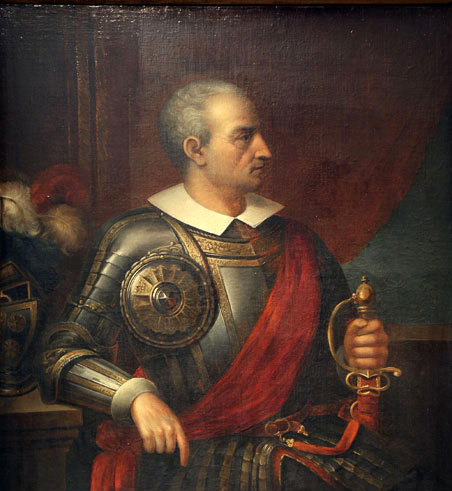
Francisco de Meneses Brito
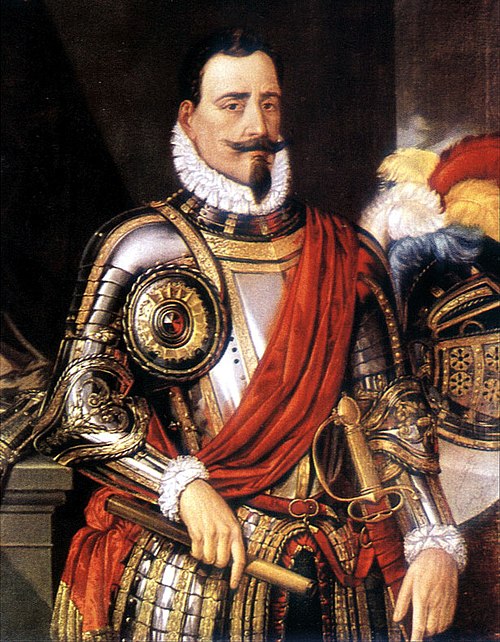
Governor Francisco de Meneses is destituted after accusations of immorality against him. Source — Wikipedia, "Timeline of Chilean history" (17th century):
La Colecciòn de Retratos de los Presidentes del Coloniaje. The collection of Portraits of the Governors of Chile is in the Museo Histórico Nacional (Chile) and was commissioned by Benjamín Vicuña Mackenna for the 1873 Colonial Exhibition and painted by various artists. It replaces a series of portraits of Chile's colonial governors dating from the colonial era which was destroyed during the wars for independence. [1]. By Unidentified painter - Unknown source, Public domain, https://commons.wikimedia.org/w/index.php?curid=137078
Dec 31, 1670 CE
John Narborough
The expedition of John Narborough leaves Corral Bay having surveyed the coast and lost four hostages to the Spanish. Source — Wikipedia, "Timeline of Chilean history" (17th century):
The Burning of the Royal James at the Battle of Solebay, 28 May 1672 The Battle of Solebay was the opening battle of the Third Anglo-Dutch War, 1672-74. On the evening before, Admiral Edward Montagu, 1st Earl of Sandwich, urged the Duke of York to take the fleet to sea to avoid the risk of being surprised by the Dutch while at anchor on a lee shore in Solebay (Southwold Bay, Suffolk) on the English east coast. The advice was not taken and the Dutch fleet, commanded by Lieutenant-Admiral Michiel de Ruyter, did appear and attacked Sandwich's unsupported squadron in the bay. Sandwich, in the 'Royal James', 100 guns, was heavily engaged with the squadron of Admiral Van Ghent, who sent in two fireships. The 'Royal James' sank them both but a third fireship, commanded by Jan van de Rijn, grappled the English flagship and set her ablaze. When she was engulfed by the flames Sandwich tried to escape by boat, but it was swamped by people who jumped into her with him and he was drowned. In the left foreground is a Dutch ship sinking, viewed from off the port bow, with only the fore part above the water but with bowsprit and foremast still standing. This is presumably a fireship expended in an attempt to burn the 'Royal James'. In the left background is the de Ruyter's 'Zeven Provincien', 80 guns, in starboard-quarter view with a pendant at the main. She is engaged to port with the English vice-admiral of the blue, Sir Joseph Jordan in the 'Royal Sovereign'. Her blue flag at the fore is shown above the smoke as she stands back towards the 'Royal James' after a vain attempt to weather the Dutch. Ahead of de Ruyter is the rear-admiral of his squadron, J. van Nes in the 'Ridderschap'. The 'Royal James dominates the right side of the painting. She is shown in port-broadside view with Jan van Rijn's fireship, the 'Vrede', in flames and about to run aboard her by the fore chains. The 'Royal James' has her torn topsails set and her fore and main courses have the clews hauled up. Sandwich's blue flag at the main is blowing out in the light wind. Men are shown jumping overboard and hanging to the rigging to avoid the fire both fore and aft. On the right, sailing past the 'Royal James's' port quarter, is a Dutch vice-admiral, viewed from the port bow, with a flag at the fore and pendant at the main. She is under a fore course, a clewed main course, main and mizzen topsails and with her fore topsail much torn and half lowered. In the right foreground is the ship's boat in which the fireship's crew is escaping after setting light to their vessel. The artist was the younger son of Willem van de Velde the Elder. Born in Leiden, he studied under Simon de Vlieger in Weesp and in 1652 moved back to Amsterdam. There he worked in his father's studio and developed the skill of carefully drawing and painting ships in tranquil settings. He changed his subject matter, however, when he came with his father to England in 1672, by working on views of royal yachts, men-of-war and on storm scenes. From 1672 the depiction of sea battles from the English side became a priority but unlike his father's they were not usually eyewitness accounts. However, from early 1674 both the van de Veldes were expressly patronized by Charles II for this purpose, the father to draw sea fights and the son - who was by far the more accomplished painter - 'for putting the said Draughts into Colours'. After his father's death in 1693 he was officially engaged to be present at and record significant maritime events. He continued to run a substantial and influential studio until his own death and with his father, especially as a painter, he is regarded as founder of the English school of marine painting. The painting is signed 'W.V.Velde J' on the back of the canvas and 'W.V.Velde' on a spar on the left. The burning of HMS Royal James at the battle of Solebay, 28 May 1672 By Willem van de Velde the Younger - http://collections.rmg.co.uk/collections/objects/11794, Public domain, https://commons.wikimedia.org/w/index.php?curid=62912173
Jan 1, 1671 CE
Parliament of Malloco
The Parliament of Malloco is held. Source — Wikipedia, "Timeline of Chilean history" (17th century):
1672 CE
Jesuits
Jesuits established in Chiloé founds the Mission of Nahuel Huapi across the Andes. Source — Wikipedia, "Timeline of Chilean history" (17th century):
Monochrome version of the IHS emblem of the Jesuits. The design of the emblem is attributed to Ignatius of Loyola (1541). the cross is here drawn as formy fitchy; this is not necessarily part of the design, early modern depictions sometimes show a plain cross, or various baroque ornamentations the three nails are sometimes shown as piercing a heart the alternating straight and wavy rays are found in historical specimens, but not necessarily, and sometimes with two or three straight rays separating wavy rays. the number of rays is often 32 as here, but sometimes also 12, 16 or 24. the emblem is sometimes surrounded by the inscription et vocatum est nomen eius Iesus (Luke 2:21) By Moranski - Own work, Public domain, https://commons.wikimedia.org/w/index.php?curid=5596804
Nov 30, 1674 CE
Bartolomé Gallardo
Bartolomé Gallardo's expedition reaches the mouth of San Tadeo River after crossing the isthmus of Ofqui. Source — Wikipedia, "Timeline of Chilean history" (17th century):
Laguna San Rafael, Rio Negro, Estero Elefantes, Isla Javier, Isla Purcell, Istmo de Ofqui, Canal Ofqui, Rio Maniguales By Createaccount - Own work, CC BY-SA 3.0, https://commons.wikimedia.org/w/index.php?curid=25515215
Nov 28, 1675 CE
Antonio de Vea expedition
The Antonio de Vea expedition departs from Chiloé to explore the fjords and channels of Patagonia. Source — Wikipedia, "Timeline of Chilean history" (17th century):
Castro, Chile By Michelle Maria - https://web.archive.org/web/20161025213211/http://www.panoramio.com/photo/86482513, CC BY 3.0, https://commons.wikimedia.org/w/index.php?curid=56086541
Jan 26, 1676 CE
The Antonio de Vea expedition returns
The Antonio de Vea expedition returns to the shipyard of Chiloé. Source — Wikipedia, "Timeline of Chilean history" (17th century):
Dec 13, 1680 CE
Bartholomew Sharp
Bartholomew Sharp destroys and pillages La Serena. Source — Wikipedia, "Timeline of Chilean history" (17th century):
Print; Prints By Geo. S. Harris and Sons / Allen & Ginter - This file was donated to Wikimedia Commons as part of a project by the Metropolitan Museum of Art. See the Image and Data Resources Open Access Policy, CC0, https://commons.wikimedia.org/w/index.php?curid=61133662
1681 CE
Atacama
By royal decree, the Atacama desert is declared to be the border between the Captain-Generalship of Chile and the Viceroyalty of Peru. Source — Wikipedia, "Timeline of Chilean history" (17th century):
NASA World Wind 1.4 used. By NASA, Public domain, https://commons.wikimedia.org/w/index.php?curid=6974475
1684 CE
Valdivia
Valdivia's original site, downtown of modern Valdivia is repopulated. Source — Wikipedia, "Timeline of Chilean history" (17th century):
Flag of Valdivia, Chile By SVG version by MeekMark - Based on http://www.munivaldivia.cl/fotos/logos/ban_valdivia_gr.jpg, Public domain, https://commons.wikimedia.org/w/index.php?curid=1047487
Oct 20, 1687 CE
1687 Peru earthquake
Peru is struck by a major earthquake and stem rust plague. These events marks the beginning of an era of Chilean wheat exports to Peru. Source — Wikipedia, "Timeline of Chilean history" (17th century):
1687 Peru earthquake By Unknown author, Public domain, https://commons.wikimedia.org/w/index.php?curid=1214935
1709 CE
Alexander Selkirk
Alexander Selkirk, the inspiration for Defoe's Robinson Crusoe, is rescued from the Robinson Crusoe Island in the Juan Fernández Archipelago. Source — Wikipedia, "Timeline of Chilean history" (18th century):
Statue of Alexander Selkirk at the site of his original house on Main Street, Lower Largo Fife, Scotland By SylviaStanley - Own work, CC BY-SA 3.0, https://commons.wikimedia.org/w/index.php?curid=8051043
Feb 10, 1712 CE
1712 Huilliche rebellion
A Huilliche rebellion occurs in the Chiloé Archipelago. Source — Wikipedia, "Timeline of Chilean history" (18th century):
Mapa de la rebelión huilliche de 1712 (en azul los campamentos huilliches, en rojo los fuertes españoles, en blanco el punto de organización de la rebelión y una x para los combates): 1. Quilquico, 2. Fuerte de Calbuco, 3. Fuerte de Chacao, 4. Castro, 5. Campamento de Huenao, 6. Campamento de Quetalco, 7. Dalcahue, 8. Rauco. By Lin linao - Trabajo propio, basado en mapas en el dominio público (File:Blank-South-America-map.png y File:Archipiélago de Chiloé-blank.PNG) y en la información contenida en Urbina, Rodolfo. 1990. La rebelión indígena de 1712: los tributarios de Chiloé contra la encomienda. en Tiempo y espacio. 1. El Departamento: Chillán. pp. 73-86, CC0, https://commons.wikimedia.org/w/index.php?curid=20219176
1717 CE
Mission of Nahuel Huapi
The Jesuit mission at Nahuel Huapi Lake is destroyed. Source — Wikipedia, "Timeline of Chilean history" (18th century):
* Description : Nahuel Huapi lake view from cerro Lòpez Author : (WT-shared) Gobbler Source : own work Date : 2003. By User: (WT-shared) Gobbler at wts wikivoyage - Own work, CC BY-SA 1.0, https://commons.wikimedia.org/w/index.php?curid=22987473
Apr 5, 1722 CE
Rapa Nui
Rapa Nui (Easter Island) is discovered by Dutch navigator Jacob Roggeveen. Source — Wikipedia, "Timeline of Chilean history" (18th century):
Ahu in Easter Island. Hanga Roa seen in the background. By kallerna - Own work, CC BY-SA 4.0, https://commons.wikimedia.org/w/index.php?curid=75377793
1723 CE
War of Arauco
After 30 years of peace, the War of Arauco resumes with a Mapuche uprising. Source — Wikipedia, "Timeline of Chilean history" (18th century):
Map of a part of Chile that includes the terrain where the famous events between Spaniards and Araucanos passed. By Tomas Lopez compuesto por el mapa manuscrito de Poncho Chileno, Madrid 1777 - http://www.cervantesvirtual.com/servlet/SirveObras/13560953901028051800080/p0000003.htm, Public domain, https://commons.wikimedia.org/w/index.php?curid=9563256
1726 CE
Parliament of Negrete
A Mapuche-Spanish peace treaty is signed at a parliament in Negrete. Source — Wikipedia, "Timeline of Chilean history" (18th century):
Dec 24, 1737 CE
1737 Valdivia earthquake
A violent earthquake and subsequent tsunami strike Valdivia and Chiloé. Source — Wikipedia, "Timeline of Chilean history" (18th century):
A photograph of the 2004 tsunami in Ao Nang, Krabi Province, Thailand. By David Rydevik (email: david.rydevikgmail.com), Stockholm, Sweden. - Originally at Bild:Davidsvågfoto.JPG., Public domain, https://commons.wikimedia.org/w/index.php?curid=177627
1740 CE
Valdivia, Chile
Valdivia is reincorporated as part of the Captaincy General of Chile. Source — Wikipedia, "Timeline of Chilean history" (18th century):
Flag of Valdivia, Chile By SVG version by MeekMark - Based on http://www.munivaldivia.cl/fotos/logos/ban_valdivia_gr.jpg, Public domain, https://commons.wikimedia.org/w/index.php?curid=1047487
1741 CE
Zona Austral
is wrecked off the coast of Western Patagonia. Source — Wikipedia, "Timeline of Chilean history" (18th century):
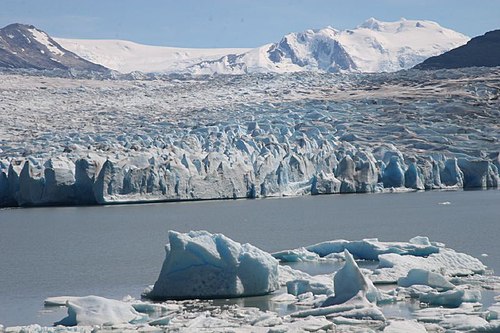
Glaciar Grey, Torres del Paine, Chile By welsh boy from London, U.K. - Flickr, CC BY-SA 2.0, https://commons.wikimedia.org/w/index.php?curid=1321552
1742 CE
Martín Olleta
Martín Olleta rescue the survivors of and hands them over to Spanish authorities. Source — Wikipedia, "Timeline of Chilean history" (18th century):
1749 CE
Robinson Crusoe Island
A fort and prison is established on Robinson Crusoe Island of Juan Fernández Archipelago. Source — Wikipedia, "Timeline of Chilean history" (18th century):
Popularized by the studies and writings of Charles Darwin, the Galápagos Islands gained fame for their abundance of endemic plants and animals—species found nowhere else on the planet. But another Pacific Ocean archipelago about 3800 kilometers (2400 miles) to the south, popularized by a novel about a shipwreck and castaway, rivals the Galápagos in its abundance of endemic plants. Robinson Crusoe and Santa Clara islands, part of the Juan Fernández island group off of Chile, are visible in this image, acquired on November 7, 2018, by the Operational Land Imager (OLI) on Landsat 8. By NASA Earth Observatory images by Lauren Dauphin, using Landsat data from the U.S. Geological Survey. Story by Kathryn Hansen. - https://earthobservatory.nasa.gov/images/147731/robinson-crusoe-island, Public domain, https://commons.wikimedia.org/w/index.php?curid=105887140
May 25, 1751 CE
1751 Concepción earthquake
A violent earthquake and subsequent tsunami completely destroy the city of Concepción. The earthquake causes severe destruction to cities as far away as Talca. Source — Wikipedia, "Timeline of Chilean history" (18th century):
1751 Concepción earthquake By Unknown author, Public domain, https://commons.wikimedia.org/w/index.php?curid=782312
Jan 27, 1759 CE
Cunco people
Cuncos and Huilliches defeat a Spanish expedition aiming to build a fort on Bueno River. Source — Wikipedia, "Timeline of Chilean history" (18th century):
Is the Bio Bio? I'll have to look at my map again. Just lovely pastoral scenery along I-5 not far north of Valdivia. By Jason Hollinger - River near Valdivia Uploaded by Amada44, CC BY 2.0, https://commons.wikimedia.org/w/index.php?curid=24215968
Dec 25, 1766 CE
Arauco War
The Arauco War resumes with a large Mapuche uprising. Source — Wikipedia, "Timeline of Chilean history" (18th century):
Map of a part of Chile that includes the terrain where the famous events between Spaniards and Araucanos passed. By Tomas Lopez compuesto por el mapa manuscrito de Poncho Chileno, Madrid 1777 - http://www.cervantesvirtual.com/servlet/SirveObras/13560953901028051800080/p0000003.htm, Public domain, https://commons.wikimedia.org/w/index.php?curid=9563256
Feb 1, 1767 CE
Mapuche uprising of 1766
An agreement between Mapuche and Spanish authorities in Chile bring an end to the Mapuche uprising of 1766–1767. Source — Wikipedia, "Timeline of Chilean history" (18th century):
Aug 20, 1768 CE
Ancud
Ancud is founded. Chiloé becomes part of the Viceroyalty of Peru. Source — Wikipedia, "Timeline of Chilean history" (18th century):
Vista de la ciudad de Ancud, en Chiloé. By Paul Lowry - Flickr: Ancud, CC BY 2.0, https://commons.wikimedia.org/w/index.php?curid=15515198
1769 CE
Pehuenche
Pehuenches attack Spanish settlements in Isla del Laja. Source — Wikipedia, "Timeline of Chilean history" (18th century):
Mapuche Flag of Pehuenche Territory as chosen by the Mapuche organisation Aukin Wallmapu Ngulam - Consejo de Todas las Tierras ["Council of all lands"] in March 1991. By Al2 - Own work, CC BY 3.0, https://commons.wikimedia.org/w/index.php?curid=3059423
1771 CE
Franciscan
The Franciscan order assumes the religious functions of the Jesuits in Chiloé. Source — Wikipedia, "Timeline of Chilean history" (18th century):
Symbol of the Franciscans By Piotr Jaworski, PioM - Own work, Public domain, https://commons.wikimedia.org/w/index.php?curid=4481657
1776 CE
Cuyo
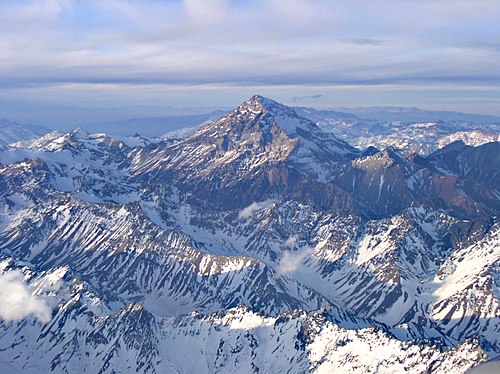
The territories of Cuyo, previously governed as part of Chile, become part of the Viceroyalty of the Río de la Plata. (See History of Argentina.) Source — Wikipedia, "Timeline of Chilean history" (18th century):
Aerial view of Aconcagua By Original photo: Beatriz Moisset (talk · contribs) - This file was derived from: Aconcagua.8.22.03w.jpg: This is a retouched picture, which means that it has been digitally altered from its original version. Modifications: White balanced corrected + sharpening. The original can be viewed here: Aconcagua.8.22.03w.jpg: . Modifications made by Hike395., CC BY-SA 3.0, https://commons.wikimedia.org/w/index.php?curid=17429211
1778 CE
Direct commerce between Chile and Spain
Direct commerce between Chile and Spain is allowed. Source — Wikipedia, "Timeline of Chilean history" (18th century):
1784 CE
La Moneda Palace
La Moneda Palace begins construction in Santiago. Source — Wikipedia, "Timeline of Chilean history" (18th century):
La Moneda By Miguel hernandez - IMG_4455, CC BY-SA 2.0, https://commons.wikimedia.org/w/index.php?curid=32641734
May 1, 1788 CE
Ambrosio O'Higgins
Ambrosio O'Higgins, father of future Chilean independence leader Bernardo O'Higgins, is named governor of Chile. Source — Wikipedia, "Timeline of Chilean history" (18th century):
Retrato de Ambrosio O'Higgins (1720-1801), gobernador de Chile (1788-1796) y virrey del Perú (1796-1800) By Pedro Díaz - archi.pe, Public domain, https://commons.wikimedia.org/w/index.php?curid=76414653
1789 CE
French Revolution
Start of the French Revolution, which affected Europe and the Americas with its ideas. Source — Wikipedia, "Timeline of Chilean history" (18th century):
Storming of the Bastille By Unidentified painter - Current version: Palace of Versailles; direct link to the image: [1] Original version: L’Histoire par l’image, Public domain, https://commons.wikimedia.org/w/index.php?curid=6882732
1792 CE
Huilliche uprising of 1792
A Huilliche rebellion occurs in the surroundings of Río Bueno. Source — Wikipedia, "Timeline of Chilean history" (18th century):
Flag of Río Bueno, Chile By B1mbo - This vector image includes elements that have been taken or adapted from this file:, CC BY-SA 4.0, https://commons.wikimedia.org/w/index.php?curid=9760692
1793 CE
Parliament of Negrete
The parliaments of Negrete and Las Canoas between Spanish and native Mapuche and Huilliche are celebrated. The native chiefs accept the Spanish king as their de jure sovereign, but their own independence is also confirmed. Source — Wikipedia, "Timeline of Chilean history" (18th century):
Parlamento de Negrete (1793); junta diplómática de la que emanó un tratado entre las autoridades coloniales españolas de Chile y los principales líderes del pueblo mapuche. La reunión se llevó a afecto del 4 al 7 de marzo de 1793, al borde del Río Biobío, en el vado fronterizo de Negrete, por iniciativa del capitán general y presidente de la Real Audiencia de Chile, entonces llamado Ambrosio Higgins, pero más conocido por la posterior aristocratización de su apellido a O'Higgins. Es considerado habitualmente como el más suntuoso, caro y solemne parlamento diplomático realizado en la frontera chilena del Imperio Español. Publicada por el botánico y naturalista francés Claudio Gay en la página 35 de su Atlas de la historia física y política de Chile, y basada supuestamente en un dibujo del pintor y escultor Ignacio Andia y Varela (1757–1822), parte de la comitiva española que participó en dicho parlamento. By F. Lehmert - Atlas de la historia fisica y politica de Chile por Claudio gay en Memoria Chilena, Public domain, https://commons.wikimedia.org/w/index.php?curid=5808214
Jan 13, 1796 CE
Osorno, Chile
Governor Ambrosio O'Higgins officially begins the repopulation of Osorno atop the city ruins discovered in 1792. The city had previously been destroyed by the indigenous mapuche in 1602. Source — Wikipedia, "Timeline of Chilean history" (18th century):
Montage of Osorno, Los Lagos Region, Republic of Chile. Description: Left, from top to down: Osorno volcano and St. Matthew's Cathedral. Right, from top to down: Monument to the Bull, Osorno Second Fire Company building, and Hollstein House, historical monument of Chile. At the bottom: Town square of Osorno. By Montaje realizado por Açipni-Lovrij. - Trabajo derivado de los siguientes archivos de Wikimedia Commons: Autor: Miguel Angel Rivera. Autor: Manuel Cossu. Autor: Cynthya Silva Cabrera. Autor: Manuel Cossu. Autor: Yaneth Barrientos Cárcamo. Autor: Esagleswings., CC BY-SA 4.0, https://commons.wikimedia.org/w/index.php?curid=48299374
1805 CE
Rafael de Sobremonte, 3rd Marquis of Sobremonte
Rafael de Sobremonte, the Viceroy of the Río de la Plata, sends the first smallpox vaccines to Santiago and Lima. Friar :es:Pedro Manuel Chaparro administers the vaccine throughout Santiago. Source — Wikipedia, "Timeline of Chilean history" (19th century):
Portrait of Rafael de Sobremonte, third Marquis of Sobremonte (Seville, 1745 - Cádiz, 1827). By Ignacio Cavicchia - uploaded by User:Alakasam, Public domain, https://commons.wikimedia.org/w/index.php?curid=4468166
Dec 1, 1807 CE
South American
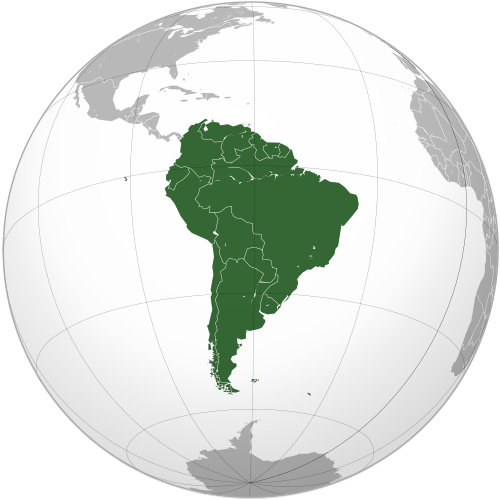
The South American branch, under Manuel Julián Grajales, of the Real expedición filantrópica de la Vacuna (Royal Philanthropic Vaccine Expedition) reaches Santiago. Grajales proceeds to organize the Junta Central de Vacuna (Central Vaccine Board) to reinforce the smallpox immunization efforts of 1805. Source — Wikipedia, "Timeline of Chilean history" (19th century):
Mapa-múndi com a **América do Sul destacada em verde** (projeção cilíndrica/Robinson). Inclui a Península Antártica. By by Luan - Imagem derivada de bases do Commons, p.ex. BlankMap-World.svg (mapa mundial em branco) e contornos políticos da América do Sul., CC BY 3.0, https://commons.wikimedia.org/w/index.php?curid=7197999
1808 CE
Francisco Antonio García Carrasco
Francisco Antonio García Carrasco is the unpopular Governor of Chile. The Spanish king Ferdinand VII is imprisoned by Napoleon during his invasion of Spain. Source — Wikipedia, "Timeline of Chilean history" (19th century):
“Retrato del Gobernador Antonio García Carrasco” By Atribuido a Virginia Bourgeois - http://www.cncr.cl//Vistas_Publicas/publicGaleria/galeriaPublicDetalle.aspx?galeria=2012, Public domain, https://commons.wikimedia.org/w/index.php?curid=29253159
1810 CE
Criollo people
Imitating the juntista movement of the rest of Latin America, the criollos (people of Spanish ancestry, but not born in Spain) of Santiago de Chile proclaim a governing Junta. Source — Wikipedia, "Timeline of Chilean history" (19th century):
Criollo people By Unknown author - Not necessary, PD by age., Public domain, https://commons.wikimedia.org/w/index.php?curid=84171952
Apr 1, 1811 CE
Tomás de Figueroa
Tomás de Figueroa leads a failed a mutiny to restore colonial order in Santiago. Source — Wikipedia, "Timeline of Chilean history" (19th century):
Retrato de Tomás de Figueroa y Caravaca. Tomás de Figueroa y Caravaca (Estepona (Málaga) 1747- Santiago de Chile, 1811) fue un militar español que llevó a cabo un infructuoso cuartelazo en Chile, conocido como Motín de Figueroa que tenía como objetivo suspender las labores de la Primera Junta Nacional de Gobierno y restablecer el orden colonial. Info de la pintura By Pedro Ovalle Díaz - http://www.esteponaensuhistoria.com/seccion_galeria/Tomas_figueroa_img.htm, Public domain, https://commons.wikimedia.org/w/index.php?curid=54228936
1812 CE
Bernardo O'Higgins
Hostilities begin between the moderados, led by Bernardo O'Higgins, and the exaltados, led by Carrera. Carrera institutes the first Chilean national symbols (flag, coat of arms, and national anthem), and Fray Camilo Henríquez begins to publish the Aurora de Chile, the first Chilean newspaper. The Chilean Constitution of 1812 comes into effect. Founding of the Logia Lautaro. Source — Wikipedia, "Timeline of Chilean history" (19th century):
Portrait of Bernardo O'Higgins holding the Chilean Constitution. By José Gil de Castro - Instituto Geográfico Militar de Chile, Public domain, https://commons.wikimedia.org/w/index.php?curid=193323
1813 CE
Antonio Pareja
The Spanish send military expeditions (under Antonio Pareja and Gabino Gaínza) from the Viceroyalty of Peru. In the ensuing battles O'Higgins rises to be seen as a figure of great stature, overshadowing the continually less popular Carrera, who ultimately resigns. Francisco de la Lastra becomes Supreme Director. Source — Wikipedia, "Timeline of Chilean history" (19th century):
Retrato del marino español Antonio Pareja y Serrano de León (1757-1813), que llegó a ser brigadier de la Real Armada Española. By Unidentified painter - [2], Public domain, https://commons.wikimedia.org/w/index.php?curid=45486984
1814 CE
Disaster of Rancagua
The "Disaster of Rancagua". Mariano Osorio, in command of a third Spanish expedition, defeats O'Higgins (October 1 – 2). Osorio reconquers Santiago for Spain. Exodus of Chilean patriots to Mendoza, Argentina, where they receive the support of José de San Martín. Those patriots who remain in Chile are captured by the Spaniards are deported to the Juan Fernández Islands. Osorio is confirmed Governor of Chile by the Viceroy Fernando de Abascal of Peru. The talaveras, under the command of San Bruno, install a regime of terror extending to those merely suspected of sympathy for the Chilean cause. Source — Wikipedia, "Timeline of Chilean history" (19th century):
Disaster of Rancagua By Pedro Subercaseaux - Picture available here, Public domain, https://commons.wikimedia.org/w/index.php?curid=89895596
1815 CE
guerrilla warfare
Guerrilla resistance against the Spanish begins, led by Manuel Rodríguez Erdoiza, and other spies such as Justo Estay. Increasing enmity between Osorio and Abascal leads Abascal to replace Osorio with Casimiro Marcó del Pont. Source — Wikipedia, "Timeline of Chilean history" (19th century):
"Guerrilla warfare during the Peninsular War", by Roque Gameiro, in Quadros da História de Portugal ("Pictures of the History of Portugal", 1917). By Roque Gameiro - A TRIBO DOS PINCÉIS: Quadros da História de Portugal (1917), Public domain, https://commons.wikimedia.org/w/index.php?curid=60014627
1817 CE
Battle of Chacabuco
Battle of Chacabuco. José de San Martín and O'Higgins defeat Rafael Maroto, reconquering Santiago. Captain San Bruno, hated chief of the talaveras, is captured and — less than 24 hours later — executed by firing squad. O'Higgins becomes dictator. Source — Wikipedia, "Timeline of Chilean history" (19th century):
Chilean and Argentinean troops going to the Battle of Chacabuco (February 12, 1817) led by José de San Martín. By Pedro Subercaseaux - Museo Historico Nacional, Buenos Aires, Public domain, https://commons.wikimedia.org/w/index.php?curid=121740
1818 CE
Chilean Declaration of Independence
O'Higgins signs the Chilean Declaration of Independence (February 12). Shortly afterwards, in the Battle of Maipú, O'Higgins defeats a new military expedition led by Mariano Osorio, and Chile definitively obtains independence from Spain (April 5). The rivalry between O'Higgins and Manuel Rodríguez ends with the ambush and assassination of the latter in Tiltil. The brothers Juan José and Luis Carrera are shot in Argentina. Source — Wikipedia, "Timeline of Chilean history" (19th century):
1820 CE
Valdivia, Chile
Valdivia is captured by Lord Cochrane who commands the Chilean navy. The Freedom Expedition of Perú is organised by the government of Chile, and manages to free some parts of Peru from Spanish rule. Source — Wikipedia, "Timeline of Chilean history" (19th century):
Flag of Valdivia, Chile By SVG version by MeekMark - Based on http://www.munivaldivia.cl/fotos/logos/ban_valdivia_gr.jpg, Public domain, https://commons.wikimedia.org/w/index.php?curid=1047487
1821 CE
José Miguel Carrera
José Miguel Carrera arrested as a montonero (mounted rebel/bandit) in Argentina, and executed in Mendoza. Source — Wikipedia, "Timeline of Chilean history" (19th century):
1822 CE
The Chilean Constitution of 1822 comes
The Chilean Constitution of 1822 comes into effect. Source — Wikipedia, "Timeline of Chilean history" (19th century):
1823 CE
Ramón Freire
Ramón Freire leads a military expedition from Concepción to Santiago and forces O'Higgins to resign. He goes into exile in Peru, where he dies in 1842. Freire assumes power. Source — Wikipedia, "Timeline of Chilean history" (19th century):
1825 CE
uti possidetis
Taking advantage of the un-surveyed border, and ignoring the royal decree of 1681 and the principal uti possidetis, Simón Bolívar grants the port of Cobija to Bolivia. This gives Bolivia an outlet to the sea between Chile and Peru, which it will retain until the War of the Pacific. Source — Wikipedia, "Timeline of Chilean history" (19th century):
1826 CE
Chiloé Island
Freire incorporates Chiloé, the last area under Spanish control, into Chile. He later resigns, initiating an interregnum known as The Anarchy. First attempt in Chile of federal (as against centralized) government, led by the first president of Chile Manuel Blanco Encalada, and the federalist José Miguel Infante. Source — Wikipedia, "Timeline of Chilean history" (19th century):
Species Aextoxicon punctatum Autor: Roberto Bahamonde Andrade Fecha: 30 de diciembre, 2003 By No machine-readable author provided. Lin linao assumed (based on copyright claims). - No machine-readable source provided. Own work assumed (based on copyright claims)., Public domain, https://commons.wikimedia.org/w/index.php?curid=473576
1828 CE
Francisco Antonio Pinto
Francisco Antonio Pinto assumes power after the resignation of Encalada and his predecessors. Chilean Constitution of 1828. Source — Wikipedia, "Timeline of Chilean history" (19th century):
1829 CE
Chilean Civil War of 1829
Chilean Civil War of 1829. After several battles, Joaquín Prieto defeats Ramón Freire in the Battle of Lircay. Source — Wikipedia, "Timeline of Chilean history" (19th century):
1830 CE
Diego Portales
Diego Portales begins to remodel Chilean institutions, converting the country into an authoritarian republic. Source — Wikipedia, "Timeline of Chilean history" (19th century):
1830 CE
Charles Saint Lambert
Charles Saint Lambert introduces reverberatory furnaces to Chile initiating a revolution in copper mining in Chile. Source — Wikipedia, "Timeline of Chilean history" (19th century):
1831 CE
José Joaquín Prieto
José Joaquín Prieto becomes president of Chile. He will serve two consecutive five-year terms. With him, the so-called decenios (decade-long reigns) begin, which continue until 1871. This 30-year Conservative Party hegemony is sometimes referred to as the Authoritarian Republic. Source — Wikipedia, "Timeline of Chilean history" (19th century):
1832 CE
Atacama Region of Chile
Discovery of mineral deposits in Chañarcillo, and the beginning of the rise of silver in what was then el Norte Chico and now constitutes the Atacama and Coquimbo regions of Chile. The mining fortunes constitute an important source of power in the following decades. Source — Wikipedia, "Timeline of Chilean history" (19th century):
1833 CE
Chilean Constitution of 1833
Chilean Constitution of 1833. "Portalian" — that is, inspired by Diego Portales — definitively fixed Chilean institutions. Source — Wikipedia, "Timeline of Chilean history" (19th century):
1834 CE
Charles Darwin
Charles Darwin lands at Valparaíso, during the second voyage of . He also visits Santiago. Source — Wikipedia, "Timeline of Chilean history" (19th century):
Historic Quarter of the Seaport City of Valparaíso, December 2022. By Julia Sumangil - Own work, CC BY-SA 4.0, https://commons.wikimedia.org/w/index.php?curid=128540013
1835 CE
1835 Concepción earthquake
Southern Chile is affected by the worst earthquake for several decades on 20 February, an event witnessed by Charles Darwin. Darwin visits Valdivia, Concepción and Mendoza. Source — Wikipedia, "Timeline of Chilean history" (19th century):
Flag of Valdivia, Chile By SVG version by MeekMark - Based on http://www.munivaldivia.cl/fotos/logos/ban_valdivia_gr.jpg, Public domain, https://commons.wikimedia.org/w/index.php?curid=1047487
1836 CE
Peruvian-Bolivian Confederation
Diego Portales declares the war on the Peruvian-Bolivian Confederation. Source — Wikipedia, "Timeline of Chilean history" (19th century):
1837 CE
Quillota
Diego Portales is assassinated by mutinous soldiers in Quillota. A Chilean military expedition debarks in Perú, beginning the War of the Confederation. Source — Wikipedia, "Timeline of Chilean history" (19th century):
1839 CE
Battle of Yungay
Battle of Yungay and defeat of the Confederation. Source — Wikipedia, "Timeline of Chilean history" (19th century):
1840 CE
Holy See
The Vatican acknowledges the Independence of Chile Source — Wikipedia, "Timeline of Chilean history" (19th century):
1841 CE
Manuel Bulnes
Manuel Bulnes, victorious marshal of the Battle of Yungay, elected president of Chile. Source — Wikipedia, "Timeline of Chilean history" (19th century):
Sep 17, 1843 CE
University of Chile
The University of Chile is founded. Source — Wikipedia, "Timeline of Chilean history" (19th century):
1844 CE
Spain recognizes the Independence of Chile
Spain recognizes the Independence of Chile Source — Wikipedia, "Timeline of Chilean history" (19th century):
1848 CE
Punta Arenas
Founding of Punta Arenas in the Strait of Magellan Source — Wikipedia, "Timeline of Chilean history" (19th century):
1851 CE
José María de la Cruz
José María de la Cruz revolts in the southern provinces of Chile. Bulnes crushes the revolutionary attempt and signs the treaty of Purapel with the revolutionaries. Manuel Montt becomes the third of the decenal presidents. Source — Wikipedia, "Timeline of Chilean history" (19th century):
Feb 12, 1853 CE
Puerto Montt
The city of Puerto Montt is founded. Source — Wikipedia, "Timeline of Chilean history" (19th century):
1856 CE
The Dispute of Sacristán ("Cuestión del
The Dispute of Sacristán ("Cuestión del Sacristán"). An apparently trivial question of ecclesiastical discipline divides the Conservative Party into secular and ultra-Catholic factions, which lays the ground for their political defeat in the elections of 1861. Source — Wikipedia, "Timeline of Chilean history" (19th century):
1857 CE
The Civil Code of Chile comes
The Civil Code of Chile comes into effect; it will become a model for Latin American legal codes down to the present day. Source — Wikipedia, "Timeline of Chilean history" (19th century):
1859 CE
Copiapó
Chilean Revolution of 1859. Pedro León Gallo, radical revolutionary of Copiapó, and others are defeated by the government forces. However, as a consequence, Antonio Varas renounces to his candidature. Source — Wikipedia, "Timeline of Chilean history" (19th century):
1861 CE
José Joaquín Pérez
José Joaquín Pérez of the Liberal Party elected president. His party will retain power until the Chilean Revolution of 1891. Source — Wikipedia, "Timeline of Chilean history" (19th century):
1863 CE
Orelie-Antoine de Tounens
A French adventurer proclaims himself Orélie Antoine I, King of Araucanía. After a short time he is arrested by the Chileans and deported in the pacification of Araucanía. Source — Wikipedia, "Timeline of Chilean history" (19th century):
1866 CE
Chile, Ecuador, Peru, and Bolivia at
Chile, Ecuador, Peru, and Bolivia at war with Spain. The port of Valparaíso is bombed by the Spanish. A treaty of limits (borders) of 1866 is signed with Bolivia. Source — Wikipedia, "Timeline of Chilean history" (19th century):
1871 CE
Pedro Montt
A constitutional reform prohibits re-election, resulting in the end of the decenios. Governments of five years duration persist until 1925, except for the premature death of Pedro Montt in 1910. Source — Wikipedia, "Timeline of Chilean history" (19th century):
1874 CE
Another treaty of limits is signed
Another treaty of limits is signed with Bolivia due to political tensions. Source — Wikipedia, "Timeline of Chilean history" (19th century):
1879 CE
War of the Pacific
The War of the Pacific begins with Chilean troops occupying the then-Bolivian port city of Antofagasta. Bolivia's ally Peru attempts to mediate, but Chile refuses to negotiate and Peru enters the war on the side of Bolivia. Chile captures the provinces of Antofagasta from Bolivia and Tarapacá from Peru. Source — Wikipedia, "Timeline of Chilean history" (19th century):
1880 CE
Lackawanna Conference
The United States attempts to mediate in the Lackawanna Conference, but both sides refuse to negotiate. Source — Wikipedia, "Timeline of Chilean history" (19th century):
1881 CE
Occupation of Lima
Chilean troops occupy Lima, the capital of Perú. Boundary treaty of 1881 between Chile and Argentina. Source — Wikipedia, "Timeline of Chilean history" (19th century):
1883 CE
Treaty of Ancón
The Treaty of Ancón is signed with Perú to end the war, but hostilities with Bolivia continue. Law of Civil Matrimony adopted. This secularization was fiercely resisted by the Roman Catholic Church. The "Pacification of Araucanía" ends, and according to some historians this concludes the long-running War of Arauco. Source — Wikipedia, "Timeline of Chilean history" (19th century):
Map of a part of Chile that includes the terrain where the famous events between Spaniards and Araucanos passed. By Tomas Lopez compuesto por el mapa manuscrito de Poncho Chileno, Madrid 1777 - http://www.cervantesvirtual.com/servlet/SirveObras/13560953901028051800080/p0000003.htm, Public domain, https://commons.wikimedia.org/w/index.php?curid=9563256
1884 CE
Potassium nitrate
The War of the Pacific ends with the signing of a truce with Bolivia. Chile's territorial gains allow the mining of saltpeter in the conquered regions, leading to great national prosperity for Chile. Treaty called "Pacto de Tregua". Source — Wikipedia, "Timeline of Chilean history" (19th century):
Jun 21, 1888 CE
Pontifical Catholic University of Chile
The Pontifical Catholic University of Chile is established. Source — Wikipedia, "Timeline of Chilean history" (19th century):
1890 CE
Malleco Viaduct
The Malleco Viaduct is opened and railway traffic expands further south during the following decades. Source — Wikipedia, "Timeline of Chilean history" (19th century):
1891 CE
1891 Chilean Civil War
1891 Chilean Civil War. The constitutional president José Manuel Balmaceda is overthrown by troops favorable to the National Congress. The beginning of "Parliamentarism". Source — Wikipedia, "Timeline of Chilean history" (19th century):
1895 CE
Easter Island
Easter Island is rented to Compañía Explotadora de Isla de Pascua. Source — Wikipedia, "Timeline of Chilean history" (19th century):
Mar 20, 1903 CE
Patagonian sheep farming boom
The first auction of sheep farming lands in the Magallanes Territory takes place. Source — Wikipedia, "Timeline of Chilean history" (20th century):
Oct 22, 1905 CE
Meat riots
The Meat riot in Santiago begins. The workers revolt against the central government due to an increase in the cost of living, including the price of meat. The government responds sending in the army. Two days of riots follow, during which hundreds of civilians are killed in street fighting. Source — Wikipedia, "Timeline of Chilean history" (20th century):
1907 CE
Massacre of the Escuela Santa María de Iquique
Massacre of the Escuela Santa María de Iquique; soldiers fire on saltpeter workers and their unarmed associates. It will be years before the workers, terrorized by the brutal repression, resume the struggle for their rights. Source — Wikipedia, "Timeline of Chilean history" (20th century):
1910 CE
Pedro Montt
Centenary of Chilean independence. Celebrations are darkened by the death of President Pedro Montt, the only president between 1831 and 1925 did not serve for a full five-year term. Source — Wikipedia, "Timeline of Chilean history" (20th century):
Oct 21, 1912 CE
Huilliche people
15 Mapuche-Huilliche are killed by Chilean police in the Forrahue massacre near Osorno. Source — Wikipedia, "Timeline of Chilean history" (20th century):
Bandera williche de Chiloé By ppn87 - Own work, CC BY-SA 4.0, https://commons.wikimedia.org/w/index.php?curid=40801336
Aug 15, 1914 CE
Panama Canal
The Panama Canal opens; with Atlantic–Pacific shipping redirected to the new canal, the formerly crucial port of Valparaíso enters an economic decline. Source — Wikipedia, "Timeline of Chilean history" (20th century):
1920 CE
Arturo Alessandri Palma
Arturo Alessandri Palma is elected president, indicating a rise to power by the Chilean middle classes. Source — Wikipedia, "Timeline of Chilean history" (20th century):
1924 CE
income tax
Chile's first income tax is levied. Source — Wikipedia, "Timeline of Chilean history" (20th century):
1925 CE
graduated income tax
After intense political agitation the Chilean Constitution of 1925 is adopted, only slightly less authoritarian than that of 1833. The Impuesto Global Complementario, a graduated income tax, is introduced. Source — Wikipedia, "Timeline of Chilean history" (20th century):
1927 CE
Carlos Ibáñez del Campo
In a bloodless coup, Carlos Ibáñez del Campo takes the presidency by force during great political instability. He subsequently governs as a dictator until 1931. Source — Wikipedia, "Timeline of Chilean history" (20th century):
Dec 1, 1928 CE
Moment magnitude scale
A magnitude 7.7 M<sub>w</sub> earthquake strikes Talca. Source — Wikipedia, "Timeline of Chilean history" (20th century):
1929 CE
crash of 1929
The crash of 1929 begins to affect the Chilean economy. The World Economic Survey of the League of Nations estimated that Chile was the worst affected nation by the Great Depression. Source — Wikipedia, "Timeline of Chilean history" (20th century):
Mar 21, 1930 CE
Chilean Air Force
Fuerza Aérea de Chile (Chilean Air Force) founded. Source — Wikipedia, "Timeline of Chilean history" (20th century):
1931 CE
The deep economic crisis obliges Ibáñez
The deep economic crisis obliges Ibáñez del Campo to step down. A series of civilian governments and military juntas follows, some of which last no more than a few days. Source — Wikipedia, "Timeline of Chilean history" (20th century):
1932 CE
Arturo Alessandri Palma
The period of political anarchy ends with the return to power of Arturo Alessandri Palma. Source — Wikipedia, "Timeline of Chilean history" (20th century):
1934 CE
Women obtain the legal right to
Women obtain the legal right to vote in municipal elections. Source — Wikipedia, "Timeline of Chilean history" (20th century):
1938 CE
Massacre of Seguro Obrero
Massacre of Seguro Obrero: the Carabineros execute members of the fascist National Socialist Movement of Chile (Nacistas), after the fascists attempted to oust the government in a coup d'état. Source — Wikipedia, "Timeline of Chilean history" (20th century):
1939 CE
Radical Party
The Radical Party gains power, which they will retain until 1952. Source — Wikipedia, "Timeline of Chilean history" (20th century):
1940 CE
Pedro Aguirre Cerda
President Pedro Aguirre Cerda registers the first Chilean claims in Antarctica. Source — Wikipedia, "Timeline of Chilean history" (20th century):
Jun 19, 1945 CE
1945 El Teniente mining accident
The Smoke Tragedy leaves 355 workers dead in the underground copper mine of El Teniente. Source — Wikipedia, "Timeline of Chilean history" (20th century):
1945 CE
Gabriela Mistral
Chilean poet Gabriela Mistral receives the Nobel Prize for Literature. Source — Wikipedia, "Timeline of Chilean history" (20th century):
1946 CE
Gabriel González Videla
Gabriel González Videla becomes president, backed by a broad alliance of parties, including the Radicals and Communists. Once in power, he accedes to pressure from the United States and promulgates the Law of Permanent Defense of the Democracy, also known as the Ley Maldita ("accursed law"). The law outlawed his former allies the Communists, some of whom were placed in concentration camps in Pisagua. Poet Pablo Neruda is hounded into exile. Source — Wikipedia, "Timeline of Chilean history" (20th century):
1949 CE
Women obtain the legal right to
Women obtain the legal right to vote in both presidential and parliamentary elections. Source — Wikipedia, "Timeline of Chilean history" (20th century):
1952 CE
Carlos Ibáñez del Campo
Carlos Ibáñez del Campo returns to the presidency, this time via the ballot box, ending the era of the Radical Party. Source — Wikipedia, "Timeline of Chilean history" (20th century):
1958 CE
Snipe incident
Argentine forces destroy a Chilean lighthouse during the Snipe incident. Source — Wikipedia, "Timeline of Chilean history" (20th century):
Feb 1, 1960 CE
Viña del Mar International Song Festival
First instance of the yearly Viña del Mar International Song Festival is organized. Source — Wikipedia, "Timeline of Chilean history" (20th century):
May 30, 1962 CE
1962 FIFA World Cup
Chile hosts the FIFA World Cup football competition. The Chile national football team comes in 3rd; its highest ever placement in the competition. Source — Wikipedia, "Timeline of Chilean history" (20th century):
1964 CE
Christian Democracy
Christian Democrat Eduardo Frei Montalva becomes president, proclaiming the so-called "Revolution in Liberty". His election campaign was largely (and secretly) funded by the CIA, an intelligence agency of the United States. Source — Wikipedia, "Timeline of Chilean history" (20th century):
Sep 4, 1970 CE
Salvador Allende
Salvador Allende is elected president; the first democratic election of a Marxist politician. The election campaign was highly polarised and subject to covert interference by foreign intelligence agencies (the CIA and KGB ). Allende's socialist and Marxist orientation greatly displeased the government of the United States which directed resources to "prevent Allende from coming to power or to unseat him". Source — Wikipedia, "Timeline of Chilean history" (20th century):
Jul 11, 1971 CE
Chilean nationalization of copper
The nationalization of all large copper mines in Chile is completed. Source — Wikipedia, "Timeline of Chilean history" (20th century):
1971 CE
Pablo Neruda
Poet Pablo Neruda receives Nobel Prize for Literature. Source — Wikipedia, "Timeline of Chilean history" (20th century):
Oct 9, 1972 CE
Chile truckers' strike
Chile truckers' strike against the Popular Unity government headed by the President Salvador Allende. Source — Wikipedia, "Timeline of Chilean history" (20th century):
Jun 29, 1973 CE
coup d'état
An attempted coup d'état led led bu junior officers known as El Tanquetazo is suppressed. Source — Wikipedia, "Timeline of Chilean history" (20th century):
Jun 1, 1973 CE
Primer Congreso del Hombre Andino
The international social sciences conference Primer Congreso del Hombre Andino is held in the cities of Arica, Iquique and Antofagasta. Source — Wikipedia, "Timeline of Chilean history" (20th century):
Flag of Arica, Chile By B1mbo - Own work basado en File:Escudo de Arica.svg, CC BY-SA 4.0, https://commons.wikimedia.org/w/index.php?curid=6295835
Sep 11, 1973 CE
Chilean coup of 1973
The armed forces, carabineros, and others stage a violent coup by overthrowing Allende, who dies in the course of the coup. Some historians believe that the coup was supported or encouraged by the CIA. In the aftermath, Augusto Pinochet establishes himself as the head of a military junta. The subsequent repression of leftists and other opponents of the military regime results in approximately 130,000 arrests and at least 2,000 dead or "disappeared" over the next 17 years. Source — Wikipedia, "Timeline of Chilean history" (20th century):
1977 CE
Beagle conflict
Beagle conflict: The binding Beagle Channel Arbitration awards the Picton, Nueva and Lennox islands to Chile. Source — Wikipedia, "Timeline of Chilean history" (20th century):
1978 CE
Beagle conflict
Beagle conflict: Argentina refuses to abide by the judgement and invades Chile in Operation Soberania. Argentine forces withdraw before any combat occurs. Source — Wikipedia, "Timeline of Chilean history" (20th century):
1980 CE
Chilean Constitution of 1980
The military government promulgates the Chilean Constitution of 1980, which is adopted by plebiscite. Economic policy begins to be significantly influenced by the ideas of the Chicago School and of Neoliberalism. The United States oblige President of the Philippines Ferdinand Marcos to cancel a scheduled visit by President Pinochet to the Philippines. Source — Wikipedia, "Timeline of Chilean history" (20th century):
1982 CE
Falkland War
Chile provides non-combat support for British armed forces during the Falkland War. Source — Wikipedia, "Timeline of Chilean history" (20th century):
1984 CE
Beagle conflict
Beagle conflict: Treaty of Peace and Friendship of 1984 between Chile and Argentina is signed. Source — Wikipedia, "Timeline of Chilean history" (20th century):
1988 CE
Pinochet loses a plebiscite mandated by
Pinochet loses a plebiscite mandated by the constitution, which triggers elections the following year. Source — Wikipedia, "Timeline of Chilean history" (20th century):
1990 CE
Patricio Aylwin
Patricio Aylwin takes office as president after democratic elections. The Chilean transition to democracy begins. Source — Wikipedia, "Timeline of Chilean history" (20th century):
Mar 14, 1991 CE
Escondida
Escondida in Chile's Atacama Desert –which was to become the worlds most productive copper mine– is officially inaugurated. Source — Wikipedia, "Timeline of Chilean history" (20th century):
1994 CE
Eduardo Frei Ruiz-Tagle
Eduardo Frei Ruiz-Tagle is elected president. Source — Wikipedia, "Timeline of Chilean history" (20th century):
Aug 1, 1995 CE
wind
A limatic event consisting of intense winds, cold, snowfall and rain that and known as the White Earthquake occurred through southern Chile. 7,176 people were left isolated as result of the heavy snowfall and three died. Source — Wikipedia, "Timeline of Chilean history" (20th century):
1998 CE
Indictment and arrest of Augusto Pinochet
During a visit to London for medical reasons, Augusto Pinochet is arrested in accord with the orders of Spanish judge Baltasar Garzón, beginning an international struggle between his supporters and detractors. He returns to Chile the following year, and the charges against him are later thrown out on the basis of his mental state. Chile suffers greatly from a world economic crisis, resulting in years of inflation and unemployment. Source — Wikipedia, "Timeline of Chilean history" (20th century):
2000 CE
right wing
In the second round of voting, in a tight contest with right wing candidate Joaquín Lavín, Ricardo Lagos Escobar is elected president. Source — Wikipedia, "Timeline of Chilean history" (20th century):
2001 CE
Chile Promotes the death penalty for
Chile Promotes the death penalty for ordinary crimes. Source — Wikipedia, "Timeline of Chilean history" (21st century):
2002 CE
Christianity was introduced to thousands of
Christianity was introduced to thousands of locals. Source — Wikipedia, "Timeline of Chilean history" (21st century):
2004 CE
Supreme Court of Chile
The Supreme Court of Chile declares that Augusto Pinochet is mentally competent to stand trial. Source — Wikipedia, "Timeline of Chilean history" (21st century):
2005 CE
Michelle Bachelet
The Pinochet trial continues. The presidential election of December 11 puts Michelle Bachelet and Sebastián Piñera into a second round. Source — Wikipedia, "Timeline of Chilean history" (21st century):
Dec 10, 2006 CE
Augusto Pinochet dies.
Augusto Pinochet dies. Source — Wikipedia, "Timeline of Chilean history" (21st century):
Apr 5, 2007 CE
Chile Helps Fund a Christian school
Chile Helps Fund a Christian school in Austin, TX Source — Wikipedia, "Timeline of Chilean history" (21st century):
2011 student protests, and later massive protest claiming for better education and economic equality. Source — Wikipedia, "Timeline of Chilean history" (21st century):
2014 CE
Michelle Bachelet assumed office as President
Michelle Bachelet assumed office as President of Chile as the first woman to be reelected. Source — Wikipedia, "Timeline of Chilean history" (21st century):
Jul 16, 2017 CE
Santiago
Snowfall in the capital Santiago. Source — Wikipedia, "Timeline of Chilean history" (21st century):
La Moneda By Miguel hernandez - IMG_4455, CC BY-SA 2.0, https://commons.wikimedia.org/w/index.php?curid=32641734
Oct 18, 2019 CE
2019–2020 Chilean protests
The 2019–2020 Chilean protests escalated dramatically. Source — Wikipedia, "Timeline of Chilean history" (21st century):





![La Colecciòn de Retratos de los Presidentes del Coloniaje. The collection of Portraits of the Governors of Chile is in the Museo Histórico Nacional (Chile) and was commissioned by Benjamín Vicuña Mackenna for the 1873 Colonial Exhibition and painted by various artists. It replaces a series of portraits of Chile's colonial governors dating from the colonial era which was destroyed during the wars for independence. [1].](https://upload.wikimedia.org/wikipedia/commons/3/33/FDeMeneses.JPG)




![Mapuche Flag of Pehuenche Territory as chosen by the Mapuche organisation Aukin Wallmapu Ngulam - Consejo de Todas las Tierras ["Council of all lands"] in March 1991.](https://upload.wikimedia.org/wikipedia/commons/thumb/b/b4/Pehuenche_flag.svg/500px-Pehuenche_flag.svg.png)