Encyclopedia/3. History, Societies & Civilizations/09. Modern Nations/05. Europe • Curated by Admin Timeline.sg
History of Croatia, sourced from Wikipedia's "Timeline of Croatian history".
Chronological Storyline (234 Milestones)
220 CE
center|frameless|220x220px]]
center|frameless|220x220px]] Source — Wikipedia, "Timeline of Croatian history" (Map Timeline):
It is easy to put a border around this flag image By Nightstallion, Elephantus, Neoneo13, Denelson83, Rainman, R-41, Minestrone, Lupo, Zscout370,MaGa (based on Decision of the Parliament) - http://www.sabor.hr/Default.aspx?sec=4317, Public domain, https://commons.wikimedia.org/w/index.php?curid=433228
660 CE
Porga of Croatia
Porga became knez of the Principality of Littoral Croatia. Source — Wikipedia, "Timeline of Croatian history" (7th century):
Porga of Croatia By Viktor Vasnetsov - http://art.1september.ru/articlef.php?ID=200702110, Public domain, https://commons.wikimedia.org/w/index.php?curid=430556
799 CE
Siege of Trsat
Siege of Trsat: Invading Frankish forces were repelled from Trsat, resulting in the death of their commander Eric of Friuli. Source — Wikipedia, "Timeline of Croatian history" (8th century):
The growth of Frankish power, 481–814, showing Francia as it originally was after the crumbling of the Western Roman Empire By Growth_of_Frankish_Power,_481-814.jpg: Creator:William R. Shepherd, Historical Atlas, 1926 edition, page 53 derivative work: upstateNYer - Growth_of_Frankish_Power,_481-814.jpg, Public domain, https://commons.wikimedia.org/w/index.php?curid=9473787
803 CE
Borna of Croatia
Borna became knez of Littoral Croatia following the death of his father Višeslav. Source — Wikipedia, "Timeline of Croatian history" (9th century):
Borna of Croatia By Viktor Vasnetsov - http://art.1september.ru/articlef.php?ID=200702110, Public domain, https://commons.wikimedia.org/w/index.php?curid=430556
810 CE
Ljudevit
Ljudevit became knez of the Slavs in Lower Pannonia. Source — Wikipedia, "Timeline of Croatian history" (9th century):
Ljudevit Posavski allying himself with Slavs. Painting by J. F. Mucke. By Mücke, Josip Franjo (1819–1883) - Croatian Wikipedia, Public domain, https://commons.wikimedia.org/w/index.php?curid=36301033
Ljudevit Posavski allying himself with Slavs. Painting by J. F. Mucke. By Mücke, Josip Franjo (1819–1883) - Croatian Wikipedia, Public domain, https://commons.wikimedia.org/w/index.php?curid=36301033
838 CE
Knyaz
Knez Ratimir was deposed from the throne of Lower Pannonia in favor of the pro-French Ratbod. Source — Wikipedia, "Timeline of Croatian history" (9th century):
Knyaz By Viktor Vasnetsov - http://art.1september.ru/articlef.php?ID=200702110, Public domain, https://commons.wikimedia.org/w/index.php?curid=430556
839 CE
Knyaz
Knez Mislav of Littoral Croatia signed a peace treaty with the Republic of Venice during the early phase of the Croatian-Venetian wars. Source — Wikipedia, "Timeline of Croatian history" (9th century):
Knyaz By Viktor Vasnetsov - http://art.1september.ru/articlef.php?ID=200702110, Public domain, https://commons.wikimedia.org/w/index.php?curid=430556
840 CE
Republic of Venice
Venetian Doge Pietro Tradonico led a failed assault on the nearby Croat land of Pagania. Source — Wikipedia, "Timeline of Croatian history" (9th century):
Variant war flag of the Serene Republic of Venice By Samhanin - Own work, #1, CC BY-SA 3.0, https://commons.wikimedia.org/w/index.php?curid=128390059
846 CE
Pagania
Pagania breached Venice and raided the Venetian town of Caorle. Source — Wikipedia, "Timeline of Croatian history" (9th century):
Neretva/Pagania in the 9th century. By User:PANONIAN, derivative work: User:Ceha - File:Pagania.png, CC BY-SA 4.0, https://commons.wikimedia.org/w/index.php?curid=39969036
Jun 7, 879 CE
Pope
Pope John VIII styled knez Branimir of Littoral Croatia Duke of Croats, effectively recognizing Littoral Croatia as an independent state. Source — Wikipedia, "Timeline of Croatian history" (9th century):
Pope Leo XIV during a meeting with the media on May 12, 2025 By Edgar Beltrán, The Pillar - Own work, CC BY-SA 4.0, https://commons.wikimedia.org/w/index.php?curid=165153532
Sep 18, 887 CE
Republic of Venice
Venetian Doge Pietro I Candiano was killed in an attempted invasion of Pagania. Source — Wikipedia, "Timeline of Croatian history" (9th century):
Variant war flag of the Serene Republic of Venice By Samhanin - Own work, #1, CC BY-SA 3.0, https://commons.wikimedia.org/w/index.php?curid=128390059
925 CE
Knyaz
Knez Tomislav of Littoral Croatia was crowned King of a united Croatia, establishing the Trpimirović dynasty Source — Wikipedia, "Timeline of Croatian history" (10th century):
Knyaz By Viktor Vasnetsov - http://art.1september.ru/articlef.php?ID=200702110, Public domain, https://commons.wikimedia.org/w/index.php?curid=430556
926 CE
Croatian–Bulgarian battle of 926
Croatian–Bulgarian battle of 926: Tomislav defeated the invading forces of the Bulgarian Empire. Source — Wikipedia, "Timeline of Croatian history" (10th century):
Political map of the western Balkan in 925 AD. By Hxseek at English Wikipedia - Made by Hxseek using the following sources: Map from: en:File:Roman Empire 125.svg by ArdadN Info from: (1) The Early Medieval Balkans. A Critical Survey from the Sixth to the Late Twelfth Century. J V A Fine, Jr. Pg 262: To the south of the Drava, he (King Tomislav)held what we think of modern Croatia, Slavonia, northern and western Bosnia, and the territory along the Dalmatian coast to the mouth of the Cetina river (excluding scattered Byzantine towns) (2) The Balkans. From Constantinople to Communism. D P Hupchik. Map 3, depicts Croatia to extend approximately to the Drina river. (3) Shepherds Historical Atlas., Public domain, https://commons.wikimedia.org/w/index.php?curid=6097729
928 CE
Pope
Pope Leo VI transferred the bishopric at Nin to Skradin. Source — Wikipedia, "Timeline of Croatian history" (10th century):
Pope Leo XIV during a meeting with the media on May 12, 2025 By Edgar Beltrán, The Pillar - Own work, CC BY-SA 4.0, https://commons.wikimedia.org/w/index.php?curid=165153532
948 CE
Republic of Venice
Venice tried and failed to capture Dubrovnik. Source — Wikipedia, "Timeline of Croatian history" (10th century):
Variant war flag of the Serene Republic of Venice By Samhanin - Own work, #1, CC BY-SA 3.0, https://commons.wikimedia.org/w/index.php?curid=128390059
949 CE
Miroslav of Croatia
King Miroslav was killed by Ban Pribina during a civil war started by his younger brother Michael Krešimir II the Great, who succeeded him. Source — Wikipedia, "Timeline of Croatian history" (10th century):
Map of the Balkans in the early 10th century, during the time of Petar Gojniković (892-917) and Mihailo Višević (912-927). Created by Hxseek from information in: 1. The early Medieval Balkans. John Fine, Jr. ISBN 0 472 08149 7 2. Southeastern Europe in the Middle Ages , 500-1250. Florin Curta. ISBN 0-521-81539-8 3. Euratlas.com (as a visual aid) By Hxseek at English Wikipedia - Transferred from en.wikipedia to Commons by Off2riorob using CommonsHelper., CC BY 3.0, https://commons.wikimedia.org/w/index.php?curid=7141296
986 CE
Byzantine Empire
Byzantine Emperor Basil II recognized Croatia as an independent kingdom and declared King Stephen Držislav the Patriarch of Dalmatia and Croatia. Source — Wikipedia, "Timeline of Croatian history" (10th century):
Vector map showing the Eastern Roman Empire (or Byzantine Empire) at the end of Justinian's reign in 565 By Mnohohrishnyi - Own work, based mainly on "The New Roman Empire: A History of Byzantium" by Anthony Kaldellis, CC0, https://commons.wikimedia.org/w/index.php?curid=190907815
996 CE
Republic of Venice
Venetian Doge Pietro II Orseolo stopped paying tax to the Croatian King after a century of peace, renewing old hostilities and starting a new phase of the Croatian-Venetian wars. Source — Wikipedia, "Timeline of Croatian history" (10th century):
Variant war flag of the Serene Republic of Venice By Samhanin - Own work, #1, CC BY-SA 3.0, https://commons.wikimedia.org/w/index.php?curid=128390059
998 CE
Siege of Zadar
Siege of Zadar: Emperor Samuil of Western Bulgarian Tsardom launched a military campaign against Kingdom of Croatia and besieged the city of Zadar. Source — Wikipedia, "Timeline of Croatian history" (10th century):
Zadar. Doppelseite, aus Conrad Grünenberg: Beschreibung der Reise von Konstanz nach Jerusalem. Bodenseegebiet, um 1487. Badische Landesbibliothek Karlsruhe, Cod. St. Peter, pap. 32. By Konrad Grünenberg - https://digital.blb-karlsruhe.de/id/7061, Public domain, https://commons.wikimedia.org/w/index.php?curid=19285587
1000 CE
Battle of Lastovo
Battle of Lastovo: Doge Pietro II Orseolo of the Republic of Venice attacked the Town of Lastovo in the Kingdom of Croatia and destroyed it. Source — Wikipedia, "Timeline of Croatian history" (11th century):
Battle of Lastovo By After Canaletto / Francesco Guardi - The Yorck Project (2002) 10.000 Meisterwerke der Malerei (DVD-ROM), distributed by DIRECTMEDIA Publishing GmbH. ISBN: 3936122202., Public domain, https://commons.wikimedia.org/w/index.php?curid=152384
1020 CE
Krešimir III of Croatia
King Krešimir III was accused in the death of his brother Gojslav. Pope Benedict VIII withdrew his title pending an investigation. Source — Wikipedia, "Timeline of Croatian history" (11th century):
Pope Leo XIV during a meeting with the media on May 12, 2025 By Edgar Beltrán, The Pillar - Own work, CC BY-SA 4.0, https://commons.wikimedia.org/w/index.php?curid=165153532
1058 CE
Peter Krešimir IV of Croatia
Peter Krešimir IV succeeded his father Stephen I upon his death. Source — Wikipedia, "Timeline of Croatian history" (11th century):
A seal of the Croatian king Peter Krešimir IV, which he used on a few documents. He is holding an apple (orb) in his left hand and a scepter (or most likely a sword) in his right. It reads "SIGILLUM REGIS CRESIMIR RI DALMAT(C)HROA(t)" meaning: "seal of king Krešimir (IV?) ruler of Dalmatia and Croatia" By Unknown author - http://pt.scribd.com/doc/26399764/Trpimir-Macan-Povijest-Hrvatskog-Naroda, Public domain, https://commons.wikimedia.org/w/index.php?curid=28487220
Oct 8, 1076 CE
Demetrius Zvonimir of Croatia
Demetrius Zvonimir was crowned King in Solin by a representative of Pope Gregory VII. Source — Wikipedia, "Timeline of Croatian history" (11th century):
A close-up image of the front panel of the Baptismal font in the Split Bapistry. A figure of an unknown Croatia king seated on a throne with his hands raised. The figure is considered likely to depict Croatian king Petar Krešimir IV or Demetrius Zvonimir from the second half of the 11th century. See "Hrvatski kralj na ranoromaničkome reljefu u Splitu" (1997) and "Reljef kralja Petra Krešimira IV" (2002) by Igor Fisković; "O krsnom bazenu splitske krstionice" (1997) by Tomislav Marasović; "O reljefu s prikazom kralja iz Splitske krstionice" (2010) by Ivo Babić; "Ritual deditio na reljefu hrvatskoga vladara" (2016) by Robert Kurelić By Samuel Wein - Own work, CC BY-SA 4.0, https://commons.wikimedia.org/w/index.php?curid=130461691
1091 CE
Stephen II of Croatia
King Stephen II died peacefully without an heir, bringing the Trpimirović dynasty to a close. Source — Wikipedia, "Timeline of Croatian history" (11th century):
Stephen II of Croatia By Unknown author - Danica, HKD sv. Jeronima, 1940., Public domain, https://commons.wikimedia.org/w/index.php?curid=157467915
1097 CE
Battle of Gvozd Mountain
Battle of Gvozd Mountain: King Petar Snačić died in a loss to King Coloman of Hungary. Source — Wikipedia, "Timeline of Croatian history" (11th century):
Battle of Gvozd Mountain By Oton Iveković - https://www.njuskalo.hr/slike/oton-ivekovic-smrt-kralja-petra-svacica-fototehnika-oglas-3679168, Public domain, https://commons.wikimedia.org/w/index.php?curid=484391
1102 CE
Pacta conventa
The Croatian nobility agreed to the Pacta conventa under which Croatia was joined in a personal union with Hungary, with the King appointing the Ban of Croatia and the Croatian nobility holding power in a Sabor, or Parliament. Source — Wikipedia, "Timeline of Croatian history" (12th century):
Photo of Pacta conventa (Croatia) (a.k.a. 'Qualiter'), from a Budapest museum. This photo was published in book "Tropismena i trojezična kultura hrvatskoga srednjovjekovlja" by Eduard Hercigonja, parts of are available on the internet. By Unknown author - published on the internet, a book excerpt, Public domain, https://commons.wikimedia.org/w/index.php?curid=7914795
1185 CE
Serbian Grand Principality
Serbian forces launched a failed siege against Dubrovnik. Source — Wikipedia, "Timeline of Croatian history" (12th century):
Srbský stát v roce 1184 za vlády Štěpána Nemanji, zakladatele dynastie Nemanjićů By Boban Markovic - Own work, CC BY-SA 2.5, https://commons.wikimedia.org/w/index.php?curid=1497064
Aug 26, 1204 CE
Emeric, King of Hungary
Emeric abdicated the throne to his young son Ladislaus III of Hungary. Source — Wikipedia, "Timeline of Croatian history" (13th century):
Emeric of Hungary By Szilágyi Sándor - http://hu.wikibooks.org/wiki/F%C3%A1jl:Imre_nagy_pecs%C3%A9tje.jpg, Public domain, https://commons.wikimedia.org/w/index.php?curid=7488467
May 7, 1205 CE
Ladislaus III of Hungary
Ladislaus died. He was succeeded by Emeric's younger brother Andrew II of Hungary. Source — Wikipedia, "Timeline of Croatian history" (13th century):
Chronicon Pictum / Illuminated Chronicle (Page 123) - King Ladislaus IIIKing Ladislaus III of Hungary, with crown, sceptre, and orb. By Márk Kálti - Self-photographed, Public domain, https://commons.wikimedia.org/w/index.php?curid=123184430
Sep 21, 1235 CE
Andrew II of Hungary
Andrew died. He was succeeded by his son Béla IV of Hungary. Source — Wikipedia, "Timeline of Croatian history" (13th century):
II. András magyar király pecsétje, 1224 By György Klösz - A magyar királyi Országos Levéltár diplomatikai osztályában őrzött pecsétek mutatója, Hungarian National Archives (MOL), Budapest, 1889, Public domain, https://commons.wikimedia.org/w/index.php?curid=75911962
Nov 16, 1242 CE
Béla IV of Hungary
Béla issued the Golden Bull of 1242, giving the residents of Gradec some individual and democratic rights and releasing them from allegiance to local lords. Source — Wikipedia, "Timeline of Croatian history" (13th century):
Golden Bull of king Bela IV. By Béla IV, upload by User:Neoneo13 - Croatian State Archive, Public domain, https://commons.wikimedia.org/w/index.php?curid=484437
May 3, 1270 CE
Béla IV of Hungary
Béla died. He was succeeded by his son, Stephen V of Hungary. Source — Wikipedia, "Timeline of Croatian history" (13th century):
Pečeť Štěpána V. By Szilágyi Sándor - http://mek.niif.hu/00800/00893/html/img/nagy/1e59.jpg, Public domain, https://commons.wikimedia.org/w/index.php?curid=7476224
Aug 6, 1272 CE
Stephen V of Hungary
Stephen died. He was succeeded by his son Ladislaus IV of Hungary. Source — Wikipedia, "Timeline of Croatian history" (13th century):
Pečeť Štěpána V. By Szilágyi Sándor - http://mek.niif.hu/00800/00893/html/img/nagy/1e59.jpg, Public domain, https://commons.wikimedia.org/w/index.php?curid=7476224
1293 CE
Paul I Šubić of Bribir
Paul I Šubić of Bribir became Ban of Croatia. Source — Wikipedia, "Timeline of Croatian history" (13th century):
1299 CE
Paul I Šubić of Bribir
Paul conquered Bosnia, taking the title of Dominus of Bosnia, and appointing his brother Mladen I Šubić of Bribir Ban of Bosnia. Source — Wikipedia, "Timeline of Croatian history" (13th century):
Map of Bosnia and Herzegovina showing the region of Bosnia and the region of Herzegovina By 2007apm (talk) - Originally Image:Bosna regija.jpg on wikipedia, modified by 2007apm, CC BY-SA 3.0, https://commons.wikimedia.org/w/index.php?curid=7131642
Jan 14, 1301 CE
Andrew III of Hungary
Andrew died without a son. Charles Martel's son Charles I of Hungary was crowned King of Hungary. Source — Wikipedia, "Timeline of Croatian history" (14th century):
Andrew III of Hungary By János Thuróczy - Chronica Hungarorum, Public domain, https://commons.wikimedia.org/w/index.php?curid=48144911
1305 CE
Bosnia
After quashing resistance in Bosnia, Paul I Šubić took the title Lord of All Bosnia and the exclusive power of coining money. Source — Wikipedia, "Timeline of Croatian history" (14th century):
Map of Bosnia and Herzegovina showing the region of Bosnia and the region of Herzegovina By 2007apm (talk) - Originally Image:Bosna regija.jpg on wikipedia, modified by 2007apm, CC BY-SA 3.0, https://commons.wikimedia.org/w/index.php?curid=7131642
Jun 1, 1307 CE
Otto III, Duke of Bavaria
Otto was imprisoned by the Transylvanian Voivode Ladislaus Kán. Source — Wikipedia, "Timeline of Croatian history" (14th century):
Otto of Hungary By János Thuróczy - Chronica Hungarorum, Public domain, https://commons.wikimedia.org/w/index.php?curid=48144918
1308 CE
Otto III, Duke of Bavaria
Otto abdicated his claim to the Hungarian throne. Source — Wikipedia, "Timeline of Croatian history" (14th century):
Otto of Hungary By János Thuróczy - Chronica Hungarorum, Public domain, https://commons.wikimedia.org/w/index.php?curid=48144918
May 1, 1312 CE
Paul I Šubić of Bribir
Paul I Šubić died. His son Mladen II Šubić of Bribir succeeded him as Ban. Source — Wikipedia, "Timeline of Croatian history" (14th century):
Illumination from a manuscript depicting Mladen II Šubić of Bribir By Guglielmo da Varignana or a transcriber (Life time: 14th or 16th century) - Own reproduction, from a collection in Croatian Historical Museum, Public domain, https://commons.wikimedia.org/w/index.php?curid=84468674
1322 CE
Battle of Bliska
Battle of Bliska: Mladen lost to a coalition of Croatian noblemen at Trogir. Source — Wikipedia, "Timeline of Croatian history" (14th century):
Illumination from a manuscript depicting Mladen II Šubić of Bribir By Guglielmo da Varignana or a transcriber (Life time: 14th or 16th century) - Own reproduction, from a collection in Croatian Historical Museum, Public domain, https://commons.wikimedia.org/w/index.php?curid=84468674
Jul 16, 1342 CE
Charles I of Hungary
Charles died. He was succeeded by his son Louis I of Hungary. Source — Wikipedia, "Timeline of Croatian history" (14th century):
Chronicon Pictum / Illuminated Chronicle (Page 144) - King Charles RobertKing Charles I of Hungary is depicted in full armor, wearing the royal crown over his kettle hat. He holds the orb in his right hand and a lowered shield bearing the royal Hungarian Angevin coat of arms in his left. By Márk Kálti - Self-photographed, Public domain, https://commons.wikimedia.org/w/index.php?curid=124438914
Aug 12, 1345 CE
Siege of Zadar
Siege of Zadar was laid by the Republic of Venice. Source — Wikipedia, "Timeline of Croatian history" (14th century):
Siege of Zadar By Jacopo Tintoretto - Web Gallery of Art: Image Info about artworkwga QS:P11807,"t/tintoret/4a/4scrutin", Public domain, https://commons.wikimedia.org/w/index.php?curid=15542169
Feb 18, 1358 CE
Treaty of Zadar
The Treaty of Zadar was signed. Venice ceded Dalmatia to Croatia. Source — Wikipedia, "Timeline of Croatian history" (14th century):
Text of Peace-treaty of Zadar, 1358 By Tiberio - Own work, Public domain, https://commons.wikimedia.org/w/index.php?curid=8823460
Nov 17, 1370 CE
Louis I of Hungary
Louis became King of Poland on the death of Casimir III the Great. Source — Wikipedia, "Timeline of Croatian history" (14th century):
Louis I of Hungary By Márk Kálti - Chronicon Pictum, Public domain, https://commons.wikimedia.org/w/index.php?curid=54928559
Sep 11, 1382 CE
Louis I of Hungary
Louis died. He was succeeded in Hungary by his ten-year-old daughter Mary, Queen of Hungary with his wife Elizabeth of Bosnia acting as regent. Source — Wikipedia, "Timeline of Croatian history" (14th century):
Louis I of Hungary By Márk Kálti - Chronicon Pictum, Public domain, https://commons.wikimedia.org/w/index.php?curid=54928559
1385 CE
Mary, Queen of Hungary
Mary was overthrown by Charles III of Naples. Source — Wikipedia, "Timeline of Croatian history" (14th century):
Mary of Hungary By János Thuróczy - Chronica Hungarorum, Public domain, https://commons.wikimedia.org/w/index.php?curid=48144916
Feb 7, 1386 CE
Charles III of Naples
Charles was assassinated on Elizabeth's orders. Source — Wikipedia, "Timeline of Croatian history" (14th century):
Charles III of Naples By Unknown author - Own work, scanned by Szilas from A korona kilenc évszázada by Katona Tamás, Corvina 1979, Budapest, Public domain, https://commons.wikimedia.org/w/index.php?curid=24286174
Mar 31, 1387 CE
Mary, Queen of Hungary
Mary was again crowned Queen of Hungary. Her husband Sigismund, Holy Roman Emperor was crowned King. Source — Wikipedia, "Timeline of Croatian history" (14th century):
Mary of Hungary By János Thuróczy - Chronica Hungarorum, Public domain, https://commons.wikimedia.org/w/index.php?curid=48144916
1390 CE
Charles III of Naples
Charles's son Ladislaus of Naples expressed a claim to the throne of Hungary. Source — Wikipedia, "Timeline of Croatian history" (14th century):
Charles III of Naples By Unknown author - Own work, scanned by Szilas from A korona kilenc évszázada by Katona Tamás, Corvina 1979, Budapest, Public domain, https://commons.wikimedia.org/w/index.php?curid=24286174
1392 CE
Sigismund, Holy Roman Emperor
Sigismund appointed Nicholas II Garay Ban of Croatia. Source — Wikipedia, "Timeline of Croatian history" (14th century):
Sigismund, Holy Roman Emperor By Formerly attributed to Pisanello - eingescannt aus Bühler. Wappen, Becher, Liebespiel, S. 160, Public domain, https://commons.wikimedia.org/w/index.php?curid=4892112
May 17, 1395 CE
Mary, Queen of Hungary
Mary died under suspicious circumstances. Sigismund became the sole ruler of Croatia and Hungary. Source — Wikipedia, "Timeline of Croatian history" (14th century):
Mary of Hungary By János Thuróczy - Chronica Hungarorum, Public domain, https://commons.wikimedia.org/w/index.php?curid=48144916
1397 CE
Nicholas II Garay
Nicholas left office. Source — Wikipedia, "Timeline of Croatian history" (14th century):
A franczia király czímer-adománya Garai Miklós részére. A Párisban, 1416 márczius 26-án kelt oklevél eredetijét Zsigmond király ugyanaz nap erősitette meg; mindkettő a báró Mednyánszky család levéltárában őriztetik. A czimerképet Zsigmond megerősitő oklevelének miniatureje után másolta Passuth Ödön. A kép vörös alapon narancs szinü levéldiszszel behintett szőnyegen két egymás felé forditott pajzsban a Garai család ősi czimerét: kék mezőben az arany országalmát harapó hétszer kunkorodó koronás arany kigyót tünteti fel. A jobboldali pajzs sisakjának oromdisze aranykoronából kiemelkedő kék strucztollforgón a czimeralak koronás kigyója; a sisak-foszlányokat szintén kék strucztollak képezik; a baloldali sisak koronájából arany sugarak emelkednek ki és a banderialis főuri méltóság jelvényeként két négyszögű zászlót tartanak, melyek elsejében a kigyó koronával és országalmával, a másodikban ezek nélkül látható. A két pajzs között van a sárkány rend aranyos jelvénye. A czimerszőnyeg keretének felső vonalát a római birodalmi sas, a magyar kettős kereszt és a cseh oroszlán diszitik By Unknown author - http://mek.niif.hu/00800/00893/html/img/nagy/23d9.jpg, Public domain, https://commons.wikimedia.org/w/index.php?curid=30471833
Aug 5, 1403 CE
Kingdom of Hungary in the Middle Ages
Hungarian nobles opposed to Sigismund crowned Ladislaus King. Source — Wikipedia, "Timeline of Croatian history" (15th century):
A variant of the flag of the Kingdom of Hungary used between 6 November 1915 to 29 November 1918. By Thommy - Own work based on: Flag of Hungary.svg: and Coat of arms of Hungary (1915-1918, 1919-1946; angels).svg: and Hungary - Historical Flags (1867-1918). fotw.info. Retrieved on 2026-05-18., Public domain, https://commons.wikimedia.org/w/index.php?curid=58120899
1406 CE
Hermann II, Count of Celje
Hermann II, Count of Celje became Ban of Croatia. Source — Wikipedia, "Timeline of Croatian history" (15th century):
Original Source: Chronik des Konstanzer Konzils von Ulrich Richental, 1483, Ink, LXXXVI r. Herman II, Count of Celje. By BoFF - http://bs.wikipedia.org/wiki/Datoteka:HermanII.jpg, Public domain, https://commons.wikimedia.org/w/index.php?curid=11077065
1408 CE
Hermann II, Count of Celje
Hermann left office. Source — Wikipedia, "Timeline of Croatian history" (15th century):
Original Source: Chronik des Konstanzer Konzils von Ulrich Richental, 1483, Ink, LXXXVI r. Herman II, Count of Celje. By BoFF - http://bs.wikipedia.org/wiki/Datoteka:HermanII.jpg, Public domain, https://commons.wikimedia.org/w/index.php?curid=11077065
1409 CE
Ladislaus of Naples
Ladislaus sold his rights on Dalmatia to Venice. Source — Wikipedia, "Timeline of Croatian history" (15th century):
Ladislas of Naples By unknown, ancient - sapere.it, Public domain, https://commons.wikimedia.org/w/index.php?curid=5069770
Sigismund, Holy Roman Emperor By Formerly attributed to Pisanello - eingescannt aus Bühler. Wappen, Becher, Liebespiel, S. 160, Public domain, https://commons.wikimedia.org/w/index.php?curid=4892112
Jan 1, 1438 CE
Sigismund, Holy Roman Emperor
Sigismund's son-in-law Albert II of Germany was crowned King of Hungary and Croatia according to his will. Source — Wikipedia, "Timeline of Croatian history" (15th century):
Sigismund, Holy Roman Emperor By Formerly attributed to Pisanello - eingescannt aus Bühler. Wappen, Becher, Liebespiel, S. 160, Public domain, https://commons.wikimedia.org/w/index.php?curid=4892112
Oct 27, 1439 CE
Albert II of Germany
Albert died without a male heir; his wife was pregnant with his son Ladislaus the Posthumous. Source — Wikipedia, "Timeline of Croatian history" (15th century):
King Albrecht II - Detail from the Albrecht Altar in Klosterneuburg Abbey By Unknown author - https://commons.wikimedia.org/wiki/File:304K%C3%B6nig_Albrecht_II.jpg, Public domain, https://commons.wikimedia.org/w/index.php?curid=189961204
Feb 22, 1440 CE
Ladislaus the Posthumous
Ladislaus was born. Source — Wikipedia, "Timeline of Croatian history" (15th century):
Ladislaus the Posthumous By AnonymousUnknown author, Austria 15th centurydate QS:P,+1450-00-00T00:00:00Z/7 - Habsburger, Public domain, https://commons.wikimedia.org/w/index.php?curid=18463166
Nov 10, 1444 CE
Battle of Varna
Battle of Varna: Władysław died in a battlefield loss to the Ottoman Empire. The Hungarian nobility elected Ladislaus, then imprisoned in Schloss Ort by his second cousin Frederick III, Holy Roman Emperor, King of Hungary, with John Hunyadi acting as regent. Source — Wikipedia, "Timeline of Croatian history" (15th century):
Battle of Varna By Jan Matejko - former image source www.pinakoteka.zascianek.pl; current image source [1], Public domain, https://commons.wikimedia.org/w/index.php?curid=2823126
1452 CE
Ladislaus the Posthumous
Ladislaus was freed by Ulrich II, Count of Celje, who became his guardian and effectively his regent. Source — Wikipedia, "Timeline of Croatian history" (15th century):
Ladislaus the Posthumous By AnonymousUnknown author, Austria 15th centurydate QS:P,+1450-00-00T00:00:00Z/7 - Habsburger, Public domain, https://commons.wikimedia.org/w/index.php?curid=18463166
Nov 9, 1456 CE
Ulrich II, Count of Celje
Ulrich was killed by Hunyadi's son Ladislaus. Source — Wikipedia, "Timeline of Croatian history" (15th century):
Fictitious image of Ulrich II. of Cilli, painted around 1700. Oil on canvas. 110x 68,5 cm, no signature, Zagreb- Hrvatski povijesni muzej. By Unknown; perhaps Luka Markgraf - http://www.marginalija.si/cbl/slike/Ulrikcelota.jpg, Public domain, https://commons.wikimedia.org/w/index.php?curid=10878852
Mar 16, 1457 CE
Ladislaus the Posthumous
Ladislaus had Ladislaus Hunyadi beheaded and fled Hungary. Source — Wikipedia, "Timeline of Croatian history" (15th century):
Ladislaus the Posthumous By AnonymousUnknown author, Austria 15th centurydate QS:P,+1450-00-00T00:00:00Z/7 - Habsburger, Public domain, https://commons.wikimedia.org/w/index.php?curid=18463166
Jan 20, 1458 CE
Kingdom of Hungary in the Middle Ages
The Hungarian nobility elected Ladislaus Hunyadi's brother Matthias Corvinus King. Source — Wikipedia, "Timeline of Croatian history" (15th century):
A variant of the flag of the Kingdom of Hungary used between 6 November 1915 to 29 November 1918. By Thommy - Own work based on: Flag of Hungary.svg: and Coat of arms of Hungary (1915-1918, 1919-1946; angels).svg: and Hungary - Historical Flags (1867-1918). fotw.info. Retrieved on 2026-05-18., Public domain, https://commons.wikimedia.org/w/index.php?curid=58120899
1472 CE
Nicholas of Ilok
Nicholas of Ilok became Ban of Croatia. Source — Wikipedia, "Timeline of Croatian history" (15th century):
Nadgrobna ploča Nikole Iločkog (1410-1477), kralja Bosne, u Crkvi svetog Ivana Kapistrana u Iloku, Hrvatska Gravestone of Nikola Iločki (1410-1477), King of Bosnia, in the St. John of Capistrano Church in Ilok, Croatia By Roberta F. - Own work, CC BY-SA 3.0, https://commons.wikimedia.org/w/index.php?curid=7053020
1483 CE
Matija Gereb
Matija Gereb was made Ban. Source — Wikipedia, "Timeline of Croatian history" (15th century):
Castle Erdödy, Jastrebarsko, Croatia By Modzzak - Own work, CC BY-SA 3.0, https://commons.wikimedia.org/w/index.php?curid=4117698
1489 CE
Matija Gereb
Gereb left office. Source — Wikipedia, "Timeline of Croatian history" (15th century):
Castle Erdödy, Jastrebarsko, Croatia By Modzzak - Own work, CC BY-SA 3.0, https://commons.wikimedia.org/w/index.php?curid=4117698
Apr 6, 1490 CE
Matthias Corvinus
Matthias died without legitimate heirs. Source — Wikipedia, "Timeline of Croatian history" (15th century):
Matthias Corvinus By Andrea Mantegna - Minnetonka Lapkiadó Kft. (pic, info), Public domain, https://commons.wikimedia.org/w/index.php?curid=66144862
Sep 9, 1493 CE
Battle of Krbava field
Battle of Krbava field: Croatia suffered a defeat at the hands of the Ottoman Empire. Source — Wikipedia, "Timeline of Croatian history" (15th century):
Illustration of the battle of Krbava Field in 1493 in Croatia by Leonhard Beck . By Leonhard Beck - http://www.britishmuseum.org/research/collection_online/collection_object_details.aspx?objectId=1426078&partId=1&searchText=croatia&images=true&page=1, Public domain, https://commons.wikimedia.org/w/index.php?curid=33658409
1499 CE
Matthias Corvinus
Matthias's illegitimate son John Corvinus became Ban of Croatia. Source — Wikipedia, "Timeline of Croatian history" (15th century):
Matthias Corvinus By Andrea Mantegna - Minnetonka Lapkiadó Kft. (pic, info), Public domain, https://commons.wikimedia.org/w/index.php?curid=66144862
John Corvinus By Imre Madách (1823–1864) Hungarian writer and poet - Temesvári Pelbárt Ferences Gimnázium, Public domain, https://commons.wikimedia.org/w/index.php?curid=6266249
1513 CE
Petar Berislavić
Petar Berislavić was appointed Ban of Croatia. Source — Wikipedia, "Timeline of Croatian history" (16th century):
Petar Berislavić, djelo Ivana Meštrovića iz 1933. godine u Trogiru, otkrivena 1938. godine, Croatia By Roberta F. - Own work, CC BY-SA 3.0, https://commons.wikimedia.org/w/index.php?curid=2595191
Mar 13, 1516 CE
Vladislaus II of Bohemia and Hungary
Vladislaus died. He was succeeded by his ten-year-old son Louis II of Hungary, with a royal council appointed by the Hungarian diet acting as regent. Source — Wikipedia, "Timeline of Croatian history" (16th century):
Vladislaus II Jagiellon of Bohemia and Hungary. By Master of Litoměřice Altarpiece - [1], Public domain, https://commons.wikimedia.org/w/index.php?curid=3259340
May 20, 1520 CE
Petar Berislavić
Berislavić was killed. Source — Wikipedia, "Timeline of Croatian history" (16th century):
Petar Berislavić, djelo Ivana Meštrovića iz 1933. godine u Trogiru, otkrivena 1938. godine, Croatia By Roberta F. - Own work, CC BY-SA 3.0, https://commons.wikimedia.org/w/index.php?curid=2595191
1521 CE
Ivan Karlović
Ivan Karlović became Ban. Source — Wikipedia, "Timeline of Croatian history" (16th century):
1524 CE
Ivan Karlović
Karlović left office. Source — Wikipedia, "Timeline of Croatian history" (16th century):
Aug 29, 1526 CE
Battle of Mohács
Battle of Mohács: Louis died childless in a crushing defeat at the hands of the Ottoman Empire near Mohács. Source — Wikipedia, "Timeline of Croatian history" (16th century):
Battle of Mohács By Bertalan Székely - Székely Bertalan, Public domain, https://commons.wikimedia.org/w/index.php?curid=2831638
1527 CE
Ivan Karlović
Karlović again became Ban. Source — Wikipedia, "Timeline of Croatian history" (16th century):
Mar 20, 1528 CE
Battle of Szina
Battle of Szina: Zápolya was defeated and forced to flee to Poland. Source — Wikipedia, "Timeline of Croatian history" (16th century):
Szapolyai János fametszet By Erhard Schön (1491-1542) - Engraving by Erhard Schön, first uploaded to hu.wikipedia.org, Public domain, https://commons.wikimedia.org/w/index.php?curid=3048104
Petar Keglević became Ban. Source — Wikipedia, "Timeline of Croatian history" (16th century):
Petar II Keglević (*1478 - †1554), Ban (viceroy) of Croatia (1537-1542) By Silverije - Own work, CC BY-SA 3.0, https://commons.wikimedia.org/w/index.php?curid=18666929
Feb 24, 1538 CE
Treaty of Grosswardein
The Treaty of Grosswardein was signed, dividing Hungary between Ferdinand and Zápolya and making Ferdinand heir to the entire kingdom on the death of the then-childless Zápolya. Source — Wikipedia, "Timeline of Croatian history" (16th century):
A variant of the flag of the Kingdom of Hungary used between 6 November 1915 to 29 November 1918. By Thommy - Own work based on: Flag of Hungary.svg: and Coat of arms of Hungary (1915-1918, 1919-1946; angels).svg: and Hungary - Historical Flags (1867-1918). fotw.info. Retrieved on 2026-05-18., Public domain, https://commons.wikimedia.org/w/index.php?curid=58120899
Jul 18, 1540 CE
John Zápolya
Zápolya had a son, John II Sigismund Zápolya. Source — Wikipedia, "Timeline of Croatian history" (16th century):
Szapolyai János fametszet By Erhard Schön (1491-1542) - Engraving by Erhard Schön, first uploaded to hu.wikipedia.org, Public domain, https://commons.wikimedia.org/w/index.php?curid=3048104
1542 CE
Petar Keglević
Keglević was removed from office. Source — Wikipedia, "Timeline of Croatian history" (16th century):
Petar II Keglević (*1478 - †1554), Ban (viceroy) of Croatia (1537-1542) By Silverije - Own work, CC BY-SA 3.0, https://commons.wikimedia.org/w/index.php?curid=18666929
1553 CE
Ottoman Empire
In response to repeated Ottoman incursions, Ferdinand established the directly administered Croatian Military Frontier. Source — Wikipedia, "Timeline of Croatian history" (16th century):
The Ottoman flag and Turkey Republic Flag of 1844–1935. Late Ottoman flag which was made based on the historical documents listed in the Source section. Note that a five-pointed star was rarely used in the crescent-and-star symbol before the 19th century. By User:Orwellianist - File:German soldiers celebrate Christmas in Ottoman Empire during WW1.jpg File:Nordenfelt submarine Abdülhamid.jpg Ottoman submarine Abdülhamid (1886) File:Declaration of the 1908 Revolution in Ottoman Empire.png Photo from 1908 http://www.tayyareci.com/digerucaklar/turkiye/preww1/Bleriot%20XI%20b%20TuAF.jpg - Photo from 1912 http://www.manorhouse.clara.net/book2/chapter18.htm (image), alternative link - Photo from 1914 http://www.manorhouse.clara.net/book2/chapter21.htm image - Photo from 1914 File:SultanahmetMitingi.jpg Photo from 1919 http://www.tayyareci.com/digerucaklar/turkiye/ww1/gothawd12.jpg - Photo from 1915 http://www.tayyareci.com/digerucaklar/turkiye/ww1/gothawd2.jpg - Photo from 1915 http://www.tayyareci.com/digerucaklar/turkiye/ww1/gothawd13.jpg - Photo from 1915 http://www.tayyareci.com/digerucaklar/turkiye/ww1/sakir_feyzi_resimleri2.jpg - Photo from 1915 http://www.tayyareci.com/digerucaklar/turkiye/ww1/S.P.A.D13.JPG - Photo from 1918 http://www.tayyareci.com/digerucaklar/turkiye/kurtulus/fiat-r2.jpg - Photo from 1920 http://www.tayyareci.com/digerucaklar/turkiye/kurtulus/breguet14b2.jpg - Photo from 1922 http://www.tayyareci.com/digerucaklar/turkiye/kurtulus/nieuport27-2.jpg - Photo from 1922 File:Bundesarchiv Bild 146-2005-0086, Kaiser Wilhelm II in Konstantinopel.jpg File:Ceremony to decolate the flag of 27th Regiment with Imtiyaz Medals.jpg File:Ottoman troops with flag.jpg File:Ottoman Navy at the Golden Horn.jpg - Postcard from 1914 http://www.osmanzengin.com/ESKi__iSTANBUL/kararkoy02.jpg - Postcard from 1920 http://www.osmanzengin.com/ESKi__iSTANBUL/tepebasi.jpg - Postcard from 1920 http://www.vicmart.com/ext/en/exrw/item=1416 - Ottoman medal from 1850 File:Aff_ciwl_orient_express4_jw.jpg - 1888-1889 season timetable of the Orient Express File:Ottoman conquests.jpg - Ottoman map from 1914, Public domain, https://commons.wikimedia.org/w/index.php?curid=7112828
1556 CE
Nikola Šubić Zrinski
Zrinski was removed from office. Source — Wikipedia, "Timeline of Croatian history" (16th century):
Nikola Šubić Zrinski By Mathis Zundt - This file was donated to Wikimedia Commons as part of a project by the National Gallery of Art. Please see the Gallery's Open Access Policy., CC0, https://commons.wikimedia.org/w/index.php?curid=81686692
Mar 7, 1557 CE
Péter Erdődy
Péter Erdődy was appointed Ban. Source — Wikipedia, "Timeline of Croatian history" (16th century):
Jul 25, 1564 CE
Ferdinand I, Holy Roman Emperor
Ferdinand died. He was succeeded by his son Maximilian II, Holy Roman Emperor. Source — Wikipedia, "Timeline of Croatian history" (16th century):
Cropped portrait of HRE Ferdinand I By Hans Bocksberger the Elder - File:Hans_Bocksberger_der_Aeltere_001.jpg, Public domain, https://commons.wikimedia.org/w/index.php?curid=189829840
Sep 8, 1566 CE
Siege of Szigetvár
Siege of Szigetvár: The forces of the Ottoman Empire suffered losses taking the fortress at Szigetvár that forced them to abandon their advance on Vienna. Source — Wikipedia, "Timeline of Croatian history" (16th century):
Nikola Šubić Zrinski's Charge from the Fortress of SzigetvárOil on canvas, 455 x 645 cm The scene is the sortie of Count Nikola Šubić Zrinski, Ban (Viceroy) of Croatia, and his men, the heroic defenders of the castle of Szigetvár, against the besieging Turks in 1566, in which Zrinski lost his life. The painting was commissioned by the Vienna court and is currently held at the Hungarian National Gallery in Budapest. By Johann Peter Krafft - Web Gallery of Art: Image Info about artworkwga QS:P11807,"k/krafft/zrinyi" Web Gallery of Art: http://www.wga.hu/frames-e.html?/html/k/krafft/zrinyi.html Fine Arts in Hungary: http://www.hung-art.hu/frames-e.html?/english/k/krafft/muvek/zrinyi.html, Public domain, https://commons.wikimedia.org/w/index.php?curid=3916820
Hungarian King John II abdicated the throne to Maximilian. Source — Wikipedia, "Timeline of Croatian history" (16th century):
A variant of the flag of the Kingdom of Hungary used between 6 November 1915 to 29 November 1918. By Thommy - Own work based on: Flag of Hungary.svg: and Coat of arms of Hungary (1915-1918, 1919-1946; angels).svg: and Hungary - Historical Flags (1867-1918). fotw.info. Retrieved on 2026-05-18., Public domain, https://commons.wikimedia.org/w/index.php?curid=58120899
Jan 28, 1573 CE
Croatian–Slovenian peasant revolt
Croatian–Slovenian peasant revolt: A peasant revolt led by Matija Gubec began which sought to overthrow the power of the nobility. Source — Wikipedia, "Timeline of Croatian history" (16th century):
Execution of Matija Gubec (at the square in front of st. Mark's Church in Zagreb) By Oton Iveković - Unknown source, Public domain, https://commons.wikimedia.org/w/index.php?curid=484386
Oct 12, 1576 CE
Maximilian II, Holy Roman Emperor
Maximilian died. He was succeeded by his son Rudolf II, Holy Roman Emperor. Source — Wikipedia, "Timeline of Croatian history" (16th century):
Portrait of Maximilian II, Holy Roman Emperor (1527-1576), son of Ferdinand I, Holy Roman Emperor By Workshop of Nicolas Neufchatel - Kunsthistorisches Museum Wien, Bilddatenbank.[1], Public domain, https://commons.wikimedia.org/w/index.php?curid=5105059
1578 CE
Krsto Ungnad
Krsto Ungnad was appointed Ban. Source — Wikipedia, "Timeline of Croatian history" (16th century):
1583 CE
Krsto Ungnad
Ungnad left office. He was succeeded as Ban by Tamás Erdődy. Source — Wikipedia, "Timeline of Croatian history" (16th century):
Gravestone of the Ban (viceroy) Toma Bakač Erdödy (1558-1624) in the Zagreb Cathedral, Croatia By Ex13 - Own work, CC BY-SA 3.0, https://commons.wikimedia.org/w/index.php?curid=6017519
Oct 26, 1584 CE
Battle of Slunj
Battle of Slunj: Invading Ottoman forces were defeated by the defending Croatian army. Source — Wikipedia, "Timeline of Croatian history" (16th century):
Depiction of the battle of Slunj in 1584 by Wilhelm Peter Zimmermann By Wilhelm Peter Zimmermann - Eikonographia, Aller deren Ungarischen Stätt, Vöstungen, Castellen und Häuser, welche von anfang der regierung Rudolphi II (etc.) biß 1603. ... belägert (etc.) worden (etc.) https://onb.digital/result/1032E377, Public domain, https://commons.wikimedia.org/w/index.php?curid=102402460
1592 CE
Siege of Bihać
Siege of Bihać: Once capital of Croatia conquered by the Ottomans; never reconquered back, lost for Croatia forever. Source — Wikipedia, "Timeline of Croatian history" (16th century):
Depiction of the siege of Bihać in 1592 by Wilhelm Peter Zimmermann [1] By Wilhelm Peter Zimmermann - Eikonographia, Aller deren Ungarischen Stätt, Vöstungen, Castellen und Häuser, welche von anfang der regierung Rudolphi II (etc.) biß 1603. ... belägert (etc.) worden (etc.) https://onb.digital/result/1032E377, Public domain, https://commons.wikimedia.org/w/index.php?curid=103010620
Jun 22, 1593 CE
Battle of Sisak
Battle of Sisak: Croatia dealt the Ottoman Empire a crushing defeat at Sisak. Source — Wikipedia, "Timeline of Croatian history" (16th century):
The Battle of Sisek (Bitka pri Sisku) in 1593. German painting By Unknown author - Military history of Hungary, Ed.: Ervin Liptai, 1985, Public domain, https://commons.wikimedia.org/w/index.php?curid=5773629
1595 CE
Tamás Erdődy
Erdődy left office. Source — Wikipedia, "Timeline of Croatian history" (16th century):
Gravestone of the Ban (viceroy) Toma Bakač Erdödy (1558-1624) in the Zagreb Cathedral, Croatia By Ex13 - Own work, CC BY-SA 3.0, https://commons.wikimedia.org/w/index.php?curid=6017519
Nov 19, 1608 CE
Tamás Erdődy
Erdődy again became Ban. Source — Wikipedia, "Timeline of Croatian history" (17th century):
Gravestone of the Ban (viceroy) Toma Bakač Erdödy (1558-1624) in the Zagreb Cathedral, Croatia By Ex13 - Own work, CC BY-SA 3.0, https://commons.wikimedia.org/w/index.php?curid=6017519
Feb 16, 1615 CE
Tamás Erdődy
Erdődy left office. Source — Wikipedia, "Timeline of Croatian history" (17th century):
Gravestone of the Ban (viceroy) Toma Bakač Erdödy (1558-1624) in the Zagreb Cathedral, Croatia By Ex13 - Own work, CC BY-SA 3.0, https://commons.wikimedia.org/w/index.php?curid=6017519
Jul 1, 1618 CE
Matthias, Holy Roman Emperor
Matthias was succeeded by his cousin Ferdinand II, Holy Roman Emperor. Source — Wikipedia, "Timeline of Croatian history" (17th century):
Matthias, Holy Roman Emperor By Lucas van Valckenborch - Kunsthistorisches Museum Wien, Bilddatenbank., Public domain, https://commons.wikimedia.org/w/index.php?curid=4892115
Nov 15, 1622 CE
Juraj V Zrinski
Juraj V Zrinski was appointed Ban. Source — Wikipedia, "Timeline of Croatian history" (17th century):
Zrínyi György (1599–1626) hadvezér, horvát bán, Zrínyi Miklós (1620–1664) és Zrínyi Péter (1621–1671) apja. Pollák Zsigmond metszete. Pollák Zsigmond metszete korabeli ábrázolás alapján By Zsigmond Pollák / Ferenc Haske - Vasárnapi Ujság, 1882, 1. szám, Public domain, https://commons.wikimedia.org/w/index.php?curid=5547806
Dec 28, 1626 CE
Juraj V Zrinski
Zrinski was poisoned. Source — Wikipedia, "Timeline of Croatian history" (17th century):
Zrínyi György (1599–1626) hadvezér, horvát bán, Zrínyi Miklós (1620–1664) és Zrínyi Péter (1621–1671) apja. Pollák Zsigmond metszete. Pollák Zsigmond metszete korabeli ábrázolás alapján By Zsigmond Pollák / Ferenc Haske - Vasárnapi Ujság, 1882, 1. szám, Public domain, https://commons.wikimedia.org/w/index.php?curid=5547806
Feb 15, 1637 CE
Ferdinand II, Holy Roman Emperor
Ferdinand II died. He was succeeded by his son Ferdinand III, Holy Roman Emperor. Source — Wikipedia, "Timeline of Croatian history" (17th century):
Ferdinand II, Holy Roman Emperor By Unidentified painter - [1], Public domain, https://commons.wikimedia.org/w/index.php?curid=103955127
Dec 27, 1647 CE
Miklós Zrínyi
Nikola Zrinski was appointed Ban of Croatia. Source — Wikipedia, "Timeline of Croatian history" (17th century):
Portrait of Nikola Zrinski, Ban (Viceroy) of Croatia, military commander–in–chief and poet (1620–1664) By Jan Thomas van Ieperen - Kétfejű sas – A Habsburg-uralom Magyarországon (1699–1790) Encyclopaedia Humana Hungarica 06. Info Pic, Public domain, https://commons.wikimedia.org/w/index.php?curid=19333027
Apr 2, 1657 CE
Ferdinand III, Holy Roman Emperor
Ferdinand III died. He was succeeded by his son Leopold I, Holy Roman Emperor. Source — Wikipedia, "Timeline of Croatian history" (17th century):
Ferdinand III, Holy Roman Emperor By Jan van den Hoecke - Kunsthistorisches Museum, Public domain, https://commons.wikimedia.org/w/index.php?curid=5228662
Sep 1, 1663 CE
Austro-Turkish War
Austro-Turkish War (1663–1664): An Ottoman army invaded Hungary. Source — Wikipedia, "Timeline of Croatian history" (17th century):
The Battle of Saint Gotthard (German tidings) By Doncsecz - Originally from hu.wikipedia; description page is/was here., Public domain, https://commons.wikimedia.org/w/index.php?curid=3360201
Jun 5, 1664 CE
Siege of Novi Zrin
Siege of Novi Zrin (1664): Ottoman forces started to besiege the fortress in Međimurje County. Source — Wikipedia, "Timeline of Croatian history" (17th century):
Novi Zrin /New Zrin/ Fortress (Croatia) By Hieronymus Ortelius - Own work, CC BY-SA 3.0, https://commons.wikimedia.org/w/index.php?curid=13898177
Jan 24, 1665 CE
Petar Zrinski
Petar Zrinski was appointed Ban. Source — Wikipedia, "Timeline of Croatian history" (17th century):
Portrait of Petar Zrinski, 17th cen. nobleman and conspirator, ban By unknown (Life time: 17th century) - Original publication: ? Immediate source: https://proleksis.lzmk.hr/51109/, Public domain, https://commons.wikimedia.org/w/index.php?curid=61467796
Apr 30, 1671 CE
Petar Zrinski
Zrinski was executed for high treason in connection with the Magnate conspiracy. Source — Wikipedia, "Timeline of Croatian history" (17th century):
Portrait of Petar Zrinski, 17th cen. nobleman and conspirator, ban By unknown (Life time: 17th century) - Original publication: ? Immediate source: https://proleksis.lzmk.hr/51109/, Public domain, https://commons.wikimedia.org/w/index.php?curid=61467796
János Pálffy was appointed Ban. Source — Wikipedia, "Timeline of Croatian history" (18th century):
Portrait of János Pálffy (1664-1751) By Unidentified painter - Nemzeti Portrétár, Public domain, https://commons.wikimedia.org/w/index.php?curid=77004335
May 5, 1705 CE
Leopold I, Holy Roman Emperor
Leopold died. He was succeeded as king by his son Joseph I, Holy Roman Emperor. Source — Wikipedia, "Timeline of Croatian history" (18th century):
Leopold I, Holy Roman Emperor By Benjamin Block - Kunsthistorisches Museum Wien, Bilddatenbank., Public domain, https://commons.wikimedia.org/w/index.php?curid=4595043
Apr 17, 1711 CE
Joseph I, Holy Roman Emperor
Joseph died of smallpox. He was succeeded by his younger brother Charles VI, Holy Roman Emperor. Source — Wikipedia, "Timeline of Croatian history" (18th century):
Ölgemälde von Kaiser Joseph I. mit Harnisch und Feldherrenstab vor einer Schlachtenszene. By Frans van Stampart - Brennpunkt Europas 1704; Die Schlacht von Höchstädt, Public domain, https://commons.wikimedia.org/w/index.php?curid=61617591
Apr 9, 1713 CE
Charles VI, Holy Roman Emperor
Charles issued the Pragmatic Sanction of 1713, which made it possible for women to inherit the Habsburg throne. Source — Wikipedia, "Timeline of Croatian history" (18th century):
Kaiser Karl VI. (1685-1740) im Vliesornat. Wien By Johann Gottfried Auerbach - [1], Public domain, https://commons.wikimedia.org/w/index.php?curid=3161377
Feb 17, 1732 CE
János Pálffy
Pálffy left office. Source — Wikipedia, "Timeline of Croatian history" (18th century):
Portrait of János Pálffy (1664-1751) By Unidentified painter - Nemzeti Portrétár, Public domain, https://commons.wikimedia.org/w/index.php?curid=77004335
Oct 20, 1740 CE
Charles VI, Holy Roman Emperor
Charles died. He was succeeded by his daughter, Queen Maria Theresa. Source — Wikipedia, "Timeline of Croatian history" (18th century):
Kaiser Karl VI. (1685-1740) im Vliesornat. Wien By Johann Gottfried Auerbach - [1], Public domain, https://commons.wikimedia.org/w/index.php?curid=3161377
Mar 16, 1743 CE
Károly József Batthyány
Károly József Batthyány became Ban. Source — Wikipedia, "Timeline of Croatian history" (18th century):
Batthyány Károly (1698-1772.) magyar tábornagy, nagybirtokos. By Unidentified painter, Public domain, https://commons.wikimedia.org/w/index.php?curid=39573710
1756 CE
Zagreb
The capital was moved from Zagreb to Varaždin. Source — Wikipedia, "Timeline of Croatian history" (18th century):
كاتدرائية زغرب وساحة بان جيلاتشيتش By Nick Savchenko from Kiev, Ukraine - Zagreb, CC BY-SA 2.0, https://commons.wikimedia.org/w/index.php?curid=66690098
1758 CE
Mihalj Šilobod Bolšić
Arithmetika Horvatzka, Croatia's first arithmetic textbook is published in Zagreb by Mihalj Šilobod Bolšić (1724–1787). Source — Wikipedia, "Timeline of Croatian history" (18th century):
Mihalj Šilobod Croatian Mathematician and writer of the Kajkavian language By Unknown author - grad-svetanedelja.hr, Public domain, https://commons.wikimedia.org/w/index.php?curid=20997342
1776 CE
Varaždin
A fire destroyed two-thirds of Varaždin. The Croatian capital moved back to Zagreb. Source — Wikipedia, "Timeline of Croatian history" (18th century):
Trg kralja Tomislava in Varaždin, Croatia taken in August 2025. By Ptrnc7965 - Own work, CC0, https://commons.wikimedia.org/w/index.php?curid=172443235
Nov 29, 1780 CE
Maria Theresa
Maria Theresa died. Her son Joseph II, Holy Roman Emperor became King of Croatia. Source — Wikipedia, "Timeline of Croatian history" (18th century):
"Meytens painted this portrait on the occasion of the opening of the new building of the Academy in 1759 (Husslein-Arco/Lechner 2014) vanaf 1759" [1] By Martin van Meytens - Buchscan, Public domain, https://commons.wikimedia.org/w/index.php?curid=68471
Feb 20, 1790 CE
Joseph II, Holy Roman Emperor
Joseph died. He was succeeded by his younger brother Leopold II, Holy Roman Emperor. Source — Wikipedia, "Timeline of Croatian history" (18th century):
Joseph II, Holy Roman Emperor By Anton von Maron - Kunsthistorisches Museum Wien, Bilddatenbank., Public domain, https://commons.wikimedia.org/w/index.php?curid=4892099
Mar 1, 1792 CE
Leopold II, Holy Roman Emperor
Leopold died. He was succeeded by his son Francis II, Holy Roman Emperor. Source — Wikipedia, "Timeline of Croatian history" (18th century):
Portrait of Leopold II, Holy Roman Emperor (1747-1792), formerly identified as his brother Joseph II, Holy Roman Emperor (1741-1790). By Anton Hickel - Dorotheum: Info about artwork, Public domain, https://commons.wikimedia.org/w/index.php?curid=117145019
Aug 11, 1804 CE
Francis II, Holy Roman Emperor
Francis established the Austrian Empire on the territories of the Habsburg monarchy. Source — Wikipedia, "Timeline of Croatian history" (19th century):
Francis II, Holy Roman Emperor By Friedrich von Amerling - This file was derived from: Francis II, Holy Roman Emperor by Friedrich von Amerling 003.jpg:, Public domain, https://commons.wikimedia.org/w/index.php?curid=194051138
1806 CE
Ignaz Gyulai
Ignaz Gyulai was appointed Ban of Croatia. Source — Wikipedia, "Timeline of Croatian history" (19th century):
Ignácz Gyulay, Lithographie von Josef Kriehuber, 1830 By Josef Kriehuber - Eigenes Foto einer Originallithographie (Albertina), Public domain, https://commons.wikimedia.org/w/index.php?curid=7932496
Ignácz Gyulay, Lithographie von Josef Kriehuber, 1830 By Josef Kriehuber - Eigenes Foto einer Originallithographie (Albertina), Public domain, https://commons.wikimedia.org/w/index.php?curid=7932496
Feb 10, 1832 CE
Franjo Vlašić
Franjo Vlašić was appointed Ban. Source — Wikipedia, "Timeline of Croatian history" (19th century):
Vlasic mellszobor, Dombóváron, a Franjo Vlasic udvarban áll Varga Gábor alkotása, melyet 2016.04.02.-án avatták fel, Dombó Pál utcában?.[1] By A szobor Varga Gábor alkotása. Fotó: Szücs Róbert - saját, CC BY-SA 3.0, https://commons.wikimedia.org/w/index.php?curid=47945417
Mar 2, 1835 CE
Francis II, Holy Roman Emperor
Francis died of fever. He was succeeded as king by his son Ferdinand I of Austria. Source — Wikipedia, "Timeline of Croatian history" (19th century):
Francis II, Holy Roman Emperor By Friedrich von Amerling - This file was derived from: Francis II, Holy Roman Emperor by Friedrich von Amerling 003.jpg:, Public domain, https://commons.wikimedia.org/w/index.php?curid=194051138
May 16, 1840 CE
Franjo Vlašić
Vlašić died. He was succeeded as acting Ban by Juraj Haulik. Source — Wikipedia, "Timeline of Croatian history" (19th century):
Vlasic mellszobor, Dombóváron, a Franjo Vlasic udvarban áll Varga Gábor alkotása, melyet 2016.04.02.-án avatták fel, Dombó Pál utcában?.[1] By A szobor Varga Gábor alkotása. Fotó: Szücs Róbert - saját, CC BY-SA 3.0, https://commons.wikimedia.org/w/index.php?curid=47945417
Jul 29, 1845 CE
July victims
Thirteen protesters, the July victims, were killed in Zagreb while protesting a flawed local election. Source — Wikipedia, "Timeline of Croatian history" (19th century):
spomenik Srpanjskim žrtvama na Mirogoju u Zagrebu, Hrvatska By SpeedyGonsales - Own work, CC BY-SA 3.0, https://commons.wikimedia.org/w/index.php?curid=3433208
Mar 15, 1848 CE
Hungarian Revolution of 1848
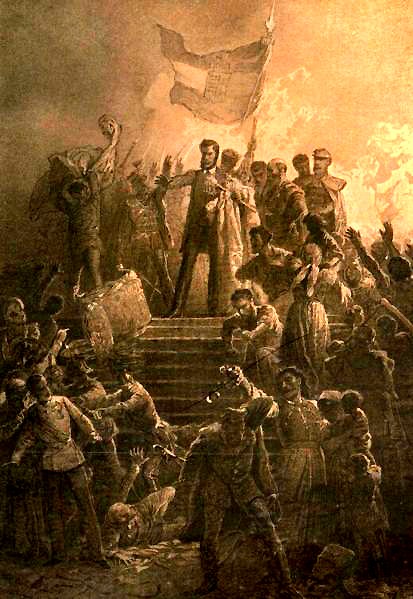
Hungarian Revolution of 1848: Revolutionaries read the 12 points of the Hungarian Revolutionaries of 1848 before a crowd in Buda. The crowd marched on the Imperial Governing Council and forced Ferdinand's representatives to sign them. Source — Wikipedia, "Timeline of Croatian history" (19th century):
Artist Mihály Zichy's rendition of en:Sándor Petőfi reciting the en:Nemzeti dal to the crowd on March 15, 1848. By Mihály Zichy - Obtained from http://www.mke.hu/lyka/05/080-093-zichy2.htm . Public domain info at bottom of page., Public domain, https://commons.wikimedia.org/w/index.php?curid=1209151
Portrait painting of Count Josip Jelačić von Bužim by Ivan Zasche By Ivan Zasche (1826-1863) - https://spomendombanajelacica.rs/ban-josip-jelacic/, Public domain, https://commons.wikimedia.org/w/index.php?curid=167860098
Jun 19, 1860 CE
Josip Šokčević
Josip Šokčević was appointed Ban. Source — Wikipedia, "Timeline of Croatian history" (19th century):
Josip Šokčević By Unknown author - Milan Grlović: Album zasluznih Hrvata XIX. stoljeca : sto i pedeset zivotopisa, slika i vlastorucnih podpisa, Zagreb, 1898-1900 http://digitalgallery.nypl.org/nypldigital/dgkeysearchdetail.cfm?trg=1&strucID=1023502&imageID=1547295&total=156&num=120&parent_id=1023245&word=&s=¬word=&d=&c=&f=&k=0&sScope=&sLevel=&sLabel=&lword=&lfield=&imgs=20&pos=129&snum=&e=w, Public domain, https://commons.wikimedia.org/w/index.php?curid=5769814
Jun 14, 1866 CE
Austro-Prussian War
Austro-Prussian War: Prussia declared war on Austria. Source — Wikipedia, "Timeline of Croatian history" (19th century):
Der preußische König Wilhelm I., Bismarck und General Moltke beobachten die größte Umfassungsschlacht der Kriegsgeschichte: Am 3. Juli 1866 standen sich etwa 180.000 Österreicher und 200.000 Preußen gegenüber. 1.500 Geschütze kamen zum Einsatz. Mit dem Sieg der preußischen Armee eröffnete sich der Weg für eine Reichseinigung unter preußischer Führung – ohne Österreich By Georg Bleibtreu - Unknown source, Public domain, https://commons.wikimedia.org/w/index.php?curid=18241027
Mar 30, 1867 CE
Austro-Hungarian Compromise of 1867
The Austro-Hungarian Compromise of 1867 was ratified, establishing the dual monarchy of Austria-Hungary which devolved almost all power to the Austrian and Hungarian kingdoms respectively. Source — Wikipedia, "Timeline of Croatian history" (19th century):
Österreich-Ungarn Cisleithanien Transleithanien Bosnien und Herzegowina By en:User:Kpalion / modified by User:AndreasPraefcke - Auf der Basis [1] und der der Public-Domain-Karte en:Image:Austria-hungary blank.png von en:User:Kpalion., Public domain, https://commons.wikimedia.org/w/index.php?curid=474649
1868 CE
Croatian–Hungarian Settlement
The Croatian–Hungarian Settlement was signed by the Hungarian Parliament and the Croatian Sabor. The Kingdom of Slavonia was incorporated into Croatia; the Kingdom of Croatia-Slavonia was established as an autonomous state within Hungary. Source — Wikipedia, "Timeline of Croatian history" (19th century):
snimljeno tijekom Noći muzeja u Hrvatskom državnom Arhivu u Zagrebu By Roberta. - Own work, CC BY-SA 3.0, https://commons.wikimedia.org/w/index.php?curid=5845416
Jan 26, 1871 CE
Koloman Bedeković
Koloman Bedeković succeeded Rauch as Ban. Source — Wikipedia, "Timeline of Croatian history" (19th century):
Vice-Roy of Croatia Koloman Bedeković By Opsala - Self-scanned, Public domain, https://commons.wikimedia.org/w/index.php?curid=7902354
Sep 20, 1873 CE
Ivan Mažuranić
Ivan Mažuranić became Ban. Source — Wikipedia, "Timeline of Croatian history" (19th century):
Portrait of Ivan Mažuranić (cropped) By Unknown author - https://www.villaruzic.hr/images/foto/portret.jpg, Public domain, https://commons.wikimedia.org/w/index.php?curid=14044965
Feb 21, 1880 CE
Ladislav Pejačević
Ladislav Pejačević succeeded Mažuranić as Ban. Source — Wikipedia, "Timeline of Croatian history" (19th century):
Ban (Vice-Roy) of Croatia Ladislav Pejačević By Opsala - Self-scanned, Public domain, https://commons.wikimedia.org/w/index.php?curid=7902557
1881 CE
Croatian Military Frontier
The Croatian Military Frontier was incorporated into Croatia-Slavonia. Source — Wikipedia, "Timeline of Croatian history" (19th century):
Map of the Kingdom of Croatia (red) in late 1867 and early 1868 (before the Croatian-Hungarian Nagodba and the establishment of the Kingdom of Croatia-Slavonia). The Kingdom of Slavonia was independent of Croatia at the time, but was under its control for most of the existence of both Kingdoms. By DIREKTOR - Own work, Public domain, https://commons.wikimedia.org/w/index.php?curid=14624002
Apr 19, 1883 CE
Croatian parliamentary by-election, 1883
Croatian parliamentary by-election, 1883: The first day of elections to the Sabor from the former territories of the Croatian Military Frontier was held. Source — Wikipedia, "Timeline of Croatian history" (19th century):
Sep 16, 1884 CE
Croatian parliamentary election, 1884
Croatian parliamentary election, 1884: The first day of balloting was held. Source — Wikipedia, "Timeline of Croatian history" (19th century):
Oct 16, 1895 CE
1895 visit of Emperor Franz Joseph to Zagreb
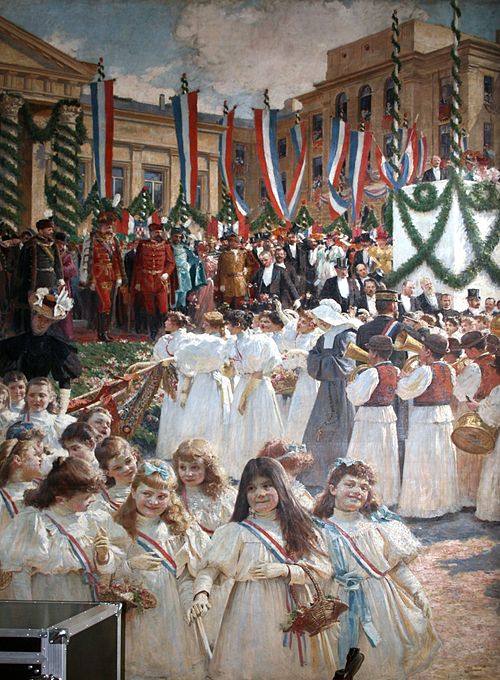
1895 visit of Emperor Franz Joseph to Zagreb: Student protesters burned the Hungarian flag in Ban Jelačić Square. Source — Wikipedia, "Timeline of Croatian history" (19th century):
Živio kralj, rad Vlahe Bukovca u Hrvatskom institutu za povijest u Zagrebu By Vlaho Bukovac - Own work, Public domain, https://commons.wikimedia.org/w/index.php?curid=3751680
May 19, 1897 CE
Croatian parliamentary election, 1897
Croatian parliamentary election, 1897: The first day of elections was held. Source — Wikipedia, "Timeline of Croatian history" (19th century):
Jun 27, 1903 CE
Ban
Ban Khuen-Héderváry resigned to become the Hungarian Prime Minister. Source — Wikipedia, "Timeline of Croatian history" (20th century):
Ban By Unknown author - Own work, Public domain, https://commons.wikimedia.org/w/index.php?curid=90458219
Jun 26, 1907 CE
Aleksandar Rakodczay
Aleksandar Rakodczay became Ban. Source — Wikipedia, "Timeline of Croatian history" (20th century):
Jan 8, 1908 CE
Pavao Rauch
Pavao Rauch was appointed Ban. Source — Wikipedia, "Timeline of Croatian history" (20th century):
Feb 5, 1910 CE
Pavao Rauch
Rauch was dismissed and replaced as Ban by Nikola Tomašić. Source — Wikipedia, "Timeline of Croatian history" (20th century):
Jan 19, 1912 CE
Slavko Cuvaj
Slavko Cuvaj was appointed Ban. Source — Wikipedia, "Timeline of Croatian history" (20th century):
Jul 21, 1913 CE
Iván Skerlecz
Ivan Škrlec was appointed Ban. Source — Wikipedia, "Timeline of Croatian history" (20th century):
Jun 28, 1914 CE
Assassination of Archduke Franz Ferdinand of Austr
Assassination of Archduke Franz Ferdinand of Austria: Archduke Franz Ferdinand of Austria was assassinated by Gavrilo Princip of the Bosnian separatist group Young Bosnia. Source — Wikipedia, "Timeline of Croatian history" (20th century):
1915 CE
Iván Skerlecz
Škrlec reconvened the Sabor. Source — Wikipedia, "Timeline of Croatian history" (20th century):
Nov 21, 1916 CE
Franz Joseph I of Austria
Franz Joseph I of Austria died. He was succeeded as king by his grandnephew Charles I of Austria. Source — Wikipedia, "Timeline of Croatian history" (20th century):
Jun 29, 1917 CE
Iván Skerlecz
Skerlecz resigned. Antun Mihalović became Ban. Source — Wikipedia, "Timeline of Croatian history" (20th century):
Oct 29, 1918 CE
Austria-Hungary
The Sabor dissolved Croatia's union with Austria-Hungary and incorporated the Kingdom of Dalmatia into the new State of Slovenes, Croats and Serbs. Source — Wikipedia, "Timeline of Croatian history" (20th century):
Austria-Hungary By Unknown author - Own work, Public domain, https://commons.wikimedia.org/w/index.php?curid=90458219
Jan 20, 1919 CE
Antun Mihalović
Mihalović left office. Source — Wikipedia, "Timeline of Croatian history" (20th century):
Nov 12, 1920 CE
Kingdom of Yugoslavia
Yugoslavia signed the Treaty of Rapallo (1920), acceding to Italian claims on some of its territory. Source — Wikipedia, "Timeline of Croatian history" (20th century):
Jun 28, 1921 CE
Vidovdan Constitution
The Vidovdan Constitution, which abolished the traditional divisions of the region in favor of thirty-three oblasts ruled by royal appointees, was approved. Source — Wikipedia, "Timeline of Croatian history" (20th century):
Mar 18, 1923 CE
Kingdom of Serbs, Croats and Slovenes parliamentar
Kingdom of Serbs, Croats and Slovenes parliamentary election, 1923: The People's Radical Party won a plurality of seats in Parliament. Source — Wikipedia, "Timeline of Croatian history" (20th century):
Feb 8, 1925 CE
Kingdom of Serbs, Croats and Slovenes parliamentar
Kingdom of Serbs, Croats and Slovenes parliamentary election, 1925: The People's Radical Party won a plurality of seats in Parliament. Source — Wikipedia, "Timeline of Croatian history" (20th century):
Sep 11, 1927 CE
Kingdom of Serbs, Croats and Slovenes parliamentar
Kingdom of Serbs, Croats and Slovenes parliamentary election, 1927: The People's Radical Party won a plurality of seats in Parliament. Source — Wikipedia, "Timeline of Croatian history" (20th century):
Jun 20, 1928 CE
Puniša Račić
Puniša Račić of the People's Radical Party shot five members of the Croatian Peasant Party (HSS) during a session of Parliament. Two were killed instantly, and Party leader Stjepan Radić was fatally wounded. Source — Wikipedia, "Timeline of Croatian history" (20th century):
Jan 6, 1929 CE
6 January Dictatorship
6 January Dictatorship: Alexander issued a decree dissolving Parliament and abolishing the Constitution. Source — Wikipedia, "Timeline of Croatian history" (20th century):
Sep 3, 1931 CE
Alexander I of Yugoslavia
6 January Dictatorship: Alexander issued the 1931 Yugoslav Constitution, ending the dictatorship. Source — Wikipedia, "Timeline of Croatian history" (20th century):
Oct 9, 1934 CE
Alexander I of Yugoslavia
Alexander was assassinated by a Bulgarian mercenary, Vlado Chernozemski, with the Internal Macedonian Revolutionary Organization; Chernozemski had been contracted by the Ustaše, which was formed in 1929. Alexander was succeeded by his eleven-year-old son, Peter, with his cousin, Prince Paul, leading a regency council of three. Source — Wikipedia, "Timeline of Croatian history" (20th century):
May 5, 1935 CE
Yugoslavian parliamentary election, 1935
Yugoslavian parliamentary election, 1935: The Yugoslav National Party won a majority of seats in Parliament. Source — Wikipedia, "Timeline of Croatian history" (20th century):
Dec 11, 1938 CE
Yugoslavian parliamentary election, 1938
Yugoslavian parliamentary election, 1938: The Yugoslav Radical Union won a majority of seats in Parliament. Source — Wikipedia, "Timeline of Croatian history" (20th century):
Aug 23, 1939 CE
Cvetković–Maček Agreement
The Cvetković–Maček Agreement was approved, establishing the autonomous Banovina of Croatia with an elected Sabor and a crown-appointed Ban. Source — Wikipedia, "Timeline of Croatian history" (20th century):
Mar 25, 1941 CE
World War II
World War II: Prince Paul signed the Tripartite Pact, pledging support to the Axis powers. Source — Wikipedia, "Timeline of Croatian history" (20th century):
Oct 5, 1942 CE
Operation Alfa
Operation Alfa: Italian and Chetnik forces attacked the Partisan-held town of Prozor. Source — Wikipedia, "Timeline of Croatian history" (20th century):
May 15, 1943 CE
Battle of the Sutjeska
Battle of the Sutjeska: Axis troops surrounded the main Partisan force on the east bank of the Sutjeska river in Bosnia. Source — Wikipedia, "Timeline of Croatian history" (20th century):
Map of Bosnia and Herzegovina showing the region of Bosnia and the region of Herzegovina By 2007apm (talk) - Originally Image:Bosna regija.jpg on wikipedia, modified by 2007apm, CC BY-SA 3.0, https://commons.wikimedia.org/w/index.php?curid=7131642
May 9, 1944 CE
ZAVNOH
The Federal State of Croatia was established at the third session of the ZAVNOH. Source — Wikipedia, "Timeline of Croatian history" (20th century):
Mar 30, 1945 CE
Battle on Lijevče field
Battle on Lijevče field: Croatian and Chetnik forces met at Lijevče. Source — Wikipedia, "Timeline of Croatian history" (20th century):
Jan 31, 1946 CE
1946 Yugoslav Constitution
The 1946 Yugoslav Constitution came into force. Source — Wikipedia, "Timeline of Croatian history" (20th century):
Feb 10, 1947 CE
Paris Peace Treaties, 1947
The Paris Peace Treaties, 1947 were signed, solidifying Yugoslavia's border with Italy and establishing the Free Territory of Trieste, half of which was to be under Yugoslavian military occupation. Source — Wikipedia, "Timeline of Croatian history" (20th century):
May 1, 1948 CE
Tito–Stalin split
Tito–Stalin split: Croatian Communist Party member Andrija Hebrang was arrested after supporting the Soviet Union in a dispute with Yugoslavia. Source — Wikipedia, "Timeline of Croatian history" (20th century):
Tito announced the introduction of workers' self-management in Yugoslavia. Source — Wikipedia, "Timeline of Croatian history" (20th century):
Jan 13, 1953 CE
1953 Yugoslav Constitution
The 1953 Yugoslav Constitution came into force. Source — Wikipedia, "Timeline of Croatian history" (20th century):
Apr 7, 1963 CE
1963 Yugoslav Constitution
The 1963 Yugoslav Constitution came into force. Source — Wikipedia, "Timeline of Croatian history" (20th century):
Mar 13, 1967 CE
Croatian Spring
Croatian Spring: The Declaration on the Status and Name of the Croatian Literary Language was published, demanding equal status for the Croatian language. Source — Wikipedia, "Timeline of Croatian history" (20th century):
Nov 23, 1971 CE
Zagreb
Croatian Spring: A student protest began in Zagreb. Source — Wikipedia, "Timeline of Croatian history" (20th century):
كاتدرائية زغرب وساحة بان جيلاتشيتش By Nick Savchenko from Kiev, Ukraine - Zagreb, CC BY-SA 2.0, https://commons.wikimedia.org/w/index.php?curid=66690098
Feb 21, 1974 CE
1974 Yugoslav Constitution
The 1974 Yugoslav Constitution came into force, establishing a nine-member Presidency of Yugoslavia of which Tito was president for Life. Source — Wikipedia, "Timeline of Croatian history" (20th century):
Nov 10, 1975 CE
Treaty of Osimo
The Treaty of Osimo was signed, under which Italy and Yugoslavia were allowed to annex their respective occupation zones in Trieste. Source — Wikipedia, "Timeline of Croatian history" (20th century):
May 4, 1980 CE
Josip Broz Tito
Tito died. He was succeeded as President of the Presidency of Yugoslavia by the Macedonian Lazar Koliševski. Source — Wikipedia, "Timeline of Croatian history" (20th century):
May 15, 1981 CE
Socialist Federal Republic of Yugoslavia
The Yugoslavian Presidency rotated to the Slovenian Sergej Kraigher. Source — Wikipedia, "Timeline of Croatian history" (20th century):
May 15, 1982 CE
Socialist Federal Republic of Yugoslavia
The Yugoslavian Presidency rotated to the Serbian Petar Stambolić. Source — Wikipedia, "Timeline of Croatian history" (20th century):
May 15, 1983 CE
Socialist Federal Republic of Yugoslavia
The Yugoslavian Presidency rotated to the Croatian Mika Špiljak. Source — Wikipedia, "Timeline of Croatian history" (20th century):
May 15, 1984 CE
Socialist Federal Republic of Yugoslavia
The Yugoslavian Presidency rotated to the Montenegrin Veselin Đuranović. Source — Wikipedia, "Timeline of Croatian history" (20th century):
May 15, 1985 CE
Socialist Federal Republic of Yugoslavia
The Yugoslavian Presidency rotated to the Vojvodin Radovan Vlajković. Source — Wikipedia, "Timeline of Croatian history" (20th century):
May 10, 1986 CE
Ante Marković
Ante Marković assumed the Presidency of Croatia. Source — Wikipedia, "Timeline of Croatian history" (20th century):
May 15, 1987 CE
Socialist Federal Republic of Yugoslavia
The Yugoslavian Presidency rotated to the Macedonian Lazar Mojsov. Source — Wikipedia, "Timeline of Croatian history" (20th century):
May 15, 1988 CE
Socialist Federal Republic of Yugoslavia
The Yugoslavian Presidency rotated to the Bosnian Raif Dizdarević. Source — Wikipedia, "Timeline of Croatian history" (20th century):
May 15, 1989 CE
Socialist Federal Republic of Yugoslavia
The Yugoslavian Presidency rotated to the Slovenian Janez Drnovšek. Source — Wikipedia, "Timeline of Croatian history" (20th century):
Jan 23, 1990 CE
League of Communists of Croatia
A Communist Party Congress ended the party's legal monopoly in Croatia. Source — Wikipedia, "Timeline of Croatian history" (20th century):
Mar 2, 1991 CE
Pakrac clash
Pakrac clash: Croatian police arrested 180 Serb rebels who had occupied the town of Pakrac. Source — Wikipedia, "Timeline of Croatian history" (20th century):
Jan 2, 1992 CE
Operation Orkan 91: A ceasefire was
Operation Orkan 91: A ceasefire was negotiated. Source — Wikipedia, "Timeline of Croatian history" (20th century):
Jan 22, 1993 CE
Operation Maslenica
Operation Maslenica: The Croatian army launched an offensive to reconquer Krajina territory in northern Dalmatia. Source — Wikipedia, "Timeline of Croatian history" (20th century):
The region of Dalmatia on a map of Croatia (with the Kotor Bay area included) Dalmatia proper Sometimes regarded as Dalmatia: (striped) Gračac municipality Bay of Kotor area in Montenegro Rab island and surroundings By DIREKTOR - Own work using File:Croatia location map.svg by NordNordWest, CC BY-SA 3.0, https://commons.wikimedia.org/w/index.php?curid=20693060
Feb 23, 1994 CE
Croat–Bosniak War: The war was effectively
Croat–Bosniak War: The war was effectively ended with a ceasefire. Source — Wikipedia, "Timeline of Croatian history" (20th century):
May 1, 1995 CE
Operation Flash
Operation Flash: The Croatian Army launched an offensive which would reconquer the territory of the former Western Slavonia in Krajina. Source — Wikipedia, "Timeline of Croatian history" (20th century):
Jan 15, 1996 CE
United Nations Transitional Authority for Eastern
The UNTAES mission began. Source — Wikipedia, "Timeline of Croatian history" (20th century):
Jun 15, 1997 CE
Croatian presidential election, 1997
Croatian presidential election, 1997: Tuđman was reelected with 61% of the vote. Source — Wikipedia, "Timeline of Croatian history" (20th century):
Jan 15, 1998 CE
United Nations Transitional Authority for Eastern
The UNTAES mission ended. Source — Wikipedia, "Timeline of Croatian history" (20th century):
Nov 26, 1999 CE
Franjo Tuđman
Tuđman was declared incapacitated due to illness. Speaker of the Croatian Parliament Vlatko Pavletić became acting president. Source — Wikipedia, "Timeline of Croatian history" (20th century):
Jan 3, 2000 CE
Croatian parliamentary election, 2000
Croatian parliamentary election, 2000: The Social Democratic Party of Croatia (SDP) won a plurality of seats in the Sabor. Source — Wikipedia, "Timeline of Croatian history" (20th century):
Mar 28, 2001 CE
Speaker of the Chamber of Counties of Croatia
Chamber of Counties was abolished by Constitutional amendment. Source — Wikipedia, "Timeline of Croatian history" (21st century):
Nov 23, 2003 CE
Croatian parliamentary election, 2003
Croatian parliamentary election, 2003: The HDZ won a plurality of seats in the Sabor. Source — Wikipedia, "Timeline of Croatian history" (21st century):
Jan 2, 2005 CE
Croatian presidential election, 2005
Croatian presidential election, 2005: Mesić, running as an independent, and Jadranka Kosor of the HDZ qualified for the second round. Source — Wikipedia, "Timeline of Croatian history" (21st century):
Nov 25, 2007 CE
Croatian parliamentary election, 2007
Croatian parliamentary election, 2007: The HDZ maintained its plurality in the Sabor. Source — Wikipedia, "Timeline of Croatian history" (21st century):
Croatian presidential election, 2009–10: Josipović won with 60% of the vote. Source — Wikipedia, "Timeline of Croatian history" (21st century):
Dec 4, 2011 CE
Croatian parliamentary election, 2011
Croatian parliamentary election, 2011: The SDP won a plurality of seats in the Sabor. Source — Wikipedia, "Timeline of Croatian history" (21st century):
Jul 1, 2013 CE
Member state of the European Union
Croatia becomes the 28th member state of the European Union. Source — Wikipedia, "Timeline of Croatian history" (21st century):
Jan 11, 2015 CE
2014–15 Croatian presidential election
Croatian presidential election, 2014–15: Kolinda Grabar-Kitarović was voted to be the president of Croatia with 50,74% of the vote, becoming Croatia's first female president. Source — Wikipedia, "Timeline of Croatian history" (21st century):
Nov 8, 2015 CE
Croatian parliamentary election, 2015
Croatian parliamentary election, 2015: The Patriotic Coalition won a plurality of seats in the Sabor, with Croatia is Growing coalition coming second and MOST third. Source — Wikipedia, "Timeline of Croatian history" (21st century):
Sep 11, 2016 CE
Croatian parliamentary election, 2016
Croatian parliamentary election, 2016: The HDZ-led coalition won a plurality of seats in the Sabor. Andrej Plenković confirmed as the prime minister. Source — Wikipedia, "Timeline of Croatian history" (21st century):
Jan 22, 2019 CE
2019-20 Croatian presidential election
Croatian presidential election, 2019–20: Zoran Milanović (SDP) won with over 52% popular vote against Kolinda Grabar-Kitarović (HDZ). Source — Wikipedia, "Timeline of Croatian history" (21st century):
Feb 25, 2020 CE
2020 coronavirus outbreak in Croatia
2020 coronavirus outbreak in Croatia. At the time over 210 cases of COVID-19 confirmed. Source — Wikipedia, "Timeline of Croatian history" (21st century):
Mar 22, 2020 CE
2020 Zagreb earthquake
2020 Zagreb earthquake. At 6:24 AM, an 5.4 magnitude earthquake hit Zagreb and killed 1 teenager from the falling bricks. Its shock traveled few hundred kilometers. Source — Wikipedia, "Timeline of Croatian history" (21st century):
كاتدرائية زغرب وساحة بان جيلاتشيتش By Nick Savchenko from Kiev, Ukraine - Zagreb, CC BY-SA 2.0, https://commons.wikimedia.org/w/index.php?curid=66690098
Jul 5, 2020 CE
Croatian parliamentary election, 2020
Croatian parliamentary election, 2020: The HDZ-led coalition won a plurality of seats in the Sabor, with Andrej Plenković continuing to be the prime minister. Source — Wikipedia, "Timeline of Croatian history" (21st century):
Dec 29, 2020 CE
Petrinja
An earthquake hit near village of Petrinja at 12:19 PM with magnitude 6.2M<sub>L</sub> killing 7 people. Source — Wikipedia, "Timeline of Croatian history" (21st century):
2021 CE
Gross domestic product
GDP growth in Croatia increased by hitting record high 10.4% after contracting 8.1% in 2020. Source — Wikipedia, "Timeline of Croatian history" (21st century):
Jul 12, 2022 CE
European Union
European Union formally approved Croatia to become 20th Eurozone member by start of 2023. Source — Wikipedia, "Timeline of Croatian history" (21st century):
Sep 5, 2022 CE
Price
Croatia showed prices in both kunas and euros. Source — Wikipedia, "Timeline of Croatian history" (21st century):
Dec 1, 2022 CE
Hrvatska pošta
Euro packages available to buy in , Hrvatska pošta d.d. and Croatian National Bank. Source — Wikipedia, "Timeline of Croatian history" (21st century):
Jan 1, 2023 CE
Croatian kuna
Dual kuna/euro circulation was in effect. Source — Wikipedia, "Timeline of Croatian history" (21st century):
Jan 1, 2023 CE
Eurozone
Croatia officially joined Eurozone as 20th member and Schengen area as 20th member. Source — Wikipedia, "Timeline of Croatian history" (21st century):
Jan 29, 2024 CE
2024-25 Croatian presidential election
Croatian presidential election, 2024–25: Zoran Milanović (Independent) won with over 74% popular vote against Dragan Primorac (HDZ). Source — Wikipedia, "Timeline of Croatian history" (21st century):
Apr 17, 2024 CE
2024 Croatian parliamentary election
Croatian parliamentary election, 2024: The HDZ-led coalition won a plurality of seats in the Sabor, with Andrej Plenković continuing to be the prime minister for the third consecutive time. Source — Wikipedia, "Timeline of Croatian history" (21st century):
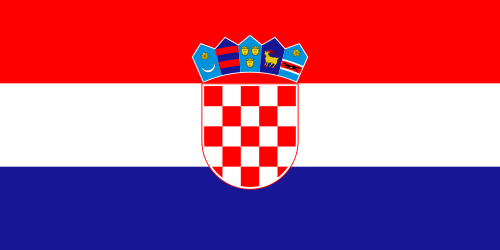


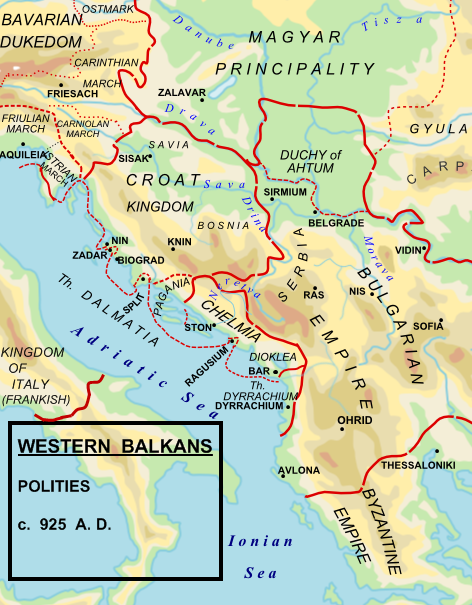


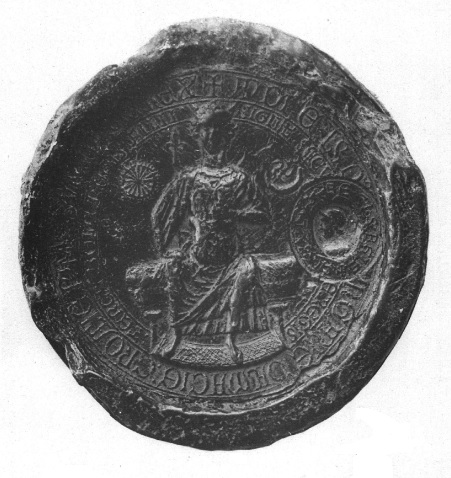


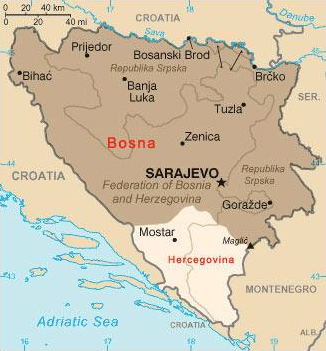


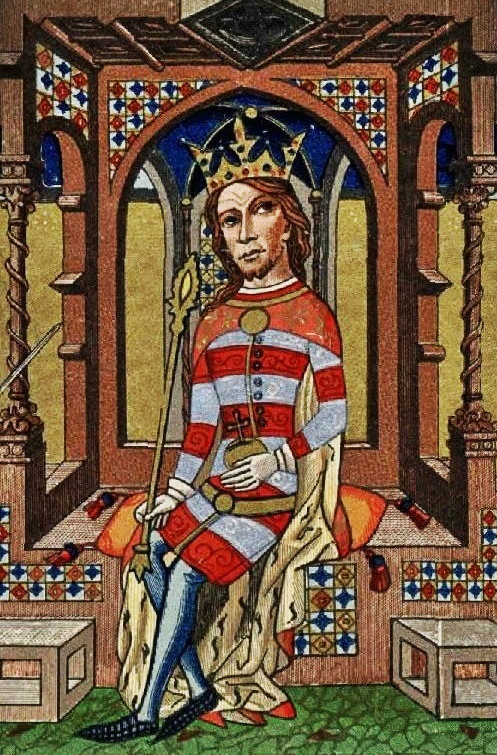
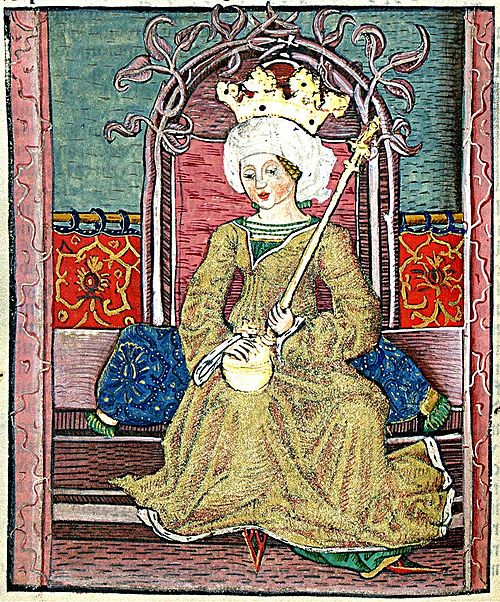


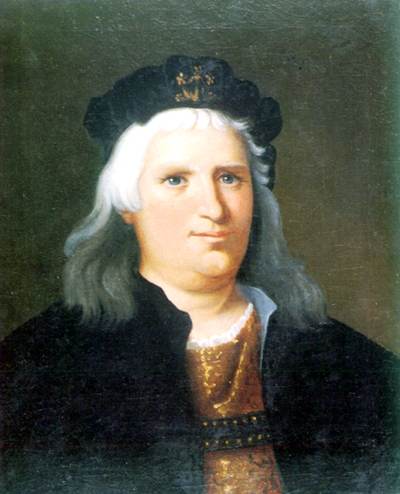


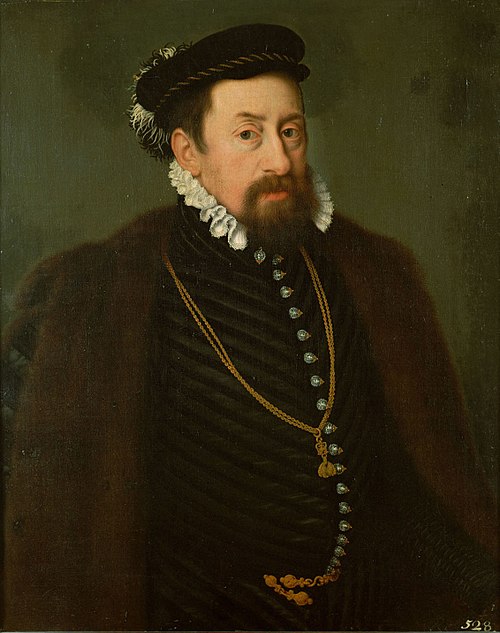


![Depiction of the siege of Bihać in 1592 by Wilhelm Peter Zimmermann [1]](https://upload.wikimedia.org/wikipedia/commons/thumb/1/1c/The_siege_of_Biha%C4%87_in_1592.jpg/500px-The_siege_of_Biha%C4%87_in_1592.jpg)


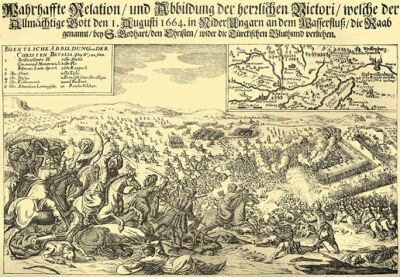


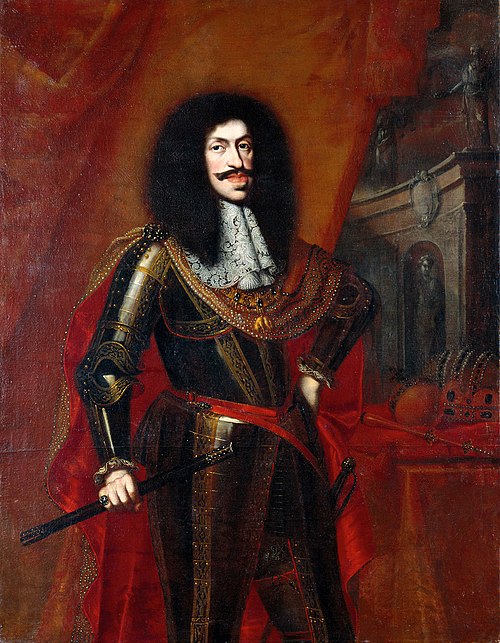


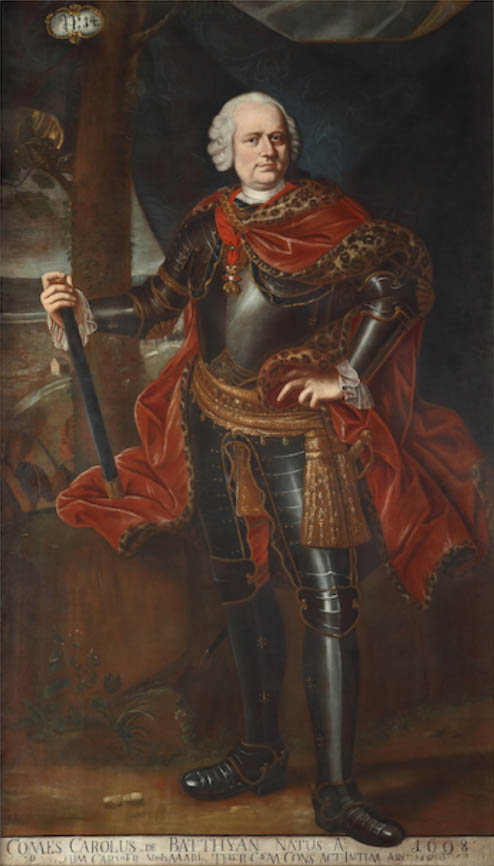


!["Meytens painted this portrait on the occasion of the opening of the new building of the Academy in 1759 (Husslein-Arco/Lechner 2014) vanaf 1759" [1]](https://upload.wikimedia.org/wikipedia/commons/thumb/3/3e/Kaiserin_Maria_Theresia_%28HRR%29.jpg/500px-Kaiserin_Maria_Theresia_%28HRR%29.jpg)


![Vlasic mellszobor, Dombóváron, a Franjo Vlasic udvarban áll Varga Gábor alkotása, melyet 2016.04.02.-án avatták fel, Dombó Pál utcában?.[1]](https://upload.wikimedia.org/wikipedia/commons/thumb/5/5b/Vlasic_szobor_domb%C3%B3v%C3%A1r.jpg/500px-Vlasic_szobor_domb%C3%B3v%C3%A1r.jpg)