Encyclopedia/3. History, Societies & Civilizations/09. Modern Nations/07. Eastern Europe & Caucasus • Curated by Admin Timeline.sg
History of Russia, sourced from Wikipedia's "Timeline of Russian history".
Chronological Storyline (250 Milestones)
862 CE
Rurik
Rurik came to rule in Novgorod, establishing the Rurikid Dynasty. Source — Wikipedia, "Timeline of Russian history" (9th century):
Rurik on the Monument «Millennium of Russia» in Veliky Novgorod By Дар Ветер - Own work, CC BY-SA 3.0, https://commons.wikimedia.org/w/index.php?curid=10034737
882 CE
Oleg the Wise
Oleg the Wise conquered Kiev and moved the capital there. Source — Wikipedia, "Timeline of Russian history" (9th century):
Приношение Олегу дани покоренными народами. Техника: перо, чернила. Время создания: конец XV века. Местонахождение: Оригинал летописи находится в Библиотеке Академии Наук в Санкт-Петербурге. Источник: Радзивиловская летопись. Изображенное время: 884. Изображенное событие: "В лето 6392. Иде Олег на северяны, и победи северяны, и възложи на нь, легку не дай им козаром дани платити, рек: «Аз им противен, а вам не чему»". By Unknown author - https://runivers.ru/doc/rusland/letopisi/?SECTION_ID=19639&ELEMENT_ID=586838, Public domain, https://commons.wikimedia.org/w/index.php?curid=108107342
907 CE
Rus'–Byzantine War
Rus'–Byzantine War (907): Oleg led an army to the walls of Constantinople. Source — Wikipedia, "Timeline of Russian history" (10th century):
Prince Oleg the Prophet rides on ships put on wheels to Constantinople By Anonymous Russian manuscript illuminators, 1560-1570s Facial Chronicle (Illustrated Chronicle of Ivan the Terrible) (in 10 volumes: pdf, pdf with translation)Public domain image - https://runivers.ru/bookreader/book594250/#page/304/mode/1up, Public domain, https://commons.wikimedia.org/w/index.php?curid=116542951
912 CE
Oleg of Novgorod
Oleg died and was succeeded by Igor, who was Rurik's son. Source — Wikipedia, "Timeline of Russian history" (10th century):
Приношение Олегу дани покоренными народами. Техника: перо, чернила. Время создания: конец XV века. Местонахождение: Оригинал летописи находится в Библиотеке Академии Наук в Санкт-Петербурге. Источник: Радзивиловская летопись. Изображенное время: 884. Изображенное событие: "В лето 6392. Иде Олег на северяны, и победи северяны, и възложи на нь, легку не дай им козаром дани платити, рек: «Аз им противен, а вам не чему»". By Unknown author - https://runivers.ru/doc/rusland/letopisi/?SECTION_ID=19639&ELEMENT_ID=586838, Public domain, https://commons.wikimedia.org/w/index.php?curid=108107342
May 1, 941 CE
Rus'–Byzantine War
Rus'–Byzantine War (941): A Rus' army landed at Bithynia. Source — Wikipedia, "Timeline of Russian history" (10th century):
Image from an illuminated manuscript, the Madrid Skylitzes, showing Greek fire in use against the fleet of the rebel Thomas the Slav. By Unknown author - Codex Skylitzes Matritensis, Bibliteca Nacional de Madrid, Vitr. 26-2, Bild-Nr. 77, f 34 v. b. (taken from Pászthory, p. 31), Public domain, https://commons.wikimedia.org/w/index.php?curid=302463
945 CE
Rus'–Byzantine Treaty
Rus'-Byzantine War (941): Another Rus'-Byzantine Treaty was signed. Rus' renounced some Byzantine territories. Source — Wikipedia, "Timeline of Russian history" (10th century):
Map of later Kyivan Rus (after the death of Yaroslav I in 1054). By Vitaliyf261 - Own work. Compare: Plokhy, Serhii (2006) The Origins of the Slavic Nations: Premodern Identities in Russia, Ukraine, and Belarus, Category:New York: Cambridge University Press, p. xiv ISBN: 978-0-521-86403-9., CC BY-SA 4.0, https://commons.wikimedia.org/w/index.php?curid=93773078
Holy Princess Olga. . Sketch of the painting of the Cathedral of St. Vladimir in Kiev. Oil on canvas. 104x39.5 cm. Private collection. By Mikhail Nesterov - [1], Public domain, https://commons.wikimedia.org/w/index.php?curid=139257866
Sviatoslav I By Yevgeny Lansere - Photo by Dmitry Ivanov, Public domain, https://commons.wikimedia.org/w/index.php?curid=31508352
968 CE
Siege of Kiev
Siege of Kiev (968): The Pechenegs besieged Kiev. A Rus' created the illusion of a much larger army, and frightened them away. Source — Wikipedia, "Timeline of Russian history" (10th century):
Siege of Kiev By Andrey Ivanov - BG-Galereja [1], Public domain, https://commons.wikimedia.org/w/index.php?curid=9141274
Jul 8, 969 CE
Sviatoslav I
Sviatoslav moved the capital from Kiev to Pereyaslavets in Bulgaria. Source — Wikipedia, "Timeline of Russian history" (10th century):
Sviatoslav I By Yevgeny Lansere - Photo by Dmitry Ivanov, Public domain, https://commons.wikimedia.org/w/index.php?curid=31508352
971 CE
Byzantine Empire
The Byzantine Empire captured Pereyaslavets. The capital moved back to Kiev. Source — Wikipedia, "Timeline of Russian history" (10th century):
Vector map showing the Eastern Roman Empire (or Byzantine Empire) at the end of Justinian's reign in 565 By Mnohohrishnyi - Own work, based mainly on "The New Roman Empire: A History of Byzantium" by Anthony Kaldellis, CC0, https://commons.wikimedia.org/w/index.php?curid=190907815
972 CE
Sviatoslav I
Sviatoslav was killed by the Pechenegs during an expedition on their territory. His son Yaropolk I succeeded him. Source — Wikipedia, "Timeline of Russian history" (10th century):
Sviatoslav I By Yevgeny Lansere - Photo by Dmitry Ivanov, Public domain, https://commons.wikimedia.org/w/index.php?curid=31508352
978 CE
Yaropolk I of Kiev
Yaropolk was betrayed and murdered by his brother Vladimir the Great, who succeeded him as Prince of Kiev. Source — Wikipedia, "Timeline of Russian history" (10th century):
Departure of Yaropolk from Kiev to the city of Rodnya By Радзивилловская летопись - https://runivers.ru/doc/rusland/letopisi/?SECTION_ID=19639&ELEMENT_ID=586919, CC BY-SA 4.0, https://commons.wikimedia.org/w/index.php?curid=112637072
981 CE
Vladimir the Great
Vladimir conquered Red Ruthenia from the Poles. Source — Wikipedia, "Timeline of Russian history" (10th century):
Reverse of srebrenik of Volodymyr the Great now in the Odesa Numismatics Museum. By Влад Федченко - Self-photographed, Public domain, https://commons.wikimedia.org/w/index.php?curid=79885277
988 CE
Christianization of Kievan Rus'
Christianization of Kievan Rus: Vladimir destroyed the pagan idols of Kiev and urged the city's inhabitants to baptize themselves in the Dnieper River. Source — Wikipedia, "Timeline of Russian history" (10th century):
Christianization of Kievan Rus' By Klavdy Lebedev - [1], Public domain, https://commons.wikimedia.org/w/index.php?curid=3055858
Jul 15, 1015 CE
Vladimir the Great
Vladimir died. He was succeeded by Sviatopolk I, who may have been his biological son by the rape of Yaropolk's wife. Sviatopolk ordered the murder of three of Vladimir's younger sons. Source — Wikipedia, "Timeline of Russian history" (11th century):
Reverse of srebrenik of Volodymyr the Great now in the Odesa Numismatics Museum. By Влад Федченко - Self-photographed, Public domain, https://commons.wikimedia.org/w/index.php?curid=79885277
1016 CE
Yaroslav the Wise
Yaroslav I, another of Sviatopolk's brothers, led an army against him and defeated him, forcing him to flee to Poland. Source — Wikipedia, "Timeline of Russian history" (11th century):
The most probable (live) picture of the Yaroslav the Wise is his seal. By Unknown author - [1] (Ukranian) Transferred from en.wikipedia to Commons by User:Logan using CommonsHelper последняя версия - "Ярослав Мудрый", ЖЗЛ, Public domain, https://commons.wikimedia.org/w/index.php?curid=14993588
1017 CE
Yaroslav the Wise
Yaroslav issued the first Russian code of law, the Russkaya Pravda. Source — Wikipedia, "Timeline of Russian history" (11th century):
The most probable (live) picture of the Yaroslav the Wise is his seal. By Unknown author - [1] (Ukranian) Transferred from en.wikipedia to Commons by User:Logan using CommonsHelper последняя версия - "Ярослав Мудрый", ЖЗЛ, Public domain, https://commons.wikimedia.org/w/index.php?curid=14993588
1018 CE
Kiev Expedition
Polish Expedition to Kiev: Sviatopolk led the Polish army into Rus'. Red Ruthenia returned to Polish possession. Source — Wikipedia, "Timeline of Russian history" (11th century):
Kiev Expedition By Unknown author, CC BY-SA 3.0, https://commons.wikimedia.org/w/index.php?curid=562663
1019 CE
Yaroslav the Wise
Yaroslav defeated Sviatopolk and returned to the princedom of Kiev. He granted autonomy to Novgorod as a reward for her prior loyalty. Sviatopolk died. Source — Wikipedia, "Timeline of Russian history" (11th century):
The most probable (live) picture of the Yaroslav the Wise is his seal. By Unknown author - [1] (Ukranian) Transferred from en.wikipedia to Commons by User:Logan using CommonsHelper последняя версия - "Ярослав Мудрый", ЖЗЛ, Public domain, https://commons.wikimedia.org/w/index.php?curid=14993588
1030 CE
Yaroslav the Wise
Yaroslav reconquered Red Ruthenia from the Poles. Source — Wikipedia, "Timeline of Russian history" (11th century):
The most probable (live) picture of the Yaroslav the Wise is his seal. By Unknown author - [1] (Ukranian) Transferred from en.wikipedia to Commons by User:Logan using CommonsHelper последняя версия - "Ярослав Мудрый", ЖЗЛ, Public domain, https://commons.wikimedia.org/w/index.php?curid=14993588
Feb 30, 1043 CE
Rus'–Byzantine War
Rus'–Byzantine War (1043): Yaroslav led an unsuccessful naval raid on Constantinople. According to the peace settlement, Yaroslav's son Vsevolod I married a daughter of the Byzantine emperor Constantine IX Monomachos. Source — Wikipedia, "Timeline of Russian history" (11th century):
Use of a hand-siphon, a portable flame-thrower, from a siege tower. Detail from the medieval manuscript Codex Vaticanus Graecus 1605. By Unknown author - Codex Vaticanus Graecus 1605 (taken from Pászthory, p. 31), Public domain, https://commons.wikimedia.org/w/index.php?curid=7038318
1054 CE
Yaroslav the Wise
Yaroslav died. He was succeeded by his oldest son, Iziaslav I. Source — Wikipedia, "Timeline of Russian history" (11th century):
The most probable (live) picture of the Yaroslav the Wise is his seal. By Unknown author - [1] (Ukranian) Transferred from en.wikipedia to Commons by User:Logan using CommonsHelper последняя версия - "Ярослав Мудрый", ЖЗЛ, Public domain, https://commons.wikimedia.org/w/index.php?curid=14993588
1068 CE
Iziaslav I of Kiev
Iziaslav was overthrown in a popular uprising and forced to flee to Poland. Source — Wikipedia, "Timeline of Russian history" (11th century):
Seal of Izyaslav I with his portrait By Неизвестен - https://www.researchgate.net/figure/A-fur-money-seal-of-Izyaslav-Yaroslavich-1024-1078-CC-BY-40_fig5_347768968, CC BY-SA 4.0, https://commons.wikimedia.org/w/index.php?curid=121233986
1069 CE
Iziaslav I of Kiev
Iziaslav led the Polish army back into Kiev and reestablished himself on the throne. Source — Wikipedia, "Timeline of Russian history" (11th century):
Seal of Izyaslav I with his portrait By Неизвестен - https://www.researchgate.net/figure/A-fur-money-seal-of-Izyaslav-Yaroslavich-1024-1078-CC-BY-40_fig5_347768968, CC BY-SA 4.0, https://commons.wikimedia.org/w/index.php?curid=121233986
1073 CE
Iziaslav I of Kiev
Two of Iziaslav's brothers, Sviatoslav II and Vsevolod I, overthrew him; the former became prince of Kiev. Source — Wikipedia, "Timeline of Russian history" (11th century):
Seal of Izyaslav I with his portrait By Неизвестен - https://www.researchgate.net/figure/A-fur-money-seal-of-Izyaslav-Yaroslavich-1024-1078-CC-BY-40_fig5_347768968, CC BY-SA 4.0, https://commons.wikimedia.org/w/index.php?curid=121233986
Dec 27, 1076 CE
Sviatoslav II of Kiev
Sviatoslav died. Vsevolod I succeeded him, but traded the princedom of Kiev to Iziaslav in exchange for Chernigov. Source — Wikipedia, "Timeline of Russian history" (11th century):
Святослав (крайний справа) с семьёй. By Unknown author - http://artclassic.edu.ru/catalog.asp?ob_no=14974&cat_ob_no=12517 (Original text: Изборник), Public domain, https://commons.wikimedia.org/w/index.php?curid=7222467
Oct 3, 1078 CE
Iziaslav I of Kiev
Iziaslav died. The throne of Kiev went to Vsevolod. Source — Wikipedia, "Timeline of Russian history" (11th century):
Seal of Izyaslav I with his portrait By Неизвестен - https://www.researchgate.net/figure/A-fur-money-seal-of-Izyaslav-Yaroslavich-1024-1078-CC-BY-40_fig5_347768968, CC BY-SA 4.0, https://commons.wikimedia.org/w/index.php?curid=121233986
Apr 13, 1093 CE
Vsevolod I of Kiev
Vsevolod died. Kiev and Chernigov went to Iziaslav's illegitimate son, Sviatopolk II. Source — Wikipedia, "Timeline of Russian history" (11th century):
A dragon-meteorite that fell from sky during Vsevolod Yaroslavich's hunt near Vyshgorod in 1091― Radziwiłł Chronicle By Unknown author, Public domain, https://commons.wikimedia.org/w/index.php?curid=155280813
Apr 16, 1113 CE
Sviatopolk II of Kiev
Sviatopolk died. He was succeeded by Vsevolod's son, his cousin, Vladimir II Monomakh. Source — Wikipedia, "Timeline of Russian history" (12th century):
Печать Святополка Изяславича, Киев, 1093–1113 гг. На оборотной стороне — архангел Михаило. By Лобачев Владимир - Own work, CC BY-SA 4.0, https://commons.wikimedia.org/w/index.php?curid=90336443
May 19, 1125 CE
Vladimir II Monomakh
Vladimir died. His oldest son, Mstislav I, succeeded him. Source — Wikipedia, "Timeline of Russian history" (12th century):
Seal of Vladimir II Monomakh By Печать Владимира II Мономаха - https://lenta.ru/news/2008/09/03/seal/, CC BY-SA 4.0, https://commons.wikimedia.org/w/index.php?curid=111470109
Apr 14, 1132 CE
Mstislav I of Kiev
Mstislav died. His brother Yaropolk II followed him as prince of Kiev. Source — Wikipedia, "Timeline of Russian history" (12th century):
Prince Mstislav Vladimirovich on the throne of Novgorod, part of miniature from Radziwiłł Chronicle, 15th century (cropped from original: https://commons.wikimedia.org/wiki/File:%D0%92%D0%BE%D0%BA%D0%BD%D1%8F%D0%B6%D0%B5%D0%BD%D0%B8%D0%B5_%D0%9C%D1%81%D1%82%D0%B8%D1%81%D0%BB%D0%B0%D0%B2%D0%B0_%D0%92%D0%BB%D0%B0%D0%B4%D0%B8%D0%BC%D0%B8%D1%80%D0%BE%D0%B2%D0%B8%D1%87%D0%B0_%D0%B2_%D0%9D%D0%BE%D0%B2%D0%B3%D0%BE%D1%80%D0%BE%D0%B4%D0%B5;_%D0%B2%D1%81%D1%82%D1%80%D0%B5%D1%87%D0%B0_%D0%98%D0%B7%D1%8F%D1%81%D0%BB%D0%B0%D0%B2%D0%B0_%D0%92%D0%BB%D0%B0%D0%B4%D0%B8%D0%BC%D0%B8%D1%80%D0%BE%D0%B2%D0%B8%D1%87%D0%B0_%D0%9A%D1%83%D1%80%D1%81%D0%BA%D0%BE%D0%B3%D0%BE_%D0%B2_%D0%9C%D1%83%D1%80%D0%BE%D0%BC%D0%B5.jpg) By Skoropadsky - Own work, CC BY-SA 4.0, https://commons.wikimedia.org/w/index.php?curid=184788925
1136 CE
Novgorod Republic
Novgorod expelled the prince appointed for them by Kiev and vastly circumscribed the authority of the office. Source — Wikipedia, "Timeline of Russian history" (12th century):
Locator map of the Novgorod Republic, c. 1400. (Partially based on Atlas of World History (2007) - The World 1300-1400, map) By Gabagool - Own work, CC BY 3.0, https://commons.wikimedia.org/w/index.php?curid=6617833
Feb 18, 1139 CE
Yaropolk II of Kiev
Yaropolk died. His younger brother Viacheslav followed him, but in March Viacheslav was overthrown by his cousin, prince of Chernigov, Vsevolod. Source — Wikipedia, "Timeline of Russian history" (12th century):
Великий князь киевский Ярополк Владимирович By Unknown author - Царский титулярник (стр. 11), Public domain, https://commons.wikimedia.org/w/index.php?curid=38460754
Aug 1, 1146 CE
Igor II of Kiev
Vsevolod died. His brother Igor followed him as a ruler of Kiev. Citizens of Kiev required him to depose old boyars of Vsevolod. Igor swore to fulfill their request, but then reconsidered to do it. Citizens of Kiev considered that oath-breaker is not a legitimate ruler anymore and chose to summon prince Iziaslav of Pereyaslavl to be a new prince of Kiev. Source — Wikipedia, "Timeline of Russian history" (12th century):
Игорь Ольгович By collective - http://www.runivers.ru/lib/book19624/580499/, Public domain, https://commons.wikimedia.org/w/index.php?curid=65997891
1147 CE
Yuri Dolgorukiy
The first reference to Moscow when Yuri Dolgorukiy called upon Sviatoslav of Novgorod-Seversk to "come to me, brother, to Moscow". Source — Wikipedia, "Timeline of Russian history" (12th century):
Yuri I Dolgoruky By Царский титулярник - http://nlr.ru/manuscripts/RA1527/elektronnyiy-katalog?ab=E43F34DE-AB4B-4891-9B5F-DDB52238975F, CC BY-SA 4.0, https://commons.wikimedia.org/w/index.php?curid=113988286
Izyaslav II - fresco of the Novospassky Monastery By Unknown author - https://www.icon-art.info/gallery.php, CC BY-SA 4.0, https://commons.wikimedia.org/w/index.php?curid=125227732
1150 CE
Black Klobuks
With assistance of Black Klobuks Iziaslav kicked away Yuri from Kiev. After some time, with help of Volodimirko of Galych, Yuri took Kiev again. Source — Wikipedia, "Timeline of Russian history" (12th century):
Торки і берендеї втікають з Русі, 1121 р. By Unknown author - https://runivers.ru/doc/rusland/letopisi/?SECTION_ID=19639&ELEMENT_ID=587175, Public domain, https://commons.wikimedia.org/w/index.php?curid=129442604
1151 CE
Géza II
Hungarian king Géza II helped Iziaslav to return Kiev. Yuri escaped Source — Wikipedia, "Timeline of Russian history" (12th century):
Chronicon Pictum / Illuminated Chronicle (Page 117) - King Géza II in Royal RegaliaStanding figure of King Géza II of Hungary, wearing a hauberk and a crown, holding a scepter in his left hand and resting his right hand on his shield. By Márk Kálti - Self-photographed, Public domain, https://commons.wikimedia.org/w/index.php?curid=122927730
Nov 13, 1154 CE
Smolensk
Iziaslav II died. His brother, prince of Smolensk Rostislav was summoned to become a new prince of Kiev. Source — Wikipedia, "Timeline of Russian history" (12th century):
Собор Успенский: Смоленск, Смоленская область By Ghirlandajo - Own work, CC BY-SA 4.0, https://commons.wikimedia.org/w/index.php?curid=81777759
1155 CE
Yuri Dolgorukiy expelled Rostislav with assistance
Yuri Dolgorukiy expelled Rostislav with assistance of prince of Chernigov. Source — Wikipedia, "Timeline of Russian history" (12th century):
1157 CE
Iziaslav III of Kiev
Yuri I was intoxicated and died. Iziaslav of Chernigov became prince of Kiev. Source — Wikipedia, "Timeline of Russian history" (12th century):
Izyaslav III By Anonymous Russian manuscript illuminators, 1560-1570s Facial Chronicle (Illustrated Chronicle of Ivan the Terrible) (in 10 volumes: pdf, pdf with translation)Public domain image - https://runivers.ru/bookreader/book594256/#page/146/mode/1up, Public domain, https://commons.wikimedia.org/w/index.php?curid=160406278
1159 CE
Iziaslav III of Kiev
Iziaslav of Chernigov was overthrown by princes of Galych and Volyn. Allies called Rostislav to be prince of Kiev again. Source — Wikipedia, "Timeline of Russian history" (12th century):
Izyaslav III By Anonymous Russian manuscript illuminators, 1560-1570s Facial Chronicle (Illustrated Chronicle of Ivan the Terrible) (in 10 volumes: pdf, pdf with translation)Public domain image - https://runivers.ru/bookreader/book594256/#page/146/mode/1up, Public domain, https://commons.wikimedia.org/w/index.php?curid=160406278
1167 CE
Mstislav II of Kiev
Rostislav died. His nephew, Mstislav of Volyn, became new ruler of Kiev. Source — Wikipedia, "Timeline of Russian history" (12th century):
Мстислав Изяславич входит в Киев (1159) By Anonymous Russian manuscript illuminators, 1560-1570s Facial Chronicle (Illustrated Chronicle of Ivan the Terrible) (in 10 volumes: pdf, pdf with translation)Public domain image - https://runivers.ru/bookreader/books/594256/0246.gif, Public domain, https://commons.wikimedia.org/w/index.php?curid=113398610
1169 CE
Andrey Bogolyubsky
Andrey Bogolyubsky, the elder son of Yuri Dolgorukiy, prince of new strong principality of Vladimir-Suzdal attacked and plundered Kiev. A majority of Russian princes recognized him as a new grand prince. Unlike previous grand princes Andrey I did not move his residence to Kiev, instead remaining in Vladimir. Andrey appointed his brother Gleb as prince of Kiev. From this time, Kiev stopped being the center of Russian lands. The political and cultural center was moved to Vladimir. New princes of Kiev became dependent on the grand princes of Vladimir-Suzdal Source — Wikipedia, "Timeline of Russian history" (12th century):
Andrey Bogolyubsky. Gerasimov's reconstruction. Historical Museum. Vladimir. By Лапоть - Own work, CC0, https://commons.wikimedia.org/w/index.php?curid=178069713
1223 CE
Battle of the Kalka River
Battle of the Kalka River: The warriors of Rus' first encountered the Mongol armies of Genghis Khan. Source — Wikipedia, "Timeline of Russian history" (13th century):
Flight from Nawrûz Ahmad Shaybâni's army. Jami al-tawarikh, Rashid al-Din. By Sayf al-Vâhidî. Hérât. Afghanistan - http://afe.easia.columbia.edu/mongols/pop//conquests/cavalry_pop.htm, Public domain, https://commons.wikimedia.org/w/index.php?curid=1624531
1227 CE
Boyar
Boyar intrigues forced Mstislav, the prince of Novgorod, to give the throne to his son-in-law Andrew II of Hungary. Source — Wikipedia, "Timeline of Russian history" (13th century):
Boyar By Godfrey Kneller - Hermitage Museum, Public domain, https://commons.wikimedia.org/w/index.php?curid=8328140
1236 CE
Alexander Nevsky
Alexander Nevsky was summoned by the Novgorodians to become Grand Prince of Novgorod and, as their military leader, to defend their northwest lands from Swedish and German invaders. Source — Wikipedia, "Timeline of Russian history" (13th century):
Prince Alexander Nevsky. Miniature from the Tsarskiy titulyarnik (Tsar's Book of Titles). By Collective of Kremlin Armory artists - http://kotlovka.ru/pgalery/albums/userpics/10002/normal_486.jpg, Public domain, https://commons.wikimedia.org/w/index.php?curid=4441442
Dec 1, 1237 CE
Mongol invasion of Rus
Mongol invasion of Rus: Batu Khan set fire to Moscow and slaughtered and enslaved its civilian inhabitants. Source — Wikipedia, "Timeline of Russian history" (13th century):
1236-1242 Mongol invasions of Europe By Qiushufang - Own work, CC BY-SA 4.0, https://commons.wikimedia.org/w/index.php?curid=87503541
Jul 15, 1240 CE
Battle of the Neva
Battle of the Neva: The Novgorodian army defeated a Swedish invasion force at the confluence of the Izhora and Neva Rivers. Source — Wikipedia, "Timeline of Russian history" (13th century):
Невская битва Лицевой летописный свод (том 6 стр. 28). И тогда, еще поспешнее устремившись, напал Александр на неприятелей в шестом часу дня; и была битва [большая с римлянами; и убили новгородцы множество бесчисленное римлян; и самому королю князь Александр сделал шрам на лице острым своим мечом. Тогда же проявили себя в войске великого князя Александра Ярославовича 6 храбрецов, которые с ним рядом мужественно сражались.] By Anonymous Russian manuscript illuminators, 1560-1570s Facial Chronicle (Illustrated Chronicle of Ivan the Terrible) (in 10 volumes: pdf, pdf with translation)Public domain image - http://www.sterligoff.ru/books/Rus_Kniga%206.pdf, Public domain, https://commons.wikimedia.org/w/index.php?curid=36548563
Apr 5, 1242 CE
Battle on the Ice
Battle on the Ice: The army of Novgorod defeated the invading Teutonic Knights on the frozen surface of Lake Peipus. Source — Wikipedia, "Timeline of Russian history" (13th century):
Alexander Nevskiy at the 1242 Battle of Lake Peipus ("ice battle") as depicted in the Laptev Volume of the Illustrated Chronicle of Ivan the Terrible ("Tsar-Book"), produced in c. 1560s–1570s (over 3 centuries after the events). Manuscript in the National Library of Russia (RNL/РНБ) in Saint Petersburg, manuscript ID: РНБ F.IV.233; л. 938. By Anonymous Russian manuscript illuminators, 1560-1570s Facial Chronicle (Illustrated Chronicle of Ivan the Terrible) (in 10 volumes: pdf, pdf with translation)Public domain image - http://www.akteon-elib.ru/LITsIeVOI-LIeTOPISNYI-SVOD-Russkaya-letopisnaya-istoriya-Kniga-6/#20, Public domain, https://commons.wikimedia.org/w/index.php?curid=3723039
Nov 14, 1263 CE
Alexander Nevsky
Nevsky died. His appanages were divided within his family; his youngest son Daniel became the first Prince of Moscow. His younger brother Yaroslav of Tver had become the Grand Prince of Tver and of Vladimir and had appointed deputies to run the Principality of Moscow during Daniel's minority. Source — Wikipedia, "Timeline of Russian history" (13th century):
Prince Alexander Nevsky. Miniature from the Tsarskiy titulyarnik (Tsar's Book of Titles). By Collective of Kremlin Armory artists - http://kotlovka.ru/pgalery/albums/userpics/10002/normal_486.jpg, Public domain, https://commons.wikimedia.org/w/index.php?curid=4441442
Mar 5, 1303 CE
Daniel of Moscow
Daniel died. His oldest son Yury succeeded him as Prince of Moscow. Source — Wikipedia, "Timeline of Russian history" (14th century):
Св. Даниил Московский. Фреска Кремлёвского Архангельского собора Московского Кремля. XVII в. By AnonymousUnknown author - http://pravicon.com/sv-605-photo, Public domain, https://commons.wikimedia.org/w/index.php?curid=17049698
1317 CE
Uzbeg Khan
Yury married the sister of Uzbeg Khan who was Mongolian prince. Uzbeg deposed the Grand Prince of Vladimir and appointed Yury to that office. Source — Wikipedia, "Timeline of Russian history" (14th century):
Portrait of Khan Uzbek By A. Dalorto - https://diletant.media/articles/45285129/, CC BY-SA 4.0, https://commons.wikimedia.org/w/index.php?curid=121143408
1322 CE
Dmitry of Tver
Dmitry the Terrible Eyes, the son of the last Grand Prince of Vladimir, convinced Uzbeg Khan that Yury had been stealing from the khan's tribute money. He was reappointed to the princedom of Vladimir. Source — Wikipedia, "Timeline of Russian history" (14th century):
Дмитрий Михайлович Грозные Очи убивает Юрия Даниловича Московского"Того же лета князь Дмитрей Михайлович Тверской, внук Ярославль, уби во Орде князя Юрьа Даниловичя Московьскаго" ("В том же году князь Дмитрий Михайлович Тверской, внук Ярославов, убил в Орде великого князя Юрия Даниловича Московского, внука Александрова, правнука Ярославова, праправнука Всеволодова, препраправнука Юрия Долгорукого, (потомка) пращура Владимира Манамаха, прапращура Ярослава, препрапращура великого Владимира [в Филиппово говение, месяца ноября в 21-й день, на праздник Введениа Пречистыя Богородици, без царева слова, надеясь на царево жалование, поскольку царь Азбяк чтил князя Дмитрия Михайловича Тверского. И он, на то надеясь, убил великого князя Юрия; и не на добро было это ему самому, и был у царя в опале великой, пока не помыслит о нем, что сотворить.]")// Из "Царственного летописца" By Anonymous Russian manuscript illuminators, 1560-1570s Facial Chronicle (Illustrated Chronicle of Ivan the Terrible) (in 10 volumes: pdf, pdf with translation)Public domain image - http://www.akteon-elib.ru/LITsIeVOI-LIeTOPISNYI-SVOD-Russkaya-letopisnaya-istoriya-Kniga-7/#222, Public domain, https://commons.wikimedia.org/w/index.php?curid=3030682
Nov 21, 1325 CE
Yury of Moscow
Yury was murdered by Dmitry. His younger brother Ivan I Kalita succeeded him. Source — Wikipedia, "Timeline of Russian history" (14th century):
Yuri III of Moscow (murals of the Archangel Cathedral) By Стенопись Архангельского собора - https://www.icon-art.info/masterpiece.php?lng=ru&mst_id=7510, CC BY-SA 4.0, https://commons.wikimedia.org/w/index.php?curid=107920201
Aug 15, 1327 CE
Golden Horde
The ambassador of the Golden Horde of Mongolian Empire was trapped and burned alive during an uprising in the Grand Duchy of Tver. Source — Wikipedia, "Timeline of Russian history" (14th century):
1328 CE
Golden Horde
Ivan led a Horde army against the Grand Prince of Tver, also the Grand Prince of Vladimir. Ivan was allowed to replace him in the latter office. Source — Wikipedia, "Timeline of Russian history" (14th century):
Mar 31, 1340 CE
Simeon of Russia
Ivan died. His son Simeon succeeded him both as Grand Prince of Moscow and as Grand Prince of Vladimir Source — Wikipedia, "Timeline of Russian history" (14th century):
Fresco depicting Simeon I the Proud By Архангельский собор московского кремля - https://docs.yandex.ru/docs/view?url=ya-disk-public%3A%2F%2FTxhrSzZemjwk7rdkLpROQvC40hC%2FHAB3GV6SYGsPZYo%3D&name=%D0%A1%D0%B0%D0%BC%D0%BE%D0%B9%D0%BB%D0%BE%D0%B2%D0%B0%202004%20-%20%D0%9A%D0%BD%D1%8F%D0%B6%D0%B5%D1%81%D0%BA%D0%B8%D0%B5%20%D0%BF%D0%BE%D1%80%D1%82%D1%80%D0%B5%D1%82%D1%8B%20%D0%B2%20%D1%80%D0%BE%D1%81%D0%BF%D0%B8%D1%81%D0%B8%20%D0%90%D1%80%D1%85%D0%B0%D0%BD%D0%B3%D0%B5%D0%BB%D1%8C%D1%81%D0%BA%D0%BE%D0%B3%D0%BE%20%D1%81%D0%BE%D0%B1%D0%BE%D1%80%D0%B0%20%D0%9C%D0%BE%D1%81%D0%BA%D0%BE%D0%B2%D1%81%D0%BA%D0%BE%D0%B3%D0%BE%20%D0%9A%D1%80%D0%B5%D0%BC%D0%BB%D1%8F%20OCR%20hires%20%236671.pdf&nosw=1, CC BY-SA 4.0, https://commons.wikimedia.org/w/index.php?curid=112525510
1353 CE
Simeon of Russia
Simeon died. His younger brother Ivan II, The Fair, succeeded him as Grand Prince of Moscow. Source — Wikipedia, "Timeline of Russian history" (14th century):
Fresco depicting Simeon I the Proud By Архангельский собор московского кремля - https://docs.yandex.ru/docs/view?url=ya-disk-public%3A%2F%2FTxhrSzZemjwk7rdkLpROQvC40hC%2FHAB3GV6SYGsPZYo%3D&name=%D0%A1%D0%B0%D0%BC%D0%BE%D0%B9%D0%BB%D0%BE%D0%B2%D0%B0%202004%20-%20%D0%9A%D0%BD%D1%8F%D0%B6%D0%B5%D1%81%D0%BA%D0%B8%D0%B5%20%D0%BF%D0%BE%D1%80%D1%82%D1%80%D0%B5%D1%82%D1%8B%20%D0%B2%20%D1%80%D0%BE%D1%81%D0%BF%D0%B8%D1%81%D0%B8%20%D0%90%D1%80%D1%85%D0%B0%D0%BD%D0%B3%D0%B5%D0%BB%D1%8C%D1%81%D0%BA%D0%BE%D0%B3%D0%BE%20%D1%81%D0%BE%D0%B1%D0%BE%D1%80%D0%B0%20%D0%9C%D0%BE%D1%81%D0%BA%D0%BE%D0%B2%D1%81%D0%BA%D0%BE%D0%B3%D0%BE%20%D0%9A%D1%80%D0%B5%D0%BC%D0%BB%D1%8F%20OCR%20hires%20%236671.pdf&nosw=1, CC BY-SA 4.0, https://commons.wikimedia.org/w/index.php?curid=112525510
Nov 13, 1359 CE
Ivan II of Russia
Ivan died. His son, Dmitri Donskoi, succeeded him. Source — Wikipedia, "Timeline of Russian history" (14th century):
АРХАНГЕЛЬСКИЙ СОБОРСТЕНОПИСЬ НАДГРОБНЫЕ ПОРТРЕТЫ КНЯЗЕЙ Семен Гордый, Юрий Васильевич Углицкий, Иван Красный, Дмитрий Донской By Anonymous Russian painter (1670s-1917) Public domain image (according to PD-Russia-expired) - Архангельский собор Автор:Авт. А.Л. Баталов, Т.И. Самойлова Год:2008, Public domain, https://commons.wikimedia.org/w/index.php?curid=45669703
Sep 8, 1380 CE
Battle of Kulikovo
Battle of Kulikovo: A Muscovite force defeated a significantly larger Blue Horde army of Mongolia at Kulikovo Field. Source — Wikipedia, "Timeline of Russian history" (14th century):
Battle of Kulikovo By Adolphe Yvon - Originally from en.wikipedia; uploaded there by Ghirlandajo, Public domain, https://commons.wikimedia.org/w/index.php?curid=735412
1382 CE
Khan
The Mongol khan Tokhtamysh reasserted his power by looting and burning Moscow. Source — Wikipedia, "Timeline of Russian history" (14th century):
Battle between Timur and Toqtamish Khan in 1391 (Toqtamish detail) By 1436 painter - This image has been extracted from another file, Public domain, https://commons.wikimedia.org/w/index.php?curid=156502050
May 19, 1389 CE
Dmitri Donskoi
Dmitri died. The throne fell to his son, Vasili I. Source — Wikipedia, "Timeline of Russian history" (14th century):
Dmitri Donskoi By Unknown. Died over 100 years ago - http://www.voskres.ru/army/spirit/kulitschkin.htm, Public domain, https://commons.wikimedia.org/w/index.php?curid=1582870
Feb 1, 1425 CE
Vasili II of Russia
Vasili I died. His son Vasili II, succeeded him as Grand Prince of Moscow; his wife Sophia became regent. His younger brother, Yury Dmitrievich of Zvenigorod, also issued a claim to the throne. Source — Wikipedia, "Timeline of Russian history" (15th century):
Василий Васильевич By collective - http://www.runivers.ru/lib/book19624/580499/, Public domain, https://commons.wikimedia.org/w/index.php?curid=65998422
1430 CE
Yury Dmitrievich
Yury appealed to the khan of the Golden Horde to support his claim to the throne. Vasili II retained the Duchy of Moscow, but Yury was given the Duchy of Dmitrov. Source — Wikipedia, "Timeline of Russian history" (15th century):
АРХАНГЕЛЬСКИЙ СОБОР СТЕНОПИСЬ НАДГРОБНЫЕ ПОРТРЕТЫ КНЯЗЕЙ . By Anonymous Russian painter (1670s-1917) Public domain image (according to PD-Russia-expired) - http://archangel-cathedral.kreml.ru/virtual-tour/, Public domain, https://commons.wikimedia.org/w/index.php?curid=44900657
1432 CE
Muscovite Civil War
Muscovite Civil War: Vasili II led an army to capture Dmitrov. His army was defeated and he was forced to flee to Kolomna. Yury arrived in Moscow and declared himself the Grand Prince. Vasili II was pardoned and made mayor of Kolomna. Source — Wikipedia, "Timeline of Russian history" (15th century):
At the wedding of Vasilii the Dark Sofia Vitovtovna pulls the belt from Prince Vasilii Kosoi. Original title: see [1] By Pavel Chistyakov - [3], Public domain, https://commons.wikimedia.org/w/index.php?curid=2892280
1433 CE
boyars
Muscovite Civil War: The exodus of Muscovite boyars to Vasili II's court in Kolomna persuaded Yury to return Moscow to his nephew and move to Galich. Source — Wikipedia, "Timeline of Russian history" (15th century):
boyars By Godfrey Kneller - Hermitage Museum, Public domain, https://commons.wikimedia.org/w/index.php?curid=8328140
1434 CE
Muscovite Civil War: Vasily II burned
Muscovite Civil War: Vasily II burned Galich. Source — Wikipedia, "Timeline of Russian history" (15th century):
1435 CE
Dmitry Shemyaka
Muscovite Civil War: Yury's second son, Dmitry Shemyaka, allied himself with Vasily II. Vasily the Squint was expelled from the Kremlin and blinded. Vasili II returned to the throne of the Grand Prince. Source — Wikipedia, "Timeline of Russian history" (15th century):
Right-believing Prince Dimitry Yurievich Shemyaka. Paradnye Seni (Principal Portal) of State Historical Museum (Moscow), frescoes by Foma Gavrilovich Toropov's artel, 1883. By Polar Man - Own work. Собственная работа., CC BY 3.0, https://commons.wikimedia.org/w/index.php?curid=8842766
1438 CE
Russo-Kazan Wars
Russo-Kazan Wars: The khan of the recently established Khanate of Kazan led an army towards Moscow. Source — Wikipedia, "Timeline of Russian history" (15th century):
The rulers of Kazan used varying colours banners when going into battle, of which banners with Mongol blue were the most common. Source: Lux-Wurm, P. C., & Zaragoza, Martha. (2001). Les drapeaux de l’islam : de Mahomet à nos jours. Buchet-Chastel. P.272. By HetmanTheResearcher - Own work, CC BY 4.0, https://commons.wikimedia.org/w/index.php?curid=143978805
Jul 7, 1445 CE
Battle of Suzdal
Battle of Suzdal: The Russian army suffered a great defeat at the hands of the Tatars of Kazan. Vasili II was taken prisoner; operation of the government fell to Dmitry Shemyaka. Source — Wikipedia, "Timeline of Russian history" (15th century):
Verbreitungsgebiet der Turko-Tataren: Darstellungskarte mit den Siedlungsgebieten jener Völker, die sich heute als „Tataren“ bezeichnen bzw. sich von diesen herführen. Blau: Krimtataren, grün: andere Tatarengruppen By Postmann Michael - Own work, Public domain, https://commons.wikimedia.org/w/index.php?curid=620780
1446 CE
Uglich
Muscovite Civil War: Shemyaka had Vasili II blinded and exiled to Uglich, and had himself declared the Grand Prince. Source — Wikipedia, "Timeline of Russian history" (15th century):
Набережная Волги в Угличе. By Sergey Pesterev - Own work, CC BY-SA 4.0, https://commons.wikimedia.org/w/index.php?curid=65042612
1450 CE
boyar
Muscovite Civil War: The boyars of Moscow expelled Shemyaka from the Kremlin and recalled Vasili II to the throne. Source — Wikipedia, "Timeline of Russian history" (15th century):
boyar By Godfrey Kneller - Hermitage Museum, Public domain, https://commons.wikimedia.org/w/index.php?curid=8328140
1452 CE
Novgorod Republic
Muscovite Civil War: Shemyaka was forced to flee to the Novgorod Republic. Source — Wikipedia, "Timeline of Russian history" (15th century):
Locator map of the Novgorod Republic, c. 1400. (Partially based on Atlas of World History (2007) - The World 1300-1400, map) By Gabagool - Own work, CC BY 3.0, https://commons.wikimedia.org/w/index.php?curid=6617833
1453 CE
Shemyaka was poisoned by Muscovite agents.
Shemyaka was poisoned by Muscovite agents. Source — Wikipedia, "Timeline of Russian history" (15th century):
Mar 27, 1462 CE
Ivan III of Russia
Vasili II died. His son Ivan III, The Great, succeeded him as Grand Prince. Source — Wikipedia, "Timeline of Russian history" (15th century):
Ivan III of Russia By Unknown author, Public domain, https://commons.wikimedia.org/w/index.php?curid=37666
1463 CE
Grand Duchy of Moscow annexed the
Grand Duchy of Moscow annexed the Duchy of Yaroslavl. Source — Wikipedia, "Timeline of Russian history" (15th century):
Jul 14, 1471 CE
Battle of Shelon
Battle of Shelon: A Muscovite army defeated a numerically superior Novgorodian force. Source — Wikipedia, "Timeline of Russian history" (15th century):
Бежали они долго, уже и кони их утомились, и стали бросаться с коней своих в воду, в болота, и в леса, By Anonymous Russian manuscript illuminators, 1560-1570s Facial Chronicle (Illustrated Chronicle of Ivan the Terrible) (in 10 volumes: pdf, pdf with translation)Public domain image - http://www.runivers.ru/bookreader/book480451/#page/25/mode/1up, Public domain, https://commons.wikimedia.org/w/index.php?curid=42257809
1474 CE
Grand Duchy of Moscow annexed the
Grand Duchy of Moscow annexed the Rostov Duchy. Source — Wikipedia, "Timeline of Russian history" (15th century):
1476 CE
Ivan III of Russia
Ivan stopped paying tribute to the Great Horde. Source — Wikipedia, "Timeline of Russian history" (15th century):
Ivan III of Russia By Unknown author, Public domain, https://commons.wikimedia.org/w/index.php?curid=37666
Jan 14, 1478 CE
The Novgorod Republic surrendered to the
The Novgorod Republic surrendered to the authority of Moscow. Source — Wikipedia, "Timeline of Russian history" (15th century):
Nov 11, 1480 CE
Great stand on the Ugra river
Great stand on the Ugra river: Ivan's forces deterred Akhmat Khan of the Great Horde from invading Muscovy. Source — Wikipedia, "Timeline of Russian history" (15th century):
Standing on the Ugra river. 1480. Miniature in Russian chronicle. XVI century. ‘And our men had beaten many foes with arrows and muskets, and their arrows had fallen between our men, and had nobody hurting, and had repelling them off the shore’. By Anonymous Russian manuscript illuminators, 1560-1570s Facial Chronicle (Illustrated Chronicle of Ivan the Terrible) (in 10 volumes: pdf, pdf with translation)Public domain image - Scanned from russian book "Энциклопедия для детей - История России". Аванта+, 2000., Public domain, https://commons.wikimedia.org/w/index.php?curid=33709
1485 CE
Ivan annexed the Grand Duchy of
Ivan annexed the Grand Duchy of Tver. Source — Wikipedia, "Timeline of Russian history" (15th century):
1497 CE
Sudebnik of 1497
Ivan issued a legal code, the Sudebnik, which standardized the Muscovite law, expanded the role of the criminal justice system, and limited the ability of the serfs to leave their masters. Source — Wikipedia, "Timeline of Russian history" (15th century):
Sudebnik of 1497 By anonimus - [1], Public domain, https://commons.wikimedia.org/w/index.php?curid=8346460
Oct 29, 1505 CE
Vasili III of Russia
Ivan died. He was succeeded as Grand Duke of Muscovy by his son, Vasili III. Source — Wikipedia, "Timeline of Russian history" (16th century):
Vasili III of Russia By André Thévet - https://www.booksite.ru/, Public domain, https://commons.wikimedia.org/w/index.php?curid=14734253
1507 CE
Russo-Crimean Wars
Russo-Crimean Wars: The Crimean Khanate raided the Muscovite towns of Belyov and Kozelsk. Source — Wikipedia, "Timeline of Russian history" (16th century):
Flag of the w:Crimean Khanate during 15th century with the symbol of Giray Dynasty on blue background as shield flagtype according to the book "Kırım Hanlığı Tarihi Üzerine Araştırmalar" of Halil İnalcık. By Ultimete - File:Crimean_Khanate_Flag.png, CC BY-SA 4.0, https://commons.wikimedia.org/w/index.php?curid=122672006
1510 CE
Pskov Republic
With the approval of most of the local nobility, Vasili arrived in the Pskov Republic and declared it dissolved. Source — Wikipedia, "Timeline of Russian history" (16th century):
Псковская республика на карте By Anonykitten - Own work, CC BY-SA 4.0, https://commons.wikimedia.org/w/index.php?curid=163598254
1517 CE
Ryazan Principality
The last Grand Prince of the Ryazan Principality was captured and imprisoned in Moscow. Source — Wikipedia, "Timeline of Russian history" (16th century):
Map of the Principality of Ryazan in the mid-14th century, next to other principalities, such as Murom, Vladimir, Starodub, Nizhny-Novgorod (merged with Suzdal in 1341), Dmitrov, Tver, Moscow, Serpurov-Borovski, Smolensk, and the Upper Oka Principalities. All were tributaries of the Golden Horde. Principality of Ryazan By Hellerick - Cropping of File:North-Eastern Rus principalities - 14th century-es.svg, CC BY-SA 4.0, https://commons.wikimedia.org/w/index.php?curid=136271517
Dec 3, 1533 CE
Vasili III of Russia
Vasili died; his son Ivan IV, The Terrible, succeeded him. His wife Elena Glinskaya became regent. Source — Wikipedia, "Timeline of Russian history" (16th century):
Vasili III of Russia By André Thévet - https://www.booksite.ru/, Public domain, https://commons.wikimedia.org/w/index.php?curid=14734253
Apr 4, 1538 CE
Elena Glinskaya
Glinskaya died. She was succeeded as regent by Prince Vasily Nemoy. Source — Wikipedia, "Timeline of Russian history" (16th century):
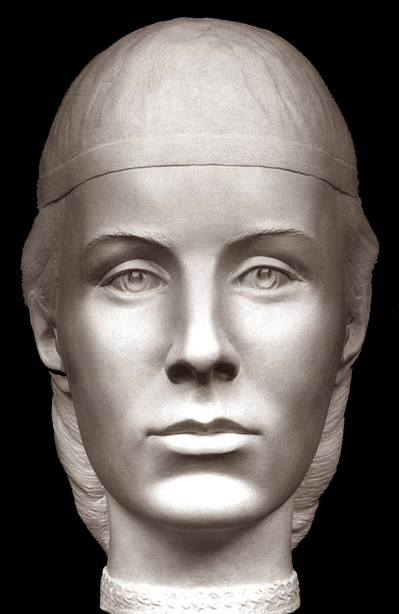
вел. княгиня Елена Глинская (ум. в 1538 г. в возрасте около 30 лет). Скульптурная реконструкция по черепу С.А. Никитина, 1999. en:Elena Glinskaya, Forensic facial reconstruction by S.A.Nikitin. By Sergey Nikitin - email from S.Nikitin to user:shakko, CC BY-SA 3.0, https://commons.wikimedia.org/w/index.php?curid=8448500
Jan 16, 1547 CE
Ivan IV of Russia
An elaborate ceremony crowned Ivan the first Tsar of Russia. Source — Wikipedia, "Timeline of Russian history" (16th century):
Ivan IV of Russia. Forensic facial reconstruction by M.Gerasimov. Иван Грозный. Реконструкция по черепу профессора М.Герасимова By Shakko - Own work, CC BY-SA 3.0, https://commons.wikimedia.org/w/index.php?curid=4579849
Aug 22, 1552 CE
Siege of Kazan
Siege of Kazan (1552): Russian armed forces arrived at Kazan. Source — Wikipedia, "Timeline of Russian history" (16th century):
Capture of Kazan. By Anonymous Russian manuscript illuminators, 1560-1570s Facial Chronicle (Illustrated Chronicle of Ivan the Terrible) (in 10 volumes: pdf, pdf with translation)Public domain image - Miniature from the Facial Chronicle., Public domain, https://commons.wikimedia.org/w/index.php?curid=1338421
1553 CE
Gospel
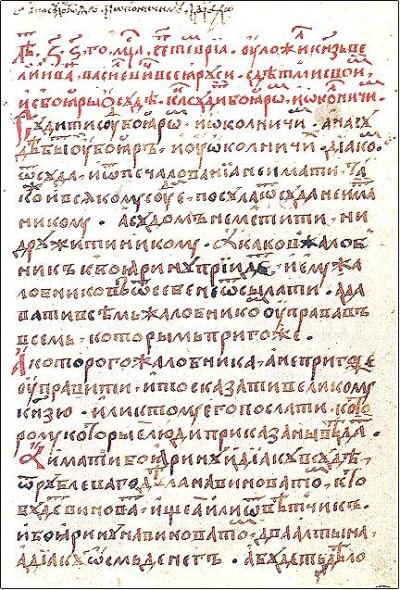
First book printed in Russia, the Narrow-typed Gospel Book. Source — Wikipedia, "Timeline of Russian history" (16th century):
1556 CE
Astrakhan Khanate
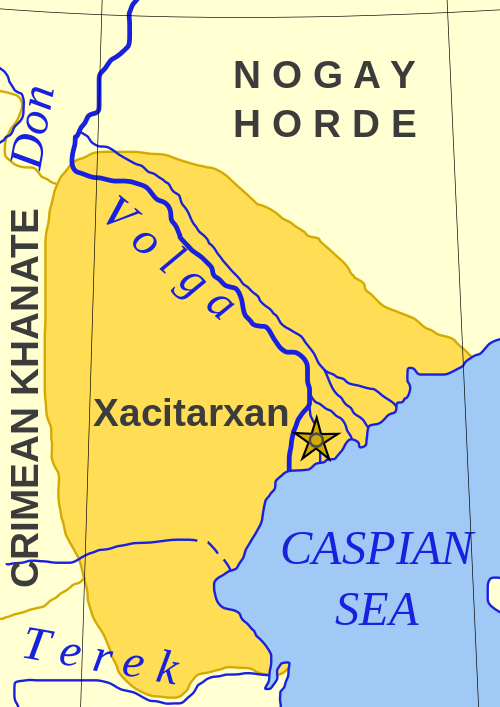
Russia conquered and annexed the Astrakhan Khanate. Source — Wikipedia, "Timeline of Russian history" (16th century):
Astrakhan Khanate By No machine-readable author provided. Untifler assumed (based on copyright claims). - No machine-readable source provided. Own work assumed (based on copyright claims)., CC BY-SA 3.0, https://commons.wikimedia.org/w/index.php?curid=1580631
1558 CE
Livonian War
Livonian War: Ivan demanded a back-breaking tribute from the Bishopric of Dorpat. The Bishop sent diplomats to Moscow to renegotiate the amount; Ivan expelled them and invaded and occupied the Bishopric. Source — Wikipedia, "Timeline of Russian history" (16th century):
Livonian war. Siege of Narva 1558 by Russians. By Boris Chorikov - Unknown source, Public domain, https://commons.wikimedia.org/w/index.php?curid=78763
Aug 2, 1560 CE
Battle of Ergeme
Battle of Ergeme: Ivan's army crushed the forces of the Livonian Order. Source — Wikipedia, "Timeline of Russian history" (16th century):
Ivan IV of Russia. Forensic facial reconstruction by M.Gerasimov. Иван Грозный. Реконструкция по черепу профессора М.Герасимова By Shakko - Own work, CC BY-SA 3.0, https://commons.wikimedia.org/w/index.php?curid=4579849
Nov 28, 1561 CE
Livonian Brothers of the Sword
Livonian War: The Livonian Order agreed to the Union of Wilno, under which the Livonian Confederation was partitioned between Lithuania, Sweden and Denmark. Lithuania and Sweden sent troops to liberate their new territories from Russian possession. Source — Wikipedia, "Timeline of Russian history" (16th century):
This map depicts the Baltic states Latvia and Estonia. Ever since the Treaty of Altmar in 1629 this area was a Swedish province which was mainly inhabited by Germans. The map was published in 1662 in the second volume of Joan Blaeus Atlas Maior. As a basis for this map, Blaeu used a large-size wall map from the Swedish scientist Anders Bureus (1571-1661), who was head of the topographical survey. By Dirk Jansz van Santen - This digital media file - and/or the physical objects depicted on it - originates from the digital and/or physical collections of the Koninklijke Bibliotheek, national library of the Netherlands., Public domain, https://commons.wikimedia.org/w/index.php?curid=41683961
Feb 1, 1565 CE
Ivan IV of Russia
Ivan established the Oprichnina, a territory ruled directly by the tsar. Source — Wikipedia, "Timeline of Russian history" (16th century):
Ivan IV of Russia. Forensic facial reconstruction by M.Gerasimov. Иван Грозный. Реконструкция по черепу профессора М.Герасимова By Shakko - Own work, CC BY-SA 3.0, https://commons.wikimedia.org/w/index.php?curid=4579849
Jul 1, 1569 CE
Union of Lublin
The Union of Lublin was signed. Poland and the Grand Duchy of Lithuania were merged into the Polish–Lithuanian Commonwealth; Poland began aiding Lithuania in its war against Russia. Source — Wikipedia, "Timeline of Russian history" (16th century):
Głównym dziełem sejmu radomskiego 1505 r. miało być trwałe zjednoczenie z Polską Litwy oraz Prus. Zarówno konstytucje wydane na tym sejmie, jak i opublikowanie zbioru praw miały na celu między innymi ukazanie Korony jako Rzeczypospolitej praworządnej i sprawiedliwej, w której los poddanych nie jest zależny od samowoli władcy, lecz chroniony jest przez rozumne prawo i sprawiedliwość. Miał to być sygnał wysłany sąsiednim krajom, połączonym już wieloma węzłami z Polską, który miał wzbudzić ich zaufanie, co do ściślejszego z nią zespolenia aż do całkowitej unifikacji. Jak pisał Michał Bobrzyński, niezwykle uroczyście na zjeździe panów litewskich w Brześciu 25 lutego 1505 wystąpił kanclerz Jan Łaski. W imieniu polskiego senatu przedstawił on zagadnienia istotne z punktu widzenia unii, takie jak wspólna elekcja władcy, zapewnienie mu dochodów z dóbr stołowych takich, ażeby wystarczały nie tylko na utrzymanie dworu, lecz także na obronę państwa, organizacja dworu królewskiego. Pojawiła się tu także propozycja ustanowienia jednej stolicy w centrum połączonych krajów (prawdopodobnie miał nią być królewski Radom, do którego zwołano sejm walny, rozpoczęty 30 marca). Istotne były kwestie formy rządów i obrony państwa, rozstrzygania sporów, wspólnej dyplomacji oraz sejmów. Wzywając zaś panów litewskich do przybycia na sejm radomski, zwołany bez wątpienia głównie celem ostatecznego przypieczętowania integracji państw jagiellońskich, przemówić miał Łaski w te słowa: "Wiecie, jak sławna, jak straszna była potęga królów polskich, kiedy Korona razem z Wielkim Księstwem występowała i wojny połączonemi siłami toczyła, wiecie, jak bogaty był wówczas nasz wspólny monarcha, a teraz jak upadła powaga imienia królewskiego i potęga obojga rzeczy pospolitych, naszej i waszej". Była to zatem druga próba wcielenia w życie projektu wielkiego dzieła, który po raz pierwszy ujawniono w akcie tzw. unii piotrkowsko-mielnickiej. Jej artykuł pierwszy przewidywał, iż Regnum Poloniae et Magnus Ducatus Lithwaniae uniantur et conglutinentur in unum et indivisum ac indifferens corpus, ut sit una gens, unus populus, una fraternitas et communia consilia eidemque corpori perpetuo unum caput, unus rex unusque dominus in loco et tempore assignatis per praesentes et ad electionem convenientes votis communibus eligatur quodque absentium obstantia electio non impediatur et decretum electionis in Regno semper sit iuxta consuetudines circa illud ex antiquo servatas. Tym razem sprawy te miały zostać uregulowane już ostatecznie i nieodwołalnie podlegać realizacji. Był to jednak program jedynie panów koronnych; program, którego nie można było jeszcze zrealizować w początku XVI w. Członkowie rady wielkoksiążęcej, którzy zjechali do Radomia w maju 1505 nie dysponowali żadnymi pełnomocnictwami w tym zakresie, strona litewska nie wystawiła także rewersałów unii z roku 1501. Takim obrotem sprawy nie była zainteresowana także dynastia Jagiellonów, która w ten sposób utraciłaby swe dziedziczne prawa na Litwie. Szczególnie doniosłe znaczenie przyznać należy dziełu podjętemu w roku 1505. Podjęta została wówczas niezwykle ważna próba przebudowy całego systemu państwowego i politycznego. Nie mogła ona zakończyć się stuprocentowym powodzeniem, nie była, bowiem jeszcze możliwa w tym czasie ścisła integracja z Koroną wszystkich ziem z nią w jakiś sposób związanych. Udało się jednak dokonać na gruncie prawnym zmian ustrojowych w systemie władzy państwowej, a ponadto położyć fundament, na którym z czasem wzniesiono gmach Rzeczypospolitej Wielu Narodów, czego najdonioślejszym akcentem był prezentowany tutaj akt Unii Lubelskiej 1569 roku. By Unknown author - This file was provided to Wikimedia Commons by the Polish Central Archives of Historical Records as part of a cooperation project with Association "Archivum Patriae" and Wikimedia Polska., Public domain, https://commons.wikimedia.org/w/index.php?curid=33701093
1572 CE
Oprichnina
The Oprichnina was abolished. Source — Wikipedia, "Timeline of Russian history" (16th century):
Oprichnina By Nikolai Nevrev - [1], Public domain, https://commons.wikimedia.org/w/index.php?curid=1927887
Nov 16, 1581 CE
Ivan IV of Russia
Ivan killed his oldest son. Source — Wikipedia, "Timeline of Russian history" (16th century):
Ivan IV of Russia. Forensic facial reconstruction by M.Gerasimov. Иван Грозный. Реконструкция по черепу профессора М.Герасимова By Shakko - Own work, CC BY-SA 3.0, https://commons.wikimedia.org/w/index.php?curid=4579849
Jan 15, 1582 CE
Peace of Jam Zapolski
Livonian War: The Peace of Jam Zapolski ended Polish–Lithuanian participation in the war. Russia gave up its claims to Livonia and the city of Polatsk. Source — Wikipedia, "Timeline of Russian history" (16th century):
During the Livonian War (1578-1582), between Ivan the Terrible of Russia and Stefan Batory of the Polish-Lithuanian Commonwealth, the city was besieged by the Polish and Lithuanian forces. The joined army failed to capture the city, but forced Russia to return other territories and gained Livonia. The siege was the setting of this painting. The siege of Pskov from the Polish perspective: Batory at Pskov, 1581/1582. Painting by Jan Matejko in 1872. Matejko's allegoric painting illustrates the concept of romantic nationalism: the Muscovites are represented doing homage to the Polish king, which appear victorious, although in reality Pskov never fell to the Poles, as the conflict ended with negotiations before the siege was concluded. By Jan Matejko - www.spotkania-z-zabytkami.pl, Public domain, https://commons.wikimedia.org/w/index.php?curid=17247
1583 CE
Treaty of Plussa
Livonian War: The war was ended with the Treaty of Plussa. Narva and the Gulf of Finland coast went to Sweden. Source — Wikipedia, "Timeline of Russian history" (16th century):
View of Narva from Hermann Castle in May of 2026. By WeaponizingArchitecture - Own work, CC BY 4.0, https://commons.wikimedia.org/w/index.php?curid=193202946
Mar 18, 1584 CE
Ivan IV of Russia
Ivan died. The throne fell to his intellectually disabled son Feodor I; his son-in-law Boris Godunov took de facto charge of government. Source — Wikipedia, "Timeline of Russian history" (16th century):
Ivan IV of Russia. Forensic facial reconstruction by M.Gerasimov. Иван Грозный. Реконструкция по черепу профессора М.Герасимова By Shakko - Own work, CC BY-SA 3.0, https://commons.wikimedia.org/w/index.php?curid=4579849
Jan 18, 1590 CE
Russo-Swedish War
Russo-Swedish War (1590–1595): The Treaty of Plussa expired. Russian troops laid siege to Narva. Source — Wikipedia, "Timeline of Russian history" (16th century):
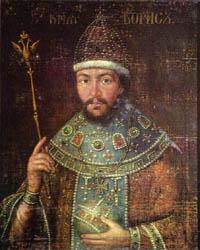
Царь Борис Феодорович Годунов. Портрет кон. XVII– XVIII в. («Пушкинский заповедник») By Unknown author - http://www.pravenc.ru/text/153195.html, Public domain, https://commons.wikimedia.org/w/index.php?curid=3631164
May 15, 1591 CE
Tsarevich Dmitry Ivanovich of Russia
Dimitry Ivanovich, Ivan the Terrible's youngest son, died in exile from a stab wound to the throat. Long-regarded as murdered by agents of Boris Godunov, more recently scholars have begun to defend the theory that Dimitry's death was self-inflicted during an epileptic seizure. Source — Wikipedia, "Timeline of Russian history" (16th century):
Tsarevich Dmitry Ivanovich of Russia By Mikhail Nesterov - http://www.art-catalog.ru/picture.php?id_picture=12982 http://art-nesterov.ru/painting/52.php, Public domain, https://commons.wikimedia.org/w/index.php?curid=461842
May 18, 1595 CE
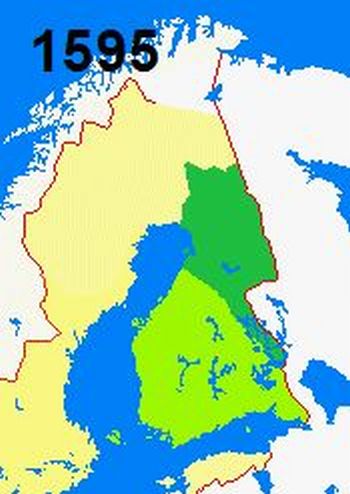
Treaty of Tyavzino
Russo-Swedish War (1590–1595): The Treaty of Tyavzino was signed. Ingria went to Russia. Source — Wikipedia, "Timeline of Russian history" (16th century):
Border changes in Finland 1595 By Ximfel1 - Own work, CC BY-SA 4.0, https://commons.wikimedia.org/w/index.php?curid=46914259
Jan 7, 1598 CE
Feodor I of Russia
Feodor I died with no children giving a start to Time of Troubles Source — Wikipedia, "Timeline of Russian history" (16th century):
Forensic facial reconstruction of tsar Feodor Ioannovich. Made by M.Gerasimov, 1963 By Shakko - Own work, CC BY-SA 3.0, https://commons.wikimedia.org/w/index.php?curid=4579810
1601 CE
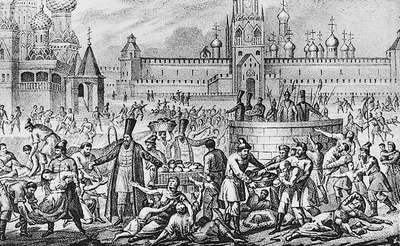
Russian famine of 1601–1603
Devastating famine, that undermined Boris's authority. Source — Wikipedia, "Timeline of Russian history" (17th century):
Great Famine in Moscow in 1601 By Boris Chorikov - https://www.pravenc.ru/data/315/461/1234/i400.jpg, Public domain, https://commons.wikimedia.org/w/index.php?curid=13406864
Oct 1, 1604 CE
False Dmitriy I
False Dmitriy I, a man claiming to be the deceased Dmitriy Ivanovich, son of Ivan IV, invaded Russia with help of Polish–Lithuanian Commonwealth Source — Wikipedia, "Timeline of Russian history" (17th century):
A portrait of the Russian tsar and impostor False Dmitry I made in Poland-Lithuania in the early 17th century By Unknown author - https://nav.shm.ru/exhibits/691/, Public domain, https://commons.wikimedia.org/w/index.php?curid=156967721
Apr 13, 1605 CE
Boris Godunov
Boris died. His son Feodor II was pronounced tsar. Source — Wikipedia, "Timeline of Russian history" (17th century):
Boris Godunov By Unknown author, Public domain, https://commons.wikimedia.org/w/index.php?curid=924099
May 8, 1606 CE
Catholicism
False Dmitriy married a Catholic, Marina Mniszech, inflaming suspicions that he meant to convert Russia to Catholicism. Source — Wikipedia, "Timeline of Russian history" (17th century):
Facing Saint Peter's basilica, Rome, Italy, Vatican City. By Jebulon - Own work, CC0, https://commons.wikimedia.org/w/index.php?curid=30816994
1607 CE
False Dmitriy II
False Dmitriy II, another claimant to the identity of Dmitriy Ivanovich, obtained financial and military support from a group of Polish magnates Source — Wikipedia, "Timeline of Russian history" (17th century):
A mirror image of a 17th century engraving that originally depicted Cyrus the Great, traditionally used as a portrait of False Dmitry II By Attributed to Jérôme David / Alessandro Varotari - http://ia-srps.mosoblonline.ru/tworhestwo/38.html (Source of this version) Зинько М. А. «Для удовлетворения любопытства любителей куриозов»: кто изображён на так называемом портрете Лжедмитрия II? // Большая Российская энциклопедия. 22 июня 2022. (Source of attribution) J. C. M. D. The ancient and present state of Moscovy, containing a geographical, historical and political account. London, 1698. (First named as False Dmitry II) Cyrus, roi de Perse // Bustes de Philosophes et de Rois. Paris, ~1637. (Original engraving) Portret van Cyrus II de Grote, Jerôme David, naar H. Padoanus, 1615 - 1647 // Bustes de Philosophes et de Rois. Rijksmuseum. (Original engraving), Public domain, https://commons.wikimedia.org/w/index.php?curid=4668688
Feb 28, 1609 CE
Vasili IV of Russia
Vasili Shuisky ceded border territory to Sweden in exchange for military aid against the government of False Dmitriy II; around this time Smolensk got besieged Source — Wikipedia, "Timeline of Russian history" (17th century):
Tsar Vasili Shuysky. Miniature from 'Tsarsky titularnik', 1672. Василий Шуйский. Царь и Великий князь Василий Иоаннович Шуйский. Копия из "Титулярника" 17 века. Автор копии - В.Н. Нечаев, 1887 By Collective of Kremlin armory - Scan from "Rodina" magazine, uploaded in ruwiki by ru:Участник:Vizu. журнал Родина, 9-2007, страница 40, свой скан бумажной версии журнала., Public domain, https://commons.wikimedia.org/w/index.php?curid=4394315
Jul 4, 1610 CE
Battle of Klushino
Battle of Klushino: Seven thousand Polish cavalrymen defeated a vastly superior Russian force at Klushino. Source — Wikipedia, "Timeline of Russian history" (17th century):
Battle of Klushino By Unknown author, Public domain, https://commons.wikimedia.org/w/index.php?curid=1313882
Nov 1, 1612 CE
Moscow Kremlin
Polish–Russian War (1609–1618): Muscovite populace rising against the Poles recaptured the Kremlin. Source — Wikipedia, "Timeline of Russian history" (17th century):
Moscow Kremlin and Moskva River on a winter evening. By Pavel Kazachkov from Moscow, Russia - Moscow Kremlin, CC BY 2.0, https://commons.wikimedia.org/w/index.php?curid=40728979
1613 CE
Ingrian War
Ingrian War: Sweden invaded Russia. Source — Wikipedia, "Timeline of Russian history" (17th century):
Ingrian War By Johan Hammer - Nationalmuseum, Public domain, https://commons.wikimedia.org/w/index.php?curid=52113043
Feb 27, 1617 CE
Treaty of Stolbovo
Ingrian War: The Treaty of Stolbovo ended the war. Kexholm, Ingria, Estonia and Livonia went to Sweden. Source — Wikipedia, "Timeline of Russian history" (17th century):
1 мая 1617 года. Ратификация шведского короля Густава Адольфа на Столбовский договор о вечном мире между Россией и Швецией. Пергамен. Шведский язык, титул короля выполнен золотой краской, прошита шелковым шнуром. Подпись-автограф короля. РГАДА. Ф. 96. Оп. 3, Д. 26, Л. 1 Выставка "Романовы. Начало династии", приуроченная к 400-летию избрания на царство Михаила Федоровича Государственный Исторический музей, весна 2013 года By Shakko - Own work, CC BY-SA 3.0, https://commons.wikimedia.org/w/index.php?curid=30504467
Dec 11, 1618 CE
Truce of Deulino
Polish–Russian War (1609–1618): The Truce of Deulino ended the war. Russia ceded the city of Smolensk and the Czernihów Voivodeship to Poland. Source — Wikipedia, "Timeline of Russian history" (17th century):
Truce of Deulino 1618-1619 By User:Mathiasrex Maciej Szczepańczyk, based on layers of User:Halibutt - Own work, CC BY-SA 3.0, https://commons.wikimedia.org/w/index.php?curid=17372909
Feb 13, 1619 CE
Patriarch Filaret
Feodor Romanov, Michael's father, was released from Polish prison and allowed to return to Moscow. Source — Wikipedia, "Timeline of Russian history" (17th century):
Philaret By collective of Kremlin Armoury - http://www.varvar.ru/arhiv/gallery/manuscripts_russian/tituljarnik/filaret1.html http://dlib.rsl.ru/view.php?path=/rsl01003000000/rsl01003801000/rsl01003801204/rsl01003801204.pdf#page109[dead link], Public domain, https://commons.wikimedia.org/w/index.php?curid=6180692
Oct 1, 1632 CE
Smolensk War
Smolensk War: With the expiration of the Truce of Deulino, a Russian army was sent to lay siege to Smolensk. Source — Wikipedia, "Timeline of Russian history" (17th century):
Smolensk War By Unknown author, CC BY-SA 3.0, https://commons.wikimedia.org/w/index.php?curid=622650
Mar 1, 1634 CE
Smolensk War: The Russian army, surrounded,
Smolensk War: The Russian army, surrounded, was forced to surrender. Source — Wikipedia, "Timeline of Russian history" (17th century):
Jul 13, 1645 CE
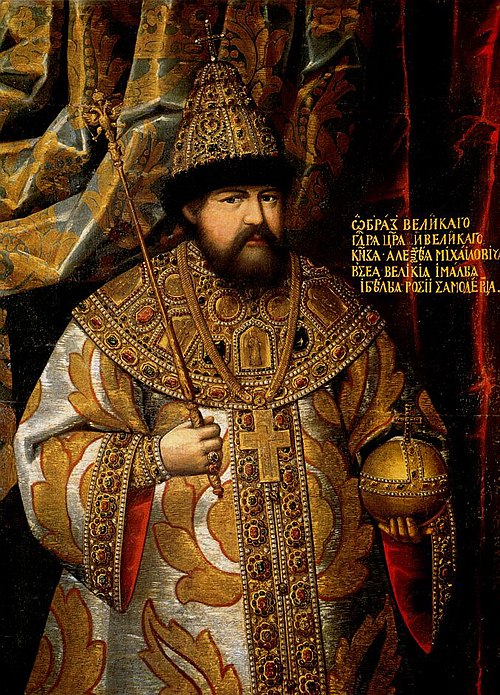
Alexis I of Russia
Michael died. His son, Alexis, succeeded him. Source — Wikipedia, "Timeline of Russian history" (17th century):
Неизвестный русский художник второй половины 17 века. Школа Оружейной палаты. Портрет царя Алексея Михайловича. Конец 1670 - начало 1680 годов By Unknown author - http://www.uer.varvar.ru/parsuna1.htm, Public domain, https://commons.wikimedia.org/w/index.php?curid=8319300
Jan 25, 1648 CE
Khmelnytsky Uprising
Khmelnytsky Uprising: A Polish szlachta, Bohdan Khmelnytsky, leads the Cossacks of the Zaporizhian Sich against the Polish Crown. Source — Wikipedia, "Timeline of Russian history" (17th century):
Khmelnytsky Uprising By Mykola Ivasiuk - Козаччина зимова. Тріумфальний в’ізд Богдана Хмельницького до Києва. Картина та подія // Громадська організація «Департамент воєнно-культурної антропології», Public domain, https://commons.wikimedia.org/w/index.php?curid=5325997
Jan 1, 1649 CE
Zemsky Sobor
A zemsky sobor ratified a new legal code, the Sobornoye Ulozheniye. Source — Wikipedia, "Timeline of Russian history" (17th century):
Coat of arms of the Tsardom of Russia. By Alex Tora - Own work (based on [1], [2], [3]. Shield form taken from "Bielski, Marcin. Kronika Polska. — Kraków, 1597."), CC BY-SA 3.0, https://commons.wikimedia.org/w/index.php?curid=5532164
1653 CE
Raskol
Raskol: Nikon, the Patriarch of Moscow, reformed Russian liturgy to align with the rituals of the Greek Church. Source — Wikipedia, "Timeline of Russian history" (17th century):
Nikita Pustosviat. Dispute on the Confession of Faith. 336.5x512 cm, The Tretyakov Gallery, Moscow By Vasily Perov - http://lj.rossia.org/users/john_petrov/664673.html http://www.tretyakovgallery.ru/ru/collection/_show/image/_id/205, Public domain, https://commons.wikimedia.org/w/index.php?curid=1422494
Jan 1, 1654 CE
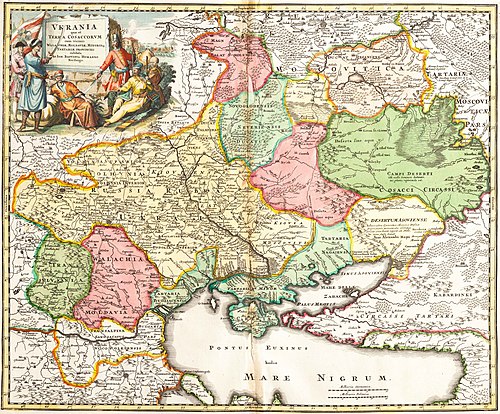
Treaty of Pereyaslav
Khmelnytsky Uprising: Under the Treaty of Pereyaslav, Left-bank Ukraine, the territory of the Zaporozhian Host, allies itself with Russia. Source — Wikipedia, "Timeline of Russian history" (17th century):
Ukrania quae et Terra Cosaccorum cum vicinis Walachiae, Moldoviae, Johann Baptiste Homann (Nuremberg, 1720) «Україна або козацька земля з прилеглими провінціями Валахії, Молдавії і Малої Татарії, зображена Йоганом-Баптистом Гоманном». Відома за скороченою назвою «Terra Cosaccorum». Йоган Баптист Гоманн акумулював усі відомі на початок 1700-х років досягнення науковців, географів, знання істориків і дані про поточну ситуацію в Україні, щоб зробити цю карту. На мапі позначене місце Полтавської битви 1709 року; землі Задунайської Січі, які у 1711 році були передані Туреччині, позначені у складі Кримського ханства; вказане будівництво Перекопського валу тощо. В картуші території названо на латинський манер Vkraina, а вже на самій карті позначено Ukraina. It is known by the abbreviated name "Terra Cosaccorum". Johann Baptist Hohmann accumulated all the achievements of scientists, geographers, historians and data about the current situation in Ukraine known at the beginning of the 1700s to make this map. The site of the Battle of Poltava in 1709 is marked on the map; the lands of Transdanubian Sich, which were transferred to Turkey in 1711, are marked as part of the Crimean Khanate; the specified construction of the Perekop Wall, etc. In the cartouche, the territory is named Vkraina in the Latin manner, and already on the map itself it is marked as Ukraina. By Johann Homann - Vkraina, Public domain, https://commons.wikimedia.org/w/index.php?curid=33040544
1655 CE
Deluge
Swedish Deluge: Sweden invaded the Polish–Lithuanian Commonwealth. Source — Wikipedia, "Timeline of Russian history" (17th century):
Deluge By Unknown author, CC BY-SA 3.0, https://commons.wikimedia.org/w/index.php?curid=27134
Jul 1, 1656 CE
Russo-Swedish War
Russo-Swedish War (1656–1658): Russian reserves invaded Ingria. Source — Wikipedia, "Timeline of Russian history" (17th century):
Map over Swedish-Russian war site at Lake Ladoga (1656-1658). Arrows represent the Russian attack forces on 1656. By User Riisipuuro on Finnish Wikipedia - Own work, CC BY-SA 3.0, https://commons.wikimedia.org/w/index.php?curid=1885586
Feb 26, 1658 CE
Dano-Swedish War
Dano-Swedish War (1657–1658): The Treaty of Roskilde ended Sweden's war with Denmark, allowing her to shift her troops to the eastern conflicts. Source — Wikipedia, "Timeline of Russian history" (17th century):
Engagements of the Dano-Swedish War (1657–1658) By LocalF15 - Own work, CC BY 4.0, https://commons.wikimedia.org/w/index.php?curid=189969770
Apr 23, 1660 CE
Treaty of Oliva
Swedish Deluge: The Treaty of Oliva ended the conflict between Poland and Sweden. Source — Wikipedia, "Timeline of Russian history" (17th century):
Swedish commissioners make peace with the Polish King John II Casimir Vasa, Holy Roman Emperor Leopold I Habsburg and Duke of Prussia Frederick William I Hohenzollern. By Swedish commissioners - This file was provided to Wikimedia Commons by the Polish Central Archives of Historical Records as part of a cooperation project with Association "Archivum Patriae" and Wikimedia Polska., Public domain, https://commons.wikimedia.org/w/index.php?curid=20062795
1661 CE
Vilnius
Russo-Polish War (1654–1667): Polish forces recaptured Vilnius. Source — Wikipedia, "Timeline of Russian history" (17th century):
The White Bridge and Šnipiškės district in Vilnius, Lithuania. By Augustas Didžgalvis - Source, CC-BY-SA-4.0, https://en.wikipedia.org/w/index.php?curid=77206702
Jul 25, 1662 CE
Copper Riot
Copper Riot: In the early morning, a group of Muscovites marched to Kolomenskoye and demanded punishment for the government ministers who had debased Russia's copper currency. On their arrival, they were countered by the military; a thousand were hanged or drowned. The rest were exiled. Source — Wikipedia, "Timeline of Russian history" (17th century):
1665 CE
Lubomirski's Rokosz
Lubomirski's Rokosz: A Polish nobleman launched a rokosz (rebellion) against the king. Source — Wikipedia, "Timeline of Russian history" (17th century):
Apr 1, 1666 CE
Great Moscow Synod
Raskol: Great Moscow Synod deposed Nikon from the patriarchy. The Old Believers were anathematized. Source — Wikipedia, "Timeline of Russian history" (17th century):
Jan 30, 1667 CE
Treaty of Andrusovo
Russo-Polish War (1654–1667): The Treaty of Andrusovo ended the war between Poland and Russia without Cossack representation. Poland agreed to cede the Smoleńsk and Czernihów Voivodships and acknowledged Russian control over the Left-bank Ukraine. Source — Wikipedia, "Timeline of Russian history" (17th century):
Transfiguration Monastery, Novhorod-Siverskyi, Ukraine. By Arsenii Khomenko - Own work, CC BY-SA 4.0, https://commons.wikimedia.org/w/index.php?curid=106138780
1669 CE
Petro Doroshenko
Doroshenko signed a treaty that recognized his state as a vassal state of the Ottoman Empire. Source — Wikipedia, "Timeline of Russian history" (17th century):
1670 CE
Cossack
The Cossack Stenka Razin began a rebellion against the Russian government. Source — Wikipedia, "Timeline of Russian history" (17th century):
Cossack By Ilya Repin - The Yorck Project (2002) 10.000 Meisterwerke der Malerei (DVD-ROM), distributed by DIRECTMEDIA Publishing GmbH. ISBN: 3936122202., Public domain, https://commons.wikimedia.org/w/index.php?curid=158198
1671 CE
Stenka Razin
Razin was captured, tortured, and quartered in Red Square on the Lobnoye Mesto. Source — Wikipedia, "Timeline of Russian history" (17th century):
1674 CE
Cossacks
The Cossacks of the Right-bank Ukraine elected the pro-Russian Ivan Samoylovych, Hetman of the Left-bank Ukraine, to replace Doroshenko and become the Hetman of a unified Ukraine. Source — Wikipedia, "Timeline of Russian history" (17th century):
Transfiguration Monastery, Novhorod-Siverskyi, Ukraine. By Arsenii Khomenko - Own work, CC BY-SA 4.0, https://commons.wikimedia.org/w/index.php?curid=106138780
1676 CE
Russo-Turkish War
Russo-Turkish War (1676–1681): The Ottoman army joined Doroshenko's forces in an attack on the Left-bank city of Chyhyryn. Source — Wikipedia, "Timeline of Russian history" (17th century):
Transfiguration Monastery, Novhorod-Siverskyi, Ukraine. By Arsenii Khomenko - Own work, CC BY-SA 4.0, https://commons.wikimedia.org/w/index.php?curid=106138780
1680 CE
Crimean Khanate
Russo-Crimean Wars: The Crimean invasions of Russia ended. Source — Wikipedia, "Timeline of Russian history" (17th century):
Flag of the w:Crimean Khanate during 15th century with the symbol of Giray Dynasty on blue background as shield flagtype according to the book "Kırım Hanlığı Tarihi Üzerine Araştırmalar" of Halil İnalcık. By Ultimete - File:Crimean_Khanate_Flag.png, CC BY-SA 4.0, https://commons.wikimedia.org/w/index.php?curid=122672006
Jan 3, 1681 CE
Treaty of Bakhchisarai
Russo-Turkish War (1676–1681): The war ended with the Treaty of Bakhchisarai. The Russo-Turkish border was settled at the Dnieper River. Source — Wikipedia, "Timeline of Russian history" (17th century):
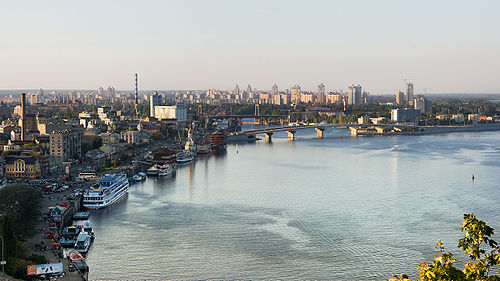
Dnieper River in Kyiv. By Dmitry A. Mottl - Own work, CC BY-SA 3.0, https://commons.wikimedia.org/w/index.php?curid=4911961
Jan 1, 1682 CE
mestnichestvo
Feodor III abolished the mestnichestvo, an ancient, un-meritocratic system of making political appointments. Source — Wikipedia, "Timeline of Russian history" (17th century):
May 1, 1687 CE
Crimean campaigns of 1687 and 1689
Crimean campaigns: Russian army launched an invasion against an Ottoman vassal, the Crimean Khanate. Source — Wikipedia, "Timeline of Russian history" (17th century):
Flag of the w:Crimean Khanate during 15th century with the symbol of Giray Dynasty on blue background as shield flagtype according to the book "Kırım Hanlığı Tarihi Üzerine Araştırmalar" of Halil İnalcık. By Ultimete - File:Crimean_Khanate_Flag.png, CC BY-SA 4.0, https://commons.wikimedia.org/w/index.php?curid=122672006
Jun 1, 1689 CE
Fyodor Shaklovity
Fyodor Shaklovity, the head of the Streltsy Department, persuaded Sophia to proclaim herself tsarina and attempted to ignite a new rebellion in her support. The streltsy instead defected in support of Peter. Source — Wikipedia, "Timeline of Russian history" (17th century):
Jan 29, 1696 CE
Ivan V of Russia
Ivan V died. Source — Wikipedia, "Timeline of Russian history" (17th century):
Jun 6, 1698 CE
Streltsy Uprising
Streltsy Uprising: Approximately four thousand streltsy overthrew their commanders and headed to Moscow, where they meant to demand the enthroning of the exiled Sophia Alekseyevna. Source — Wikipedia, "Timeline of Russian history" (17th century):
Aug 19, 1700 CE
Great Northern War
Great Northern War: Russia declared war on Sweden. Source — Wikipedia, "Timeline of Russian history" (17th century):
State flag of Sweden from the 17th to 19th centuries, before the colour change to a brighter blue in 1906. By Wheatley2 - Own work, CC0, https://commons.wikimedia.org/w/index.php?curid=149809145
May 27, 1703 CE
Saint Petersburg
Foundation of Saint Petersburg. Source — Wikipedia, "Timeline of Russian history" (18th century):
Oct 8, 1707 CE
Bulavin Rebellion
Bulavin Rebellion: A small band of Don Cossacks killed a noble searching their territory for tax fugitives. Source — Wikipedia, "Timeline of Russian history" (18th century):
Jul 7, 1708 CE
Bulavin Rebellion: After a series of
Bulavin Rebellion: After a series of devastating military reversals, Bulavin was shot by his former followers. Source — Wikipedia, "Timeline of Russian history" (18th century):
Jun 28, 1709 CE
Battle of Poltava
Battle of Poltava: A decisive Russian military victory over the Swedes at Poltava marked the turning point of the war, the end of Cossack independence and the dawn of the Russian Empire. Source — Wikipedia, "Timeline of Russian history" (18th century):
State flag of Sweden from the 17th to 19th centuries, before the colour change to a brighter blue in 1906. By Wheatley2 - Own work, CC0, https://commons.wikimedia.org/w/index.php?curid=149809145
Oct 14, 1710 CE
guberniya
The Russian guberniyas were divided into lots according to noble population. Source — Wikipedia, "Timeline of Russian history" (18th century):
Feb 22, 1711 CE
Government reform of Peter I
Government reform of Peter I: Peter established the Governing Senate to pass laws in his absence. Source — Wikipedia, "Timeline of Russian history" (18th century):
May 8, 1713 CE
Saint Petersburg
The Russian capital was moved from Moscow to Saint Petersburg. Source — Wikipedia, "Timeline of Russian history" (18th century):
Jan 15, 1714 CE
Kazan Governorate
The northwestern territory of the Kazan Governorate was transferred to the newly established Nizhny Novgorod Governorate. Source — Wikipedia, "Timeline of Russian history" (18th century):
Oct 11, 1715 CE
Peter I of Russia
Peter demanded that his son, the tsarevich Alexei Petrovich, endorse his reforms or renounce his right to the throne. Source — Wikipedia, "Timeline of Russian history" (18th century):
1716 CE
Tsarevich Alexei Petrovich of Russia
Alexei fled to Vienna to avoid military service. Source — Wikipedia, "Timeline of Russian history" (18th century):
Nov 22, 1717 CE
Kazan Governorate
The Astrakhan Governorate was formed on the southern lands of Kazan Governorate. Source — Wikipedia, "Timeline of Russian history" (18th century):
Jan 31, 1718 CE
Tsarevich Alexei Petrovich of Russia
Alexei returned to Moscow under a promise he would not be harmed. Source — Wikipedia, "Timeline of Russian history" (18th century):
May 29, 1719 CE
guberniya
Lots were abolished; the guberniyas were divided instead into provinces, each governed and taxed under a preexisting elected office (the Voyevoda). Provinces were further divided into districts, replacing the old uyezds. The district commissars were to be elected by local gentry. Source — Wikipedia, "Timeline of Russian history" (18th century):
Jan 25, 1721 CE
Peter I of Russia
Peter established the Holy Synod, a body of ten clergymen chaired by a secular official, that was to head the Russian Orthodox Church in lieu of the Patriarch of Moscow. Source — Wikipedia, "Timeline of Russian history" (18th century):
1722 CE
Peter I of Russia
Peter introduced the Table of Ranks, which granted the privileges of nobility based on state service. Source — Wikipedia, "Timeline of Russian history" (18th century):
Sep 12, 1723 CE
Persian Empire
Russo-Persian War (1722–1723): The Persian shah signed a peace treaty ceding the cities of Derbent and Baku and the provinces of Shirvan, Guilan, Mazandaran and Astrabad to the Russian Empire. Source — Wikipedia, "Timeline of Russian history" (18th century):
Jan 28, 1725 CE
Peter I of Russia
Peter died of urinary problems. He failed to name a successor; one of Peter's closest advisers, Aleksandr Menshikov, convinced the Imperial Guard to declare in favor of Peter's wife Catherine I. Source — Wikipedia, "Timeline of Russian history" (18th century):
1726 CE
Smolensk Governorate
The Smolensk Governorate was reestablished. Source — Wikipedia, "Timeline of Russian history" (18th century):
1727 CE
Catherine I of Russia
Catherine established the Belgorod and Novgorod Governorates and adjusted the borders of several others. Districts were abolished; uyezds were reestablished. Source — Wikipedia, "Timeline of Russian history" (18th century):
Jan 30, 1730 CE
Peter II of Russia
Peter died of smallpox. Source — Wikipedia, "Timeline of Russian history" (18th century):
May 20, 1736 CE
Russo-Turkish War
Russo-Turkish War (1735–1739): The Russian army captured the Ottoman fortifications at Perekop. Source — Wikipedia, "Timeline of Russian history" (18th century):
Jul 1, 1737 CE
Habsburg monarchy
Russo-Turkish War (1735–1739): Austria joined the war on the Russian side. Source — Wikipedia, "Timeline of Russian history" (18th century):
Aug 21, 1739 CE
Habsburg monarchy
Russo-Turkish War (1735–1739): Austria agreed by the Treaty of Belgrade to end its participation in the war. Source — Wikipedia, "Timeline of Russian history" (18th century):
Oct 17, 1740 CE
Anna of Russia
Anna died of kidney disease. She left the throne to her adopted infant son, Ivan VI. Source — Wikipedia, "Timeline of Russian history" (18th century):
Aug 8, 1741 CE
Russo-Swedish War
Russo-Swedish War (1741–1743): Sweden declared war on Russia. Source — Wikipedia, "Timeline of Russian history" (18th century):
Sep 4, 1742 CE
Helsinki
Russo-Swedish War (1741–1743): Encircled by the Russians at Helsinki, the Swedish army surrendered. Source — Wikipedia, "Timeline of Russian history" (18th century):
Aug 7, 1743 CE
Treaty of Åbo
Russo-Swedish War (1741–1743): The Treaty of Åbo was signed, ending the war. Russia relinquished most of the conquered territory, keeping only the lands east of the Kymi River. In exchange Adolf Frederick of Holstein-Gottorp, the uncle of the Russian heir to the throne, was to become King of Sweden. Source — Wikipedia, "Timeline of Russian history" (18th century):
1744 CE
Old Finland
The Vyborg Governorate was established on conquered Swedish territories. Source — Wikipedia, "Timeline of Russian history" (18th century):
State flag of Sweden from the 17th to 19th centuries, before the colour change to a brighter blue in 1906. By Wheatley2 - Own work, CC0, https://commons.wikimedia.org/w/index.php?curid=149809145
1755 CE
Mikhail Lomonosov
Mikhail Lomonosov and Count Ivan Shuvalov founded the University of Moscow. Source — Wikipedia, "Timeline of Russian history" (18th century):
Aug 29, 1756 CE
Seven Years' War
Seven Years' War: The Kingdom of Prussia invaded the Austrian protectorate of Saxony. Source — Wikipedia, "Timeline of Russian history" (18th century):
May 1, 1757 CE
Diplomatic Revolution
Diplomatic Revolution: Under the Second Treaty of Versailles, Russia joined the Franco-Austrian military alliance. Source — Wikipedia, "Timeline of Russian history" (18th century):
Dec 25, 1761 CE
Miracle of the House of Brandenburg
Miracle of the House of Brandenburg: Elizabeth died. Her nephew, Peter III, became emperor. Source — Wikipedia, "Timeline of Russian history" (18th century):
May 5, 1762 CE
Treaty of Saint Petersburg
Seven Years' War: The Treaty of Saint Petersburg ended Russian participation in the war at no territorial gain. Source — Wikipedia, "Timeline of Russian history" (18th century):
Jul 5, 1764 CE
Ivan VI of Russia
A group of soldiers attempted to release the imprisoned Ivan VI; he was murdered. Source — Wikipedia, "Timeline of Russian history" (18th century):
Aug 10, 1767 CE
The Instruction of Catherine the Great
The Instruction of Catherine the Great is issued to the Legislative Commission. Source — Wikipedia, "Timeline of Russian history" (18th century):
Feb 27, 1768 CE
Polish–Lithuanian Commonwealth
Repnin Sejm: Delegates of the Sejm adopted a treaty ensuring future Russian influence in Polish internal politics. Source — Wikipedia, "Timeline of Russian history" (18th century):
Royal banner used during the reign of the House of Vasa over the Polish-Lithuanian Commonwealth. By 117-M-I-K-E, with assets by Sodacan, Heralder, Odejea, and Thetaspilt., CC BY-SA 4.0, https://commons.wikimedia.org/w/index.php?curid=146935061
Sep 15, 1771 CE
Plague Riot
Plague Riot: A crowd of rioters entered Red Square, broke into the Kremlin and destroyed the Chudov Monastery. Source — Wikipedia, "Timeline of Russian history" (18th century):
Moscow Kremlin and Moskva River on a winter evening. By Pavel Kazachkov from Moscow, Russia - Moscow Kremlin, CC BY 2.0, https://commons.wikimedia.org/w/index.php?curid=40728979
Aug 5, 1772 CE
Partitions of Poland
The first partition of Poland was announced. Poland lost 30% of its territory, which was divided between Prussia, Austria, and Russia. Source — Wikipedia, "Timeline of Russian history" (18th century):
Royal banner used during the reign of the House of Vasa over the Polish-Lithuanian Commonwealth. By 117-M-I-K-E, with assets by Sodacan, Heralder, Odejea, and Thetaspilt., CC BY-SA 4.0, https://commons.wikimedia.org/w/index.php?curid=146935061
1773 CE
Pugachev's Rebellion
Pugachev's Rebellion: The army of the Cossack Yemelyan Pugachev attacked and occupied Samara. Source — Wikipedia, "Timeline of Russian history" (18th century):
Pugachev's Rebellion By Ilya Repin - The Yorck Project (2002) 10.000 Meisterwerke der Malerei (DVD-ROM), distributed by DIRECTMEDIA Publishing GmbH. ISBN: 3936122202., Public domain, https://commons.wikimedia.org/w/index.php?curid=158198
Jul 21, 1774 CE
Treaty of Küçük Kaynarca
Russo-Turkish War (1768–1774): The Treaty of Küçük Kaynarca was signed. The portion of the Yedisan region east of the Southern Bug river, the Kabarda region in the Caucasus, and several Crimean ports, went to Russia. The Crimean Khanate received independence from the Ottoman Empire, which also declared Russia the protector of Christians on its territory. Source — Wikipedia, "Timeline of Russian history" (18th century):
Flag of the w:Crimean Khanate during 15th century with the symbol of Giray Dynasty on blue background as shield flagtype according to the book "Kırım Hanlığı Tarihi Üzerine Araştırmalar" of Halil İnalcık. By Ultimete - File:Crimean_Khanate_Flag.png, CC BY-SA 4.0, https://commons.wikimedia.org/w/index.php?curid=122672006
Apr 8, 1783 CE
Crimean Khanate
The Crimean Khanate was incorporated into the Russian Empire. Source — Wikipedia, "Timeline of Russian history" (18th century):
Flag of the w:Crimean Khanate during 15th century with the symbol of Giray Dynasty on blue background as shield flagtype according to the book "Kırım Hanlığı Tarihi Üzerine Araştırmalar" of Halil İnalcık. By Ultimete - File:Crimean_Khanate_Flag.png, CC BY-SA 4.0, https://commons.wikimedia.org/w/index.php?curid=122672006
1788 CE
Russo-Turkish War
Russo-Turkish War (1787–1792): The Ottoman Empire declared war on Russia and imprisoned her ambassador. Source — Wikipedia, "Timeline of Russian history" (18th century):
Aug 14, 1790 CE
Treaty of Värälä
Russo-Swedish War (1788–1790): The Treaty of Värälä ended the war, with no changes in territory. Source — Wikipedia, "Timeline of Russian history" (18th century):
May 3, 1791 CE
Polish–Lithuanian Commonwealth
Great Sejm: Poland's Constitution of 3 May was ratified in secret. The new constitution abolished the liberum veto, reducing the power of the nobles and limiting Russia's ability to influence Polish internal politics. Source — Wikipedia, "Timeline of Russian history" (18th century):
Royal banner used during the reign of the House of Vasa over the Polish-Lithuanian Commonwealth. By 117-M-I-K-E, with assets by Sodacan, Heralder, Odejea, and Thetaspilt., CC BY-SA 4.0, https://commons.wikimedia.org/w/index.php?curid=146935061
Jan 9, 1792 CE
Treaty of Jassy
Russo-Turkish War (1787–1792): The Treaty of Jassy was signed, ending the war. The Russian border in Yedisan was extended to the Dniester river. Source — Wikipedia, "Timeline of Russian history" (18th century):
Jan 23, 1793 CE
Partitions of Poland
Polish–Russian War of 1792: The second partition of Poland left the country with one-third of its 1772 population. Source — Wikipedia, "Timeline of Russian history" (18th century):
Mar 24, 1794 CE
Kościuszko Uprising
Kościuszko Uprising: An announcement by Tadeusz Kościuszko sparked a nationalist uprising in Poland. Source — Wikipedia, "Timeline of Russian history" (18th century):
Royal banner used during the reign of the House of Vasa over the Polish-Lithuanian Commonwealth. By 117-M-I-K-E, with assets by Sodacan, Heralder, Odejea, and Thetaspilt., CC BY-SA 4.0, https://commons.wikimedia.org/w/index.php?curid=146935061
Sep 11, 1795 CE
Battle of Krtsanisi
Battle of Krtsanisi: The Persian army demolished the armed forces of Kartl-Kakheti. Source — Wikipedia, "Timeline of Russian history" (18th century):
Apr 1, 1796 CE
Persian Expedition of 1796
Persian Expedition of 1796: Catherine launched a military expedition to punish Persia for its incursion into the Russian protectorate of Kartl-Kakheti. Source — Wikipedia, "Timeline of Russian history" (18th century):
Jan 8, 1801 CE
Paul I of Russia
Paul authorized the incorporation of Kartl-Kakheti into the Russian empire. Source — Wikipedia, "Timeline of Russian history" (19th century):
Sep 1, 1802 CE
Alexander I of Russia
Alexander established the Ministry of Internal Affairs (MVD). Source — Wikipedia, "Timeline of Russian history" (19th century):
1804 CE
Russo-Persian War
Russo-Persian War (1804–1813): Russian forces attacked the Persian settlement of Üçkilise. Source — Wikipedia, "Timeline of Russian history" (19th century):
1805 CE
Ottoman Empire
The Ottoman Empire dismissed the pro-Russian hospodars of its vassal states, Wallachia and Moldavia. Source — Wikipedia, "Timeline of Russian history" (19th century):
Oct 1, 1806 CE
First French Empire
To counter the French presence in Dalmatia, Russia invaded Wallachia and Moldavia. Source — Wikipedia, "Timeline of Russian history" (19th century):
Jun 14, 1807 CE
Battle of Friedland
Battle of Friedland: The Russian army suffered a defeat against the French, suffering twenty thousand dead. Source — Wikipedia, "Timeline of Russian history" (19th century):
Feb 21, 1808 CE
Finnish War
Finnish War: Russian troops crossed the Swedish border and captured Hämeenlinna. Source — Wikipedia, "Timeline of Russian history" (19th century):
Mar 29, 1809 CE
Diet of Porvoo
Diet of Porvoo: The four Estates of Finland swore allegiance to the Russian crown. Source — Wikipedia, "Timeline of Russian history" (19th century):
1810 CE
military settlement
The first military settlement was established near Klimovichi. Source — Wikipedia, "Timeline of Russian history" (19th century):
Mar 27, 1811 CE
Internal Troops
Regional military companies were merged into the Internal Guard. Source — Wikipedia, "Timeline of Russian history" (19th century):
May 28, 1812 CE
Treaty of Bucharest, 1812
Russo-Turkish War (1806–1812): The Treaty of Bucharest ended the war and transferred Bessarabia to Russia. Source — Wikipedia, "Timeline of Russian history" (19th century):
Oct 24, 1813 CE
Treaty of Gulistan
Russo-Persian War (1804–1813): According to the Treaty of Gulistan, the Persian Empire ceded its Transcaucasian territories to Russia. Source — Wikipedia, "Timeline of Russian history" (19th century):
Jun 9, 1815 CE
Congress of Vienna
Congress of Vienna: The territory of the Duchy of Warsaw was divided between Prussia, Russia, and three newly established states: the Grand Duchy of Posen, the Free City of Kraków and Congress Poland. The latter was a constitutional monarchy with Alexander as its king. Source — Wikipedia, "Timeline of Russian history" (19th century):
Nov 19, 1825 CE
Alexander I of Russia
Alexander died of typhus. The army swore allegiance to his oldest brother, the Grand Duke Constantine Pavlovich. Constantine, however, following Alexander's choice of successor, swore allegiance to his younger brother, Nicholas I. Source — Wikipedia, "Timeline of Russian history" (19th century):
1826 CE
His Imperial Majesty's Own Chancellery
An imperial decree established the Second Section of His Majesty's Own Chancery, concerned with codifying and publishing the law, and the Third Section, which operated as the Empire's secret police. Source — Wikipedia, "Timeline of Russian history" (19th century):
Feb 21, 1828 CE
Tehran
Russo-Persian War (1826–1828) Facing the possibility of a Russian conquest of Tehran, Persia signed the Treaty of Turkmenchay. Source — Wikipedia, "Timeline of Russian history" (19th century):
Sep 14, 1829 CE
Treaty of Adrianople
Russo-Turkish War (1828–1829): The Treaty of Adrianople was signed, ceding the eastern shore of the Black Sea and the mouth of the Danube to the Russians. Source — Wikipedia, "Timeline of Russian history" (19th century):
Nov 29, 1830 CE
November Uprising
November Uprising: A group of Polish nationalists attacked Belweder Palace, the seat of the Governor-General. Source — Wikipedia, "Timeline of Russian history" (19th century):
Jan 25, 1831 CE
Sejm
November Uprising: An act of the Sejm dethroned Nicholas from the Polish crown. Source — Wikipedia, "Timeline of Russian history" (19th century):
1836 CE
Gendarmerie
The Gendarmerie of the Internal Guard was spun off as the Special Corps of Gendarmes. Source — Wikipedia, "Timeline of Russian history" (19th century):
Dec 1, 1852 CE
Ottoman Empire
The Ottoman sultan confirmed the supremacy of France and the Catholic Church over Christians in the Holy Land. Source — Wikipedia, "Timeline of Russian history" (19th century):
Jul 3, 1853 CE
Ottoman Empire
Russia invaded the Ottoman provinces of Wallachia and Moldavia. Source — Wikipedia, "Timeline of Russian history" (19th century):
Mar 28, 1854 CE
United Kingdom of Great Britain and Ireland
Crimean War: Britain and France declared war on Russia. Source — Wikipedia, "Timeline of Russian history" (19th century):
Feb 18, 1855 CE
Nicholas I of Russia
Nicholas died. His son, Alexander II, became emperor. Source — Wikipedia, "Timeline of Russian history" (19th century):
Mar 30, 1856 CE
Treaty of Paris
Crimean War: The Treaty of Paris was signed, officially ending the war. The Black Sea was demilitarized. Russia lost territory it had been granted at the mouth of the Danube, abandoned claims to protect Turkish Christians, and lost its influence over the Danubian Principalities. Source — Wikipedia, "Timeline of Russian history" (19th century):
1857 CE
military settlement
The last military settlements were disbanded. Source — Wikipedia, "Timeline of Russian history" (19th century):
May 28, 1858 CE
Treaty of Aigun
The Treaty of Aigun was signed, pushing the Russo-Chinese border east to the Amur river; Tariff Act reduces import tax. Source — Wikipedia, "Timeline of Russian history" (19th century):
Oct 18, 1860 CE
Convention of Peking
The Convention of Peking transferred the Ussuri krai from China to Russia. Source — Wikipedia, "Timeline of Russian history" (19th century):
Mar 3, 1861 CE
Emancipation reform of 1861
Emancipation reform of 1861: Alexander issued a manifesto emancipating the serfs; Student Protests against the Tsar. Source — Wikipedia, "Timeline of Russian history" (19th century):
Jan 22, 1863 CE
January Uprising
January Uprising: An anti-Imperial uprising began in Poland; girls allowed into secondary schools and standard curriculum set. Source — Wikipedia, "Timeline of Russian history" (19th century):
Jan 1, 1864 CE
Zemstvo
Zemstva were established for the local self-government of Russian citizens. Source — Wikipedia, "Timeline of Russian history" (19th century):
Jun 17, 1865 CE
Tashkent
The Russian army captured Tashkent Source — Wikipedia, "Timeline of Russian history" (19th century):
1867 CE
Turkestan
The conquered territories of Central Asia became a separate Guberniya, the Russian Turkestan. Source — Wikipedia, "Timeline of Russian history" (19th century):
1868 CE
Khanate of Kokand
The Khanate of Kokand became a Russian vassal state. Source — Wikipedia, "Timeline of Russian history" (19th century):
1870 CE
More vocational subjects taught to girls
More vocational subjects taught to girls in schools Source — Wikipedia, "Timeline of Russian history" (19th century):
1873 CE
Narodnik
The Narodnik rebellion began. Source — Wikipedia, "Timeline of Russian history" (19th century):
Mar 1, 1876 CE
Khanate of Kokand
The Khanate of Kokand was incorporated into the Russian Empire. Source — Wikipedia, "Timeline of Russian history" (19th century):
Feb 1, 1877 CE
Narodnik
The Trial of the 193 occurred, punishing the participants of the Narodnik rebellion. Source — Wikipedia, "Timeline of Russian history" (19th century):
Mar 3, 1878 CE
Treaty of San Stefano
Russo-Turkish War (1877–1878): The Treaty of San Stefano was signed, concluding the war and transferring Northern Dobruja and some Caucasian territories into Russian hands. Several Slavic states, Montenegro, Serbia, Romania, and Bulgaria, received independence or autonomy. Source — Wikipedia, "Timeline of Russian history" (19th century):
Flag of Bulgaria By SKopp - The flag of Bulgaria. The colors are specified at http://www.government.bg/cgi-bin/e-cms/vis/vis.pl?s=001&p=0034&n=000005&g= as: White: Pantone Safe Green: 17-5936 (Green TC) [textile color] [1] Red: 18-1664 (Fiery Red TC) [2], Public domain, https://commons.wikimedia.org/w/index.php?curid=342993
Aug 1, 1879 CE
Land and Liberty
Land and Liberty split into the moderate Black Repartition and the radical terrorist group People's Will. Source — Wikipedia, "Timeline of Russian history" (19th century):
Aug 6, 1880 CE
Special Corps of Gendarmes
The Special Corps of Gendarmes and the Third Section were disbanded; their functions and most capable officers were transferred to the new Department of State Police under the MVD. Source — Wikipedia, "Timeline of Russian history" (19th century):
1881 CE
Constitution proposed, Alexander II agrees to
Constitution proposed, Alexander II agrees to it but doesn't get a chance to sign it Source — Wikipedia, "Timeline of Russian history" (19th century):
1882 CE
Alexander III introduces factory inspections and
Alexander III introduces factory inspections and restricts working hours for women and children Source — Wikipedia, "Timeline of Russian history" (19th century):
1883 CE
Peasant Land Bank set up
Peasant Land Bank set up Source — Wikipedia, "Timeline of Russian history" (19th century):
Jun 12, 1890 CE
zemstvo
An imperial decree subordinated the zemstva to the authority of the appointed regional governors. Source — Wikipedia, "Timeline of Russian history" (19th century):
1891 CE
Severe famine affects almost half of
Severe famine affects almost half of Russia's provinces Source — Wikipedia, "Timeline of Russian history" (19th century):
1892 CE
Witte's Great Spurt increases industrial growth;
Witte's Great Spurt increases industrial growth; women banned from mines and children under 12 banned from working in factories Source — Wikipedia, "Timeline of Russian history" (19th century):
Nov 1, 1894 CE
Alexander III of Russia
Alexander III dies. His son Nicholas II succeeds him as emperor. Source — Wikipedia, "Timeline of Russian history" (19th century):
Mar 1, 1898 CE
Marxism
The Marxist Russian Social Democratic Labour Party (RSDLP) held its first Party Congress. Source — Wikipedia, "Timeline of Russian history" (19th century):
Jul 16, 1900 CE
Sixty-Four Villages East of the Heilongjiang River
In response to a local trade blockade, Russia invades and occupies the Sixty-Four Villages East of the Heilongjiang River. All 30,000 Qing dynasty citizens are expelled from their homes and driven across the Amur River, where most drown. Source — Wikipedia, "Timeline of Russian history" (19th century):
Jun 30, 1901 CE
Grand Duchy of Finland
Russification of Finland: The Military Service Act incorporated the Finnish and Russian armies. Source — Wikipedia, "Timeline of Russian history" (20th century):


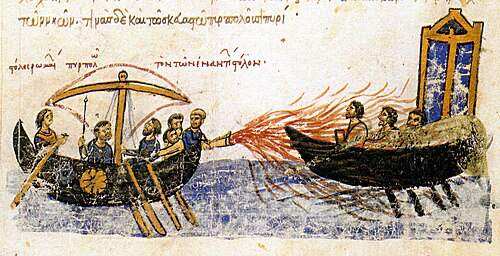

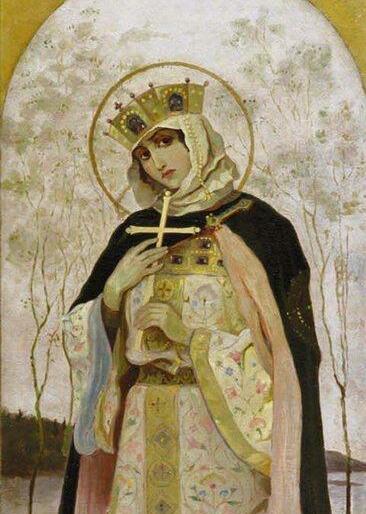


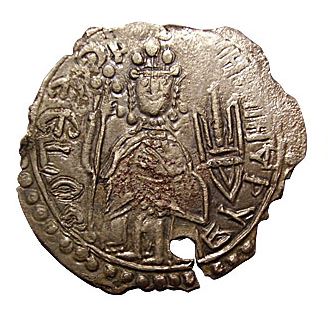


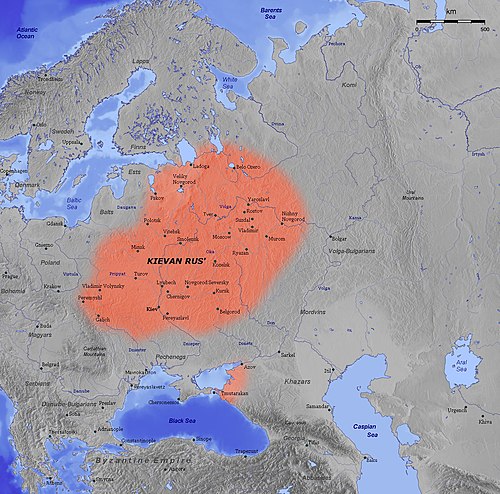


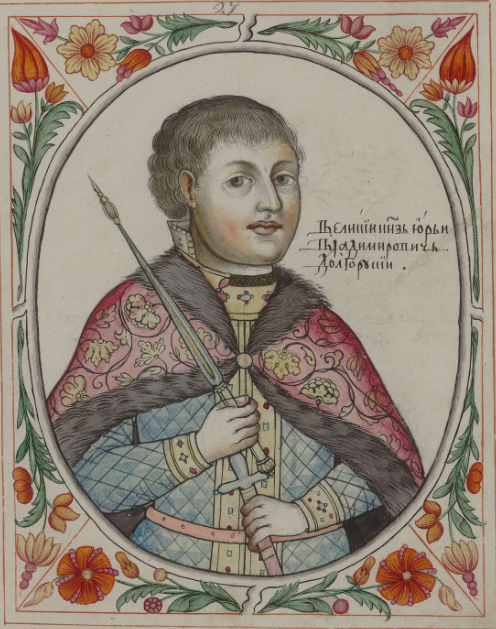


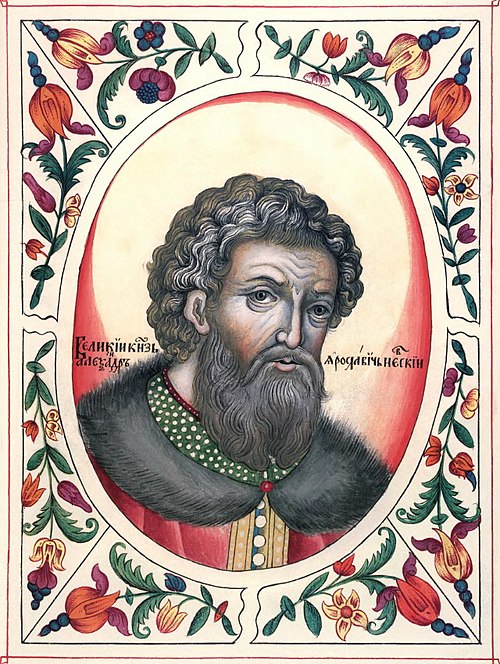
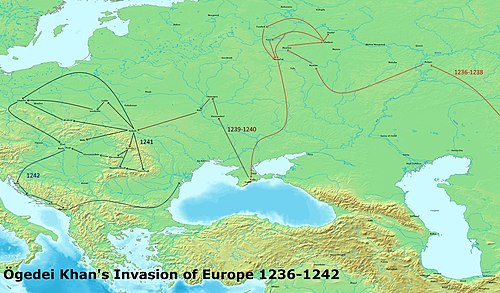
![Невская битва Лицевой летописный свод (том 6 стр. 28). И тогда, еще поспешнее устремившись, напал Александр на неприятелей в шестом часу дня; и была битва [большая с римлянами; и убили новгородцы множество бесчисленное римлян; и самому королю князь Александр сделал шрам на лице острым своим мечом. Тогда же проявили себя в войске великого князя Александра Ярославовича 6 храбрецов, которые с ним рядом мужественно сражались.]](https://upload.wikimedia.org/wikipedia/commons/thumb/9/9f/Facial_Chronicle_-_b.06%2C_p.028_-_Battle_of_Neva.png/500px-Facial_Chronicle_-_b.06%2C_p.028_-_Battle_of_Neva.png)


![Дмитрий Михайлович Грозные Очи убивает Юрия Даниловича Московского"Того же лета князь Дмитрей Михайлович Тверской, внук Ярославль, уби во Орде князя Юрьа Даниловичя Московьскаго" ("В том же году князь Дмитрий Михайлович Тверской, внук Ярославов, убил в Орде великого князя Юрия Даниловича Московского, внука Александрова, правнука Ярославова, праправнука Всеволодова, препраправнука Юрия Долгорукого, (потомка) пращура Владимира Манамаха, прапращура Ярослава, препрапращура великого Владимира [в Филиппово говение, месяца ноября в 21-й день, на праздник Введениа Пречистыя Богородици, без царева слова, надеясь на царево жалование, поскольку царь Азбяк чтил князя Дмитрия Михайловича Тверского. И он, на то надеясь, убил великого князя Юрия; и не на добро было это ему самому, и был у царя в опале великой, пока не помыслит о нем, что сотворить.]")// Из "Царственного летописца"](https://upload.wikimedia.org/wikipedia/commons/3/33/Facial_Chronicle_-_b.07%2C_p.247_-_Murder_of_Yuri_of_Moscow.jpg)


![At the wedding of Vasilii the Dark Sofia Vitovtovna pulls the belt from Prince Vasilii Kosoi. Original title: see [1]](https://upload.wikimedia.org/wikipedia/commons/thumb/a/ab/ChistyakovP_SofVitovNaSvGRM.jpg/500px-ChistyakovP_SofVitovNaSvGRM.jpg)