Encyclopedia/3. History, Societies & Civilizations/09. Modern Nations/02. Americas • Curated by Admin Timeline.sg
History of Brazil, sourced from Wikipedia's "Timeline of Brazilian history".
Chronological Storyline (222 Milestones)
1000 CE
Marajoara culture
Marajoara culture flourishes as an Amazonian center. Source — Wikipedia, "Timeline of Brazilian history" (10th century):
Exhibit in the South American collection of the American Museum of Natural History, Manhattan, New York City, New York, USA. Photography was permitted in the museum without restriction. By Daderot - File:Burian urn, AD 1000-1250, Marajoara culture - AMNH - DSC06177.JPG, CC0, https://commons.wikimedia.org/w/index.php?curid=30003437
1492 CE
Voyages of Christopher Columbus
Voyages of Christopher Columbus: navigator Christopher Columbus, sailing in the employ of Castile and Aragon, departed from Palos de la Frontera in search of a westward route to the East Indies. Source — Wikipedia, "Timeline of Brazilian history" (15th century):
Viajes de Colón By Rezza Editores - Cartilla Geográfica Amphora, CC BY 3.0, https://commons.wikimedia.org/w/index.php?curid=175920849
Jun 7, 1494 CE
Treaty of Tordesillas
Treaty of Tordesillas: Spain and Portugal divide the New World between themselves. Even though the treaty was negotiated without consulting the Pope, a few sources call the resulting line the "Papal Line of Demarcation". Source — Wikipedia, "Timeline of Brazilian history" (15th century):
Original page from the Tratado de Tordesilhas. By Original: Biblioteca Nacional de Lisboa Photo: User:Joserebelo - Biblioteca Nacional de Lisboa, Public domain, https://commons.wikimedia.org/w/index.php?curid=472967
1500 CE
Vicente Yáñez Pinzón
Spanish navigator Vicente Yáñez Pinzón lands in the coast of Brazil but is prevented from claiming it by the Treaty of Tordesillas. Source — Wikipedia, "Timeline of Brazilian history" (15th century):
Vicente Yáñez Pinzón By Oscar Pereira da Silva - Own work, Public domain, https://commons.wikimedia.org/w/index.php?curid=45711161
Jan 1, 1502 CE
Gaspar de Lemos
Portuguese explorers, led either by Gaspar de Lemos or Gonçalo Coelho, sail into Guanabara Bay, Brazil, which they name Rio de Janeiro. Source — Wikipedia, "Timeline of Brazilian history" (16th century):
Memory of naval force that came from Portugal to India. Detail of the ship (carrack) of Gaspar de Lemos. By Unknown author - Biblioteca Nacional de Portugal : Info : Pic, Public domain, https://commons.wikimedia.org/w/index.php?curid=21704500
Aug 10, 1503 CE
Fernando de Noronha
The Fernando de Noronha island is discovered by a Portuguese expedition, organized and financed by a private commercial consortium headed by the Lisbon merchant Fernão de Loronha. The expedition is under the overall command of captain Gonçalo Coelho and carries the Italian adventurer Amerigo Vespucci aboard, who writes an account of it. Source — Wikipedia, "Timeline of Brazilian history" (16th century):
Baía dos Porcos By Eduardo Muruci - commons.wikimedia, CC BY-SA 3.0, https://commons.wikimedia.org/w/index.php?curid=85407421
1516 CE
Engenho
The first sugar cane mills appear in Pernambuco. Source — Wikipedia, "Timeline of Brazilian history" (16th century):
Indians working in sugar mill in the 16th century By Simon de Vries - Vries, Simon de (1682). "Brasilise suyker werken". In: "Curieuse aenmerckingen der bysonderste Oost en West- Indische verwonderens - waerdige dingen". Utrecht: Johannes Ribbius. 1. 672 pages, Public domain, https://commons.wikimedia.org/w/index.php?curid=89343490
1527 CE
Cristóvão Jacques
Cristóvão Jacques imprisons three French galleons in Recôncavo, Bahia. But having acted with barbarity towards the prisoners, this gesture eventually caused him major problems with Dom João III. Source — Wikipedia, "Timeline of Brazilian history" (16th century):
Portrait of King John III of Portugal in the Museu de São Roque (St. Roch Museum). This painting represents John III (1502-1557), King of Portugal between 1521 and 1557. John is portrayed with short hair, thick beard that is going blonde, wearing a black coat and beret. It is a replica of the original portrait by the Flemish Master Anthonis Moro, made in 1552 (Prado Museum, Madrid). The actual portraits are attributed to Cristovão Lopes, son of Gregório Lopes, successor in the role of royal painter from 1550. By Attributed to Cristóvão Lopes - Google Cultural Institute, Public domain, https://commons.wikimedia.org/w/index.php?curid=41906264
1530 CE
Martim Afonso de Sousa
Martim Afonso de Sousa's expedition patrols the Brazilian coast, banishes the French, and creates the first colonial town: São Vicente. Source — Wikipedia, "Timeline of Brazilian history" (16th century):
Portrait of Martim Afonso de Sousa By Unknown author - Museums of India - National Portal & Digital Repository, Public domain, https://commons.wikimedia.org/w/index.php?curid=191178214
1531 CE
Bertrand d'Ornesan
Bertrand d'Ornesan tries to establish a French trading post at Pernambuco. Source — Wikipedia, "Timeline of Brazilian history" (16th century):
Le_Voyage_du_Baron_de_Saint_Blancard_en_Turquie_Jean_de_la_Vega_1538. By Uploadalt - Own work, CC BY-SA 3.0, https://commons.wikimedia.org/w/index.php?curid=8527884
Jan 22, 1532 CE
São Vicente is established as the
São Vicente is established as the first permanent Portuguese settlement in Brazil. Source — Wikipedia, "Timeline of Brazilian history" (16th century):
1534 CE
Captaincies of Brazil
The Captaincies of Brazil are established by King Dom João III. Colonial Brazil is divided into fifteen captaincies Source — Wikipedia, "Timeline of Brazilian history" (16th century):
Map of Brazil in 1534 showing the Captaincies and the De facto Territory and the territory of the Treaty of Tordesillas By Floppa Historico - Own work https://revistas.usp.br/anaismp/article/view/80840/84476 https://www.teses.usp.br/teses/disponiveis/3/3146/tde-20122004-125028/pt-br.php https://www.ibge.gov.br/ youtu.be/PGOYvpisc78?si=iQaDe3M2pAkiF8QQ youtu.be/P_kFS3jhJ80?si=6-0wy50D7vvVFgat https://www.hgis-indias.net/index.php/en/encyclopedia-2 https://en.wikipedia.org/wiki/Treaty_of_Madrid_%2813_January_1750%29?wprov=sfla1 https://en.wikipedia.org/wiki/Colonial_Brazil?wprov=sfla1 https://en.wikipedia.org/wiki/Viceroyalty_of_Brazil?wprov=sfla1 https://en.wikipedia.org/wiki/Captaincies_of_Brazil?wprov=sfla1, CC BY-SA 4.0, https://commons.wikimedia.org/w/index.php?curid=157048572
1534 CE
Iguape War
Iguape War in the region of São Vicente. Source — Wikipedia, "Timeline of Brazilian history" (16th century):
Map of Brazil in 1534 showing the Captaincies and the De facto Territory and the territory of the Treaty of Tordesillas By Floppa Historico - Own work https://revistas.usp.br/anaismp/article/view/80840/84476 https://www.teses.usp.br/teses/disponiveis/3/3146/tde-20122004-125028/pt-br.php https://www.ibge.gov.br/ youtu.be/PGOYvpisc78?si=iQaDe3M2pAkiF8QQ youtu.be/P_kFS3jhJ80?si=6-0wy50D7vvVFgat https://www.hgis-indias.net/index.php/en/encyclopedia-2 https://en.wikipedia.org/wiki/Treaty_of_Madrid_%2813_January_1750%29?wprov=sfla1 https://en.wikipedia.org/wiki/Colonial_Brazil?wprov=sfla1 https://en.wikipedia.org/wiki/Viceroyalty_of_Brazil?wprov=sfla1 https://en.wikipedia.org/wiki/Captaincies_of_Brazil?wprov=sfla1, CC BY-SA 4.0, https://commons.wikimedia.org/w/index.php?curid=157048572
Mar 12, 1537 CE
Recife
The Portuguese establish Recife in Pernambuco, in the Northeast of Brazil. Source — Wikipedia, "Timeline of Brazilian history" (16th century):
Antonio Vaz island - Recife, Pernambuco, Brazil By Portal da Copa/ME - http://www.copa2014.gov.br/pt-br/galeria/recifejulho2012, CC BY 3.0 br, https://commons.wikimedia.org/w/index.php?curid=134555712
1539 CE
The first African slaves arrive in
The first African slaves arrive in Pernambuco. Source — Wikipedia, "Timeline of Brazilian history" (16th century):
Mar 29, 1549 CE
Salvador, Bahia
The city of Salvador, Brazil's first capital, is founded by Tomé de Sousa. Source — Wikipedia, "Timeline of Brazilian history" (16th century):
Imagem aérea do Farol da Barra, em Salvador, Bahia, Brasil. By Fotos Gov/Ba - Flickr, CC BY 2.0, https://commons.wikimedia.org/w/index.php?curid=134553617
1551 CE
Portugal founds a sugar colony at
Portugal founds a sugar colony at Bahia. Source — Wikipedia, "Timeline of Brazilian history" (16th century):
Jan 25, 1554 CE
Joseph of Anchieta
Missionaries Joseph of Anchieta and Manuel da Nóbrega establish São Paulo, then named São Paulo dos Campos de Piratininga, in southeast Brazil. Source — Wikipedia, "Timeline of Brazilian history" (16th century):
Obra que integra o acervo do Museu Paulista da USP. Coleção Benedito Calixto de Jesus - CBCJ By Benedito Calixto - José Rosael/Hélio Nobre/Museu Paulista da USP, Public domain, https://commons.wikimedia.org/w/index.php?curid=61863021
1557 CE
Hans Staden
German adventurer Hans Staden publishes a widely translated account of his detention by the Tupi people of Brazil, ("True Story and Description of a Country of Wild, Naked, Grim, Man-eating People in the New World, America"). Source — Wikipedia, "Timeline of Brazilian history" (16th century):
Hans Staden, aus: H. J. Winkelmann, Der Amerikanischen Neuen Welt Beschreibung, Oldenburg 1664 By H. J. Winkelmann - http://www.regionalmuseum-wolfhager-land.de/hans_staden.htm, Public domain, https://commons.wikimedia.org/w/index.php?curid=3248382
Mar 17, 1560 CE
Fort Coligny
Fort Coligny on Villegagnon Island in Rio de Janeiro is attacked and destroyed during the Portuguese campaign against France Antarctique. Source — Wikipedia, "Timeline of Brazilian history" (16th century):
Naval guns at the Isle Seripige in 1898. By Unknown author - http://acervo.bndigital.bn.br/sophia/index.asp?codigo_sophia=66959, Public domain, https://commons.wikimedia.org/w/index.php?curid=4535443
Mar 1, 1565 CE
Estácio de Sá
Estácio de Sá founds Rio de Janeiro as São Sebastião do Rio de Janeiro. Source — Wikipedia, "Timeline of Brazilian history" (16th century):
Fundação do Rio de Janeiro. By Junius - Own work, CC BY-SA 3.0, https://commons.wikimedia.org/w/index.php?curid=5749536
Mar 25, 1580 CE
Iberian Union
Iberian Union: King Philip II of Spain becomes King of Portugal under the name Philip I, following the death without heirs of King Henry of Portugal, in a personal union of the crowns, thus maintaining Portuguese independence (in Europe and throughout the Portuguese Empire, including Brazil). The Philippine Dynasty rule lasts until 1640. Source — Wikipedia, "Timeline of Brazilian history" (16th century):
The Iberian Peninsula and other areas of South Europe with the Councils of the Iberian Union (Not all) By Gabriel Ziegler - Mapː Own work Data source: https://www.davidrumsey.com/luna/servlet/view/search/when/1637?q=Spain&sort=Pub_List_No_InitialSort%2CPub_Date%2CPub_List_No%2CSeries_No&os=0, CC BY-SA 4.0, https://commons.wikimedia.org/w/index.php?curid=132669952
1588 CE
Thomas Cavendish
English privateer Thomas Cavendish loots Santos and São Vicente before losing most of the crew in a battle against the Portuguese at the village of Vitória. Source — Wikipedia, "Timeline of Brazilian history" (16th century):
An engraving of English explorer Sir Thomas Cavendish (or Candish) (1560–1592), who was known as "the Navigator" because he was the first to deliberately set out to circumnavigate the globe. The engraving contains the words "Thomas Candish, Armiger. Animum fortuna sequatur [The soul follows chance]". By Willem and Magdalena van de Passe; original uploader was The Man in Question at en.wikipedia. - Henry Holland ([1620]) Herōologia Anglica, hoc est clarissimorvm et doctissimorvm aliqovt [sic: aliqvot] Anglorvm qvi florvervnt ab anno Cristi M.D. vsq' ad presentem annvm M.D.C.XX viuae effigies vitae et elogia [List of English Heroes, that is, Lifelike Images of the Lives and Epitaphs of the most Famous and Educated of the English who Flourished from the Year of Christ 1500 until the Present Year 1620], [Arnhem]: Impensis C. Passaei calcographus [sic] et Iansonij bibliopolae Arnhemiensis [Printed by Jan Jansson at the expense of Crispijn van de Passe and Jan Jansson] OCLC: 6672789. See Heroologia Anglica. National Library of Australia. Retrieved on 2009-04-13. An original engraving (6 1/2 in. x 4 1/2 in. (165 mm x 115 mm) paper size) is in the Macdonnell Collection of the National Portrait Gallery in London (NPG D16613, purchased 1966): Thomas Cavendish. National Portrait Gallery, London. Retrieved on 2009-04-13. Originally transferred from en.wikipedia by HUB1; description page is/was here., Public domain, https://commons.wikimedia.org/w/index.php?curid=3117883
Mar 30, 1595 CE
Anglo-Spanish War
Anglo–Spanish War: an English military expedition led by James Lancaster captures Recife. Source — Wikipedia, "Timeline of Brazilian history" (16th century):
English Ships and the Spanish Armada, August 1588 The painting may have been a design for a tapestry, or if not is laid out like one, and is dateable to the years immediately following the event. The composition appears less like a painting than as a formal design in a mannered style but no other contemporary image of the Armada conveys a comparable sense of the drama and colour of the confrontation between the two fleets. Although it is not exactly clear which part of the battle is shown (if indeed it is literal at all), it is most likely to be the action of Gravelines, the only point at which large numbers of ships from both sides were engaged in sustained conflict. However, the emblematic foreground arrangement of a Spanish galleass flanked by two English warships suggests that the picture was intended primarily as a symbol of the Armada campaign as a whole - although it is a symbol edged with satire. The galleass flies the Papal banner and the arms of Spain but her complement includes a number of figures - many portrayed as sinister zealots - led by a preaching monk, and a death's head or skeleton in a jester's costume. This renders her a 'ship of fools', an image originated and popularized by Sebastian Brandt's illustrated moral fable, 'Das Narrenschiff', of 1494. In this case the quietly humorous anti-Catholic invective is heightened by a representation of a distraught Spaniard - perhaps meant for Phillip II or the Armada's commander, the Duke of Medina Sidonia - in a boat near the stern. Elsewhere monks disappear beneath the waves as the battle rages. The galleass may also be meant to represent the principal Spanish flagship, Medina Sidonia's 'San Martin', 48 guns, although by showing her as a galleass, when she was in fact a galleon, the artist has used poetic licence to emphasize her Spanish origin. To her right is a stern view of what is clearly intended as the 'Ark Royal', 55 guns, the flagship of the English Lord Admiral, Lord Howard of Effingham, flying the Elizabethan Royal Standard. On the left, bow on, is another English ship, perhaps Drake's vice-admiral's flagship, 'Revenge', 43 guns, although this is speculative. Beyond them the panel is filled with fighting and sinking vessels. The ships, particularly those in the foreground, are painted with care and some accuracy of detail. Generally the proportions of the hulls, masts and yards are credible for warships of this period. Like many English observers the artist was evidently impressed by the few galleasses in the Spanish fleet. There were in fact four which reached the Channel, all from Naples, though only two survived to reach safe harbour. The varied Spanish and English ships seen in the background include, in the far distance, one single-masted barge-like vessel, possibly of Dutch origin or at least an allusion to the Dutch Protestant 'sea beggars role in harrying the Armada in and after the battle off Gravelines. English ships and the Spanish Armada, Aug 1588 By anonymous - EXTRACTED, AS JPG FILE, FROM THIS TIFF FILE: File:English Ships and the Spanish Armada, August 1588 RMG BHC0262.tiff, Public domain, https://commons.wikimedia.org/w/index.php?curid=107823250
1608 CE
Thornton expedition
Thornton expedition: a Tuscan expedition under Captain Robert Thornton, sent by Ferdinando I of Tuscany to explore northern Brazil and the Amazon River and prepare for the establishment of a settlement in northern coastal South America, which would serve as a base to export Brazilian wood to Renaissance Italy. which would be colonised by France in 1630. The expedition was the only attempt by an Italian state to colonise the Americas. Source — Wikipedia, "Timeline of Brazilian history" (17th century):
Location of XY (see filename) in the region. By TUBS - This vector image includes elements that have been taken or adapted from this file:, CC BY-SA 3.0, https://commons.wikimedia.org/w/index.php?curid=15430337
Sep 8, 1612 CE
São Luís, Maranhão
São Luís is founded by the French, who intend to make it the center of the Equinoctial France. They build a fort named Saint-Louis de Maragnan after King Louis XIII and his Saintly ancestor Louis IX. Source — Wikipedia, "Timeline of Brazilian history" (17th century):
Photo of São Luís, Maranhão, Brazil By Lechenet.com - http://lechenet.free.fr/saoluis/ppages/ppage33.htm, CC BY-SA 3.0, https://commons.wikimedia.org/w/index.php?curid=5935592
1616 CE
António Vieira
6-year-old António Vieira arrives from Portugal, with his parents, in Salvador in Colonial Brazil where he will become a diplomat, noted author, leading figure of the Church, and protector of local indigenous peoples. Source — Wikipedia, "Timeline of Brazilian history" (17th century):
Óleo sobre tela, 1680 x 1280 mm. Casa Cadaval, Muge, Portugal. By Unknown author - Portal da história, Public domain, https://commons.wikimedia.org/w/index.php?curid=3216004
1624 CE
Dutch West India Company
The Dutch West India Company invades the Portuguese colony of Bahia in Brazil. Source — Wikipedia, "Timeline of Brazilian history" (17th century):
Flag of the Dutch West India Company By Flag_of_the_Dutch_West_India_Company.png: *Flag_of_the_Netherlands.svg: Zscout370 derivative work: Fentener van Vlissingen (talk) derivative work: Mnmazur (talk) - Flag_of_the_Dutch_West_India_Company.png, Public domain, https://commons.wikimedia.org/w/index.php?curid=13312425
Apr 30, 1625 CE
Recapture of Salvador
The Portuguese recapture Salvador from the Dutch, with the help of a combined Spanish and Portuguese force, consisting of 52 ships and 12,500 men. Source — Wikipedia, "Timeline of Brazilian history" (17th century):
Representa la reconquista de Salvador de Bahía por las tropas hispano-portuguesas bajo el mando de Don Fadrique de Toledo el 1 de mayo de 1625, contra las fuerzas holandesas que la tenían ocupada. By Juan Bautista Maíno - Museo del Prado, Public domain, https://commons.wikimedia.org/w/index.php?curid=3901230
1630 CE
Captaincy of Pernambuco
The Dutch West India Company invades the Portuguese colony of Pernambuco and founds Dutch Brazil. Source — Wikipedia, "Timeline of Brazilian history" (17th century):
Map of Brazil in 1534 showing the Captaincies and the De facto Territory and the territory of the Treaty of Tordesillas By Floppa Historico - Own work https://revistas.usp.br/anaismp/article/view/80840/84476 https://www.teses.usp.br/teses/disponiveis/3/3146/tde-20122004-125028/pt-br.php https://www.ibge.gov.br/ youtu.be/PGOYvpisc78?si=iQaDe3M2pAkiF8QQ youtu.be/P_kFS3jhJ80?si=6-0wy50D7vvVFgat https://www.hgis-indias.net/index.php/en/encyclopedia-2 https://en.wikipedia.org/wiki/Treaty_of_Madrid_%2813_January_1750%29?wprov=sfla1 https://en.wikipedia.org/wiki/Colonial_Brazil?wprov=sfla1 https://en.wikipedia.org/wiki/Viceroyalty_of_Brazil?wprov=sfla1 https://en.wikipedia.org/wiki/Captaincies_of_Brazil?wprov=sfla1, CC BY-SA 4.0, https://commons.wikimedia.org/w/index.php?curid=157048572
Sep 12, 1631 CE
Eighty Years' War
Eighty Years' War: a Spanish fleet under the command of admiral Antonio de Oquendo defeats a Dutch fleet off the coast of Brazil in the Battle of Albrolhos. Source — Wikipedia, "Timeline of Brazilian history" (17th century):
A Spanish flagship is hit amidships by a smaller Dutch warship. It explodes in the middle of the Bay of Gibraltar. 25 April 1607. By Cornelis Claesz van Wieringen / Formerly attributed to Hendrick Cornelisz Vroom - Rijksmuseum - https://www.rijksmuseum.nl/en/collection/SK-A-2163, Public domain, https://commons.wikimedia.org/w/index.php?curid=59922
1641 CE
Rio Carnival
The first Rio Carnival happens to celebrate Dom João IV's coronation as king of Portugal. Source — Wikipedia, "Timeline of Brazilian history" (17th century):
Rio de Janeiro - Escolas de samba do Grupo Especial se apresentam no Sambódromo da Marquês de Sapucaí, no segundo dia de desfiles (Fernando Frazão/Agência Brasil) By Fernando Frazão/Agência Brasil - http://agenciabrasil.ebc.com.br/cultura/foto/2014-03/ultimo-dia-de-desfile-do-grupo-especial-no-rio?id=906222, CC BY 3.0 br, https://commons.wikimedia.org/w/index.php?curid=47101809
1642 CE
Isaac Aboab da Fonseca
Isaac Aboab da Fonseca is appointed rabbi in Pernambuco, thus becoming the first rabbi of the Americas. Source — Wikipedia, "Timeline of Brazilian history" (17th century):
Exact words from the site: "This work is a translation of the Pentateuch into Spanish, with a commentary by Isaac Aboab de Fonseca. It was prepared for Jews in Dutch Brazil, who because of their Iberian heritage would be able to read Spanish. The portrait is of the commentator, Aboab de Fonseca, who was not only the first rabbi in Brazil but also the first rabbi to come to America." By Site does not say who painted the portrait (But see discussion page) - John Carter Brown Library, Public domain, https://commons.wikimedia.org/w/index.php?curid=4207829
May 6, 1644 CE
John Maurice, Prince of Nassau-Siegen
Johan Mauritius resigns as Governor of Dutch Brazil. Source — Wikipedia, "Timeline of Brazilian history" (17th century):
John Maurice, Prince of Nassau-Siegen By Jan de Baen - Geheugen van Nederland : Home : Info : Pic, Public domain, https://commons.wikimedia.org/w/index.php?curid=6442603
Apr 19, 1648 CE
First Battle of Guararapes
First Battle of Guararapes: the Portuguese army defeats the Dutch army in northeast Brazil. Source — Wikipedia, "Timeline of Brazilian history" (17th century):
First Battle of Guararapes By Victor Meirelles - User:Wmpearl, 2013-12-26, Public domain, https://commons.wikimedia.org/w/index.php?curid=30333669
Feb 19, 1649 CE
Second Battle of Guararapes
Second Battle of Guararapes: decisive Portuguese victory against the Dutch in northeast Brazil. Source — Wikipedia, "Timeline of Brazilian history" (17th century):
Religious painting depicting the scene of the Battle of Guararapes. In the foreground, in the lower right corner, a little angel supporting a baroque frame with his right hand and pointing to the inscriptions, in white paint with a dark background, with his left hand. In the upper left corner, image of Our Lady with Baby Jesus observing the battle. The Battle of Guararapes was fought in two clashes between the Dutch army and the defenders of the Portuguese Empire at Morro dos Guararapes, current municipality of Jaboatão dos Guararapes, located in the Metropolitan Region of Recife, in Pernambuco, Brazil. The first confrontation was on April 18 and 19, 1648, and the second and decisive one was on February 19, 1649. It marked the end of the Dutch presence in Brazil, in the 17th century. By Unknown (lifespan c. 1730 - c. 1790) - Google Arts & Culture, Public domain, https://commons.wikimedia.org/w/index.php?curid=141292634
1654 CE
After several years of open warfare,
After several years of open warfare, the Dutch withdraw from Brazil; the Portuguese paid off a war debt in payments of salt. Source — Wikipedia, "Timeline of Brazilian history" (17th century):
1661 CE
Treaty of The Hague
Treaty of The Hague: the Dutch Republic recognizes Portuguese imperial sovereignty over New Holland (Dutch Brazil). Source — Wikipedia, "Timeline of Brazilian history" (17th century):
Prince's flag, orange, white, blue By Miyamaki, Oren neu dag, Artem Karimov, Golradir - SVG implementation of the Prinsenvlag., Public domain, https://commons.wikimedia.org/w/index.php?curid=816789
1684 CE
:pt:Revolta de Beckman
Beckman Revolt in Maranhão. Source — Wikipedia, "Timeline of Brazilian history" (17th century):
1693 CE
Sabará
Gold is found near modern-day cities of Sabará, Caeté and Ouro Preto, beginning of the Brazilian Gold Rush. Source — Wikipedia, "Timeline of Brazilian history" (17th century):
Centro Histórico de Sabará a noite, com a Igreja de São Francisco à esquerda, a inacabada Igreja de Nossa Senhora do Rosário ao centro e a Igreja de Nossa Senhora das Mercês à direita. By GMVR92 - Own work, CC BY-SA 4.0, https://commons.wikimedia.org/w/index.php?curid=87829268
Feb 6, 1694 CE
Quilombo dos Palmares
The runaway slave colony of Quilombo dos Palmares is destroyed. Source — Wikipedia, "Timeline of Brazilian history" (17th century):
Parte sul da Capitania de Pernambuco, com representação do Quilombo dos Palmares. By Frans Post - [1], Public domain, https://commons.wikimedia.org/w/index.php?curid=91474838
Nov 20, 1695 CE
Zumbi
Quilombo dos Palmares ruler Zumbi is captured and beheaded. Source — Wikipedia, "Timeline of Brazilian history" (17th century):
Zumbi By Antônio Parreiras - ARTExplorer., Public domain, https://commons.wikimedia.org/w/index.php?curid=10767955
1707 CE
War of the Emboabas
War of the Emboabas in modern-day Minas Gerais. Source — Wikipedia, "Timeline of Brazilian history" (18th century):
Pintura representando a Guerre dos Emboabas. By Unknown author - http://www.multirio.rj.gov.br/historia/modulo01/guerra_emboabas.html, Public domain, https://commons.wikimedia.org/w/index.php?curid=764043
1710 CE
Mascate War
The Mascate War pits merchants of Recife against the planters of nearby Olinda. Source — Wikipedia, "Timeline of Brazilian history" (18th century):
Recife, capital of Pernambuco, sometime during the 1820s. By Johann Moritz Rugendas - Rugendas e o Brasil, 2002, Capivara, Public domain, https://commons.wikimedia.org/w/index.php?curid=6090068
1711 CE
São Paulo officially becomes a city.
São Paulo officially becomes a city. Source — Wikipedia, "Timeline of Brazilian history" (18th century):
Jun 28, 1720 CE
Vila Rica Revolt
The Vila Rica Revolt, also known as the Filipe dos Santos Revolt, was held against the Portuguese Crown. Source — Wikipedia, "Timeline of Brazilian history" (18th century):
Trial of Filipe do Santos. Depicts the final scene of the Filipe dos Santos Revolt, which took place in 1720, in Vila Rica, Minas Gerais, Brazil By Antônio Parreiras - [2], Public domain, https://commons.wikimedia.org/w/index.php?curid=10641033
1722 CE
:pt:Bartolomeu Bueno da Silva
Expedition led by the second Anhanguera discovers gold in present-day Goiás. Source — Wikipedia, "Timeline of Brazilian history" (18th century):
:pt:Bartolomeu Bueno da Silva By Unknown author, Public domain, https://commons.wikimedia.org/w/index.php?curid=575942
1727 CE
Lt. Col. Francisco de Mello Palheta
Lt. Col. Francisco de Mello Palheta smuggles coffee seeds to Brazil in a bouquet, starting a coffee empire. Source — Wikipedia, "Timeline of Brazilian history" (18th century):
Jan 13, 1750 CE
Treaty of Madrid
The Treaty of Madrid between Spain and Portugal authorizes a larger Brazil than had the Treaty of Tordesillas of 1494, which originally established the boundaries of the Portuguese and Spanish territories in South America. Source — Wikipedia, "Timeline of Brazilian history" (18th century):
O frontispício do Tratado de Madrid, também chamado de Tratado de Limites das Conquistas By Oficina de José da Costa Coimbra (publisher) - [1], Public domain, https://commons.wikimedia.org/w/index.php?curid=131038334
Feb 1, 1756 CE
Guaraní War
The Guaraní War takes place between the Guaraní tribes of seven Jesuit missions and joint Spanish-Portuguese forces. Source — Wikipedia, "Timeline of Brazilian history" (18th century):
Guaraní War By Unknown author, CC BY-SA 3.0, https://commons.wikimedia.org/w/index.php?curid=1314324
1759 CE
Sebastião José de Carvalho e Melo, 1st Marquis of
Jesuits are expelled from Brazil by the Marquis of Pombal. Indians left without protection. Source — Wikipedia, "Timeline of Brazilian history" (18th century):
Portrait of the Marquis of Pombal (18th-century, Portuguese school) By Unidentified painter - Cabral Moncada Leilões, Public domain, https://commons.wikimedia.org/w/index.php?curid=59386015
1763 CE
The capital of Colonial Brazil is
The capital of Colonial Brazil is transferred from Salvador to Rio de Janeiro, which is located closer to the mining region and provides a harbor to ship the gold to Europe. Source — Wikipedia, "Timeline of Brazilian history" (18th century):
1772 CE
Colony of Brazil
The Kingdom of Portugal divides its colony of the State of Great-Pará and Maranhão into the State of Great-Pará (capital, Belém) and the State of Maranhão (capital, São Luis). Source — Wikipedia, "Timeline of Brazilian history" (18th century):
Map of Brazil in 1534 showing the Captaincies and the De facto Territory and the territory of the Treaty of Tordesillas By Floppa Historico - Own work https://revistas.usp.br/anaismp/article/view/80840/84476 https://www.teses.usp.br/teses/disponiveis/3/3146/tde-20122004-125028/pt-br.php https://www.ibge.gov.br/ youtu.be/PGOYvpisc78?si=iQaDe3M2pAkiF8QQ youtu.be/P_kFS3jhJ80?si=6-0wy50D7vvVFgat https://www.hgis-indias.net/index.php/en/encyclopedia-2 https://en.wikipedia.org/wiki/Treaty_of_Madrid_%2813_January_1750%29?wprov=sfla1 https://en.wikipedia.org/wiki/Colonial_Brazil?wprov=sfla1 https://en.wikipedia.org/wiki/Viceroyalty_of_Brazil?wprov=sfla1 https://en.wikipedia.org/wiki/Captaincies_of_Brazil?wprov=sfla1, CC BY-SA 4.0, https://commons.wikimedia.org/w/index.php?curid=157048572
1775 CE
Colony of Brazil
The Kingdom of Portugal reunites its South American colonies of the State of Brazil, the State of Great-Pará, and the State of Maranhão into the Colony of Brazil. Rio de Janeiro is the capital. Source — Wikipedia, "Timeline of Brazilian history" (18th century):
Map of Brazil in 1534 showing the Captaincies and the De facto Territory and the territory of the Treaty of Tordesillas By Floppa Historico - Own work https://revistas.usp.br/anaismp/article/view/80840/84476 https://www.teses.usp.br/teses/disponiveis/3/3146/tde-20122004-125028/pt-br.php https://www.ibge.gov.br/ youtu.be/PGOYvpisc78?si=iQaDe3M2pAkiF8QQ youtu.be/P_kFS3jhJ80?si=6-0wy50D7vvVFgat https://www.hgis-indias.net/index.php/en/encyclopedia-2 https://en.wikipedia.org/wiki/Treaty_of_Madrid_%2813_January_1750%29?wprov=sfla1 https://en.wikipedia.org/wiki/Colonial_Brazil?wprov=sfla1 https://en.wikipedia.org/wiki/Viceroyalty_of_Brazil?wprov=sfla1 https://en.wikipedia.org/wiki/Captaincies_of_Brazil?wprov=sfla1, CC BY-SA 4.0, https://commons.wikimedia.org/w/index.php?curid=157048572
1788 CE
Inconfidência Mineira
Inconfidência Mineira, conspiracy against the colonial authorities in Brazil. Source — Wikipedia, "Timeline of Brazilian history" (18th century):
A bandeira dos inconfidentes By Carlos Oswald - https://www.policiamilitar.mg.gov.br/conteudoportal/uploadFCK/externo/03052021113749639jpeg, Public domain, https://commons.wikimedia.org/w/index.php?curid=111045399
Apr 21, 1792 CE
Tiradentes
Tiradentes, prime figure in the Inconfidência Mineira plot, is executed in Rio de Janeiro. Source — Wikipedia, "Timeline of Brazilian history" (18th century):
Todos os retratos de Tiradentes são copiados de um pintado em madeira, hoje no Museu de Ipiranga em S. Paulo, que tem a seguinte nota: "Este busto não é autêntico, porquanto o Tira-Dentes não deixou retrato algum, visto não haver fotografias naquele tempo. Em 1792 foi feito um retrato a pincel em tábuas de pinho, pregadas horizontalmente e executado segundo informações da fisionomia do morto prestadas pela família. A família e parentes, achando o retrato parecido aceitou-o e o fez reproduzir". By Roque Gameiro - https://tribop.pt/TPd/01/70/Hist%C3%B3ria%2520de%2520Portugal/Volume%25207, Public domain, https://commons.wikimedia.org/w/index.php?curid=191685985
1798 CE
1798 Revolt of the Alfaiates
Revolt of the Alfaiates in Bahia. Source — Wikipedia, "Timeline of Brazilian history" (18th century):
Flag of the Revolt of the Tailors -- Bahia, 1798. By Tonyjeff - Own work, Public domain, https://commons.wikimedia.org/w/index.php?curid=2116792
Nov 29, 1807 CE
Maria I of Portugal
The Portuguese Queen Maria I and the Court embark at Lisbon bound for Brazil. Rio de Janeiro becomes the capital of the Portuguese Empire. Source — Wikipedia, "Timeline of Brazilian history" (19th century):
Maria I, Queen of Portugal. Thomas Hickey or Giuseppe Troni (attributed). Oil on canvas. 122 x 94 cm. NATIONAL PALACE OF QUELUZ. Via Google Cultural Institute By Attributed to Giuseppe Troni - Google Cultural Institute, Public domain, https://commons.wikimedia.org/w/index.php?curid=39605498
Jan 22, 1808 CE
Transfer of the Portuguese Court to Brazil
The Braganza Royal Family arrives in Brazil, fleeing from the French army. Source — Wikipedia, "Timeline of Brazilian history" (19th century):
The Embarkation of the Portuguese Royal Family to Brazil in 1807, 19th-century painting attributed to Nicolas-Louis-Albert Delerive. National Coach Museum, Lisbon, Portugal. By Nicolas-Louis-Albert Delerive - Google Arts & Culture, Public domain, https://commons.wikimedia.org/w/index.php?curid=76394892
Jan 6, 1809 CE
Napoleonic Wars
Napoleonic Wars: Brazilian and Portuguese forces conquer French Guiana. Source — Wikipedia, "Timeline of Brazilian history" (19th century):
This collage was derived from File:Napoleonic Wars.jpg: By Ruedi33a - Wikipedia/Wikimedia Commons, CC BY-SA 4.0, https://commons.wikimedia.org/w/index.php?curid=155286219
1812 CE
The first official group of Chinese
The first official group of Chinese immigrants to Brazil for Tea planters in Rio de Janeiro during the period of the Portuguese Royal family in Brazil. Source — Wikipedia, "Timeline of Brazilian history" (19th century):
1815 CE
United Kingdom of Portugal, Brazil and the Algarve
The United Kingdom of Portugal, Brazil and the Algarves is established under Queen Maria I. Brazil is elevated from the status of Portuguese colony to a constituent kingdom of the united kingdom. Source — Wikipedia, "Timeline of Brazilian history" (19th century):
Flag of the United Kingdom of Portugal, Brazil, and the Algarves (1815-1825). By 117-M-I-K-E - Own work, with assets by Heralder, CC BY-SA 4.0, https://commons.wikimedia.org/w/index.php?curid=132072796
Mar 1, 1817 CE
Missão Artística Francesa
The French Artistic Mission in Brazil comes to Rio de Janeiro. Source — Wikipedia, "Timeline of Brazilian history" (19th century):
Exhibit in the Nelson-Atkins Museum of Art, Kansas City, Missouri, USA. Photography was permitted in the museum without restriction; I took this photograph and release it into the public domain. By Adélaïde Labille-Guiard - Daderot, 2011-11-04 20:21:11, CC0, https://commons.wikimedia.org/w/index.php?curid=91704856
Nov 4, 1819 CE
The first 1,400 non-Portuguese immigrants arrive
The first 1,400 non-Portuguese immigrants arrive from Switzerland. Source — Wikipedia, "Timeline of Brazilian history" (19th century):
1821 CE
Liberal Revolution of 1820
Portugal enters a severe political crisis that obliges John VI and the royal family to return to Portugal. Source — Wikipedia, "Timeline of Brazilian history" (19th century):
Sessão das Cortes de Lisboa (1922) by Oscar Pereira da Silva By Oscar Pereira da Silva - https://artsandculture.google.com/asset/sess%C3%A3o-das-cortes-de-lisboa-oscar-pereira-da-silva/tAGCaCoJlfyydQ, Public domain, https://commons.wikimedia.org/w/index.php?curid=188621981
Jan 9, 1822 CE
Dia do Fico
Prince regent Pedro of Braganza refuses to comply with the Portuguese cortes order to return to Portugal (Dia do Fico). Source — Wikipedia, "Timeline of Brazilian history" (19th century):
Dia do Fico By Simplício Rodrigues de Sá - Museu Imperial de Petrópolis, Public domain, https://commons.wikimedia.org/w/index.php?curid=2050174
1822 CE
Brazilian War of Independence
Brazilian War of Independence. Source — Wikipedia, "Timeline of Brazilian history" (19th century):
The moment when the ‘Peacemaker Army’, commanded by José Joaquim de Lima e Silva (possibly the general on the dark horse shown, holding a sword), entered the capital of the Province of Bahia on 2 July 1823. By Bento José Rufino Capinam - Duna Press Journal & Magazine: Série Fatos Da Independência: O Recôncavo Baiano se arma, Public domain, https://commons.wikimedia.org/w/index.php?curid=149412281
1824 CE
Confederation of the Equator
Confederation of the Equator rebellion in the Northeast. Source — Wikipedia, "Timeline of Brazilian history" (19th century):
Brazilian Imperial Army attacks the confederate forces in Recife, 1824. By Leandro Martins - NOSSA HISTÓRIA. Year 3 issue 35. São Paulo: Vera Cruz, 2006 Planeta Sustentável, Public domain, https://commons.wikimedia.org/w/index.php?curid=6090091
Jan 13, 1825 CE
Frei Caneca
Frei Caneca and other leaders of the Confederation of the Equator rebellion are executed in Recife. Source — Wikipedia, "Timeline of Brazilian history" (19th century):
Frei Caneca By Unknown author - [FREI Caneca]. [S.l.: s.n.], [18--]. 1 desenho, crayon, p&b., 20,8 x 16,5 cm. Disponível em: <http://objdigital.bn.br/objdigital2/acervo_digital/div_iconografia/icon687854/icon687854.jpg>. Acesso em: 24 dez. 2017., Public domain, https://commons.wikimedia.org/w/index.php?curid=65005854
Dec 11, 1826 CE
Empress Maria Leopoldina dies after suffering
Empress Maria Leopoldina dies after suffering a miscarriage. Source — Wikipedia, "Timeline of Brazilian history" (19th century):
Apr 26, 1828 CE
Treaty of Commerce and Navigation signed
Treaty of Commerce and Navigation signed between Brazil and Denmark, establishing diplomatic relations between the two countries. Source — Wikipedia, "Timeline of Brazilian history" (19th century):
Apr 7, 1831 CE
Abdication of Pedro I of Brazil
Dom Pedro I abdicates in favor of his 5-year-old son Dom Pedro II, who will reign for almost 59 years. The regency period begins. Source — Wikipedia, "Timeline of Brazilian history" (19th century):
Pedro I delivers his abdication letter while a courtier kisses the hand of the now Pedro II, his son and heir, representing the end of a reign and the beginning of another. There is artistic license in this non-contemporary painting. The Emperor was actually dressed in plain clothes, not in court dress.[1] His son was sleeping in his room, not awaken during the ordeal[2] By Aurélio de Figueiredo - Revista de História da Biblioteca Nacional (Rio de Janeiro: SABIN) 7 (74). ISSN 18084001, Public domain, https://commons.wikimedia.org/w/index.php?curid=6011803
Aug 12, 1834 CE
1834 Additional Act
The Additional Act provides for the establishment of the Provincial Legislative Assemblies, extinction of the State Council, replacement of the Triumviral Regency, and introduction of a direct and secret ballot. Source — Wikipedia, "Timeline of Brazilian history" (19th century):
Great Arms of Brazil By Gusthavum - Own work Lei Áurea (Golden Law).tif Original image of the uploader: Brasile.jpg Coat of Arms of the Second Empire of Brazil (twenty stars). Coat_of_Arms_of_the_July_Monarchy_(1831-48).svg Sterren_van_twee_Braziliaanse_Orden.jpg CoA Empire of Brazil (1870-1889).svg Coronet of a British Duke.svg .mw-parser-output .messagebox{margin:4px 0;width:auto;border-collapse:collapse;border:2px solid var(--border-color-progressive,#6485d1);background-color:var(--background-color-neutral-subtle,#fbfcff);color:var(--color-base,#202122);box-sizing:border-box;border-inline-start-width:8px}.mw-parser-output .messagebox.mbox-small{font-size:88%;line-height:1.25em}.mw-parser-output .mbox-warning,.mw-parser-output .mbox-speedy{border:2px solid var(--border-color-error,#b22222);background:var(--background-color-error-subtle,#ffdbdb);border-inline-start-width:8px}.mw-parser-output .mbox-serious,.mw-parser-output .mbox-delete,.mw-parser-output .mbox-stop{border:2px solid var(--border-color-error,#b22222);border-inline-start-width:8px}.mw-parser-output .mbox-issue,.mw-parser-output .mbox-content{border:2px solid #f28500;background:var(--background-color-warning-subtle,#ffe);border-inline-start-width:8px}.mw-parser-output .mbox-query,.mw-parser-output .mbox-style{border:2px solid #f4c430;background:var(--background-color-warning-subtle,#ffe);border-inline-start-width:8px}.mw-parser-output .mbox-shit{border:2px solid #960;border-inline-start-width:8px}.mw-parser-output .mbox-license{border:2px solid #88a;border-inline-start-width:initial}.mw-parser-output .mbox-legal{border:2px solid var(--border-color-notice,#666);background:var(--background-color-base,#fff);border-inline-start-width:8px}.mw-parser-output .mbox-honor{border:2px solid #ca3;background:var(--background-color-warning-subtle,#fcf4db);border-inline-start-width:8px}.mw-parser-output .mbox-growth{border:2px solid #8d4;background:var(--background-color-success-subtle,#d5fdf4);border-inline-start-width:8px}.mw-parser-output .mbox-move{border:2px solid #93c;border-inline-start-width:8px}.mw-parser-output .mbox-protection,.mw-parser-output .mbox-message{border:2px solid var(--border-color-base,#aaa);border-inline-start-width:8px}.mw-parser-output .messagebox .mbox-text{border:none;padding:0.25em 0.9em;width:100%}.mw-parser-output .messagebox .mbox-image{border:none;padding:2px 0 2px 0.9em;text-align:center}.mw-parser-output .messagebox .mbox-imageright{border:none;padding:2px 0.9em 2px 0;text-align:center}.mw-parser-output .messagebox .mbox-empty-cell{border:none;padding:0;width:1px}.mw-parser-output .messagebox .mbox-invalid-type{text-align:center}@media(min-width:720px){.mw-parser-output .messagebox{margin:4px 10%}.mw-parser-output .messagebox.mbox-small{clear:right;float:right;margin:4px 0 4px 1em;width:238px}}body.skin--responsive .mw-parser-output table.messagebox img{max-width:none!important}This insignia has not been confirmed to be correct because it is lacking important source information: Please edit this file's description and provide a proper source.HELP: (1) The picture claims to be authentic. As such, “own work” is no proper source by itself. If applicable, any provided source(s) doesn't show an original depiction nor an original description, and therefore may violate NPOV (neutral point of view) by being original research. (2) For coat of arms please use the blazon and/or the picture of an original interpretation to provide an adequate source, but at least one or more references to literature. (3) If this depiction is a derivative please use the Template: Derived from to avoid sequence errors, to make this work more transparent for others to view and investigate, and to avoid an infringement of the copyright licence. The image contains one or several undisputed inaccuracies. It should not be used to illustrate or provide information about the subject, but may be kept in order to provide the basis for a corrected image. If you disagree that it may be useful for this purpose feel free to request deletion. Reason: Green colors instead of red, invented sceptre; see reall Great Arms of Brazil in File:Lei Áurea.jpg. See the talk page for further information., CC BY 3.0, https://commons.wikimedia.org/w/index.php?curid=14864826
Jan 1, 1835 CE
Malê revolt
Malê revolt in Salvador. Source — Wikipedia, "Timeline of Brazilian history" (19th century):
Sep 11, 1836 CE
Riograndense Republic
The Riograndense Republic is proclaimed in southern Brazil following the battle of Seival. Source — Wikipedia, "Timeline of Brazilian history" (19th century):
flag of the Riograndense Republic (Piratini Republic). By Original: Tito Livio Zambeccari Vector: LipeFontoura - SVG implemenation of decree of 12 November 1836: Piratini 12 de Novembro de 1836, 1º da Independencia e da Republica. Occupando já na grande familia das nações o lugar que lhe compete o estado riograndense e convindo que elle tenha um escudo de armas o presidente da Republica decreta: O escudo d'armas (sic) do Estado Riograndense será de ora em diante de forma de um quadrado dividido pelas tres cores assim dispostas. A parte superior junto a haste verde e formada por um triangulo izoceles cuja hypotenuza será paralella à diagonal do quadrado. O centro escarlate formado por um exagono determinado pela hypotenuza do primeiro triangulo e a de outro igual e symetricamente disposto côr de ouro que formará a parte superior. Domingos José de Almeida ministro e secretario de estado dos negocios do interior assim o tenha entendido e faça executar com os despachos necessarios. José Gomes de Vasconcellos Jardim Domingos José de Almeida (Araripe II -192), Public domain, https://commons.wikimedia.org/w/index.php?curid=1017512
1838 CE
Balaiada
Balaiada revolt in Maranhão. Source — Wikipedia, "Timeline of Brazilian history" (19th century):
Jul 23, 1840 CE
Pedro II is prematurely declared "of
Pedro II is prematurely declared "of age" and begins to reassert central control in Brazil. Source — Wikipedia, "Timeline of Brazilian history" (19th century):
Jul 18, 1841 CE
Coronation ceremony of emperor Pedro II
Coronation ceremony of emperor Pedro II of Brazil in Rio de Janeiro. Source — Wikipedia, "Timeline of Brazilian history" (19th century):
1842 CE
Liberal rebellions of 1842
Liberal rebellions of 1842. Source — Wikipedia, "Timeline of Brazilian history" (19th century):
Vista do Arraial da Lagoa Santa durante a Revolução Liberal de 1842. By Eduard Rensburg (1817?–1898); George Mathias Heaton (c. 1804–1855?) - [1] (original) [2] (larger version), Public domain, https://commons.wikimedia.org/w/index.php?curid=148934492
Jan 20, 1843 CE
Honório Hermeto Carneiro Leão, Marquis of Paraná
Honório Hermeto Carneiro Leão, Marquis of Paraná, becomes de facto first prime minister of the Empire of Brazil. Source — Wikipedia, "Timeline of Brazilian history" (19th century):
Honório Hermeto Carneiro Leão, Marquis of Paraná, c.1855. By Emil Bauch - Grandes Personagens da Nossa História. v.2. São Paulo: Abril, 1972., Public domain, https://commons.wikimedia.org/w/index.php?curid=7684329
Mar 1, 1845 CE
Luís Alves de Lima e Silva, Duke of Caxias
Ragamuffin War: peace negotiations led by Lima e Silva and Antônio Vicente da Fontoura conclude with the signing of the Ponche Verde Treaty between the two sides, in Dom Pedrito. Source — Wikipedia, "Timeline of Brazilian history" (19th century):
Fotogravura de Luís Alves de Lima e Silva, o duque de Caxias, patrono do Exército Brasileiro. By Goupil - This image is available from the United States Library of Congress's Prints and Photographs division under the digital ID cph.3a03345.This tag does not indicate the copyright status of the attached work. A normal copyright tag is still required. See Commons:Licensing., Public domain, https://commons.wikimedia.org/w/index.php?curid=2612333
1848 CE
Praieira revolt
Praieira revolt in Pernambuco. Source — Wikipedia, "Timeline of Brazilian history" (19th century):
Sep 4, 1850 CE
Eusébio de Queirós Law
Eusébio de Queirós Law abolishes the international slave trade in the country. Source — Wikipedia, "Timeline of Brazilian history" (19th century):
Coat of Arms of the First Empire of Brazil (nineteen stars). By Tonyjeff, based on work of Jean-Baptiste Debret. - symbol of the XIX century; see [1] for description, and [2] for a representative example. Shield also shown in Maclagan, Michael; Louda, Jiří (1999) Line of Succession: Heraldry of the Royal Families of Europe. London: Little, Brown & Co. ISBN 1-85605-469-1, pp. 235-236.Reformed standard according to this book, an official publication of the government of Brazil, on page 74., Public domain, https://commons.wikimedia.org/w/index.php?curid=2257055
Feb 3, 1852 CE
Battle of Caseros
Platine War: Battle of Caseros, Argentina: the Argentine provinces of Entre Rios and Corrientes allied with Brazil and members of Colorado Party of Uruguay, defeat the Argentine Confederation under Juan Manuel de Rosas. Source — Wikipedia, "Timeline of Brazilian history" (19th century):
Carlo Penuti, “Batalla de Monte Caseros”, litografía, José Alejandro Bernheim impresor, Buenos Aires, ca. 1852. Colección Museo Marc By Carlo Penuti - https://www.museomarc.gob.ar/actuales, Public domain, https://commons.wikimedia.org/w/index.php?curid=178247908
Apr 30, 1854 CE
Irineu Evangelista de Sousa, Viscount of Mauá
The first railway in Brazil is inaugurated by Pedro II in Rio de Janeiro, built by industrialist Irineu Evangelista de Sousa. Source — Wikipedia, "Timeline of Brazilian history" (19th century):
Irineu Evangelista de Sousa, the Viscount of Mauá, c.1870 By Maua_00.JPG: Joaquim Insley Pacheco (1830-1912) derivative work: Kingpin13 (talk) - Maua_00.JPG, Public domain, https://commons.wikimedia.org/w/index.php?curid=14694810
May 5, 1859 CE
Orinoco
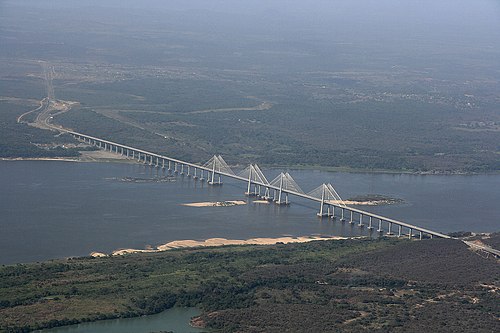
Border Treaty between Brazil and Venezuela: the two countries agree their borders should be traced at the water divide between the Amazon and the Orinoco basins. Source — Wikipedia, "Timeline of Brazilian history" (19th century):
The Second Orinoco crossing or Orinoquia Bridge is a combined road and railway bridge over the Orinoco River near Ciudad Guayana, Venezuela By jkaiser - Orinoco Bridge, CC BY 2.0, https://commons.wikimedia.org/w/index.php?curid=12686053
Jun 26, 1862 CE
Metric system
Brazil adopts the Metric system. Source — Wikipedia, "Timeline of Brazilian history" (19th century):
Four metric measuring devices - a tape measure, a thermometer, a one kilogram weight and an electrical multimeter. These instruments were selected to show some of the units of measure that part of the metric system (or more correctly) SI - centimetres, kilograms, degrees Celsius, amperes, volts and ohms. By Martinvl - Own work, CC BY-SA 3.0, https://commons.wikimedia.org/w/index.php?curid=14911216
Oct 7, 1864 CE
American Civil War
American Civil War: Bahia incident: USS Wachusett illegally captures the Confederate raider while in port in Bahia, Brazil, in violation of Brazilian neutrality. Source — Wikipedia, "Timeline of Brazilian history" (19th century):
The battle of Gettysburg, Pa. July 3d. 1863, depicting the Battle of Gettysburg, fought July 1–3, 1863. The battle was part of the American Civil War and was won by the North. Hand-colored lithograph by Currier and Ives. By Nathaniel Currier and James Merritt Ives - This image is available from the United States Library of Congress's Prints and Photographs division under the digital ID cph.3g02088.This tag does not indicate the copyright status of the attached work. A normal copyright tag is still required. See Commons:Licensing., Public domain, https://commons.wikimedia.org/w/index.php?curid=49350
1864 CE
Uruguayan War
Uruguayan War: forces of the Empire of Brazil invade Uruguay in support of Venancio Flores' Colorado Party. Source — Wikipedia, "Timeline of Brazilian history" (19th century):
Campagne de l'Uruguay, prise de Paysandu. — D'après un croquis de notre correspondant spécial By Unknown author - L'Illustration: journal universal hebdomadaire, Volume XLV, nº 1.151, 18/03/1865., Public domain, https://commons.wikimedia.org/w/index.php?curid=49082271
May 1, 1865 CE
Treaty of the Triple Alliance
The Triple Alliance of Argentina, Brazil, and Uruguay against Paraguay is formally signed; the Paraguayan War begins. Source — Wikipedia, "Timeline of Brazilian history" (19th century):
Allied troops recapturing Corrientes province a year after the start of the War of the Triple Alliance (Paraguayan War) By Luis Candido Lopez - Candido Lopez: Immagini della guerra del Paraguay ed. Franco Maria Ricci, Public domain, https://commons.wikimedia.org/w/index.php?curid=84450463
Mar 27, 1867 CE
Treaty of Ayacucho
The Treaty of Ayacucho is signed between the Empire of Brazil and Bolivia, Brazil assigns the land of Acre to Bolivia in exchange for 102,400 sq kilometers of territory further annexed to the Amazonas. Source — Wikipedia, "Timeline of Brazilian history" (19th century):
Negociaciones entre Perú-Bolivia y Brasil-Bolivia por la amazonia By Gustavo Pons Muzzo - http://www.scielo.org.co/scielo.php?script=sci_arttext&pid=S0121-16172009000300008, Public domain, https://commons.wikimedia.org/w/index.php?curid=68808077
Jan 5, 1868 CE
Asunción
Paraguayan War: Brazilian Army commander Luís Alves de Lima e Silva enters Asunción, Paraguay's capital. Some days later he declares the war is over. Nevertheless, Francisco Solano López, Paraguay's president, prepares guerrillas to fight in the countryside. Source — Wikipedia, "Timeline of Brazilian history" (19th century):
Palacio de Lopez By Robert Servin - Foto, CC BY-SA 4.0, https://commons.wikimedia.org/w/index.php?curid=5258318
Mar 1, 1870 CE
Battle of Cerro Corá
End of the Paraguayan War. Francisco Solano López is defeated and killed in the Battle of Cerro Corá. Source — Wikipedia, "Timeline of Brazilian history" (19th century):
Chico Diabo atravessando com uma lança Solano López (Semana Illustrada nº 485, 27/03/1870). By Unknown author - Semana Illustrada, nº 485, 27/03/1870 (https://memoria.bn.gov.br/DocReader/DocReader.aspx?bib=702951&pagfis=3969)., Public domain, https://commons.wikimedia.org/w/index.php?curid=35909228
Mar 7, 1871 CE
José Paranhos, Viscount of Rio Branco
José Paranhos, Viscount of Rio Branco, becomes Prime Minister of the Empire of Brazil, serving for 4 years. Source — Wikipedia, "Timeline of Brazilian history" (19th century):
José Maria da Silva Paranhos, viscount of Rio Branco, 1879. By Alberto Henschel (1827-1882) - Ermakoff, George. Rio de Janeiro - 1840-1900 - Uma crônica fotográfica. Rio de Janeiro: G. Ermakoff Casa Editorial, 2006 ISBN 85-98815-05-5, Public domain, https://commons.wikimedia.org/w/index.php?curid=5369257
Jan 9, 1872 CE
Loizaga–Cotegipe Treaty
In the aftermath of the Paraguayan War, the new government of Paraguay makes peace with Brazil, granting reparations and territorial concessions. Source — Wikipedia, "Timeline of Brazilian history" (19th century):
Map of the Paraguayan War 1864-1870 By Maximilian Dörrbecker (Chumwa), English translation provided by Metaknowledge - Own work, using these sources: Map: War theater for the War of the trippelalliance by Stigmj Map: Historia de la frontera Paraguaya by Dawson093 Map: La guerra de la Tripla Alianza Map: Triple Alliance War Map: Mapa de la Guerra del Chaco by Anibalcesar and MacedonianBoy Ralph Rotte: Paraguays Kampf gegen die Tripel-Allianz 1864 bis 1870. In: MGFA (Hrsg.): Militärgeschichte 1/2010, S. 8-11 Map: Colton's Argentina Republic, Chili, Uruguay & Paraguay from 1865 Paraguay location map by NordNordWest Battle symbol by Kathovo, CC BY-SA 2.0, https://commons.wikimedia.org/w/index.php?curid=65208517
1873 CE
Revolt of the Muckers
Revolt of the Muckers in Rio Grande do Sul. Source — Wikipedia, "Timeline of Brazilian history" (19th century):
Apr 28, 1876 CE
Francisco
Francisco, a slave, becomes the last person to be executed in Brazil, after murdering his masters, being hanged in Pilar, Alagoas. Source — Wikipedia, "Timeline of Brazilian history" (19th century):
City localization in Alagoas By Wellber Drayton - Own work, Public domain, https://commons.wikimedia.org/w/index.php?curid=9527190
1877 CE
Grande Seca
Grande Seca (Great Drought) in Northeastern Brazil. Source — Wikipedia, "Timeline of Brazilian history" (19th century):
The painting shows a family of northeastern brazilians affected by the Grande Seca ("Great Drought") that occurred between 1887 and 1889. One children died of inanition. By Cândido Portinari - https://masp.org.br/acervo/obra/crianca-morta, CC BY-SA 4.0, https://commons.wikimedia.org/w/index.php?curid=92095765
1882 CE
Brazilian Anthropological Exhibition of 1882
Brazilian Anthropological Exhibition of 1882. Source — Wikipedia, "Timeline of Brazilian history" (19th century):
Sep 30, 1883 CE
Mossoró
Mossoró, in the province of Rio Grande do Norte, is the first city in Brazil to abolish slavery. Source — Wikipedia, "Timeline of Brazilian history" (19th century):
Panorama parcial da cidade de Mossoró, no estado do Rio Grande do Norte (Brasil), a partir do Centro Empresarial Caiçara By Marcos Elias de Oliveira Júnior - Own work, CC0, https://commons.wikimedia.org/w/index.php?curid=97600875
Sep 28, 1885 CE
Sexagenarian Law, or Saraiva-Cotegipe Law, which
Sexagenarian Law, or Saraiva-Cotegipe Law, which frees slaves over the age of 60, is passed. Source — Wikipedia, "Timeline of Brazilian history" (19th century):
May 13, 1888 CE
Lei Áurea
The Lei Áurea abolishes the last remnants of slavery. Source — Wikipedia, "Timeline of Brazilian history" (19th century):
Reprodução da Lei Áurea, de 1888. Fundo arquivístico: Ministério da Agricultura, Comércio e Obras Públicas. By Senado Imperial - Arquivo Nacional, Public domain, https://commons.wikimedia.org/w/index.php?curid=63462882
Nov 15, 1889 CE
Deodoro da Fonseca
Field Marshal Deodoro da Fonseca organizes a military coup which deposes Emperor Pedro II of Brazil and abolishes the Brazilian monarchy. Deodoro da Fonseca proclaims Brazil a Republic and forms a Provisional Government. Source — Wikipedia, "Timeline of Brazilian history" (19th century):
Foto oficial de Deodoro da Fonseca, presidente do Brasil entre 1889 e 1891. By Governo do Brasil - Galeria de Presidentes, Public domain, https://commons.wikimedia.org/w/index.php?curid=19035501
Nov 1, 1891 CE
Revolta da Armada
First revolt of the Armada. Source — Wikipedia, "Timeline of Brazilian history" (19th century):
A cannon and Brazilian troops in Rio de Janeiro in 1894. Photo taken by Juan Gutierrez during the blockade of the city by rebel warships. By Juan Gutierrez - http://deepbrazil.com/brazil-explained-in-100-images/, Public domain, https://commons.wikimedia.org/w/index.php?curid=32891397
Nov 1, 1893 CE
Revolta da Armada
Second revolt of the Armada. Source — Wikipedia, "Timeline of Brazilian history" (19th century):
A cannon and Brazilian troops in Rio de Janeiro in 1894. Photo taken by Juan Gutierrez during the blockade of the city by rebel warships. By Juan Gutierrez - http://deepbrazil.com/brazil-explained-in-100-images/, Public domain, https://commons.wikimedia.org/w/index.php?curid=32891397
1893 CE
James Harden-Hickey
American James Harden-Hickey claimed the Trindade island and declares himself as James I, Prince of Trinidad. According to James Harden-Hickey's plans, Trinidad, after being recognized as an independent country, would become a military dictatorship and have him as dictator. He designed postage stamps, a national flag, and a coat of arms; established a chivalric order, the "Cross of Trinidad"; bought a schooner to transport colonists; appointed M. le Comte de la Boissiere as Secretary of State; opened a consular office at 217 West 36th Street in New York; and even issued government bonds to finance construction of infrastructure on the island. Despite his plans, his idea was ridiculed or ignored by the world. Source — Wikipedia, "Timeline of Brazilian history" (19th century):
James Harden-Hickey (December 8, 1854 – February 9, 1898) was a Franco-American author, newspaper editor, duellist, adventurer and self-proclaimed Prince. By Unknown author - Richard Harding Davis (1912) Real Soldiers of Fortune, C. Scribner's Sons, pp. Page 48, Public domain, https://commons.wikimedia.org/w/index.php?curid=12699727
Jan 1, 1894 CE
Rio de Janeiro Affair
Rio de Janeiro Affair: a series of incidents during the Brazilian Naval Revolt. Source — Wikipedia, "Timeline of Brazilian history" (19th century):
La Revolution au Brésil: Intervention armée dex États-Unis. Le Croiseur Le « Détroit » dans la Baie de Rio (Dessin de M. Bressler). By Bressler - L'Univers illustré: journal hebdomadaire, Levy (Paris), nº 2.029, 10/02/1894., Public domain, https://commons.wikimedia.org/w/index.php?curid=46546862
1895 CE
The Federalist Revolution comes to an
The Federalist Revolution comes to an end. Source — Wikipedia, "Timeline of Brazilian history" (19th century):
Jan 24, 1897 CE
Espírito Santo
In order to clearly demonstrate sovereignty over the Trindade island, now part of the State of Espírito Santo and the municipality of Vitória, a landmark is built. Nowadays, Brazilian presence is marked by a permanent Brazilian Navy base on the main island. Source — Wikipedia, "Timeline of Brazilian history" (19th century):
Flag of the State of Espírito Santo, Brazil. By SVG implementation by E2m - Law-Decree n. 16618/1947 Flag history Colors, Public domain, https://commons.wikimedia.org/w/index.php?curid=575928
Mar 1, 1898 CE
Brazilian presidential election, 1898
In the presidential election, Manuel Ferraz de Campos Sales of the Republican Party of São Paulo, is successful, with 90.9% of the vote. Source — Wikipedia, "Timeline of Brazilian history" (19th century):
Mapa da eleição presidencial de 1898. Fonte: https://periodicos.ufjf.br/index.php/locus/article/view/28740/19940 By João Vitor Bachini - Own work, CC BY-SA 4.0, https://commons.wikimedia.org/w/index.php?curid=122052009
Jul 14, 1899 CE
Republic of Acre
The First Republic of Acre is declared. Source — Wikipedia, "Timeline of Brazilian history" (19th century):
Flag of the Independent State of Acre, (1899-1900) By User:Giro720 - Own work, Public domain, https://commons.wikimedia.org/w/index.php?curid=3759272
Apr 25, 1900 CE
The Republic of Acre is reincorporated
The Republic of Acre is reincorporated into Bolivia, with Brazilian help. Source — Wikipedia, "Timeline of Brazilian history" (19th century):
Oct 19, 1901 CE
Alberto Santos-Dumont
Aviator Alberto Santos-Dumont wins the Deutsch de la Meurthe prize with a flight that rounds the Eiffel Tower. Source — Wikipedia, "Timeline of Brazilian history" (20th century):
Alberto Santos-Dumont, half-length portrait, facing front, sitting, with right arm resting on back of chair. By Zaida Ben-Yusuf / Adam Cuerden - This image is available from the United States Library of Congress's Prints and Photographs division under the digital ID ppmsca.15881.This tag does not indicate the copyright status of the attached work. A normal copyright tag is still required. See Commons:Licensing., Public domain, https://commons.wikimedia.org/w/index.php?curid=161002339
Mar 1, 1902 CE
Brazilian presidential election, 1902
Presidential election: Rodrigues Alves of the Republican Party of São Paulo receives 91.7% of the vote. Francisco Silviano de Almeida Brandão is elected vice president, but dies suddenly before the start of his term of office. Source — Wikipedia, "Timeline of Brazilian history" (20th century):
Resultado conforme http://imagem.camara.gov.br/Imagem/d/pdf/DCD27JUN1902.pdf#page= By João Vitor Bachini - Own work, CC BY-SA 4.0, https://commons.wikimedia.org/w/index.php?curid=127924537
Nov 11, 1903 CE
Treaty of Petrópolis
The Treaty of Petrópolis ends tension between Brazil and Bolivia over the then-Bolivian territory of Acre (today the Acre state). Source — Wikipedia, "Timeline of Brazilian history" (20th century):
Map Madeira-Mamoré Railway Co., 1904. No Scale. By Revista Kosmos - Coleção de Jorge A. Ferreira Jr., Public domain, https://commons.wikimedia.org/w/index.php?curid=15942595
Oct 14, 1904 CE
National Congress of Brazil
The National Congress of Brazil approves a large naval acquisition programme. Source — Wikipedia, "Timeline of Brazilian history" (20th century):
Law no. 1452 is passed by the National Congress of Brazil, authorizing expenditure of £4,214,550 for new warship construction (£1,685,820 in 1906). Source — Wikipedia, "Timeline of Brazilian history" (20th century):
The Brazilian battleship Aquidabã sinks, after its powder magazines explode, near the Jacuacanga strait, in Angra dos Reis bay. A total of 212 people are killed, including three admirals and most of the ship's officers; 98 survive. Source — Wikipedia, "Timeline of Brazilian history" (20th century):
Brazilian battleship Aquidabã By Detroit Publishing Co., publisher. - This image is available from the United States Library of Congress's Prints and Photographs division under the digital ID det.4a04853.This tag does not indicate the copyright status of the attached work. A normal copyright tag is still required. See Commons:Licensing., Public domain, https://commons.wikimedia.org/w/index.php?curid=8334286
1907 CE
Madeira-Mamoré Railroad
Construction of the Madeira-Mamoré Railroad begins, linking the cities of Porto Velho and Guajará-Mirim. Source — Wikipedia, "Timeline of Brazilian history" (20th century):
Madeira-Mamoré Railroad by 2020s Openstreetmap data By Svetlov Artem - Own work, CC BY-SA 2.0, https://commons.wikimedia.org/w/index.php?curid=167205670
Jun 16, 1908 CE
Kasato Maru
The Kasato Maru arrives at the Port of Santos with the first official group of Japanese immigrants to Brazil. Source — Wikipedia, "Timeline of Brazilian history" (20th century):
Kasato Maru ship. It was the first cruise line from Japan to Brazil. It transported the first Japanese migrants from Japan to Santos, São Paulo in 1908. By Unknown author - A History of Japanese Emigration Ships 6 - https://cruise-ferry.main.jp/wp-content/uploads/2020/06/06-笠戸丸の第1回ブラジル移民.pdf Museu Histórico da Imigração Japonesa no Brasil (São Paulo), Public domain, https://commons.wikimedia.org/w/index.php?curid=136341515
Sep 8, 1909 CE
between Brazil and Peru is signed,
between Brazil and Peru is signed, establishing borders south of the Yavarí. Source — Wikipedia, "Timeline of Brazilian history" (20th century):
Mar 1, 1910 CE
Brazilian presidential election, 1910
In the presidential election, Hermes da Fonseca receives 57.1% of the vote. Fonseca is supported by several of the most influential Republican parties, whilst his main opponent, Ruy Barbosa, is supported by the Civilist Campaign. Source — Wikipedia, "Timeline of Brazilian history" (20th century):
Mapa da eleição presidencial de 1910. Fonte: https://periodicos.ufjf.br/index.php/locus/article/view/28740/19940 By João Vitor Bachini - Own work, CC BY-SA 4.0, https://commons.wikimedia.org/w/index.php?curid=122052004
Jan 10, 1911 CE
The cargo ship ' runs aground
The cargo ship ' runs aground off the coast of Rio Grande do Norte. Source — Wikipedia, "Timeline of Brazilian history" (20th century):
Oct 1, 1912 CE
Contestado War
Beginning of the Contestado War, a dispute between settlers and landowners. Source — Wikipedia, "Timeline of Brazilian history" (20th century):
Dec 12, 1913 CE
Roosevelt–Rondon Scientific Expedition
Roosevelt–Rondon Scientific Expedition: following a speaking tour in Brazil and Argentina, former US President Theodore Roosevelt meets up with Cândido Rondon to embark on a joint exploration of the "River of Doubt". Source — Wikipedia, "Timeline of Brazilian history" (20th century):
Mar 1, 1914 CE
Brazilian presidential election, 1914
In the presidential election, incumbent Vice President Venceslau Brás, of the Minas Gerais Republican Party, receives 91.6% of the vote. Source — Wikipedia, "Timeline of Brazilian history" (20th century):
Jan 29, 1915 CE
Heitor Villa-Lobos
Heitor Villa-Lobos gives the first in a series of chamber concerts; one of the new works he introduces during this year is his Cello Concerto no 1. Source — Wikipedia, "Timeline of Brazilian history" (20th century):
Mar 5, 1916 CE
Príncipe de Asturias
The liner Príncipe de Asturias runs aground in fog on the shoals out of Ponta do Boi, in the island of Sao Sebastião, while trying to approach the port of Santos. At least 445 people out of the 588 aboard are killed. Source — Wikipedia, "Timeline of Brazilian history" (20th century):
Apr 5, 1917 CE
The steamship Paraná, loaded with coffee
The steamship Paraná, loaded with coffee and travelling in accordance with the demands made on neutral countries, is torpedoed by a German submarine; three Brazilians are killed. Source — Wikipedia, "Timeline of Brazilian history" (20th century):
Jan 30, 1918 CE
Ministerial Notice No. 501 is issued,
Ministerial Notice No. 501 is issued, establishing the Naval Division for War Operations (Divisão Naval em Operações de Guerra – DNOG). Source — Wikipedia, "Timeline of Brazilian history" (20th century):
Apr 13, 1919 CE
Brazilian presidential election, 1919
In the presidential election brought about by the death of Rodrigues Alves, Epitácio Pessoa of the Paraíba Republican Party receives 71.0% of the vote. Source — Wikipedia, "Timeline of Brazilian history" (20th century):
Apr 20, 1920 CE
1920 Summer Olympics
Opening ceremony of the 1920 Summer Olympics in Antwerp, at which Brazil competes for the first time. Sport shooter Guilherme Paraense is the first Brazilian to win a gold medal. Source — Wikipedia, "Timeline of Brazilian history" (20th century):
Oct 1, 1921 CE
The government implements a new policy
The government implements a new policy in defense of coffee, for the third time in the history of the Republic. Source — Wikipedia, "Timeline of Brazilian history" (20th century):
Feb 11, 1922 CE
Modern Art Week
Modern Art Week is held in São Paulo, marking the beginning of Brazilian Modernism. Source — Wikipedia, "Timeline of Brazilian history" (20th century):
Marginal Pinheiros, com São Paulo Corporate Towers e WTorre Plaza à frente e Jockey Club ao fundo By Agent010 - Own work, CC BY-SA 4.0, https://commons.wikimedia.org/w/index.php?curid=158828223
May 3, 1923 CE
Pan-American Treaty
Brazil sign the Pan-American Treaty. Source — Wikipedia, "Timeline of Brazilian history" (20th century):
Jul 5, 1924 CE
São Paulo Revolt of 1924
Military revolt in São Paulo. Source — Wikipedia, "Timeline of Brazilian history" (20th century):
Apr 12, 1925 CE
Coluna Prestes
The Coluna Prestes movement is launched at a meeting in Foz do Iguaçu. Source — Wikipedia, "Timeline of Brazilian history" (20th century):
Mar 1, 1926 CE
Brazilian presidential election, 1926
In the presidential election, Washington Luís of the Republican Party of São Paulo, who received 98.0% of the vote. Source — Wikipedia, "Timeline of Brazilian history" (20th century):
Logo do Partido Republicano Paulista, em um cartaz na época da Revolução Constitucionalista de 1932. É a única imagem desse logotipo publicada em papel, sendo sua outra referência, um pin da mesma época que não está sobre licença livre, que se encontra nessa página. By Partido Republicano Paulista - http://4.bp.blogspot.com/-Q8YmYbyAEXQ/T_o6VD2rAII/AAAAAAAALIA/vVyzlv8pQ2o/s1600/cartaz+partido+republicano+paulista.jpg, Public domain, https://commons.wikimedia.org/w/index.php?curid=32580878
Jun 11, 1927 CE
Brazilian submarine Humaytá
The Brazilian submarine Humaytá is launched at the Odero-Terni-Orlando shipyard at La Spezia, Italy. Source — Wikipedia, "Timeline of Brazilian history" (20th century):
Aug 10, 1928 CE
ETA – Empresa de Transporte Aéreo
The ETA – Empresa de Transporte Aéreo airline is founded; it remains in operation for only a year. Source — Wikipedia, "Timeline of Brazilian history" (20th century):
Aug 1, 1929 CE
Júlio Prestes
Minas Gerais, Rio Grande do Sul, and Paraíba join the political opposition from several states, including the Democratic Party of São Paulo, to oppose the presidential candidacy of Washington Luís's nominated successor, Júlio Prestes, and form the Liberal Alliance. Source — Wikipedia, "Timeline of Brazilian history" (20th century):
Mar 1, 1930 CE
Brazilian general election, 1930
A general election is held; in the presidential elections, the result is a victory for Júlio Prestes of the Republican Party of São Paulo, who receives 57.7% of the vote. Vital Soares is elected vice president, but never takes office. Source — Wikipedia, "Timeline of Brazilian history" (20th century):
Logo do Partido Republicano Paulista, em um cartaz na época da Revolução Constitucionalista de 1932. É a única imagem desse logotipo publicada em papel, sendo sua outra referência, um pin da mesma época que não está sobre licença livre, que se encontra nessa página. By Partido Republicano Paulista - http://4.bp.blogspot.com/-Q8YmYbyAEXQ/T_o6VD2rAII/AAAAAAAALIA/vVyzlv8pQ2o/s1600/cartaz+partido+republicano+paulista.jpg, Public domain, https://commons.wikimedia.org/w/index.php?curid=32580878
Sep 16, 1931 CE
Frente Negra Brasileira
Frente Negra Brasileira, Brazil's first black political party, is created. Source — Wikipedia, "Timeline of Brazilian history" (20th century):
Feb 24, 1932 CE
Brazilian Election Justice
The Justiça Eleitoral do Brasil is created by Decreto nº 21.076. Source — Wikipedia, "Timeline of Brazilian history" (20th century):
Oct 10, 1933 CE
Anti-War Treaty
The Anti-war Treaty of Non-aggression and Conciliation, an inter-American treaty, is signed in Rio de Janeiro by representatives of Argentina, Brazil, Chile, Mexico, Paraguay and Uruguay. Source — Wikipedia, "Timeline of Brazilian history" (20th century):
Jul 16, 1934 CE
The Vargas government introduces what will
The Vargas government introduces what will be the shortest-lived Constitution of Brazil, lasting only 3 years (until 1937). It is the first time a Brazilian constitution has been written from scratch by directly elected deputies in multi-party elections, and incorporates a number of improvements to Brazilian political, social and economical life. Source — Wikipedia, "Timeline of Brazilian history" (20th century):
Nov 1, 1935 CE
Brazilian uprising of 1935
A Communist insurrection, the "Red Revolt of 35", or the Intentona Comunista, fails to unseat President Vargas. Olga Benário Prestes and her husband Luís Carlos Prestes are among the conspirators arrested. Source — Wikipedia, "Timeline of Brazilian history" (20th century):
Oct 16, 1936 CE
Alberto Santos Dumont
President Vargas signed the decree, which gives the name of the aviator Alberto Santos Dumont Airport, located in Ponta do Calabouço, in the city of Rio de Janeiro, named Santos Dumont Airport, Brazil's first civilian airport. Source — Wikipedia, "Timeline of Brazilian history" (20th century):
Rio ! By Rafael Rabello de Barros - Own work, CC BY-SA 3.0, https://commons.wikimedia.org/w/index.php?curid=40647065
May 7, 1937 CE
Luis Carlos Prestes
One of the leaders of the communist revolution, Luis Carlos Prestes, is sentenced to 16 years and eight months in prison. Source — Wikipedia, "Timeline of Brazilian history" (20th century):
May 1, 1938 CE
Brazilian Integralism
The Brazilian integralist movement attempt a coup d'état, supported by the Axis powers. The failure of the "Pajama Putsch" leads to the dissolution of the AIB. Source — Wikipedia, "Timeline of Brazilian history" (20th century):
Nov 30, 1939 CE
Serra dos Órgãos National Park
Serra dos Órgãos National Park is created. Source — Wikipedia, "Timeline of Brazilian history" (20th century):
Jan 28, 1942 CE
Axis countries
Brazil breaks diplomatic relations with the Axis countries. Source — Wikipedia, "Timeline of Brazilian history" (20th century):
Jun 11, 1943 CE
Order of Military Merit
The Order of Military Merit is established by President Getúlio Vargas. Source — Wikipedia, "Timeline of Brazilian history" (20th century):
Jan 1, 1944 CE
Academia Militar das Agulhas Negras
The former Royal Military Academy expends into the city of Resende. Source — Wikipedia, "Timeline of Brazilian history" (20th century):
Feb 25, 1944 CE
Second World War
Second World War, Battle of Monte Castello: the battle marks the Brazilian Expeditionary Force's entry into the land war in Europe. Source — Wikipedia, "Timeline of Brazilian history" (20th century):
Feb 1, 1945 CE
Brazilian Expeditionary Force
A fourth transport of troops of the Brazilian Expeditionary Force reaches Italy, in preparation for the Spring 1945 offensive. Source — Wikipedia, "Timeline of Brazilian history" (20th century):
Sep 18, 1946 CE
1946 Brazilian Constitution
A new constitution is introduced, and the position of Vice President of Brazil is recreated; Nereu Ramos is selected as the first incumbent. Source — Wikipedia, "Timeline of Brazilian history" (20th century):
Jan 19, 1947 CE
Brazilian legislative election, 1947
Parliamentary elections are held, for 19 vacant seats in the Chamber of Deputies, one additional Senator for each state (except Santa Catarina, which elected two), and for all state Governors and legislatures. The Brazilian Communist Party wins nearly 10% of the vote in the state elections, becoming the third party in the state of São Paulo (ahead of the UDN) and the single largest party in the federal capital, Rio de Janeiro. Source — Wikipedia, "Timeline of Brazilian history" (20th century):
Marginal Pinheiros, com São Paulo Corporate Towers e WTorre Plaza à frente e Jockey Club ao fundo By Agent010 - Own work, CC BY-SA 4.0, https://commons.wikimedia.org/w/index.php?curid=158828223
1949 CE
Centro Brasileiro de Pesquisas Físicas
The Centro Brasileiro de Pesquisas Físicas is founded by Cesar Lattes, José Leite Lopes, and Jayme Tiomno. Source — Wikipedia, "Timeline of Brazilian history" (20th century):
Jun 16, 1950 CE
Maracanã Stadium
The Maracanã Stadium opens in Rio de Janeiro. Source — Wikipedia, "Timeline of Brazilian history" (20th century):
Rio ! By Rafael Rabello de Barros - Own work, CC BY-SA 3.0, https://commons.wikimedia.org/w/index.php?curid=40647065
1951 CE
Brazilian Medical Association
The Brazilian Medical Association is founded. Source — Wikipedia, "Timeline of Brazilian history" (20th century):
Mar 4, 1952 CE
Anchieta rail disaster
Anchieta rail disaster: a crowded steam-powered passenger train derails while crossing a bridge over the Pavuna River near Anchieta station, sending two old wooden carriages broadside onto the adjacent line. A modern high-speed electric freight train, travelling in the opposite direction, ploughs into the wooden carriages, telescoping them upwards. The severity of the accident was compounded by the fact that the suburban train is overloaded, with passengers clinging to the sides, underneath and between the carriages. A witness says they saw "passengers flying in all directions when the crash occurred". 119 people are killed and the resulting outcry prompts major new investment in Brazilian railways. Source — Wikipedia, "Timeline of Brazilian history" (20th century):
Aug 24, 1954 CE
Getúlio Vargas
Brazilian President Getúlio Vargas commits suicide after being accused of involvement in a conspiracy to murder his chief political opponent, Carlos Lacerda. Source — Wikipedia, "Timeline of Brazilian history" (20th century):
Oct 3, 1955 CE
Brazilian presidential election, 1955
The presidential election results in victory for Juscelino Kubitschek, who receives 35.7% of the vote. Source — Wikipedia, "Timeline of Brazilian history" (20th century):
Jan 31, 1956 CE
Juscelino Kubitschek
Juscelino Kubitschek is inaugurated as the 21st President of Brazil. Source — Wikipedia, "Timeline of Brazilian history" (20th century):
Oct 1, 1957 CE
Africanized bee
The Africanized bee is accidentally released in Brazil. Source — Wikipedia, "Timeline of Brazilian history" (20th century):
Jun 29, 1958 CE
Brazil national football team
Brazil beats Sweden 5–2 in the final game to win the football World Cup in Sweden. Source — Wikipedia, "Timeline of Brazilian history" (20th century):
Apr 21, 1960 CE
Federal District
The country's capital (Federal District) is relocated from the city of Rio de Janeiro to the new city, Brasília, in the highlands. The actual city of Rio de Janeiro becomes the State of Guanabara. Source — Wikipedia, "Timeline of Brazilian history" (20th century):
Rio ! By Rafael Rabello de Barros - Own work, CC BY-SA 3.0, https://commons.wikimedia.org/w/index.php?curid=40647065
Aug 25, 1961 CE
João Goulart
João Goulart replaces Jânio Quadros as President of Brazil Source — Wikipedia, "Timeline of Brazilian history" (20th century):
Jun 17, 1962 CE
Brazil national football team
Brazil beats Czechoslovakia 3–1 to win the 1962 FIFA World Cup. Source — Wikipedia, "Timeline of Brazilian history" (20th century):
Mar 31, 1964 CE
João Goulart
The military overthrows Brazilian President João Goulart in a coup, starting 21 years of dictatorship in Brazil. Source — Wikipedia, "Timeline of Brazilian history" (20th century):
Apr 26, 1965 CE
Rede Globo
Rede Globo, the 3rd largest TV broadcaster of the world, is founded, in Rio de Janeiro, Brazil. Source — Wikipedia, "Timeline of Brazilian history" (20th century):
Rio ! By Rafael Rabello de Barros - Own work, CC BY-SA 3.0, https://commons.wikimedia.org/w/index.php?curid=40647065
Mar 5, 1966 CE
Brazil
A massive theft of nuclear materials is revealed in Brazil. Source — Wikipedia, "Timeline of Brazilian history" (20th century):
Jan 24, 1967 CE
New constitution is promulgated.
New constitution is promulgated. Source — Wikipedia, "Timeline of Brazilian history" (20th century):
Mar 28, 1968 CE
Edson Luís de Lima Souto
Brazilian high school student Edson Luís de Lima Souto is shot by the police in a protest for cheaper meals at a restaurant for low-income students. The aftermath of his death is one of the first major events against the military dictatorship. Source — Wikipedia, "Timeline of Brazilian history" (20th century):
Aug 31, 1969 CE
Brazilian Military Junta of 1969
Brazilian Military Junta of 1969 rules the country following sudden illness and resignation of President da Costa e Silva. The junta consists of Army General Aurélio de Lyra Tavares, Navy Admiral Augusto Hamann Rademaker Grunewald and Air Force Brigadier Márcio de Souza e Mello. Source — Wikipedia, "Timeline of Brazilian history" (20th century):
Mar 11, 1970 CE
Nobuo Okuchi
Japanese consul-general in São Paulo Nobuo Okuchi is kidnapped by the leftist guerrilla group Vanguarda Popular Revolucionária. Source — Wikipedia, "Timeline of Brazilian history" (20th century):
Jan 14, 1971 CE
Santiago
Seventy Brazilian political prisoners are released in Santiago, Chile; Giovanni Enrico Bucher is released 16 January. Source — Wikipedia, "Timeline of Brazilian history" (20th century):
Feb 1, 1974 CE
Joelma fire
Fire breaks out in the Joelma Building in São Paulo, Brazil; 177 die and 293 are injured; 11 die later of their injuries. Source — Wikipedia, "Timeline of Brazilian history" (20th century):
Mar 15, 1975 CE
Guanabara
Guanabara State merges into the state of Rio de Janeiro. The state's capital moves from the city of Niterói to the city of Rio de Janeiro. Source — Wikipedia, "Timeline of Brazilian history" (20th century):
Rio ! By Rafael Rabello de Barros - Own work, CC BY-SA 3.0, https://commons.wikimedia.org/w/index.php?curid=40647065
President Geisel closed Congress briefly to control presidential succession as conflict erupted between Geisel, the duristas, Congress, the Church, and the media. Source — Wikipedia, "Timeline of Brazilian history" (20th century):
Nazi criminal Josef Mengele suffers a stroke and drowns while swimming in Bertioga, Brazil. His remains are found in 1985. Source — Wikipedia, "Timeline of Brazilian history" (20th century):
Jun 1, 1980 CE
Barra do Garças air disaster
Mauro Milhomem, a pilot, attempted to crash his Sertanejo-721 into the Hotel Presidente owned by his mother-in-law, after he had an argument with his wife the previous day after he discovered that she cheated him. The plane failed to hit the target and hit into several objects and ultimately crashed into an accounting office in front to a forum. Six people were killed and four were wounded. Source — Wikipedia, "Timeline of Brazilian history" (20th century):
Sep 20, 1981 CE
Amazon River
The Brazilian river boat Sobral Santos capsizes in the Amazon River, Óbidos, Brazil, killing at least 300. Source — Wikipedia, "Timeline of Brazilian history" (20th century):
The Copernicus Sentinel-2A satellite takes us over northern Brazil on 22 August 2017, where the Amazon River meets the Atlantic Ocean (Amazon Delta). Click on the "media-viewer button" (and +) to view this image at its full 10 m resolution directly in your browser. The sediment-laden water appears brown as it flows from the lower left to the open ocean in the upper right. ‘Popcorn’ clouds (Cumulus humilis clouds) are visible in parts of the image – a common occurrence during the Amazon’s dry season, formed by condensed water vapour released by plants and trees during the sunny day. The land varies in colour from the deep green of dense vegetation to light brown. Taking a closer look to the upper-left section of the image, we can see large brown areas where the vegetation has already been cleared away. Geometric shapes indicate agricultural fields, and linear roads cut through the remaining dense vegetation. Rainforests worldwide are being destroyed at an alarming rate. This is of great concern because they play an important role in global climate, and are home to a wide variety of plants, animals and insects. More than a third of all species in the world live in the Amazon Rainforest. Unlike other forests, rainforests have difficulty regrowing after they are destroyed and, owing to their composition, their soils are not suitable for long-term agricultural use. With their unique view from space, Earth observation satellites have been instrumental in highlighting the vulnerability of the rainforests by documenting the scale of deforestation. This image is featured on the Earth from Space video programme. By European Space Agency - http://www.esa.int/spaceinimages/Images/2017/12/Amazon_River, CC BY-SA 3.0 igo, https://commons.wikimedia.org/w/index.php?curid=64501680
Dec 19, 1983 CE
Jules Rimet Trophy
The Jules Rimet Trophy is stolen from the Brazilian Soccer Confederation building in Rio de Janeiro. Source — Wikipedia, "Timeline of Brazilian history" (20th century):
Rio ! By Rafael Rabello de Barros - Own work, CC BY-SA 3.0, https://commons.wikimedia.org/w/index.php?curid=40647065
Apr 16, 1984 CE
Tancredo Neves
More than one million people, led by Tancredo Neves, occupy the streets of São Paulo to demand direct presidential elections during the Brazilian military government of João Figueiredo. It is the largest protest during the Diretas Já civil unrest, as well as the largest public demonstration in the history of Brazil. The elections are granted in 1989. Source — Wikipedia, "Timeline of Brazilian history" (20th century):
Marginal Pinheiros, com São Paulo Corporate Towers e WTorre Plaza à frente e Jockey Club ao fundo By Agent010 - Own work, CC BY-SA 4.0, https://commons.wikimedia.org/w/index.php?curid=158828223
Jan 15, 1985 CE
Tancredo Neves
Tancredo Neves is elected President of Brazil by the Congress, ending the 21-year military rule. Source — Wikipedia, "Timeline of Brazilian history" (20th century):
Sep 13, 1987 CE
Goiânia accident
Goiânia accident: a radioactive object is stolen from an abandoned hospital in Goiânia, Brazil, contaminating many people in the following weeks and causing some to die from radiation poisoning. Source — Wikipedia, "Timeline of Brazilian history" (20th century):
Jun 25, 1988 CE
Brazilian Social Democracy Party
PSDB is founded by members of the Brazilian Democratic Movement Party linked to the European social democratic movement as an attempt to clarify their ideals. Source — Wikipedia, "Timeline of Brazilian history" (20th century):
Nov 12, 1989 CE
Brazil
Brazil holds its first free presidential election since 1960. This marks the first time that all Ibero-American nations, excepting Cuba, have elected constitutional governments simultaneously. Source — Wikipedia, "Timeline of Brazilian history" (20th century):
Mar 15, 1990 CE
Fernando Collor de Mello
Fernando Collor de Mello takes office as President of Brazil, Brazil's first democratically elected president since Jânio Quadros in 1961. The next day, he announces a currency freeze and freezes large bank accounts for 18 months. Source — Wikipedia, "Timeline of Brazilian history" (20th century):
Mar 26, 1991 CE
Argentina
Argentina, Brazil, Uruguay and Paraguay sign the Treaty of Asunción, establishing the South Common Market (Mercosur is its acronym in Spanish). Source — Wikipedia, "Timeline of Brazilian history" (20th century):
Jun 8, 1992 CE
World Oceans Day
The first World Oceans Day is celebrated, coinciding with the Earth Summit held in Rio de Janeiro, Brazil. Source — Wikipedia, "Timeline of Brazilian history" (20th century):
Rio ! By Rafael Rabello de Barros - Own work, CC BY-SA 3.0, https://commons.wikimedia.org/w/index.php?curid=40647065
Apr 21, 1993 CE
Brazilian constitutional referendum, 1993
A constitutional referendum is held to determine the form of government of the country. Source — Wikipedia, "Timeline of Brazilian history" (20th century):
May 1, 1994 CE
Formula One
Brazilian Three time Formula One World Champion, Ayrton Senna is killed in a crash during the 1994 San Marino Grand Prix. Source — Wikipedia, "Timeline of Brazilian history" (20th century):
Jan 1, 1995 CE
Fernando Henrique Cardoso
Fernando Henrique Cardoso becomes President of Brazil. Source — Wikipedia, "Timeline of Brazilian history" (20th century):
Jan 20, 1996 CE
Varginha UFO incident
Varginha UFO incident in Minas Gerais. Source — Wikipedia, "Timeline of Brazilian history" (20th century):
Jun 6, 1999 CE
São José dos Campos
In São José dos Campos, 345 prisoners escape from Putim prison through the front gate. Source — Wikipedia, "Timeline of Brazilian history" (20th century):
Sep 10, 2001 CE
Antônio da Costa Santos
Antônio da Costa Santos, mayor of Campinas, is assassinated. Source — Wikipedia, "Timeline of Brazilian history" (21st century):
Jun 30, 2002 CE
Brazil national football team
Brazil wins its 5th FIFA World Cup title by defeating Germany 2–0 in the 2002 FIFA World Cup final. Source — Wikipedia, "Timeline of Brazilian history" (21st century):
Jan 1, 2003 CE
Luiz Inácio Lula da Silva
Luiz Inácio Lula da Silva is inaugurated as president of Brazil. Source — Wikipedia, "Timeline of Brazilian history" (21st century):
Mar 28, 2004 CE
hurricane
The first ever reported South Atlantic hurricane makes landfall in southern Brazil in the state of Santa Catarina – the hurricane is dubbed Hurricane Catarina. Source — Wikipedia, "Timeline of Brazilian history" (21st century):
Jun 6, 2005 CE
Mensalão scandal
Mensalão scandal threatens to bring down the government of Luiz Inácio Lula da Silva. Source — Wikipedia, "Timeline of Brazilian history" (21st century):
Mar 30, 2006 CE
Marcos Pontes
Marcos Pontes becomes the first Brazilian and the first native Portuguese-speaking person to go into space, where he stays on the International Space Station for a week. During his trip, Pontes carries out eight experiments selected by the Brazilian Space Agency. He lands in Kazakhstan on 8 April 2006, with the crew of Expedition 12. Source — Wikipedia, "Timeline of Brazilian history" (21st century):
Mar 18, 2007 CE
Cesare Battisti
Cesare Battisti, convicted in absentia of two murders in Italy in the 1970s and who later became a crime writer in France, is arrested in Brazil. Source — Wikipedia, "Timeline of Brazilian history" (21st century):
Jan 9, 2008 CE
Portrait of Suzanne Bloch
The police recovered the Portrait of Suzanne Bloch (1904), by the Spanish artist Pablo Picasso, and O Lavrador de Café by Brazilian modernist painter Cândido Portinari, which had been stolen in December 2007. Source — Wikipedia, "Timeline of Brazilian history" (21st century):
Jun 1, 2009 CE
Air France Flight 447
Air France Flight 447, en route from Rio de Janeiro, to Paris, crashes into the Atlantic Ocean, killing all 228 on board. Source — Wikipedia, "Timeline of Brazilian history" (21st century):
Rio ! By Rafael Rabello de Barros - Own work, CC BY-SA 3.0, https://commons.wikimedia.org/w/index.php?curid=40647065
Jan 1, 2010 CE
January 2010 Rio de Janeiro floods and mudslides
January 2010 Rio de Janeiro floods and mudslides Source — Wikipedia, "Timeline of Brazilian history" (21st century):
Jan 1, 2011 CE
First inauguration of Dilma Rousseff
Inauguration of Dilma Rousseff as the 36th President of Brazil. Source — Wikipedia, "Timeline of Brazilian history" (21st century):
Feb 13, 2012 CE
Eloá Pimentel hostage crisis
Lindemberg Alves begins to be tried for the death of ex-girlfriend Elóa Pimentel, in the city of Santo André. Source — Wikipedia, "Timeline of Brazilian history" (21st century):
Jan 27, 2013 CE
Kiss nightclub fire
A nightclub fire in Santa Maria, Rio Grande do Sul kills at least 242 people. Source — Wikipedia, "Timeline of Brazilian history" (21st century):
Mar 17, 2014 CE
Operation Car Wash
Operation Car Wash begins. Source — Wikipedia, "Timeline of Brazilian history" (21st century):
Jan 6, 2015 CE
Mesquita, Rio de Janeiro
Two commuter trains collide at Mesquita, Rio de Janeiro, injuring 158 people. Source — Wikipedia, "Timeline of Brazilian history" (21st century):
Mar 13, 2016 CE
2015–16 protests in Brazil
Hundreds of thousands of people all over Brazil protest against corruption and denounce the government of President Dilma Rousseff. Source — Wikipedia, "Timeline of Brazilian history" (21st century):
Jan 2, 2017 CE
2017 Manaus prison riot
At least 56 people are killed in rebellion at Anisio Jobim penitentiary complex in Amazonas state. Source — Wikipedia, "Timeline of Brazilian history" (21st century):
Flag of Amazonas, state of Brazil By This work is in the public domain in Brazil for one of the following reasons: It is a work published or commissioned by a Brazilian government (federal, state, or municipal) prior to 1983. (Law 3071/1916, art. 662; Law 5988/1973, art. 46; Law 9610/1998, art. 115) It is the text of a treaty, convention, law, decree, regulation, judicial decision, or other official enactment. (Law 9610/1998, art. 8) It is a work whose authors' rights belong to the Brazilian government (federal, state, or municipal), for which the economic rights shall be protected for a period of 70 years from the first of January of the year following that of their disclosure or that of the author's demise, whichever is later. ([1]) - OAlexander, Public domain, https://commons.wikimedia.org/w/index.php?curid=575805
Apr 8, 2018 CE
President of Brazil
Former President Luiz Inácio Lula da Silva begins serving a 12-year sentence for corruption. Source — Wikipedia, "Timeline of Brazilian history" (21st century):
Jan 1, 2019 CE
Inauguration of Jair Bolsonaro as the
Inauguration of Jair Bolsonaro as the 38th President of Brazil. Source — Wikipedia, "Timeline of Brazilian history" (21st century):
Jan 17, 2021 CE
The first vaccine against COVID-19 is
The first vaccine against COVID-19 is applied in the country. Source — Wikipedia, "Timeline of Brazilian history" (21st century):
Oct 30, 2022 CE
Luiz Inácio Lula da Silva
Brazilians elect Luiz Inácio Lula da Silva of the Workers' Party as president, with 50.9% of the vote, in the second round of the presidential election, thereby making him the first person to defeat an incumbent running for a second term, the first person to run for a third non-consecutive term, and the oldest person to assume the office of president, at the age of 77. Source — Wikipedia, "Timeline of Brazilian history" (21st century):
Jan 8, 2023 CE
2023 invasion of the Brazilian Congress
2023 invasion of the Brazilian Congress. Source — Wikipedia, "Timeline of Brazilian history" (21st century):
Aug 12, 2024 CE
Voepass Flight 2283
Voepass Flight 2283, the twin-engine turboprop passenger aircraft, crashed near São Paulo, killing all 62 people on board. Officials are investigating the cause. Source — Wikipedia, "Timeline of Brazilian history" (21st century):


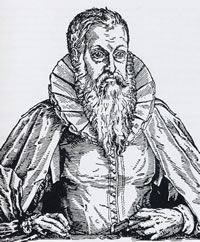


![An engraving of English explorer Sir Thomas Cavendish (or Candish) (1560–1592), who was known as "the Navigator" because he was the first to deliberately set out to circumnavigate the globe. The engraving contains the words "Thomas Candish, Armiger. Animum fortuna sequatur [The soul follows chance]".](https://upload.wikimedia.org/wikipedia/commons/thumb/5/5a/Thomas_Cavendish.jpg/500px-Thomas_Cavendish.jpg)


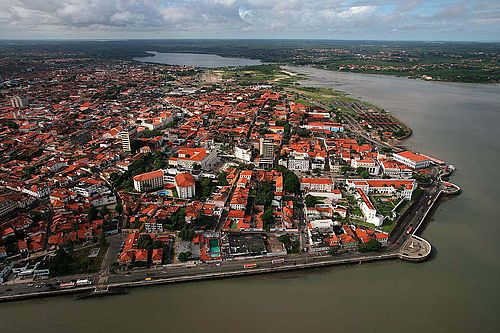


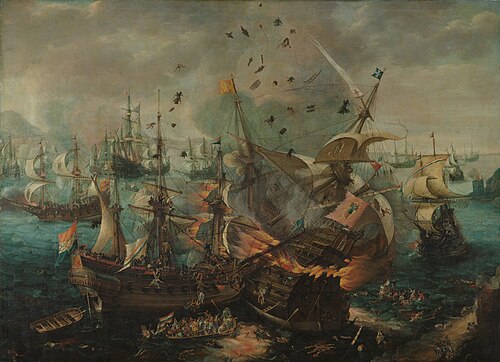





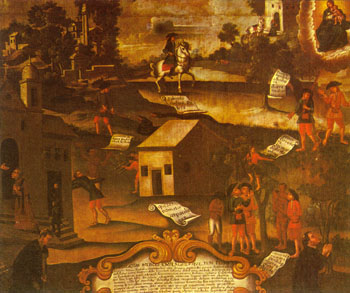


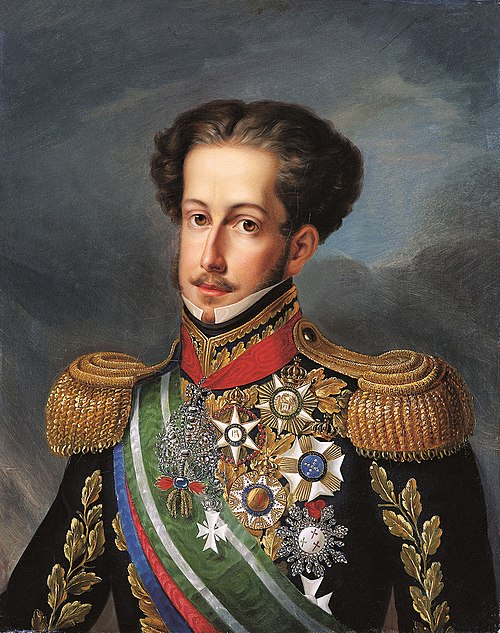


![Pedro I delivers his abdication letter while a courtier kisses the hand of the now Pedro II, his son and heir, representing the end of a reign and the beginning of another. There is artistic license in this non-contemporary painting. The Emperor was actually dressed in plain clothes, not in court dress.[1] His son was sleeping in his room, not awaken during the ordeal[2]](https://upload.wikimedia.org/wikipedia/commons/thumb/9/9a/Abdicacao_Pedro_I_do_Brasil.jpg/500px-Abdicacao_Pedro_I_do_Brasil.jpg)