Encyclopedia/3. History, Societies & Civilizations/09. Modern Nations/02. Americas • Curated by Admin Timeline.sg
History of Bolivia (AI-generated, sourced to Wikipedia).
Chronological Storyline (28 Milestones)
1500 BCE
Tiwanaku Culture Emerges
The early agricultural and cultural foundations of the Tiwanaku civilization begin to form near the southern shores of Lake Titicaca. Source — Wikipedia, "Bolivia":
Sitio arqueológico Ruinas de Tiahuanacu By CLAUDIOLD - Own work, CC BY-SA 4.0, https://commons.wikimedia.org/w/index.php?curid=139063929
600 CE
Tiwanaku Empire Expands
The Tiwanaku state becomes a dominant cultural and political force in the southern Andes, building monumental architecture. Source — Wikipedia, "Bolivia":
Sitio arqueológico Ruinas de Tiahuanacu By CLAUDIOLD - Own work, CC BY-SA 4.0, https://commons.wikimedia.org/w/index.php?curid=139063929
1470 CE
Inca Conquest of Kollasuyu
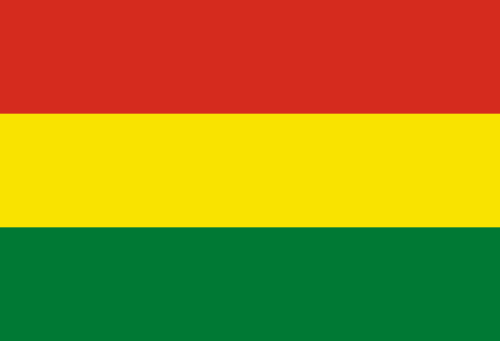
The Inca Empire expands into modern-day Bolivia, incorporating the region as Kollasuyu, the southeastern quarter of their empire. Source — Wikipedia, "Bolivia":
Flag of Bolivia Flag of Bolivia* country Template:I18n/Republic of Bolivia used by Bolivia from 1851 until Present created by Government of Bolivia format 15:22 shape rectangular colours red, yellow, green flag has 3 horizontal stripes other characteristics A horizontal tricolor of red, yellow and green. By See file history' below for details. - Own work, Public domain, https://commons.wikimedia.org/w/index.php?curid=342979
1538 CE
Spanish Conquest Completed
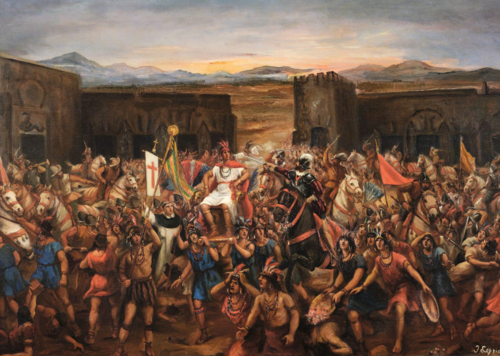
Spanish conquistadors defeat the Inca forces in the region, establishing Spanish colonial rule over the territory. Source — Wikipedia, "Bolivia":
Oil painting depicts The Capture of Atahualpa in Cajamarca (Battle of Cajamarca) and the Spanish conquest of the Inca Empire in 1532. The artwork was made between 1920-1927 by Juan Lepiani. By Juan Lepiani - https://img.haarets.co.il/img/1.4276143/4073906597.jpg, Public domain, https://commons.wikimedia.org/w/index.php?curid=120590094
Apr 1, 1545 CE
Discovery of Cerro Rico
Silver deposits are discovered at Cerro Rico de Potosí, sparking a massive economic boom and tragic exploitation of indigenous labor. Source — Wikipedia, "Bolivia":
Vista de la Villa Imperial de Potosí By Parallelepiped09 - Own work, CC BY-SA 4.0, https://commons.wikimedia.org/w/index.php?curid=171595084
Mar 1, 1781 CE
Túpac Katari's Siege
Indigenous leader Túpac Katari leads a massive uprising, besieging La Paz for months before being captured and executed. Source — Wikipedia, "Bolivia":
Acuarela anónima que muestra a Julián Apaza Nina (1750-1781), quien adoptó el nombre de Tupac Catari al asumir en 1781 el liderazgo de una rebelión en el Alto Perú. Dice: Manuscrito: "Julian Apasa alias Tupac-Catari Gefe pral de la rebelion del Perú en el Virreynato de Buenos Ayres" Impreso: "Julian Apasa alias Tupac-Catari, Gefe pral. de la rebelion del Perú en el Virreynato de Buenos Ayres" By Unknown author - Amigo, Roberto (2015) (in Spanish) Un viajero virreinal. Acuarelas inéditas de la sociedad rioplatense, Buenos Aires: Hilario. Artes, Letras & Oficios, p. 169 ISBN: 9789873392511., Public domain, https://commons.wikimedia.org/w/index.php?curid=130987570
Jul 16, 1809 CE
La Paz Revolution Begins
Pedro Domingo Murillo leads a revolutionary junta in La Paz, marking one of the earliest uprisings against Spanish rule in South America. Source — Wikipedia, "Bolivia":
La Paz Revolution Begins By anonymous - Own work, 1999 (foto), Public domain, https://commons.wikimedia.org/w/index.php?curid=2665318
Aug 6, 1825 CE
Independence Declared
Simón Bolívar's forces liberate the region, and the Republic of Bolívar (Bolivia) is officially declared independent from Spain. Source — Wikipedia, "Bolivia":
Flag of Bolivia Flag of Bolivia* country Template:I18n/Republic of Bolivia used by Bolivia from 1851 until Present created by Government of Bolivia format 15:22 shape rectangular colours red, yellow, green flag has 3 horizontal stripes other characteristics A horizontal tricolor of red, yellow and green. By See file history' below for details. - Own work, Public domain, https://commons.wikimedia.org/w/index.php?curid=342979
Nov 18, 1841 CE
Victory at Ingavi
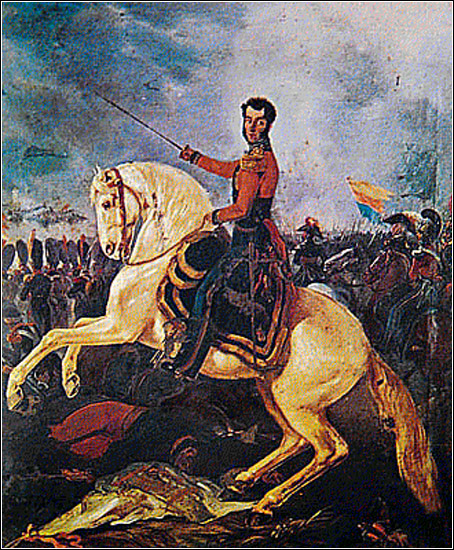
Bolivian forces under President José Ballivián defeat the Peruvian army, securing Bolivian independence and national sovereignty. Source — Wikipedia, "Bolivia":
Bataille d'Ingavi. 1841. Gravure du milieu du XIXème siècle. By Unknown author - http://www.ebrisa.com/portalc/ShowArticle.do?articleId=144626, Public domain, https://commons.wikimedia.org/w/index.php?curid=7535311
Apr 1, 1879 CE
War of the Pacific
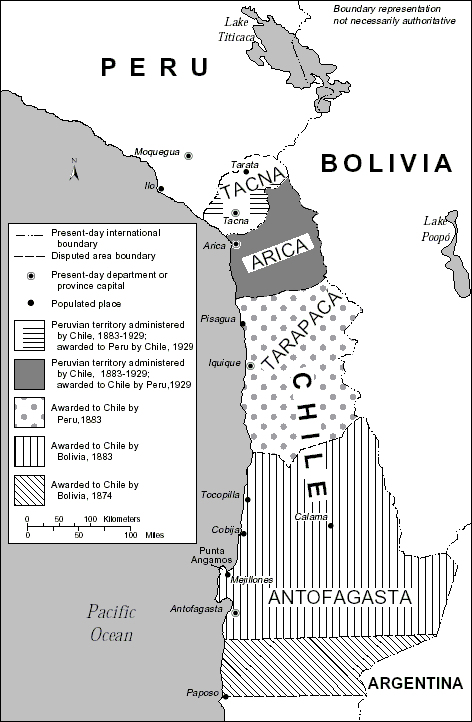
Chile declares war on Bolivia and Peru over nitrate-rich territories, leading to Bolivia eventually losing its coastal access. Source — Wikipedia, "Bolivia":
Map showing changes of territory due to the War of the Pacific By United States Federal Government - United States Library of Congress Country Studies. This is used as an illustration in the country studies on both Peru and Chile.https://www.loc.gov/resource/frdcstdy.perucountrystudy00huds_0/?sp=98https://www.loc.gov/resource/frdcstdy.chilecountrystud00huds_0/?sp=74, Public domain, https://commons.wikimedia.org/w/index.php?curid=1214614
Apr 1, 1884 CE
Treaty of Valparaíso Signed
Bolivia signs a truce with Chile, effectively ceding its entire Pacific coastline and becoming a landlocked nation. Source — Wikipedia, "Bolivia":
Flag of Bolivia Flag of Bolivia* country Template:I18n/Republic of Bolivia used by Bolivia from 1851 until Present created by Government of Bolivia format 15:22 shape rectangular colours red, yellow, green flag has 3 horizontal stripes other characteristics A horizontal tricolor of red, yellow and green. By See file history' below for details. - Own work, Public domain, https://commons.wikimedia.org/w/index.php?curid=342979
1899 CE
Federal Revolution Shifts Power
A civil war results in the Liberal Party's victory, moving the de facto seat of government from Sucre to La Paz. Source — Wikipedia, "Bolivia":
Mapa de la Guerra civil boliviana (1898-1899) By Unknown author - http://sucrecapitalidadplena.blogspot.pe/2009/09/la-guerra-federal-masacre-de-cosmini-y.html, Public domain, https://commons.wikimedia.org/w/index.php?curid=68166336
Nov 1, 1903 CE
Treaty of Petrópolis Signed
Bolivia cedes the Acre territory to Brazil in exchange for territorial compensation and the construction of the Madeira-Mamoré Railway. Source — Wikipedia, "Bolivia":
Map Madeira-Mamoré Railway Co., 1904. No Scale. By Revista Kosmos - Coleção de Jorge A. Ferreira Jr., Public domain, https://commons.wikimedia.org/w/index.php?curid=15942595
Jun 1, 1932 CE
Chaco War Erupts
Bolivia and Paraguay go to war over the disputed Gran Chaco region, believed to contain vast oil reserves. Source — Wikipedia, "Bolivia":
Map of Chaco War in Spanish. By Anibalcesar, vector: MacedonianBoy - Own work, CC BY-SA 4.0, https://commons.wikimedia.org/w/index.php?curid=35276705
Jul 1, 1938 CE
Chaco War Peace Treaty
The war ends with the Treaty of Buenos Aires, confirming Paraguayan control over most of the Chaco Boreal region. Source — Wikipedia, "Bolivia":
Map of Chaco War in Spanish. By Anibalcesar, vector: MacedonianBoy - Own work, CC BY-SA 4.0, https://commons.wikimedia.org/w/index.php?curid=35276705
Apr 9, 1952 CE
1952 National Revolution
The MNR party leads a successful revolution, establishing universal suffrage, nationalizing tin mines, and enacting agrarian reform. Source — Wikipedia, "Bolivia":
Bas relief sculpture on the Museo de la Revolución in Plaza Villarroel, La Paz, Bolivia. Workers and peasants stand united, carrying numerous symbolic items. Text declares, "The National Victory of April 9, 1952, gave us liberty." By Carwil Bjork-James - Own work, CC BY-SA 4.0, https://commons.wikimedia.org/w/index.php?curid=67622693
Oct 9, 1967 CE
Che Guevara Executed
Marxist revolutionary Che Guevara is captured and executed by Bolivian forces, ending his ill-fated guerrilla campaign in the region. Source — Wikipedia, "Bolivia":
Popularized cropped version of Guerrillero Heroico - Che Guevara at the funeral for the victims of the La Coubre explosion. Gelatin silver print from 1985, 23.9 x 17 cm (image 19.4 x 17 cm) By Alberto Korda, restored by Adam Cuerden - Minerva Auctions, Public domain, https://commons.wikimedia.org/w/index.php?curid=139820026
Aug 1, 1971 CE
Banzer Seizes Power
General Hugo Banzer overthrows the government in a military coup, establishing a brutal authoritarian regime that lasts until 1978. Source — Wikipedia, "Bolivia":
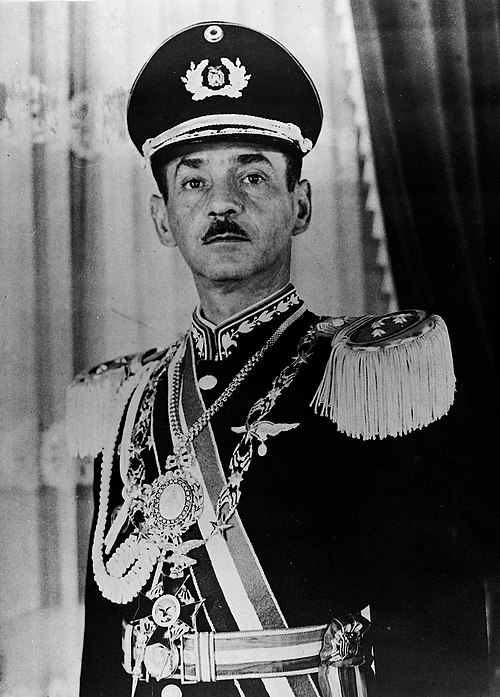
Hugo Banzer Suárez, presidente de Bolivia By Ezarate - Own work, Public domain, https://commons.wikimedia.org/w/index.php?curid=88923050
Oct 1, 1982 CE
Democracy Restored
After years of military dictatorships, Hernán Siles Zuazo assumes the presidency, marking the return to democratic rule. Source — Wikipedia, "Bolivia":
Flag of Bolivia (State). By See File history, below, for details. - Own work BASED ON: Official Coat of arms of Bolivia., Public domain, https://commons.wikimedia.org/w/index.php?curid=78057242
Feb 1, 1991 CE
Cholera Epidemic Strikes
A severe cholera epidemic hits Bolivia, part of the broader Latin American outbreak, infecting thousands and straining the healthcare system. Source — Wikipedia, "Bolivia":
Flag of Bolivia Flag of Bolivia* country Template:I18n/Republic of Bolivia used by Bolivia from 1851 until Present created by Government of Bolivia format 15:22 shape rectangular colours red, yellow, green flag has 3 horizontal stripes other characteristics A horizontal tricolor of red, yellow and green. By See file history' below for details. - Own work, Public domain, https://commons.wikimedia.org/w/index.php?curid=342979
Sep 1, 1993 CE
World Cup Qualification
The Bolivian national football team qualifies for the 1994 FIFA World Cup, marking their first appearance in the tournament in 44 years. Source — Wikipedia, "Bolivia":
Flag of Bolivia Flag of Bolivia* country Template:I18n/Republic of Bolivia used by Bolivia from 1851 until Present created by Government of Bolivia format 15:22 shape rectangular colours red, yellow, green flag has 3 horizontal stripes other characteristics A horizontal tricolor of red, yellow and green. By See file history' below for details. - Own work, Public domain, https://commons.wikimedia.org/w/index.php?curid=342979
Apr 1, 2000 CE
Cochabamba Water War
Massive protests erupt in Cochabamba against the privatization of the city's water supply, forcing the government to reverse the deal. Source — Wikipedia, "Bolivia":
Flag of Bolivia Flag of Bolivia* country Template:I18n/Republic of Bolivia used by Bolivia from 1851 until Present created by Government of Bolivia format 15:22 shape rectangular colours red, yellow, green flag has 3 horizontal stripes other characteristics A horizontal tricolor of red, yellow and green. By See file history' below for details. - Own work, Public domain, https://commons.wikimedia.org/w/index.php?curid=342979
Dec 1, 2000 CE
Tiwanaku Named UNESCO Site
The ruins of Tiwanaku are officially designated a UNESCO World Heritage Site, recognizing its significance as a pre-Columbian cultural center. Source — Wikipedia, "Bolivia":
Sitio arqueológico Ruinas de Tiahuanacu By CLAUDIOLD - Own work, CC BY-SA 4.0, https://commons.wikimedia.org/w/index.php?curid=139063929
Oct 1, 2003 CE
Bolivian Gas Conflict
Violent protests over the export of natural gas through Chile lead to the resignation of President Gonzalo Sánchez de Lozada. Source — Wikipedia, "Bolivia":
Coat of arms of Bolivia. By See File history, below, for details. - This vector image includes elements that have been taken or adapted from this file:, Public domain, https://commons.wikimedia.org/w/index.php?curid=78027748
Dec 18, 2005 CE
First Indigenous President
Evo Morales is elected as Bolivia's first indigenous president, promising to empower the marginalized native populations. Source — Wikipedia, "Bolivia":
Official portrait of the 65th Constitutional President of the Plurinational State of Bolivia, Evo Morales. By EneasMx - This image has been extracted from another file, CC BY-SA 4.0, https://commons.wikimedia.org/w/index.php?curid=193474580
Jan 25, 2009 CE
New Constitution Enacted
A new constitution is approved via referendum, establishing a plurinational state and granting greater autonomy to indigenous communities. Source — Wikipedia, "Bolivia":
Coat of arms of Bolivia. By See File history, below, for details. - This vector image includes elements that have been taken or adapted from this file:, Public domain, https://commons.wikimedia.org/w/index.php?curid=78027748
Nov 10, 2019 CE
Morales Resigns Amid Crisis
Following disputed election results and intense protests, Evo Morales resigns, leading to a controversial succession and political turmoil. Source — Wikipedia, "Bolivia":
The constitutional president of the Plurinational State of Bolivia, Jeanine Áñez, was designated as Person of the Year 2019 awarded by the Fides Group. The President was surprised and emphasized that the award belongs to all Bolivians. By Ministry of Communication - Plurinational Legislative Assembly, CC BY 2.0, https://commons.wikimedia.org/w/index.php?curid=115789730
Oct 18, 2020 CE
Luis Arce Wins Presidency
Luis Arce of the MAS party wins the presidential election, restoring the socialist movement to power after the 2019 crisis. Source — Wikipedia, "Bolivia":
Official portrait of the 67th President of Bolivia, Luis Arce. By Plurinational Legislative Assembly - This image has been extracted from another file, CC BY 2.0, https://commons.wikimedia.org/w/index.php?curid=192848081