Encyclopedia/3. History, Societies & Civilizations/09. Modern Nations/05. Europe • Curated by Admin Timeline.sg
History of Belgium, sourced from Wikipedia's "Timeline of Belgian history".
Chronological Storyline (250 Milestones)
57 BCE
Roman Republic
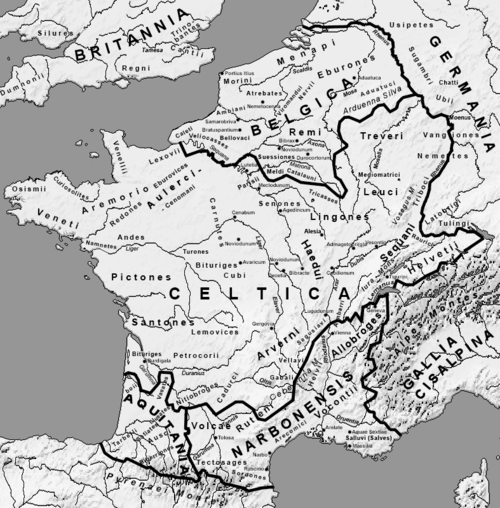
Roman General Julius Caesar invades and conquers the lands of the Belgae: Battle of the Sabis; Siege of the Atuatuci Source — Wikipedia, "Timeline of Belgian history" (1st century BC):
Territory of the Roman republic in 44 BC. Map based on territory depicted in Hammond's 8 x 11 Map of Roman Dominions 44 BC (1906). Coastlines from the Ancient World Mapping Center shape files. Map tiles from Consortium of Ancient World Mappers. Both are released under CC-BY 4.0. The projection is Europe Equidistant Conic (ESRI:102031). Contra Hammond, Cyprus is excluded from the map per Goldsworthy Caesar (2006) p 444, citing Dio 42.35.5, noting that Cyprus was returned to the Ptolemaic kingdom after Caesar's intervention in Alexandria. By Ifly6 - Own work, CC BY-SA 4.0, https://commons.wikimedia.org/w/index.php?curid=155519121
56 BCE
Morini
Julius Caesar campaigns unsuccessfully against the coastal tribes of the Morini and Menapii. Source — Wikipedia, "Timeline of Belgian history" (1st century BC):
Roman provinces and the proto-Basque, Celtic and Germanic peoples at the end of the 1st century BC. J-C. By User:Feitscherg - Own work, CC BY-SA 3.0, https://commons.wikimedia.org/w/index.php?curid=42753
55 BCE
Morini
Julius Caesar subdues the Morini. Source — Wikipedia, "Timeline of Belgian history" (1st century BC):
Roman provinces and the proto-Basque, Celtic and Germanic peoples at the end of the 1st century BC. J-C. By User:Feitscherg - Own work, CC BY-SA 3.0, https://commons.wikimedia.org/w/index.php?curid=42753
54 BCE
Ambiorix's revolt
Ambiorix's revolt under Ambiorix and Cativolcus. Source — Wikipedia, "Timeline of Belgian history" (1st century BC):
West façade of the provincial palace in Liège, Belgium Here a sculpted relief of the wars of Ambiorix against the Romans. By Kleon3 - Own work, CC BY-SA 4.0, https://commons.wikimedia.org/w/index.php?curid=37246832
53 BCE
Nervii
Punitive campaigns subdue Nervii and Treveri; exterminate Eburoni. Source — Wikipedia, "Timeline of Belgian history" (1st century BC):
Nervii By Unknown author, CC BY-SA 3.0, https://commons.wikimedia.org/w/index.php?curid=605427
50 BCE
Commentarii de Bello Gallico
Julius Caesar completes writing Commentarii de Bello Gallico, his account of his campaigns in Gaul. Source — Wikipedia, "Timeline of Belgian history" (1st century BC):
Caesar, Gaius Iulius: Commentarii de bello Gallico mit der Fortsetzung des Aulus Hirtius Rom 1469.05.12 with Coat of Arms Dr. decretorum Georg Beck/Peck in Augsburg By Caesar, unbekannter Illustrator - http://daten.digitale-sammlungen.de/bsb00064880/image_11, Public domain, https://commons.wikimedia.org/w/index.php?curid=17065455
29 BCE
Marcus Nonius Gallus
Marcus Nonius Gallus suppresses revolt among Treveri. Source — Wikipedia, "Timeline of Belgian history" (1st century BC):
M. Nonius Sufenas 57 BC. AR Denarius (18mm, 3.78 g, 12h). Rome mint. Head of Saturn right; to left, harpa above baetylus (conical stone); S • C upwards to left, SVFENAS downwards to right / Roma seated left on pile of arms, holding vertical spear in right hand, and sword in left, being crowned by Victory standing left behind, holding wreath in right hand and palm frond over left shoulder in left hand; SEX • NONI in exergue; • PR • L • V • P • F around. Crawford 421/1; Sydenham 885; Kestner 3436-7; BMCRR Rome 3820-4; Nonia 1. Good VF, handsome toning, a few shallow scratches on obverse under tone. Well centered on a round flan. By CNG - https://www.cngcoins.com/Coin.aspx?CoinID=246771, CC BY-SA 2.5, https://commons.wikimedia.org/w/index.php?curid=68473082
27 BCE
Augustus
Augustus creates the province Gallia Belgica. Source — Wikipedia, "Timeline of Belgian history" (1st century BC):
Augustus of Prima Porta By Justin Benttinen - Own work, CC BY-SA 4.0, https://commons.wikimedia.org/w/index.php?curid=164710011
15 BCE
Tongeren
Probable origins of the city of Tongeren. Source — Wikipedia, "Timeline of Belgian history" (1st century BC):
Grote Markt, Tongeren, Belgium By original: Jeanhousen derivative work: P199 - This file was derived from: 20100706 tongeren25.JPG:, CC BY-SA 3.0, https://commons.wikimedia.org/w/index.php?curid=38792683
12 BCE
Augusta Treverorum
Augusta Treverorum becomes a city. Source — Wikipedia, "Timeline of Belgian history" (1st century BC):
Map of Trier in roman times (Augusta Treverorum). By Contributors of the relevant openstreetmap.org data + Haselburg-müller - openstreetmap.org [1] + own work, CC BY-SA 2.0, https://commons.wikimedia.org/w/index.php?curid=11735135
10 BCE
Aarlen
Probable origins of the city of Aarlen. Source — Wikipedia, "Timeline of Belgian history" (1st century BC):
Arlon (Belgium): roofs of the city and bell tower of the St. Martin's church (1907–1914). By Jean-Pol GRANDMONT - Own work, CC BY 3.0, https://commons.wikimedia.org/w/index.php?curid=4660338
9 BCE
Nero Claudius Drusus
Nero Claudius Drusus dies after falling from his horse. Command of Rome's northern armies passes to Tiberius. Source — Wikipedia, "Timeline of Belgian history" (1st century BC):
Nero Claudius Drusus (Drusus the Elder), marble, replica under Tiberius or Claudius of an original from the time of Augustus. Capitoline Museum, Rome. During the exhibition Me, Augustus, Emperor of Rome, March 19, 2014 - July 13, 2014, Grand Palais, Paris. By Siren-Com - Own work, CC BY-SA 3.0, https://commons.wikimedia.org/w/index.php?curid=32781485
4 BCE
Tiberius
Monument honouring Tiberius erected in Bagacum. Source — Wikipedia, "Timeline of Belgian history" (1st century BC):
Rome, Ara Pacis museum: cast of a portrait of emperor Tiberius. From the collection of casts of busts showing the members of the Julio-Claudian dynasty. The original artwork is exhibited in the Ny Carlsberg Glyptotek (Copenhagen). Picture by Giovanni Dall'Orto, March 28 2008. By Giovanni Dall'Orto - Own work, Attribution, https://commons.wikimedia.org/w/index.php?curid=3882531
13 CE
Germanicus
Germanicus becomes commander of the Roman army of the Rhine. Source — Wikipedia, "Timeline of Belgian history" (1st century):
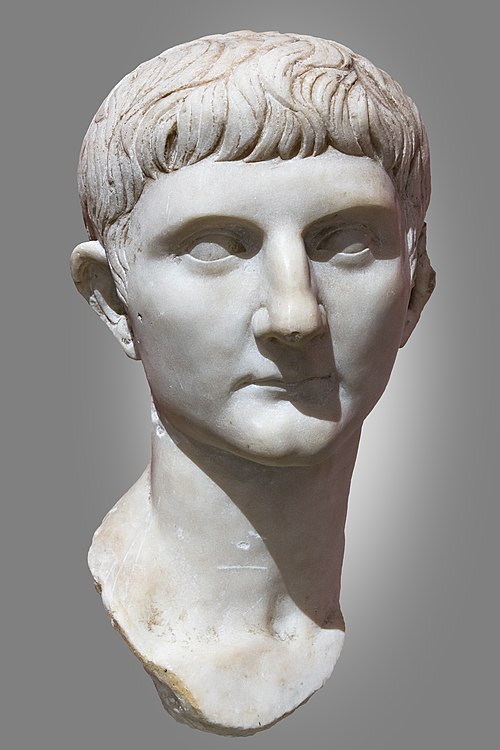
Busto de Germánico. Museo San Raymond. By Didier Descouens - Own work, Public domain, https://commons.wikimedia.org/w/index.php?curid=116155256
16 CE
Germanicus
Roman invasion of Germany under command of Germanicus launched from Fectio in Gallia Belgica. Source — Wikipedia, "Timeline of Belgian history" (1st century):
Busto de Germánico. Museo San Raymond. By Didier Descouens - Own work, Public domain, https://commons.wikimedia.org/w/index.php?curid=116155256
Oct 10, 19 CE
Germanicus
Death of Germanicus. Source — Wikipedia, "Timeline of Belgian history" (1st century):
Busto de Germánico. Museo San Raymond. By Didier Descouens - Own work, Public domain, https://commons.wikimedia.org/w/index.php?curid=116155256
21 CE
Treveri
Treveri revolt at high taxes. Source — Wikipedia, "Timeline of Belgian history" (1st century):
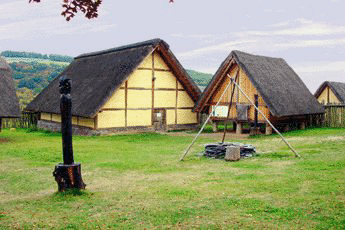
'Keltendorf' in Altburg bei Bundenbach By Roßbacher at German Wikipedia - Own work Originally from de.wikipedia; description page is/was here., Public domain, https://commons.wikimedia.org/w/index.php?curid=1589176
Oct 1, 39 CE
Galba
Galba becomes commander of the armies in Lower Germany. Source — Wikipedia, "Timeline of Belgian history" (1st century):
Legend: IMP SER GALBA AVG By American Numismatic Society - http://numismatics.org/collection/1954.256.8, CC0, https://commons.wikimedia.org/w/index.php?curid=116131931
47 CE
Gnaeus Domitius Corbulo
Gnaeus Domitius Corbulo becomes commander of the armies in Lower Germany. Orders canals dug in the Rhine–Meuse–Scheldt delta. Source — Wikipedia, "Timeline of Belgian history" (1st century):
Map of the partition of Rhine and Meuse water among the various branches of their delta 2000-2011 By Maximilian Dörrbecker (Chumwa) - Own work, using this file by NordNordWest and Lencer as background this file by Ulamm as information source, CC BY-SA 2.5, https://commons.wikimedia.org/w/index.php?curid=46754100
47 CE
Roman law
Roman law replaces customary law in Gallia Belgica; druids outlawed; Gaulish aristocracy given senatorial rank. Source — Wikipedia, "Timeline of Belgian history" (1st century):
SPQR banner, emblem of the Roman Republic. By Ssolbergj - Own work, CC BY 3.0, https://commons.wikimedia.org/w/index.php?curid=2992630
Jan 1, 69 CE
Aulus Vitellius
Armies of the Rhine proclaim Aulus Vitellius as emperor. Source — Wikipedia, "Timeline of Belgian history" (1st century):
Legend: A VITELLIVS GERMAN IMP TR P By American Numismatic Society - http://numismatics.org/collection/1967.152.354, CC0, https://commons.wikimedia.org/w/index.php?curid=116131991
70 CE
Treveri
Treveri, Menapii, Nervii and Tungrii come out in support of the Batavian Revolt, some under compulsion. Source — Wikipedia, "Timeline of Belgian history" (1st century):
'Keltendorf' in Altburg bei Bundenbach By Roßbacher at German Wikipedia - Own work Originally from de.wikipedia; description page is/was here., Public domain, https://commons.wikimedia.org/w/index.php?curid=1589176
77 CE
Pliny the Elder
Pliny the Elder starts writing his Historia Naturalis, book 4 of which contains a description of Gallia Belgica. Source — Wikipedia, "Timeline of Belgian history" (1st century):
Plinio Secondo By Geoffrey - Cesare Cantù, Grande Illustrazione del Lombardo Veneto ossia storia delle città, dei borghi etc., Milano 1859, Vol. III, Public domain, https://commons.wikimedia.org/w/index.php?curid=9466113
85 CE
castra
Northern border fortified with series of castra. Source — Wikipedia, "Timeline of Belgian history" (1st century):
A 3D visualisation of the Roman fort at Templeborough near Rotherham, UK. Detailed description 0:00 - 0:10 - The first shot stars on the west of the fort. The camera moves round to the southern aspect showing the River Don to the west of the site. 0:10 - 0:22 - The second shot is from the top of the east gate house, over the Via Sagularis 0:22 - 0:37 - The third shot looks west along the Via Sagularis, and moves along it to the west. 0:37 - 0:42 - The fourth shot shows the Granary and rises to show it within the fort 0:42 - 0:54 - View from the south east corner, panning round from eastward to northward 0:54 - General view of the Principia (Headquarters) By Animators on behalf of Rotherham Museums and Archives - This file was donated by Rotherham Museums and Galleries service as part of the Yorkshire Network GLAMwiki. The service operates Clifton Park Museum, the Boston Castle and Riverside House Library and Art Gallery. You can find out more about their GLAMwiki work on their directory page: Rotherham Museums This tag does not indicate the copyright status of the attached work. A normal copyright tag is still required. See Commons:Licensing., CC BY-SA 4.0, https://commons.wikimedia.org/w/index.php?curid=40015734
90 CE
Domitian
Domitian restructures provinces of the Roman Empire: Gallia Belgica divided into the provinces of Belgica Prima, Belgica Secunda, Germania Superior and Germania Inferior. Source — Wikipedia, "Timeline of Belgian history" (1st century):
Bust of roman emperor Domitianus. Antique head, body added in the 18th century. Musée du Louvre (Ma 1264), Paris. Formerly in the Albani Collection in Rome. By Unknown author - sailko (my camera), CC BY 2.5, https://commons.wikimedia.org/w/index.php?curid=5858660
172 CE
Chauci
Chauci launch maritime raids on the coasts of Gallia Belgica. Source — Wikipedia, "Timeline of Belgian history" (2nd century):
Map of the modern coastline of the Netherlands, Germany, and Denmark, showing the Germanic peoples that lived there c. 150 AD and shipbuilding techniques they used (clinker-built and carvel-built) By my work - John Haywood's Dark Age Naval Power: Frankish & Anglo-Saxon Seafaring Activity (1999, ISBN 1-898281-43-2). The peoples are named in the text, with their locations shown on page 18. Also given in the text is the division between regions using clinker-built ships/boats and carvel-built ships/boats, with the dividing line at the Rhine River (which itself was in the carvel-built ship/boat-building region, from the Lower Rhine through the Middle Rhine). Use Tacitus' Germania for Canninefates placement. The topographic map is from DEMIS map server, appropriately tagged {{Demis-pd}} prior to any modification. All modifications and annotations done by myself., CC BY-SA 3.0, https://commons.wikimedia.org/w/index.php?curid=15120428
286 CE
Carausius
Carausius, a Menapian general in the Roman army, declares himself emperor of Britain and Gaul. Source — Wikipedia, "Timeline of Belgian history" (3rd century):
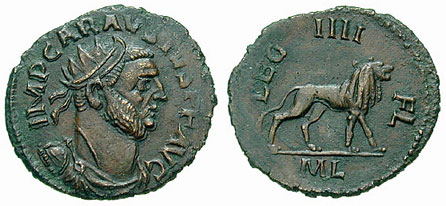
Carausius. 286-293 AD. Æ Antoninianus (2.99 gm).IMP CARAVSIVS P F AVG, radiate, draped and cuirassed bust rightLEG IIII FL, lion walking right; ML.RIC V pt. 2, 69 var. (legend). By Unknown author - English Wikipedia, original upload by Panairjdde, CC BY-SA 3.0, https://commons.wikimedia.org/w/index.php?curid=348487
293 CE
Carausian revolt
Death of Carausius, brings the end of the Carausian revolt 3 years later. Source — Wikipedia, "Timeline of Belgian history" (3rd century):
Carausius. 286-293 AD. Æ Antoninianus (2.99 gm).IMP CARAVSIVS P F AVG, radiate, draped and cuirassed bust rightLEG IIII FL, lion walking right; ML.RIC V pt. 2, 69 var. (legend). By Unknown author - English Wikipedia, original upload by Panairjdde, CC BY-SA 3.0, https://commons.wikimedia.org/w/index.php?curid=348487
343 CE
Saint Servatius
Servatius, bishop of Tongeren, attends the Council of Serdica. Source — Wikipedia, "Timeline of Belgian history" (4th century):
Detail of portrait bust allegedly containing the skull of Saint Servatius, in the treasury of the Basilica of Saint Servatius, Maastricht, the Netherlands. Gilded silver bust donated by Alessandro Farnese, Duke of Parma. By Kleon3 - Own work, CC BY-SA 3.0, https://commons.wikimedia.org/w/index.php?curid=22072116
357 CE
Rhine delta
Land south of the Rhine delta ceded to Frankish foederati Source — Wikipedia, "Timeline of Belgian history" (4th century):
Map of the partition of Rhine and Meuse water among the various branches of their delta 2000-2011 By Maximilian Dörrbecker (Chumwa) - Own work, using this file by NordNordWest and Lencer as background this file by Ulamm as information source, CC BY-SA 2.5, https://commons.wikimedia.org/w/index.php?curid=46754100
359 CE
Saint Servatius
Servatius, bishop of Tongeren, attends the Council of Ariminum. Source — Wikipedia, "Timeline of Belgian history" (4th century):
Detail of portrait bust allegedly containing the skull of Saint Servatius, in the treasury of the Basilica of Saint Servatius, Maastricht, the Netherlands. Gilded silver bust donated by Alessandro Farnese, Duke of Parma. By Kleon3 - Own work, CC BY-SA 3.0, https://commons.wikimedia.org/w/index.php?curid=22072116
431 CE
Salian Franks
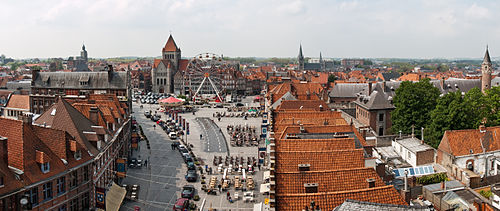
Salian Franks take possession of Tournai. Source — Wikipedia, "Timeline of Belgian history" (5th century):
photo prise depuis le haut du beffroi By stephane martin - Flickr: La Grand-Place de Tournai, CC BY-SA 2.0, https://commons.wikimedia.org/w/index.php?curid=29686509
481 CE
Childeric I
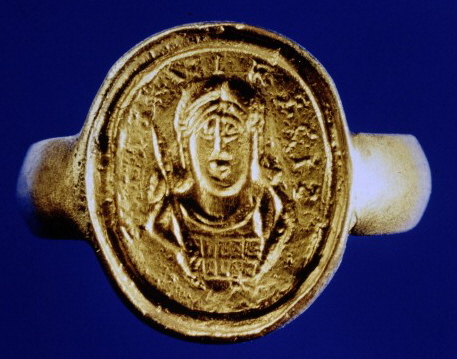
Childeric I buried in Tournai. Source — Wikipedia, "Timeline of Belgian history" (5th century):
Ring with image of Childeric. Copy : the original was stolen in 1831. By Unknown author - Gallica, Public domain, https://commons.wikimedia.org/w/index.php?curid=1756524
561 CE
Sigebert I
Sigebert I inherits the Frankish kingdom of Austrasia. Source — Wikipedia, "Timeline of Belgian history" (6th century):
Sigebert I. By Lavisse, Ernest, 1842-1922 - Histoire de France depuis les origines jusqu'à la révolution, Public domain, https://commons.wikimedia.org/w/index.php?curid=11132455
Mar 17, 659 CE
Gertrude of Nivelles
Death of Gertrude of Nivelles Source — Wikipedia, "Timeline of Belgian history" (7th century):
Stained glass window in the Basilica of Our Lady in Tongeren in the province of Limburg (Belgium) depicting the Crucifixion of the Apostle Andrew; lower section: Gertrud von Nivelles By GFreihalter - Own work, CC BY-SA 3.0, https://commons.wikimedia.org/w/index.php?curid=22090913
679 CE
Amandus
Death of Amandus. Source — Wikipedia, "Timeline of Belgian history" (7th century):
Pepin of Herstal and his wife Plectrude found what will become the Abbey of Saint-Hubert. Source — Wikipedia, "Timeline of Belgian history" (7th century):
St. Hubert of Liège offers his services to Pepin of Herstal; the conversion of St Hubert (background) Contents: Hubert le Prevost, Vie de St. Hubert Place of origin, date: Bruges, David Aubert (scribe), Loyset Li‚det (illuminator); 1463 Material: Vellum, ff. 76, 323x244 (204x150) mm, 22 lines, littera hybrida (lettre bourguignonne), Binding: 18th-century brown leather; gilt Decoration: 13 miniatures (115/100x150 mm), 1 historiated initial (38x42 mm; coat of arms), decorated initials (9v, 10v, 11v, 12v, 13r, etc) Provenance: made in 1463 for Philip the Good (d. 1467), Duke of Burgundy; remained in the ducal Library till the 17th century (mentioned in the inventories of 1467, 1487, 1536, 1577, 1598 and 1614). Disappeared after 1643. H.-N. de Villenfagne d'Ingihoul, Bruxelles (d. 1826).Purchased in 1826 by King William I of The Netherlands and placed in the Koninklijke Bibliotheek By David Aubert (scribe), Loyset Li‚det (illuminator) - Hubert le Prevost, Vie de St. Hubert, Public domain, https://commons.wikimedia.org/w/index.php?curid=9931893
Dec 17, 693 CE
Begga
Death of Begga. Source — Wikipedia, "Timeline of Belgian history" (7th century):
Begga By Jacob Jordaens - https://phoebusfoundation.org/en/beleef/saint-begga, Public domain, https://commons.wikimedia.org/w/index.php?curid=159842571
Sep 17, 705 CE
Lambert of Maastricht
Death of Lambert of Maastricht: murdered at a site that would become Liège. Source — Wikipedia, "Timeline of Belgian history" (8th century):
Deel van het zogenaamde Palude-diptiek, een tweeluik uit de late 15e eeuw, toegeschreven aan Jan van Brussel, in het museum Grand Curtius in Luik. Hier: De moord op Sint-Lambertus op de binnenkant van het rechterpaneel. By Jan van Brussel (or workshop), ca. 1490 - Didier Martens, "À la recherche de Jan van Bruessel: peut-on rapprocher le Diptyque ex Palude du Jugement dernier conservé à l'hôtel de ville de Maastricht?", in: Oud Holland, 2017, nr. 3-4, pp. 83-110 (online text), Public domain, https://commons.wikimedia.org/w/index.php?curid=90860615
717 CE
Lambert of Maastricht
See of Maastricht moved to the location of Lambert of Maastricht's murder, now Liège. Source — Wikipedia, "Timeline of Belgian history" (8th century):
Deel van het zogenaamde Palude-diptiek, een tweeluik uit de late 15e eeuw, toegeschreven aan Jan van Brussel, in het museum Grand Curtius in Luik. Hier: De moord op Sint-Lambertus op de binnenkant van het rechterpaneel. By Jan van Brussel (or workshop), ca. 1490 - Didier Martens, "À la recherche de Jan van Bruessel: peut-on rapprocher le Diptyque ex Palude du Jugement dernier conservé à l'hôtel de ville de Maastricht?", in: Oud Holland, 2017, nr. 3-4, pp. 83-110 (online text), Public domain, https://commons.wikimedia.org/w/index.php?curid=90860615
May 30, 727 CE
Hubertus
Death of Hubertus, Bishop of Liège. Source — Wikipedia, "Timeline of Belgian history" (8th century):
St.Hubertus. Stained glass window in St.Patrick Basilica. Ottawa. Author: Mayer Co of Munich 1898 By Window: workshop of Franz Borgias Mayer (1848–1926); Photo: Wojciech Dittwald - Self-photographed, CC BY-SA 3.0, https://commons.wikimedia.org/w/index.php?curid=17504763
Apr 2, 748 CE
Charlemagne
Birth of Charlemagne, first Holy Roman Emperor. Source — Wikipedia, "Timeline of Belgian history" (8th century):
Appartient à l’ensemble documentaire : MonnFrCar By Charlemagne. Autorité émettrice de monnaie indéterminé. Atelier monétaire. Émetteur - Bibliothèque nationale de France, Public domain, https://commons.wikimedia.org/w/index.php?curid=136608827
Apr 13, 819 CE
Louis the Pious
Louis the Pious confirms the liberties granted to St Bavo's Abbey by Charlemagne (oldest extant original charter in a Belgian archive). Source — Wikipedia, "Timeline of Belgian history" (9th century):
Louis the Pious, contemporary depiction from 826 as a miles Christi (soldier of Christ), with a poem of Rabanus Maurus overlaid. Part of De laudibus Sanctae Crucis, a larger collection of cruciform carmina figurata (pattern poetry) by Rabanus Maurus. By Unknown author - Self-photographed, Public domain, https://commons.wikimedia.org/w/index.php?curid=578728
820 CE
Viking
First recorded Viking raid on the Flemish coast. Source — Wikipedia, "Timeline of Belgian history" (9th century):
Viking attack on Guérande By Abbey of Saint-Aubin - https://gallica.bnf.fr/ark:/12148/btv1b105157428/f27.item, Public domain, https://commons.wikimedia.org/w/index.php?curid=99222344
Sep 30, 825 CE
Hubertus
The remains of St Hubert (died 727) installed in the monastery that would become the Abbey of Saint-Hubert. Source — Wikipedia, "Timeline of Belgian history" (9th century):
St.Hubertus. Stained glass window in St.Patrick Basilica. Ottawa. Author: Mayer Co of Munich 1898 By Window: workshop of Franz Borgias Mayer (1848–1926); Photo: Wojciech Dittwald - Self-photographed, CC BY-SA 3.0, https://commons.wikimedia.org/w/index.php?curid=17504763
Aug 1, 843 CE
Treaty of Verdun
Treaty of Verdun divides the Carolingian Empire between the three sons of Louis the Pious: Lothair I, Louis the German and Charles the Bald, creating the kingdom of Middle Francia (including most of the Low Countries) for Lothair and assigning Flanders to Charles the Bald. Source — Wikipedia, "Timeline of Belgian history" (9th century):
Louis the Pious (right) blessing the division of the Carolingian Empire in 843 into West Francia, Lotharingia, and East Francia; from the Chroniques des rois de France, fifteenth century By AnonymousUnknown author - https://www.nybooks.com/articles/2019/12/19/lotharingia-mess-tiny-principalities/, Public domain, https://commons.wikimedia.org/w/index.php?curid=99183843
850 CE
Norsemen raid Flanders.
Norsemen raid Flanders. Source — Wikipedia, "Timeline of Belgian history" (9th century):
Sep 1, 855 CE
Treaty of Prüm
Treaty of Prüm divides Middle Francia into the Kingdom of Lotharingia (including most of the Low Countries), the Kingdom of Provence and the Kingdom of Italy. Source — Wikipedia, "Timeline of Belgian history" (9th century):
Fränkische Reichsteilung nach dem Vertrag von Prüm. Reich Lothars II. Reich Ludwigs II. Reich Ludwigs des Deutschen Reich Karls II., des Kahlen Reich Karls von der Provence By Furfur - This vector image includes elements that have been taken or adapted from this file:, CC BY-SA 4.0, https://commons.wikimedia.org/w/index.php?curid=81402528
861 CE
Norsemen raid Flanders.
Norsemen raid Flanders. Source — Wikipedia, "Timeline of Belgian history" (9th century):
864 CE
Norsemen raid Flanders.
Norsemen raid Flanders. Source — Wikipedia, "Timeline of Belgian history" (9th century):
Aug 1, 870 CE
Treaty of Meerssen
Treaty of Meerssen partitions Lotharingia (including most of the Low Countries) between East Francia (Germany) and West Francia (France). Source — Wikipedia, "Timeline of Belgian history" (9th century):
Franconian division of the empire according to the Treaty of Meerssen 870. Reich Ludwigs II / Empire of Ludwig Reich Ludwigs des Deutschen / Kingdom of Ludwig the German Reich Karls II., des Kahlen / Kingdom of Charles II, the Bald By Furfur - This vector image includes elements that have been taken or adapted from this file:, CC BY-SA 4.0, https://commons.wikimedia.org/w/index.php?curid=81211095
879 CE
Toxandri
Norsemen raid Taxandria. Source — Wikipedia, "Timeline of Belgian history" (9th century):
880 CE
Tournaisis
Norsemen raid Tournaisis. Source — Wikipedia, "Timeline of Belgian history" (9th century):
Locator map of the Prince-Bishopric of Tournai in 1350. By Sir Iain - Own work, CC BY-SA 3.0, https://commons.wikimedia.org/w/index.php?curid=17334197
881 CE
Cambrai
Norsemen plunder Cambrai and encamp near Maastricht, extorting tribute from Maastricht, Tongeren, Liège, Sint-Truiden, Malmedy, Stavelot, and Prüm. Source — Wikipedia, "Timeline of Belgian history" (9th century):
Hôtel de ville de Cambrai - Campanile - La carillon Martin Martine By JackyM59 - Own work, CC BY-SA 4.0, https://commons.wikimedia.org/w/index.php?curid=181857266
Sep 1, 891 CE
Battle of Leuven
Norse invaders defeated in Battle on the Dijle. Source — Wikipedia, "Timeline of Belgian history" (9th century):
895 CE
Holy Roman Emperor
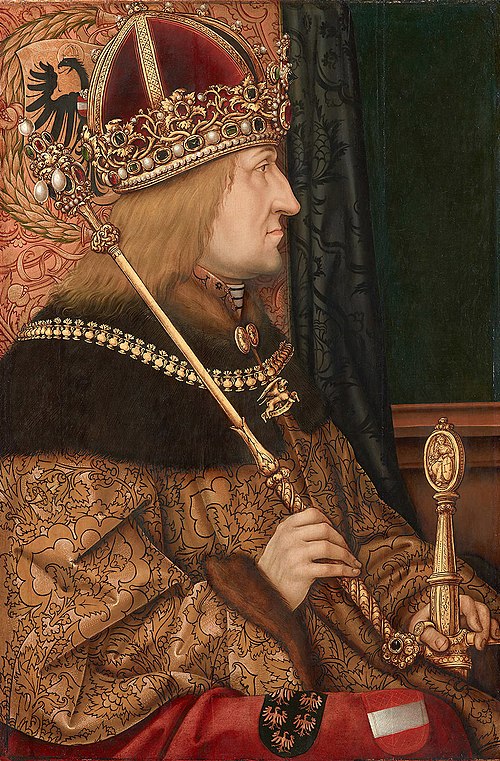
Holy Roman Emperor Arnulf of Carinthia appoints his illegitimate son Zwentibold as king of Lotharingia. Source — Wikipedia, "Timeline of Belgian history" (9th century):
Frederick III, Holy Roman Emperor, displaying the arms of Altösterreich ("Old Austria"): Azure/Sable, five eagles displayed or and the arms of Habsburg (modern) Gules, a fess argent ("Bindenschild"); originally the arms of the House of Babenburg (Duchies of Austria and Styria). Also Habsburg as inescutcheon on the Imperial Eagle (Reichsadler) By Unknown author, Public domain, https://commons.wikimedia.org/w/index.php?curid=4892107
Aug 13, 900 CE
Zwentibold
Zwentibold slain by Count Reginar I of Hainault; Lotharingia reincorporated into East Francia. Source — Wikipedia, "Timeline of Belgian history" (9th century):
Zwentibold, King of Lotharingia By Ekkehard von Aura - Stammtafel der Karolinger.jpg, Public domain, https://commons.wikimedia.org/w/index.php?curid=40080295
908 CE
Bishop of Liège
Bishop of Liège granted right to levy a toll in Maastricht. Source — Wikipedia, "Timeline of Belgian history" (10th century):
Sunset By Bert Kaufmann - Flickr: Maastricht, CC BY 2.0, https://commons.wikimedia.org/w/index.php?curid=12827391
910 CE
Reginar Longneck
Count Reginar I of Hainault appointed margrave of Lotharingia; historically regarded as the first Duke of Lorraine. Source — Wikipedia, "Timeline of Belgian history" (10th century):
Fränkische Reichsteilung nach dem Vertrag von Prüm. Reich Lothars II. Reich Ludwigs II. Reich Ludwigs des Deutschen Reich Karls II., des Kahlen Reich Karls von der Provence By Furfur - This vector image includes elements that have been taken or adapted from this file:, CC BY-SA 4.0, https://commons.wikimedia.org/w/index.php?curid=81402528
915 CE
Reginar, Duke of Lorraine
Death of Reginar, Duke of Lorraine, at his palace in Meerssen; succeeded by his son Giselbert. Source — Wikipedia, "Timeline of Belgian history" (10th century):
Kasteel van Geulle / Geulle Castle / Château de Geulle By Bert - originally posted to Flickr as Geulle aan de Maas, CC BY 2.0, https://commons.wikimedia.org/w/index.php?curid=6654981
Sep 10, 918 CE
Baldwin II, Margrave of Flanders
Death of Baldwin II, Margrave of Flanders at Blandijnberg; succeeded by his son Arnulf. Source — Wikipedia, "Timeline of Belgian history" (10th century):
Views from Belfry of Ghent By Donar Reiskoffer - Own work, CC BY 3.0, https://commons.wikimedia.org/w/index.php?curid=14716325
925 CE
Henry the Fowler
Henry the Fowler invades Lotharingia and receives oaths of loyalty from the local aristocracy. Source — Wikipedia, "Timeline of Belgian history" (10th century):
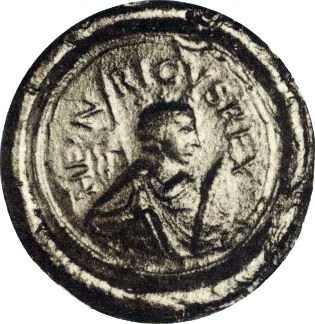
Siegel Heinrichs I. By Unknown author - Posse, Die Siegel der Deutschen Kaiser und Könige, Public domain, https://commons.wikimedia.org/w/index.php?curid=1959883
Aug 7, 936 CE
Gilbert, Duke of Lorraine
Gilbert, Duke of Lorraine, attends the coronation of Otto I in Aachen. Source — Wikipedia, "Timeline of Belgian history" (10th century):
Seal of Otto I, detailed description: The Seals of the German Emperors and Kings: Volume 5:Page 12, No. 5 By Otto Posse - Die Siegel der Deutschen Kaiser und Könige, Band 5, Public domain, https://commons.wikimedia.org/w/index.php?curid=1668262
Oct 2, 939 CE
Battle of Andernach
Battle of Andernach: death of Gilbert, Duke of Lorraine; end of independence of Lotharingia (referred to as "Belgica" in the 10th-century histories of Richer of Rheims). Source — Wikipedia, "Timeline of Belgian history" (10th century):
940 CE
Saint-Ghislain Abbey
Saint-Ghislain Abbey reformed by Gérard of Brogne Source — Wikipedia, "Timeline of Belgian history" (10th century):
La chapelle du home Sainte-Elisabeth (à Saint-Ghislain) fut construite au XVIIe siècle pour l'hopital des soeurs augustiniennes. Elle renferme les reliques de Saint Ghislain. By Grentidez - Own work, Public domain, https://commons.wikimedia.org/w/index.php?curid=7685391
948 CE
Cambrai
Death of Isaac, Count of Cambrai; powers of count transferred to Fulbert, Bishop of Cambrai. Source — Wikipedia, "Timeline of Belgian history" (10th century):
Hôtel de ville de Cambrai - Campanile - La carillon Martin Martine By JackyM59 - Own work, CC BY-SA 4.0, https://commons.wikimedia.org/w/index.php?curid=181857266
953 CE
Bruno the Great
Bruno the Great, Archbishop of Cologne, appointed Duke of Lotharingia. Source — Wikipedia, "Timeline of Belgian history" (10th century):
Bruno the Great. From a genealogy of the Ottonians (Chronica St. Pantaleonis, 2nd half of 12th century. Herzog August Bibliothek, Wolfenbüttel, Cod. Guelf. 74.3 Aug., pag. 226) By Unknown author - File:StammtafelOttonen0002.jpg, Public domain, https://commons.wikimedia.org/w/index.php?curid=8301824
954 CE
Hungarian invasions of Europe
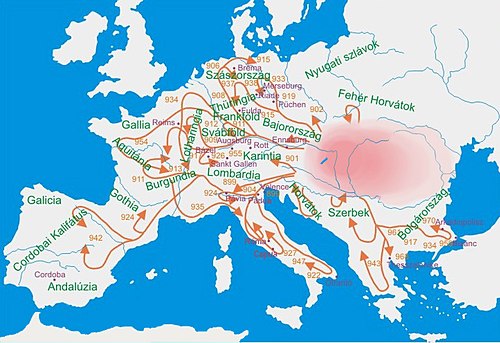
Hungarian attackers raid Lower Lotharingia, besiege Cambrai. Source — Wikipedia, "Timeline of Belgian history" (10th century):
Kalandozó magyar hadjáratok Hungarian campaigns By hu:User:Csanády - Hungarian Wikipedia: w:hu:Image:Kalandozasok.jpg, CC BY-SA 3.0, https://commons.wikimedia.org/w/index.php?curid=4399509
959 CE
Bruno the Great
Bruno the Great divides Lotharingia into Upper Lotharingia (the later Duchy of Lorraine) and Lower Lotharingia (the later Duchy of Lothier). Source — Wikipedia, "Timeline of Belgian history" (10th century):
Bruno the Great. From a genealogy of the Ottonians (Chronica St. Pantaleonis, 2nd half of 12th century. Herzog August Bibliothek, Wolfenbüttel, Cod. Guelf. 74.3 Aug., pag. 226) By Unknown author - File:StammtafelOttonen0002.jpg, Public domain, https://commons.wikimedia.org/w/index.php?curid=8301824
964 CE
Godfrey I, Duke of Lower Lorraine
Godfrey I, Duke of Lower Lorraine, dies in Italy; no immediate successor. Source — Wikipedia, "Timeline of Belgian history" (10th century):
Mar 28, 965 CE
Arnulf I, Count of Flanders
Death of Arnulf I, Count of Flanders; succession of Arnulf II, Count of Flanders Source — Wikipedia, "Timeline of Belgian history" (10th century):
Arnulf I of Flanders By Charles François Toustain, René Prosper Tassin, Jean Baptiste Baussonnet - Nouveau traité de diplomatique: où l'on examine les fondemens de cet art - 1759, Public domain, https://commons.wikimedia.org/w/index.php?curid=17400633
May 5, 966 CE
Lothair of France
Lothar, King of the Franks, confirms the possessions of St. Peter's Abbey, Ghent, including those bequeathed by Arnulf I, Count of Flanders, and contested by his heirs. Source — Wikipedia, "Timeline of Belgian history" (10th century):
tête du roi sculptée au XIIe siècle. By G.Garitan - Own work, CC BY-SA 4.0, https://commons.wikimedia.org/w/index.php?curid=65675453
968 CE
Richar, Duke of Lower Lorraine
Richar, Count of Mons, appointed Duke of Lower Lotharingia. Source — Wikipedia, "Timeline of Belgian history" (10th century):
Oct 1, 972 CE
Richar, Duke of Lower Lotharingia
Richar, Duke of Lower Lotharingia, dies; no immediate successor. Source — Wikipedia, "Timeline of Belgian history" (10th century):
977 CE
Otto II, Holy Roman Emperor
Otto II, Holy Roman Emperor, appoints Charles, brother of Lothair of France, as Duke of Lower Lotharingia. Source — Wikipedia, "Timeline of Belgian history" (10th century):
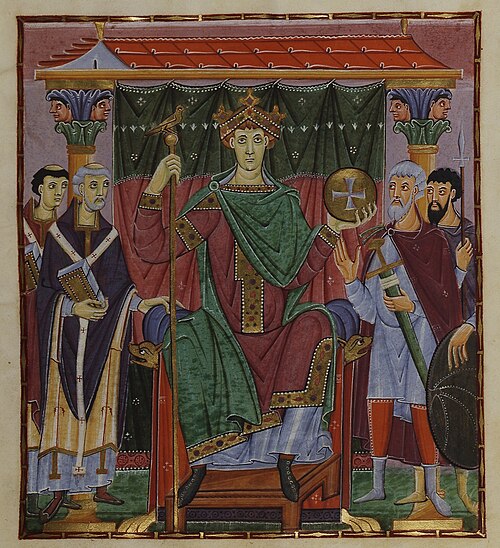
Otto Ist, Holy Roman Emperor. By Meister des Registrum Gregorii - Cropped from File:Meister des Registrum Gregorii 001.jpg, Public domain, https://commons.wikimedia.org/w/index.php?curid=30524851
980 CE
Otto II, Holy Roman Emperor
Otto II, Holy Roman Emperor, confirms all previous endowments to Notker, Bishop of Liège, and issues a general immunity for the bishopric's lands: beginning of the establishment of the Prince-Bishopric of Liège. Source — Wikipedia, "Timeline of Belgian history" (10th century):
Otto Ist, Holy Roman Emperor. By Meister des Registrum Gregorii - Cropped from File:Meister des Registrum Gregorii 001.jpg, Public domain, https://commons.wikimedia.org/w/index.php?curid=30524851
985 CE
Otto III, Holy Roman Emperor
Otto III, King of Germany, endows Notker, Bishop of Liège, with the County of Huy: full establishment of the Prince-Bishopric of Liège. Source — Wikipedia, "Timeline of Belgian history" (10th century):
Emperor Otto III as depicted in Bayerische Staatsbibliothek, Clm 4453, fol. 24r By Unknown author - https://api.digitale-sammlungen.de/iiif/image/v2/bsb00096593_00019/full/full/0/default.jpg, Public domain, https://commons.wikimedia.org/w/index.php?curid=144543161
Mar 30, 987 CE
Arnulf II, Count of Flanders
Death of Arnulf II, Count of Flanders; succession of Baldwin IV, Count of Flanders. Source — Wikipedia, "Timeline of Belgian history" (10th century):
990 CE
Hildegard of Flanders
Death of Hildegard of Flanders, daughter of Arnulf II, Count of Flanders, and wife of Dirk II, Count of Holland. Source — Wikipedia, "Timeline of Belgian history" (10th century):
Apr 1, 1008 CE
Baldrick II
Baldrick II succeeds Notger as prince-bishop of Liège Source — Wikipedia, "Timeline of Belgian history" (11th century):
Notger of Liège, as depicted by Louis Gaillat for the hemicycle of the Belgian Senate By Louis Gallait - http://balat.kikirpa.be/results.php?startfrom=1&refine-add=creator&value=Gallait,%20Louis, Public domain, https://commons.wikimedia.org/w/index.php?curid=91610905
Jul 29, 1018 CE
Battle of Vlaardingen
Battle of Vlaardingen: imperial forces commanded by Godfrey II, Duke of Lower Lorraine, and Baldrick II, bishop of Liège, defeated by the army of Dirk III, Count of Holland. Baldrick died after a sudden illness on the journey; Godfrey was captured in the battle. Source — Wikipedia, "Timeline of Belgian history" (11th century):
schilderij; Vos, Jacob de; geschiedenis (iconografie) By Barend Wijnveld - http://hdl.handle.net/11259/collection.38276, Public domain, https://commons.wikimedia.org/w/index.php?curid=34608079
1021 CE
Durandus of Liège
Durandus succeeds Wolbodo as prince-bishop of Liège Source — Wikipedia, "Timeline of Belgian history" (11th century):
The flag of Liège. The flag is vertically divided red-yellow. By Westermarck - Own work based on: LuikVlag.gif, Public domain, https://commons.wikimedia.org/w/index.php?curid=3275329
1025 CE
Reginard
Reginard succeeds Durandus as prince-bishop of Liège Source — Wikipedia, "Timeline of Belgian history" (11th century):
The flag of Liège. The flag is vertically divided red-yellow. By Westermarck - Own work based on: LuikVlag.gif, Public domain, https://commons.wikimedia.org/w/index.php?curid=3275329
May 30, 1035 CE
Baldwin IV, Count of Flanders
Death of Baldwin IV, Count of Flanders; succession of Baldwin V, Count of Flanders Source — Wikipedia, "Timeline of Belgian history" (11th century):
1037 CE
Nithard of Liège
Nithard succeeds Reginard as prince-bishop of Liège Source — Wikipedia, "Timeline of Belgian history" (11th century):
The flag of Liège. The flag is vertically divided red-yellow. By Westermarck - Own work based on: LuikVlag.gif, Public domain, https://commons.wikimedia.org/w/index.php?curid=3275329
1042 CE
Wazo of Liège
Wazo succeeds Nithard as prince-bishop of Liège Source — Wikipedia, "Timeline of Belgian history" (11th century):
The flag of Liège. The flag is vertically divided red-yellow. By Westermarck - Own work based on: LuikVlag.gif, Public domain, https://commons.wikimedia.org/w/index.php?curid=3275329
1047 CE
Baldwin V, Count of Flanders
Baldwin V, Count of Flanders, seizes control of the imperial castle at Ename Source — Wikipedia, "Timeline of Belgian history" (11th century):
1048 CE
Theodwin of Liège
Theodwin succeeds Wazo as prince-bishop of Liège Source — Wikipedia, "Timeline of Belgian history" (11th century):
The flag of Liège. The flag is vertically divided red-yellow. By Westermarck - Own work based on: LuikVlag.gif, Public domain, https://commons.wikimedia.org/w/index.php?curid=3275329
Jan 13, 1049 CE
Theodwin of Liège
Forces of Theodwin of Liège defeat forces of Dirk IV, Count of Holland, killing Dirk and restoring imperial authority in the Rhine delta. Source — Wikipedia, "Timeline of Belgian history" (11th century):
Map of the partition of Rhine and Meuse water among the various branches of their delta 2000-2011 By Maximilian Dörrbecker (Chumwa) - Own work, using this file by NordNordWest and Lencer as background this file by Ulamm as information source, CC BY-SA 2.5, https://commons.wikimedia.org/w/index.php?curid=46754100
1060 CE
Baldwin V, Count of Flanders
Baldwin V, Count of Flanders, becomes regent of France Source — Wikipedia, "Timeline of Belgian history" (11th century):
1063 CE
Ename Abbey
Ename Abbey founded Source — Wikipedia, "Timeline of Belgian history" (11th century):
Ename Abbey By Unknown author, Public domain, https://commons.wikimedia.org/w/index.php?curid=239736
1066 CE
Theodwin of Liège
Theodwin of Liège grants city rights to Huy, the oldest such charter to survive from what is now Belgium. Source — Wikipedia, "Timeline of Belgian history" (11th century):
Huy (Belgium), The old city. By Jean-Pol GRANDMONT - travail personnel, CC BY-SA 3.0, https://commons.wikimedia.org/w/index.php?curid=3162742
Sep 1, 1067 CE
Baldwin V, Count of Flanders
Death of Baldwin V, Count of Flanders; succession of Baldwin VI, Count of Flanders Source — Wikipedia, "Timeline of Belgian history" (11th century):
Jul 17, 1070 CE
Baldwin VI, Count of Flanders
Death of Baldwin VI, Count of Flanders; succession of Arnulf III, Count of Flanders Source — Wikipedia, "Timeline of Belgian history" (11th century):
Feb 22, 1071 CE
Battle of Cassel
Battle of Cassel between Robert the Frisian and his nephew, Arnulf III, Count of Flanders. Arnulf was killed in the battle and Robert succeeded him as count. Source — Wikipedia, "Timeline of Belgian history" (11th century):
Battle of Cassel, 22 February 1071 (Histoire de Belgiques, 1842) By Pierre Olivier Joseph Coomans / Gustave Lesestre - Theodore Just. Histoire de Belgiques. Brussels, 1842. p. 63., Public domain, https://commons.wikimedia.org/w/index.php?curid=165599094
Apr 29, 1074 CE
Pope Gregory VII
Pope Gregory VII issues bull of protection for the Abbey of Saint-Hubert. Source — Wikipedia, "Timeline of Belgian history" (11th century):
Exultet Rolls of Southern Italy, detail of Pope Gregory VII By Unknown author - Manuscript (Ms. Barb. Lat. 592) Biblioteca Apostolica, Vatican, Public domain, https://commons.wikimedia.org/w/index.php?curid=184438810
Mar 23, 1075 CE
Pope Gregory VII
Pope Gregory VII writes to Theodwin, bishop of Liège, urging him to leave the abbot of Saint-Hubert unmolested. Source — Wikipedia, "Timeline of Belgian history" (11th century):
Exultet Rolls of Southern Italy, detail of Pope Gregory VII By Unknown author - Manuscript (Ms. Barb. Lat. 592) Biblioteca Apostolica, Vatican, Public domain, https://commons.wikimedia.org/w/index.php?curid=184438810
Apr 28, 1077 CE
Pope Gregory VII
Pope Gregory VII issues bull of protection for Watten Abbey. Source — Wikipedia, "Timeline of Belgian history" (11th century):
Exultet Rolls of Southern Italy, detail of Pope Gregory VII By Unknown author - Manuscript (Ms. Barb. Lat. 592) Biblioteca Apostolica, Vatican, Public domain, https://commons.wikimedia.org/w/index.php?curid=184438810
Feb 1, 1081 CE
Basilica of Our Lady of Tongre
Traditional date of the first apparition of Our Lady of Tongre. Source — Wikipedia, "Timeline of Belgian history" (11th century):
This is a photo of a monument in Wallonia, number: By Jean-Pol GRANDMONT - Own work, CC BY 3.0, https://commons.wikimedia.org/w/index.php?curid=3499704
1087 CE
Godfrey of Bouillon
Godfrey of Bouillon becomes Duke of Lower Lorraine Source — Wikipedia, "Timeline of Belgian history" (11th century):
Godefroy de Bouillon passant le Jourdain et tuant un chameau By AnonymousUnknown author - This file comes from Gallica Digital Library and is available under the digital ID btv1b10024631m/f167, Public domain, https://commons.wikimedia.org/w/index.php?curid=124418296
Oct 13, 1093 CE
Robert I, Count of Flanders
Death of Robert I, Count of Flanders; succession of Robert II, Count of Flanders Source — Wikipedia, "Timeline of Belgian history" (11th century):
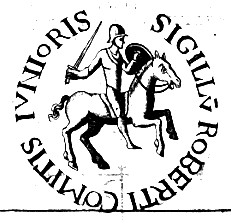
Seal of Robert I of Flanders By Olivier De Wree,Lambertus Vossius - Les seaux des comtes de Flandre et inscriptions des chartes, Public domain, https://commons.wikimedia.org/w/index.php?curid=15141413
Aug 1, 1096 CE
Godfrey of Bouillon
Godfrey of Bouillon, Duke of Lower Lorraine, sets off as one of the leaders of the First Crusade. Source — Wikipedia, "Timeline of Belgian history" (11th century):
Godefroy de Bouillon passant le Jourdain et tuant un chameau By AnonymousUnknown author - This file comes from Gallica Digital Library and is available under the digital ID btv1b10024631m/f167, Public domain, https://commons.wikimedia.org/w/index.php?curid=124418296
Jul 18, 1100 CE
Godfrey of Bouillon
Death of Godfrey of Bouillon Source — Wikipedia, "Timeline of Belgian history" (11th century):
Godefroy de Bouillon passant le Jourdain et tuant un chameau By AnonymousUnknown author - This file comes from Gallica Digital Library and is available under the digital ID btv1b10024631m/f167, Public domain, https://commons.wikimedia.org/w/index.php?curid=124418296
1105 CE
Baldric of Noyon
Baldric of Noyon, Bishop of Tournai, awards the right of presentment for Tielt to the chapter of St Salvator in Harelbeke. Source — Wikipedia, "Timeline of Belgian history" (12th century):
Intérieur de l'hôtel de ville - voir le titre du fichier. By Pierre Poschadel - Own work, CC BY-SA 4.0, https://commons.wikimedia.org/w/index.php?curid=82492586
May 13, 1106 CE
Godfrey I, Count of Louvain
Godfrey I, Count of Louvain, invested as Duke of Lower Lotharingia in Worms Cathedral. Source — Wikipedia, "Timeline of Belgian history" (12th century):
Godfrey I of louvain By Broshdru - Own work, CC0, https://commons.wikimedia.org/w/index.php?curid=147382190
1107 CE
Ligerius
The hermit Ligerius founds a community that would become Ten Duinen Abbey (the Abbey of Dunes). Source — Wikipedia, "Timeline of Belgian history" (12th century):
Ligerius By Pieter Pourbus - http://www.gentcement.be/2014/11/maquettes-verbeelding-op-schaal, Public domain, https://commons.wikimedia.org/w/index.php?curid=52628213
Oct 5, 1111 CE
Robert II, Count of Flanders
Death of Robert II, Count of Flanders; succession of Baldwin VII, Count of Flanders Source — Wikipedia, "Timeline of Belgian history" (12th century):
Robert II of Flanders By Olivier De Wree,Lambertus Vossius - Les seaux des comtes de Flandre et inscriptions des chartes, Public domain, https://commons.wikimedia.org/w/index.php?curid=15141455
Jul 17, 1119 CE
Baldwin VII, Count of Flanders
Death of Baldwin VII, Count of Flanders; succession of Charles I, Count of Flanders (Charles the Good) Source — Wikipedia, "Timeline of Belgian history" (12th century):
Sint-Salvatorskathedraal in Bruges (Brugge), Belgium. By Daderot - Self-photographed, Public domain, https://commons.wikimedia.org/w/index.php?curid=11991731
1125 CE
Godfrey I, Count of Louvain
Godfrey I, Count of Louvain confirms the agreement of Ava of Waver and her sons with the priory of Forest, transferring ownership of an allod in Woluwe. Source — Wikipedia, "Timeline of Belgian history" (12th century):
Godfrey I of louvain By Broshdru - Own work, CC0, https://commons.wikimedia.org/w/index.php?curid=147382190
Mar 2, 1127 CE
Charles I, Count of Flanders
Murder of Charles the Good, Count of Flanders Source — Wikipedia, "Timeline of Belgian history" (12th century):
Sint-Salvatorskathedraal in Bruges (Brugge), Belgium. By Daderot - Self-photographed, Public domain, https://commons.wikimedia.org/w/index.php?curid=11991731
Jan 1, 1128 CE
Albero I of Louvain
Albero I of Louvain, prince-bishop of Liège, dies; succeeded by Alexander of Jülich Source — Wikipedia, "Timeline of Belgian history" (12th century):
The flag of Liège. The flag is vertically divided red-yellow. By Westermarck - Own work based on: LuikVlag.gif, Public domain, https://commons.wikimedia.org/w/index.php?curid=3275329
1129 CE
Park Abbey
Foundation of Park Abbey. Source — Wikipedia, "Timeline of Belgian history" (12th century):
Park Abbey By Unknown author, CC BY-SA 3.0, https://commons.wikimedia.org/w/index.php?curid=658276
Jan 25, 1139 CE
Godfrey I, Count of Louvain
Godfrey I, Count of Louvain, dies; succeeded by Godfrey II Source — Wikipedia, "Timeline of Belgian history" (12th century):
Godfrey I of louvain By Broshdru - Own work, CC0, https://commons.wikimedia.org/w/index.php?curid=147382190
Aug 17, 1141 CE
Bouillon Castle
Siege of Bouillon Castle by Albero, prince-bishop of Liège. Source — Wikipedia, "Timeline of Belgian history" (12th century):
This is a photo of a monument in Wallonia, number: By Momostardust - Own work, CC BY-SA 3.0, https://commons.wikimedia.org/w/index.php?curid=35799907
Jun 13, 1142 CE
Godfrey II, Count of Louvain
Godfrey II, Count of Louvain dies; succeeded by Godfrey III Source — Wikipedia, "Timeline of Belgian history" (12th century):
Jun 24, 1146 CE
Pope Eugene III
Pope Eugene III confirms Wibald, Abbot of Stavelot and Malmedy, in possession of the goods of the abbey. Source — Wikipedia, "Timeline of Belgian history" (12th century):
May 11, 1147 CE
Henry II of Leez
Henry II of Leez, Bishop of Liège, confirms Affligem Abbey in possession of its property in the diocese of Liège. Source — Wikipedia, "Timeline of Belgian history" (12th century):
The flag of Liège. The flag is vertically divided red-yellow. By Westermarck - Own work based on: LuikVlag.gif, Public domain, https://commons.wikimedia.org/w/index.php?curid=3275329
Oct 1, 1159 CE
Godfrey III, Count of Louvain
Godfrey III, Count of Louvain, takes Grimbergen Source — Wikipedia, "Timeline of Belgian history" (12th century):
Jun 1, 1163 CE
Henry IV, Count of Luxembourg
Henry the Blind, Count of Namur and of Luxembourg, being childless, names his sister Alice of Namur with her husband Baldwin IV, Count of Hainaut, and their son Baldwin, as heirs of all his allodial possessions, "with sod and twig", retaining usufruct during his own lifetime. Source — Wikipedia, "Timeline of Belgian history" (12th century):
Sep 4, 1164 CE
Henry II of Leez
Henry II of Leez, prince-bishop of Liège, dies Source — Wikipedia, "Timeline of Belgian history" (12th century):
The flag of Liège. The flag is vertically divided red-yellow. By Westermarck - Own work based on: LuikVlag.gif, Public domain, https://commons.wikimedia.org/w/index.php?curid=3275329
1167 CE
Rudolf of Zähringen
Rudolf of Zähringen becomes prince-bishop of Liège Source — Wikipedia, "Timeline of Belgian history" (12th century):
The flag of Liège. The flag is vertically divided red-yellow. By Westermarck - Own work based on: LuikVlag.gif, Public domain, https://commons.wikimedia.org/w/index.php?curid=3275329
Jan 17, 1168 CE
Thierry, Count of Flanders
Death of Thierry, Count of Flanders; succession of Philip of Alsace as count of Flanders Source — Wikipedia, "Timeline of Belgian history" (12th century):
Nov 8, 1171 CE
Baldwin IV, Count of Hainaut
Baldwin IV, Count of Hainaut, dies; succeeded by Baldwin V Source — Wikipedia, "Timeline of Belgian history" (12th century):
1178 CE
Gislebert of Mons
Gislebert of Mons becomes chancellor to Baldwin V, Count of Hainaut. Source — Wikipedia, "Timeline of Belgian history" (12th century):
1183 CE
Godfrey III, Count of Louvain
Godfrey III, Count of Louvain, departs for Jerusalem Source — Wikipedia, "Timeline of Belgian history" (12th century):
Apr 1, 1184 CE
Henry IV, Count of Luxembourg
Henry the Blind, Count of Namur and of Luxembourg, being childless, names his nephew, Baldwin V, Count of Hainaut, already heir to all his allodial possessions, as heir equally to all his feudal possessions, "with sod and twig", retaining usufruct during his own lifetime. Source — Wikipedia, "Timeline of Belgian history" (12th century):
Apr 28, 1185 CE
Saint Lambert's Cathedral, Liège
Saint Lambert's Cathedral, Liège, destroyed by fire. Source — Wikipedia, "Timeline of Belgian history" (12th century):
Jul 1, 1186 CE
Ermesinde, Countess of Luxembourg
birth of Ermesinde, later countess of Luxembourg, only child of Henry the Blind. As a female heir she would inherit his allodial possessions, but not his feudal possessions. Source — Wikipedia, "Timeline of Belgian history" (12th century):
Aug 21, 1190 CE
Godfrey III, Count of Louvain
Godfrey III, Count of Louvain dies; succeeded by Henry I, Duke of Brabant Source — Wikipedia, "Timeline of Belgian history" (12th century):
Aug 1, 1191 CE
Philip I, Count of Flanders
Death of Philip of Alsace, Count of Flanders; succession of his daughter Margaret I, Countess of Flanders, and her husband and co-ruler Baldwin V, Count of Hainaut Source — Wikipedia, "Timeline of Belgian history" (12th century):
Nov 24, 1192 CE
Albert of Louvain
Murder of Albert of Louvain, prince-bishop of Liège, by supporters of Emperor Henry VI Source — Wikipedia, "Timeline of Belgian history" (12th century):
The flag of Liège. The flag is vertically divided red-yellow. By Westermarck - Own work based on: LuikVlag.gif, Public domain, https://commons.wikimedia.org/w/index.php?curid=3275329
May 19, 1193 CE
Saint Alena
Relics of Saint Alena enshrined in Forest Priory. Source — Wikipedia, "Timeline of Belgian history" (12th century):
Abbaye de Forest (1190 Bruxelles) By Falken - Own work, CC BY-SA 3.0, https://commons.wikimedia.org/w/index.php?curid=3490134
Aug 20, 1194 CE
Henry I, Duke of Brabant
Peace treaty between Henry I, Duke of Brabant and Baldwin V, Count of Hainaut, ending twelve years of conflict between the Duchy of Brabant and the County of Hainaut. Source — Wikipedia, "Timeline of Belgian history" (12th century):
Dec 17, 1195 CE
Baldwin V, Count of Hainaut
Death of Baldwin V, Count of Hainaut; succession of his son Baldwin VI as count of Flanders and Hainaut Source — Wikipedia, "Timeline of Belgian history" (12th century):
1197 CE
Henry I, Duke of Brabant
Henry I, Duke of Brabant, departs for Jerusalem. Source — Wikipedia, "Timeline of Belgian history" (12th century):
1198 CE
Baldwin I of Constantinople
Baldwin VI, Count of Hainaut, donates all his possessions in the village of Horrues to the collegiate church of Soignies to endow a Lady chapel and a chantry. Source — Wikipedia, "Timeline of Belgian history" (12th century):
Apr 14, 1205 CE
Battle of Adrianople
Battle of Adrianople: Baldwin I of Constantinople, count of Flanders and Hainaut, captured by the Bulgarians Source — Wikipedia, "Timeline of Belgian history" (13th century):
Apr 22, 1213 CE
Henry I, Duke of Brabant
Henry I, Duke of Brabant, marries Marie of France in Soissons. Source — Wikipedia, "Timeline of Belgian history" (13th century):
Jul 27, 1214 CE
Battle of Bouvines
Battle of Bouvines: decisive French victory against the forces of Ferdinand, Count of Flanders, Henry I, Duke of Brabant, and Otto IV, Holy Roman Emperor. Count of Flanders carried captive to Paris. Source — Wikipedia, "Timeline of Belgian history" (13th century):
Aug 12, 1224 CE
Guy II, Count of Saint-Pol
Guy of Saint-Pol and his brother, Hugo of Saint-Pol, stand surety for a loan of 3693 pounds borrowed from citizens of Arras by Daniel, Lord of Béthune: an early example of the use of French rather than Latin in legal documents. Source — Wikipedia, "Timeline of Belgian history" (13th century):
Jun 10, 1229 CE
Henry I, Duke of Brabant
Henry I, Duke of Brabant, issues charter of city rights for Brussels. Source — Wikipedia, "Timeline of Belgian history" (13th century):
Sep 20, 1232 CE
Ferdinand, Count of Flanders
Ferdinand, Count of Flanders and Joan, Countess of Flanders release inhabitants of the Brugse Vrije from the feudal relief of "best beast". Source — Wikipedia, "Timeline of Belgian history" (13th century):
Sep 5, 1235 CE
Henry I, Duke of Brabant
Henry I, Duke of Brabant, died; succeeded by Henry II Source — Wikipedia, "Timeline of Belgian history" (13th century):
1236 CE
Statutes of the Ghent Leper Hospital
Statutes of the Ghent Leper Hospital translated from Latin: the earliest known example of a legal document entirely in Dutch. Source — Wikipedia, "Timeline of Belgian history" (13th century):
1237 CE
Charters of the city of Ghent
Charters of the city of Ghent translated into Dutch. Source — Wikipedia, "Timeline of Belgian history" (13th century):
1238 CE
Forest, Belgium
Benedictine priory at Vorst, a dependency of Affligem Abbey, becomes the independent Forest Abbey. Source — Wikipedia, "Timeline of Belgian history" (13th century):
Abbaye de Forest (1190 Bruxelles) By Falken - Own work, CC BY-SA 3.0, https://commons.wikimedia.org/w/index.php?curid=3490134
Jun 14, 1245 CE
Pope Innocent IV
Pope Innocent IV authorizes the canons regular of St Augustine to establish a grammar school in Leuven. Source — Wikipedia, "Timeline of Belgian history" (13th century):
Feb 1, 1248 CE
Henry II, Duke of Brabant
Henry II, Duke of Brabant, died; succeeded by Henry III Source — Wikipedia, "Timeline of Belgian history" (13th century):
1255 CE
Tournai Cathedral
Gothic choir of Tournai Cathedral completed Source — Wikipedia, "Timeline of Belgian history" (13th century):
Feb 28, 1261 CE
Henry III, Duke of Brabant
Henry III, Duke of Brabant, dies; succeeded by Henry IV Source — Wikipedia, "Timeline of Belgian history" (13th century):
Sep 1, 1270 CE
Margaret II, Countess of Flanders
Margaret of Constantinople, Countess of Flanders, impounds wares of English merchants in Flanders in retaliation for their king's non-payment of a money fief, sparking a trade war between Flanders and England. Source — Wikipedia, "Timeline of Belgian history" (13th century):
Apr 29, 1272 CE
Henry IV, Duke of Brabant
Henry IV, Duke of Brabant, died; succeeded by John I Source — Wikipedia, "Timeline of Belgian history" (13th century):
Jul 28, 1274 CE
Treaty of Montreuil
Treaty of Montreuil-sur-Mer between Edward I of England and Guy, Count of Flanders, ending four years of economic warfare and providing for free movement of merchants between their territories. Source — Wikipedia, "Timeline of Belgian history" (13th century):
Sep 27, 1275 CE
John II, Duke of Brabant
Future John II, Duke of Brabant, born. Source — Wikipedia, "Timeline of Belgian history" (13th century):
Aug 21, 1281 CE
Guy de Thourout
Guy de Thourout does homage to Guy, Count of Flanders for lands in Wervik, Reninge and Rollegem. He also held land in Menen and Rekkem, a manor in Varsenare, and owned a number of houses within the city of Ypres. Source — Wikipedia, "Timeline of Belgian history" (13th century):
Jun 5, 1288 CE
Battle of Worringen
Battle of Worringen Source — Wikipedia, "Timeline of Belgian history" (13th century):
May 7, 1293 CE
Nieuwpoort, Belgium
Aldermen of Nieuwpoort accept the mediation of Guy, Count of Flanders in their dispute with the abbeys of Duinen and Bourbourg concerning a dyke built near the town. Source — Wikipedia, "Timeline of Belgian history" (13th century):
Nieuwpoort, Belgium By Pieter Pourbus - http://www.gentcement.be/2014/11/maquettes-verbeelding-op-schaal, Public domain, https://commons.wikimedia.org/w/index.php?curid=52628213
May 3, 1294 CE
John I, Duke of Brabant
John I, Duke of Brabant, died; succeeded by John II Source — Wikipedia, "Timeline of Belgian history" (13th century):
Aug 16, 1295 CE
John II, Duke of Brabant
John II, Duke of Brabant, recognises that Affligem Abbey by immemorial custom has the right to appoint a panel of seven aldermen for the village of Hekelgem. Source — Wikipedia, "Timeline of Belgian history" (13th century):
Nov 2, 1296 CE
Edward I of England
Edward I of England grants Flemish merchants the right to buy wool for export anywhere in the British Isles, rather than being limited to the wool staple. Source — Wikipedia, "Timeline of Belgian history" (13th century):
Jun 12, 1297 CE
Philip IV of France
Treaties of alliance between Philip IV of France and John of Avesnes, Count of Hainaut, culminate in a trade treaty allowing merchants from Hainaut to trade freely in the kingdom of France. Source — Wikipedia, "Timeline of Belgian history" (13th century):
Jul 11, 1302 CE
Battle of the Golden Spurs
Battle of the Golden Spurs: Flemish forces defeat knights of Philip IV of France near Kortrijk Source — Wikipedia, "Timeline of Belgian history" (14th century):
Generic flag of Flanders. If you require the flag of the Flemish community or region (Belgian governments), please use the official flag. By Tom Lemmens - This vector image includes elements that have been taken or adapted from this file:, CC0, https://commons.wikimedia.org/w/index.php?curid=15553966
Jul 9, 1303 CE
Namur, Belgium
Aldermen of the city of Namur authorize formation of a butchers' guild with militia obligations, requiring members to arm themselves, follow their own banner, and bury their own dead. Source — Wikipedia, "Timeline of Belgian history" (14th century):
Sep 27, 1312 CE
Charter of Kortenberg
The Charter of Kortenberg finalised at Kortenberg Abbey, establishing fundamental rights for the inhabitants of the Duchy of Brabant such as no punishment without due process. Council of four knights and ten representatives of the boroughs established (beginnings of representative institutions in the duchy). Source — Wikipedia, "Timeline of Belgian history" (14th century):
Aug 24, 1313 CE
Henry VII, Holy Roman Emperor
Henry of Luxembourg died in Buonconvento while besieging Siena, reputedly of poison put in the chalice during mass. Source — Wikipedia, "Timeline of Belgian history" (14th century):
Apr 11, 1317 CE
cloth hall
Works begins on a new cloth hall in Leuven, which is now University Hall. Source — Wikipedia, "Timeline of Belgian history" (14th century):
Jun 24, 1322 CE
Joanna, Duchess of Brabant
Joanna of Brabant born. Source — Wikipedia, "Timeline of Belgian history" (14th century):
Jun 1, 1323 CE
Louis I, Count of Flanders
Rebellion of the commoners in maritime Flanders, sparked by Louis I, Count of Flanders, ceding Sluis to John I, Marquis of Namur. Source — Wikipedia, "Timeline of Belgian history" (14th century):
Aug 30, 1327 CE
Pope John XXII
Pope John XXII provides a dispensation for the marriage of Philippa of Hainault and Edward III of England. The marriage itself took place by proxy in Valenciennes in October. Source — Wikipedia, "Timeline of Belgian history" (14th century):
Jan 24, 1328 CE
Philippa of Hainault
Marriage of Philippa of Hainault and Edward III of England celebrated in York Minster. Source — Wikipedia, "Timeline of Belgian history" (14th century):
Aug 23, 1328 CE
Battle of Cassel
Battle of Cassel: Philip VI of France defeats Flemish rebels led by Nicolaas Zannekin. Source — Wikipedia, "Timeline of Belgian history" (14th century):
Dec 3, 1339 CE
John III, Duke of Brabant
Treaty of mutual support between John III, Duke of Brabant and Louis I, Count of Flanders, and the cities subject to them, providing for offensive and defensive alliance and free trade between their territories. Source — Wikipedia, "Timeline of Belgian history" (14th century):
Jun 24, 1340 CE
Battle of Sluys
Battle of Sluys Source — Wikipedia, "Timeline of Belgian history" (14th century):
Jul 24, 1345 CE
Jacob van Artevelde
Jacob van Artevelde killed in Ghent. Source — Wikipedia, "Timeline of Belgian history" (14th century):
Mar 8, 1355 CE
Duchy of Brabant
The boroughs of the Duchy of Brabant and the Duchy of Limburg undertake to remain united under a single prince after the death of John III, Duke of Brabant, not allowing the territory to be divided among his heirs. Source — Wikipedia, "Timeline of Belgian history" (14th century):
Jan 3, 1356 CE
Joyous Entry of 1356
Joyous Entry of 1356: Joanna, Duchess of Brabant and her husband Wenceslaus I of Luxembourg sign the great charter of liberties of the Duchy of Brabant. Source — Wikipedia, "Timeline of Belgian history" (14th century):
1370 CE
Brussels massacre
Extirpation of small Jewish population of Brabant after accusations of profaning eucharistic hosts. Source — Wikipedia, "Timeline of Belgian history" (14th century):
1379 CE
Philip van Artevelde
Ghent Revolt led by Philip van Artevelde begins Source — Wikipedia, "Timeline of Belgian history" (14th century):
May 3, 1382 CE
Battle of Beverhoutsveld
Battle of Beverhoutsveld – men of Ghent take Bruges and gain control over most of the county of Flanders Source — Wikipedia, "Timeline of Belgian history" (14th century):
May 25, 1383 CE
Battle of Dunkirk
Battle of Dunkirk Source — Wikipedia, "Timeline of Belgian history" (14th century):
Jan 30, 1384 CE
Louis II, Count of Flanders
Louis II, Count of Flanders, last count of the House of Dampierre, dies; succeeded by his daughter Margaret III, Countess of Flanders, whose husband Philip the Bold ruled on her behalf: beginning of period of Burgundian rule in the Low Countries Source — Wikipedia, "Timeline of Belgian history" (14th century):
Dec 18, 1385 CE
Peace of Tournai
Peace of Tournai ends the Ghent Revolt Source — Wikipedia, "Timeline of Belgian history" (14th century):
Feb 15, 1386 CE
Philip the Bold
Philip the Bold founds the Lille Chamber of Accounts to audit the accounts of his functionaries in the county of Flanders. Source — Wikipedia, "Timeline of Belgian history" (14th century):
Nov 2, 1387 CE
Guilds of Brussels
Oldest record of the incorporation of the Brussels guild of painters, goldbeaters and glassmakers. Source — Wikipedia, "Timeline of Belgian history" (14th century):
1389 CE
John III, Duke of Bavaria
John of Bavaria elected Prince-Bishop of Liège (resigned 1418). Source — Wikipedia, "Timeline of Belgian history" (14th century):
Sep 28, 1390 CE
Joanna, Duchess of Brabant
Joanna, Duchess of Brabant secretly relinquishes possession of the Duchy of Brabant to her niece, Margaret of Male, and offspring thereof. Source — Wikipedia, "Timeline of Belgian history" (14th century):
Nov 1, 1392 CE
John III, Duke of Bavaria
John of Bavaria, bishop-elect of Liège, writes to Philip the Bold to intercede for merchants from Liège arrested by the officers of Rethel. Source — Wikipedia, "Timeline of Belgian history" (14th century):
View of Liège, Belgium By A.Savin - Own work, CC BY-SA 3.0, https://commons.wikimedia.org/w/index.php?curid=7896578
Sep 9, 1408 CE
John the Fearless
John the Fearless takes fiscal measures to pay Alexander Stewart, Earl of Mar's archers joining him on the Liège campaign. (Letter bearing only known surviving signature of John the Fearless). Source — Wikipedia, "Timeline of Belgian history" (15th century):
1411 CE
Homines Intelligentiae
Suppression of the Homines Intelligentiae in Brussels. Source — Wikipedia, "Timeline of Belgian history" (15th century):
Apr 23, 1421 CE
Philip the Good
Philip the Good transfers usufruct of the County of Namur to John of Flanders, Lord of Béthune, for the duration of his life. Source — Wikipedia, "Timeline of Belgian history" (15th century):
Dec 9, 1425 CE
Pope Martin V
Pope Martin V issues papal bull founding University of Leuven. Source — Wikipedia, "Timeline of Belgian history" (15th century):
1441 CE
Tapestry
Tapestry weavers of Oudenaarde form the Guild of St Barbara. Source — Wikipedia, "Timeline of Belgian history" (15th century):
Feb 28, 1450 CE
Leuven
Tournament held on the main square in Leuven in the presence of Philip the Good, Duke of Burgundy and Brabant. Source — Wikipedia, "Timeline of Belgian history" (15th century):
Oct 28, 1451 CE
Ghent
Guilds of Ghent take up arms against the Count of Flanders, Philip the Good. Source — Wikipedia, "Timeline of Belgian history" (15th century):
May 31, 1452 CE
Philip the Good
Philip the Good declares war on the city of Ghent. Source — Wikipedia, "Timeline of Belgian history" (15th century):
Jul 23, 1453 CE
Battle of Gavere
Battle of Gavere: forces of Philip the Good defeat rebels of Ghent, ending their rebellion. Source — Wikipedia, "Timeline of Belgian history" (15th century):
Feb 17, 1454 CE
Feast of the Pheasant
The Feast of the Pheasant, a banquet given by Philip the Good, Duke of Burgundy, held in Lille. Source — Wikipedia, "Timeline of Belgian history" (15th century):
Aug 3, 1458 CE
St. Peter's Church, Leuven
Tower of St. Peter's Church, Leuven, catches fire. Source — Wikipedia, "Timeline of Belgian history" (15th century):
Jan 9, 1464 CE
Estates General of 1464
Estates General of 1464: first joint meeting of representatives of various territories of the Burgundian Netherlands. Source — Wikipedia, "Timeline of Belgian history" (15th century):
Oct 20, 1465 CE
Battle of Montenaken
Battle of Montenaken: forces of Philip the Good defeat Liège militiamen. Source — Wikipedia, "Timeline of Belgian history" (15th century):
Aug 19, 1466 CE
Philip the Good
Dinant sacked by the forces of Philip the Good, commanded by Charles the Bold Source — Wikipedia, "Timeline of Belgian history" (15th century):
Jun 15, 1467 CE
Philip the Good
Death of Philip the Good; Charles the Bold succeeds as Duke of Burgundy. Source — Wikipedia, "Timeline of Belgian history" (15th century):
Jul 3, 1468 CE
Charles the Bold
Marriage of Charles the Bold and Margaret of York (Now commemorated with the five-yearly Procession of the Golden Tree) Source — Wikipedia, "Timeline of Belgian history" (15th century):
Jul 1, 1469 CE
Charles the Bold
Charles the Bold grants Prince-Bishop Louis of Bourbon permission to begin rebuilding Liège. Source — Wikipedia, "Timeline of Belgian history" (15th century):
Apr 24, 1473 CE
Charles the Bold
Charles the Bold appointed mediator in the peace negotiations between Poland and Hungary. Source — Wikipedia, "Timeline of Belgian history" (15th century):
Jan 5, 1477 CE
Charles the Bold
Charles the Bold dies in the Battle of Nancy. Source — Wikipedia, "Timeline of Belgian history" (15th century):
Jul 22, 1478 CE
Philip I of Castile
Birth of Philip the Fair Source — Wikipedia, "Timeline of Belgian history" (15th century):
Aug 7, 1479 CE
Battle of Guinegate
Battle of Guinegate: forces of Mary of Burgundy and her husband Maximilian I of Habsburg defeat forces of Louis XI of France. Source — Wikipedia, "Timeline of Belgian history" (15th century):
Jan 10, 1480 CE
Margaret of Austria, Duchess of Savoy
Birth of Margaret of Burgundy Source — Wikipedia, "Timeline of Belgian history" (15th century):
Mar 27, 1482 CE
Mary of Burgundy
Mary of Burgundy dies as a result of having fallen from her horse while hawking some weeks earlier. Leaving an infant heir and a foreign husband, this set the scene for the Flemish revolts against Maximilian of Austria (1483–1485). Source — Wikipedia, "Timeline of Belgian history" (15th century):
May 23, 1493 CE
Treaty of Senlis
Treaty of Senlis: Charles VIII of France cedes the County of Flanders and County of Artois to the House of Habsburg. Source — Wikipedia, "Timeline of Belgian history" (15th century):
Generic flag of Flanders. If you require the flag of the Flemish community or region (Belgian governments), please use the official flag. By Tom Lemmens - This vector image includes elements that have been taken or adapted from this file:, CC0, https://commons.wikimedia.org/w/index.php?curid=15553966
Jan 20, 1495 CE
Philip I of Castile
Wedding contracts concluded for the double marriage of Philip the Fair and Margaret of Burgundy to Joanna of Castile and John, Prince of Asturias. Source — Wikipedia, "Timeline of Belgian history" (15th century):
Feb 24, 1500 CE
Charles V, Holy Roman Emperor
Birth of the future Charles V, Holy Roman Emperor, in Ghent. Source — Wikipedia, "Timeline of Belgian history" (15th century):
Jul 18, 1501 CE
Isabella of Austria
Birth of Isabella of Austria, daughter of Philip of Burgundy and Joanna of Castile, future Queen of Christian II of Denmark. Source — Wikipedia, "Timeline of Belgian history" (16th century):
Jun 25, 1509 CE
Pope Julius II
Pope Julius II grants indulgence for those contributing to the rebuilding of the collegiate church of Dinant, equal to the indulgence for a pilgrimage to Rome. Source — Wikipedia, "Timeline of Belgian history" (16th century):
Apr 2, 1511 CE
Érard de La Marck
Érard de La Marck, Prince-Bishop of Liège, orders publication of Julius II's bull granting an indulgence for those contributing to the rebuilding of the collegiate church of Dinant. Source — Wikipedia, "Timeline of Belgian history" (16th century):
May 8, 1521 CE
Charles V, Holy Roman Emperor
Charles V issues decree for the Habsburg Netherlands prohibiting Lutheran preaching, teaching, printing or disputation, largely parallel to the Edict of Worms that he was to sign for the Empire as a whole on 26 May but providing more repressive powers to secular authorities. Source — Wikipedia, "Timeline of Belgian history" (16th century):
Jul 1, 1523 CE
Johann Esch and Heinrich Voes
Johann Esch and Heinrich Voes burned at the stake in Brussels for their adherence to Lutheran doctrines. Source — Wikipedia, "Timeline of Belgian history" (16th century):
Jan 14, 1526 CE
Treaty of Madrid
Peace of Madrid temporarily ends the war between Charles V and Francis I of France, with France briefly relinquishing all claim to the County of Flanders, County of Artois, Tournai and the Tournaisis, and the Duchy of Burgundy. Source — Wikipedia, "Timeline of Belgian history" (16th century):
Generic flag of Flanders. If you require the flag of the Flemish community or region (Belgian governments), please use the official flag. By Tom Lemmens - This vector image includes elements that have been taken or adapted from this file:, CC0, https://commons.wikimedia.org/w/index.php?curid=15553966
Sep 26, 1531 CE
Mary of Hungary
Mary of Hungary appointed regent over the Habsburg Netherlands. Source — Wikipedia, "Timeline of Belgian history" (16th century):
Sep 11, 1532 CE
Council of Luxembourg
Charles V issues decree establishing protocols and procedure of the reorganized Council of Luxembourg. Source — Wikipedia, "Timeline of Belgian history" (16th century):
Oct 4, 1540 CE
New edict requiring printers and booksellers
New edict requiring printers and booksellers to provide local magistrates with inventories of their stock. Source — Wikipedia, "Timeline of Belgian history" (16th century):
Aug 1, 1542 CE
Arlon
French forces plunder Arlon. Source — Wikipedia, "Timeline of Belgian history" (16th century):
1544 CE
Italian War of 1542–46
Peace of Crépy ends the war between Charles V and Francis I of France, returning status quo of 1538: Duchy of Luxembourg restored to the Habsburg Netherlands. Source — Wikipedia, "Timeline of Belgian history" (16th century):
May 9, 1546 CE
Old University of Leuven
University of Leuven issues the first index of prohibited books. Source — Wikipedia, "Timeline of Belgian history" (16th century):
Sep 12, 1549 CE
Habsburg Netherlands
Edict regulating the organization of markets throughout the Habsburg Netherlands. Source — Wikipedia, "Timeline of Belgian history" (16th century):
Apr 12, 1559 CE
Philip II of Spain
King Philip establishes the Royal Library of the Low Countries. Source — Wikipedia, "Timeline of Belgian history" (16th century):
Apr 5, 1566 CE
Compromise of Nobles
Compromise of Nobles petition Margaret of Parma to suspend the laws on heresy. Source — Wikipedia, "Timeline of Belgian history" (16th century):
Mar 15, 1567 CE
Calvinist
Attempted Calvinist coup in Antwerp. Source — Wikipedia, "Timeline of Belgian history" (16th century):
May 18, 1568 CE
Fernando Álvarez de Toledo, 3rd Duke of Alba
Duke of Alva banishes thirty inhabitants of the city of Antwerp and their spouses, with forfeiture of property, for supporting or disseminating Calvinism – including the pensionary of the city, Jacques van Wesenbeke, and the head of the Calvinist consistory in Antwerp, the Portuguese merchant Marcus Perez. Source — Wikipedia, "Timeline of Belgian history" (16th century):
May 17, 1569 CE
Maximilien Morillon
Maximilien Morillon founds the first diocesan seminary in Mechelen. Source — Wikipedia, "Timeline of Belgian history" (16th century):
May 30, 1570 CE
Abraham Ortelius
Abraham Ortelius' Theatrum Orbis Terrarum published in Antwerp. Source — Wikipedia, "Timeline of Belgian history" (16th century):
Jul 3, 1572 CE
Gerard van Groesbeeck
Gerard van Groesbeeck, Prince-Bishop of Liège, promulgates a new codification of the legal procedures in the principality's courts. Source — Wikipedia, "Timeline of Belgian history" (16th century):
Jun 6, 1574 CE
Luis de Requesens y Zúñiga
Don Luis de Requesens, Governor of the Habsburg Netherlands, issues general pardon to rebels willing to return to loyalty. Source — Wikipedia, "Timeline of Belgian history" (16th century):
Jun 16, 1575 CE
Philip II of Spain
Philip II of Spain decrees that the change of year is to be counted from 1 January throughout the Habsburg Netherlands, rather than from Christmas (25 December), the Feast of the Annunciation (25 March) or Easter day, as was the custom in various parts. Source — Wikipedia, "Timeline of Belgian history" (16th century):
Nov 4, 1576 CE
Sack of Antwerp
Sack of Antwerp by Spanish mutineers from the Army of Flanders. Source — Wikipedia, "Timeline of Belgian history" (16th century):
May 1, 1577 CE
John of Austria
John of Austria makes his formal entry into Brussels as Governor General of the Low Countries. Source — Wikipedia, "Timeline of Belgian history" (16th century):
Oct 1, 1578 CE
John of Austria
Governor General John of Austria dies near Namur. Source — Wikipedia, "Timeline of Belgian history" (16th century):
Jan 6, 1579 CE
Union of Arras
Union of Arras concluded. Source — Wikipedia, "Timeline of Belgian history" (16th century):
Feb 11, 1596 CE
Albert VII of Austria
Archduke Albert arrives in Brussels to begin his administration as Governor General of the Habsburg Netherlands. Source — Wikipedia, "Timeline of Belgian history" (16th century):
Mar 11, 1597 CE
Army of Flanders
Army of Flanders takes Amiens. Source — Wikipedia, "Timeline of Belgian history" (16th century):
May 2, 1598 CE
Peace of Vervins
Peace of Vervins signed. Source — Wikipedia, "Timeline of Belgian history" (16th century):
Feb 9, 1599 CE
Edict prohibiting all trade with the
Edict prohibiting all trade with the enemy issued. Source — Wikipedia, "Timeline of Belgian history" (16th century):
Feb 5, 1600 CE
Battle of Lekkerbeetje
Battle of Lekkerbeetje in the countryside outside 's-Hertogenbosch Source — Wikipedia, "Timeline of Belgian history" (16th century):
Jul 5, 1601 CE
Siege of Ostend
Siege of Ostend begins. Source — Wikipedia, "Timeline of Belgian history" (17th century):
Jan 7, 1602 CE
General assault on Ostend launched.
General assault on Ostend launched. Source — Wikipedia, "Timeline of Belgian history" (17th century):
May 26, 1603 CE
Federico Spinola
Federico Spinola dies in the Battle of Sluis. Source — Wikipedia, "Timeline of Belgian history" (17th century):
May 19, 1604 CE
Maurice, Prince of Orange
Maurice of Nassau lays siege to Sluis. Source — Wikipedia, "Timeline of Belgian history" (17th century):
May 17, 1605 CE
Íñigo de Borja
Don Íñigo de Borja repulses attempted Dutch landing at Blokkersdijk, near Antwerp. Source — Wikipedia, "Timeline of Belgian history" (17th century):
Aug 1, 1607 CE
Laarne
Beginning of a series of six witch trials in Laarne (ending May 1608). Source — Wikipedia, "Timeline of Belgian history" (17th century):