Encyclopedia/3. History, Societies & Civilizations/09. Modern Nations/06. Oceania • Curated by Admin Timeline.sg
History of New Zealand (AI-generated, sourced to Wikipedia).
Chronological Storyline (30 Milestones)
1280 CE
Polynesians settle New Zealand
Māori ancestors arrived in New Zealand from East Polynesia, establishing communities and developing a distinct culture over centuries. Source — Wikipedia, "New Zealand":
New Zealand Maori rowing ceremonial choreography By Jorge Royan - Own work, CC BY-SA 3.0, https://commons.wikimedia.org/w/index.php?curid=15896846
Dec 13, 1642 CE
Abel Tasman sights New Zealand
Dutch explorer Abel Tasman became the first European to sight New Zealand, naming it Staten Landt, later renamed Nova Zeelandia. Source — Wikipedia, "New Zealand":
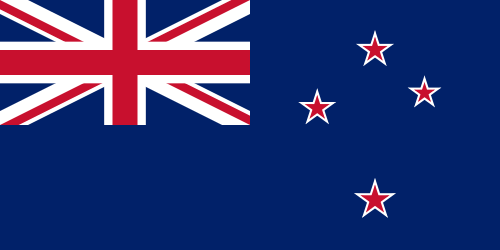
Flag of New Zealand. Specification: http://www.mch.govt.nz/nzflag/description.html , quoting New Zealand Gazette, 27 June 1902. By Original: Albert Hastings Markham Vector: Zscout370, Hugh Jass, s. File history - http://www.mch.govt.nz/files/NZ%20Flag%20-%20proportions.JPG https://www.fotw.info/flags/nz.html CONSTRUCTION SHEET: STAR TABLE: File:Flag of New Zealand (construction sheet).svg#Star_table, Public domain, https://commons.wikimedia.org/w/index.php?curid=343685
Oct 8, 1769 CE
James Cook maps New Zealand
Lieutenant James Cook made the first European circumnavigation and detailed mapping of New Zealand during his first Pacific voyage. Source — Wikipedia, "New Zealand":
Map showing the first voyage of Captain James Cook. By Jon Platek. Blank map by en:User:Reisio. - Own work (Original text: self-made), CC BY-SA 3.0, https://commons.wikimedia.org/w/index.php?curid=41516799
Dec 25, 1814 CE
First Christian service held
Reverend Samuel Marsden held the first Christian service on New Zealand soil at Oihi Bay in the Bay of Islands. Source — Wikipedia, "New Zealand":
Portrait of Samuel Marsden, 1764 - 1838 By Artist not credited - Frontispiece of "Life and Work of Samuel Marsden" by John Buxton Marsden, ed. James Drummond, CC BY-SA 3.0, https://commons.wikimedia.org/w/index.php?curid=10613946
1820 CE
Musket Wars begin
A series of intertribal Māori conflicts fuelled by the introduction of firearms caused significant population disruption across New Zealand. Source — Wikipedia, "New Zealand":
War dance, New Zealand By Merrett, Joseph Jenner, 1816-1854. - Australian National Library, URL [1], Reference No.nla.pic-an2948236, Public domain, https://commons.wikimedia.org/w/index.php?curid=1722845
Oct 28, 1835 CE
Declaration of Independence signed
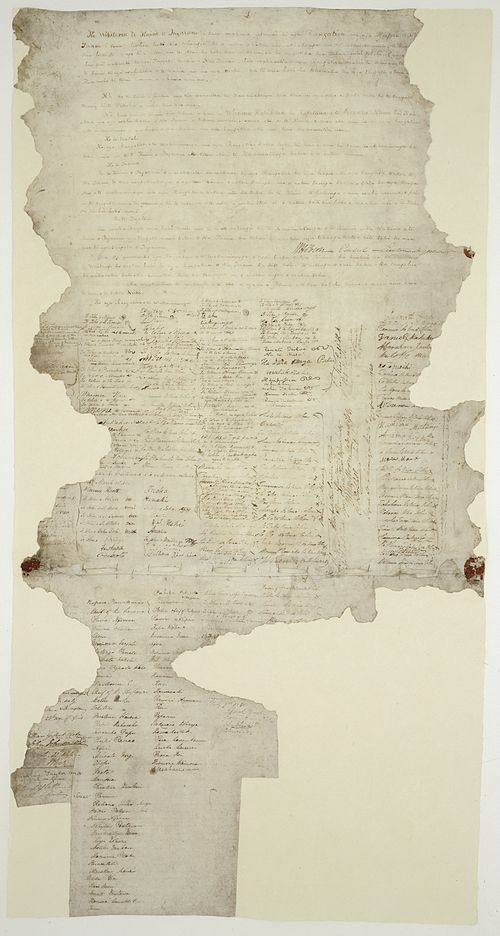
Northern Māori chiefs signed He Whakaputanga, declaring the United Tribes of New Zealand an independent sovereign state under British protection. Source — Wikipedia, "New Zealand":
On 28 October 1835, 34 Māori rangatira (chiefs) at Waitangi, Bay of Islands, signed He W[h]akaputanga o te Rangatiratanga o Nu Tireni, also known as the Declaration of Independence of New Zealand (although the Declaration - the English language text - is different and not what the rangatira signed). He Whakaputanga was drawn up by Northern rangatira and the official British Resident James Busby, as part of an ongoing conversation forged by Māori with the Crown. By 1839 a total of 52 rangatira had signed the Māori text document, including rangatira outside of Ngāpuhi. Its four sections declared Aotearoa a sovereign state, and that full sovereign power and authority resided in Te Whakaminenga o Ngā Hapū o Nu Tireni, often translated as the General Assembly of Hapū or Confederation of United Tribes. He Whakaputanga (and in turn the sovereignty of the rangatira) was recognised by British authorities in 1836; hence the need to negotiate further relationships with te Tiriti o Waitangi. Whether He Whakaputanga has any standing today is the subject of ongoing constitutional debate. These range from the view that the Treaty of Waitangi extinguished any sovereignty of the chiefs recognised in the Declaration, and is therefore nothing more than an interesting historical document; to the view that Māori never gave up sovereignty by signing te Tiriti o Waitangi (the Māori documents signed by the majority of rangatira), and that the sovereignty acknowledged in He Whakaputanga is reaffirmed in its family document, te Tiriti. More information can be found in the Waitangi Tribunal Report on He Whakaputanga: www.justice.govt.nz/tribunals/waitangi-tribunal/Reports/h... He Whakaputanga is currently on display at Archives New Zealand's Wellington office. Archives Reference: IA1 9/1/1a (page 1 of 3) For updates on our On This Day series and news from Archives New Zealand, follow us on Twitter twitter.com/ArchivesNZ Material supplied by Archives New Zealand By Archives New Zealand from New Zealand - He Whakaputanga o te Rangatiratanga o Nu Tireni (known as The Declaration of Independence) [Page 1 of 3], 1835, CC BY-SA 2.0, https://commons.wikimedia.org/w/index.php?curid=51249201
Feb 6, 1840 CE
Treaty of Waitangi signed
Māori chiefs and the British Crown signed the Treaty of Waitangi, New Zealand's founding document, at the Bay of Islands. Source — Wikipedia, "New Zealand":
The Waitangi Sheet of the Treaty of Waitangi, signed between the British Crown and various Māori chiefs in 1840. By William Hobson, James Freeman, and James Busby (English version); Henry Williams and Edward Williams (Māori translation) - Image: [2]; also see [3] and [4]., Public domain, https://commons.wikimedia.org/w/index.php?curid=1693495
May 21, 1840 CE
British sovereignty proclaimed
Governor William Hobson proclaimed British sovereignty over all of New Zealand, establishing it as a Crown colony. Source — Wikipedia, "New Zealand":
William Hobson portrait by James Ingram McDonald 1913 By McDonald, James Ingram, 1865-1935; Collins, James Edgell, 1820- - https://natlib.govt.nz/records/22725431, Public domain, https://commons.wikimedia.org/w/index.php?curid=142102479
Mar 1, 1845 CE
New Zealand Wars commence
A series of armed conflicts between Māori and the colonial government began, lasting intermittently until 1872 over land and sovereignty disputes. Source — Wikipedia, "New Zealand":
A memorial to the New Zealand Wars at the Auckland War Memorial Museum | Tāmaki Paenga Hira (Level 2) with updated text. "Kia Mate Toa In memory of all those who gave their lives during the New Zealand Wars 1845-1872." The memorial formerly included the phrase "Through war they won the peace we know" this has since been removed. By VPassau - Own work, CC0, https://commons.wikimedia.org/w/index.php?curid=62189759
1852 CE
Constitution Act passed
The British Parliament passed the New Zealand Constitution Act, granting representative government and establishing six provinces. Source — Wikipedia, "New Zealand":
Coat of Arms of the United Kingdom 1837 These arms were the first UK coat of arms to not include an inescutcheon of the arms of Hanover, as Queen Victoria could not also inherit the throne of Hannover under Salic law as she was a woman. “ Quarterly, First and Fourth Gules three lions passant guardant in pale Or armed and langued Azure (for England), Second quarter Or a lion rampant within a double tressure flory counter-flory Gules (for Scotland), Third quarter Azure a harp Or stringed Argent (for Ireland), the whole surrounded by the Garter; for a Crest, upon the Royal helm the imperial crown Proper, thereon a lion statant guardant Or imperially crowned Proper; Mantling Or and ermine; for Supporters, dexter a lion rampant guardant Or crowned as the Crest, sinister a unicorn Argent armed, crined and unguled Proper, gorged with a coronet Or composed of crosses patée and fleurs de lys a chain affixed thereto passing between the forelegs and reflexed over the back also Or; Motto 'Dieu et mon Droit' in the compartment below the shield, with the Union rose, shamrock and thistle engrafted on the same stem. ” PINCHES, J.H & R.V., The Royal Heraldry of England, 1974, Heraldry Today.}} By Sodacan (ed. Safes007) - This vector image includes elements that have been taken or adapted from this file:, CC BY-SA 4.0, https://commons.wikimedia.org/w/index.php?curid=148095264
Apr 1, 1856 CE
First responsible government
Henry Sewell became New Zealand's first Premier, leading the first responsible government under the new constitutional arrangements. Source — Wikipedia, "New Zealand":
Henry Sewell, ca 1872 By Swan & Wrigglesworth - https://www.flickr.com/photos/nationallibrarynz_commons/4294245578/, Public domain, https://commons.wikimedia.org/w/index.php?curid=12084934
1867 CE
Māori seats established
The Māori Representation Act created four dedicated parliamentary seats for Māori, granting Māori men voting rights ahead of most European men. Source — Wikipedia, "New Zealand":
Labelled map of Māori electorates as reformed in 2020. Designed for small to moderate sizes and general areas; not suitable for exploring detailed boundaries. By HTGS - File:2020_New_Zealand_general_election_-_Results.svg, CC BY-SA 4.0, https://commons.wikimedia.org/w/index.php?curid=117689908
1876 CE
Provincial government abolished
The Abolition of Provinces Act dismantled the provincial system, centralising government administration in Wellington. Source — Wikipedia, "New Zealand":
Provincias de Nueva Zelanda en 1858 By Milenioscuro - Own work based on: Blank map of New Zealand Timeline of the provinces Maps of the provinces, CC BY-SA 4.0, https://commons.wikimedia.org/w/index.php?curid=76603575
Sep 19, 1893 CE
Women gain voting rights
New Zealand became the first self-governing country in the world to grant women the right to vote in national elections. Source — Wikipedia, "New Zealand":
A cropped version of the Kate Sheppard National Memorial, Christchurch https://commons.wikimedia.org/wiki/File:Tribute_to_the_Suffragettes,_Christchurch,_NZ.jpg by Robert Cutts, under CC-BY-2.0 license. By Robert Cutts - https://www.flickr.com/photos/21678559@N06/4280065672, CC BY 2.0, https://commons.wikimedia.org/w/index.php?curid=30478429
Sep 26, 1907 CE
Dominion status achieved
New Zealand was formally designated a Dominion within the British Empire, marking a step toward greater self-governance. Source — Wikipedia, "New Zealand":
Flag of New Zealand. Specification: http://www.mch.govt.nz/nzflag/description.html , quoting New Zealand Gazette, 27 June 1902. By Original: Albert Hastings Markham Vector: Zscout370, Hugh Jass, s. File history - http://www.mch.govt.nz/files/NZ%20Flag%20-%20proportions.JPG https://www.fotw.info/flags/nz.html CONSTRUCTION SHEET: STAR TABLE: File:Flag of New Zealand (construction sheet).svg#Star_table, Public domain, https://commons.wikimedia.org/w/index.php?curid=343685
Apr 25, 1915 CE
ANZAC landings at Gallipoli
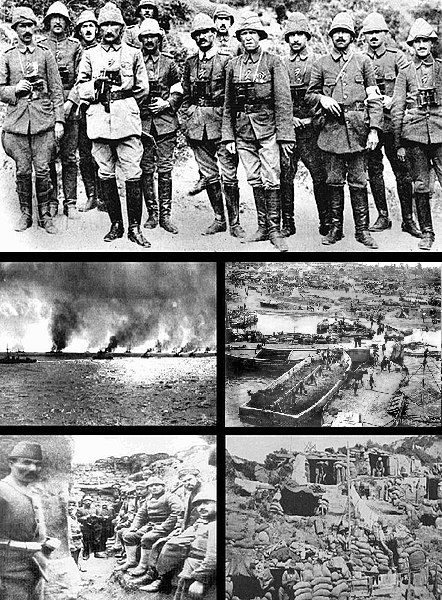
New Zealand and Australian troops landed at Gallipoli Peninsula, an event commemorated annually as ANZAC Day and central to national identity. Source — Wikipedia, "New Zealand":
Gallipoli Campaign By LoudHmen - This image was made from the following source images (listed at their sources as "public domain" or "not restricted"): Top: Australian War Memorial image P01141.001 Middle left: File:British and French Battle Fleet at the entrance to the Dardanelles.jpg Middle right: File:V Beach Helles Gallipoli.jpg Bottom left: Australian War Memorial image A02598 Bottom right: Australian War Memorial image G00544, Public domain, https://commons.wikimedia.org/w/index.php?curid=7461342
1918 CE
Influenza pandemic strikes
The Spanish flu pandemic killed approximately 9,000 New Zealanders, with Māori disproportionately affected by the devastating outbreak. Source — Wikipedia, "New Zealand":
Emergency hospital during influenza epidemic, Camp Funston, Kansas. Emergency hospital during influenza epidemic (NCP 1603), National Museum of Health and Medicine. Description: Beds with patients in an emergency hospital in Camp Funston, Kansas, in the midst of the influenza epidemic. The flu struck while America was at war, and was transported across the Atlantic on troop ships. Date: circa 1918 Photo ID: NCP 1603 Source Collection: OHA 250: New Contributed Photographs Collection, Otis Historical Archives, National Museum of Health and Medicine. Rights: No known restrictions upon publication, physical copy retained by the National Museum of Health and Medicine. Publication and high resolution requests should be directed to NMHM (www.medicalmuseum.mil). This is our most-requested flu photograph. It may be on another or our Flickr pages. By Otis Historical Archives, National Museum of Health and Medicine - Emergency hospital during influenza epidemic (NCP 1603), National Museum of Health and Medicine. https://www.buckscountycouriertimes.com/news/20190923/mxfctter-museum-to-mark-historic-influenza-pandemic/1, Public domain, https://commons.wikimedia.org/w/index.php?curid=25513204
Nov 1, 1935 CE
First Labour government elected
Michael Joseph Savage led the Labour Party to victory, initiating sweeping social reforms including the welfare state. Source — Wikipedia, "New Zealand":
The Labour cabinet, photographed in the Parliament Building ca 1935 by S P Andrew Ltd of Wellington. Back row (left to right): William Lee Martin, Hubert Thomas Armstrong, Robert Semple, William Edward Parry, Mark Anthony Fagan, Frederick Jones, Frank Langstone, Patrick Charles Webb. Front row (left to right): Daniel Giles Sullivan, Peter Fraser, Michael Joseph Savage, Walter Nash, Henry Greathead Rex Mason. By S P Andrew Ltd - National Library catalogue, Public domain, https://commons.wikimedia.org/w/index.php?curid=15376607
Sep 3, 1939 CE
New Zealand enters WWII
New Zealand declared war on Germany alongside Britain, eventually mobilising over 140,000 personnel for service overseas. Source — Wikipedia, "New Zealand":
Māori Battalion survivors of action in Greece, performing a haka in Helwan, Egypt for the King of Greece. From left to right, the four men in the foreground are John Manuel, Maaka White, Te Kooti Reihana, and Rangi Henderson.A cropped version of this photo featured on an ANZAC commemorative stamp issued in 2008.[2] By Unidentified New Zealand official photographer; Restoration by Adam Cuerden - Imperial War Museum # E 003261, National Library of NZ id: DA-01229-F, Public domain, https://commons.wikimedia.org/w/index.php?curid=10721327
Nov 25, 1947 CE
Statute of Westminster adopted
New Zealand adopted the Statute of Westminster, gaining full legislative independence from the British Parliament. Source — Wikipedia, "New Zealand":
Coat of arms of New Zealand (1911–1956). A Royal Warrant granting this armorial ensigns and supporters was issued on 26 August 1911 and was published in the New Zealand Gazette of 11 January 1912. The arms was replaced by a new version in 1956 and officially confirmed by Queen Elizabeth II on 11 July 1957. “ Arms.-Quarterly, Azure and Gules on a Pale Argent three Lymphads Sable. In the first Quarter, four Mullets in Cross of the last, each surmounted by a Mullet of the second (representing the Constellation of the Southern Cross); in the second Quarter, a Fleece; in the third, a Garb; and in the fourth, two Mining Hammers in Saltire all Or. Crest.- On a Wreath of the Colours, a demi-Lion rampant guardians Or supporting a Flag staff erect proper thereon flying to the sinister the Union Flag. Supporters.- On the dexter side, a female Figure proper vested Argent supporting on the dexter hand a Flag-staff proper, hoisted thereon the Ensign of the Dominion of New Zealand, and on the sinister side a Maori Rangatira (Cheiftain) fester proper holding in his dexter hand a Taiaha (halbert) all proper. Authorized by Royal Warrant dated 26th August 1911. ” By Sodacan - Own work, CC BY-SA 4.0, https://commons.wikimedia.org/w/index.php?curid=63827450
May 29, 1953 CE
Hillary summits Mount Everest
New Zealander Edmund Hillary and Tenzing Norgay became the first climbers confirmed to reach the summit of Mount Everest. Source — Wikipedia, "New Zealand":
Head and shoulders portrait of Edmund Percival Hillary circa 1953. Taken by an unidentified photographer. Autograph on original print, "E.P. Hillary", removed by TimofKingsland. Scratch mark below Hillary's right temple also removed. Note on back of file print reads: "Neg donated by John Pascoe". By Photographer unidentified. Retouched by TimofKingsland. - Pascoe, John Dobree, 1908-1972. Edmund Percival Hillary. Ref: 1/2-020196-F. Alexander Turnbull Library, Wellington, New Zealand. http://beta.natlib.govt.nz/records/22676310, Public domain, https://commons.wikimedia.org/w/index.php?curid=20034296
1973 CE
Britain joins EEC
The United Kingdom joined the European Economic Community, ending preferential trade access and forcing New Zealand to diversify its economy. Source — Wikipedia, "New Zealand":
Flag of New Zealand. Specification: http://www.mch.govt.nz/nzflag/description.html , quoting New Zealand Gazette, 27 June 1902. By Original: Albert Hastings Markham Vector: Zscout370, Hugh Jass, s. File history - http://www.mch.govt.nz/files/NZ%20Flag%20-%20proportions.JPG https://www.fotw.info/flags/nz.html CONSTRUCTION SHEET: STAR TABLE: File:Flag of New Zealand (construction sheet).svg#Star_table, Public domain, https://commons.wikimedia.org/w/index.php?curid=343685
Oct 1, 1975 CE
Waitangi Tribunal established
The Labour government created the Waitangi Tribunal to investigate and address breaches of the Treaty of Waitangi. Source — Wikipedia, "New Zealand":
Flag of New Zealand. Specification: http://www.mch.govt.nz/nzflag/description.html , quoting New Zealand Gazette, 27 June 1902. By Original: Albert Hastings Markham Vector: Zscout370, Hugh Jass, s. File history - http://www.mch.govt.nz/files/NZ%20Flag%20-%20proportions.JPG https://www.fotw.info/flags/nz.html CONSTRUCTION SHEET: STAR TABLE: File:Flag of New Zealand (construction sheet).svg#Star_table, Public domain, https://commons.wikimedia.org/w/index.php?curid=343685
Jul 1, 1981 CE
Springbok tour protests
Massive protests erupted across New Zealand against the South African rugby tour, deeply dividing the nation over apartheid and sport. Source — Wikipedia, "New Zealand":
View from Kingsland Station looking west before the 1981 All Blacks vs Springboks rugby match. By John Mellor - Own work, Public domain, https://commons.wikimedia.org/w/index.php?curid=8463950
Jul 1, 1984 CE
Nuclear-free policy declared
The Lange government formally adopted a nuclear-free policy, prohibiting nuclear-armed or nuclear-powered ships from New Zealand ports. Source — Wikipedia, "New Zealand":
Flag of New Zealand. Specification: http://www.mch.govt.nz/nzflag/description.html , quoting New Zealand Gazette, 27 June 1902. By Original: Albert Hastings Markham Vector: Zscout370, Hugh Jass, s. File history - http://www.mch.govt.nz/files/NZ%20Flag%20-%20proportions.JPG https://www.fotw.info/flags/nz.html CONSTRUCTION SHEET: STAR TABLE: File:Flag of New Zealand (construction sheet).svg#Star_table, Public domain, https://commons.wikimedia.org/w/index.php?curid=343685
Jun 8, 1987 CE
Nuclear-free law enacted
The New Zealand Nuclear Free Zone, Disarmament, and Arms Control Act was passed, codifying the nation's anti-nuclear stance into law. Source — Wikipedia, "New Zealand":
Flag of New Zealand. Specification: http://www.mch.govt.nz/nzflag/description.html , quoting New Zealand Gazette, 27 June 1902. By Original: Albert Hastings Markham Vector: Zscout370, Hugh Jass, s. File history - http://www.mch.govt.nz/files/NZ%20Flag%20-%20proportions.JPG https://www.fotw.info/flags/nz.html CONSTRUCTION SHEET: STAR TABLE: File:Flag of New Zealand (construction sheet).svg#Star_table, Public domain, https://commons.wikimedia.org/w/index.php?curid=343685
Oct 12, 1996 CE
First MMP election held
New Zealand held its first general election under the Mixed Member Proportional representation system, transforming the political landscape. Source — Wikipedia, "New Zealand":
Coat of Arms of New Zealand (1956-Present) The Coat of Arms depict a shield with four quadrants divided by a central "pale". The first quadrant depicts the four stars on the flag of New Zealand; the second quadrant depicts a golden fleece, representing the nation's farming industry; the third depicts a sheaf of wheat for agriculture; and the fourth quadrant depicts crossed hammers for mining. The central pale depicts three galleys, representing New Zealand's maritime nature and also the Cook Strait. The Dexter supporter is a European woman carrying the flag of New Zealand, while the Sinister supporter is a Maori Warrior holding a Taiaha (Fighting weapon) and wearing a Kaitaka (flax cloak). The Shield is topped by the Crown of St. Edward, the Monarch of New Zealand's Crown. Below is a scroll with "New Zealand" on it, behind which (constituting the "heraldic compartment" on which the supporters stand) are two fern branches. By Sodacan - This SVG coat of arms includes elements that have been taken or adapted from this flag:, CC BY-SA 3.0, https://commons.wikimedia.org/w/index.php?curid=6353680
Feb 22, 2011 CE
Christchurch earthquake
A magnitude 6.2 earthquake struck Christchurch, killing 185 people and causing widespread destruction in New Zealand's second-largest city. Source — Wikipedia, "New Zealand":
Francis Petre's Cathedral of the Blessed Sacrament, Christchurch, New Zealand, following the 2011 Christchurch Earthquake. By Greg O'Beirne - Own work, CC BY-SA 3.0, https://commons.wikimedia.org/w/index.php?curid=15016159
Mar 15, 2019 CE
Christchurch mosque shootings
A terrorist attacked two mosques in Christchurch, killing 51 worshippers and prompting sweeping gun law reforms in New Zealand. Source — Wikipedia, "New Zealand":
Christchurch Mosque (Al Noor Mosque (Arabic: مسجد النور, Masjid al-Noor)), Christchurch, New Zealand By Michal Klajban - Own work, CC BY-SA 4.0, https://commons.wikimedia.org/w/index.php?curid=82572799
Mar 1, 2020 CE
COVID-19 elimination strategy
New Zealand implemented a strict lockdown and elimination strategy against COVID-19, earning international praise for its early pandemic response. Source — Wikipedia, "New Zealand":
Flag of New Zealand. Specification: http://www.mch.govt.nz/nzflag/description.html , quoting New Zealand Gazette, 27 June 1902. By Original: Albert Hastings Markham Vector: Zscout370, Hugh Jass, s. File history - http://www.mch.govt.nz/files/NZ%20Flag%20-%20proportions.JPG https://www.fotw.info/flags/nz.html CONSTRUCTION SHEET: STAR TABLE: File:Flag of New Zealand (construction sheet).svg#Star_table, Public domain, https://commons.wikimedia.org/w/index.php?curid=343685



![On 28 October 1835, 34 Māori rangatira (chiefs) at Waitangi, Bay of Islands, signed He W[h]akaputanga o te Rangatiratanga o Nu Tireni, also known as the Declaration of Independence of New Zealand (although the Declaration - the English language text - is different and not what the rangatira signed). He Whakaputanga was drawn up by Northern rangatira and the official British Resident James Busby, as part of an ongoing conversation forged by Māori with the Crown. By 1839 a total of 52 rangatira had signed the Māori text document, including rangatira outside of Ngāpuhi. Its four sections declared Aotearoa a sovereign state, and that full sovereign power and authority resided in Te Whakaminenga o Ngā Hapū o Nu Tireni, often translated as the General Assembly of Hapū or Confederation of United Tribes. He Whakaputanga (and in turn the sovereignty of the rangatira) was recognised by British authorities in 1836; hence the need to negotiate further relationships with te Tiriti o Waitangi. Whether He Whakaputanga has any standing today is the subject of ongoing constitutional debate. These range from the view that the Treaty of Waitangi extinguished any sovereignty of the chiefs recognised in the Declaration, and is therefore nothing more than an interesting historical document; to the view that Māori never gave up sovereignty by signing te Tiriti o Waitangi (the Māori documents signed by the majority of rangatira), and that the sovereignty acknowledged in He Whakaputanga is reaffirmed in its family document, te Tiriti. More information can be found in the Waitangi Tribunal Report on He Whakaputanga: www.justice.govt.nz/tribunals/waitangi-tribunal/Reports/h... He Whakaputanga is currently on display at Archives New Zealand's Wellington office. Archives Reference: IA1 9/1/1a (page 1 of 3) For updates on our On This Day series and news from Archives New Zealand, follow us on Twitter twitter.com/ArchivesNZ Material supplied by Archives New Zealand](https://upload.wikimedia.org/wikipedia/commons/thumb/e/eb/He_Whakaputanga_o_te_Rangatiratanga_o_Nu_Tireni_%28known_as_The_Declaration_of_Independence%29_%28Page_1_of_3%29%2C_1835_%2810430000633%29.jpg/500px-He_Whakaputanga_o_te_Rangatiratanga_o_Nu_Tireni_%28known_as_The_Declaration_of_Independence%29_%28Page_1_of_3%29%2C_1835_%2810430000633%29.jpg)




![Māori Battalion survivors of action in Greece, performing a haka in Helwan, Egypt for the King of Greece. From left to right, the four men in the foreground are John Manuel, Maaka White, Te Kooti Reihana, and Rangi Henderson.A cropped version of this photo featured on an ANZAC commemorative stamp issued in 2008.[2]](https://upload.wikimedia.org/wikipedia/commons/thumb/7/77/E_003261_E_Maoris_in_North_Africa_July_1941.jpg/500px-E_003261_E_Maoris_in_North_Africa_July_1941.jpg)


