Encyclopedia/3. History, Societies & Civilizations/09. Modern Nations/09. Southeast Asia • Curated by Admin Timeline.sg
History of Indonesia, sourced from Wikipedia's "Timeline of Indonesian history".
Chronological Storyline (234 Milestones)
400 BCE
Buni culture
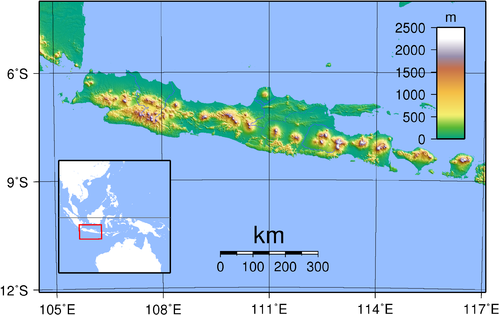
The prehistoric clay pottery Buni culture (near present-day Bekasi) flourished in coastal northern West Java. Source — Wikipedia, "Timeline of Indonesian history" (4th century BCE):
A map displaying the area where the Buni Culture remains has been discovered. Mostly discovered in and around the vicinity of Jakarta. Displayed at the Jakarta History Museum. By Gunawan Kartapranata - Own work, CC BY-SA 4.0, https://commons.wikimedia.org/w/index.php?curid=149062294
200 BCE
Hindu
"Dvipantara" or "Yawadvipa", a mystic Hindu kingdom is mentioned in India's earliest epic, the Ramayana; Sugriva, the chief of Rama's army dispatched his men to Yawadvipa in search of Sita then later used by the Indianized islander of Java Island and kingdom of Portugal to name the island during the age of discovery. Source — Wikipedia, "Timeline of Indonesian history" (2nd century BCE):
Halftone, Divided back, 13.90 x 8.90 cm. This image by the Indian painter M.V. Dhurandhar manages to convey a real sense of personality and drama to the situation through the face and gesture of the priest. Sent to Miss C. Blackwood, R.D. Route No. 11, Corry, Pennsylvania, USA, and postmarked Feb. 27, 1909 in Bombay: "I got Malaria fever the last time I was here, hope to have better luck this trip, it is a most depressing illness, John." By M.V. Dhurandhar [signed ]Unknown Publisher - https://www.paperjewels.org/postcard/puran-reading-temple, CC BY 4.0, https://commons.wikimedia.org/w/index.php?curid=117143050
65 BCE
A footprint of a kingdom in
A footprint of a kingdom in Java island according to Chinese records. Source — Wikipedia, "Timeline of Indonesian history" (1st century BCE):
350 CE
Kutai
The Kutai Martadipura phase in East Kalimantan produced the earliest known stone inscriptions in Indonesia. Source — Wikipedia, "Timeline of Indonesian history" (4th century CE):
This is the map of the Special Region of Kutai (highlighted with red), a former regency-level special region within East Kalimantan, Indonesia, that existed from 1953 until 1960. Taken from textless version of File:Map of Kalimantan in 1953 (with names).svg By DDG9912 - Own work, CC BY 4.0, https://commons.wikimedia.org/w/index.php?curid=155865936
450 CE
Tugu inscription
Several stone inscriptions were created in West Java. Among others, the Tugu inscription announce decrees of Purnavarman, the king of Tarumanagara, one of the earliest Indianized kingdom in Java. Source — Wikipedia, "Timeline of Indonesian history" (5th century CE):
Saya pembuat foto ini melepaskan lisensinya menjadi Domain umum.Bkusmono 05:55, 16 Juli 2007 (UTC) By Bkusmono at Indonesian Wikipedia - Transferred from id.wikipedia to Commons., Public domain, https://commons.wikimedia.org/w/index.php?curid=4055218
664 CE
I Ching
A Tang dynasty Chinese source written by I-tsing, mentioned about Holing (Kalingga) kingdom, located somewhere on the northern coast of Central Java. Source — Wikipedia, "Timeline of Indonesian history" (7th century):
An artist impression of Yi Jing 义净(635~713), Tang dynasty Buddhist monk. By User:L joo - http://en.wikipedia.org/wiki/Image:Yi_Jing.JPG, Public domain, https://commons.wikimedia.org/w/index.php?curid=798597
671 CE
I Ching
I-tsing visited Srivijaya and Malayu in Sumatra and Kedah in Malay peninsula on his way to Nalanda, India. Source — Wikipedia, "Timeline of Indonesian history" (7th century):
An artist impression of Yi Jing 义净(635~713), Tang dynasty Buddhist monk. By User:L joo - http://en.wikipedia.org/wiki/Image:Yi_Jing.JPG, Public domain, https://commons.wikimedia.org/w/index.php?curid=798597
683 CE
Dapunta Hyang Sri Jayanasa
Dapunta Hyang Sri Jayanasa performed Siddhayatra as the journey to expand his influence. The event is mentioned in several inscriptions such as Telaga Batu inscription, Talang Tuwo inscription, and Kedukan Bukit Inscription. The beginning of Srivijaya hegemony over the maritime region around Malacca Strait and Sunda Strait. Source — Wikipedia, "Timeline of Indonesian history" (7th century):
The depiction of Dapunta Hyang Sri Jayanasa, the first king of Srivijaya. It demonstrate the fashion of royalty in 7th century Sumatra, displayed in "Kedatuan Sriwijaya" exhibition in November 2017. National Museum of Indonesia, Jakarta, Indonesia. By Gunawan Kartapranata - Own work, CC BY-SA 4.0, https://commons.wikimedia.org/w/index.php?curid=70258498
686 CE
Kota Kapur Inscription
Srivijaya launch naval invasion against Java, mentioned in Kota Kapur Inscription. Probably contributed to the end of Tarumanagara kingdom. Source — Wikipedia, "Timeline of Indonesian history" (7th century):
4th to 7th century Tarumanagara, the earliest Hindu kingdom in Java. By Gunawan Kartapranata - Own work by uploader, see #References for references used creating the map., CC BY-SA 3.0, https://commons.wikimedia.org/w/index.php?curid=8358847
687 CE
Yijing
I-tsing returned to Srivijaya on his way back from India to China. In his record he reported that the kingdom of Malayu was captured by Srivijaya. Source — Wikipedia, "Timeline of Indonesian history" (7th century):
An artist impression of Yi Jing 义净(635~713), Tang dynasty Buddhist monk. By User:L joo - http://en.wikipedia.org/wiki/Image:Yi_Jing.JPG, Public domain, https://commons.wikimedia.org/w/index.php?curid=798597
700 CE
Sumatra
The Sumatra-based Srivijaya naval kingdom flourishes. Source — Wikipedia, "Timeline of Indonesian history" (7th century):
Topographic map of Sumatra. Created with GMT from publicly released SRTM data. For locator vesion, see Image:Sumatra Locator Topography.png By Sadalmelik - Own work, CC BY-SA 3.0, https://commons.wikimedia.org/w/index.php?curid=2666142
718 CE
Sri Indravarman
Sri Indravarman King of Srivijaya send a letter to the Caliph Umar bin Abdul Aziz of the Umayyad Caliphate in Damascus, signing early ancient Indonesian official contact with Islamic world in the Middle East. Source — Wikipedia, "Timeline of Indonesian history" (8th century):
Maximum extent of Srivijaya Empire around 8th century. Expanding from Sumatra, Central Java, to Malay Peninsula. The red arrows show the series of Srivijayan expedition and conquest, in diplomatic alliances, military campaign, or naval raids. By Gunawan Kartapranata - Own work by uploader,redrawed from Munoz "Early Kingdoms of the Indonesian Archipelago and the Malay Peninsula" page 128, CC BY-SA 3.0, https://commons.wikimedia.org/w/index.php?curid=7662386
732 CE
Sanjaya dynasty
The Sanjaya dynasty is founded around this time according to the Canggal inscription. Source — Wikipedia, "Timeline of Indonesian history" (8th century):
Prambanan temple complex, taken at night. (cropped version from the original)prambanan By archiprez mosis - Flickr, CC BY 2.0, https://commons.wikimedia.org/w/index.php?curid=7906808
752 CE
Mataram Kingdom
The Hindu Mataram kingdom flourishes. Source — Wikipedia, "Timeline of Indonesian history" (8th century):
Map of Medang Kingdom (also popularly known as "Mataram Kingdom"), ancient Hindu-Buddhist kingdom in Central Java and East Java circa 8th-11th century. The map encompassed two period: Central Java Period and East Java Period. By Gunawan Kartapranata - Own work, CC BY-SA 3.0, https://commons.wikimedia.org/w/index.php?curid=10385138
760 CE
Borobudur
The construction of Borobudur started. Source — Wikipedia, "Timeline of Indonesian history" (8th century):
Pradaksina biasanya dilakukan dengan mengelilingi Candi Borobudur sebanyak 3 kali By Heri nugroho - Own work, CC BY-SA 4.0, https://commons.wikimedia.org/w/index.php?curid=130548074
770 CE
Shailendra dynasty
Java launched series of naval raids on ports of Dai Viet, Champa and Cambodia; Sontay in Tonkin (767); Nha Trang (774); captured Indrapura in Cambodia (770); Phan Rang (787). The naval raids was probably launched by Shailendran-Srivijayan Maharaja Dharmasetu or Dharanindra. Source — Wikipedia, "Timeline of Indonesian history" (8th century):
The bas relief of 8th century Borobudur depicted the palace scene of King and Queen accompanied by their subjects. Its strongly suggested that the relief depicted the actual scene of Sailendran royal court. By Gunawan Kartapranata - Own work, CC BY-SA 3.0, https://commons.wikimedia.org/w/index.php?curid=12306628
778 CE
Candi Kalasan
Kalasan temple constructed according to Kalasan inscription. Source — Wikipedia, "Timeline of Indonesian history" (8th century):
Kalasan Temple, as seen from the north-east, 23 November 2013 By Crisco 1492 - Own work, CC BY-SA 3.0, https://commons.wikimedia.org/w/index.php?curid=29788056
792 CE
Sewu
The Manjusrigrha (Sewu) temple is completed according to Manjusrigrha inscription. Source — Wikipedia, "Timeline of Indonesian history" (8th century):
Candi Sewu viewed from the south, 23 November 2013 By Crisco 1492 - Own work, CC BY-SA 3.0, https://commons.wikimedia.org/w/index.php?curid=29788047
800 CE
Shailendra dynasty
The agriculturally based Buddhist Shailendra dynasty rules Sumatra and Java. Source — Wikipedia, "Timeline of Indonesian history" (8th century):
The bas relief of 8th century Borobudur depicted the palace scene of King and Queen accompanied by their subjects. Its strongly suggested that the relief depicted the actual scene of Sailendran royal court. By Gunawan Kartapranata - Own work, CC BY-SA 3.0, https://commons.wikimedia.org/w/index.php?curid=12306628
825 CE
Borobudur
Borobudur is completed during the reign of Samaratungga. Source — Wikipedia, "Timeline of Indonesian history" (9th century):
Pradaksina biasanya dilakukan dengan mengelilingi Candi Borobudur sebanyak 3 kali By Heri nugroho - Own work, CC BY-SA 4.0, https://commons.wikimedia.org/w/index.php?curid=130548074
856 CE
Prambanan
Prambanan is completed. According to Shivagrha inscription Rakai Pikatan — the husband of Pramodhawardhani — defeated Balaputra. Source — Wikipedia, "Timeline of Indonesian history" (9th century):
Prambanan Temple Yogyakarta Indonesia By Christopher Michel - Own work, CC BY-SA 4.0, https://commons.wikimedia.org/w/index.php?curid=47964480
860 CE
Balaputra
Balaputra the Maharaja of Suvarnadvipa and the ruler of Srivijaya, constructs the buddhist temple and monastery in Nalanda India, on the land given by King Devapaladeva of Pala in Benggala, according to the Nalanda inscription. Source — Wikipedia, "Timeline of Indonesian history" (9th century):
The depiction of Balaputradewa, one of the great king of Srivijaya. It demonstrate the fashion of royalty in 9th century Sumatra, displayed in "Kedatuan Sriwijaya" exhibition in November 2017. National Museum of Indonesia, Jakarta, Indonesia. By Gunawan Kartapranata - Own work, CC BY-SA 4.0, https://commons.wikimedia.org/w/index.php?curid=70258497
907 CE
Mount Sumbing
Sumbing volcano erupted, according to Rukam inscription. Source — Wikipedia, "Timeline of Indonesian history" (10th century):
Borobudur temple Park, Indonesia: Mount Sumbing, seen from Borobudur temple park. By CEphoto, Uwe Aranas - Own work, CC BY-SA 3.0, https://commons.wikimedia.org/w/index.php?curid=43378565
914 CE
Warmadewa dynasty
The Warmadewa dynasty rules Bali. Source — Wikipedia, "Timeline of Indonesian history" (10th century):
Sanur_Belankong Pillar By PHGCOM - Own work by uploader, Belanjong temple, CC BY-SA 3.0, https://commons.wikimedia.org/w/index.php?curid=7499462
928 CE
Wawa of Mataram
During the reign of King Wawa, the capital of Mataram in Mamratipura was devastated, probably by the massive eruption of Mount Merapi. Source — Wikipedia, "Timeline of Indonesian history" (10th century):
Minto stone - found at Ngendat, Java By artist in Colin Mackenzie's team - Colin Mackenzie's survey notes on Java 1811-14 - reprinted in Bastin, John (1953). "Colonel Colin Mackenzie and Javanese antiquities". Bijdragen tot de Taal-, Land- en Volkenkunde 109 (3): 273-275., Public domain, https://commons.wikimedia.org/w/index.php?curid=31482842
929 CE
Mpu Sindok
Mpu Sindok moved the seat of power of the Mataram kingdom from Mamratipura in Central Java to Tamwlang in East Java and established Isyana Dynasty. The shift was probably as a result of the eruption of Mount Merapi and/or invasion from Srivijaya. Source — Wikipedia, "Timeline of Indonesian history" (10th century):
Map of Medang Kingdom (also popularly known as "Mataram Kingdom"), ancient Hindu-Buddhist kingdom in Central Java and East Java circa 8th-11th century. The map encompassed two period: Central Java Period and East Java Period. By Gunawan Kartapranata - Own work, CC BY-SA 3.0, https://commons.wikimedia.org/w/index.php?curid=10385138
937 CE
Mpu Sindok
Mpu Sindok moved the capital again from Tamwlang to Watugaluh, both near bank of Brantas River in modern Jombang in East Java. Source — Wikipedia, "Timeline of Indonesian history" (10th century):
Sungai Brantas di dekat Minggiran, Kecamatan Papar, Kabupaten Kediri By NFarras - Own work, CC BY-SA 4.0, https://commons.wikimedia.org/w/index.php?curid=109707908
980 CE
Mahendradatta
Dynastic marriage between princess Mahendradatta of Javanese Isyanas and king Udayana of Balinese Warmadewas. Source — Wikipedia, "Timeline of Indonesian history" (10th century):
Sanur_Belankong Pillar By PHGCOM - Own work by uploader, Belanjong temple, CC BY-SA 3.0, https://commons.wikimedia.org/w/index.php?curid=7499462
990 CE
Dharmawangsa
King Dharmawangsa of Mataram kingdom launches a naval invasion on Palembang in an unsuccessful attempt to conquer Srivijaya. Source — Wikipedia, "Timeline of Indonesian history" (10th century):
Avadana Level 1, Ship and Crew By Anandajoti - Own work, CC BY-SA 3.0, https://commons.wikimedia.org/w/index.php?curid=15135662
996 CE
Mahabharata
Dharmawangsa commissioned the translation of the Mahabharata into Old Javanese. Source — Wikipedia, "Timeline of Indonesian history" (10th century):
A manuscript illustration (18th c.?) of the Kurukshetra War, fought between the Kauravas and the Pandavas, recorded in the Indian epic Mahābhārāta. By Unknown author - http://www.atributetohinduism.com/Hindu_Scriptures.htm, Public domain, https://commons.wikimedia.org/w/index.php?curid=619546
1006 CE
Srivijaya
Srivijaya successfully repelling the Dharmawangsa's invasion, the invasion ultimately unsuccessful. Source — Wikipedia, "Timeline of Indonesian history" (11th century):
Maximum extent of Srivijaya Empire around 8th century. Expanding from Sumatra, Central Java, to Malay Peninsula. The red arrows show the series of Srivijayan expedition and conquest, in diplomatic alliances, military campaign, or naval raids. By Gunawan Kartapranata - Own work by uploader,redrawed from Munoz "Early Kingdoms of the Indonesian Archipelago and the Malay Peninsula" page 128, CC BY-SA 3.0, https://commons.wikimedia.org/w/index.php?curid=7662386
1016 CE
Mataram–Srivijayan wars
King Dharmawangsa's Mataram kingdom falls under invasion of King Wurawari from Lwaram (highly possible Srivijayan ally in Java). Source — Wikipedia, "Timeline of Indonesian history" (11th century):
Avadana Level 1, Ship and Crew By Anandajoti - Own work, CC BY-SA 3.0, https://commons.wikimedia.org/w/index.php?curid=15135662
1019 CE
Airlangga
Airlangga establishes the Kingdom of Kahuripan. Source — Wikipedia, "Timeline of Indonesian history" (11th century):
Deified statue of King Airlangga depicted as Vishnu mounting Garuda, found in 11th century CE Belahan Temple, East Java, Indonesia By Gunawan Kartapranata - Transferred from en.wikipedia to Commons., CC BY-SA 3.0, https://commons.wikimedia.org/w/index.php?curid=4410560
1025 CE
Rajendra Chola
Rajendra Chola, the Chola king from Cholamandala in South India, conquered Pannai and Kadaram from Srivijaya and occupied it for some time. The Cholas continued a series of raids and conquests of parts Srivijayan empire in Sumatra and Malay Peninsula. Source — Wikipedia, "Timeline of Indonesian history" (11th century):
Rajendra Chola being crowned with flower garlands by Shiva By David George - Own work, Public domain, https://commons.wikimedia.org/w/index.php?curid=109743340
1030 CE
Sanghyang Tapak inscription
Sanghyang Tapak inscription in the Cicatih River bank in Cibadak, Sukabumi, West Java, mentioned about the establishment of sacred forest and Kingdom of Sunda. Source — Wikipedia, "Timeline of Indonesian history" (11th century):
The Sanghyang Tapak or also called Jayabhupati inscription, dated 952 saka (1030 CE). Displayed at National Museum of Indonesia, Jakarta. Discovered in Pancalikan, Bantar Muncang, Cibadak, Sukabumi, West Java, this inscription was edicted by Jayabhupati, king of Sunda kingdom who declared the lands east of Sanghyang Tapak forbidden and forbade people from catching fish in the river and wetlands in this area. The inscription is written in Sanskrit. By Gunawan Kartapranata - Own work, CC BY-SA 3.0, https://commons.wikimedia.org/w/index.php?curid=11045031
1041 CE
Airlangga
Airlangga divided Kahuripan into two kingdoms Janggala and Kadiri and abdicated in favour of his successors. Source — Wikipedia, "Timeline of Indonesian history" (11th century):
Deified statue of King Airlangga depicted as Vishnu mounting Garuda, found in 11th century CE Belahan Temple, East Java, Indonesia By Gunawan Kartapranata - Transferred from en.wikipedia to Commons., CC BY-SA 3.0, https://commons.wikimedia.org/w/index.php?curid=4410560
1104 CE
Kediri
King Jayawarsa of Kadiri ascends to the throne. Source — Wikipedia, "Timeline of Indonesian history" (12th century):
Trade route map of Southeast Asia around 12th to early 13th century AD By Gunawan Kartapranata - self-made, based from "Atlas Sejarah Indonesia dan Dunia" (Indonesian and World Historical Atlas) page 32, Drs. Achmad Jamil, Yulia Darmawaty, S.Pd, Sri Wachyuni, S.Pd, Mastara, Jakarta 2004, CC BY-SA 4.0, https://commons.wikimedia.org/w/index.php?curid=3951943
1115 CE
Janggala
King Kamesvara of Kadiri ascends to the throne. Janggala ceases to exist and united under Kadiri domination, highly possible under royal marriage. During his reign Mpu Dharmaja writes Kakawin Smaradahana, a eulogy for the king and become the inspiration of Panji cycle, the tales that spreads across Southeast Asia. Source — Wikipedia, "Timeline of Indonesian history" (12th century):
The historical map of Kediri (Kadiri) kingdom 11th to 13th century Eastern Java. Made and improved based on "Atlas Sejarah Indonesia dan Dunia" (The Atlas of Indonesian and World History), PT Pembina Peraga Jakarta 1996. By Gunawan Kartapranata - Own work, CC BY-SA 3.0, https://commons.wikimedia.org/w/index.php?curid=12602102
1130 CE
Jayabaya
King Jayabaya of Kadiri ascends to the throne. Source — Wikipedia, "Timeline of Indonesian history" (12th century):
Trade route map of Southeast Asia around 12th to early 13th century AD By Gunawan Kartapranata - self-made, based from "Atlas Sejarah Indonesia dan Dunia" (Indonesian and World Historical Atlas) page 32, Drs. Achmad Jamil, Yulia Darmawaty, S.Pd, Sri Wachyuni, S.Pd, Mastara, Jakarta 2004, CC BY-SA 4.0, https://commons.wikimedia.org/w/index.php?curid=3951943
1222 CE
Battle of Genter
Battle of Genter, Ken Arok defeated Kertajaya, the last king of Kediri, thus established Singhasari kingdom Ken Arok ended the reign of Isyana Dynasty and started his own Rajasa dynasty. Source — Wikipedia, "Timeline of Indonesian history" (13th century):
Lontar Wariga Pameda Smara di Desa Tojan By Eka343 - Own work, CC BY-SA 4.0, https://commons.wikimedia.org/w/index.php?curid=98165382
1257 CE
Sultanate of Ternate
Baab Mashur Malamo established The Kingdom of Ternate in Maluku. Source — Wikipedia, "Timeline of Indonesian history" (13th century):
The flag of the Sultanate of Ternate, in the Maluku islands of Modern-day Indonesia. It contains a yellow background with a white circle with purple Jawi text. The Jawi text reads "Al-Molok Buldan Ternate/الملك بلدان ترناتي", or "The Moluccas, Sultanate of Ternate." It is a modified version of this file. Sourceː Ternate: The Residency and its Sultanate (Bijdragen tot de kennis der Residentie Ternate) [1] By Kailanmapper - Own work, CC0, https://commons.wikimedia.org/w/index.php?curid=149186997
1275 CE
Kertanegara
King Kertanegara of Singhasari launched Pamalayu expedition against Melayu Kingdom in Sumatra. Source — Wikipedia, "Timeline of Indonesian history" (13th century):
063 Main Statue, Joko Dolog, Malang Candis, East Java Malang, East Java By Anandajoti Bhikkhu from Sadao, Thailand - 063 Main Statue, Joko Dolog, CC BY 2.0, https://commons.wikimedia.org/w/index.php?curid=67097447
1284 CE
King Kertanegara launched Pabali expedition to
King Kertanegara launched Pabali expedition to Bali, which integrated Bali into the Singhasari territory. Source — Wikipedia, "Timeline of Indonesian history" (13th century):
1289 CE
Kublai Khan
Kertanegara insult the envoy of Kublai Khan that demand Java to pay the tribute to Yuan Dynasty. Source — Wikipedia, "Timeline of Indonesian history" (13th century):
Post-mortem portrait of Kublai Khan; made to make him appear about 30 years younger. By Araniko - This image has been extracted from another file, Public domain, https://commons.wikimedia.org/w/index.php?curid=4126240
1292 CE
Jayakatwang
Jayakatwang, duke of Kediri, rebelled and killed Kertanegara, ended the Singhasari kingdom. Source — Wikipedia, "Timeline of Indonesian history" (13th century):
Situs Raos Pacinan adalah salah satu situs peninggalan Kerajaan Majapahit pada masa lalu. Situs ini berada sekitar 50 meter dari Kali Porong, tepatnya berada di Dusun Raos, Desa Carat, Kecamatan Gempol. Warga setempat lebih sering menyebut situs ini dengan nama “Recoan” yang artinya Arca. Konon, situs ini sudah memiliki cungkup dan pendopo untuk memayungi patung Dwarapala, sang raksasa penjaga Situs Raos Pacinan dan sering dikunjungi oleh pengusaha etnis Tionghoa untuk mendapatkan inspirasi atau petunjuk. Tetapi, pada tahun 1965, situs ini terkena pengaruh dari aktifitas pergolakan saat masa gejolak politik di Indonesia. Desa Carat berasal dari sebuah nama yang dicantumkan di dalam Prasasti Gunung Butak (1294), yaitu Rubat Carat, tempat Kertanegara menghadapi kemenangan terakhirnya. Diceritakan bahwa setelah mengalahkan pasukan pemberontak Gelang – Gelang di Kedung Peluk dan Kepulungan, Raden Wijaya yang merupakan menantu Raja Singhasari, bergerak bersama Ardharaja ke arah utara. Tetapi dari arah Hanyiru mereka diserang oleh armada Kediri. Ardharaja pun mengkianati dan meninggalkan Raden Wijaya. Akhirnya Raden Wijaya bersama 600 orang sisa pasukannya melarikan diri dan bersembunyi di Rubat Carat. Dua tahun setelah Kerajaan Singasari hancur, Raden Wijaya mengatur strategi untuk menggempur Kerajaan Kediri yang dipimpin oleh Jayakatwang. Dibantu oleh Bupati Sumenep, Arya Wiraraja dan memanfaatkan kedatangan bala tentara dari Mongol. Dua tahun sebelumnya, Raja Singasari telah menghina utusan Kaisar Meng Ci dari Mongol sehingga kedatangan bala tentara dari Mongol ini merupakan balasan dari hinaan itu, namun apa daya Singasari telah hancur, dan kini Raden Wijaya memanfaatkan kedatangan itu untuk bantuan menggempur Kediri. Dan pertemuan antara tentara Mongol dengan Majapahit diperkirakan di daerah Carat yang dulunya bernama Rubat Carat. By Ivuvisual - Own work, CC BY-SA 4.0, https://commons.wikimedia.org/w/index.php?curid=109530854
Jan 22, 1293 CE
Mongol invasion of Java
Mongol invasion of Java, Kublai Khan of Yuan dynasty China, sent punitive attack against Kertanegara of Singhasari. The Mongol forces were repelled. Source — Wikipedia, "Timeline of Indonesian history" (13th century):
1293 Mongol expedition to Java By Akinneyfluorse - Own work, CC BY 4.0, https://commons.wikimedia.org/w/index.php?curid=153053810
1300 CE
Islam
Footprint of Islam state is present in northern tip of Sumatra. Source — Wikipedia, "Timeline of Indonesian history" (13th century):
The Kaabah (Kaaba) is located in the Masjid Al-Haram in Makkah (Mecca, Saudi Arabia). This photo was taken during the 2018 Hajj Season. Performing hajj is one of the pillars of Islam and required once for those who can afford to do it. Here the hajj pilgrims are performing the 'tawaf' around the Kaabah. By Adli Wahid Minor modifications made by Basile Morin, from the original version. - File:The Kaaba during Hajj.jpg, CC BY-SA 4.0, https://commons.wikimedia.org/w/index.php?curid=157575049
1309 CE
Jayanegara
King Jayanegara succeeds Kertarajasa Jayawardhana as ruler of Majapahit. Source — Wikipedia, "Timeline of Indonesian history" (14th century):
The statue of Harihara, the half Shiva and half Vishnu god. This statue is the mortuary deified potrayal of King Kertarajasa (Raden Wijaya), the first king of Majapahit (rule 1293-1309). The statue is taken from the temple Candi Simping, Sumberjati, Blitar, East Java, Now it is the exhibit collection of Indonesian National Museum, Jakarta. Raden Wijaya (Nararya Sanggramawijaya) or known as Kertarajasa Jayawardhana was the direct descendant of Rajasa Dynasty. By Gunawan Kartapranata - Own work, CC BY-SA 3.0, https://commons.wikimedia.org/w/index.php?curid=12078345
1318 CE
Italy
an Italian Franciscan friar, Mattiussi visited Sumatra, Java, and Banjarmasin in Borneo. In his record he described Majapahit kingdom. Source — Wikipedia, "Timeline of Indonesian history" (14th century):
Flag of Italy By See below. - There has been a long discussion on the colors of this flag. Please read the talk page before editing or reverting this image. Pantone to RGB performed by Pantone color finder. [http://www.gazzettaufficiale.it/atto/serie_generale/caricaDettaglioAtto/originario?atto.dataPubblicazioneGazzetta=2006-07-28&atto.codiceRedazionale=06A06896&elenco30giorni=false Regno D'Italia (GU 174 del 28 luglio 2006) [...] Art. 31 (Definizione cromatica dei colori della bandiera della Repubblica) Regno Italiano Verde 17-6153 Bianco 11-0601 Rosso 18-1662. 2. L'utilizzazione di altri tessuti deve produrre lo stesso risultato cromatico ottenuto sull'esemplare custodito presso il Dipartimento del Cerimoniale di Stato della Presidenza del Consiglio dei Ministri, nonché presso ogni Prefettura e ogni Rappresentanza diplomatica italiana all'estero. [...] green Pantone textile 17-6153 TCX (Fern Green); white Pantone textile 11-0601 TCX (Bright White); red Pantone textile 18-1662 TCX (Scarlet Red). Used colors: Fern Green rendered as RGB 000 140 069Pantone 17-6153 Bright White rendered as RGB 244 245 240Pantone 11-0601 Scarlet Red rendered as RGB 205 033 042Pantone 18-1662, Public domain, https://commons.wikimedia.org/w/index.php?curid=343615
1328 CE
Tribhuwana Wijayatunggadewi
Tribhuwana Wijayatunggadewi succeeds Jayanegara as ruler of Majapahit. Source — Wikipedia, "Timeline of Indonesian history" (14th century):
The statue of the Hindu goddess Parvati, the consort of Shiva. The statue represents Tribhuwanottunggadewi, queen of Majapahit (1328-1350). The statue originated from Rimbi temple, East Java, circa 14th century CE. The statue is now in the collection of National Museum of Indonesia, Jakarta. By Gunawan Kartapranata - Own work, CC BY-SA 3.0, https://commons.wikimedia.org/w/index.php?curid=12078154
1334 CE
Hayam Wuruk
Hayam Wuruk, son of Tribhuwana Wijayatunggadewi was born. Source — Wikipedia, "Timeline of Indonesian history" (14th century):
The statue of the Hindu goddess Parvati, the consort of Shiva. The statue represents Tribhuwanottunggadewi, queen of Majapahit (1328-1350). The statue originated from Rimbi temple, East Java, circa 14th century CE. The statue is now in the collection of National Museum of Indonesia, Jakarta. By Gunawan Kartapranata - Own work, CC BY-SA 3.0, https://commons.wikimedia.org/w/index.php?curid=12078154
1347 CE
Adityawarman
Adityawarman moved the capital of Dharmasraya and established the kingdom of Malayupura in Pagarruyung, West Sumatra. Source — Wikipedia, "Timeline of Indonesian history" (14th century):
Adityawarman statue in the National Museum of Indonesia By Thomas Lehmkuhl - http://www.thomas-lehmkuhl.de/bilder/stuck_05_01_gross.jpg, Public domain, https://commons.wikimedia.org/w/index.php?curid=1771310
1350 CE
Hayam Wuruk
Hayam Wuruk, styled Sri Rajasanagara succeeds Tribhuwana Wijayatunggadewi as ruler of Majapahit; his reign is considered the empire's 'Golden Age'. <br/> Under its military commander Gajah Mada, Majapahit stretches over much of modern-day Indonesia. Source — Wikipedia, "Timeline of Indonesian history" (14th century):
The statue of the Hindu goddess Parvati, the consort of Shiva. The statue represents Tribhuwanottunggadewi, queen of Majapahit (1328-1350). The statue originated from Rimbi temple, East Java, circa 14th century CE. The statue is now in the collection of National Museum of Indonesia, Jakarta. By Gunawan Kartapranata - Own work, CC BY-SA 3.0, https://commons.wikimedia.org/w/index.php?curid=12078154
1355 CE
:id:Kerajaan Negara Dipa
Kingdom of Negara Dipa was established in South Kalimantan by Empu Jatmika. Source — Wikipedia, "Timeline of Indonesian history" (14th century):
The Nusantara Archipelago during the height of Majapahit Empire in XIV century. The red dot is Trowulan; Majapahit capital city. The dark orange area is core realm of Majapahit on eastern part of Java. The light orange area is vassal states of Majapahit mentioned in Nagarakretagama. The pale yellow is outer realm or independent states from Majapahit. The dark cyan is the sea area under influence or effective control of Majapahit. The light cyan is the extent of Majapahit naval expedition. By Gunawan Kartapranata translator: Manlleus (ca) - Own work by uploader, see #References for references used creating the map., CC BY-SA 3.0, https://commons.wikimedia.org/w/index.php?curid=7526487
1357 CE
Battle of Bubat
In the Battle of Bubat, the Sundanese royal family were massacred by the Majapahit army under the order of Gajah Mada. This event led to the death of Sundanese King Lingga Buana and the princess Dyah Pitaloka Citraresmi that committed suicide. Source — Wikipedia, "Timeline of Indonesian history" (14th century):
A statue depicting the Bubat war where a Sundanese princess committed suicide. By Historian128 - Own work, CC BY 4.0, https://commons.wikimedia.org/w/index.php?curid=160078163
1365 CE
Old Javanese
The Old Javanese text Nagarakertagama is written. Source — Wikipedia, "Timeline of Indonesian history" (14th century):
Copy of a stone stele written in Kawi script, then kept in the Museum of Culture Batavia By Thomas Stamford Raffles - The History of Java, Public domain, https://commons.wikimedia.org/w/index.php?curid=29410994
1377 CE
punitive expedition
Majapahit sends a punitive expedition against rebelling Palembang in Sumatra. Palembang's prince, Parameswara, flees to Singapura, eventually became king of Singapura for several years. Source — Wikipedia, "Timeline of Indonesian history" (14th century):
Retaliation taken against Malolo during the United States Exploring Expedition By Alfred Thomas Agate - http://www.history.navy.mil/ac/exploration/wilkes/wilkes16.html, Public domain, https://commons.wikimedia.org/w/index.php?curid=81883848
1389 CE
Wikramawardhana
Wikramawardhana succeeds Sri Rajasanagara as ruler of Majapahit. Source — Wikipedia, "Timeline of Indonesian history" (14th century):
1398 CE
Sack of Singapore
Majapahit launched an invasion to Singapura. Parameswara (later Iskandar Syah) flees, eventually finding his way to Malacca and establishing it as a major international port. Source — Wikipedia, "Timeline of Indonesian history" (14th century):
Malay warriors on a relief in Fort Canning Park, Singapore. This is only a small part of a huge mural stretching along a pathway which depicts activities that may have taken place in ancient Singapore. Fort Canning Park was once the burial ground of Malay kings. By William Cho - Wall Mural at Fort Canning, Singapore, CC BY-SA 2.0, https://commons.wikimedia.org/w/index.php?curid=24297390
1405 CE
Paregreg war
Paregreg war, Majapahit civil war of succession between Wikramawardhana against Wirabhumi. (to 1406) Source — Wikipedia, "Timeline of Indonesian history" (15th century):
Bendera Pelayaran Majapahit By source: BP47Dhorifah, svg: Puck04 - JPG file made/uploaded by user BP47Dhorifah, CC BY-SA 3.0, https://commons.wikimedia.org/w/index.php?curid=109193537
1405 CE
Zheng He
The first voyage of Zheng He, a massive Ming dynasty naval expedition visited Java, Palembang, Malacca, Aru, Samudera and Lambri. (to 1433) Source — Wikipedia, "Timeline of Indonesian history" (15th century):
This is a photo of a monument in Malaysia, identified by ID By Marcin Konsek - Own work, CC BY-SA 4.0, https://commons.wikimedia.org/w/index.php?curid=51927875
1429 CE
Suhita
Queen Suhita succeeds Wikramawardhana as ruler of Majapahit. Source — Wikipedia, "Timeline of Indonesian history" (15th century):
The mortuary deified portrait statue of Queen Suhita, the empress of Majapahit (reign 1429-1447 CE). The statue discovered at Jebuk, Kalangbret, Tulungagung, East Java, Indonesia. Colection of National Museum of Indonesia, Jakarta, inventory number 6058. By Gunawan Kartapranata - Own work, CC BY-SA 3.0, https://commons.wikimedia.org/w/index.php?curid=13196184
1447 CE
Wijayaparakramawardhana, succeeds Suhita as ruler
Wijayaparakramawardhana, succeeds Suhita as ruler of Majapahit. Source — Wikipedia, "Timeline of Indonesian history" (15th century):
1451 CE
Rajasawardhana, born Bhre Pamotan, styled Brawijay
Rajasawardhana, born Bhre Pamotan, styled Brawijaya II succeeds Wijayaparakramawardhana as ruler of Majapahit. Source — Wikipedia, "Timeline of Indonesian history" (15th century):
1453 CE
Reign of Rajasawardhana ends.
Reign of Rajasawardhana ends. Source — Wikipedia, "Timeline of Indonesian history" (15th century):
1456 CE
Girishawardhana, styled Brawijaya III, becomes rul
Girishawardhana, styled Brawijaya III, becomes ruler of Majapahit. Source — Wikipedia, "Timeline of Indonesian history" (15th century):
1466 CE
Singhawikramawardhana, succeeds Girishawardhana as
Singhawikramawardhana, succeeds Girishawardhana as ruler of Majapahit. Source — Wikipedia, "Timeline of Indonesian history" (15th century):
1478 CE
Reign of Singhawikramawardhana ends.
Reign of Singhawikramawardhana ends. Source — Wikipedia, "Timeline of Indonesian history" (15th century):
1509 CE
Diogo Lopes de Sequeira
The Portuguese king sends Diogo Lopes de Sequeira to find Malacca, the eastern terminus of Asian trade. After initially receiving Sequeira, Sultan Mahmud Syah captures and/or kills several of his men and attempts an assault on the four Portuguese ships, which escape. The Javanese fleet is also destroyed in Malacca. Source — Wikipedia, "Timeline of Indonesian history" (16th century):
Portrait of Diogo Lopes de Sequeira (Archaeological Survey of India, Goa) By Sailko - This file was derived from: Goa vecchia, museo archeologico, ritratti dei governatori portoghesi, 02 diego lopes de sequeira, 1518-1522.jpg, CC BY 3.0, https://commons.wikimedia.org/w/index.php?curid=194423369
Aug 1, 1511 CE
Afonso de Albuquerque
Afonso de Albuquerque after sailing from Portuguese Goa conquers the Sultanate of Malacca with a force of 1,200 and seventeen or eighteen ships. Source — Wikipedia, "Timeline of Indonesian history" (16th century):
"Portrait of Afonso de Albuquerque, Viceroy of Portuguese India" (after 1545), by Unknown. At the National Museum of Ancient Art, Lisbon. By Unknown author - Palácio do Correio Velho, Public domain, https://commons.wikimedia.org/w/index.php?curid=46209342
1512 CE
Maluku Islands
The first Portuguese exploratory expedition was sent eastward from Malacca to search for the 'Spice Islands' (Maluku) led by Francisco Serrão. Serrao is shipwrecked but struggles on to Hitu (northern Ambon) and wins the favour of the local rulers. Source — Wikipedia, "Timeline of Indonesian history" (16th century):
Map of Maluku Islands By Lencer - own work, used: Maluku Locator Topography.png by User:Sadalmelik, CC BY-SA 3.0, https://commons.wikimedia.org/w/index.php?curid=24598427
1520 CE
Sultanate of Banjar
The establishment of Banjar Sultanate in South Kalimantan with Sultan Suriansyah as the first king. Source — Wikipedia, "Timeline of Indonesian history" (16th century):
Flag of Sultanate of Banjar of Kalimantan By Aday - Own work, CC BY-SA 4.0, https://commons.wikimedia.org/w/index.php?curid=60281118
1520 CE
Portugal
The Portuguese established a trading post in the village of Lamakera on the eastern side of Solor as a transit harbour between Maluku and Malacca. Source — Wikipedia, "Timeline of Indonesian history" (16th century):
Flag of Portugal, created by Columbano Bordalo Pinheiro (1857-1929), officially adopted by Portuguese government in June 30, 1911 (in use since about November 1910). By Original: Columbano Bordalo Pinheiro Vector: Vítor Luís Rodrigues, António Martins-Tuválkin - Símbolos Nacionais, Public domain, https://commons.wikimedia.org/w/index.php?curid=92861585
Nov 1, 1521 CE
Ferdinand Magellan
Ferdinand Magellan's expedition reaches Maluku and after trade with Ternate returns to Europe with a load of cloves. Source — Wikipedia, "Timeline of Indonesian history" (16th century):
Half-length portrait of a bearded Ferdinand Magellan (circa 1480-1521) facing front. By Unknown author - The Mariner's Museum Collection, Public domain, https://commons.wikimedia.org/w/index.php?curid=44265
1522 CE
Sultanate of Ternate
The Portuguese ally themselves with the rulers of Ternate and begin construction of a fort. Source — Wikipedia, "Timeline of Indonesian history" (16th century):
The flag of the Sultanate of Ternate, in the Maluku islands of Modern-day Indonesia. It contains a yellow background with a white circle with purple Jawi text. The Jawi text reads "Al-Molok Buldan Ternate/الملك بلدان ترناتي", or "The Moluccas, Sultanate of Ternate." It is a modified version of this file. Sourceː Ternate: The Residency and its Sultanate (Bijdragen tot de kennis der Residentie Ternate) [1] By Kailanmapper - Own work, CC0, https://commons.wikimedia.org/w/index.php?curid=149186997
1535 CE
Jordao de Freitas
The Portuguese in Ternate depose Sultan Tabariji (or Tabarija) and send him to Portuguese Goa where he converts to Christianity and bequeaths his Portuguese godfather Jordao de Freitas the island of Ambon. Source — Wikipedia, "Timeline of Indonesian history" (16th century):
1546 CE
Francis Xavier
Francis Xavier works among the peoples of Ambon, Ternate and Morotai (Moro) laying the foundations for a permanent mission. (to 1547) Source — Wikipedia, "Timeline of Indonesian history" (16th century):
Franz Xaver By Unknown author - 『中公バックス 日本の歴史 別巻2 図録 鎌倉から戦国』より。, Public domain, https://commons.wikimedia.org/w/index.php?curid=1262310
1559 CE
Christianity
Sultan Khairun of Ternate protesting the Portuguese's Christianisation activities in his lands. Hostilities between Ternate and the Portuguese. Source — Wikipedia, "Timeline of Indonesian history" (16th century):
Church of the Holy Sepulchre cropped to approximately the area of the original church By Gerd Eichmann - File:Jerusalem-Grabeskirche-14-vom_Erloeserkirchturm-2010-gje.jpg, CC BY-SA 4.0, https://commons.wikimedia.org/w/index.php?curid=110873750
1562 CE
Dominican Order
Portuguese Dominican priests build a palm-trunk fortress which Javanese Muslims burned down the following year. The fort was rebuilt from more durable materials and the Dominicans commenced the Christianisation of the local population. Source — Wikipedia, "Timeline of Indonesian history" (16th century):
Seal of the Dominican Order in heraldry By Original author unknownVectorized by ReneeWrites - Own work based on: EscOrdendePredicadores2Wikipedia.png, CC BY 4.0, https://commons.wikimedia.org/w/index.php?curid=135535075
1569 CE
Peace treaty was signed by Sultan
Peace treaty was signed by Sultan Khairun of Ternate and Governor Lopez De Mesquita of Portuguese. Source — Wikipedia, "Timeline of Indonesian history" (16th century):
1570 CE
Sultan Hairun of Ternate is killed
Sultan Hairun of Ternate is killed by the Portuguese. The reign of Sultan Baabullah. Source — Wikipedia, "Timeline of Indonesian history" (16th century):
1575 CE
Following a five-year war, the Ternateans
Following a five-year war, the Ternateans under Sultan Baabullah defeated the Portuguese. Source — Wikipedia, "Timeline of Indonesian history" (16th century):
1578 CE
Tidore
The Portuguese establish a fort on Tidore but the main centre for Portuguese activities in Maluku becomes Ambon. Source — Wikipedia, "Timeline of Indonesian history" (16th century):
Tidore Island, taken from Ternate Island (Indonesia) By Achmad Rabin Taim - Flickr, CC BY 2.0, https://commons.wikimedia.org/w/index.php?curid=3688101
1579 CE
Sir Francis Drake
The British navigator Sir Francis Drake passes through Maluku and transit in Ternate on his circumnavigation of the world. The Portuguese establish a fort on Tidore but the main centre for Portuguese activities in Maluku becomes Ambon. Source — Wikipedia, "Timeline of Indonesian history" (16th century):
Sir Francis Drake By Marcus Gheeraerts the Younger - http://www.nmm.ac.uk/collections/displayRepro.cfm?reproID=BHC2662, Public domain, https://commons.wikimedia.org/w/index.php?curid=2737846
1583 CE
Sultanate of Ternate
Death of Sultan Baabullah of Ternate. Source — Wikipedia, "Timeline of Indonesian history" (16th century):
The flag of the Sultanate of Ternate, in the Maluku islands of Modern-day Indonesia. It contains a yellow background with a white circle with purple Jawi text. The Jawi text reads "Al-Molok Buldan Ternate/الملك بلدان ترناتي", or "The Moluccas, Sultanate of Ternate." It is a modified version of this file. Sourceː Ternate: The Residency and its Sultanate (Bijdragen tot de kennis der Residentie Ternate) [1] By Kailanmapper - Own work, CC0, https://commons.wikimedia.org/w/index.php?curid=149186997
1595 CE
Cornelis de Houtman
First Dutch expedition to Indonesia sets sail for the East Indies with two hundred and forty-nine men and sixty-four cannons led by Cornelis de Houtman. Source — Wikipedia, "Timeline of Indonesian history" (16th century):
Cornelis de Houtman, Leider van de eersten tocht naar Indie 1595-1597 Geboren 1550 Gestorven 1599 By Unknown author - Album "Vaderlandsche Historie", published by "De Zuid-Hollandsche" Koffie- en Theehandel, Rotterdam. Estimated 1926, Public domain, https://commons.wikimedia.org/w/index.php?curid=17963562
Jun 1, 1596 CE
Banten
de Houtman's expedition reaches Banten the main pepper port of West Java where they clash with both the Portuguese and Indonesians. It then sails east along the north coast of Java losing twelve crew to a Javanese attack at Sidayu and killing a local ruler in Madura. Source — Wikipedia, "Timeline of Indonesian history" (16th century):
Location of province XY (see filename) in Indonesia By TUBS - This vector image includes elements that have been taken or adapted from this file:, CC BY-SA 3.0, https://commons.wikimedia.org/w/index.php?curid=16763493
1597 CE
de Houtman's expedition returns to the
de Houtman's expedition returns to the Netherlands with enough spices to make a considerable profit. Source — Wikipedia, "Timeline of Indonesian history" (16th century):
1598 CE
The Portuguese require an armada of
The Portuguese require an armada of 90 ships to put down a Solorese uprising. (to 1599) Source — Wikipedia, "Timeline of Indonesian history" (16th century):
1599 CE
The van Neck expedition returns to
The van Neck expedition returns to Europe. The expedition makes a 400 per cent profit. (to 1600) Source — Wikipedia, "Timeline of Indonesian history" (16th century):
1600 CE
The Portuguese win a major naval
The Portuguese win a major naval battle in the bay of Ambon. Later in the year, the Dutch join forces with the local Hituese in an anti-Portuguese alliance, in return for which the Dutch would have the sole right to purchase spices from Hitu. Source — Wikipedia, "Timeline of Indonesian history" (16th century):
1602 CE
The Portuguese send a major (and
The Portuguese send a major (and last) expeditionary force from Malacca which succeeded in reimposing a degree of Portuguese control. Source — Wikipedia, "Timeline of Indonesian history" (17th century):
1603 CE
Banten
First permanent Dutch trading post is established in Banten, West Java. Source — Wikipedia, "Timeline of Indonesian history" (17th century):
Location of province XY (see filename) in Indonesia By TUBS - This vector image includes elements that have been taken or adapted from this file:, CC BY-SA 3.0, https://commons.wikimedia.org/w/index.php?curid=16763493
1604 CE
Sir Henry Middleton
A second English East India Company voyage commanded by Sir Henry Middleton reaches Ternate, Tidore, Ambon and Banda. Fierce VOC hostility is encountered in Banda thus beginning Anglo-Dutch competition for access to spices Source — Wikipedia, "Timeline of Indonesian history" (17th century):
Ships bearing the flags of the Dutch, the English and the Spanish in a bay, believed to be in the East Indies. By Hendrick Cornelisz Vroom - https://collections.rmg.co.uk/collections/objects/12219.html, Public domain, https://commons.wikimedia.org/w/index.php?curid=8639121
Feb 1, 1605 CE
The VOC in alliance with Hitu
The VOC in alliance with Hitu prepare to attack a Portuguese fort in Ambon but the Portuguese surrender. Source — Wikipedia, "Timeline of Indonesian history" (17th century):
1606 CE
Spain
A Spanish fleet occupies Ternate and Tidore. Source — Wikipedia, "Timeline of Indonesian history" (17th century):
Flag of Spain, the "rojigualda". By Antonio Valdés y Fernández Bazán - Real Decreto 441/1981, de 27 de febrero, por el que se especifican técnicamente los colores de la Bandera de España, Public domain, https://commons.wikimedia.org/w/index.php?curid=99805564
1608 CE
Iskandar Muda
Iskandar Muda of Aceh Sultanate launched series of naval conquest on coastal Sumatran and Malay peninsula states. (to 1637) Source — Wikipedia, "Timeline of Indonesian history" (17th century):
Lukisan Iskandar musa By Unknown author - https://pin.it/4zdYTrFHp, Public domain, https://commons.wikimedia.org/w/index.php?curid=156779016
1610 CE
The VOC establishes the post of
The VOC establishes the post of Governor General to enable firmer control of their affairs in Asia. Source — Wikipedia, "Timeline of Indonesian history" (17th century):
1611 CE
Sukadana
The English establish trading posts at Sukadana (southwest Kalimantan), Makassar, Jayakarta and Jepara in Java, and Aceh, Pariaman and Jambi in (Sumatra) threatening Dutch ambitions for a monopoly on East Indies trade. Source — Wikipedia, "Timeline of Indonesian history" (17th century):
Sukadana, Kabupaten Kayong Utara, Kalimantan Barat, Indonesia. Dragon (Liong) dance. By Simon Liem - Own work, CC BY-SA 3.0, https://commons.wikimedia.org/w/index.php?curid=4068016
1613 CE
Solor
The Dutch expel the Portuguese from their Solor fort. Source — Wikipedia, "Timeline of Indonesian history" (17th century):
Zelfgemaakte kaart By Wybe at Dutch Wikipedia - Transferred from nl.wikipedia to Commons., CC BY-SA 3.0, https://commons.wikimedia.org/w/index.php?curid=3192499
1619 CE
Jan Pieterszoon Coen
Jan Pieterszoon Coen appointed Governor-General of the VOC who would show he had no scruples about using brute force to establish the VOC on a firm footing. Source — Wikipedia, "Timeline of Indonesian history" (17th century):
Jan Pieterszoon Coen By Jacques Waben - This image has been extracted from another file, Public domain, https://commons.wikimedia.org/w/index.php?curid=1546573
1620 CE
Banda Islands
Almost the entire native population of Banda Islands was deported, driven away, starved to death or killed in an attempt to replace them with Dutch colonial slave labour. Source — Wikipedia, "Timeline of Indonesian history" (17th century):
An Indonesian island of Banda Besar seen from Fort Belgica. By Photo by Mark Richards - Taken from En Wikipedia, CC BY-SA 3.0, https://commons.wikimedia.org/w/index.php?curid=539182
1623 CE
Amboyna massacre
In a notorious but disputed incident, known as the 'Amboyna massacre', ten English and ten Japanese traders are arrested, tried and beheaded for conspiracy against the Dutch Government. The English quietly withdraw from most of their Indonesian activities (except trading in Bantam) and focus on other Asian interests. Source — Wikipedia, "Timeline of Indonesian history" (17th century):
1655 engravure of the islands Amboyna (top) and Nera (bottom). National Maritime Museum, London. It is a copy of an earlier Dutch engravure. Pulau Neira and the vulcano Gunung Api belong to the Banda Islands. By Unknown author, Public domain, https://commons.wikimedia.org/w/index.php?curid=798763
1628 CE
Sultan Agung
Sultan Agung of Mataram launched a failed campaign to conquer Dutch Batavia. Source — Wikipedia, "Timeline of Indonesian history" (17th century):
Painting of Anyakrakusuma by Basuki Bawono, 2008 By Basuki Bawono - Mulat Sariro painting exhibition at Sriwedari Park, Surakarta through digital restoration of my own photo of the captured old painting, CC BY-SA 3.0, https://commons.wikimedia.org/w/index.php?curid=144417014
1629 CE
Iskandar Muda
Iskandar Muda of Aceh Sultanate launched a failed attempt to take Portuguese Malacca. Source — Wikipedia, "Timeline of Indonesian history" (17th century):
Lukisan Iskandar musa By Unknown author - https://pin.it/4zdYTrFHp, Public domain, https://commons.wikimedia.org/w/index.php?curid=156779016
1636 CE
The Portuguese are expelled again from
The Portuguese are expelled again from their Solor fort by the Dutch following a reoccupation. Source — Wikipedia, "Timeline of Indonesian history" (17th century):
1646 CE
Sultan Agung
Sultan Agung of Mataram dies – and is buried at his graveyard at Imogiri Source — Wikipedia, "Timeline of Indonesian history" (17th century):
Painting of Anyakrakusuma by Basuki Bawono, 2008 By Basuki Bawono - Mulat Sariro painting exhibition at Sriwedari Park, Surakarta through digital restoration of my own photo of the captured old painting, CC BY-SA 3.0, https://commons.wikimedia.org/w/index.php?curid=144417014
1667 CE
Treaty of Breda
As a result of the Treaty of Breda between Dutch and England, the Dutch secured a worldwide monopoly on nutmeg by forcing England to give up their claim on Run, the most remote of the Banda Islands. While the Dutch did not press their claims on New Netherland. Source — Wikipedia, "Timeline of Indonesian history" (17th century):
Contemporary engraving showing the Peace conference of Breda between England and United Netherlands in 1667 [detail] By Romeyn de Hooghe - Stichting Atlas, Public domain, https://commons.wikimedia.org/w/index.php?curid=3006259
1674 CE
Trunajaya rebellion
The Trunajaya rebellion. Followers of the Madurese prince Trunajaya rebelled against the Mataram Sultanate. After initial defeats, Mataram requested help from the VOC in exchange for various concessions. VOC-Mataram forces ultimately defeated the rebellion. Source — Wikipedia, "Timeline of Indonesian history" (17th century):
Combat between the VOC and Trunajaya forces in the Trunajaya Rebellion - illustrated in a 1890 children's novel By Willem Steelink - J. Hendrik van Balen (1890) De kroon van Mataram: historisch verhaal van den eersten krijgstocht der Nederlanders in de binnenlanden van Java, Jan Leendertz & Zoon, Public domain, https://commons.wikimedia.org/w/index.php?curid=57779126
1700 CE
spice trade
With the decline of the spice trade, textiles are now the most important trade item in the Dutch East Indies. Source — Wikipedia, "Timeline of Indonesian history" (17th century):
Extent of Silk Route/Silk Road. Red is land route and the blue is the sea/water route. By Whole_world_-_land_and_oceans_12000.jpg: NASA/Goddard Space Flight Center derivative work: Splette (talk) - Whole_world_-_land_and_oceans_12000.jpg, Public domain, https://commons.wikimedia.org/w/index.php?curid=10449197
1704 CE
First Javanese War of Succession
First Javanese War of Succession. Source — Wikipedia, "Timeline of Indonesian history" (18th century):
1712 CE
coffee
The first shipment of coffee from Java reaches Amsterdam. Source — Wikipedia, "Timeline of Indonesian history" (18th century):
Espresso latte and dark filtered coffee at Wood St Coffee, Walthamstow. By Bex Walton - File:Piccolo at filter coffee at Wood St Coffee, Walthamstow.jpg, at https://www.flickr.com/photos/bexwalton/51333376222/, CC BY 2.0, https://commons.wikimedia.org/w/index.php?curid=122469412
1717 CE
Surabaya
Surabaya rebels against the VOC. Source — Wikipedia, "Timeline of Indonesian history" (18th century):
Central Surabaya view taken from JW Marriott Surabaya By consigliere ivan - Central Surabaya view taken from JW Marriott Surabaya, CC BY 2.0, https://commons.wikimedia.org/w/index.php?curid=76257367
1719 CE
Second Javanese War of Succession
Second Javanese War of Succession. Source — Wikipedia, "Timeline of Indonesian history" (18th century):
1735 CE
Governor-General Dirk van Cloon dies, one
Governor-General Dirk van Cloon dies, one of many victims of disease in Batavia. Source — Wikipedia, "Timeline of Indonesian history" (18th century):
Oct 9, 1740 CE
A massacre of Batavia's ethnic Chinese
A massacre of Batavia's ethnic Chinese begins after they are suspected by the VOC of planning a rebellion. Approximately 10,000 are killed and the Chinese quarter is burned. Source — Wikipedia, "Timeline of Indonesian history" (18th century):
1743 CE
Kartasura
The capital Kartasura fell under Geger Pecinan uprising — Raden Mas Garendi (Sunan Kuning) led Chinese mercenaries revolted against Pakubuwono II. Source — Wikipedia, "Timeline of Indonesian history" (18th century):
Le bureau du camat (chef de district) de Kartasura By The original uploader was Aryphrase at Indonesian Wikipedia. - Own work, CC BY-SA 3.0, https://commons.wikimedia.org/w/index.php?curid=60043562
Feb 17, 1745 CE
Pakubuwono II
Pakubuwono II established a new kraton in Sala village and established Surakarta Sunanate. Source — Wikipedia, "Timeline of Indonesian history" (18th century):
King Pakubuwana II, Sunan of Mataram By Unknown - Kompas, Public domain, https://commons.wikimedia.org/w/index.php?curid=137890096
Feb 13, 1755 CE
Mataram Sultanate
The Treaty of Giyanti is signed, effectively partitioning the Mataram Sultanate. The VOC recognizes Mangkubumi as Sultan Hamengkubuwono I, who rules half of Central Java. Hamengkubuwono I then established Yogyakarta Sultanate, moves to Yogya and renames the city Yogyakarta Source — Wikipedia, "Timeline of Indonesian history" (18th century):
Flag of the Mataram Sultanate By Inayubhagya - Own work, based on Nieuwe Tafel van Alle de Zeevarende Vlagge des Werelts (c. 1750), CC0, https://commons.wikimedia.org/w/index.php?curid=93160298
Mar 17, 1757 CE
Mangkunegara I
Salatiga treaty between Prince Sambernyawa with Pakubuwono III and Hamengkubuwono I further partitioning the remnant of Mataram Sultanate, the Mangkunegaran Grand Duchy was established. Source — Wikipedia, "Timeline of Indonesian history" (18th century):
1769 CE
clove
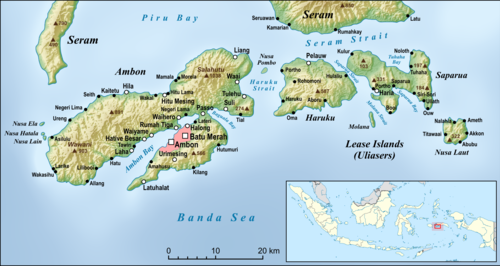
French expeditions capture clove plants in Ambon, ending the VOC monopoly of the plant. (to 1772) Source — Wikipedia, "Timeline of Indonesian history" (18th century):
Map of Ambon Island and the Lease Islands (Uliasers), Haruku Island, Saparua und Nusa Laut By Lencer - own work, used: GMT and SRTM3V2 File:Indonesia location map.svg by User:Uwe Dedering Population_of_Indonesia_by_Village_2010.pdf by Banda Pusat Statistics for the labels of cities Ambon, Indonesia, by U.S. Army Map Service, 1955, CC BY-SA 3.0, https://commons.wikimedia.org/w/index.php?curid=24781608
1770 CE
James Cook
Captain James Cook stops at Onrust Island in the Bay of Batavia for repairs to his ship Endeavour on his round the world voyage. Source — Wikipedia, "Timeline of Indonesian history" (18th century):
Apr 24, 1778 CE
Royal Batavian Society of Arts and Sciences
Royal Batavian Society of Arts and Sciences was established by a group of Dutch intellectuals. This institution is the pioneer of scientific efforts in Indonesia and the founder of National Museum of Indonesia. Source — Wikipedia, "Timeline of Indonesian history" (18th century):
Mar 1, 1792 CE
Hamengkubuwana I dies.
Hamengkubuwana I dies. Source — Wikipedia, "Timeline of Indonesian history" (18th century):
Jan 19, 1795 CE
Batavian Republic
The Batavian Republic, a client state of the French First Republic, and successor state to the Republic of the Seven United Netherlands was proclaimed. Source — Wikipedia, "Timeline of Indonesian history" (18th century):
Jan 1, 1800 CE
Dutch East India Company
The bankrupt Dutch East India Company (VOC) is formally dissolved and nationalised by the Batavian Republic. Source — Wikipedia, "Timeline of Indonesian history" (18th century):
Flag of the Dutch East India Company By Himasaram - Own work, Public domain, https://commons.wikimedia.org/w/index.php?curid=2397508
1803 CE
Padri War
First phase of Padri War. (to 1825) Source — Wikipedia, "Timeline of Indonesian history" (19th century):
1806 CE
Kingdom of Holland
The Batavian Republic is dissolved and the Kingdom of Holland is created, a puppet kingdom set up by Napoléon Bonaparte. Source — Wikipedia, "Timeline of Indonesian history" (19th century):
1808 CE
Herman Willem Daendels
Herman Willem Daendels the Governor-general of the Dutch East Indies, During the French interim (1806–1811) begins the construction of Java Great Post Road. against an Anglo-Dutch invasion. Source — Wikipedia, "Timeline of Indonesian history" (19th century):
Aug 1, 1811 CE
Invasion of Java
British invasion of Java during the Napoleonic Wars. Stamford Raffles was appointed as the Lieutenant-Governor of Java. Source — Wikipedia, "Timeline of Indonesian history" (19th century):
Nov 1, 1814 CE
Olivia Mariamne Devenish
Raffles' wife, Olivia Mariamne Devenish died in Buitenzorg (now Bogor) in Java. Source — Wikipedia, "Timeline of Indonesian history" (19th century):
1814 CE
East Indian Archipelago
Dutch colonial possessions in the East Indian Archipelago returned to the Dutch following the Anglo-Dutch Treaty of 1814. Source — Wikipedia, "Timeline of Indonesian history" (19th century):
Apr 1, 1815 CE
Mount Tambora
Mount Tambora in Sumbawa island erupted, it was the largest volcanic eruption in recorded history that wiped out Tambora culture and killed at least 71,000 people in total (including the aftermath). The eruption created global climate anomalies known as "volcanic winter". Source — Wikipedia, "Timeline of Indonesian history" (19th century):
1825 CE
Java War
Java War (to 1830) Source — Wikipedia, "Timeline of Indonesian history" (19th century):
1831 CE
Second phase of Padri War (to
Second phase of Padri War (to 1838) Source — Wikipedia, "Timeline of Indonesian history" (19th century):
Jun 1, 1864 CE
Rail transport in Indonesia
The first railway track in Indonesia was laid between Semarang and Tanggung, Central Java by the Dutch colonial government. Source — Wikipedia, "Timeline of Indonesian history" (19th century):
Location of province XY (see filename) in Indonesia By TUBS - This vector image includes elements that have been taken or adapted from this file:, CC BY-SA 3.0, https://commons.wikimedia.org/w/index.php?curid=16763540
1868 CE
National Museum of Indonesia
The Batavian Museum (today National Museum of Indonesia) was officially opened by Dutch East Indies government. Source — Wikipedia, "Timeline of Indonesian history" (19th century):
1870 CE
Cultivation System
Official dismantling of the Cultivation System and beginning of a 'Liberal Policy' of deregulated exploitation of the Netherlands East Indies. Source — Wikipedia, "Timeline of Indonesian history" (19th century):
1873 CE
Aceh War
The beginning of the Aceh War. Source — Wikipedia, "Timeline of Indonesian history" (19th century):
Apr 21, 1879 CE
Kartini
Kartini was born in Jepara, today the date is commemorated as women's emancipation day in Indonesia. Source — Wikipedia, "Timeline of Indonesian history" (19th century):
Jepara Monument near the city square By Midori - Own work, CC BY 3.0, https://commons.wikimedia.org/w/index.php?curid=17085352
Aug 1, 1883 CE
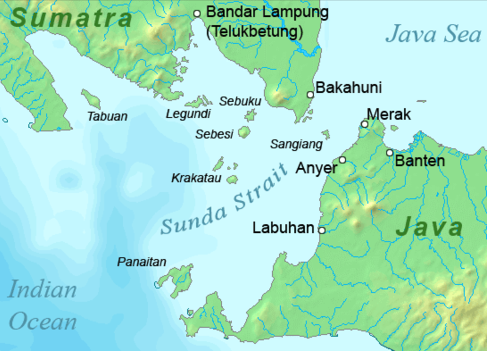
Krakatoa
Mount Krakatoa in Sunda Strait erupted, killed 36,417 people. Source — Wikipedia, "Timeline of Indonesian history" (19th century):
Map of the Sunda Strait, Indonesia By Telim tor - Own work, Public domain, https://commons.wikimedia.org/w/index.php?curid=12785108
1888 CE
Koninklijke Paketvaart-Maatschappij
Founding of the shipping line Koninklijke Paketvaart-Maatschappij (KPM) that supported the unification and development of the colonial economy. Source — Wikipedia, "Timeline of Indonesian history" (19th century):
1894 CE
Dutch intervention in Lombok and Karangasem
Dutch intervention in Lombok and Karangasem The Dutch looted and destroyed the Cakranegara palace of Mataram. J. L. A. Brandes, a Dutch philologist discovered and secured Nagarakretagama manuscript in Lombok royal library. Source — Wikipedia, "Timeline of Indonesian history" (19th century):
1898 CE
General van Heutz
General van Heutz becomes chief of staff of Aceh campaign. Wilhelmina becomes queen of the Netherlands. Source — Wikipedia, "Timeline of Indonesian history" (19th century):
1898 CE
Opiumregie
The Opiumregie begins operations in Batavia. Source — Wikipedia, "Timeline of Indonesian history" (19th century):
1901 CE
Dutch Ethical Policy
Ethical Policy is proclaimed. Source — Wikipedia, "Timeline of Indonesian history" (20th century):
1903 CE
Aceh declared conquered.
Aceh declared conquered. Source — Wikipedia, "Timeline of Indonesian history" (20th century):
1904 CE
Jo van Heutsz
Jo van Heutsz becomes Governor General. Kartini established a school for women in Rembang, just like Dewi Sartika, she was considered as the pioneer of women's rights in Indonesia. Source — Wikipedia, "Timeline of Indonesian history" (20th century):
1906 CE
Dutch intervention in Bali
The Dutch intervention in Bali (1906) destroyed the southern Bali kingdom of Badung and Tabanan. Source — Wikipedia, "Timeline of Indonesian history" (20th century):
1907 CE
Tirto Adhi Soerjo
Tirto Adhi Soerjo founds civil servants' association Sarekat Priyayi. Source — Wikipedia, "Timeline of Indonesian history" (20th century):
Apr 1, 1908 CE
Dutch intervention in Bali
During Dutch intervention in Bali (1908), the last Balinese rulers wiped out in puputan ('suicidal battle to death'). Source — Wikipedia, "Timeline of Indonesian history" (20th century):
Location of province Bali in Indonesia By TUBS - This SVG map includes elements that have been taken or adapted from this map:, CC BY-SA 3.0, https://commons.wikimedia.org/w/index.php?curid=16763398
1912 CE
Sarekat Islam
Islamic League (Sarekat Islam) becomes the first mass-based nationalist party. Source — Wikipedia, "Timeline of Indonesian history" (20th century):
1914 CE
World War I
World War I breaks out; the Netherlands is a neutral country in the war. Source — Wikipedia, "Timeline of Indonesian history" (20th century):
1917 CE
East Indies trade with Europe cut
East Indies trade with Europe cut off by the war. Source — Wikipedia, "Timeline of Indonesian history" (20th century):
May 1, 1919 CE
Kelud
Mt Kelud in East Java erupts with a deathtoll of around 5,000 people. Source — Wikipedia, "Timeline of Indonesian history" (20th century):
May 1, 1920 CE
Communist Party of Indonesia
Communist Party of Indonesia (PKI) is founded. Economic downturn. Source — Wikipedia, "Timeline of Indonesian history" (20th century):
Feb 1, 1925 CE
Pramoedya Ananta Toer
Birth of Pramoedya Ananta Toer. A sharp rise in world commodity prices brings prosperity to the Indies. Source — Wikipedia, "Timeline of Indonesian history" (20th century):
Jan 31, 1926 CE
Nahdlatul Ulama
Nahdlatul Ulama was established by Hasyim Asy'ari as the reaction to the modernist Muhammadiyah organization. Source — Wikipedia, "Timeline of Indonesian history" (20th century):
1929 CE
Great Depression
The Great Depression in America affected the economy of Dutch East Indies. Source — Wikipedia, "Timeline of Indonesian history" (20th century):
1930 CE
Sukarno
Sukarno's famous nationalist speech, 'Indonesia Accuses', given as defence in his political trial. Source — Wikipedia, "Timeline of Indonesian history" (20th century):
Dec 8, 1941 CE
Netherlands declares war on Japan.
Netherlands declares war on Japan. Source — Wikipedia, "Timeline of Indonesian history" (20th century):
Dec 8, 1941 CE
Dutch East Indies campaign
Dutch East Indies campaign (8 December 1941 – 9 March 1942) by forces from the Empire of Japan starts. Source — Wikipedia, "Timeline of Indonesian history" (20th century):
Feb 27, 1942 CE
Battle of the Java Sea
Battle of the Java Sea, Imperial Japanese Navy defeat Allied forces ABDACOM afterwards Imperial Japan occupies Indonesia during World War II, over throwing the Dutch East Indies and install their own imperial structure. Source — Wikipedia, "Timeline of Indonesian history" (20th century):
Apr 22, 1944 CE
Western New Guinea campaign
Start of the liberation of the Dutch East Indies by Allied forces Source — Wikipedia, "Timeline of Indonesian history" (20th century):
Jan 9, 1945 CE
Royal Netherlands East Indies Army
Between January and July landing of Dutch KNIL troops at Biak, Tarakan and Balikpapan. Source — Wikipedia, "Timeline of Indonesian history" (20th century):
1946 CE
Social revolutions, including the Three Regions
Social revolutions, including the Three Regions (Tiga Daerah) Revolt. Source — Wikipedia, "Timeline of Indonesian history" (20th century):
Mar 25, 1947 CE
Linggadjati Agreement
Linggadjati Agreement, first ceasefire. Source — Wikipedia, "Timeline of Indonesian history" (20th century):
1948 CE
Darul Islam
Darul Islam rebellions begin in West Java, spread to other provinces but conclude with the execution of its leader Kartosuwiryo. (to 1962) Source — Wikipedia, "Timeline of Indonesian history" (20th century):
Feb 1, 1949 CE
Tan Malaka
Tan Malaka executed by Republican Army. Source — Wikipedia, "Timeline of Indonesian history" (20th century):
1950 CE
Dwifungsi
Military articulation of doctrines Dwifungsi and Hankamrata: a military role in sociopolitical development as well as security; a requirement that the resources of the people be at the call of the armed forces. (to 1960) Source — Wikipedia, "Timeline of Indonesian history" (20th century):
Mar 21, 1951 CE
The Natsir cabinet falls.
The Natsir cabinet falls. Source — Wikipedia, "Timeline of Indonesian history" (20th century):
Feb 25, 1952 CE
Amid bitter disputes over the signing
Amid bitter disputes over the signing of a Mutual Security Agreement with the US, the Sukiman cabinet resigns. Source — Wikipedia, "Timeline of Indonesian history" (20th century):
Jun 2, 1953 CE
The Wilopo cabinet resigns.
The Wilopo cabinet resigns. Source — Wikipedia, "Timeline of Indonesian history" (20th century):
Mar 1, 1955 CE
Sumatra
Regional rebellions in Sumatra and Sulawesi. (to August 1961) Source — Wikipedia, "Timeline of Indonesian history" (20th century):
Topographic map of Sumatra. Created with GMT from publicly released SRTM data. For locator vesion, see Image:Sumatra Locator Topography.png By Sadalmelik - Own work, CC BY-SA 3.0, https://commons.wikimedia.org/w/index.php?curid=2666142
Mar 3, 1956 CE
Netherlands
The cabinet falls as a result of its policy toward the Dutch. Source — Wikipedia, "Timeline of Indonesian history" (20th century):
Feb 21, 1957 CE
Sukarno
President Sukarno announces his "Conception" (Konsepsi) of the nature of Indonesia. This will eventually lead to Guided Democracy Source — Wikipedia, "Timeline of Indonesian history" (20th century):
May 18, 1958 CE
US Air Force
US Air Force pilot Allen Pope is shot down over Ambon, revealing covert American support of regional rebellions, and ends the Dulles brothers', Allen and John, efforts to subvert the Sukarno government. Source — Wikipedia, "Timeline of Indonesian history" (20th century):
Map of Ambon Island and the Lease Islands (Uliasers), Haruku Island, Saparua und Nusa Laut By Lencer - own work, used: GMT and SRTM3V2 File:Indonesia location map.svg by User:Uwe Dedering Population_of_Indonesia_by_Village_2010.pdf by Banda Pusat Statistics for the labels of cities Ambon, Indonesia, by U.S. Army Map Service, 1955, CC BY-SA 3.0, https://commons.wikimedia.org/w/index.php?curid=24781608
Jul 5, 1959 CE
President Sukarno's 1959 Decree
With armed forces support, Sukarno issues a decree dissolving the Constituent Assembly and reintroducing the Constitution of 1945 with strong presidential powers, and assumes the additional role of Prime Minister, which completes the structure of 'Guided Democracy'. Source — Wikipedia, "Timeline of Indonesian history" (20th century):
Feb 18, 1960 CE
President Sukarno reshuffles the cabinet and
President Sukarno reshuffles the cabinet and appoints the second "Working Cabinet". Source — Wikipedia, "Timeline of Indonesian history" (20th century):
Mar 4, 1961 CE
Soviet Union
An agreement is signed in Jakarta with the Soviet Union to buy arms with long-term loans. Source — Wikipedia, "Timeline of Indonesian history" (20th century):
Jan 2, 1962 CE
Suharto
The Mandala Command to "free" Western (Netherlands) New Guinea from the Dutch is established. Its commander is Brigadier General Suharto. Source — Wikipedia, "Timeline of Indonesian history" (20th century):
1963 CE
Peace Corps
Sole years of American Peace Corps program in Indonesia. Source — Wikipedia, "Timeline of Indonesian history" (20th century):
Aug 17, 1964 CE
During his Independence Day speech, Sukarno
During his Independence Day speech, Sukarno for the first time publicly denounce the United States, and over the following months an anti-American campaign attacked American interests. Source — Wikipedia, "Timeline of Indonesian history" (20th century):
Jan 7, 1965 CE
Indonesia withdraws from membership of the
Indonesia withdraws from membership of the UN. Source — Wikipedia, "Timeline of Indonesian history" (20th century):
Jan 10, 1966 CE
Anti-communist organizations grouped under the Pan
Anti-communist organizations grouped under the Pancasila Front issue the "Three Demands of the People" (Tritura), namely the dissolution of the PKI, the cleansing of the cabinet of elements involved in 30 September Movement, and lower prices and economic improvements. Source — Wikipedia, "Timeline of Indonesian history" (20th century):
Jan 10, 1967 CE
Indonesian Chinese
New investment laws designed to bring in foreign capital are passed; restrictions are introduced regarding status of Indonesian Chinese, their names and their religions. Source — Wikipedia, "Timeline of Indonesian history" (20th century):
1968 CE
Soedjatmoko
Soedjatmoko is Indonesian ambassador to the United States; bilateral relations warm. (to 1971) Source — Wikipedia, "Timeline of Indonesian history" (20th century):
1969 CE
Papua
Papuan representatives agree to join Indonesia in the Act of Free Choice. Source — Wikipedia, "Timeline of Indonesian history" (20th century):
1970 CE
Nurcholish Madjid
Nurcholish Madjid, a young Muslim modernist, begins to lay out religious developmental principles for Indonesia—'Islam, yes; Islamic party, no'. Source — Wikipedia, "Timeline of Indonesian history" (20th century):
Nurcholish Madjid By Jean-Léon Gérôme - Kunsthalle Hamburg, Hamburg, Germany, Public domain, https://commons.wikimedia.org/w/index.php?curid=1456897
1971 CE
Tien Suharto
Suharto's wife inspired by a visit to Disneyland, conceives a national cultural theme park. Source — Wikipedia, "Timeline of Indonesian history" (20th century):
1973 CE
Indonesian Democratic Party
Government forces fusion of political parties; Nationalist and Christian parties are merged into the Indonesian Democratic Party (PDI) and Muslim parties into the United Development Party (PPP). The new three party system is dominated by Golkar. Source — Wikipedia, "Timeline of Indonesian history" (20th century):
1974 CE
Malari incident
The 'Malari' uprising in Jakarta against Japanese penetration of the economy, Chinese Indonesian influence, and official corruption. Source — Wikipedia, "Timeline of Indonesian history" (20th century):
Apr 1, 1975 CE
Taman Mini Indonesia Indah
Mrs Suharto dedicates the vast 'Beautiful Indonesia-in-Miniature Park' (Taman Mini) on the outskirts of Jakarta. Source — Wikipedia, "Timeline of Indonesian history" (20th century):
Mar 1, 1976 CE
Ibnu Sutowo
General Ibnu Sutowo is 'dismissed with honour' after a decade as head of Pertamina, the state oil corporation. Source — Wikipedia, "Timeline of Indonesian history" (20th century):
1977 CE
The United States surpasses Japan as
The United States surpasses Japan as Indonesia's biggest oil customer. Source — Wikipedia, "Timeline of Indonesian history" (20th century):
1978 CE
People's Consultative Assembly
The People's Consultative Assembly (MPR) elevates Pancasila to the status of compulsory moral education of youth and government officials. Suharto appoints B.J. Habibie as state minister for research and technology. Source — Wikipedia, "Timeline of Indonesian history" (20th century):
Sep 21, 1979 CE
1979 Southeast Asian Games
Jakarta host the 10th SEA Games, it was the first time Indonesia host Southeast Asian Games. (to 30 September) Source — Wikipedia, "Timeline of Indonesian history" (20th century):
May 1, 1980 CE
Petition of Fifty
The Petition of Fifty—a statement of concern to parliament about the use of government power, propaganda, and presidential personality cult—is begun. Source — Wikipedia, "Timeline of Indonesian history" (20th century):
1982 CE
Petrus killings
The height of Petrus ('mysterious shootings') of thousands of suspected criminals by government security forces. (to 1983) Source — Wikipedia, "Timeline of Indonesian history" (20th century):
1983 CE
Prabowo Subianto
Prabowo Subianto, then a major in ABRI marries Suharto's daughter Siti Hediati Hariyadi at Taman Mini. Source — Wikipedia, "Timeline of Indonesian history" (20th century):
Sep 12, 1984 CE
Tanjung Priok
Muslim concerned protesting over alleged insensitivities to Islam at Tanjung Priok; a riot ensues resulting in many deaths. Clamp down on Islamic political leaders. Source — Wikipedia, "Timeline of Indonesian history" (20th century):
1985 CE
The Indonesian government require all organisation
The Indonesian government require all organisations of any kind to adopt Pancasila as their sole basis. Source — Wikipedia, "Timeline of Indonesian history" (20th century):
1987 CE
Megawati Sukarnoputri
Sukarno's daughter Megawati Sukarnoputri becomes a member of parliament; Suharto prohibits display of images of Sukarno although they appear frequently nonetheless. Source — Wikipedia, "Timeline of Indonesian history" (20th century):
1988 CE
Olympic Games
Suharto is elected to a fifth term as president., Lilies Handayani, Nurfitriyana Saiman and Kusuma Wardhani won Indonesia's first medal in Olympic Games, a silver medal for women's team archery in 1988 Summer Olympics Seoul. Source — Wikipedia, "Timeline of Indonesian history" (20th century):
1989 CE
Free Aceh Movement
The Free Aceh Movement (GAM) reemerges following its 1976 founding; suppression of its guerilla activities leads to 2,000 deaths by 1991 in Aceh. Source — Wikipedia, "Timeline of Indonesian history" (20th century):
1991 CE
Indonesia wins presidency of the Non-Aligned
Indonesia wins presidency of the Non-Aligned Movement. Source — Wikipedia, "Timeline of Indonesian history" (20th century):
1992 CE
Susi Susanti
Suharto successfully defies Dutch efforts to link human rights to aid administered since 1967 by the International Governmental Group on Indonesia (IGGI). Susi Susanti won Indonesia's first Olympic gold medal in 1992 Summer Olympics in Barcelona, Spain. Source — Wikipedia, "Timeline of Indonesian history" (20th century):
1993 CE
Suharto seeks a sixth term and
Suharto seeks a sixth term and is easily re-elected. Source — Wikipedia, "Timeline of Indonesian history" (20th century):
Jun 1, 1994 CE
Suharto shuts down Tempo and two
Suharto shuts down Tempo and two other publications for critical reporting of Habibie's purchase of the former East German navy. Source — Wikipedia, "Timeline of Indonesian history" (20th century):
1996 CE
Free Papua Movement
The Free Papua Movement (OPM) kidnaps fourteen scientists and foresters in Iran Jaya garnering international attention. After four months, the abductees are rescued in a bloody operation led by Prabowo. Source — Wikipedia, "Timeline of Indonesian history" (20th century):
1997 CE
Severe social unrest breaks out across
Severe social unrest breaks out across Indonesian cities against Chinese Indonesians, Christians, symbols of wealth, the police and bureaucracy. (to 1998) Source — Wikipedia, "Timeline of Indonesian history" (20th century):
Mar 1, 1998 CE
Largely peaceful student demonstrations against th
Largely peaceful student demonstrations against the regime rise to national prominence. Source — Wikipedia, "Timeline of Indonesian history" (20th century):
Jan 19, 1999 CE
Ambon, Maluku
A petty argument between in the city of Ambon triggers Christian-Muslim clashes that last for three years across Maluku. As many as 10,000 are killed and 700,000 or one third of the region are displaced. Source — Wikipedia, "Timeline of Indonesian history" (20th century):
Map of Maluku Islands By Lencer - own work, used: Maluku Locator Topography.png by User:Sadalmelik, CC BY-SA 3.0, https://commons.wikimedia.org/w/index.php?curid=24598427
2000 CE
Abdurrahman Wahid
President Wahid's administration is marred by failures to stabilise the economy, patterns of political favouritism, economic corruption (although Wahid himself is not accused of corruption), inability to reform the military, personal eccentricity and pettiness, ineffectiveness in dealing with major religious violence in Maluku and Sulawesi, major ethnic violence (Dayaks vs. Madurese) in Kalimantan, and separatisms in Aceh and Irian Jaya. Source — Wikipedia, "Timeline of Indonesian history" (20th century):
Locator map of Kalimantan (Indonesian Borneo) By Gunkarta - Own work, CC BY-SA 3.0, https://commons.wikimedia.org/w/index.php?curid=31364117
2001 CE
Ethnic violence in Kalimantan as indigenous
Ethnic violence in Kalimantan as indigenous Dayaks force out Madurese transmigrants. Mass political demonstrations by Wahid's supporters and opponents. IMF stops further loans citing lack of progress in tackling corruption. Source — Wikipedia, "Timeline of Indonesian history" (21st century):
2002 CE
Islamism
Nahdlatul Ulama and Muhammadiyah, the largest Muslim organisations in Indonesia, issue joint statements critical of militant Islamists. Source — Wikipedia, "Timeline of Indonesian history" (21st century):
Aug 1, 2003 CE
2003 Marriott Hotel bombing
Jemaah Islamiyah bomb Jakarta's Marriott hotel killing twelve. All but one of those killed are Indonesians. Source — Wikipedia, "Timeline of Indonesian history" (21st century):
Apr 1, 2004 CE
Parliamentary and local elections: Golkar party
Parliamentary and local elections: Golkar party of former President Suharto wins greatest share of vote, with Megawati Sukarnoputri's PDI-P coming second. Source — Wikipedia, "Timeline of Indonesian history" (21st century):
Aug 15, 2005 CE
Free Aceh Movement
Government and Free Aceh Movement separatists sign a peace deal providing for rebel disarmament and the withdrawal of government soldiers from the province. Rebels begin handing in weapons in September; government completes troop pull-out in December. Source — Wikipedia, "Timeline of Indonesian history" (21st century):
May 27, 2006 CE
2006 Yogyakarta earthquake
The 6.4 Yogyakarta earthquake shakes central Java with an MSK intensity of IX (Destructive), leaving more than 5,700 dead and 37,000 injured. Source — Wikipedia, "Timeline of Indonesian history" (21st century):
Topography of Java. Created with GMT from publicly released SRTM data. For locator version, see Image:Java Locator Topography.png By Sadalmelik - Own work, Public domain, https://commons.wikimedia.org/w/index.php?curid=2654473
Jan 1, 2007 CE
Adam Air
Adam Air Flight 574 crashes into the sea in Makassar Strait off Sulawesi, killing all 102 on board. Source — Wikipedia, "Timeline of Indonesian history" (21st century):
Jan 27, 2008 CE
Suharto
Suharto dies from multiple organ failure. He is buried in the family Mausoleum near Solo. Source — Wikipedia, "Timeline of Indonesian history" (21st century):
Jul 8, 2009 CE
Susilo Bambang Yudhoyono
Incumbent President Susilo Bambang Yudhoyono won Indonesian presidential election. Source — Wikipedia, "Timeline of Indonesian history" (21st century):
Oct 25, 2010 CE
Mount Merapi
Merapi volcano erupted, over 350,000 people were evacuated, 353 people were killed, Borobudur was covered in volcanic ash. (to 17 November) Source — Wikipedia, "Timeline of Indonesian history" (21st century):
Elementary and junior high school students holding a flag-raising ceremony on the slopes of Mount Merapi in the village of Balerante in Kemalang District, Klaten Regency, Central Java, Indonesia. The purpose of this activity was to serve as an educational experience for the students, fostering a sense of nationalism toward their country. By Fahmi Widayat - Own work, CC BY-SA 4.0, https://commons.wikimedia.org/w/index.php?curid=136360297
May 7, 2011 CE
ASEAN Summit
Jakarta host 18th ASEAN Summit, mark the beginning of Indonesian chairmanship in ASEAN 2011. (to 8 May) Source — Wikipedia, "Timeline of Indonesian history" (21st century):
May 9, 2012 CE
Sukhoi Superjet 100
Russian Sukhoi Superjet 100 crashed against Mount Salak, West Java, killing 45 people abroad during a demonstrational flight. Source — Wikipedia, "Timeline of Indonesian history" (21st century):
Location of province XY (see filename) in Indonesia By TUBS - This vector image includes elements that have been taken or adapted from this file:, CC BY-SA 3.0, https://commons.wikimedia.org/w/index.php?curid=16764230
Oct 5, 2013 CE
APEC
Indonesia host the APEC Summit 2013 in Nusa Dua, Bali. Source — Wikipedia, "Timeline of Indonesian history" (21st century):
Location of province Bali in Indonesia By TUBS - This SVG map includes elements that have been taken or adapted from this map:, CC BY-SA 3.0, https://commons.wikimedia.org/w/index.php?curid=16763398
Apr 9, 2014 CE
2014 Indonesian legislative election
Indonesia held their legislative election, PDI-P dominate the People's Representative Council, followed closely by Golkar and Gerindra. Source — Wikipedia, "Timeline of Indonesian history" (21st century):
Jun 1, 2015 CE
2015 Southeast Asian haze
Dozens of Indonesians are killed by respiratory illness and accidents due to poor visibility caused by severe haze. The haze occurs annually during dry season and is largely caused by illegal agricultural fires due to slash-and-burn practices in Indonesia, especially from the provinces of South Sumatra and Riau in Indonesia's Sumatra island, and Kalimantan on Indonesian Borneo. The haze also hit neighboring Singapore, Malaysia, and Brunei. Source — Wikipedia, "Timeline of Indonesian history" (21st century):
Topographic map of Sumatra. Created with GMT from publicly released SRTM data. For locator vesion, see Image:Sumatra Locator Topography.png By Sadalmelik - Own work, CC BY-SA 3.0, https://commons.wikimedia.org/w/index.php?curid=2666142
Jan 14, 2016 CE
2016 Jakarta attacks
At least three militants reportedly detonated explosives in or near a Starbucks cafe in Central Jakarta. Then the militants threw grenade to a police post nearby, destroying the post and killing at least 3 men. Gunfire had ensued when police arrived shortly afterwards. Source — Wikipedia, "Timeline of Indonesian history" (21st century):
Aug 18, 2018 CE
2018 Asian Games
Indonesian cities of Jakarta and Palembang hosts 2018 Asian Games. The opening ceremony was held in Gelora Bung Karno Stadium. This was the second time Indonesia hosted this Asian multi-sports event, the last time had been in 1962. Source — Wikipedia, "Timeline of Indonesian history" (21st century):
Apr 17, 2019 CE
2019 Indonesian general election
Joko Widodo has been re-elected as Indonesia's president in 2019 Indonesian general election. Source — Wikipedia, "Timeline of Indonesian history" (21st century):
Mar 2, 2020 CE
Joko Widodo
President Joko Widodo confirmed the first two cases of COVID-19 in Indonesia. According to the Minister of Health Terawan Agus Putranto, the patients contracted the virus from an infected Japanese person in Depok and later tested positive in Malaysia. Source — Wikipedia, "Timeline of Indonesian history" (21st century):
Jan 9, 2021 CE
Sriwijaya Air Flight 182
Sriwijaya Air Flight 182 crashed into the Java Sea, 4 minutes after takeoff, killing all 62 people on board. Source — Wikipedia, "Timeline of Indonesian history" (21st century):


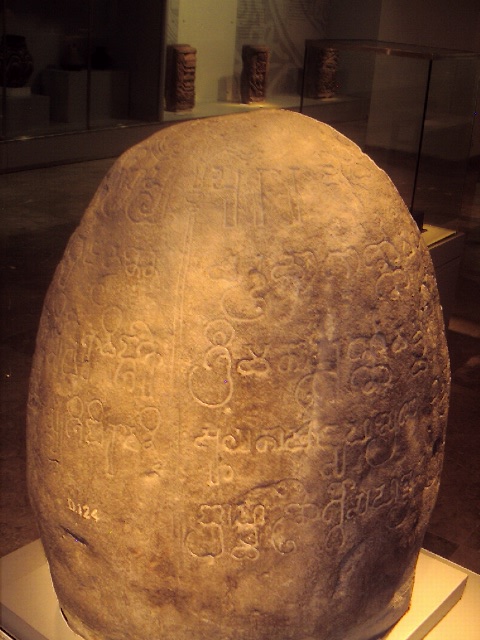



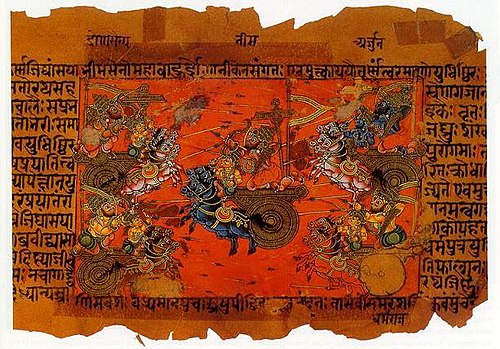


![The flag of the Sultanate of Ternate, in the Maluku islands of Modern-day Indonesia. It contains a yellow background with a white circle with purple Jawi text. The Jawi text reads "Al-Molok Buldan Ternate/الملك بلدان ترناتي", or "The Moluccas, Sultanate of Ternate." It is a modified version of this file. Sourceː Ternate: The Residency and its Sultanate (Bijdragen tot de kennis der Residentie Ternate) [1]](https://upload.wikimedia.org/wikipedia/commons/thumb/6/6f/Flag_of_the_Ternate_Sultanate.png/500px-Flag_of_the_Ternate_Sultanate.png)


![Contemporary engraving showing the Peace conference of Breda between England and United Netherlands in 1667 [detail]](https://upload.wikimedia.org/wikipedia/commons/thumb/a/a9/Congress_of_Breda.jpg/500px-Congress_of_Breda.jpg)