Encyclopedia/3. History, Societies & Civilizations/09. Modern Nations/06. Oceania • Curated by Admin Timeline.sg
History of Australia, sourced from Wikipedia's "Timeline of Australian history".
Chronological Storyline (210 Milestones)
18 CE
Makassar people
Makassar people from the region of Sulawesi in Indonesia began visiting the coast of Northern Australia sometime around the middle of the 18th century, first in the Kimberley region, and some decades later in Arnhem Land. Source — Wikipedia, "Timeline of Australian history" (18th century):
As we know, Indonesia is very famous for its diversity, one of which is like the picture above. Paraga dance is a dance originating from South Sulawesi which is played by 6 men using the Takraw ball as its main tool. According to the beliefs of the Makassar Bugis tribe, the Takraw ball is woven by using rattan up to three layers which means "ampedecengngi makkatenning ri lempu'e, nasaba puangge passabakeng" which means, "give a good guess and hold on the line, because God is all the causes". By Mhmmdsyhrul - Own work, CC BY-SA 4.0, https://commons.wikimedia.org/w/index.php?curid=87831779
1521 CE
Theory of the Portuguese discovery of Australia
Several writers have argued that Portuguese expeditions visited Australia at this time. However, historians generally disagree and the evidence remains contentious. (to 1522) Source — Wikipedia, "Timeline of Australian history" (16th century):
World map of Nicolas Desliens, 1566. This one is upside down: north is on top of the picture, while in the original it is south. Consequently, labels appear here written upside down. By Nicolas Desliens - Nicolas_Desliens1.JPG, Public domain, https://commons.wikimedia.org/w/index.php?curid=15101800
Feb 1, 1606 CE
Dutch East India Company
The Dutch East India Company (VOC) ship Duyfken, under Captain Willem Janszoon, explored the western coast of Cape York Peninsula, near what is now Weipa. This was the first recorded landfall by a European on Australian soil. Source — Wikipedia, "Timeline of Australian history" (17th century):
Flag of the Dutch East India Company By Himasaram - Own work, Public domain, https://commons.wikimedia.org/w/index.php?curid=2397508
Oct 25, 1616 CE
Dirk Hartog
Dutch captain Dirk Hartog in the Eendracht made the second recorded landfall by a European, at Dirk Hartog Island on the western coast of Australia. He left a commemorative plate, the Hartog Plate. Source — Wikipedia, "Timeline of Australian history" (17th century):
photo by Adam Carr - en:Hartog Plate or Dirk Hartog's Plate is either of two plates, although primarily the first, which were left on Dirk Hartog Island during a period of European exploration of the western coast of Australia prior to European settlement there. The first plate, left by Dutch explorer Dirk Hartog is the oldest-known artifact of European exploration in Australia still existent and is therefore evidence of the first confirmed visit by Europeans. By Adam Carr at English Wikipedia - Transferred from en.wikipedia to Commons., Public domain, https://commons.wikimedia.org/w/index.php?curid=2812159
Jul 1, 1618 CE
Dutch East India Company
VOC ship Mauritius under command of Supercargo Willem Janszoon, landed near North West Cape, near the modern town of Exmouth, and named Willem's River, later renamed Ashburton River. Source — Wikipedia, "Timeline of Australian history" (17th century):
Flag of the Dutch East India Company By Himasaram - Own work, Public domain, https://commons.wikimedia.org/w/index.php?curid=2397508
May 1, 1622 CE
Tryall
The English ship Tryall sighted Point Cloates on the west coast of Australia. Source — Wikipedia, "Timeline of Australian history" (17th century):
Point Cloates Lighthouse, Western Australia By Unknown author - National Archives of Australia (Image no. : A6247, A17/2), Public domain, https://commons.wikimedia.org/w/index.php?curid=16555233
1623 CE
Jan Carstenszoon
Dutch captain Jan Carstensz navigated the Gulf of Carpentaria aboard the Pera and Arnhem. The Arnhem crossed the Gulf to reach and name Groote Eylandt. Source — Wikipedia, "Timeline of Australian history" (17th century):
Map showing the location of the Gulf of Carpentaria in northern Australia. Nearby bodies of water include the Arafura Sea and Coral Sea. By NormanEinstein - Own work, CC BY-SA 3.0, https://commons.wikimedia.org/w/index.php?curid=5827226
1623 CE
First white child in Australia
First white child in Australia was Born. Seebaer van Nieuwelant (born 27 July 1623), son of Willemtgen and Willem Janszoon, was born south of Dirk Hartog Island, in present-day Western Australia. Source — Wikipedia, "Timeline of Australian history" (17th century):
Jun 4, 1629 CE
Dutch East India Company
VOC ship Batavia wrecked on Houtman Abrolhos, off Geraldton. Mutiny ensued and at least 110 men, women and children were murdered. First European structure in Australia – Wiebbe Hayes Stone Fort on West Wallabi Island. Source — Wikipedia, "Timeline of Australian history" (17th century):
Flag of the Dutch East India Company By Himasaram - Own work, Public domain, https://commons.wikimedia.org/w/index.php?curid=2397508
1642 CE
Abel Tasman
Dutch explorer Abel Tasman explored the west coast of Tasmania, landed on its east coast and named the island Anthoonij van Diemenslandt. Source — Wikipedia, "Timeline of Australian history" (17th century):
Apr 28, 1656 CE
In 1656 the Vergulde Draeck struck
In 1656 the Vergulde Draeck struck a submerged coral reef midway between what are now the coastal towns of Seabird and Ledge Point, Western Australia. On board were 193 crew, eight boxes of silver coins worth 78,600 guilders and trade goods to the value of 106,400 guilders. Of the 193 crew, 118 are believed to have perished. The initial 75 survivors, including the ship's captain Pieter Albertszoon, and the under steersman, made it to shore. They had with them the ship's boat, a schuyt, along with a small amount of provisions and stores washed on shore. A number of rescue attempts was conducted by the Dutch East India Company once the loss was reported. Source — Wikipedia, "Timeline of Australian history" (17th century):
1681 CE
John Daniel
English navigator John Daniel on the New London charted the west coast of Australia, including Rottnest Island and the Wallabi Group of the Houtman Abrolhos. Source — Wikipedia, "Timeline of Australian history" (17th century):
This is a photograph of a beach informally known as "Cave Beach", located on one of the Wallabi Islands in the Wallabi Group of the Houtman Abrolhos. By Ernie Dingo - https://www.flickr.com/photos/66915552@N00/313867410/, CC BY-SA 2.0, https://commons.wikimedia.org/w/index.php?curid=3081568
1688 CE
William Dampier
English explorer William Dampier explored the west coast of Australia. Source — Wikipedia, "Timeline of Australian history" (17th century):
1696 CE
Willem de Vlamingh
Dutch explorer Willem de Vlamingh charted the southwestern coast of Australia, making a landfall at Rottnest Island and the site of the present-day city of Perth. Source — Wikipedia, "Timeline of Australian history" (17th century):
1770 CE
James Cook
English Lieutenant James Cook's expedition in charted the eastern coast, and claimed it for the British Crown. Australia was dubbed "terra nullius" i.e., according to the European legal precepts of the era, it was unclaimed by any sovereign nation. Source — Wikipedia, "Timeline of Australian history" (18th century):
A map of the unclaimed area of Antarctica By Chipmunkdavis - Own work, CC BY-SA 3.0, https://commons.wikimedia.org/w/index.php?curid=16613449
May 13, 1787 CE
First Fleet
The First Fleet of 11 ships, led by Governor Arthur Phillip, departed from Great Britain for Australia to begin European colonisation. Source — Wikipedia, "Timeline of Australian history" (18th century):
Engraving depicting First Fleet arriving at Botany Bay in January 1788, with Indigenous Australians in canoes witnessing the arrival. In the background is Bare Island (left) and Cape Solander (right). From The voyage of Governor Phillip to Botany Bay : with an account of the establishment of the colonies of Port Jackson & Norfolk Island by Arthur Phillip. Original drawing by R. Cleveley, engraving by T. Medland. An engraving of the First Fleet in Botany Bay at voyage's end in 1788, from The Voyage of Governor Phillip to Botany Bay.[40] Sirius is in the foreground; convict transports such as Prince of Wales are depicted to the left. By Original drawing by R. Cleveley, engraving by T. Medland. - State Library of New South Wales, Public domain, https://commons.wikimedia.org/w/index.php?curid=175836740
Jan 3, 1788 CE
Van Diemen's Land
Captain Arthur Phillip of the (First Fleet), having decided to sail ahead of the rest of the fleet to prepare for the new settlement, sighted the coast of Van Diemen's Land. Source — Wikipedia, "Timeline of Australian history" (18th century):
Jun 3, 1790 CE
Second Fleet
5 of 6 ships of the beleaguered Second Fleet arrived. The colony was gripped by a food crisis. Source — Wikipedia, "Timeline of Australian history" (18th century):
Jul 9, 1791 CE
Third Fleet
The first ship of the Third Fleet arrived at Sydney Cove. Source — Wikipedia, "Timeline of Australian history" (18th century):
1792 CE
Recherche Bay
Two French ships, and , anchor at Recherche Bay, near the southernmost point of Tasmania. Source — Wikipedia, "Timeline of Australian history" (18th century):
A beach between Cockle Creek and Fishers Point on Recherche Bay, Tasmania By Tirin aka Takver - www.takver.com - Own work, CC BY-SA 3.0, https://commons.wikimedia.org/w/index.php?curid=5022845
1797 CE
Sydney Cove
Sydney Cove was wrecked and some survivors travelled from Bass Strait to Port Jackson, enabling the rescue of others. This also furthered knowledge of the geography of Australia. Source — Wikipedia, "Timeline of Australian history" (18th century):
Dedication plaques at Tathra Memorial Garden (1997), including one commemorating the centenary of the 1797 wreck of the Sydney Cove and the 640-km trek to Botany Bay by 17 crewmen, of whom 14 perished on the journey. By Bjenks - Own work, CC BY-SA 3.0, https://commons.wikimedia.org/w/index.php?curid=8872754
1798 CE
George Bass
George Bass and Matthew Flinders sailed from Sydney and circumnavigated Tasmania, thus proving it to be an island. (to 1799) Source — Wikipedia, "Timeline of Australian history" (18th century):
George Bass. By Unknown author - http://www.gutenberg.net/dirs/1/2/9/9/12992/12992-h/12992-h.htm, Public domain, https://commons.wikimedia.org/w/index.php?curid=53135358
1803 CE
Matthew Flinders
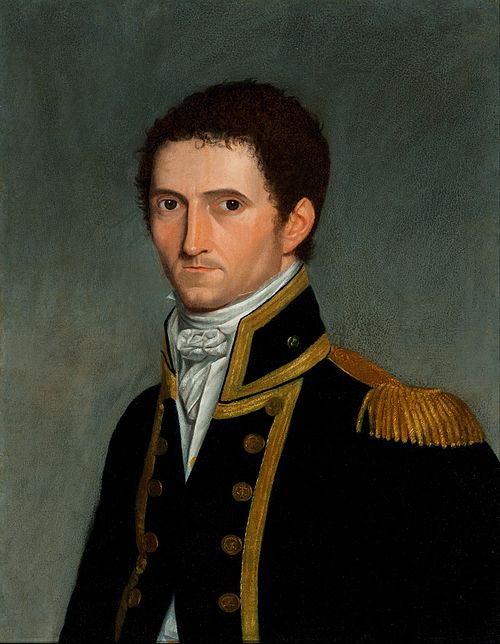
Matthew Flinders completed the first circumnavigation of the continent Source — Wikipedia, "Timeline of Australian history" (19th century):
Matthew Flinders By Antoine Toussaint de Chazal - XQFjQ8PX1C_hwA at Google Cultural Institute maximum zoom level, Public domain, https://commons.wikimedia.org/w/index.php?curid=23601763
1804 CE
Risdon, Tasmania
A settlement was founded at Risdon on the Derwent River in Van Diemen's Land Source — Wikipedia, "Timeline of Australian history" (19th century):
Risdon, Tasmania By Unknown author, CC BY-SA 3.0, https://commons.wikimedia.org/w/index.php?curid=559670
1808 CE
Rum Rebellion
The Rum Rebellion Source — Wikipedia, "Timeline of Australian history" (19th century):
The arrest of Governor Bligh, 1808, artist unknown, watercolour drawing, attached to the left hand wall in the image is a sheet with text, "O what can the matter be", Mitchell Library, State Library of New South Wales, Safe 4/5 By Unknown author - State Library of New South Wales, Safe 4/5, Public domain, https://commons.wikimedia.org/w/index.php?curid=17959234
1813 CE
Gregory Blaxland
Blaxland, Lawson and Wentworth crossed the Blue Mountains. Source — Wikipedia, "Timeline of Australian history" (19th century):
Portrait of Gregory Blaxland, 1813 By [unknown artist] - State Library of NSW, Public domain, https://commons.wikimedia.org/w/index.php?curid=25705094
1817 CE
John Oxley
John Oxley charts the Lachlan River Source — Wikipedia, "Timeline of Australian history" (19th century):
Portrait of John Oxley, 1810, by unknown, watercolour, State Library of New South Wales, MIN 306 By Unknown author - State Library of New South Wales Colelctions, Public domain, https://commons.wikimedia.org/w/index.php?curid=142001196
1818 CE
Macquarie River
Oxley charted the Macquarie River. Source — Wikipedia, "Timeline of Australian history" (19th century):
Macquarie River/Wambuul in Dubbo, New South Wales, Australia. Taken in April 2026. By SnowyRiver28 - Own work, CC BY-SA 4.0, https://commons.wikimedia.org/w/index.php?curid=188529778
1824 CE
Moreton Bay
A penal colony was founded at Moreton Bay, now the city of Brisbane. Source — Wikipedia, "Timeline of Australian history" (19th century):
Along the Australian coast near Brisbane, the Moreton Bay area is known for its clear blue waters, vast sand banks, and diverse wildlife. But eight decades ago, it had a less placid existence as a major coastal defense port during World War II. In the 1940s, Moreton Bay provided a direct Pacific passage for allies and enemies to approach Brisbane. The Queensland government thus strategically placed defense stations around Moreton Bay, and ships could not enter without undergoing an inspection by the Australian navy. Enemies and unidentified vessels were gunned or bombed. The natural-color image above shows the northern entry into Moreton Bay as observed on November 6, 2019, by the Operational Land Imager (OLI) on Landsat 8. The bay spans about 1,500 square kilometers (600 square miles). During WWII, the North West Channel served as a main shipping passageway and was guarded by Fort Bribie and Fort Cowan Cowan. Queensland served as a training and support base for Allied Forces in the Pacific theater of World War II. In fact, Brisbane served for a time as headquarters for American General Douglas MacArthur. The city’s population doubled as thousands of soldiers were stationed there. Today, Brisbane is the capital of Queensland and the third most populous city in Australia (more than 2 million residents). The natural coastal features stand in contrast to the city’s urban landscape. The underwater blue and green curves transecting the North West Channel reveal sand banks and part of Moreton Bay’s complex delta system. The sand banks were formed after sea levels rose about 6,500 years ago. About 30 meters (100 feet) deep, the offshore tidal delta is constantly shaped by currents that tend to be stronger in the northern half of the bay. The southern half is sheltered from those South Pacific currents by Moreton Island. Water near the Brisbane metropolitan area is typically muddy with sediments carried out by rivers. The bay sits at the convergence of tropical and temperate climates, and thus is home to a diverse array of animals. It contains one of the highest densities of dugongs, a relative of the manatee, along the Australian coast. Some evidence suggests that dugongs were once located throughout the bay, but their habitat became restricted as shorelines became urbanized. Moreton Bay is also home to the endangered loggerhead turtle and many species of whales. It supports up to 25 percent of Australia’s bird species, depending on the season. Today, the Moreton Bay area is a popular tourist attraction for its history and beauty. Some World War II relics are partially buried on the sand shores. Tourists (particularly newlyweds) visit Honeymoon Bay on Moreton Island to swim in clear waters on isolated beaches. The rocky reefs and deeper channels also provide excellent fishing opportunities for anglers to catch tuna, jewfish, snapper, and sailfish. By NASA Earth Observatory image by Joshua Stevens, using Landsat data from the U.S. Geological Survey. Story by Kasha Patel. - https://earthobservatory.nasa.gov/images/146776/sandy-shores-of-moreton-bay, Public domain, https://commons.wikimedia.org/w/index.php?curid=99721024
1825 CE
New South Wales
The New South Wales western border was extended to 129° E. Van Diemen's Land was proclaimed. Source — Wikipedia, "Timeline of Australian history" (19th century):
Flag and government ensign (internal waters only) of New South Wales. By Denelson83 (original) - xrmap flag collection 2.9. Modifications by Denelson83 and User:Greentubing (original) Official colour specifications from government booklet:, Public domain, https://commons.wikimedia.org/w/index.php?curid=539152
Dec 26, 1826 CE
Western Australia
New South Wales established first settlement in Western Australia at King George Sound as a convict-supported military garrison, named Frederick Town but renamed Albany in 1832 Source — Wikipedia, "Timeline of Australian history" (19th century):
The flag of Western Australia. By Original: Frederick Weld Vector: Denelson83 - Own work using: Government Ensign of the United Kingdom.svg, Public domain, https://commons.wikimedia.org/w/index.php?curid=539158
Jan 21, 1827 CE
Major Edmund Lockyer
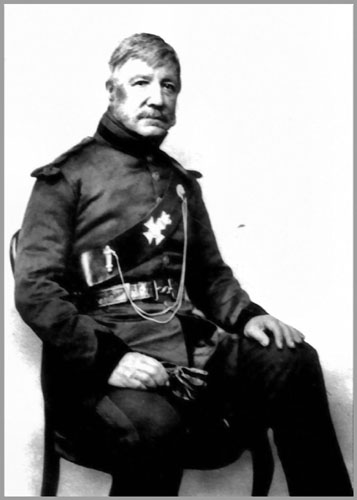
The whole of Australia was claimed as British territory when Major Edmund Lockyer formally annexed the western portion in a ceremony at King George Sound. Source — Wikipedia, "Timeline of Australian history" (19th century):
Major Edmund Lockyer, soldier and landowner in Australia. By Unknown author - A component of the following newspaper article: http://www.news.com.au/couriermail/extras/oq/book2timeline2.html, Public domain, https://commons.wikimedia.org/w/index.php?curid=4821290
1829 CE
Charles Sturt
Charles Sturt charted the Darling River. Source — Wikipedia, "Timeline of Australian history" (19th century):
Charles Sturt, by John Michael Crossland (died 1858), given to the National Portrait Gallery, London in 1946. See source website for additional information. By anonymous - one or more third parties have made copyright claims against Wikimedia Commons in relation to the work from which this is sourced or a purely mechanical reproduction thereof. This may be due to recognition of the "sweat of the brow" doctrine, allowing works to be eligible for protection through skill and labour, and not purely by originality as is the case in the United States (where this website is hosted). These claims may or may not be valid in all jurisdictions. As such, use of this image in the jurisdiction of the claimant or other countries may be regarded as copyright infringement. Please see Commons:When to use the PD-Art tag for more information., Public domain, https://commons.wikimedia.org/w/index.php?curid=6406607
1830 CE
Goolwa, South Australia
Sturt arrived at Goolwa, having charted the Murray River. Source — Wikipedia, "Timeline of Australian history" (19th century):
19th Century building, indicative of the style in the town. End of the main street, Goolwa, South Australia By Peripitus - Own work, CC BY-SA 4.0, https://commons.wikimedia.org/w/index.php?curid=3078161
Mar 7, 1831 CE
Administration of King George Sound passes
Administration of King George Sound passes to Swan River Colony, convicts returned to New South Wales. Source — Wikipedia, "Timeline of Australian history" (19th century):
1832 CE
Swan River Colony
Swan River Colony had its name changed to Western Australia. Source — Wikipedia, "Timeline of Australian history" (19th century):
The flag of Australia. By Original: Ivor Evans, Leslie John Hawkins, Egbert John Nuttall, Annie Dorrington and William Stevens Vector: Ian Fieggen - Own work using: Flag of the United Kingdom (1-2).svg, Public domain, https://commons.wikimedia.org/w/index.php?curid=342951
1833 CE
Port Arthur, Tasmania
The penal settlement of Port Arthur was founded in Van Diemen's Land. Source — Wikipedia, "Timeline of Australian history" (19th century):
Penitentiary at Port Arthur, Tasmania. By Martybugs at en.wikipedia - Own work (Martybugs) Transferred from en.wikipedia to Commons by User:Rr2000 using CommonsHelper., CC BY-SA 3.0, https://commons.wikimedia.org/w/index.php?curid=12570791
1834 CE
Tolpuddle Martyrs
The Tolpuddle Martyrs are transported to Sydney and Hobart. Source — Wikipedia, "Timeline of Australian history" (19th century):
Tolpuddle Martyrs' Memorial Shelter, Tolpuddle Tolpuddle, Dorset, UK. By John Goodall - From geograph.org.uk, CC BY-SA 2.0, https://commons.wikimedia.org/w/index.php?curid=1178071
Aug 30, 1835 CE
John Batman
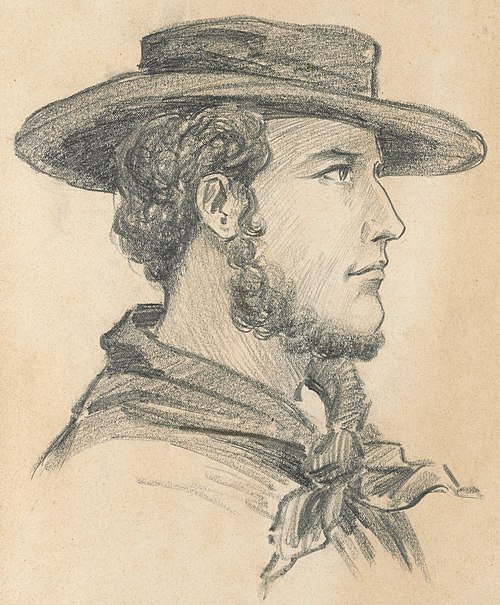
John Batman and John Pascoe Fawkner established a settlement at Port Phillip, now the city of Melbourne. Source — Wikipedia, "Timeline of Australian history" (19th century):
Portrait of Australian explorer John Batman, charcoal and pencil on white paper ; 38.0 x 28.6 cm By Charles Nuttall - SLV, Public domain, https://commons.wikimedia.org/w/index.php?curid=90149420
Dec 28, 1836 CE
Proclamation
Province of South Australia proclaimed with its western border at 132° E. Source — Wikipedia, "Timeline of Australian history" (19th century):
Proclamation of accession of William III, King of the Netherlands, Grand Duke of Luxembourg, Duke of Limburg By Signed by William III (photographer unspecified) - https://resolver.kb.nl/resolve?urn=urn:gvn:KONB16:339448881, Public domain, https://commons.wikimedia.org/w/index.php?curid=27632149
1838 CE
Prussia
First Prussian settlers arrived in South Australia; the largest group of non-British migrants in Australia at the time. Source — Wikipedia, "Timeline of Australian history" (19th century):
Flag of the Kingdom of Prussia 1803-1892 By Drawing created by David Liuzzo - Own Work, Custom Creation according design specifications of the previous file, Attribution, https://commons.wikimedia.org/w/index.php?curid=14963016
1839 CE
Paul Edmund Strzelecki
Paul Edmund Strzelecki became the first European to ascend and name Australia's highest peak, Mount Kosciuszko. Source — Wikipedia, "Timeline of Australian history" (19th century):
1840 CE
City of Adelaide
Australia's first municipal authority, the City of Adelaide, was established, followed by Sydney City Council. Source — Wikipedia, "Timeline of Australian history" (19th century):
Jul 1, 1841 CE
Colony of New Zealand
New Zealand was proclaimed as a separate colony, no longer part of New South Wales. Source — Wikipedia, "Timeline of Australian history" (19th century):
1842 CE
Kapunda
Copper was discovered at Kapunda in South Australia. Source — Wikipedia, "Timeline of Australian history" (19th century):
1843 CE
New South Wales Legislative Council
Australia's first parliamentary elections was held for the New South Wales Legislative Council (though voting rights are restricted to males of certain wealth or property). Source — Wikipedia, "Timeline of Australian history" (19th century):
Aug 4, 1845 CE
Cataraqui
The ship Cataraqui was wrecked off King Island in Bass Strait. It is Australia's worst civil maritime disaster, with 406 lives lost. Source — Wikipedia, "Timeline of Australian history" (19th century):
Bass Strait places associated with the residences of the family of Margery Munro, 19th century. By Goran_tek-en - Own work based on: ✦ Admiralty Chart No 2759b Australia southern portion, Published 1885.jpg by United Kingdom Hydrographic Office ✦ Map of part of New Holland showing the territory of Geelong and Dutigalla.png by Dixson Library, State Library of New South Wales, DL Q83/71 ✦ Furneaux Group Map.svg by Paweł Grzywocz ✦ BlankMap-World gray.svg by LivingShadow ✦ Map of Australia and New Zealand with an inset.svg by Goran tek-en ✦ Maps template-en.svg by Sting ✦ BlankMap-World gray.svg by LivingShadow Own work using: OpenStreetMap Information from: ourtasmania.com.au Requested by and knowledge from SusunW, CC BY-SA 4.0, https://commons.wikimedia.org/w/index.php?curid=138102515
1845 CE
Orange Order in Australia
Grand Orange Lodge of Australia is established. Source — Wikipedia, "Timeline of Australian history" (19th century):
Jun 1, 1849 CE
Western Australia became a penal colony.
Western Australia became a penal colony. Source — Wikipedia, "Timeline of Australian history" (19th century):
1850 CE
Australian Colonies Government Act [1850] granted
Australian Colonies Government Act [1850] granted representative constitutions to New South Wales, Victoria, South Australia and Tasmania. These colonies set about writing constitutions which produced democratically progressive parliaments. Source — Wikipedia, "Timeline of Australian history" (19th century):
Jul 1, 1851 CE
Victoria
Victoria separated from New South Wales. Source — Wikipedia, "Timeline of Australian history" (19th century):
1852 CE
Francis Cadell
Francis Cadell, in preparation for the launch of his steamer service, explored the Murray River in a canvas boat, travelling downstream from Swan Hill. Source — Wikipedia, "Timeline of Australian history" (19th century):
1853 CE
paddle steamer
First paddle steamers on Murray River on the spring flood. From South Australia, the Lady Augusta captained by Francis Cadell, reached Swan Hill while Mary Ann captained by William Randell, made it as far as Moama (near Echuca). Source — Wikipedia, "Timeline of Australian history" (19th century):
Dec 3, 1854 CE
Eureka Stockade
The Eureka Stockade Source — Wikipedia, "Timeline of Australian history" (19th century):
1855 CE
Norfolk Island
The transportation of convicts to Norfolk Island ceased. Source — Wikipedia, "Timeline of Australian history" (19th century):
Jan 1, 1856 CE
Van Diemen's Land
Van Diemen's Land name changed to Tasmania. Source — Wikipedia, "Timeline of Australian history" (19th century):
1857 CE
Victorian Committee reported that a 'federal
Victorian Committee reported that a 'federal union' would be in the interests of all the growing colonies. However, there was not enough interest in or enthusiasm for taking positive steps towards bringing the colonies together. Source — Wikipedia, "Timeline of Australian history" (19th century):
1858 CE
Telegraphy
Sydney and Melbourne linked by electric telegraph. Source — Wikipedia, "Timeline of Australian history" (19th century):
Aug 6, 1859 CE
wrecked off south-east coast of South
wrecked off south-east coast of South Australia with the loss of 89 lives. Source — Wikipedia, "Timeline of Australian history" (19th century):
1860 CE
John McDouall Stuart
John McDouall Stuart reached the centre of the continent. The South Australian border changed from 132° E to 129° E. Source — Wikipedia, "Timeline of Australian history" (19th century):
1861 CE
Burke and Wills expedition
The ill-fated Burke and Wills expedition occurred. Source — Wikipedia, "Timeline of Australian history" (19th century):
1862 CE
Darwin, Northern Territory
Stuart reached Port Darwin, founding a settlement there. Queensland's western border was moved to 139° E. Source — Wikipedia, "Timeline of Australian history" (19th century):
1863 CE
Northern Territory
South Australia took control of the Northern Territory which was previously part of the colony of New South Wales. Source — Wikipedia, "Timeline of Australian history" (19th century):
1864 CE
Great Fire of Brisbane
Great Fire of Brisbane Source — Wikipedia, "Timeline of Australian history" (19th century):
1867 CE
Gympie
Gold was discovered at Gympie, Queensland. Source — Wikipedia, "Timeline of Australian history" (19th century):
1868 CE
Convictism in Western Australia
The transportation of convicts to Western Australia ceased. Source — Wikipedia, "Timeline of Australian history" (19th century):
1869 CE
Stolen Generation
Children of Australian Aboriginal and Torres Strait Islander descent are removed from their families by Australian and State government agencies. This practice lasted 100 years and is known as the Stolen Generation. Source — Wikipedia, "Timeline of Australian history" (19th century):
Aug 22, 1872 CE
Australian Overland Telegraph Line
The Overland Telegraph Line linking Darwin and Adelaide opened. Source — Wikipedia, "Timeline of Australian history" (19th century):
1873 CE
Uluru
Uluru was first sighted by Europeans, and named Ayers Rock. Source — Wikipedia, "Timeline of Australian history" (19th century):
Uluru/Ayers rock By Ek2030372672 - Own work, CC BY-SA 4.0, https://commons.wikimedia.org/w/index.php?curid=105272234
Feb 24, 1875 CE
Bowen, Queensland
strikes Old Reef off Bowen, North Queensland and sank with the loss of approximately 102 lives. Source — Wikipedia, "Timeline of Australian history" (19th century):
This is a collage of images of Bowen. By Greditdesu - Own work, CC BY-SA 3.0, https://commons.wikimedia.org/w/index.php?curid=20392984
Mar 15, 1877 CE
Melbourne Cricket Ground
The first internationally recognised game of Test Cricket is played between Australia and England at the Melbourne Cricket Ground (MCG). Source — Wikipedia, "Timeline of Australian history" (19th century):
Panorama of the Melbourne Cricket Ground during the national anthem prior to the AFL Grand Final on 30 September 2017 in Melbourne, Victoria. By Flickerd - Own work, CC BY-SA 4.0, https://commons.wikimedia.org/w/index.php?curid=63288605
1878 CE
Adelaide
First horse-drawn trams in Australia commenced operations in Adelaide. Source — Wikipedia, "Timeline of Australian history" (19th century):
1879 CE
The first congress of trade unions
The first congress of trade unions was held. Source — Wikipedia, "Timeline of Australian history" (19th century):
Nov 11, 1880 CE
bushranger
The bushranger Ned Kelly was hanged. Source — Wikipedia, "Timeline of Australian history" (19th century):
bushranger By Unknown author, Public domain, https://commons.wikimedia.org/w/index.php?curid=12573727
1882 CE
Adelaide
First water-borne sewerage service in Australia commenced operations in Adelaide. Source — Wikipedia, "Timeline of Australian history" (19th century):
1883 CE
The opening of the Sydney–Melbourne railway.
The opening of the Sydney–Melbourne railway. Source — Wikipedia, "Timeline of Australian history" (19th century):
1888 CE
Louisa Lawson
Louisa Lawson established The Dawn: A Journal for Australian Women. Source — Wikipedia, "Timeline of Australian history" (19th century):
Portrait of Louisa Lawson, ca. 1885, by unknown, gelatin silver print, State Library of New South Wales, P1/970 By Unknown - State Library of New South Wales, P1/970, Public domain, https://commons.wikimedia.org/w/index.php?curid=128791812
1889 CE
Adelaide
The completion of the railway network between Adelaide, Brisbane, Melbourne and Sydney. Source — Wikipedia, "Timeline of Australian history" (19th century):
Brisbane CBD, Kangaroo Point Bridge seen from Kangaroo Point, Brisbane, 2024 By Chris Olszewski - Own work, CC BY-SA 4.0, https://commons.wikimedia.org/w/index.php?curid=162964106
1890 CE
The Australian Federation Conference called a
The Australian Federation Conference called a constitutional convention. Source — Wikipedia, "Timeline of Australian history" (19th century):
1891 CE
Constitution of Australia
A National Australasian Convention met and agreed on adopting the name "the Commonwealth of Australia," also drafting a constitution. Source — Wikipedia, "Timeline of Australian history" (19th century):
Cover of the Commonwealth of Australia Constitution Act, which created the Commonwealth of Australia and contains its Constitution. Courtesy of the National Archives of Australia. NAA: A14459, 1. By National Archives of Australia - National Archives of Australia NAA: A14459, 1, Public domain, https://commons.wikimedia.org/w/index.php?curid=137773980
1893 CE
Corowa Conference
The Corowa Conference (the "people's convention") called on the colonial parliaments to pass enabling acts, allowing the election of delegates to a new constitutional convention aimed at drafting a proposal and putting it to a referendum in each colony. Source — Wikipedia, "Timeline of Australian history" (19th century):
1894 CE
Women's suffrage in Australia
South Australia became the first Australian colony, and the second place in the world, to grant women the right to vote, as well the first Parliament in the world to allow women to stand for office with the Constitutional Amendment (Adult Suffrage) Act 1894. Source — Wikipedia, "Timeline of Australian history" (19th century):
Portrait of Catherine Helen Spence in the 1890s By Unknown author - Unknown source, Public domain, https://commons.wikimedia.org/w/index.php?curid=19405819
1895 CE
The premiers, except for those of
The premiers, except for those of Queensland and Western Australia, agreed to implement the Corowa proposals. Source — Wikipedia, "Timeline of Australian history" (19th century):
1896 CE
Bathurst Conference
The Bathurst Conference (the second "people's convention") met to discuss the 1891 draft constitution. Source — Wikipedia, "Timeline of Australian history" (19th century):
1897 CE
Catherine Helen Spence
In two sessions, the Second National Australasian Convention met (with representatives from all colonies except Queensland present). They agreed to adopt a constitution based on 1891 draft, and then revised and amended it later that year. Catherine Helen Spence became the first female political candidate for political office, standing for election as a representative for South Australia. Source — Wikipedia, "Timeline of Australian history" (19th century):
Portrait of Catherine Helen Spence c. 1900 By Unknown author - https://collections.slsa.sa.gov.au/resource/B+36575 Published in the Herald in 1899, see https://trove.nla.gov.au/newspaper/article/110192262, Public domain, https://commons.wikimedia.org/w/index.php?curid=176504734
1898 CE
The Convention agreed on a final
The Convention agreed on a final draft to be put to the people. Source — Wikipedia, "Timeline of Australian history" (19th century):
1899 CE
Canberra
The decision was made to site the national capital in New South Wales, but not within 100 miles of Sydney. Source — Wikipedia, "Timeline of Australian history" (19th century):
View from Mount Ainslie Lookout By The 3B's - https://www.flickr.com/photos/3-bs/52072528695/, CC BY 2.0, https://commons.wikimedia.org/w/index.php?curid=143043772
1900 CE
Several delegates visited London to resist
Several delegates visited London to resist proposed changes to the agreed-upon constitution. Source — Wikipedia, "Timeline of Australian history" (19th century):
Jan 1, 1901 CE
Edmund Barton
Australia becomes a federation. Edmund Barton becomes the 1st Prime Minister of Australia; the 7th Earl of Hopetoun becomes Governor-General. Source — Wikipedia, "Timeline of Australian history" (20th century):
Edmund Barton, Prime Minister of Australia By Swiss Studios - This image has been extracted from another file, Public domain, https://commons.wikimedia.org/w/index.php?curid=74032164
1902 CE
Commonwealth Franchise Act 1902
The Franchise Act guarantees women the right to vote in federal elections (by this stage, most states had already done this). However, it excludes most non-European ethnic groups, including Aboriginal people, unless already registered to vote on State roles. Source — Wikipedia, "Timeline of Australian history" (20th century):
Commonwealth Coat of Arms of Australia granted by Royal Warrant signed by King George V on 19 September 1912. IMPORTANT:This image is an artist's interpretation of the original (1912) official version of the Commonwealth Coat of Arms shown in Commons on the Australian coat of arms page. A variant of the original, with a transparent background, is shown on this page. “ Quarterly of six, the first quarter Argent a Cross Gules charged with a Lion passant guardant between on each limb a Mullet of eight points Or; the second Azure five Mullets, one of eight, two of seven, one of six and one of five points of the first (representing the Constellation of the Southern Cross) ensigned with an Imperial Crown proper; the third of the first a Maltese Cross of the fourth, surmounted by a like Imperial Crown; the fourth of the third, on a Perch wreathed Vert and Gules an Australian Piping Shrike displayed also proper; the fifth also Or a Swan naiant to the sinister Sable; the last of the first, a Lion passant of the second, the whole within a Bordure Ermine; for the Crest on a Wreath Or and Azure A Seven-pointed Star Or, and for Supporters dexter a Kangaroo, sinister an Emu, both proper. ” By Sodacan - Own work; Based on the painting at the National Archives of Australia -- item barcode 98430, Public domain, https://commons.wikimedia.org/w/index.php?curid=32871765
Aug 25, 1903 CE
High Court of Australia
The High Court of Australia is established with Samuel Griffith as the first Chief Justice. Source — Wikipedia, "Timeline of Australian history" (20th century):
Commonwealth Coat of Arms of Australia granted by Royal Warrant signed by King George V on 19 September 1912. IMPORTANT:This image is an artist's interpretation of the original (1912) official version of the Commonwealth Coat of Arms shown in Commons on the Australian coat of arms page. A variant of the original, with a transparent background, is shown on this page. “ Quarterly of six, the first quarter Argent a Cross Gules charged with a Lion passant guardant between on each limb a Mullet of eight points Or; the second Azure five Mullets, one of eight, two of seven, one of six and one of five points of the first (representing the Constellation of the Southern Cross) ensigned with an Imperial Crown proper; the third of the first a Maltese Cross of the fourth, surmounted by a like Imperial Crown; the fourth of the third, on a Perch wreathed Vert and Gules an Australian Piping Shrike displayed also proper; the fifth also Or a Swan naiant to the sinister Sable; the last of the first, a Lion passant of the second, the whole within a Bordure Ermine; for the Crest on a Wreath Or and Azure A Seven-pointed Star Or, and for Supporters dexter a Kangaroo, sinister an Emu, both proper. ” By Sodacan - Own work; Based on the painting at the National Archives of Australia -- item barcode 98430, Public domain, https://commons.wikimedia.org/w/index.php?curid=32871765
1904 CE
Dalgety, New South Wales
A site at Dalgety, New South Wales chosen for the new national capital Source — Wikipedia, "Timeline of Australian history" (20th century):
Main street of en:Dalgety, New South Wales By Alexander110 - Own work, Public domain, https://commons.wikimedia.org/w/index.php?curid=6828832
Jul 5, 1905 CE
Alfred Deakin
Alfred Deakin returns to the position of prime minister. Source — Wikipedia, "Timeline of Australian history" (20th century):
Australian politician Alfred Deakin By The Swiss Studios - National Library of Australia, Public domain, https://commons.wikimedia.org/w/index.php?curid=88345275
1906 CE
Territory of Papua
Australia takes control of south-eastern New Guinea Source — Wikipedia, "Timeline of Australian history" (20th century):
Flag of the Territory of Papua between September 1, 1906 - July 1, 1971. By Thommy - Own work, based on Flags of the World - Territory of Papua (1906-1949) and Couronne royale.svg (British Tudor Crown)., Public domain, https://commons.wikimedia.org/w/index.php?curid=4651764
Nov 13, 1908 CE
Andrew Fisher
Andrew Fisher becomes 5th Prime Minister of Australia. Source — Wikipedia, "Timeline of Australian history" (20th century):
Andrew Fisher, Prime Minister of Australia By National Library of Australia - This image has been extracted from another file, Public domain, https://commons.wikimedia.org/w/index.php?curid=74031967
1908 CE
Dorothea Mackellar
Dorothea Mackellar publishes My Country Source — Wikipedia, "Timeline of Australian history" (20th century):
Portrait of Dorothea Mackellar, Sydney, 1927, by May Moore, vintage gelatin silver print, State Library of NSW P1/1076 By May Moore - State Library of NSW P1/1076, Public domain, https://commons.wikimedia.org/w/index.php?curid=158773267
1909 CE
The first powered aeroplane flight in
The first powered aeroplane flight in Australia is made. Source — Wikipedia, "Timeline of Australian history" (20th century):
1910 CE
Andrew Fisher forms the first federal
Andrew Fisher forms the first federal majority Labor government. Source — Wikipedia, "Timeline of Australian history" (20th century):
1911 CE
Royal Australian Navy
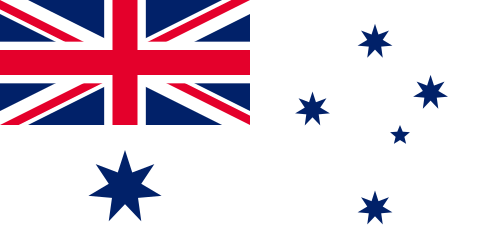
The Royal Australian Navy is founded Source — Wikipedia, "Timeline of Australian history" (20th century):
Naval ensign of Australia.FIAV 000001.svg: By David Newton (original) - This SVG flag includes elements that have been taken or adapted from this flag:, Public domain, https://commons.wikimedia.org/w/index.php?curid=600141
Jul 1, 1912 CE
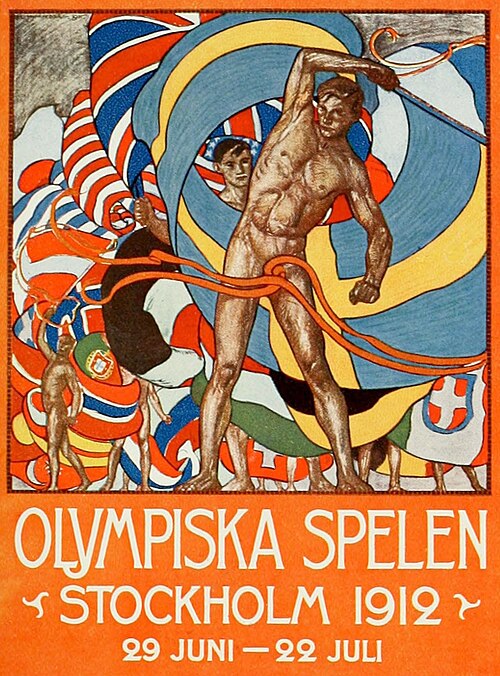
1912 Summer Olympics
Australia sends women to the Olympic Games for the first time Source — Wikipedia, "Timeline of Australian history" (20th century):
This is the poster for the 1912 Summer Olympics, held in Sweden.Artist was Olle Hjortzberg, who died in 1959. By Olle Hjortzberg (1872-1959) - http://olympic-museum.de/poster/poster1912.htm, PD-US, https://en.wikipedia.org/w/index.php?curid=36346266
Feb 20, 1913 CE
The foundation stone for the city
The foundation stone for the city of Canberra is put in place Source — Wikipedia, "Timeline of Australian history" (20th century):
May 31, 1913 CE
1913 Australian federal election
1913 Australian federal election: Joseph Cook elected as the 6th Prime Minister of Australia. Source — Wikipedia, "Timeline of Australian history" (20th century):
1913 Australian federal election by electoral division By MsCosmicAsh - Own work, CC BY-SA 4.0, https://commons.wikimedia.org/w/index.php?curid=131370962
1914 CE
Military history of Australia during World War I
Australian soldiers are sent to the First World War. This was first time Australians had fought under the Australian flag, as opposed to that of Britain's. Source — Wikipedia, "Timeline of Australian history" (20th century):
Soldiers of an Australian 4th Division field artillery brigade on a duckboard track passing through Chateau Wood, near Hooge in the Ypres salient, 29 October 1917. The leading soldier is Gunner James Fulton and the second soldier is Lieutenant Anthony Devine. The men belong to a battery of the 10th Field Artillery Brigade. Australian War Memorial collection number E01220. By Frank Hurley - This tag does not indicate the copyright status of the attached work. A normal copyright tag is still required. See Commons:Licensing for more information., Public domain, https://commons.wikimedia.org/w/index.php?curid=1446191
Apr 25, 1915 CE
ANZAC Cove
Australian soldiers land at ANZAC Cove on the Gallipoli Peninsula in Turkey. Source — Wikipedia, "Timeline of Australian history" (20th century):
ANZAC Cove from Conkbayiri By Antoloji - Own work, CC BY-SA 4.0, https://commons.wikimedia.org/w/index.php?curid=97650832
1916 CE
six o'clock swill
Hotels are forced to close at 6 p.m., leading to the beginning of the "six o'clock swill" Source — Wikipedia, "Timeline of Australian history" (20th century):
A "Suitcase Parade" of women opposed to changes to six o'clock closing - Group of women protest for a referendum prior to changes to hotel hours, assembled outside Parliament House, 21 September 1938 - see Six o'clock swill By photographer for the News and Mail, South Australia - Mortlock Library of South Australia, Public domain, https://commons.wikimedia.org/w/index.php?curid=3260453
1917 CE
Adelaide
Second referendum on conscription is rejected. Transcontinental railway linking Adelaide to Perth is completed. Source — Wikipedia, "Timeline of Australian history" (20th century):
1918 CE
Battle of Amiens
Battle of Amiens: Australian troops spearhead 8 August offensive against Hindenburg Line: the "black day of the German Army". On 12 August, Australian commander General Sir John Monash is knighted in the field of battle by King George V Source — Wikipedia, "Timeline of Australian history" (20th century):
8th August, 1918 (oil-on-linen, 107 cm x 274 cm, 1918-1919) by Will Longstaff, Australian official war artist. Depicts a scene during the Battle of Amiens. The view is towards the west, looking back towards Amiens. A column of German prisoners of war being led into captivity. Meanwhile horse-drawn artillery are advancing to the east. By William Longstaff - This tag does not indicate the copyright status of the attached work. A normal copyright tag is still required. See Commons:Licensing for more information., Public domain, https://commons.wikimedia.org/w/index.php?curid=605771
1919 CE
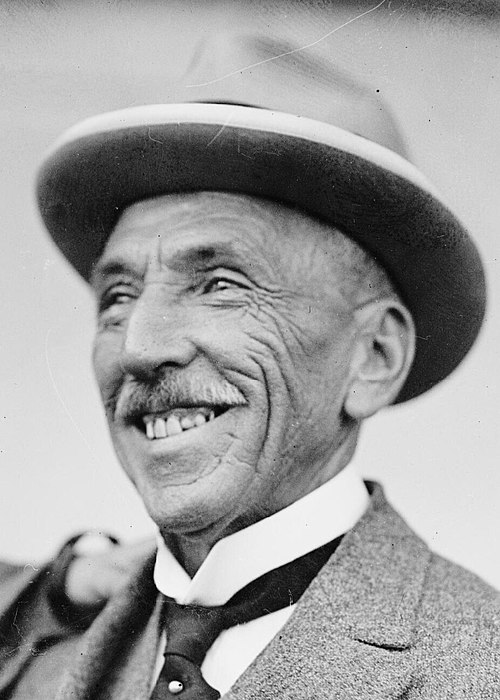
Billy Hughes
Prime Minister Billy Hughes signs Treaty of Versailles: the first signing of an international treaty by Australia. Australia obtains League of Nations mandate over German New Guinea. Source — Wikipedia, "Timeline of Australian history" (20th century):
Prime Minister Billy Hughes smiling during celebrations on his return from the Paris Peace Conference, Sydney, July 1919. By Fairfax Corporation - National Library of Australia (http://nla.gov.au/nla.obj-162944348/view), Public domain, https://commons.wikimedia.org/w/index.php?curid=60568476
1920 CE
Qantas
The airline Qantas is founded Source — Wikipedia, "Timeline of Australian history" (20th century):
Qantas (VH-ZNN) Boeing 787-9 Dreamliner at Melbourne Airport. By Mitchul Hope - https://www.flickr.com/photos/mitchulhope/54127746664/, CC BY-SA 2.0, https://commons.wikimedia.org/w/index.php?curid=157247795
Mar 12, 1921 CE
Edith Cowan
Edith Cowan becomes the first woman elected to an Australian parliament Source — Wikipedia, "Timeline of Australian history" (20th century):
Edith Cowan c. 1900 By Unknown photographer, restored by Adam Cuerden - This file is from the collection of the State Library of Western Australia. View its catalogue entry: b4879362, Public domain, https://commons.wikimedia.org/w/index.php?curid=61606730
Dec 16, 1922 CE
1922 Australian federal election
1922 Australian federal election: Billy Hughes reelected as prime minister. Source — Wikipedia, "Timeline of Australian history" (20th century):
Results of the 1922 Australian federal election by electoral division By MsCosmicAsh - Own work, CC BY-SA 4.0, https://commons.wikimedia.org/w/index.php?curid=132668897
1922 CE
The Smith Family
The Smith Family charity is founded in Sydney Source — Wikipedia, "Timeline of Australian history" (20th century):
Jul 28, 1923 CE
Sydney Harbour Bridge
Construction begins on the Sydney Harbour Bridge. Source — Wikipedia, "Timeline of Australian history" (20th century):
The Sydney Harbour Bridge as viewed from McMahons Point By Servite et contribuere - Own work, CC0, https://commons.wikimedia.org/w/index.php?curid=177351017
1923 CE
Vegemite
Vegemite is first produced Source — Wikipedia, "Timeline of Australian history" (20th century):
the logo By Unknown author - here, Public domain, https://commons.wikimedia.org/w/index.php?curid=174578934
Dec 16, 1925 CE
1925 Australian federal election
1925 Australian federal election: Stanley Bruce reelected as prime minister. Source — Wikipedia, "Timeline of Australian history" (20th century):
Results of the 1925 Australian federal election by electoral division By MsCosmicAsh - Own work, CC BY-SA 4.0, https://commons.wikimedia.org/w/index.php?curid=132668919
1926 CE
Miss Australia
The first Miss Australia contest is held Source — Wikipedia, "Timeline of Australian history" (20th century):
May 9, 1927 CE
Canberra
The tenth parliament is formally opened in Canberra, finalising the move to the new capital. Source — Wikipedia, "Timeline of Australian history" (20th century):
View from Mount Ainslie Lookout By The 3B's - https://www.flickr.com/photos/3-bs/52072528695/, CC BY 2.0, https://commons.wikimedia.org/w/index.php?curid=143043772
1928 CE
Bert Hinkler
Bert Hinkler makes the first successful flight from Britain to Australia, and Charles Kingsford Smith makes the first flight from the United States to Australia. The Shrine of Remembrance is built. Source — Wikipedia, "Timeline of Australian history" (20th century):
Captain Bert Hinkler, daring British flyer, shown after his arrival in Sydney, Australia. Hinkler, flying in an 80 h.p. baby Avro Avian plane, set a new record with his long solo flight to his home country. By ACME Newspictures - eBay item 195827586139 – View/save archived versions on archive.org and megalodon.jp, Public domain, https://commons.wikimedia.org/w/index.php?curid=149445714
1929 CE
Centenary of Western Australia
Western Australia celebrates its centenary Source — Wikipedia, "Timeline of Australian history" (20th century):
A 1929 artist's conception of what Perth would look like in 2029 - Western Mail Centenary Issue "2029 Perth". By Unknown author - http://www.liswa.wa.gov.au/federation/popup/74.htm, Public domain, https://commons.wikimedia.org/w/index.php?curid=844369
Jan 6, 1930 CE
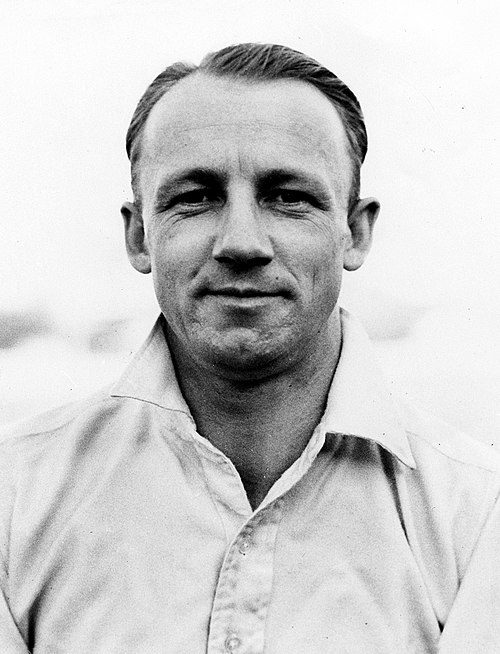
New South Wales cricket team
New South Wales batsman Don Bradman scores a world record first-class individual innings of 452 not out in a Sheffield Shield match against Queensland Source — Wikipedia, "Timeline of Australian history" (20th century):
<a href="http://www.catalog.slsa.sa.gov.au:80/record=b2068987~S1" rel="nofollow">B 7171</a> Sir Donald Bradman, 1908 - 2001, Cricketer. Photographer : News and Mail. Visit the <a href="http://www.catalog.slsa.sa.gov.au" rel="nofollow">State Library of South Australia</a> to view more photos of South Australia By State Library of South Australia from Australia - B7171 Sir Donald Bradman, 1930, CC BY 2.0, https://commons.wikimedia.org/w/index.php?curid=69788855
Nov 4, 1930 CE
Phar Lap
Phar Lap wins his only Melbourne Cup Source — Wikipedia, "Timeline of Australian history" (20th century):
Phar Lap with jockey Jim Pike riding at Flemington race track c 1930 By Charles Daniel Pratt - https://handle.slv.vic.gov.au/10381/20570, Public domain, https://commons.wikimedia.org/w/index.php?curid=2117900
1931 CE
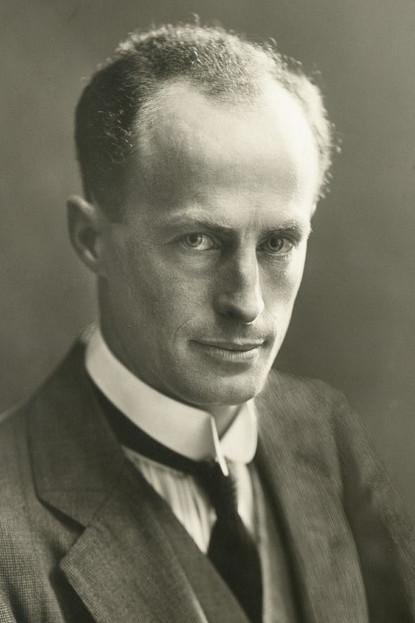
Douglas Mawson
Sir Douglas Mawson charts 4,000 miles of Antarctic coastline and claims 42% of the icy mass for Australia Source — Wikipedia, "Timeline of Australian history" (20th century):
Portrait of w:Douglas Mawson. By Thompson, J. - Cropped from http://collections.slsa.sa.gov.au/resource/B+4603., Public domain, https://commons.wikimedia.org/w/index.php?curid=92402793
Jan 19, 1932 CE
Sydney Harbour Bridge
Construction on the Sydney Harbour Bridge is completed. Source — Wikipedia, "Timeline of Australian history" (20th century):
The Sydney Harbour Bridge as viewed from McMahons Point By Servite et contribuere - Own work, CC0, https://commons.wikimedia.org/w/index.php?curid=177351017
Apr 8, 1933 CE
1933 Western Australian secession referendum
Western Australia votes at a rerefendum to secede from the Commonwealth, but the vote is ignored by both the Commonwealth and British governments. Source — Wikipedia, "Timeline of Australian history" (20th century):
Flag of the Dominion of Westralia, the secessionist movement in Western Australia during the 1920s-mid 1930s By Flag_of_the_Governor_of_Western_Australia_1870-1953.svg: *Flag_of_the_Governor_of_Western_Australia_1953-1988.svg: *Flag_of_the_Governor_of_Tasmania_1876-1977.svg: *Flag_of_the_Governor_of_Queensland.svg: Greentubing Flag_of_the_Governor_of_Tasmania.svg: Guilherme Paula derivative work: Fry1989 (talk) 22:55, 24 August 2010 (UTC) Flag_of_the_Governor_of_Western_Australia.svg: Guilherme Paula derivative work: Fry1989 (talk) 23:18, 24 August 2010 (UTC) derivative work: Fry1989 (talk) 23:22, 24 August 2010 (UTC) WA_secession_delegation.jpg: unknown derivative work: Fry1989 (talk) 23:37, 24 August 2010 (UTC) - Flag_of_the_Governor_of_Western_Australia_1870-1953.svg WA_secession_delegation.jpg, Public domain, https://commons.wikimedia.org/w/index.php?curid=11273376
Nov 8, 1935 CE
Charles Kingsford Smith
Sir Charles Kingsford Smith disappears. He was 38. Source — Wikipedia, "Timeline of Australian history" (20th century):
Australian aviator Charles Kingsford Smith By Fairfax Corporation - National Library of Australia, Public domain, https://commons.wikimedia.org/w/index.php?curid=120859425
1936 CE
thylacine
The last thylacine dies. Source — Wikipedia, "Timeline of Australian history" (20th century):
Thylacine at Beaumaris Zoo in 1936. Photo by Ben Sheppard. By Ben Sheppard - Tasmanian Archives, NS4371-1-1063, https://stors.tas.gov.au/NS4371-1-1063#, Public domain, https://commons.wikimedia.org/w/index.php?curid=93979866
1937 CE
Dad and Dave
The radio series Dad and Dave begins. Source — Wikipedia, "Timeline of Australian history" (20th century):
scanned image from book "On Our Selection" by Steele Rudd. Illustrations by A. J. Fischer AH Fullwood G.W.Lambert Fred Leist F.P.Mahony Alf Vincent By Steele Rudd - Internet Archive identifier: onourselection00rudd, Public domain, https://commons.wikimedia.org/w/index.php?curid=46080486
Feb 5, 1938 CE
1938 British Empire Games
Sydney hosts the Empire Games, the forerunner to the Commonwealth Games. Source — Wikipedia, "Timeline of Australian history" (20th century):
Opening of the Empire Games, Sydney Cricket Ground, 5 February 1938, by Sam Hood, vintage nitrate negative, State Library of New South Wales, NCY41/245 By Sam Hood - State Library of New South Wales, NCY41/245, Public domain, https://commons.wikimedia.org/w/index.php?curid=156722864
Jan 13, 1939 CE
Black Friday
Victoria is devastated by the Black Friday bushfires. Source — Wikipedia, "Timeline of Australian history" (20th century):
Nearly two million hectares of the State burned on Black Friday 1939. Source State Library of Vict By Unknown author - State Library of Victoria, Public domain, https://commons.wikimedia.org/w/index.php?curid=66420370
1940 CE
Howard Florey
A team of scientists, under Howard Florey, develops penicillin Source — Wikipedia, "Timeline of Australian history" (20th century):
Photograph by Dr Julian Smith (1930s) Sir Howard Florey By Julian Smith - https://www.ngv.vic.gov.au, Public domain, https://commons.wikimedia.org/w/index.php?curid=119635410
1941 CE
2nd Australian Imperial Force
3 Divisions of the 2nd Australian Imperial Force join operations in the Mediterranean. After initial successes against Italy, 2nd AIF suffered defeat against the Germans in Greece, Crete, and North Africa. Source — Wikipedia, "Timeline of Australian history" (20th century):
AWM Caption: GAZA, PALESTINE. 1942-12-22. ON THIS DAY GENERAL SIR HAROLD R.L.G. ALEXANDER, KCB, CSI, DSO, MC, COMMANDER-IN-CHIEF, MIDDLE EAST FORCES, INSPECTED A PARADE OF THE WHOLE OF THE 9TH AUSTRALIAN DIVISION AT GAZA AIRPORT AND PRAISED AND THANKED THEM FOR THEIR PART IN THE BATTLE OF EL ALAMEIN. TROOPS OF THE 20TH AUSTRALIAN INFANTRY BRIGADE IN THE MARCH PAST. By not stated - This tag does not indicate the copyright status of the attached work. A normal copyright tag is still required. See Commons:Licensing for more information., Public domain, https://commons.wikimedia.org/w/index.php?curid=32067111
Feb 1, 1942 CE
Fall of Singapore
Singapore falls, 15,000 Australians become Prisoners of War of the Japanese Source — Wikipedia, "Timeline of Australian history" (20th century):
Lieutenant-General Percival and his party carry the Union flag on their way to surrender Singapore to the Japanese. Left to Right: Major Cyril Wild (carrying white flag) interpreter; Brigadier T. K. Newbigging (carrying the Union flag) Chief Administrative Officer, Malaya Command; Lieutenant-Colonel Kazushi Sugita; Brigadier K. S. Torrance, Brigadier General Staff Malaya Command; Lieutenant General Arthur Percival, General Officer Commanding, Malaya Command. [1] By Photographer not identified. "Official photograph". Post-Work: User:W.wolny - This photograph HU 2781 comes from the collections of the Imperial War Museums(collection no. 5707-03), Public domain, https://commons.wikimedia.org/w/index.php?curid=639344
Mar 4, 1943 CE
15th Academy Awards
Australia wins its first Oscar, with cinematographer Damien Parer honoured for Kokoda Front Line! documentary. Source — Wikipedia, "Timeline of Australian history" (20th century):
Aug 5, 1944 CE
Cowra breakout
Cowra breakout, mass escape of Japanese prisoners of war occurs in NSW. Source — Wikipedia, "Timeline of Australian history" (20th century):
1945 CE
Liberal Party of Australia
the Liberal Party of Australia is established with Robert Menzies as its first leader. Source — Wikipedia, "Timeline of Australian history" (20th century):
1946 CE
Minister for Immigration and Border Protection
Minister for Immigration Arthur Calwell introduces the major post-war immigration scheme Source — Wikipedia, "Timeline of Australian history" (20th century):
1948 CE
Minister for Foreign Affairs
Minister for External Affairs, Dr. H. V. Evatt is elected President of the United Nations General Assembly. Source — Wikipedia, "Timeline of Australian history" (20th century):
1949 CE
Indigenous Australians
All indigenous ex-servicemen and any Indigenous Australians who are eligible to vote in State Elections (NSW, VIC, SA and TAS) are given an unrestricted right to vote in federal elections. Source — Wikipedia, "Timeline of Australian history" (20th century):
1950 CE
Korean War
Australian troops are sent to the Korean War to assist South Korea. (to 1953) Source — Wikipedia, "Timeline of Australian history" (20th century):
1951 CE
1951 Australian referendum
Voters reject a referendum to change the Constitution to allow the Menzies Government to ban the Communist Party Source — Wikipedia, "Timeline of Australian history" (20th century):
Oct 3, 1952 CE
Operation Hurricane
Operation Hurricane: First nuclear test conducted in Australian territory by the United Kingdom off the coast of Western Australia. Source — Wikipedia, "Timeline of Australian history" (20th century):
1954 CE
Elizabeth II
Elizabeth II and Prince Philip make a royal visit; the Soviet diplomat Vladimir Petrov defects, leading to the Petrov Affair and another split in the Labor Party Source — Wikipedia, "Timeline of Australian history" (20th century):
1955 CE
Democratic Labor Party
Democratic Labor Party splits from Australian Labor Party over concerns of Communist influence in the labour movement Source — Wikipedia, "Timeline of Australian history" (20th century):
Sep 16, 1956 CE
Television in Australia
Television in Australia is launched. Source — Wikipedia, "Timeline of Australian history" (20th century):
1957 CE
Wild One
The song "Wild One" makes Johnny O'Keefe the first Australian rock'n'roller to reach the national charts. Source — Wikipedia, "Timeline of Australian history" (20th century):
Mar 1, 1959 CE
Construction begins on the Sydney Opera
Construction begins on the Sydney Opera House. It will eventually cost $102 Million. Source — Wikipedia, "Timeline of Australian history" (20th century):
1962 CE
Robert Menzies
Robert Menzies' Commonwealth Electoral Act provided that all Indigenous Australians should have the right to enrol and vote at federal elections, removing remaining restrictions applying in QLD, WA and NT. Source — Wikipedia, "Timeline of Australian history" (20th century):
Jun 12, 1964 CE
The Beatles' 1964 world tour
The Beatles' 1964 world tour reach Australia Source — Wikipedia, "Timeline of Australian history" (20th century):
1965 CE
Indigenous Australians gain right to vote
Indigenous Australians gain right to vote in state of Queensland Source — Wikipedia, "Timeline of Australian history" (20th century):
Feb 14, 1966 CE
Decimalisation
Decimalisation; the Australian currency is changed to dollars and cents, with the Australian dollar replacing the Australian pound. Source — Wikipedia, "Timeline of Australian history" (20th century):
1966 CE
The ban on the employment of
The ban on the employment of married women in the Commonwealth Public Service is lifted Source — Wikipedia, "Timeline of Australian history" (20th century):
Feb 3, 1967 CE
Ronald Ryan
Ronald Ryan becomes the last person legally executed in Australia. Source — Wikipedia, "Timeline of Australian history" (20th century):
Jan 10, 1968 CE
John Gorton
John Gorton replaces John McEwen as Prime Minister Source — Wikipedia, "Timeline of Australian history" (20th century):
1969 CE
Christo
French conceptual artist Christo 'wraps' Little Bay in Sydney Source — Wikipedia, "Timeline of Australian history" (20th century):
1970 CE
Vietnam War
More than 200,000 people participate in the largest demonstrations in Australian history, against the Vietnam War Source — Wikipedia, "Timeline of Australian history" (20th century):
1971 CE
Neville Bonner
Neville Bonner becomes the first Aborigine to become an Australian Member of Parliament Source — Wikipedia, "Timeline of Australian history" (20th century):
1972 CE
Commonwealth Conciliation and Arbitration Commissi
The Commonwealth Conciliation and Arbitration Commission rules that women doing the same job as men have the right to be paid the same wage. Source — Wikipedia, "Timeline of Australian history" (20th century):
Oct 20, 1973 CE
Sydney Opera House
The Sydney Opera House formally opened by Elizabeth II Source — Wikipedia, "Timeline of Australian history" (20th century):
1974 CE
Advance Australia Fair
"Advance Australia Fair" recognised as Australia's national song, but not as national anthem. Source — Wikipedia, "Timeline of Australian history" (20th century):
1975 CE
Privy Council
The Privy Council (Appeals from the High Court) Act removes the right to appeal High Court decisions to the British Privy Council. Appeals to the Privy Council direct from State Supreme Courts remain until 1988. Source — Wikipedia, "Timeline of Australian history" (20th century):
1976 CE
Australian Capital Territory
The Australian Capital Territory legalises homosexuality between consenting adults in private. Source — Wikipedia, "Timeline of Australian history" (20th century):
Jan 18, 1977 CE
Granville rail disaster
Granville rail disaster killed eighty-three people Source — Wikipedia, "Timeline of Australian history" (20th century):
Jun 24, 1978 CE
Sydney Gay and Lesbian Mardi Gras
First Sydney Gay and Lesbian Mardi Gras Source — Wikipedia, "Timeline of Australian history" (20th century):
1979 CE
maternity leave
Australian women win the right to maternity leave Source — Wikipedia, "Timeline of Australian history" (20th century):
Aug 17, 1980 CE
Death of Azaria Chamberlain
Baby Azaria Chamberlain disappears from a campsite at Uluru (Ayers Rock), reportedly taken by a dingo. Source — Wikipedia, "Timeline of Australian history" (20th century):
Uluru/Ayers rock By Ek2030372672 - Own work, CC BY-SA 4.0, https://commons.wikimedia.org/w/index.php?curid=105272234
1981 CE
1981 Tasmanian power referendum
A referendum is held in Tasmania to vote for whether or not the Franklin Dam should be built. Source — Wikipedia, "Timeline of Australian history" (20th century):
Sep 30, 1982 CE
1982 Commonwealth Games
12th Commonwealth Games held in Brisbane. Source — Wikipedia, "Timeline of Australian history" (20th century):
Feb 16, 1983 CE
Ash Wednesday bushfires
The Ash Wednesday bushfires kill 71 people. Source — Wikipedia, "Timeline of Australian history" (20th century):
Apr 19, 1984 CE
Advance Australia Fair
"Advance Australia Fair" is proclaimed as Australia's official national anthem. Source — Wikipedia, "Timeline of Australian history" (20th century):
1985 CE
Uluru
The government grants the freehold title of a large area of land in central Australia, including prominent landmarks Uluru and Kata Tjuta, to the Mutitjulu people, who in turn give them a 99-year lease. The last state to do so (New South Wales) abolishes capital punishment. Source — Wikipedia, "Timeline of Australian history" (20th century):
Uluru/Ayers rock By Ek2030372672 - Own work, CC BY-SA 4.0, https://commons.wikimedia.org/w/index.php?curid=105272234
1986 CE
Australia Act 1986
The Australia Act removes the right of appeal from State courts to the British Privy Council, making the High Court the final court of appeal in Australia. The Act also removes all remaining rights of the UK parliament to pass law for Australia. Source — Wikipedia, "Timeline of Australian history" (20th century):
Aug 9, 1987 CE
Hoddle Street massacre
Hoddle Street massacre kills 7 victims and injures 19 Source — Wikipedia, "Timeline of Australian history" (20th century):
Jan 26, 1988 CE
Australian Bicentenary
Australia celebrates its bicentenary, with large celebrations and major funding for capital works projects. Source — Wikipedia, "Timeline of Australian history" (20th century):
1989 CE
1989 Newcastle earthquake
Newcastle earthquake kills 13 people. ACT gains self-Government. The Kempsey bus crash and Grafton bus crash kill a total of 56 people. Source — Wikipedia, "Timeline of Australian history" (20th century):
1990 CE
Royal Australian Navy
Royal Australian Navy deployed in preparation for the First Gulf War. Carmen Lawrence becomes the first female premier of an Australian state. Labor wins the 1990 federal election. Source — Wikipedia, "Timeline of Australian history" (20th century):
Naval ensign of Australia.FIAV 000001.svg: By David Newton (original) - This SVG flag includes elements that have been taken or adapted from this flag:, Public domain, https://commons.wikimedia.org/w/index.php?curid=600141
Jul 4, 1991 CE
Victor Chang
Prominent heart surgeon Victor Chang is gunned down. Source — Wikipedia, "Timeline of Australian history" (20th century):
1992 CE
Mabo v Queensland
The High Court delivers the Mabo Decision, which rules that indigenous native title does exist. This effectively extinguishes the concept of terra nullius. New South Wales Premier Nick Greiner resigns. Source — Wikipedia, "Timeline of Australian history" (20th century):
A map of the unclaimed area of Antarctica By Chipmunkdavis - Own work, CC BY-SA 3.0, https://commons.wikimedia.org/w/index.php?curid=16613449
Mar 13, 1993 CE
1993 Australian federal election
1993 Australian federal election: Keating defeats John Hewson; the Australian Greens stand candidates for the first time. Source — Wikipedia, "Timeline of Australian history" (20th century):
1995 CE
Northern Territory
The Northern Territory legalises voluntary euthanasia, but it is overruled by the federal government when Liberal MP Kevin Andrews proposes the Euthanasia Laws Bill 1996 Source — Wikipedia, "Timeline of Australian history" (20th century):
1996 CE
Wik Peoples v Queensland
The High Court hands down the Wik Decision, which holds that indigenous native title can survive the granting of pastoral leases. Source — Wikipedia, "Timeline of Australian history" (20th century):
Nov 22, 1997 CE
Michael Hutchence
Michael Hutchence, lead singer of INXS, is found dead in his hotel room. Source — Wikipedia, "Timeline of Australian history" (20th century):
1997 CE
Pauline Hanson
Expelled Liberal MP Pauline Hanson forms the One Nation Party Source — Wikipedia, "Timeline of Australian history" (20th century):
1998 CE
1998 Australian waterfront dispute
A major strike results when Patrick Stevedores attempt to introduce non-union labour to reduce the influence of the Maritime Union of Australia Source — Wikipedia, "Timeline of Australian history" (20th century):
Aug 26, 1999 CE
Motion of Reconciliation
Both houses of the federal parliament pass a Motion of Reconciliation signifying both recognition of and regret at past mistreatment of indigenous Australians. Source — Wikipedia, "Timeline of Australian history" (20th century):
Jul 1, 2000 CE
Howard government
Howard government introduces a Goods and Services Tax Source — Wikipedia, "Timeline of Australian history" (20th century):
2001 CE
Federation of Australia
Australia celebrates centenary of federation. Source — Wikipedia, "Timeline of Australian history" (21st century):
Oct 12, 2002 CE
2002 Bali bombings
2002 Bali bombings, the deadliest act of terrorism in the history of Indonesia, killing 202 people (including 88 Australians). Source — Wikipedia, "Timeline of Australian history" (21st century):
2003 CE
Iraq War
Australian military deployed to Iraq War to oust the Saddam Hussein regime for serial non-compliance with the 1991 Gulf War Peace Treaty. Source — Wikipedia, "Timeline of Australian history" (21st century):
Sep 9, 2004 CE
2004 Australian Embassy bombing in Jakarta
A bomb explodes outside the Australian embassy in Jakarta, Indonesia. Source — Wikipedia, "Timeline of Australian history" (21st century):
Dec 1, 2005 CE
Cronulla, New South Wales
Sydney beachside suburb of Cronulla sees a protest against the alleged bashing of a beach lifeguard, developing into an alcohol-fuelled, racially charged riot. Source — Wikipedia, "Timeline of Australian history" (21st century):
Mar 15, 2006 CE
2006 Commonwealth Games
The Commonwealth Games are held in Melbourne. Source — Wikipedia, "Timeline of Australian history" (21st century):
2007 CE
2008 financial crisis
Australia avoids recession amidst 2008 financial crisis (to 2010). Source — Wikipedia, "Timeline of Australian history" (21st century):
Jan 22, 2008 CE
Heath Ledger
Actor Heath Ledger dies from an accidental prescription drug intoxication, aged 28. Source — Wikipedia, "Timeline of Australian history" (21st century):
Feb 7, 2009 CE
Black Saturday bushfires
Black Saturday bushfires: Massive bushfires swept across Victoria, resulting in 173 fatalities. Source — Wikipedia, "Timeline of Australian history" (21st century):
Jun 23, 2010 CE
Julia Gillard
Julia Gillard challenged and replaced Kevin Rudd as leader of the Labor Party to become the 27th and first female Prime Minister of Australia. Source — Wikipedia, "Timeline of Australian history" (21st century):
Commonwealth Coat of Arms of Australia granted by Royal Warrant signed by King George V on 19 September 1912. IMPORTANT:This image is an artist's interpretation of the original (1912) official version of the Commonwealth Coat of Arms shown in Commons on the Australian coat of arms page. A variant of the original, with a transparent background, is shown on this page. “ Quarterly of six, the first quarter Argent a Cross Gules charged with a Lion passant guardant between on each limb a Mullet of eight points Or; the second Azure five Mullets, one of eight, two of seven, one of six and one of five points of the first (representing the Constellation of the Southern Cross) ensigned with an Imperial Crown proper; the third of the first a Maltese Cross of the fourth, surmounted by a like Imperial Crown; the fourth of the third, on a Perch wreathed Vert and Gules an Australian Piping Shrike displayed also proper; the fifth also Or a Swan naiant to the sinister Sable; the last of the first, a Lion passant of the second, the whole within a Bordure Ermine; for the Crest on a Wreath Or and Azure A Seven-pointed Star Or, and for Supporters dexter a Kangaroo, sinister an Emu, both proper. ” By Sodacan - Own work; Based on the painting at the National Archives of Australia -- item barcode 98430, Public domain, https://commons.wikimedia.org/w/index.php?curid=32871765
2011 CE
2010–2011 Queensland floods
Queensland is affected by major flooding, followed by Cyclone Yasi. Source — Wikipedia, "Timeline of Australian history" (21st century):
Jul 1, 2012 CE
Carbon pricing in Australia
Carbon price introduced by the Gillard government. Source — Wikipedia, "Timeline of Australian history" (21st century):
Mar 21, 2013 CE
Julia Gillard
Julia Gillard apologises to victims of forced adoption practices for removal of babies from predominantly young single mothers. Source — Wikipedia, "Timeline of Australian history" (21st century):
Jul 14, 2014 CE
Carbon pricing in Australia
Carbon price is dropped by the Abbott government. Source — Wikipedia, "Timeline of Australian history" (21st century):
Mar 20, 2015 CE
Malcolm Fraser
22nd Prime Minister of Australia Malcolm Fraser dies, aged 84. Source — Wikipedia, "Timeline of Australian history" (21st century):
Jul 2, 2016 CE
2016 Australian federal election
2016 Australian federal election: Malcolm Turnbull remains as Prime Minister of Australia. Source — Wikipedia, "Timeline of Australian history" (21st century):
Jul 1, 2017 CE
2017 Australian parliamentary eligibility crisis
John Cameron sets off the chain of events that became the 2017 Australian parliamentary eligibility crisis. Source — Wikipedia, "Timeline of Australian history" (21st century):
Aug 24, 2018 CE
2018 Liberal Party of Australia leadership spills
Following two leadership spills, Scott Morrison succeeds Malcolm Turnbull as leader of the Liberal Party and is sworn in as the 30th Prime Minister of Australia. Source — Wikipedia, "Timeline of Australian history" (21st century):
May 18, 2019 CE
2019 Australian federal election
2019 Australian federal election: Scott Morrison remains as Prime Minister of Australia. Source — Wikipedia, "Timeline of Australian history" (21st century):
Jan 31, 2020 CE
Cannabis
The ACT becomes the first Australian region to legalise recreational cannabis. Source — Wikipedia, "Timeline of Australian history" (21st century):
Sep 15, 2021 CE
AUKUS
The AUKUS security partnership between Australia, the United Kingdom, and the United States is announced after negotiations. Source — Wikipedia, "Timeline of Australian history" (21st century):
Feb 23, 2022 CE
2022 eastern Australia floods
2022 eastern Australia floods Source — Wikipedia, "Timeline of Australian history" (21st century):
Oct 14, 2023 CE
2023 Australian Indigenous Voice referendum
The Australian Indigenous Voice referendum fails to pass, with 60% of Australians voting "No". Source — Wikipedia, "Timeline of Australian history" (21st century):
Jan 14, 2024 CE
Mary Donaldson
Mary Donaldson becomes the first Australian-born queen consort of a European monarchy when she is proclaimed Queen of Denmark when her husband Frederik X ascends the throne. Source — Wikipedia, "Timeline of Australian history" (21st century):
May 3, 2025 CE
2025 Australian federal election
2025 Australian federal election: Anthony Albanese remains as Prime Minister of Australia. Source — Wikipedia, "Timeline of Australian history" (21st century):


![Engraving depicting First Fleet arriving at Botany Bay in January 1788, with Indigenous Australians in canoes witnessing the arrival. In the background is Bare Island (left) and Cape Solander (right). From The voyage of Governor Phillip to Botany Bay : with an account of the establishment of the colonies of Port Jackson & Norfolk Island by Arthur Phillip. Original drawing by R. Cleveley, engraving by T. Medland. An engraving of the First Fleet in Botany Bay at voyage's end in 1788, from The Voyage of Governor Phillip to Botany Bay.[40] Sirius is in the foreground; convict transports such as Prince of Wales are depicted to the left.](https://upload.wikimedia.org/wikipedia/commons/thumb/8/82/A_view_of_Botany_Bay_A1475003h_%28cropped%29.jpg/500px-A_view_of_Botany_Bay_A1475003h_%28cropped%29.jpg)















![Lieutenant-General Percival and his party carry the Union flag on their way to surrender Singapore to the Japanese. Left to Right: Major Cyril Wild (carrying white flag) interpreter; Brigadier T. K. Newbigging (carrying the Union flag) Chief Administrative Officer, Malaya Command; Lieutenant-Colonel Kazushi Sugita; Brigadier K. S. Torrance, Brigadier General Staff Malaya Command; Lieutenant General Arthur Percival, General Officer Commanding, Malaya Command. [1]](https://upload.wikimedia.org/wikipedia/commons/thumb/a/a6/Surrender_Singapore.jpg/500px-Surrender_Singapore.jpg)