Encyclopedia/3. History, Societies & Civilizations/09. Modern Nations/07. Eastern Europe & Caucasus • Curated by Admin Timeline.sg
History of Armenia, sourced from Wikipedia's "Timeline of Armenian history".
Chronological Storyline (188 Milestones)
4300 BCE
Areni-1 cave
Areni-1 cave late Chalcolithic/Early Bronze Age ritual site and settlement, was inhabited by humans Source — Wikipedia, "Timeline of Armenian history" (43rd century BC):
4000 BCE
Godedzor
Godedzor archeological site was built Source — Wikipedia, "Timeline of Armenian history" (40th century BC):
Angeghakot 3506, Armenia By Michal Gorski - https://web.archive.org/web/20161102221416/http://www.panoramio.com/photo/124876795, CC BY-SA 3.0, https://commons.wikimedia.org/w/index.php?curid=60212549
3000 BCE
Shengavit
Shengavit site inhabited during a series of settlement phases from approximately 3000 BC to 2500 BC Source — Wikipedia, "Timeline of Armenian history" (30th century BC):
Shengavit Settlement in Yerevan, Armenia By Travis K. Witt - Own work, CC BY-SA 4.0, https://commons.wikimedia.org/w/index.php?curid=35964513
2492 BCE
2492 BC
2492 BC Source — Wikipedia, "Timeline of Armenian history" (25th century BC):
2400 BCE
Book of Genesis
The Book of Genesis identifies the land of Ararat as the resting place of Noah's Ark after the "great deluge" described there. The Indo-Europeans were people who presumably spread from the Caucasus, settling on lands along the way. Armenian is one of the Indo-European language branches. Source — Wikipedia, "Timeline of Armenian history" (24th century BC):
Woodcut for "Die Bibel in Bildern", 1860. By Julius Schnorr von Carolsfeld - Bibel in Bildern, Public domain, https://commons.wikimedia.org/w/index.php?curid=5469693
2300 BCE
Hayk
The legendary figure Hayk creates the Armenian nation in the Ararat region. (Akkadians mention Armani in 2300 BC) Source — Wikipedia, "Timeline of Armenian history" (23rd century BC):
Hayk Nahapet, the legendary patriarch and founder of the Armenian nation By Mkrtum Hovnatanian (1779–1846) - http://www.gallery.am/hy/database/item/937/, Public domain, https://commons.wikimedia.org/w/index.php?curid=13204601
2000 BCE
Trialeti culture
Trialeti culture Source — Wikipedia, "Timeline of Armenian history" (20th century BC):
With thanks to the Georgian National Museum for allowing photography By Jonathan Cardy - Own work, CC BY-SA 3.0, https://commons.wikimedia.org/w/index.php?curid=24555695
1700 BCE
Aram
Aram, Armenian patriarch mentioned in the History of Armenia (Moses of Chorene) (dated 5th century AD) Source — Wikipedia, "Timeline of Armenian history" (17th century BC):
Aram the Brave By Unknown author - Unknown source, Public domain, https://commons.wikimedia.org/w/index.php?curid=37004972
1450 BCE
Artatama I
Artatama I (Thutmose III of Egypt, mentions the people of Ermenen in 1446 BC) Source — Wikipedia, "Timeline of Armenian history" (15th century BC):
1200 BCE
Nairi
Nairi, a confederation of tribes in the Armenian Highlands, roughly corresponding to the modern Van and Hakkâri provinces of modern Turkey. Source — Wikipedia, "Timeline of Armenian history" (12th century BC):
860 BCE
Urartu
Foundation of the Kingdom of Urartu with Aramé. Source — Wikipedia, "Timeline of Armenian history" (9th century BC):
834 BCE
Sarduri I
Reign of Sarduri I who constructs Tushpa (Van). (to 828 BC) Source — Wikipedia, "Timeline of Armenian history" (9th century BC):
810 BCE
Menuas
Reign of Menuas who conquers the Araratian fields. (to 785 BC) Source — Wikipedia, "Timeline of Armenian history" (9th century BC):
785 BCE
Argishtis I
Reign of Argishtis I. Source — Wikipedia, "Timeline of Armenian history" (8th century BC):
782 BCE
Erebuni Fortress
Construction of the fortress of Erebuni (modern Yerevan). Source — Wikipedia, "Timeline of Armenian history" (8th century BC):
This is a photo of a monument in Armenia identified by the ID By Armen Manukov - Own work, CC BY-SA 3.0, https://commons.wikimedia.org/w/index.php?curid=28193140
585 BCE
Medes
Conquest of Urartu by the Medes. Source — Wikipedia, "Timeline of Armenian history" (6th century BC):
Costume of Median male. By Friedrich Hottenroth - Detail of table 24 of Friedrich Hottenroth: Trachten, Haus-, Feld- und Kriegsgeräthschaften der Völker alter und neuer Zeit. Vol. 1. 2nd ed. Gustav Weise, Stuttgart 1884. Digitally altered., Public domain, https://commons.wikimedia.org/w/index.php?curid=33244203
570 BCE
Orontes I Sakavakyats
Reign of Orontes I Sakavakyats. Source — Wikipedia, "Timeline of Armenian history" (6th century BC):
Orontes I Sakavakyats By Noël Coypel - Château de Versailles (Hercule et Déjanire, Hercule et le centaure) et Musée de Grenoble (Cyrus, Néron), Public domain, https://commons.wikimedia.org/w/index.php?curid=42939837
533 BCE
Satrapy of Armenia
Satrapy of Armenia is formed. Source — Wikipedia, "Timeline of Armenian history" (6th century BC):
Armenian Kingdom under the royal dynasty of Orontids in 4th-3rd centuries BC. Original image caption:Orontid (Yervandouni) Armenia, 4th-2nd Centuries B.C. By Armenica.org - Armenica.org Transferred from en.wikipedia to Commons by KureCewlik81., CC BY-SA 3.0, https://commons.wikimedia.org/w/index.php?curid=5808133
512 BCE
Armenian Highlands
Armenia is annexed to Persia by Darius I. Urartu is officially called Armenia in the Behistun inscription. Source — Wikipedia, "Timeline of Armenian history" (6th century BC):
Achaemenid Empire 500 BCE By Cattette - This image has been extracted from another file, CC BY 4.0, https://commons.wikimedia.org/w/index.php?curid=113179532
401 BCE
Orontes I
Orontes I (Yervand I). Source — Wikipedia, "Timeline of Armenian history" (5th century BC):
MYSIA, Adramytion. Orontes. Satrap of Mysia, Circa 357-352 BC. Æ 10 mm (1.10 g). Head of satrap right By CNG - CNG Coins Coin from CNG coins. Used with permission (CNG coin [1]). Coin [2], CC BY-SA 3.0, https://commons.wikimedia.org/w/index.php?curid=74742422
331 BCE
Alexander the Great
Alexander the Great attacks Persia and defeats Darius III, but never conquers Armenia. As a result, Armenia regains its independence from Persia. Source — Wikipedia, "Timeline of Armenian history" (4th century BC):
Alexander Mosaic (detail), House of the Faun, Pompeii By Unknown author - This image has been extracted from another file, Public domain, https://commons.wikimedia.org/w/index.php?curid=182741814
260 BCE
260 BC
260 BC Source — Wikipedia, "Timeline of Armenian history" (3rd century BC):
235 BCE
235 BC
235 BC Source — Wikipedia, "Timeline of Armenian history" (3rd century BC):
228 BCE
228 BC
228 BC Source — Wikipedia, "Timeline of Armenian history" (3rd century BC):
212 BCE
212 BC
212 BC Source — Wikipedia, "Timeline of Armenian history" (3rd century BC):
200 BCE
200 BC
200 BC Source — Wikipedia, "Timeline of Armenian history" (3rd century BC):
190 BCE
Artaxias I
Artaxias I reclaims the sovereignty of Armenia from the Seleucids by establishing the Artaxiad dynasty with Artaxata as the capital. Source — Wikipedia, "Timeline of Armenian history" (2nd century BC):
Coin of Artaxias By Leu Numismatik, CC BY-SA 4.0, https://commons.wikimedia.org/w/index.php?curid=129165125
95 BCE
Tigranes the Great
Accession of power by Tigranes the Great. Source — Wikipedia, "Timeline of Armenian history" (1st century BC):
Coin of Tigranes II the Great, Antioch mint. By Classical Numismatic Group; [1] - https://www.cngcoins.com/Coin.aspx?CoinID=175452, CC BY-SA 3.0, https://commons.wikimedia.org/w/index.php?curid=83404979
93 BCE
Cappadocia
Invasion of Cappadocia Source — Wikipedia, "Timeline of Armenian history" (1st century BC):
88 BCE
Atropatene
Conquest of Atropatene, Gordyene, and Osrhoene Source — Wikipedia, "Timeline of Armenian history" (1st century BC):
83 BCE
Syria
Conquest of Syria, Phoenicia, and Cilicia Source — Wikipedia, "Timeline of Armenian history" (1st century BC):
"map of Phoenicia", apparently intended to give a rough idea of the part of the Levant known as "Phoenicia", it does not correspond to any historical empire or polity. The cities indicated are the ancient Phoenician city states, perhaps in the Late Bronze Age (?) By Kordas, based on Alvaro's work - This map, CC BY 3.0, https://commons.wikimedia.org/w/index.php?curid=4083286
71 BCE
Acre, Israel
Conquest of Acre. Source — Wikipedia, "Timeline of Armenian history" (1st century BC):
69 BCE
Armenian military history
Tigranes' army is defeated at the Battle of Tigranocerta against Lucullus' Roman army. Source — Wikipedia, "Timeline of Armenian history" (1st century BC):
68 BCE
Lucullus is beaten off from Artaxata.
Lucullus is beaten off from Artaxata. Source — Wikipedia, "Timeline of Armenian history" (1st century BC):
67 BCE
Lucullus is recalled to Rome.
Lucullus is recalled to Rome. Source — Wikipedia, "Timeline of Armenian history" (1st century BC):
66 BCE
Pompey
Pompey invades Armenia, but returns to Roman land after being offered a generous sum of money by Tigranes. Source — Wikipedia, "Timeline of Armenian history" (1st century BC):
31 BCE
Battle of Actium
Antony's defeat at the Battle of Actium, Cleopatra had Artavasdes decapitated. Source — Wikipedia, "Timeline of Armenian history" (1st century BC):
30 BCE
Artaxias II
Beginning of Artaxias II's reign Source — Wikipedia, "Timeline of Armenian history" (1st century BC):
20 BCE
Artaxias II
Artaxias II was killed by his rebellious subjects. Source — Wikipedia, "Timeline of Armenian history" (1st century BC):
8 BCE
Tigranes IV
The Armenians installed Tigranes IV as King as the successor to his father. Source — Wikipedia, "Timeline of Armenian history" (1st century BC):
1 CE
Parthian Empire
End of the Artaxiad dynasty in Armenia. Arsacid dynasty of Parthia incorporates Armenia. Source — Wikipedia, "Timeline of Armenian history" (1st century):
8 CE
8 May
8 May Source — Wikipedia, "Timeline of Armenian history" (21st century):
9 CE
9 December
9 December Source — Wikipedia, "Timeline of Armenian history" (21st century):
10 CE
10 November
10 November Source — Wikipedia, "Timeline of Armenian history" (21st century):
12 CE
12 June
12 June Source — Wikipedia, "Timeline of Armenian history" (21st century):
12 CE
12 February
12 February Source — Wikipedia, "Timeline of Armenian history" (21st century):
12 CE
12 January
12 January Source — Wikipedia, "Timeline of Armenian history" (21st century):
24 CE
24 November
24 November Source — Wikipedia, "Timeline of Armenian history" (21st century):
28 CE
28 November
28 November Source — Wikipedia, "Timeline of Armenian history" (21st century):
34 CE
Mark Antony
Mark Antony campaigned against Armenia. Source — Wikipedia, "Timeline of Armenian history" (1st century BC):
53 CE
Tiridates I of Armenia
Tiridates I reaffirms Armenian independence by founding the Arsacid dynasty of Armenia. Source — Wikipedia, "Timeline of Armenian history" (1st century):
55 CE
Artavasdes II
Death of Tigranes the Great. Artavasdes II continues to rule Armenia. Source — Wikipedia, "Timeline of Armenian history" (1st century BC):
Silver tetradrachm (39-38 BC) of Kingdom of Armenia with bust of king Artavasdes II (55-34 BC) By Museum of Fine Arts Boston - https://collections.mfa.org/objects/3015, CC BY-SA 4.0, https://commons.wikimedia.org/w/index.php?curid=122379815
58 CE
Roman general Corbulo invades Armenia with
Roman general Corbulo invades Armenia with the assistance of the Iberians and Commagenians. Source — Wikipedia, "Timeline of Armenian history" (1st century):
62 CE
Arsacid dynasty of Armenia
The combined Armenian-Parthian forces defeated Roman army near place called Rhandeia. Source — Wikipedia, "Timeline of Armenian history" (1st century):
Vexillum of the Roman Empire. By Ssolbergj - The vexillum of the Roman Empire was a red banner with the letters SPQR in Gold surrounded by a gold wreath hung on a military standard topped by a Roman eagle or an image of the goddess Victoria made of silver or bronze.[1][2][3][4], CC BY 3.0, https://commons.wikimedia.org/w/index.php?curid=4249122
63 CE
Treaty of Rhandeia
Treaty of Rhandeia. Source — Wikipedia, "Timeline of Armenian history" (1st century):
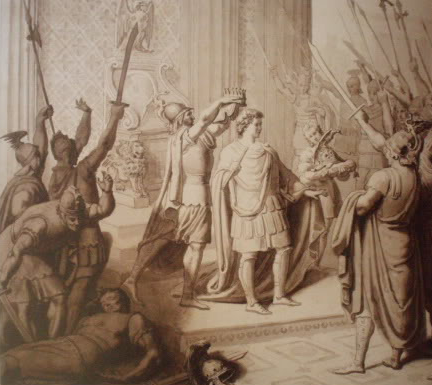
66 CE
Nero
Tiridates is crowned in Rome by Nero, after he and Corbulo came to an agreement. Source — Wikipedia, "Timeline of Armenian history" (1st century):
Head of Nero (reign 54–68 CE), from an oversized statue, about 2.40 m height. After 64 AD. By Unknown author - User:Bibi Saint-Pol, own work, 2007-02-08, Public domain, https://commons.wikimedia.org/w/index.php?curid=1814923
72 CE
Alans
War against the Alans. Source — Wikipedia, "Timeline of Armenian history" (1st century):
Migrations des Alains selon Nathalie Kálnoky : Des princes scythes aux capitaines des Iasses, in : Droit et cultures [cote INIST : 24217] n° 52, L'Harmattan publ., Paris 2006. Fond de carte : [1] By Uploaded by Julieta39 - Background : [2] uploaded by Koyos, made with NASA World Wind. Migrations of the Alans drew by Julieta39 according with Nathalie Kálnoky : Des princes scythes aux capitaines des Iasses, in : Droit et cultures [cote INIST : 24217] n° 52, L'Harmattan publ., Paris 2006., Public domain, https://commons.wikimedia.org/w/index.php?curid=78026700
77 CE
Tiridates I of Armenia
Tiridates I built Garni Temple. Source — Wikipedia, "Timeline of Armenian history" (1st century):
Temple of Garni By Yerevantsi - Own work, CC BY-SA 4.0, https://commons.wikimedia.org/w/index.php?curid=127217194
88 CE
Tiridates I of Armenia
End of Tiridates I’s reign. Source — Wikipedia, "Timeline of Armenian history" (1st century):
109 CE
109
109 Source — Wikipedia, "Timeline of Armenian history" (2nd century):
110 CE
110
110 Source — Wikipedia, "Timeline of Armenian history" (2nd century):
114 CE
114
114 Source — Wikipedia, "Timeline of Armenian history" (2nd century):
117 CE
117
117 Source — Wikipedia, "Timeline of Armenian history" (2nd century):
161 CE
161
161 Source — Wikipedia, "Timeline of Armenian history" (2nd century):
191 CE
191
191 Source — Wikipedia, "Timeline of Armenian history" (2nd century):
228 CE
Tiridates II of Armenia
Tiridates II repels Sassanid invasion. Source — Wikipedia, "Timeline of Armenian history" (3rd century):
Obverse of File:Coin of Tiridates II of Armenia.jpg attributed to Khosrov I the Brave of Armenia By Leu Numismatik - https://leunumismatik.com/en/lot/11/353, CC BY-SA 4.0, https://commons.wikimedia.org/w/index.php?curid=130830033
287 CE
Tiridates III of Armenia
Beginning of the reign of Tiridates III. Source — Wikipedia, "Timeline of Armenian history" (3rd century):
Tiridates III of Armenia illustration in 1898 book «Illustrated Armenia and Armenians» By Gaidzakian, Ohan, 1837-1914 - https://archive.org/details/illustratedarmen00gaidrich, Public domain, https://commons.wikimedia.org/w/index.php?curid=41185146
301 CE
Armenia
Armenia becomes the first official Christian state in the world, King Tiridates III proclaims Christianity as the official state religion of Armenia. Zoroastrianism starts to decline gradually. Source — Wikipedia, "Timeline of Armenian history" (4th century):
Faravahar symbol on Fire Temple of Yazd, Iran By Bernard Gagnon - Own work, CC BY-SA 4.0, https://commons.wikimedia.org/w/index.php?curid=67116254
330 CE
End of Tiridates III's reign.
End of Tiridates III's reign. Source — Wikipedia, "Timeline of Armenian history" (4th century):
356 CE
Council of Ashtishat
Council of Ashtishat called by Saint Nerses, catholicos of the Armenian church. Source — Wikipedia, "Timeline of Armenian history" (4th century):
Council of Ashtishat By Unknown author, CC BY-SA 3.0, https://commons.wikimedia.org/w/index.php?curid=1441399
370 CE
Pap of Armenia
Beginning of the reign of Pap. Source — Wikipedia, "Timeline of Armenian history" (4th century):
371 CE
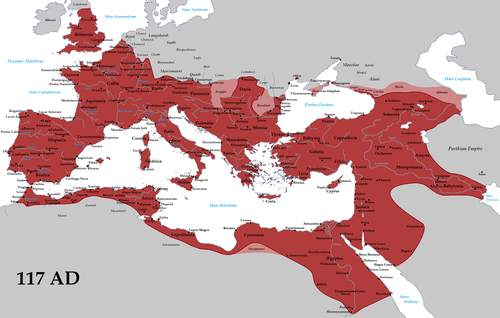
Roman Empire
Roman-Armenian forces defeated Sasanian army near Bagavan. Source — Wikipedia, "Timeline of Armenian history" (4th century):
The Roman Empire (red) and its clients (pink) in 117 AD during the reign of emperor Trajan. By Tataryn - Own work, CC BY-SA 3.0, https://commons.wikimedia.org/w/index.php?curid=19625326
374 CE
Pap of Armenia
Murder of Pap. Source — Wikipedia, "Timeline of Armenian history" (4th century):
386 CE
Khosrov III the Small
King Khosrov III is crowned as king. Byzantine annexes the western parts of Armenia (Armenia Minor) to the Byzantine Empire. Source — Wikipedia, "Timeline of Armenian history" (4th century):
Vector map showing the Eastern Roman Empire (or Byzantine Empire) at the end of Justinian's reign in 565 By Mnohohrishnyi - Own work, based mainly on "The New Roman Empire: A History of Byzantium" by Anthony Kaldellis, CC0, https://commons.wikimedia.org/w/index.php?curid=190907815
387 CE
Peace of Acilisene
Division of Armenia into Western and Eastern parts per the Peace of Acisilene between the Sassanid Persians and Byzantines. Source — Wikipedia, "Timeline of Armenian history" (4th century):
The frontier between the Roman and Sassanid Persian Empires after the treaty of 384 AD. Despite recurrent warfare, the frontier remained stable throughout the 5th century and until the reign of Justinian I. By Cplakidas - Own work, based on another self-made Map of the Roman Empire, CC BY-SA 3.0, https://commons.wikimedia.org/w/index.php?curid=4116257
392 CE
Armenia
Armenia regains its might by the coronation of King Vramshapuh in 392. Source — Wikipedia, "Timeline of Armenian history" (4th century):
Mesrop Mashtots and Vramshapuh statue near the Armenian alphabet monoment near Aparan, Armenia By Yerevantsi - Own work, CC BY-SA 4.0, https://commons.wikimedia.org/w/index.php?curid=44423758
405 CE
Mesrop Mashtots
Mesrop Mashtots invents the Armenian alphabet. Source — Wikipedia, "Timeline of Armenian history" (5th century):
A painting of Mesrop Mashtots, the inventor of the Armenian alphabet by Stepanos Nersisian (1815-84) in the pontifical residence at the Etchmiadzin Cathedral complex By Stepanos Nersisyan (1815-84) - https://www.panoramio.com/photo/56482614, Public domain, https://commons.wikimedia.org/w/index.php?curid=29340274
414 CE
Vramshapuh
King Vramshapuh dies. Source — Wikipedia, "Timeline of Armenian history" (5th century):
Mesrop Mashtots and Vramshapuh statue near the Armenian alphabet monoment near Aparan, Armenia By Yerevantsi - Own work, CC BY-SA 4.0, https://commons.wikimedia.org/w/index.php?curid=44423758
415 CE
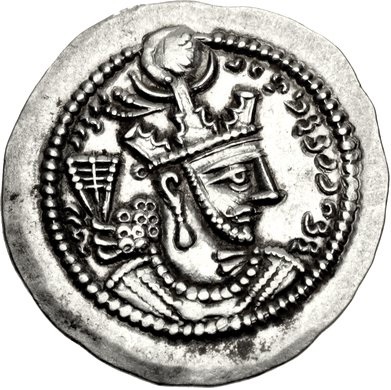
Shapur IV
Shapur IV, son of the Sasanid king Yazdgerd I, is put on the Armenian throne. Source — Wikipedia, "Timeline of Armenian history" (5th century):
سکه یک درهمی شاپور چهارم By CNG - https://www.coinarchives.com/a/lotviewer.php?LotID=2258206&AucID=5469&Lot=416&Val=70012f1f73c5e695ea4bd002d45a46aa, CC BY-SA 4.0, https://commons.wikimedia.org/w/index.php?curid=136295731
422 CE
Artaxias IV
Reign of Armenia king Artaxias IV, last ruler of the Arsacid dynasty. Source — Wikipedia, "Timeline of Armenian history" (5th century):
Սմբատ Բագրատունին թագադրում է Արտաշեսին, հեղ.` Ջ. Ֆուզարո By Ջ. Ֆուզարո - Armenian History in Italian Art (Հայոց պատմությունը իտալացի նկարիչների գործերում), գիրք, 2007 թ., Public domain, https://commons.wikimedia.org/w/index.php?curid=35178083
428 CE
Arsacid dynasty of Armenia
End of the Arsacid dynasty of Armenia. Marzpanate Armenia era as part of the Sassanid Empire begins. Source — Wikipedia, "Timeline of Armenian history" (5th century):
Persian Armenia. Armenia, 387-591 A. D. By Armenica.org, CC BY-SA 3.0, https://commons.wikimedia.org/w/index.php?curid=3533843
439 CE
Sahakanuysh
Mamikonian prince Hamazasp marries Sahakanuysh and so unifies the estates of the Mamikonians and descendants of Saint Gregory the Illuminator. Source — Wikipedia, "Timeline of Armenian history" (5th century):
Flag of Armenian royal Bagratuni dynasty (according to armenianchurchofmetrowest.org The tradition of a Bagratuni lion-with-cross standard appears to be modern (Soviet-era?), apparently based on a relief of a lion on the gates of the medieval Armenian capital of Ani[1] and/or the depiction of a throne supported by lions[2] By Gegart - upload to ru-wiki, CC BY-SA 3.0, https://commons.wikimedia.org/w/index.php?curid=15850622
449 CE
Yazdegerd II
The Sasanid king, Yazdegerd II, declares an order according to which all Christians in his realm must convert to Zoroastrianism. Source — Wikipedia, "Timeline of Armenian history" (5th century):
Dracma do xá sassânida Izdegerdes II By Classical Numismatic Group; [1] - http://www.cngcoins.com/Coin.aspx?CoinID=175615#, Public domain, https://commons.wikimedia.org/w/index.php?curid=59305156
451 CE
Battle of Avarayr
The Battle of Avarayr, led by Vartan Mamikonian, secures the Christian religion in Armenia. Source — Wikipedia, "Timeline of Armenian history" (5th century):
Battle of Avarayr By Unknown author, Public domain, https://commons.wikimedia.org/w/index.php?curid=471667
484 CE
Treaty of Nvarsak
the Treaty of Nvarsak was signed between Vahan Mamikonian and Balash. Source — Wikipedia, "Timeline of Armenian history" (5th century):
JULIAN ZASSO (1833-1889). THE RETURN OF COMMANDER VAHAN MAMIKONEAN AND ARMENIAN NOBLES TO THE HOMELAND. By Julian Zasso - http://www.armenianhighland.com/main.html, CC BY-SA 3.0, https://commons.wikimedia.org/w/index.php?curid=8919130
491 CE
Armenian Apostolic Church
The Armenian Church remains faithful to its mono-physical faith and separates itself from the churches in Rome and Byzantine. Source — Wikipedia, "Timeline of Armenian history" (5th century):
Etchmiadzin Cathedral By Yerevantsi - Own work, CC BY 4.0, https://commons.wikimedia.org/w/index.php?curid=170443763
506 CE
506
506 Source — Wikipedia, "Timeline of Armenian history" (6th century):
607 CE
Third Council of Dvin
Third Council of Dvin. Source — Wikipedia, "Timeline of Armenian history" (7th century):
639 CE
Abd ar-Rahman ibn Rabiah
The first Arab invasion under the leadership of Abd ar-Rahman ibn Rabiah devastates the region of Taron. Source — Wikipedia, "Timeline of Armenian history" (7th century):
The Expansion of the House of Mamikonian By Armenica.org, CC BY-SA 3.0, https://commons.wikimedia.org/w/index.php?curid=3696152
642 CE
Dvin
Arabs storm the city of Dvin killing 12,000 its inhabitants and taking 35,000 into slavery. Source — Wikipedia, "Timeline of Armenian history" (7th century):
Public domain. This file is in the public domain in Russia. By Picture by A. Patrick (based on the sketches of G. Kochoyan). - Taken from Russian wiki, source: Great Soviet Encyclopedia, Public domain, https://commons.wikimedia.org/w/index.php?curid=3583811
645 CE
nakharar
Theodorus Rshtuni and other Armenian nakharars accepted Muslim rule over Armenia. Source — Wikipedia, "Timeline of Armenian history" (7th century):
Relief depicting Eachi and Amir Hassan II. Light brown tuff, carving. Astvatsatsin Spitakavor Monastery, Vayots Dzor, 1321 Hermitage, inv. No. AR-619 By Netelo - Own work, CC BY-SA 4.0, https://commons.wikimedia.org/w/index.php?curid=115672825
650 CE
Khazar–Arab Wars
Armenia becomes the main battleground of the Khazar–Arab Wars & Byzantine–Arab Wars which leaves the lands depopulated. (to 750) Source — Wikipedia, "Timeline of Armenian history" (7th century):
Political map of the Caucasus, c. 740 CE, following the end of the Arab-Khazar conflict and the consolidation of Umayyad power in Transcaucasia. Sources: Inspired by File:Kaukasus 750n de.svg, as an attempt to improve it and correct some errors and omissions. Background map taken from File:Caucasus_topographic_map-fr.svg. Literature and maps consulted: Khalid Yahya Blankinship (1994). The End of the Jihâd State: The Reign of Hishām ibn ʻAbd al-Malik and the Collapse of the Umayyads. Albany, NY: State University of New York Press. ISBN 978-0-7914-1827-7 William C. Brice (1981). An Historical Atlas of Islam. Leiden: E. J. Brill. ISBN 90-04-06116-9, p. 44 "Caucasus (Al-Qabq) in the Early Middle Ages" M. I. Artamonov (1962). История хазар. Издательство Государственного Эрмитажа, p. 200 Map 'The Caucasus in the 7th-8th centuries' Map "Armenia, 654-750 A.D." from armenica.org. Any errors are mine, and any suggestions for improvement and corrections are welcome. By Constantine Plakidas - Own work, CC BY-SA 4.0, https://commons.wikimedia.org/w/index.php?curid=70521469
680 CE
680
680 Source — Wikipedia, "Timeline of Armenian history" (7th century BC):
790 CE
790
790 Source — Wikipedia, "Timeline of Armenian history" (8th century):
861 CE
Ashot I of Armenia
Ashot I Bagratuni is recognized as prince of princes by the Baghdad court, followed by a war against local Muslim emirs. (to 862) Source — Wikipedia, "Timeline of Armenian history" (9th century):
Flag which can be used to represent the Abbasid Caliphate. Note that the concept of rectangular national flags did not exist during Abbasid times, but black was the dynastic color of the Abbasids (just as green was the dynastic color of the Fatimids, etc.), and the "black banner" of the Abbasids is famous in Islamic history. By Ec.Domnowall - Own work, Public domain, https://commons.wikimedia.org/w/index.php?curid=33988856
885 CE
Abbasid Caliphate
Ashot wins and is thus recognized King of the Armenians by Baghdad in 885. Source — Wikipedia, "Timeline of Armenian history" (9th century):
Flag which can be used to represent the Abbasid Caliphate. Note that the concept of rectangular national flags did not exist during Abbasid times, but black was the dynastic color of the Abbasids (just as green was the dynastic color of the Fatimids, etc.), and the "black banner" of the Abbasids is famous in Islamic history. By Ec.Domnowall - Own work, Public domain, https://commons.wikimedia.org/w/index.php?curid=33988856
886 CE
Byzantine Empire
Formal recognition of Armenian sovereignty by Constantinople. Source — Wikipedia, "Timeline of Armenian history" (9th century):
Vector map showing the Eastern Roman Empire (or Byzantine Empire) at the end of Justinian's reign in 565 By Mnohohrishnyi - Own work, based mainly on "The New Roman Empire: A History of Byzantium" by Anthony Kaldellis, CC0, https://commons.wikimedia.org/w/index.php?curid=190907815
891 CE
Smbat I
King Ashot I dies and is succeeded by his son Smbat I, in 892. Source — Wikipedia, "Timeline of Armenian history" (9th century):
Smbat I of Armenia fresco at Ateni Sioni church in Georgia By Unknown author - https://archive.gov.ge/en/ekspeditsia-atenis-sionshi, CC BY-SA 4.0, https://commons.wikimedia.org/w/index.php?curid=154421929
961 CE
Ashot III
King Ashot III (953–977) transfers the capital from Kars to Ani, which came to be considered the "City of a 1001 Churches" which rivaled other metropolises like Baghdad and Constantinople. Source — Wikipedia, "Timeline of Armenian history" (10th century):
The statue of king Ashot III Voghormats, Gyumri, Armenia. By Tony Bowden - https://www.flickr.com/photos/tm-tm/5510114680/, CC BY-SA 2.0, https://commons.wikimedia.org/w/index.php?curid=26220358
1016 CE
Seljuk Turks
Seljuk Turks first appear in the region. Source — Wikipedia, "Timeline of Armenian history" (11th century):
A double-headed eagle relief, 13th-century (Seljuk/Ayyubid period) architectural fragment found at Konya (now in Ince Minare Museum). It has also been suggested that the double-headed eagle may have been used as "personal insignia" by sultan Kayqubad I (r. 1220–1237).[1] This particular design has come to be seen as "symbol of Konya"[2] and is closlely associated with Konya's role as historical Seljuq capital. "The double eagle in the city's coat of arms is a symbol of the Seljuk reign a period crucial for Konya's self-perception until today."[3] A re-drawing of the same design is used as an official emblem by the municipality[4] An independent redrawing is used in the logo of Selçuk University, Konya, Turkey. By Fabienkhan modified by Ewan ar Born - Own work, CC BY-SA 2.5, https://commons.wikimedia.org/w/index.php?curid=4528575
1045 CE
Byzantine Empire
Armenia falls to Byzantine troops, and an exodus from the Armenian lands begins. Source — Wikipedia, "Timeline of Armenian history" (11th century):
Vector map showing the Eastern Roman Empire (or Byzantine Empire) at the end of Justinian's reign in 565 By Mnohohrishnyi - Own work, based mainly on "The New Roman Empire: A History of Byzantium" by Anthony Kaldellis, CC0, https://commons.wikimedia.org/w/index.php?curid=190907815
1064 CE
Byzantine Empire
Byzantine Ani, once the capital of Bagratid Armenia, is conquered and destroyed by the Seljuk Turks. Source — Wikipedia, "Timeline of Armenian history" (11th century):
Vector map showing the Eastern Roman Empire (or Byzantine Empire) at the end of Justinian's reign in 565 By Mnohohrishnyi - Own work, based mainly on "The New Roman Empire: A History of Byzantium" by Anthony Kaldellis, CC0, https://commons.wikimedia.org/w/index.php?curid=190907815
1071 CE
Battle of Manzikert
After the Battle of Manzikert, Seljuk dominance is established over Anatolia and a large number of Turkish tribes migrate to the region. Source — Wikipedia, "Timeline of Armenian history" (11th century):
Battle of Manzikert By O.Mustafin - https://www.worldhistory.org/image/8057/battle-of-manzikert/ https://www.worldhistory.org/trans/tr/2-1189/malazgirt-muharebesi/, Public domain, https://commons.wikimedia.org/w/index.php?curid=163201004
1072 CE
Seljuks
The Seljuks sell Ani to the Shaddadid, a Kurdish tribe ruling a territory coinciding with modern-day Armenia. Source — Wikipedia, "Timeline of Armenian history" (11th century):
A double-headed eagle relief, 13th-century (Seljuk/Ayyubid period) architectural fragment found at Konya (now in Ince Minare Museum). It has also been suggested that the double-headed eagle may have been used as "personal insignia" by sultan Kayqubad I (r. 1220–1237).[1] This particular design has come to be seen as "symbol of Konya"[2] and is closlely associated with Konya's role as historical Seljuq capital. "The double eagle in the city's coat of arms is a symbol of the Seljuk reign a period crucial for Konya's self-perception until today."[3] A re-drawing of the same design is used as an official emblem by the municipality[4] An independent redrawing is used in the logo of Selçuk University, Konya, Turkey. By Fabienkhan modified by Ewan ar Born - Own work, CC BY-SA 2.5, https://commons.wikimedia.org/w/index.php?curid=4528575
1078 CE
Cilicia
Establishment of the Armenian Principality of Cilicia, led by the Rubenid dynasty. Source — Wikipedia, "Timeline of Armenian history" (11th century):
Flag of the Rubenid Dynasty By Samhanin - Own work, CC BY-SA 3.0, https://commons.wikimedia.org/w/index.php?curid=85502313
1095 CE
The First Crusade is launched by
The First Crusade is launched by Pope Urban I. Source — Wikipedia, "Timeline of Armenian history" (11th century):
1187 CE
Leo I, King of Armenia
Debut of Leon II's reign as prince. Source — Wikipedia, "Timeline of Armenian history" (12th century):
Leo I, King of Armenia By Cilician Armenia - http://www.cngcoins.com/Coin.aspx?CoinID=241828, CC BY-SA 3.0, https://commons.wikimedia.org/w/index.php?curid=27654298
1194 CE
Seljuk Turks
After the decline of the Seljuk dominance in the region, Eastern Anatolia is ruled by a slew of Turkish emirates and tribes, such as the Ahlatshahs, Mengujekids, Saltukids and the Artuqids. (to 1241) Source — Wikipedia, "Timeline of Armenian history" (12th century):
A double-headed eagle relief, 13th-century (Seljuk/Ayyubid period) architectural fragment found at Konya (now in Ince Minare Museum). It has also been suggested that the double-headed eagle may have been used as "personal insignia" by sultan Kayqubad I (r. 1220–1237).[1] This particular design has come to be seen as "symbol of Konya"[2] and is closlely associated with Konya's role as historical Seljuq capital. "The double eagle in the city's coat of arms is a symbol of the Seljuk reign a period crucial for Konya's self-perception until today."[3] A re-drawing of the same design is used as an official emblem by the municipality[4] An independent redrawing is used in the logo of Selçuk University, Konya, Turkey. By Fabienkhan modified by Ewan ar Born - Own work, CC BY-SA 2.5, https://commons.wikimedia.org/w/index.php?curid=4528575
1198 CE
Leon II "the Magnificent" managed to
Leon II "the Magnificent" managed to secure his crown, becoming the first King of Armenian Cilicia. Source — Wikipedia, "Timeline of Armenian history" (12th century):
1200 CE
Ughtasar Petroglyphs
Some Ughtasar Petroglyphs carved onto dark brownish-black volcanic stones left behind by an extinct volcano Source — Wikipedia, "Timeline of Armenian history" (12000 BC):
Lac d'Oughtasar (Arménie) By Ji-Elle - Own work, CC BY-SA 4.0, https://commons.wikimedia.org/w/index.php?curid=44185815
1219 CE
Death of Leon II.
Death of Leon II. Source — Wikipedia, "Timeline of Armenian history" (13th century):
1241 CE
Timeline of Mongol conquests
Mongol Invasion of Anatolia, much of the sedentary population of Armenia is slaughtered. (to 1244) Source — Wikipedia, "Timeline of Armenian history" (13th century):
Map showing changes in borders of the Mongol Empire and subsequent Mongol domaines with modern borders. From empire's founding by Genghis Khan in 1206, at Genghis Khan's death in 1227, to the rule of Kublai Khan (1260–1294). (Uses modern day borders) By User:Astrokey44, modified by Sting - Image:Mongol_Empire_map.gif (alternative colours)Based on the freely licenced Image:Genghis khan empire at his death.png using information from maps of the Mongol Empire in atlases and on the web such as [1], [2], [3], [4], [5]. Made in Photoshop and Painter., CC BY-SA 3.0, https://commons.wikimedia.org/w/index.php?curid=23348014
1256 CE
Turco-Mongol
Turco-Mongol rule continues in Eastern Anatolia under the Ilkhanate rulers and their Turkish and Kurdish vassals. (to 1335) Source — Wikipedia, "Timeline of Armenian history" (13th century):
Timur feasts in the environs of Samarkand.“Zafar-nama”. MS IOS AS Uzbek SSR, 4472, f. 288a. Samarkand By Sharuf ad-din Ali Yesdy - http://www.barabass.ru/eng/59.php, Public domain, https://commons.wikimedia.org/w/index.php?curid=7017124
1335 CE
Ilkhanate
The decline of Mongol power leads Armenia to be dominated once again by Anatolian Turkoman tribes such as the Chobanids. (to 1400) Source — Wikipedia, "Timeline of Armenian history" (14th century):
نقشه شماره ۱۷: ایلخانان ایران کارتوگرافی زیر نظر محمد پورکمال ترسیم نقشهها با همکاری کارکنان منتخب قسمت ترسیم سازمان نقشهبرداری و موسسه جغرافیا به سرپرستی ابراهیم خلیل مجیدیان چاپ نقشهها با همکاری قسمت چاپ سازمان نقشهبرداری به سرپرستی شموئیل ژوزفنیا تهیه: موسسه جغرافیا دانشگاه تهران نوشتههای فارسی: محمدتقی سرمست By Unknown author - https://archive.org/details/1350_20200920, Public domain, https://commons.wikimedia.org/w/index.php?curid=139319287
1375 CE
Mameluks
Fall of the Armenian kingdom of Cilicia to the Mameluks of Egypt and their Ramadanid vassals. Source — Wikipedia, "Timeline of Armenian history" (14th century):
Hopfer, Daniel (ca 1470-1536): Etching, Three Mamelukes with lances on horseback. “Mamelucke” Bartsch 56, Holl.65 i/ii, before the Funck number. “Vor der Nummer. Ganz ausgezeichneter, kräftiger Druck mit winzigem Rändchen um die Plattenkante. Einige dünne Stellen sowie einige minimale Risschen links oben, sosnt sehr gut erhalten.” By Daniel Hopfer - British Museum[1], Public domain, https://commons.wikimedia.org/w/index.php?curid=4107509
1384 CE
Artatama II
Artatama II Source — Wikipedia, "Timeline of Armenian history" (14th century BC):
1400 CE
Timur
Tamerlane's devastating invasion of Georgia, Armenia and Central Anatolia leads to the slaughter of large portions of the population of Armenia and the enslavement of over 60,000 people from Anatolia and the Caucasus. Source — Wikipedia, "Timeline of Armenian history" (14th century):
File:Amir Timur (9333672292).jpg "Timur was a typical Mongoloid. His grandsons Ulugh-Beg and Mohammed Sultan were "hybrids" and in type closely ressembled the present-day town-dwelling Uzbeks. The sons Shah-Rukh and Miran-Shah possessed unmistakable features of a Tadjik type (Europoid of central Asia). Despite all these differences, aal five of these men belonged through blood-relationship to one family. This fact is undoubted." in Gerasimov, M. M. (Mikhail Mikhaĭlovich) (1971) The face finder, Philadelphia, J. B. Lippincott, p. 116 By user:shakko - Own work, CC BY-SA 3.0, https://commons.wikimedia.org/w/index.php?curid=9494028
1400 CE
Artashumara
Artashumara Source — Wikipedia, "Timeline of Armenian history" (14th century BC):
1405 CE
Timur
After Tamerlane's death, Anatolia becomes a battleground between the rival tribal confederations of the Ak Koyunlu and the Kara Koyunlu. Source — Wikipedia, "Timeline of Armenian history" (15th century):
File:Amir Timur (9333672292).jpg "Timur was a typical Mongoloid. His grandsons Ulugh-Beg and Mohammed Sultan were "hybrids" and in type closely ressembled the present-day town-dwelling Uzbeks. The sons Shah-Rukh and Miran-Shah possessed unmistakable features of a Tadjik type (Europoid of central Asia). Despite all these differences, aal five of these men belonged through blood-relationship to one family. This fact is undoubted." in Gerasimov, M. M. (Mikhail Mikhaĭlovich) (1971) The face finder, Philadelphia, J. B. Lippincott, p. 116 By user:shakko - Own work, CC BY-SA 3.0, https://commons.wikimedia.org/w/index.php?curid=9494028
1461 CE
Armenian Patriarchate of Constantinople
Armenian Patriarchate of Constantinople established by the then Ottoman Emperor, Mehmed II. Source — Wikipedia, "Timeline of Armenian history" (15th century):
The office building of the Armenian Patriarchate of Constantinople, across the street from the Surp Asdvadzadzin Patriarchal Church. By User:Vmenkov - Own work, CC BY-SA 3.0, https://commons.wikimedia.org/w/index.php?curid=11905452
1478 CE
Belgium
Armenian migration to Bruges, Belgium. Source — Wikipedia, "Timeline of Armenian history" (15th century):
Flag of Belgium This is the national flag of Belgium, according to the Official Guide to Belgian Protocol. It has a 13:15 aspect ratio, though it is rarely seen in this ratio. Its colours are defined as Pantone black, Pantone yellow 115, and Pantone red 032; also given as CMYK 0,0,0,100; 0,8.5,79,0; and 0,94,87,0. By Dbenbenn and others - Van den Bussche, E., Chief of Protocol, Belgian Federal Department of the Interior (2008) Noble Belgique, ô Mère chérie - LE PROTOCOLE EN BELGIQUE (PROTOCOL IN BELGIUM), Heule: Editions UGA ISBN: 9789067689359., Public domain, https://commons.wikimedia.org/w/index.php?curid=342972
1502 CE
Safavid dynasty
The Safavid dynasty is established in Persia, that conquers Armenia. Source — Wikipedia, "Timeline of Armenian history" (16th century):
Flag of the Safavid Dynasty from 1576[1] to 1666[2][3] By Safavid_Flag.png: Orange Tuesday (talk) The original uploader was Orange Tuesday at English Wikipedia. derivative work: Himasaram (talk) - Safavid_Flag.png, Public domain, https://commons.wikimedia.org/w/index.php?curid=11856267
1512 CE
Armenian Language
Printing of first Armenian books. Source — Wikipedia, "Timeline of Armenian history" (16th century):
Map of the distribution of Armenian language in the Southern Caucasus By GalaxMaps - Own work, CC BY-SA 4.0, https://commons.wikimedia.org/w/index.php?curid=94009912
1514 CE
Ottoman-Persian Wars
The Ottoman-Persian Wars rage in the Armenian Highlands for the first time, the Ottomans temporarily gain Western Armenia. Source — Wikipedia, "Timeline of Armenian history" (16th century):
The modern concept of the United Armenia.source Harutyunyan, Arus (2009) Contesting National Identities in an Ethnically Homogeneous State: The Case of Armenian Democratization, ProQuest, p. 89 ISBN: 9781109120127. "The ARF strives for the solution of the Armenian Cause and formation of the entire motherland with all Armenians. The party made it abundantly clear that historical justice will be achieved once ethnic Armenian repatriate to united Armenia, which in addition to its existing political boundaries would include Western Armenian territories (Eastern Turkey), Mountainous Karabagh and Nakhijevan (in Azerbaijan), and the Samtskhe-Javakheti region of the southern Georgia, bordering Armenia." The Supreme Goals of the Armenian Revolutionary Federation. ARF Shant Student Association. Archived from the original on 21 January 2013. Retrieved on 21 January 2013. "The boundaries of united Armenia must incorporate the territories awarded to Armenia by the Treaty of Sevres, as well as the regions of Nakhijevan, Javakhk, and Artsakh." By Yerevanci - Own work, CC BY-SA 3.0, https://commons.wikimedia.org/w/index.php?curid=16312377
1519 CE
Armenians in Poland
Decree of King Sigismund I that Armenians in Poland be governed under code of laws by Mkhitar Gosh. Source — Wikipedia, "Timeline of Armenian history" (16th century):
Renaissances houses (Armenian tenements) in Zamość By Pudelek (Marcin Szala) - Own work, CC BY-SA 3.0, https://commons.wikimedia.org/w/index.php?curid=7895668
1520 CE
Selim I
Large portions of Armenia are conquered by Selim I. Source — Wikipedia, "Timeline of Armenian history" (16th century):
Selim I., osmanische Miniatur, gemalt von Nakkaş Osman. By Naḳḳāş ʿOs̠mān - Seyyid Loḳmān Çelebi: Ḳıyāfetü l-İnsānīye fī Şemāʾili l-ʿOsmānīye (Şemāʾil-nāme). Library of the Topkapi Palace Museum, Hazine, Nr. 1562., Public domain, https://commons.wikimedia.org/w/index.php?curid=18289553
1532 CE
Ottoman-Safavid War
Ottoman-Safavid War (1532-1555) commences. Source — Wikipedia, "Timeline of Armenian history" (16th century):
Illustration of Suleiman I's campaign on Nachivan in the South Caucasus from MS Hazine 1517 fol. 592r. By Nakkaş Osman - Istanbul, Topkapi Palace Museum MS Hazine 1517 fol. 592r, Public domain, https://commons.wikimedia.org/w/index.php?curid=167571405
1555 CE
Peace of Amasya
Peace of Amasya signed between the Ottomans and Safavids. Western Armenia falls in Ottoman hands, Eastern Armenia stays under Persian rule. Source — Wikipedia, "Timeline of Armenian history" (16th century):
Η έκταση της Οθωμανικής Αυτοκρατορίας το 1566, μετά τον θάνατο του Σουλεϊμάν του Μεγαλοπρεπούς By Chamboz (talk · contribs) - Wikipédia, CC BY-SA 4.0, https://commons.wikimedia.org/w/index.php?curid=64294534
1567 CE
Establishment of Armenian printing press in
Establishment of Armenian printing press in Constantinople. Source — Wikipedia, "Timeline of Armenian history" (16th century):
1598 CE
Jelali revolts
Continuation of the devastating Jelali revolts in Anatolia. (to 1611) Source — Wikipedia, "Timeline of Armenian history" (16th century):
The Celali revolt. Şükri-i Bidlisi, Selīmnāme-i Şükrī, probably Maraş-Istanbul, ca. 1525–30, Topkapı Palace Museum Library, Ms. H. 1597-98, fol. 264a "In the miniature, Şehsuvaroğlu and his soldiers are shown fghting the rebels on horseback. The janissary in the forefront represents the state’s official armed forces. In contrast to these soldiers, the rebels are on foot. According to the accompanying text, women also took part in this combat and they, too, are present in the miniature: we see two unarmed women and two children watching the battle with worried eyes. Their presence in the scene effectively conveys the public nature of this movement. The women’s blue and green caftans and headscarves, the upper parts of which resembled a kaşbastı (a tightly tied headband), as well as the children’s short caftans and simple coifs, are representative of the clothing and hairstyle characteristic of Anatolia at the beginning of the sixteenth century." in (in English) (11 November 2010). "The Depiction of Ceremonies in Ottoman Miniatures: Historical Record or a Matter of Protocol?". Muqarnas: 255. BRILL. By 1525-1530 artist - The Depiction of Ceremonies in Ottoman Miniatures: Historical Record or A Matter of Protocol?, Public domain, https://commons.wikimedia.org/w/index.php?curid=179263027
1603 CE
Shah
Shah Abbas of Persia invades Ottoman Armenia (to 1618) and reestablishes full control over Eastern Armenia and large parts of Western Armenia as part of his empire. Source — Wikipedia, "Timeline of Armenian history" (17th century):
A portrait of Agha Muhammad Khan, Persia, Qajar, dated 1795 painting: 17.5 by 11.5cm. gouache heightened with gold on paper, inscribed at the upper left, laid down on an album page, framed inscription: ‘al-Sultan Aqa Muhammad Khan Qajar 1210 (1795-6 AD)’ Agha Muhammad Khan was the founder of Qajar dynasty. By Sotheby's - https://www.sothebys.com/en/auctions/ecatalogue/2017/arts-of-the-islamic-world-l17223/lot.95.html, Public domain, https://commons.wikimedia.org/w/index.php?curid=110370550
1605 CE
Kars
When forced to abandon the siege of Kars, Shah Abbas orders the complete destruction of many Armenian towns and villages and deports over 300,000 Armenians to Persia, of which only half survive. Source — Wikipedia, "Timeline of Armenian history" (17th century):
Կարսի մայր տաճար: By Ben Men Lyun - Own work, CC BY-SA 4.0, https://commons.wikimedia.org/w/index.php?curid=71155659
1623 CE
Ottoman–Safavid War
The final Ottoman-Safavid War rages in both parts of historic Armenia. Source — Wikipedia, "Timeline of Armenian history" (17th century):
Ottoman–Safavid War By Unknown author, CC BY-SA 2.5, https://commons.wikimedia.org/w/index.php?curid=1170537
1639 CE
Treaty of Zuhab
Treaty of Zuhab signed between the Ottomans and Safavids. Western Armenia falls decisively under Ottoman rule. Safavids remain in possession of Eastern Armenia. Source — Wikipedia, "Timeline of Armenian history" (17th century):
Ottoman Empire flag used during the reign of Selim I after the Mamluk war (1517-1793) By Flag of Ottoman Empire (1517-1793) - https://turkicflags.wordpress.com/historical-flags-of-the-turkic-states/ https://www.flickr.com/photos/ateshahmedovic/3109940303 https://www.worldstatesmen.org/Hungary.htm https://www.facebook.com/212424193545148/photos/a.212429313544636/402195657901333/?type=3 http://www.vexilla-mundi.com/cyprus_history.html, CC BY-SA 4.0, https://commons.wikimedia.org/w/index.php?curid=113247273
1648 CE
Major earthquake in Van.
Major earthquake in Van. Source — Wikipedia, "Timeline of Armenian history" (17th century):
1712 CE
Sayat Nova
Sayat Nova, renowned Armenian poet troubadour. Source — Wikipedia, "Timeline of Armenian history" (18th century):
Sayat-Nova. 1964, Oil on Canvas, 190×154.5 By Eduard Isabekyan - Own work, CC BY-SA 4.0, https://commons.wikimedia.org/w/index.php?curid=69190329
1722 CE
David Bek
David Bek leads the national liberation movement in 1722, but passes away in 1728. Source — Wikipedia, "Timeline of Armenian history" (18th century):
Давид-Бек By harutune - https://web.archive.org/web/20161021163417/http://www.panoramio.com/photo/60270310, CC BY-SA 3.0, https://commons.wikimedia.org/w/index.php?curid=54201865
1747 CE
Afsharid dynasty
The Persians establish the Karabakh Khanate. Source — Wikipedia, "Timeline of Armenian history" (18th century):
Emblem of the Afsharid dynasty. The words say "Sovereignty belongs to God." By Samhanin - Own work, source: Bakhturtash, N.(1969). Parcham va Paykareye Shir-o-Khorshid (The Flag and Lion and Sun Symbol). Tehran, Moasseseye Matbouatiye Atai., CC BY 3.0, https://commons.wikimedia.org/w/index.php?curid=108706278
1759 CE
Hovsep Emin
Arrival of Hovsep Emin in Armenia Source — Wikipedia, "Timeline of Armenian history" (18th century):
Деятель армянского национально-освободительного движения Иосиф (Овсеп) Эмин (1726-1809) By Unknown author - http://armin.am/galery_picture_more/lng/4/id/79, Public domain, https://commons.wikimedia.org/w/index.php?curid=11723132
1778 CE
Establishment of Nor Nakhichevan
Establishment of Nor Nakhichevan Source — Wikipedia, "Timeline of Armenian history" (18th century):
Oct 15, 1809 CE
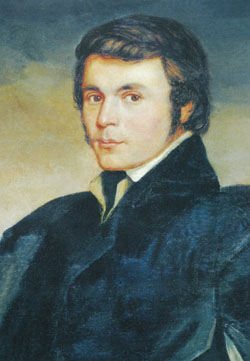
Khachatur Abovian
Khachatur Abovian, renowned novelist, poet, and playwright, is born. Source — Wikipedia, "Timeline of Armenian history" (19th century):
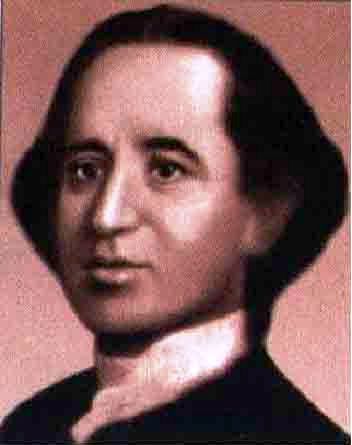
Portrait of Khachatur Abovian. By Ludwig von Maydell (1795-1846) ? - Unknown source, Public domain, https://commons.wikimedia.org/w/index.php?curid=10002895
1810 CE
Zeitountsi revolts.
Zeitountsi revolts. Source — Wikipedia, "Timeline of Armenian history" (19th century):
1811 CE
Mkhitarist order of Vienna founded.
Mkhitarist order of Vienna founded. Source — Wikipedia, "Timeline of Armenian history" (19th century):
1813 CE
Treaty of Gulistan
Treaty of Gulistan. All of Eastern Armenia remains under Persian rule, except for the Armenians in Karabakh, which had already de facto become part of the Russian Empire. Source — Wikipedia, "Timeline of Armenian history" (19th century):
Treaty of Gulistan By en:User:Siamax Original uploader was Kaveh at fa.wikipedia - Map collection of the Perry-Castañeda Library (PCL) Originally from * Farsi Wikipedia, Public domain, https://commons.wikimedia.org/w/index.php?curid=2218013
1824 CE
Founding of Nersessian Academy in Tiflis
Founding of Nersessian Academy in Tiflis Source — Wikipedia, "Timeline of Armenian history" (19th century):
1826 CE
Nickolas Balian, architect in Constantinople (to
Nickolas Balian, architect in Constantinople (to 1858) Source — Wikipedia, "Timeline of Armenian history" (19th century):
1827 CE
Occupation of Yerevan by Russian forces
Occupation of Yerevan by Russian forces Source — Wikipedia, "Timeline of Armenian history" (19th century):
1828 CE
Treaty of Turkmenchay
Treaty of Turkmanchay. Eastern Armenia is forcefully ceded by Persia to Russia per the Russo-Persian War (1826-1828), strengthening Russian control of Transcaucasus. Source — Wikipedia, "Timeline of Armenian history" (19th century):
Ivan Paskevich with Abbas Mirza sign the Treaty of Turkmanchay at the conclusion of 1826-1828 Russo-Persian wars. By Vladimir Moshkov - [1], description in Russian at [2], Public domain, https://commons.wikimedia.org/w/index.php?curid=7881669
1836 CE
Armenian Apostolic Church
The Russian government enacts the Polozhenie, a statute greatly restricting the power of the Armenian Church. Source — Wikipedia, "Timeline of Armenian history" (19th century):
Etchmiadzin Cathedral By Yerevantsi - Own work, CC BY 4.0, https://commons.wikimedia.org/w/index.php?curid=170443763
1894 CE
Hamidian massacres
Hamidian massacres; an estimated 80,000–300,000 are killed. Source — Wikipedia, "Timeline of Armenian history" (19th century):
The Massacre at Erzeroum. Illustration for The Graphic, 7 December 1895. A photograph, taken by the American W. L. Sachtleben, depicting the victims of a massacre of Armenians in Erzerum on October 30, 1895, being gathered for burial at the town's Armenian cemetery. "What I myself saw this Friday afternoon [November 1] is forever engraven on my mind as the most horrible sight a man can see. I went with one of the cavasses of the English Legation, a soldier, my interpreter, and a photographer (Armenian) to the Armenian Gregorian cemetery. The municipalty had sent down a number of bodies, friends had brought more, and a horrible sight met my eyes. Along the wall on the north .... lay 321 dead bodies of the massacred Armenians. Many were fearfully mangled and mutilated. I saw one with his face completely smashed in with a blow of some heavy weapon after he was killed. I saw some with their necks almost severed by a sword cut. One I saw whose whole chest had been skinned, his forearms were cut off, while the upper arm was skinned of flesh. I asked if the dogs had done this. 'No, the Turks did it with their knives'. A dozen bodies were half burned." ... "A crowd of a thousand people, mostly Armenians, watched me taking photographs of their dead. Many were weeping beside their dead fathers or husbands." W. L. Sachtleben, "Letter to the Editor", the London Times, December 14th 1895 (quoted in G. Aivazian, "Sachtleben Papers on Erzurum", in "Armenian Karin/Erzurum", ed R. G. Hovannisian). By William Sachtleben - https://digital.library.ucla.edu/catalog/ark:/21198/zz002hfspk, Public domain, https://commons.wikimedia.org/w/index.php?curid=2225204
Nov 3, 1901 CE
Battle of Holy Apostles Monastery
Battle of Holy Apostles Monastery. Source — Wikipedia, "Timeline of Armenian history" (20th century):
Armenian monastery of Saint Apostles in Moush, Western Armenia, now Turkey By Photographer not disclosed - Amēnun taretsʻuytsʻě : zbōsali u pitani. 1921. (p. 197), Public domain, https://commons.wikimedia.org/w/index.php?curid=7810829
1904 CE
1904 Sasun uprising
1904 Sasun uprising. Source — Wikipedia, "Timeline of Armenian history" (20th century):
1904 map of the Sasun-Mush region within the Ottoman Empire in Armenian printed in Geneva By Հայ Յեղափոխական Դաշնակցութիւն - Սասուն-Մուշի Կռիւները 1904-ին, Public domain, https://commons.wikimedia.org/w/index.php?curid=180529276
1905 CE
Armenian–Tatar massacres of 1905–1906
Armenian–Tatar massacres. Source — Wikipedia, "Timeline of Armenian history" (20th century):
Cossack patrol near destroyed Baku oil fields. By Unknown author - www.uoregon.edu originally uploaded on en.wikipedia., Public domain, https://commons.wikimedia.org/w/index.php?curid=4170370
May 27, 1907 CE
Battle of Sulukh
Battle of Sulukh. Source — Wikipedia, "Timeline of Armenian history" (20th century):
Taken on the Sulukh bridge on the River Aratsani. Armenian freedom fighter Gevorg Chavush was critically wounded here on May 25, 1907, during a large firefight with the Ottoman army and died two days later. By Rupen Janbazian - Own work, CC BY-SA 4.0, https://commons.wikimedia.org/w/index.php?curid=44944295
1909 CE
Adana massacre
Adana massacre: An estimated 15,000–30,000 are killed. Source — Wikipedia, "Timeline of Armenian history" (20th century):
Adana - Street in Christian Quarter, June '09 By Bain News Service, publisher. - This image is available from the United States Library of Congress's Prints and Photographs division under the digital ID ggbain.50065.This tag does not indicate the copyright status of the attached work. A normal copyright tag is still required. See Commons:Licensing., Public domain, https://commons.wikimedia.org/w/index.php?curid=3624465
1915 CE
Armenian genocide
Armenian genocide: An estimated 1,500,000 are killed. (to 1923) Source — Wikipedia, "Timeline of Armenian history" (20th century):
"A LONG LINE THAT SWIFTLY GREW SHORTER One of the most striking photographs of the deportations that have come out of Armenia. Here is shown a column of Christians on the path across the great plains of the Mamuret-ul-Aziz. The zaptieths are shown walking along at one side."-Ravished Armenia, p. 10 By Unknown author - File:Ravished Armenia.djvu p. 10 [1], Public domain, https://commons.wikimedia.org/w/index.php?curid=166474519
Mar 3, 1918 CE
Treaty of Brest-Litovsk
The Treaty of Brest-Litovsk gives Kars, Ardahan and Batum regions to the Ottoman Empire. Source — Wikipedia, "Timeline of Armenian history" (20th century):
Photocopy of the first page of Brest-Litovsk Peace Treaty between Soviet Russia and Germany, Austria-Hungary, Bulgaria and Turkey, March 1918. From left to right the columns are written in: German, Hungarian, Bulgarian, Ottoman Turkish and Russian By Unknown author - Politisches Archiv des Auswärtigen Amts, Public domain, https://commons.wikimedia.org/w/index.php?curid=1500944
May 10, 1920 CE
May Uprising
May Uprising ( failed coup d'état by the Armenian Bolsheviks). Source — Wikipedia, "Timeline of Armenian history" (20th century):
Feb 13, 1921 CE
February Uprising
February Uprising Source — Wikipedia, "Timeline of Armenian history" (Soviet era):
Dec 30, 1922 CE
Soviet Union
Establishment of the Soviet Union; Armenian SSR joins the USSR as part of the Transcaucasian SFSR. Source — Wikipedia, "Timeline of Armenian history" (Soviet era):
Jul 7, 1923 CE
Nagorno-Karabakh Autonomous Oblast
The Nagorno-Karabakh Autonomous Oblast (NKAO) is established, granting Armenian autonomy for Nagorno-Karabakh within the Azerbaijan SSR. Source — Wikipedia, "Timeline of Armenian history" (Soviet era):
Dec 5, 1936 CE
Transcaucasian SFSR disestablished; Armenian SSR b
Transcaucasian SFSR disestablished; Armenian SSR becomes a full union republic. Source — Wikipedia, "Timeline of Armenian history" (Soviet era):
1936 CE
Armenian victims of the Great Purge
Great Purge in Armenia Source — Wikipedia, "Timeline of Armenian history" (Soviet era):
Mar 11, 1954 CE
Anastas Mikoyan
Anastas Mikoyan calls for the rehabilitation of the poet Yeghishe Charents in Yerevan, beginning the Khrushchev Thaw and de-Stalinization in Armenia. Source — Wikipedia, "Timeline of Armenian history" (Soviet era):
Apr 24, 1965 CE
1965 Yerevan demonstrations
1965 Yerevan demonstrations Source — Wikipedia, "Timeline of Armenian history" (Soviet era):
Feb 20, 1988 CE
First Nagorno-Karabakh War
First Nagorno-Karabakh War commences. Source — Wikipedia, "Timeline of Armenian history" (Soviet era):
Jan 12, 1990 CE
Baku pogrom
Baku pogrom. Source — Wikipedia, "Timeline of Armenian history" (Soviet era):
Apr 30, 1991 CE
Operation Ring
Operation Ring. Source — Wikipedia, "Timeline of Armenian history" (Independence; last decade of the 20th century):
Feb 17, 1992 CE
Capture of Garadaghly
Capture of Garadaghly. Source — Wikipedia, "Timeline of Armenian history" (Independence; last decade of the 20th century):
Mar 27, 1993 CE
Battle of Kalbajar
Battle of Kalbajar. Source — Wikipedia, "Timeline of Armenian history" (Independence; last decade of the 20th century):
May 12, 1994 CE
First Nagorno-Karabakh War formally ends
First Nagorno-Karabakh War formally ends Source — Wikipedia, "Timeline of Armenian history" (Independence; last decade of the 20th century):
Jul 5, 1995 CE
Armenian constitutional referendum, 1995
Armenian constitutional referendum Source — Wikipedia, "Timeline of Armenian history" (Independence; last decade of the 20th century):
Jul 1, 1999 CE
EU-Armenia Partnership and Cooperation Agreement
EU-Armenia Partnership and Cooperation Agreement enters into force Source — Wikipedia, "Timeline of Armenian history" (Independence; last decade of the 20th century):
2001 CE
2001
2001 Source — Wikipedia, "Timeline of Armenian history" (21st century):
2004 CE
2004
2004 Source — Wikipedia, "Timeline of Armenian history" (21st century):
2008 CE
2008
2008 Source — Wikipedia, "Timeline of Armenian history" (21st century):
2012 CE
2012
2012 Source — Wikipedia, "Timeline of Armenian history" (21st century):
2013 CE
2013
2013 Source — Wikipedia, "Timeline of Armenian history" (21st century):
2015 CE
2015
2015 Source — Wikipedia, "Timeline of Armenian history" (21st century):
2016 CE
2016
2016 Source — Wikipedia, "Timeline of Armenian history" (21st century):
2017 CE
2017
2017 Source — Wikipedia, "Timeline of Armenian history" (21st century):
2018 CE
2018
2018 Source — Wikipedia, "Timeline of Armenian history" (21st century):
2020 CE
2020
2020 Source — Wikipedia, "Timeline of Armenian history" (21st century):
2021 CE
2021
2021 Source — Wikipedia, "Timeline of Armenian history" (21st century):
2022 CE
2022
2022 Source — Wikipedia, "Timeline of Armenian history" (21st century):
2023 CE
2023
2023 Source — Wikipedia, "Timeline of Armenian history" (21st century):
2024 CE
2024
2024 Source — Wikipedia, "Timeline of Armenian history" (21st century):
2025 CE
2025
2025 Source — Wikipedia, "Timeline of Armenian history" (21st century):




![Migrations des Alains selon Nathalie Kálnoky : Des princes scythes aux capitaines des Iasses, in : Droit et cultures [cote INIST : 24217] n° 52, L'Harmattan publ., Paris 2006. Fond de carte : [1]](https://upload.wikimedia.org/wikipedia/commons/thumb/c/c2/Alans.jpg/500px-Alans.jpg)





![Flag of Armenian royal Bagratuni dynasty (according to armenianchurchofmetrowest.org The tradition of a Bagratuni lion-with-cross standard appears to be modern (Soviet-era?), apparently based on a relief of a lion on the gates of the medieval Armenian capital of Ani[1] and/or the depiction of a throne supported by lions[2]](https://upload.wikimedia.org/wikipedia/commons/thumb/4/4e/Bagratuni_flag.svg/500px-Bagratuni_flag.svg.png)


![A double-headed eagle relief, 13th-century (Seljuk/Ayyubid period) architectural fragment found at Konya (now in Ince Minare Museum). It has also been suggested that the double-headed eagle may have been used as "personal insignia" by sultan Kayqubad I (r. 1220–1237).[1] This particular design has come to be seen as "symbol of Konya"[2] and is closlely associated with Konya's role as historical Seljuq capital. "The double eagle in the city's coat of arms is a symbol of the Seljuk reign a period crucial for Konya's self-perception until today."[3] A re-drawing of the same design is used as an official emblem by the municipality[4] An independent redrawing is used in the logo of Selçuk University, Konya, Turkey.](https://upload.wikimedia.org/wikipedia/commons/thumb/3/31/Ince_minare_sculpture_1.jpg/500px-Ince_minare_sculpture_1.jpg)



![Flag of the Safavid Dynasty from 1576[1] to 1666[2][3]](https://upload.wikimedia.org/wikipedia/commons/thumb/4/40/Safavid_Flag.svg/500px-Safavid_Flag.svg.png)




![The Massacre at Erzeroum. Illustration for The Graphic, 7 December 1895. A photograph, taken by the American W. L. Sachtleben, depicting the victims of a massacre of Armenians in Erzerum on October 30, 1895, being gathered for burial at the town's Armenian cemetery. "What I myself saw this Friday afternoon [November 1] is forever engraven on my mind as the most horrible sight a man can see. I went with one of the cavasses of the English Legation, a soldier, my interpreter, and a photographer (Armenian) to the Armenian Gregorian cemetery. The municipalty had sent down a number of bodies, friends had brought more, and a horrible sight met my eyes. Along the wall on the north .... lay 321 dead bodies of the massacred Armenians. Many were fearfully mangled and mutilated. I saw one with his face completely smashed in with a blow of some heavy weapon after he was killed. I saw some with their necks almost severed by a sword cut. One I saw whose whole chest had been skinned, his forearms were cut off, while the upper arm was skinned of flesh. I asked if the dogs had done this. 'No, the Turks did it with their knives'. A dozen bodies were half burned." ... "A crowd of a thousand people, mostly Armenians, watched me taking photographs of their dead. Many were weeping beside their dead fathers or husbands." W. L. Sachtleben, "Letter to the Editor", the London Times, December 14th 1895 (quoted in G. Aivazian, "Sachtleben Papers on Erzurum", in "Armenian Karin/Erzurum", ed R. G. Hovannisian).](https://upload.wikimedia.org/wikipedia/commons/thumb/8/84/1895erzurum-victims.jpg/500px-1895erzurum-victims.jpg)


