Encyclopedia/3. History, Societies & Civilizations/09. Modern Nations/02. Americas • Curated by Admin Timeline.sg
History of Argentina, sourced from Wikipedia's "Timeline of Argentine history".
Chronological Storyline (110 Milestones)
500 BCE
Andean
Irrigation permitted development of sedentary agriculture of staple crops in western and northwestern Andean region Source — Wikipedia, "Timeline of Argentine history" (BC):
The Andes, Chile By Diego Delso - Own work, CC BY-SA 3.0, https://commons.wikimedia.org/w/index.php?curid=17660034
10 BCE
Paleolithic
The earliest traces of humans are dated from the Paleolithic period, and there are further signs in the Mesolithic and Neolithic. However, large areas of the interior were apparently depopulated during an extensive dry period between 4000 and 2000 BC. Source — Wikipedia, "Timeline of Argentine history" (BC):
Glyptodon. By Heinrich Harder (1858-1935) - The Wonderful Paleo Art of Heinrich Harder, Public domain, https://commons.wikimedia.org/w/index.php?curid=1143767
1 CE
maize
Several corn-based civilizations developed in the western and northwestern Andean region (Ansilta, Condorhuasi, Cienaga, Aguada, Santa Maria, Huarpes, Diaguitas, Sanavirones, among others) Source — Wikipedia, "Timeline of Argentine history" (1st century):
Maize: (a) Lower part of the plant (b) top of plant with male inflorescense (c) middle of plant with female inflorescenses (d) ear/cob: (1) two pollen grains of a male inflorescense (3, 4) female flowers (5) female flowers with stigma (6) fruit bottom view (7) fruit side view (8) fruit cross-section views By Franz Eugen Köhler, Köhler's Medizinal-Pflanzen - Köhler's Medizinal-Pflanzen in naturgetreuen Abbildungen mit kurz erläuterndem Texte, Vol. 3, Plate 78 Old source: List of Koehler Images, Public domain, https://commons.wikimedia.org/w/index.php?curid=255643
600 CE
bronze
Development of metallurgical technologies, permitting elaborate bronzeworks Source — Wikipedia, "Timeline of Argentine history" (6th century):
Sumerian; Lyre ornament; Metalwork-Ornaments By Unknown author - This file was donated to Wikimedia Commons as part of a project by the Metropolitan Museum of Art. See the Image and Data Resources Open Access Policy, CC0, https://commons.wikimedia.org/w/index.php?curid=60515286
700 CE
Cueva de las Manos
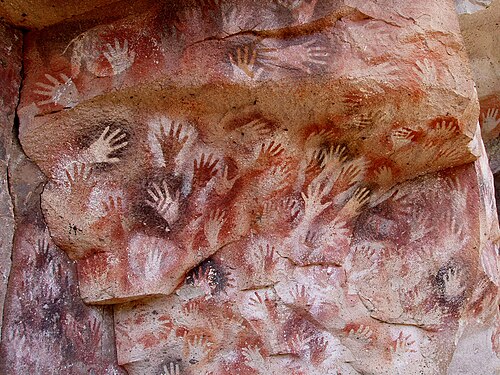
Cueva de las Manos was last inhabited, with the final cave dwellers possibly being ancestors of the Tehuelche tribes. Source — Wikipedia, "Timeline of Argentine history" (7th century):
Hands at the Cuevas de las Manos upon Río Pinturas, near the town of Perito Moreno in Santa Cruz Province, Argentina. Picture taken by me in 2005. By Mariano - Own work, Public domain, https://commons.wikimedia.org/w/index.php?curid=265811
850 CE
Emergence of fortified urban settlements
Emergence of fortified urban settlements Source — Wikipedia, "Timeline of Argentine history" (9th century):
1480 CE
Inca Empire
The Inca Empire, under the rule of emperor Pachacutec, launched an offensive and conquered present-day northwestern Argentina, integrating it into a region called Qullasuyu Source — Wikipedia, "Timeline of Argentine history" (15th century):
Suntur Paucar, according to the description of the chronicles of Bernabé Cobo By Adapted from Huhsunqu, made by Pachakutec - Own work based on: Banner of the Inca Empire.svg, CC BY-SA 2.5, https://commons.wikimedia.org/w/index.php?curid=92212633
1516 CE
Spain
Spanish navigator Juan Díaz de Solís first European explorer to visit Río de la Plata, on territory which is now Argentina; Díaz de Solís killed and supposedly cannibalised by native Charrúa, Querandí or Guaraní Source — Wikipedia, "Timeline of Argentine history" (16th century):
Flag of Spain, the "rojigualda". By Antonio Valdés y Fernández Bazán - Real Decreto 441/1981, de 27 de febrero, por el que se especifican técnicamente los colores de la Bandera de España, Public domain, https://commons.wikimedia.org/w/index.php?curid=99805564
1526 CE
Sebastian Cabot
Sebastian Cabot sailed up Paraná River and built short-lived fort near modern Rosario Source — Wikipedia, "Timeline of Argentine history" (16th century):
Engraving of the navigator and cartographer Sebastian Cabot (1474 - 1557), after an original by Hans Holbein [or the original may perhaps have been a close copy], that was destroyed by fire in 1845. By Samuel Rawle / After Hans Holbein the Younger - National Maritime Museum (Webpage, Image), Public domain, https://commons.wikimedia.org/w/index.php?curid=31553861
1536 CE
Pedro de Mendoza
Santa María del Buen Ayre founded by Pedro de Mendoza on site of modern Buenos Aires Source — Wikipedia, "Timeline of Argentine history" (16th century):
This is a photo of an Argentine monument identified by the ID By Taken by the uploader, w:es:Usuario:Barcex, CC BY-SA 3.0, https://commons.wikimedia.org/w/index.php?curid=3447838
1541 CE
Santa María del Buen Ayre settlement
Santa María del Buen Ayre settlement abandoned after indigenous attacks Source — Wikipedia, "Timeline of Argentine history" (16th century):
1553 CE
Santiago del Estero
Santiago del Estero founded by Francisco de Aguirre (some claim 1550) Source — Wikipedia, "Timeline of Argentine history" (16th century):
Santiago del Estero city, in Argentina. View from Juan Felipe Ibarra's Complex. By Gergas - Own work, CC BY-SA 4.0, https://commons.wikimedia.org/w/index.php?curid=93497694
1561 CE
Mendoza, Argentina
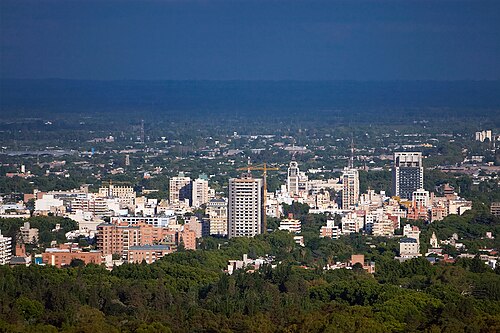
Mendoza founded Source — Wikipedia, "Timeline of Argentine history" (16th century):
View from Cerro De La Gloria looking east towards Mendoza. By David - originally posted to Flickr as Downtown Mendoza, CC BY 2.0, https://commons.wikimedia.org/w/index.php?curid=6013100
1562 CE
San Juan, Argentina
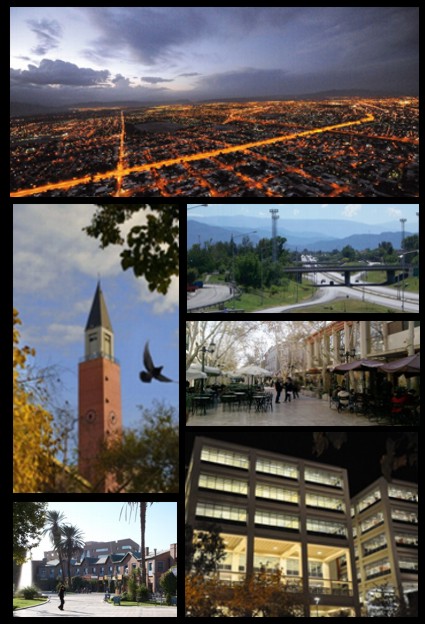
San Juan founded Source — Wikipedia, "Timeline of Argentine history" (16th century):
Muestra sintética de las principales características de la Ciudad de San Juan, Argentina. By Capitalsj - Own work, CC BY-SA 3.0, https://commons.wikimedia.org/w/index.php?curid=27466208
1573 CE
Córdoba, Argentina
Córdoba and Santa Fe founded Source — Wikipedia, "Timeline of Argentine history" (16th century):
Catedral de Córdoba, Argentina. By Bob Betzen - https://www.flickr.com/photos/bob_betzen/5830879133, CC BY 2.0, https://commons.wikimedia.org/w/index.php?curid=103377219
1580 CE
Viceroyalty of Peru
Permanent colony re-established by Spain on the site of Buenos Aires as part of the Viceroyalty of Peru; initial settlement was primarily overland from Peru Source — Wikipedia, "Timeline of Argentine history" (16th century):
Coat of arms of the City of Lima, Peru (Heraldic design) By Heralder - Own work, CC BY-SA 3.0, https://commons.wikimedia.org/w/index.php?curid=21292072
1582 CE
Salta
Salta founded Source — Wikipedia, "Timeline of Argentine history" (16th century):
Panorámica Ciudad de Salta By loco085 - originally posted to Flickr as Salta, la linda, desde arriba, CC BY-SA 4.0, https://commons.wikimedia.org/w/index.php?curid=87262513
1591 CE
La Rioja, Argentina
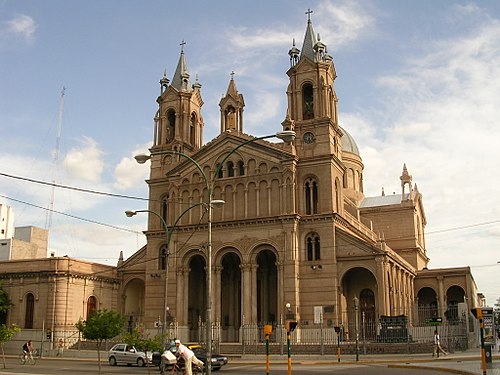
La Rioja founded Source — Wikipedia, "Timeline of Argentine history" (16th century):
Catedral y Basilica de San Nicolas de La Rioja (Argentina) By Elemaki - Own work, CC BY 3.0, https://commons.wikimedia.org/w/index.php?curid=3246666
1593 CE
San Salvador de Jujuy
San Salvador de Jujuy founded Source — Wikipedia, "Timeline of Argentine history" (16th century):
Image montage of San Salvador de Jujuy, Argentina. By Nieve_en_verano,_Jujuy.jpg: Coquena Monument_to_Belgrano,_Jujuy.jpg: Micah MacAllen Cathedrale_Jujuy.JPG: Stéphane Batigne Centro_de_San_Salvador_de_Jujuy.jpg: Teki09 (talk · contribs) Jujuy-Capital-P3110030.JPG: Marianocecowski (talk · contribs) derivative work: Bleff at en.wikipedia - Nieve_en_verano,_Jujuy.jpg Monument_to_Belgrano,_Jujuy.jpg Cathedrale_Jujuy.JPG Centro_de_San_Salvador_de_Jujuy.jpg Jujuy-Capital-P3110030.JPG, CC BY-SA 3.0, https://commons.wikimedia.org/w/index.php?curid=12440902
1609 CE
Jesuit
First Jesuit missions to the Guaraní founded in the Upper Paraná area. San Ignacio in Misiones Source — Wikipedia, "Timeline of Argentine history" (17th century):
Monochrome version of the IHS emblem of the Jesuits. The design of the emblem is attributed to Ignatius of Loyola (1541). the cross is here drawn as formy fitchy; this is not necessarily part of the design, early modern depictions sometimes show a plain cross, or various baroque ornamentations the three nails are sometimes shown as piercing a heart the alternating straight and wavy rays are found in historical specimens, but not necessarily, and sometimes with two or three straight rays separating wavy rays. the number of rays is often 32 as here, but sometimes also 12, 16 or 24. the emblem is sometimes surrounded by the inscription et vocatum est nomen eius Iesus (Luke 2:21) By Moranski - Own work, Public domain, https://commons.wikimedia.org/w/index.php?curid=5596804
1613 CE
National University of Córdoba
National University of Córdoba founded by Jesuits Source — Wikipedia, "Timeline of Argentine history" (17th century):
Universidad Nacional de Córdoba logos By Unknown author - https://campusnorte.unc.edu.ar/imagen-institucional/, Public domain, https://commons.wikimedia.org/w/index.php?curid=166101854
1657 CE
Diaguita
Diaguita rebellion led by Spanish rebel, Pedro Bohórquez Source — Wikipedia, "Timeline of Argentine history" (17th century):
Bandera del pueblo diaguita en Chile. Bandera reconstruida en base a diferentes referencias: [1][2][3] By B1mbo - This vector image includes elements that have been taken or adapted from this file:, CC BY-SA 4.0, https://commons.wikimedia.org/w/index.php?curid=107410216
1661 CE
San Ignacio school in Córdoba founded
San Ignacio school in Córdoba founded by Jesuits Source — Wikipedia, "Timeline of Argentine history" (17th century):
1680 CE
The Portuguese established a trading post
The Portuguese established a trading post across the Rio de la Plata from Buenos Aires Source — Wikipedia, "Timeline of Argentine history" (17th century):
1685 CE
San Miguel de Tucumán
City of Tucumán moved to present location Source — Wikipedia, "Timeline of Argentine history" (17th century):
San Miguel de Tucumán vista al centro de noche argentina) By gonzaloluciani - Own work, CC BY-SA 4.0, https://commons.wikimedia.org/w/index.php?curid=129100512
1767 CE
Jesuits expelled from Spanish territories
Jesuits expelled from Spanish territories Source — Wikipedia, "Timeline of Argentine history" (18th century):
1776 CE
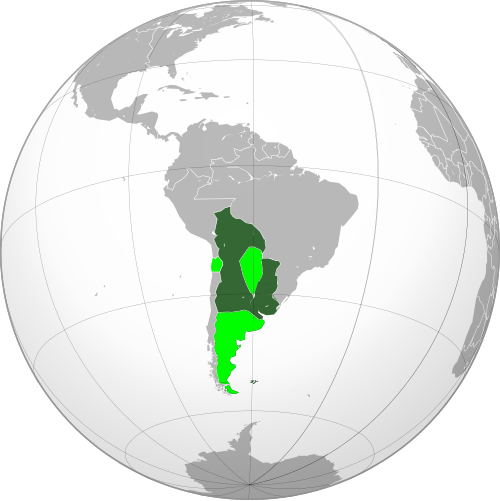
Viceroyalty of the Río de la Plata
Establishment of the Viceroyalty of the Río de la Plata ( ) comprising today's Argentina, Uruguay, and Paraguay, as well as much of present-day Bolivia, declared with Buenos Aires as its capital Source — Wikipedia, "Timeline of Argentine history" (18th century):
Location of the Viceroyalty of the Río de la Plata in orthographic projection, approx. 1796. Sovereign territory. Territories claimed. By Keepscases - Own work, based on the Image:Brazil (orthographic projection).svg, created by the Wikimedia Commons user Ssolbergj, under a Creative Commons Licence. Boundaries based in the following sources: Guyanas, Brazil-La Plata, Patagonia: File:Mapa_Geografico_de_America_Meridional_(1790).jpg United States: File:United_States_1798-1800-07-04.png New Granada: File:Nuevo Reino Granada.jpg, File:Mapa del Virreinato de Nueva Granada.png, CC BY 3.0, https://commons.wikimedia.org/w/index.php?curid=9003894
1794 CE
Commerce Consulate of Buenos Aires
Establishment of the Commerce Consulate of Buenos Aires Source — Wikipedia, "Timeline of Argentine history" (18th century):
Portada de la Real Cédula de creación del Consulado de Buenos Aires, dada por el Rey en 1794, en su palacio de Aranjuez. By Monarquía española - Grandes biografías de los 200 años: Manuel Belgrano, Public domain, https://commons.wikimedia.org/w/index.php?curid=10711905
1806 CE
British invasions of the River Plate
British invasions of the River Plate unsuccessfully attempt to establish control over Spain's southern colonies as part of the Napoleonic Wars. Spanish troops offer no defence but British repelled by local civilians and militias (to 1807) Source — Wikipedia, "Timeline of Argentine history" (19th century):
"La Reconquista de Buenos Aires", portrait depicting the surrender of Beresford to Santiago de Liniers during the British Invasions to the Rio de la Plata By Charles Fouqueray (1869-1956) - The portrait is currently located in the National Historical Museum (Argentina), PD-US, https://en.wikipedia.org/w/index.php?curid=24968272
May 1, 1810 CE
Cabildo abierto
Secret meetings in 1810 organised a petition for an open meeting – Cabildo Abierto Source — Wikipedia, "Timeline of Argentine history" (19th century):
The "Cabildo Abierto" of may 22, 1810, in the city of Buenos Aires (now part of Argentina, then part of the Viceroyalty of the Río de la Plata), where it was decided to remove the viceroy Baltasar Hidalgo de Cisneros. Cleaned up blown reflective light from parts of image at request on request improvements pages. Took out levels and cuves a number of times to remove glare, then hand painted detail back in with fine digital brushes. By Pedro Subercaseaux - https://pbs.twimg.com/media/DdzWZ8NVMAELJm2.jpg, Public domain, https://commons.wikimedia.org/w/index.php?curid=83311872
Sep 1, 1811 CE
First Triumvirate
First Triumvirate of Feliciano Chiclana, Juan José Paso and Manuel de Sarratea replaced Junta Grande. Source — Wikipedia, "Timeline of Argentine history" (19th century):
Protrait of Feliciano Chiclana By Unknown author - Public Domain, Public domain, https://commons.wikimedia.org/w/index.php?curid=9383077
Aug 23, 1812 CE
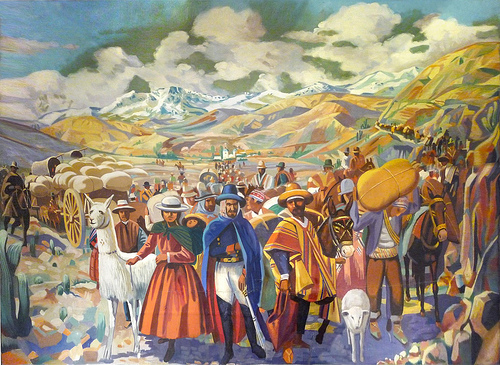
Jujuy Exodus
The Jujuy Exodus was led by Manuel Belgrano, with several thousand soldiers and civilians retreating from Jujuy and Salta, to avoid military defeat and defections. Source — Wikipedia, "Timeline of Argentine history" (19th century):
El Éxodo Jujeño, cuadro de pintor anónimo de mediados del siglo XX. (Museo Histórico Provincial de Jujuy). By AnonymousUnknown author - El libertario, Public domain, https://commons.wikimedia.org/w/index.php?curid=11290105
Jan 31, 1813 CE
Assembly of the Year XIII
The Assembly of the Year XIII called in February to plan further military campaigns and organise defence of Buenos Aires Source — Wikipedia, "Timeline of Argentine history" (19th century):
Assembly of the year XIII. Lithograph of the time. By Unknown author - Revista Viva, 14/03/2010, Public domain, https://commons.wikimedia.org/w/index.php?curid=9751903
Jan 31, 1814 CE
Gervasio Antonio de Posadas
Second Triumvirate replaced by position of Supreme Director, first occupied by Gervasio Antonio de Posadas Source — Wikipedia, "Timeline of Argentine history" (19th century):
retrato de Gervasio Antonio de Posadas By Desconocido. Sin embargo, aquí se puede confirmar que es anterior a 1865 - Todo Argentina, Public domain, https://commons.wikimedia.org/w/index.php?curid=1349235
1815 CE
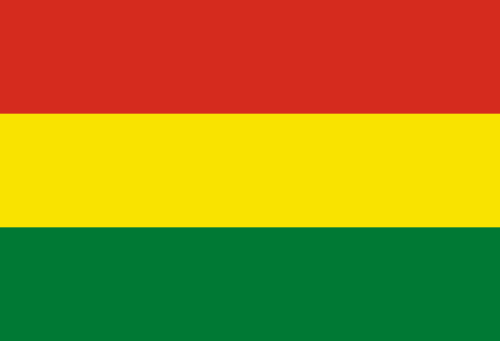
Bolivia
Defeats in battles in late 1815 led to final loss of modern Bolivia Source — Wikipedia, "Timeline of Argentine history" (19th century):
Flag of Bolivia Flag of Bolivia* country Template:I18n/Republic of Bolivia used by Bolivia from 1851 until Present created by Government of Bolivia format 15:22 shape rectangular colours red, yellow, green flag has 3 horizontal stripes other characteristics A horizontal tricolor of red, yellow and green. By See file history' below for details. - Own work, Public domain, https://commons.wikimedia.org/w/index.php?curid=342979
Mar 1, 1816 CE
Congress of Tucumán
An assembly of provincial delegates met as the Congress of Tucumán to discuss future military and political developments Source — Wikipedia, "Timeline of Argentine history" (19th century):
The Casa de Tucumán, before its restoration. In that house, the Independence of Argentina was declared. By Angel Paganelli (1832-1928) - Colección Roberto Ferrari, Public domain, https://commons.wikimedia.org/w/index.php?curid=751577
1820 CE
Battle of Cepeda
The Battle of Cepeda took place between Unitarians who supported a strong centralised state, and Federals, largely provincial caudillo warlords who wanted decentralised authority. The Federals won and the February 1820 Treaty of Pilar declared Argentina as a federal country, although Unitarian ideals continued Source — Wikipedia, "Timeline of Argentine history" (19th century):
Flag of Argentine adopted by the Unitarians exiled at Montevideo. This war used as the merchant flag (civil ensign) until 1852. By Unknown author - SVG based on Angelfire website, Public domain, https://commons.wikimedia.org/w/index.php?curid=2523085
1825 CE
United Kingdom
The United Kingdom recognises Argentine independence. Source — Wikipedia, "Timeline of Argentine history" (19th century):
Flag of the United Kingdom, Union Jack or Union Flag in a 1:2 ratio (typical on British warships and also the rank flag of an admiral of the fleet). By Original: Acts of Union 1800 Vector: Zscout370 - Own work based on: United Kingdom at Flag of the World United Kingdom Flag at the Flag Institute, Public domain, https://commons.wikimedia.org/w/index.php?curid=347935
1828 CE
Luis Vernet
Luis Vernet establishes settlement on the Falkland Islands Source — Wikipedia, "Timeline of Argentine history" (19th century):
Luis Vernet By Tochter von Luis Vernet - https://2.bp.blogspot.com/_GbSkbLV2ekU/SjK9jdcUAfI/AAAAAAAAAr8/dVgA5XUxBtI/s400/sello_comandancia_malvinas.jpg, Public domain, https://commons.wikimedia.org/w/index.php?curid=11576634
Dec 6, 1829 CE
Juan Manuel de Rosas
Juan Manuel de Rosas became governor of Buenos Aires Province Source — Wikipedia, "Timeline of Argentine history" (19th century):
Portrait of Juan Manuel de Rosas, Governor of Buenos Aires Province. By Cayetano Descalzi - Cambalachero, Public domain, https://commons.wikimedia.org/w/index.php?curid=321585
1830 CE
Yaghan people
Yaghan aboriginal Jemmy Button (Orundellico) taken from Tierra del Fuego to England by Robert FitzRoy on Source — Wikipedia, "Timeline of Argentine history" (19th century):
indígenas Yamana By William Singer Barclay - acervo do Museu Marítimo de Ushuaia, Public domain, https://commons.wikimedia.org/w/index.php?curid=18005105
Jan 4, 1831 CE
Pacto Federal
Pacto Federal signed between provinces to protect federal nature of country Source — Wikipedia, "Timeline of Argentine history" (19th century):
Flag of the Argentine Confederation, represented by Buenos Aires Province. By Juan Manuel de Rosas (1793–1877), according to La Gazeta website (vector graphics by Guilherme Paula) - SVG based on File:Bandera argentina buenos aires argentina 1852.png https://archive.ph/8UyiW/0255393d5c3ab4c5e033b77d761673da8b963b6b.webp, Public domain, https://commons.wikimedia.org/w/index.php?curid=2523039
1833 CE
Juan Manuel de Rosas
Juan Manuel de Rosas begins the First Conquest of the Desert Source — Wikipedia, "Timeline of Argentine history" (19th century):
Portrait of Juan Manuel de Rosas, Governor of Buenos Aires Province. By Cayetano Descalzi - Cambalachero, Public domain, https://commons.wikimedia.org/w/index.php?curid=321585
1839 CE
Juan Manuel de Rosas
Rosas made Supreme Chief of the Argentine Confederation Source — Wikipedia, "Timeline of Argentine history" (19th century):
Portrait of Juan Manuel de Rosas, Governor of Buenos Aires Province. By Cayetano Descalzi - Cambalachero, Public domain, https://commons.wikimedia.org/w/index.php?curid=321585
1852 CE
Justo José de Urquiza
Rosas overthrown by Justo José de Urquiza following Battle of Caseros Source — Wikipedia, "Timeline of Argentine history" (19th century):
Recorte de un daguerrotipo de Justo José de Urquiza. By Attributed to Charles DeForest Fredricks - Museo Histórico Nacional via Facebook of Museo Palacio Dionisi(Direct link to image), Public domain, https://commons.wikimedia.org/w/index.php?curid=92037693
May 1, 1853 CE
Argentine Constitution of 1853
Constitution of Argentina agreed by assembly in Santa Fe, creating modern system of government Source — Wikipedia, "Timeline of Argentine history" (19th century):
Original manuscript of the 1853 Argentine National Constitution. Text is naturally, being a legislative text, and due to age in the public domain. By Asamblea Constituyente, based on Juan B. Alberdi (1810-1884) book Bases y puntos de partida para la organización política de la República Argentina that served as inspiration - Museo del Bicentenario, Public domain, https://commons.wikimedia.org/w/index.php?curid=537796
1854 CE
President of Argentina
Urquiza became first President of Argentina in modern sense but opposed by Buenos Aires, still opposed to federal project Source — Wikipedia, "Timeline of Argentine history" (19th century):
Presidential flag of ceremony, used by the president of Argentina. By (Diseño elaborado por Francisco Gregoric) - https://www4.hcdn.gob.ar/dependencias/dsecretaria/Periodo2018/PDF2018/TP2018/4056-D-2019.pdf, Public domain, https://commons.wikimedia.org/w/index.php?curid=133462797
1859 CE
Bartolomé Mitre
Defeat of Unitarian forces led by Bartolomé Mitre by Urquiza and federals at Battle of Cepeda; Buenos Aires re-enters confederation Source — Wikipedia, "Timeline of Argentine history" (19th century):
Bartolomé Mitre, presidente de Argentina (1862-1868), en una fotografía tomada hacia 1890, tomando como referencia esta publicación de la misma foto o una que es bastante similar. By Unknown author - http://www.prensagenealogica.com.ar/2015/06/invitacion-194-aniversario-de-natalicio.html, Public domain, https://commons.wikimedia.org/w/index.php?curid=52081808
Mar 20, 1861 CE
1861 Mendoza earthquake
Mendoza earthquake kills 6,000 to 12,000 citizens of Mendoza. Source — Wikipedia, "Timeline of Argentine history" (19th century):
Ruinas de la ciudad de Mendoza entorno a la plaza Pedro del Castillo luego del terremoto de 1861. By Unknown author - Museo del Área Fundacional de Mendoza, Public domain, https://commons.wikimedia.org/w/index.php?curid=43231246
Nov 13, 1864 CE
Paraguayan War
Start of Paraguayan War between Paraguay and the Triple Alliance of Argentina, Brazil and Uruguay, leading to utter defeat of Paraguay by 1870 Source — Wikipedia, "Timeline of Argentine history" (19th century):
Escenas de la Guerra de la Triple Alianza. By Inkratt - Own work, CC BY-SA 3.0, https://commons.wikimedia.org/w/index.php?curid=28673128
1878 CE
Conquest of the Desert
Commencement of the Conquest of the Desert against indigenous inhabitants of the south led by Julio Argentino Roca; final surrender by 1884 Source — Wikipedia, "Timeline of Argentine history" (19th century):
Fragmento del cuadro "Conquista del desierto" de Juan Manuel Blanes By Juan Manuel Blanes - Museo histórico nacional, Public domain, https://commons.wikimedia.org/w/index.php?curid=6807625
1880 CE
Rosario
Roca became president, finally defeated federals and moved capital to Buenos Aires from Rosario Source — Wikipedia, "Timeline of Argentine history" (19th century):
Hochhäuser in Flussnähe; aus der Entfernung sind die aus europäischer Sicht riesigen sozialem Gegensätze einmal nicht sichtbar. By Falk2 - Own work, CC BY-SA 4.0, https://commons.wikimedia.org/w/index.php?curid=68839237
Sep 1, 1884 CE
Cape Virgenes
Gold is discovered near Cape Virgenes sparking the Tierra del Fuego gold rush Source — Wikipedia, "Timeline of Argentine history" (19th century):
Cape Virgenes By Unknown author, Public domain, https://commons.wikimedia.org/w/index.php?curid=1675359
Jun 26, 1890 CE
Radical Civic Union
Founding of the Radical Civic Union (UCR) or Radical Party Source — Wikipedia, "Timeline of Argentine history" (19th century):
Modern text logo of the Argentine political party Unión Cívica Radical By Original by Unión Cívica RadicalVectorized by ReneeWrites - This file was derived from: Ucr modern logo.png, Public domain, https://commons.wikimedia.org/w/index.php?curid=135041156
1895 CE
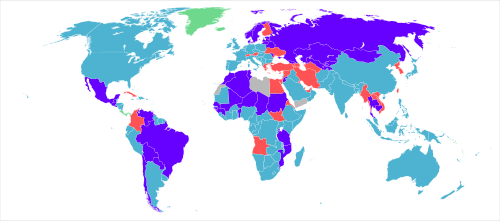
Mandatory military service
Mandatory military service (Conscription) established Source — Wikipedia, "Timeline of Argentine history" (19th century):
Map that shows which Countries have conscription.Green: Countries that do not have any armed service.Blue: Countries that do not have conscription.Purple: Countries with active, but limited conscription (not all people who are eligible are conscripted; in most cases, less than 15% of the whole age group (include men or women), or 20% of the whole men age group if only males are recruited)Orange: Countries where the current government is planning to abolish conscription.Red: Countries with active conscription.Grey: No information. By Mysid - Own work based on: BlankMap-World.svg, Public domain, https://commons.wikimedia.org/w/index.php?curid=4087108
1902 CE
Drago Doctrine
The Drago Doctrine is announced by the Argentine Minister of Foreign Affairs Luis María Drago. Source — Wikipedia, "Timeline of Argentine history" (20th century):
Luis María Drago By Unknown author - Fotografía extraída del libro "Historia Argentina". Autor: Diego Abad de Santillán. TEA, Tipográfica Editora Argentina. 1971, Buenos Aires, Argentina., Public domain, https://commons.wikimedia.org/w/index.php?curid=4681812
Feb 1, 1912 CE
Sáenz Peña Law
Sáenz Peña Law introduces universal, secret and compulsory male suffrage, end of the Generation of '80 Source — Wikipedia, "Timeline of Argentine history" (20th century):
Ballot box used in 1916 argentine general elections, first elections using Saenz Peña law of secret, universal and mandatory vote where Hipolito Yrigoyen was elected. By Carlos San Martín - Pink House Museum, CC BY-SA 3.0, https://commons.wikimedia.org/w/index.php?curid=23053458
Oct 12, 1916 CE
Hipólito Yrigoyen
Start of presidency of Hipólito Yrigoyen, UCR democratic reformist Source — Wikipedia, "Timeline of Argentine history" (20th century):
Hipolito Yrigoyen, born Juan Hipólito del Sagrado Corazón de Jesús Irigoyen Alem, president of Argentina - portrait photograph. By Unknown author - Narodowe Archiwum Cyfrowe (Sygnatura: 1-E-446) (Polish National Digital Archive) Photographs available at www.audiovis.nac.gov.pl are public domain or the owner of the copyrights is the State Treasury of Poland, represented by the National Digital Archive and which grant free of charge licence for free use of the materials on all known exploitation fields., Public domain, https://commons.wikimedia.org/w/index.php?curid=144614130
1918 CE
Argentine university reform of 1918
Students strikes and demonstrations enforce the university reform of shared powers between teachers, graduates and students Source — Wikipedia, "Timeline of Argentine history" (20th century):
Students take over the University of Cordoba, Argentina. By Autor no identificado. - Archivo General de la Nación, Public domain, https://commons.wikimedia.org/w/index.php?curid=333491
Oct 10, 1927 CE
Fabrica Militar de Aviones
Fabrica Militar de Aviones aircraft factory founded in Cordoba Source — Wikipedia, "Timeline of Argentine history" (20th century):
Ingreso a la fábrica By Gonce - Own work, CC BY-SA 4.0, https://commons.wikimedia.org/w/index.php?curid=60389139
1930 CE
Infamous Decade
Military coup deposed Yrigoyen, starting the 'Infamous Decade' Source — Wikipedia, "Timeline of Argentine history" (20th century):
Los cuatro presidentes de la Década Infame. Foto creada para utilizar en el artículo Década Infame en la Wikipedia en español. By User:Edelaid User:FelipeRev User:Claudio Elias User:ArchivoCTDHFenix - This file is a combination of crops: File:Jose Uriburu.png File:Presidente Agustín Pedro Justo.png File:Roberto Ortiz.jpg File:Ramón Castillo Presidente con atributos.png, Public domain, https://commons.wikimedia.org/w/index.php?curid=163232740
1931 CE
Agustín Pedro Justo
General Agustín Pedro Justo declared winner of Presidency following 'patriotic fraud' in election Source — Wikipedia, "Timeline of Argentine history" (20th century):
Presidente de la Nación Argentina Agustín Pedro Justo (1932-1938) By Unknown author - Gobierno de la Ciudad de Buenos Aires - Efemérides de Febrero, CC BY 2.5 ar, https://commons.wikimedia.org/w/index.php?curid=82688341
1943 CE
Juan Perón
'National Revolution' led by nationalist military officers including Colonel Juan Perón; ensured continued non-intervention in World War II Source — Wikipedia, "Timeline of Argentine history" (20th century):
Official photo of President of Argentina, Juan Domingo Perón, using the presidential sash. By Unknown author - http://webs.ucm.es/BUCM/irc/39331.php, Public domain, https://commons.wikimedia.org/w/index.php?curid=106190739
Jan 15, 1944 CE
1944 San Juan earthquake
San Juan earthquake destroys provincial capital, kills 10,000. Source — Wikipedia, "Timeline of Argentine history" (20th century):
Las calles de San Juan después del terremoto By Unknown author - Fotografía extraída del libro "Historia Argentina". Autor: Diego Abad de Santillán. TEA, Tipográfica Editora Argentina. 1971, Buenos Aires, Argentina., Public domain, https://commons.wikimedia.org/w/index.php?curid=4605557
1945 CE
World War II
Argentina enters World War II on the side of the Allies and admitted as founding member of United Nations Source — Wikipedia, "Timeline of Argentine history" (20th century):
For documentary purposes the German Federal Archive often retained the original image captions, which may be erroneous, biased, obsolete or politically extreme. German Stuka dive bombers over the Eastern Front, World War II. A destroyed city is seen in the foreground (below the Junkers Ju 87s) By Richard Opitz - This image was provided to Wikimedia Commons by the German Federal Archive (Deutsches Bundesarchiv) as part of a cooperation project. The German Federal Archive guarantees an authentic representation only using the originals (negative and/or positive), resp. the digitalization of the originals as provided by the Digital Image Archive., CC BY-SA 3.0 de, https://commons.wikimedia.org/w/index.php?curid=5477308
May 15, 1946 CE
Malón de la Paz
Indigenous people march in Malón de la Paz to Buenos Aires to demand land rights Source — Wikipedia, "Timeline of Argentine history" (20th century):
Malón de la Paz entrando a Buenos Aires. Grupo de kollas que desde Abra pampa (Jujuy) iniciaron el 15 de mayo de 1946 la marcha hacia Buenos Aires, para reclamar al Presidente Perón por las tierras usurpadas. Arribaron a la capital el 3 de agosto del mismo año. By Unknown author - Archivo General de la Nación Argentina, Public domain, https://commons.wikimedia.org/w/index.php?curid=26371145
1947 CE
Women's suffrage is approved
Women's suffrage is approved Source — Wikipedia, "Timeline of Argentine history" (20th century):
May 31, 1950 CE
National Atomic Energy Commission
The National Atomic Energy Commission (Comisión Nacional de Energía Atómica, CNEA) is founded Source — Wikipedia, "Timeline of Argentine history" (20th century):
Logo for Argentina government agency, Comisión Nacional de Energía Atómica. By Comisión Nacional de Energía Atómica (Vector graphics image by Canopus49 - Own work, Public domain, https://commons.wikimedia.org/w/index.php?curid=21547762
Jul 26, 1952 CE
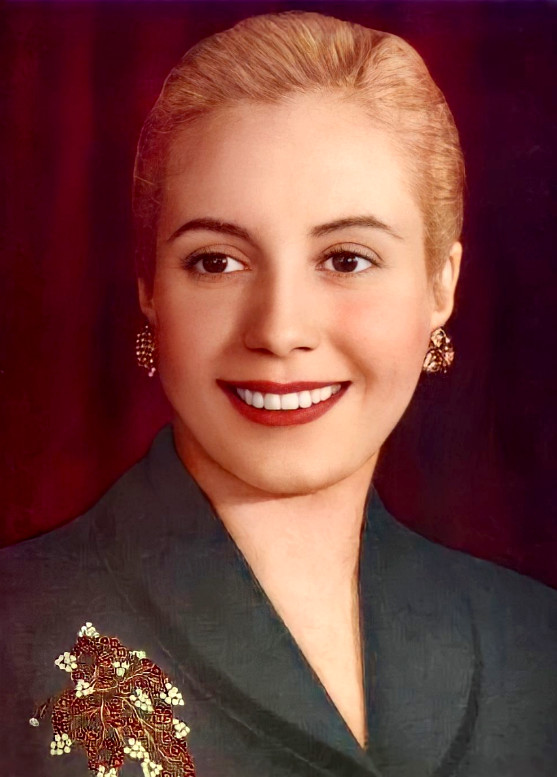
Eva Perón
Death of Eva Perón Source — Wikipedia, "Timeline of Argentine history" (20th century):
Eva Perón (1919-1952) By Unknown author - Archivo gráfico de la Nación, Public domain, https://commons.wikimedia.org/w/index.php?curid=5710246
Sep 1, 1955 CE
Revolución Libertadora
Perón ousted in 'Liberating Revolution' military coup Source — Wikipedia, "Timeline of Argentine history" (20th century):
Montaje del golpe de estado (Revolución Libertadora) en Argentina, 1955. By FelipeRev - Own work, CC BY-SA 4.0, https://commons.wikimedia.org/w/index.php?curid=87025570
Dec 4, 1956 CE
National Agricultural Technology Institute
INTA (National Agricultural Technology Institute), is created Source — Wikipedia, "Timeline of Argentine history" (20th century):
Dec 27, 1957 CE
National Institute of Industrial Technology
INTI (National Institute of Industrial Technology), is created Source — Wikipedia, "Timeline of Argentine history" (20th century):
1958 CE
Argentine Navy
, the first aircraft carrier of the Argentine Navy, enters service Source — Wikipedia, "Timeline of Argentine history" (20th century):
Emblem of the Argentine navy. By Unknown author - SVG from the website, CC BY 2.5 ar, https://commons.wikimedia.org/w/index.php?curid=112523758
Mar 29, 1962 CE
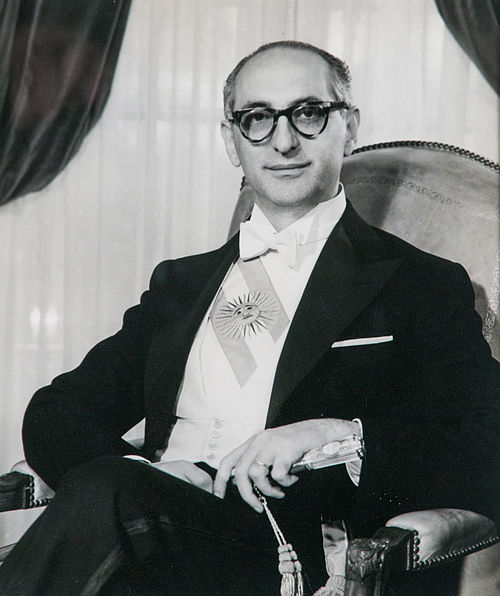
Arturo Frondizi
Military coup ended presidency of civilian Arturo Frondizi Source — Wikipedia, "Timeline of Argentine history" (20th century):
Official photo of former President of Argentina, Arturo Frondizi using the presidential sash. Image currently owned by the Archivo Gráfico de la Nación Argentina. By Unknown author - Pink House Museum, Public domain, https://commons.wikimedia.org/w/index.php?curid=724789
1966 CE
Juan Carlos Onganía
General Juan Carlos Onganía assumed power and represses political parties Source — Wikipedia, "Timeline of Argentine history" (20th century):
Juan Carlos Onganía, dictador en la República Argentina entre 1966 y 1971, encabezó la autoproclamada Revolución Argentina que derrocó al presidente constitucional Arturo Illia. By Unknown author - Desconocida (Archivo General de la Nación), Public domain, https://commons.wikimedia.org/w/index.php?curid=11801848
Oct 9, 1967 CE
Che Guevara
Death of Ernesto 'Che' Guevara Source — Wikipedia, "Timeline of Argentine history" (20th century):
Popularized cropped version of Guerrillero Heroico - Che Guevara at the funeral for the victims of the La Coubre explosion. Gelatin silver print from 1985, 23.9 x 17 cm (image 19.4 x 17 cm) By Alberto Korda, restored by Adam Cuerden - Minerva Auctions, Public domain, https://commons.wikimedia.org/w/index.php?curid=139820026
May 1, 1969 CE
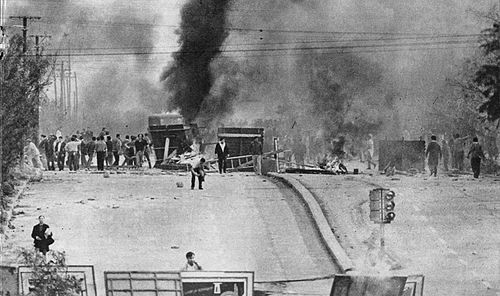
Cordobazo
In the Cordobazo protests, thousands of citizens routed the army and police and took control of Córdoba for two days Source — Wikipedia, "Timeline of Argentine history" (20th century):
Cordobazo. General strike in protest against the political and economic decisions of the military dictatorship. Bulevar San Juan, Córdoba Capital. In that place was murdered that day, the SMATA worker Máximo Mena. By Revista Gente - Revista Gente, Año 4, Nº 202, June 5th 1969, Buenos Aires., Public domain, https://commons.wikimedia.org/w/index.php?curid=3684690
1970 CE
Alejandro Agustín Lanusse
General Alejandro Agustín Lanusse emerged as president after Onganía toppled Source — Wikipedia, "Timeline of Argentine history" (20th century):
Es una foto del general Lanusse, presidente de facto de Argentina. By Template:Miguel Angel Generoso:? - de esta web http://www.genealogiafamiliar.net/showmedia.php?mediaID=2162&medialinkID=2274, Public domain, https://commons.wikimedia.org/w/index.php?curid=10772286
Jun 20, 1973 CE
Ezeiza massacre
The Ezeiza massacre takes place upon Perón's return from exile, when members of the Triple A open fire on the crowd awaiting him. Source — Wikipedia, "Timeline of Argentine history" (20th century):
Photo of Juan José Rincón, Press Secretary of the Peronist Youth of the Argentine Republic (JPRA) of Avellaneda, suffering an attempted lynching from the box where Perón should have spoken, on his return to Argentina, during a violent event known as The Ezeiza Massacre. Source: Zicolilo, Jorge (2013), The era of the butts. The Peronist right and unionism. Buenos Aires: Vergara, pp. 144-146 By Unknown author - Del libro M. E. Alonso, E. C. Vasquez (2005). Historia: la Argentina contemporánea (1852-1999), 3ra edición, Aique, pp. 112 y 113. ISBN 950-701-622-8., Public domain, https://commons.wikimedia.org/w/index.php?curid=11227409
1974 CE
Atucha Nuclear Power Plant
Atucha Nuclear Power Plant, the first nuclear power plant in Latin America, began operation Source — Wikipedia, "Timeline of Argentine history" (20th century):
Central Nuclear Atucha I - II By Mrcukilo - Own work, CC BY-SA 3.0, https://commons.wikimedia.org/w/index.php?curid=22798762
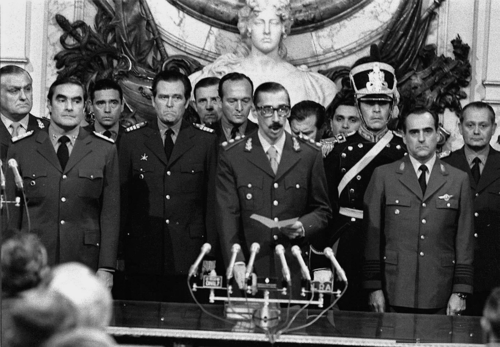
Mar 24, 1976 CE
1976 Argentine coup d'état
A military coup deposed Isabel Perón Source — Wikipedia, "Timeline of Argentine history" (20th century):
Oath of Jorge Rafael Videla as President of Argentina. By Unknown author - https://social.shorthand.com/VTVcanal8/32onaqxvUf/dictadura-militar-en-argentina https://shorthand-social.imgix.net/prod/story/32onaqxvUf/media/81db82d0f1cb11e58172cfb1db5e8826/original.jpg?w=1500&h=1500&fit=clip&fm=jpg&q=75, Public domain, https://commons.wikimedia.org/w/index.php?curid=36618269
Jun 1, 1978 CE
1978 FIFA World Cup
Argentina hosted and won the 1978 FIFA World Cup Source — Wikipedia, "Timeline of Argentine history" (20th century):
Logo of World Cup 78, which represents former president of Argentina, Juan Perón, raising his hands.[1] The original logo had been designed by Ronald Shakespear in 1972, but it was changed by the Peronist government in 1974. After the coup d'etat, the military government tried to modify it, but FIFA opposed.[2] By José López Rega and Hilario Vázquez [2] - Here, Public domain, https://commons.wikimedia.org/w/index.php?curid=78731464
Apr 1, 1982 CE
Leopoldo Galtieri
Leader General Leopoldo Galtieri sent troops to the Falkland Islands triggering Falklands War; British task force retook islands by mid-June Source — Wikipedia, "Timeline of Argentine history" (20th century):
Retrato Oficial de Leopoldo Fortunato Galtieri, tras asumir como presidente de facto. By Presidencia de la Nación Argentina - Presidencia de la Nación Argentina Enlace (Link), CC BY-SA 2.0, https://commons.wikimedia.org/w/index.php?curid=168145218
Dec 10, 1983 CE
Raúl Alfonsín
Military government collapsed; election of Radical Raúl Alfonsín as president Source — Wikipedia, "Timeline of Argentine history" (20th century):
Raúl Alfonsín con banda presidencial By Presidencia de la Nación Argentina - Galería de Presidentes, CC BY 2.5 ar, https://commons.wikimedia.org/w/index.php?curid=168145328
Jan 20, 1984 CE
Embalse Nuclear Power Station
Embalse Nuclear Power Station began operations Source — Wikipedia, "Timeline of Argentine history" (20th century):
Embalse Nuclear Power Station By Mrcukilo - Own work, CC BY-SA 3.0, https://commons.wikimedia.org/w/index.php?curid=22798936
1985 CE
The Official Story
La Historia Oficial film won the Academy Award for Best Foreign Language Film Source — Wikipedia, "Timeline of Argentine history" (20th century):
Film director Joachim Trier at the 2025 Cannes Film Festival By Harald Krichel - Own work, CC BY-SA 4.0, https://commons.wikimedia.org/w/index.php?curid=165973977
1986 CE
1986 FIFA World Cup
Argentina wins 1986 FIFA World Cup, captained by Diego Maradona Source — Wikipedia, "Timeline of Argentine history" (20th century):
Diego Maradona holding the FIFA World Cup trophy after winning the final against West Germany. By Unknown author - here and here, Public domain, https://commons.wikimedia.org/w/index.php?curid=41729153
Apr 1, 1987 CE
Carapintadas
First uprising by Carapintadas, commanded by Colonel Aldo Rico, two arrested. Alfonsín declares La casa está en orden (The house is in order) Source — Wikipedia, "Timeline of Argentine history" (20th century):
Aldo Rico, cabecilla de la rebelión carapintada en Campo de Mayo (16 al 19/04/87). By Telam - here, Public domain, https://commons.wikimedia.org/w/index.php?curid=42897471
Jan 1, 1988 CE
Second Carapintada revolt, again under Rico's
Second Carapintada revolt, again under Rico's command in January, 300 arrested Source — Wikipedia, "Timeline of Argentine history" (20th century):
1989 CE
1989 attack on La Tablada barracks
Dissident military group attacks La Tablada regiment, but are finally seized Source — Wikipedia, "Timeline of Argentine history" (20th century):
Policía en combate de la Tablada By Unknown author - https://www.reddit.com/r/CombatFootage/comments/szo7kj/battle_of_la_tablada_barracks_january_23rd_1989/, Public domain, https://commons.wikimedia.org/w/index.php?curid=115549544
1990 CE
Neo-liberal economic policies and privatisations b
Neo-liberal economic policies and privatisations brought general strikes, hunger strikes and political party realignments Source — Wikipedia, "Timeline of Argentine history" (20th century):
1991 CE
Argentine peso
Argentine peso pegged to United States dollar Source — Wikipedia, "Timeline of Argentine history" (20th century):
Current Federal Reserve Notes as of June 2018 By US Federal Reserve - File:USDnotes.png http://www.newmoney.gov/newmoney/files/100_Materials/100_GlossyFront_EN_WEB031210.pdf, Public domain, https://commons.wikimedia.org/w/index.php?curid=70290373
1992 CE
Israeli Embassy attack in Buenos Aires
Israeli Embassy attack in Buenos Aires killed 29 in terrorist attack Source — Wikipedia, "Timeline of Argentine history" (20th century):
Buenos Aires City Map. Geographic limits of the map: N: -34.7103 S S: -34.5232 S W: -58.563 W E: -58.2729 W By http://www.openstreetmap.org/history?bbox=-58.563%2C-34.7103%2C-58.2729%2C-34.5232 - http://www.openstreetmap.org/?lat=-34.6106&lon=-58.4365&zoom=12&layers=M#, CC BY-SA 2.0, https://commons.wikimedia.org/w/index.php?curid=12616887
1993 CE
UNFICYP
Argentina joins UNFICYP mission at Cyprus. As of 2006, ground troops and helicopters are serving there and since 1999 have other Latin American countries troops embedded. Source — Wikipedia, "Timeline of Argentine history" (20th century):
Photo: UNFICYP/Ľuboš Podhorský By Thaizacastilho - Own work, CC BY-SA 4.0, https://commons.wikimedia.org/w/index.php?curid=108107627
1994 CE
Pact of Olivos
Following the Pact of Olivos, the constitution reform is agreed, allowing Presidents to serve second consecutive term Source — Wikipedia, "Timeline of Argentine history" (20th century):
1995 CE
Menem won second term
Menem won second term Source — Wikipedia, "Timeline of Argentine history" (20th century):
1996 CE
Fernando de la Rúa
Radical Fernando de la Rúa elected first Mayor of Buenos Aires Source — Wikipedia, "Timeline of Argentine history" (20th century):
presidente Fernando de la Rúa. Con banda y bastón presidencial. Argentina By Unknown author - http://www.presidencia.gov.ar/ http://www.casarosada.gov.ar/index.php?option=com_content&task=galeriaPresidentes&Itemid=62, CC BY 2.0, https://commons.wikimedia.org/w/index.php?curid=772020
1997 CE
FrePaSo
Radicals, left-wing FrePaSo and others joined forces as Alianza electoral alliance to oppose Menem and Peronists Source — Wikipedia, "Timeline of Argentine history" (20th century):
1998 CE
Bill Clinton
U.S. President Bill Clinton designated Argentina as a major non-NATO ally Source — Wikipedia, "Timeline of Argentine history" (20th century):
Official White House photo of President Bill Clinton, President of the United States. By Bob McNeely, The White House[1] - This image was released by the United States Armed Forces with the ID DD-SC-93-04622 (next). This tag does not indicate the copyright status of the attached work. A normal copyright tag is still required. See Commons:Licensing. العربية ∙ বাংলা ∙ Bahaso Jambi ∙ Deutsch ∙ Deutsch (Sie-Form) ∙ English ∙ español ∙ euskara ∙ فارسی ∙ français ∙ italiano ∙ 日本語 ∙ 한국어 ∙ македонски ∙ മലയാളം ∙ Plattdüütsch ∙ Nederlands ∙ polski ∙ پښتو ∙ português ∙ русский ∙ slovenščina ∙ svenska ∙ Türkçe ∙ українська ∙ 简体中文 ∙ 繁體中文 ∙ +/−, Public domain, https://commons.wikimedia.org/w/index.php?curid=187406631
1999 CE
1998–2002 Argentine great depression
De la Rúa won Presidency as head of the Alianza, but was confronted by growing economic crisis Source — Wikipedia, "Timeline of Argentine history" (20th century):
GDP per capita in Argentina from 1998 to 2005 By Max Roser - Our World in Data: https://ourworldindata.org/grapher/maddison-data-gdp-per-capita-in-2011us?tab=chart&yScale=log&time=1998..2005&country=~ARG, CC BY 4.0, https://commons.wikimedia.org/w/index.php?curid=115387296
2000 CE
INVAP
High tech company INVAP is chosen by Australia to design and construct the OPAL nuclear reactor Source — Wikipedia, "Timeline of Argentine history" (20th century):
El satellite argentino ARSAT-2 siendo guardado para su viaje hasta el Puerto espacial de Kourou By Presidencia de la Nacion Argentina, CC BY-SA 2.0, https://commons.wikimedia.org/w/index.php?curid=43398988
2001 CE
FrePaSo
In March, the remaining FrePaSo ministers resigned from government in protest at economic and labour reforms Source — Wikipedia, "Timeline of Argentine history" (21st century):
2002 CE
Duhalde imposes further financial measures, includ
Duhalde imposes further financial measures, including converting dollar accounts to pesos, scrapping 1:1 parity with the dollar, and social measures to bring economy under control Source — Wikipedia, "Timeline of Argentine history" (21st century):
2003 CE
Néstor Kirchner
Former President Carlos Menem wins first round of presidential election but pulls out facing certain defeat, handing victory to fellow Peronist Néstor Kirchner Source — Wikipedia, "Timeline of Argentine history" (21st century):
Mensaje del Presidente de la Nacion, Néstor Kirchner, con motivo del fallecimiento de S.S. Juan Pablo II. By Casa Rosada - Gobierno de la Nación, CC BY 2.5 ar, https://commons.wikimedia.org/w/index.php?curid=57793401
Apr 1, 2004 CE
Juan Carlos Blumberg
More than 100,000 people demonstrated in Buenos Aires in support of Juan Carlos Blumberg, father of murdered student Axel Blumberg, demanding harsher criminal laws. Source — Wikipedia, "Timeline of Argentine history" (21st century):
Néstor Kirchner recibe en el despacho presidencial a Juan Carlos Blumberg. By Presidencia de la Nación - http://www.presidencia.gov.ar/prensaoficial/index_masimg.html?id=614 (ya no disponible), CC BY-SA 2.0, https://commons.wikimedia.org/w/index.php?curid=30550289
Feb 1, 2005 CE
State-Church relations in Argentina
Relations between Catholic Church and government broke down between military chaplain and minister over abortion Source — Wikipedia, "Timeline of Argentine history" (21st century):
Mar 1, 2006 CE
Aníbal Ibarra
Buenos Aires mayor Aníbal Ibarra removed from office following accusations of negligence regarding the República Cromagnon nightclub fire of 2004 Source — Wikipedia, "Timeline of Argentine history" (21st century):
Aníbal Ibarra, político argentino. By Legislatura de la Ciudad Autónoma de Buenos Aires, Public domain, https://commons.wikimedia.org/w/index.php?curid=81455335
Oct 9, 2007 CE
Christian von Wernich
Catholic priest Christian von Wernich is found guilty of involvement in seven murders and 42 cases of kidnapping and torture related to the state-sponsored Dirty War. Von Wernich is sentenced to life imprisonment. Source — Wikipedia, "Timeline of Argentine history" (21st century):
Photograph of the Argentine Catholic priest Christian von Wernich, who served as chaplain of the Buenos Aires Provincial Police during the military dictatorship of 1976–1983. By Unknown - Revista "Siete Días", año XV, N° 892, del 25/7 al 31/7 de 1984., Public domain, https://commons.wikimedia.org/w/index.php?curid=160566206
Jul 22, 2010 CE
Same-sex marriage
Same-sex marriage has been legal in Argentina Source — Wikipedia, "Timeline of Argentine history" (21st century):
Wedding cake of a same-sex marriage, photo taken on a party in Offenbach am Main, Germany By Wing - Own work, CC BY-SA 3.0, https://commons.wikimedia.org/w/index.php?curid=7516265
Dec 1, 2020 CE
Voluntary Interruption of Pregnancy Bill
The abortion law was liberalized when the Voluntary Interruption of Pregnancy Bill was passed by the National Congress. Source — Wikipedia, "Timeline of Argentine history" (21st century):
Marchas del 13 de junio de 2018 al Congreso durante la sesión de discusión para la aprobación de la ley por el aborto legal, seguro y gratuito. By Prensa obrera - https://www.prensaobrera.com/politicas/42817-en-las-calles-la-multitud-a-favor-de-la-ley-impuso-su-presencia, CC BY-SA 4.0, https://commons.wikimedia.org/w/index.php?curid=69948609




![Engraving of the navigator and cartographer Sebastian Cabot (1474 - 1557), after an original by Hans Holbein [or the original may perhaps have been a close copy], that was destroyed by fire in 1845.](https://upload.wikimedia.org/wikipedia/commons/3/33/Sebastian_Cabot_-_S._Rawle_after_Hans_Holbein%2C_1824.jpeg)






![Bandera del pueblo diaguita en Chile. Bandera reconstruida en base a diferentes referencias: [1][2][3]](https://upload.wikimedia.org/wikipedia/commons/thumb/2/2e/Flag_of_Diaguita_people_in_Chile.svg/500px-Flag_of_Diaguita_people_in_Chile.svg.png)














![Logo of World Cup 78, which represents former president of Argentina, Juan Perón, raising his hands.[1] The original logo had been designed by Ronald Shakespear in 1972, but it was changed by the Peronist government in 1974. After the coup d'etat, the military government tried to modify it, but FIFA opposed.[2]](https://upload.wikimedia.org/wikipedia/commons/thumb/c/c3/Logo_Mundial_78.svg/500px-Logo_Mundial_78.svg.png)


